TheBurg Podcast, Dec. 11, 2015

Welcome to TheBurg Podcast, a weekly roundup of news in and around Harrisburg.

To listen to this week’s episode, click here.

Dec. 11, 2015: This week, Larry and Paul talk about the many twists and turns in the hearings this week on Harrisburg’s 2016 budget. They also discuss the arrest of the suspect in the murder of Rayon Braxton and Paul’s expert advice on whether or not Larry needs to eat crow.

Special thanks to Paul Cooley, who wrote our theme music. Check out his podcast, the PRC Show, on SoundCloud or in the iTunes store.

You can now subscribe to TheBurg podcast in iTunes!

Continue Reading

Koplinski Presents “Austerity” Budget, Answering Mayor’s Challenge

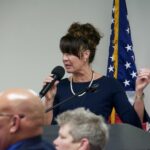
Councilman Brad Koplinski presenting his proposed budget cuts Friday morning.

Councilman Brad Koplinski presenting his proposed budget cuts Friday morning.

City Councilman Brad Koplinski on Friday unveiled a plan to cut $3 million from the Papenfuse administration’s proposed 2016 budget that he says will prevent the need for any tax hike while still preserving a functional, if austere, city government.

Speaking to reporters in the city hall atrium, as Mayor Eric Papenfuse and several department heads looked on from upper-story balconies, Koplinski outlined a series of cuts that would eliminate the need for a proposed $2-per-week hike in the local services tax, a flat tax that affects commuters and residents who work in the city.

His plan answered a challenge issued by Papenfuse, who had defied council as it reviewed his budget this week to find $3 million in unnecessary expenses.

Koplinski, who said he has prided himself in “taking a good, hard look” at budgets over his past eight years on council, said he viewed raising taxes as an “absolute last resort” and that he didn’t think the city was at the point where a hike was required.

“We need an austerity budget, and right now the mayor wants the council to pass a prosperity budget, a budget that pretends Harrisburg’s troubles are over,” said Koplinski, who lost his bid for a third term on council earlier this year. “The taxpayers deserve another alternative.”

The move appears to be an all but solitary effort by Koplinski, who was not joined by fellow council members on Friday and who said he hadn’t consulted with either department heads or the city’s state advisors in crafting his plan.

His suggested cuts covered a set of more than 80 line-items in the Papenfuse budget, each of them likely requiring an individual, up-or-down majority vote from the seven-member council at its final budget hearing next Tuesday, Dec. 15.

Some addressed city hall jobs Koplinski said were unnecessary, such as an atrium receptionist, three laborers in a new “neighborhood services” division, and an administrator for a tax abatement program that has not materialized since council passed its supporting legislation earlier this year.

Others second-guessed the cost projections of city department heads, with Koplinski in most cases relying on spending figures from past years to suggest cuts were possible. For example, he proposed reducing the vehicle fuel budget by $250,000 and the legal services budget by $75,000.

In its budget presentation, the administration had argued that the higher legal expenses were necessary in a year that would include continued litigation in costly lawsuits brought against the city and the renegotiation of union contracts.

Certain cuts involved costs that are not within the city’s control, according to finance director Bruce Weber. For instance, Koplinski called for a $500,000 reduction in disposal costs, which the city must pay to dump trash at the incinerator.

Koplinski’s proposal would also require the city to draw heavily on trash bill revenue to fund general government expenses, a practice Papenfuse said he is trying to end by next year.

The administration’s budget would reduce the trash subsidy from $1.7 million this year to $1.1 million in 2016, while Koplinski’s would appear to increase the subsidy to $2.5 million.

Koplinski also said he appreciated the administration’s proposed hires in police and fire, saying that public safety was the “absolute most important thing that the city does.” “Those have not been touched,” he said of the new hires, although his proposal does call for nearly half-a-million in cuts between the two bureaus.

Addressing his level of support among his colleagues, Koplinski said he thought his proposal had a “50-50” chance of succeeding, but did not name specific members who stood behind him.

He did not present a plan for raising revenue in the event council adopted some, but not all, of his cuts. But he was resolute in saying he would not support a tax hike of any size.

“It seems too easy to increase taxes,” he said. “The hard thing is to dig really deep into the budget and make the hard choices.”

Weber rejected that argument outright. He said the administration did not take the tax hike lightly, but felt it was the only possible way to fund essential services that would be compromised under Koplinski’s plan.

“It’s easy to cut,” Weber said. “It’s harder to face those consequences.”

Continue Reading

Inconsistent Testimony Helped Accused Braxton Killer Beat Knifing Charge

Messages left by friends on the entrance to Braxton Hall, on the 300-block of Carlisle Street.

Messages left by friends at the entrance to Braxton Hall, in the 300-block of Carlisle Street.

The man accused in the murder of Rayon Braxton confessed to a knife attack in Susquehanna Township, but walked free earlier this year after contradictory testimony from witnesses, court records show.

Jerren Keith Stuckey, 26, admitted to jurors during a trial this past January that he slashed the face of a 17-year-old girl in September 2013, opening a wound that was 3 to 5 centimeters deep and possibly causing nerve damage, according to court filings.

But the stories he and the girl told contradicted each other, and there were inconsistencies between the stories of other witnesses. Stuckey was ultimately found not guilty on all counts by a Dauphin County jury.

Stuckey was arrested Wednesday night around 9:20 p.m. on charges that he fatally shot Braxton Nov. 27, in an Allison Hill warehouse space that Braxton had been operating as a community center and dance hall.

Stuckey has a history of involvement in other crimes, including a robbery conviction in 2007, according to records. PennLive has reported that he assaulted a school police officer as a juvenile in 2005 while the officer was trying to arrest his brother.

But the knife attack that went to trial earlier this year was an ambiguous case. Court transcripts show that myriad issues clouded the trial, including key witnesses who reversed their original statements to police, unresolved claims that Stuckey feared for his own safety, and a surveillance video compromised by technical problems.

The incident was apparently provoked by a comment the girl, a student at Susquehanna Township High School, had made about Stuckey at a school carnival, according to court records.

Stuckey had reportedly fallen while attempting to climb a rope ladder as part of a carnival game. The girl made a remark that she testified was innocuous, but which others said included a reference to a gang that angered Stuckey.

Two weeks later, on Sept. 8, Stuckey was in the passenger seat of a car his girlfriend was driving when they encountered the girl and four male friends at a Turkey Hill, where she was filling up her SUV with gas.

Witnesses disputed what happened next. A gas station surveillance video showed that Stuckey and his girlfriend’s car left first, followed by the girl’s SUV. But technical problems prevented the video from being shown at trial.

In any case, both cars left the Turkey Hill and drove a ways down the road before stopping. Stuckey then got out and approached the girl’s car, and according to the girl and her friends, they exchanged words before he slashed at her face.

The state initially sought a lesser form of an aggravated assault charge against Stuckey, records show. But after seeing photos of the girl’s face, Michael Rozman, the lead county prosecutor on the case, sought an elevated charge that alleged Stuckey intended to cause serious bodily injury.

Stuckey claimed in court that he had only swung his weapon, a Gerber multitool with a knife component, in his own defense. He said the girl had left her car and come at him swinging a crowbar, while one of her friends brandished a blade.

Initially, Stuckey told police he knew nothing about the incident, Rozman said. But by trial he no longer disputed that he had cut the girl. His girlfriend testified that he told her what had happened hours later, after they had fled the scene.

“He just really kept apologizing, said that’s why he don’t like being around kids,” she testified. “He told me what he had done. He told me he cut her.”

Police have released scant details so far about the homicide case against Stuckey. In a statement after his arrest, they said that he and Braxton knew each other, but withheld further information “due to the sensitivity and integrity of the case.”

Braxton’s murder sparked a vocal response from friends and neighbors, who have called for an end to the violence that has plagued their city and claimed the life of someone they saw as a leader with a vision to better his community.

The venue Braxton operated off Derry Street, in a vast facility known as the Big Ugly Warehouse, was not licensed with the city, nor did the dance parties hosted there conform to the city’s zoning regulations.

But friends say that Braxton Hall, as the venue was known, was a force for good in its community, providing a hangout for young people and an incubator for the artists, singers, dancers and fashion designers who worked and performed there.

“The cops knew we were here,” said Rich Robin, a close friend of Braxton’s who worked with him at Braxton Hall. He said the space offered a positive outlet to city youth with too much time on their hands.

“When you’re not occupying yourself with something, that basic human nature to be destructive, to just be stupid, is just more prevalent,” he said.

In a statement the week after his death, police called Braxton a “popular organizer” in Harrisburg and asked for the public’s help in solving the crime.


 

Continue Reading

With New Department, City Seeks to Turn Trash to Treasure

New bins for recycling and trash the city purchased last year. The administration's proposed 2016 budget plans to expand the investment in sanitation through a new department devoted to cleaning up the city.

New bins for recycling and trash the city purchased last year. The administration’s proposed 2016 budget plans to expand the investment in sanitation through a new department devoted to cleaning up the city.

The Papenfuse administration made an impassioned plea Wednesday night for the creation of a neighborhood services division at city hall, asking City Council to approve the use of trash bill money on an expansive plan to keep the city clean.

The plan calls for 18 new hires and $1.3 million in equipment purchases, while also aiming to wean the general government off a subsidy from trash bills going back several years. “This is a truer accounting,” Papenfuse said of the effort to group all sanitation-related services under their own separate fund.

The plan follows on recommendations in a consulting report released last year, which urged the city to create an “enterprise account” funded with trash bills and covering a broad array of services including leaf collection, litter patrols, recycling, enforcement of sanitation codes and even some property demolition and cleanup.

Papenfuse and his department heads made their case in the second of two hearings on his proposed 2016 budget this week, as council members in advance of a final vote Dec. 15 called up officials one at a time to examine their proposed expenses.

They heard about items running the gamut of local government, from the cost of portable toilets to the challenges of managing summer crowds at city pools.

But the neighborhood services proposal was the budget’s largest innovation by far, representing both a commitment to keep sanitation work in-house and a wager that trash will be lucrative enough to justify major investments in equipment and staff.

In a sprawling but emphatic opening statement, public works director Aaron Johnson praised his department’s progress in recent years and said it was time to invest customers’ trash money in improving the services they’re paying for.

“It’s a money-maker,” Johnson said of the city’s sanitation services. “The place that generates the money should be able to pay itself.”

The budget calls for the purchase of six trash trucks, two street sweepers, a specialized leaf collection machine and new route-tracking software, among other items. It also seeks to hire 17 union workers, including four in-house mechanics, a bill collector and a specialist to help operate the city’s 311 system.

Trash bills will also subsidize general government operations, with a direct transfer of $1.1 million, down from $1.7 million last year. Papenfuse said he plans to eliminate the subsidy in 2017.

The new division is part of an ambitious budget proposal that includes a $3 million tax hike to cover growing health care and pension costs, as well as a $1 million shortfall in revenues expected from the parking lease the city entered in 2013.

An updated version of the state’s recovery plan for Harrisburg, which has yet to be considered by the city or the state court overseeing it, expresses general agreement with the creation of the new division but seeks to monitor its finances closely.

“The expanded employment needs anticipated by the Neighborhood Services fund must be covered by an appropriate level of fees that are reasonable and supported by both citizen users as well as commercial users of the services,” the plan says.

The plan calls for the city to produce a quarterly report on the performance of the new division as part of its financial review process.

In 2013, the recovery plan had called for sanitation services to be privatized, but the move was rejected by council. Johnson thanked council Wednesday night, saying the city’s in-house services were better than any private company could offer.

“There’s nothing like having your own,” Johnson told council, adding that the city had unique sanitation needs that required intimate knowledge of the neighborhoods. “You stepped up to the plate and you saved a lot of people’s jobs,” he said.

Continue Reading

Mayor, Defending Budget, Defies Council to Find Cuts

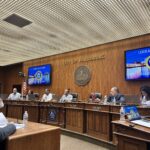
City Council at the budget hearing Tuesday night.

City Council at the budget hearing Tuesday night.

Reiterating his plea to grow his government’s annual budget, Mayor Eric Papenfuse on Tuesday night gave City Council essentially two options: either approve a tax hike, or pick up the knife and make the cuts yourself.

In the first of two hearings on his 2016 budget, the mayor renewed his claim that the city needed $3 million in new taxes both to cover shortfalls in expected revenues and to fund essential services like firefighters, police and paved roads.

Papenfuse defended his plan against an often skeptical council, defying them to find proposed expenses that “wouldn’t cripple essential services” if cut. “You’re not going to find $3 million,” he said. In fact, he added, “I wish we could spend more.”

The $60 million general fund budget, which represents an increase of $5 million over the projected actual expenses for the current year, has ballooned in part due to unexpected jumps in health care and pension costs, each set to grow by $1 million.

It also includes $660,000 in new hires, although the mayor said most of those would pay for themselves. For instance, new firefighters would continue to reduce overtime expenses, while an extra tax administrator would improve collections.

Papenfuse also proposes to hire 18 new workers under a separate “neighborhood services” division, to be funded out of city trash bills. The new division will absorb many expenses previously funded by taxes, including some road and parks maintenance and bill collecting, as recommended by consultants last year.

Some council members challenged the new expenses. “We need an austerity budget,” said Councilman Brad Koplinski. “This seems like a prosperity budget.”

Councilwoman Sandra Reid told the mayor to scale up his budgets more gradually, suggesting he was raising taxes to cover costs he wanted but did not really need. Council President Wanda Williams disagreed, saying the expenses were justified, but that she wished there were another option to raise revenue.

But Papenfuse, clicking through a slideshow of proposed spending, asked council to identify what could be cut without hurting residents’ quality of life. And he defended his tax hike, a $2 weekly increase on both residents and commuters who work in the city, as the “least painful” option of the possible ways to raise money.

An increase in the local services tax, as the tax is known, became available to the city under recent amendments to Act 47, the state program that assists distressed municipalities. Fred Reddig, Harrisburg’s coordinator under that program, told council Tuesday that the hike would expire when the city leaves Act 47.

Reddig also reviewed suggested amendments to the Harrisburg Strong Plan, the state’s 2013 recovery plan for the cash-strapped capital. Among the amendments were recommendations that the city take the first steps towards adopting a home rule charter and that it come up with a plan for leaving the program by 2018.

Papenfuse has persistently attacked the Strong Plan in recent months. In particular, he has faulted its estimates of income and real estate taxes—both have fallen short of expectations—and its projections of proceeds from a lease of downtown parking.

Reddig acknowledged the parking shortfalls Tuesday, saying he agreed with the mayor’s estimate that the city would receive $1 million less than anticipated next year. But he also defended the plan, saying it provided the city more parking money than it used to receive and that it was based on the best available information at the time.

A second hearing is scheduled for Wednesday at 5:30 before a final vote on the budget Dec. 15.

This story has been corrected to say that the city’s 2016 budget represents a $5 million increase over the current year’s “projected actual expenses,” not its “projected actual budget.”

Continue Reading

Dec. 7-11: This Week in Harrisburg

This Week in Harrisburg:

Monday, Dec. 7

School Board Reorganization Meeting, 5:30 p.m.
District Administrative Offices, 1601 State St.

The school board has more new faces than old ones, and the reorganization comes on the heels of the surprise resignation of the former board president, Jennifer Smallwood. The board will formally accept Smallwood’s resignation at its regular meeting immediately following the reorganization.

Tuesday, Dec. 8

Giant Tree-Lighting Ceremony, noon
City Hall Atrium, 10 N. 2nd St.

Postponed from last Friday, the city plans to officially light the Christmas tree in the city hall atrium this Tuesday. The 26-foot artificial tree was donated by Giant Food Stores. Come for the announcement of the judges’ picks at the holiday parade. Stay for the Christmas carols sung by the Mayor Papenfuse-led city hall chorus.

1st 2016 Budget Hearing, 5:30 p.m.
City Council Chambers, 10 N. 2nd St.

The first of two hearings this week on the mayor’s proposed 2016 budget. This budget is a big deal, for several reasons. It includes $3 million in new taxes. It proposes 36 new hires, about half of them in a new “neighborhood services” division funded by city trash bills. And it ramps up the city’s commitment to providing in-house sanitation – along with the hires, it includes plans to purchase new equipment and bring commercial customers back to the city from private haulers.

Wednesday, Dec. 9

Riverfront Replanting Project, 9 a.m.
Riverfront Park between Radnor and Schuylkill

Wednesday marks the start of a tree replanting project along Harrisburg’s Riverfront Park. Volunteers are welcome. To sign up, email city arborist Erik Josephson at [email protected].

2nd 2016 Budget Hearing, 5:30 p.m.
City Council Chambers, 10 N. 2nd St.

The second of two hearings this week on the 2016 budget. See above.

Thursday, Dec. 10

Final Workshop, BeHBG Comprehensive Plan, 10 a.m.-9 p.m.
Capitol View Commerce Center, 1000 N. Cameron St.

A series of public workshops will complete the first phase of the city’s comprehensive planning process. The plan presents a vision of the future to guide investment and development in the city for years to come. On-site parking is available and refreshments will be provided. To see the day’s full schedule, click here.


Continue Reading

TheBurg Podcast, Dec. 4, 2015

Department of Environmental Protection Secretary John Quigley, right, and Mayor Eric Papenfuse at the streetlight project launch Tuesday.

Welcome to TheBurg Podcast, a weekly roundup of news in and around Harrisburg.

To listen to this week’s episode, click here.

Dec. 4, 2015: This week, Larry and Paul talk about the new LED streetlights, then assess the mayor’s and the community’s response to the murder of Rayon Braxton. They also discuss a stern letter to the mayor from a state agency and vision versus reality in the comprehensive plan.

Special thanks to Paul Cooley, who wrote our theme music. Check out his podcast, the PRC Show, on SoundCloud or in the iTunes store.

You can now subscribe to TheBurg podcast in iTunes!

Continue Reading

State Rebukes Harrisburg Mayor’s Claims of Fraud

A multi-space parking meter in downtown Harrisburg.

A multi-space parking meter in downtown Harrisburg.

The state agency overseeing Harrisburg’s financial recovery sharply critiqued public accusations of fraud by Mayor Eric Papenfuse in a private letter last month, calling them “unsubstantiated” and “categorically untrue.”

Dennis M. Davin, secretary of the Department of Community and Economic Development, wrote in the Nov. 3 letter that his agency was “distressed” by Papenfuse’s claims that consultants had intentionally misrepresented how much money the city would get from its parking system.

“The team dedicated to supporting the City of Harrisburg’s recovery efforts is committed to providing the highest level of professional assistance,” Davin wrote in the letter, which TheBurg obtained through an open records request. “Given this fact, we take any allegations of fraud very seriously.”

Davin signed the letter in his role as chairman of the Pennsylvania Economic Development Financing Authority, a funding arm of his department that issued $286 million in bonds to finance the 2013 lease of the city’s parking system.

The Harrisburg Strong Plan, the state’s recovery plan for the bankrupt capital, relied on the lease both for upfront cash to settle the city’s debts and for ongoing revenue to help fix its persistent annual deficits.

Papenfuse made his remarks at the authority’s Oct. 21 board meeting, when he addressed shortfalls in the so-called “waterfall” payments that provide critical money to the city out of overall parking revenues.

The mayor suggested that professionals working on the lease had knowingly misrepresented the amount of money the system would produce.

“Frankly, I believe that these numbers of waterfall payments were inflated simply to make the numbers work for the Strong Plan, which means that essentially a fraud was perpetrated on you and us and the residents of the city,” Papenfuse said.

Papenfuse told the board that annual parking revenues to the city were around $1 million short. He said that as a result the city would have to raise taxes, and he urged the board to “hold somebody accountable” for the incorrect projections.

In his letter, Davin wrote that the plan’s 2013 projections had been reviewed by “nationally recognized companies and consultants” and that the city had been “informed of the level of uncertainty” in the estimates of future parking revenue.

He acknowledged the shortfalls, saying they were “due in large part to the disappointing performance of fines and penalty revenues.” “However,” he went on, “we want to make it very clear that our projections were never fraudulently established.”

Asked about the letter Thursday, Papenfuse said he stood by his comments. He said he had since met with Davin to provide additional information. “I understand why he feels he must defend his team—but there is no question the parking projections were wrong and there should be accountability for those mistakes,” he said.

The mayor has since proposed a tax increase in his 2016 budget, which City Council is set to discuss at committee hearings next week. The tax hike, an additional $2-per-week charge on people who work in the city, is expected to provide Harrisburg with nearly $2 million in additional revenue next year.

You can read the full letter from Secretary Davin here. Roxbury News also has footage of the mayor’s remarks at the Oct. 21 meeting.

Continue Reading

City Launches Streetlight Replacement Project

Department of Environmental Protection Secretary John Quigley, right, and Mayor Eric Papenfuse at the streetlight project launch Tuesday.

Department of Environmental Protection Secretary John Quigley, right, and Mayor Eric Papenfuse at the streetlight project launch Tuesday.

Harrisburg today marked the official launch of a citywide streetlight replacement project with a cake-cutting ceremony at the intersection of Mulberry and Derry streets, an area slated for redevelopment under the name Mulder Square.

Speaking to reporters beneath a set of rain-soaked tents, Harrisburg Mayor Eric Papenfuse said he believed the $3.7 million project, which will replace 6,100 existing streetlights with new LED bulbs, was the largest of its kind in Pennsylvania.

Contractors will be changing bulbs across the city on a schedule designed to align with street-sweeping days, and are expected to finish the work by April. Residents can follow the progress on a color-coded map—with blue balloons indicating a bulb that has been changed, and red a bulb yet to be replaced—on the city’s website.

Officials said the project would cut the city’s electric bill by two-thirds, saving more than $500,000 per year, and that the project would pay for itself in about six years. The savings are guaranteed under a contract with The Efficiency Network, a Pittsburgh-based company that was awarded the project earlier this year.

The bulk of the project cost is being paid with a $3.2 million loan from M&T Bank, which the city celebrated in September as its first major borrowing since its near-bankruptcy. The city is seeking a grant from Impact Harrisburg, a nascent nonprofit promoting infrastructure improvement and economic development, which would allow it to pay off the bank loan early if awarded.

Part of the cost is also being paid by a $500,000 grant from the Pennsylvania Energy Development Authority and a $30,000 donation from Lighten Up Harrisburg, an organization that raises money to improve city lighting through an annual 5K run.

Also attending the ceremony was state Department of Environmental Protection Secretary John Quigley, who said the new lights would result in 1,600 fewer tons of carbon dioxide emissions each year, about the amount produced by 250 homes.

“Cutting your streetlight bill by two-thirds is really cool,” Quigley said. “It’s great to see new technology being applied in such a smart way here in Harrisburg.”

Papenfuse, before cutting a cake designed specially for the occasion, pointed out toy streetlights stuck into the icing, along with a miniature fountain. The latter was meant to replicate a century-old stone fountain nearby, which Papenfuse said had been used to water horses in what was then Mount Pleasant, a Harrisburg suburb.

Mulder Square was specially chosen as the launch site because the city is making a “strong investment” there, Papenfuse said, noting Harrisburg has applied for a state development grant to improve the area. “Sometimes, we’ll start other projects in other parts of the city. We wanted to start right here, right at this crossroads.”

That was not exactly true—by Tuesday, contractors had already installed several lights along 3rd Street in Midtown and Uptown and in Shipoke. But city engineer Wayne Martin said that was because parts arrived early and contractors had wanted to get to work without waiting for the scheduled ceremony in Mulder Square.

Patrick Regan, director of government programs at The Efficiency Network, said his company was “very honored” to work with the city on the streetlight conversion and credited the mayor for coming up with the idea. “This project is really the direct result of the vision and the foresight of Mayor Papenfuse,” he said.

Continue Reading

test

[test]

Grab your warmest sweater, a steaming thermos of coffee and a comfortable pair of walking shoes. It’s time for Historic Harrisburg’s 42nd annual Candlelight House Tour.

“Grand Impressions” is the event’s theme, a fitting name as this year’s treasure hunt will focus on Front Street’s finest homes, businesses and other historic structures—all dressed up for the holidays—that have been transformed in recent years.

The Candlelight House Tour began in 1973, the year that Historic Harrisburg was founded. At the time, the city was emerging from the devastating flood brought on by Tropical Storm Agnes that sparked conversations about demolishing the entire Shipoke neighborhood.

Each year since has featured a geographical theme, focusing on certain neighborhoods that continue to be revitalized and loved.

“This seemed like the year for Front Street,” said David Morrison, acting executive director of the Historic Harrisburg Association.


Something Special

In recent years, Front Street has enjoyed a mini-renaissance.

Once the favored address of the city’s magnates, the street’s grand houses and mansions went into prolonged decline starting with the Great Depression. By the 1970s, many had been turned into hospitals, group homes and unkempt office buildings, the street itself becoming a three-lane commuter highway.

But things are changing quickly. Increasingly, these landmarks are being renovated and repurposed, some even reverting to single-family homes. This year, the road itself was returned to two lanes, for the first time since the 1950s.

The tour includes a variety of Front Street buildings, including the DuChant Mansion, Temple Beth El, City House Bed and Breakfast and the Dauphin County Courthouse. It also features some private homes, including the former “Teen Challenge” building that is now the private residence of J. Marc Kurowski.

Kurowski explained that, a few years back, several men bought the property from Teen Challenge to turn it into apartments. Partway through the demolition, they decided to sell it instead. That’s when it caught his eye.

“I love the idea of residential properties on Front Street,” Kurowski said.

After living in Midtown for 15 years, he started looking for a waterfront property, but it took some time before anything grabbed his attention. While he originally planned to live in half of the house and rent the other, he quickly fell in love with the architecture of the 1890s home.

While the inside features many modern conveniences, Kurowski tried to maintain the historic feel of the home on the outside. Perhaps his favorite addition is the roof deck that provides him with space to host parties and fundraisers. It’s also a great escape. Sitting so high up blocks out most of the street noise and gives him beautiful views of the Susquehanna River.

Kurowski noted that a friend suggested he showcase it in the Historic Harrisburg tour.

“I tried my best to create something a little special so that other people could see it and enjoy it,” he said. “I want people to see this and know they can do it, too.”


Great Place

Robin Schuldenfrei, a co-chair of this year’s tour, opened up her home in Bellevue Park last year.

“People were just lovely,” Schuldenfrei said of the experience. “They were respectful and polite. And I think they appreciated that, as a Jewish family, we decorated our home for Hanukkah rather than Christmas. It made it a little different for them.”

More than 500 people walked through the house that day, but perhaps the most unexpected guest arrived long before the tour was set to start. One of the former owners heard about the tour but was unable to make it later in the day. Schuldenfrei and her husband gave them a quick tour and learned much of the family’s sentimental history, including the fact that two daughters who grew up there also had their weddings in the home.

“We met neighbors we didn’t know, we made new friends, and we learned more than ever expected,” Schuldenfrei said. “It was exhausting, but it was worth every moment.”

Jeb Stuart, another tour co-chair, has participated for the past 35 years, both as a volunteer with Historic Harrisburg and a homeowner. He first showed a Green Street home he bought straight out of college. His current Front Street home was on the tour in 2009.

“We really want to showcase how livable Harrisburg can be,” Stuart said. “We’ve featured scattered homes on Front Street before but never the street as a whole. There’s so much going on here that it seemed like the time to do it.”

Whether people are wandering into a place of worship, school, home or office space, Front Street has become a diverse place with a lot to offer, he said. The tour not only gives residents and visitors a chance to see these buildings up close, but it offers a chance to understand the city’s history and its future.

“There are tremendous improvements being made in this city nearly every day,” Stuart said. “We want to celebrate that and thank the people who have helped make Harrisburg such a great place to live.”


Historic Harrisburg’s “Grand Impressions: A Tour of Front Street” is set for 1 to 6 p.m., Sunday, Dec. 13. Tickets are $20 in advance or $25 the day of the tour. More information about where to buy tickets can be found at www.historicharrisburg.com or by calling 717-233-4646. Tickets can be picked up the day of the tour at the Troup Mansion, 3511 N. Front St.


Continue Reading