TheBurg Podcast, Jan. 15, 2016

Papenfuse 2015 in review brief 010815Welcome to TheBurg Podcast, a weekly roundup of news in and around Harrisburg.

To listen to this week’s episode, click here.

Jan. 15, 2016: How would you describe your vision in three adjectives? This week, Larry and Paul talk about Mayor Papenfuse’s own look back at 2015 and his goals for the city this year. Then, they discuss free short-term parking downtown, a very Harrisburg storytelling show and the opening of the city’s first distillery in a long, long time.

TheBurg Podcast is proudly sponsored by Ad Lib Craft Kitchen & Bar at the Hilton Harrisburg.

Special thanks to Paul Cooley, who wrote our theme music. Check out his podcast, the PRC Show, on SoundCloud or in the iTunes store.

You can now subscribe to TheBurg podcast in iTunes!

Continue Reading

Jan. 11-15: This Week in Harrisburg

baa ram ewe

Tuesday, Jan. 12

City Council Legislative Session, 6 p.m.
City Council Chambers, City Hall, 10 N. 2nd St.

Harrisburg City Council holds its first legislative session of 2016, under re-elected Council President Wanda Williams. The seven-member body has three new faces and will reopen the annual budget passed at the close of last year. To view the full agenda, click here.

Thursday, Jan. 14

Police Swearing-in, 10 a.m.
City Hall, 10 N. 2nd St.

Six officers will be sworn in, including acting Capt. Gabriel Olivera, who will accept a promotion to captain.

Free Parking Pilot Program, 11 a.m.
City Hall, 10 N. 2nd St.

The city will announce a pilot program to make eight 2nd Street loading zones available for free 15-minute parking.

Friday, Jan. 15

Family Art Night, 6-8:30 p.m.
Camp Curtin YMCA, 2135 N. 6th St.

Free family fun at the Uptown Y. Space may be limited, so call 238-9622 to reserve a spot.

All week:

The Pennsylvania Farm Show, 8 a.m.-9 p.m.
Farm Show Complex, 2302 N. Cameron St.

The Pennsylvania Farm Show continues this week, with exhibitions, competitions and the legendary food court open until 9 p.m. For the full schedule of events, click here.

Continue Reading

TheBurg Podcast, Jan. 8, 2016

ThirdStCafe

Welcome to TheBurg Podcast, a weekly roundup of news in and around Harrisburg.

To listen to this week’s episode, click here.

Jan. 8, 2016: This week, Larry and Paul talk about the swearing-in of new City Council members, a pair of hearings in the corruption case against former Mayor Stephen Reed, the court pressing the reset button on a bar the city has targeted for closure, and their picks for the first Most Harrisburg Things of the year.

TheBurg Podcast is proudly sponsored by Ad Lib Craft Kitchen & Bar at the Hilton Harrisburg.

Special thanks to Paul Cooley, who wrote our theme music. Check out his podcast, the PRC Show, on SoundCloud or in the iTunes store.

You can now subscribe to TheBurg podcast in iTunes!

Continue Reading

At Town Hall, City Youth Grapple with Violence

Dereasha Leaks addresses young people Dec. 5 at a vigil for her son, Rayon Braxton, who was murdered last fall.

Dereasha Leaks addresses young people Dec. 5 at a vigil for her son, Rayon Braxton, who was murdered last fall.

A community meeting to address violence in the Harrisburg area drew over 200 Thursday night in the auditorium of John Harris High School.

The town-hall style meeting, organized by the city and the Harrisburg School District, sought to engage area youth in an effort to reduce violence.

Mayor Eric Papenfuse, giving opening remarks, identified a lack of economic opportunity, “educational issues,” easy access to firearms and drugs as the root causes of violence. He said the meeting would be the first in a series that he hopes will produce new ideas for making the city safer.

Schools superintendent Dr. Sybil Knight-Burney advised the city’s youth to “remember that your voice matters.” Police Chief Thomas Carter said that city leaders need to hear from the youth and advocated for residents to report crimes or suspicious behavior using the city’s 311 hotline.

“This isn’t about snitching,” Carter said. “It’s about saving lives.”

Community member Dereasha Leaks then gave a stirring appeal for peace. Leaks’ son, Rayon Braxton, was shot to death in November while operating a youth community space called Braxton Hall.

“We want you to know that we love you. You all have lives worth living,” she told the assembled youth. “We don’t have all the answers, but we want to work together with you to develop solutions.”

Papenfuse said that Braxton was “trying to make a difference in the lives of our youth. He was actively out trying to engage them in positive activities.”

A panel of local high school students or recent graduates then offered their perspectives on reducing violence. One of them, Nick Byrd, described the active role that his mother took in his life, saying that she “scared me straight.” Speaking for the city as a whole, he said, “we need a mom.”

Another panelist, Asher Potts, described police officers as “our friends.” Echoing him, panelist Elijah Ellis called for respecting the police, saying that Harrisburg hasn’t experienced the sort of police abuse that has led to protests in other communities.

Panelist Chynna Eubanks-Brown questioned, for youth without parents actively involved in their lives, what mentoring, guidance and activities the community provides. “Yes, we have the Boys and Girls Club, and the YMCA,” she said, “but these are for children. We need places for teens.”

She emphasized a need for more out-of-school spaces where teens can pursue the arts and “anything they love as a positive outlet.” An audience member shouted “Braxton Hall!” to loud applause.

For the next hour, audience members took turns asking questions, recounting their experiences and proposing solutions. One called for greater access to therapists. “Anyone who would go off and kill someone, they have a mental illness, and they need access to help,” she said.

Some spoke of their own experiences with loss. Tara East, the mother of Andre Parker, who was murdered just days prior, concurred with calls for more community spaces. “These kids need a place to go,” she said. “They need a safe haven.”

The meeting took place mere hours after the shooting death of Eric Byrd, Harrisburg’s second homicide of 2016. The deaths were an inauspicious start for the city, which has struggled to curb a homicide rate that has topped 17 for three straight years. An analysis by Keystone Crossroads showed that in 2014 the city’s murder and overall violent crime rate were both the second highest in the state.

After the meeting, Papenfuse said that, while many people tend to concentrate on “big picture solutions” such as gun control and economic opportunity, the evening’s forum rightly focused on interpersonal relationships and community support.

“We’ve got to get those that need that village of support connected,” he said. The remark echoed an earlier statement by Eubanks-Brown, who had quoted the aphorism “It takes a village to raise a child.”

Perhaps the evening’s most poignant question came from Braxton’s 11-year-old cousin. “Rayon was focused on positive things,” he said. “I want to know, how can I be positive when everything around me seems so negative?”

The answer came from Byrd. “Look to your right,” he said. He indicated David Botero, the city’s community policing coordinator. “He’s a great role model,” Byrd said. “Now look to your left, behind you, and in front. We’re all right here for you.”

Continue Reading

Dis-Barred

ThirdStCafe

The Third Street Cafe, with the Taproom (the empty sign) next door, at the corner of N. 3rd and Calder streets in Harrisburg.

There’s been a major development in Harrisburg’s continuing battle of the bars, though not one most people were focused on.

Today, at N. 3rd and Calder streets, the Taproom’s door was locked shut, and no one answered the door or picked up the phone. In fact, the bar closed after its final patron walked out on New Year’s Eve and has not opened since.

Mayor Eric Papenfuse said last week that the city would not issue the bar a 2016 business license, and it appears that owner Dave Larche has chosen not to fight the denial.

That would be a second victory for Papenfuse, who, last year, tried to revoke business licenses for three bars that the city considered to be troubled. One of the bars, the Royal Pub in Uptown Harrisburg, closed immediately. Larche legged it out until the end of the year, leaving just his next-door neighbor, the Third Street Café, as the final holdout.

Indeed, the Third Street Café was open today, music blaring through its closed door as several men milled outside in the middle of the afternoon in the frigid air.

The bar continues to operate even though, like the Taproom next door, it no longer holds a valid business license. Come Thursday (10 days after receiving a notice of non-renewal), the city could fine the bar up to $600 a day, said Papenfuse.

Meanwhile, the bar’s attorney has filed a motion with the Dauphin County Court of Common Pleas arguing that the Third Street Café should remain open until the city’s Tax and Appeal Board can hear the case.

For those following the story, this may sound familiar.

Last March, the city informed all three bars that it planned to revoke their 2015 business licenses due to repeated incidents of alleged criminal activity in and around them. The Third Street Café appealed that action to the Tax and Appeal Board. After losing that appeal, it appealed to the county court.

Now, the stage is set for the same series of events to repeat, only this time for the 2016 license. Assuming the bar loses its appeal to the board, it may well appeal again to the court.

It didn’t have to happen this way.

Judge Andrew Dowling let this matter dangle into 2016 by refusing to rule on the bar’s 2015 business license last year. In September, he let the bar stay open until he could make a decision, but that decision never came. By not acting, he allowed the clock to run out on the issue, avoiding, for now, a tough judgment that would have resulted in either bad optics (letting an allegedly troubled bar stay open) or bad politics (letting the city close a private business). As a result, the city and the bar enter 2016 without direction from the court.

Meanwhile, one of the few substantive statements from the court becomes more comical by the day. In allowing the bar to stay open until he could rule (which, again, he did not), Dowling wrote:

“Appellant has made a strong showing that without the requested relief, he will suffer irreparable injury, that the issuance of a stay will not substantially harm other interested parties in the proceedings and that the issue of a stay will not adversely affect the public interest in any tangible way.”

In fact, the public interest is being adversely affected—profoundly so. Just before Christmas, several patrons spilled out into the street, and gunfire erupted just outside the bar. No one was hit—this time—but bullets pinging around the busy corner of N. 3rd and Calder streets easily could have struck a pedestrian, a driver, a bus passenger, a child, anyone.

Is that enough adversity for Dowling?

We can add that incident to at least eight others around the bar, ranging from drug dealing to assaults, which the city cited in testimony before the judge. Then there’s the daily street harassment, the loitering, vagrancy and public drunkenness that surrounds the bar, but that’s something that the people who live, work and do business in the area are just supposed to put up with, right?

In his argument, the bar’s attorney basically said—yes. He said the bar bears little, if any, responsibility for the actions of its patrons and placed blame for the problems around the bar on, well, everyone else: the city, Capital Area Transit, the Taproom next door, even area residents for having the nerve to want to live free of crime and fear.

“I wouldn’t want to live near a bar, would you?” he said.

Moreover, he has mounted a “bar as victim” argument, saying the bar doesn’t attract crime, but merely has the misfortune of being located in a high-crime area.

So, best case, Dowling continues to duck the case and allows the city to fine the bar and—those fines not paid—lets city officials eventually padlock the door. In the meantime, we’ll just have to hope that no one gets struck by a bullet near a bar that does “not adversely affect the public interest in any tangible way.”

And worst case: somehow the bar manages to cobble together a survival strategy and lasts another year. Then you and I and others who have the unmitigated gall to want to live in a decent place or just walk safely down the street will have to make do with the court-protected, officially sanctioned community asset that is the Third Street Café.


Continue Reading

TheBurg Podcast, Dec. 31, 2015: Year in Review

Welcome to TheBurg podcast, a weekly roundup of news in and around Harrisburg.

To listen to this week’s episode, click here.

Dec. 31, 2015: In this “Year in Review” edition of the podcast, Larry and Paul take a long look back at a year of ups and downs in Harrisburg. They talk about developments and setbacks in Midtown, crime across the city and headline-grabbing stories of good community policing, and the political persona of Mayor Eric Papenfuse coming into focus through initiatives and battles throughout the year. They also upgrade everyone’s favorite podcast feature by picking out their Most Harrisburg Thing This Year. And Paul gets a kudos from Larry for his city-as-fixer-upper metaphor.

Special thanks to Paul Cooley, who wrote our theme music. Check out his podcast, the PRC Show, on SoundCloud or in the iTunes store.

And an additional thanks to the folks at the Free Music Archive, who hooked us up with some sweet “Auld Lang Synes” from the public domain. You heard versions by the United States Marine Band and Amil Byleckie.

You can now subscribe to TheBurg podcast in iTunes!

Continue Reading

Quiet in the Hall: When Rayon Braxton died, a mother lost her son, and a community lost its leader.

Rich Robin went to high school with Braxton and helped him build a home for the arts in an Allison Hill warehouse.“It was just manpower in the beginning,”he said.

Rich Robin went to high school with Braxton and helped him build a home for the arts in an Allison Hill warehouse.“It was just manpower in the beginning,” he said.

One evening last fall, Rayon Braxton called a meeting with four of his closest associates. They gathered at the place that bore his name—Braxton Hall, the arts center and dance club he’d opened less than a year earlier—to talk about the future.

As a venue, Braxton Hall was both intimate and vast. It spread across an entire floor of the Big Ugly Warehouse, a blue-gray concrete structure on Derry Street, above a Spanish grocery. The entrance was tucked away in a narrow alley, almost invisible from the main road. A ramp blocked the view from the gravel parking lot. The door was not marked, aside from three small stickers with black letters spelling out “B X H.” Through a missing window pane, a dim blue light in the stairwell could be seen from the street. “That was like the light that let you know we was here,” Chance Davis, a friend who helped develop Braxton Hall, told me. “But only the who’s-who knew that.”

The night of the meeting, Braxton seemed determined to get a message across to his friends. “For some reason, he just needed to speak to us,” Davis said. He told them they were the group he trusted the most, and that he wanted them to carry on his vision. Rich Robin, who took photos at Braxton Hall events, and had known Braxton since high school, recalled that Braxton seemed to be preparing them for the next level of responsibility. “There were certain ones of us, it was very apparent, that he was grooming to take those leadership roles,” he said. To Davis, Braxton seemed oddly preoccupied with what would happen when he was gone. More than once, he told them he trusted them to look after his 2-year-old son.

At the time, they didn’t put too much thought into what Braxton was saying. Davis had a son of his own, and Robin’s girlfriend was expecting a child. Taking care of one another’s kids seemed like a given. “If I’m around your kid, I’m going to, you know, look after him,” Davis said. But he later came to view Braxton’s words in almost spiritual terms. It was as if he was “speaking from another dimension,” he said. “It was a hieroglyphic. It was something we needed to decipher.”

A few weeks later, on the Friday after Thanksgiving, a friend of Braxton’s named Tauhidah Palmer arrived at the hall with a girlfriend a little before 7 p.m. They climbed the staircase, passing under the glow of the blue light bulb. But when they reached the third floor, the place looked deserted. They checked in the clothing store, one of Braxton Hall’s latest ventures, where articles by a local designer hung on display. There was no one there, so they headed towards the bar. There, Palmer looked down and saw empty bullet casings on the floor. Then she spotted Braxton.

Normally, by that time on a Friday evening, members of the Braxton Hall crew would have already started arriving. There was a rap battle scheduled for later that night, which Braxton had been promoting all week on Facebook. But for some reason, everyone had gotten delayed. Davis, feeling tired, had gone straight home from work to shower and take a nap. Others were still out Black Friday shopping. When Davis picked up his phone to check a group chat, he saw urgent messages from Palmer and her friend: “Cancel the event, cancel the event. Rayon’s been shot. He’s bleeding out.”

At first, Davis thought they might be overreacting. He’d been shot himself once, in downtown Harrisburg, and he remembered how his imagination had run away with fears that he was going to die. But when he got to Braxton Hall, the street was blocked off, and the girls had been taken in for questioning. He spotted an ambulance parked outside. The paramedic was sitting upright in the back, not showing any sense of urgency. There was no sign of Braxton. Davis thought, Either they already moved him, or he’s gone.

Growing up, Braxton had always loved the arts. He was an avid dancer and, at Susquehanna Township High School, a member of the hip-hop club. After graduation, he started to explore the potential for art to be a vehicle for positive change. In 2010, he and a group of fellow Susquehanna alums started meeting in the basement of his family home, forming a collective whose identity centered on the word “impact.” Robin drew the group’s logo. It showed a figure in silhouette punching the ground, with roses growing from the cracks in the pavement radiating outward from the figure’s fist. “The whole concept was just the fact that, when you think about impact, it’s not passive,” Robin said. “In order for you to impact something, you have to come with some sort of force.”

Braxton Hall opened in December 2014. The Big Ugly Warehouse had formerly been home to a surplus-goods retail division of the Hirsch Bros., a commercial liquidations company that sold the property in 2006. When Braxton first took it over, it was a mess. “There was poop everywhere,” Davis told me. “Bird poop, wood, rocks, squirrel poop, metal, you name it.” But Braxton was handy, having worked with his family building houses when he was younger. The group broke apart some wooden pallets lying around the warehouse and used them to build a bar and a stage. They fashioned walls out of drywall scraps they found upstairs. If Braxton didn’t know how to do something, he would look up a YouTube video that could teach him. “It was just manpower in the beginning,” Robin said. “We had a lot of people that were dedicated to coming in here and just spending hours and hours cleaning, moving things.”

In the months that followed, the venue became an incubator of what might have been called, in a different context, a budding DIY scene. Artists met and networked there. Aspiring organizers tried their hands at putting on parties and shows. They held dance classes, open mic nights, photo shoots, even baby showers. Rental rates were cheap; above all, Braxton wanted people to try things out, to get their hands dirty. Even the clothing store was meant to be a place where young people could learn. “There’s a lot of kids that want to do this clothing line stuff, but they don’t know where to go,” one Braxton Hall organizer said. “Braxton Hall would be the platform where you could go to get anything that you needed.”

They also threw epic parties. Starting in the New Year, they launched “Fleek Fridays,” a late-night party series for the over-18 crowd. Braxton, announcing it on his Facebook page, wrote, “Harrisburg will never be lame again (well at least not on Fridays).” To circumvent their lack of a liquor license, they billed events as B.Y.O.B., marking who was 21 or over with stamps or wristbands. They created a VIP section by putting up tents indoors. “All of our decorations were, like, things hanging from the ceiling,” said Alexis George, who taught hip-hop dance classes there. “But still, when people walked in, everybody was like, ‘Whoooaaa.’” Braxton’s dream was to build a self-sustaining arts center, but he had no formal financial backing, and the parties were a way to make quick money. By the summer, they were drawing hundreds of people a night, at $5 or $10 a head.

Initially, Braxton played the role of leaseholder, providing the physical home where artists could do their work. Many were part of Enlite Entertainment, a collective that was looking for a new venue after the restaurant that had been hosting their events was shut down. But Braxton was also a natural leader, and as time went on, he took an increasingly active role in shaping the programs. He could be quiet, even reserved—Nika Jones, who came to Braxton Hall through Enlite, recalled an early meeting where he “was just kinda sitting in the corner, just quiet, watching everything.” At the same time, he was a skilled speaker, good at energizing people and keeping them focused on their vision and goals. “He’s not someone that you could be around and not be motivated,” Davis said. “He’s gonna ask you, ‘What did you do today? Why have you been around me and doing nothing?’” People called him “Bossman,” though Braxton carried the label lightly. “You don’t work for me. You work with me,” he used to tell people.

When Braxton’s friends and colleagues described him, the quality that kept coming to my mind was magnanimity. Time and again, they emphasized how he invited people into his circle and elevated them to places where they could succeed. He motivated people “to be the very best ‘them’ they could be,” said Breanna Lee, a fashion designer who was part of the early days at Braxton Hall. Sharina Johnson, who first contacted Braxton in August, looking for a place where she could put on events, recalled how, right after he gave her a tour, he asked her to stay for a weekly team meeting. “I don’t know why, but you’re supposed to be here,” he told her. Ky’Air Watson, who started there as an events promoter, said that Braxton pushed him to take on more of a management role. “Quite recently, he made me put on a whole event by myself,” Watson recalled. “He, like, disappeared for the night. He was like, ‘The show is yours. And you’re gonna make it through.’”

In May, Braxton formally invited people to join his vision in a manifesto of sorts on his Facebook page. “My name is Rayon Braxton,” it began. “I am 24 years old and I’m from Harrisburg, Pa.” He wrote that it was his vision “to offer something that a lot of cities lack”—a “business built entirely by us for us,” centered on “art, music and nurturing the community.” At the end, he rattled off a series of exuberant hashtags: “#togetherwearestronger,” “#iamyourbrother,” “#comejointhedream.” This gesture of openness and trust was classic Braxton, his friends said. “If you wanted to find Rayon, he was here,” Davis told me, as we stood outside Braxton Hall. “And door open. He didn’t have enemies.” Lee, similarly, said she “couldn’t imagine who would want to do that to him, because he really didn’t have beef with anyone.” If people tried to start something with him, she said, he would turn it back on them. “He would say, ‘You don’t have beef with me. You have beef with yourself.’”

Braxton’s murder was one of two homicides in Harrisburg on the day after Thanksgiving. They occurred within an hour of each other. The other, the shooting death of a 25-year-old named Rashaad Gallmon-Queen, took place Uptown, near the intersection of Fifth and Radnor. His death caused some confusion among Braxton’s friends, who arrived at the hospital to find a crowd already gathered there, waiting for news on Gallmon-Queen. He was pronounced dead shortly after arriving. Early the next morning, police charged a 15-year-old boy with his murder.

Together, the deaths brought the city’s homicide total to 17 for the third straight year. For many, the violence seemed to have reached a tipping point. Rafiyqa Muhammad, a community activist who learned about the murders through Facebook, started calling other community leaders, asking them, “What is going on?” They scheduled an emergency meeting for that Sunday, Nov. 29, to talk about ways to respond. The meeting was open to members of the public, who packed a room at the Nation of Islam Mosque on Market Street. Someone had put together a list of those murdered in the city over the past several years, printing them on a large banner beside the words “Enough is enough.”

The Braxton Hall crew wanted to do something, too. Aside from the persistently high murder rate, the fact that the violence had claimed someone like Braxton, a peacemaker and a mentor to so many, left them stunned. “He was a really positive person,” Ky’Air Watson told me. “It was really a blow to the community.” The morning after his death, Watson posted an event on Facebook, announcing a gathering in Braxton’s honor later that day. A hundred people showed up, meeting outside the hall before marching downtown. At one point, Harrisburg police pulled up behind the demonstrators, and “for a slight few seconds, it was like, ‘Oh, my god, they’re gonna stop us,’” Watson said. But instead, the police blocked off the street and helped direct traffic, and an officer explained to them where they could assemble once they got to the Capitol.

The gatherings continued through the next week. During Sunday’s emergency meeting, it had come out that many young people weren’t aware of the existing venues that might support their endeavors. “The community is not connected to its resources,” Muhammad told me. So on Thursday, they held a meeting at Jump Street, an arts non-profit on Cameron Street, to spread information about state arts grants and the tools, like Jump Street’s own tents and sound equipment, that young organizers could borrow for their events.

On Saturday, Dec. 5, Braxton’s friends and family held a vigil at the Big Ugly Warehouse. For the first couple of hours, the mood was buoyant. They stood outside in the gravel parking lot, playing music on loudspeakers, dancing and singing karaoke. Then they migrated to Carlisle Street, forming a half-circle outside the entrance to Braxton Hall. The door and wall were crowded with messages scrawled in marker: “R.I.P. Ray,” “We love you Rayon,” “Rest easy King.” At the base of the door was a small shrine of lit votive candles, stuffed animals, a couple of empty liquor bottles. A somber, quieter atmosphere took hold. People held onto white balloons that they’d covered in remembrances, prayers and names of the dead.

One at a time, people stepped up to say a few words. They gave raw, urgent, often pleading speeches. They weren’t there simply to remember Braxton. They were searching for the public meaning of a private sorrow. They addressed Braxton’s killer, speaking not to an individual, but as if to a force that had taken root in their community. “Get it together,” exhorted one man, a dancer and minister named Darius Howard. “Be men. Be kings. We ain’t gotta be like that, bro. Come on.” Some people hovered on the periphery, mingling and talking. Others sniffed and stood quietly. At one point, a young man who had been singing earlier in the parking lot walked over to the wall, buried his face in his elbow, and wept.
Screenshot 2015-12-27 12.16.01

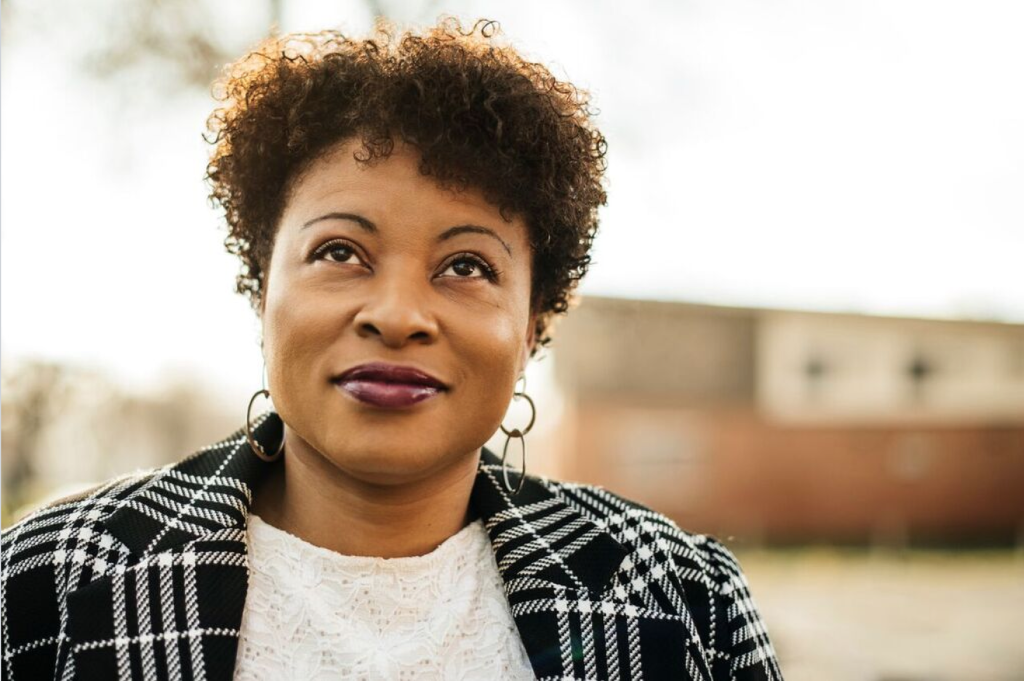
Since her son’s death, Dereasha Leaks has spoken out against the violence plaguing her community. “We are all evil at nature,” she said. “But we choose to be good.”

When Braxton’s mother, Dereasha Leaks, came forward to speak, her voice was soft at first, barely above a hoarse whisper. “I loved my son,” she said, on the word “son” her voice all but vanishing. “And my son loved all of y’all. And all he did was give. And share. And try to enlighten. And somebody let a spirit of envy, jealousy, take over them, and they murdered my son.” She urged them to hold themselves to a higher standard and to resist the “vicious demon thoughts” that could lead them astray. It matters how you live and how you die, she told them, her voice steadily rising. “We choose to be good. We are all evil at nature. But we choose to be good,” she said. “Hold yourself accountable. Hold the people that you keep company with accountable. This is our society. Hold yourself accountable!”

Leaks has been a vocal presence at other gatherings. The day after the vigil, she spoke at a second meeting to address the violence, at the Boys and Girls Club on Berryhill Street. “I already forgave,” she told the crowd. “I’m excited about our future, because we’re saving lives now. We’re on a mission to save lives.” She is working on establishing a community center in honor of her son, who, she told me, had given people “an image of something they could aspire to be.” She said that a reporter had asked her what her son would say if he were still alive. She hadn’t known how to answer, but after sleeping on it, she said, something came to her. “One thing Rayon would be most disappointed about would be leaving his son fatherless,” she said. Though Braxton had a relationship with his father when he was older, Leaks had raised him alone. He wanted his son to have a different experience. “He wanted to be the best father ever,” she said. “He wanted his son every day knowing, ‘Daddy’s here, and daddy’s got you.’”

Braxton’s death and its aftermath drew more than the usual share of coverage from the local media. Maybe it was the size of the community response, or maybe it was the story’s resonance with larger themes. Some people, in the wake of the crime, talked about an epidemic of gun violence. Watson, invoking the Black Lives Matter movement, had tagged his Facebook event #RayonBraxtonMatters.

On balance, the coverage gave ample space to people’s affirmations of Braxton and the community Braxton Hall had supported. But there was one story that stuck out to Braxton’s friends, tarnishing all other media by association. It was an article PennLive published the Monday after he died, and it concerned the legitimacy of Braxton Hall as a business. It ran under the headline “Harrisburg man killed inside illegal, after-hours club was days from eviction.” The article was a standard, latest-developments treatment of new information about the venue, released by a police captain at the city’s weekly press briefing. But, to a person, the dozen or so people I interviewed with ties to Braxton Hall were profoundly upset by it. As Watson put it, “That article made it sound so shady.”

The extent to which Braxton operated aboveboard is a complicated question. The “illegal” part of the description had to do with two issues: first, that Braxton Hall held B.Y.O.B. parties in an area not zoned for them, and second, that it had no business license. According to Geoffrey Knight, the city planner, the city learned about the venue at a public meeting over the summer, when some young people, discussing a vision for Harrisburg’s future, said they “would like to have more places like Braxton Hall.” The name was news to officials, who looked into the business and, determining it was out of compliance, sent a pair of cease-and-desist letters. Later that summer, Braxton and a friend visited the tax office and got the papers for registering the business. But the city says they never turned them in.

The “days from eviction” claim is less straightforward. Mike Hughes, the city’s tax enforcement officer, said that he’d spoken in August to both Braxton and a representative of the owner, who confirmed Braxton Hall had been evicted. (Even if the business was gone, the city would still have demanded Braxton file paperwork, to cover his time in operation the previous year.) Because of this, officials pleaded ignorance after Braxton’s death, saying they thought the business had been closed for months. “Normally we don’t find out about these clubs unless there’s a call,” police Capt. Gabriel Olivera told reporters. But that contradicts statements by just about everyone who worked there, who said police routinely stopped by during events throughout the fall. Furthermore, they said, they shared their activities publicly on Facebook; in early August, an event at Braxton Hall on preventing violence was attended by state Rep. Patty Kim. “Nothing was secret,” Nika Jones told me. “It was on top of a grocery store on Derry, the busiest street in Harrisburg.”

Additionally, the property’s owner has been less than forthcoming. On a recent Saturday, I ran into the owner’s representative on record with the city, a man named Mitch Greynolds. Greynolds said he spoke frequently to Braxton, who would call him to talk about business, fathering, and his long-term goals. “He had a great vision, he had a great heart,” he told me. “His downfall was some of the negativity that came from the after-dark events. He was young, it was his first major business endeavor, and unfortunately we learn from our mistakes.”

When I asked about the eviction, he referred me back to city hall, saying it was the city that first raised the issue. He said that, as far as he knew, Braxton had all the licenses and permits he needed. Yet later, the city provided me with a response letter from the owner, a woman named Cindy Wilson, writing from an address in West Virginia. In it, Wilson said that Braxton’s B.Y.O.B. parties violated his lease and that he was being evicted. “I am more than anxious to stop this activity and remove him as a tenant,” she added. It was dated Aug. 18. (Greynolds, after a brief conversation, said he would follow up in a couple of days about a longer interview. I never heard from him, and Wilson did not return a voicemail message.)

In some ways, it seems that in addressing Braxton Hall city officials didn’t know quite what they were dealing with. Mayor Eric Papenfuse, discussing the murder publicly for the first time, linked Braxton Hall to other “problem businesses” that attract crime and need to be shut down. He also said there needed to be more opportunities for youth—apparently not recognizing the number of youth who had found those opportunities through Braxton. Michele Hairston, an educator who helped bring the August event, part of the “Hip Hop Against Violence” series, to Braxton Hall, said Braxton was working on getting registered as a non-profit corporation. “He was walking around the community, trying to get donations from business owners,” she said. Other friends said he wanted to move the venue away from hosting parties, though it seemed the parties were closely linked with the Braxton Hall brand. Alexis George, the dancer who taught classes there, relished the memories of parties last summer. “It was lit,” she told me. “Like, the whole time.”

In a sense, suggesting Braxton Hall had to be one or the other—as if a late-night party venue and a community center were incompatible—seems like a failure of imagination. Couldn’t it have been both? Uptown Harrisburg for years has had the MakeSpace, a set of artist studios on a residential block that hosts community meetings as well as concerts and parties. Fights did occur at Braxton Hall, but only intermittently. When they did, Braxton seemed to find them distressing. The day before he died, he posted on Facebook about a message he’d just gotten, from someone who’d been assaulted in the Braxton Hall parking lot the night before. The news had Braxton “reconsidering everything” he was doing in Harrisburg, he wrote. He announced he would no longer be hosting any parties, then signed off with the hashtags “#happythanksgiving,” “#imdone” and “#prayforharrisburg.”

Braxton’s funeral was on Wednesday, Dec. 9. That same day, Harrisburg police charged a 26-year-old man named Jerren Stuckey with his murder. Around 6 p.m., officers spotted Stuckey’s car, a silver Volkswagen Passat, parked downtown. It was unoccupied, so police staked it out until Stuckey reappeared, three and a half hours later, and started to drive off with two passengers. As he came to a stop at a red light, officers surrounded him with their vehicles and ordered him out of the car.

When Robin heard the news, he was at the hospital with his girlfriend, who had gone into labor a few hours earlier. He was struck by the coincidence of the events of that day. “It was almost like it was meant to happen that way,” he told me. At the hospital, he’d still been working through the emotions of burying his friend. “I felt, to a certain extent, that a weight was lifted off of me, to the extent that I could actually focus on what was happening in the delivery,” he said. “It was almost like God knew, that in order for me to welcome my son into this world, and to give him the attention that he needed, that that was something that I needed.”

Stuckey went to high school with Braxton. As of this writing, police had provided only scant details of the investigation, and they had yet to indicate a motive. Friends said Stuckey worked at some events at Braxton Hall earlier in the year, but it had been a while since anyone had seen him there. After his arrest, it came out that he’d had some prior brushes with the law. Last January, he was acquitted on charges stemming from an incident in 2013, in which he admitted to slashing the face of a 17-year-old girl. Stuckey’s father is a retired state trooper, and a few people speculated to me that this connection helped him escape punishment. But court records suggest there were some problems with the state’s case. Key witnesses contradicted each other, and the victim’s own testimony was inconsistent with surveillance video from the gas station where the confrontation started.

The Friday after Braxton’s death, his friends were at a loss. They couldn’t go to Braxton Hall, of course, but they weren’t in much of a mood to do anything else. “I went home and went to sleep,” one friend told me. Sometimes, Davis said, he would drive past the warehouse and “see the blue light on and be spooked.” Braxton had died in the place he’d built, and the place he felt most comfortable—in a way, to Davis, it was “poetic,” as well as “wrong, and weird, and interesting, and bittersweet.” “He would sleep here. He fixed the bathroom,” he told me. “This was his home. This was his place of peace.”

In the weeks since Braxton’s murder, his friends have refused to believe that his death was in vain. Robin had the group consider how, in some sense, what happened had propelled their work onto a larger stage. Now was the time to build something positive out of their loss, he said. But there were questions about where that work would occur. Robin thought the Braxton Hall brand should have a new life independent of any building. He felt it was best to leave the Big Ugly Warehouse behind, and treat it more like a memorial.

On a recent Sunday, he perched on a rail outside the entrance, beside the shrine of candles, drooping paper placards, and messages scrawled around the door. “I can’t work within this building anymore, after what happened to him,” he said. “I can’t do it.”

Photos by Dani Fresh.

 

Continue Reading

Drawing Rooms: One Midtown building is home to 2 friends–who just happen to be major figures in the world of children’s book illustration.

Screenshot 2015-12-27 12.32.48 Screenshot 2015-12-27 12.32.32Two holders of the most prestigious honors in children’s literature were talking about doorbells.

“I want to test out my new doorbell,” said Jonathan Bean.

“Can you ring mine, too?” asked neighbor and friend Lauren Castillo. “I feel like the last couple of packages I’ve had . . .”

Welcome to the micro-illustrators’ colony above Yellow Bird Café in Midtown Harrisburg. The residents are neither homegrown nor stereotypically starving artists, but are, instead, recognized professionals who settled in Harrisburg for the affordability and ambience. In the process, they are helping to make Midtown a hub for successful artists.

In this building, the top-floor apartment is occupied by illustrator and writer Jonathan Bean, two-time winner of the Boston Globe-Horn Award for Excellence in Children’s Literature. The apartment below is home to Lauren Castillo, illustrator and writer whose “Nana in the City” is a 2015 Caldecott Honor book.

Bean and Castillo were friends before coming to Harrisburg, and that’s how the story starts. Both are products of the mid-Atlantic. He grew up in the Reading area and graduated from Messiah College. She’s from Bel Air, Md. They met at the School of Visual Arts in New York in an intensive, two-year master’s degree program in “illustration as visual essay.”

By graduation, Bean had sold his thesis as the book “At Night,” the charming story of a girl who can’t sleep and finds rest on the roof of her home overlooking a city vista that combines elements of Brooklyn, Pittsburgh, and Chicago—with the Rockville Bridge in the distance. Castillo found success illustrating manuscripts for other authors and then branched into writing.

Bean stayed in Brooklyn about four years before returning to Reading. After more years overcoming physical problems that limited the use of his arms, he was looking for a new home. He got a call about a Midtown apartment from Messiah College illustration professor and Harrisburg resident, Stephen Fieser. He moved there in 2012.

In the meantime, Castillo stayed in Brooklyn for 14 years before heading to California with her brother in search of new surroundings. Early this year, Bean called her about an available apartment in his building, and she moved in a few months back.

Artists “can work anywhere, for the most part,” says Bean.

He eyed Harrisburg “because it was cheap.” Plus, life near “that hub of activity” around Midtown Scholar Bookstore and the Broad Street Market would “have enough things to do to keep me entertained, but also it’s a small scale.”

“New York City has a lot to offer, but I never have time to do it all,” Bean says. “The things I have time to do are scaled to the things Harrisburg has.”


Bike or Feet

In Brooklyn, Castillo found she was paying $2,000 a month “for a tiny little box.” The constant need to work kept her “strapped to my place.”

“There are places I want to travel, but you have to keep working to pay your bills, and you don’t have the time or money to travel anywhere,” she says. “Even to take a week off to visit my parents in Maryland was a big ordeal.”

Midtown, she says, “feels to me like a Brooklyn neighborhood.” All the necessities—shopping for produce, coffee shops for human company, a train station for trips to New York City—“are accessible here by bike or feet.”

Their building is owned by Harrisburg Mayor Eric Papenfuse. Bean says Papenfuse extended an unwritten condition that he be “artist in residence.” So, a shingle hangs outside the front door: “Bean Illustration.”

On some 3rd in the Burg nights, Bean attaches a “Studio Open” sign to the shingle, inviting visitors to drop in. Along the stairway is a gallery he calls “The Steps Shown,” with examples of the meticulous process and many multiples of drafts he employs to produce the final product.

Midtown’s artist community appeals to the two illustrators.

“For such a small city, they really appreciate the arts here,” says Castillo.

Like Harrisburg’s amenities, the artistic scene is manageably scaled, adds Bean.

“It’s here if you want to look for it and have that community,” he says. “There’s a lot of talent and a lot of really energetic and hardworking artists here.”


Lots for a Little

Other successful artists agree that Harrisburg blends affordability and vibrancy.

Artists and screen printers Joelle and Justin Arawjo own a Midtown home and run their thriving business, Fennec Design, from a Millworks studio. They once lived in an increasingly ritzy Philadelphia neighborhood “where you pretty much needed to be a millionaire,” says Joelle. “We were a young married couple who wanted to own a house and have a yard.”

Justin agrees that “a growing group of artists, especially young artists” is supporting and inspiring each other and amping up Midtown’s creative vibe.

“Because the city is so affordable, it’s possible for younger people to devote themselves to their art, as opposed to the cities where you have to work another job,” she says.

Fieser, the veteran illustrator who says he “proselytizes” to bring artists to Harrisburg, says, “It’s more fun for an artist, the more of them there are around.”

“Even for those who want to move from an apartment and buy a house, you can get so much real estate for so little,” he says. “They get really tired living in New York and having all their income sucked away by rent.”

In their apartments that double as studios, Bean and Castillo have views of N. 3rd Street and the Broad Street Market. Castillo clips her character studies to wires strung on the wall. Bean used his rooftop access to spray paint a recent project and to grow a vegetable and herb garden.

Castillo is thinking about renting a Millworks studio, which “would feel like you’re in one large, shared studio space where you can go visit with your neighbor.” She looks around her studio—essentially half of the apartment’s blended living room and kitchen.

“It’s kind of tiny but decent sized,” she says. “For now, we’ll see. I’ll stick around.”


For more information on these award-winning illustrators, visit www.jonathanbean.com and www.laurencastillo.com.

Continue Reading

Ups & Downs: Harrisburg and the unsettled, topsy-turvy, can’t-make-up-its-mind year.

A heated election, nagging parking problems and lots of bickering—Harrisburg, as usual, didn’t lack for drama in 2015.

Once again, it’s time for my annual Top 10 list of Harrisburg news events. Each January, I revisit and rank the stories that I believe had the greatest impact on the capital city over the prior year.

In some ways, Harrisburg had a good year (continued redevelopment) and in some ways a bad year (stubbornly high crime). All in all, 2015 was a year that started off with great expectations of progress, had plenty of highs and lows and ended up decidedly mixed.
Screenshot 2015-12-27 12.04.13

  1. Kipona Chaos. The last thing that Harrisburg needed was to feed the perception that the city is unsafe—and that’s exactly what it got as scores, hundreds (who really knows?) of youth went on a Labor Day weekend rampage. The trouble began with an argument between two teenagers just as the annual Kipona festival was wrapping up for the night. Soon, crowds of kids descended on the riverfront and, emboldened by their numbers, began roaming through streets in Midtown and Uptown, vandalizing cars (including the police chief’s!) and a convenience store. One teenager accidentally shot himself in the leg. Eventually, arrests were made, but not before the damage had been done both to property and to the city’s always-fragile image.
    Screenshot 2015-12-27 12.04.24
  1. Bar Brawl. What responsibility does a business have to its community? I asked that question in a blog post last year after the city tried to shut down several bars it deemed problematic. The 3rd Street Café in Midtown fought back, appealing revocation of its business license to the Dauphin County court. The owner claimed he couldn’t be held responsible for what his patrons did just outside his bar; the city disagreed. At press time, the judge still had not decided whether the bar stays open or closes.
    Screenshot 2015-12-27 12.04.30
  1. Front Street Fix. First came the lane closures, then the tree cutting, then—oh boy—the noise. By early summer, Harrisburg was divided in two: those who approved of PennDOT’s redesign of Front Street and those who didn’t. In the end, it wasn’t the commuters, reduced to two lanes, who bore the brunt of the project, but those who lived along the street, shocked to discover that PennDOT could, and did, work all night long. However, due to their sacrifice, Harrisburg now has a smooth, less forbidding road, which, on most days, begs the question—why were there ever three lanes to begin with?
    Screenshot 2015-12-27 12.04.50
  1. Nightmare at the Museum. What’s messier than a splatter painting studio? The financial tangle that the Susquehanna Art Museum found itself in just months after opening the doors to its beautiful new facility in Midtown. To sum up: two entities laid claim to one $1.2 million state grant—JEM Group (the project’s general contractor) and Fulton Bank, which wanted to get paid after SAM defaulted on a $3 million loan. The sides chose negotiation over litigation, and, by year-end, an agreement was at hand, which provided some funds to both entities and allowed the museum to stay open.
    Screenshot 2015-12-27 12.06.21
  1. Midtown Resurgence. At this time last year, the following places did not exist: The Millworks, Zeroday Brewing, the SAM building, Next Step Performance and both The Kitchen and The Capitol Room at HMAC. They all opened last year, and, in October, WCI Partners began converting the Moose Lodge/Ron Brown complex to mixed-use space, bringing back an entire city block that had been shuttered for a decade. In other words, 2015 was a landmark year for Midtown’s main commercial stretch. Unfortunately, it wasn’t all good news. SAM’s financial troubles clouded the picture, and another big project, GreenWork’s proposed “Education Row,” went nowhere. Will last year’s new projects finally push Midtown past the tipping point, ending its annoying one-step-forward, half-a-step-back routine?
    Screenshot 2015-12-27 12.06.28
  1. Parking Redux Redux. When it comes to Harrisburg’s parking system, if it’s not one thing, it’s another. Parking meter revenues topped projections, but nagging enforcement problems and weak garage usage provided far less income than was expected. One bright spot: Mayor Eric Papenfuse’s gamble—which lowered happy hour rates downtown and provided four free hours of parking on Saturday—paid off, so those parker-friendly measures should continue. So, for the third straight year, parking scores a spot on my annual Top 10 list. To steal a quote from the Washington Post’s Chris Cillizza—congrats, or something.
    Screenshot 2015-12-27 12.06.36
  1. Papen-fights. City Council, the county commissioners, the Harrisburg Regional Chamber, the Hershey-Harrisburg Regional Visitors Bureau—if there was an entity to tussle with, Mayor Papenfuse tussled. October may have been the low point, with Council President Wanda Williams repeatedly calling him “a liar” followed by public squabbles with both HHRVB and the Chamber/CREDC. By year-end, the mayor and his frenemies had mostly walked back their disputes, agreeing to work towards resolutions or at least a détente.
    Screenshot 2015-12-27 12.09.07
  1. Council Shakeup. Eric Papenfuse is not a shy guy (see above). On TheBurg Podcast, he boldly stated that City Council needed new blood and who, in his opinion, should stay and go. He got his way. Following a spirited election, city residents voted in three new council members, substantially changing the tenor of the seven-member body. I rank this story high not because of the 2015 campaign, per se, but because of what it could mean for the city—and the mayor’s legislative priorities—in 2016.
    Screenshot 2015-12-27 12.09.15
  1. Harrisburg Less Strong. “Harrisburg Strong” began to show its weak spots as the city’s financial recovery plan failed to deliver expected revenues for a second straight year. In 2015, city revenue was about $6 million less than projected by the Strong Plan. Papenfuse said that the plan’s architects had made overly optimistic projections and that some critical revenue sources, such as from the aforementioned parking, were soft. To fix the structural deficit and deliver an acceptable level of city services, the mayor called for a tripling of the local services tax and greater revenue from commercial sanitation enforcement as part of his 2016 budget.
    Screenshot 2015-12-27 12.09.21
  1. Reed Arrested. There was no contest for the year’s No. 1 story, as former Mayor Steve Reed’s arrest was not just Harrisburg news but national news. Love him or hate him, Reed reigned over the city for 28 years, commandeering a comeback built upon a combination of bricks, mortar, debt and delusion. In the end, he was indicted on nearly 500 criminal counts covering various theft, fraud and corruption charges. The sight of agents hauling hundreds of museum-quality Wild West artifacts out of Reed’s poorly maintained Cumberland Street house is one this city will not soon forget.

So, what’s the final verdict on 2015? There were plenty of ups and downs, but, in the end, I think we were marginally better off as a city on Dec. 31 than we were on Jan. 1. Not a lot. Not enough. And probably not as much as I had hoped or expected. But, all in all, we’ve moved forward a few squares.

Lawrance Binda is editor-in-chief of TheBurg.

Continue Reading

River Diver: Keith Williams captures the health of the Susquehanna watershed–one creek at a time.

Screenshot 2015-12-27 12.35.48What might seem like a fetid, murky backwater to you is an afternoon of exploration for Keith Williams.

After all, there is life in even the most neglected and forgotten corners of the Susquehanna River’s many tributaries, streams and pools. And, for an explorer like Williams, every such corner is a new chance to discover, to interact and to understand the complex story of the sprawling watershed.

Williams began exploring the creeks and backwaters of the Susquehanna River about a decade ago after seeing a film called “River Webs” about a Japanese field biologist who pioneered the art and science of studying small water ecosystems. Williams figured he could do the same thing.

“I knew that interacting with the waterways was the best way to study them,” he said.

As a trained environmental biologist, he knew what to look for. As a part-time rescue diver, he had the gear and the knowhow. As executive director of NorthBay, an environmental education and outreach center on Elk Neck in Maryland, he had the mission: teaching students about the impact our choices have on the environment.

And getting more people in contact with creeks and rivers is his manifest mission. He makes regular visits to streams and rivers from suburban Philadelphia to the Allegheny Plateau, sometimes with NorthBay students, sometimes alone. Mostly, his expeditions focus on small sections of water, but he’s done 10-mile snorkels before.

Today’s spot is one of Williams’ favorite. It’s a pool hugging the east bank of the Susquehanna below Safe Harbor Dam at what used to be an old canal lock. Barely larger than a backyard swimming pool and scarcely more than 2 feet deep, it doesn’t look like much upon first glance.

There is barely a trickle of water going into it. Jagged, slippery rocks surround it on three sides. Safe to say hardly any feet ever trod there.

But donning his wetsuit and a mask with the relaxed speed of a professional, Williams is soon in the cool water like an eager kid. He has more than once wondered what horrific thoughts people think when they see him face down in a stream.

As expected, life abounds here: log perch, sunfish, dace. An eastern water snake slides effortlessly between the rocks along the edge of the pool.

And there are crayfish. Lots and lots of crayfish—big ones, too. Williams, however, is concerned. These are not natives, but an invasive brand called rusties. They can devastate ecosystems. They eat more, grow faster and are more numerous than most waterways can handle.

Even with the invaders, this spot on this day seems relatively healthy, he said.

“There was a lot happening down there,” he says, stepping out onto the warm rocks. “I come here a lot, and every time there is something different happening.”

Today’s discoveries include a small school of stonerollers, barely an inch in length, dancing through the shallows. Despite their small size, he can spot them from their behavior alone.

Getting to know this little slice of a big river system is what Williams sees as the truest way of doing environmental science. Real science is about following a sense of wonder, and Williams still has it.

“It’s amazing the stuff you learn from observation, and, with the perspective of learning it in a tiny mountain creek,” he said.

And this from a guy who’s snorkeled the Great Barrier Reef off of Australia.

“Of course, this isn’t as colorful, but the things I see here are every bit as complex and interesting,” he said.

Can you describe the color changes of male creek chubs prior to spawning? Williams can.

“Their colors can rival some tropical bird species,” he said.

And it’s a pastime that doesn’t depend on the seasons. With the right gear, Williams can explore streams on the coldest of days. It means he sees things that few other people will ever see, let alone imagine.

“You would be amazed at what is still happening in the winter,” he said. “It’s a lot quieter to be sure, but stuff is still happening under the ice.”

With all of Williams’ experience, every trip has a surprise, a revelation or a sign of hope in what are often highly stressed waters. Progress is indeed measured in tiny increments often reduced to numbers on a spreadsheet. But the re-appearance of a single species of benthic insect can mean big improvements.

“You’re not going to see that unless you spend time looking,” he said.

Given that deforestation, soil runoff, nutrient loading, coal dust, industrial and municipal pollution have had their effect for more than three centuries, some may think it’s a wonder the Susquehanna can support life at all.

“If you can eliminate these problems and give it half a chance, this river can recover,” he said. “Its resilience is remarkable.”

It only takes a few horror stories in the era of social media to make people think there is no hope: a fire at a fertilizer plant that kills an entire ecosytem, a cancerous smallmouth or intersex mutations in fish populations. The Susquehanna is at a crossroads. But Williams, for one, sees possibilities.

“The river is truly impacted, but that doesn’t mean we cannot make contact with it,” he said. “We have to if we want to understand it.”


To learn more about Keith Williams’ work and see some of his stunning photographs of the Susquehanna River watershed, visit www.creeksnorkling.blogspot.com.

Continue Reading