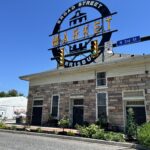
Razing the Bar: A sober assessment of Harrisburg’s attempt to shut down the Third Street Cafe.

Screenshot 2016-02-26 16.37.13When you walk into the Third Street Café, your first reaction may well be: This is what all the fuss is about?

The bar is basic, unimposing, a snug space that clocks in at no more than 700 square feet, most of it occupied by a long bar with maybe a dozen seats.

It seems an odd place to generate so much passion, one tiny business in a city dense with them.

As a Midtown resident who’s witnessed all manner of human dysfunction near the bar at the corner of N. 3rd and Calder, I have no great affection for the Third Street Café. But, as someone who writes often on urban subjects—and about Harrisburg specifically—I find the issue fascinating.

The case of the Third Street Café is something of a microcosm of so many issues facing cities today, particularly in changing neighborhoods. It’s a battle between private interests and public welfare; it’s a complex story involving class, race and community.

Legal Case: It’s been nearly a year since Harrisburg first notified the Third Street Café that it was revoking its business license. Nonetheless, the bar remains open, which may indicate that the city’s pure legal case is not that strong. That’s certainly what the bar’s attorney, Chris Wilson, believes—and he has let me know his position in no uncertain terms. The thing is: he has a point. The city cited nine alleged criminal incidents in or near the bar to support its contention that it should be closed. Several, however, were not linked to bar patrons, others were relatively minor and the most serious one, an alleged drug deal, involved a Harrisburg police operation. Since then, a December shooting just outside the bar, which included two men who had been briefly inside, may have given the city additional support for its position. Still, to me, the city’s legal case is hardly a slam-dunk, which, to the bar and its attorney, is what matters most.

Business/Property Rights: In this country, denying someone the right to legally run a business is serious stuff, something acknowledged by all sides in the conflict. That’s clearly a principal concern of the Republican county judge, Andrew Dowling, who, last September, allowed the bar to remain open pending a decision because of the “irreparable injury” the bar’s owner, Tony Paliometros, would suffer. Dowling later barred the city from fining Paliometros until the city’s License and Tax Appeal Board issues a verdict on the city’s refusal to issue a 2016 license.

Community Impact: The bar has acknowledged problems near it, but has absolved itself of blame, saying that it has the simple bad luck of operating in a high-crime area. Moreover, Wilson has said the bar has acted in good faith by increasing its vigilance, installing exterior cameras and offering to share camera footage with the police. Nonetheless, the city believes that the bar still attracts people who engage in undesirable behavior—that it acts as a magnet for trouble. On this point, I have to side with the city. I’m on that block almost every day and can attest that, while the December shooting may have been an anomaly, problems near the bar—including vagrancy, public intoxication, littering, loitering, panhandling and loud, drunken arguments—are practically daily occurrences.

Municipal Prerogative: In its business license handbook, Harrisburg explicitly states that it reserves the right to revoke a license for criminal behavior, “gross negligence” or allowing a “public nuisance.” To date, that clause, a potentially powerful governmental tool, has proven difficult for the city to enforce. So, is this the right way for Harrisburg to close down the bar? Wilson says no, that the PA Liquor Control Board is the place to go to seek redress, that the PLCB has an established process to yank the liquor licenses of so-called nuisance bars (a Section 611 action). He told me that closing a bar can be a “quick procedure” and, for proof, linked me to a 25-year-old case against a Harrisburg bar called Vanity that was closed after just 2½ months. I found his example to be selective since, more typically, that process can continue for years (in fact, even the Vanity case took three years to fully adjudicate). To that point, the Pittsburgh Post-Gazette ran a story in December how most Section 611 actions in that city drag on and on, allowing troubled and crime-ridden bars to remain open indefinitely.

Race/Gentrification: The 3rd Street Café’s patrons are mostly—though not exclusively—African American and working class, leading some to claim that Mayor Eric Papenfuse wants to clear the area for more upscale (and whiter) projects. And, whenever this issue comes up, someone points to the mayor’s own business interests in the neighborhood. Papenfuse has countered that he also targeted the Taproom next door, a bar with a more diverse clientele, and the Royal Pub, a bar located Uptown (both have since closed). This may be the thorniest issue in the debate. Closing the bar indeed would shut down a business that caters mostly to black customers (though its owner is a white guy from the suburbs). But several developers have told me that they believe the bar (and what goes on outside it) is holding back revitalization of the critical, centrally located 1400-block of N. 3rd Street.

So, there it is, fascinating complexity in one tiny bar. If you’re the bar’s attorney, the legal case probably matters most; if you’re the judge, it may be the rights of the business owner; if you’re the mayor, it may be the general improvement of Midtown and even Harrisburg itself.

My focus is on community impact. No business has the right to detrimentally affect a community, creating concerns about safety and retarding its development. In my view, that’s what’s happening at the corner of 3rd and Calder.

Lawrance Binda is editor-in-chief of TheBurg.

 

Continue Reading

A Place for Second Chances: Ex-offenders find a comfy home, respect at Kera’s House.

Screenshot 2016-02-26 16.39.17Most ex-offenders find themselves in dormitory-style halfway houses or shelters after incarceration.

Many have bad credit or cannot return to their previous living arrangements. They tend to live in unsavory places with slumlords who don’t maintain their houses. To make matters worse, most people don’t want to associate with ex-offenders, much less employ them, said Linda Dean, founder of Kera’s House.

Dean is on a mission to help people who have served prison time. She and her late husband opened Kera’s House to assist former inmates who want to become self-sufficient and productive members of society.

“I show them respect when they come through the door,” said Dean, who coined “Kera” from the initials of her children’s names. “I address them as Mr. Brown or Mr. Smith. They call me ‘Mrs. Dean.’ They reciprocate that respect to me and my house.”

Kera’s House helps these men feel like they’re truly at home. The house is clean and mulberry-scented. The shiny hardwood floors reflect light. A 7-foot couch sits in front of an antique woodstove fireplace. The men share a kitchen and common living areas, taking care of the house together, but each has his own bedroom. The house is accessible to shopping, a laundromat and public transportation.

“I provide these men a home I would live in myself,” Dean said. “When they’re surrounded with a safe, positive living environment, they feel motivated about their prospects. They have incentive to live well, because they see it’s possible. I believe it inspires them to make life changes.”


Second Chances

Dean chooses her residents based on their potential for success—people she can invest in.

“They must want to help themselves take advantage of a second chance,” she said.

She requires residents to be working, looking for work, in school earning a degree or learning a trade. She looks for focused men who have a life plan.

Along the way, she helps them find their passion and formulate their plans. Some need a push because they place limitations on themselves. They need someone to believe they can reach their goals so they can believe in themselves. Dean also urges volunteering because “you meet people from all walks who can open doors for you.”

On the housing application is a critical question: “Do you want assistance with your personal goals?”

Dean works closely with probation officers and various community and referral agencies to connect residents with health care, educational, employment and life skill services. She also leverages a partnership with Christian Recovery Aftercare Ministry, Inc., which provides pre-release and re-entry services.


That First Step

Thirteen house rules make up part of an ex-offender’s probationary plan at Kera’s House. These include chores, a curfew, a ban on foul language and no sagging pants below the waist. Dean provides her residents with stern mothering to enforce the rules.

“When they go out on their own, they need to learn to keep a responsible routine,” she said. “Rules make the house run smoothly.”

Three strikes, and they’re evicted. One strike if the offense is drugs.

“They wonder why I’m so tough on them. I don’t stand for whining. I push them to do better,” Dean said. “Some just don’t know how to take that first step.”

Some of the rules, such as “no guests,” may seem harsh.

“There’s no growth when they have drama,” Dean said. “Kera’s House is a place for them to get themselves together. That isn’t going to happen if they let the world in. They stay focused if they keep the outside out.”

When residents’ life plans don’t follow the happy path, Dean encourages them to bring her their problems. Sometimes, their hours get cut at work. They get behind on rent. She helps them find solutions.

“Pride makes it hard for them to reach out sometimes,” she said.

Indeed, many have become hardened through a life of tough times.

“They’ve lived in the gutter, in the street, house-to-house,” she said. “They’re still standing.”

Dean dearly misses her husband’s side-by-side passion for their mission. She admits it’s sometimes hard for her to generate enough money to cover all the expenses to maintain the self-funded house.

“More often than not, I’ve had to dip into the savings that my husband left me,” she said.

Seeing her residents succeed energizes Dean with passion for her work. A recent success story was a young man who focused himself until he reached his goals. He graduated last spring from HACC’s culinary school, working while in school. Then he took a job offer in Pittsburgh. Dean gushed when she said, “People like him fill your heart up.”

Seeing so much homelessness fuels her to continue Kera’s House.

“When you’re disenfranchised, you’re beaten,” she said. “When you have a nice place to live, you have incentive to do better. You start planning to do something with your life. You work hard and carry out your goals.”

Despite the struggle, Dean plans to do everything she can to keep Kera’s House open.

“I hope Kera’s House will continue to provide quality housing,” she said. “I always tell the men, ‘As long as you’re willing to help yourself, we’re willing to help you. Kera’s House is more than just a place to stay.’”

Linda Dean can be contacted at:

Kera’s House, Inc.
c/o Linda Dean
101 S. 2nd Street #804
Harrisburg, PA  17101


Continue Reading

Learning Curve: It’s been an adjustment, but Harrisburg students have built new friendships, lives at DC Tech.

DC Tech students Cedrickia Hawkins, Mohammad Tanveer, Nila Cobb and Jeremiah Ellison.

DC Tech students Cedrickia Hawkins, Mohammad Tanveer, Nila Cobb and Jeremiah Ellison.

It’s been five years since Harrisburg students transferred to the Dauphin County Technical School, following the closure of the district’s Career Technology Academy.

So, how’s it going for city students?

Based on my informal survey, the answer seems to be, “Not perfect, but pretty well.”

Nila Cobb, an 11th-grade web design student from Harrisburg, said she was “so surprised” by the friendliness of students when she first came to DC Tech in the ninth grade.

“Everyone was so nice and polite, and you had so much support,” she said. “Coming here definitely made me a better person, but I’m still myself.”

Cedrickia Hawkins, a 12th-grade carpentry student, admitted that “it was tough” when she first came to the tech school.

“At Harrisburg, there wasn’t a dress code or a lot of rules,” she said. “But coming here was good. It was much friendlier here, especially with the seniors. It was ‘Hi, hi, hi’ whenever you passed somebody in the hall. The teachers were happy here, too.”


So Much Help

It all started in January 2011 when 12 carpentry students transferred to Dauphin County Tech after Harrisburg’s John Harris campus closed its vocational program. Four Harrisburg sophomores attended Tech’s morning session, with juniors and seniors attending in the afternoon.

“One of the students said that this was carpentry on steroids here,” said Dauphin County Technical School Director Peggy Grimm. “The (John Harris) program was dying financially,”

Preceding the Harrisburg students’ arrival was carpentry instructor Tim Carroll, who transferred to DC Tech in November 2010 after teaching 21 years at John Harris.

“We were thrilled that we were able to hire Tim Carroll,” Grimm said. “He was instrumental in our transition process. Everyone involved in that whole transition process had the kids in the forefront. It involved a lot of work.”

Carroll explained the differences between the two programs.

“Both places have their good points,” he said. “It’s so much easier here (at DC Tech) because we have so much help. Carpentry ran smoothly at John Harris; they just kind of left us alone. I worked by myself for so long that I had to get used to having aides.”

Today, 240 Harrisburg students attend DC Tech, with some enrolled in each of the school’s two-dozen programs. The school’s total enrollment numbers around 1,000, pulling students from much of the county.

Harrisburg students attend the tech school on a tuition basis, meaning that the district pays a flat rate per student. Member school districts pay annual fees based on a weighted five-year attendance average. Currently, administrators are considering upgrading Harrisburg’s status to a member school district.


High Expectations

Grimm said there were definitely “bumps in the road” when Harrisburg students first transferred to DC Tech.

“We had expectations for them, and they were high expectations,” Grimm recalled. “We had a few fierce conversations. A few students ended up going back to Harrisburg.”

In particular, some students objected to the uniform requirement.

In 2009, the school adopted a dress and grooming policy that requires students to wear “professional dress.” This involves shirts that clearly display the DCTS logo or an approved design or embroidery for individual programs. Programs such as food service, health assistants or diesel technology require additional garments like scrubs or coveralls.

“Our uniform requirement was a big thing for them, but, as time moved on, we stayed consistent with our expectations,” Grimm said. “Our expectations for respect stayed. Some Harrisburg students still have discipline problems, but so does every district.”

With time, Hawkins, a senior, said she came around to the requirement.

“I really understand now why they have a dress code here,” she said. “It’s more professional.”

Jeremiah Ellison, a 12th-grade drafting and design technology student, said he tended to stick with other Harrisburg students when he first came to the tech school in ninth grade, but began to mix with others after a while.

“As the year went by, I started to talk to more and more people, and it became easier for me,” he recalled.

So what does Ellison find different about DC Tech compared to Marshall Math Science Academy, which he attended in the Harrisburg district?

“There were only about 150 kids at the Math Science Academy,” he said. “It was very small and very quiet. In Harrisburg, we played around a lot more. Here (at DC Tech) we try to mix it up, you know, like with work and play.”

Mohammad Tanveer, a 12th-grade electronics technology student, moved here from Brooklyn, N.Y. He spent a year in the Harrisburg district before moving on to DC Tech. As with other Harrisburg students, it took some time before he got used to his new school.

“I was like, ‘Where are the metal detectors?’” Tanveer recalled with a laugh. “I saw a wide variety of people that I never saw before. I heard barking and said ‘What’s that?’ and then I realized that there’s a veterinary assistant course here.”

New students must get comfortable working not just with new faces but for the good of their team.

“Teamwork is a huge element of what we have here,” said Principal Jon Fox. “The kids have to work together.”

Carroll, the John Harris instructor who moved to DC Tech, views the situation with a philosophical edge.

“Kids all come here with different attitudes, but deep down, kids are just kids,” he said. “We get rid of the rough edges real quick. Over there (at John Harris), they had to act real tough. It was fight or flight there. Here, kids can relax a little bit.”


For more information about Dauphin County Technical School, visit www.dcts.org.

Continue Reading

A Home, Reborn

For many years, Marc Kurowski dreamed of living along the Susquehanna River, and, one day, while walking his dog, spied a duplex for sale on Front Street.

Like many once-grand riverfront homes, the house long ago had been converted to institutional use, owned for years by Teen Challenge, a faith-based residential rehabilitation program. It then was bought for a condo conversion, but, after some demo work, the new owners changed their minds and decided to sell it. In late 2013, by the time Kurowski got his hands on it, the house was a dilapidated, half-destroyed shell, but he saw tremendous potential for a grand home on a magnificent river.

A principal with K&W Engineers, Kurowski knocked down the wall that separated the two sides of the duplex, adjoining the spaces. It then was a matter of redesigning and rebuilding the interior of the circa-1890s structure.

There were many bumps along the way, including construction delays that turned the renovation into a 20-month slog. But, in the end, Kurowski took a building, abused and damaged for so long, and transformed it into a spacious, stunning, single-family home, topped off by a roof deck with breathtaking views of Riverfront Park and the Susquehanna River.

Photos by Elena Jasic.

Screenshot 2016-02-26 16.41.53 Screenshot 2016-02-26 16.41.38 Screenshot 2016-02-26 16.41.27 Screenshot 2016-02-26 16.41.18

Continue Reading

Something Wants to Happen: New leadership and new energy re-make the MakeSpace.

Screenshot 2016-02-26 16.48.03In 2012, a new arts group formed in Harrisburg, full of energy and promise.

It was called the MakeSpace, a collective based on the idea that artists could take a dilapidated building in a transitional neighborhood, renovate it and transform it into a haven for the arts: studios, gallery space, live music, creative collaboration.

Almost four years later, the MakeSpace has carved a niche for itself in Harrisburg, but the energy has dissipated. Nonetheless, the promise is still there.

Enter Mikey Rioux, a 36-year-old multi-disciplinary artist and long-time Chicago resident who has taken over as head of the group—and the building.

“The MakeSpace feels very insular right now,” he said. “That’s something that I think about a lot. I feel a huge responsibility to make this space more available and to serve the community better.”


Pretty Solid

Despite being a Midtown fixture for years, the MakeSpace still feels like one of those things that wants to happen.

Established by artist Liz Laribee and a steering committee in 2012, the renovated row home features eight studios and a gallery portion.

“When the MakeSpace first opened, I had no idea what to expect,” said Michael Fisher, the only original artist who still maintains a studio there. “The energy was pretty clear those first couple months. For six months, we would have, like, 200 people coming through the door for every event.”

In its heyday, Fisher said, there was at least one show per month. “The first year was a pretty solid year,” he said.

That tapered off in the winter of 2013, by which time the collective energy was hard to rally.

“There was no bad blood between anyone,” said Fisher. “There was no specific thing that happened”—though old, bursting pipes didn’t help—“but the energy levels dropped for all of us.”

Moreover, he discovered that people in Harrisburg often prefer to stay home at night than go out.

“It’s ultimately easier not to do something than to do something,” said Fisher in reference to both the MakeSpace’s artists and its audience.


Unique Corner

When Rioux first visited Harrisburg in June 2014, his friends told him he should meet Laribee. They hit it off over coffee at Little Amps and, after he moved to Harrisburg, she took him on a tour of the MakeSpace. He soon took over management of the gallery space.

“We were here for the 3rd in the Burg opening, and I was trying to figure out how much initiative I could take in the space,” he said.

Laribee proposed selling him the LLC and putting the mortgage in his name. Rioux took ownership of the MakeSpace in October.

“I’m so glad that MakeSpace has found a new direction to take,” said Laribee, who, along with many of the artists who initially rented studios there, renovated the building. “MakeSpace has held a unique corner of the arts in Harrisburg. It will be so interesting to see the shapes it takes with new leadership.”

Similarly, artist Meisa Chase said she looks forward to seeing how Rioux drives the mission forward.

“With any project like this, it takes a lot of energy,” said Chase, who’s been with the MakeSpace since its inception. “It’s to be expected, since a lot of us are young, that the energy level will drop off. That’s very usual with artists.”

But it is that very energy that allows the MakeSpace to be agile enough to respond to the needs of those who want a hub for making art in Harrisburg.

“It’s changed,” Chase said. “It’s been free-form, and whoever wants to push it in any direction can.”

Rioux’s vision involves relieving the MakeSpace of having to run solely on collaborative energy and to establish some financial sustainability.

Besides fundraising, he wants to keep more consistent weekly hours so the eight artists who rent studios there have more opportunities for their work to be seen besides during 3rd in the Burg. Otherwise, Rioux is committed to the MakeSpace’s original mission, since it still addresses voids in the arts in Harrisburg.

“We are going to continue doing what the space does really well,” said Rioux. “D.I.Y. music shows. I’d like to get back to offering classes and workshops on a regular basis. Providing gallery space for local and regional artists to exhibit their work—those are the things that we’re already doing that I think we can double down on, do more consistently and do a better job of. I’ve already got the whole 2016 gallery season scheduled out.”

That is not to say there are not plans for expansion should everything come together. Rioux has several big ideas: practice space for bands, showcases for dancers, artists-in-residence and “secular Sunday”-style free lectures. But it is all in the service of helping people—as many people as possible—make art in Harrisburg.

“Harrisburg needs more opportunities for creative expression,” he said.

The MakeSpace is located at 1916 N. 3rd St., Harrisburg. For more information and a schedule of events, visit www.hbgmakespace.com.


Continue Reading

Student Scribes: The Not-So-Invincible Father

Quarter to 8 the morning of March 3, 2013, while I sleep soundly in the next room, my father complained of a headache. He held his head in his hands for a split second, groaning and complaining of pain before his body would deny him self-control, before constants would become variables. At 8 a.m. on that Sunday morning before church and family brunch, my father suffered a hemorrhage stroke. He was 51 years of age.

There are three different kinds of stroke: hemorrhage, transient ischemic and ischemic. A hemorrhage stroke happens when a blood vessel bursts and bleeds, causing tissue damage. A transient ischemic, or “mini stroke,” occurs from a temporary blockage in the brain. An ischemic stroke occurs when a blood vessel that takes blood to the brain becomes blocked, most commonly a blood clot. According to cdc.gov/stroke.htm, stroke is the third leading cause of death in the United States. It claims more than 140,000 people die each year from stroke. Forty percent of those deaths occur in males, and 60 percent occur in females.

My mother rushed into my room, her cell phone crunched against her ear, fear in her eyes. Still in her pajamas, she pulled me from my bed, tore my blankets away from me and, in a professional, secretary-like tone, she instructed me to flag down the ambulance. “It’s okay, I’m sorry. Just go. Daddy is very sick,” she said. She then spoke loudly into the phone as she left me. My hands began to shake as my mind drifted away. I tripped down the stairs, my head so full that my thoughts ceased to exist. As I stood on the frost-covered grass of the barn hill, I ground my teeth until my temples pulsed. The sheep bleated at me as I stared down the road, my feet carrying me to my mailbox. The ambulance promptly pulled in, breaking branches as they drove under the trees covering the driveway. After throwing our belongings away from the front door and showing the EMTs the way upstairs, I stood in the kitchen, listening to the clamor in my parent’s room. Soon, they came tromping down the stairs: my father looking like a lamb for slaughter, his eyes that of a stranger, my scared mother and the cluster of EMTs.

Anyone who knows my father would agree he was always a hard worker. My family would describe him as a workaholic. For as long as I can remember, my father has worked on average eight- to 15-hour days. He owns a repair shop, towing business and car lot, which, until his stroke, he managed on his own, along with a boarding house and the farm where we live. He managed all of this while still caring for his five children, wife and an array of lost souls who seem to gravitate toward his commanding personality. Growing up, working in a feed mill, he learned the value of endless hours of backbreaking work. His garage has always been his escape, full of raggedy friends and broken cars. His hands have been stained with grease since seventh grade. Arguably, from either working around motors or late nights with loud amps around him and chewed up drumsticks in his hands playing in a garage band, his hearing had been damaged. Still, stroke came like a thief in the night.

According to MDStrokeassociation.org, every year approximately 795,000 people suffer a stroke, 600,000 for the first time, 185,000 recurrent attacks. Atrial fibrillation, blood disorders such as sickle cell disease and anemia, diabetes, atherosclerosis and heart disease increase the risk of stroke. The most common risk factors for stroke are high blood pressure, high cholesterol and obesity. Blood pressure of 140/90 or higher is the leading risk factor for stroke. When blood pushes too forcefully against the walls of the arteries, it can damage or weaken them.

Just two weeks before the stroke, my father began taking high blood pressure medication. He was nearly crushed under a car that slipped off the jack, creating muscle strain. He began to display irrational anger, and his temper became unpredictable. He had been complaining for some time of blurred vision and frequent headaches. At the time, we did not recognize these as stroke warnings. Many people are unaware of the warning signs of a stroke. A popular phrase in the stroke awareness realm is BE FAST: balance, eyes, face, arms, speech, time—relating to an individual’s physical appearance when having a stroke. “Balance” is an individual’s ability to equally distribute body weight. A stroke victim loses this ability. “Eyes” refers to a person’s vision, which may become shaky or blurry. “Face” refers to the person’s appearance, which may include drooping of the skin due to the lack of muscle control. This can make the individual appear to be melting. “Arms” refers to the control or lack of in an individual’s arms. “Time” plays a critical role for a stroke victim. If you suspect an individual is having a stroke, seek medical help as soon as possible.

After living in the ICU for 40 days, my father transitioned to rehab, where he remained for another two weeks. On April 20, he returned home, but he would be bed-ridden for two more months. He maintained a physical therapy regimen for the next year. On March 19, 2014, a little more than a year from the stroke, he was released from rehab.

Each year since his stroke, he is required to have a CAT or MRI scan performed to ensure his good health. He will remain on Losartan Potassium, Citalopram, Metoprolol, and levetracctam for the rest of his life. Many of my father’s nurses, doctors and friends refer to him as a “walking miracle.” Those who survive strokes often suffer emotionally and physically crippling disabilities. As my father’s rehabilitation nurse said, “He is a lucky, stubborn man.”

My father now works eight to 12 hours rather than eight to 15. He and my mother run the repair shop, towing business and car lot together. They still own a boarding house and run the 34-acre farm we live on. We live with the threat of a seizure hanging over our heads. My father suffers from vitamin deficiencies resulting in a dependence on electrolyte beverages and snacks high in potassium, as well as anxiety, resulting in the permanent use of medication to manage these deficiencies. He approaches life with a more urgent manner. He suffers from short-term memory loss but his long-term memory became amplified.

“Taking medicine doesn’t really bother me. It makes me slow down, time normal.” he said.

Without the medication, he claims to “move too fast,” feeling as though his brain will “short circuit.” My father has little to no recollection of his stroke, even the time he spent conscious in the hospital is foggy to him. Since his stroke, he has learned the value of a good night’s rest. His sleep is “solid. Fine.” He rarely experiences dreams and when he does, he has no memory of them. He no longer snores. When he over-exerts, he becomes tired, his motor skills slow and his speech slurs. He continues to recover. Although released as “healed” nearly three years ago, he will never be completely healed and that is OK. My family now realizes that every day we have together is precious, frustrating but precious. As my father said, “Stroke or no stroke, use whatever time you have left wisely.”

Galena Conrad is a junior at CASA.

Continue Reading

Get Your Rear in Gear: Don’t shy away from ensuring a healthy colon.

Screenshot 2016-02-26 16.50.09The human digestive tract plays a vital role in our lives and well-being, but we often have an uncomfortable reaction when it comes to discussing it.

Doctors, cancer organizations and others are working to break down barriers such as embarrassment and the “ick factor” to encourage open communication about the colon and rectum, the cancers that can affect them, and important screening tools like colonoscopy.

“Be proud and confident in knowing what’s normal for your body, checking your stool for signs of cancer and getting the appropriate screenings,” said Robert Carman Jr., doctor of osteopathic at Central Pennsylvania Surgical Associates. “I guarantee your doctor has seen and heard it all, so be honest if you have concerns. There’s no place for embarrassment when it comes to saving your life.”

According to the American Cancer Society, early detection and treatment does save lives. When caught early, colon cancer has a 90 percent cure rate, but the right screenings can actually prevent cancer from occurring.

“Colorectal cancer usually develops from pre-cancerous polyps called adenomatous polyps or serrated polyps,” said Carman. “So, in order to reduce the likelihood of colorectal cancer, it is important to have regular checkups and screening to find out if you have polyps and to have them removed if you do.”

The U.S. Preventive Services Task Force recommends screening for colorectal cancer using high-sensitivity fecal occult blood testing, sigmoidoscopy or colonoscopy beginning at age 50 and continuing until age 75. People at higher risk of developing colorectal cancer should begin screening at a younger age and may need to be tested more frequently.

“It is very important to understand that younger people can get colon cancer,” said Carman. “You should be screened before age 50 if you have symptoms such as abdominal or rectal pain, bleeding, change in bowel habits, or a family history of colon or rectal cancer or polyps. If you have a family history of colon cancer, you should be screened 10 years earlier than the age of the family member when he or she was diagnosed, or at age 40—whichever is younger.”

Most people have heard of colonoscopy, a procedure that examines the colon by use of a long, flexible, lighted tube called the colonoscope. Through it, the doctor can view the entire colon and rectum for polyps or cancer. During this same exam, the doctor also can remove pre-cancerous polyps. Because it is the only method that combines both screening and prevention (by removal of pre-cancerous polyps), most gastroenterologists and surgeons recommend colonoscopy as the single best screening exam for colorectal cancer.

“The procedure itself takes about 45 minutes and usually involves sedation, so it’s rarely uncomfortable,” said Carman. “Patients are asked to switch to a clear-liquid diet the day before and use laxatives or a cleansing preparation. The colon must be completely clean for the procedure to be accurate and comprehensive.”

While the cleansing process isn’t pleasant, most gastroenterologists agree that it’s well worth any temporary discomfort to protect your health and your life. When your doctor recommends your cleansing procedure, he or she will account for any medications you take and any health problems you have.

“Right now, only about 60 percent of people who should be screened are getting screened,” said Carman. “Colorectal cancer is the second leading cause of cancer-related deaths for both sexes combined. With the appropriate screening tests, we can significantly reduce that number, detect their cancer earlier and decrease the number of colorectal cancer deaths.”

Lifestyle changes also can reduce the risk of colon cancer. Carman recommends eating more foods that are high in fiber, including whole grains, fruits, vegetables and more cruciferous vegetables, such as cabbage, broccoli, cauliflower and Brussels sprouts.

Increasing calcium intake with low-fat milk, shellfish, salmon and calcium supplements with vitamin D—and decreasing consumption of fats, oils, butter and red meats—are other recommended dietary changes. And, as with all cancers, regular exercise, not smoking and maintaining a normal weight may also reduce your risk.

Patients can also play an active role in their health by choosing the right physician for the colonoscopy procedure.

“I recommend a physician who is board-certified and performs the procedure in a licensed, accredited facility with the appropriate preparation, sedation and monitoring,” said Dr. Carman. “If you’re unsure, ask your primary care doctor for a recommendation, but do your research about experience and credentials.”

Properly administered, colorectal cancer screening is safe and effective, Carman said.

“More than one-third of colorectal cancer deaths could be avoided if all eligible individuals participated in regular screening,” he said. “Take charge of your health and don’t let fear hold you back from getting screened.”

Continue Reading

Freshman Under Fire: Sen. Rob Teplitz, a “huge target” on his back, enters a tough re-election fight.

Screenshot 2016-02-26 16.37.58The way Rob Teplitz saw it, he had been very patient by the time he finally rose to his feet one spring afternoon in 2014 to air a grievance on the floor of the Pennsylvania state Senate.

Teplitz, a career lawyer, was one of the chamber’s newest members—and intent on showing that he would not be a meek member of the Democratic minority. He is used to asserting himself. The cherubic-faced freshman legislator hears frequently that he looks young for his 45 years. His typical response: “You should’ve seen me before I entered politics.”

“I have to constantly assure people that I am old enough to drive and to serve in office,” said Teplitz recently, half-closing his eyes in exasperation. “It’s something that has actually irritated me my entire life. I’m thrilled that I am finally getting gray hair.”

Teplitz was in the Senate GOP’s crosshairs even before he was sworn into office. His election in 2012 made him the first Democrat to win the 15th Senate district since 1936, according to state records.

“The Republicans held this seat for almost 100 years straight,” said Teplitz. “They want it back.”

Now, Harrisburg’s state senator is headed into a reelection campaign as he comes to the end of his first four-year term. How is he doing?

His colleagues confirm that the Republican majority goes out of its way to prevent him from passing legislation of his own—even the minor, provincial bills that assign names to roads and bridges. Political expediency is not the only explanation for this.

“There’s a huge target on my back,” said Teplitz, “and the reason for that is because I haven’t played this game where the safest thing for a minority freshman to do… would be to just keep your mouth shut and not do anything controversial.”

Back in May of 2014, Teplitz stood before his Senate colleagues to lodge a complaint. The highly structured rules of a Senate session relax once the day’s voting is done, and members can speak in protest or otherwise go off-topic on the public record.

Teplitz had been promised the legislature would move one of his proposals. But now it was stuck in committee, and he couldn’t get it out. Specifically, Teplitz felt betrayed by Pat Vance, a veteran Republican senator who had the power to advance the measure. (The Senate Democratic minority leader, who witnessed the two lawmakers strike their compromise, recently told me, hesitantly, that Teplitz was indeed being shafted.)

“This place cannot function if people do not keep their agreements,” Teplitz said. “I do not know if it makes it more or less likely for me to succeed on this resolution, perhaps less likely.”

Perhaps. State legislators, especially in the traditionally decorous Senate, speak in code on the chamber floor. Comments that are necessarily elliptical under the Senate’s rules of debate are parsed according to political context and interpersonal squabbles. Teplitz’s comments were perceived as a character assassination of Vance, the committee chair who he felt had wronged him.

“Oh, it was combative,” said Vance, whose Cumberland County district sits just across the river from Teplitz’s turf. “I have lots of faults, but I don’t lie and I think most people know I’m pretty straight… it was like he was attacking me because I wouldn’t agree with him. And I thought that was very foolish.”

Nearly two years after his cri de coeur, Teplitz has no regrets.

“I reject the notion that I did anything inappropriate,” he said. “We had a professional disagreement, and I’m comfortable that I handled it professionally.” But publicly questioning the integrity of a longtime Republican senator won him no friends on the other side of the aisle.

Despite Teplitz’s unofficial status on the Republican blacklist, the Harrisburg mayor considers him to be an effective advocate for the city. Teplitz pushed for Harrisburg to receive $5 million from the state, ostensibly for fire protection services (the money also helps the city balance its budget, and there is talk of increasing the aid to plug Harrisburg’s spending shortfall). The sum, however, is contained in the state budget bill, and Teplitz, who took office during the austere years of the Corbett administration, has never voted for a budget.

Can you take credit for a line item in a spending plan you voted against? Teplitz says you can. A budget that underfunds education, as he believes the past several state budgets did, is not going to win his vote just because it includes a hard-won appropriation for Harrisburg.

“I never misled anyone or gave anyone the expectation that I would vote for it,” he said.

Teplitz’s particular district poses yet another challenge to his reelection.

During his 2012 campaign, the 15th Senate district covered most of southern Dauphin County (excluding much of the northern part of the county), encompassed Harrisburg and Hershey, and curled into York County. That was before the state’s latest redistricting plans took effect.

The redrawn district looks like a handgun pointing down and to the left. The trigger is the city of Harrisburg, the grip reaches east of Hershey, the rear sight covers northern Dauphin County, and the barrel extends into all of rural Perry County—“very Republican” territory, according to a former Senate aide, and “much tougher” to win for a Democrat. Despite that, Teplitz faces a familiar primary opponent, Alvin Taylor, who was on the Democratic ticket in 2012. Two Republicans, Andrew Lewis and John DiSanto, are running for Teplitz’s seat.

“I think he will come out victorious, but black and blue,” said Patty Kim, a House Democrat elected the same year as Teplitz. “Perry County and the city of Harrisburg don’t have a lot in common.”

Teplitz gravitates to issues the two regions may have in common. Some of his nearest and dearest policy concerns (municipal finance, government reform) are decidedly non-partisan in nature and reflect his years of experience as a top lawyer for the state auditor general’s office, a government watchdog agency.

On issues that tend to sort lawmakers into neat camps (Republican/Democrat, rural/urban), he falls into the urban Democrat model: he supports greater funding for education; he has voted against the most recent state pension overhaul. But his district is not a slam-dunk for an urban Democrat, and so he has to be careful. On the subject of tax increases (which could help fund schools and overdue pension costs) proposed by the Democratic governor, Teplitz says only that he’s “open-minded.”

Teplitz’s new district is not a classic gerrymandered monstrosity that jilts a minority-party lawmaker. The new lines satisfy the most basic requirement that the district be compact and contiguous. It’s also not nuts to think people living in Perry County and much of Dauphin County have common interests. What the district seems to require in a successful senator is political moderation. What this looks like up close might be better described as political omnivorism—taking a little bit from different parts of the menu. For Harrisburg Mayor Eric Papenfuse, this was on display at the most recent Pennsylvania Farm Show. Teplitz was there almost every day, and his staff was on hand to give out legislative information and other swag—Pennsylvania trivia and recipe books, but also gun logs and shooting targets. The materials were selected, Teplitz said, based on the Farm Show’s audience, which includes sportsmen.

This was of note to Papenfuse who, like Teplitz, is a staunch Democrat but who, unlike Teplitz, has harsh words for the National Rifle Association these days.

“I’m saying this was sort of clever,” said Papenfuse. “I think that people were coming up to him at the Farm Show and saying, ‘Those Democrats, they are just awful, right?’ And he’d smile.”

Mary Wilson is WITF’s state Capitol Bureau chief. Her reports are heard on public radio stations throughout Pennsylvania.


Continue Reading

February News Digest

Budget Passed Again

For a second time, Harrisburg has passed a 2016 budget, which was largely unchanged from the version approved last year.

By a 6-1 vote, City Council last month OK’d a $60.4 million spending plan that adds 36 new positions, most in a newly created Neighborhood Services division. Councilwoman Shamaine Daniels was the sole member to vote no, stating that she believed the budget total was too high.

Council passed a budget in December, but reopened it a month later after three new council members took their seats. The new version is almost identical to the original, but it does give raises to a handful of city workers pending a study of pay equity in city hall.

The budget factors in about $3 million from a planned tripling of the local services tax (LST) to $156 per year for each person who works in Harrisburg and earns more than $24,418 annually. At press time, council still needed to approve the LST increase.

Commonwealth Court Judge Bonnie Leadbetter, who must approve changes to the city’s financial recovery plan, already has signed off on the tax hike.

Harrisburg Mayor Eric Papenfuse regards the LST increase as a way for commuters to contribute more to the city’s financial stability and to fund improved services, particularly for sanitation and road maintenance.


Stolen Firearms

Three antique guns were stolen from the National Civil War Museum in Reservoir Park last month, taken from an NRA-sponsored exhibit there.

A pair of Colt revolvers, dating to 1860 and 1861, was owned by the city, while an engraved Henry rifle from 1861 was on loan from a private donor, according to museum CEO Wayne Motts.

All three firearms were claimed to have once belonged to Simon Cameron, a Harrisburg native who served as President Abraham Lincoln’s secretary of war at the beginning of the Civil War. They were on display together as part of a “Guns & Lace” exhibit that was sponsored by a $25,000 grant from the National Rifle Association.

Police Capt. Gabriel Olivera confirmed that the thief made entry by breaking through a window and then breaking into the display case to remove the guns. The theft was not detected until hours later due to an apparent failure in the museum’s alarm system. Olivera added that the precise nature of the security lapse was not yet clear.

Olivera said surveillance footage captured images of a male thief, but that the images are not clear and that police are not yet releasing them because they “would not be of any use.” Police have not ruled out the possibility of an inside job, Olivera said.

The city released the following information identifying the weapons:

  • A .44 caliber M1860 Colt Army Revolver with serial number 11708.
  • A .36 caliber Colt M1861 Navy Revolver with serial number 1825.
  • An M1860 Henry Repeating Rifle with serial number 115, manufactured by the New Haven Arms Company and engraved with the word “Cameron” on the receiver.


Council Rethinks Pot Penalties

Harrisburg’s marijuana laws may soon change as City Council last month introduced a bill to reduce penalties for possession of the drug.

The city administration’s proposal would change possession from a misdemeanor to a less-serious summary offense and ease penalties to $100 for a first conviction and $200 for a second. After a third offense, possession again would be considered a misdemeanor crime.

Mayor Eric Papenfuse supports the change, saying too much city police time is occupied by low-level drug cases. He said he also doesn’t believe the change would encourage drug use, a charge leveled by some opponents.

At press time, a council committee was slated to consider the issue for further action.


Serious Crime Declines

The rate of serious crime in Harrisburg fell significantly last year, the Police Bureau said last month.

“Part 1” crimes declined by 17 percent in 2015 compared to 2014, the police said. These crimes include murder, rape, assault, burglary, theft and arson.

Of these, robbery fell from 283 to 228 reported incidents; assault decreased from 1,328 to 1,233 reported incidents; and theft dropped from 1,235 to 875 incidents.

Harrisburg tallied 19 homicides in 2015, the same as in 2014. However, three of those murders were categorized as self-defense, meaning that criminal homicides actually went down.


New Home for City Islanders 

The Harrisburg City Islanders will make FNB Field (formerly Metro Bank Park) their home stadium for the 2016 season.

The city-based soccer team will play 10 home matches at the City Island ballpark, which also is the home stadium for the Harrisburg Senators. Another five home matches will be played at Clipper Magazine Stadium in Lancaster.

For the past two years, the Islanders have been looking to move out of the Skyline Sports complex, also on City Island, because the team considered it too small and lacking in basic amenities, such as bathrooms.

Mayor Eric Papenfuse said that the city, which owns the stadium, may benefit financially through increased ticket, sales and parking fees, especially if the move leads to greater attendance at Islanders’ matches.

Separately, First National Bank last month announced the stadium would be renamed FNB Field, as F.N.B. Corp. recently merged with Metro Bank’s parent company, Metro Bancorp.


Housing Sales Improve

The Harrisburg area continued to see improvements in housing sales, the Greater Harrisburg Association of Realtors (GHAR) reported last month.

Region-wide, sales totaled 557 units in January, compared to 501 in January 2015 and 448 in January 2014. The median price increased to $152,000, $4,000 more than in the year-ago period.

In January, Dauphin County tallied 185 sales at a median price of $134,000, compared to 177 units and a $132,000 median price in January 2015.

In Cumberland County, 201 units sold for a median price of $174,000 against 179 units at a price of $160,800 in January 2015, GHAR said. Perry County sales were also up, totaling 27 units for a median price of $147,000 versus 18 units at a price of $144,950 for the year-ago period, according to GHAR.


So Noted

Bricco, a downtown Harrisburg restaurant, plans a series of events and specials to celebrate its 10-year anniversary. These include special pricing, dining events and a new menu. For all the details, visit www.briccopa.com.


Changing Hands

Berryhill St., 1249: R. Eisner et al to E. Graves, $37,000

Berryhill St., 2116: Secretary of Housing & Urban Development to M. Wijaya, $31,000

Cumberland St., 1322: E. Brinkman to D. Brotz, $114,900

Derry St., 2416: S. Moose to I. Class & Y. Aguayo, $45,000

Derry St., 2513: L. Parker to R. Tortorelli, $59,900

Edgewood Rd., 2300: B. & C. Mark to T. Paradise, $195,000

Green St., 1425: M. Araujo to J. Miller, $95,000

Green St., 1701A: R. Myers to J. & V. Wills, $180,000

Green St., 2959: D. Jamieson to D. & V. Moore, $202,900

Hoffman St., 3214: M. Angelo to J. Gantt & H. Mahmood, $109,900

Hunter St., 1609: T. Vo to D. Vo, $160,000

Kelker St., 422 & 434, 1821 Fulton St. and 1820 N. 5th St.: Hamilton Health Center to Christian Recovery Aftercare Ministry, $250,000

N. 2nd St., 321 & 209 South St.: B. Hattingh to VMV Smart Solutions LLC, $425,000

N. 2nd St., 1509: J. Tang to Vortex Properties, $105,000

N. 3rd St., 3205: Secretary of Veterans Affairs to H. Pontius, $42,000

N. 4th St., 3211: J. Kardisco to D. Cameron, $89,000

N. 17th St., 1001: Miracle Group Inc. to E. Price, $80,000

Parkside Lane, 2906: R. & V. Eaton to R. & K. Riley, $210,000

Penn St., 1522: S. Faridi to M. Lindsay, $133,000

Regina St., 1414 & 2139 N. 4th St.: SNL Realty Holdings & Touch of Color to NJR Group LLC, $71,500

Rudy Rd., 1916: R. Wagner to J. Burno, $53,000

Rudy Rd., 2413: J. Boutselis to PA Deals LLC, $55,000

Rumson Dr., 2586: PA Deals LLC to J. Tucker, $80,000

S. 19th St., 14: C. Butler to M. Martinez, $45,000

S. 25th St., 729: R. Wylie Jr. to 729 25th Street LLC, $170,000

S. 26th St., 733: T. Navas to E. Lowe & S. Fuentes, $72,000

State St., 213: Douglas, Hassler & McKillop to Legion Premier Properties LLC, $247,000

Susquehanna St., 1725: M. Gojmerac & C. Roma to B. & K. Martin, $94,000

Verbeke St., 309: S. Rosso to R. Green & D. Govender, $113,000

Wyeth St., 1406: A. Van Dyke to PA Deals LLC, $82,000


Harrisburg property sales for January 2016, greater than $30,000. Source: Dauphin County. Data is assumed to be accurate.

Continue Reading

Art of the Egg: Cafe Uovo celebrates the arts with creative cuisine.

Near the Olde Camp Hill borough hall, both an American flag and an “OPEN” flag wave in the wind out front, commanding commuters’ attention as they drive past the pale blue corner building.

Until recently, an air of mystery surrounded the prominent location on Market Street, as neighbors discussed what type of business might be taking over the former “Help U Sell” building.

Then, in early January, John and Cheryl Bisel ended the speculation. They unveiled their personal masterpiece deemed Café Uovo, with dishes named for artists and composers and John’s artwork featured on the walls. News of the snug eatery has since spread through word of mouth, and the only mystery that remains (for newbies at least) is how to pronounce the name.

Soft-spoken and pleasant, John is happy to oblige, although he’s probably answered the “Uovo” question at least 100 times already. “Uovo,” he says, “means ‘egg’ in Italian.” Pronounced “wah-vo,” the name sparks conversation. “Every person who walks in here wants to know how to pronounce it,” he said.

As for the choice of an Italian word, John explains that his wife’s family is Italian. “Me? I’m a ‘Heinz 57’—a little of everything,” he says with a chuckle.

For Cheryl, opening the business has allowed her to return to her roots. She grew up in the Mechanicsburg area and moved to Arizona, where she met John, who owned Grand Canyon Laser.

“She wanted to return to a place with ‘real trees,’” explains John with a smile.

The couple now embraces their role as part of the community, living on site and enlisting the family to help run the business. Daughter Jessica Wellington and husband Sam work each day to help with the new venture. Sam, who previously worked at the Sheraton Wild Horse Pass in Arizona, offers his cooking talents, learned working in the hospitality industry, and Jessica brings her social media skills to the table, literally (you can sometimes spot her posting from her perch at the front counter).

Uovo offers light, healthy fare in a contemporary setting. Brown and beige hues dominate the color scheme, from the dark wooden floor to the tables and front counter. Chalkboards hang from ceilings and festoon walls listing menu items, while attractive chandeliers provide subtle illumination.

It was important to the Bisels to offer the community a little something different.

“We consider ourselves ‘foodies’ and wanted to bring in some of the flavors we experienced in other places—some of the lighter fare,” said John, who consulted with his family to create the small, manageable menu comprised of breakfast and lunch dishes. “I borrowed things that worked well in Arizona and sat down with Sam, and he brought in some of the things he learned in the Southwest.”

Among the selections are “bowls,” like the colorful “Rembrandt,” which includes a mixture of yellow squash, zucchini, spinach and roasted peppers; the palate-pleasing “Cezanne,” which combines avocado, tomatoes, corn, black beans, green onion, cilantro and lime; and the “Mozart,” a composition of asparagus, Brussels sprouts, yellow squash, onion, mushroom and honey chipotle sauce. All bowls are served over the diner’s choice of quinoa or rosemary potatoes with optional chicken or eggs cooked to order.

Brustini, a Café Uovo creation, marries bruschetta and crostini and is popular for breakfast and lunch, said John. Among the half-dozen or so creations served on toasted ciabatta are the “Pollock,” an artful combination of blueberries, brie and pistachio and the more substantial “Dali,” which is comprised of prosciutto, Spanish chorizo and Manchego, a Spanish cheese. These flavors pop with the surprise component of pineapple jam. The complex “Rothko” includes roast beef, ham, olive tapenade, Swiss cheese, pickle and mustard, and the slightly sweet “Van Gogh” features slices of pair, dried cranberries, bleu cheese, raspberry puree and a chiffonade of spinach.

Seasonal salad choices include the “Dante,” comprised of sautéed Brussels sprouts, dried cranberries, bacon, Manchego, almonds and mustard vinaigrette served over chopped green cabbage and the veggie-laden “Titian,” with fresh, sautéed asparagus, red peppers, mushrooms, zucchini, onion and garlic served over red leaf lettuce.

Fans of eggs Benedict will love “The Uovo,” two poached eggs served with Canadian bacon and hollandaise sauce on toasted ciabatta.

“We had a couple who came in and ordered it and said it was the best they ever had,” said John.

Other breakfast selections include omelets with ingredients running the gamut from Italian sausage to kale, pork chili verde and a variety of cheeses and vegetables.

“We encourage customers to feel free to customize,” said John. “If we have the ingredients on hand, we’ll make it.”

Special teas, coffee, hot chocolate and hot ciders are popular this time of year, as are Café Uovo’s creative “mocktails” with names like “Pink Fusion”—a refreshing combination of ginger beer, San Pellegrino, pomegranate and orange. During the spring and summer, mock mojitos and sangria sans alcohol will be available for customers to enjoy as is or with their favorite BYO libation.

Adam Powars and his wife Angela live nearby and have welcomed Café Uovo to the neighborhood.

“The food is very good, and, when I ordered an omelet, the ingredients were all fresh, and it was cooked perfectly,” Powars said. “My wife and son each ordered a breakfast sandwich, and they loved them.”

Jennedy Johnson also takes her family there.

“My daughter enjoys the café’s spin on a PB&J, which is served with an amazing blueberry compote,” she said. “She also loves the hot apple cider drink.”

The Mechanicsburg resident said she enjoys the brustini and the bowls. “The staff is very nice and is also willing to work with those with allergies (or picky children),” she added.

John and his family said they appreciate the support of the local residents and their welcoming embrace. Based on community feedback, the feeling is mutual.


Café Uovo is located at 2163 Market St., Camp Hill. For more information, call 717-761-6856 or visit www.cafeuovo.com.

Continue Reading