Burning for You: LCSWMA has owned the once-infamous Harrisburg incinerator for almost three years. How’s it going?

Screenshot 2016-09-28 10.54.03

LCSWMA’s James Warner and Kathryn Sandoe.

My trash that morning included food-encrusted paper plates from a family gathering, the never-read insert from a contact lens solution package, and the usual assortment of home-office detritus.

Now, just maybe, it was rolling past me in a white City of Harrisburg garbage truck, practically molecular amid the tons of trash delivered every day to the Susquehanna Resource Management Complex.

You might know this place better as the Harrisburg incinerator. It hasn’t been in the news much lately, and, yes, that’s perfectly fine with owner Lancaster County Solid Waste Management Authority (LCSWMA), whose officials showed me around on a recent, warm day.

Not that things are standing still there. This is a facility in flux, already the recipient of $10.6 million in upgrades and slated for $25 million more by around 2031. LCSWMA sees the plant as part of a broad strategy to make trash disposal and waste-to-energy creation a regional effort.


What They Acquired

The quasi-governmental LCSWMA has photographic proof of the distressed, dilapidated facility it acquired on Dec. 23, 2013. This 59-acre tract between S. 19th and Cameron streets included an auto graveyard, a scrubby entrance guarded by a rusty gate, potholed roads, and lots littered with every form of trash imaginable—corrugated metal, concrete blocks, rotting wooden poles, soda bottles.

LCSWMA’s first task was site cleanup. The 180 tons of scrap collected sold for $42,000. About $1.5 million was pumped into aesthetics—a new entrance and fencing, repaved roads, landscaping. Even today, staffers cruising the site in golf carts stop to pick up every stray piece of trash.

“We care about what our neighbors think,” said CEO James D. Warner.

And, while aesthetics matter, LCSWMA also had to bring operational functionality to a facility that had suffered many botched upgrades, plus years of deferred maintenance. There was the inefficient collection system, forcing haulers to wait hours to tip their loads. Worn-out elements of the burning system weren’t replaced. The water-cooling system, essential to operations and now in the replacement rotation, demands constant repairs.


Improvements

LCSWMA’s investment touched on every square inch of the site.

For instance, the main entrance, moved to 19th Street, now flows directly to a new scale house, with separate inbound and outbound scales.

A new, $5 million transfer building is where recyclable metals, pulled from the waste stream, are collected. It’s also where such small-haul customers as landscapers, contractors and plumbers unload their trash by hand. This step streamlined incoming traffic by keeping the slow unloaders from clogging up the line also occupied by automatically unloading trash trucks.

Overall, the plant received $3.9 million in upgrades, including three new boilers (they’re the equipment that do the actual incinerating), new fans and a $1.5 million emissions monitoring system. The new emissions monitoring system supplanted a creaky old one that symptomized many of the problems LCSWMA inherited.

“If you lose your (emissions) data, you lose your ability to prove your compliance, which means you’re automatically out of compliance,” said Warner.


How It Works

While LCSWMA is the site owner, operator Covanta—on a contract that expires in 2017 and currently negotiating a new agreement with LCSWMA—manages day-to-day functioning.

An average of 152 vehicles enter the site on weekdays. All are weighed coming in, their exit weights compared to determine the weight of the trash left behind. When exiting, municipal garbage trucks don’t have to cross the outbound scale because it’s already known how much these vehicles weigh when empty, another new streamlining procedure.

From there, garbage trucks enter the incinerator building and back up into the tipping area, high ceilinged and concrete floored. They disgorge their contents onto the floor while a worker known as the compliance officer operates a wheel loader to push the trash below an open arch.

From behind the arch, giant mechanized claws (TheBurg’s brilliant former staff reporter Paul Barker once called them “teddy pickers”) descend and grab great gobs of garbage. The crane-operated pickers drop the trash into hoppers, which feed chutes where it’s agitated and fed with combustion air for burning. The burners run 24/7, creating ash that moves through a conveyor system designed to corral both the heavy particles and the fly ash that likes to flitter off on its own.

The ash is then collected in trucks and trundled to a collection area just a couple hundred yards away on the site, waiting to be reloaded a fews days later for transport to LCSWMA’s Lancaster-area landfill.


Waste to Energy

Keep in mind that this is a waste-to-energy facility. Your garbage burns in a kind of box with a ceiling made of tubes. The fire heats water in the tubes to create steam, which is further super-heated and pumped through pipes to power turbines. Those turbines create the power that lights up the dark recesses of the Capitol complex. Any excess is sold to the regional power grid.

The Capitol complex arrangement was part of the multifaceted LCSWMA purchase deal that gave new life to a wheezing facility. LCSWMA needed revenue guarantees to justify the above-market purchase price of about $130 million. One part of the guarantee involved selling 110,000 megawatt hours of electricity a year to the state for 20 years, at about 4.3 cents per kilowatt hour.

The other part guarantees that my garbage—and yours, if you live anywhere in Dauphin County—will come to this facility until 2033. The city of Harrisburg is committed to delivering 36,800 tons a year, paying $190 for every ton tipped. Dauphin County’s commitment, at $80 a ton, is measured in revenue—$10.1 million worth of trash every year.

“We paid upfront based on how much trash they were going to generate over a fixed time,” said Warner. “They got all their money upfront in the acquisition price, and that’s why we have the obligation for a certain amount of business.”

City and county are delivering about 200,000 tons of trash a year, he said. If they deliver less, they would still pay up, but neither is falling short. In fact, keeping the facility functioning optimally requires trucking in another 100,000 tons from New Jersey.

“Power plants like to run at capacity,” he said.


The Vision

If the proverbial can kicked down the road can have a resting place, perhaps this was it, amid the old trash-strewn lots and the visible signs of deferred maintenance. Much of LCSWMA’s investment has focused on whittling down the maintenance backlog. Boilers are now much less likely to break down, reaching “record highs” in their availability to process waste, said Warner.

“The asset is doing a wonderful job at doing what it’s supposed to do,” he said.

Shockingly, this is a rather new development.

“When things would break down [before] and the trash would back up, they would just say, ‘Hey, customers, you have to go somewhere else today,’” he said. “That’s a sin of all sins in this business to tell your customers to take their business elsewhere.”

Looking ahead, LCSWMA is instilling a scheduled maintenance discipline, blended with a broader vision of regionalizing the waste-to-energy scene. Though it’s a facility on the upswing, it remains hampered by the burn system installed by a company named Barlow before it went bankrupt. The system is so nonstandard that, according to Warner, it’s the only one in use today. It produces heat value—the amount of energy recovered from each ton burned—of only 80 percent, considered below industry standard.

Changing that burn system isn’t financially feasible, but LCSWMA’s plant upgrades and regular maintenance are meant to squeeze out a few more BTUs per ton. They include a scheduled turbine cleanup next year and replacing the facility’s cooling tower, now an assembly of six huge drums, with a system capable of cooling more water and helping the whole plant run more efficiently.

Another 2017 upgrade will replace the clunky, two-step ash collection and transport system—“the armpit of this facility,” Warner called it—with a process putting ash directly into trucks for hauling to Lancaster.

Waste-to-energy systems such as this plant constitute one of three options for managing our waste stream, he said. We can landfill it, recycle it, or burn it. Waste-to-energy opponents, claiming that municipal waste is non-renewable and derived from finite resources, call for more recycling. In Lancaster County, LCSWMA is both the recycling and waste disposal authority, and while it “works hard to increase recycling rates, there’s always enough waste to process,” he said.

“We process that post-recycling waste, we make renewable energy, and we take that ash and use it in lieu of dirt at our landfill to cover waste that couldn’t be processed,” he said.

Without burning, LCSWMA’s Lancaster landfill, established in 1989, would have been full in about 11 years, instead of the 30 now projected.

“Because we burn the trash and reduce the waste, we got 20 more years out of our landfill, and we generated millions and millions of kilowatt hours of renewable electricity,” said Warner.


A Neighbor

Acquiring the Harrisburg facility brought a regionalized face to the Lancaster-based LCSWMA, whose facilities include a waste-to-energy facility in Bainbridge, Conoy Township. It also added operational redundancies that expand waste-handling options. When there’s a problem or scheduled outage at one LCSWMA plant, waste can be transferred to another. In the next two decades, as the Lancaster facility reaches capacity, Harrisburg will be able to handle the overflow, Warner said.

“We felt that by regionalizing and acquiring this asset, we could bring our expertise here to serve the city and the county, but we also saw that there was processing capacity—that, after it serves the local community, it can combust for energy more waste than they produce,” he said. “As we continue to grow in Lancaster, where our plant is relatively full, we have the ability in the future to ship waste from Lancaster and process it here because we can’t process it at our plant.”

Transporting trash wouldn’t negate the green advantages of waste-to-energy.

“Route 283 gives us that ability to get here by truck in 50 minutes,” Warner said. “It’s not transportation-sensitive because we can access it in a short distance and a short amount of time.”

As part of its mission and outreach, LCSWMA has committed to community service that supports the goal of greening the area. It’s the lead sponsor for the nearby Capital Area Greenbelt Association’s “Tour de Belt” fundraiser. The company waives tipping fees for Tri County Community Action’s annual “Great Harrisburg Litter CleanUp.” It’s also working with the Susquehanna Area Mountain Bike Association on trails.

It’s about asking, “How are we a neighbor to the city of Harrisburg?” Warner said.

“We are much more than a waste agency,” he said. “We think as a public authority whose main responsibility is to manage the trash. However, we need to connect in our community.”

To learn more about the Lancaster County Solid Waste Management Authority, visit www.lcswma.org.

Author: M. Diane McCormick
Continue Reading

Printing Pressure: Let us now praise the collapsing newspaper.

Illustration by Rich Hauck.

Illustration by Rich Hauck.

In northern Vermont, there’s an elderly gent who wants to retire.

To do so, he needs to sell his small-town weekly newspaper, but hasn’t been able to find someone willing to pay a decent price. So, he did something unconventional—he’s selling it through an essay contest.

If you write to Ross Connelly and tell him why you want to run the Hardwick Gazette—and, importantly, submit an entry fee of $175—you could be the next owner of the 127-year-old stalwart of Vermont’s Northern Kingdom, with the building and other assets thrown in.

That may sound like quite the deal, but Connelly has struggled to attract the 700 entries he needs to make the numbers work so he can call it quits. Therefore, he recently extended the deadline by a month to give people more time to apply.

And that’s about what you need to know about the health of the newspaper industry these days.

By now, the dire state of newspapers is common knowledge, with some industry commentators even employing the old cliché that the last reporter out should turn off the lights. In a video clip that lit up depleted newsrooms throughout the country, comedian John Oliver recently decried (and parodied) this desperate situation, brilliantly describing its seriousness and why the demise of newspapers is so devastating for our country and our communities.

Here in central Pennsylvania, we need look no further than our own front stoops. Nearly eight years ago, TheBurg launched into a daunting sea of competition for local readership. Mode and Fly had cornered the market on entertainment/nightlife coverage, while the Patriot-News was a 150-year-old, seven-day-a-week local newspaper monopoly—and pillar of the community.

Today, Mode is gone, Fly recently exited the Harrisburg/York market, and the Patriot-News has dissipated into something called PennLive, a click-baiting, page-view obsessed beast that churns out a hundred online stories a day and is rapidly losing its local character. Even the homegrown Central Penn Business Journal was recently sold to GateHouse Media, a sprawling national chain based in upstate New York.

As someone who has spent his academic and professional lives in print media, I find these changes fascinating. However, as someone who lives and spends nearly all day in Harrisburg every day, I find them quite distressing.

A few years ago, TheBurg published a little piece about the history of Harrisburg newspapers. For a long time, Harrisburg was a multiple-paper town, with titles like the Patriot, the Evening News and the Telegraph competing fiercely for readers and advertisers. As a result, hardly a thing moved without someone reporting on it. Arts, sports, theater, film, government, politics, police, schools, society news; the coming and going of VIPs; what the legislature was up to; clothes that had come in for the season; businesses that were opening and closing; who had been promoted; speeches that were made; meetings, events, charities, obits; columns on nearly every subject.

Yes, some of the stories would seem rather silly by today’s standards. Would I have ever cared enough to read a story titled, “Mr. and Mrs. Fairchild Entertain Many Friends” (Harrisburg Telegraph, Feb. 14, 1914)? It seems unlikely.

Nonetheless, these papers served a profoundly important role—they helped build and sustain community. A hundred years ago, if you hopped a streetcar down to Market Square, approached a news kiosk and bought one or several papers, you could be reasonably certain that you’d be up to date on who was doing what, from the most vital happenings to the most trivial. Reading a paper was like sinking into warm bath called your community.

The dispersed, distracted, sterile nature of the Internet simply does not lend itself to the same experience. For an example, I’ll use TheBurg itself. Each month, we post nearly the entire content of our print magazine to our website. However, people—of all ages and backgrounds—tell me they go out of their way each month, leaving the warm comfort of their glowing screens to seek out the print issue. They prefer the paper version, they say, because they like the cover, the art, the design, even the ads—the way it all fits and flows together in an integrated whole. It tells the story of their community, they say to me, from front to back, in a way the Internet simply can’t replicate.

But enough of my own magazine. Recently, I brought my car to the dealer for a service checkup and, naturally, had plenty of time to kill in the waiting area. A paper copy of the Patriot-News was on a table, so I picked it up, leafed through it, read a few stories, looked over some pictures and studied a colorful, informative graphic. It was designed well, read well and told a little story of the previous day. I thought to myself, “That’s a nice local product.” Which is exactly the opposite feeling I get every other day when I suffer through PennLive, the digital mess that Advance Publications (the New York-based parent company) has forced on us.

I wish Mr. Connelly the best, with the hope that he can raffle off his newspaper and shuffle off to well-deserved retirement. But I also hope his successor realizes something that is getting lost amidst the five-alarm panic in the industry, which, so far, has led to little more than terrible ideas like “digital first.” Sure, you need to support yourself, but you also have a mission and responsibility to your community. That’s the business you’re in. That’s the business I’m in. That’s the path we’ve chosen.

 Lawrance Binda is editor-in-chief of TheBurg.

Continue Reading

Confection Connection: Two of Harrisburg’s best-known bakers join forces at Raising the Bar.

The search for the perfect pastry can be challenging, particularly if you have a discerning palate or just crave baked goods that are created with basic ingredients and loving care.

Just ask Isabelle Rousseau, a Harrisburg resident and native of Quebec, Canada. Since moving to Harrisburg, Rousseau has been on a mission to find the perfect croissant—and that quest took her to Raising the Bar, a recent addition to the Broad Street Market.

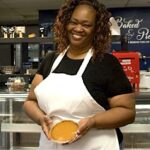
Owned by Casey Callahan and Timishia Goodson, the bakery opened in July, and Rousseau has been visiting since day one.

“It’s so hard to find good croissants in the city,” Rousseau said. “The day they opened, I purchased a croissant, and, 15 minutes later, I returned to tell them how good it was.”

No doubt that Rousseau knows a thing or two about the buttery pastries—they’re a staple in many French Canadians’ diets. In recent months, she has become a Raising the Bar regular, stopping faithfully for the made-from-scratch treats.

Callahan, a graduate of the Restaurant School of Philadelphia, and Goodson, who attended Lancaster County Career and Technology Center and HACC, are passionate about their craft. They honed their skills while forging a friendship working 10 years together at Ciao! Bakery on S. 3rd Street in downtown Harrisburg.

Callahan, a classically trained chef, was honing her baking skills, while Goodson worked there “just helping out” in the kitchen, adding that she never had an interest in baking until seven years ago, when she found herself in front of the oven. And the rest, they say, is history.

Both are still working multiple jobs but hope, as their business continues to grow, they can spend more time focusing on their entrepreneurial endeavor at the market, which has proven to be the perfect spot for Raising the Bar.

“We were looking at places in Lebanon and Elizabethtown, but the market is so up and coming, and we have clientele from our prior job who have followed us here,” Goodson said.

Callahan added that the pair pondered a long time before making the move.

“We talked about this over the past year, realizing we were working in a corporate environment and really wanted to do something different,” she said. “I like the idea of something community focused. I am raising my children here, and I wanted to work where I live. And, because we source many of the ingredients we use in our recipes from vendors right here at the market, it just makes sense.”

Raising the Bar—a name Goodson came up with—references the baked bars they make, including lemon and pecan, which, Callahan says, she’s been baking since culinary school. The shop also offers breads, breakfast strata, cookies, tarts and cakes.

The women focus on recipes that are simple, fresh and uncomplicated, saying that, sometimes, the more complex and clever some recipes aspire to be, the farther away they get from their culinary roots. That’s not to say they don’t enjoy coming up with new ideas to keep things fresh or adding little twists to items to appeal to customers. But each takes a different approach: Callahan prefers reading cookbooks and magazines, while Goodson looks to the Internet. They recently found a great cake recipe that they are trying to modify and develop into one of their famous namesake bars.

Callahan and Goodson are looking toward fall and winter when, they say, they hope to collaborate with other business owners at the market to develop special events that attract new visitors to their location. They already participate in the popular 3rd in the Burg each month in Harrisburg. Patrons also can visit their Facebook page and Instagram account to find out what’s new and for listings about upcoming events.

Raising the Bar is located in the stone building of the Broad Street Market in Harrisburg. The bakery is open during market hours.

Screenshot 2016-09-28 10.59.24

Author: Ann Knaus

Continue Reading

31 Days of Pinktober: This month, the battle against breast cancer takes center stage.

Screenshot 2016-09-28 11.08.08Apple-picking. Pumpkin spice. All pink everything.

For many, the month of October brings endless piles of leaves, lazy football Sundays and an abundance of deliciously sweet Honeycrisp apples at the Broad Street Market. It also brings shades of pink to city storefronts, sports team uniforms and community events. Even the fountain at the Capitol complex gets in on the action—all aimed at raising awareness for National Breast Cancer Awareness Month.

But for Elaine Hough, October carries a powerful reminder of the greatest fight of her life. In August 2012, fewer than five months after a normal mammogram, Hough found a small lump in her right breast. A lumpectomy and further testing revealed that it had spread to a lymph node in her arm. At 45, Hough was diagnosed with breast cancer.

“I was shocked and angry,” she recalled. “I thought I was going to die.”

What followed were months of chemotherapy, 33 radiation treatments and a long-term prescription drug regimen to mitigate the side effects and inhibit the production of estrogen in her body.

According to the National Cancer Institute, about 230,000 American women are diagnosed with breast cancer every year. That equates to 26 women per hour, making it the most common cancer in women. Despite these numbers, advancements in life-saving treatments, combined with a nationwide effort to promote breast health, have resulted in a steady increase in survival. If caught early, localized breast cancer five-year survival rates approach 98 percent. The takeaway: awareness—generated by all the pink—matters.


Conversations

Hough acknowledges that pink everything is great. She noted, though, that there has to be something behind it.

“Self breast exams are the best thing,” she explained.

They saved her life.

Locally, the Pennsylvania Breast Cancer Coalition is the largest organization promoting breast health through early detection—offering education and support to both newly diagnosed patients and long-term survivors. The group also happens to be the mastermind behind the pink fountain at the Capitol and the Breast Cancer Coalition Conference, held yearly at the Hilton Harrisburg.

Another non-profit—The Feel Your Boobies Foundation—also promotes early detection, but it focuses on reaching a younger audience. Founder and Harrisburg area resident Leigh Hurst is also a breast cancer survivor, but her battle began when she was only 33, seven years prior to the recommended age for diagnostic medical screening.

Born from a T-shirt intended to spark conversation among her peers, the Feel Your Boobies Foundation identified a gap in awareness—a gap Hurst had found herself in. Using an innovative approach to promote breast health, the foundation provides free exam kits and educational resources to colleges across the country.

This year, Feel Your Boobies is also hosting a series of “Bras Across Campus” events and the “Unexpected Boobies” social media campaign, from which page visitors can post images of everyday items that look like breasts.

“We are really creating a peer-to-peer conversation about breast cancer in a way that makes you chuckle,” Hurst said.


Victories

While breast health education is a large component of Pinktoberfest, other nonprofits focus on research and patient support efforts. For example, the American Cancer Society allocates more than half of its revenue to research and patient support, hosting events like the annual Strides Against Breast Cancer Walk at City Island.

The support for patients already in treatment is important, too. Hough experienced numerous physical and emotional side effects.

“I was extremely nauseous,” she said. “But the fatigue, that is indescribable.”

Hough also experienced hair loss, a common side effect of the chemotherapy.

“I was OK with losing my hair,” she said. “But losing my eyelashes and eyebrows was by far the worst. There was no covering that up.”

Organizations like Pink Hands of Hope provide emotional support and celebrate women’s breast cancer victories in a fashion show held in early October. It also partners with local salons and day spas, providing a day of pampering for women in treatment.

“Women don’t need breasts to be beautiful,” said Brian Gaughan, who co-founded the group with his wife Laurie, a breast cancer survivor. “But, if we can make them feel like a queen for a day, then we can lift their spirits, and that’s extremely important in their recovery.”

Financial support is also critical. Treatment costs can place a tremendous strain on a family.

“Breast cancer is extremely expensive,” said Hough.

In addition to long-term oral prescription drugs, Hough must also undergo yearly MRI screenings, bone scans and CAT scans, as well as a yearly mammogram. Pink Hands of Hope and another local nonprofit, Vickie’s Angel Foundation, offer financial help. Depending on insurance, Gaughan points out that a cancer diagnosis “has the potential to financially wipe a family out.”

Both Gaughan and Hurst emphasize the importance of supporting the fundraising efforts.

“We need the donations to continue if we want to help people in our community,” Gaughan said.

And Hurst noted that support doesn’t always have to be monetary.

“The littlest actions—sharing a post or participating in an event—matter to the success of the organization’s efforts and reach,” she said.

Hough encourages everyone to get involved because those in treatment need support. She credits her family and the relationships she formed with other women as a key reason for her ability to cope—and to survive—breast cancer. She recalled a conversation with another woman while she was in treatment.

“She helped me during a point when I didn’t think I could make it through,” she said. “She reassured me it would be OK. And it was.”


What, Where & When

As National Breast Cancer Awareness Month, October features many local events to continue the battle against the disease, including the following:

Feel Your Boobies Foundation’s “Bras Across Campus” Events
For more information, visit www.feelyourboobies.com.

Shippensburg University, Oct. 10
Central Penn College, Oct. 12
Elizabethtown College, Oct. 17
Penn State Harrisburg, Oct. 18
Lebanon Valley College, Oct. 20
York College, TBD

Pink Hands of Hope’s 3rd Annual “I’m Bald and Beautiful” Fashion Show
Oct. 1, 12 p.m.
201 E. Green St., Mechanicsburg
For more information and to purchase tickets, call 717-620-8264.

Vickie’s Angel Walk to benefit Vickie’s Angel Foundation
Oct. 8, beginning at 8 a.m.
New Cumberland Borough Park
Learn more and register at www.vickiesangelfoundation.org.

The American Cancer Society’s “Making Strides Against Breast Cancer” Walk
Saturday, Oct. 15, beginning at 8:30 a.m.
City Island, Harrisburg
For event details, volunteer opportunities and registration information, visit www.main.acsevents.org.

Pennsylvania Breast Cancer Coalition Events
For details, tickets and registration for any of the events listed below, visit www.pabreastcancer.org.

Bowl Down Breast Cancer
Saturday, Oct. 1, 12:30 p.m. to 3 p.m.
ABC North Lanes
5303 Locust Lane, Harrisburg

Fastpitch for a Purpose
Saturday, Oct. 1 & Sunday, Oct. 2, 8 a.m. to 6 p.m.
Crist Field Complex
495 Emig Road, York

Pink Party
Sunday, Oct. 9, 6 p.m. to 8 p.m.
Hilton Harrisburg

PA Breast Cancer Coalition Conference
Monday, Oct. 10, 7:30 a.m. to 3:30 p.m.
Hilton Harrisburg

Jazzing Up the Capitol
Tuesday, Oct. 18, 6 p.m. to 8 p.m.
501 N. 3rd St., Harrisburg

Pony Up for Pink Horse Show
Thursday, Oct. 20
PA Farm Show Complex, Harrisburg

Author: Jen Fertenbaugh

Continue Reading

Changing the Story: With the help of the United Way, we’re strengthening our community in central PA.

Screenshot 2016-09-30 08.40.17As we embark on an historic presidential race, many of us will be thinking about the size of our government and the resources it takes to keep it running. On my Facebook page, I list my political affiliation as the “low tax balanced budget party.” Sadly, there is no such party.

One of the major tasks of our government is to help those who are less fortunate. However, in my opinion, there is an even better way: “Give, Advocate and Volunteer”—the mission of the United Way.

I am passionate about the United Way because the organization allows Gunn-Mowery to donate at a level that makes us comfortable, gives us flexibility to designate funds to specific community organizations, and empowers volunteers to determine where non-designated funds are most needed in our community. We are able to give to the best of our ability, and our donations are distributed to organizations that we believe help those in need. My personal passion lies in helping children and fostering educational opportunities for low-income families. The United Way allows me to direct my giving to individual institutions that support my passion. I believe this method is a win for our community and a better way to help those that need it most.

In fact, our local United Way of the Capital Region (UWCR) chapter takes it one step further. With already low administrative and fundraising costs, UWCR has been able to count on a number of supportive cornerstone partners to underwrite those costs. This allows 100 percent of the money raised to be directed to programs and services in our community.

For too long, we have paid our taxes and let our government handle the causes that they deemed necessary. Many of us don’t ask questions and don’t help with any of the initiatives. It’s time to change that story. We all need to step up by donating, advocating and volunteering to help support our local communities.

In 2014, UWCR formed a unique and diverse partnership with the Harrisburg Regional Chamber of Commerce, the West Shore Chamber of Commerce, the Foundation for Enhancing Communities, Dauphin County, Cumberland County and Perry County.  These entities came together to develop a broader understanding of the needs in our community. A comprehensive assessment was completed, the findings were published, and community conversations were held to figure out what to do to positively impact our communities with respect to health, education, income and basic needs. Thousands of individuals participated in the discussions. We found that critical areas of focus were disparities in school readiness and school achievement, lack of access to health care, children and families living in poverty, and the recent increase in the number of families needing safety net services.

This year, expert task forces were convened around each focus area to help create potential solutions and strategies. As these task forces conclude their work, their findings will be shared with the community for feedback. After the feedback is received, the task forces will recruit solution partners to develop initiatives and share common visions, goals and solutions. What I’m most excited about with this new work is our ability to come together as a community to move the needle on the most pressing issues we face in the areas of health, education, income and basic needs. It’s a road map for creating a stronger and more vibrant community.

This is a plan we can all get behind. We can all be part of the solution and change the story. Three ways you can contribute to the story are to give, advocate and volunteer. By giving, you are helping to improve the lives of individuals and families in your community. By advocating, you are acting as a champion to the cause, participating in discussions and sharing information with coworkers, friends and family. By volunteering, you are engaging in the many opportunities available to making a difference in the capital region. You are putting your thoughts and passions into action.

Central Pennsylvania has been wonderful to my family and me. It is a tremendous place to work, play and raise a family. It has been a great place to start and grow my business. It has provided my children with rich educational, athletic and artistic opportunities in a warm, nurturing environment. My wife Val and I are honored to have been able to call central Pennsylvania “home” for all of our lives. It is important to us to give back, although we could always do more. We all could. Central Pennsylvania deserves our support—let’s all come together to change the story. Give. Advocate. Volunteer. 

G. Greg Gunn is managing partner of Gunn-Mowery LLC, one of TheBurg’s community publishers.


Continue Reading

Musical Notes: Keeping It Weird–a peculiar month ahead

October is a month for embracing the abnormal, so it’s only fitting that the musical acts this month are a bit unconventional.

Sometimes, I find it hard to narrow music down to one type or sound, and these artists are no exception. Although each fits in a different genre, they all delight in stretching their creativity. Their musical fusions and radical genre-benders are bound to grab your interest and complement your curious side this fall.

JULIANNA BARWICK, 10/6, 8PM, DER MAENNERCHOR, $8/$10
Ambient music is taking off these days, and Julianna Barwick is at the forefront of this growing genre. Hailing from Louisiana but currently calling Brooklyn home, she creates flowing, hypnotic waves of sound with voice, piano and percussion through a loop station. Barwick has had an oddly diverse musical background. She’s toured with artist Sigur Rós, as well as with children’s choirs. She’s also recorded with the Flaming Lips, performed with Yoko Ono and contributed to classical recordings for Sony Masterworks. Her unique, ethereal performance is sure to leave you entranced and bewitched. Touring with Barwick is well-known Philadelphian harpist Mary Lattimore, known for writing harp parts for artists such as Meg Bair, Thurston Moore and Kurt Vile.

GIANT PANDA GUERILLA DUB SQUAD, 10/7, 8PM, ABBEY BAR, $12/$15
If you’re into some alternative reggae, this band has what you need. Giant Panda Guerilla Dub Squad is best defined as reggae jam band meets psychedelic Americana. These Rochester, N.Y., natives started making music in 2001 during a time when the reggae scene was taking off. The three current songwriters, guitarist-singer Dylan Savage, bassist-singer James Searl, and multi-instrumentalist Dan Keller, blend their distinctive styles of reggae into a melting pot of mellow tunes. Their new album, “Make it Better,” was released last month and features a blend of familiar reggae with dreamy instrumentals and some funky hooks. Whether you like classic reggae, experimental reggae or somewhere in between, check these guys out for some chill vibes.

MORSE CODA, 10/8, 8PM, RIVER CITY BLUES CLUB, $12
This Philadelphia art rock band throws it way back to some classic sounds with updated twists. The trio of vocalist/instrumentalist Michael James Stipe, bassist/vocalist Liam Tinney and drummer Brian Doherty pay unconventional tribute to influences like Jim Morrison, David Bowie and Alice Cooper through their dark, wailing vocals and lively, energetic instrumentals. Stipe’s solo work will be highlighted in this performance, as well, following the release of his first self-titled “Morse Coda” LP. Don’t miss the performances of opening acts Angela Stipe, with her blues-influenced acoustic works, and experimental artist Adam Stehr, who features bluesy rock ballads.

Mentionables: Makespace Music Festival, Oct. 1, HMAC; Port Ellis/LØRE, Oct. 12, Little Amps Uptown; Travelin’ McCoury’s and Jeff Austin Band, Oct. 25, Abbey Bar; Moutin Factory Quintet, Oct. 26, River City Blues Club; Blackmore’s Night, Oct. 29, Whitaker Center

Author: Kait Gibboney

Continue Reading

Hoist the Flag: From an old building in Middletown rises Tattered Flag Brewery.

Screenshot 2016-09-28 11.00.28

Photo by Waxman Photography.

Hope is a tattered flag, according to a verse by Carl Sandburg, a poem that celebrates the American spirit.

According to Pat Devlin, a U.S. Navy veteran, co-owner and CEO of Tattered Flag Brewery and Still Works, a flag—though tattered—still represents what it once stood for, but with character. And it’s that character that Devlin wants to capture within the brewery, which opened in July.

The business idea brewed inside the heads of owners Pat Devlin, Matt Fritz, Tony DeLellis and Ben Ramsay for many years. The guys have known each since high school and share a common interest in craft beer. Their goal is to provide something you can’t find elsewhere.

“The beers and the menu will always be unique,” Devlin said.

Sitting across from Devlin in the brewery’s tasting room, I asked why they decided to locate on South Union Street in the heart of Middletown.

“I traveled a lot and visited hundreds of breweries,” he said. “After my wife and I moved back home, we actually looked at six different locations. When I walked into this building, I just knew this was the place. It was unique.”

That unique find was the 105 year-old Elks building, which means the brewery is stocked with nostalgic charm. The Elks moved out years ago, and, since then, the building has housed a variety of businesses, including a sporting goods store, a florist shop, an upscale men’s clothing store and a shoe store. Its basement now hosts an open fermentation space, a brew house, canning line and grain mill. The first floor is a tasting room, while the third floor houses three private party rooms—including the “The Penn State Room” and a three-season room—along with an open kitchen, a stage, seating for more than 240 people and a standing bar.

The building’s renovation couldn’t come at a better time for Middletown, which is in the midst of its own mini-renaissance. Besides Tattered Flag, revitalization efforts include the long-anticipated Amtrak station rehab, the rebuilding of the town square, the restoration of the town clock and recently completed streetscape improvements.

“Preserving the space has been very important to the town’s people,” said Devlin.

What once were ceiling tiles have been repurposed as part of the bar backsplash and walls. The original Elks’ bar has been preserved and positioned upstairs as a freestanding bar. Interior walls show off the original brickwork, which has been exposed. And Matt Fritz built the seating tables out of the original wood.


Then There’s the Beer

Tattered Flag’s tasting room offers 12 beers on tap, including older-style light Belgians, IPAs, a cream ale and German style beers.

As a first-timer, I opted for a flight. Of the several beers I sampled, my favorite was the chocolate bock, a delicious Dunkelbock made with organic cocoa nibs, Madagascar vanilla beans and smooth, chocolate malts.

Assistant brewer David Morrow said they also brew seasonal beers, such as an Oktoberfest and a pumpkin beer. He added that he likes to experiment, noting their award-winning Manghost, a triple IPA with mangoes and ghost peppers. Morrow and head brewer Tony Schneider were both home brewers who pursued their passion and perfected their craft through lab and chemistry classes, apprenticeships and experience.

I found their “brew-your-own-beer” experience to be especially unique.

“Our one-barrel system (a miniature replica of their full 10-barrel system—basically the same hardware and software just in smaller batches) provides the public the opportunity to brew on a commercial system that they otherwise wouldn’t have access to,” explained DeLellis. “This will be appealing to home brewers and larger groups.”

Not in the mood for beer? Tattered Flag has you covered with wines and cider from the Vineyard at Hershey and several craft sodas. The distillery portion of the operation is expected to open soon, once all the licensing is complete, eventually offering an array of spirits like vodka, gin, rye whiskey and even absinthe and the Italian after-dinner drink, amaro.

Since opening, Tattered Flag has been ramping up its food production. When I visited, the tasting room offered a limited menu that included nachos, local smoked sausage and several sandwiches and salads. However, when the full brewpub opens, expected this month, chef Larry Nauman will dish out a seasonal American fare menu with fresh ingredients, such as burgers, salmon, steaks, fries, desserts and a kid’s menu.

Devlin’s goal is to make the brewery accessible to everyone, no matter their preference or age, and to make it easy to relax. The large windows tempt passersby to peer in. Once inside, you can either choose to sit in the tasting room or move upstairs to have dinner with family or friends. Take a tour. Purchase some tattered Flag swag. Brew your own beer. Book a party room, listen to a band perform onstage, or sit and enjoy the fresh air blowing in from the open three-season room. No matter what you decide, I’m sure they’ll ask you to “Come raise a flag with us!”

Tattered Flag Brewery & Still Works is located at 1 S. Union Street, Middletown. For more information, visit www.tatteredflagbsw.com, email [email protected] or call 717-616-8799.

Author: Cathy Jordan


Continue Reading

Roadside Distractions: Take a day trip to the offbeat, the unusual.

Illustration by Aron Rook.

Illustration by Aron Rook.

Face it—for many of us, life has become routine, predictable, the same-old, same-old.

Which is why, every once in awhile, we all need a good dose of silly and strange to set us right again.

Fortunately, here in central PA, the antidote to life’s monotony is but a short drive away. Several attractions, all about an hour from downtown Harrisburg, will break you from the humdrum, giving you a new appreciation for the offbeat.


Roadside America

“Roadside America” is a guide for uniquely odd tourist attractions all over the United States and Canada. Pennsylvania has the auspicious honor of having the original Roadside America, conveniently located just off I-78.

Billed as “The World’s Greatest Indoor Miniature Village,” Roadside America represents small-town America forever stuck in the days of yore. Reading-area carpenter Laurence T. Gieringer began creating and displaying these tiny towns, most connected by railroads, in the mid-1930s, and, by the time he died, his life’s work filled a warehouse-sized building in Shartlesville.

Each scene is Norman Rockwell-ian—no tattoo parlors, pawnshops or bail bondsmen, but plenty of trains, bridges and small-town charm. They contain a level of detail that leads visitors to point and say, “Look at that!”

The scenes harken back to an America when art deco signage advertised products like Ford cars, Ivory soap and Coca-Cola. There’s even a night skyline, lit with 6,000 miniature light bulbs and 21,500 feet of electrical wiring.

The 6,000-square-foot display contains more than 300 miniature structures, 10,000 trees, 4,000 people and 2,250 feet of railroad track. The waterways are real, with many of them flowing, connecting each other.

You can even interact with some portions of the displays. There are four trolleys and eight trains, three of which you can operate. Some of the scenes are animated, going into motion when you push a button. A circus parade will march by or construction or sawmill workers will faithfully carry out their duties.

When Gieringer died in 1963, the displays froze in time, with nothing added. For the last 50-plus years, the same slideshow has run, the slides’ colors faded and drained. The voices on the speakers are scratchy. The waterways are just a little musty. But the vintage feel and kitsch are vibrant and alive at Roadside America.

Roadside America is located at 109 Roadside Dr., Shartlesville. For more information, visit www.roadsideamericainc.com.


Mister Ed’s Elephant Museum and Candy Emporium

What exactly is an elephant museum and what is it doing in Adams County?

Well, it’s just as odd as it sounds. About 12,000 elephants are on display, miniaturized so that they fit into the small space they occupy in Orrtanna. You can also buy more than 700 varieties of candy, along with numerous homemade fudge flavors.

On a visit, you may not run into Mr. Ed himself (founder Ed Gotwalt), but pictures of him adorn the walls in the restrooms, along with stars of the ‘60s, ‘70s and ‘80s. If celebrities appeared on an episode of “The Love Boat,” chances are they posed with Mr. Ed for his lavatory collection. The caricatures and news clippings of Mr. Ed hanging alongside the soap dispenser made me wish I could meet him.

The candy shop is larger than the elephant museum, which is a compact display of assorted elephants. Many figurines are inspired by the circus, the Republican Party or Disney creations. Whatever their origins, there’s a plethora of pachyderms. And candy. And quirk.

A family affair with seasonal events around candy holidays, this mega gift shop plans to grow through the next generation of Mr. Ed-lings (i.e., his granddaughter and her husband and their family).

Before you pack your car with $50 worth of candy (OK, maybe that’s just me), be sure to meander out into the yard. You’ll find an elephant graveyard full of broken elephant statues, the “Stairway to Nowhere,” flip-flops strung from trees and an elegant invention by John Crapper. Yes, John Crapper.

Mister Ed’s Elephant Museum and Candy Emporium is located at 6019 Chambersburg Rd., Orrtanna. For more information, visit www.mistereds.com.


Civil War Tails Diorama Museum

Are you a Civil War buff? Do you like cats? Then Civil War Tails at the Homestead Diorama Museum in Gettysburg is your kind of place, as it features dioramas of more than 8,000 kitties (and counting) fighting the Civil War.

Twin sisters Rebecca and Ruth Brown have handcrafted each display, combining their appreciation for the Civil War with their affection for felines. They started this labor of love 21 years ago when they were just 11 years old.

“Ours are unique in that we want to tell the stories of individuals,” said Ruth. “All of our larger dioramas have information panels with stories of individuals or units, as well as the general overview of what you’re looking at.”

Each scene is built to scale, representing with historical accuracy various battles (other than the fact that the soldiers are cats.) The dioramas are housed in the former National Soldiers’ Orphans’ Homestead, which once housed 70 girls.

Featured battles they have constructed—so far—are the Battle between the Ironclads, Fort Sumter, Little Round Top and the Angle at Gettysburg during Pickett’s Charge.

The models’ level of detail and care gives paws (ha!) to how much the sisters want visitors to learn as much as they know about the Civil War. The ladies even take you inside their workshop via a picture tour to show their miniature construction sites.

Their careful production mimics the topographical maps and historical tomes the twins have pored over. Traditional model site materials include acrylic paint, glue and reindeer moss. Madcap materials include used tea leaves, a black pepper shaker to apply ground cover and rocks made of clay.

Why clay, you may ask? That’s to get the rocks perfectly to scale (insert kitty litter joke here).

Each diorama tells a story of American military history in the context of the time period that shaped the Civil War. And the sisters’ descriptive writing is like catnip to a Civil War enthusiast. Reading the stories, I hardly realized I was learning, too.

And just what do the cats add to this, um, mewseum? Who cares? They’re cats. And they’re fighting the Civil War.

Civil War Tails at the Homestead Diorama Museum is located at 785 Baltimore St., Gettysburg. For more information, visit www.civilwartails.com.

Author: Gina Napoli


Continue Reading

Pumpkin Plan: Love a good pumpkin? You’re in the right place.

Screenshot 2016-09-28 10.58.39

Illustration by Stephen Michael Haas.

At last, it’s here—pumpkin season.

You’ve waited all year long to grab hold of one or many of the popular orange orbs that greet trick-or-treaters, decorate homes and taste especially good in spiced lattes.

You’re not alone. Statistics show that Pennsylvania loves its pumpkins. In 2014, it ranked as the third-highest U.S. state in pumpkin production, rolling out a weighty total of 105 million pounds, according to the USDA Economic Research Service.

Depending on the variety, you might put pumpkin in pies, breads or beer or just set it out on the stoop as a good, old-fashioned jack-o’-lantern. Its seeds and flowers also are consumed.

And did I mention spiced lattes?

Jon Strite, of Strites Orchard Farm Market and Bakery in Lower Swatara Township, said his farm sells 20 varieties of pumpkins. The large-face pumpkins used for jack-o’-lanterns are “harder” than the sweeter, fleshier varieties that are used for cooking, he said.

Strite, who runs the fourth-generation family business with his brother and cousin, said they plant eight acres of pumpkins each year, yielding around 28,000 gourds. The biggest growing challenges are “mold, deer and groundhogs,” but this year’s hot, dry summer provided favorable growing conditions, he noted. Too much moisture creates mold.

Greg Forry, of Risser-Marvel Farm Market and Corn Maze in Annville, said he favors funny-looking gourds called neck pumpkins, as well as butternut squash, for cooking. And, like Strite, he cites volatile weather as the biggest challenge.

“You need moisture for growing pumpkins, but not too much moisture,” he said. “Pumpkins can deteriorate fast if it’s too wet. Downy mildew is a big one.”

Forry, who’s in the business with wife Tina, said they plant seven acres of pumpkins annually, with the last harvest in early November.

Amy Paulus, of Paulus Farm Market in Upper Allen Township, echoed similar concerns about weather and moisture affecting pumpkin growth.

“We have no control over the weather,” she said. “We’re at its mercy.”

Paulus, who helps run the market and Paulus Orchards in Dillsburg, said they plant around 30 acres of pumpkins each year.

Despite the challenges, area pumpkin farmers agree that being in the business can be just plain fun, too. Risser-Marvel offers a pick-your-own patch, a Robin Hood-themed corn maze, campfires and hayrides. “Farmer Greg” Forry also leads school tours.

“The kids just love it,” Tina Forry said. “It’s good to see families having a good time. It’s good to see them having fun with no electronics involved.”

Amy Paulus, a former English instructor at Boiling Springs Middle School, now uses her teaching skills at the produce business that her husband “built from the ground up” after graduating from high school 25 years ago, she said. Paulus Farm Market offers a seasonal “Fall Funfort,” corn maze, hayrides, a u-pick pumpkin patch, farm animals and a unique “Harvest Hiccup” hydraulic cannon that’s perfect for “pumpkin chunkin.” It also offers school tours and birthday parties

“I love teaching,” Paulus said. “I love our school tours and anyone else who is interested. We love having families come out and visit. This is a family-run business, and we really embrace the community.”

Strites offers a corn maze and a u-pick pumpkin patch each fall for family fun.

“Saturday is always our busiest day,” Jon Strite said. “Sometimes, we get 100 cars in the parking lot for u-pick. It gets to be a family tradition for people.”

Strites also runs an in-house bakery that sells a variety of pies, breads, cookies and donuts made with fresh fruit, as well as its own apple cider, baking mixes, jams and jellies.

Although fall harvest is his favorite time of year, Strite added that it can seem “bittersweet.”

“Harvesting always reminds me that it’s the end of the fall season,” he said with a sigh.

For more information, including activities and hours, visit Paulus Farm Market at www.paulusfarmmarket.com, Risser-Marvel Farm Market at www.rissermarvel.com and Strites Orchard at www.stritesorchard.com.


Picking Time

If you like harvesting your own pumpkins, this is the season for you. Our area teems with pick-your-own places, including the following 20 farms.

Adams County
K & J Farm Market, 4 Irishtown Rd., Hanover;
Mt. Joy Berry Farm, 351 Speelman-Klinger Rd., Gettysburg;
Swartz’s Pumpkin Patch, 232 N. High St., Biglerville

Cumberland County
Oak Grove Farms, 846 Fisher Rd., Mechanicsburg;
Paulus Farm Market, 1216 S. York St., Mechanicsburg

Dauphin County
Strites Orchard Farm Market and Bakery 1000 Strites Rd., Harrisburg (Lower Swatara Township)

Lancaster County
Brecknock Orchard, 390 Orchard Rd., Mohnton; Brooklawn Farm Market, 2325 Lititz Pike, Lancaster;
Cherry Hill Orchards, 400 Long Lane, Lancaster;
Masonic Village Farm Market, 310 Eden View Rd., Elizabethtown

Lebanon County
Good Karma Produce, 104 Dohner St., Rexmont;
Gray’s Apple Ridge, 144 Greble Rd., Jonestown;
Risser-Marvel Farm Market, 2425 Horseshoe Pike, Annville

York County
Barefoot Farms, 6621 Bluebird Lane, Dover;
Brown’s Orchards and Farm Market, 8892 Susquehanna Trail S., Loganville;
Family Tree Farm, 4688 Dairy Rd., Red Lion;
Flinchbaugh’s Orchard and Farm Market, 110 Ducktown Rd., York; Maple Lawn Farms, Inc., 2885 New Park Rd., New Park;
Paulus Orchards, 522 E. Mount Airy Rd., Dillsburg; Raab Fruit Farm, 209 Fruitlyn Dr., Dallastown

Author: Phyllis Zimmerman


Continue Reading

Harrisburg City Limits: For one night, Austin musician Ruthie Foster migrates to our northern capital.

Screenshot 2016-09-28 11.07.30“I love my work. I think that’s my fuel for all that fire onstage.”

So says Ruthie Foster, a captivating performer who uses her strong, soulful voice to inspire, lift and move audiences.

Foster combines elements of blues, folk, soul and gospel to create a distinctive style that has won her legions of fans both in the United States and abroad. During concerts, she exudes energy and passion while moving effortlessly from one powerful song to another.

This month, Foster comes to Harrisburg courtesy of the Susquehanna Folk Music Society. Unlike many shows at ABC’s Abbey Bar, this is a sit-down concert in a listening-room environment.

Although Foster often performs with a band, this show will be solo. She says that she is looking forward to the change in pace.

“I get more freedom with the direction of the show and can work with the energy in the room differently,” she said. “In some ways, playing solo is more relaxing than with the band and, in other ways, it’s more challenging.”

Foster is one of the most decorated blues artists performing today.

Besides her 2010, 2012 and 2014 Grammy nominations, she has been recognized by organizations such as the Austin Music Awards (2007, 2008 and 2013 Best Female Vocalist), Blues Music Awards (2010, 2011, 2012 and 2013), and the Living Blues Awards (2010 Critics’ Poll Winner and 2011 nominee for Blues Female Artist of the Year).

Foster said that she’s equally excited about all the awards that she receives.

“They’re all pretty awesome,” she said. “I don’t think I could pick a favorite. Being recognized is a great honor.”

A native of Gause, Texas, Foster is part of a large, gospel-singing family, and it’s obvious that many of her original songs are influenced by the full-throated and joyous music of her youth.

“Music was all around me growing up,” she said. “I sang with my relatives in church and started playing the organ before I could even reach the pedals. On the radio in Texas, I got to listen to everything from Conjunto to blues.”

All that listening led her to embrace a variety of styles.

“I think that there’s a little bit of everything in my work,” she said. “I love the old soul, blues and gospel singers like Etta James, Sam Cooke, Mahalia Jackson and Howlin’ Wolf. Along with my originals, when I perform, I also do some Mississippi John Hurt and even a traditional Georgia Sea Islands song called ‘Travelin Shoes.’”

Sometimes, she’ll throw in a cover song like Johnny Cash’s “Ring of Fire.” Her treatment of the song is so innovative that you might not even recognize this 1960s standard.

“I like to cover songs that are timeless and still relevant,” she said. “I look for songs that I can do a little something new with it and something that moves my spirit.”

Foster wrote about half the songs on her newest album, “Promise of a Brand New Day.” On the CD is a beautiful a capella song, “Brand New Day,” which she wrote for her grandmother.

“I wanted to dedicate this to her and her spirit,” she said. “In church, she used to tell us all the time to ‘follow the promise of a brand new day.’”

The CD was produced in Los Angeles by rapper and bassist Meshell Ndegeocello, whom Foster called “an inspiring artist” who was “very accommodating” in the studio.

“She made it very easy for me to just come in and sing,” Foster said. “Her playing was impeccable. I’m so proud of this record.”

Now living in Austin, Texas, Foster said that she doesn’t get as much time as she’d like to enjoy one of the country’s music meccas.

“I’m out of town so much, I really only get to play there a couple times a year at most,” she said. “But it’s a great place to live, and there is a whole lot of music going on there at any time.”

Ruthie Foster plays Oct. 16 at 7:30 p.m. at the Abbey Bar of the Appalachian Brewery Co., 50 N. Cameron St., Harrisburg. Tickets are $24 and $10 for students. For more information and tickets, visit www.sfmsfolk.org or call 800-838-3006. This concert is sponsored in part by the National Endowment for the Arts and the Lois Lehrman Grass Foundation. 

Author: Jess Hayden


Continue Reading