Troubled Mind: “Christine” brilliantly tells of a life in descent

Screenshot 2016-10-31 10.32.42

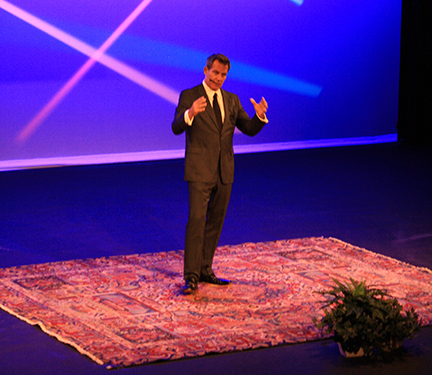
Still Photographer, Jonny Cournoyer.

We all know someone like Christine Chubbuck. Reserved, deadpan, not a lot of friends. We don’t think much about these people, until they do what Christine did.

Based on the true story of a news anchor who committed suicide on live television, director Antonio Campos’ new film, “Christine,” transports us back to 1974 and follows its title character at her job at WXLT-TV, a cable TV news station in Sarasota, Fla.

Christine (Rebecca Hall) has high hopes for her career. She loves the work she does, focusing on the smaller stories that let you get to know the community. But her boss, Michael (Tracy Letts), wants the station to focus on grittier, juicier stories. “If it bleeds, it leads,” he says, using the phrase he heard at a recent conference.

Christine is not what you would call approachable. She has few friends at the station. She keeps an amiable but peripheral relationship with Jean (Maria Dizzia), her camerawoman, and occasionally fumbles through conversations with her longtime crush, George (Michael C. Hall). Outside of work, her only friend is her mother (J. Smith Cameron), with whom she lives since she started having her “moods” a while back.

The lack of social stimulation is, she thinks, probably why she’s having so much pain in her abdomen—it’s stress. Stress is starting to weigh down on Christine. And, when station manager Bob Anderson (John Collum) decides to visit to stake out the “local talent” for a job opening in Baltimore, it’s just one more bean to tip the scale.

The plot that follows is a fascinating analysis of a person with depression. Campos does a great job of drawing the life out of this TV personality, fleshing out the story to get us deeper into Christine’s mind. And, while Campos perfectly orchestrates the rising tension (with a particularly heartbreaking group-therapy scene in which she finally voices her problems), Hall does a fantastic job of capturing the audience’s heart. She steals the show, simultaneously bringing tenderness and desperation to her character—and an emotional depth beyond any of her other performances.

This is a film you won’t want to miss. “Christine” starts at Midtown Cinema on Nov. 18.

Midtown Cinema – November Special Events

The Late Shift with Zeroday
“Aliens” (1986)
Saturday, Nov. 5, 10:30 p.m.

National Theatre Live presents
“Threepenny Opera”
Sunday, Nov. 6, 6 p.m.

“Hamlet” with Benedict Cumberbatch
Wednesday, Nov. 16, 6 p.m.
Sunday Nov. 19, 2 p.m.

Down in Front! comedy riffing
“Plan 9 from Outer Space” (1959)
Friday, Nov. 11, 9:30 p.m.

Classic Film Series
“War of the Worlds” (1953)
Sunday, Nov. 13, 6 p.m.

3rd in the Burg $3 Movie
“Galaxy Quest” (1999)
Friday, Nov. 18, 9:30 p.m.

Faulkner Honda Family Film Series
“Mighty Morphin Power Rangers: The Movie” (1995)
Saturday, Nov. 19, noon
Sunday, Nov. 20, 2 p.m.

Author: Sammi Leigh Melville

Continue Reading

Telescopes, zip lines and more: Residents brainstorm on Reservoir Park improvements

Peter Simone of Simone Landscape Architecture had filled this wall with more than 40 ideas from the community.

Peter Simone of Simone Landscape Architecture had filled this wall with more than 40 ideas from the community.

A telescope, mounted high above the city in Reservoir Park, would give city youth a different perspective on life—perhaps one more expansive than their lives in the compact neighborhoods that sit just below the hill.

So said Anwar Curtis, a paraprofessional with Premier Arts and Sciences Charter School and a founder of the Harrisburg Music Festival, which takes place in the park.

“The sky is the limit for our children,” he said.

Indeed, the sky was the limit at Tuesday’s brainstorming session for Reservoir Park, the first of four public meetings to develop a “Master Plan” to improve the park. More than 60 park neighbors, community leaders and Harrisburg residents met at the Kappa Omega Chapter Building on State Street to share their visions.

Ed Black of H. Edward Black & Associates, the firm leading the project, kicked off the meeting.

“We truly want your input,” he said.

And residents happily complied. By the end of the two-hour meeting, Peter Simone of Simone Landscape Architecture had filled a wall with more than 40 ideas from the community.

Last year, the state Department of Conservation and Natural Resources awarded a $50,000 matching grant to fund the creation of a master site plan. The city used $50,000 from a 2014 community development grant to match the funds.

The city hired H. Edward Black & Associates, Simone Landscape Architecture, Urban Partners and certified parks and recreation practitioner Patrick Stasio to help produce the master plan.

Most of all, attendees expressed a need for better infrastructure such as  trashcans, restrooms, bike racks and benches.

Residents said litter was a problem in the park.

Residents said litter was a problem in the park.

A neighbor of the park, Pete Baltimore, said he walks his dog daily and brings two trash bags: one for his pet and one for litter. He added that he only sees one trash can while on his walks, which leads to litter.

Other park elements, like public bathrooms, should be better maintained, residents agreed. Several suggested partnering with corporations or other sponsors to support the maintenance of historic fountains, which no longer function.

Others advocated for more open-air music in the park and brought up the success of past summer reggae festivals in the bandshell. They suggested using the Levitt Performing Arts Pavilion for a D.J., the Harrisburg Symphony Orchestra and other outdoor concerts. The need for free events also came up.

The Levitt Performing Arts Pavilion.

The Levitt Performing Arts Pavilion.

“If you don’t have any money, you should be able to go and do something,” said Ben Stokes, a park neighbor.

A few residents said they felt disconnected to the Civil War Museum, which sits atop the park and costs $12 for an adult to enter.

Several people emphasized that the park should engage children and teens. A mini water park, an ice skating rink, a skateboarding park, climbing wall and outdoor movie nights all would interest youth, they said. Someone even threw out the idea of having a zip line.

“No one knows how to think of the park as a place to constructively play there,” one woman said.

Another resident suggested that teenagers should have opportunities to volunteer as park rangers.

The park features two playgrounds.

The park features two playgrounds.

The park has potential for more recreational sports opportunities. Members of the YMCA’s Hope in Handball group advocated for building handball facilities. Others suggested installing soccer and football fields. Some recommended that marathons and road races could pass through Reservoir Park and introduce more people to the area.

Even on this first brainstorming session, residents brought up the ever-persistent question of funding.

“We want to shoot high so we come up with a plan that works” Simone said. “Then we can find partners with funding who can help move this forward.”

Getting involved

Even if you missed the first meeting, there are several other opportunities for you to weigh in on the future of Reservoir Park:

Take an online survey:
https://www.surveymonkey.com/r/ReservoirPark

Mark your calendar for public meetings:
December 7, 6 to 8 p.m., location TBD
April 26, location and time TBD
July 19, location and time TBD

For more information, including dates for focus groups and study committee meetings, see the city’s website:
https://harrisburgpa.gov/Reservoirplan/

Author: Danielle Roth

Continue Reading

Weekend Roundup with Sara Bozich

article header

Omg I loved last weekend. I weekended like a normal person, it was amazing.


WR1027-683x1024

This week is like me. Halloween party, in-laws in town, gym, market, Central PA Whiskey Festival, football, thinking I’ll accomplish more than I will, panicking about a new week. You know, the usual.

What are you doing this weekend?

(more…)

Continue Reading

It’s Not All That Bad: A response to the column, “Printing Pressure”

Illustration by Rich Hauck.

Illustration by Rich Hauck.

In the October 2016 edition of TheBurg, Editor Larry Binda bemoaned the decline of the newspaper business and the projected end to some publications.

He decried the woes of the local daily (turned three days a week), The Patriot-News, and its something-to-be-desired online product, PennLive, version of the news.

I couldn’t agree with him more, but please don’t tar the entire newspaper industry with one brush.

Reason? Here at The Sun, which covers Hershey, Hummelstown, Palmyra and the surrounding townships, things are just fine. How fine? In 2007, when wife Rosemary and I sold The Sun, then covering Hershey, Hummelstown and Lower Dauphin County, we had just experienced the best year of the 37 years we owned the paper. This was in spite of the fact that The Patriot-News was more than 10 times larger than us and still had full-time reporters covering our coverage area.

Today, The Patriot-News’ circulation is less than half of what it was in 2007, and The Sun’s circulation has increased by 44 percent, with advertising revenue at record levels.

Why? Because we never forgot our mission. I had a standard phrase when we owned, and I edited The Sun—nobody gave a damn what I thought about Red China. They wanted to know what I thought about the Derry Township supervisors (the governing body that runs Hershey).

We recognized that no one bought The Sun to get their national, international or even state news. They wanted to know what was happening right around here and about their neighbors. You know—the mom and pop stuff—local government, school news, church news, local high school and Little League sports, police news, who bought and sold their house, etc. Also, lots of really good pictures and, oh yes, four-color availability throughout the paper. In other words, all the news they couldn’t get anywhere else.

We sit right in the middle between The Patriot-News and the Lebanon Daily News, and both papers left us with lots of local news they didn’t cover.

The dailies just didn’t get it. They continue to fill their front pages with national and international news, which most readers got last night on the television 11 o’clock news and pushed state, county and local news back further and further in their product with less and less detailed coverage.

Take The Patriot-News, for example. They are sitting right here in the seat of state government and should be the authority on what is happening on the Hill in all branches of state government. Yet that title belongs to the Philadelphia Inquirer and Daily News. That, plus the fact they seemingly haven’t yet realized half the population of Harrisburg city is black, but you’d never know it except in the police and crime reporting. African-American social news? What’s that?

To the east of The Sun, our circulation now exceeds that of the Lebanon Daily News, which is suffering some of the same maladies as The Patriot-News.

Yes, The Sun is fortunate. We only have three school districts and the Milton Hershey School to cover, while The Patriot-News probably has 10 times that many. We also have the Penn State M.S. Hershey Medical Center (now the area’s largest employer) and the Hershey Company, Hershey Entertainment & Resorts and Hershey Trust (now No. 2 employer), while The Patriot-News and Lebanon Daily News try to cover those and many more businesses, hospitals, etc. But we work with them—most have a PR person—and give them good, if not always to their liking, coverage.

Yet, for example, The Patriot-News continues to cut staff, even some of their best. Guess what? Some are now writing for The Sun. Not full-time, mind you, but part-time or as stringers. We also continue the program I started many years ago of utilizing budding young high school journalists, who get their first taste of the business with us and get some good clippings in the process for those college entrance interviews.

So, Editor Larry, it’s not all that bad. You point to the demise of your competition, Fly and Mode, as major competitors. And why? Because you’ve obviously done some market research and are producing a better product, especially under new Publisher J. Alex Hartzler. Your competitors, and ours, are just pumping out the same old product.

William S. Jackson is the former owner/editor of the Sun.

Editor’s Note: Editor Larry agrees with much of the author’s argument that some newspapers have made a critical mistake, both to their missions and their businesses, by dialing back local coverage. Like The Sun, TheBurg’s circulation and revenue figures will hit record highs this year. 

Continue Reading

Get costumes ready for City Council’s Pre-Trick or Treat Bash

Andrew Bliss, Capital Region Water; Ben Allatt, City Council; Destini Hodges, City Council; Wanda Williams, City Council;

Andrew Bliss, Capital Region Water; Ben Allatt, City Council; Destini Hodges, City Council; Wanda Williams, City Council; Captain Gabe Olivera, Police Department; Brian Enterline, Fire Chief

Get your Halloween costume ready, if it’s flame resistant, that is.

Harrisburg City Council will host a pre-trick or treat night bash at two fire stations on Wednesday Oct. 26. Kids and families will be offered candy, trick or treat bags, and safety tips from the fire and police departments. 

Everyone is encouraged to dress up and enjoy the festivities. At 6 p.m. kids will partake in a mask decorating program.

City Council President Wanda Williams said the council created the event “in the spirit of getting the community together for our kids.” City Council has not hosted an event like this before.

Fire stations previously have handed out candy. This year the fire department wanted to be proactive by sharing safety tips the day before.

Fire Chief Brian Enterline said to keep candle-lit pumpkins and dry decorations separated. To avoid getting hit by drivers, kids should cross at cross-walks, wear something reflective, and bring a flashlight. Captain Gabe Olivera said a few kids got nipped by cars last year because they were crossing the street between parked cars.

Donations from community partners and city council members supplemented $72 from City Council’s budget to fund this event.

If you go:

October 26, 5:00 to 7:00 p.m.
Harrisburg Fire Station #1 at 1820 N. 6th Street
Harrisburg Fire Station #8 at 9 S. 13th Street

The fire and police departments share these safety tips: 

  • Be careful with candles in pumpkins
  • Keep candles away from dry decorations like corn husks
  • Dress children in flame-resistant costumes
  • Make sure kids can see through masks to avoid tripping
  • Bring a flashlight
  • Cross at crosswalks
  • Have something reflective on costume

Author: Danielle Roth

Continue Reading

End of the Lane: The last owner of A. Lane shares his memories, as one of Harrisburg’s oldest stores prepares to close.

A. LaneWeb

Editor’s Note: A Harrisburg institution, A. Lane Used Furniture will close next weekend after 90 years in business. In this essay, the last owner reflects on the long-time family business and its place in the history of commerce in Harrisburg.

A. Lane Used Furniture store had been in business since 1926, operated by four generations of family members. I was the last proprietor and, by all objective standards, not very good at selling furniture.

The anchor of the store was Gene Fievish. Known as Lane, Gene was a Harrisburg institution and the last vestige of the Eastern European Jewish merchants that once populated Market Street.

Most people never knew his name was Eugene Allen Fievish. During his adult life, he was referred to as: Gene, Gino, Lane, “Moonie,” Mr. Lane, “Popcorn,” Unc, “that old man” or Uncle Gene.

Mr. Fievish co-founded the Lemoyne Sleeper Company and was beloved by the employees. He remained modest and was never officially acknowledged for developing the concept of factory-direct bedding.

Gene worked six days a week at “the store,” did not vacation, but closed the store for the Jewish high holidays. He was a devout Philadelphia sports fan and a loyal patron of the Colonnade and Nick’s 914, as well as local diners too numerous to name. He was a lifelong Philadelphia sports fan and never got tired of telling the story of when Chuck Bednarik almost killed Frank Gifford.

His main pursuit in life was purchasing furniture, selling furniture and attending auctions and estate sales.

A lot of people have paid tribute, shared memories and asked for a discount since my uncle passed on Oct. 31, 2015. Unlike my uncle, I actually spoke to people, and my responses never ended with Lancaster Brand tobacco juice bouncing off of the cement.

GeneWeb

Gene Fievish inside A. Lane

The era of the merchant, peddler and small businessman in the patch of Market Street that stretched from the Patriot News to the Cameron Cut-rate all died with Gene. Sadly, there has been no recent concerted effort—absent the New Baldwin Corridor Coalition—to save what was once one of Harrisburg’s major economic arteries.

There was a time when small businessmen and women populated and built lives for their families on Market Street: five & dimes, clothiers, grocery stores, jewelry stores, locksmiths, record shops, warehouses, used furniture stores and retail shops.

Big box stores, cultural atrophy and the suburbs gave us faceless prefabricated buildings framed with tax breaks, free parking and faceless owners.

The truth of the matter is the store was Uncle Gene’s life. He was the store, but Clyde Ferguson kept A. Lane’s running for the last 15 years.

We withstood the 1936, the 1972 and the 1977 floods as well as a nuclear meltdown. In fact, employees came to work and delivered a kitchenette to Highspire on Saturday, March 31, 1979, during the Three Mile Island core meltdown. And, no, I did not participate in the delivery.

The store then fell prey to arson and was eventually moved to Chestnut Street before moving back home to a “dead zone.”

We were no match for assimilation, the internet, compressed particle board, parking meters six days a week including Saturdays, dim street lighting, unrepaired sinkholes, federal flood insurance, and, most recently, unannounced water and sewage “construction,” which cut off access to the store, but provided decibel-crushing noise and savory sewer vapors.

We contracted and subcontracted with artisans, carpenters, glass-makers, piano men, radio repairers, theater directors, upholsterers, trash haulers and folks on work release or in just need of money for bus fare or a meal.

The 10-mile, free delivery zone was a staple of the store for 90 years. We never accepted credit cards and always used rotary phones. Gene never negotiated. Unc told people, “I ain’t running a charity,” or “The price is the same price I would charge my rabbi.”

On Oct. 29, we will shut the doors for good, and Kerry Pae Auctioneers will conduct an absolute auction. We will bury a culture, bury a store, bury a way of life and bury one of Harrisburg’s true icons. Gene’s passing and the store’s demise mark the end of an era and a 50-year strategy of never negotiating price but always delivering for free.

StorefrontWeb


A. Lane Furniture is located at 1025 Market St., Harrisburg. For more information, call 717-232-8612 and read our story from earlier this year.

Author: Eric Epstein

Continue Reading

Impact Harrisburg awards more than $4 million in grants for economic development

Impact Harrisburg Executive Director Sheila Dow-Ford announced more than $4 million in grants on Thursday.

Impact Harrisburg Executive Director Sheila Dow-Ford announced more than $4 million in grants on Thursday.

Impact Harrisburg announced the first recipients of economic development grants yesterday. Eight organizations received nearly $3 million total in economic development grants. Five organizations received a bit more than $1 million total in grants for community building.

A total of 24 organizations applied for economic development grants. The nine-member board of directors chose to award these 13 organizations the full amount requested rather than giving partial grants.

“When we saw what applications came in, we really did not have a reason not to,” said Neil Grover, chairman of the Board and city solicitor.

Grover said that the grant-giving process is relatively new for the nonprofit.

“We really were forming from scratch,” he said.

The Harrisburg Strong Plan created Impact Harrisburg, a private nonprofit, in 2013 to distribute $13 million in economic development and infrastructure funds as a part of the state-sponsored recovery plan. In July, Impact Harrisburg awarded its first grants – about $5.5 million – for infrastructure projects.

Executive Director Sheila Dow-Ford said releasing nearly $4 million in grants will act as a catalyst in the city.

“These applicants really spoke to the needs of the community,” she said.

Impact Harrisburg broadly defined economic development. Many of the grants will support construction projects that will improve quality of life in the city, Grover said.

“These projects will be bringing people into the city and keeping people in their neighborhoods,” he said.

Jamien Harvey, executive director of the Camp Curtin YMCA, said he expects 500 to 800 kids will be able to attend judo, gymnastics and indoor soccer programs thanks to the $500,000 grant, which will expand program space. Also, adults will have more space for exercise classes that the Camp Curtin location previously could not offer, he said.

Monitoring the grant-funded projects will be the next step.

“There’s a lot that got started here that never got finished,” Grover said.

The monitoring process will differ depending on the project, but will ensure that all projects finish in the manner that was proposed, he said.

After these grants, the nonprofit has $1 million in reserves for economic development, Dow-Ford said.

“We don’t know If we will have a second round of funding,” she said.

Another round of funding would depend upon if Impact Harrisburg receives more funds to distribute.

Eight organizations will receive grants for economic development:

  • $500,000 to the Salvation Army for the completion of a community center on 29th Street
  • $500,000 to Harrisburg Redevelopment Authority to remediate blighted property
  • $250,000 to the Harrisburg and Capital Region Water Playground Resurfacing Collaborative to resurface playgrounds
  • $500,000 to the Camp Curtin YMCA to resurface a pool and expand usable space
  • $500,000 to WebpageFX to complete the construction of their expansion project
  • $81,369 to Harrisburg River Rescue to complete the construction of a facility on Derry Street
  • $500,000 to TLC Construction and Renovations for an incubator project for veteran- and minority-owned businesses
  • $100,000 to Paxton Street Home Benevolent Society to start construction of a senior living facility

Five organizations will receive grants for community building projects:

  • $350,000 to the Tri County Housing Development Corporation for Derry Street corridor development
  • $138,592 to the East Shore YMCA for façade improvement
  • $250,000 to the Gamut Theatre to complete the rehabilitation of former church to theater space.
  • $350,000 to the Community First Fund to set up a pool of loan funds for minority-owned small businesses

Author: Danielle Roth

Continue Reading

State of the City Address reflects on past successes, supports nonprofits

Dr. Roma J. Benjamin left the Camp Curtin YMCA this morning with a little something extra.

The nonprofit she founded and directs, New Sound Literacy and Technology Center, won a raffle at the State of the City address. Benjamin, a former educator, called the unexpected donation “a blessing” for literacy in the community.

“It’s my call, it’s my mission, to give our kids support making it through school,” she said.

Dr. Roma Benjamin's nonprofit, the New Sound Literacy and Technology Center, received a donation from a raffle held at today's event.

Dr. Roma Benjamin’s nonprofit, the New Sound Literacy and Technology Center, received a donation from a raffle held at today’s event.

More than 200 community and nonprofit leaders filled the YMCA’s auditorium to hear Mayor Eric Papenfuse speak about his administration’s accomplishments during his three years in office. Proceeds from the event benefitted seven nonprofits, in addition to the New Sound Literacy and Technology Center.

Traditionally, mayors have held State of the City addresses downtown at the Hilton Harrisburg. Past addresses benefited the Capital Region Economic Development Corporation (CREDC) and the Harrisburg Chamber.

This year, the venue change highlighted the work of Harrisburg nonprofits, 23 of which were represented at the event.

“Camp Curtin is a stellar example of how people come together to nurture our city and inspire our youth,” Papenfuse said.

Papenfuse credited much of the city’s success to Harrisburg’s balanced budget. He said his administration has been “watching every penny” and that the city has amassed a $10 million nest egg this year.

With the budget surplus, the city will purchase body cameras and more Tasers for the police department, he said. Police Chief Thomas Carter said his department is looking for the latest technology, but does not have a timeline for the purchase or implementation of the devices. Tasers and body cameras will increase visibility and accountability, the mayor said.

Mayor Eric Papenfuse addressed a croud of more than 200 nonprofit and community leaders at today's State of the City address.

Mayor Eric Papenfuse addressed a croud of more than 200 nonprofit and community leaders at today’s State of the City address.

Papenfuse included other highlights from the past year:

  • Nearly 1,500 new business licenses in the city
  • A $3 million state grant for revitalization in a blighted area of Allison Hill dubbed MulDer Square
  • Federal government support for residents affected by sinkhole damage
  • A $50,000 state grant to improve Reservoir Park
  • Increased community policing programs such as the Police Recreation League
  • The Byrne Criminal Justice Innovation program to reduce crime in the Camp Curtin neighborhood

While Papenfuse reflected on his administration, Benjamin looked forward.

“I have lots of new books to purchase,” she said with a smile.

Author: Danielle Roth


Continue Reading

Creative Thinking

FloridaWeb3

Urbanist Richard Florida speaks at Penn State Harrisburg.

Postindustrial cities like Detroit, Pittsburgh and Harrisburg have had an uphill economic climb since the glory days of cars, steel and railroad. But bringing industry and manufacturing jobs back into cities may not be the solution to grow urban areas and draw in the next generation of workers.

So says renowned urbanist and author Richard Florida, who spoke last week at the “PNC Thought Lecture Series” held in Penn State Harrisburg’s new Student Enrichment Center.

On a stage straight out of “TED Talks,” Florida outlined his theory on urban renewal. It’s based not on looking back at our manufacturing past, but in looking forward to our creative future and what he describes as the ”creative class.”

In his book “The Rise of the Creative Class,” Florida defines the group to include “people in science and engineering, architecture and design, education, arts, music and entertainment whose economic function is to create new ideas, new technology and new creative content.”

“We [once] used physical labor and natural resources to create wealth,” said Florida, who serves as the director of cities at the Martin Prosperity Institute at the University of Toronto. “[Today], the human mind is the means of production.”

Florida asserted that people like artists, musicians, entrepreneurs and technology professionals add to the vibrancy of an area. It’s this vibrancy—not necessarily jobs per se—that attract young people to a city.


Quality of Place

Florida said that he began to question the basic economic model of “if you have good jobs, the people will come” as a professor at Carnegie Mellon, when he asked his class if they would stay to work in the Pittsburgh area. The answer, he said, was a resounding “no.”

“They wanted to go to San Francisco, New York City or Seattle because these places had energy and excitement, places they could fit in,” he said.

“Quality of place” is what draws people to a city, Florida said. This quality includes natural features, open space, a diverse feel and a variety of activities such as symphonies, operas, ballet, cafes and restaurants.

Another part of city renewal is the presence of gay and lesbian communities, but not necessarily because of the individuals themselves. Florida asserted that communities that welcome gays and lesbians also embrace diverse ways of thinking. He said that great cities invest in the three “T’s”: talent, technology and tolerance.

One of these creatives is Jessica Bacon, creative director of design at Smile Spinners, a fabric and sewing boutique in Marysville. She attended the Florida speech at Penn State Harrisburg.

“I wanted a creative opportunity,” she said, explaining why she came to the Harrisburg area. “I want to build something.”

Karl Singleton, senior advisor to Mayor Eric Papenfuse, was also in the crowd. He advocated, “capturing local talent to enliven the school system,” hence encouraging the kind of creativity that Florida says is necessary to revitalize cities.

Rob Shoaff and Shaina Carter, two Maker Fellows from the Foundry Makerspace, are on board with that idea. In their jobs, they bring STEAM (Science, Technology, Engineering, Arts, Mathematics) into the classrooms of Harrisburg schools. Carter, who fellows at Downey Elementary, said that the program is “bridging the gap between community and school, bringing in community partners and bringing in technology.”

The quality of schools is vital because, as Florida said, young people often stay in a city until their children are of school age—then move out for a better school district.


Innovation and Growth

According to Florida, the numbers for the Harrisburg area shake out like this: 93,000 creative class workers, 67,000 working class workers and about 151,000 service class workers, who typically have the lowest paying jobs.

In some cities, creative class workers are moving into lower-income areas, pushing up property values and displacing long-time residents. So, how does a city bring everyone into the fold as neighborhoods change? Florida’s conclusion is to increase the pay of lower-income service jobs.

He likened this idea to the state of factory jobs prior to World War II and used his father as an example. He stated that, before the war, nine members of his father’s family needed to work in factories and other jobs just to keep the family afloat. Post-war, however, factory jobs paid better, allowing parents to own homes, purchase cars and send their children to college.

“We decided, as a society, led by Franklin Roosevelt and Henry Ford, that, in order to grow the economy so that working people could buy clothes and buy cars and buy air conditioners, we needed to pay them enough,” he said.

We can, he said, do the same thing for service workers today.

“We can give them higher pay, make their jobs better and involve them in innovation,” he said.

This, he said, would help invest all workers in their communities and foster the collaboration needed for a city to grow.

“When people get together in communities, we are more productive, we are more than the sum of its parts,” he said. “We create great, powerful communities that create innovation and growth.”

Author: Susan Ryder

Continue Reading

Used Bike Shop Rolls into Harrisburg

Underground Bike Shop will open this winter.

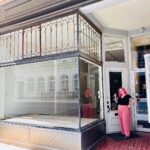
Underground Bike Shop will open soon in this building in Midtown Harrisburg.

Ian Morrison spent summers in Dillsburg fixing 1950s-era tractors with his grandfather. When he returned to his family’s Mechanicsburg home, he still wanted to grease his hands with a project.

“I had no use for tractors in a suburban neighborhood,” he said.

He found bicycles—lots of bicycles.

He filled his family’s garage, porch, shed and yard with more than 100 bicycles he refurbished. Soon, he will have a new location to share his obsession with others.

Morrison is opening Underground Bike Shop, a used bicycle store at 1519 N. 3rd St., the first of its kind in Harrisburg. He has refurbished about 200 bikes, which will cost $100 to $350.

In fact, $350 generally is the starting price point for a new bicycle. Morrison hopes that the lower price range and his personal service will encourage more biking in Harrisburg.

“I want to see more people on bikes,” he said.

Ross Willard of Recycle Bicycle, a nonprofit that helps put low-income individuals on safe bikes, likens the store to a used BMW dealership. Morrison strips the bikes down then builds them back up again. He said that he will ensure that his bikes are completely safe and operational before selling.

The coworking space st@rtup and the Midtown Scholar previously operated at this Midtown location, which started life as the Midtown post office. In June, CPenn Patriot Properties Midtown bought the building from GreenWorks Development.

On Monday, the city’s Zoning Hearing Board unanimously approved Morrison’s request for a special exception from parking requirements. If all goes according to plan, Morrison hopes to open sometime this winter.

“I want to connect with people and provide a service,” he said.

For more information about The Underground Bike Shop, visit its Facebook page: The Underground Bike Shop.

Author: Danielle Roth


Continue Reading