‘Tis the Season: See Governor’s Residence at Holiday Open House

childrens-tree

Students at Capital Area School for the Arts made decorations for the children’s tree.

Stockings have been hung, trees decorated and halls decked in one of Pennsylvania’s most notable homes–and you’re invited to drop by.

This Sunday, Gov. Tom Wolf and First Lady Frances Wolf will welcome visitors to the Governor’s Residence, which will be open to the public from 1 to 6 p.m. for an open house held in conjunction with Historic Harrisburg Association’s Annual Candlelight House Tour.

A nature theme inspired Pennsylvania artists, students and the Wolf family to decorate six Fraser firs found in the house.

“I like the way different people interpreted the theme,” Frances Wolf said.

The Wolfs invited their extended relatives to decorate the tree with colonial-inspired decorations such as dried oranges and apples.

study

Staff from Governor Tom Wolf’s office decorated his study.

Staffers from Wolf’s office “shopped the attic” to find the stockings and other decorations for his study, Frances Wolf said.

melon-room

Debra Eberly from d.w. designs in Harrisburg decorated the Mellon Parlor.

Students from the Capital Area School for the Arts and a Highland Park elementary school created decorations for the children’s tree, which is circled by a toy train. Debra Eberly from d.w. designs in Harrisburg designed and decorated the Mellon Parlor.

Local groups will be performing at this year’s open house, including the Camp Hill United Methodist Bell Choir, Lemoyne Trinity Lutheran Bell Choir and the Mechanicsburg Area Senior High Wildcat Singers.

Visitors will have the opportunity to donate new, unwrapped toys to Toys for Tots and write cards for The American Red Cross “Holiday Mail for Heroes” program.

The Governor’s Residence is located at 2035 N. Front St. in Harrisburg. Click here for for more information about Historic Harrisburg Association’s candlelight tour.

Author: Danielle Roth


Continue Reading

Breaking Bread, Breaking Barriers: Christians, Muslims gather to dispel myths, build bonds.

dinner1web

Diners get to know each other before sharing a meal at the inaugural gathering of the Islamic-Lutheran Taskforce of Central Pennsylvania.

This past Sunday, Tree of Life Lutheran Church hosted a unique potluck dinner, one marked by great food, occasional laughter and meaningful conversation.

Alongside the scalloped potatoes and vegetable pizza were Tandoori chicken, goat biryani and samosa, a flavorful, potato-filled, flakey pastry. It was the inaugural gathering of the Islamic-Lutheran Taskforce of Central Pennsylvania, and participants eagerly shared their dishes and their traditions inside the church in Susquehanna Township.

The taskforce began after The Muslim Community of Central Pennsylvania invited local church leaders to the “United We Stand Against Hatred & Bigotry” event at the Crowne Plaza in downtown Harrisburg last March. Afterwards, Bishop James Dunlop of the Lower Susquehanna Synod reached out to Muslim leadership and asked how Lutherans and Muslims could collaborate.

“This is the first of what will hopefully be a series of interfaith gatherings to broaden our understanding of our respective faiths and the God we share,” said Rev. Dr. Martin Zimmann, pastor at Trinity Evangelical Lutheran Church in Mechanicsburg.

The room buzzed with conversation among the 120 attendees, and people leaned in with interest to hear what others were saying.

One group discussed Islamic prayer and its required discipline of praying five times a day—before sunrise, at noon, before sunset, after sunset and before bedtime. The women, clothed in colorful hijabs, said that, with no public call to prayer, they use phone apps to help them remember the prescribed prayer times. They inquired about Christian prayer practices.

Conversations not only taught one another about differences, but also acknowledged similarities, most notably the group’s Abrahamic roots.

The Five Pillars of Islam (a belief in one God, prayer, charity, fasting and pilgrimage to Mecca) are akin to certain Christian concepts. Monotheistic Christianity encourages regular prayer, tithing and giving to the less fortunate. Catholicism embraces the discipline of fasting and abstaining from meat during Lent. Even the Muslim hijab—widely known as a head covering but that actually includes covering the body with loose-fitting garments—has a parallel in Christianity. Some women in Catholic and Anabaptist traditions wear hair coverings and dress modestly.

“For the most part, churches, mosques, synagogues and temples exist side by side, on the same block without any problems, and that’s a good thing,” said taskforce member Athar Aziz. “But what I have noticed is, despite the fact that we live close to each other, we don’t necessarily know a lot about each other.”

That ignorance, he said, can lead to misinformation, misunderstandings, fear and prejudice.

“In the light of information and understanding, I believe we can develop tolerance and friendship and cooperation,” he said.

dinner2web

A prayer is shared before eating.

Some of the conversation turned to presidential campaign rhetoric, which has caused concern among some Muslims living in the United States, as well as the recent threatening letter received by the Islamic Society of Greater Harrisburg. Despite this, women in the group shared that they have been treated well since the election. In fact, it seems people have gone out of their way to counter anti-Muslim sentiments by being kind to them, smiling, holding doors and even offering hugs, they said.

There was a sense of solidarity in the room, and Zimmann noted that, whatever the future may hold for Muslims in America, they will not stand alone.

Taskforce member Shahul Hemeed said he was happy that this event was happening.

“We can know each other and build a bond,” he said.

He added that Muslims and non-Muslims want the same thing— to work, raise their families and live peacefully.

“It’s important that we meet our neighbors, not just [listen to] the negativity that’s in the recent discourse,” said Joel Kroft of St. John’s Lutheran Church in Shiremanstown. “As Christians, we are called to know and care for our neighbors.”

Folks mingled long after the meal finished. Participants parted with hugs and handshakes and, like all good potlucks, went home with Styrofoam trays full of leftovers.

More importantly, they left with information, a new perspective and a few new friends.

Author: Susan Ryder

Continue Reading

Going Green: Capital Region Water unveils a green solution for city’s storm water problem

Capital Region Water Community Outreach Manager Andrew Bliss speaks with a resident about CRW's storm water plan.

Capital Region Water Community Outreach Manager Andrew Bliss speaks with a resident about CRW’s storm water plan.

Harrisburg’s water infrastructure has a problem that affects nearly every resident.

When even moderate rain falls, the combined sewer system overflows. This overflow causes storm water to mingle with sewage, which leads to pollution and flooding caused by system backups.

On Tuesday, Capital Region Water released a draft of its long-term community greening plan to address these storm water issues. It’s called “City Beautiful H20,” a play on words from the City Beautiful movement, which added parks, sewers and basic infrastructure to turn-of-the-century Harrisburg.

“We want to be a community-driven plan,” said City Beautiful H20 Program Manager Claire Maulhardt. “We are 100 percent behind that statement. We want projects to happen organically and in the aesthetic that the city want to happen.”

Green infrastructure uses nature as a model to filter storm water. Streets lined with specially designed trees, planters and pervious surfaces filter and reduce storm water runoff. Business and residential property owners are also encouraged to plant rain gardens and install vegetation on their roofs. Larger businesses and institutions might install wetlands, basins or bioswales, a down-sloped landscape installation, to filter the storm water, according to the draft.

Starting next year, three pilot projects will kick off City Beautiful H20, Maulhardt said.

In the draft, a rain garden, two storm water planters and porous basketball courts will be installed at the 4th and Dauphin playground near the Pennsylvania National Fire Museum. A bioswale will remove pollution from the runoff water. Along N. 6th Street, storm water planters, rain gardens and a storm water storage trench are planned for the Camp Curtin YMCA and the adjacent block.

Jamien Harvey, executive director of the Camp Curtin YMCA and member of CRW’s community ambassador workgroup, said the proposed draft will “build what’s been the cornerstone of this neighborhood.”

“The environment we raise our kids in is crucial,” Harvey said. “They deserve the best of everything.”

The third project features water bump outs, rain gardens, tree trenches and a community garden in the Summit Terrace neighborhood along N. 12th and N. 13th streets.

Maulhardt said partnerships with existing community organizations and community input led to the decision for choosing these three pilot projects.

“We want the community to drive what they want to see,” Maulhardt said. “Our vision is to be a key facilitator in helping find partnerships, link it up with potential funding and be that player in moving the pieces around to make projects happen.”

Funds from CRW’s 2017 rate increase and grants will support the three pilot projects. CRW also is developing a fee system to support long-term storm water management.

CRW Community Outreach Manager Andrew Bliss said the community voted for a fee that reflects the amount of storm water a property generates, which would incentivize green infrastructure. Bliss said CRW will work to educate the community before any fee is decided on or implemented.

CRW’s board will review The City Beautiful H20 Community Greening draft later this month before moving forward with projects.

“This [draft] is a snapshot of the process that we’ve been going through the last 18 months,” she said. “We will continue to update this. It’s a living document”

To learn more about Capital Region Water’s City Beautiful 2.0 Community Greening Plan draft, visit https://capitalregionwater.com/cbh2o/#sthash.4m3xRick.dpbs To provide input on the draft, visit https://www.surveymonkey.com/r/YYGQVV8 or attend the next meeting on Dec. 15, 6 to 8 p.m., at the Lincoln School, 1601 State Street.

Author: Lawrance Binda

Continue Reading

In Transit: PennDOT unveils concepts for Market Street corridor.

penndotmarketst

This PennDOT concept shows how Market and Cameron streets could look after improvements.

Ever since Adam Meinstein purchased Harrisburg’s old central post office in 2011, there hasn’t been much good news for him in the immediate neighborhood.

Businesses have come and gone (mostly gone) east of the underpass along Market Street, and several large, old buildings have remained empty and increasingly blighted.

His first real glimmer of hope arrived today thanks to PennDOT, which unveiled conceptual designs that included a flood-controlled Paxton Creek, a beautifully redesigned and landscaped Market Street and the possible relocation of the bus transfer station to the area.

“When I acquired the property, these are the things I was hoping for over the long term to see,” he said.

PennDOT shared the concepts with the public at the transportation center, the result of a three-month process that began with “Visioning Week” in September, when members of the public weighed in on what types of transit-oriented development they’d like to see in the rundown area just east of the station.

Angela Watson, PennDOT’s director of the Office of Multimodal Planning, explained that the concepts unveiled today were of three types: for the transportation center itself, for Paxton Creek and for Market Street.

The transportation center stands first in line for improvements, with $15 million already pledged to continue a years-long renewal of the station. The next phase, which will take place next year, will rehabilitate much of the interior, with updated design work followed shortly afterwards by the actual renovation work, she said.

penndot1

An effort to control Paxton Creek is also underway, with a study to identify ways to lessen the flood risk due for completion in April. Flood mitigation is considered critical if the area is to be revitalized.

The other concepts involved improvements along Market Street. One concept showed a redesigned and vastly improved streetscape. Other concepts illustrated the possible relocation of the city’s bus transfer station to either the former post office or, across the street, to the site of the old Patriot-News building. Funding is not yet in place for this work.

penndotpostoffice

Meinstein said that he appreciated the proposals for the future use of his property, which currently includes the vast Transitpark parking lot. So far, private businesses have not followed his lead by investing in the area, but he hopes that initiatives like this one will help make the area more attractive for companies and development.

“Now, we’ll have to see where it leads in terms of timing and future steps,” he said.

To learn more about PennDOT’s vision for the area around the Harrisburg Transportation Center, visit https://www.planthekeystone.com/Harrisburg.html.

Author: Lawrance Binda

Continue Reading

Weekend Roundup with Sara Bozich

article header

It’s a busy busy weekend for us! Tonight is the GK Visual staff holiday dinner, and of course, tomorrow is our Holiday Pop-Up Party at St@rtup Harrisburg. Some space remains, but ticket sales end TODAY.

wr1201-mc

Saturday, I’m hoping to hit the gym, then the market and HBG Flea with my mom. By night, it’s another holiday party.

We’re back in State College on Sunday for our first Penn State Wrestling match of the season (in the BJC!).

What are you doing this weekend?

wr1201 (more…)

Continue Reading

Water Ways: Freed from crisis mode, Capital Region Water focuses on needs today, upgrades for tomorrow.

Photo by Dani Fresh

Photo by Dani Fresh

There’s so much to do.

Like a homeowner restoring a neglected house or a certain solid waste authority rehabbing a neglected incinerator, Capital Region Water is juggling a maintenance backlog, regulatory demands and modernization of the city’s water and sewer system. Add to that community outreach, and they’re bringing sunshine to a vital asset that is largely unseen.

“We don’t want to be the island underground,” said CEO Shannon G. Williams. “We want to try to make the most of the situation we’re in. The city is rising like a Phoenix, and we want to rise together.”

Today, the fully professional Capital Region Water provides sewer services for about 130,000 residents in Harrisburg, the townships of Lower Paxton, Susquehanna and Swatara and the boroughs of Paxtang, Penbrook and Steelton. It also provides drinking water for 67,000 people. (And let’s put this myth to rest right now: Harrisburg drinking water DOES NOT come from the Susquehanna River. Read on.)

Created from restructuring the Harrisburg Authority and revitalized through the city recovery plan, Capital Region Water now operates as a “special purpose unit of local government.” Peek inside, and it’s as busy as the North Pole on Christmas Eve. A $50 million upgrade brought a decrepit sewage-treatment plant into the 21st century. Long overdue maintenance is getting attention. Partnerships are leveraging resources for mutual benefits. And a plan for controlling stormwater is generating ideas for greening up neighborhoods and exciting ratepayers who are, after all, the ultimate customers.


Become Clear

Jess Rosentel pointed to a tree at Capital Region Water’s Advanced Wastewater Treatment Facility. The wastewater division superintendent is a whiz with analogies, and this tree explained the path of water from dirty to clean.

The leaves: houses and businesses with toilets and drains. Twigs and branches: connectors linking to sewer lines. The trunk: sewer mains carrying all that, um, stuff here for thorough, environmentally friendly scrubbing before restoration to the river.

The AWTF occupies nine acres off Cameron Street, near Steelton. Built in 1957, its last major upgrade was in 1976, when men wore polyester suits and disco was king. On average, 22 million gallons flow into the facility daily—enough to fill tanker trucks stretching from Harrisburg to Baltimore, said Rosentel.

Add a sudden deluge, and 80 million gallons can surge in. “I figure that’s from here to Georgia,” he said.

When wastewater arrives, it’s been pulverized by the trip through pipes flowing under 43 square miles of land. Bars catch large debris, such as toilet paper or litter washed from streets. Of course, as seen through a small glass jar Rosentel held up, it’s still an unappetizing gray flecked with brown and green.

The plant slows its passage, allowing more solids to settle and be swept up. Then, Rosentel said, an “astronomical population of naturally occurring beneficial bacteria” is added, along with specially generated oxygen those aerobic bugs need to breathe. The process converts still-dissolved solids into solids that will, once again, settle and be collected.

Now, the water in another jar has become clear, but there is still the matter of nitrogen. It once flowed from the plant to the Susquehanna River and, eventually, the Chesapeake Bay, promoting algae buildup harmful to aquatic life and all the human life dependent on it.

Hence, upgrades required by the Pennsylvania Department of Environmental Protection. The $50 million project was funded with a $21.5 million Pennsylvania Infrastructure Investment Authority loan, a $973,000 Pennsylvania Department of Community and Economic Development grant, a $26.7 million bond and $2,234.36 in Capital Region Water funds.

The upgrades introduced another “biologic process,” no chemicals required, said Rosentel on a stroll across catwalks winding through the outdoor complex. In 3.5 million gallon tanks, churning fins pump oxygen into the water, and additional naturally occurring bacteria convert those harmful nitrates into nitrites.

That was “nitrification.” Now comes denitrification, when a tiny trickle of methanol piped into each tank feed bacteria that convert nitrite to nitrogen gas. The gas, said Rosentel, “will bubble up and out.” Bye-bye, nitrogen.

The water is also chlorinated to kill disease-causing pathogens before it’s returned to the Susquehanna River, and all those solids generated are squeezed of their water and turned into nutrient-dense biosolids that permitted farmers can use on their fields. Plus, residual methane helps heat digesters and buildings, while creating electricity that’s sold back to the grid and generates renewable energy credits, for additional revenue.

Rosentel is a 12-year facility veteran who lauded its 42 workers, and supportive members of the community and CRW board, for turning around a neglected asset.

“There’s nothing that makes you feel better than seeing the effluent become clear,” he said. “The job that we do down here has an enormous effect on the environment.”


Going Green

Remember those 80 million gallons of potential wastewater? It’s an important point. Like about 700 older U.S. cities, Harrisburg houses a combined system that carries wastewater and rain in the same pipes. When a storm blows in, any excess water is designed to overflow into the Paxton Creek and Susquehanna River, bypassing all the purification processes built into the wastewater treatment plant.

Not good. So, in 2014, Capital Region Water reached a consent decree with the U.S. Environmental Protection Agency and the state DEP to reduce overflows. There will be costly engineering and construction involved—some cities build giant tanks for holding the excess—but in tangent, CRW has also launched City Beautiful H20.

The concept is simple. Dirt and greenery absorb water. Pavement does not. So, community greening—or green infrastructure—strategically installs trees, gardens and other projects such as rooftop gardens that slow stormwater from rushing off pavements and into sewers.

Capital Region Water seeks ideas for greening from a community ambassador group, and it goes out into the community, where it is increasingly visible. Residents gladly share opinions, whether they want traffic bump-outs that make space for greenery while forcing motorists to slow down or parks to make neighborhoods more inviting.

“City Beautiful H20 is really about investing in our community to reduce those overflows and improve water quality, but also using green infrastructure and other structures to beautify our community,” said Williams.

Initial greening projects are planned for Harrisburg’s Camp Curtin and Summit Terrace neighborhoods, and others will follow. CRW officials note that these are carefully engineered initiatives, designed to extract the hoped-for stormwater reductions and requiring long-term maintenance to stay effective.


Critical Needs

Don’t pay attention to 134 miles of collection system for, say, 50 years, and you have a giant mess on your hands. Lines half clogged with gunk. Leaking pipes eroding the ground around them, causing costly and dangerous sinkholes. Brick sewers hand-laid in the Civil War era that have stood the test of time but, in the words of Engineering Director David W. Stewart, still require “tender loving care.”

The painstaking road to good maintenance starts with triage—CRW officials use the word a lot—to manage immediate dangers. They also inspected inside 4,000 manholes for evident signs of trouble, like standing at an intersection and looking around for visible traffic hazards.

Add to that, sorely needed recordkeeping through computerized management and millions of dollars invested in GIS mapping just so CRW knows what it has. Put the pieces together in coming years, and CRW can catch up to deferred maintenance, addressing the most critical needs first, and create an upkeep schedule.

“That’s what you don’t see living in this community day to day, but it’s so fundamental to having a professional utility that’s managing the community’s infrastructure to do the tracking of the work, seeing what’s underground and assessing criticality,” said Community Outreach Manager Andrew Bliss.


Common Goals

Efforts for City Beautiful H20 and much else that Capital Region Water undertake are leveraged in classic fashion through partnerships with community groups, businesses and government.

After all, said Williams, the people of CRW are “stewards of the community’s water system.” When the city is repaving a street, CRW might take advantage of the opportunity to rebuild the water infrastructure below. As CREDC tries to attract businesses to the region, CRW markets its high-quality water as an enticement.

Operating “out in the sunshine, as opposed to underground” broadens the ratepayer base while promoting economic development that creates jobs, taxpayers and opportunities, said Williams.

“It’s not just siloed,” she said. “If we’re all working toward the common goals of the community, and we’re working together, then we get bigger impacts.”

Capital Region Water says it strives to keep the impact of its $40 million capital budget in the area. Local residents are hired whenever possible, and a partnership with Harrisburg School District is introducing students to water management careers and the educational path needed to get there.

Stewart said that Capital Region Water officials were disappointed that only about 3 percent of the $30 million spent on general contracting went to minority- and women-owned businesses in the wastewater plant upgrades (all electrical work was done by a woman-owned business). Staff and board are “doing whatever necessary” to develop capability—such as giving minority-owned businesses experience as subcontractors on larger jobs—and requiring contactors to comply with a pending MWBE, he said.

As for that drinking water, the community asked that Capital Region Water’s DeHart Watershed, the northern Dauphin County reservoir that provides drinking water for 67,000 people, be preserved in its pristine state, said Williams. In 2016, years of careful negotiations yielded an agreement that will save in perpetuity the surrounding 7,500 acres of filtrating forest lands that help keep the water so genuinely tasty that it wins industry awards.

Under the agreement, the Ward Burton Wildlife Foundation and The Nature Conservancy got an easement protecting the land’s natural assets. Simultaneously, Fort Indiantown Gap contributed $9 million to compensate Capital Region Water for the easement, under a program that helps the Army cushion its facilities.


Real Impact

All this sweat and toil begs the question: Why should a professional with the talents and capabilities needed to revitalize a creaking water system come to work for Capital Region Water?

It’s the “rare opportunity,” said Stewart. Larger cities, such as Philadelphia, are doing the same work for 100-year payoffs. In smaller Harrisburg, Capital Region Water staff and board members, working with many others, are “planning for the next 40 years, and doing it in a way that can be really transformational to the city and really benefit residents who had been neglected.”

“It can make a real impact in 20 years,” Stewart said. “There’s going to be a dramatic transformation.”To learn more about Capital Region Water, visit www.capitalregionwater.com.

Author: M. Diane McCormick

Continue Reading

Going, Gone: The last day for a furniture store, another day on Market Street.

Illustration by Rich Hauck.

Illustration by Rich Hauck.

We got registers.

Anybody want these old registers? We got $10. $10 on these old registers. Sold. We got these walking sticks. $5. We got a buyer. Hey, nice old magazine racks here. $10. $5. $2. Anybody? No? Put it on the pile. Nice little vintage diner stool there. Sold. $7 is the buyer. Now, some nice pool cues. Buyer number is 177. One-seven-seven. Now, a nice crane scale. Anyone out there want a nice crane scale?

And so went the Kerry Pae Auctions auctioneer. By the end of the day, several thousand items had sold (and a bunch hadn’t), clearing out two sprawling warehouses and marking the final day of business for A. Lane Used Furniture.

Should one feel badly about a business closing after nine decades? After all, 90 is old in human years; it’s downright Jurassic in store years. And, as we all learned from the Bible or The Byrds, to everything there is a season, right? So, then what can be gleaned from the final gasp of the city’s ancient man of retail?

First, for all you bored office drones with a dream, the lesson may be this—operating a successful business takes scary commitment. Gene Fievish had it. When Fievish took command of the store from his aunt in the mid-1960s, A. Lane was already middle aged. The third-generation owner soon became synonymous with the store, where he could found inside—or, often, sitting outside with a buddy, watching the world drive by—until his death last year. By his own admission, Eric Epstein, Fievish’s nephew, didn’t have that kind of commitment, though he earns praise for attempting to extend the lifespan of a store that, but for his uncle’s sheer force of will, may have perished ages ago.

Which brings me to my second point.

The A. Lane inventory auction meant much more than the closing of a single musty, cluttered old store. It also emphasized, at least to me, the critical condition of a small, yet important, commercial stretch of Harrisburg, one that once provided urban connective tissue between the industrial corridor along Cameron Street and the smaller retail shops of downtown.

Today, these two blocks of Market Street constitute a graveyard of the pre-information age. There’s the mostly empty former post office, the very empty old Patriot-News headquarters, the shuttered Geiger & Loria Reporting Service building. Yes, Pavone has done its share, converting an old bank branch into beautiful office space. However, it’s the only bright spot in an otherwise dismal stretch of vacant, near-vacant and rundown buildings.

Indeed, the area is a tough sell. It’s cut off from downtown, sits directly atop flood-prone Paxton Creek, is victim to creeping blight and is now zoned in such a way that prohibits most industrial uses—even though it long has been an industrial area (for decades, the towering Graupner Brewery and the boxy Standard Baking Co. dominated these blocks).

However, you know something—I’m cautiously optimistic. For all its negatives, the area has some compelling strengths. It may be disconnected from the downtown core, but it’s still very close in, which could suit rapidly growing companies from the other side of the underpass (hello, Harrisburg University). There is also a lot of developable land, several cool, if decrepit, historic buildings, easy access to the highway and acres of cheap parking thanks to TransitPark.

Perhaps most significantly, the area is a stone’s throw from the Harrisburg Transportation Center (aka the train station). So, it stands to benefit from increased train travel, greater bus service (there is a movement to make the station more multimodal) and a growing aversion to car ownership. If redeveloped, this neighborhood would be one of the most walkable in the city.

To that end, PennDOT, along with the city and the Harrisburg Redevelopment Authority, recently launched an initiative to plan transit-oriented development right in this area. In September, they asked for public input and expect to release their plan this month for the Harrisburg station neighborhood. I tend to be skeptical of these types of top-down efforts, if just because there’s usually no direct path from government-led plan to private-industry reality, no matter how worthwhile. That said—I’m eager to see what they come up with.

Chances are we’ve reached the low point along the 800- to 1000-blocks of Market Street. Redevelopment likely will come, though slowly, perhaps framed by government but ultimately driven by market forces and greater trends in society. The area reminds me of long-blighted sections of other cities, which developers eventually “discovered” after demand spilled over from more desirable areas nearby. When change comes, though, this patch of Market Street probably will retain little of its past, as the few remaining historic buildings, by then, may be too far gone to save, and new construction will probably have to be built above the flood line.

At the A. Lane auction, I bid on a single item—an old gumball machine, which I got for $15. After paying for it, I made my way through the crowd, exited the building one final time and placed my new toy gingerly into the trunk of my car. I looked up the block and immediately saw a huge, wooden “For Sale” sign, which stood outside the building next door. All around me were the relics of another time, when brewers and bakers and postal workers and journalists filled these streets, packing into nearby restaurants and bars, as well. Those days are long gone. But, someday, something else will be built here, and the area will finally shake off its decades-long, post-industrial decline. It’s up to us to figure out what—and when—that will be.

For more information about transit-oriented development and the Harrisburg initiative, visit www.planthekeystone.com/tod.html. 

Lawrance Binda is editor-in-chief of TheBurg.

Continue Reading

Pierogi Perfect: Bite into pillows of delight at Pikowski’s.

screenshot-2016-11-29-12-14-46When I began pondering pierogi for this story, I was transported back in time to the small, carpeted kitchen of my Italian grandmother, Josephine. Nana was an excellent cook who delighted in watching her son and granddaughter consume her mouth-watering creations, and we obliged by greedily devouring her dishes.

One day, she placed a plate of lightly fried, caramel-colored, potato-stuffed pierogi in front of me. I was hooked. I couldn’t have been more than age 4, maybe 5. I declared them my favorite dish upon first bite. Before long, I was requesting them, with a side of sour cream, if you please. When I arrived on her doorstep to the aroma of butter and onions, I knew I was in for a treat.

Later in life, I learned that pierogi is Poland’s national dish, but Ukrainians, Slovaks, Lithuanians, Russians and others lay claim to it, as well. My Ukrainian grandfather likely had cravings early on in the marriage, so that may explain how an Italian made it her mission to perfect the pierogi.

When Nana passed on, I considered trying my hand at recreating her specialty. However, the challenge was daunting, so I lazily relied on Mrs. T to satisfy my cravings. Mrs. T will do in a pinch, but she fails feebly when it comes to treating me in the manner to which I’ve grown accustomed, which is why I was excited to learn about a new food stand that opened in the Broad Street Market.


Good Balance

In early August, Carolyn Pikowski and Keith Jefferies launched Pikowski’s Pierogi Place in the stone market building. Pikowski said she came up with the idea after visiting a Polish deli in New Jersey with her sister.

“It occurred to me that no one here made fresh pierogi,” she said.

The Harrisburg resident, who worked as a Dauphin County mental health case manager, decided to quit her job and take a risk. Evidently, it’s paying off because business has been brisk. As evidenced by the community response, the niche needed to be filled, just like the pierogi she creates. When I posted a shot of the little pillows of perfection on Twitter, the clicks went crazy.

“Life’s too short,” remarked Pikowski, on the choice to follow her dream. “I like working with my hands—they are my asset.”

The schedule is also working out well for her, Jefferies and their two children, Dasan, 10 and Aiyana, 8.

“It’s a good balance of work and family, with three days’ prep and three days at the market,” she said.


Worth a Trip

Pikowski’s pierogi are a riff on the standard potato-stuffed ones I enjoyed as a kid. She puts her own spin on them, using her creativity to come up with a variety of options.

“We always offer the plain potato, the onion potato, the spinach/feta/mozzarella and the cheesesteak,” she said.

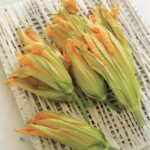
Various other fillings are included on a rotating basis, like cabbage fried in bacon grease, sauerkraut and sweet potato, to name a few. Toppings include sour cream, sautéed onions and sauerkraut. Pikowski also sells breakfast pierogi stuffed with ingredients like egg, cheese, veggies and bacon.

Dessert options are in the works, too. Pikowski added pumpkin pierogi around Thanksgiving and, on the first day of fall, she advertised an apple/cinnamon pierogi topped with whipped cream and caramel drizzle on her Facebook page.

“They flew out of here,” she said, adding that the “new school twist” attracts a diverse demographic.

Pikowski also outperforms Mrs. T’s in the size department. No parsimonious portions are parceled out at her stand. The overstuffed and handmade pierogi are twice the size as those you’ll buy in the grocery store.

“Nothing is processed, and everything is fresh,” she said.

Melinda Martinez tried pierogi for the first time at Pikowski’s.

“They are addictive, wonderful and definitely worth a trip,” said the Bressler resident, who enjoys the breakfast and the cheesesteak pierogi.

Carrie Roeting of Middletown said that her favorite is the spinach/feta/mozzarella, which she describes as “amazing.” Evidently, others feel the same because Pikowski said it’s among her top three sellers.

As Pikowski ramps up to meet demand, she is considering shipping her product.

“Maybe after the New Year,” she said.

One thing is for certain: She is enjoying her new line of work—and so are her customers. Like my grandmother, Pikowski keeps her recipes close to the vest. Eventually, I did manage to wrangle one of Nana’s secrets out of her. When I asked what made her dishes taste so good, she uttered but one word: “Love.” I’ll bet Pikowski feels the same way.

Pikowski’s Pierogi Place is located in the stone building at the Broad Street Market in Harrisburg. To learn more, visit their Facebook page: Pikowski’s Pierogi Place.

Author: Stephanie Kalina-Metzger

Continue Reading

His Back to the Wall: The tough road behind, ahead, for Howard Henry.

screenshot-2016-11-29-11-59-37Howard Henry fixes things.

Since Nov. 15, 1998, he has fixed automobiles at Howard Tire & Auto on Cameron Street in Harrisburg, the business he built from the ground up. Nearly 30 years ago, he pulled himself out of homelessness and addiction. At the age of 9, he mowed lawns in his trailer park for cash after his father left for Vietnam.

But he can’t fix this.

On May 5, a wall holding up the parking lot for The McFarland apartments collapsed. Gravel, asphalt and a silver Nissan Altima came plummeting onto the roof of his warehouse. Nevertheless, he kept his main garage operating. Then, in June, after a heavy spring rain, the mass of debris crashed further into the warehouse. The Altima slid down another two feet into piles of bricks. The red fence that circled the parking lot pushed up against what was left of the ceiling, now in shreds.

Two days later, Harrisburg condemned his warehouse and eight apartments in The McFarland. Still, Henry slogged on until mid-October, when an engineer he hired said his property was no longer safe to inhabit. He was forced to close up shop and let his employees go.

Eight months after the initial landslide, the damage continues to lay open and exposed to the elements. Whenever rain falls, washing out more dirt and debris, he worries, and he is now concerned about winter’s freeze and thaw.

To make matters worse—no stakeholders want to take responsibility for the million-dollar damage.

Owners of The McFarland have distanced themselves from the cleanup. Owner Isaac Dohany appealed the city’s condemnation order. During the appeal—a code hearing to determine if the order was given properly—attorney Adam Klein attempted to place blame on PennDOT.

However, PennDOT’s internal investigation found that its contractor’s work to the adjacent Mulberry Bridge did not contribute to the collapse.

“For us, it’s not about assignment of blame,” Henry said. “We have always felt like, if we can get people to the table and begin to talk about the challenges that the community as a whole faces as a result of that hill, then blame and money would be put aside for safety concerns.”

He rallied staffers from Gov. Tom Wolf’s office, as well as Rep. Scott Perry. He’s been in communication with the mayor’s office. Engineers, lobbyists and lawyers have come out of the woodwork to help him.

Meanwhile, he’s returned his inventory of new tires to the manufacturer. Most of his 15 former employees have found new jobs. Photos of grand openings and family still hang on the yellow paneled walls. Whenever he visits the shop, he makes sure to give the fish in the waiting room’s tank extra food.

“I am minimizing and reducing costs at every turn, but I’m staying,” he said. “I’m staying in an empty store, but me and the fish are staying.”


Holding onto Hope

Henry says he cannot afford to move into a new space. After eight months of financial strain, his company did not even have the funds to throw an annual anniversary dinner, which was planned for Nov. 15.

“While we are not broke, we are at the threshold of prudent reserve,” he said.

This isn’t the first time Henry has seen financial strife. In 1998, before he opened the shop, he slept on a mattress in a warehouse while going through a divorce. He’s come full circle, he said.

“I just feel like, if God did this,” he said, waving his arm to indicate the auto shop, “with the last 20 years of my life, He must have something really huge in store.”

Then he added, “It must be enormous.”

Henry’s faith guides him through trying times. About 28 years ago, he fought an addiction to alcohol. After burning every bridge and attending rehab four or five times, he resorted to living in a box behind a Dillsburg grocery store.

On Oct. 22, 1989, he pulled himself to sobriety.

The weight of the debris destroying his business has challenged his fortitude. On Sept. 13, he had alcohol for the first time since 1989. He drank a few swallows of beer in an attempt to cope with the weight of the damage laying on his warehouse.

“I just wanted to stop the pain,” he said. “The pain I feel is not for me. It’s for my employees. It’s for my family. It’s for all those who looked at me and asked me to fix this, and I can’t.”

Immediately, he regretted those sips. He threw the beer away. That’s when he knew he hit a spiritual low.

This experience has challenged him beyond his imagination, but he has emerged victorious, he said.

“I believe, maybe for the first time, in my gut in a way that I’ve never experienced, that nothing—absolutely nothing—in this life can happen to me, and I would be left alone,” he said. “I’ve come to a point of peace with all that.” 


Hearts that Wrench

Two days before he officially closed his doors, Henry received an important letter in the mail. It was notification that his personal ministry had become an official nonprofit, which he calls Heart Wrenched.

It all started back in 1998 when a single mom driving a beat-up car with three babies in the backseat pulled into his new shop. Henry and his original business partner, Troy Hughes, decided they needed to act. They fixed her car for free then cobbled together an A-frame sign out of coroplast. They spelled “we fix flats free” in duct tape.

For the next 18 years, Henry continued serving the less fortunate, quietly given away more than 500 cars, thousands of tires and countless hours of service. He has only met a few of the people who have received his good will. He stayed purposefully busy when someone came to the shop for free services, he said.

“I didn’t want them to thank me for it, but I wanted them to thank God,” he said.

Henry now is executive director, chairman of the board of four members and nearly every other position of Heart Wrenched. He has the business model, marketing materials and even the corporate bank account.

It’ll work like this: Local nonprofits and ministries will identify a person in need. Then they will connect that person with Heart Wrenched, which will provide the parts.

“We will recruit garages just like myself who have the heart to fix something for someone who cannot afford it,” he said.

That’s right—Henry believes, one day, he’ll reopen his shop, despite the fact that engineers have warned him that the condemned section of The McFarland could collapse, which would be an even bigger disaster. Still, he holds out hope that the owners eventually will take responsibility and start cleaning up.

When talking about his life, Henry points to all the things he’s already endured and overcome—homelessness, divorce, alcoholism—which leaves him with the resolve to remain optimistic despite the mountain of dirt and debris that crashed into his roof, destroying his building and his business.

“I’m excited about the possibilities of what God’s about to do in my life,” he said. “I can’t wait. I just can’t wait.”

Author: Danielle Roth

Continue Reading

Trimmed with Fun: Spirit meets silly with “Merry Kitsch-mas.”

screenshot-2016-11-29-12-13-16It’s been a rough year for many, as the extended political season often served more to divide than unite us.
Locally, the Harrisburg Gay Men’s Chorus offers the perfect antidote, as people try to mend wounds, come together and even have some much-needed fun during the holiday season. “Merry Kitsch-mas,” the chorus’ annual holiday show, allows audiences throughout central PA to inhale a breath of fresh air and exhale a few laughs.

“It’s all the bad Christmas songs that you are too ashamed to admit you like,” said Artistic Director Adam Gustafson, who worked on a number of ideas for the show before “a cheese-ball Christmas” came to mind.

The theme is more than something that informs the choice of songs—it binds them together in a narrative that runs throughout the show. The storyline of “Merry Kitsch-mas” is, according to Gustafson, “a young millennial coming out to his father” under the guidance of the “Three Wise Queens.”

The experience of millennials is not remote to the HGMC. The 20-odd members in the chorus range in age from late 20s to 70s. And some of the older members have belonged nearly as long as the chorus, which was founded in the late 1980s.

“There is work,” says Doug Wentz, a 55-year-old member who joined shortly after Gustafson started three years ago. “There’s a lot of misperception that, when you join a chorus, it’s going to be easy. I think it’s a little more than what some people bargain for. But some are up for the challenge, and they seem to enjoy it.”

Since joining the chorus, Wentz has had a blast.

“It’s more of a social outlet for me, because I work from home,” he said. “It’s a bunch of great guys, and we have fun.”

Fun is exactly what is in store for “Merry Kitsch-mas.”

“We’re going to do everything from ‘Not My Father’s Son’ from ‘Kinky Boots’ to a little song called ‘Magic Snow,’ which explains why Santa Claus is able to fly around the entire world in 24 hours. You can imagine what that’s about,” said Gustafson.

The story has a tonal variety that makes its cheerier selections pop.

“Our repertoire really does run the gamut this time around,” he said. “We’re doing ‘Prayer of the Children,’ which is a really gorgeous piece about peace and acceptance and these kinds of issues.”

Gustafson arranged many of the pieces, including a Ben Folds song that will be featured in “Merry Kitsch-mas.”

“He really does focus on the harmony side of things,” said Wentz. “So, when possible, there is a lot of a cappella [in this show]. And he works us, so in the end, it’s very much worth it.”

The chorus recently put on a show at the Heidelberg United Church of Christ in York, where they previewed some of the numbers.

“We had a couple of members of the congregation come up to us afterwards who said they had tears in their eyes,” said Wentz. “That’s how you know you touched somebody with the music. That’s what it’s all about.”

The Heidelberg United Church of Christ is one of the churches that will host “Merry Kitsch-mas.” The other churches are the First Reformed United Church of Christ in Lancaster, the Unitarian Church of Harrisburg and Unity Church of Harrisburg in Enola, which is the chorus’ “home” church.

“This is a show that’s going to really engage with cheese hardcore, but it’s also going to go to a very serious spot,” Gustafson said. “But it’ll all come out on the other side OK, I hope.”

For more information about the Harrisburg Gay Men’s Chorus and its “Merry Kitsch-mas” concerts, visit www.harrisburgmenschorus.org.


Ring In the Kitsch

The Harrisburg Gay Men’s Chorus plans four “Merry Kitsch-mas” concerts throughout central PA:

  • Dec. 3: First Reformed United Church of Christ, 40 E. Orange St., Lancaster, 7 p.m.
  • Dec. 4: Unitarian Church of Harrisburg, 1280 Clover Lane, Harrisburg, 4 p.m. (special appearance by Baltimore Men’s Chorus)
  • Dec. 9: Heidelberg United Church of Christ, 47 W. Philadelphia St., York, 7:30 p.m.
  • Dec. 11: Unity Church of Harrisburg, 927 Wertzville Rd., Enola, 4 p.m.

Author: Kari Larsen


Continue Reading