Early Risers: It’s the time of the season for planting.

My heart is doing cartwheels!

I am surged—“which way do I go?!?”—as the available garden chores and delights rush in along with the early warm spring days.

While it might not seem warm enough to start growing vegetables, this is a perfect time for what are called “cool season crops.” Where tomatoes, peppers and squash like basking in the hot summer sun, the early vegetable garden loves cool days and light, frosty nights.

Let’s start with some basic tips for success.

Firstly, it’s all about the soil. I add a bunch of leaf compost and organic nutrients into my garden beds in autumn. This “cooks” all winter, providing an amazing soil to work with every spring. I haven’t roto-tilled in years. Many gardeners overdo the roto-tilling, getting too enthusiastic about running it back and forth, actually damaging the soil structure. The extra rotations grind the soil particles finer, creating clay and chopping up the helpful worms. I add more organic nutrients each spring as they are “slower releasing” than chemical fertilizers (which have to be applied more frequently). Using a garden fork loosens up and turns the soil—a nice raking then levels it back off.

A soil test at least every few years is a good idea to know what the soil nutrient levels are. Penn State offers this service. The test kits are available at both your courthouse and at garden centers. This information can clue optimum fertility for growing vegetables.

Seed-starting seems to be a scary proposition for many gardeners. Luckily, the crops we’re discussing here are super easy to start, and they are directly sown into the prepared garden. Success tastes so good!

Beginning around the second week of March (I watch for the first dandelions to start blooming), we start with potatoes, onions, spinach and lettuce. Peas scoot in about two weeks later.

Potatoes for planting are called “seed potatoes.” These are chunks of potatoes with “eyes” on them, the sprouts that grow the tops. Place one seed per foot about 3 inches deep and cover. Every few weeks, cover the growing plant with compost and straw, keeping only a few inches of the tops exposed. “New” potatoes can be harvested a few months into the growing season—or allow full-sized growth, harvesting in autumn.

Onion sets are partially grown beginner onions. This means someone else started the tiny seeds then harvested the small onion bulbs. These sets can be planted right into the garden, and they are on their way again. These types, called “green onions,” are usually harvested while still small and chopped into early salads or grilled. I use them in rows as markers between my other crops instead of planting them all together. Plant 3 inches deep to bottom of the bulb and 3 inches apart. If you want big slicing sweet onions, these are a different type. They are planted later, around the time you get tomatoes in.

Spinach and lettuce are started now, too. They love the cool weather and grow quickly. Spinach seeds are planted ½-inch deep. Harvesting foliage by cutting leaves off low to the base encourages them to re-sprout more leaves. Lettuce seeds need light to germinate, so they are simply scattered on top. Then use a hand to gently press them into nice contact with the soil. Both can be planted in rows or broadcast into an area. I plant them in the spots where my tomatoes will be planted later. As the summer heat comes on, spinach and lettuces “bolt,” which means they send up a flower stalk, indicating they are finished. My tomatoes then fill the now-available space.

Near the end of March, I plant pea seeds about 2 inches apart at the base of a trellis for climbing. You can choose snow peas and sugar peas, which have edible pods, or shelling peas. They love the cooler weather, and, as the summer heat comes on, this trellis becomes what my cucumbers climb on. The trick here is to keep picking to keep getting peas. If pods are left too long on the vines, the plant is signaled to quit producing. Young peas can be plucked and popped right into the mouth for a super tasty treat.

Beets, carrots, Swiss chard, cilantro, dill, parsnips and turnips all appreciate this early start. Go ahead, start the seeds and the dreams of harvest!

Erica Shaffer is the nursery manager at Highland Gardens, 423 S. 18th St., Camp Hill. www.highlandgardens.org.


Continue Reading

Then & Now: How historic properties were transformed.

In the early years of TheBurg, we ran a monthly feature called “Then and Now,” which showed a historic photo of Harrisburg next to the same scene today.

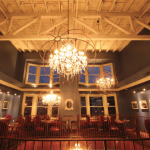
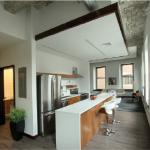
This month, we revived the concept, but with a tweak. We decided to highlight several recent historic restorations in Harrisburg, showing the properties pre- and post-renovation. This seemed in keeping with our annual March focus on homes, gardens and architecture.

In recent years, so many historic buildings have come back to life that it was tough to choose which to include. But, in the end, we decided to feature several important properties—commercial, residential and institutional—that demonstrate beautiful restorations and creative reuses.

It’s amazing to think that, until recently, all of these beautifully restored buildings were underused or blighted, many boarded up, abandoned and forgotten. Today, people live in them, work in them, have fun in them. We’re so fortunate that they were saved from neglect, dilapidation and the wrecking ball.

Author: Lawrance Binda

Continue Reading

A Better Bureau: Bureau of Fire slated to receive funds to renovate 1980s-era fire stations

Built in 1980, this fire station is slated to receive renovations to the dormitory.

The Harrisburg Bureau of Fire recently replaced all the curtains hanging in its two stations, which, said Fire Chief Brian Enterline, made a “night and day difference.”

Now, more significant updates are afoot for the stations.

This week, the Dauphin County Gaming Advisory Board recommended that the bureau receive $250,000 from a fund generated by revenue at Hollywood Casino at Penn National Race Course. The Dauphin County commissioners will vote on the recommendations March 1.

The $250,000 is earmarked to renovate Fire Station #2’s roof and the dormitories in Fire Stations #1 and #2, both built in 1980.

“Really, the projects we have are overwhelming,” Enterline said. “We are just trying to hammer away and get the most bang for the buck.”

The current dormitories lack privacy, Enterline said. Right now, 16 beds sit in large, square rooms in each fire station. The renovation plans include adding walls to divide the space and installing locker rooms, he said.

“We are trying to utilize the most space possible so we don’t have a ton of wasted space,” he said. “Right now, we have a ton of wasted space.”

This will be the first major change to the dormitories since the stations were constructed, he said.

The roof renovation for Fire Station #2 includes incorporating aspects of Capital Region Water’s community greening project, an environmentally friendly way of managing stormwater runoff.

Enterline said the last roof renovation was in 1988, and now its deteriorating state threatens to lead to leaks and damages.

“Everything is original. It’s been a real challenge,” Enterline said. “We are trying to do projects as we get the money to do them, and we are trying to be the best stewards of that money.”

This funding is part of $5.6 million county-wide grants generated from a tax on Hollywood Casino in accordance with the Pennsylvania Gaming Act. A September State Supreme Court ruling determined this act violated the state constitution, leaving the future of the grant program in jeopardy.

Hollywood Casino agreed to provide grants for the first half of 2017, said Jeff Haste, chairman of the county board of commissioners.

“Hollywood Casino at Penn National has stepped up and agreed to provide local share money through at least the first half of 2017, but it is imperative that the legislature and Gov. Tom Wolf act to save this vital program,’’ Haste said in a statement.

Enterline also doesn’t want to see this funding disappear.

“The Fire Bureau has always gotten great support from the [Gaming Advisory Board],” he said. “It’s a huge benefit for our city, the region and everybody.”

The Gaming Advisory Board recommended these other local projects for funding:

  • $350,000 to Dauphin County Parks & Recreation for Detweiler Park acquisition
  • $163,236 to Susquehanna Township for public safety building debt reduction
  • $151,000 to Lower Swatara Township for bridge replacement and fire apparatus debt reduction
  • $140,650 to Paxtang Borough and Central Dauphin School District for school building safety improvements
  • $217,100 to Lower Paxton Township for park playground project, Penn Colonial Pool improvements and Linglestown Fire Co. Building improvement
  • $39,250 to Steelton Borough for firefighting equipment replacement
  • $110,154 to Swatara Township for water rescue response boat and vehicle and Reliance Hose Co. Station improvements
  • $55,000 to Penbrook Borough for Elm Street Park improvements
  • $43,152 to Highspire Borough for firefighting equipment
  • $30,000 to Dauphin County Human Services to purchase a van for transportation program
  • $200,000 to Dauphin County Court Administration for the construction of MDJ buildings
  • $127,000 to Dauphin County Conservation District for agricultural stewardship project
  • $69,001 to Dauphin County Land Bank Authority to renovate two vacant homes
  • $100,000 to PinnacleHealth for an addiction and substance abuse urgent care clinic
  • $33,000 to Dauphin County General Authority for maintenance equipment acquisition
  • $35,000 to Steelton Borough/Homeland Center for upgrades to emergency back-up generator
  • $70,000 to Salvation Army for new headquarters and services facility
  • $50,000 to Steelton Borough/Boys & Girls Club of Harrisburg for John Hall Clubhouse renovation
  • $50,000 to Steelton Borough/Monumental AME Church for HVAC upgrade and boiler removal
  • $26,204 to Susquehanna Township/Jewish Family Services for headquarters renovations
  • $35,000 to Susquehanna Township/American Literacy Corps for Books in Barbershops program

Author: Danielle Roth


Continue Reading

Weekend Roundup with Sara Bozich

It’s another slow weekend for me — thankfully, because things get crazy in March. Tomorrow, we’re joining Kelly and Tim for Meatball FridayWill you pick up this fun idea? I want to!

Congratulations to our good friends at The Vineyard & Brewery at Hershey who celebrate 5 YEARS this weekend!

Saturday mornings, of course, are for Next Step Performance and Broad Street Market. Then I think it’s supposed to storm all day, so I’m thinking movie/Netflix/Amazon Prime marathon.

Plus I gotta rest up to see Badfish at The Abbey Bar at Appalachian Brewing Company on Tuesday! Join me! Tickets are just $15 in advance.


What are you doing this weekend?
(more…)

Continue Reading

Sinkhole Solution: City to receive more than $3 million in state funds

Sinkhole-damaged houses on the 1400 block of S. 14th Street will be sold to the city to demolish.

Harrisburg’s sinkhole saga is finally close to being over.

Soon, a little more than $3 million in state funding will flow to 53 residents whose S. 14th St. homes were damaged by sinkholes, after more than four years of the city trying to cobble together enough funding.

“It’s been a long time coming for the homeowners, but we are almost there,” Mayor Eric Papenfuse said.

Both renters and homeowners will receive funds to relocate after the city purchases and demolishes the sinkhole-afflicted homes. The city expects to close on the houses in the spring, which is all per their timeline, Papenfuse said.

“The money will go toward the purchase [of the homes], relocating residents and demolishing the homes,” Papenfuse said.

Earlier this week, the state announced a $3,179,099 award part of a larger $92 million state-wide project to relocate residents and avoid future losses from flooding and sinkholes.

This grant may not cover “all eventual costs,” Papenfuse said, adding that, after demolition, the city would like to turn the area into a green space.

The state’s announcement on Tuesday, confirming award amounts, comes after a more than four-year journey for the city trying to secure funds.

The city first requested disaster relief funding from the Federal Emergency Management Agency (FEMA) and was denied on a technicality: FEMA did not address sinkhole damage. In 2014, city officials pressed FEMA to address sinkhole damage with disaster relief funding, only to be denied funding in the next season for grant-giving.

In the next grant-giving season, the state selected Harrisburg as a priority to receive the sinkhole funds. That funding then was earmarked for Palmyra, and the state asked FEMA to reconsider. FEMA reversed the decision, and the city received $1.65 million last year for the sinkhole project.

“The most significant thing the city did was FEMA reversing the decision,” Papenfuse said.

Author: Danielle Roth

Continue Reading

“Not Good Enough”: School Board Denies Application for Arts-based Charter School

The board voted to deny the Arts to the Core Charter School Tuesday night.

The Harrisburg School Board tonight rejected the application of an arts-based charter school, with school board members citing an incomplete application and thin grassroots support.

The 7-3 vote denied the Arts to the Core School a five-year charter to begin a kindergarten through 8th grade program in the former Bishop McDevitt High School. Board members raised concerns over curriculum and community involvement of the Lancaster-based school.

School Board President Danielle Robinson said the curriculum was “not good enough,” adding that the school did not incorporate recommendations made after a York school district rejected the charter.

“The adjudication outlined what needed to be fixed, and the issues weren’t resolved,” she said.

School Board Vice President Ellis Roy called the concept “terrific,” but still voted against the charter.

“You have got to do the legwork and present a complete document, then I’d vote in favor,” he said.

School board members Jim Thompson, Judd Pittman and Matthew Krupp voted in support of the school, which had hoped to enroll 300 students this September.

Richard Caplan, Arts to the Core’s CEO, said these are not “valid criticisms.” He said it’s difficult to create curriculum for an arts-centered approach because it requires teachers to incorporate the arts “on the fly,” he said.

“The A+ Schools,” a North Carolina charter system that would have served as the basis for this school, “succeed because they incorporate arts dynamically,” he said. “In truth, arts in the school works because it challenges the teacher.”

Caplan said he is prepared to continue trying to bring the school to Harrisburg. He said he and his legal counsel will either submit an amended application to address the board’s concerns or appeal to the state’s Charter Appeal Board.

More than 40 people attended tonight’s meeting, including Mayor Eric Papenfuse and councilmembers Westburn Majors and Jeffery Baltimore. The entire Arts to the Core board, many from Lancaster, also attended the meeting, said Caplan.

Before the vote, Papenfuse spoke in support of the charter school, saying that it would give young families an incentive to stay in the city and expand the tax base.

“This would be a means of attracting new people to the district,” he told the board. “We need options to attract young parents into the city. I’ve spoken to many of them.”

The board considered offering a three-year charter if the Arts to the Core school met 13 criteria by February 2018. These stipulations included measures for curriculum development and securing the building.

Bishop McDevitt High School. Large, long, brick building

The former building of Bishop McDevitt High School has sat vacant since 2012. The Arts to the Core Charter School proposed to renovate and use this building.

In this case, the school would use the 2017-18 school year to plan curriculum, which Superintendent Dr. Sybil Knight-Burney would have to approve. The school also would need to secure a lease agreement or sale of the Market Street building and complete all necessary renovations.

“The conditions, they were impossible,” Caplan said, adding that he could not secure the building without a charter.

These stipulations, including a requirement for fewer than 20 students per class, gave Pittman confidence in the charter school, though he called the application “ill-prepared” and questioned the Lancaster-based group’s commitment to Harrisburg.

“Our superintendent has the power to control the curriculum,” he said to the board. “All of that is in our control.”

Pittman said he would like to see the same tenacity and scrutiny applied to the district’s own curriculum, which offended Robinson, who has served on the board for five years.

“I’m proud of our teachers, our community and what we have accomplished in the past five years,” she said. “We have ways to go, but we are nowhere close to where we were before.”

For Robinson and Ausha Green, the additional conditions needed to implement the school led them to vote against the charter.

“We had other charters that did not make it through [the board’s vote]. Why do we have to walk them through?” Robinson said.

Green put it this way: “Come here correct or don’t come at all.”

The school’s community involvement also raised concerns for Robinson.

“[Caplan] has pandered to the Latino community without [English-language learners] curriculum,” she said.

Caplan said his school donated to two organizations, one including LOOP, in return for help petitioning. He denied pandering to Hispanic organizations.

“We have more than 500 kids signed up, and most of them were not Hispanic,” he said.

Board members also questioned the group’s commitment to Harrisburg.

“If this is so good, why not bring it home [to Lancaster]?” Robinson said.

Caplan said the school has the support of six or seven community groups including the Susquehanna Art Museum and the Harrisburg Opera.

For more information about the Arts to the Core Charter School, visit the Facebook page.

Author: Danielle Roth

Continue Reading

Safety Update: For the third year in a row, Harrisburg crime dropped in major categories.

Harrisburg isn’t commonly known as a low-crime city, but it may be trending that way as overall crime has dropped for a third straight year.

In a press conference today, Mayor Eric Papenfuse stated that total crime dropped 17.7 percent last year compared to 2015. Violent crime fell 3.9 percent while nonviolent crime decreased 31.4 percent versus 2015.

Papenfuse attributed these statistics to Chief Thomas Carter’s leadership, the implementation of a community policing strategy and recruiting talented new hires.

“I think he has set the tone for our Police Department and, as a result, his strategies are effectively trickling down to everyone and the department is working more effectively than ever before,” Papenfuse said.

In 2016, an 18.47 percent drop in robbery led the decrease in crime compared to 2015. The city’s murder rate also fell. In 2016, Harrisburg recorded 16 murders, compared to 19 in 2015.

For 2016, auto theft was one of the few types of crime to experience an increase. Olivera said the 27.43 percent increase in auto theft reflected the past year’s cold winter when thieves take advantage of motorists warming up cars unsupervised.

Over the past three years, violent crime has dropped 27.5 percent, while nonviolent crime has fallen 29.6 percent.

Leading the violent crime category’s three-year drop is a 50.82 percent decrease in robberies and a 36.59 percent decline in burglaries.

All categories of violent crime except for rape saw a double-digit decrease when looking at the past three years. Capt. Gabriel Olivera credited a change in state law that affected how the city reported rapes to jump in reported rapes last year. When combined with the sexual offenses category, as was the method before the law change, the numbers show a modest increase.

“The 2016 numbers [on rape] will provide a good baseline when moving forward,” Papenfuse said.

Papenfuse credits the community policing model with proactively affecting crime rates.

“Community policing means developing relationships with the community in such a way that proactively prevents crime from happening,” Papenfuse said.

Nonviolent crimes, also termed “quality of life” crimes, decreased 31 percent, showing double-digit drops in every category except arson compared to last year. Theft-related charges, criminal mischief and drug-related charges decreased each by at least 20 percent.

“We see more businesses come into the community because they feel comfortable and safe,” Capt. Olivera said. “That benefits all of us.”

Arson increased 29 percent from 21 arsons in 2015 to 29 arsons last year. Papenfuse linked this with the “raging opioid epidemic” in the region. Those addicted to drugs will squat in abandoned properties and start fires.

The child abuse category has seen a 23 percent increase since 2013 and a 17 percent decrease since last year. Officials credit mandatory reporting laws created in reaction to Jerry Sandusky’s child abuse scandal as the reason for the three-year increase.

Papenfuse called these numbers “impressive,” while adding that “no one is satisfied with the current crime rate.”

This summer, the Bureau of Police is expected to add at least eight new police officers in addition to 10 officers added in January, Papenfuse said. The department is actively looking for two information-support officers to assist communication and data analysis.

Papenfuse noted that the city is funneling more resources into the Allison Hill and Uptown neighborhoods. Construction on an Allison Hill safety sub-station will begin this year. After the that sub-station is functional, the city will install one in the Uptown neighborhood.

Chart of Harrisburg crime data

Data from the City of Harrisburg shows an overall decrease in crimes from the past year and the past three years.

Find the City of Harrisburg’s crime data, including the above chart, here. 

Author: Danielle Roth

Continue Reading

Parking Update: New Parking App Promises Easier Communication with Businesses, App Users

parking resizedThe parking app Parkmobile will allow business owners to offer specialized discounts, in addition to $1-an-hour after-work parking, officials said today.

“I think this empowers businesses in a way that will allow businesses to grow, and it empowers the city by bringing more people downtown,” Mayor Eric Papenfuse said.

Business owners will receive a 10-percent discount when offering bulk discounts to users. They also can validate parking in real time, Papenfuse said. He gave a hypothetical example of Whitaker Center offering to validate the parking for attendees of a show the center is promoting. 

IMG_0962

The Parkmobile app allows users to save information, such as frequently used vehicles and parking zones.

The Parkmobile app will start with two discounts on March 1.

Users can pay $1 per hour to park downtown from 5 to 7 p.m. with the code “After5.” This pilot program, sponsored by Park Harrisburg, SP Plus and Parkmobile, will run for 3,000 hours of parking. Parking officials will continue the discount if they see an increase in downtown parking, Papenfuse said.

“It will be very easy and very possible for business to promote their discounts,” Papenfuse said.

Parkmobile users also receive four hours of free parking Saturdays anywhere in Harrisburg, as part of a program re-launched by the city, by using the code “LUVHBG.”

The app also promises better communication with users about discounts and parking regulations, Papenfuse said.

Parkmobile users will receive a “welcome to Harrisburg” message, which will outline the day’s discounts. During free parking hours—Sundays, holidays and evenings after 7 p.m.—users will not be allowed to pay, Papenfuse said.

The city also can use the app to communicate updates for festivals and events such as the upcoming St. Patrick’s Day parade, Papenfuse said, giving residents information about the parking situation.

The app will charge 35 cents per transaction, which is a 20-cent increase from Pango’s fee.

Author: Danielle Roth

Continue Reading

The Final Frame: Red Crown Bowl to Close Next Month.

BowlingWeb

Red Crown Bowl n Brew is just weeks away from closing, as the owners have decided to sell their property to their neighbor, the trucking company J.B. Hunt.

It’s a winning game for the owners, but a gutter ball for our area’s passionate bowlers, as Red Crown Bowl n Brew plans to close next month.

The Harrisburg institution will shut its doors for the last time in early March after 80 years of strikes, spares and splits, said owner Don Kirkpatrick, who is selling the property to his next-door neighbor, J.B. Hunt, the national transportation and logistics company.

“My neighbors have been after me to sell for several years, and they finally came up with a price we were looking for,” he said, declining to state the purchase price.

Red Crown first opened its doors in 1937 at 80 S. Cameron St. in Harrisburg. It moved to its current, 20,000-square-foot location on Sycamore Street in Swatara Township, just outside the city, in 1959. The Kirkpatrick family has owned it for the past 37 years.

Kirkpatrick, 67, said that he plans to retire, and his children, who have worked at the alley most of their lives, will find other jobs that don’t require having “to work weekends and nights.”

Still, Kirkpatrick described the end of the era as “bittersweet.”

“This has been my life,” he said, becoming emotional. “We’ve had so many wonderful customers over the years.”

Harrisburg Young Professionals is one of those customers, as the alley currently hosts the group’s 16-team bowling league. HYP Executive Director Derek Whitesel said that he’ll need to find a spot in one of the region’s other four bowling alleys to finish up the season, which will only be half-complete when Red Crown closes.

“It’s been a great relationship from our perspective, so we’re sad to see them being sold,” he said.

Kirkpatrick said that J.B. Hunt plans to demolish the alley’s building to expand its trucking facility, located right over a chain-link fence, as the Harrisburg area continues to grow as a center for distribution and logistics.

“I will really miss my customers,” he said. “If you see the posts on our Facebook page, it’s been just phenomenal.”

Red Crown Bowl n Brew is located at 2471 Sycamore St., Harrisburg (Swatara Township). You can read the company’s farewell at www.redcrownbowling.com or their Facebook page.

Author: Lawrance Binda

Continue Reading

Weekend Roundup with Sara Bozich

article header

It’s that time of the year when Harrisburg Beer Week planning is keeping busy, busy. If you are interested in sponsoring (or hosting an event!), please note our deadline is next Friday, Feb. 24. Contact me for details!

My evenings have been pretty work-filled lately, and I don’t have many plans for the weekend outside of the usual gym-market visits, a bridal shower and hopefully catching a showing of Gamut Theatre’s R.U.R. on Sunday.

WR0216

What are you doing this weekend?

(more…)

Continue Reading