August News Digest

August News Digest

Development Site Rezoned

A project to turn a former Harrisburg medical facility into apartments took a step forward last month.

City Council approved a zoning change and subdivision for the former Polyclinic Hospital at 2601 N. 3rd St. in Uptown Harrisburg, which a developer has proposed renovating.

In March 2024, Pennmark Harrisburg Holdings, an affiliate of Montgomery County-based Pennmark Management Co., purchased the property and later proposed making it into market-rate apartments with commercial space. As part of the estimated $45 million project, Pennmark would construct 250 to 300 apartment units, along with retail shops.

Council’s approval changed the property’s current Institutional zoning to Commercial Neighborhood zoning and split the land into four separate parcels to aid in development. The project still will require approval for its land development plan.

Also last month, council voted to appropriate about $2 million into the budget, sourced from various city fund balances, to pay money that it owes due to recent litigation. A Dauphin County jury decided in June that Harrisburg underpaid the owner of the former Brenner Motors car dealership when the city took the property via eminent domain several years ago.

In other news, council voted to appoint Basir Vincent, who recently ran unsuccessfully for a council seat, to the Harrisburg Planning Commission.

Large Midtown Development Approved

An expansive housing development in Midtown Harrisburg has the green light to proceed, as it has received a final blessing from the city.

In late June, City Council voted unanimously to approve the land development plan by Midtown Redevelopment LLC to construct townhomes, apartment buildings and commercial space in the area bounded by Reily, Fulton, Sayford and James streets.

In total, the development would include 62 units across more than a dozen townhomes and three 12-unit apartment buildings near the Broad Street Market, some of which would be deemed affordable. The plan also would include 5,500 square feet of commercial space to be used as a “food hall.”

The project includes parking for residents and will have both for-sale and rental units, according to council President Danielle Hill, who added that the developers hope to break ground in November.

At the meeting, council also approved a plan by Commonwealth Charter Academy to partially demolish an old school building at 555 S. 25th St.  and construct a new building for staff and administration.

Long-Term Pollution Plan Finalized

A Harrisburg-area utility has finalized a long-term plan that envisions spending over $1 billion on upgrades to reduce waste flow into area waterways.

Last month, Capital Region Water (CRW) stated that it had submitted a final “Pollution Reduction Plan” to state and federal regulators that would spend about $1.43 billion over 40 years to slash waste entering the Susquehanna River and Paxton Creek.

“The plan is technically feasible, cost-effective, resilient, sustainable and keeps our customers’ well-being at the forefront,” said Charlotte Katzenmoyer, CEO of CRW.

For many years, under agreements with federal and state agencies, CRW has been developing and refining a plan to improve Harrisburg’s aged, combined sewer system, which allows untreated wastewater to flow into area waterways during rain events.

That plan now includes a wide variety of system improvements, including pipe replacement and rehabilitation, green infrastructure and water storage systems, work that will continue for about four more decades.

According to CRW, the plan, when complete, will reduce overflows into the Susquehanna from about 90 events in a typical year to 12, and into Paxton Creek from 95 events to 16. Overflow volumes across the entire system would be reduced by 82%, according to CRW.

The project cost and timeline are much greater than previously reported. Previously, CRW had stated that system upgrades should cost about $315 million over 20 years.

According to CRW, the current cost projection of $1.43 billion is dramatically higher because it accounts for inflationary impacts over the long project lifespan. The project’s cost in terms of present value has risen by much less, to $455 million, CRW told TheBurg.

The project’s complexity and high cost has caused the timeline to be extended, CRW stated.

“Extending the implementation period over 40 years will help minimize undue financial strain on our customers,” CRW said, in a statement.

Home Sales, Prices Higher

Harrisburg-area home sales and prices both gained in June, according to the latest report on previously owned houses.

For the three-county region, 634 homes sold in June compared to 593 sales in June 2024, as the median sales price rose to $303,700 from $290,000, said the monthly report from the Greater Harrisburg Association of Realtors (GHAR).

In Dauphin County, 298 homes sold versus 291 in the year-ago period, while the median sales price dipped to $275,000 from $280,000, GHAR said.

Cumberland County had 290 home sales in June against 264 last year, as the median sales price grew to $338,000 from $320,000, GHAR stated.

In Perry County, 36 homes sold, a drop of two sales, while the median sales price rose to $278,500 from $230,000 the prior June, according to GHAR.

The pace of sales slowed slightly, as “average days on market” increased to 22 days in June versus 20 days in June 2024, GHAR said.

So Noted

David Skerpon last month was elected as the new board chair of the Harrisburg Symphony Orchestra. In addition, three new members—Richard A. Lewis, Michael Page and Debra Ryan—were named to the HSO board.

Harrisburg School Board approved a $213.1 million budget in late June, which includes a 2% property tax increase. The 2025-26 spending plan was the first budget approved by the full school board in six years, as the district exited state receivership.

Janelle Stelson last month announced that she would run in 2026 as a Democrat for the 10th congressional district, which includes much of the Harrisburg area. Stelson narrowly lost a bid last year to unseat the long-term Republican incumbent, Scott Perry.

JMB Gardens has cut the ribbon on a 41-unit affordable housing development on the 2300- and 2400-blocks of N. 6th Street. NFL player LeSean McCoy was on hand as the owner of the project developer, Vice Capital.

PA State Museum has announced a plan to substantially renovate its mid-century building and update exhibits, adding a fifth-floor event venue to the structure and a 16th-floor observation deck to the neighboring state Archives tower. The $55 million project will result in the museum closing for nearly three years, from August 2026 to until early 2029, according to museum officials.

PennDOT last month reopened the pedestrian underpass beneath Cameron Street near the state Farm Show Complex. The underpass had been closed since February due to concrete deterioration on the ceiling of the walkway.

TheBurg last month was named 2025 News Organization of the Year by the PA NewsMedia Association Foundation, the premier press association in Pennsylvania. This is the fifth straight year that TheBurg has won this prestigious award, which honors all aspects of a news outlet’s operations, including editorial, art, design and sales.

Tower Jewelers opened last month at 7 N. 3rd St., just outside the 3rd Street entrance of Strawberry Square. From the downtown Harrisburg storefront, the shop offers a variety of high-end gold and gemstone jewelry, according to Harristown Enterprises, which owns Strawberry Square.


Changing Hands

Benton St., 603: Equity Trust Co. Custodian FBO John Spencer to F. LaFontant, $95,000

Boas St., 228: A. Afolabi & R. Grant to Avery Nicole Via Trust, $225,000

Boas St., 1814: J. & E. Wilson to First Choice Home Buyers LLC, $55,000

Briggs St., 1947: R. & D. Requa to H. Rahman, $165,000

Catherine St., 1510: N. Tull to KLG Fix Flip LLC, $105,000

Chestnut St., 1201: US Bank Trust National Association to D. Rodriguez, $57,500

Chestnut St., 1840: Silver Lining Holdings LLC to M. Bolos, $125,000

Chestnut St., 1961: F. Olivo to E. Morris, $222,000

Conoy St., 106: M. & K. Neale to T. Roth, $240,000

Derry St., 1632: M. Reyes to S. & D. Lapp, $108,000

Emerald St., 339: BCR 1 Properties LLC to Breneman Properties LLC, $90,000

Emerald St., 521: C. Gibbs to L. Spearman, $141,000

Fulton St., 1706: K. & E. O’Conor to J. & L. Lilley, $211,000

Girard St., 735: Harrisburg Pennsylvania LLC to J. Grasso & J. Rivera, $113,500

Green St., 2150: 2020 Real Estate Ventures LLC to B. Sissoko, $249,900

Green St., 2223: J. & B. Readinger to R. Gonzalez, $185,000

Green St., 2908: A. & A. Carter to J. Gatto & J. Pederson, $680,000

Hale Ave., 412: G. Romain to Integrity First Home Buyers LLC, $90,000

Hamilton St., 427: D. Chase to Wright at Home LLC, $80,000

Harris St., 348: K. Peterson to K. Fisher, $250,000

Hoffman St., 3105: E. Klinger & Z. Rouse to L. Harris, $300,000

Hummel St., 433: N. & C. Acevedo to J. de Leon & S. Cortorreal, $133,000

James St., 1333: C. Linnenbach to L. Klein, $172,000

Jefferson St., 2249: Y. Perez to H. Dhillon & G. Kaur, $145,000

Jefferson St., 2420: R. Shokes to Knight Development and Management LLC, $80,000

Logan St., 1732: M. Schesser Trust to J. Morris, $255,000

Logan St., 2033: Coverex LLC to W. Barrett, $170,000

Manada St., 1948: Paramount Sol LLC to E. Jimenez, $187,500

Mercer St., 2437: D. & K. Keister to West Autumn Holdings LLC, $120,000

Naudain St., 1427: S. Rucker to Lumastay Properties LLC, $110,000

Naudain St., 1602: R. Kabir to Y. Fernandez, $114,000

N. 2nd St., 508 & 510: Partners Five LLC to WCI Partners LP, $365,000

N. 2nd St., 1929: L. Bernard & M. Kline to T. & Y. Jasper, $260,000

N. 2nd St., 2513: J. Khan & L. Dalia to A. Hess, $340,000

N. 3rd St., 212: Atcheson Properties and Beckley & Madden to Capitol Park View LLC, $700,000

N. 3rd St., 1421: E. Papenfuse & C. Lawrence to Heinly Homes LLC, $163,215

N. 3rd St., 1423 & 1423½: E. Papenfuse & C. Lawrence to Heinly Homes LLC, $286,785

N. 3rd St., 1715: J. Jacobs & J. Van Leeuwen to P. Kuhn, $222,500

N. 3rd St., 2331: Eco Builders PA LLC to B. Blackhurst, $295,000

N. 4th St., 2234: BCR 1 Properties LLC to Breneman Properties LLC, $85,000

N. 5th St., 2313: BCR 2 Properties LLC to N. Munoz, $168,000

N. 6th St., 2001: D&F Realty Holdings LP to 2001 N. 6th St. LLC, $466,925

N. 6th St., 2228: E. Jones to Avila Estate Investment LLC, $70,000

N. 6th St., 2624: D&F Holdings LP to I. Vilorio, $200,000

N. 14th St., 224: A. Pacheco to A. & J. de Campana, $140,000

N. 15th St., 235: Howze Carpentry LLC to C. Ashe, $185,000

N. 15th St., 241: H&H Investment LLC to E. Esh, $169,000

N. 15th St., 517: Golden Triangle Investment LLC to Padmini Estate LLC, $160,000

N. 15th St., 1305: BCR 1 Properties LLC to Echo Propco 1 LLC, $90,000

N. 15th St., 1627: SGCRS LLC to M. Nieves, $129,900

N. 16th St., 41: T. Cobb to First Choice Home Buyers LLC, $85,000

N. 17th St., 708: R. Kent to J. & R. Zapata, $200,000

Park St., 1633: M3 6 Realty LLC to APC Real Estate LLC, $63,500

Park St., 1856: W. Griffin to W. Rosario, $149,500

Penn St., 2320: R. McCullough to J. Bonham, $176,500

Reily St., 263: FLTBYS LLC to E. Papenfuse & C. Lawrence, $275,000

Reservoir St., 76: A. Staff to JJ House LLC, $60,000

Shoop St., 1433, 1435, 1437, 1439: J. Limric to TLC Work Based Training Program Inc., $150,000

South St., 105: J. Maxwell to H. Basso, $189,900

S. 9th St., 1125: DB Real Estate & Properties LLC to AMiracle4Sure Inc., $670,000

S. 17th St., 534: H. Reyes to MyMajesty LLC, $73,500

S. 18th St., 161: T. Liang & M. Morales to A. Olivera, $72,000

S. 25th St., 729: Waters Properties LLC to J. & M. Chery, $392,000

S. 28th St., 726: P. Garcia to A. Fernandez, $180,000

S. Front St., 709: L. Foster to C. & P. Ogle, $275,000

Spencer St., 1857: B. Gonzalez to A. Ulloa, $158,000

State St., 106: J. Dorbian to C. Cross, $290,000

State St., 231, Unit 705: Nye & Golub Rentals LLC to Areba Properties LLC, $825,000

Susquehanna St., 1711: N. DeMuro to C. Lucas, $210,000

Susquehanna St., 1815: C&C Homes LLC to PACC Homes and Development LLC, $92,500

Vine St., 119: B. & P. Palmer to J. Tallman, $190,000

Whitehall St., 1851: YT Harrisburg LLC to JK Realty and Home Repair LLC, $435,000

Wiconisco St., 623: Yovany LLC & Rivas Property Investments LLC to BZDEL Global Investment LLC, $128,000

Zarker St., 1425: M. Posey to T. Posey, $120,000

Harrisburg property sales, June 2025, greater than $50,000. Source: Dauphin County. Data is assumed to be accurate.

If you like what we do, please support our work. Become a Friend of TheBurg!    
Continue Reading

Fortress Harrisburg? Bigger fences may not make better neighbors.

Illustration by Rich Hauck

Like most Americans, I stared in horror and disbelief as a string of terrorist attacks unfurled on live TV on Sept. 11, 2001.

Unlike most Americans, I had genuine reason to fear for my personal safety. My house was a block from the U.S. Capitol, one of the closest private buildings to the Capitol complex in Washington, D.C.

On that morning, I sat in my living room stunned, not sure what to do. Friends and family called, urging me to flee my house. I didn’t, only to learn later that United Airlines Flight 93, which crashed into a field in Somerset County, Pa., was likely headed in my direction. If not for the brave passengers and crew aboard that flight, I might not be here today.

I mention this now not to rehash the events of that terrible day, but to explain what came next.

Before 9/11, I lived in a very special neighborhood. My house was less than a block from the Supreme Court, the Library of Congress, the Folger Shakespeare Library. These monumental buildings, grand lawns and lovely gardens made up the content and context of my neighborhood. It was a uniquely beautiful and extraordinary place to call home.

After 9/11, a gloom fell over my neighborhood. Streets closed. Ugly concrete barriers lined the blocks; bollards went up everywhere. There were chain-link fences and makeshift gates and security checkpoints and police who stopped and questioned me when I tried to walk down my own street.

A few years later, the U.S. Capitol police proposed installing a pop-up barrier directly in front of my house. That was the final straw. I decided to sell, later using some of the proceeds to move to Harrisburg and start TheBurg.

At the time, I simply couldn’t understand how ravaging my neighborhood made the Capitol any safer. It would not have prevented a 9-11-type attack, which used airplanes as weapons. In my view, any security gain was marginal, but at great cost to the taxpayer and to the surrounding community. Years later, I felt my opinion vindicated when all those measures failed to prevent the worst attack on the Capitol in U.S. history—the ground assault of Jan. 6, 2021.

Recently, I had a flashback to that time. In the wake of the horrendous arson attack on the PA Governor’s Residence, I feared that similar things might happen in Harrisburg. The state closed off an adjacent alley; stately old trees along Front Street were felled; the sidewalk was blocked; an unsightly fence was quickly erected.

Yes, I understand that greater security may be needed around the residence. For three years, I lived nearby and often walked down Geiger Street, the alley adjacent to the south side of the mansion grounds. From there, last April, an attacker climbed the fence, ran up to the building, smashed a window and firebombed the dining room.

I wasn’t surprised that the attack originated from that spot. Walking by almost daily, I often thought about how exposed this area was—isolated, eerily quiet, pitch-dark at night. I rarely saw any personnel on the grounds there, save the occasional gardener.

So, yes, I believe that the Governor’s Residence needs better protection, especially from the dark, quiet, backside of the property. And, unfortunately, we live in an age with toxic politics, toxic partisan media and toxic social media, which together can pollute minds, feed delusions and trigger someone inclined to violence.

But I also believe that additional safety can be had without turning Front and Maclay streets into an ugly, scattered mess of metal fencing, tree stumps and concrete barriers. Fortunately, the Governor’s Office assured me last month that these unsightly elements are temporary as the state improves security measures, including constructing an “anti-climb fence.”

“In the end, the Residence and surrounding grounds will look much as neighbors remember,” stated the governor’s press office, in response to my questions.

I also would advocate for additional human resources. Would I want a job sitting in a guardhouse all night long? I would not, but more eyes and ears may be the best way to thwart a future attack, with the least negative impact on the residence and on the surrounding natural and built environment.

Indeed, Harrisburg—and Pennsylvania—deserves a well-considered, well-designed security and architectural plan that respects the city, the riverside setting and the building’s own history, stature and aesthetics. I’m confident that, with thought, care, expertise and skill, the commonwealth can achieve a balance between security, functionality and design. In the end, opportunity could arise from calamity, with the building’s security, livability and eminence all enhanced.

Two dozen years have passed since the horrible day of Sept. 11, 2001. Unfortunately, the political climate today may be even more volatile, especially domestically. Ultimately, the best way to improve security is not with stronger fences but with stronger people—with politicians, pundits and ordinary Americans collectively deciding that we’ve had enough, that we must work together to rediscover respect and lower the temperature of our civic discourse.

Lawrance Binda is publisher/editor of TheBurg.

If you like what we do, please support our work. Become a Friend of TheBurg!    
Continue Reading

Next Stop: Our writer looks at how Harrisburg’s transit system is faring, where it’s going

Photo courtesy of Rabbit Transit.

On a sunny, early summer day, people sat, stood and waited for their bus at the Market Square Transfer Center in downtown Harrisburg.

A few people chatted, some sported headphones and a not-in-the-mood-to-talk face; others bounced and balanced kids on their laps.

Many people, like city resident Ben Simmons (yes, he gets the NBA comparison a lot), take Harrisburg’s Rabbittransit buses to get to work. The transit system “gets me where I need to go,” he said. Another resident, Luz Byron, takes the bus from N. 6th Street, near where she lives, to go grocery shopping. “I don’t have a car. I have to do it,” she explained.

One guy from Reading, Ron Sanders, has lived in Harrisburg for the past several months to take care of his father. When his car broke down, he started using the bus to get around the city and to get to and from his job. He found the system relatively easy to navigate as a city visitor.

Responses to the quality of Rabbittransit’s service varied. One man rated it a 9.5/10, saying that drivers were friendly and buses were clean and dependable. His only complaint concerned the environment around many of the bus stops—he once witnessed a fight near the transfer center, he claimed. Others had a more heated reaction to the quality question, one man stewing on the fact that his usual bus was late, as it often is.

Rabbittransit’s top officials, as well as other local leaders, are aware of the system’s challenges but also emphasize how far it’s come and where it’s headed. And they see how crucial better service is for people like Simmons, Byron, Sanders and others who depend on transit.

The organization took a hit during the pandemic, like many did. While they have bounced back somewhat, ridership has shifted. Who is riding the bus is changing. Therefore, the organization has plans in the works to make the system better for Harrisburg.


Getting in Motion

Much of Rabbittransit’s infrastructure and systems are outdated—Executive Director Rich Farr acknowledges that. Bus routes are inefficient. The downtown transfer center’s design hinders easy transfers. The organization’s home base on Cameron Street is 120 years old and showing its age.

“What we’re really looking at is modernizing our transit system,” Farr said. “Not a lot of stuff has happened for decades, and it’s time for us to get in motion.

Farr explained that Rabbittransit can start future-planning now that it has stabilized operations after a shaky past. In 2018, the company, which provides service in York and surrounding counties, started overseeing operations of Harrisburg’s system, formerly called Capital Area Transit. CAT was in debt, buses weren’t arriving at stops, and Farr’s team faced an uphill battle. In 2021, the systems officially merged to become Susquehanna Regional Transit Authority, operating as Rabbittransit (although Harrisburg buses still physically bear the name “CAT”).

“We spent a lot of time up until this point really getting our house in order, and I think we’ve arrived,” Farr said. “There are always issues. There’s always opportunity for improvement […] I think it’s now time to start looking towards the future.”

Notably, that future includes a multi-year process of demolishing and rebuilding its transit facility on Cameron Street to bring it into this century. The new facility will also be the site of the new transfer center

Currently, buses come through the Market Square transfer center, which is not big enough to accommodate more than a few vehicles at a time. Often, riders are dropped off from one bus and forced to wait for 30 minutes or a full hour until their transfer arrives, simply because there’s not enough space for both arriving and departing buses.

Shorter-term upgrades include a modernized fare payment system, which Rabbit will implement in the coming months. That will use an upgraded scanner and utilize an account-based mobile app where riders can virtually pay and keep track of fares, instead of purchasing individual tickets. Farr also noted that fares will increase by around 10 to 20 cents, as the system hasn’t hiked rates in years.

With the upgrades will come bonuses, like increased frequency of buses on the busiest routes and better synced connections.

Farr expects that improved service will mean more riders.

“People will use the service if you give it to them,” he said. 


New Approach

Brad Jones of Harristown Enterprises, a major downtown landlord, has seen how the pandemic and the rise of telework have impacted his properties downtown. Workers have left office buildings, and businesses have struggled with less foot traffic. In discussions with Farr, he’s realized how that lack of workforce density has impacted Rabbittransit as well.

Jones sees how a refreshed and modernized bus system could play a role in his downtown vision, offering more amenities for his residential and commercial tenants. The system could also offer an enticing alternative to high parking fees, he noted.

“We are trying to create as many assets to walk to as possible,” he said.

Farr concurred.

“They’re converting buildings to apartments,” he said of Harristown. “We want those folks to come down their elevator, open the door, and walk out to the bus stop. If we are going to move more people downtown, then let’s give them transit service.”

That’s Rabbittransit’s focus now—getting more city residents on board buses, as they seek to rely less on state workers, which previously made up a good number of their patrons. According to Farr, the system is seeing growth post-pandemic, but is still at about 65% of its pre-pandemic ridership. He estimates that some of that 35% still missing is due to telework.

“We need to serve the folks who live here,” he said. “The growth has to be because the folks who live here are riding it, and that’s what we want.”

Statistics from 2023 show that 55% of people who use Rabbittransit’s fixed route system are going to work and 68% of riders have no other means of transportation. Over half of riders have a total household income of less than $25,000.

Tri-County Regional Planning Commission Executive Director Andrew Bomberger views transit as an important asset to a city like Harrisburg, especially for those who depend on it.

However, he sees it as one piece of the puzzle that includes other modes of transportation, such as cycling.

The regional planning commission kickstarted its Susquecycle bike share program in 2022, bringing rentable bikes to stations around the city, many located near bus stops for convenience. Each year, more and more people rent bikes, Bomberger said.

Infrastructure like this, as well as other needed improvements, will make it easier for people to access the buses, Bomberger believes.

Bomberger himself said that he takes the bus to work. He acknowledged that it can be intimidating to figure out the system the first few times riding, but now he finds it enjoyable to just hop on the bus and ride home after a long day, without having to drive.

“Just give it a try,” he said. “It’s more convenient than you think.”

Farr hopes that, through system improvements to make riding easier for residents, more people, like Bomberger, will give it a try.

“We just have to approach how we deliver transit differently,” he said. “We have to make sure we adapt to how people are living today.”

Rabbittransit’s Capital Region Facility is located at 901 N. Cameron St., Harrisburg. For more information about their facility project and other upcoming initiatives, visit www.rabbittransit.org.

If you like what we do, please support our work. Become a Friend of TheBurg!    

Continue Reading

August Publisher’s Note

Recently, I had dinner with a friend who’s a college professor.

“So, any plans for the summer?” I asked, making general conversation.

He looked at me like I had two heads.

It was early July and, for my friend, most of the summer was already long gone. His mind was on returning to school, just a month or so away.

“Oh, I guess you’ve already been off awhile,” I said, catching my mistake and quickly changing the topic.

I realized then that the world is split in two—those whose lives are divided by the school year and those who aren’t. I’m definitely in the second camp.

In contrast, my life is broken into monthly segments, the cycle of publishing this magazine. As soon as one issue is finished, the next one revs up.

The story list must be finalized, the planning meeting held, the art arranged.  That’s followed by weeks of writing, editing, designing, proofreading, etc., culminating in another completed issue, ready to be printed, distributed and read.

This cycle has now been going on, without interruption, for nearly 17 years. I call it the “monthly miracle.”

Once a year, my schedule and my friend’s schedule converge. Each August, TheBurg has an extended focus on “youth and schools,” as we mark the start of the new academic year. I hope you’ll enjoy our special section, which includes a dive into the Harrisburg School District, now that it’s out of a six-year state receivership.

Otherwise, we have our usual mix of news, community stories, small business features, cultural happenings and events—always all-original and always all-local. Enjoy this last official month of summer, whether that means back to work, back to school or just another day in the life.

Lawrance Binda

Publisher/Editor

If you like what we do, please support our work. Become a Friend of TheBurg!    

Continue Reading

Tested, Invested: The Harrisburg School District exits state-control after turbulent times; focuses on future growth, challenges

Dr. Benjamin Henry, Dr. Lori Suski and Dr. Carrie Rowe, acting secretary of the PA Department of Education, formalize the receivership exit. Photo courtesy of Shawn Oliveira, Harrisburg School District.

Dozens of Harrisburg School District graduates moved tassels from right to left during a ceremony in June.

Photos from the day show student after student holding diplomas, dressed in gowns signifying their exit from high school. Each smiling face represents a 12-year educational journey.

For half of the class of 2025’s dozen years of schooling, behind the scenes, district administrators have been working to clean up what was once a district in turmoil. While these students navigated a daunting move from middle school to high school, officials uncovered missing financial records. While students took tests and turned in homework, administrators found teachers lacking certifications. While students navigated pandemic remote learning, the district did too.

Six classes of teens graduated while the school district was under state control, with the district spending as long attempting to right a ship gone very, very wrong.

So much has changed since June 2019, when the then-spiraling district was ordered by a Dauphin County judge to enter state receivership, and when this year’s graduates had just finished sixth grade. The two fates have always been linked—the district’s and the students’—administrators know that. That’s what office staff say their work has been for, when it comes down to it—the students.

So, when district officials smiled for the cameras at a press conference this past June and shared that Harrisburg would exit receivership six years after entering, the impact ultimately would be on the following generations of students.

The Pennsylvania Department of Education (PDE) ruled that the district had cleaned things up enough to return to local control, making it the first district in the commonwealth to exit receivership. The power would now shift from the court-appointed receiver, who had the final say on nearly all matters, back to the elected board and district staff.

Officials and stakeholders largely feel hopeful about where Harrisburg is now and where it’s headed, but, of course, recognize that significant challenges still lie ahead. Harrisburg has historically been underfunded and still underperforms academically.

“This is a book that we’ve been writing, and this is just another chapter in this book. I’m so excited about this new chapter,” Superintendent Dr. Benjamin Henry said. “We have a theme for this year: our students are waiting. Our kids are waiting on us, and it’s time for the adults to do right by our kids.”


Fire Alar

Rewind to 2019, just as state receivership began.

The district had already been in financial recovery since 2012 but failed to comply with PDE requirements. Money wasn’t accounted for. The FBI was investigating missing district computers. The first receiver at the time, Dr. Janet Samuels, wasted no time firing most of the district’s top officials, including the superintendent. A new slate of administrators was brought in through a contract with the Montgomery County Intermediate Unit No. 23, which provides support to local districts

Chris Celmer was one of those from MCIU who became the acting superintendent in December 2019.

“Fires would be minute to minute early on, not even day to day,” Celmer said

Early on, Celmer’s time was mainly spent attempting to stop the bleeding of the hemorrhaging district, like making sure payroll was processed, and addressing a thick stack of neglected union grievances—basic operations

Originally, Celmer’s goal was to get the district out of receivership in three years, when it would be due for re-evaluation. But ultimately, complications like superintendent turnover and, of course, the pandemic, made that unfeasible.

“That wasn’t in the gameplan, when we went in in 2019, to have a one-in-a-hundred-year pandemic right in our laps and having to navigate that,” he said.

Because of all the chaos and complication, the district wasn’t even able to complete a recovery plan until 2021. The plan, which outlines specific goals for a school district working to regain financial footing, is typically finalized months after entering state-control, not years.

Dr. Lori Suski remembers those days, as she served as the chief recovery officer, starting in 2021, and would take the position of receiver from 2022 through the end of receivership.

“Usually, the plan should be done in like 90 days, but there were extensions granted because there was so much they uncovered when MCIU got here that they were just putting out fire after fire,” Suski said. “It took longer to get that plan developed because of the fact that they were everyday reacting to the crisis of the day.”

When the first receiver resigned and Suski stepped up to fill her position, significant work had been done, but still so much remained and the recovery plan had only just begun.

“I’m thinking, oh my gosh, what did I sign up for here?” Suski said. “It was overwhelming.” 


Second Semester

Shortly after Suski’s appointment, the court would decide to leave the district in receivership for another three years.

“So, at that point, I thought, OK, we’ve got three years now to really make something happen here,” she said.

When Dr. Marcia Stokes joined the school district as chief financial officer in January 2022, just before the second receivership term began, she quickly found herself working 15-hour days, seven days a week.

Almost three years into receivership and still, the business office was in shambles.

“There was a complete lack of systems, a complete lack of structure in the business office,” she said. “My very first week on the job, the audit had to stop for the 2021 school year because the transactions weren’t recorded and there was a lack of independence from the auditor.”

There had been a constant churn of top officials in the office before her. Financial documentation was missing. Tax revenue wasn’t recorded. There was never a cash flow issue, Stokes said, but rather, the budget and other records weren’t trustworthy. Long story short, the math wasn’t mathing.

If that’s where things were at almost three years into receivership, Stokes couldn’t imagine where they stood before the district was even under the state’s microscope.

Along with Stokes, the district hired a superhero team of new top administrators as many of the temporary MCIU team members transitioned out. As Stokes worked on finances, others addressed gaping holes in maintenance needs, attended to HR dysfunction and began planning to address dismal academic stats.

Once the second three-year receivership period neared its end, the state decided that Harrisburg had made enough financial progress to exit, while citing that improvement was still needed academically.

“Ultimately, the goal was to get to where I see Harrisburg today,” Celmer said. “They know where their finances are. They’re in a much more stable place than they were six years ago. And, if you’re like that financially, then you can truly focus on what is the most important piece of the school district and why we’re all there—it’s the kids.”


Right Direction

For all the improvements that have been made over the six years, academics have lagged.

As Celmer explained, for much of the early receivership days, district officials couldn’t fully focus on student outcomes because they were focused on, frankly, keeping the lights on.

Graduation rates at Harrisburg High School-John Harris Campus are still only at about 63%, as of the 2024-25 year, and math and literacy skills district-wide are still lacking. The pandemic didn’t help either, only widening the learning gap and worsening behavioral issues.

“Once I saw the data, it spoke to me,” Superintendent Henry said. “That’s one of the main reasons why I applied and why I’m here.”

Henry, who was hired in the fall of 2024, has plans in the works to bolster Harrisburg’s educational programming. The district has already started a new corrective reading program at the elementary level and is looking to add more post-secondary preparation for high schoolers, along with other initiatives.

According to Suski, the new approach is to “laser focus” on just a few evidence-based educational initiatives, rather than “throwing everything at the wall to see what sticks.”

Enhanced extracurricular activities have also been added, such as the first student musical in years and additional sports teams and clubs.

Longtime district teacher Jody Barksdale has seen supports and training for teachers improve as well, which ultimately makes the learning experience better for students. New curriculum was introduced during receivership, more counseling services for students were initiated, and educators were trained on research-based practices. Henry has also worked to make sure all teachers understand state education standards, especially the many teachers who work using emergency certifications, allowed for districts with staffing issues.

With updated programming, Barksdale has already started to see the changes in her students.

“I think we are definitely moving in the right direction academically,” said Barksdale, a fifth-grade teacher at Melrose Elementary School and the president of the Harrisburg Education Association teachers’ union.

Suski explained that work to improve the culture in the schools has already started paying off, as they’ve worked to make sure students and teachers feel safe and able to learn. Attendance levels even rose by around 2% last year, a small but significant number, she said.

The physical school buildings in the district are undergoing changes as well, both during receivership and ongoing. The long-shuttered Steele Elementary School in Uptown Harrisburg was renovated and reopened, several other buildings are being updated, and some aging school buildings, such as Scott Elementary School, are being phased out and repurposed.

With all the changes and a new sense of stability in the district, officials are feeling hopeful about the future.

“I’m optimistic,” Suski said. “This is a new day for the district.”


Finance Fears

Stokes’ office has come a long way since her first grueling year on the job.

“I would put our practices, from a financial position, up against any other district across the commonwealth, and know that we are doing what is right for our community when it comes to our business office practices and procedures. We even have some that are probably state-of-the-art now compared to other districts,” she said. “It’s like night and day.”

Stokes explained that, while everything within her office’s control is running smoothly, she does have concerns about balancing budgets in the coming years.

In June, the Harrisburg School Board approved a 2025-26 budget of $213.1 million with a 2% property tax hike. It was a tough decision for board members who found themselves weighing differing advice from Stokes and Suski, now serving again as chief recovery officer, who suggested that the tax increase may need to be even higher.

Stokes explained that the district needed to begin raising taxes incrementally over the next several years to keep up with decreasing revenue, inflation and, this year, to counteract the federal COVID funding cliff.

But the district was ultimately left guessing how much of a potential budget hole they would need to plug.

Year after year, the commonwealth has passed its budget late, forcing school districts to adopt their budgets before knowing how much state grant money they will get. Districts like Harrisburg, in lower income communities and historically underfunded, rely on that money. Stokes factored into the district’s budget a conservative guess that the district would get half of the funding that the governor has proposed, about $110 million. That amount alone would make up over half of Harrisburg’s budget.

“If we could rely on that Harrisburg is going to get its fair share of what it deserves, we could plan and really implement some wonderful things for our students,” Stokes said. “But if we can’t rely on something that’s supposed to be in place for July 1, 2025, how can we plan for July of 2026 and 2027 and so forth?”

To grow programming for students, the district needs to know how much money it has to do the job.

And with several revenue source concerns, that money becomes even more crucial.

For one, the city tax base is shrinking, and more and more properties pay less and less. Stokes explained that, for this year alone, their tax revenue plummeted by over 7% as more properties qualify for tax exemptions and large, often office, buildings appeal their tax assessments, claiming that their assessed value is too high in a post-COVID, work-from-home world.

“Even with small, incremental [tax] increases, if we continue to see drops like we did this year in taxable assessed value, we will never be able to keep up. My hope is that this year was a one-time occurrence,” Stokes said. “That definitely would be, in the long-term, a devastating impact to the district.”

Stokes said that her office actually plans to explain the dilemma and solicit donations from tax-exempt properties.

Another challenge: the federal government spending cuts and changes. Recently, the government cut Title II and III funding, which provided over $900,000 to Harrisburg to support training for teachers and support for English language learners.

Add onto that over $30 million in payments to charter schools for the coming year, a number that may steadily continue to rise for the district without state-level reforms.

The financial challenges also impact things like teacher shortages, a nationwide struggle that Harrisburg feels as well. Without the money to fund higher wages, recruitment may suffer, and without sufficient faculty, programs may be cut.

Barksdale said she believes that challenges with recruiting and retaining teachers are some of the most pressing issues currently, as salaries and opportunities for raises lag.

Those who have stuck with the district for years, she said, are there because they find purpose in their career and care about the students.

“It’s been a rollercoaster,” she said. “But it’s the kids—100% the kids have kept me.”


Turned Around

Autumn Anderson ran for the volunteer school board about a year ago, when she realized that no one else was running for an open seat.

“I felt like Harrisburg deserved a full board,” she said.

Like Barksdale, Anderson saw the opportunity as a way to positively impact her community.

However, when she was sworn in, the district was still in receivership and the board’s power extremely limited. But now, the board is once again tasked with governance and has begun to feel the weight of making decisions and ensuring accountability.

One of the top issues that the board is tasked with examining is the district’s historic William Penn High School property, which has sat vacant and deteriorating for years. The district’s conversation on what to do with the property has stretched for years as they’ve pondered selling, demoing, renting out and even rehabbing the massive building, all with mixed opinions from concerned community members. As a decision has yet to be made, that will now fall into the board’s lap.

“William Penn is definitely a big decision that the board is going to have to make,” Anderson said.

The board dynamic of pre-receivership was often divisive, with some board members loyal to the then-superintendent and others critical. Suski viewed that board as a big part of the dysfunction that forced the district into receivership in the first place.

Today’s board dynamic remains to be seen, as most directors have sat together for some time, but have yet to be tried by the fire that comes with power and tough decisions. But Anderson is hopeful. She’s also seen how hard they’ve worked to train and prepare for their post-receivership role.

“The board as a whole has been working really hard,” she said. “We are still working on developing a board dynamic, but I think we share a respect for each other.”

While Harrisburg is out of receivership, the district has headed into a monitoring period where they will continue following the recovery plan and Suski will be making sure they follow state requirements. Most district officials see this milestone as the beginning of a new era for a district that has been through the wringer. Still, the work must continue.

“Every time I hear the story of our history, I’m like, someone’s going to do a movie one day about the Harrisburg School District,” Henry said. “But at the conclusion, I want there to be something written into the movie that, this district had a lot of challenges, but look how they turned it around.”

Each district official shared that their guidepost remains doing what’s best for the students and community that have persevered through the lowest-lows and the growing pains.

“We saw that at graduation […] when we saw the football field filled with the class of 2025, and despite all the turmoil and everything else, these kids made it,” Suski said. “That’s a testament to them, to the staff, to the parents, to the community. Everybody has stuck by the district through all of this. And I’m optimistic.”

For more information on the Harrisburg School District, visit www.hbgsd.us.

If you like what we do, please support our work. Become a Friend of TheBurg! 

Continue Reading

A Car & A Cause: How an accidental “pocket dial” led to a very generous donation to Pink Hands of Hope

For Robert Goodall, it seemed like more than just a coincidence.

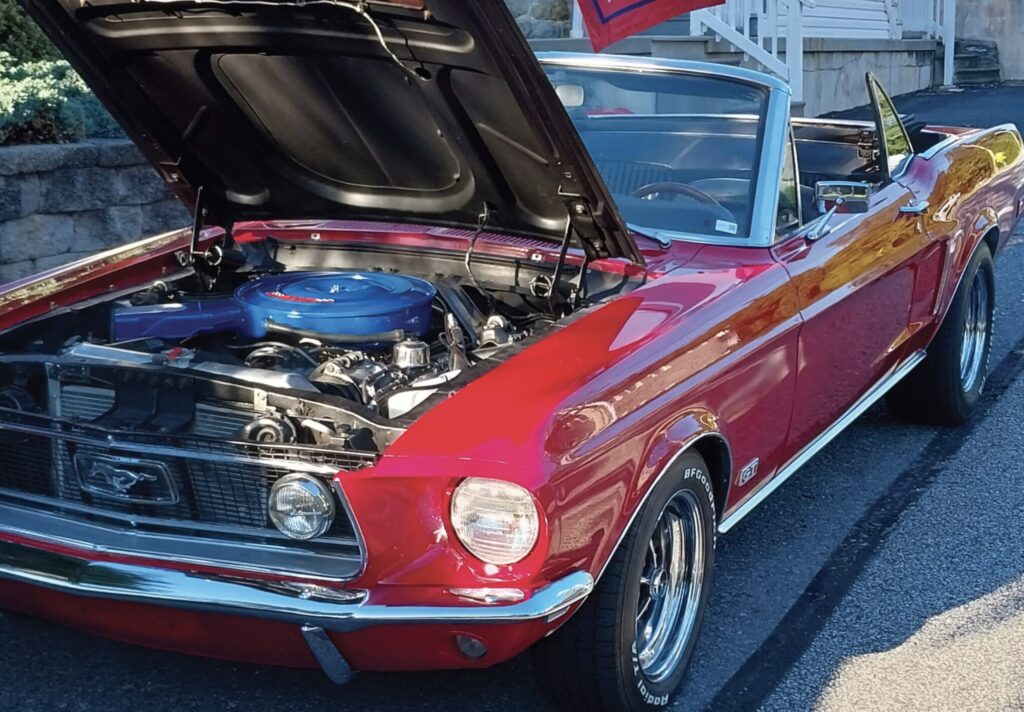
Goodall, of Upper Allen Township, acquired a red, vintage 1968 Ford Mustang convertible by mistake. He unwittingly bought it in an auction by sitting on his phone in his back pocket.

Amazingly, it was the exact same model, in the exact same color, that his late wife Alice said she always wanted.

And if all that weren’t coincidence enough, the car was priced at $50,000, the exact amount remaining from her life insurance policy, Goodall recalled.

That’s where Pink Hands of Hope came into play.

Pink Hands of Hope is a nonprofit that runs a thrift store and other programs supporting women with breast cancer in central Pennsylvania. Its stated mission is “to enhance the lives of those affected by breast cancer by offering free products and services,” according to the organization.

Goodall, owner of Mechanicsburg-based Goodall Pools & Spas, said that he looked at “several causes” before donating his late wife’s clothing to Pink Hands of Hope. Although Alice Goodall never had breast cancer, Robert noted that “cancer has been in my family.”

“I really wanted to find something meaningful,” he said. “I found (Pink Hands of Hope Executive Director Debra Donadee) and brought clothes because she needed them. She had a flood in the basement that ruined some of the thrift store merchandise that was stored there.”

Goodall’s next step? He donated the gorgeous Mustang to Pink Hands, which, in turn, is now conducting a fundraiser raffle of the vehicle.

“This is the biggest endowment we’ve ever received,” Donadee said.

The raffle is coordinated by Platinum Central Pennsylvania, which includes Platinum Pre-Owned Carlisle and Platinum Mitsubishi Mechanicsburg. The joint enterprise also has sponsored Pink Hands through in-store sales events that involve donating a portion of sales to the group.

The Mustang remains on alternate display at both dealerships throughout the raffle. Raffle tickets are available for purchase at the dealerships or Pink Hands’ thrift shop in Hampden Township. The vehicle also is slated for display at next year’s Pennsylvania Farm Show in early January.

“We like to support local causes, and we really like Pink Hands of Hope,” said Cammi McCall, director of operations for Platinum Pre-Owned.

Additionally, the firm has supported Gold Star families, local police, and “several other charities” through fundraiser and sales events, she said.

The car raffle’s winner will be announced on June 6, 2026, at the Carlisle Ford Nationals car show, which is scheduled for June 5 to 7 at the Carlisle Fairgrounds, where the vehicle is set for display. Raffle tickets will be available at the car show before the drawing.

Someone Cares

Pink Hands of Hope was founded in 2009 by Brian and Laurie Gaughen, a couple burdened with medical debt and struggling for assistance after Laurie was diagnosed with breast cancer. As a result, the Gaughens vowed to help others who struggled with the same financial situation, starting a thrift store to fund various assistance programs.

“Our overall mission is to help the lives of women with breast cancer, but really, we help any sort of cancer,” Donadee said. “We’ve also helped men and children.”

Since 2009, Pink Hands has assisted more than 5,000 patients, according to the organization.

“We’re funded through our thrift store, but we also get of lots of fundraisers done for us,” Donadee said.  “Schools, companies, and individuals have done fundraisers for us, while some just send us donation checks.”

The organization also accepts thrift shop item donations.

The thrift store offers “a full line of products for individuals navigating through cancer,” which includes free wigs and wig stands, bras, chemo caps, hats, scarves and shawls, port pillows, and hands and feet neuropathy packs. Bathing suits for prosthetics and clothing for patients in treatment also are available.

“Cancer patients often lose or gain weight during treatment, so a lot of the time, they need clothing in different sizes,” Donadee said. “We also have different products for surgery, radiation and chemo.”

However, all this is “only half” of what Pink Hands does, Donadee noted. The organization also pays for qualifying medical bills through its Helping Hands of Hope program. They also provide gas cards for transportation to and from treatments through its “Miles of Hope” program.

Finally, the organization offers a six-month “Pink Angels” program during which volunteers “reach out (to cancer patients) and make sure they know that someone cares,” Donadee stated.

“When women first come to us, they’re sad and they’re crying, but they leave here smiling,” Donadee said. “Our volunteers are survivors who tell them they’re going to be OK.”

Pink Hands of Hope is located at 5325 E. Trindle Rd., Mechanicsburg (Hampden Township). For more information, visit www.pinkhandsofhope.org or call 717-620-8264.

If you like what we do, please support our work. Become a Friend of TheBurg! 
Continue Reading

Uncertain Semester: Local colleges react, adapt to shifting policies, concerns for international students

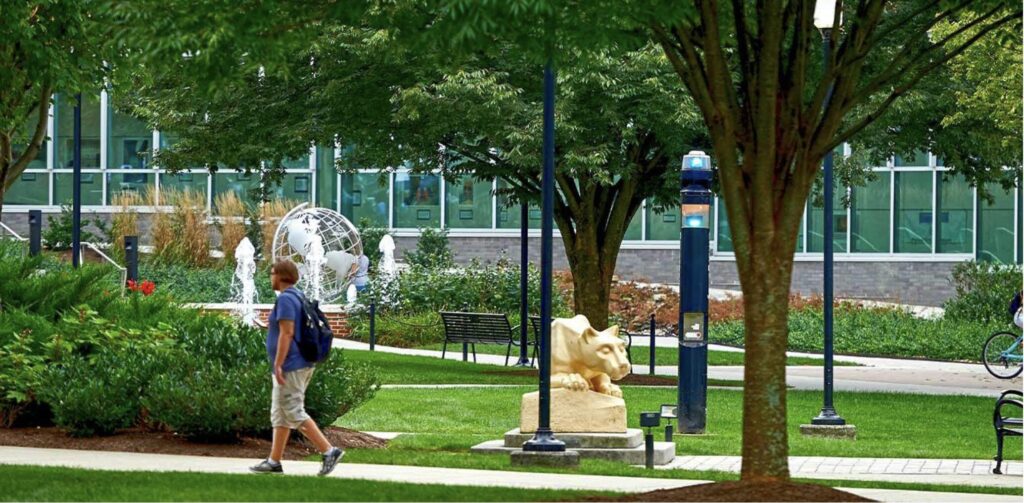
Penn State Harrisburg

For decades, Dickinson College has cherished its ethos as an international campus, where students, faculty and staff learn amid the “complexity of global context.”

“International students bring their experience, their perspectives, their openness to learning and sharing their own cultural backgrounds with us,” said Associate Provost Samantha Brandauer, executive director of Dickinson’s Center for Global Study and Engagement. “The moment a student sets foot on the Dickinson campus, you’re going to be interacting with people around the world.”

As Trump administration policies erect, remove and re-erect barriers to immigration and international enrollment, central Pennsylvania colleges and universities are staying agile.

Harrisburg University isn’t seeing an enrollment slowdown since the State Department lifted a pause on visa interviews, but it’s a fluid situation.

“What I am seeing and hearing and identifying is students questioning whether to come to the U.S. right now,” said Chief Strategy Officer Ryan Riley.

And as Brandauer said, “You’re constantly Plan A, B, C and D-ing everything, so that you have a clear and kind and empathetic communication strategy, and you are getting feedback from the population themselves to understand the needs. It’s a multipronged approach where you’re managing what feels like a crisis.”


Motivated to Learn

At Dickinson, in Carlisle, international students come from all over the world, studying as single-semester exchange students or four-year degree candidates. They are, said Brandauer, “really high-achieving, really integrated across campus life.”

Dickinson’s Center for Global Study and Engagement helps international students stay in compliance with visa and immigration rules. It also advocates campus-wide for international students.

“We have an amazingly supportive and wonderful team of folks across the college who get this with us,” Brandauer said. “It’s easy to advocate for international students at Dickinson. People get it right away.”

International students often share similar challenges and needs with first-generation U.S. students, so Dickinson also considers the “universal design pieces” in academics and student life that help all students thrive, she added.

Dickinson students express a mixed bag of feelings about immigration crackdowns. Many want to simply live their lives as college students and feel like they belong. While they absorb Dickinson’s expressions of support and inclusivity, they worry about “a government that’s not sending the same signal,” Brandauer said.

At Penn State Harrisburg, “our international students are an integral part of the fabric of our campus community, as well as the surrounding communities while they attend and after graduation,” said Chancellor David M. Callejo Pérez. “They—like all of our students—provide valuable and diverse perspectives in our classrooms, our research and our communities.”

Penn State Harrisburg is “not seeing a significant decrease in new international student enrollment” and has not written additional policies to address changes coming from Washington, he said.

Penn State Global’s International Student and Scholar Advising (ISSA) office offers direct support and resources on a range of issues, from understanding legal requirements to getting a PA driver’s license.

In the mid-2010s, HU “carved out a unique space that has kept a strong pipeline of international students from over 100 countries,” said Riley. Its “Curricular Practical Training” program allows F-1 non-immigrant student visa holders to work, without waiting a year, in fields directly related to their academics.

The CPT typically accommodates two types of visa students, Riley said—those who want to see the U.S. and make friendships here, or entrepreneurs eager to take their skills back home.

“[They’re] very focused on their studies,” he said. “They’re appreciative of being here.”


Around the Town

As college administrators note, international students bring economic benefits to their communities.

In Pennsylvania’s 10th congressional district, which covers the Harrisburg area, 1,706 international students contributed $73.3 million to the economy and created 345 jobs in 2023-24, according to NAFSA: Association of International Educators.

Penn State Harrisburg’s international students contributed $44.1 million and supported 191 jobs. At Dickinson, they contributed $17.5 million to the economy and created 86 jobs.

International students’ direct financial contributions to Dickinson’s coffers are “a mixed bag,” Brandauer said. They are “not a monolith,” she noted. Some pay full tuition, while others need and receive financial support “because they contribute meaningful benefits to the community.”

HU’s international graduate students pay full tuition, enabling financial support for the undergraduate population that is more heavily U.S. citizens, school officials said.

International students are key drivers of HU’s growth in local economic impact from $106 million in 2016-17 to $274.5 million today, and they support about 200 of HU’s 600 jobs, Riley said. They are also patrons of Harrisburg International Airport, Amtrak and services around Harrisburg’s SoMa (South of Market) area.

“When you come to downtown Harrisburg when they’re here, there are 1,200 people getting cups of coffee and eating lunch and staying in hotels,” Riley said. “So, as the city itself looks for its next renaissance and opportunity to thrive, when you look at the SoMa area, it’s Harrisburg University that is keeping the economy alive because of these students.”


Bumpy Road

The U.S. remains the top choice globally for higher education, but inconsistent policies create “a tremendous amount of uncertainty and stress,” Riley said.

“The U.S. will lose students, probably this cycle and the next cycle to institutions in Canada, for sure, but also to the UK and Australia, which have maintained their consistency in their programs,” he said.

As uncertainty lingers, HU’s international student and student services offices support international students, and a new staff position connects graduate students to resources on-campus and off, for such needs as tutoring and mental health.

Dickinson’s international and legal teams are preparing their recommendations for this fall’s student cohort. As events unfold quickly under the Trump administration, they have devised a strategy to keep students informed in a timely fashion and confident of the facts.

“This is a moving target,” Brandauer said. “A lot of our messaging to students right now is helping them feel that we see this, we see you, and we are doing all kinds of things to support you.”

To help ease worries about barriers to re-entry, Dickinson offered free campus housing to students impacted by the travel ban this summer, and about 30 accepted. During the brief visa suspension, another handful of students accepted a similar offer.

The travel ban hasn’t significantly impacted Dickinson’s fall enrollment, Brandauer said. However, as other universities are starting students on their international campuses or partner institutions outside the U.S., Dickinson is having similar “what if” conversations.

Some Penn State Harrisburg students have proceeded normally through visa processing and interviews while others “have encountered some issues,” said Pérez. “We continue to support our students as they make their way through these processes and prepare to join us in the fall.”

In light of questions from the Penn State community about Trump’s executive orders, Penn State Global in April recommended that international students and scholars keep their visa statuses current and always carry copies of their documentation.


Reaping Benefits

Although disruption sows mistrust and insecurity that can cause potential international students to reconsider, most of HU’s graduate students “feel confident they’re doing the right thing,” Riley said.

“They’re making the right choices. They’re following the law,” he said. “They’re here for their experience.”

He compares international students to “seeds from around the world that are planted on American soil.”

“When they’re nurtured with opportunity at institutions of higher education, they grow into bridges, and those bridges connect the U.S. to global ideas and markets and innovation,” he said. “So if we neglect them, we’re fencing off the garden, and not only do we lose a vibrant variety, but we miss out on the fruit they bear for everyone.”

Dickinson continues to monitor Trump administration policies and, in the world’s “perma-crisis,” also works to ease the anxiety and stress borne by staff concerned about their students, Brandauer said.

“It’s just disheartening because international students and scholars bring so much to our communities, to our campuses, to higher education,” she said. “I find it disheartening that we aren’t creating an environment that is welcoming of them. Dickinson is, but we’re fighting a fight. I feel lucky to do this work in a place where there’s so much support for it. It’s part of Dickinson’s values and identity.”

As Riley puts it, HU continues “just solidifying the message to our prospective students that the United States is open, and we’re here to help you get through any questions or challenges you have.”

If you like what we do, please support our work. Become a Friend of TheBurg!    

Continue Reading

Be My Neighbor: Program sets up students for success beyond high school

Chad Frey. Photo by Dani Fresh.

To Chad Frey, being a neighbor means so much more than living next to someone.

That’s because, to Frey, being a neighbor is a responsibility. Being a neighbor is a calling. Being a neighbor is an expression of love.

“I like to frame neighboring as a verb and look at it on an interpersonal level,” Frey explained. “I like to wonder: What does it mean for institutions to be part of a neighborhood?”

Frey has been tackling that question through his role as president and CEO of the Neighboring Academy, an in-school program at Steelton-Highspire High School that aims to break cycles of poverty by creating pathways to homeownership for students.

The idea for the academy was borne out of a response to the local housing crisis. As community members met to discuss the issue, Frey started to observe how the concern for affordable housing was “bubbling up” among local educational leaders, as well as community stakeholders.

Fast-forward to 2022, when the first Neighboring Academy pilot program was launched as a six-week summer program. The camp began with 10 rising ninth graders at Steelton-Highspire, and its focus was to help equip students with the abilities to become responsible citizens by expanding access to capital and preparing those students to make future homes in their communities.

In addition to educating students on financial literacy, the program helps them set up checking and savings accounts, teaches them how to save for a future home, and connects them with local leaders and businesses as a means to establish a network of professionals upon graduating high school, among other goals.

“Part of interrupting cycles of poverty is introducing ways to break those intergenerational cycles,” Frey said. “Home ownership is one of those very strategic things that has potential to be wealth-creating, and there are real challenges facing folks of color to attain home ownership. We want those students to build social capital, and we called that ‘neighboring.’ We want them to understand that they have a lot of neighbors that can help them succeed.”

Josh Aponte. Photo by Dani Fresh.

Changing Lives

One of the students that has grown up in the Neighboring Academy is Josh Aponte, who was made aware of the program by attending a school assembly in eighth grade. He heard what the academy offered and thought it would be a good way to make money through work experience with a partnering business. Once his mother signed off on it, Aponte enrolled.

What he found out, however, was that the program offered so much more than a vehicle to earn a few extra bucks as a teenager.

“It’s opened up so many opportunities,” Aponte, who is going into his senior year of high school, reflected. “I have such a wide network of neighbors that I can do whatever I want in life now. It’s given me exposure to so many different companies and businesses.”

That exposure has come in the form of getting a head start on acquiring professional skills. Earlier this summer, Aponte was part of a class that worked to become OSHA certified. During his junior year, a typical day would mean taking four core courses at Steelton-Highspire, eating lunch, and then volunteering at a UPMC hospital.

Aponte’s story is one of many that Frey is proud of, and it comes at a special time for the academy. For the first time, the program this summer featured students who have been with the initiative for their entire four years of high school. It’s a testament to both the commitment of the people who helped launch the program and the students who stuck with the vision offered to them.

“This program has helped change the lives of students,” Frey proudly relayed. “There were a number of students at the beginning who came in and were at risk. We weren’t sure if they were going to be able to continue in a public school setting, but they’ve come a long, long way.”

Now, these students consistently receive awards and scholarships, he said.

“The story of the Neighboring Academy truly is neighbors coming together to build something out of nothing,” Frey added. “In terms of what makes this go, what’s really at the heart of everything, is that love we have for our neighbors.”

For more information about the Neighboring Academy, visit www.neighboringacademy.org.

If you like what we do, please support our work. Become a Friend of TheBurg!   

Continue Reading

Sweet Start: Wake & Bake Café serves up homemade treats, breakfast to downtown Harrisburg patrons

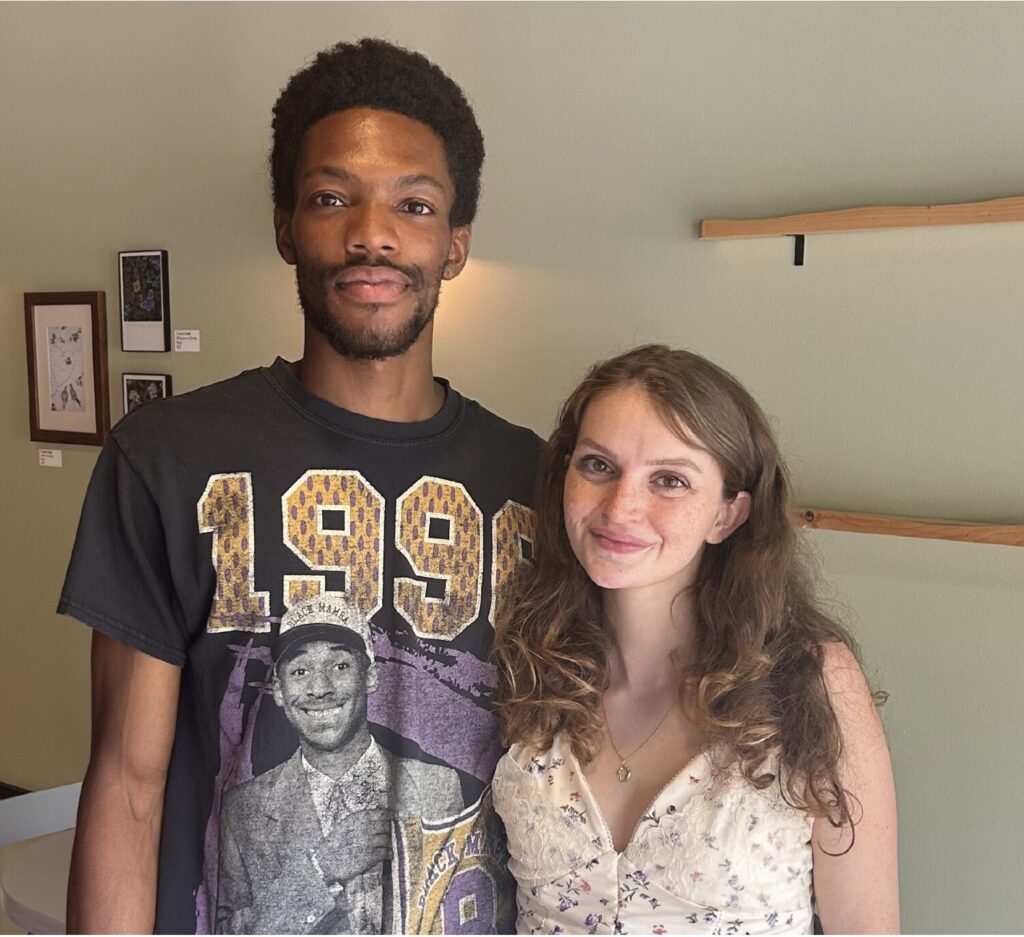
TJ Greenhowe & Elle Daniels

Baking came at just the right time for Elle Daniels.

She took up the hobby while walking through a period of stress and anxiety, and baking became the perfect outlet, the Harrisburg resident said.

For a while, she baked for fun, making treats for friends and family. It wasn’t until her partner TJ Greenhowe encouraged her to start a business that she even considered it.

After her daughter was born, Daniels started vending and doing pop ups at events and quickly began receiving praise from satisfied customers.

“There was so much positive feedback and people asking, ‘When is your bakery opening?” she said.

Daniels and Greenhowe decided to take the plunge and open their own storefront. They looked at a few places downtown, as that’s where they often went to grab coffee and wander around, before settling on a newly vacant spot on N. 3rd Street. They decided on the name, Wake & Bake Café, planning to provide both quality coffee drinks and baked goods, along with breakfast items.

In July, the couple cut the ribbon on their storefront, surrounded by friends and community members. It didn’t take long for a line of patrons to fill the shop.

“It feels unreal,” Daniels said on the opening day.

Wake & Bake serves up a variety of treats, from cookies to cakes to breads.

Anything chocolate peanut butter is a crowd pleaser, Daniels said, and her favorites to make are carrot cake and unique flavors like lavender lemon.

She also takes custom cake orders and even holds monthly cake giveaways to families that can’t afford special occasion cakes.

Affordability is another important value of the business. As someone with a family of her own, Daniels knows how expensive it can be to go out to eat and wants to make sure customers can still get quality flavors at reasonable prices.

The shop itself looks different than what customers might remember of the former business at that location, Deco Grab & Go.

Greenhowe, who has his own contracting business, Greenhowe’s Aesthetics, did all the interior renovations himself. That includes a newly white tiled counter, new tables for customer seating and a window bar that provides extra space to sit and snack.

“Our main goal was to make it vibrant,” he said. “It’s like, wow, we really managed to pull it off.”

The journey toward opening hasn’t been easy, as Greenhowe balanced his full-time job with renovating the café and as Daniels found out she was pregnant again, just after deciding to open the storefront. But now that they’re open, the couple is excited to offer the Harrisburg community a new place to hang out, satisfy a sweet tooth and meet with friends.

They also have plenty of help in the form of a significantly sized team for a new business. Four additional staffers will work at Wake & Bake, helping with cooking breakfast, making hot drinks and serving patrons.

During the July ribbon cutting, Harrisburg Mayor Wanda Williams gave her congratulations to the new shop and noted how important small businesses are to the city.

“Thank you for choosing the city of Harrisburg,” she said to the owners. “Thank you for seeing what we see—a city full of promise, full of pride and full of people who will support you every step of the way.”

Wake & Bake Café is located at 240 N. 3rd St., Harrisburg. For more information, visit them on Facebook and Instagram @wakeandbakecafehbg.

If you like what we do, please support our work. Become a Friend of TheBurg!   
Continue Reading

Vintage Views: Gruver Farms Winery offers a taste of the Finger Lakes in New Cumberland

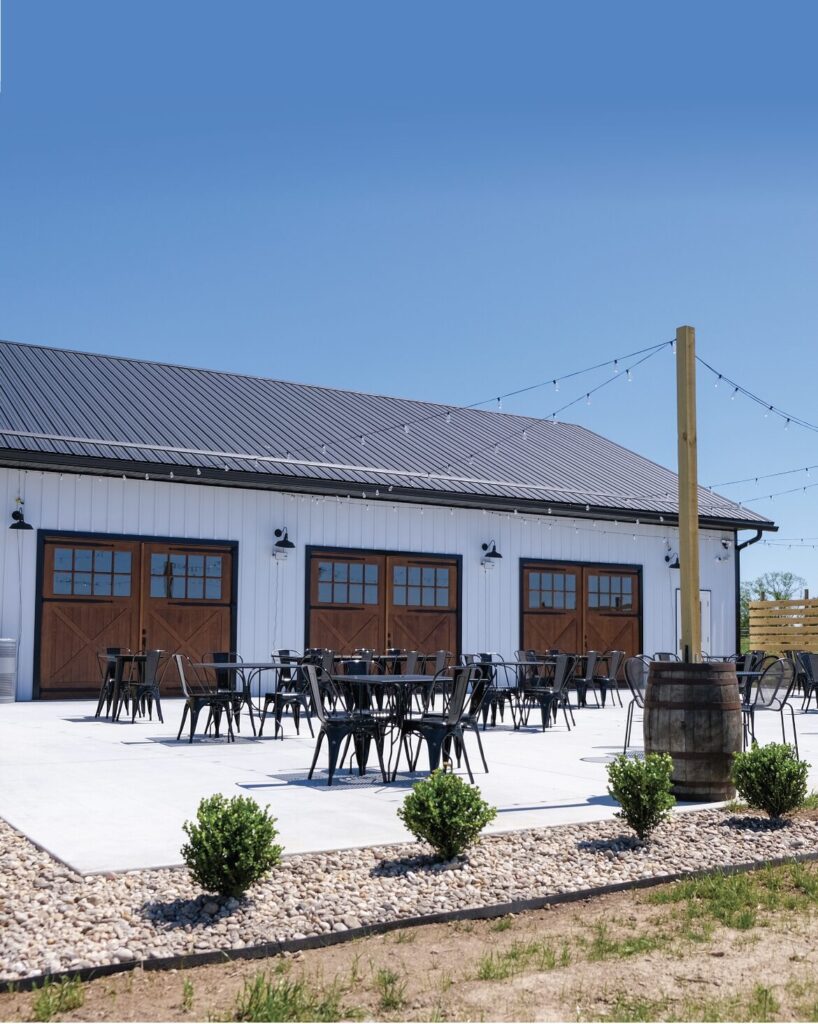
Gruver Farms Winery & Tasting Room

If you ever purchased a Christmas tree in our region, you may already be familiar with the name “Gruver.”

The family operates a longstanding tree farm in New Cumberland where customers can cut their own trees or choose from a variety of pre-cut options.

Their latest venture is the Gruver Farms Winery & Tasting Room, which is owned and operated by Jaden Gruver, who celebrated the grand opening in April.

“It’s been the culmination of five years of hard work and dedication to get the tasting room constructed and up and running,” Gruver said.


Year-Round

The story begins in the 1970s when Jaden’s father, Bob, purchased 32 acres of land on Stetler Road, launching a landscaping business and Christmas tree farm.

About a decade ago, Jaden decided to join the business to help expand operations. Since then, they’ve added pumpkins, a three-acre vineyard and the newly opened tasting room. The tasting room is located on the Christmas tree farm and is relatively large by some standards, at 3,200 square feet.

“We wanted to create a space big enough for residents to gather,” Gruver said.

His vision: to offer reasons to visit the farm all year-round. During warmer months, customers can take a seat on an outdoor patio and behold a beautiful view overlooking the countryside.

When it came to getting the word out and operating the winery, Gruver’s bachelor’s degree in tourism and hospitality management from Temple University came in handy, as did his hands-on experience.

“I worked at a couple wineries in various positions, from being out in the vineyard to making wine to help running tasting rooms,” he said.


Crisp, Refreshing

According to Gruver, the most challenging aspect of winemaking in central Pennsylvania is the unpredictable weather.

“One season can be perfect and the next can bring unexpected rain, humidity or late frosts, which really impacts the grapes,” he said. “So, it keeps us on our toes.”

In good years, Pennsylvania’s cooler climate and rolling hills create ideal conditions for crisp, refreshing whites and balanced, fruit-forward reds.

“The soil here is a mix of limestone and clay, which not only gives the grapes good draining, but also adds some complexity,” Gruver said.

Unlike many Pennsylvania wineries that focus on sweeter wines, Gruver Farms sets itself apart with dry styles. The wine is produced in partnership with Weathered Vineyards in New Tripoli using Gruver’s Marquette, Frontenac gris and Cayuga grapes.

“These wines really shine,” Gruver said. “The growing conditions are challenging, but they help bring out the character of each variety.”

Gruver’s personal favorite is the Frontenac gris.

“It’s crisp and refreshing with bright citrus notes and easily paired with light summer dishes like grilled shrimp, fresh salads or even a simple goat cheese appetizer,” Gruver said.

For non-wine drinkers, Gruver also offers beer, canned cocktails, coffee and non-alcoholic drinks.


Breathtaking

Harrisburg resident Kate Lewinson, who attended the grand opening and its lavender festival in late June, was impressed.

“I had a wonderful tasting lavender slushie,” she said, recalling the event that featured local vendors, live music and a relaxed atmosphere.

What struck her most, though, was the view.

“It’s incredible, and the sunsets are breathtaking,” she said.

“When people visit, they often say that it feels like a little slice of the Finger Lakes, right here in New Cumberland,” added Gruver.

The winery features live music on Friday evenings, yoga and barre classes in the vineyard, as well as private events.

“I’ve always loved how wine brings people together—whether it’s for celebrating big milestones or just enjoying a relaxing afternoon,” Gruver said. “We wanted to create a space where people could slow down, enjoy good wine, and connect with family, friends and community.”


Gruver Farms Winery and Tasting Room is located at 255 Stetler Rd., New Cumberland. For more information, visit
www.gruverfarms.com or follow them on Instagram and Facebook.

If you like what we do, please support our work. Become a Friend of TheBurg!   

Continue Reading