Weekend Roundup with Sara Bozich


I had a great time in NYC last weekend, and with this weekend’s travel plans dashed, I don’t have much going on.

This morning, I am “live” at the new Weis Markets Enola Grand Opening (follow me on social — buttons are up there ⬆ or down there ⬇).

Saturday, of course, is my usual Next Step Performance self-torture, followed by a hangout at my favorite community space, the Broad Street Market (find me at Elementary Coffee at 9:30ish, like clockwork-ish).


What are you doing this weekend?

(more…)

Continue Reading

And They’re Off: The race is on for Harrisburg mayor, council, school board.

Five candidates for mayor, seven candidates for City Council, and 10 candidates for school board.

Harrisburg voters will have three very competitive local races to consider come the May 16 primary, as the deadline passed today for candidates to submit nominating petitions.

The roster of candidates doesn’t offer many surprises, as most had already announced for office or indicated an interest in running.

For mayor, incumbent Eric Papenfuse will face off against former council President Gloria Martin-Roberts, former city police officer Jennie Jenkins, newcomer Anthony Thomas Harrell and old foe Lewis Butts in the Democratic primary. No Republicans submitted petitions to run.

Notably, two candidates who stated an interest in the race did not submit petitions for the primary: former state Assembly candidate Gina Roberson and former council candidate Chris Siennick, who has indicated that he may run as an independent in the general election in November.

For council, three incumbent Democrats filed for four, four-year seats: Wanda Williams, Shamaine Daniels and Ben Allatt. They will face four challengers: former council candidate Jeremiah Chamberlin, school board member Ausha Green, activist Angela Kirkland and Dauphin County Young Democrats leader Dave Madsen. No candidates filed to run on the Republican side.

The Democratic roster for four, four-year seats on the school board includes incumbents Judd Pittman, Danielle Robinson and James Thompson and challengers Brian Carter, Carrie Fowler, Edward Saterstad, Richard Soto, Gerald Welch and Cory Williams. Newcomer Percel Eiland is the only candidate running for the board’s sole two-year seat. Thompson also filed on the Republican side, the only school board candidate to do so.

Incumbent city Treasurer Dan Miller and incumbent city Controller Charlie DeBrunner are running unopposed in the Democratic primary. There is no Republican challenger for either office.

This election cycle, magisterial district judge races also attracted a lot of interest from candidates.

For District 12-1-02, incumbent Justice Barbara Pianka will face off against challengers Joshua Feldman and Marcellus Taylor on the Democratic side. Pianka and Feldman also submitted petitions for the Republican nomination.

For District 12-1-04, Justice David O’Leary will take on challengers Beverly Johnson, Ryan Sanders and former city Treasurer Tyrell Spradley

District 12-1-05 is an open seat, as longtime Justice George Zozos decided not to seek re-election. The candidates for this seat include Harrisburg City Councilwoman Destini Hodges, former Councilman Kelly Summerford, Hanif Johnson and Claude Phipps, who also filed on the Republican side.

Because Harrisburg is overwhelmingly Democratic, the primary is typically the most significant election in selecting the city’s office-holders.

Author: Lawrance Binda

Continue Reading

School Recovery Update: Report Shows Progress, Substantial Challenges Remain


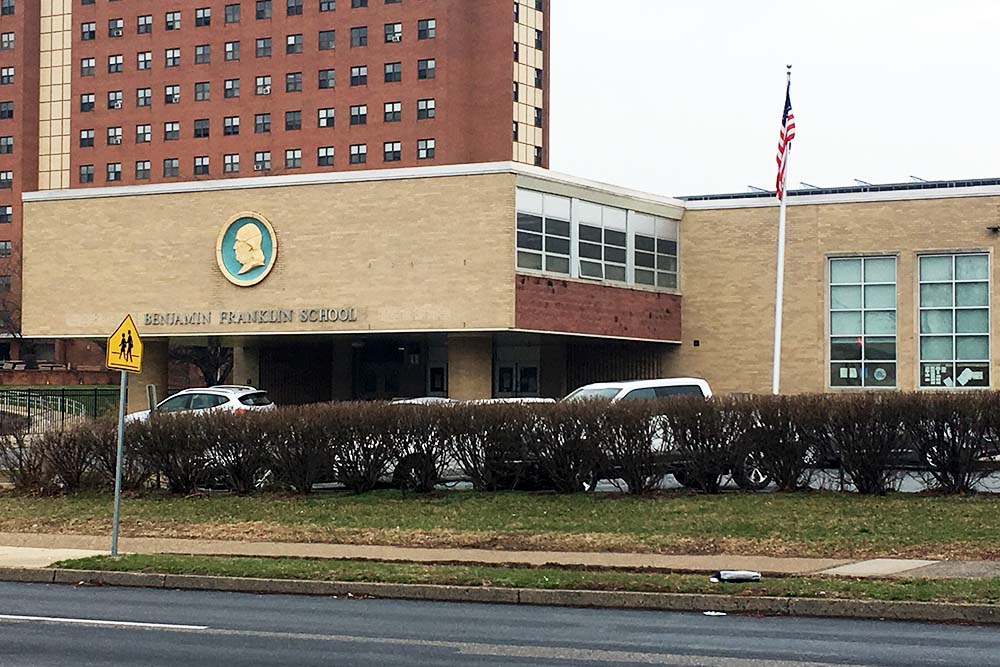
Benjamin Franklin Elementary School at 6th and Verbeke streets is a part of the Harrisburg School District.

Benjamin Franklin Elementary School at 6th and Verbeke streets is a part of the Harrisburg School District.

The Harrisburg School District is showing improvement financially and academically, but significant challenges remain, according to a report released last month.

The report, a mid-year update to the amended HSD Recovery Plan, ranked the district’s initiatives on a scale of complete, in progress and not completed. Of the 85 initiatives, 50 have been completed, 31 are in progress and four have not been completed.

“I was encouraged because I know how far we have come,” said School Board President Danielle Robinson. “We still have a lot of work to do, but I was encouraged to see the growth and the movement.”

Chief Recovery Officer Dr. Audrey Utley, with the assistance of PFM, a Philadelphia-based government and nonprofit consulting group, prepared the report using information from the district, financial reports and interviews with district staff.

Major gaps remain for the academic goals. If these goals are not met or have not shown advancement, the district risks having a state receiver appointed.

“If the District fails to meet these targets or show significant progress in each building toward the goal by the end of the Plan period, the CRO and the [State] Secretary of Education can take steps to appoint a Receiver effective for the 2018-19 school year,” according to the report.

The phrase “significant progress” saves the district from entirely having to meet academic targets, Robinson said. This phrase, added in the amended recovery plan in May 2016, means that the district will exit recovery next year “as long as there’s growth toward these numbers,” she said.

“We fought to make sure the language was in [the amended recovery plan],” Robinson said. “It’s always under review how can we can make this better.”

The recovery plan’s academic goals challenge the district to “eliminate the gap” or “close the gap by 50 percent” between the district’s testing, attendance and graduation metrics and state averages by June 2018, according to the report.

These targets mean big academic leaps for students and their teachers by June 2018, the end of the recovery plan period.

Take third grade PSSA exams as an example. Last school year, 19.4 percent of district third graders scored proficient or advanced in English and language arts (ELA) on this state test. That’s an improvement from last year’s score of 18.6 percent, but a far cry from the state average of 62 percent. The academic target goal expects 33 percent of district third graders to achieve proficient or advanced levels. That’s a 14.5 percentage-point jump.

For math PSSA scores, students need to make a similar jump of 12.7 percentage points. In other words, 23.1 percent of third graders need to score proficient or advanced in math.

Other goals require smaller jumps on state tests.

For example, Keystone exam scores for John Harris High School students need to jump 7.7 to 8.3 percentage points this year to meet half of the state average.

In general, the report shows steady academic progress, though the scores continue to be below state guidelines.

Other metrics are more encouraging.

District attendance for grades 9 to 12 has steadily increased from 79 percent in 2012-13 to 83 percent in 2014-15. This is just 3 percentage points away from next year’s academic target attendance rate of 86 percent.

John Harris High School’s graduation rate jumped from 42.7 percent in 2013-14 to 52.8 percent in 2014-15.

The report calls the growth in Keystone test literature scores at John Harris High School “promising.” In 2014-15, 23 percent of students scored proficient or advanced. Last year, the school saw nearly a 6 percentage-point increase. Harrisburg High School SciTech Campus exceeds the state averages for proficient or advanced scores in algebra and literature.

“I don’t think that the academic goals are not able to be reached,” Robinson said. “We just must become more focused.”

Pressing “front-burner” issues, such as union contract negotiations and the financial recovery, took priority over student academic achievement in previous years, Robinson said.

“It’s not just, you get into the district and these things are going to change right away,” she said. “Once we got stable financially, now we can say let’s work on our academics. Let’s change the perception of Harrisburg and the district.”

Financially, the report indicated similar mixed messages. The district has a “significant fund balance” of $29.2 million this year. However, the report notes a “concerning” annual structural shortfall of increased expenditures

“… the expenditures are slated to consistently outpace revenues in the coming years and several costly projects and contingencies could consume a substantial portion of the current fund balance,” the report said.

The report calls for the district to create a plan to maintain an 8 percent reserve fund balance (between $12 and 13 million) to ensure “sufficient working capital and provisions for contingencies” for the future.

“We have to go through and figure out what we can do to make sure we don’t have yearly shortfalls that are going to put us back into debt,” Robinson said. “That’s constantly under review.”

The district is hiring three major positions per the recovery plan: a human resources director, a chief financial officer and a professional grant writer.

Robinson said the district is vetting candidates for the human resources position. The district possibly will promote a candidate internally for the CFO position, she said.

The recovery plan outlines the need to hire a grant-writing professional to seek additional funding from competitive grant programs and non-traditional sources. Hiring this position and securing outside funding are two of the four items marked “not completed.” The grant-writing employee retired last year, Robinson said. So far, there’s “nothing solidified” with filling that position, she said.

In addition, the report outlined a need for a full-time English language learning coordinator position, which is currently filled by the director of the online school, Cougar Academy.

One of the hiring challenges is “making sure that the people who we bring in will actually stay,” Robinson said. “Harrisburg [School District] is still growing. You have to be able to grow with us,” she said.

The other incomplete administrative target is creating incentives for teachers to build careers within the district. This item, added with the May 2016 amended plan, suggests the district give teachers a small loan to help purchase homes in the district. Implementing a program has been pushed to next school year, according to the report.

Robinson said the board continues to focus on moving forward.

“We know that it’s not a sprint,” she said. “It’s a marathon.”

Read the full report here. 

Author: Danielle Roth

Continue Reading

Green Day: What to know about the city’s St. Patrick’s Day parade and 5K/10K race.

Amanda Spangenberg Baughman plays the bagpipes with the Lochiel Emerald Society Pipes and Drums.

Bagpiper Amanda Spangenberg Baughman has “lost count” in the number of parades she’s participated in. But Harrisburg’s St. Patrick’s Day parade is her favorite.

“It’s in our hometown, and we are the only Harrisburg bagpipe band,” she said, referencing the group she plays with, the Lochiel Emerald Society Pipes and Drums.

On March 18, she will be joined by more than 1,000 participants, including dancers, local celebrities and the Harrisburg High School band, for this year’s St. Patrick’s Day parade. The parade starts at 1 p.m., immediately after the Lucky Charm 5K/10K race, said Todd Vander Woude, executive director of the Harrisburg Downtown Improvement District (HDID).

The parade steps off at Walnut and 4th streets to follow a new route down Market, 2nd and North streets. This year is the first year with HDID organizing the event.

“This new route gives us the opportunity to highlight our downtown business community,” Vander Woude said.

The 5K and 10K race, sponsored by Fleet Feet Sports in Mechanicsburg, will also “be a host in showcasing the city,” said owner Fred Josyln.

“Runners will get to see some of the beautiful things in the city,” he said, while wearing lime green running sneakers to match his Lucky Charms race T-shirt.

The race begins at 10 a.m. and will end in time for the parade, he said.

Officials from SP Plus and Parkmobile, a mobile parking application, will be educating residents and visitors about discounts and the new parking app, which launched March 1 in Harrisburg, Mayor Eric Papenfuse said.

Parkers can receive four hours of free parking using the code “LUVHBG” every Saturday, including March 18. Remembering the code is not necessary. The discount code appears when a user selects to enter a promotional code, Papenfuse said.

Papenfuse also encouraged those celebrating St. Patrick’s Day on Saturday to enjoy downtown Harrisburg on Friday for 3rd in the Burg.

“The whole weekend is going to be celebrated,” he said. “Come down Friday and come back Saturday.”

For more information about the parade and the Lucky Charms 5K/10K race, including route information, visit www.harrisburgstpatricksdayparade.com and www.luckycharmrace.com, respectively.  

Author: Danielle Roth

Continue Reading

New Eats: Fresa Bistro to Open Monday in Strawberry Square

The dining room of the new Fresa Bistro on Third

Harrisburg diners will have a new, healthier option next week, as Fresa Bistro on Third is slated to open Monday in Strawberry Square.

Fresa will feature a menu of freshly made items, including sandwiches, panini, salads, wraps and soups. It will have a 60-seat dining area, accessible from both inside and outside of Strawberry Square, as well as food for takeout.

“The menu items from Fresa Bistro are a perfect fit for what our customers have been asking for in recent surveys,” said Brad Jones, president and CEO of Harristown Enterprises, owner of Strawberry Square.

Fresa (Spanish for “strawberry”) brings together in partnership several of Harrisburg’s best-known restaurateurs: Juan and Lisa Garcia of El Sol Mexican Restaurant and Nino Purpurra of JoJo’s Pizza. It is expected to employ 10 full- and part-time workers.

Fresa is one of many recent developments in Strawberry Square, which include a new Hallmark store, new apartments and expansions of both the Market on Market convenience store and the AMMA JO boutique. Soon, a new, 14,000-square-foot Rite Aid is slated to open, with access from both inside Strawberry Square and Market Street.

Fresa opens Monday, but the “official” ribbon cutting with Mayor Eric Papenfuse will be held the following Monday, March 13, at 2 p.m.

Fresa Bistro on Third is located in Strawberry Square, also accessible from 15 N. 3rd Street, Harrisburg. Hours will be Monday to Saturday, 9 a.m. to 6 p.m. 

Click here to view the Fresa Menu.

For more information on developments in Strawberry Square, read our feature story from the March issue.

Author: Lawrance Binda


Continue Reading

Weekend Roundup with Sara Bozich


This weekend I’m headed to New York City.

I’m pretty excited about this trip. Our agenda is relatively loose, but include a secret Sofar Sounds show tomorrow night (I wonder who we’ll see?!), Sunday in the Park with George starring Jake Gyllenhall on Broadway, and dinner at Mario Batali’s Babbo on Saturday!

Other needs: Central Park, pizza, shopping, touristy stuff.

What are you doing this weekend?

(more…)

Continue Reading

Happy Hour, Anyone? New Parking Phone App Goes Live with Discounts Today

Good news drivers: There’s no reason anymore to be wet or cold as you input all your information into Harrisburg’s parking meters.

This morning, the new Parkmobile parking app went live, offering convenience, discounts and a simple user interface.

To see how (and if) if the app worked, I tried it out myself downtown. I logged into the app, selected the zone closest to the blue dot indicating my location, and entered my car and payment information.

I saved this information in the app (nicknaming my Honda Civic) to make future payments easier and went about my business. The app notified me when I had 15 minutes left, as well as when my time expired. And you know what? It worked. There was no little slip of paper from Park Harrisburg (aka a ticket) when I returned.

The easy-to-use interface gets an “A+” in my book. 

After I selected my zone, the app also gave me a chance to enter a promotion code. Drivers can take advantage of a downtown happy-hour discount ($1 an hour between 5 and 7 p.m.) and four hours of free parking on Saturdays. When promotions run, drivers will be able to select one to use from a list of discounts. So, unlike the previous Pango parking app, parkers won’t have to memorize any codes.

“It will be very easy and very possible for business to promote their discounts,” Mayor Eric Papenfuse said recently when announcing the switch to Parkmobile.

At least on this first day, he was spot on about that.

Other benefits of the new app include the ability of business owners to receive a 10-percent discount when offering bulk discounts to users. They also can validate parking in real time, Papenfuse has said.

“I think this empowers businesses in a way that will allow businesses to grow, and it empowers the city by bringing more people downtown,” he said recently, adding that the app also promises better communication with users about discounts and parking regulations.

The city also can use the app to communicate updates for festivals and events such as the upcoming St. Patrick’s Day parade, giving residents information about the parking situation.

In addition, the app addresses a constant complaint from people who use the physical meters—that they’re sometimes charged for time that is supposed to be free. The app does not allow that, so that free parking hours—Sundays, holidays and evenings after 7 p.m.—are actually free.

All in all, I found the new Parkmobile app to be a significant improvement over the old Pango app, as well as a better than paying the meter in person. However, improved experience did come at a cost. The app charges 35 cents per transaction, which is a 20-cent increase from Pango’s fee.

Author: Danielle Roth


Continue Reading

Fire Funds Update: Bureau of Fire to receive $250,000 to renovate 1980s-era fire stations

Firehouse #1 is a brown concrete building with four garage doors for fire trucks. A firetruck is seen the the background.

Built in 1980, this fire station is slated to receive renovations to the dormitory.

Harrisburg’s two fire stations will receive a $250,000 grant to update the 1980s-era facilities.

This morning, the Dauphin County commissioners unanimously voted to approve this grant and 48 others, which come from a fund generated by revenue at Hollywood Casino at Penn National Race Course. The unanimous vote came after the commissioners reviewed the Dauphin County Gaming Advisory Board’s award recommendations last week. 

The $250,000 is earmarked to renovate Fire Station #2’s roof and the dormitories in Fire Stations #1 and #2, both built in 1980.

“Really, the projects we have are overwhelming,” said Brian Enterline, Fire Bureau Chief. “We are just trying to hammer away and get the most bang for the buck.”

The current dormitories lack privacy, Enterline said. Right now, 16 beds sit in large, square rooms in each fire station. The renovation plans include adding walls to divide the space and installing locker rooms, he said.

“We are trying to utilize the most space possible so we don’t have a ton of wasted space,” he said. “Right now, we have a ton of wasted space.”

This will be the first major change to the dormitories since the stations were constructed, he said.

The roof renovation for Fire Station #2 includes incorporating aspects of Capital Region Water’s community greening project, an environmentally friendly way of managing stormwater runoff.

Enterline said the last roof renovation was in 1988 and now its deteriorating state threatens to lead to leaks and damages.

“Everything is original. It’s been a real challenge,” Enterline said. “We are trying to do projects as we get the money to do them, and we are trying to be the best stewards of that money.”

This funding is part of $5.6 million county-wide grants generated from a tax on Hollywood Casino in accordance with the Pennsylvania Gaming Act. A September State Supreme Court ruling determined this act violated the state constitution, leaving the future of the grant program in jeopardy.

Hollywood Casino agreed to provide grants for the first half of 2017, said Jeff Haste, chairman of the county board of commissioners.

“If it was not for Penn National Gaming coming forward … being a good partner in the community, [these grants would not happen],” Haste said at today’s meeting.

The casino has made $150 million in local-share grants since its opening in 2008, said Mike Pries, board of commissioners vice president.

“If we didn’t do these gaming grants, the cost would be passed onto the taxpayers,” he said, with Haste adding that the grants give local municipalities leverage to receive additional funds.

Enterline also doesn’t want to see this funding disappear.

“The Fire Bureau has always gotten great support from the [Gaming Advisory Board],” he said. “It’s a huge benefit for our city, the region and everybody.”

These other local projects will receive funding:

  • $350,000 to Dauphin County Parks & Recreation for Detweiler Park acquisition
  • $163,236 to Susquehanna Township for public safety building debt reduction
  • $151,000 to Lower Swatara Township for bridge replacement and fire apparatus debt reduction
  • $140,650 to Paxtang Borough and Central Dauphin School District for school building safety improvements
  • $217,100 to Lower Paxton Township for park playground project, Penn Colonial Pool improvements and Linglestown Fire Co. Building improvement
  • $39,250 to Steelton Borough for firefighting equipment replacement
  • $110,154 to Swatara Township for water rescue response boat and vehicle and Reliance Hose Co. Station improvements
  • $55,000 to Penbrook Borough for Elm Street Park improvements
  • $43,152 to Highspire Borough for firefighting equipment
  • $30,000 to Dauphin County Human Services to purchase a van for transportation program
  • $200,000 to Dauphin County Court Administration for the construction of MDJ buildings
  • $127,000 to Dauphin County Conservation District for agricultural stewardship project
  • $69,001 to Dauphin County Land Bank Authority to renovate two vacant homes
  • $100,000 to PinnacleHealth for an addiction and substance abuse urgent care clinic
  • $33,000 to Dauphin County General Authority for maintenance equipment acquisition
  • $35,000 to Steelton Borough/Homeland Center for upgrades to emergency back-up generator
  • $70,000 to Salvation Army for new headquarters and services facility
  • $50,000 to Steelton Borough/Boys & Girls Club of Harrisburg for John Hall Clubhouse renovation
  • $50,000 to Steelton Borough/Monumental AME Church for HVAC upgrade and boiler removal
  • $26,204 to Susquehanna Township/Jewish Family Services for headquarters renovations
  • $35,000 to Susquehanna Township/American Literacy Corps for Books in Barbershops program

Author: Danielle Roth


Continue Reading

School Voice: Karen Snider left a tremendous legacy, and big shoes to fill, at the Harrisburg Public Schools Foundation.

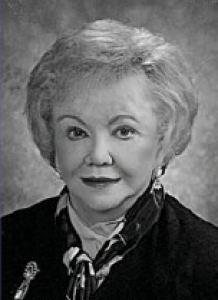
Karen Snider

A screen drops down in the cafeteria where 400 students gather before the school day starts at Downey Elementary School. While some children eat breakfast, a five-minute newscast featuring two young broadcasters appears on the screen.

“They do the pledge, talk about the weather and any important information coming up,” said Principal Travis Peck, explaining the morning routine. “Things like that.”

Peck also pointed out the ways the Harrisburg Public Schools Foundation, under the leadership of late Karen Snider, played a part in this routine.

The cafeteria’s speaker system? The foundation helped the school afford that, he said, plus the screen displaying the student journalists. The equipment used to record the broadcasts? The foundation helped the school purchase that as well.

This is part of the legacy left by Executive Director Karen Snider, who passed away unexpectedly on Jan. 12. Snider, 77, may be best known as secretary of the state Department of Public Welfare under Gov. Robert P. Casey, who appointed her in 1991. Others may know her from her leadership roles with organizations such as the Rotary Club of Harrisburg, United Way of the Capital Region and Girl Scouts in the Heart of PA.

“There are 24 hours in a day, and she would squeeze in 26,” said Dr. Sybil Knight-Burney, superintendent of the Harrisburg School District.

Knight-Burney met with Snider every other Thursday to coordinate programs with the foundation, she said.

“If it was something that would help students, she was always for it,” Knight-Burney said. “Her finger was in everything.”

The foundation provides enrichment programs and financial support to the entire district. Students participate in a writing contest, dual enrollment, science camps and health education programs, to name a few programs.

Snider did much more than required for the position, said foundation Chairman Morton Spector.

“I’d say the part-time job was 20 hours, and she put in 60 hours,” he said. “She was there nights and weekends.”

When the district wanted to bring “The Leader in Me” initiative to the Downey School, Snider and the foundation helped the school obtain a matching grant to start the process.

Now, the school is in its fourth year as a “Leader in Me” school, which applies principles from Franklin Covey’s book “7 Habits of Highly Effective People” in a school-wide and age-appropriate way.

“It’s about students finding their voice, finding their leadership styles and their intrinsic value,” Peck said. “They take leadership roles that inspire them to do better.”

First grade teacher Tracy Lechthaler, who has taught at Downey for 19 years, said the initiative helps her students find their voices. Her 26 students each apply for “leadership jobs” like “shoe sheriff” (in charge of helping peers tie their shoes) or “electrician” (turns on and off the lights).

“Giving them a leadership job, something they’re in charge of, gives them a sense of belonging,” she said. “It gives them a sense of, ‘Oh I can do this,’ and they love that.”

The foundation affected Lechthaler’s classroom in another way.

Her classroom has been sponsored as part of the foundation’s “adopt a classroom” since the program began.

“A lot of times, teachers, we buy our own stuff,” she said, while flipping through one of the hardcover books purchased with foundation funds. In one, a porcupine with a mullet of quills learned how to be responsible for his feelings after bully Biff Beaver said his quills look like toothpicks.

Spector said the board decided to honor Snider by adopting a classroom in her name. Board members individually contributed so at least one room per year will be adopted in her name, he said. Knight-Burney said her portrait will be displayed at the Camp Curtin mental health center already named after her.

“If I were in any other school district, [these programs] would just be a regular item on the budget,” she said. “But because we have some of the types of challenges that we have, it’s something that we know is a necessity.”

Stepped Forward

Much of Snider’s position of executive director dealt with fundraising, and she was known for her power to persuade.

Spector said her talent for fundraising shined in 2012. The district had a multi-million-dollar deficit, and the school board announced the district would have to cut music and sports programs.

Spector and Snider, who started as a foundation board member, attended that school board meeting.

“When the board looked at the financial condition and said they were going to have to cut the sports program as well as the band program, we looked at each other, and she stepped forward to the board,” Spector said.

Snider told the school board something along the lines of, “We’d like to make sure those programs continue and exist. We, the HPSF, would like to be able to help. We would like to attempt to raise the funds so you will have those programs,” said Spector.

“And that’s when we began to work,” he said. “That’s when her talent came forward. She had the connections, the person-to-person connections.”

She stepped up to become the executive director in 2012, amid the district’s financial distress and a transitional period for the foundation.

Foundation members started making calls to raise money. Money started coming in. A couple thousand dollars here, a six-figure corporate donation there. They raised more than $400,000, Spector said.

“She did an awful lot of that personally, one handedly, more or less,” he said. “I was able to make some calls, too, but she just outshined all the rest of us.”

Snider’s personal brand of persuasion left others feeling grateful to have been summoned.

Knight-Burney outlined how meetings with Snider went.

“She would say that she had some things that she wanted me to look over,” she said. Snider would push the most important item to the top of the list and delineate what would need to be done, she said.

“She would say you need to do this, this, this and this to make this happen,” Knight-Burney said, while Kirsten Keys, the district’s public relations coordinator, laughed in the background as if she also experienced this.

“But she would also tell you what she was going to do,” Knight-Burney said. “And most of the time she had already done it.”

Knight-Burney said working with her was like a call and response.

“If Karen called,” Keys said, and Knight-Burney finished the sentence, nodding, “You responded.”

Keys continued, “And, guess what, you were honored to respond. You were compelled to respond,” she said. “She had a way of bringing out your gifts, talents and abilities. Things that you had back in the recesses. You could bring them fourth and dust them off. And not only meet her request, but you could help others in the process.”

The foundation’s programs will continue.

Chris Baldrige, a board member with 30 years’ experience as an educator, stepped up at the January meeting to become the next executive director, Spector said.

“Because of his public-school exposure and because he is a person that most of us knew from the community, we are satisfied that he has the capability to do the job,” Spector said.

Knight-Burney also attended that late January meeting. She explained how the projects Snider was managing before her death would continue moving forward. She said she asked “Isn’t that what Karen would have wanted?”

“And everyone responded, ‘That’s right,’’ she said. “The board members are all on one accord. We have to continue because Karen would have wanted it that way.”

To learn more about the Harrisburg Public Schools Foundation, visit www.harrisburgschoolsfoundation.org

Author: Danielle Roth

Continue Reading

Get the Blues: Every Thursday, the Blues Society of Central PA spreads the jam.

Blue lights shine on the guitarists, percussionists and bassists lining the stage of Champions Sports Bar & Grill in Highspire. They warm up alongside musicians wielding trumpets, harmonicas and flutes as a 50-person audience watches. A few couples begin to dance.

“Most new people coming in hear the band’s set thinking they’re an organized band,” said Andrew Kehe, secretary of the Blues Society of Central PA.

The band is entirely improvised. Some players didn’t even know each other when the night began.

Musicians who want to perform write their name and instrument on a clipboard. The host mixes and matches musicians from the list to create and expand their sound. The big moment comes when they see their name on a set board by the stage. Then the players join forces on an improvised, four-song set.  

“The cool thing about it to me is that you never know who you’re going to play with,” said Gary “Rocky” Rothrock, treasurer of the Blues Society.

A longtime attendee, he now facilitates and manages the jam nights.  

“There’s a core group that comes out to play, but we get new people all the time,” Rothrock said. “Touring musicians will hear about it and come out. You never know who’s going to come.”

One key element draws people into the jams—the randomness of the sets.

Most performers decide to play covers, but some play their own material. One person leads and cues the musicians, who listen and try to complement the sound of the group. Solos rotate from instrument to instrument, so everyone has a chance to jam. The styles of blues can vary from country to classical to rock ‘n’ roll to jazz depending on the instruments included in the set and the musician’s personal sound.

“It’s great music. It’s free. It’s a cheap night out,” Kehe said.

Rothrock describes the jam as different from other ones that he’s experienced.

“Most jams have a house band, they play a set, and then they invite one or two people to sit in,” Rothrock said. “We’ve never done that. We’ve always just thrown the sets together, come on up, and play. You really need to learn how to listen to each other and feel out where the music is going.”

The Blues Society provides instruments and sound equipment, so musicians can come in and pick up something if they don’t have an instrument on hand. Society volunteers come early to set up or stay late to tear down the stage.

“We store all of the gear here, and we even have a big organ that was donated to us 15 years ago,” Rothrock said. “That’s a feature that a lot of keyboardists like.”

Despite not knowing what people and instruments will play together, Rothrock said there is a secret to performing well together.

“We all have the same sort of foundation in the music, and there’s a basic structure to blues,” he said. “So, once you know the basic structure, then you just kind of improvise on top of it. The more you do this, the more you get the feel. You know, it’s a cooperative thing, and it’s really good training.”

The jam has been going on continuously for 18 years. Champions is their fourth venue, after starting at the Lochiel Hotel in Harrisburg in 1998. The group changed locations after a 2001 flood badly damaged the old building. The group tried jamming in other locations, eventually settling in at Champions three years ago.

The society is involved with other events such as the Lancaster Roots and Blues Festival, the annual Mississippi Railroad show, the Dauphin County Music and Wine Festival and a members-only holiday party. But the weekly jam provides the all-volunteer Blues Society with a musical meetup just for fun.

“People in this organization work really hard to do what they do,” Rothrock said. “It’s pretty remarkable. We’re like a big family.”

To learn more about the Blues Society of Central PA and the weekly jams, visit www.bscpblues.org.

Author: Kait Gibboney

Continue Reading