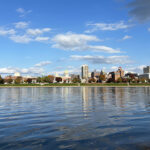
Beer Pioneer: This month, Appalachian Brewing Co. marks 20 years making craft suds.

It was the mid-1990s, and Harrisburg residents Jack Sproch and Shawn Gallagher were two local guys interested in starting a microbrewery.

At the time, this was a far-fetched idea, since Harrisburg restaurants were closing faster than they were opening, and nobody was really drinking anything but Miller and Bud.

So, Sproch booked a ski trip to Colorado for some respite and research, as the state was home to an emerging brewing culture. That’s where he met Artie Tafoya, owner of Heavenly Daze Brewery & Grill in Steamboat Springs. Tafoya was a restaurant veteran and self-taught microbrewer, so Sproch asked for advice and guidance for his idea.

Tafoya had started his brewery in 1988, a business borne out of a homebrewing hobby. But with a new idea on the table, he boldly uprooted himself from his home state of Colorado and relocated his entire family to Pennsylvania to help Sproch and Gallagher with their startup.

Regional Flare

The partners’ first objective was finding a building to house the business, a monumental task considering the amount of space large-scale brewing equipment requires.

The three discovered an abandoned warehouse, one of a string of forlorn industrial buildings along Cameron Street. At more than 100 years old, the Harrisburg Trolley Corp. building used to store parts for trolley repairs. It was next to a building, no longer standing, where the actual repairs took place. That the warehouse was still standing was itself a small miracle.

“The roof on this building had failed six or seven times, and it was in such disrepair,” Tafoya said. “But I told them it could work. They saw that vision, and I’m still amazed at all the work they did.”

That vision ultimately became the first location of the Appalachian Brewing Co., known locally and affectionately today as ABC.

It wasn’t without hard work. The 50,000-square-foot structure was a labor of love, taking nearly two years to rehabilitate. But in 1997, ABC finally opened its doors and gave the public here its first taste of local brews. At first, only the bottom portion of the building opened, serving beer and a limited menu that included salads and pizza. By time the building was renovated, the partners had limited resources, so there wasn’t much left for the restaurant portion, Tafoya said. But they managed to buy a pizza oven and make it work.

“People in the community gathered around us and carried us those first few years,” Tafoya said. “We were on the cutting edge, and we were investing in Harrisburg when so many weren’t.”

ABC’s Water Gap Wheat and Jolly Scot Scottish Ale are two of the original beer recipes and remain crowd favorites today. These beers also are a toast to the process that helped build the ABC menu of flagship and seasonal brews.

“I always tried to develop beers for the places I was consulting,” said Tafoya. “You are never going to have the same tasting beer wherever you go because of the water, so you don’t always use the same ingredients. I always try to give the beer some regional flare when I am helping somebody out.”

Be Different

ABC may be celebrating two decades in Harrisburg, but it takes more than time to become an institution. It’s also about paying attention to customers as times change.

“The consumer has become so smart,” Tafoya said. “Beer drinkers are very educated. I can’t make something and just call it this or that. They know that a pilsner should be this way or an IPA should be that way. You have to be true to the customer and provide them with something different and interesting all the time.”

Since opening on Cameron Street, ABC has grown at that location and expanded to offer more eclectic beers, as well as music in the upstairs Abbey Bar. The flagship location also has numerous spaces for event bookings and an outdoor patio for enjoyment during milder weather—all of it a long way from that dilapidated warehouse. ABC has opened five additional locations throughout central Pennsylvania—in Mechanicsburg, Gettysburg Gateway, Gettysburg Battlefield, Collegeville and Lititz—with each offering visitors a unique experience tailored to the space.

To mark the brewery’s 20th anniversary month in May, ABC will host a number of events, beginning May 2, when there will specials every day. Among the features are old menu items at 1997 prices, buy-one-get-one burgers and free root beer floats. The month-long celebration pays homage to ABC’s endurance as the first brewpub of its kind in the Harrisburg area.

With two decades down, what do the next 20 years bring? The group has a plan.

“Soda has been our biggest venture, and its growth is limitless,” Tafoya said. “We have moved our (soda) manufacturing operation to our Mechanicsburg location to expand.”

The greater philosophy, though, remains unchanged from those early days, when, to most people, the term “craft beer” might just refer to drinking Coors Light on a boat.

“We always want to be different,” Tafoya said. “We never want to get stagnant.”
Appalachian Brewing Co. is located at 50 N. Cameron St., Harrisburg. For more information about the brewpub and details about the 20th anniversary celebration, visit www.abcbrew.com.

Author: Ann Beth Knaus

Continue Reading

See How They Run: This election, give some thought to how candidates conduct their campaigns.

Illustration by Rich Hauck.

Every couple of years, I get myself into trouble.

Well, not trouble exactly, but my office line rings, my cell phone buzzes with texts and angry people stop me on the street (or purposely ignore me).

It’s election season.

Now, TheBurg does not endorse candidates, as I feel it’s not our business to tell people how to vote—one of the most presumptuous things a newspaper can do. So, that’s not the source of consternation.

But I do feel a responsibility to comment on the way campaigns are run, as I often know more about what’s happening behind the scenes than the average voter—and, well, like every editor, I have obnoxious opinions about how candidates should go about their business.

So, four years ago, I heard from mayoral candidate Eric Papenfuse, who didn’t like that I felt his focus on schools, which is beyond the mayor’s purview, was an unnecessary distraction, and from candidate Dan Miller, who really didn’t like that I felt his decision to run as a Republican, after losing the Democratic primary, was opportunistic.

Both, I continue to believe, were important to point out to voters.

This year, my first annoyance of the campaign season came rather early, back in March, when contender Jennie Jenkins asked primary candidates to limit their spending to $50,000 in the mayor’s race.

“Our city is not for sale to the highest donor!!!” said a press release that filtered into my inbox one morning.

Now, this idea isn’t totally without merit. As Jenkins pointed out, Harrisburg is a tiny city, and it probably shouldn’t cost hundreds of thousands of dollars to run a credible race.

My problem, however, was this—it does. Four years ago, mayoral candidates together raised in excess of $500,000 and, even during the more restrained 2009 race, spending reached almost $300,000. The current race, which will be decided on May 16, almost certainly will clock in at half-a-million or more.

In a way, I can’t fault Jenkins for making this suggestion. Her candidacy is considered a long shot, and she almost certainly can’t raise the kind of money that the frontrunners—challenger Gloria Martin-Roberts and incumbent Mayor Papenfuse—can. In addition, she might have figured that she could earn lots of free publicity by calling for spending limits, which turned out to be exactly right.

My reaction, though, was—ugh—here we go again. In almost every election, some candidate “demands” that those who can raise a lot of money stop doing it, unilaterally disarm, which is a ridiculous suggestion unless we change how campaigns are funded in this country. Absent that, it’s a publicity stunt.

Likewise, this cycle, let’s dispense with all the other campaign distractions and clichés: who’s stealing campaign signs, what the county committee thinks, what the so-called power brokers are up to, complaints about “unfair” press coverage and, perhaps worst of all, who’s being endorsed by whom. Outside of the campaign bubble, no one cares.

As media and as voters, let’s stop allowing ourselves to be led around by candidates and their surrogates, and, instead, pay more attention to the things that actually matter. So, what are those things?

Some are obvious: policy stances, debate performances. But one thing that I pay close attention to is this: How well is a campaign run?

Which candidates show the most professionalism? Which demonstrate commitment and energy? Who has a message that is clicking with voters—and why?

Granted, these criteria can be subjective, but, if you’re a reporter or a somewhat engaged citizen in a small city like Harrisburg, you should be able to get a fair sense of who’s working hard and connecting and who’s not.

Four years ago, I thought that Papenfuse ran an excellent campaign, announcing late but then giving it his all so that, in just a couple of months, he lapped both the incumbent mayor and a very strong challenger. Likewise, two years ago, I wrote that newcomer Cornelius Johnson ran the most focused, energetic campaign during the City Council race. And, indeed, he won the most votes in a nine-person field.

So, pay close attention to who’s out there meeting people every day, beating on doors, asking for votes, engaging with residents, campaigning enthusiastically and going outside their comfort zones and core supporters. These are the people who really want to serve, who are motivated, who deserve serious consideration—and who are not just in it for their egos or a paycheck or a narrow, personal cause.

Moreover, I’ve found that the people who work hardest and smartest while running tend to make the best officeholders. A knowledgeable, committed, caring candidate probably will make a knowledgeable, committed, caring representative. Similarly, don’t expect a candidate who thrives on drama and division—or who runs a lazy or gimmicky campaign—to change much in office.

People vote for candidates for different reasons. In a snug city like Harrisburg, many people know candidates personally, so vote for them or otherwise identify with them. There’s little that an opposing candidate can do about that.

However, maybe half of the pool of likely voters is persuadable. They take their vote seriously and base it on things like policy and debates and, I hope, how candidates run their campaigns—how competently, how energetically, how intelligently. These are the people who will decide the makeup of our local government for the next four years.

Lawrance Binda is editor-in-chief of TheBurg.

Continue Reading

Mayoral Candidate Q&A: Candidates outline visions for Harrisburg.

Many issues sit on the shoulders of Harrisburg voters: financial recovery, neighborhood development, habitable housing, safety, to name a few. Come Tuesday, May 16, the city’s registered Democrats can weigh in on these issues by voting for mayor in the primary election.

To help inform your decision, we gave candidates the opportunity to outline their visions for our city. TheBurg asked the five mayoral candidates—Lewis Butts, Jr., Anthony Harrell, Jennie Jenkins, Gloria Martin-Roberts and incumbent Eric Papenfuse—three questions about city issues and their background.

We printed candidate responses in full, editing lightly for grammar and, in some cases, word count. We encourage you to attend upcoming debates, learn more about the candidates, and, most importantly, vote.

Candidate responses are listed in alphabetical order.
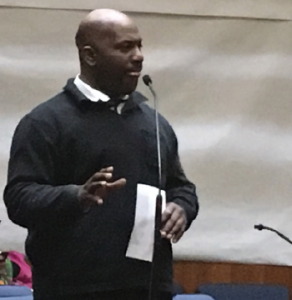
 

Lewis Butts

Q: In the next four years, the city will face significant financial challenges as it tries to exit Act 47. How would you lead the city in choosing an option related to the taxing powers granted by Act 47, whether that is creating a home rule charter, staying in Act 47 or something else entirely?

LB: Since 2013, I understand from this current administration that going into your term without a comprehensive plan or a draft of a comprehensive plan does the community which you serve no service.  The community without a plan doesn’t know where you want to take them.

Harrisburg under Act 47 requires a comprehensive plan. Not a promise that one will be composed within the next several years. This administration has had enough time and money to create one. I say, “Times up.” It’s important to send a message that this administration never had a vision for Harrisburg.

My Harrisburg First Plan will enable the city to rise out of Act 47 by equipping our city with the components required for a prosperous city of the future. Harrisburg can take advantage of Act 47 by creating better revenue engines throughout the city, while creating jobs for residents that are currently lacking. This will raise the morale of our citizenry and put hope and prosperity to residents.  

Harrisburg inability to create adequate revenue to repair roads, reduce taxes, satisfactory schooling, blight-ness, crime and city connectivity. This administration hasn’t created a more communicative administration to assist residents.

Below is listed several infrastructure components that will create adequate revenue to rise from Act 47:  

Voith Hydro Generation Plant: This superstructure will provide the municipality a power and revenue stream that could balance the scales of Act 47.  The power generated will reduce the electrical bill of the common resident. This project will generate 700 local jobs and over $150 million annually.

Wi-Fi Municipal Commutation Infrastructure: This infrastructure component will enable the Harrisburg School District to offer a year-round educational curriculum.  This component will allow children, students and residents to participate in higher education courses to improve job qualifications. The autonomous car industry (Volvo, Tesla, Mercedes Benz, Audi, Toyota and General Motors) is waiting for Harrisburg’s Dome.

Taxing residents is not an option. The only option is creating jobs and rebuilding our failing infrastructure through a comprehensive plan supported by the Act 47 management team. This will enable for best practices and outcome base criteria to be established and achieved.

My platform consists of the erections of the Harrisburg International Aquarium (HIA) located at the old post office on Market Street. This will attract millions of visitors. The advantages are that it’s on the rail line and the aquarium will offer more than 500 jobs. I will create more heritage parks that illustrate our contributions to the Civil War in the Uptown districts. I will also create a PennDOT Plaza; it will have nine eateries and 17 retail shops and will attract patrons of PennDOT, as well as state employees.

Harrisburg bridges were built as toll bridges. I would like to activate that component that can create close to $40K on a weekday.

The overall objective is to create jobs and revenue by holding international events in Harrisburg. For example, Harrisburg’s Motor Week will bring Indy Car Style Racing to the City.  A week of racing and will yield to the tune of $5 million in tourist revenue.

Q: Apart from Act 47, what do you think is the most pressing issue facing Harrisburg, and how would you address this issue as mayor?

LB: The most pressing issue facing Harrisburg is moving blind throughout the years wasting time without a comprehensive plan. Residents are willing to work “together” with the administration if there was something that we could hold on to. When empowering residents to take part in the plan, inclusiveness must be the priority. Crime will be lower if our leaders could connect with all citizens, not just the downtown and midtown populations. I am the candidate who can transcend all demographics of the Harrisburg population. I can communicate within all city dialects and promote unification through community investment.

Q: How have you prepared for this position?

LB: My experience as a Harrisburg native, state employee, city small business owner, city committee member, and founder of several environmental organizations enables me to have a unique perspective regarding environmental issues and natural environmental best practices. I will establish several municipal watchdog organizations to monitor the health of the Susquehanna River from non-point source pollution, since there is a real threat our Federal EPA will be deregulated.

I know how important relationships are between the media as well as stakeholders like the Civil War Museum. A leader must know how important it is to build the bridges of communication instead of lines of conflict.

Anthony Harrell

Q: In the next four years, the city will face significant financial challenges as it tries to exit Act 47. How would you lead the city in choosing an option related to the taxing powers granted by Act 47, whether that is creating a home rule charter, staying in Act 47 or something else entirely?

AH: As far as Act 47 goes, it will run out by 2018 and there will be no relief for the City of Harrisburg, unless home rule is in effect. After careful consideration and a lot of research, I am in favor of home rule. The main reason being that the citizens of Harrisburg can now have an input into how the city is run and being funded. After all, my main goal for running was to give the government back to the citizens who live here and out of the hands of the federal government and outside investors.

Q: Apart from Act 47, what do you think is the most pressing issue facing Harrisburg, and how would you address this issue as mayor?

AH: There is no one issue I can say is the most pressing one, that the citizens of this city would think is above any. The young citizens killing each other, the sinking of some streets, the addicts doing drugs in abandoned buildings, the lack of jobs and business in areas apart from downtown. Not one candidate speaks about the homeless and job rates of the veterans in Harrisburg except me. I was told just the other day while getting a haircut on sixth street (Uptown) that a hardware store would be an excellent addition to the neighborhood. The other neighborhoods in this city don’t want some to have and others to not have. We all flourish as a city when we all benefit the same. All they have ever said is, “Don’t leave us behind.” I have heard them and stand with them. I will stand and fight for them until all of Harrisburg is standing up, to show what a beautiful city looks like when everyone is fighting for one common cause.

Q: How have you prepared for this position?

AH: From the beginning, I will state that I am not a politician. I have not held any political positions, PTA, school board, City Council. I don’t have the pedigree that the usual politician has, nor do I want it. I have not received nor do I want any endorsements from any PACs, or political persons. I do not ask for campaign funds, nor do I want any, from PACs or outside money that wish to contribute to my campaign. I do not ask for money from the citizens of Harrisburg either because the people here are struggling to make ends meet and that would not be acceptable for a person calling themselves a servant of the people to take from them. I saved up my money to support my campaign and I buy my signs, my buttons, postcards and wardrobe. The citizens of Harrisburg want a candidate that is willing to spend his own money, knock on the doors and shake their hands personally. They don’t want 30 to 40 volunteers wasting their time.

At the last election, the people had two choices: one was horrible and the other, less horrible, but they both were not what the people wanted. That’s why only 7,000 people showed up to vote. I voted because, as an American citizen, it’s my duty to do so, even though I didn’t support either of the candidates. It was at that time I decided to put forward my vision, my view of what issues trouble citizens and myself. My children go the elementary and middle schools here and I have gone to HACC. I decided a long time ago to make an investment in this city. I have seen the streets eroded in some areas (Uptown, South, Hill) while others are being taken care of. I have seen bright lights being put up in some areas (Midtown) and others being left in the dark. The crime, shootings, the empty buildings, the drugs are rampant in some areas. In others, it’s like it’s a different world. I am an American soldier and the one thing we live by is or our creed, “Never Leave a Man Behind.” For the last 28 years, the administration and all those who were in public office have left behind parts of the city. The last two administrations have repeated what the one before has done as well. With the one exception that outside money has now been shown preference and has put its hands in the construction of this city.

Lastly, I would like to say, “If you are not registered to vote, stand up and be counted.”
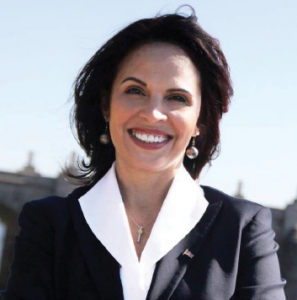
Jennie Jenkins

Q: In the next four years, the city will face significant financial challenges as it tries to exit Act 47. How would you lead the city in choosing an option related to the taxing powers granted by Act 47, whether that is creating a home rule charter, staying in Act 47 or something else entirely?

JJ: Harrisburg needs to be financially self-sustaining for the next 100 years. While everyone is worried about the next three, I am thinking beyond the box we’ve been placed into, via dictation.

Harrisburg faces much deeper issues than financial security. In the streets and through comprehensive plan feedback, city finances are not the most pressing issue. It’s crime, safety, jobs, the schools, blight, and rebuilding their neighborhoods that keep residents up. It’s vital that everyone feels confident in my ability to understand this.

To the credit of Act 47, we’ve been in the black. Still, the “strong-arm” plan (failure) is dictating our future. There needs to be effective and creative ideas to counter what’s on the table.

For multiple reasons, I am not supportive of implementing a home rule charter. How can we trust the current leadership to effectively implement a change of this magnitude when they can’t even handle the comprehensive plan project? I believe the residents are being deceived, and that home rule will tax/fee the city into non-existence. Harrisburg will be a ghost town.

There is another way.  

Q: Apart from Act 47, what do you think is the most pressing issue facing Harrisburg, and how would you address this issue as mayor?

JJ: As the only mayoral candidate with community policing experience, crime and safety will be an actionable priority. A safe city equals economic growth.

It is common knowledge that crime is a deterrent for positive growth, and it is even more common to Harrisburg’s residents and business owners who’ve experienced contraction.  

Acknowledging Harrisburg’s crime problem and then developing a comprehensive strategy aimed at empowering the people by building bridges with our communities, law enforcement and government agencies is the solution. We can take back our city.

Though rendered ineffective in fulfilling their mandate, numerous communities and law enforcement agencies have developed program models aimed at preventing crime.

The “Harrisburg Anti-Crime Initiative” is a problem-solving approach. Having knowledge of Harrisburg’s dynamics, I can tell you that we already have many key components in place. We all have a role to play. By blending these components together into an actionable plan, Harrisburg can be a safer place to live, work and play.

I will put my 10+ years as a police officer and my well-versed knowledge in crime prevention to work for the people… all people, regardless of race, creed, color, religion or unique personal expression. I’ll be going to work for nearly 50,000 people.   

To the visitors, state employees, business owners, professionals and non-professionals, and regional residents that come into our great city, I want you to know that I care about your safety, too. I want you to stay and thrive in the City of Harrisburg.

Q: How have you prepared for this position?

JJ: My life experience, work history, and education have prepared me to be mayor.

A good leader is one who has a vision, can motivate and can inspire others to achieve greatness.

Communication is tied to transparency. What would it feel like to elect a leader that actually listens to the public, values its staff’s opinion, accepts responsibility and makes balanced decisions? My goal as a leader is to raise the standards of the executive branch, and rebrand Harrisburg’s image.

More than a leader, I’d be your representative. I am the people, too.  

I believe an organization takes on the image of the leader. When was the last time we had a leader with a genuine smile?  

Harrisburg needs a street-wise leader that attracts new residents and businesses by delivering respect, and protecting their hard work. Experienced candidates have broken our trust 10-times over. We’re done!

A good leader is surrounded by talent, not political favor. Whether native or planted, Harrisburg is flush with talent.  

Gloria Martin-Roberts

Q: In the next four years, the city will face significant financial challenges as it tries to exit Act 47. How would you lead the city in choosing an option related to the taxing powers granted by Act 47, whether that is creating a home rule charter, staying in Act 47 or something else entirely?

GMR: In 2018, the state will review the status of our city under Act 47 to determine what has been accomplished, what remains to be accomplished and what has not been addressed. The Coordinator will make either of these recommendations: 1) The city is ready to exit Act 47, 2) The city is not ready to exit and a three-year extension is required, and at this point, the Strong Plan would be updated through 2021, 3) the city has poorly performed and should be returned to receivership.

Based on the aforementioned factors, as a newly elected mayor, I would prefer a three-year extension allowing time for a new administration to work closely with the state, city council, county commissioners, the community and other stakeholders on the best options to move the city forward by exploring alternate plans for revenue generation without putting further burden on our city’s tax payers.

Exiting Act 47 impacts our power to maintain the current tax rate for the local service tax and earned income tax (EIT). EIT tax reverts back to $52, and the local services tax goes away if we exit Act 47 without a home rule option or a three-year extension under Act 47. The other option is to increase real estate tax, which already exists and within the purview of the municipality, this is not my preferred option and could potentially create an unfavorable exodus of valuable home owners.

At this early stage, I am not dismissing home rule; however, this is something that needs much deliberation with the community, stakeholders, and other elected officials before I can embrace this option. It also is not an immediate fix, as the process would take a minimum of 18 months and requires a decision by the electorate. My priority would focus on increasing economic development activities, those planned and those yet to be proposed to mitigate the possibility of revenue loss through taxation. I anticipate that the building of a new courthouse, improved transportation (train station), economic activities planned for MulDer Square neighborhood of Derry Street and the 13 projects funded by Impact Harrisburg, including proposed economic development in the Strong Plan, would ignite an intoxicating interest of those wanting to invest in a city on the move, one of Unity.

Q: Apart from Act 47, what do you think is the most pressing issue facing Harrisburg, and how would you address this issue as mayor?

GMR: Economic development is the most pressing issue because it generates revenue and supports a strong tax base. My administration will foster a climate conducive to economic growth, which is integral to strong public safety, excellent education system, responsiveness to quality of life issues and respectful, civil government, public/private partnerships.

Q: How have you prepared for this position?

GMR: I have worked for and/or served as a consultant with federal, state and local governments in senior management positions, administering large budgets and managing large staffing complements. I have served as chief operating officer of a federally qualified health center. I served on the elected school board, the board of control (appointed by two different mayors) and City Council, leaving as president. I currently sit on the board of Impact Harrisburg. I have served on numerous boards locally and represented our state nationally. I have been the recipient of many community awards. My civic and government experience has prepared me for the seat of mayor.

Eric Papenfuse

Q: In the next four years, the city will face significant financial challenges as it tries to exit Act 47. How would you lead the city in choosing an option related to the taxing powers granted by Act 47, whether that is creating a home rule charter, staying in Act 47 or something else entirely?

EP: Thanks to my administration’s efforts to increase the local service tax (LST), the city has the sustainable revenues it needs to exit Act 47. The key is keeping the earned income tax (EIT) and LST tax rates outside of distressed city status.

To that end, we put money in the current budget to hire a lobbyist to help enact the legislative change necessary for the City to exit Act 47 without having to relinquish its current taxing authority.

If we are unable to change the state law by the end of 2018, I will push for a three-year Act 47 extension. I will work with City Council to begin the home rule process, which will enable residents to enact a new city charter granting us the necessary taxing authority.

Either way, I believe the city can be out of Act 47 by the end of my next term. This is the primary reason I chose to run for re-election. I want to help guide us through this process and not see us revert to the dysfunction we had in previous administrations.

Q: Apart from Act 47, what do you think is the most pressing issue facing Harrisburg, and how would you address this issue as mayor?

EP: The most pressing issue facing Harrisburg is the continued division in our community. As mayor, I have worked hard to mend the long-standing racial and economic tensions that have historically plagued Harrisburg. I have also dedicated my efforts to restoring public confidence in the political system.

Harrisburg has economic development plans that will benefit all residents in every neighborhood. Some of these projects include the millions of dollars in infrastructure grants for the MulDer Square project in Allison Hill, the new federal courthouse and state archives buildings in Uptown and the relief funds we secured for the residents of South 14th St. A plan is also in place to rebuild every park and playground in the city.

Under the leadership of Chief Carter, I have encouraged the continued efforts of our police force to engage the youth in our community and earn their trust. We hired 46 new police officers in the last three years but need to continue to recruit and train officers who are willing to participate in our community policing strategy, which has a proven success rate. We need to break down the barriers between the police and the community and look for ways to continue bringing the city together. Focusing on economic development and crime reduction are just two places to start.

Q: How have you prepared for this position?

EP: As mayor, I have managed the city over the last three years without several key positions including business administrator, deputy business administrator or chief of staff. Part of balancing the City’s budget includes making some sacrifices, resulting in me taking these tasks on myself.

Without the aid of the state, I negotiated labor contracts with little dispute between the city and the Police Department, AFSCME and the firefighters. Working together, we were able to find middle ground to keep city employee’s salaries competitive without over-extending the budget.  

I continue to fight back on parking. This past January Harrisburg was threatened with another increase. City officials and I worked together to prevent that from happening. I negotiated the four hours of free parking on Saturday using the LUVHBG promotion code along with reducing the rates between 5 and 7 p.m. on weekdays to $1 an hour with use of the mobile app.

I successfully worked with local, state and federal officials to bring in millions of dollars for a variety of projects that provide jobs and capital improvements to our city.

Author: Danielle Roth

Continue Reading

Natural Selections: Unearthing the creative process behind “Art in the Wild.”

Eve Gurbacki & Adrianne Zimmerman,When Trees Dream

You already may be familiar with “Art in the Wild.”

The annual outdoor exhibit, now in its fifth year, showcases art installations integrated within the rustic, leafy surroundings—the trees, grasses and wetlands—of Wildwood Park’s 3.1-mile loop.

But have you ever wondered who makes these unique artworks—and how they go about their creative regimen?

I did. So, I went to find out.

Positive Things

I could not have truly understood Ray Curanzy’s style without first visiting his creative space.

His third-generation family farm, in rural Lebanon County, surrounds the main road and features an 1800s-era stone house and mature trees that his grandparents planted. As he names each individual tree—persimmon, paw-paw, magnolia, Persian walnut—I become aware of how different each looks.

A woodworker by trade who goes by the online moniker, “Merry Woodsman,” Curanzy feels rooted in his family’s orchard.

“I draw my energy from this farm,” he said. “It’s much bigger than I am. This space is so humbling, so full of my grandparents’ influence.”

The barn overflows with treasures he’s accumulated from nature walks and other places he’s lived. In addition to the sawdust, tools and wood scraps I expected to find in this barn-turned-woodshop, I saw antique doll parts, X-rays from the 1950s and a collection of wasp nests I hoped were dormant.

“I’ll use these in my creations some day,” he said. “I stop collecting treasures when my pockets are full.”

On uneven ground outside the barn, sprawling across multiple sawhorses, I saw a sculpture-in-progress for “Art in the Wild.” I guessed that the bowed wood resembled fancy arches, but I guessed wrong. I had stumbled into him shaping and positioning a large octopus tentacle.

“I wanted to represent the transition of man fearing-to-revering sea monsters in symbolizing dangerous, uncharted waters,” he said. “Octopuses have a level of intelligence that inspired me.”

Curanzy’s exhibit spot is in the water, along the towpath of Wildwood.

“I wanted to lend credence to the image of a squid coming out of the water to accentuate the space,” he said.

The attention-grabber will be a wooden figure, maybe a “bird-person,” he speculated, as he still extemporaneously interacted with his art.

“Think circus ringleader, where the figure is directing the guests’ attention towards the tentacle—the main attraction,” he said.

Unlike many woodworkers who try to create flawless pieces, Curanzy fashions most of his process around imperfection and spontaneity.

“Why not start off with curved wood instead of straight boards?” he said. “We miss all sorts of opportunities during our misguided search for perfection.”

Part of Curanzy’s artistic contribution was his accidental collaboration with fellow Wildwood artists Eve Gurbacki and Annie Zimmerman. He gave them disks from his farm and helped with their installation.

“It cost me nothing to help them, and I knew I would be part of something bigger—positive exposure for the park,” he said. “Good interactions lead to positive things.”

Gurbacki has professionally collaborated with Zimmerman for more than a decade.

“Annie and I are classically trained in fine art, making [Curanzy’s] creative process different from ours,” she said.

Despite different approaches, Curanzy inspired them to expand their art space on both sides of the path to make it more three-dimensional, she said.

When I met these two artists at the Nature Center at Wildwood, they had everything ready to go: their slide presentation, sketches, material samples and a ride to the exact site. Something about their organized partnership—the click between them—was palpable.

“When we research and write our proposal, we think about what theme we want to convey,” Gurbacki said. “A lot of people come to Wildwood Park to look at birds.”

I spied her bird necklace.

Both this year and last year, birds have played a role in their art. Their 2016 exhibit featured birds on wood discs with blue dye. They resembled geodes, or crystalline formations, hanging from the trees. They made their cyanotypes—bluish images—using a process involving mixed chemicals, cold water and sunlight.

The pair’s 2017 exhibit, “When Trees Dream,” features more cyanotypes—white birds against blue sky in different stages of flight.

“It will be a canopy over the path,” Zimmerman said.

They create together mostly virtually, sharing ideas and solving problems. They play with materials to decide the best way to install their pieces and how to maintain them. Elements of their professional art training surface in their plans: sketches, photographs, dyes and bright pops of color.

I followed them to their exhibit site. In selecting the site, they had to consider “how to incorporate our work in visual harmony and compositionally within the natural space,” Gurbacki said. “Then we consider the practical things, like material durability, season changes, foliage coverage during each season, sun bleaching, weather damage.”

Zimmerman added that they think through motion and the movement of the pieces.

“How the wind will swivel and sway them, and how we can transition natural objects,” she said.

Their methodical approach to creating art has turned them into engineers by necessity. At the same time, the space flows and speaks to them while they use trial and error.

I watched their recycled bedsheets unfurl across the width of the path, clouds and birds outlined in denim blue. I imagined them hoisting the sheets using pulleys, components weaving through the trees, people transitioning underneath the azure canopies to absorb the art.

“Art in the Wild” runs through October at Wildwood Park, 100 Wildwood Way, Harrisburg. The park is open every day from dawn until dusk. For more information, visit www.wildwoodlake.org.

Author: Gina Napoli

Continue Reading

Harrisburg in the Balance: 6 candidates vie for 4 seats on City Council.

What would you like your city to look like a few years from now?

This month, you’ll have your say, as seven Democratic candidates vie for four, four-year seats on Harrisburg City Council. Successful candidates will need to address some very important issues over the coming years—from finances and taxes to issues of development and justice.

Therefore, we asked the candidates—incumbents Ben Allatt, Shamaine Daniels and Wanda Williams and challengers Jeremiah Chamberlin, Ausha Green, Angela Kirkland and Dave Madsen—to explain their goals by answering one question.

We printed the candidate responses in full, editing lightly for grammar and, in some cases, word count. The primary election is May 16. So, please learn about the candidates by reading about their positions and maybe even attending a debate or two.

Candidate responses are listed in alphabetical order.

Q: What do you think is the greatest challenge Harrisburg faces, and how would you address this issue if elected to Harrisburg City Council?

Ben Allatt (incumbent): Harrisburg’s greatest challenge is that it remains in a state of financial insecurity. This has a direct impact on our ability to meet the current and future needs of the community. Our city has an obligation to provide adequate public safety, maintain and update an aging infrastructure, manage blight and so much more. Harrisburg has come a long way from when it first entered state receivership under Act 47 but remains a work in progress.

I would like to continue building on the work I have already done by:

  • Passing the Debt Policy and General Fund Balance Policy I have introduced.  This is a collaborative effort between the administration, the controller’s office and myself and will ensure that Harrisburg never participates in high-risk borrowing ever again.
  • Advocating for Harrisburg’s interest at the state level to give Harrisburg the ability to become self-sustaining by:
    • Addressing the high percentage of tax-exempt property in the community; the state represents 42 percent of the property but contributes $5 million (currently 8 percent of the city’s revenue).
    • Lobbying for tax reform that will enable our city to thrive without giving deference to select localities.
    • Reforming the Act 47 process to allow struggling municipalities to fully recover and come out of Act 47 with a clean bill of health.
  • Building on our current process of identifying both the needs and the priorities within in the city’s capital improvement plan. Harrisburg just introduced its first capital improvement plan and this was initiated upon my request. This is a significant step to help reverse years of avoidance and neglect.

These steps can help Harrisburg continue down a path of sustainability and long-term viability while addressing the needs of all the residents of our community.

Q: What do you think is the greatest challenge Harrisburg faces, and how would you address this issue if elected to Harrisburg City Council?

Jeremiah Chamberlin: The single greatest challenge that Harrisburg faces is continued financial health. Without a sound financial base, we cannot address other pressing issues such as crime or crumbling infrastructure. Swift action must be taken to address the expiration of Act 47. If not, Harrisburg will face increased taxes and drastic cuts in already stretched services.

When I am elected to council, I will work to bring Harrisburg under home rule, work to remove roadblocks for business, work to increase home ownership and grow the city’s population.  


Home rule will allow citizens greater authority on how our government is run and how revenue is generated. Holding property taxes and home values steady for current residents makes it possible to grow our tax base.


While I appreciate the hard work that the current administration has accomplished, we must make it easier to start businesses within the city and remove restrictions on businesses that are no longer relevant.


The Harrisburg region is growing; the city needs to capture its share of new residents. There is a lack of affordable housing and a glut of vacant and blighted homes. Often, blighted and vacant homes are owned by speculators, making it difficult for those who would like to renovate and invest in our neighborhoods to purchase affordable properties. I will work to develop policies that will encourage redevelopment. 

Q: What do you think is the greatest challenge Harrisburg faces, and how would you address this issue if elected to Harrisburg City Council?

Shamaine Daniels (incumbent): Harrisburg faces many challenges: high poverty rates, lack of affordable habitable housing, a stagnant job creating environment and the pressure to provide services to many with a very small tax base. I have worked for the last four years to try to ensure more affordable, habitable housing for residents. An unhealthy housing stock shortens life expectancy for residents; reduces equity for owners that could be used for college tuition or for small business loans to open businesses; and deters good landlords from investing here. You cannot compete fairly as a good landlord when your competition is saturated with slumlords. Our lack of habitable, affordable housing is the greatest challenge to the economic development of Harrisburg’s residents.

But the truth is that none of Harrisburg’s challenges could be overcome by leadership that lacks integrity. Over the last four years we have seen leadership continue to rely on Reed-era accounting practices to artificially inflate budgets; contracting gimmicks that favor campaign donors and supporters; department directors misrepresenting data ensuring their continued employment with this administration. We saw the statement that Harrisburg’s housing code standards were higher than the Housing Authority’s only to confirm, after the death of a worker, that our standards are in fact lower, something that council members and the administration knew because they had both codes, but both ignored because integrity takes work.

I will continue to research issues before council, ask the questions other council members are afraid to ask. The decisions I make will continue to be based on verifiable information. I will continue to identify solutions to our problems. When residents identify a problem, I will not pretend it doesn’t exist, and in spite of the bullying, I will remain unbossed.

Q: What do you think is the greatest challenge Harrisburg faces, and how would you address this issue if elected to Harrisburg City Council?

Ausha Green: One of the greatest challenges currently facing the City of Harrisburg is efficiently resolving the City’s financial recovery for the best interest of all the citizens of Harrisburg. I plan to achieve this by incentivizing home ownership in the city through encouraging programs to help citizens purchase and repair vacant properties in the city. This will not only put these vacant properties back on the tax roll and increase revenue, it will also beautify the city and address the blight that our city faces. Most importantly, it gives the citizens of the city a chance to invest in the city they love. I believe it will also reduce the crime rate in the city by creating more cohesive long-term communities of homeowners. Doing this will not only create immediate revenue over the coming years; it will work as a long-term revenue stream for the city.

I will also collaborate with the business community to encourage revitalizing vacant commercial properties instead of looking to build new properties outside the city. It is important to encourage the revitalization and re-use of vacant commercial buildings by potential businesses because this encourages them to move within city limits and put existing infrastructure back to use.

It is important that we emphasize our diverse population here in Harrisburg and work to bring in new businesses and build existing businesses to fulfill the needs of this diverse population. As a member of the City Council, I would ensure that we reach out and give all the citizens and businesses of the city a chance to give input and shape the future of Harrisburg.

Q: What do you think is the greatest challenge Harrisburg faces, and how would you address this issue if elected to Harrisburg City Council?

Angela Kirkland: 

*On April 25, Angela Kirkland suspended her campaign for City Council. Due to print deadlines, we still ran her response in our May issue. We are running her answer here to stay consistent with the May issue of the magazine. 

Harrisburg’s greatest challenge is its segregation and willingness to embrace the alienation and displacement of people of color. I find the disparities in overall conditions between certain neighborhoods to be untenable. Local publications and institutions indulge in white liberal hand-wringing on these issues while at the same time failing to adequately represent people of color on their staffs and in their pages, and promoting businesses and events in areas that are majority-white. It’s distressing, yet understandable, to see and hear such apathy from some people of color here about local politics. A common opinion is that elected officials here don’t care, don’t listen, don’t even pretend to serve them beyond a campaign.

I recently learned about transactional vs. transformational organizing. Transactional has an agenda already in place, aiming for signatures and votes. Transformational, on the other hand, is about creating long-term relationships and long-term change through individualized outreach.

Whether or not I am elected to council, my mission is to serve the people that need me most—those from the blocks that would have birthed me had Harrisburg been my hometown. As an activist who still has much room for improvement, I admit that I have not yet done my fair share of reaching out to fellow black people and other people of color in this city. But I am changing that. I will make sure as many people as possible know me and my dedication to uplifting them and making a more level playing field for all as a result. What exactly that looks like, I have yet to detail. That comes from building relationships and ensuring that there is trust in me to be an advocate who is truly on their side.

Q: What do you think is the greatest challenge Harrisburg faces, and how will you address this issue if elected to Harrisburg City Council?

Dave Madsen: The greatest challenge Harrisburg faces is getting more young people to raise their families in the city.

When I’m knocking on doors in the community, one of the hardest things to hear is when a young family says they’re planning to move because of high taxes and the state of our schools. While school board is primarily charged with the school district, there are things council can do to make young people want to raise a family here. If elected to council, I will make sure our tax dollars go toward improving our infrastructure, public safety and the image of our city.

We need to revitalize our city and make every neighborhood an attractive place for families. Some of our neighborhoods need council’s serious attention. Blight and trash deter people from buying homes and investing in our neighborhoods. We need families moving into these neighborhoods, not absentee landlords who prey on low-income renters and don’t invest in our city.

Public safety should be a top priority. I want to modernize our police and fire departments and make sure they have a diverse staff and adequate funding. We need police officers walking the beat and interacting with residents as members of the community, not just responding to emergencies. Regular foot patrols would not only deter crime, but it would build a sense of trust between the police and the community.

Our city’s aging infrastructure needs serious work. I will push to provide efficient, safe and reliable infrastructure in all communities. I will explore investing further in Riverfront Park, the Greenbelt and Reservoir Park, and other important community areas that provide a safe environment for youth and families.

I believe focusing on these initiatives would make Harrisburg not only an attractive place for young people to raise families, but a place that better meets the needs of community members from all walks of life who call our city home.

Q: What do you think is the greatest challenge Harrisburg faces, and how would you address this issue if elected to Harrisburg City Council?

Wanda Williams (incumbent): The greatest challenge facing the City of Harrisburg is the ability to have continuous revenue forthcoming. 


With the city presently under Act 47, the courts have granted Harrisburg the authority to increase the local service tax (LST) and the earned income tax (EIT).

Prior to the court order, the city received $2 million per year from the LST. With the increase, the revenue has tripled to $6 million. The EIT percentage was at 1 percent with .5 percent going to the Harrisburg School District. Revenues were $3.5 million to $4 million per year. The increase of this tax generates $7.5 million to $8 million for the city.

The City of Harrisburg is attempting to be self-sufficient and, although it generates revenue from sanitation, parking, incinerator, taxes and fees, Harrisburg has not reached that goal. It is crucial for the city to continue the increased revenues from the LST and EIT to maintain financial stability. Without the increases, the city would lose between $11.5 million to $13 million in revenues and place the City of Harrisburg back in the same financial debacle.

During the budget hearings, the administration requested to hire a lobbyist for the city. The Pennsylvania Municipal League presently lobbies for the city, but an additional lobbyist would be beneficial.

That individual would need to advocate and attempt to influence our legislators at the state Capitol to allow the city to extend the increase of the LST and EIT.

Harrisburg is like all other municipalities under Act 47 that are facing and experiencing financial challenges. Also, like Harrisburg, cities are looking for the means to keep their revenues stable while providing the best services possible to their residents without placing the burden of increased taxes. 

Author: Danielle Roth

Continue Reading

May News Digest

3rd Street Repaving Set

The repaving of 3rd Street in Harrisburg should begin in July, with disruptions expected along the major corridor, the city said last month.

“Bear with us,” City Engineer Wayne Martin said. “I think everyone is so excited that we are paving roads. However, we are going to try to minimize the inconvenience.”

Construction crews will repave 3rd Street in chunks. Work will take place in these three sections: Chestnut Street to Forster Street, Forster Street to Muench Street and Maclay Street to Seneca Street.

The project will skip the recently repaved strip of 3rd Street in front of the Capitol complex. However, most of the street has not been repaved in 20 years.

Crews will pave at night to minimize road closures that could disrupt commuters, Martin said, adding that loud work, such as jackhammering, will occur during daytime hours to minimize disturbances for residents.

“[It’s] a balancing act,” he said.

Curb extensions called bump outs will include green infrastructure elements designed to filter storm water. More than 120 trees placed in specially designed planters will naturally filter contaminants before entering the city’s water infrastructure. In addition, crews will install more than 150 ramps that comply with accessibility standards set by the Americans with Disabilities Act, Martin said.

Updates to six traffic signals will ease crossings for pedestrians, Martin said. The updates will include chirping noises to indicate safe crossing times. Traffic signals will be retimed in a way that’s designed to allow pedestrians to cross safer, he said.

Bus stops will be moved to safer locations and, in some instances, consolidated for efficiency, Martin said.

For the project, the city obtained more than $3 million in grants from PennDOT and Impact Harrisburg, a nonprofit set up as part of the Harrisburg Strong Plan. Impact Harrisburg awarded Capitol Region Water $500,000 for the project’s storm water management aspects.

Comp Plan Back on Track

After a thrown-out consultant contract and more than a year of delay, city officials have laid out a timeline to get Harrisburg’s comprehensive plan to the finish line.

Last month, city officials said a draft of the document would be released for public comment in June. They expect the final version to be ready in November.

City Council members last month spent much of a three-hour meeting teasing out how a $200,000 consultant’s contract, which still has not yielded a draft document, became so behind schedule.

After the city did not receive a final comprehensive plan draft by a March 2016 deadline, communication between city officials and urban design consultant Bret Peters slowly broke down, ending with the city terminating Peters’ contract, said city officials.

After a negotiation process, the city made a final offer for Peters to complete the project, said City Solicitor Neil Grover. With no response, the city terminated the contract, he said.

For his part, Peters outlined numerous reasons for the delay, giving council a stapled document explaining why his team’s work was not complete by last year’s deadline.

Paint, Repairs for Bandshell

Reservoir Park’s bandshell will receive a fresh coat of paint and general repairs this month as City Council unanimously approved a resolution to move forward with the $50,000 project.

The city hired Steelton-based Kemar, Inc. to repair wood, paint, fix the flooring and perform other general maintenance and repairs. These updates will make the bandshell more appealing to performance groups looking to rent the space, said city Purchasing Manger Hillary Greene.

“[After these updates], we feel better about renting it out,” she said.

Gamut Theatre’s annual Shakespeare in the Park is slated to be the first to use the refurbished venue in June. The contractor aims to finish repairs before the performance, said Parks and Recreation Director Kevin Sanders.

The bandshell also needs updates to light and sound systems, which may be in the cards for this year, Sanders said. His department plans to install a video security system at the bandshell in the hope of protecting the area from vandalism.

Fire Protection Funds Nixed

The state House last month passed a budget that did not include any payment to Harrisburg for fire protection services.

For the past four years, the state has paid the city $5 million annually as compensation for fire and emergency services to protect about 50 tax-exempt state buildings within the city.

Harrisburg Mayor Eric Papenfuse said that, if the city does not receive the funds, which comprises about 8 percent of its general fund, it will need to lay off public safety workers.

The payment was included in Gov. Tom Wolf’s draft budget, but was taken out by the House, as it tries to close a $3 billion budget deficit.

At press time, the state Senate still needed to pass a budget bill.

Home Sales Climb

Home sales in the Harrisburg area continued their years-long upward trend, rising 18.3 percent in March.

Sales totaled 766 units versus 647 in March 2016, according to the Greater Harrisburg Association of Realtors (GHAR). The median price rose to $160,000 from $155,000 in the year-ago period.

In Dauphin County, 265 homes sold for a median price of $140,000 compared to 233 sales for $136,000 in March 2016. In Cumberland County, 246 homes sold at a median price of $190,150, versus 214 units at $179,950 the previous March.

In Perry County, 23 houses sold for a median price of $132,900. In March 2016, 26 homes sold at a median price of $139,950.

GHAR covers all of Dauphin, Cumberland and Perry counties and parts of York, Lebanon and Juniata counties.

So Noted

Alison Hays was named last month as the new executive director of Theatre Harrisburg. She replaces Brett Bernardini who resigned last month after serving 20 months on the job.

Harrisburg last month unveiled a new “Welcome to Harrisburg” sign at N. 2nd and Paxton streets near the ramps for I-83. PinnacleHealth paid for the $60,000 sign, which includes a digital LED screen that the city and Pinnacle are sharing.

PinnacleHealth Auxiliary last month held a ribbon cutting for recent renovations to the Bailey House Annex, a facility on Washington Street in Harrisburg that offers free accommodations to families of hospital patients. Improvements include two additional bedrooms, central air conditioning and an entrance between the main house and the annex.

Changing Hands

Bellevue Rd., 1957: C. Chase & A. Baylor to M. Peters, $44,800

Brady St., 25: Habitat for Humanity Greater Harrisburg Area to Ma Ambashakti LLC, $33,500

Briarcliff Rd., 211: Donald L. Pong Trust to S. Ayala, K. Morrison & J. Stevens, $150,000

Brookwood St., 2449: Federal National Mortgage Assoc. to D. Tu, $32,015

Chestnut St., 2223: M. Bauer to S. Rock, $164,900

Emerald St., 220: Wells Fargo Bank NA to C. Shokes, $35,000

Emerald St., 232: T. Janz to D&F Realty Holdings LP, $116,000

Fulton St., 1707: C. Hutchinson to K. Herbe, $106,000

Green St., 2210: E. & T. Stelzer to T. Matthews, $41,000

Green St., 3121: 8219 Ventures LLC to G. Rosenberg, $100,000

Hamilton St., 501½: Dobson Family Partnership to Z. Yap, $34,900

Harris St., 244: Harris Street United to Trinity Church of God, $200,000

Herr St., 108: N. & A. Hays to L. Roper & E. Lupico, $164,000

Hudson St., 1116: E. Rider to E. Beachler, $92,000

Industrial Rd., 3700: KTR Harrisburg LLC to Supervalu Penn LLC, $37,054,000

Jefferson St., 2155: C. Torres to B. Torres, $50,000

Lenox St., 2003: D. & D. Koppenhaver to O. Ordaz, $55,500

Logan St., 1721: C. Johns & R. Miller to L. Castillo, $150,000

Logan St., 2421: K. Macrate to J. & C. Stowell, $74,900

Maclay St., 1001: M. Daley & B. Morris to 101 S. 17th Street LLC, $1,125,000

Market St., 1842: Centric Bank to Adonis Real Estate LLC, $30,000

Muench St., 200: D. Pennyweather et al to Penn Home LLC, $35,000

Naudain St., 1642: R. Page to L. Cooper, $53,700

2nd St., 2615: TBF Properties LLC to E. Smith & H. Williams, $173,000

2nd St., 2921: J. Hartzler & K. Werley to D. Skerpon, $360,000

3rd St., 1712: R. & J. Mensch to J. Yonker, $101,000

3rd St., 1935 & 1932 Logan St.: Monte Design Studio LLC to D. Goodwin, $230,000

3rd St., 3104: M. Horgan & R. Kushner to B. McClain, $104,000

4th St., 3013: Orrstown Bank to T. Wylie, $36,000

5th St., 2459: D. Floyd to D. Young, $65,000

16th St., 47: 3405 Associates LLC to B. Shephard, $41,000

16th St., 719 & 721: K. & R. Thames to J. Gulbin, $140,000

Front St., 407: Dobson Family Partnership to VMV Luxury Real Estate LLC, $800,000

Front St., 1525, Unit 503: R. Davis Jr. to Dowell Group Inc., $112,000

Front St., 2705: G. & P. Lightman to MBS Solutions Real Estate LLC $160,000

Oakwood Rd., 2301: K. Snow to PI Capitol LLC, $156,901

Peffer St., 211: M. Barrette to K. Scheib, $74,900

Peffer St., 230: J. Aiello to Keystone Brothers Investments LLC, $125,000

Penn St., 1210: J. & S. Bircher to Senior Parking LLC, $95,000

Penn St., 1521: M. Levy & A. Couloumbis to M. Lipke, $139,900

Penn St., 1601: N. Wyatt to P. & L. Wenrich, $137,000

Penn St., 1721: D. Myers to PA Deals LLC, $80,000

Penn St., 1818: W. & K. Van Jura to C. Schroll, $77,000

Pennwood Rd., 3160: Federal National Mortgage Assoc. to J. Bush, $62,000

Reily St., 211: Secretary of Housing & Urban Development & Information Systems Networks Corp. to K. Secrest, $35,300

3rd St., 13: G. & W. Kotsalos to Dewberry LLC, $140,000

13th St., 347: CNT Enterprises to Q. Phillips, $70,000

22nd St., 15: D. Giusti Jr. to B. & C. Zandieh, $119,000

24th St., 625: H. Dinh to J. Clancy, $69,900

Front St., 713: S. & C. Cherry to E. Kitzman, $155,000

Zarker St., 2046: C. & G. Gallagher to R. Pollard, $50,000
Harrisburg property sales for March 2017, greater than $30,000. Source: Dauphin County. Data is assumed to be accurate.

Author: Lawrance Binda

Continue Reading

This Is the End: State closes Harrisburg corruption probe with suggestions, not charges.

Attorney General Josh Shapiro today announced the end of state’s investigation into the Harrisburg incinerator and the actions of former Mayor Steve Reed.

The years-long public corruption probe of former Harrisburg Mayor Steve Reed and his associates ended with a whimper today, as the state released its final report without announcing additional charges.

At a mid-afternoon press conference, Attorney General Josh Shapiro described in damning terms the actions of Reed, whom he described as virtual dictator who drove the city into fiscal ruin.

“A great city—a great city—was badly harmed and continues to be hampered,” he said, adding that much of the blame lies with “a power-hungry mayor willing to ignore the rules to get his way.”

Nonetheless, it was too late for the state to file charges against Reed and his subordinates in relation to the retrofit of the city’s troubled incinerator in south Harrisburg, as the five-year statute of limitations had expired.

“Due to the passage of time, the grand jury could not ultimately recommend charges,” he said.

Almost two years ago, a previous grand jury indicted Reed on nearly 500 corruption-related counts. However, a judge later dismissed most of those counts, saying the state filed them too late, more than five years after Reed left office in January 2010.

This past January, Reed pleaded guilty to lesser charges—20 counts of receiving stolen property after city-owned museum artifacts were found in his home and in a separate storage facility he rented—and was later sentenced to probation.

The 87-page grand jury report offers a history of Harrisburg’s doomed incinerator project, beginning with the city’s sale of the facility to the Harrisburg Authority in 1993 and continuing through the final retrofit financing in December 2007.

In all, the incinerator accounted for $434 million in debt, though only $155.8 million was spent to actually repair and retrofit the facility, Shapiro said. Much of the rest of the money went to pay professionals who issued the debt or to the city and Dauphin County in the form of “guaranty fees.”

Ultimately, the incinerator was sold to the Lancaster County Solid Waste Management Authority to help settle a portion of the accumulated debt.

Shapiro used much of his time outlining the grand jury’s recommendations for reform, such as prolonging the statute of limitations in public corruption cases and giving the attorney general’s office the ability to investigate municipal corruption without a referral from the local district attorney.

Shapiro also said that the commonwealth’s ethics laws should be amended to bar conflicts of interest and the accumulation of power. Reed was able to force through the incinerator retrofit and borrowings, Shapiro said, due to his “grip on power” and control of bodies like the Harrisburg Authority. Meanwhile, the state lacked authority to scrutinize the incinerator project, even while approving bond deals, he said.

“The retrofit of the incinerator was built on a house of cards,” Shapiro said. “Then it all came crashing down.”

Author: Lawrance Binda

Continue Reading

Burg Blog: Credit Is Due

Who should take credit for the resurgence of Midtown, which includes the beautiful space that is now home to st@rtup Harrisburg?

Last weekend, some good friends from Washington, D.C., came up to Harrisburg for a visit.

They’d been here before, but not in awhile, so I took them on a little “renovation” tour—the historic buildings that had been rehabbed and reoccupied since their last visit.

We walked through st@rtup’s glorious new space at 3rd and Boas, then checked out H*MAC, had a drink in the Millworks. I showed them the buildings now occupied by the Susquehanna Art Museum, modernrugs.com and Zeroday Brewing.

Later, thinking about it, it struck me that not once did I utter the words, “Eric Papenfuse.”

I mention this only because all four challengers for the mayor’s office have, to varying degrees, built their campaigns around giving the sitting mayor the credit (or perhaps the blame, I’m not quite sure) for the dramatic redevelopment of Midtown Harrisburg over the past few years.

I’m not here to defend Papenfuse, as TheBurg does not endorse candidates. But I am here to defend reality, as I believe that credit for the transformation of Midtown should go to the people who deserve it.

Now, Papenfuse, as a businessman, is among that group. His Midtown Scholar Bookstore helped anchor redevelopment at the heart of the neighborhood ever since it opened at N. 3rd and Verbeke. He subsequently bought and renovated the buildings that house the LGBT Center and Yellow Bird Café and is completing renovations of three buildings on the 1400-block of N. 3rd Street. Those are solid contributions.

However, he should not be the sole recipient of the honors or arrows, depending upon your perspective, of what has become of Midtown Harrisburg.

Recognize also Josh Kesler, who, through enormous risk and millions of dollars, gave us the Millworks.

Recognize also John Traynor who, through enormous risk and millions of dollars, gave us H*MAC.

Recognize also Zachary Nitzan, who through enormous risk and millions of dollars, is giving us the modernrugs.com buildings.

Recognize also developers like GreenWorks, Brickbox, WCI, Lift Development and the Vartan Group, which all have completed major projects in Midtown.

Recognize also small business owners like Ruth Prall, Adam Porter, Adam Brackbill, Ivan Black, Samra Alic, Theo and Brandalynn Armstrong, Steph and Ammon Perry, the vendors in the Broad Street Market and many others who have given Midtown vibrancy, customers and a resurgent economy.

Now, there are two significant things that Papenfuse, as mayor, has tried to do in Midtown that are worth noting. The first was the creation of the Broad Street Market Task Force, whose recommendations, I hope, will help the market further its progress and secure its future. The second was his attempt to close down the Third Street Café, a battle that has been criticized simultaneously for attempted gentrification and for ignoring troubled bars in other neighborhoods (you may notice a contradiction there). So, yes, he tried, but failed, in an effort spanning two years and counting.

Owners of the Third Street Cafe show their preference for mayor and City Council.

Meanwhile, Papenfuse’s detractors have ignored where priorities and money actually have been focused during his term: the LED streetlight project (citywide), the multi-modal project (several neighborhoods), the MulDer Square project (Allison Hill) and the sinkhole project (South Harrisburg).

Years ago, a friend, now deceased, warned me not to get my hopes up for Midtown Harrisburg. Then in his 70s, he told me he had seen the neighborhood do a two-step forward, almost two-step backward routine too many times.

I wish he had lived to see this day, that he could have shared a drink with us last weekend, as I believe that Midtown has finally reached a tipping point, a place of sustainable progress.

In this heated election season, it’s important to understand how that happened. It didn’t happen because Papenfuse waved a magic wand and showered the neighborhood with money. It happened because developers took extraordinary risks to restore this and that building, then business people took extraordinary risks to open this or that restaurant, brewery, shop. Ignoring that reality is a profound disservice to those who have actually rebuilt Midtown Harrisburg.

I would like to be charitable and believe that candidates have honestly confused correlation with causation or simply don’t understand how business or development work. However, it’s election season, and charity is hard to come by, especially when giving credit where credit is due.

Lawrance Binda is editor-in-chief of TheBurg.

Disclosure: TheBurg’s publisher, Alex Hartzler, is a principal with WCI Partners.

Continue Reading

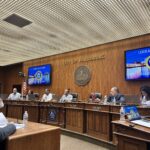
City Council Update: Council moves to improve roadways, bus stops

City Council last night made several moves to improve Harrisburg’s infrastructure, though only one such move will be immediately obvious to residents.

Council approved measures that address parking issues on S. 18th Street, bus stop locations and citywide roadway issues.

Automobiles will no longer be able to park on the west side of S. 18th Street between Derry and Berryhill streets. The ordinance that passed last night was in response to resident complaints about parked tractor-trailers blocking the roadway.

City workers are slated to paint a double yellow line so that automobiles will only be able to park on one side of the street, said City Councilman Cornelius Johnson, chairman of the Public Safety Committee.

The city also will address issues with bus stop placement and shelter structures. Council hired a consultant, Mechanicsburg-based Delta Development Group, to determine how to make bus stops along Market, 3rd, 4th, 6th and 7th streets more efficiently placed and more accessible for people with disabilities.

The group plans to look at how the current bus stops affect traffic flow. For example, bus stops on corners cause automobiles to enter unsafe situations to navigate around the buses, Johnson said.

“If doing this allows for better bus stops and traffic to flow better, [and] it’d affect [bus] ridership, I think it’s a good idea,” Johnson said.

The consultant group will hold community meetings to allow residents to share concerns and thoughts. The project costs $129,527 according to the consultant agreement.

City roadways will receive extra attention as council approved a measure to create a comprehensive database of roads. IMS Infrastructure Management Services, LLC will use GIS mapping technology to give city officials information on potholes, broken pavement and the lifespan of roads, said Councilman Westburn Majors, chairman of the Public Works Committee.

“Essentially, we are doing a study of all the streets in the city,” Majors said.

The city-wide mapping project will help officials prioritize areas for maintenance and capital improvements, per the resolution. This project marks the first comprehensive road-mapping project in at least 10 years, Majors said.

The consultant agreement budgeted this project for $36,013.

Yesterday also marked the beginning a street sweeping contract between Hazleton-based DBi Services and Capital Region Water. Therefore, DBi Services is now responsible for cleaning Harrisburg’ streets in accordance with posted street signs.

The city continues to provide snow removal, leaf collection and trash removal services. The city and Park Harrisburg are still in charge of parking enforcement and ticketing. Residents can find a live-updated map tracking street sweeper’s progress in the city, plus contact information for street sweeping issues, on Capital Region Water’s website.

Author: Danielle Roth

Continue Reading

Take Your Pick: Harrisburg City Council and Mayoral candidates to debate, participate in forums

Residents may have read about candidates’ stances, watched their videos and perhaps even met them going door to door.

Starting this week, Harrisburg residents will be able to see and hear candidates, maybe even ask them questions, at a series of debates, forums and meet-and-greets. The action starts Wednesday and runs almost to the primary itself, which is May 16.

Five Democratic candidates are running mayor: challengers Lewis Butts, Jr., Anthony Harrell, Jennie Jenkins, Gloria Martin-Roberts and incumbent Eric Papenfuse.

Seven Democratic candidates are competing for four, four-year seats on City Council: incumbents Ben Allatt, Shamaine Daniels and Wanda Williams and challengers Jeremiah Chamberlin, Ausha Green, Angela Kirkland and Dave Madsen.

On the ballot for Harrisburg school board are incumbents Judd Pittman, Danielle Robinson and James Thompson and challengers Brian Carter, Carrie Fowler, Richard Soto, Gerald Welch and Cory Williams. Newcomer Percel Eiland is the only candidate running for the board’s sole two-year seat.

All events are free. The PennLive/CBS21 event at HACC requires an RSVP. Some event coordinators allow participants to email questions to the moderators ahead of time.

Friends of Midtown: Meet the City Council Candidates Night
Wednesday, April 26, 6 to 9 p.m.
Harrisburg Midtown Arts Center (H*MAC)
1110 N. 3rd St., Harrisburg
Submit a question ahead of time to: [email protected].

Candidate Forum, hosted by NAACP
Thursday, April 27, 6 p.m.
Girl Scout Building
350 Hale St., Harrisburg

Meet the Candidates Night, hosted by Capital Region Stonewall Democrats
Thursday, April 27, 6 to 9 p.m.
Harrisburg Midtown Arts Center (H*MAC)
1110 N. 3rd St., Harrisburg
Candidates from York, Dauphin, Lebanon, Lancaster and Cumberland counties will share their platforms. Mayoral candidates will attend this event following the 6 p.m. NAACP forum.

Harrisburg Mayoral Debate, sponsored by CBS21 and PennLive
Tuesday, May 2, 7 to 8 p.m.
HACC Midtown Campus, 2nd Floor
1500 N. 3rd St., Harrisburg
Submit questions to John Micek at [email protected] or Christine Vendel at [email protected]
RSVP here

Harrisburg Mayoral Debate, sponsored by Harrisburg Young Professionals and The Hill Society
Tuesday, May 9, 5 to 8 p.m., Reception at 6:30 p.m., Debate at 7 p.m.
Hilton Harrisburg
1 N. 2nd St., Harrisburg

Harrisburg Mayoral Community Townhall Debate, sponsored by ABC27
Thursday, May 11, 7 to 8:30 p.m.
Harrisburg Midtown Arts Center (H*MAC)
1110 N. 3rd St., Harrisburg


Story was updated at 8:45 p.m. Monday to correct inaccuracies with dates and sponsorships. 

Author: Danielle Roth

Continue Reading