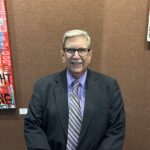
Prepared for Departure: Upon retirement, Michael Hanes reflects on his years leading Whitaker Center.

When Michael Hanes assumed the position of president and CEO of Whitaker Center for Science and the Arts, he intended to stay five to seven years.

By the time he officially retires, in January 2018, he will have been at the nonprofit for more than a decade.

“As time passed, we had developed plans for a number of projects and new programs,” Hanes said. “I was committed to seeing that work completed.”

Over the past 10 years, Whitaker Center has refreshed its Harsco Science Center, created a fund to promote access to plans for facility renovations and successfully completed a major fundraising campaign.

Hanes further advocated for the creation of innovative science programs, such as “Surgery Live!” and the renovation of Select Medical Digital Cinema with state-of-the-art projectors.

“We have broadened the donor base with generous support now coming from across the community to include individuals, small businesses, trade associations, foundations and local, state and federal government agencies,” Hanes said. “We have continued to invest in a beautiful and unique facility, including new paint for Sunoco Performance Theater, scheduled for this summer, and to upgrade critical infrastructure as the center approaches its 20th anniversary.”

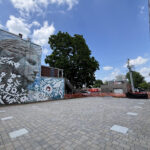
Hanes and his wife, Madlyn, donated the funding to erect a public sculpture at Whitaker Center’s Market Street entrance.

In addition, Hanes said he was determined that Whitaker Center would weather the Great Recession in financially secure fashion.

“We have accomplished this,” he said.

As one of his final jobs, Hanes is producing a giant-screen film about effective management of water resources, featuring the Chesapeake Bay. He actually retired a couple of months ago as CEO, replaced by Ted Black, but will remain as head of Whitaker Center Productions until January, when the project ends.

“This is a particular passion of mine,” he said.  

Common Threads

Hanes grew up in northern Indiana in a house homesteaded in the mid-1800s by his great- great-grandfather.

“We were expected to participate in the work of the farm, and each of us had daily chores,” he said. “In addition, we were encouraged to be independent thinkers. Through the actions of my parents and everyday experiences, I learned to value hard work, generosity and lending a helping hand to others.”  

From a young age, Hanes said he was curious about the world, graduating from the University of Indiana at Bloomington and eventually earning a doctorate in educational psychology, specializing in child development.

“Educational achievement was important in my family,” he said. “There was a clear expectation that my siblings and I would attend college.”

One of Hanes’s proudest professional accomplishments occurred when he became the youngest member of the University of Florida faculty to be named to the graduate research faculty. Subsequently, he achieved the rank of full professor in seven years, due, in part, to the fact that he had published four books in the first seven years of his career.

Other academic positions included dean of the School of Education at West Chester University and president of Georgia Southwestern State University.

Hanes came to Whitaker after more than 35 years as a professor, researcher and administrator in universities and nonprofits.

“When I needed a challenge, I would change careers,” he said, laughing. “But education and learning have been the common threads throughout my careers as a teacher, researcher and administrator.”

After retirement, Hanes will remain president emeritus of Whitaker Center, which opened in downtown Harrisburg in 1999.

“The center’s most important work” is offering “the public diverse and engaging educational experiences in science, visual arts and performing arts,” he said.

Better Place

Hanes’s writing background will come in handy when, post-retirement, he and his wife resume a project they had started a while back—collaborating on a book about dual-career couples. This is something they have lived for nearly 40 years.

“During my tenure as a university president, Madlyn was serving as the chancellor of Penn State Harrisburg.” Hanes said. “For nearly 20 years, we lived with homes in two different locations. Recently, the homes have been only 90 miles apart, but for more than 10 years, we lived in two different states separated by more than 1,000 miles.”

Madlyn Hanes is currently vice president for Commonwealth Campuses for Penn State University, having served as an academic and executive administrator there since 1988.

“As we researched the topic, developed a prospectus, and wrote a couple of chapters, we discovered that more and more professional couples are finding themselves in similar situations,” Hanes said. “We hope to help young couples develop the skills to pursue ambitious professional and personal goals while growing together as a family.”

After Hanes’s retirement, the couple also hopes to pursue their interests more actively. These include “trips to interesting places” in the United States and around the world. They have traveled to and worked in such locations as Ecuador, Israel, China, South Korea, Puerto Rica, India and Great Britain.

Hanes also enjoys sailing at Lake Champlain, the Chesapeake Bay and Biscayne Bay in Florida.

“We used to talk about retiring when I was 55,” Hanes said. “I’ve long since passed that. But my intent has always been to leave Whitaker Center in a better place than when I arrived. I believe I have.”

Learn more about Whitaker Center for Science and the Arts at www.whitakercenter.org.

Continue Reading

Student Scribes: The View of Your Back

Inspired by Jo Ann Beard’s essay “Maybe it Happened”

And I never thought that I would be sitting here looking at your back as you put your shirt back on. And I never thought that you would take it off once you saw the photo that I took. And I never thought that you would climb the cliff again. And I never thought that you would pose so elegantly as the sun was shining so beautifully behind you so that I could only see your outline. And I never thought that I was capable of snapping 527 photos that day. And I never thought that I could love you. And I never thought that you could get more attractive. And I never thought I would be sitting outside your house at midnight dropping you off. And I never thought that you would leave without a hug. And I never thought that you would just walk into your house without saying goodbye. And I never thought that I would sit on my bed waiting for you to text me.

How could I think that this one experience was going to change anything? How could I think that hiking for a photo shoot would make you fall in love with me? How could I think, after only a few short weeks, that you would be the one? How could you not even say goodbye that night? How could you only look at me with a faint smile? How could you close the door without even a wave? How could I possibly stay away even though my friends told me that you are just a little wiener? How could I sit on my bed editing your photos and not think about you? How could I fix the exposure of each image without staring at your face? How could I not get aroused when your complexion is close to perfection? How could I not perfect each photograph that I took while you were sucking your stomach in on the mountainside? How could I think that you would fall in love with me after a single day?

My friends told me that you were not right for me. My friends told me that would drag me through the mud and leave me alone and dirty. My friends told me that I should just move on, but I never thought I would have fallen so hard for you. My friends told me that you are stuck in the past and that maybe you are afraid of committing to someone. My friends told me that you are just using me for attention, but I can never think of you any other way. My friends told me that I need to move on and that I should just find someone new. My friends told me that liking you is just a phase, but every time that you speak I get lost in your voice. My friend told me that you are keeping me on the back burner, and I never understood that maybe you are. My friend told me that I need to move on, and after everything that we have been through maybe I should.

My friends told me that you were not ready for a relationship and I never thought that you would prove them right, but how could I think that any of us are capable of love?

Austin Shay graduated from Penn State Harrisburg in May 2017 with an English major and a writing minor.

Continue Reading

The Weight of the Crown: Love and the illness of ambition play out in “Free Shakespeare in the Park.”

Fair is foul, and foul is fair.

Such encapsulates the revered Shakespearean tragedy, “Macbeth,” and accurately represents the struggle that actors face when they must make the heavy choices that accompany its roles.

It is a play we all know in one way or another. Maybe you were forced to read it in high school, maybe you saw a film version on Netflix, or maybe you truly enjoy Shakespeare and the deeply powerful language that lies within the text. The story is about an ambitious man led by a manipulative, power-hungry wife to murder the king, take his place, and eliminate anything that blocks his path, right?

That’s what we learn. “Macbeth”—a play about a man who can best be described as “evil.” But what if it is so much more than that? Tara Herweg-Mann and Thomas Weaver want you to know that it is and aim to confront assumptions about Macbeth and Lady Macbeth during Gamut Theatre Group’s annual “Free Shakespeare in the Park.”

This production is set in the brutal world in which Macbeth would have lived—the middle of an 11th-century war, centuries before the play was written and almost a millennium before Gamut’s production. The life of royalty is far different than the pomp ceremony of later centuries, and according to Herweg-Mann, this will be highlighted in their production.

“It’s a dangerous place to exist whether you are of nobility or not,” she said.

The primitive nature is probably what inspires stereotypes around the play. There are witches, ghosts, murder, floating weapons and curses. It is even considered unlucky to say the name Macbeth within a theater; actors refer to it as “The Scottish Play” instead. With the superstition surrounding the play, taking on Macbeth and Lady Macbeth is a daunting task itself, let alone trying to broaden understanding and challenge some of the assumptions about the characters.

Herweg-Mann has anticipated playing this role for a while, and she is not going to foil her opportunity to express her interpretation.

“Very often, people refer to Lady Mac[beth] and think ‘villain, evil woman,’” she said. “This is my chance to bring my view into it. I don’t think what she does comes from a place of evil; it comes from a place of love.”

She will show her audience how this woman is more than the face value of her actions. Accomplishing this involves not only meeting the expectations of how audiences typically interpret the Macbeths, but also showing who they are beyond that. Actors certainly feel that pressure.

“There are a lot of actors who are frightened of the play,” Weaver said. “I don’t think it’s superstition entirely. I don’t think it’s the curse. It’s that we may have to confront things about ourselves that we may not like.”

The pair aspires to uncover empathy for the Macbeths, showing that Shakespeare wrote them with powerful humanity. Their way of accomplishing this? Love. They do not intend to simply make their audience love the characters even if they do terrible things, but also to use the love their characters have for each other to show that everyone faces similar problems, even if they don’t resolve their conflicts by committing murder.

Herweg-Mann, in her characterization of Lady Macbeth, draws from her own experience by focusing on the love she has for her own husband and for her acting partner.

“I find it very easy to care about what happens to him,” she said of Weaver. “I use that, then think of my own husband—I would do anything for him. It is not unknown to me to care about someone to that extent, so I lean on that.”

Weaver agrees that Macbeth’s choices are a testament of love.

“It all goes back to his wife,” he said. “He wants to help her achieve greatness, but he also recognizes—she can only get so far. The least he can do is make her a queen, because she deserves it.”

These are hard emotions to confront, and some actors choose not to do so. Others, like Herweg-Mann and Weaver, see the importance of it. If an evil person is actually human, the tragedy of their demise becomes far more devastating.

“I am hoping to show a man who made a horrible decision, just like we all do,” he said. “He is terrified and riddled with guilt. It is important to see what these actions can do to a human being.”

With these character elements and the vivid language of the text, Gamut intends to use the outdoor setting of Reservoir Park to force the audience into the world where these actions could happen. Nature is prevalent both within the play and the presentation of it.

“So much of the supernatural in the play happens outdoors, and, in the park, nature surrounds you,” said Herweg-Mann.

In the park, they are not constrained to the four walls of the theater or reliant on special effects.

“Not having use of lighting and other effects forces us to find the frightening aspects of the text and story,” Weaver said. “That is a cool challenge.”

By giving the audience an immersive experience, the characters become not only more human but more alive, and, therefore, more frightening.

The play is revered for many reasons, and the evil, supernatural, hardly scratches the surface. It depicts a country suffering from a life-threatening illness from which it may not survive. The illness is ambition, and the pervasive nature of it affects everyone in this world. The horror presides, regardless of the amount of love, and no one is safe.

“Macbeth,” Gamut Theatre’s selection for “Free Shakespeare in the Park,” runs June 2 to 17 in Reservoir Park, Harrisburg. For more information, visit www.gamuttheatre.org.

Upcoming Theater Events at Gamut Theatre
www.gamuttheatre.org

24th Annual Free Shakespeare in the Park
“Macbeth”
June 2 to 17, Wednesday to Saturday, 7:30 p.m.
Reservoir Park, Harrisburg

The Popcorn Hat Players Present
“Rollicking Ripsnorters: American Tall Tales”
June 7 to 17, Saturdays, 1 p.m., Wednesdays and Thursdays at 10 a.m. available by request for groups of 20 or more.
Tickets are $8

Author: Meghan Jones


Continue Reading

Art Direction: Looking back, moving forward, as PCCA names new leadership.

Erika Juran and Roger Smith

Nine years ago, Roger Smith took the helm of a local arts group.

At the time, he wanted to take the Perry County Council of the Arts in new, exciting directions, while building upon the existing, strong foundation. And, reflecting back, that’s exactly what he did.

Under Smith’s leadership, PCCA became an Arts-in-Education Partner of the Pennsylvania Council on the Arts, making PCCA responsible for placing professional artists in classrooms in seven counties around Pennsylvania. He also oversaw the upgrade and development of Landis House, a 5,000-square-foot mansion that features the many artifacts and artworks of one of the county’s most prominent families.

“When I signed on nine years ago, PCCA already had a reputation for a thriving regional arts culture,” said Smith, who recently retired.

That reputation had been decades in the making, ever since a group of 11 people sat around a kitchen table to form an arts support group. Smith became PCCA’s fifth executive director.

“The thing I will remember the most is the people,” he said. “From the beginning, the outpouring of support and good will was palpable. And I’m talking about artists, volunteers, donors, businesspeople, audience members. Everyone was appreciative of the role that PCCA played in the region.”

He also fondly recalls the renovation of Landis House, perhaps his most significant accomplishment, overseeing its transformation into museum, gallery and performance space.

In 2007, long-time Newport resident Mary Landis bequeathed her home to PCCA. The property, however, had suffered from years of deferred maintenance, making its restoration a monumental project. Over the past decade, volunteers and contractors completed its transformation into a vibrant community asset.

“In fact, I am proud to report that, since we celebrated the completion of interior reconstruction in 2014, our ‘Creative Commons,’ as it’s called, has been used more than half the days of each year as a venue for exhibitions, concerts, classes, meetings, receptions, special events and even as overnight accommodations for visiting artists,” Smith said.

Unique, Vibrant

Erika Juran now will take up Smith’s mantle—and his mission.

Juran is a lifelong artist who won her first art contest at just 8 years old. After receiving her fine arts degree, she became the first winner of a solo show for the then-new Delaware Division of the Arts. Though her recent professional background is in corporate and nonprofit management, she’s always kept a hand in creating art and, in fact, is a PCCA member artist.

“Art has always been a big part of my life,” said the new executive director. My mom brought me up helping her at fine craft and art fairs, making signs for her tables where she sold fine, pieced quilt work. We spent weekends traveling to art and craft shows and museums.”

Juran believes that the arts can connect people and communities in unique, vibrant ways. Here in central Pennsylvania, she sees a “golden triangle” for the arts spanning the Harrisburg, Lancaster and York metro areas, but added that this connection must be fostered and supported.

“I consider arts leadership to be a calling, not just a career,” she said. “Now is an especially crucial time for us to strengthen support for the arts.”

Vibrant Place

Many communities and regions have leveraged the arts as a key part of their economic development plans, which Smith believes could be important to PCCA going forward.

As an example, he cites the many motorists and buses that arrive to visit the Quilt-Barn Trail, a loop of seven painted quilts that have been mounted on barns along Perry County roadways. Along the way, the visitors stop for gas, food, shopping and guilty pleasures like ice cream and wine, helping to build the economy of Perry County.

“One of my dreams is, since Perry County is such a vibrant place to live and the arts play a significant role in this, native Perry Countians who moved away years ago will return, bringing their businesses and job skills with them,” he said.

For Juran, her predecessor’s work, particularly the PCCA Gallery and Landis House, offers a strong foundation on which to build. In addition, she wants to educate the community about the extent of PCCA’s work, reaching well beyond Newport and Perry County.

“We want to be sure we are reaching as many artists of every discipline, and all those who love art, to be sure they are aware of our support, our events and our programs,” she said.


Perry County Council of the Arts is located at 1 S. Second Street, Newport. To learn more, call 717-567-7023 or visit www.perrycountyarts.org.

Author: Don Helin

Continue Reading

“Green Necklace:” Tour de Belt bike ride throws spotlight on city’s greenway.

man with green and white bike shirt and helmet is riding a bike. Some kids play in background. Person wearing a turkey costume stand behind.

A bicyclist speeds into the finish line for the Tour de Belt. Photo courtesy of Capital Area Greenbelt Association.

When cyclists ride through Reservoir Park and glide past the riverfront, they get to see a piece of Harrisburg history: the Capital Area Greenbelt.

This Sunday, the Tour de Belt aims to celebrate that history with a bicycle ride through the 20-mile loop that connects Harrisburg’s parks. Organizers expect the 17th annual non-competitive ride to attract about 900 cyclists.

“There’s many cities spending money to build these trails, and we’ve had one for 115 years,” said Dick Norford, Capital Area Greenbelt Association committee chairman. “We’re very fortunate to have this wonderful trail.”

Funds from the Tour de Belt support the park’s upkeep and support the all-volunteer association.

“All the maintenance is done by volunteers,” Norford said. “Equipment is bought by donations, and the mulch, fertilizer and tools, all those things are paid for by the single fundraising event of the year, and that is the Tour de Belt.”

Indeed, dedicated residents and volunteers have been the biggest advocates of this “green necklace.”

The Greenbelt is a product of “City Beautiful,” an early-1900s movement aimed to make American cities more beautiful and livable. In addition to a new sewage system, paved streets and a new water system, Harrisburg created a string of parks. A park designer teamed up with Harrisburg resident Mira Lloyd Dock to connect the new parks, thus creating the Greenbelt, Norford said.

Over time, new homes, businesses and buildings replaced the open land. When automobiles became the new mode of transportation, the Greenbelt became overgrown with weeds and was eventually forgotten, Norford said.

In the late 1980s, an arborist rediscovered the trail hidden beneath litter and overgrown grass. After learning the trail’s history, he decided to fix it up, re-creating the Greenbelt, Norford said.

The Tour de Belt helps cyclists rediscover this green pathway.

“I love seeing new people discover this green necklace around the city,” said Ross Willard of the bicycle repair nonprofit Recycle Bicycle. “[They say] ‘I can do it.’ [I love] seeing people finish, because it’s a personal best for some people.”

Bike inspections and repairs will be available before and during the ride by local bike shops including Pedal Pusher, World Cup Ski & Cycle, the Underground Bike Shop and Recycle Bicycle.

“Our role is to make sure everyone is safe to do the ride ahead of time and to make sure they finish the ride,” said Willard. “Everyone who is donating to CAGA, we want them to be happy.”

Tour de Belt volunteers will have water along the route. Cyclists receive a memorial T-shirt and lunch, and those who register in teams get a free team photograph.

To Norford, the Greenbelt is a gift in itself.

“The biggest thing [riders] get is the opportunity to use the Greenbelt 365 days a year,” he said.

The Tour de Belt, 8 a.m. to 1 p.m. Sunday, starts at at 1 HACC Dr., Harrisburg. Registration costs $25 for adults and $7 for kids. Preregistration ends June 1. Riders can register the day of the event for an additional $5. Register here

Author: Yaasmeen Piper

Continue Reading

Pooch Paradise: Dog park proposed for Midtown Harrisburg.

This grassy expanse soon may become Harrisburg’s first public dog park.

Terriers and hounds soon may displace groundhogs and squirrels from a block of long-empty land in Midtown, as plans are afoot for Harrisburg’s first public dog park.

The community group Friends of Midtown is raising about $18,000 to cover two years of expenses for the off-leash park, which would be created on a grassy, three-quarter-acre expanse at N. 7th and Granite streets.

“We have the enthusiastic support of the city, the planning bureau,” said Annie Hughes, who is spearheading the effort for Friends of Midtown with her husband Andy. “Everybody’s all in, essentially.”

Recently, a small group of dog-lovers toured the lot, a former industrial area now devoid of most structures. According to Hughes, it would make a great dog park, as it’s large, empty and distant enough from most occupied buildings, yet still walkable from much of Midtown and Uptown.

The Vartan Group owns the lot and has agreed to a two-year commitment, Hughes said. Friends of Midtown should hear soon on the fate of a grant application from PPL Electric and also is soliciting funds from individuals. It hopes to have the park, which would be free and open to the public, ready by spring 2018.

Plans call for a fence to ring the lot, which would be divided into two areas—one for large dogs and the other for small dogs. Dog waste bags would be available on site, and signs would be posted with the rules of the park.

Midtown resident Ginger Coleman said that she and her dog, a 3-year-old boxer rescue named Apollo, can’t wait for the park to become a reality.

“He’s very, very active,” she said. “He needs this so he can release all his energy.”

The desire for a dog park in Harrisburg has come up repeatedly in recent years. Two years ago, it was the fifth most-popular suggestion among 1,200 ideas for inclusion in the city’s comprehensive plan, Hughes said.

She added that the dog park would be temporary, serving as a pilot for the city, which may use data collected from this effort to build a permanent park.

Ultimately, a dog park should be considered part of the city’s economic development strategy, she said, offering a key amenity and improved quality of life for residents and their pets.

“A dog park is something Harrisburg really needs,” she said. “The goal is to provide more for existing residents and attract new residents.”

If you would like to contribute, please visit the Friends of Midtown website or mail a check, indicating “dog park” in the memo line, to Friends of Midtown, P.O. Box 5291, Harrisburg, Pa., 17110.

Author: Lawrance Binda

Continue Reading

Litter-free HBG: New trash can lids aim to reduce city-wide litter.

Cleanup volunteers pick up litter from an empty lot.

A small change to trash can lids may cut the amount of litter on Harrisburg streets.

That’s the idea behind “Stop the Drop,” a campaign to turn home trash cans into, essentially, public trash cans. Plus, the new lids may feature artsy designs from residents.

The new lids are bright orange with a hole in the center that residents can attach to their trash cans, replacing their existing, solid lids. Pedestrians then can put litter into the can through the hole, rather than toss it in the street, said Julie Walter, neighborhood revitalization manager at Tri County Community Action, a part of the grassroots coalition Clean and Green Harrisburg.

A successful three-month pilot run on 6th and Market streets convinced the coalition to roll out the lids citywide, Walter said.

“[We were] excited that people were actually using the lids,” she said about the trial run. “When we would go check them out, there would be coffee cups and chip bags in the cans. You can tell that there was actually a need.”

In late July, residents citywide will be able to volunteer to swap their lids out with the new lids. These new lids work well with rowhome residents who place their trash cans at the front of their house, she said.

Find entry forms at Capital Region Water’s Pine Street office or at Tri County Community Action’s Derry Street office.

In the meantime, residents get the chance to design a decorative decal for the lids. The lids will feature the top designs from each age group, and the top four designs from each division will earn cash prizes. Find fliers with a design template at local community centers, businesses, TCCA’s Derry Street office or Capital Region Water’s customer service center on Pine Dr. near Arsenal Blvd.

Clean and Green Harrisburg, a coalition of community groups, is taking the lead on the project while sponsors, including Capital Region Water, will assist with purchasing lids and decals. Clean and Green Harrisburg also coordinates 2-Minute Tuesdays and the Great Harrisburg Cleanup on Earth Day, which CRW also supports.

Limited city resources led the coalition to a solution not found in other cities, Walter said.

The coalition opted for this campaign proposed by the Weathergauge Group, a collaboration of Fathom Studio and JPJ Consulting, because it “was innovative and very community oriented,” she said.

“The community starts taking control of their own issue,” she said. “Everything is very community-grounded.”

This article was updated at 5:00 p.m. to correct sponsorship information and the name of the consulting group. 

Author: Danielle Roth

Continue Reading

Weekend Update with Sara Bozich


Why do I feel like my life is ruled by hockey lately? That’s tonight’s plan (though I need a food plan).

This weekend, I’m foregoing the group camping trip to hang with my GK Visual peeps and try our hand at the Vidjam Filmmaking Weekend.

Saturday, I’ll hit the gym (and hopefully market) before filming, then we’ll wrap something up by 7 p.m. Sunday.

Monday, I’m hoping to be poolside for a friend’s birthday!

What are you doing this weekend?

(more…)

Continue Reading

City Council Update: Park updates, police contract approved.

green grass in bckground, playground in foreground. Blue sky, rowhomes behind it.

The park at 4th and Emerald streets is slated to receive two trees.

Harrisburg may be a step closer to fixing its two city pools, which have struggled for years to open on time and stay open all summer.

Last night, City Council approved a measure to examine the feasibility of renovating its existing pools or constructing a new one. Council approved other measures for city parks, too, including planting trees at four parks, and a police contract.

The city will begin the pool feasibility study after checking that former Mayor Linda Thompson’s administration did not already conduct a similar study. Parks and Recreation Chair Destini Hodges added an amendment that the administration will search for the previous study before the June 6 council meeting.

Mayor Eric Papenfuse said it’s possible that the previous administration conducted a similar study, adding that current city officials did not know of any study. Papenfuse and Council President Wanda Williams both said they would ask the previous administration about the existence of a prior study.

The pools, built in the 1960s, have experienced maintenance issues that have caused closures or delayed openings in the past ten years. This year, both pools will open mid-June.

In other action, four parks are slated to receive a total of 25 trees after council approved a $3,750 grant from TreeVitalize, a program established by the state to increase urban canopies. The trees will be planted in Riverfront Park and in parks at 4th and Emerald streets, 19th and Forster streets and 7th and Radnor streets.

In a 5-2 vote, Council also approved a new labor agreement with the Bureau of Police. In March, the administration and police officers’ union negotiated a contract designed to encourage young officers to stick with Harrisburg’s force, in addition to rewarding seasoned officers.

Councilman Cornelius Johnson, public safety committee chair, voted against the contract. He said the contract had “wins” for the administration and the police officer’s union, especially under Act 47 constraints. However, he said he voted against it because the negotiating process excluded city council until the final stages.

“While I do commend the administration, I vote no [because] we need to include council when moving forward,” he said. “In the future regarding all union contracts, [we should] make sure that council is a partner. This puts us in a position when we are unable to make changes.”

Author: Danielle Roth

Continue Reading

Question of Ownership: Reed requests return of artifacts, memorabilia after pleading guilty.

two white men loading a truck with what appear to be old chairs. They stand outside a red brick home

Two years ago, the state seized many artifacts from Stephen Reed’s Cumberland Street house. The ownership of those are now an issue.

What should be the fate of 1,790 items seized from former Mayor Steve Reed?

A judge began grappling with that question today, as the commonwealth and Reed’s attorneys argued over matters of rightful ownership and proper return.

In February, Reed pleaded guilty to 20 counts of theft-related charges. Now that that case is settled, he’s asking the state to return artifacts, memorabilia and city documents seized during the criminal investigation.

Reed’s lawyer Allen Welch insisted that these items should be returned to Reed, while state Deputy Attorney General Danielle Graham said that the former mayor needs to prove ownership.

In a Thursday review hearing, Judge Kevin Hess began to deal with the legal arguments for returning the items to the rightful party.

“The issue is who has the burden of proving what, when items are seized in relation to an investigation but aren’t connected to illegal activity,” Hess said.

Hess moved to schedule a civil trial this summer to determine the ownership of the artifacts.

The state possesses 150 items subjected to criminal prosecution and about 1,600 items seized under a grand jury indictment that were not subjected to criminal prosecution, Graham said. The state cannot return the 1,600 items that were not subject to criminal investigation because “when [they were] seized, it was in connection of an investigation,” she said.

Saying “they’re mine” should be enough to return the items to Reed, Welch said.

“They should be returned immediately,” he said. “The commonwealth has no basis to [keep them].”

However, Graham said the state seeks “the production of credible evidence” that proves Reed owned the items.

Hess compared this situation to police officers seizing a television in addition to illegal drugs and guns in someone’s living room. The television set was seized as part of a criminal investigation, but the suspect didn’t prove ownership to have the television returned, he said.

To that, Graham said, “It’s nuanced.”

“The distinguishing factor is that this is significant memorabilia with a specific, unique purpose and high value,” she said.

The state has some receipts and “hand-written, somewhat illegible” documentation, Graham said. However, she questioned their authenticity and said her office had difficulty connecting the documents with the corresponding items. She requested the original documents to inspect their authenticity, she said.

Welch said Reed can prove he owns the items in question.

“We are prepared to present evidence to show when they were purchased by Stephen Reed, not the City of Harrisburg,” he said.

Hess suggested the process could be streamlined.

“If they establish ownership of 150, [it could] dispense the necessity of showing evidence of the rest of the 1,600,” he said.

The state possesses city documents such as mayoral notes and minutes from cabinet meetings, Deputy Attorney General Rebecca Franz said after the hearing. The state cannot return the documents to the city right now because Reed asserts that they are his items, she said.

Author: Danielle Roth

Continue Reading