Student Scribes: “Palace of Art”

“This is the handsomest building I have ever saw.” – Theodore Roosevelt, at the 1906 Dedication of the Pennsylvania State Capitol Building


I have been deemed the handsomest

building that the President

has ever seen. My walls carry the history

of this great Commonwealth,

but they also bare the struggles

of former years. I am a palace

of art and culture. The gardens

that surround me are ordained

with sculptures of the people

who allowed us to grow and prosper.

I am proud to have 377 mosaics

plastered around my rotunda

representing what it means to be

from Pennsylvania.

I am a palace of art and culture,

and I am the handsomest building

you will ever see.

Austin Shay is a graduate student in humanities at Penn State Harrisburg.


Continue Reading

September News Digest

Madsen Named to Council

Dave Madsen is Harrisburg’s newest council member, as City Council last month appointed the Midtown resident to a four-month term.

Madsen takes the seat vacated by former Councilman Jeffrey Baltimore, who resigned in August.

Six city residents applied for the position, and City Council named four finalists: Madsen, Brian Ostella, Jennie Jenkins and Joshua Burkholder. In the end, Madsen, Ostella and Jenkins received nominations from council, which selected Madsen, a technician with the state Department of Revenue, by a 4-2 vote.

Also last month, the Democratic Committee of Dauphin County selected Madsen to appear on the November ballot as its nominee for a two-year council seat to fill the remainder of Baltimore’s term.

In that committee contest, Madsen narrowly bested city official Devan Drabik after Jenkins withdrew her name from contention and threw her support behind Madsen.


Civil War Museum Accord Reached

Harrisburg’s mayor and a city museum have put aside their contentious past in a deal that would give the museum ownership of its permanent collection.

Mayor Eric Papenfuse and board members of the National Civil War Museum last month outlined an agreement in which the city would sell the collection to the museum for $5.25 million and begin to charge the museum rent.

“My goal has always been to reach an agreement in the city’s best interest, and I believe this is in everyone’s best interest,” Papenfuse said.

After becoming mayor in 2014, Papenfuse strongly objected to deals reached under former Mayor Steve Reed that allowed the museum to display the city-owned artifacts at no cost and that charged the museum just $1 a year in rent for the city-owned building. The new agreement, which must be approved by City Council, addresses both those issues.

First, the city would sell the artifacts to the museum for $5.25 million. In turn, the city would put $1 million into a reserve fund to pay for capital improvements to the building, which the city would continue to own. The other $4 million would pay for improvements to Reservoir Park, where the museum is located.

Under the deal, the museum has five years to raise the $5.25 million to purchase about 25,000 artifacts. If it fails to raise the money within that time, the city would be allowed to sell 20 percent of the museum’s collection.

The agreement also outlines a graduated schedule for the payment of rent.

For the first five years, the museum would pay the city $45,000 per year in rent. However, no money would change hands, as the cumulative amount over that period almost equals the amount of money that the museum is owed by the city for unreimbursed building repair costs dating back to 2009.

“It took us a long time to be here, but I think we realize that this made a heck of a lot of sense for both (parties),” said Gene Barr, a museum board member.”


Harrisburg Finances Praised

State officials last month offered an optimistic forecast for Harrisburg’s 2017 finances, but the city’s ability to maintain a balanced budget through the end of the year remains uncertain.

Members of the city’s Act 47 team appeared before City Council to give a mid-year assessment of the current budget.

Praising the “exemplary” leadership of Mayor Eric Papenfuse and City Council, the team summarized the city’s 2017 finances through June and offered recommendations for the second half of the year.

While the team commended the city’s financial vigilance, Harrisburg will see some challenges looking into the second half of the year.

For example, the city doesn’t yet know if it can count on its annual payment from the state. In past years, the state has made a single, lump-sum payment to Harrisburg to cover the costs of supporting the state Capitol complex.

“Not getting $5 million from the state is a little concerning,” said Bruce Weber, city finance director. “Even though we may be in good financial position now, it’s tenuous.


Term Limits Proposed

Former Harrisburg Mayor Steve Reed served seven full terms, leaving financial devastation in his wake when he left office after 28 years.

City Council President Wanda Williams says she now wants to prevent a future mayor from staying in office too long, thus endangering the welfare of the city. So, she has introduced an ordinance that would limit future Harrisburg mayors to two terms.

“I don’t want that to happen again,” she said.

Mayor Eric Papenfuse said that, in general, he supports term limits for officeholders and might even consider them as part of a new Home Rule charter. However, he does not support this proposal because, he said, one branch of government cannot use term limits “to control” another.

In contrast, he said he might support a proposal that subjects all municipally elected officials to term limits. Williams said that she might go for that.

“If he wants to consider council members, that’s fine with me, too,” said Williams, who, with 12 years on council, is the longest-serving elected official in the city government.


Hamilton Health to Expand

A planned expansion at Hamilton Health Center in Allison Hill will increase pre-K access for children in that neighborhood, while also providing additional parking for the facility’s patients and employees.

Last month, Harrisburg City Council approved Hamilton Health’s application to add a new parking lot and a 25,000-squre-foot building to its facility on S. 17th Street. The building will house classrooms for Capital Area Head Start and another childcare facility.

Jo Pepper, executive director of Capital Area Head Start, said that the Hamilton Health expansion will allow her organization to direct more resources to its highest-need area, adding 80 slots starting next year.

“Every year, one of our biggest problems is finding safe, age-appropriate facility space in our areas of need,” Pepper said. “We’ve been looking for additional space in Allison Hill for five years now.”

Capital Area Head Start will occupy five classrooms in the new Hamilton Health building.

“We are a one-stop shop for families to access what they need,” said Jeanine Peterson, CEO of Hamilton Health. “Co-locating with Head Start eliminates a lot of the barriers that a lot of families have in ensuring that their kids get quality health care.”

New Office Building Planned

Downtown Harrisburg may soon get its first new office building in several years, as Harristown plans to clear and develop a narrow space off of Market Square.

Asbestos remediation work began last month on 21 S. 2nd Street, a small, three-story, dilapidated brick building that once housed the Coronet restaurant on the ground floor. Demolition will follow, said Brad Jones, president and CEO of Harristown Enterprises.

“This building was beyond repair,” Jones said. “Rehabilitation is always our preference when working on an old building, but, unfortunately, this former restaurant had severe water damage and asbestos and couldn’t be saved.”

Harristown hopes to construct a new, six-story office building next year, with retail or restaurant space on the first floor, once demolition is completed in February 2018. It expects to combine the space with a renovation of the historic SkarlotosZonarich building next door.

Home Sales Continue Rise

Area home sales resumed their upward trend in August, rising 4.4 percent year over year.

Sales totaled 989 units versus 947 in August 2016, while the median price rose to $184,900 against 169,900 the year earlier, according to the Greater Harrisburg Association of Realtors.

In Dauphin County, 325 homes sold compared to 311 homes in the year-ago period, and the median price was $169,900 versus $157,500, GHAR said. In Cumberland County, sales increased by 10 to 346 units, and the median price rose to $204,950 compared to $178,450 in August 2016.

Perry County had sales of 36 homes, down by two units, while the median price decreased to $159,450 versus $162,250 a year ago.

GHAR covers all of Dauphin, Cumberland and Perry counties and parts of York, Lebanon and Juniata counties.


So Noted


Amanda Arbour
last month was named the new executive director of the LGBT Center of Central PA. Arbour replaces Louie Marven, who served for more than five years in the post.

Beau MacGinnes, gallery curator for Zeroday Brewing Co., captured the first-place prize for “Windows of Perception,” his entry into Wildwood Park’s annual “Art in the Wild” competition. Eve Gurbacki and Adrianne Zimmerman took second place with “When Trees Dream,” and Sean Rafferty and Katlyn Goodyear won third for “Equus Cabullus.”

Boo-Boo’s Barbecue held its grand opening last month at 912 N. 3rd St., Harrisburg. The new eatery, which features barbecued meats and homestyle sides, is owned by Litho “Boo Boo” Ware, a former city police officer.

Harrisburg Bike Share plans to launch this month with 10 city locations downtown, Midtown and on City Island. For a $25 annual fee, users will be able to use the bike-sharing service. For details, visit www.bike.zagster.com.

Meeka Fine Jewelry last month held a ribbon cutting at its location at 2135 Market St., Camp Hill. Owner Monika Kroll co-locates her studio in the renovated space, which features products from eight independent artisans.

Rep. Lou Barletta (R-11) last month announced that he would run for the U.S. Senate in 2018. Barletta, who is in his fourth term in the U.S. House of Representatives, would vie for the seat currently held by Sen. Robert Casey Jr.

Sam Jordan has been promoted to vice president, commercial banking, for S&T Bank. He previously served as assistant vice president, commercial banking.

Timothy Reardon last month announced his retirement as executive director of Tri-County Regional Planning Commission following a seven-year tenure in the position. The commission provides planning services and expertise for the greater Harrisburg area.

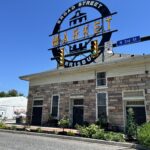
Zeroday Brewing Co. last month celebrated the grand opening of the Zeroday Outpost inside the stone building of the Broad Street Market in Harrisburg. To mark the occasion, a “community ribbon cutting” was held, with patrons cutting small pieces of ribbon.


Changing Hands

Adrian St., 2249: N. Townsend to T. Bui, $48,000

Berryhill St., 2338: M. Ortiz to PA Deals LLC, $30,000

Berryhill St., 2432: PA Deals LLC to E. Shelly, $63,500

Boas St., 421: B. Andreozzi to M. Berlin, $115,000

Boas St., 433: D. & D. Dreher to S. Rives, $120,000

Brookwood St., 2619: B. Sweger to J. Torres, $65,200

Buckthorn St., 223 & 225; 1208 Walnut St.; 1468 Zarker St.; 2144 N. 4th St.; 1835 North St.: LMK Properties LLC to RT Propertiez LLC, $86,867

Calder St., 102: K. Goodling & K. Shepherd to C. Hommel, $164,900

Derry St., 2435: PA Deals LLC to J. Tucker, $64,000

Fulton St., 1408: J. Bancroft to K. Black, $109,900

Fulton St., 1413: A. Beasy to C. Wilson, $118,000

Herr St., 214: Leonard J. Dobson Family Limited Partnership to P. Dee, $58,000

Green St., 800: J. & S. Wesley to D. & C. Seltzer, $219,900

Green St., 922: M. Roan to S. Winkeljohn & D. Black, $184,900

Green St., 1201: Equity Trust Co. Gordon Trump IRA to D. & L. Butcher, $189,900

Green St., 1417: B. Williams to L. Santos & O. Labinjo, $173,000

Green St., 1926: W. O’Brien to M. Stier & D. Gottlieb, $210,000

Green St., 2014: H. & S. Johnson to R. & J. Tilley, $135,000

Green St., 2137: N. Morrison to T. Sangrey, $51,000

Green St., 2138: C. Ly to Round Rock Investments LLC, $87,000

Green St., 2340: E. & K. Woolever to J. Clmens, $184,000

Green St., 3240: J. Mueller to M. Sangrey, $115,000

Hamilton St., 232: T. Gagnolet & M. Barth to A. & M. Fretz, $165,000

Harris St., 238: D. Leaman to W. Davis & T. Helwig, $194,824

Harris Terr., 2483: H. Nguyen to HT Properties LLC, $35,000

Lenox St., 1910: M. & J. Bryant to RTD Properties and Management, $40,000

Lexington St., 2600: M. Sink to Harrisburg Properties LLC, $38,500

Logan St., 2000 & 2001 N. 3rd St.: Otterbein Evangelical & Z. Haverstock to New Day Way of the Cross Church in Christ, $85,000

Logan St., 2246: Dobson Family Partnership to S. Powell, $42,294

Maclay St., 219: Kusic Capital Group LLC to Good Management LLC, $105,000

Mercer St., 2424: L. Barber to R. Murphy III, $50,000

Mercer St., 2455: MidFirst Bank to D. Pham, $32,500

Moore St., 2122 & 2122A: 3 Anvi LLC to Harrisburg Homes Investment LLC, $50,000

Nagle St., 120: J. Piglacampo to J. & D. Griffin, $168,500

Naudain St., 1522 & 1524: H. & C. Myers to ERD Small Property LLC, $40,000

N. 2nd St., 1105: K. Brett to Hamr Second Street LLC, $112,000

N. 2nd St., 1331: E. Benion to S. Mimm, $70,120

N. 2nd St., 1714: R. & N. Walborn to Harrisburg Redevelopment Group LLC, $325,000

N. 2nd St., 1909: PA Deals LLC to S. Jusufovic, $35,000

N. 2nd St., 2527: S. & A. Andrus to GRSW Stewart Real Estate Trust, $193,500

N. 2nd St., 3031: J. Ritchie to D. & M. Main, $96,000

N. 3rd St., 1620: K. Reimer to J. Reimer, $90,000

N. 3rd St., 2010: R. Blumenstein to N&R Group LLC, $31,000

N. 3rd St., 2204: R. & M. Zeigler to P. Ford, $146,000

N. 4th St., 1701: R. Steinmetz to S. Biray, $129,000

N. 4th St., 1703: D. Hopkins to S. Bradley & R. Daman, $123,900

N. 5th St., C. & M. Enoch and S. Pollard to S. Jawhar, $35,000

N. 6th St., 1316: A. Kraft & B. Kephart to T. Jones, $92,000

N. 7th St., 2612: Great Foods Inc. to V. Galasso, $50,000

N. 18th St., 112: Bigfoot Properties to Amiracle4sure Inc., $52,500

N. Front St., 1525, Unit 208: I. Valeo to S. & L. Weitzman, $115,000

N. Front St., 1525, Unit 511: A. & C. Yastishock to S. Sulecki, $200,000

N. Front St., 1525, Unit 601: A. Prashar to J. Devine, $174,900

Penn St., 1706: W. & M. Fontana to C. Harris, $132,000

Race St., 612: C. Pinto to D. Amaguayo, $180,000

Rudy Rd., 2492: My Neighbor LLC to HT Properties LLC, $33,600

S. 2nd St., 21: D. Bratic to South Second Associates LLC, $150,000

S. 17th St., 209: K. Lawson to M. Khan, $60,000

S. 17th St., 447: O. & Y. Han to C&P Property Management, Inc., $60,000

S. 28th St., 726: R. McClure to P. & L. Brown, $35,000

S. 29th St., 712: C. Kiscadden to M. Gill, $92,900

State St., 234: G. & L. Martin to Harrisburg Buildings & Grounds Co., $163,000

State St., 1508: 1508 State Street LLC to Harrisburg Homes Investment LLC, $40,000

Woodlawn St., 2511: T. Hoa to PA Double Deals LLC, $130,000

Harrisburg property sales for August 2017, greater than $30,000. Source: Dauphin County. Data is assumed to be accurate.


Continue Reading

Slate Set: Harrisburg ballot firm for November general election.

A polling station on State Street in Harrisburg.

Harrisburg voters will face an almost entirely Democratic field in the upcoming municipal election, as the final slate is firm for the Nov. 7 ballot.

Incumbent Mayor Eric Papenfuse appears to be a shoo-in for a second term, as activist Chris Siennick, who insisted earlier in the year that he would run as an independent and even asked to be included in the primary election debates, never filed for the general election. So, his name won’t appear on the ballot.

Siennick confirmed last night that he failed to turn in nominating petitions for an independent run and added that he might consider a write-in candidacy.

Papenfuse, a Democrat, also will appear on the Republican side of the ballot, as he gained that nomination by getting enough Republican write-in votes in the primary.

For Harrisburg City Council, Councilman Dave Madsen will run unopposed, as the Dauphin County Republican Committee failed to nominate a candidate for the two-year seat, which opened up after the unexpected resignation of former Councilman Jeffrey Baltimore in August. County Democrats nominated Madsen earlier this month.

Incumbents Wanda Williams, Shamaine Daniels and Ben Allatt and newcomer Ausha Green all won their Democratic primary contests in May for four, four-year council seats. They face no Republican opposition.

Harrisburg school board is the only municipal body with a contested election. In that race, voters will choose among Democratic nominees Danielle Robinson, Judd Pittman, Carrie Fowler and Brian Carter and Republican nominee James Thompson for four, four-year seats. In the primary, Thompson, an incumbent, cross-filed as both a Democrat and a Republican, but lost the Democratic race. Democrat Percel Eiland is running unopposed for a single, two-year seat on school board.

Other unopposed candidates in Harrisburg include Democratic incumbents Dan Miller for city treasurer and Charlie DeBrunner for city controller.

For magisterial district justice in Harrisburg, incumbent Barbara Pianka is running unopposed in District 12-1-02, as is David O’Leary in District 12-1-04. In District 12-1-05, Democrat Hanif Johnson will face off against Republican nominee Claude Phipps, who cross-filed in the primary.

In Dauphin County, the open seat for prothonotary pits Democrat Diane Bowman against Republican Matthew Krupp. For coroner, incumbent Graham Hetrick is running unopposed, having gained the nominations of both major parties.

For Dauphin County judge, voters will have a choice of four candidates for three seats. Judge Lori Serratelli will be on the Democratic side and Republican attorney John McNally on the Republican side of the ballot. County District Attorney Ed Marsico and attorney Royce Morris will be listed on both the Democratic and Republican ballots.


Continue Reading

“We’re behind” on community policing, Harrisburg councilman says

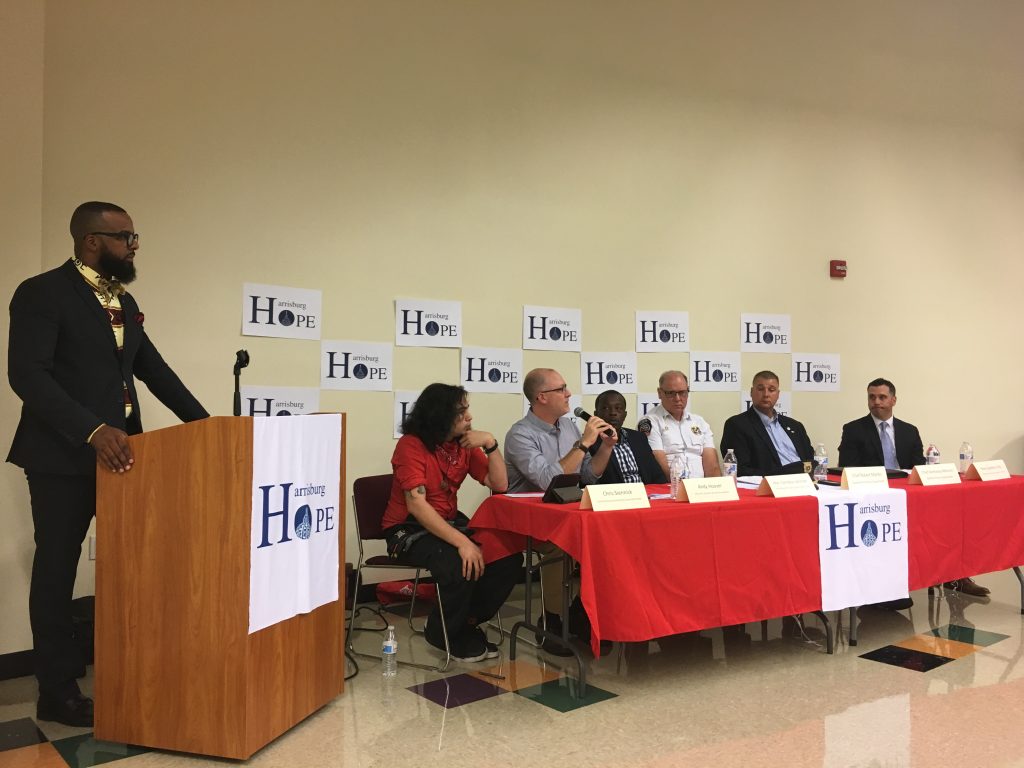
Panelists at Wednesday’s “Know Your Rights” panel sponsored by Harrisburg Hope. From left to right: Brandon Flood, Harrisburg Hope organizer; Chris Siennick, Andy Hoover, Cornelius Johnson, Robert Martin, Anthony Minium, and Steve Zawisky.

How does Harrisburg stack up to its neighbors on community policing initiatives?

Law enforcement officials, legal experts and activists discussed this question and others at Wednesday night’s “Know Your Rights” forum hosted by Harrisburg Hope. The event drew about 60 community members to the Highmark meeting room at Hamilton Health Center.

Councilman Cornelius Johnson, the only city government representative on the panel, thinks Harrisburg has some work to do.

“The honest truth is that we’re behind,” said Johnson, chairman of City Council’s public safety committee, while responding to a resident who asked him about the city’s community policing initiatives.

Johnson identified a few limitations for Harrisburg’s police bureau. He said the city’s financial distress reduced the manpower of the police force, and a nationwide police shortage makes it hard to improve its high vacancy rate.

Harrisburg police also process a higher volume of calls than smaller, neighboring townships, he said.

But according to Johnson, the city needs to ask what else it can do to improve police and community relations. For example, police should be visible in communities when they aren’t responding to calls, he said.

“Within the urban community, there’s a lack of kids who want to be police officers based on lack of interaction with police in Harrisburg,” Johnson said. “When we are only seeing police officers come to the scene of robberies, we are not seeing them in a positive light.”

Johnson also spoke about solutions that the city is considering to bolster community relations. For example, council hopes to use federal Community Development Block Grant money to start an internship program for young adults interested in criminal justice. Eligible youth would have roles in the police department and get scholarships to attend HACC.

Council is also considering legislation that would create a citizen task force to discuss policing initiatives.

Multiple audience members expressed disappointment that Harrisburg Mayor Eric Papenfuse and Police Chief Tom Carter did not appear on the panel.

Carter and Papenfuse could not be reached for comment on Thursday.

Susquehanna Township Police Chief Robert Martin and Steelton Police Chief Anthony Minium both appeared to speak about community policing initiatives they implemented in their forces. They said that the goal of community policing is to increase positive contact between police officers and community members.

Martin described programs that have been ongoing in his force since he took over as chief. For example, the “Honorable Endeavor” program requires officers to interact with children when they see them on their patrol. Another program, called “Stand in the Gap,” requires officers to enter schools on their foot patrols and talk to students about a “Word of The Month,” such as “respect” or “devotion.”

Martin said that officers must write a report when they perform a community policing task and undergo quarterly evaluations based on those reports.

In Steelton, police officers interact with local youth through athletic programs and a junior police academy, according to Minium.

“We wanted to make officers more of a social worker on the street,” Minium said.

Johnson, Minium and Martin were joined on the panel by Andy Hoover, communications director for the ACLU of Pennsylvania; Stephen Zawisky, senior deputy district attorney for Dauphin County; and Chris Siennick, a local activist and victim of a 2015 police brutality incident.

City Council President Wanda Williams was scheduled to appear but had to leave town for a family emergency, said Brandon Flood, president of Harrisburg Hope.

Wednesday’s panel was the first event organized by Harrisburg Hope since its dissolution several years ago. The grassroots organization was founded by former Harrisburg resident Alan Kennedy Shaffer and reincarnated by Flood and Harrisburg Councilwoman Destini Hodges.

Flood said that the group will continue to organize forums on a regular basis and will choose future topics based on public input.

Continue Reading

Weekend Roundup with Sara Bozich

Join us TONIGHT for the SoMa Pop-Up Block Party!

https://www.sarabozich.com/2017/09/event-soma-pop-block-party-928/

We did this last month, and it got quite the buzz — Plus, who can argue with today’s weather? Grab a hoodie or scarf, and join us TONIGHT for great food, local craft beer and live music along S. Third St. in downtown Harrisburg.

Tomorrow, I’m swinging by The Millworks as PA Preferred announces its first registered PA Preferred Brew, Millworks PA Pale (Look for updates on social), then Salman Rushdie at Midtown Scholar by night.

Andy asked me, “What do we have Sunday?”

One thing: Fooooootballl. It’s #RavensWeek. (Read Jimi’s rundown).

What are you doing this weekend?

(more…)

Continue Reading

Harrisburg Region to Make Joint Bid for New Amazon Headquarters

Harrisburg and surrounding counties will try to convince Amazon.com to locate its new headquarters on the grounds of the former State Hospital.

Harrisburg officials confirmed late Tuesday that the city is participating in a joint, regional application for the Amazon.com headquarters project, which promises to bring as many as 50,000 jobs to a city in North America.

Jackie Parker, Harrisburg’s director of Community and Economic Development, said that the city’s partners in the bid are Dauphin, York, Lancaster, Cumberland and Lebanon counties. She also confirmed that the application will pitch the former Harrisburg State Hospital grounds off of Cameron Street as the future site of the Amazon campus.

The 295-acre property currently is owned by the state Department of General Services, but consultants hired earlier this year recommended its sale, and most state workers already have been relocated off the sprawling site.

In what has been described as the “Olympics of the Business World,” online retail giant Amazon.com announced earlier this month that it would open a public bidding process for a new, $4 billion second headquarters. The announcement sent mayors and business leaders across the country scrambling to market their cities.

“This type of project is a game changer for any region with huge employment opportunities for executives, managers, software engineers, attorneys, accountants and technical/administrative jobs,” said a statement by the Harrisburg Regional Chamber and CREDC, which Parker said would lead the application effort.

One of the major components of the application is presenting a package of benefits and tax incentives. In Pennsylvania, those benefits are codified at the municipal level – one factor that complicates a regional application.

Eight acres of the State Hospital property are in Harrisburg city limits, but the vast majority is in Susquehanna Township.

Susquehanna Township Manager David Kratzer said that the township currently has no tax breaks or incentives in place. He added that he and members of the application team have considered options such as a LERTA tax abatement district or Tax Increment Financing district (TIF).

The township will have to clear any incentive proposals with its local taxing bodies, including the board of commissioners and school district. Kratzer couldn’t say when those public discussions would take place. According to the Harrisburg Regional Chamber and CREDC, regional partners are still pulling workforce data and evaluating site selection criteria.

Harrisburg’s portion of the property would be covered by its LERTA tax abatement program. Mayor Eric Papenfuse said that he is in favor of the city offering incentives, since he believes the long-term benefits of such a major project would pay the region back over time.

He said that Harrisburg’s strengths include its location on the East Coast and its proximity to the Route 81 corridor, as well as the availability of the State Hospital grounds for immediate redevelopment.

He conceded that the region’s population could count against it. Amazon specified that it’s seeking a metro area with at least 1 million people, but the regional partners do come close to that collectively, Papenfuse said. He also said that the lack of a leading research university in the area could be perceived as a weakness.

Despite these potential limitations, Papenfuse said that Harrisburg is committed to submitting an application by the Oct. 19 deadline.

“I can’t really envision a scenario in which the city wouldn’t be interested in moving forward,” he said. “This is a great opportunity to advertise central Pennsylvania and Harrisburg.”

He also said that the application’s sponsors do not often work together on projects of this magnitude, and he hopes the cooperation could promote regional unity.

“Anything we can do to promote regional cooperation is a good thing,” Papenfuse said. “We have too many artificial divides, and the process of planning for an application like this can bring us closer together.”


Continue Reading

Burg Blog: So Go Downtown

A view of the 300-block of N. 2nd Street, where some of the trouble took place early Sunday morning.

On Saturday night at about 8 p.m., I drove up 2nd Street in downtown Harrisburg, and I saw many happy people eating and drinking al fresco on the unusually warm, early-autumn evening.

The night began so peacefully, with such good cheer, but, unfortunately, it didn’t end that way.

According to the Harrisburg police, a virtual free-for-all ensued at about 2:40 a.m. as the bars and late-night eateries disgorged their remaining patrons, some likely more than a little tipsy.

Of course, a rowdy post-2 a.m. crowd is nothing new for the Harrisburg police, who are old hands at trying to control the young and drunk. But Saturday night was remarkable even by downtown Harrisburg standards.

A statement by police describes a chaotic scene in which multiple fights broke out around 2nd and Locust, outside of Arooga’s and Niko’s.

“Due to the overwhelming amount of people committing violence, officers had to use pepper spray foggers to subdue the crowd,” said the police.

Harrisburg called other jurisdictions for assistance, including the state police. As they were trying to calm down the “unruly crowd,” more fights broke out around 2nd and Pine streets, followed by several gunshots. In the end, two people, evidently bystanders, were discovered shot in the leg. As of this writing, the shooter had not been identified nor detained.

There’s no doubt that most people who went out on a warm Saturday night in Harrisburg had a grand time. Thousands came and departed after a nice dinner and maybe a couple of drinks at 7 p.m. and 8 p.m. and 9 p.m., all the way up to 2 a.m. It was a wonderful night to sit outside and socialize—until closing time, that is, when clubs turned their lights back on and shooed out the late-night partiers, flooding the sidewalks and streets with more than 1,000 people.

This is not a new problem for Harrisburg or for center cities in general. An almost-20-year-old study called “Policing Entertainment Districts” from California State University describes the chaotic scene common to downtowns as Los Angeles tried to find solutions to its problems in the late 1990s. But it equally could apply to Harrisburg today:

“Nightclubs and bars create further problems where they are concentrated in geographic areas. At closing time, intoxicated patrons exit onto the sidewalk and create a crowd-control problem that can severely strain a department’s entire night shift. In many cities, fights, altercations and the potential for collective behavior and rioting are very predictable at closing time, particularly where several nightclubs catering to incompatible crowds are located in close proximity.”

“Closing-hour nightclub crowds are often in no particular hurry to go home and may linger on the sidewalk for a considerable period, extending the demand on police resources and the potential for large disturbances. Crowd dispersal is further slowed by valet parking, taxis, an absence of public transportation, sidewalk seating and late-night restaurants.”

Sound familiar? So then what can be done?

Over the years, Harrisburg has tried to boost its police presence downtown, but that has diverted scarce resources from other parts of the city, where late-night violence also is often an issue. In addition, restaurant and bar owner Ron Kamionka has funded several security personnel, though they stay mainly around his places. The Harrisburg Downtown Improvement District also pays for two off-duty police officers, but they only serve during dinnertime, from 6 to 10 p.m.

Clearly, these measures have not been sufficient. Nor is it acceptable any longer just to send a few more cops downtown and hope for the best.

Mostly, the city needs to find the money for extra security, to make sure there are enough police (10? a dozen?) manning the sidewalk in a two- or three-block area downtown for an hour or so a couple of nights a week.

Mayor Eric Papenfuse said that he plans to meet with downtown business owners this week to begin to find a solution. The tab, perhaps in the form of an extra fee, should probably fall on the owners themselves (maybe passed through the Harrisburg Downtown Improvement District) as they are both direct contributors to the current problems and the clearest beneficiaries of a downtown perceived to be a safer place to visit.

Longer term, Pennsylvania might consider repealing its 2 a.m. cut-off time for on-premises drinking, which seems to create as many problems as it attempts to solve, and let localities decide for themselves what works best for their own towns and cities.

Absent that, Harrisburg has to play the hand it’s dealt. The city is fortunate to have a thriving entertainment district. But, with success come responsibility and costs. If the city desires such a concentrated area of restaurants and bars, it needs to deal effectively with the consequences.

Over the decades, cities have tried various strategies to handle late-night crowds in entertainment districts—from adjusting closing times to beefing up security. A recent story in CityLab discusses how some cities have hired a “night mayor,” a person centrally responsible for managing, coordinating and promoting life after dark in urban entertainment zones.

As they chart a way forward, Harrisburg officials, business owners and other stakeholders should consider this and all other good ideas. A happy balance needs to be found between good cheer and good security, between a prosperous, lively downtown and a safe place to visit and, increasingly, to live.

Continue Reading

The Wheel Deal: City bike share to roll out this week.

The Harrisburg bike share system will comprise 11 docking locations similar to those in Philadelphia, pictured above. (Image from Creative Commons database.)

A local nonprofit and community sponsors have finalized plans for the city’s first bike share, which will put 55 communal bicycles on Harrisburg’s streets starting Sept. 29.

The program is modeled after bike share systems that have sprouted up in recent years in cities like Philadelphia and Pittsburgh. Paying members use a smart phone app or text messages to unlock a bicycle from the docking station and then ride and return it to any docking station in the city.

A $25 annual membership will give riders free access to bikes for periods shorter than two hours and then charge $2 for each hour after that. “Pay as You Go” members will be charged $2 for each hour they use a bike.

The program is spearheaded by Communities in Schools Pennsylvania (CIS), a dropout prevention organization, and sponsored by organizations including Highmark insurance and the Dauphin County commissioners. CIS will outsource bike share management to Zagster, a startup that operates more than 100 city bike shares across the country.

A map released by CIS on Tuesday shows 11 docking stations in the city’s Uptown, Midtown and downtown neighborhoods and on City Island.

Ryan Riley, president of CIS, said that Zagster representatives helped determine where to place docking stations. National data show that bike shares are most successful when docking stations are spaced ¼-mile apart in areas with high pedestrian safety, he explained.

Those standards mean that some neighborhoods were cut off from the docking stations, Riley said, since major thoroughfares in the city cannot safely accommodate cyclists.

“Paxton Street and Cameron Street were two big impediments,” Riley said. “But that cuts off parts of Allison Hill and Bellevue Park, which creates a whole section of the city that can’t connect with the other parts of it safely.”

The station map released by CIS on Tuesday. Jenna Lewis, CIS vice president, said that the Broad Street East station shown here will be moved to the corner of Front and Division streets.

The stations also had to be located on city property. All of the docking stations are located on public sidewalks, or, in the case of the City Island stations, on city-owned land, said Jenna Lewis, CIS vice president.

Riley hopes to add more docking locations in the future, but said that early user trends will dictate how the program grows. Bike share sponsors will watch ridership data to see who is using the bicycles and for what purposes.

“We need to know if this will be a leisure [service] or if we have people who want to use these bikes to get to employment areas,” Riley said. “We need to see success to know where to expand.”

Zagster will charge an annual $90,000 subscription fee for bikes, insurance, maintenance and technical support. Harrisburg’s program also will have a separate marketing budget to fund ad campaigns and outreach events.

Riley said that the bike share sponsors are committed to seeing the program through for at least two years, though they don’t expect it to be self-sustaining after that.

Instead, they see their sponsorships as investments in public health, community building and traffic improvements.

“The whole point of bike shares is to increase pedestrian access by using bikes to improve communities and replace driving,” Riley said.

The program is part of a larger effort to raise awareness of CIS’s mission within the Harrisburg community, according to Riley. He said that the program launch will tie into their plans to establish a reengagement center for underserved youth in the city. CiS expects to open that center in spring 2018.

Continue Reading

Securing Downtown: Mayor pledges to find solution to late-night turmoil.

A view of Harrisburg’s 2nd Street entertainment district.

Harrisburg officials plan to meet with business owners in the city’s downtown entertainment district to help prevent a recurrence of the turmoil that resulted in numerous fights and left two people with gunshot wounds early Sunday morning.

Mayor Eric Papenfuse said he is arranging meetings with bar, club and restaurant owners along 2nd Street to share ideas on how to improve safety, especially following late-night closing time.

“It’s going to require the cooperation of the bar and restaurant owners,” he said. “There may be things they can do to make the downtown safer.”

At about 2:40 a.m. on Sunday, Harrisburg police put out a call for assistance after they found they could not control a crowd estimated at more than 1,000 people along a two-block stretch of N. 2nd Street. According to police, fistfights broke out near Locust Street, followed by more fights at Pine Street that resulted in two people shot being shot in the leg. The crowd in the street was so large that officers had trouble getting to the area of the shooting, police said.

According to Harrisburg Police Chief Thomas Carter, no arrests have yet been made in the shooting.

Papenfuse said he would be willing to consider numerous options, from realigning police resources to collecting a fee from business owners to pay for extra security.

Currently, Harrisburg police deploy several officers to the downtown from other parts of the city around the 2 a.m. to 2:30 a.m. closing time. In addition, some club owners—notably Ron Kamionka, who runs several bars and clubs there—employ off-duty police to assist around their establishments.

However, the crowd overwhelmed those resources on Sunday, causing state police and officers from surrounding municipalities to rush to the aid of Harrisburg’s force. Police also used pepper spray to disperse the crowd.

“Due to the overwhelming amount of people committing violence, officers had to use pepper spray foggers to subdue the crowd,” police said in a statement.

The Harrisburg Downtown Improvement District employs two off-duty officers on Friday and Saturday nights, but they only serve during the 6 p.m. to 10 p.m. dinner hours, said Executive Director Todd Vander Woude. Papenfuse said that an expanded role for the district might be an option, perhaps funded by an additional fee on business owners to pay for the security.

Papenfuse and Carter spoke to the press following the city’s annual promotional and awards ceremony in city hall. In that ceremony, many officers were cited for bravery and achievements over the past year.

Both Papenfuse and Carter described Saturday night’s violence as unusual, the result of one-time events at several bars, notably at the Capital Gastropub. Moreover, Papenfuse said, large numbers of minors often flock downtown as bars close, mixing it up with departing club-goers and contributing to the instability on the sidewalks and streets.

“We’re going to sit down with the various stakeholders and come up with a plan,” he said.

Continue Reading

Harrisburg police pilot body camera program

Capt. Deric Moody demonstrates use of a magnetically mounted body camera on Cpl. Josh Hammer in City Hall on Friday.

Police body cameras have hit the streets of Harrisburg, signaling the Police Bureau’s first steps toward developing a city-wide body-camera program.

Eight officers from the bureau will test cameras from four vendors over the next two months. At the end of the pilot program, the city and the bureau will begin drafting plans for a comprehensive program, with the goal of equipping all 75 uniformed patrol officers with cameras.

At a press conference on Friday, however, city and police officials were hesitant to say exactly when that deployment will start.

“There’s a lot of legwork that goes into developing this program, and it’s not ready for full rollout,” said police Capt. Deric Moody.

The process for starting a comprehensive program — which includes negotiations with the Fraternal Order of Police and a public bidding process among vendors – likely won’t wrap up until 2018.

Before then, the police force must decide which camera specifications will best serve their officers. The city has already deployed two camera models for testing, which they will swap out for two other models after 30 days.

The eight officers in the pilot program will complete surveys for each model they audition, Moody said. The bureau will use that survey data to determine which features they want in their cameras.

The camera that officials showcased on Friday attached magnetically to the front of an officer’s uniform, but other models might use clips or straps. Officers will also have to consider the weight and battery life of the cameras.

Officers using the equipment report that it’s relatively unobtrusive.

“They said they haven’t noticed it’s been on them, and it hasn’t interfered with their work,” said Cpl. Josh Hammer, who supervises some of the officers in the pilot program.

One quality all of the cameras share is a manual on-off switch.

“We looked at cameras with continuous recording, but most people understand that there’s a point when you have to turn it off,” Moody said. For example, he said, officers would disable recording any time they enter a bathroom.

Beyond the physical features of the camera, one of the major considerations for the bureau is storage, Moody said. Each vendor offers different software to retain, redact and store footage.

Some systems run automated, cloud-based backups, while others may require officers to manually upload footage to servers. Storage plans range from flat-rate unlimited packages to those that charge per minute or megabyte of footage.

Once the footage is stored, the remaining question is under what conditions it will be released to the public.

Moody said the police force is conducting its pilot program in compliance with Act 22, a statute passed by the state legislature in 2017. Act 22 dictates the times when officers must activate and deactivate their cameras. It also allows police to record conversations in private residences – something civilians can’t do under the state wiretap law.

However, any footage recorded under Act 22 is not subject to Right to Know laws. Police departments have final say over what footage will be made public.

The deal that the bureau ultimately strikes with the FOP will determine, among other concerns, their standards for deploying cameras and releasing footage.

The operating budget for the first year of the program is $70,000 for the first year, but Mayor Eric Papenfuse said that his administration and City Council are willing to spend “whatever it takes” to implement the body camera program city-wide. The final cost will depend on what equipment and storage features the department wants in its cameras.

The bureau will specify those features in its request for public bids. Moody said that any vendor will be able to submit a bid for the project, regardless of whether or not they participated in the pilot program.

Moody and Papenfuse emphasized the importance of public opinion in their planning process and encouraged Harrisburg residents to call the 311 city line with feedback or questions about the body camera program. The city will also host community meetings to solicit input and share information about the camera program.

Ultimately, both parties hope that the cameras will increase the public’s perception of transparency in the police department.

“I believe body cameras will make things safer and go a long way in healing the divide between the police and the public,” Papenfuse said.

Author: Lizzy Hardison

Continue Reading