Student Scribes: “Here”

“Two iced teas, and two bagels please.”

The register dings and our eyes tear with relief and gratitude. Four dollars and twenty-nine cents. We can afford it by a quarter. We sit by the window and sip as if it is champagne at the Ritz Carlton. I see the sweat at my sister’s temples start to evaporate and my heart is pumping the tea as if it is blood.

Grace leans against the glass window and breathes on it, making a little face with her finger. The curved parabola stays there, translucent, and slowly fades from view. I see her frown, and I know why.

“We have to be here.”

Do we, really?”

I sigh at my sister and stir the remaining thin tea and globulous ice cubes around with a straw. How does she still not see?

“Grace,” I say, pausing to think. “It relaxes Mom and Dad, to think we’re enjoying it.”

She clicks her tongue, throws up her hands.

“I still don’t see why that means I need to carry around everything I own, each weekend, like some beggar.”

“You are not a beggar.”

“Why can’t Mom just get along with Auntie?”

I shrug, wondering the same thing myself.

“It isn’t worth thinking about.”

But still, we both sit quietly for a moment, thinking. The sprawling house on Elm Court with guest rooms and fresh-smelling sheets swims like an uncatchable fish in our memories. Auntie’s family occupies that house and its many rooms each summer. We cannot stay there, no matter how much she invites us. Mother and she are no longer on speaking terms; it is out of the question.

“But I still wish…”

I slurp loudly through the straw to drown out the unfinished thought.

There is frying sausage and raw coffee, and familiar bright pink table tops as in any other Dunkin’ Donuts. I wonder why I had never noticed it in this seaside town before. We’ve been coming here each summer with everybody we knew for years, and, yet, there is not a soul that I recognize in the place. I catch Grace squinting at the sunlight.

A silver convertible flashes by the window; the girls are laughing. We shift uncomfortably in our seats, wondering if they saw us.

“We’ll get to the beach soon,” I say quickly. “Don’t worry.”

“That’s all you care about.”

“What is?”

“Just being there, right? Just so long as they know you’re here.”

We are dressed in handed-down designer denim and cheap, expensive-looking jewelry. We wore it especially to arrive on the little beach where only our community goes. They will all be there. I want to be there too.

“Don’t you want to go?”

“I’m thinking about it.”

It’s my turn to squint. My sister’s eyes are dull, as if staring into a snow globe full of sand. Somehow, at that moment, I know she is thinking of other places, ready to be done with what has seemingly blocked us out forever.

“We might get the money back, one day.” I whisper it.

She laughs, and it’s like she is shouting.

“What for?” she says. “What is the use of pretending?”

Her leg goes up on the window sill and she lounges her arm over the back of the chair. This Dunkin’ Donuts is her home.

“Here,” I say, “is not where we belong.”

She flares her nostrils and puts up her hand, waving it up and down.

“Little Miss High-and-Mighty,” she says, “Here, is where we are.”

Sally Choueka is a master’s student in Humanities at Penn State Harrisburg.

Continue Reading

War Story: As World War I turns 100, you can learn all about it at the U.S. Army Heritage Center.

World War I is known by many names: The Great War, The War to End All Wars. But none seems more appropriate than what historian George Kennan called “the seminal catastrophe of the 20th century.”

This war introduced the machine gun and the tank, the horrors of gas warfare and the sinking of surface ships by U-boats. World War I began in Europe in 1914, and three years later, in 1917, drew in the United States, profoundly affecting life both for the nation and close to home.

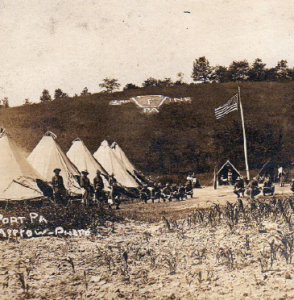
“In the borough of Newport, just northwest of Harrisburg, over 120 soldiers of Company F, 3rd Regiment of the Pennsylvania National Guard, trained on the current site of the Newport High School,” said Glenn Holliman, president of the Historical Society of Perry County. “They guarded Pennsylvania railroads and bridges while sharpening their military skills.”

To mark the centennial of U.S. involvement, the Perry County Bicentennial Committee this month will place a historical plaque at this site to commemorate these soldiers.


No Man’s Land

You can discover a wealth of information about World War I at the U.S. Army Heritage and Education Center outside of Carlisle. It opened its interactive exhibit, “Good-Bye Broadway. Hello France—America in the Era of WWI,” this past April.

“Rather than showing all the campaigns the U.S. Army fought in, we wanted our visitors to experience the war by meeting various soldiers through their artifacts, letters, photographs and their words,” said Curator Kaleb Dissinger.

The first section is titled, “From the Homefront to the Warfront,” and visitors can follow the journey of brothers George and Harry Record as they entered the army and began training. Both brothers survived the war, and you can read about the impact on them later in life.

David Pyle’s letters and artifacts are shown in the next section titled, “Training Under the Experts.” You’ll see his experimental tanker’s helmet, as well as examples of two types of gas masks American troops learned to use. The ”Behind the Lines” section shows how social organizations such as the Salvation Army and the YMCA carried out programs and established canteens to help make soldiers more comfortable.

“Evan Miller was an X-ray technician in Base Hospital No. 8, in Savenay, France,” Dissinger said. “You can read about his experiences as he documented the hospital’s role during the war. You’ll also see the German helmet, belt and bread bag Cpl. Swaim Pearson brought with him when he moved to the rear after raiding enemy trenches.”

Both the Allies and Germans used balloons as observation posts. In “Ordered to the Front,” you can stand in a balloon basket and see how observers looked for various enemy positions.

“Army engineers provided many key services, such as running phone and telegraph lines and repairing roads and rail lines,” Dissinger said.

Included in the exhibit are letters and photos from an engineer and an artillery soldier.

In the “From the First Line” section (the front was also known as the first line), you can sit on the
steps of a trench and watch the enemy through a mirror or peer through a periscope out over no man’s land.

“Because of machine guns and sniper rifles, it was often too dangerous to peek out over the trench because you might get shot,” Dissinger said. “So, soldiers sat with their back to the front and watched though angled mirrors. Also, they used well-concealed periscopes so they could see without being shot.”

Another section is devoted to African-American soldiers who served in the war. These infantry soldiers served proudly, but were assigned to French command, not American command. There also is a section on German weaponry captured by U.S. soldiers, showing the difference between types of weapons.

They Will Hold
The one campaign highlighted in the exhibit is the 2nd Division’s role at Chateau-Thierry from June to July 1918, in which the Americans blunted the last major attack of German forces.

“The Germans had struck through the French lines and pushed toward the Marne River, just 50 miles from Paris,” Dissinger said. “A French lieutenant general questioned whether or not the Americans who were sent to help could stop the German attack. Col. Preston Brown, who was the 2nd Division chief of staff, is quoted as saying, ‘General, these are Americans regulars. In 150 years, they have never been beaten. They will hold.’ And they did.”

The next section is titled the “True Nature of War.”

“We wanted visitors to understand the price of this war, or any war for that matter,” Dissinger said. “Some people may not want to look at these photos, but we should never forget the thousands of soldiers who died in this war.”

The U.S. Army began the war with about 200,000 men, but the numbers soon grew to more than 2 million. About 1.2 million Americans fought in the Meuse-Argonne campaign, which lasted from September to November 1918 and covered the entire western front. The Allied victory there helped end the war, but the casualties in the campaign cost the nation more than 26,000 soldiers’ lives.

One photo that especially caught my attention in the last section was titled, “Armistice, Occupation and Post War.” It was the Nov. 11, 1921, photo of the dedication of the Tomb of the Unknown Soldier in Arlington National Cemetery. This photo, together with a poem by an Italian soldier, “Good Bye Italy, Hello States,” ends the exhibit.

Once you finish with the exhibit, I suggest you hike the 1-mile Army Heritage Trail on the grounds. Here, you will see the trenches that soldiers lived in for days or weeks, along with exhibits from many other wars.

“I hope your readers take time to view the exhibit,” said Outreach Coordinator Lindsay Strehl. “I think it will help them understand the true nature of World War I.”

The U.S. Army Heritage and Education Center is located at 950 Soldiers Dr., Carlisle. For more information, call 717-245-3972 or visit www.usahec.org.

Continue Reading

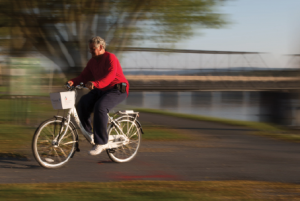
Biking Blurs: Images of Harrisburg Bike Share.

Last month, Communities in Schools Pennsylvania launched Harrisburg’s first bike share, putting 55 communal bicycles on city streets. Since then, the distinctive sturdy, white bicycles with front baskets have been seen all around town, the 11 docking stations a familiar sight downtown, Midtown and Uptown.

We asked photographer Ali Waxman to capture images of bicyclists in action, as they rode around the city. On this page, we share a sample of what he found.

If you’d like to take to be part of Harrisburg Bike Share, make sure to download the “Zagster” app. Then register and ride!

Photos by Waxman Photography.

Continue Reading

October News Digest

Eastern Deal Rejected

Harrisburg City Council last month voted 4-2 to reject a proposed lease agreement with Eastern University, a Christian college that wished to renovate and rent space in the city government center.

Council’s objection to the agreement, in which Eastern offered to spend $600,000 renovating city hall’s dilapidated basement, centered on the university’s religious affiliation and its requirement that its employees sign a doctrinal faith statement.

In remarks before the vote, Councilman Ben Allatt said he was deeply conflicted about the prospect of ceding public space to a private, religiously affiliated institution.

“The university would not hire someone like me,” said Allatt, who is gay. “I recognize they can do what they want, but they want to come into our city hall, which is a building of the people.”

Council previously pressed Eastern representatives on their commitment to the city’s nondiscrimination ordinance, which outlaws employment discrimination based on sexual orientation. Eastern embraced the non-discrimination policy in a letter to council.

In the same letter, however, Eastern affirmed its right to hire faculty who “fully embrace” the school’s religious mission. Members of council feared that exercising that right would translate into discrimination against LGBT applicants.

Mayor Eric Papenfuse lobbied in favor of Eastern during the meeting, saying that the deal would save the city “real, significant money” by paying for necessary renovations. After the vote, he blasted council’s decision and accused them of squandering a one-of-a-kind opportunity.

“We’re going to have to take taxpayer dollars and devote it to fixing a building instead of fixing a pothole or fixing a park,” Papenfuse said. “To me, it was a no-brainer to move forward in a partnership with Eastern.”

Green to Take Council Seat

Ausha Green will be Harrisburg’s next councilwoman, as City Council plans to appoint her to an open seat.

Council President Wanda Williams announced last month that council will name Green to the seven-member body, forgoing a competitive process that has marked recent council vacancies.

Williams said that council reached a consensus to appoint Green, who had served on the Harrisburg school board.

The seat became vacant after the resignation of former Councilwoman Destini Hodges, who left Harrisburg to take a job out of state.

Come January, Green would have assumed a council seat anyway, as she won the Democratic nomination for council in May, along with incumbents Wanda Williams, Shamaine Daniels and Ben Allatt. There is no Republican opposition for the four, four-year seats.

A two-year council seat also will be on the ballot this month following the resignation in August of former Councilman Jeffrey Baltimore. Councilman Dave Madsen, appointed a month ago by council, is running unopposed for that seat.


Bike Share Launched

A local nonprofit and community sponsors officially launched Harrisburg Bike Share last month, putting 55 communal bicycles on Harrisburg’s streets.

The program is modeled after bike share systems that have sprouted up in recent years in cities like Philadelphia and Pittsburgh. Paying members use a smart phone app or text messages to unlock a bicycle from a docking station and then ride and return it to any docking station in the city.

A $25 annual membership gives riders free access to bikes for periods shorter than two hours and then charges $2 for each hour after that. “Pay as You Go” members will be charged $2 for each hour they use a bike.

The program is spearheaded by Communities in Schools Pennsylvania (CIS), a dropout prevention organization, and sponsored by organizations including Highmark insurance and the Dauphin County commissioners. CIS outsources bike share management to Zagster, which operates more than 100 city bike shares across the country.

The bike share includes 11 docking stations in the city’s Uptown, Midtown and downtown neighborhoods and on City Island.

Riley hopes to add more docking locations in the future, but said that user trends will dictate how the program grows. Bike share sponsors will watch ridership data to see who is using the bicycles and for what purposes.

“We need to know if this will be a leisure [service] or if we have people who want to use these bikes to get to employment areas,” Riley said. “We need to see success to know where to expand.”

In conjunction with the launch, Mayor Eric Papenfuse said that the city will establish two bike boulevards in the spring on low-speed, low-traffic streets. A boulevard on Aberdeen Street will connect the Capitol Complex and the Harrisburg Transportation Center, and another on North Street will extend from the Capitol to Riverfront Park.

The city will paint both roads with “sharrows,” road signs indicating a shared lane for cyclists and motorists. The signals do not designate the roads as bike-only lanes.

City Buys Sinkhole-Ravaged Homes

More than 3½ years after a sinkhole erupted on the 1400-block of S. 14th Street, Harrisburg has started to relieve homeowners of their worthless properties, though some residents say that they still have nowhere to move.

Harrisburg last month bought the first of 52 homes on the block, Mayor Eric Papenfuse said, adding that the city is on track to purchase all 52 affected properties by Dec. 31.

“It’s been a very complicated and drawn-out process,” he said.

Papenfuse reported that the purchasing program is the first of its kind in the nation, since sinkhole events are not usually covered by natural disaster relief dollars.

A few years ago, the situation along S. 14th Street seemed dire. However, the city was able to secure about $4.7 million in federal and state disaster relief funding to purchase all the homes at their pre-sinkhole market value.

Despite the announcement, some residents said that they weren’t prepared to move by year-end.

“I’m not ready to move,” said resident Ronald Cook. “We’ve got nowhere to go.”

Papenfuse and Jackie Parker, director of the city’s Department of Community Economic Development, said that the city has been in continual contact with S. 14th Street residents ever since the sinkhole opened in 2014.

Parker also said that the Dec. 31 closing deadline was negotiable, since each property sale is highly individualized. The grants funding the home purchases technically expire on Dec. 31, but Parker said that homeowners do have the opportunity to extend.

“Nobody has to move by any particular time,” Parker said. “Every property owner has a unique situation and unique closing opportunity and paperwork. No two are the same.”


Off-Leash Dogs at Issue

Citations for off-leash dogs are on the rise in Harrisburg, but some residents want the city to do more to enforce leash laws in the city.

As of last month, animal control officers working for the Harrisburg Police Bureau had cited 22 dog owners in 2017 for letting their animals run off-leash. That figure is up from 14 in 2016, 15 in 2015 and zero in 2014, according to data from the Harrisburg Police Bureau.

But many dog owners say that off-leash dogs remain a problem in certain neighborhoods of the city, particularly Italian Lake and the former William Penn High School. Dogs must be restrained on a leash in all public places, including parks, according to ordinance.

The issue surfaced at a City Council meeting last month. One resident said her service dog was attacked by unrestrained dogs at the State Hospital grounds in Susquehanna Township, where she started going to avoid off-leash dogs in Harrisburg.

“I don’t think this problem is being taken seriously,” she said, adding that an attack like the one her service dog suffered could ruin its training.

City Councilman Cornelius Johnson said that one possible solution is increased cooperation between animal enforcement officers and the city park rangers, who are responsible for patrolling Harrisburg’s 26 parks.

Mayor Eric Papenfuse said that the city hopes to budget for another park ranger in 2018, bringing the total rank to three.

Park rangers cannot write tickets, but they make ticket referrals to the police or report stray dogs, Papenfuse said. Animal enforcement officers are also responsible for collecting stray animals and have picked up 78 this year.

Above all, Johnson said, communication is key. He asks residents to report off-leash dog violations when they see them.

“The best thing a resident can do when they come across an issue is call it in,” Johnson said on Thursday. “When we get calls, there’s accountability.”

New Business Administrator

Mayor Eric Papenfuse announced last month that Harrisburg has hired a new business administrator, concluding a two-year search to fill the grant-funded position.

Marc Woolley, an attorney who has worked as general counsel at the Hershey Trust and the Pennsylvania Housing Authority, will direct the city’s Department of Administration and help the mayor manage the city’s budget and finances.

One of Woolley’s major responsibilities will be helping the city determine its next steps in the Act 47 process, a state program for financially distressed municipalities.

His $115,000 salary is funded for three years by an Act 47 grant from the state.

Papenfuse said that he had been performing most of the duties of business administrator himself. He hopes that filling the position will allow him to focus more on strategic planning and community outreach.


More Apartments Downtown

More residences are slated for downtown Harrisburg, as Harristown Enterprises is eyeing another worn-out office building for redevelopment.

Harristown has under contract a vacant, 11,000-square-foot office building at N. 2nd and Cranberry streets currently owned by Camp Hill-based CJ2 Group, which has it on the market for $399,000. Harristown wants to convert the space to 12 one- and two-bedroom apartments, with additional first-floor retail.

Most of the building has long been empty, though a restaurant, Arepa City, occupied the ground-floor retail space until fairly recently.

“Upscale apartments in the downtown are in high demand,” said Brad Jones, president and CEO of Harristown. “We want to bring more exciting unique and desirable apartments to the market to grow the number of downtown residents and to support retail and restaurant activity along this corridor.”

Harristown now must shepherd its plan through Harrisburg’s land development process. To undertake the project, Harristown will need a variance from the city’s Zoning Hearing Board, as the building is not zoned for this use.

Several years ago, Harristown dipped its toe into office-to-residential projects by converting a part of Strawberry Square into apartments. Since then, it’s undertaken several other conversions along S. 3rd Street, adding a total of 60 new apartments downtown.

Harristown also recently began to raze a building on the first block of S. 2nd Street. It expects to build a new office building in that space, pending an anchor tenant.

Home Sales, Prices Up

Harrisburg-area home sales continued their recent upward trend, with both purchases and prices on the rise.

In September, sales increased 3.3 percent and the median price rose 3.2 percent from the year-ago period, according to the Greater Harrisburg Association of Realtors.

In Dauphin County, 268 units sold versus 256 in September 2016, while the median price increased to $159,950 compared to $155,000. In Cumberland County, sales fell to 289 units from 314 a year ago, though the median price went up to $195,000 versus $179,250 in September 2016, GHAR said.

Perry County had 40 home sales, a decrease of 10 units. However, the median price rose to $166,450 versus $146,950 a year ago.

GHAR covers all of Dauphin, Cumberland and Perry counties and parts of York, Lebanon and Juniata counties.

So Noted

Brittney Parker has been elected to the board of directors of the Commonwealth Foundation, a Harrisburg-based think tank. Parker is a manager of donor relations for the State Policy Network and, prior to that, served on the staff of the Commonwealth Foundation and the LIBRE Initiative.

Capitol Express Grille opened last month at the corner of N. 2nd and North streets in Harrisburg, offering a variety of sandwich and entrée options, with a focus on Middle Eastern dishes. The storefront last housed Aleco’s, which moved up the block to N. 3rd and Briggs streets.

Eight Oaks Craft Distillers began pouring samples last month in the Broad Street Market’s brick building. The stand sells products such as vodka, rum, gin, applejack and whiskey from the Lehigh County-based spirits company.

Changing Hands

Boas St., 209: V. Padilla to W. Lee, $116,500

Cameron Terr., 1513: Clover Court Investments LLC to M. Lewis, $43,000

Cumberland St., 1725: T. McGarrity to PA Double Dels LLC, $34,500

Emerald St., 218: H. Buda & N. Brown to K. Page, $90,000

Fillmore St., 620: L. Kent to C. Austin, $57,000

Green St., 1008: J. Peirson to J. Iole, $120,000

Green St., 1913: WCI Partners LP to B. & K. Cavanaugh, $129,900

Green St., 2026: A. Brett to Fratelli Property Investments LLC, $119,000

Green St., 2102: J. & N. Fodor to C. Watson, $39,900

Green St., 2104: B. & S. Woodard to 2104 Green Street HBG LLC, $44,000

Hamilton St., 226: J. Shoop to J. Rosado, $159,900

Herr St., 1507: Mussani & Co. LP to P. Akhter, $66,000

Lewis St., 237: M. Horgan & Innovative Devices Inc. to N. Reist, $135,000

Market St., 1918: JPM Property Holdings LLC to Round Rock Investments LLC, $70,000

N. 2nd St., 909: R. & D. Miller to C. Simmons, $55,000

N. 2nd St., 1009: Bricker Boys Partnership to J. Kok, $148,000

N. 2nd St., 1509: Vortex Properties LLC to R. Joseph, $109,000

N. 2nd St., 1616: D. McCord to M. Smith & D. Root, $190,000

N. 6th St., 2352: E. Waters to E. Wright, $50,000

N. 15th St., 1429: K. & R. Thames to J. Ewell & G. Jones, $41,900

N. 16th St., 907: A. Graves to A. Pollard, $110,000

N. Front St., 1525, Unit 505: L. Bublin to G. & C. Francis, $177,000

N. Front St., 1525, Unit 608: R. Murray Jr. to W. Nugent, $182,500

N. Front St., 1525, Unit 609: N. Borreli to C. Yastishock, $161,500

N. Front St., 2301: J. & V. Zarkin to 2301 North Front Street LLC, $362,500

Penn St., 1524: A. Olives to J. Recordon, $122,500

Regina St., 1434 & 1438: M. Naranjo to J. Gutierrez, $30,000

Revere St., 1615: A. Navarro to S. Wolfe, $74,900

Showers St., 584: W. Jenkins to J. Chacko, $67,500

S. 13th St., 914: D. & N. Martin to Archie Group LLC, $635,000

S. 16th St., 434: T. Hong to N. Newman, $36,500

S. 17th St., 1033: Mortgage Equity Conversion Asset Trust 2011-1 to D&F Realty Holdings LP, $40,900

S. 27th St., 806: PA Deals LLC to M. Cole, $85,000

S. Cameron St., 830: Cameron Street Associates & Select Capital Corp. to Statewide Enterprises LLC, $100,000

S. River St., 309, 311, 318 & 326: Historical Society of Dauphin County to Allilin LLC, $130,000

State St., 231, Unit 402: LUX 1 LP to LUX Rentals LLC, $124,900

State St., 231, Unit 604: LUX 1 LP to LUX Rentals LLC, $154,900

Susquehanna St., 1712: J. Pittman to W. Sweet, $127,000

Swatara St., 2140: G. & J. Trump to Equity Trust Company, $43,000

Swatara St., 2324: SWM Properties LLC to W. & L. Smith, $125,000

Swatara St., 2413: PI Capital LLC to T. Cooper & R. Stern, $138,900

Tuscarora St., 117: W. Morgan & M. Ford to K. Yesilonis, $157,000

Vineyard Rd., 218: S. & J. Clark to J. Pittman & T. Dierolf, $195,000

Wayne St., 1720: M. Kurtz to Round Rock Investments LLC, $34,000

Harrisburg property sales for September 2017, greater than $30,000. Source: Dauphin County. Data is assumed to be accurate.


Continue Reading

Help Hub: Mission Central offers assistance–no questions asked.

Goods are stacked and ready to distribute at Mission Central.

The upcoming holiday season may be a time for helping others, but at Mission Central, that’s a 365-day-a year calling.

In 2016, Mission Central, the mission warehouse of the Susquehanna Conference of the United Methodist Church, distributed more than $7 million in donated resources through 7,243 volunteers, touching an estimated 3.3 million lives.

“There’s no strings attached to what we do,” stated Executive Director Rob Visscher. “There’s no proselytizing.”

Adam Hoover, Mission Central’s director of development, said he received a call recently from a woman who needed help, but wanted to him to know upfront that she wasn’t religious.

“I told her it didn’t matter,” he said.

Toy Time
Bishop Neil Irons founded Mission Central in 2001. He initiated a task force and spent a year developing his concept—a centralized location for donations and distribution of everything from food and clothing to medical supplies and household items.

Originally, Irons planned to construct a new building for Mission Central on a lot near the Susquehanna Conference of the United Methodist Church headquarters outside Mechanicsburg. Things didn’t quite turn out that way, however.

One day, when Irons was driving to the proposed construction site, he was forced to take a different route due to flooding. That’s when he passed an existing warehouse with a “For Lease” sign posted. At 48,000 square feet, the building was twice as large as what Irons was planning to construct, but he stopped anyway.

After some discussion, the building’s owner agreed to sell the warehouse on Pleasant View Drive to Mission Central and tithe 10 percent of the sale price. The tithe covered sale closing costs and a down payment for Mission Central.

Overall, the purchase saved the agency a lot of time because it no longer had to construct a new building for its headquarters. Mission Central opened in July 2002, two years ahead of schedule.

Today, it operates using three points of focus: disaster response, mission outreach and mission education or teaching others “about the economic difficulties and things that we take for granted,” Visscher explained.

“We agreed that what we were called to do was not something that would live strictly within the United Methodist Church,” Irons said. “It would be holding hands with anyone else who had this commitment or desire to help other people.”

Each November, for instance, Mission Central “gears up for the holidays,” Visscher said.

This year, the organization is set on collecting 2,000 toys to distribute to disadvantaged children through local schools and communities, Toys for Tots and other outlets. In fact, toy donations are Mission Central’s greatest need over the holidays, Visscher said. So, the mission is seeking new toys valued between $25 to $50, gift cards or monetary donations.

Last holiday season, Mission Central and Communities in Schools Pennsylvania sponsored an angel tree that provided gifts for K-8 students at Goode Elementary School in the York City School District. This year, the program is being expanded to include McKinley Elementary and Davis Elementary schools in York. Students at Harrisburg High School are being given warm hats and gloves for the season.

Then there are families whose homes were destroyed over the summer by Hurricane Harvey in Texas and Hurricane Irma in Florida, whose needs go far beyond gifts. Mission Central once again helped. In mid-September, agency volunteers assembled some 5,000 hygiene kits valued at $15 each and 5,000 cleaning buckets and supplies valued at $65 each. Those items were shipped to storm victims.

Very Moving
In addition to its own focus, Mission Central works with several partner ministries.

The Computer Ministry refurbishes used computers and equipment to provide assistance and improve efficiency within churches and other organizations of need. The New Digs Ministry recycles household goods throughout central Pennsylvania, helping more than 2,500 families by distributing nearly $1 million of goods annually.

Project C.U.R.E. distributes durable medical equipment like walkers and wheelchairs locally and to more than 130 developing countries. And the Bethesda Mission uses Mission Central’s warehouse as its food distribution center for senior citizens, the homeless, unemployed and undernourished.

Mission Central also has expanded to include 38 independently owned and operated hubs throughout nine U.S. states.

Mission Central gave its hub located at Good Sheppard United Methodist Church in Northfield, N.J., “something it couldn’t do on its own” when Super Storm Sandy hit the Atlantic Coast in 2012, recalled Good Sheppard Pastor Tom Stark.

“When the (storm) forecast started, I started getting calls from Mission Central,” Stark remembered. “When those (supply) trucks rolled in, the biggest trucks you’ve ever seen filled with diapers and heaters and blankets and food, it was incredible to see how people were connected with Mission Central in Mechanicsburg. It was very moving.”

Mission Central is located at 5 Pleasant View Dr., Mechanicsburg. For more information and to volunteer, call 717-766-1533 or visit www.missioncentral.org.

Continue Reading

From Trash to Grass: Allison Hill residents renovate vacant lots with sustainable fixes

Volunteers install fencing at a vacant lot on Evergreen St. on Oct. 28. Photo courtesy of Jay Domenico.

Are new seeds and fence posts the solution to Harrisburg’s illegal dumping problem?

That’s the hunch of a group of homeowners in Allison Hill, who recently rehabbed parcels of vacant land on Hummel Street and Evergreen Street with durable fencing and low-mow grass.

According to project leaders, the improvements were designed to keep trash at bay, and could become a model for how community members address the problem of vacant lots.

Julie Walter, neighborhood revitalization coordinator at the Tri-County Community Action (TCCA), said that the project marks the pilot phase of a community initiative called Reseed and Transform, which is part of TCCA’s comprehensive community plan for Allison Hill.

Walter estimated that there are close to 280 vacant lots within the same half-square-mile as the Hummel Street lots. Many of them languish as overgrown eyesores and crime magnets.

The 13,000-square-foot lot on Hummel Street became haven for illegal trash dumping after houses there were condemned and demolished, Walter said. The parcel on Evergreen St. suffered the same fate on an adjacent block.

TCCA worked with the South Allison Hill Homeowners and Residents Association (SAHHRA) to finance and execute its renovation. TCCA obtained $5,825 in grants from the AARP and donated $1,800 from its own funds. Construction company Michels Corp. donated $4,200 worth of service and materials.

Over the course of two eight-hour workdays on Oct. 13 and 28, more than 15 volunteers cleared the lot of trash and weeds, spread topsoil, planted grass and installed reinforced PVC fencing. The two parcels they transformed represent a total of eight vacant lots.

Now, the finished lots are neat, open spaces with shade trees, full grass coverage and, most importantly, minimal litter. Jeremy “Jay” Domenico, vice president of SAHHRA, said it was designed to stay that way without too much upkeep from residents.

The finished lot on the corner of Hummel and Reese Streets.

The sturdy PVC fencing encircling the lots prevents people from parking and unloading trash, which drastically reduces how much they can dump, Domenico said. Walter added that the low-mow grass reduces the burden of landscaping.

When the grass reaches maturity in the spring, TCCA and SAHHRA will know how effective it is as a maintenance tool. If it proves sustainable, the group will present the findings of the pilot program to Harrisburg officials.

Walter suggested that demolition crews working for the city could plant low-mow grass as they raze houses, which would prevent lots from becoming overgrown with weeds. Both she and Domenico emphasized that vacant land is much more likely to be abused if it appears to be neglected.

SAHHRA has overseen the conversion of vacant lots into community parks before, and Domenico said it helps prevent vandalism.

“When we do community parks, nobody messes it up,” he said.

Domenico personally maintains four parks in Allison Hill by landscaping and picking up trash. He and his wife Jenniene also clear their own street of litter once a week.

Domenico recognizes that the city has limited resources to respond to community problems and thinks that all residents have a role in improving their neighborhoods.

“The city is still recovering financially, and we as citizens could and should do a lot more to help,” Domenico said.

He said that resident-led projects like the one on Hummel Street are a necessary step in the city’s fight against blight.

“This is providing one thing that my neighbors haven’t had in a while – hope,” he said.

Continue Reading

Scant Progress for Harrisburg Schools as State Issues Annual “Report Card”

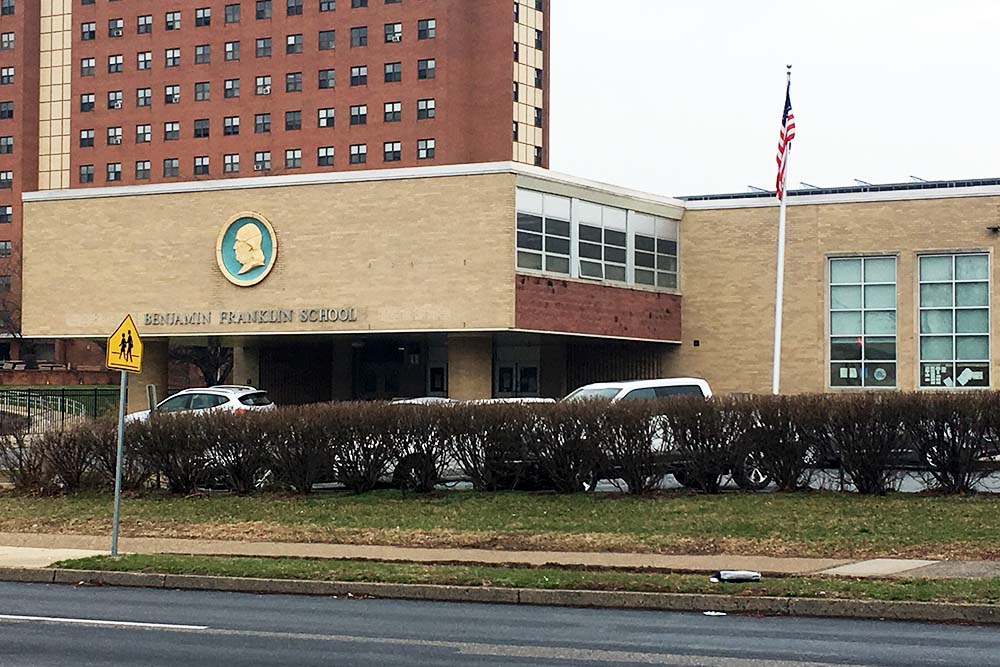
Benjamin Franklin School scored highest among Harrisburg’s elementary schools on an annual state assessment.

Most Harrisburg public schools continued to tread water for the past academic year, once again earning largely poor grades from the state.

District-wise, Harrisburg schools showed little improvement, but they also generally didn’t deteriorate further during the 2016-17 school year compared to recent years, according to the annual “School Performance Profile” released today by the state Department of Education.

“The ‘School Performance Profile’ scores released today provide school-level information to the public related to student achievement and progress,” said Secretary of Education Pedro A. Rivera.

Harrisburg High School attained an academic score of 44 out of 100 total points, identical to the prior year. The SciTech Campus showed more improvement, up to 76.2 points versus 73.2 last year and 61.2 the year before.

To determine academic scores, the state uses a variety of measures, including standardized tests such as the Pennsylvania System of School Assessment (PSSA) and Keystone exams. The scores follow a general academic scoring model with 90 to 100 considered to be excellent and below 60 considered to be deficient.

Other schools in the 6,227-student district scored as follows:

Marshall Math Science Academy: 78.3
Benjamin Franklin School: 60.8
Melrose School: 58.2
Foose School: 53.3
Scott School: 52.7
Marshall Academy: 49.8
Camp Curtin Academy: 45.6
Downey School: 45.5
Rowland Academy: 42.5

The yearly assessment includes a wealth of other data, including graduation rates. In that regard, Harrisburg High School showed a slight improvement, with a graduation rate of 55.8 percent last year, compared to 53.9 percent in 2015-16 and 52.8 percent in 2014-15.

Rivera said that this will be the final time the state uses the current methodology and “report card” grading system to determine school-level academic performance. Next year, the state will transition to what it calls a “Future Ready PA” index, which will use a dashboard approach to present school-level data and will feature a broad range of indicators, such as English language acquisition, career readiness indicators, access to advanced coursework and chronic absenteeism, among others.

Kirsten Keys, the Harrisburg school district’s spokeswoman, declined immediate comment for this story.

Continue Reading

Who’s to Judge? Judicial candidates make their cases at NAACP forum

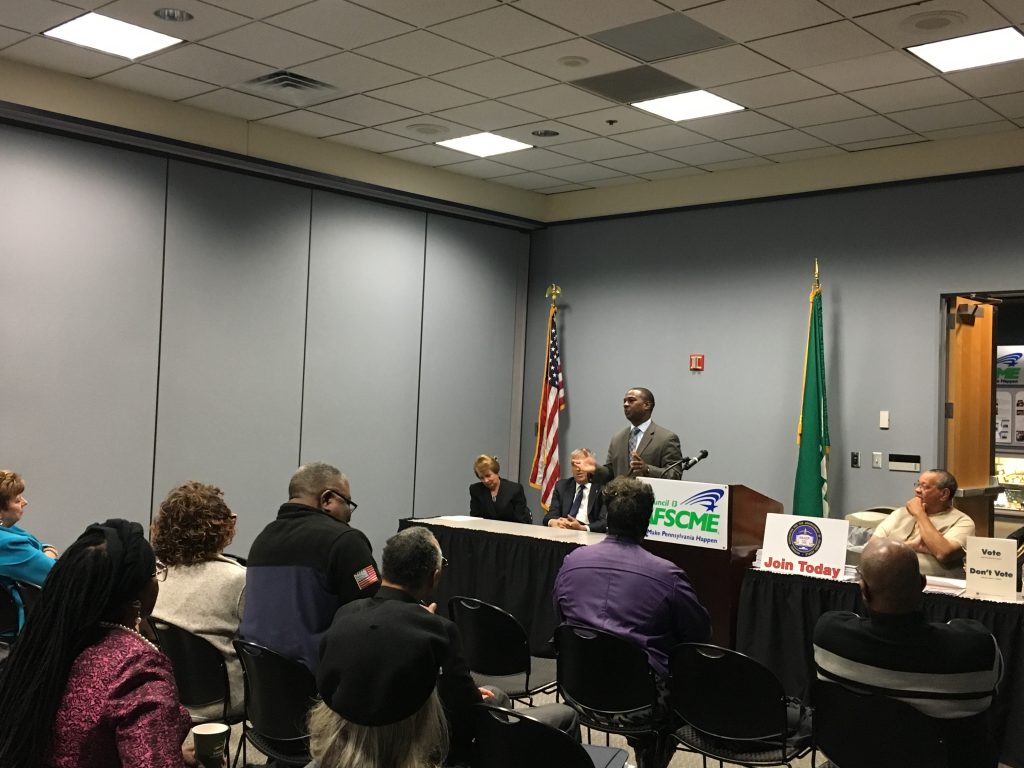
Royce Morris, a contender for a seat on the Court of Common Pleas, speaks at the NAACP candidates forum on Thursday, Oct. 26.

If you’re summoned to traffic court, cited for disorderly conduct, or arrested for murder in Dauphin County in 2018, you may soon get to vote for the judge who will try your case.

Dauphin County voters will go to the polls on Nov. 7 to elect judges for the County Court of Common Pleas and Magisterial District courts. Six judicial candidates made their cases at a forum hosted by the Harrisburg NAACP Thursday evening, which drew more than 75 registered voters to the AFCSME Conference Center on 43rd Street in Swatara Township.

Three of the four candidates running for the Dauphin County Court of Common Pleas – Royce Morris, Ed Marsico, and Lori Serratelli – appeared at Thursday’s forum. They and John McNally, who did not attend the forum, are vying for three six-year seats.

Morris and Marsico each had strong bipartisan support in the May primaries, which positions them well for the general election. Some observers believe the third open seat will be close between Serratelli and McNally, who in May received 16,204 and 16,447 primary votes, respectively.

Speaking on Thursday, Serratelli billed herself as an advocate for families and the working poor. Before Gov. Tom Wolf appointed her to a judicial seat in June 2016, Serratelli worked for 38 years as an attorney with an emphasis in family law. She said she is committed to helping litigants who cannot afford legal representation.

Also present were the two candidates in the only contested Magisterial District Justice (MDJ) race. Hanif Johnson and Claude Phipps are both vying for the seat in District 12-1-05, which covers parts of Allison Hill, Paxtang and Penbrook.

The candidates already faced off in the May primary, and Phipps cross-filed as a Republican after Johnson defeated him for the Democratic nod.

Judicial races may not be crowded this election cycle, but they are critically important, said incumbent MDJ David O’Leary.

MDJs are the first point of contact for many people entering the judicial system. They hand out sentences or fines for misdemeanor crimes, preside over traffic court and set bail after arrests.

They also perform preliminary hearings for criminal cases, which means they decide whether or not a case continues to trial.

The duties and sentencing power of MDJs give them a great deal of discretion, and O’Leary said voters must elect judges who will not abuse it.

“In most cases, I can fine you $1 or $300,” O’Leary said. “Our judicial system places burdens on poor people, and I’m aware of it. You need an MDJ with not just fairness, but compassion.”

An attorney with more 40 years of litigation experience, O’Leary was appointed to his seat in South Allison Hill and downtown Harrisburg by Gov. Tom Wolf last August. He’s also something of an anomaly in the local county courts—one of only three Dauphin County MDJs with a law degree.

Pennsylvania is one of 22 states that allows non-lawyers to preside over minor courts. Across the commonwealth, roughly 75 percent of MDJs are not trained as lawyers, according to the Standard-Speaker (Hazelton, Pa.). Many are retired or former police officers, and others were small business owners or civil servants.

MDJs serve six-year terms and earn an annual salary of $88,290. Candidates must be 21 years old, live in their magisterial district and pass a 400-hour certification course before they can take a judicial seat.

That course is meant to equip candidates with everything they need to know on the bench, but the learning curve can be steep. Hanif Johnson passed his certification test on his first try, but when I asked him how he would use community service as a sentencing tool in his courtroom, he did not know that he was allowed to do so.

In Dauphin County, judicial aspirations often run in the family. MDJ Barbara Pianka holds the seat formerly occupied by her husband, James Pianka. George Zozos and his son, Paul, both currently preside over district courtrooms.

Continue Reading

Weekend Roundup with Sara Bozich

Happy Halloween Weekend – Boo!

Literally no plans except maybe have a baby. And football. And to watch TV with all the lights out tonight because, no, I didn’t buy any Halloween candy.

(OMG I wish I could go to the Symphony this weekend — They’re doing Sgt. Pepper’s Lonely Hearts Club Band!)

What are you doing this weekend?

(more…)

Continue Reading

2-Way 2nd: Council action brings major road change nearer.

Under a city plan, N. 2nd Street, currently three lanes one-way, would be converted to two lanes of two-way traffic in Midtown and Uptown Harrisburg.

Harrisburg is moving closer to making major changes to N. 2nd Street, thanks to a green light from City Council last night.

Council authorized funding for a traffic study and engineering plans to convert N. 2nd Street from one-way to two-way traffic flow. The new pattern would take effect between Division and Forster streets and reduce the current three lanes of traffic to two.

Mayor Eric Papenfuse began advocating for the lane conversion in 2013, during his first mayoral campaign. He believes that rerouting commuter traffic to N. 7th Street and restoring two-way flow to 2nd Street will benefit homeowners and pedestrians near the river.

“We want to give that neighborhood more of a residential feel and make it safer for pedestrians,” Papenfuse told reporters after last night’s council meeting.

According to reporting from TheBurg’s Paul Barker in 2013, the current iteration of 2nd street – three lanes of northbound traffic flanked by two lanes of street parking – came into being during a 1956 transformation of Harrisburg’s major roadways. That year, Harrisburg also converted Front Street into a one-way, three-lane mini-highway, and widened Forster Street to six lanes.

Those road conversions were Harrisburg’s response to a new problem facing American cities in the mid-century: commuter traffic. After World War II, middle- and upper-class whites relocated in droves from cities to suburbs. Their jobs, however, did not necessarily follow, and cities had to accommodate the flood of drivers coming in for the work day.

Many American cities, including Harrisburg, prioritized the new commuter class at the expense of residents and pedestrians. Today, many 2nd Street residents complain about traffic speed and noise.

“People fly down this road,” said Sotirios Ntzanis, owner of Midtown Tavern, located at the corner of Herr and 2nd streets.

He’s optimistic that the lane conversion will slow down traffic and even benefit small businesses.

“Slower traffic could help with exposure, since a lot of businesses along here get missed,” Ntzanis said.

Other residents worry that the conversion will bring more harm than good. Dave Johnson, who lives on the 1700-block of N. 2nd Street, thinks that his street will get more congested as long as Front Street remains one-way.

“It’s going to get backed up,” Johnson said. “We’ve already got three lanes of constant flow.”

Nicolas Conigliano has lived on the 1000-block of N. 2nd Street for six months. He said that traffic there moves quickly and creates noise, but he’s unsure that a two-way flow would help either problem.

“What I’ve noticed on other streets in the city is people go as fast as they want to go,” Conigliano said.

The resolution approved by council last night also said that the final 2nd Street lane configuration might include bike lanes or a two-way, left-turn lane. Project engineers will also consider the possibility of building a bridge above the railroad tracks at Division Street and Industrial Road.

The city has retained the Maryland-based design firm, Wallace Montgomery & Associates, to perform a traffic study, provide preliminary engineering and final designs. Funding for the project comes from a PennDOT grant.

Papenfuse estimated that six to eight months of planning are necessary before any infrastructure changes could be authorized. During that time, he expects to solicit input from residents and business owners in a series of community meetings.

As part of the changes to 2nd Street, the city also wants to make substantial improvements to several other streets to divert outbound traffic to N. 7th Street and to Division Street.

Continue Reading