Here Too: Yes, Harrisburg can have nice things.

Illustration by Rich Hauck.

The whispers began well before the official opening last month.

Hmm . . . do you think Harrisburg will support this place? Can it survive here? Will it last longer than a month, a year?

It seemed too hip, too different—maybe even a little radical. Too—should I say it—nice? Sure, it might work in Philly or Pittsburgh or D.C., but certainly not here in dumpy old Harrisburg.

In this case, I’m talking about Provisions, the snug, urban-style grocery that opened its doors downtown in Strawberry Square. But it could equally apply to a bunch of other businesses that have started over the last decade.

A huge, independent bookstore on a forlorn block in Midtown? No way. A vast arts center in a dilapidated wreck of a building? Yeah, right. An upscale French bistro? Ha!

I refer to Midtown Scholar, H*MAC and Rubicon, respectively. But it could equally apply to so many other places that have opened in recent years: Little Amps (Harrisburg wants cheap coffee); the Millworks (too artsy, too pricey); Note Bistro (doomed location); Zeroday ($6 pints??); LUX, Union Lofts, Flats at Strawberry Square (too big-city, too expensive).

All have proven the haters and trolls wrong. They are still in business. Most are thriving.

The armchair critics also roared over the new Harrisburg Bike Share. But it had about 500 sign-ups in its first month in operation, according to sponsor Communities in Schools PA. The sturdy white bikes with the front baskets are now a common sight along the riverfront and City Island. Chalk up another success.

Therefore, I’m calling time on “old Harrisburg.” This is the Harrisburg with little more to offer its residents than cut-rate goods, unhealthy food and substandard housing. This is the Harrisburg owned by people who flee each night to the suburbs, snug in subdivisions where their blighted buildings and dangerous bars would never be tolerated. This is the Harrisburg with an inferiority complex, where anyone hoping for better is shouted down as an outsider or an idiot.

Of course, I realize that change, as is its nature, is distributed unevenly across the city, with some neighborhoods progressing and others not. But we need to realize—simply because it’s a fact—that Harrisburg’s economy has changed. Over the past decade, it’s deepened and diversified, and it should no longer surprise anyone that the city can support nicer and, yes, sometimes more expensive goods and services.

A couple of years ago, a friend told me that he was thinking about opening a business and asked me what I thought. My advice was this—go higher end. By higher end, I didn’t mean Gucci or Givenchy. I meant “mass market nice,” something a notch or two better than conventional wisdom in this town seemed to believe would work.

I reached this conclusion not based on my own personal likes or aspirations, but by looking around at what was already succeeding: Café Fresco, Stage on Herr, Suba, Cork & Fork, Federal Taphouse. “Something better” seemed to be where the market was moving in Harrisburg. I told him that that’s what we did with TheBurg—and it worked for us, too.

In contrast, you know what’s not working? People who treat the city like it’s still old, ramshackle Harrisburg, who seem stuck in the past. In the decade I’ve been here, countless convenience stores, cell phone resellers and used goods shops have opened and closed just along 3rd Street in Midtown. It simply doesn’t seem to be a successful business strategy any longer.

I also urged my friend to heed what I call the “three C’s” of success: capitalization, competence and commitment. As a small business owner and enthusiast, I’ve seen even good ideas flop due to owner malpractice. I told him that, if he chose to open a store, he had to ensure that he was well capitalized, deeply understood his product and business and was willing to work 12-hour days (he wasn’t and didn’t).

So, here’s to Provisions, Harrisburg’s newest small business. It’s a little funky, a little urban, a little fun. And it offers a completely different, superior food-shopping experience for anyone accustomed to the numbing, cold sterility of the suburban supermarket. May it have a long, long life!


Lawrance Binda is editor in chief of TheBurg.

Continue Reading

Happy Holli-Plays: Old Christmas favorites return with new twists at Open Stage.

This holiday season, Open Stage of Harrisburg is bringing back two seasonal favorites: “A Christmas Carol” and “The Santaland Diaries.”

But, this season, each show features a new twist. The script for “A Christmas Carol” has been newly adapted by Rachel Landon, and Jeff Luttermoser steps into the elfin shoes of Crumpet in “The Santaland Diaries.”

Though the script for “A Christmas Carol” is new, the “wicked old Scrooge” returns. Nick Hughes will once again assume the role. For the 18th time, Hughes will scowl and humbug his way across the stage. Several other cast members from last year’s production are returning, and some new faces will also join the cast.

“This season’s production is going to include all the fun and spectacle of last year’s show, plus a few extra surprises,” said Director Stuart Landon. “Audiences loved our reboot of this Harrisburg tradition—we sold out most performances last year—and they are sure to catch the spirit again with these new twists!”

In adapting the story, Rachel Landon was careful to stay true to Dickens.

“Charles Dickens created the perfect Christmas story, and his beautiful, hilarious and heart-wrenching words still hold true today,” said Landon, who will also be performing in the production. “To interpret his words is a real gift and as artists we celebrate the humor, the reverence of the season, and, of course, the ghost story.”

David Richwine is reprising his role as Bob Cratchit and is excited about continuing the holiday tradition of “A Christmas Carol.”

“There’s something about the message of being able to see your role in the world and being given a chance to change it that never gets old,” Richwine said. “Having experienced Open Stage’s creative treatment of the story and the characters and the setting, I’ve only come to love the story more.”

Another tradition at Open Stage is “The Santaland Diaries,” the one-man show based on David Sedaris’ illustrious career as a Macy’s elf. Previously featuring Stuart Landon, this year Jeff Luttermoser is taking over the role of Crumpet.

While the script and set remain the same, Luttermoser is excited about bringing his own spin on Crumpet to the stage.

“We are working on a fresh ‘Santaland’ that still maintains the spirit of the original,” Luttermoser said. “I want it to be the show people know and love but with a different flavor.”

Director Karen Ruch agrees.

“There are certain elements, favorite gags, or fun things that people expect,” she said. “We want to maintain those while letting Jeff be his own Crumpet.”

Luttermoser has most enjoyed finding the unexpected moments of depth in the show. He shared that Sedaris makes many observations on Christmas, including the eternal struggle between the commercial holiday and a traditional one.

“It’s not just a Christmas show,” said Luttermoser. “It’s about how silly people get with their consumerism. We have to laugh at our flaws, and I think this show does a really good job of helping us do that.”

“The Santaland Diaries” runs Dec. 3 to 22.

“A Christmas Carol” runs Dec. 1 to 23 and also features Patty Cole, Rachel Barnhart, Dawn-Michelle Lewis, Karen Ruch, Beate Sutton, T.J. Cole, Drew Patti, Chris Gibson, Patrick Hughes, Riley McKean, Connor McKean, Sophie Reusswi and several students from the OSHKids Performance Company.

Tickets and more information for both shows are available at www.openstagehbg.com.

UPCOMING THEATER EVENTS
AT HARRISBURG’S PROFESSIONAL
DOWNTOWN THEATERS

AT GAMUT THEARE
www.gamuttheatre.org
717-238-4111

The Popcorn Hat Players Present
“A Popcorn Hat Christmas Carol”
Nov. 29 to Dec. 16
Saturdays at 1 p.m.
Wednesdays and Thursdays at 10 a.m. available by request for groups of 20 or more.
Tickets are $8 and can be purchased in advance online or by calling the box office.

TMI Improv Show
Dec. 15          
Doors and bar open at 6:30 p.m. and will remain open throughout the event.
Tickets are $10 and can be purchased online or at the door.

Popcorn Hat Players’ New Years Eve Party for Children and Countdown To Noon
Dec. 31, 11 a.m.
Early bird tickets Nov. 1 to 30, $10; Dec. 1 to 31 tickets, $12
Tickets can be purchased online.

AT OPEN STAGE OF HARRISBURG
www.openstagehbg.com
“A Christmas Carol”
A dazzling new take on the classic Dickens tale
Dec. 1 to 23

“The Santaland Diaries”
David Sedaris’ irreverent one-man show
Dec. 3 to 22

Continue Reading

Musical Notes: Musical Resolutions–End the year without ending your wallet.

Amidst the snowy days and holiday prep, it’s that time again to contemplate New Year’s resolutions. One thing that’s on my mind for next year is better money management, especially when it comes to  a night out in Harrisburg. To help you make your own list and check it twice, I’ve highlighted shows this month that are all under $20. It is possible to save some money for the holidays while still seeing quality shows around the city, and we’ve got your hookup for a fun winter. Have a wonderful and safe holiday season, stay thrifty, and I’ll see y’all in the new year!

DON’T SLEEP, 12/1, 6:30PM, H*MAC STAGE ON HERR, $8-10
We’re kicking off the column this month with some Harrisburg natives with a taste for high-octane performances. Don’t Sleep is a hardcore band featuring frontman Dave Smalley, former singer of Dag Nasty, Down by Law, ALL and DYS. Other members of the band, guitarist Tom McGrath, drummer Jim Bedorf, bassist Garrett Rothman and guitarist Tony Bavaria have played with groups such as Very Americans, The Commercials and Junction. Talented and passionate, Don’t Sleep stays humble, defining themselves as “five friends playing hardcore and trying to make a positive impact on the world.” If you haven’t been through a hardcore phase, these guys are sure to get you hooked. The band is celebrating their new record release at H*MAC featuring performances by Steel Nation, Tonka Tuff and Bitter Taste.

R. ARIEL, 12/2, 7PM, LITTLE AMPS UPTOWN, $5
Coming to you through Harrisburg’s DIY scene, Phoenix, Ariz., native R. Ariel will play at Little Amps for a special show in the Olde Uptown neighborhood. Rachel Ariel is a self-described experimental electronic femme artist currently touring North America. She is also known for her work as a photographer, videographer and author. Her creative energy, soulful lyrics and dreamy instrumentals are sure to create a cozy evening of heartfelt musical expression. Joining her are Kafari from Portland, Maine, and Weird Year, a favorite local band from here in the city. Catch R. Ariel’s album, “Identified Demon,” on Bandcamp before the show. I like the song, “Her,” for the minimal sound and soulful lyrics.


MIDDLETON BROTHERS BAND, 12/15, 9PM, RIVER CITY BLUES CLUB, $5-8
Rounding out the featured shows this month is a bona fide family band bringing back rock n’ roll. The Middleton Brothers started out in the ‘70s when Stan and Charlie Middleton, two teenaged brothers, decided to start a group together. Going by many names and consisting of different members throughout the years, the Middleton Brothers added Stan’s two sons to the group, living the dream as a rockin’ family band. The sound of the ‘60s has been rich in the Middleton Brothers’ repertoire since the brothers started, and it is still going strong. Drawing influences from their rock n’ roll roots, funk and R&B, the group brings their soulful yet accessible vibe for a groovy time. Find live tracks on their website for a sample of their feel-good, classic sound.


Mentionables:

Benjamin Vo Blues Band, Dec. 1, River City Blues Club
John Brown’s Body, Dec. 2, The Abbey Bar
Ben Brandt Trio, Dec. 8, River City Blues Club
Start Making Sense: Talking Heads Tribute, Dec. 15, The Abbey Bar
Kilmaine Saints, Dec. 16, H*MAC Stage on Herr
Colebrook Road, Dec. 22, The Abbey Bar

Continue Reading

November News Digest

City Election Marred by “Raffle”

Harrisburg’s uncontested mayoral election last month was supposed to be a sleepy affair, but it was upset by a raffle with apparent connections to a write-in candidate.

A Dauphin County judge issued an injunction on Election Day to stop the distribution of raffle tickets that may have encouraged people to vote a certain way in the race for Harrisburg mayor.

“The Court finds that the raffle ticket is also promoting of a particular race and suggestive of balloting,” according to the court order.

People at many city polling stations were found to be handing out raffle tickets, which promised prizes for voting. These included a new iPhone X (first prize), $500 in cash (second prize) and a $200 Best Buy gift card (third prize).

Dauphin County Sheriff Nicholas Chimienti later visited a downtown office owned by developer Jeremy Hunter, where Hunter stored both raffle tickets and flyers supporting write-in candidate Gloria Martin-Roberts.

Martin-Roberts, however, later denounced Hunter’s efforts, saying she never authorized the raffle or the flyers.

“I clearly told Jeremy, ‘do not distribute any of that information with my name on it,’” Martin-Roberts said. “He does not listen to anyone.”

Hunter also told TheBurg that he spent thousands of dollars in the primary and general elections in support of Martin-Roberts. At press time, those expenditures had not been reported to the Dauphin County elections bureau.


3rd Street Project Starts

Harrisburg officials last month broke ground on the long-awaited repaving of 3rd Street, though most of the work will not start until the spring.

Crews began on the Midtown portion with new curbing and ADA-compliant ramps at intersections. Work is expected to continue through December, depending on the weather, and will resume in March.

The entire project includes about a two-mile stretch of the main artery from Chestnut Street downtown to Seneca Street in Uptown Harrisburg.

Actual milling and paving of the street will hold off until next year, said Mayor Eric Papenfuse. The project is expected to continue throughout much of 2018, wrapping up in October.

Papenfuse stressed that the project is not just for motorists. He said the improvements will make it easier to walk and bike, as well as drive along the street.

“By the time we are done, this entire area will be returned to the residents of the city,” he said.

City Engineer Wayne Martin said that, when paving begins next year, he expects temporary road closures and detours lasting about three days at a time. He also said that some parking, about 10 spaces at a time, will be occupied by construction equipment.

As part of the project, Capital Region Water will install trees and other environmentally friendly infrastructure, including green “bump outs,” to reduce storm-water flow, said CRW board chairman J. Marc Kurowski.

He said the project is part of CRW’s City Beautiful H2O program, which is meant to replace outdated infrastructure and improve storm-water flow.

“We’ll have new trees and new ways to manage storm-water,” Papenfuse said. “This will become a showcase for design for the whole region.”

Harrisburg has contracted with Elizabethtown-based Doug Lamb Construction Inc. for the $5.5 million project, a cost split between the city and CRW. The city is paying an estimated $3.5 million, with CRW footing the remaining $2 million.

Most of the project is funded by a grant from Impact Harrisburg, a nonprofit set up as part of the city’s financial recovery.


City Incumbents Returned to Office

Harrisburg Mayor Eric Papenfuse sailed to an easy re-election victory last month, despite two candidates mounting late write-in bids.

With all 28 precincts reporting, Papenfuse garnered 3,788 votes. All write-in candidates together tallied 502.

Shortly before the election, two of Papenfuse’s defeated opponents in the Democratic primary, Gloria Martin-Roberts and Lewis Butts, declared that they would mount write-in campaigns in the general election.

With his victory, Papenfuse will begin his second, four-year mayoral term in January.

Five Harrisburg City Council candidates also ran unopposed in their races. Council incumbents Wanda Williams, Shamaine Daniels and Ben Allatt each won four-year terms, as did newcomer Ausha Green. Councilman Dave Madsen earned a two-year seat.

Harrisburg Treasurer Dan Miller and Controller Charlie DeBrunner each ran unopposed and will serve four-year terms.

For school board, all the listed Democrats won four-year seats: Brian Carter, Carrie Fowler, Danielle Robinson and Judd Pittman. Incumbent James Thompson, who lost in the Democratic primary but cross-filed, lost on the Republican side.

Percel Eiland, running unopposed, took the two-year seat for school board.

One district justice seat was contested. In the race for district 12-01-05, Democrat Hanif Johnson defeated Claude Phipps, who was on the Republican ballot, by a vote of 954-347.

In Dauphin County, Republican Matthew Krupp defeated Democrat Diane Bowman in a close race for prothonotary. In the heated contest for three Court of Common Pleas judgeships, sitting Judge Lori Serratelli lost to challengers Ed Marsico, Royce Morris and John McNally.

HU Proposes Downtown High-Rise

A new high-rise may soon add to downtown Harrisburg’s skyline, as Harrisburg University of Science and Technology last month issued a request for proposals for a new, mixed-use building.

According to the RFP, the proposed building at Chestnut and S. 3rd streets would house the school’s emerging Health Science Education Center, from which it would offer degree programs in nursing, pharmaceutical sciences and other health programs.

The RFP is asking for bids of at least 200,000 square feet for educational space, plus housing for more than 300 students. The building, currently proposed to be 36 stories, may also contain amenities such as a boutique hotel, restaurant, executive conference center and/or fitness facility.

The school envisions the building as a high-rise on parcels that include 222 Chestnut St., currently a surface parking lot owned by Vartan Enterprises, and 24, 26 and 28 S. 3rd St., which contain small commercial buildings owned by Mechanicsburg-based Dauphin Land Co. Under the RFP, those low-rise, 19th-century commercial buildings would be demolished.

HU President Eric Darr said that the current property owners have agreed to sell their parcels to HU for the project. He added that the proposed location was perfectly situated between UPMC Pinnacle and the university’s main academic building on Market Street.

“Being a block away from Harrisburg Hospital makes all the sense in the world,” said Darr, who estimates the total cost of the project at $120 to $140 million.

HU has set Feb. 2 as the deadline for responses, with a proposal selection date of April 10. An evaluation committee comprised of members of the university’s executive staff, board of trustees and outside advisers will evaluate the proposals.

Darr said he hopes to break ground in 2019 and that construction should take about two years.

Overnight Shelter Opened

Following a change in policy at Harrisburg’s largest rescue mission, a downtown shelter will open an emergency overnight shelter for 30 homeless men.

Downtown Daily Bread, a soup kitchen and daytime shelter operated by Pine Street Presbyterian Church on N. 3rd Street, got approval from the city to operate a 30-bed men’s shelter from Dec. 1 to March 31 at its facility at 234 South St., according to Anne Guenin, director of Downtown Daily Bread.

Downtown Daily Bread currently runs a daily drop-in shelter where people can nap, shower, receive meals and pick up mail. It serves between 70 and 90 people on an average day, Guenin said.

The night shelter will be in the same facility as the daytime shelter, which operates from 8 a.m. to 4 p.m. The nighttime shelter will open at 7:30 p.m., giving crews time to clean and convert the gymnasium to a dormitory with cots, and will close at 6 a.m.

Guenin said that the shelter originated in response to an operational change at Bethesda Mission, which this year decided to focus its efforts on long-term recovery programs and open its emergency shelter only in extreme weather conditions.

Comp Plan Back on Track

Harrisburg’s long-delayed comprehensive plan appears to be back on track, as the city’s Planning Commission last month agreed on a draft plan and set forth a path for final approval.

The commission unanimously opted for a draft submitted by the Office for Planning and Architecture, a city-based firm headed by urban design consultant Bret Peters.

In May 2015, the city hired Peters for $200,000 to create a comprehensive plan, which cities use as frameworks to guide policy, ranging widely from land use to recreation. Plans typically have a shelf life of only 15 to 20 years, though Harrisburg’s had not been redrafted in some four decades.

Originally, the city expected its plan to be finished in about 10 months. However, a dispute with Peters over the editing process, communication and, especially, pay, led to a long delay.

At one point earlier this year, the city and Peters parted company after Peters wanted more money to complete the project.

That holdup ended with the commission’s decision to go with Peters’ draft, which is now public. A public hearing is slated for Jan. 10.

Following the hearing, the commission may make additional changes based on public input. It then must approve the final draft before submitting it to City Council for its approval.

More Apartments Approved

Harrisburg is poised for more apartment conversions, as the city’s Zoning Hearing Board last month gave the go-ahead to two projects.

The board voted unanimously to permit as many as 18 rental units in Tracy Mansion, which would complete the restoration of the historic Midtown building.

Owner Jack Kay of York-based Susquehanna Real Estate plans between 14 and 18 one-and two-bedroom units in the eastern portion of the century-old building at N. Front and Muench streets, space that has long sat empty.

“All of the existing architectural features will be restored and, if anything, enhanced,” Kay told board members.

Industrialist David Tracy built the 30-room mansion as a private residence in 1918. In 1951, it became an osteopathic hospital and eventually a mental health facility.

Kay bought the building in 2005 with plans to convert it to an office condominium, adding a new, seven-story building in the parking lot next door. He received zoning board approval two years later, but the project died after the recession hit in 2008.

In 2012, Kay sold the western part of the building to Char Magaro, who opened the restaurant, Char’s Tracy Mansion, there.

Kay said that he believes there now is a market in Harrisburg for upscale apartments, which motivated him to seek a special exception for that use. He said that his apartments will be “nice units” with such features as high-end finishes, river views and in-unit washers and dryers.

He said that he hopes to undertake the project next year, but that the timing depends upon securing financing, among other factors. He said that he had not yet determined rental rates, but that they would be competitive with recent projects by Harristown Enterprises and WCI Partners.

Last month, the zoning board also unanimously granted a variance to Harristown for the conversion of a downtown office building to residential space.

Harristown plans to develop 12 one- and two-bedroom apartments from a worn-out, long-empty office building at the corner of N. 2nd and Cranberry streets. It currently has the building under contract with the seller, Camp Hill-based CJ2 Group.

With Planning Commission and zoning board approvals, Harristown now must have its land use plan approved by Harrisburg City Council before it can begin the project.

Water, Sewer Rates Rise

Water and sewer rates in Harrisburg are set to increase more than 7 percent next year, as Capital Region Water passed its 2018 budget last month.

The CRW board unanimously approved the spending plan, which will raise drinking water rates 7.5 percent for all city and suburban customers. Sewer rates will go up by 7.1 percent for city customers and vary for suburban customers, depending on their location.

The 2018 full-service rates for water and sewer service are $9.46 and $6.99 per 1,000 gallons, respectively. Under the new rates, an average customer who uses 4,500 gallons of water per month will pay an additional $5.56.

A few months ago, the board was faced with even higher rate increases, in excess of 10 percent, said board Chairman J. Marc Kurowski. However, CRW was able to scale those back to more reasonable levels, he said.

“Nobody’s excited with having to have rate increases, but we’ve kept them manageable,” Kurowski said.

CRW has raised rates for several years running. For 2017, the utility increased drinking water rates by 11.6 percent and sewer rates by 7.9 percent.

David Nowotarski, CRW’s chief financial officer, said the rate increases were needed, in part, to pay for ongoing capital upgrades to water and sewer infrastructure.

For 2018, CRW expects to spend about $8.9 million for water system upgrades and about $33 million for sewer projects. CRW has several major initiatives in place to repair and upgrade the city’s aged water and sewer infrastructure.

So Noted

Brighter Living held its grand opening last month at its facility at 979 E. Park Dr., Harrisburg. Brighter Living offers daily activities for seniors such as crafting, cooking, watching movies and gardening, as well as therapeutic activities.

Merit Marketing last month acquired Portland, Ore.-based communications firm, LT Public Relations. Harrisburg-based Merit stated that the acquisition strengthens its West Coast presence and gives it a team of senior advisors in media relations, executive training and crisis communications management.

UPMC Pinnacle opened its new medical office, Strawberry Square FamilyCare, last month in downtown Harrisburg. The office features six exam rooms, a laboratory, conference room and waiting area. It is open weekdays, 8 a.m. to 4:30 p.m., located on the first floor, atrium-level of Strawberry Square, adjacent to Rite Aid.

Changing Hands

Balm St., 119: K. & R. Thames to T. McNair, $55,000

Berryhill St., 2216: M. & N. Haile to PA Deals LLC, $31,000

Berryhill St., 2334: W. J. & J. Morrow to X. Rios & L. Vega, $52,000

Berryhill St., 2338: PA Deals LLC to L. Myers, $59,500

Briarcliff Rd., 2311: W. & E. Warren to S. & A. Cornick, $220,000

Briggs St., 2035: L. McArthur to C. & M. Bruner, $64,000

Calder St., 321: C. Steinbacher to R. & F. Armetta, $40,000

Chestnut St., 1200, 1202, 1204, 1206, & 1208: San Pef Inc. to Round Rock Investments LLC, $369,000

Derry St., 2612: J. Beal to T. Dunmyre, $68,900

Evergreen St., 26 & 28: San Pef Inc. to Round Rock Investments LLC, $95,000

Fulton St., 1418: PA Deals LLC to E. Shenk, $109,500

Girard St., 740: I. Naranjo & D. Benitez to O. Caban, $64,000

Green St., 1327: S. O’Neal to B. & S. Cincotta, $118,000

Greenwood St., 2237: J. Erb to A. & S. Rankin, $50,000

Herr St., 1614: T. Lawson to E. Andrades, $52,000

Holly St., 1914: J. Kaffaya to D. Berhe, $43,000

Hudson St., 1215: PI Capital LLC to V. Jackson, $97,000

Hummel St., 342 & 1508 Hunter St.: Equity Trust Co. Custodian Terry Casey IRA to E&K Homes, $34,000

Kensington St., 2335: PA Deals LLC to End Properties LLC, $69,500

Kensington St., 2343: PA Deals LLC to L. Myers, $59,500

Lenox St., 2032: J. & J. Belfonti to S. Ash, $43,000

Linden St., 128: Hal Don Properties LLC to A. Elkanouni, $56,500

Maclay St., 1037: J. & S. Pagliaro to P2N2, $65,000

Mercer St., 2440: T. Carey to D. Chen & M. Brinkman, $55,000

Mulberry St., 2000: L. & R. Moore to P. Robinson, $50,000

N. 2nd St., 912: S. Meyers to J. Radabaugh, $185,000

N. 2nd St., 1215: R. Shultz to R. & G. Armetta, $137,700

N. 2nd St., 2401: R. Buxton to M. Rathfon & S. Ewing, $162,000

N. 2nd St., 3301: D. & C. Gilkey to K. & K. Eshenaur, $197,900

N. 3rd St., 1914: J. Hobbs to J. Vega Jr., $90,000

N. 3rd St., 2016: WCI Partners LP to K. Reed, $212,000

N. 3rd St., 3301: N. Johnson to E. Verbos, $135,000

N. 4th St., 1336: M. Reed to R. & F. Armetta, $80,000

N. 4th St., 1620: Keech Equity Investments LLC to Acharya Rentals LLC, $60,000

N. 4th St., 3116: L. Deatrick to G. & J. Desgres, $90,000

N. 6th St., 930 & 932: K. & N. Galoyan to R. & F. Armetta, $170,000

N. 5th St., 3024: J. Olan to C. Geis, $95,000

N. 6th St., 3020: S. McCutcheon to L. Harris, $70,300

N. 7th St., 2301 & 2327: Sam Hill Properties LLC to DF7 LP, $410,000

N. 17th St., 28: V. Rivas to I. Mirambeaux, $35,000

N. Cameron St., 1301: J. & J. Salinger to R. Chatue & H. Tambo, $295,000

Oakwood Rd., 2301: PI Capitol LLC to J. Swetlick, $280,00

Penn St., 1721: PA Deals LLC to L. Myers, $129,000

Pennwood Rd., 3120: S. McCoy to J. Mohler & J. Suter, $38,000

Pennwood Rd., 3143: F. Travitz to T. Marhon, $85,500

Rolleston St., 1033: V. Clyde to L. Le, $35,500

Rudy Rd., 1959: E. Ripka to J. & M. Weaver, $66,500

Rumson Dr., 2627: G. & G. Chacon to L. & M. Holston, $81,000

Rumson Dr., 2956: A. & M. Berra to R. Gonzalez & M. Cabrera, $68,000

S. 14th St., 1407: R. Williams to City of Harrisburg, $51,000

S. 14th St., 1417: J. Vogelsong to City of Harrisburg, $49,000

S. 14th St., 1421: S. Mosley to City of Harrisburg, $57,000

S. 14th St., 1425: J. Coleman & A. Dannar to City of Harrisburg, $48,500

S. 14th St., 1430: L. & C. Matter to City of Harrisburg, $51,000

S. 14th St., 1438: A. & M. Reuveni to City of Harrisburg, $51,000

S. 14th St., 1444: Atlantic North Star Properties to City of Harrisburg, $55,000

S. 14th St., 1447: C. & F. Randolph to City of Harrisburg, $46,000

S. 14th St., 1451: C. Colon to City of Harrisburg, $57,000

S. 14th St., 1454: J. McFarland to City of Harrisburg, $52,000

S. 25th St., 736: M. Anderson to L. Crowder, $44,500

S. Cameron St., 130: Goldman Sachs Mortgage Co. & Ocwen Loan Servicing LLC to D&F 130 Cam LLC, $161,500

State St., 1326: Arthur A. Kusic Real Estate Investments to C. & T. Semancik, $100,000

Susquehanna St., 1635: R. Drakeford to S. & D. Williams, $99,900

Susquehanna St., 1932: St. Glecos to J. Gallant, $82,450

Swatara St., 1518: Tri County HDC Ltd to D. Kiser, $68,000

Sycamore St., 1625: T. Price to K. Fields, $79,042

Verbeke St., 208: M. Barrette to C. Malloy & K. Sica, $89,999

Wayne St., 1517: R. Palmer to J. Alvarado, $40,000

Harrisburg property sales for October 2017, greater than $30,000. Source: Dauphin County. Data is assumed to be accurate.


Continue Reading

The Old Soul Ragtime Show: Young pianist strikes a chord with old-timey music.

Domingo Mancuello says people constantly call him an “old soul”—and he’s the first to admit that they’re right.

“Every day, it feels like I’m living in the wrong time period,” said the 25-year old Lancaster resident. “I love to tell people I wanted to be a steam locomotive engineer, but that wasn’t practical, so I had to go into theater instead. But playing ragtime piano isn’t practical either.”

The practicality of his career choices aside, Mancuello is making a name for himself in central Pennsylvania’s theater, musical and art circles. This is his second season as a production assistant at the Fulton Theatre, which he describes as a “dream job” following his apprenticeship at Philadelphia’s Walnut Theatre and graduation from the University of the Arts.

His hobby and side gig as a pianist sound logical for a young guy immersed in the theater. But his specialty—ragtime and popular music from the 1890s to 1940s—puts Mancuello’s “old soul” directly in the spotlight.


Bouncy, Happy

“I always wanted to play ragtime because my grandfather was a singer in a barbershop quartet, and I was exposed to songs from the 1920s from a young age,” Mancuello recalled.

Growing up in suburban Philadelphia, one of his childhood memories includes a life-changing trip with his grandfather to an antiques shop during a search for phonograph needles. Mancuello said that he was transfixed by a player piano “magically” playing ragtime music.

When Mancuello was 4 years old, his parents gave him a tiny Wurlitzer piano for Christmas, and he taught himself how to play “When the Saints Go Marching In” by ear. At the age of 6, he began piano lessons but encountered several obstacles—dyslexia and vision issues affected his ability to read music. His mother regularly “blew up” his music on a copier so that he could better focus on the notes.

By fifth grade, his parents granted his wish for a player piano, and he began collecting rolls of music. Today, his collection includes about 200 rolls, rivaled only by his early 1900s sheet music collection, which numbers close to 5,000. Perhaps music is in his genes, as well. In addition to his musically inclined grandfather, Mancuello’s cousin is a successful pop singer in Paraguay—his father’s native country.

What is it about ragtime music that captured him from such a young age?

“There is an old-timey charm to it,” Mancuello said “Ragtime is bouncy, happy music. The easiest way to describe it is as speakeasy music coming out of a bar or saloon in an old movie, at its simplest.”

Its name, “ragtime,” describes its syncopated or “ragged” beat.

Despite his challenges, Mancuello said that he has an edge over most pianists who attempt ragtime.

“There’s a lot of chord-jumping from one octave to another that’s super-fast in the left hand,” he said. “So, the fact that my dominant hand is my left, I can just let it go, and focus on the melody in my right hand.”

In Mancuello’s sophomore year of college, he stumbled upon the 1920 song, “Whispering,” which inspired him to create his own arrangement and start playing “seriously.” So much so that he competed in the World Championship Old-Time Piano Playing Contest, placing fourth in 2013 and third in 2014. He looks forward to returning to the 2018 competition on Memorial Day weekend.

Does he listen to any popular music today?

“I’m more and more tolerant of it,” he said, with a smile.

Charm, Innocence

Mancuello recently played his largest solo concert, an invitation-only event at Theatre Harrisburg hosted by Jay and Nancy Krevsky.

Within the first few minutes, his music had the audience tapping their toes, smiling, clapping and, finally, bursting into song during “It Had to Be You” and several other old standards. In between tunes with colorful titles such as “12th Street Rag,” “Down Where the Sun Goes Down,” “Sweet Sugar Man” and “Happy Days are Here Again,” Mancuello regaled the crowd of nearly 100 with stories of little-known facts (Did you know Johnny Maddox is the only ragtime pianist with a star on the Hollywood Walk of Fame?) and tales about charming themes (such as the moon) found in ragtime and in turn-of-the-century tunes.

“Anyone recognize that tune?” Mancuello asked at the end of one number.

When hands shot into the air, he looked excited enough to bounce right off his piano bench. His own charm, innocence and energy seemed to match the evening’s selections.

“It was extremely encouraging,” Mancuello said. “It was the best-received concert I’ve ever done. I’ve never had a room just burst into song like that.”

Jay Krevsky first heard Mancuello play piano at the home of friends Mary Ann and Richard Morse of Mechanicsburg.

“When he started to play, I couldn’t believe my ears,” Krevsky recalled.

He knew he had to introduce Mancuello to more Harrisburg-area arts aficionados.

“He was fantastic—he exceeded my expectations,” Krevsky said, following the Theatre Harrisburg concert. “Could you keep your foot still? That’s what’s great about ragtime.”

The buzz continued long after the final notes, as attendees posed for photos with the pianist, chatted with him and thanked the Krevskys.

“Not only does he play ragtime well, but he charms people, too,” said Mary Ann Morse. “I’m a pianist also, but he’s a phenom.”

A tragic national news story had broken earlier that day, and Krevsky acknowledged it was “the elephant in the room” that evening. But he felt it best not to mention it during his welcoming and closing remarks and simply let Mancuello’s music lift the audience and their spirits.

“Music unifies people,” said Nancy Krevsky. “The age of the music doesn’t matter. Instead of dwelling on the differences between people, music creates harmony, and that’s what we need in this world.”

You can watch videos of Domingo Mancuello play on YouTube. To contact him about performances and bookings, email [email protected].

Continue Reading

Teacher, Student, in Tune: In Mechanicsburg, an ancient skill is passed down through generations.

Jim Hess and Daniel Haubert in Hess’ shop.
Photo by Dani Fresh.

I step into Jim Hess’s piano shop and breath in.

It smells like spruce, pine and hard work. Hess stands over the “belly” of a piano—the world that exists beneath the keys. With the skilled hands of a surgeon, he points out to me the soundboard he just built.

“I actually bought a spruce plank—2 inches thick and 10 inches wide— so I basically started from the tree to build it,” says Hess.

I look at his hands and don’t doubt him.

“It’s very rewarding work,” he says.

The result is a flawless, perfectly constructed soundboard most piano players will never see. A piano technician’s work is essential but often invisible.

“A piano is made up of 11,000 parts,” says Hess. “And 9,000 are moving. So we don’t want to mess this up.”

All around me are pieces of pianos at various stages of construction. Many of the pianos here have been brought in by families hoping to preserve a part of their family’s identity. This shop could be the Mechanicsburg version of the North Pole. The shop holds an unmistakable sense of wonder and restoration.

At Hess’ side, witness to all of the magic that happens here, stands his 31-year-old apprentice, Daniel Haubert.

Life Coach

In a world where apprenticeships are largely a thing of the past, Haubert demonstrates wisdom and a proactive spirit in his desire to learn from Hess.

Piano tuning has a reputation for being an ancient art. How did someone as young as Haubert get into it, and how did he end up at this particular piano shop?

The answer has almost as many moving parts as the piano itself.

Haubert studied journalism at Temple University, with a focus on sports management. After graduation, he worked for the Travellers, a Minor League baseball team in Arkansas. That job led to another one with the Harrisburg Senators in 2010.

“ I was the organist for the team,” says Haubert. “That really helped to seal my interest in and love of music.”

Eventually, Haubert left the Senators to work for a construction company. When it went out of business, Haubert realized he had to find a different career path quickly.

He remembered his love of piano and enrolled in the Butler School of Piano Technology. He learned a lot during that time, but something was missing.

“On paper, I knew everything I needed to know, but I knew that paper could only get me so far,” he says. “The best way to learn how to be a good piano technician is to work with someone who’s dedicated themselves to learning pianos.”

Enter fate.

At a traffic light in Camp Hill, a car pulled up next to Haubert’s with the name Jim Hess on it. Hess had a sticker on the back of his car that said “Registered Piano Technician.”

“I thought, ‘That guy really knows what he’s doing,’” Haubert said. “I called him, and he was willing to meet me. Now, we’ve started this apprenticeship on tuning, life issues, (piano) belly work and finding clients. I’ve worked with a lot of coaches. Jim is my life coach.”

Endless

Hess became interested in pianos years ago after buying an old piano for his wife.

“I began tinkering with it, trying to figure out how everything worked,” says Hess.

When he and his wife moved back to this area in the 1970s, he decided to explore the piano technician field.

“I really got a kick-start to my career,” Hess says. “One Friday evening shortly after we moved back, I received a call that the piano tuner scheduled for an event that night had died suddenly of a heart attack. I tuned the piano for that evening’s event. That night, the artist stopped in the middle of the concert and remarked on what a well-tuned piano it was. A reporter heard and put in the paper, which really got things moving.”

Through diligence, study and Hess’s help, Haubert is well on his way to a successful career as a piano technician himself.

Both Hess and Haubert are asked all the time if they play the piano.

“Playing is an art; tuning is mechanics,” says Haubert. “We’re mechanics. We have to understand everything about how this works so that the artist can do their job.”

People also ask what a piano technician does besides tune pianos. The answer: everything.

“People think piano technician means piano tuner,” says Haubert. “But tuning, as difficult as it is, is just the introduction to the industry. There’s tuning. There’s repairing. There’s restoration and refinishing. It’s endless.”

Pianos have a habit of staying in families and are usually of great sentimental value to the clients Haubert works with. He tunes his pianos by ear, and the result, according to client Andy Joos, “is pretty stunning.”

“The harmonies are all in excellent tune, regardless of the key that I’m playing the hymn in,” Joos said.

As Haubert continues to learn from Hess, it is clear that he is well on his way to creating his own magic in this profession.

“I love the mental focus that it requires,” Haubert says. “You have to block out everything else in your mind to focus. I also like working with my hands, using them for such a skilled project.”


For more information about Daniel Haubert, call 717-877-6430 or visit www.haubertpianocare.com.

For more information about Jim Hess, call 717-697-4111 or visit www.hesspiano.com.

Continue Reading

Lights! Camera! Act Sick! Fake patients aim to help the real ones.

Keith McLaughlin has had a rough few years.

First he had progressive, degenerative diabetes. Then he was experiencing a rather embarrassing genital discharge. He also was a victim of an explosion, and he was in a bus accident. Then a few months ago, he was diagnosed with lung cancer.

He’s spent a lot of time at Penn State Health Milton S. Hershey Medical Center. But, in the end, he got a clean bill of health and even got paid for the time he spent at the hospital.

In reality, McLaughlin isn’t a patient but a performer. He is part of the Standardized Patient (SP) program at the medical center’s Clinical Simulation Center. Several times a year, he gets a script to follow, and he portrays a patient with a particular condition or problem. The SP program is one of several initiatives at the simulation center aimed at improving patient outcomes by promoting and enhancing practitioner skills, clinical competence, teamwork and interdisciplinary collaboration.

Like most of the 100 or so people who portray patients in the program, McLaughlin isn’t a professional actor. He actually is a retired accountant.

“This doesn’t come naturally to me,” he said. “It takes a lot of time and preparation.”

He reads through the scripts he is given and makes notes of key points to remember. SP participants also often must prepare to portray various emotions associated with the situation—such as anger, frustration or fear. Sometimes, the script calls for them to confess an embarrassing secret or to try to convince the doctor or nurse not to share bad news with a spouse. While they aren’t expected to give award-winning performances, they have to be convincing in these roles.

Participants often present the same case several times a day with different groups of students, which leads to more complications.

“After a while, it can be challenging to remember what you’ve said and to who,” said McLaughlin.

Nonetheless, it’s worth the time and energy.

“I want to help patients get the best possible care, and I want to help practitioners to feel more comfortable and confident interacting with patients,” he said.

It’s clear that he’s good at his job. After a multi-session program where he portrayed a patient with diabetes, he received a thank-you card signed by several of students who participated.

“Thank you for taking the time to teach us more about communication,” wrote one student. Another remarked, “It was clear that you really wanted to help us improve,” and another wrote, “I’ll always remember what you reminded all of us—that ‘before a patient is a patient, a patient is a person first.’”

While McLaughlin gets paid for his work in the SP program, helping medical practitioners get better at their jobs is a personal mission.

“My wife had breast cancer,” he said. “She was fortunate to have great doctors and nurses. I want to give back a bit for that. It makes me feel good. I want to do everything I can to make these simulations real for them.”

In Awe
Nursing student Caroline Farrell said that the SP program will help make her a stronger, more confident practitioner.

“It is useful to have the opportunity to mimic as closely as we can what we will see in the real world,” she said. “We’ll be able to pull from these experiences and apply them in our work.”

The program also helps to quell anxieties, said nursing student Natalie Sullivan.

“To be able to try things in a safe environment is tremendously helpful,” she said.

Not only are the simulations themselves useful, but, afterwards, the students get written feedback on their interactions. For this, they can learn first-hand from the “patient” what they did well, what information they missed, and what areas they might focus on for improvement.

Stacey Carmo, SP Program manager, said that she is constantly in awe of the quality of the simulations.

“It’s jaw-dropping how real some of them are,” she said. “We are fortunate to have great people involved in this program. Some of them have been doing it for as long as 15 years.”

The people, plus the mission of transforming students into excellent practitioners, help to make Carmo’s job a joy.

“Coming to work, I get excited every day,” she said.

Continue Reading

School of Bock: Yes, you can “major in beer” as HACC, local breweries team up for a certification program.

Burg in Focus: HACC Brewing Science Program from GK Visual on Vimeo.

If you love bold and flavorful beer like I do, the Harrisburg metro area is the place to be. Every few months, a new brewpub opens up, giving beer aficionados a multitude of options.

The craft beer craze has spread so far and deep that it has even caught the attention of academia, including, locally, HACC.

In the summer of 2015, HACC President John Sygielski emailed the college’s director of continuing education, Abigail Peslis, instructing her to look into the craft brewing movement.

“Our college president is extremely innovative and forward thinking, and he said I should check into this, but that I had no need to respond,” recalled Peslis.

Sygielski’s message found the right audience. Peslis is herself a craft beer fan.

“When I had an opportunity to delve into that industry, I grabbed the bull by the horns,” she said.

Peslis called Dan LaBert, executive director of the Brewers of Pennsylvania, the major brewing guild in the commonwealth. He told Peslis that such a program was exactly what the state’s brewing industry needed and connected her with a number of local experts.

She next called Zeroday Brewing Co., which had recently opened just a block down Reily Street from her Midtown office. Zeroday co-owners Theo and Brandalynn Armstrong eagerly expressed interest in helping HACC develop a program in brewing science.

“It’s almost like the stars aligned,” said Peslis. “There was a need for a trained workforce because the brewing industry was exploding.”

In less than a year, HACC’s Brewing Science Certificate Program was educating its first cohort of students. The goal is to make the program sufficiently robust so students come away with all the foundational skills they need to enter the brewing industry’s workforce. But HACC wants the program to be short enough that students can complete it within a year.

Peslis involved local breweries to develop the curriculum. These included Zeroday, Tröegs Independent Brewing and Appalachian Brewing Co. (ABC).

“This program was absolutely created for the local central PA region,” Peslis said.

Full Spectrum

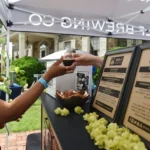
Today, six local brewers provide instruction and expertise: Zeroday, Tröegs, ABC, Boneshire Brew Works and the Millworks, all based in the Harrisburg/Hershey area, and Old Forge Brewery in Danville. The students also visit Sunny Brea Hops, located just outside of Carlisle, to learn more about the high-quality hops used for craft brewing.

“We do a lot of hands-on learning, so our students visit all of those facilities,” Peslis said. “Our students get the full spectrum of everything.”

In return, HACC gives local brewers qualified applicants to join their teams and to raise the standards of brewing in general.

Anybody who is 21 or older can enroll in the HACC program. No background in brewing or biology is required.

Earlier this year, the first cohort of 11 students, ranging in age from 21 to 60, completed about 250 hours of coursework and earned their certificates. They took evening classes in a wide range of topics relating to the brewing business, including safety, sanitation, culinary math, marketing and microbiology.

And, most importantly, the students selected a style of beer to brew, worked with vendors to choose the ingredients, and brewed it from scratch. With guidance from Zeroday, they decided to brew a coffee oatmeal stout, a popular winter beer.

“The students got hands-on experience and recipe design,” said Brandalynn Armstrong. “They got to have some fun and get their hands dirty.”

But as Armstrong is quick to point out, the program is not just about brewing good beer.

“We asked students to think: How are you going to sell the beer after you make it?” she said. “So, we added a marketing component.”

The students had to look at their product from a business angle and come up with a name, a sales strategy and a pitch. Several local brewers and restaurant owners judged different names and decided upon HACChiato (like a macchiato from Starbucks) because the stout contained coffee and milk. The students even worked with an attorney to make sure the name was commercially viable and didn’t infringe upon any copyrights.

HACChiato was unveiled at a launch party at Zeroday. More than 300 people came that day to taste the beer, including Sygielski.

“The stout turned out very lovely,” Armstrong said.


Cutting Edge

Peslis said that it’s essential for local brewers to recognize the credentials that the students receive. And thanks to HACC’s partnership with the Brewers of Pennsylvania, the program guarantees that all graduates can receive a 40-hour volunteer internship at a local brewery.

Some of the recent graduates plan to start their own breweries. Others are mainly interested in brewing better beer at home. And one of the recent graduates is now the tasting room manager at Tröegs.

“They are moving into nice roles in the industry,” Peslis said.

Marc Michaud of Carlisle is one of the home brewers who recently graduated. He was the one who came up with the name, HACChiato. Michaud found out about the program from his wife, who thought he would be interested.

“I wanted to at least be a little better than what I was doing at home,” said Michaud, who did his internship at Molly Pitcher Brewing Co. in Carlisle. “It was a great experience. I learned a lot of different things, a lot more on the business side of brewing than I thought, which was awesome.”

Michaud recommends the program to anyone who is interested in going into the industry, who home brews or who just likes beer and wants to learn more about the industry.

The program is currently educating a second cohort of 13 students, who will graduate in February. At the time of this writing, the students had not yet decided what style of beer to brew, but their HACC brew will be available at Zeroday around the time they graduate. HACC plans to can the 2018 beer, which means the students will have to come up with catchy artwork, as well as a name.

The program has made several changes since last year and will continue to evolve to remain cutting-edge, Peslis said.

“It was nice being a part of creating that program with all the guidance and amenities of HACC,” said Zeroday’s Armstrong. “For us, it was really awesome to be part of it.”

The next HACC Brewing Science Certificate Program runs from May 2018 to February 2019. The cost is $4,500, which includes all books and materials. To learn more about the HACC program, visit www.hacc.edu.

Continue Reading

5 Girls, 75 Boys: How culture reacts to women in programming.

Earlier this semester, I walked into my intermediate programming class for the first time, eager to learn more about the C++ language and the algorithms I could create with it. I got to class early enough that few other students were there, so I was able to watch my peers filter into the classroom. While I waited for the class to start, I kept track of how many other girls walked in. By the beginning of the class, I had counted five girls. I later found out that the total number of students in that class was 80.

I began to notice this gender ratio pattern during my STEM courses in high school, and it has continued into my undergraduate career; the further I got in my mathematics and science courses, the fewer girls there were. This has especially proven true for my programming classes, and unfortunately, my experiences are not unique.

According to “The Current State of Women in Computer Science,” an article from ComputerScience.org, the percentage of female computer science majors in the United States dropped from 37 percent to 17.6 percent between the 1984-85 and the 2010-11 school years. During the last 15 years, the percentage of women working in computer science-related fields has dropped from 35 percent to 25 percent, and although more than half of all AP test takers are girls, the ratio of male to female AP computer science test takers is 4-to-1.

This disparity between male and female interest in computer science is staggering, and its effects are far-reaching. A computer science workforce that is overwhelmingly male leads to homogeneous discussions and solutions that could be greatly improved by female voices. Furthermore, an increase in women programmers could easily take care of the increasing need for computer science majors in the workforce.

Increased gender diversity in programming would undoubtedly further academic discussion and technological advances with the creativity and ideas of new minds with different experiences. One way to accomplish this is to make introductory computer science classes mandatory in primary school. By requiring programming education at a young age, we may spark scientific interest in the minds of young girls before they learn deleterious stereotypes that weaken their interest so dramatically.

Invisible
While studying computer science myself, I have often noticed the paucity of women in my courses. In order to discern why there is such a disparity in gender in my classes, I began to research women’s historical relationship with computer science.

First, I found an article from the IEEE Annals of the History of Computing called “Lovelace & Babbage and the Creation of the 1843 ‘notes’,” which discussed the work of Augusta Ada, a female mathematician in the 1800s now credited as the first computer programmer. In 1843, a mathematician named Charles Babbage asked Ada to translate his ideas for a steam-powered calculating machine into French. What resulted was a set of notes three times the length of Babbage’s original transcript. Ada had added her own notes and suggestions, as she recognized the machine’s potential as a general-purpose machine far better than did Babbage. Ada realized that such a machine could do more than just work with numbers; it could perform operations on symbols according to rules. This realization caused the transition from pure quantitative calculation to multi-purpose computation.

Next, I found “The Women of ENIAC,” another article in the IEEE Annals of the History of Computing, which details the experiences of the programmers of the ENIAC. In 1946, six highly educated women, Kathleen McNulty, Frances Bilas, Betty Jean Jennings, Elizabeth Snyder, Ruth Lichterman and Marlyn Wescoff, programmed the ENIAC, the first general purpose electronic digital computer successfully made and used. They accomplished this without the help of programming languages, compilers or manuals to help them. Unfortunately, when the ENIAC was unveiled, its programmers remained invisible.

Finally, I found an article on the Yale University website titled “Grace Murray Hopper.” Grace Hopper, a Navy admiral and computer scientist, realized that computers could become much more programmer-friendly, and therefore be useful to a much wider audience, by allowing programmers to write in a language closer to English and then translating this to machine code. In 1949, Hopper and her team created the first compiler, the A-O. She then went forward to create the B-O, also known as FLOW-MATIC, which was a compiler used for business tasks. When she recommended that entire programming languages be written in English words, she was told that this was impossible. Three years later, she published her first paper on compilers, and her idea was finally accepted.

“Not a Man”
So, it is clear women have historically been greatly influential in the field of computer science. However, their numbers are decreasing in the present day. The reason for this lies in how American culture reacted to the accomplishments of these women.

In the time of the ENIAC girls, computing was seen as a feminine occupation. According to “When Women Were Computers,” an article published in Technology and Culture, it was cheaper to hire women to perform mathematical calculations and to become “operators” (now called programmers) than it was to hire men to perform the same work. However, the fact that women performed these jobs allowed both the jobs and the women doing them to be ignored. In the words of Jennifer Light, a professor of science, technology and society at MIT, “occupational feminization in the sciences fostered long-term invisibility.”

Women’s participation in science at this time was seen as a temporary measure. According to a 1943 manager’s guide entitled “You’re Going to Hire Women,” “Women can be trained to do any job you’ve got—but remember ‘a woman is not a man;’ A woman is a substitute—like plastic instead of metal.” So, after the war, the women who had been hired to work as “computers” were advised to go home. Although this did not stop some women from remaining in technological fields, it certainly did not inspire many more women to join them.

This is how computer science became masculinized—the work of women computers and operators was erased, and women’s further interest in the sciences was discouraged.

Unfortunately, these fallacious and historically inaccurate beliefs about women led to the masculinization of computer science. Several studies show the effects of this cycle of belief:

1. As stated in “Anatomy of an Enduring Gender Gap: The Evolution of Women’s Participation in Computer Science,” an article from The Journal of Higher Education, this gendered disparity in socialization has a significant negative effect on women’s participation in STEM fields, including computer science. Also, women’s awareness of computer science as heavily male seriously deters women from studying programming. For example, the cultural myth of the antisocial male hacker is much more discouraging to women than it is to men in terms of pursuing a computer science degree.

2. In 2009, four different studies published as “Ambient Belonging: How Stereotypical Cues Impact Gender Participation in Computer Science” in the Journal of Personality and Social Psychology showed that “the gender difference in interest in computer science is influenced by exposure to environments associated with computer scientists,” concluding that “masculine stereotype[s] [prevent] women’s interest from developing even in environments entirely populated by other women.”

Because the dearth of women in computer science was caused by a cultural misconception, the solution must also be cultural. That is, we must change cultural beliefs about women and programming. To do this, we must give children the opportunity to explore computer science before they have learned sexist stereotypes.


Stage of Life

Many organizations, such as Girls Who Code and Girl Develop It, have begun to advocate for programming education for young girls. However, these groups focus on recruiting high school girls.

Although the groups set fantastic examples for how our country should be inspiring girls to program, their efforts might cause a higher rate of success if they expanded their focus to primary school. According to “Math-Gender Stereotypes in Elementary School Children,” published in Child Development, math-gender stereotypes arise around grades 1 to 2. It is therefore imperative that young girls be allowed to explore their relationship with computer science around this stage of life.

The implementation of programming education in primary school could take many forms, but one way to ensure the appropriateness of subject matter based on age may be to begin with visual programming languages around ages 6 to 7 and then to transition to textual programming languages around fourth grade.

The existence of visual programming languages (VPLs) such as Scratch, Squeak Etoys and Allice, whose purpose is to make programming understandable for beginners, shows that even text is inessential for learning the basics of programming. These VPLs allow users to manipulate elements of a program graphically instead of using textual commands. For example, they may write commands by moving blocks around on a screen. These languages possess many features that make them developmentally appropriate for children.

A 2013 study called “Problem solving by 5–6 years old kindergarten children in a computer programming environment: A case study,” concentrating on the ability of 5 to 6 year olds to use visual programming languages, “supports the view that children enjoyed the engaging learning activities and had opportunities to develop mathematical concepts, problem-solving and social skills.”

A study conducted in Japan titled “Programming Education for Primary Schoolchildren Using a Textual Programming Language” concluded that textual programming languages (TPLs) are appropriate as early as fourth grade. A switch to more formal programming languages would be appropriate for children of this age.

Requiring computer science classes in primary school, specifically around ages 6 to 7, may prove highly effective in increasing female participation in programming later in life. Implementing these simple, developmentally appropriate courses would help girls to develop interest in computer science at the same moment that they are beginning to understand gender-math stereotypes, possibly negating their harmful effects.

This change in understanding of their abilities would help to get girls whose talent might have been obscured by sexism into programming, which, in turn, will guarantee a supply of computer science students that the workforce currently needs, as well as ensuring that that workforce grows in diversity and creativity.

Anna Smith is a sophomore computer science major at Penn State Harrisburg.


Get Coding

Got a girl who wants to learn to code? Check out these local opportunities.

Penn State Harrisburg
STEM Summer Enrichment Program
Set for June 11 to 22, this intense summer camp for high school students will include a programming/coding option. Email [email protected] for more information. The application deadline for the free program is Feb. 18.

Coder Kids Meetup in Camp Hill
The major focus is on learning and exploring computer science and programming through play. Beginners use Scratch 2.0 from MIT. Advanced students use JavaScript, HTML, CSS and more. Taught by volunteers, the program is free. Contact them at www.meetup.com.

Harrisburg Brethren in Christ Church
Girls Who Code Club
This is a free programming club for girls, ages 10 to 17, to build computer literacy and problem solving and communication skills. Girls learn how to program their own games and websites and learn about career opportunities in computer programming and information technology. Participants are encouraged to bring their laptops, although a laptop is provided for girls who do not have one. The club meets weekly on Mondays from 6 to 7:30 pm. Register at www.harrisburgbic.org.

Harrisburg University
Summer Exploration Camp
Web App Course
Harrisburg University offered a programming course in apps during its summer 2017 session. Contact [email protected] for details about the summer 2018 STEM camps.

Whitaker Center
Girls in STEM program
Whitaker Center offers summer discovery courses in a variety of fields intersecting science, technology, engineering and math, including a specific program for girls. Check the website for updates about their summer 2018 offerings.

Continue Reading

Material World: PA Guild of Craftsmen hones its message, methods for a new artisanal age.

Ceramicist Sarah Pike recently led local workshops organized by the PA Guild of Craftsmen. Photo by Margaret Seidenberg-Ellis

Six years ago, Toby Bouder watched a YouTube video on woodturning and thought it looked like fun. He quickly got hooked.

“I’ve been happily immersed in creating works of art on my lathe ever since,” he said.

Bouder so embraced his new avocation that he’s now president of the Susquehanna Valley Chapter of the Pennsylvania Guild of Craftsmen, based in Millersburg.

Statewide, the guild has been around since 1944, one of the first guilds to follow a recommendation of First Lady Eleanor Roosevelt to find ways to transfer wartime skills to peacetime work. It has grown to a point that it’s now the seventh-largest craft guild in the United States.

The guild may be best known for its three fine craft fairs each year. The fall and spring fairs are held at Rittenhouse Square in Philadelphia. In July, the group holds a fair at the Chase Center on the riverfront in Wilmington, Del. Attendees for these fairs come from all over the country.

However, according to Executive Director Rebecca Dewitt, the guild offers much more.

“The PGC has changed a lot since the early days of craft shows,” said “We’ve diversified in order to better support our members.”

The 1,200-plus-member organization now offers retail and educational opportunities, in addition to craft fairs. Members work in a wide variety of media, including wood, fiber, glass, pottery, jewelry and photography, to name a few.

The guild’s Lancaster headquarters includes retail gallery space for members to display and sell their art, three classrooms for workshops and an administrative office.

“We offer three levels of education in our workshop programs,” DeWitt said. “Anyone can start as an absolute beginner or take advantage of programs geared more towards the intermediate craftsperson or someone looking to learn a new technique.”

The guild also has a formalized program for members to become master artisans. Interested members may apply to a standards committee that meets four times a year. They’re invited to join a committee of their peers for a review of their works and receive feedback from the committee as they are considered.

One program that is becoming popular is the monthly “Craft On Tap” held at the Lancaster center. This consists of a two-hour demonstration by one of the PGC’s master artisans, then a question-and-answer period. Sponsored by Wacker Brewery in downtown Lancaster, these monthly events offer a social way to learn about crafts.

Looking forward, DeWitt said she would like to re-launch the guild’s “Emerging Artist” program. The program is a way to showcase and pass along the skills and expertise of members to a new generation of crafts people. It involves mentorship and professional development opportunities for artists new to the craft world, whether just out of college or taking up a new skill later in life.

Another goal is to expand the guild’s presence in Harrisburg, DeWitt said.

In October, the guild held a demonstration at the Millworks, then, last month, participated in a two-day festival at the State Museum of Pennsylvania. This month, the guild will conduct a demonstration at the museum for 3rd in the Burg. Member works are also featured for sale at the museum’s gift shop.

Retired from the U.S. Postal Service, Bouder credits the guild for newfound purpose and social opportunities. It also has helped him gain marketing knowledge and exposed him to other types of art forms.

He said that he has averaged 10 to 12 shows annually over the past few years, but now intends to lighten that load and just do the bigger shows. He will continue to sell his work through art galleries and looks to expand in that area, he said.

“Ever since I started as a wood turner, I have made what I wanted to make,” Bouder said. “For 35 years, I was told what to do at work. Now I have the freedom to do what I want, and I love it.”

The Pennsylvania Guild of Craftsmen is located at 335 N. Queen St., Lancaster. The guild will participate in a demonstration on Dec. 15, noon to 1 p.m., during this month’s 3rd in the Burg at the PA State Museum, 300 North St., Harrisburg. For more information, call 717-431-8706 or visit www.pacrafts.org.

Continue Reading