Weekend Roundup with Sara Bozich

Happy Weekend!

How ’bout I totally thought my out of office message was still on, and I just realized the other day that it isn’t. Oh well, I gotta get back to it sometime, right? This weekend will be — shocker — low key. It’s about football, baby. Playoff football. #HereWeGo

What are you doing this weekend?

(more…)

Continue Reading

Judge finds mayor’s aide liable for threatening resident.

A senior aide to the mayor has been found liable in civil court for threatening a Harrisburg resident after a mayoral debate in May, according to court documents and individuals involved in the case.

Karl Singleton, senior advisor to Mayor Eric Papenfuse, appeared before Magisterial District Justice David O’Leary on Dec. 19 for a hearing on a civil suit filed by Timothy Rowbottom in July 2017. Rowbottom alleged that Singleton threatened his life during a heated argument on May 9, a week before the primary election, following a debate between primary candidates at the Hilton Harrisburg.

Due to statements Rowbottom made during the argument and in court, however, O’Leary only fined Singelton nominal damages.

Rowbottom, who campaigned for mayoral primary candidate Jennie Jenkins in the spring, said on Tuesday that members of Papenfuse’s administration have impeded his business projects in the city. He owns and hopes to develop a parcel of land on S. 18th Street in Allison Hill.

The judicial ruling, which was issued by O’Leary on Dec. 27, affirmed that Rowbottom was “unhappy” with his treatment by the city administration, particularly Singleton, who publicly mocked him by blowing him kisses and calling him “cutie.”

The ruling goes on to detail the argument that took place at the Hilton on the night of May 9.

“I’m from Hall Manor, you should be scared of me,” Singleton allegedly said, referring to Harrisburg’s largest public housing complex.

When Rowbottom told Singleton he was not afraid, the mayor’s advisor allegedly responded with a threat.

“I know where you live, I can have you taken out,” Singleton allegedly said.

According to the ruling, Rowbottom, who is white, admitted that he has called Singleton a “sorry excuse for a black man” and said that he (Rowbottom) is “blacker than [Singleton] ever will be.”

O’Leary said that Singleton clearly threatened Rowbottom in a malicious way, and that his political role compounded his liability.

“If there is anything a politician, or an aide to a politician, should not do, it’s making thinly veiled threats of violence to a political opponent on the eve of an election,” O’Leary wrote. “This is the United States, not the People’s Republic of Harrisburg.”

Rowbottom’s initial suit asked for $12,000 in damages, the maximum that is allowed in MDJ court. O’Leary said that he only found Singleton liable for $100 in damages, plus $190 in court costs, since Rowbottom said in court that he was unafraid of Singleton’s remarks and unapologetic for his racially inflammatory comments.

Papenfuse said he could not comment on Tuesday about whether the court ruling would affect Singleton’s employment with the city.

“This is the first I’ve heard about the ruling,” Papenfuse said. “I’ll have to look into it.”

Singleton’s position in city hall was incidentally reduced to part-time this month. During budget hearings in December, Papenfuse said that the recent appointment of a full-time business administrator, Marc Woolley, reduced the need for a full-time advisor. Singleton currently works for the city three days a week.

Singleton did not deny any of the events described in the judge’s ruling, but did suggest that O’Leary’s decision was unjust.

“It’s white supremacy at its finest,” Singleton said.

Rowbottom appeared at City Council on Tuesday evening to present materials related to his alleged mistreatment by city administrators. He alleges that the city wrongfully denied his business permit applications and is responsible for code violations.

Papenfuse said after the council meeting that the allegations have no merit, adding that Rowbottom failed to meet the city’s criteria for obtaining a business permit.


Update, Monday, Jan. 15: Since this report was published, Karl Singleton left his post in the mayor’s office. Learn more here.

Continue Reading

Harrisburg Police Bureau gains new officers but still struggles to grow its ranks.

Mayor Eric Papenfuse swears in four of the nine new police officers to the Harrisburg Police Bureau in a ceremony held at the State Museum on Thursday morning.

Nine new officers were sworn into the Harrisburg Police Bureau this morning and two top officers were promoted, but police officials are already revising their hiring goals for 2018 to keep up with attrition.

The new hires bring the police ranks to 143 officers, said police Commissioner Thomas Carter.

The bureau initially planned to hire 20 new officers in 2018, but Carter said today that the number will need to be higher. He reported that two officers have resigned this week to take positions in other cities, and he expects additional retirements in months to come.

The bureau employed 142 officers as of October 2017. A police official told a Burg reporter the same month that the city’s full complement is 152 officers.

Carter, who previously served as police chief, was sworn in as commissioner this morning. Mayor Eric Papenfuse said his new title will not change his duties, but more accurately reflects his role as an ambassador to the community. Capt. Derric Moody was sworn in as deputy chief.

Both men said at city budget hearings in December that they hoped to bolster the bureau’s ranks in the new year.

“We’re trying our best,” Carter said about the bureau’s recruitment efforts.

He said that recruiters have attended local job fairs at military bases, colleges and, recently, the state Farm Show Complex.

In recent years, the bureau has pledged to increase its ranks of female and minority officers. PennLive’s Christine Vendel reported that, in 2014, African Americans make up 52 percent of Harrisburg’s population but only 11 percent of its police force. The next year, the bureau changed its hiring practices to give less preference to military veterans, which they hoped would eliminate a hurdle for minority candidates.

Carter said that the bureau has hired two African American officers and three Hispanic officers since changing its hiring practices in 2015. He could not offer current data about the bureau’s demographics, but said he is still committed to hiring minority candidates.

Of the officers sworn in this morning, one of the eight men is African American. The sole woman, who is of Middle Eastern descent, is the bureau’s first Arabic-speaking officer, Carter said.

“We hired the best class we could,” Carter said of the new officers.

In his remarks during the ceremony, he said their diverse skills and professional experiences would enrich the police force.

The nine officers sworn in this morning included three military veterans, one Capitol Police veteran, and one officer who has already served with police forces in New Jersey, Virginia and Pennsylvania. The new officers hold among them college degrees in nursing, criminal justice and automotive collision repair and refinishing.

The new recruits will complete almost eight months of training at the Police Academy and with the bureau before they can patrol the streets independently. The bureau plans to hire another class of at least 11 officers in July, Carter said.

Continue Reading

Weekend Roundup with Sara Bozich

Happy Weekend!

It’s this post-holiday season when events become a bit sparse — though I only suspect it’ll last a weekend or two. Bombogenesis aside, snowy conditions are standard for Farm Show Week, which kicks off when the Food Court opens tomorrow. I’m headed to the First Taste today, so be sure you’re following me on social (@sarabozich everywhere) for a preview!

Meanwhile, Andy and I are headed out for our first baby-less dinner on Saturday night to celebrate our 7th anniversary. We’re finally visiting Luca in Lancaster. I can’t wait.

I’m also excited to see Alex Guaraneschelli at the Farm Show on Sunday! I’m Iron Chef/Chopped/Beat Bobby Flay-obsessed, so it’s a real treat to be able to see Alex live.

Fun fact: 10 years ago I wrote the first Weekend Roundup — how ’bout that! Did you know I was doing this that long?

https://www.sarabozich.com/2008/01/weekend-roundup-3/

What are you doing this weekend?

(more…)

Continue Reading

Put Beer Here: Harristown issues RFP for brewpub, restaurant in Strawberry Square.

Harristown is putting out a call for a restaurant in this empty space on Market Street in Harrisburg.

Have you always dreamt of running your own brewpub?

If so, you may want to give Harristown a call.

Harristown Enterprises last week issued a request for proposals (RFP) as it seeks a qualified entrepreneur to open a brewpub or full-service restaurant in a large space on Market Street long occupied by the Gingerbread Man.

CEO Brad Jones said Harristown went this route after several potential deals fell through for the space.

“We really want to get the word out,” Jones said. “We think there are a lot of people out there who will find this to be a really attractive deal.”

The 6,000-square-foot restaurant space, part of Strawberry Square in downtown Harrisburg, has been empty since the Gingerbread Man closed down in 2014.

The RFP lists several criteria:

  • Brewery or distillery with a full-service restaurant or a brewpub or restaurant with a liquor license
  • A lease of at least seven years
  • Operations seven days a week

Harristown plans to charge $10.50 per square foot of rentable space for the first year and is offering to help defray the cost of build-out.

If interested, Harristown requires a business plan, resumes and financial information by Feb. 5.

“We feel the downtown is underserved for breweries,” Jones said. “That’s the one thing we’re missing.”

Click here to see the full RFP: REQUEST FOR PROPOSALS – BrewPub Restaurant Dated Dec 28 2017 – Due Feb 5 2018

Continue Reading

Progress Noted, Cooperation Pledged as Harrisburg Swears in City Officials

District Justice Hanif Johnson swears in Harrisburg Mayor Eric Papenfuse to a second term in office as Papenfuse’s wife, Catherine Lawrence, holds a Bible from the year 1560.

Harrisburg officials invoked a spirit of optimism and cooperation today, as the city swore in its returning mayor and most of City Council.

In city hall, newly inaugurated District Justice Hanif Johnson administered the oath of office to Mayor Eric Papenfuse, Treasurer Dan Miller and council members Wanda Williams, Shamaine Daniels, Ben Allatt, Dave Madsen and Ausha Green.

In November, Papenfuse, Williams, Daniels and Allatt all won re-election, while Miller, Madsen and Green will serve their first elected terms following mid-cycle appointments to their positions.

At the ceremony, Papenfuse was the lone official to address the crowd, citing the progress Harrisburg has made during his first term following the financial crisis that nearly bankrupted the city and sent it into state receivership.

“Today, Harrisburg is not a symbol of failure,” he said. “In Pennsylvania and throughout the nation, Harrisburg is a glowing symbol of renaissance and renewal.”

He credited his fellow elected officials, city workers and residents for “the optimism and hope that is so palpable on our streets today.”

“Yes, we have achieved a lot working together these past four years, but much work lies ahead,” he said.

Following the ceremony, City Council held a brief reorganization meeting, unanimously re-electing Williams as council president. Allatt took over as vice president by a 4-3 vote over Councilman Westburn Majors. Daniels, who served previously as vice president, was not re-nominated. All council committee assignments are unchanged.

Williams said that, for 2018, her principal goal is ensuring the construction of the police substation on Allison Hill. The city plans to raise a 1,600-square-foot building on S. 15th Street, with a planned opening in the late summer.

Completion of the city’s comprehensive plan is another priority, she said. On Jan. 10, the Planning Commission will hold a meeting to present the draft plan to the public and get resident input.

Williams further said that she and Papenfuse will meet next week to review priorities for the year.

“I hope we can cooperate with the administration to move Harrisburg in a positive direction,” she said, as she heaped praise on her fellow council members as “the best council I’ve been on in the last 12 years.”

Continue Reading

TheBurg Crossword Puzzle Solution


Continue Reading

Bid for a Cause: At the PA Farm Show, you can help the Central Pennsylvania Food Bank fight hunger.

Cattle are auctioned off at last year’s PA Farm Show. Photo courtesy Pennsylvania Farm Show

The PA Farm Show is rapidly approaching and, for many, that means acres of livestock and locally grown produce, capped off, of course, with a delicious burger and milkshake.

However, not far away from this bounty, you easily can find people who don’t have enough nutritious food to eat, and that’s where a partnership kicks in between the Central Pennsylvania Food Bank, the Farm Show and the community.

On Jan. 9, during the 2018 PA Farm Show, you can help fight hunger throughout the Food Bank’s 27-county region through a program called “Bid. Buy. Donate.”

Here’s how it works.

Starting at 10:30 a.m., you show up at the Junior Livestock Auction and place a winning bid on an animal—a steer or a swine. You then immediately donate the animal to the Food Bank, which takes it all from there: the transportation, the processing, the distribution, etc.

“This is all about a great way to get protein to people who need it,” said Jennifer Powell, the Food Bank’s director of development and communications. “Last year was our inaugural year, and it was extremely successful.”

Powell said that the “Bid. Buy. Donate.” concept began in the smaller venues of the Elizabethtown Fair and the Manheim Farm Show. Last year, it was taken to the PA Farm Show, where bidders bought and donated about 5,000 pounds of meat

A portion of the winning bid also goes to the Junior Livestock Scholarship Fund, which offers college scholarships for students who have participated in the Junior Livestock program.

“That really makes it a win-win when folks bid and buy an animal,” Powell said.

This isn’t the first collaboration between the Central Pennsylvania Food Bank and the Farm Show. They have a longstanding relationship dating back some 20 years, with Farm Show vendors and exhibitors donating tons of leftovers to the food bank.

In addition, for the past few years, the food bank has partnered with the PA Dairymen’s Association on their “Fill a Glass with Hope” campaign, in which a portion of milkshake sales goes to provide fresh milk for central Pennsylvanians.

“We try to have a multipronged relationship with the Farm Show,” Powell said. “We feel it makes a lot of sense for us to partner with them.”

Powell said that she hopes to exceed last year’s donation total from “Bid. Buy. Donate.” To that end, she encourages not just individuals, but representatives of businesses and organizations, to attend and place bids during this unique, creative food drive.

“This is a great way for people to get involved,” she said. “It also helps to raise awareness about food insecurity in our community.”


“Bid. Buy. Donate.” takes place on Jan. 9, starting at 10:30 a.m., as part of the Junior Livestock Auction at the Small Sale Arena at the PA Farm Show Complex, Cameron and Maclay streets, Harrisburg. For more information about the Central Pennsylvania Food Bank, visit www.centralpafoodbank.org. For more information about the PA Farm Show, visit www.farmshow.pa.gov.

This story is proudly sponsored by:


Continue Reading

Comprehensive Jam: Harrisburg spent $200k on a planning project that the Mayor now recommends trashing. What went wrong, and what could the plan mean for the city?

Print may be dead in the news industry, but it lives on in the offices of Bret Peters.

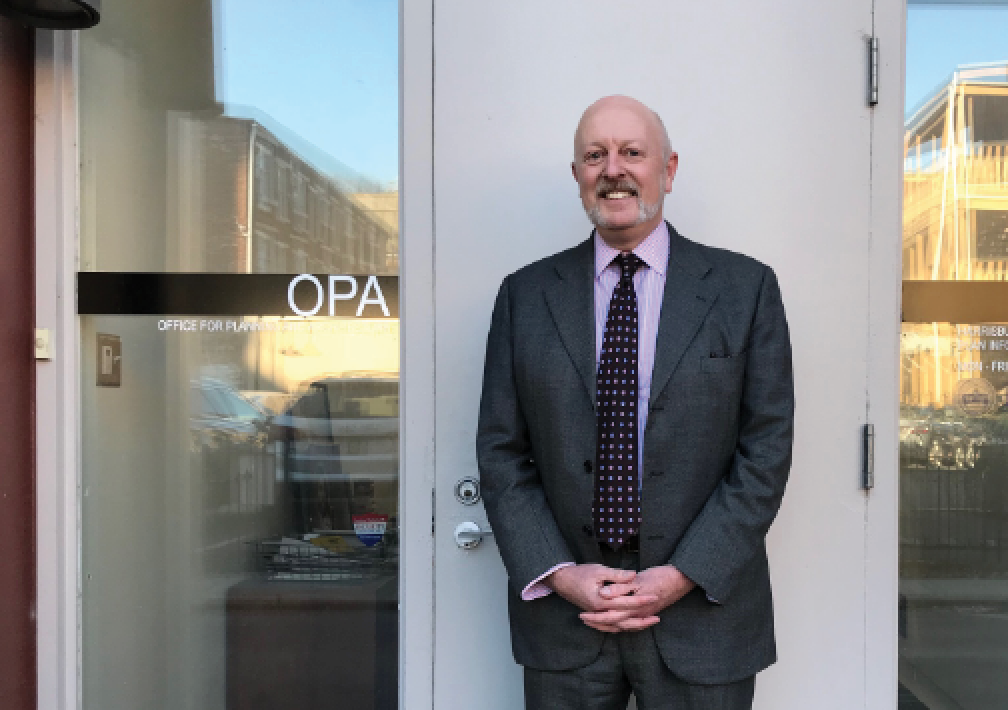
In a small suite of the Office of Planning and Architecture, Peters’ design firm on Willow Street in downtown Harrisburg, every surface is covered in paper: spreadsheets, mockups and “idea slips,” square cards on which Harrisburg residents wrote their desires for the city.

The print detritus shows what was left on the cutting room floor during the 18-month process of drafting a comprehensive plan for Harrisburg. That process recently culminated in the release of a 199-page draft document, which aims to articulate a shared vision of an historically factious and geographically fragmented city. The plan is part audit, offering an inventory of the city’s material and economic resources, and part wish list, enumerating the actions that the city can take to improve its housing stock, traffic patterns, waterways, business development and more.

“It’s an aspirational document,” Peters said on a recent afternoon in the planning room.

He estimated that the cost of implementing the comprehensive plan in full would range in the billions of dollars. But he also claimed that the plan as a whole would pay for itself over time by raising the aggregate value of the city’s real estate market, which would lead to more business development and higher tax revenue.

Many city officials, though, have another opinion of Peters’ draft plan. They regard the plan and the process as so flawed that they vow to fight its approval, much less its implementation.

“Something for the city”

Peters grew up in Lower Allen Township and lives today in Uptown Harrisburg. He founded OPA in 1999 and has taught design and architecture at Penn State and HACC. He also travels nationally for invited speaking engagements. In early November, he delivered a talk at Iowa State University School of Design titled “Corrupt Designs,” where he described “the challenges associated with comprehensive planning in a city well-known for economic and political difficulties,” according to an event listing.

Peters has said that the great potential he sees in Harrisburg led him to prepare a last-minute bid for the comprehensive plan project, which was announced by the city in late 2014. He promised to assemble a team of expert consultants from across the country and was awarded the project in a unanimous vote by a 23-person steering committee.

That vote may have been the first and last harmonious moment in the comprehensive planning process. The next 24 months saw disputes between the city and Peters about Peters’ alleged failure to pay subcontractors and meet deadlines, as well as ideological disagreements about policy proposals within the plan. The acrimony between Peters and city hall has reached such heights that the two parties don’t even agree on Peters’ employment status.

Mayor Eric Papenfuse and city Solicitor Neil Grover insist that Peters was fired after submitting material behind deadline last year. Peters says he assiduously followed the terms of his contract. He claims he suspended the contract in 2016, after city administrators allegedly failed to provide timely feedback on drafts and asked him to change content.

After their communication dissolved in 2016, city administrators and Peters began preparing individual draft plans. In summer 2017, the six-member, volunteer Planning Commission invited both parties to present their material separately. The commission voted unanimously to adopt Peters’ draft. He subsequently published it online at BeHbg.com.

As Peters began promoting the draft in public meetings and soliciting final feedback from residents, members of the city’s administration have been publicly denouncing it.

“The Comprehensive Plan that you are seeing on a website, is not the city’s plan,” Jackie Parker, the city’s director of Community and Economic Development, told members of the Harrisburg Parks Foundation in a Dec. 11 email. “It is a plan written by a consultant who has hijacked the process. It does not include what the public has indicated they would like to see.”

Mayor Papenfuse also claims that Peters “hijacked” the planning process. He said in December that he will recommend that City Council vote to reject the plan.

“[Peters] clearly wanted to impose his vision onto Harrisburg without sufficiently incorporating public input,” Papenfuse charged. “Now you have a fired architect putting forth a plan that the city had nothing to do with.”

The mayor also alleged that Peters undertook the project as a way to extort money from the city.

But people outside of the city administration who have worked with Peters offer a somewhat different account. Tara Leo Auchey led a community outreach effort with Peters for 10 months in 2015. Along with city planning director Geoff Knight, who declined to be interviewed for this story, the team gathered public input data to inform comprehensive plan proposals. Auchey said that Peters was reluctant to undertake the ambitious outreach agenda because of constraints on time and money and because he thought his professional expertise could guide the process. But Auchey said that he was receptive to the data as it came in.

“Bret’s message was that we were all doing something for the city, and I truly believe he came from that place,” she said.

Auchey did threaten to quit the project in October 2015 after a series of her paychecks were delayed. Though she questioned Peters’ management skills, she did not think he pursued the project to extort money from the city, as Papenfuse alleged. Auchey has since been paid for her work in full.

Auchey also emphasized that Peters wasn’t the only professional drafting the plan. A team of international consultants, with specialties from park design to housing policy, helped Peters analyze data and recommend planning strategies. Auchey thinks that Peters’ personality may have invited heightened scrutiny of his leadership abilities.

“Bret pontificates, he’s very highbrow and thinks highly of himself,” Auchey said. “But the biggest fault I see is in editing and time management.”

For his part, Peters insists that OPA upheld its contractual obligations, assiduously managed its resources and acted with good intent towards the city. He believes that officials are trying to discredit his work because they object to some of his
policy proposals.

In the chapter of his plan devoted to housing, Peters does not advocate for homeownership incentive programs, and he discourages the demolition of dilapidated properties. Both of those proposals, which are critical to Peters’ strategy to raise home values and, subsequently, increase tax revenue and business development in the city, are in direct conflict with city initiatives.

Harrisburg’s Department of Community and Economic Development has proposed its own comprehensive housing strategy that it hopes will bring homeownership in the city to 50 percent in the next decade. In December, City Council voted in to double the Code Bureau’s demolition budget
for 2018.

Peters’ comprehensive plan is currently published online for public input, and the Planning Commission will host a public hearing to discuss it on Jan. 10. After that, the commission can ammend the draft and vote to send it to City Council. Council, in turn, will vote to adopt or reject Peters’ draft as the city’s new comprehensive plan. The decision could be vitally important for how Harrisburg develops in the next 20 years.

What is a Comp Plan?

The last time Harrisburg undertook a comprehensive planning effort was in 1974, the same year that the Watergate investigation dominated the American news cycle. The city was recovering from the devastation of Hurricane Agnes, which, according to then-mayor Harold Swenson, dealt the city “a near fatal punch” two years earlier.

Flood waters from Agnes swirled into 6,000 Harrisburg homes and decimated at least 600 small businesses in June 1972. In his history of Harrisburg, “City Contented, City Discontented,” journalist Paul Beers wrote that the storm wrought more than $3 million in damage to city property and caused $5 million in private property loss. By the time the waters receded, landmark buildings and entire neighborhoods had been wiped off the map. Mayor Swenson, along with his seven-member, Republican-controlled City Council, decided to undertake a full update to the city’s master plan, which had last been updated
in 1961.

“The urgency of setting the direction for the future has plainly never been more real,” the 1974 plan begins. “The Harrisburg community is ready and willing to take the necessary hard look of self-reappraisal, to evaluate the future alternatives which face the City, and to determine to proceed by plan on a chosen course of action.”

For all its ambition, the 1974 plan languished after its publication. Some of the objectives of that plan, such as the construction of a bridge on Division Street for pedestrians to access Wildwood Park, are still being considered by the city today. Harrisburg leaders did not commission another update until 2014, the first year of the Papenfuse administration.

In recent years, urban comprehensive plans have shifted from general guides on community objectives to strategic documents that focus on implementation and action, affirmed Tom Daniels, a professor at University of Pennsylvania School of Design. Daniels, who teaches urban comprehensive planning, called comprehensive plans a blueprint of where a city wants to see itself in 20 years, based on professional expertise and public input.

“The clear challenge of a comprehensive plan is how do you set priorities,” Daniels said, noting that planners often have to reconcile competing needs in housing, transportation, land use and economic development.

How they set those priorities depends on what the public wants to see.

“The art of it is blending the more professional planning side with the desires of residents,” he said.

Peters’ team collected public input during a 10-month community engagement campaign in 2015. The effort was led by Auchey and Knight with help from graduate interns at Peters’ firm. Over the course of 10 months, the team held more than 100 meetings with residents and stakeholder groups, gathering input from hundreds of residents across the city. Peters then used that data to determine planning objectives and recommend actions to achieve them.

Peters’ draft document is organized into eight chapters. Each one outlines broad goals, more specific “objectives” and action items to achieve them. In the housing chapter, for example, the objective “stabilize and preserve existing buildings” entails four action items, including the “identification and mapping of problem properties” and “establishment of a troubled buildings initiative.” Each action comes with a detailed list of steps to realize it.

“We have followed an assiduously rational process based on math and fact,” Peters said. He added that, while analyzing the outreach findings, he found that public opinion perfectly aligned with trends and expertise in the professional design community.

In a conversation in early December, Papenfuse criticized Peters’ draft as too prescriptive and ideological. He reiterated the charge that Peters disregarded public input and imposed his own vision for Harrisburg’s future.

“The imperative language of this plan is unlike any other I’ve ever read,” Papenfuse said.

He added that he would have preferred broad objectives with a “panoply” of options for city officials to consider.

According to Daniels, however, the authors of comprehensive plans are supposed to be specific in their recommended objectives and actions.

“One of the things planners are supposed to do with help of the public is weigh alternatives,” Daniels said. “To have just an array of options is a little loose.”

Daniels also said that comprehensive plans should include cogent strategies for economic development and housing. Papenfuse had also objected to those chapters in Peters’ plan, claiming there was an argument over whether they should be included in the project at all.

A House Divided

For all the discord surrounding the contents of Peters’ draft, city administrators agree with him on at least one point: the city needs to rehabilitate dilapidated buildings and hold absentee owners accountable for blight. The problem, however, it that Peters and city hall have radically different ideas for how to do that.

The long-held stance of the city Department of Community and Economic Development is that increasing homeownership in the city will improve neighborhoods. When someone buys a home, they make an economic investment in the property and the neighborhood around it. Conventional wisdom says they will work to maintain both.

Harrisburg’s Department of Community and Economic Development sent Peters its own draft of a comprehensive plan housing strategy in April 2016, which Papenfuse said they completed with help from a subcontractor. That document details the city’s goals to increase resident homeownership in the city to 50 percent within the next 10 years and incentivize the construction of new market-rate homes. Currently, 40 percent of Harrisburg residents are homeowners and 60 percent are renters.

Peters acknowledges that neighborhoods with a higher share of homeowners are safer and better maintained than those dominated by renters. But he also argues that, with a median income of $34,000, Harrisburg’s population cannot sustain widespread homeownership. Even with the help of government subsidies and incentives to finance a house, Peters said, maintaining Harrisburg’s historical housing stock is expensive.

“Many people can’t afford to maintain the asset,” Peters said. “When someone is close to the edge on a payment program, one job loss or medical bill puts them into a foreclosure process in three months. Homeownership isn’t just the purchasing of a house.”

Peters said he didn’t prioritize home ownership in his own housing strategy because Harrisburg’s residents didn’t demand it. Only 14 percent of residents polled during the public outreach period said they wanted more incentives for home ownership. Sixty-five percent said their main housing concern was the rehabilitation of vacant properties. Peters thinks the city can mitigate blight by localizing property ownership, which doesn’t necessarily require owners to occupy their dwellings. In short, he wants Harrisburg residents to have myriad paths to build equity in their neighborhoods.

Peters details some of those paths in a concept he and his team developed in 2015. The concept proposes a “city wide investment area” that would expand property ownership opportunities for people who already live in the city. The resident-owner housing strategy might create favorable financing for a homeowner to buy and manage a neighboring rental property, or a tiered taxing structure where resident-owners would pay different rates than out-of-town landlords. Some of the methods he proposes elsewhere in the housing strategy, such as encouraging collective purchasing of property, also appear in the city’s DCED strategy.

The central goal of Peters’ housing strategy, he said, is to separate houses from the people who live in them. He envisions neighborhoods where rental properties are maintained to the same standard as owner-occupied properties, since the manager of the rental property may live down the street and see it every day. He also wants to incentivize trade education and apprenticeships so that the city has a robust corps of maintenance professionals. Harrisburg’s greatest material asset is its housing stock, he says, and it will become a more lucrative one if it receives proper care.

“The city is functionally a cultural landscape, and we have to treat it like a landscape we value, not a bunch of properties where we can make money off of trades,” he said.

Auchey and Vern McKissick, a local architect who serves on the Planning Commission, confirmed that Peters clashed with city officials on housing strategy proposals. Peters said that disagreements over housing precipitated the breakdown of cordial relations between his firm and the city. Papenfuse maintains that the project devolved after Peters submitted substandard work product and failed to complete the project by deadline.

“Unsalvageable”

In a public hearing last month on Harrisburg’s 2018 budget, Ausha Green, City Council’s newest member, pressed the city administration on its role in developing the comprehensive plan.

Green serves on the city Planning Commission and supported Peters’  draft over the city’s. She criticized the lack of clearly delineated responsibilities among all the planning entities, but her main concern was how the Planning Commission would incorporate public feedback into Peters’ draft document.

“Once the Planning Commission decides what edits it wants to see, we will do those at your direction in-house,” Papenfuse said.

“You mean what edits the public wants to see,” Green shot back. She then called on the city to withdraw from the process. “I recommend someone from outside do it because some people from the public have the perception that the plan was hijacked by the administration.”

In an interview the next day, Green said that city administrators instructed the Planning Commission to edit and rewrite parts of the comprehensive plan draft in 2016 and 2017. The commission knew that the city Planning Bureau would contribute feedback to the draft materials they received from Peters, but Green said the commission did not think they would be so extensive.

“I didn’t expect the city would have such a hands-on role in the writing of the comprehensive plan,” Green said. “Some people might see them as overstepping their role, but that depends on what they thought their role was.”

Green acknowledged that Harrisburg had not commissioned a comprehensive plan in 40 years, which left scant precedent for how to assign roles and responsibilities. Robert Shoaff, a Midtown resident who is trained as an urban planner, offered a similar theory of the discordant planning process.

“We have 43 years of not doing this, so the residents and city don’t know the right interaction.” Shoaff said. “We have to build this back up.”

Members of the public are invited to comment on the draft plan online and discuss it at a public hearing on Jan. 10. After that, the Planning Commission and City Council will vote on whether or not to adopt the plan. Papenfuse is not sure whether he has veto power, but he has said he does not think the plan will be approved.

“It’s unsalvageable,” he said. “Unfortunately, we’ll have to start over at some point.”

He pointed out that the plan does not include any references to Harrisburg University, which earlier this year announced it will invest more than $100 million in a 36-story building in downtown Harrisburg. He also said that some of Peters’ concepts, such as creating a southern gateway entrance for traffic entering Harrisburg from I-83, have already been considered and rejected by
the city.

Green said she’s heard mixed reviews of the plan from constituents. But after almost two years  of political and personal strife, she wants to let the public guide the planning process to its end.

“We’re going to continue to work through the process and are looking to have as much public input as possible,” Green said. “It’s a community issue at the end of the day.”

To read the draft comprehensive plan, visit behbg.com. A public hearing on the plan is scheduled for Jan. 10.


Continue Reading

Capital Dance: Area ballet students descend, gracefully, on D.C.

As the resident dance company of Whitaker Center, Central Pennsylvania Youth Ballet is accustomed to performing in the state capital.

However, CPYB students had never danced in the premier arts center in the nation’s capital. Until now.

In November, for the first time, 16 students, ages 11 to 18, participated in an hour-long program at the Kennedy Center, a performance that paid tribute to the renowned Russian-born choreographer George Balanchine.

CPYB’s appearance was especially exciting, because it resulted from a Kennedy Center invitation, rather than the school’s request.

When the Kennedy Center decided to pay tribute to Balanchine, the staff reached out to the dance department for recommendations, said Meg Booth, director of dance programming.

“Because of the Kennedy Center’s commitment to local, national and international art of all ages and to education, we thought of Central Pennsylvania Youth Ballet,” said Booth. “It is one of the strongest ballet schools in the country.”

The invitation was a “great compliment” to Marcia Dale Weary, founding artistic director of CPYB, said Alecia Good-Boresow, school principal. “And the performance was a chance to have wider exposure, to perform in front of a not-typical audience.”

In 1955, Dale Weary opened the dance school that eventually became known as Central Pennsylvania Youth Ballet in her hometown of Carlisle after studying in New York.

Since then, thousands of students have benefited from a curriculum focused on building technical strength, stamina and flexibility, and nurturing artistic development. CPYB alumni are principals, soloists and corps de ballet members in the world’s top companies. Other alumni have had long careers in dance-related fields, such as choreography, teaching and arts administration.

Adherence to Balanchine’s choreography is the responsibility of Darla Hoover, associate artistic director of CPYB. She studied with Dale Weary until the age of 15, before moving to New York and enrolling in the School of American Ballet. She then joined the New York City Ballet when Balanchine, co-founder of the company and its artistic director for more than 35 years, was still active.

It was there that Hoover learned a lesson about what’s important to excellent teachers. It was one night when she was dancing Tea in “The Nutcracker,” the first role she performed in the holiday ballet.

“I had a mishap then,” Hoover recalled during the narrative part of the Kennedy Center performance. “Mr. Balanchine used to stand in the wings watching us. One night I dropped my fan by mistake, and it landed all the way across the stage in a place no one could get to. I thought he would fire me, but he didn’t. All he really cared about was that dancers give 200 percent.”

Hoover has a lasting connection to her teacher, as well.

She is a repetiteur for the George Balanchine Trust, which licenses his ballets, protects the trust’s copyrights and trademarks, and continues to uphold the artistic standards of the Balanchine legacy. The trust also organizes the engagement of repetiteurs to teach classes at schools and companies to ensure that the master’s choreography is honored. CPYB is the only school licensed to do Balanchine’s “Nutcracker.”

“We’ve been doing the ballet for close to 45 years,” Hoover said.

An audience of nearly 100 people attended the November performance at the Kennedy Center, in seats set up in front of a carved-out stage. That’s in addition to several parents and friends of the dancers and CPYB staff.

No tickets are required for Millennium Stage performances, which take place 365 days a year and are free. Interested patrons line up and are seated about a half-hour before the 6 p.m. start time.

In addition to segments from “The Nutcracker,” CPYB brought the “Embraceable You” segment of “Who Cares?” (with music by George Gershwin) and the second movement from Western Symphony to the Millennium Stage.

Kensington MacMillen danced Coffee, also known as the Arabian dance, arguably the most sensuous part of “The Nutcracker.”

“Getting to dance at the Kennedy Center was a shock to the system,” said the U.K.-born MacMillen, 16. “It was just such a special gift, especially with knowing how many other people had performed there.”

When she first got on stage, MacMillen said she wasn’t certain what to expect.

“When you are performing in a different place with a new audience, it can be hard to adapt,” she said. “But, at the Kennedy Center, I kind of felt at home, especially with George Balanchine’s choreography and our teachers around us.”

MacMillen enrolled at CPYB as a young child and “from my very first class,” she said, “I immediately fell in love with the school.”

She is now taking six days of classes a week.

“This is what I hope to do with my life,” she said.

For more information on the Central Pennsylvania Youth Ballet, visit www.cpyb.org.


Continue Reading