Summer in the City: Dauphin County announces summertime event, festival series.

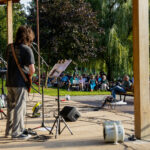
Dauphin County will host outdoor movies as part of its summertime festival lineup.

The Harrisburg area’s annual lineup of summertime fun returns in June, as Dauphin County announced yesterday that it will host a string of cultural and music festivals.

Throughout the summer, the county will hold the Music and Wine Festival, the Sunset Music and Movie Series, Brewfest, the Cultural Fest and the Jazz and Wine Festival.

First out of the gate is June’s Music and Wine Festival, which includes grammy-nominated artist Mindi Abair, as well as other music from pop, rock, funk, blues, country and jazz artists.

“The major music festivals will feature two stages, 10 wineries from the Hershey-Harrisburg Wine Country, 20 national recording acts and 18 of the area’s elite performing artists,” said Carl Dickson, program director for the county Parks and Recreation Department.

The Sunset Music and Movie Series also begins in June. It features outdoor movies shown on a giant screen at Fort Hunter Park and other venues, as well as two concerts later in the summer.

“If you have children or grandchildren and you’re not going to this, shame on you!” said county commission Chairman Jeff Haste.

In July, Brewfest is back, and patrons can sample beer, enjoy live music and gourmet food and learn about the brewing process.

Grammy-nominated artist Angie Stone will perform at the Cultural Fest, a block party that takes place in early August in downtown Harrisburg. The Jazz and Wine Festival, slated for September, will wrap up the summer series, featuring headline acts Jonathan Michel and Bobby Broom.

“It’s important for our community to be able to come together and just put down whatever the barriers are and enjoy themselves,” Haste said.


2018 Special Events:

  • Music and Wine Festival: June 9 and 10, Fort Hunter Park
  • The Sunset Music and Movie Series: various dates, Fort Hunter Park and two other locations.
  • Brewfest: July 21, Fort Hunter Park
  • The Cultural Fest: Aug. 5 at 2nd and Market streets, Harrisburg
  • Jazz and Wine Festival: Sept. 7, 8 and 9, Fort Hunter Park

Click here for more information on the upcoming festivals.

Continue Reading

Weekend Roundup with Sara Bozich

Happy Weekend!

It’s a yard sale weekend in my ‘hood – weather pending, anyway (for me, not the sale). Sunday, we’re brunching with friends and the babe. I have like 100 things I want to do, including Shakespeare in the Park — but it’ll have to wait until next weekend while I’m in the middle of an office revamp and so much more.

What are you doing this weekend?

(more…)

Continue Reading

Path to Success: A beloved fixture, the Capital Area Greenbelt is poised for greater (and greener) days ahead.

Scott Shepler says hello to everyone he passes on the Paxtang Parkway. The woman walking a collie gets a hello. The midday jogger gets a hello.

All these people might not even know that this stretch of the Capital Area Greenbelt is called the Paxtang Parkway, but they are enjoying it for exactly the reasons that Shepler strives to keep it from washing into the creek.

“I view these natural areas as respite areas from city living,” he said. “It’s important for us to maintain it.”

As the Harrisburg region looks toward a multi-million-dollar upgrade of the Greenbelt, the Paxtang Parkway—the stretch that could be credited with launching the Greenbelt movement in the first place—gets its piece of the action.

First, where is the Paxtang Parkway? Just where its name implies. Pop into a parking lot behind City Line Diner on Derry Street, where Harrisburg adjoins Paxtang, and you’re at the gateway of a 1.3-mile stretch of wooded, creekside path. This stretch has always been meant as an urban respite. Around 1900, renowned landscape architect Warren Manning envisioned a “necklace” of naturalistic, “wild garden” parkways, accessible by pedestrians and carriages, linking city parks.

Only two of those parkways were built, and the Paxtang Parkway, dating to 1906, was one of them. Vehicles actually drove it until Hurricane Agnes wrought devastation in 1972. The parkway went dormant until 1989, when two state foresters, Norm Lacasse and Ellen Rhone, were conducting a tree inventory and discovered this forgotten parkway. In 1990, they formed the Capital Area Greenbelt Association to revive Manning’s vision. By 1999, the Greenbelt was essentially complete.

CAGA board member Shepler remembers when cars drove on the Paxtang Parkway. In recent years, he despaired over its deterioration. The parkway snugs into a kind of ravine along Spring Creek West’s meandering Paxtang tributary. Runoff from the forested hillsides and output piped from the Kline Village Plaza storm water system were washing away the asphalt walking trail. Erosion on the waterway was pushing back the creek bed almost to the point of touching the trail. Manmade features such as encasements around sewer pipes were deteriorating.

At one creek bend, Shepler pointed to a small hill.

“When I started this, many years ago, that little point was much more pronounced,” he said. ”I’ve seen that thing walk back maybe six to eight feet. All the soil was washed away. It’s all gone.”

Rapid erosion means that large quantities of sediment wash into Spring Creek, with its precious wild trout population, and eventually into the Chesapeake Bay, creating cloudy water that hampers the growth of underwater plants essential to young fish and shellfish.

In 2015, Shepler teamed with Todd Moses, an environmental restoration specialist with engineering and environmental consultant firm Skelly and Loy, to write a plan of preservation and protection.

“The Paxtang Parkway is a microcosm of the problems plaguing older urban greenspaces,” the plan noted.


Here to There

Conditions were detrimental to water quality and infrastructure, but restoration could offer “immense quality-of-life benefits” for residents with limited access to natural areas.

Phase 1 of the plan is underway this spring as part of the Greenbelt upgrades—a $500,000 project to stabilize the most egregious erosion sites. CAGA raised $60,000 from the Kline Foundation, Trout Unlimited, the city of Harrisburg, the Lancaster County Solid Waste Management Authority and its own coffers to leverage a $490,000 grant from the Pennsylvania Department of Environmental Protection. Skelly and Loy donated in-kind services for planning and funding pursuits.

“You have to start out with money,” Shepler said. “Nobody will give you any money unless you have money.”

Within the overall Greenbelt upgrades, the parkway project adds “another area where we have an opportunity to prepare and preserve the Greenbelt,” Shepler said. “It’s hard not to be excited about all the improvements.”

These improvements, kicked off in March by state and local officials, total $7.5 million. Along with the Paxtang Parkway streambank restoration, projects include:

  • Six intersections enhanced with such safety features as flashing lights, ADA-treated crosswalks and pedestrian crossing buttons. Shepler often takes children from the Boys & Girls Club on Greenbelt bicycle rides through Trips for Kids Harrisburg. “When you have a group of kids ages 8 to 16, crossing some of these intersections is really hairy, so I’m really happy about that,” he said.
  • A long-awaited connector from Wildwood Park to Fort Hunter. Pedestrians and bicyclists will avoid heavy traffic via a 1.5-mile path from Industrial Road, under Linglestown Road and along the river at Front Street.
  • Resurfacing near the PennDOT building on a former rail bed along Cameron Street between the Five Senses Garden and Paxton Street and from Rutherford House to Park Drive.

Along with the DEP’s $490,000 grant for the parkway project, the Greenbelt upgrades are funded with $5 million from the Pennsylvania Department of Transportation, $1 million from the Pennsylvania Department of Conservation and Natural Resources, $230,000 from the Pennsylvania Department of Community and Economic Development and $310,000 from Dauphin County gaming grants.

“You’re talking about a recreational resource from a biking and walking perspective, but it’s a community resource, too,” Shepler said. “People use it to get from here to there for various reasons, out of necessity and not just out of enjoyment.”

Not Tolerable

The parkway project also tackles the thorny issue of invasive plants.

All along the creek and in the woods, Shepler pointed to invasive plants, shrubs and trees. The tree of heaven is “really the tree of hell” for its aggressive reproduction and tendency to block nearby plants from growing. Japanese knotweed creates a tangled rhizome underlayer “that’s as impervious as concrete.”

It’s just a start, but Phase 1 plants reconstructed areas with native plants and funds planning for invasive plant control.

“The key word is ‘plan,’” Shepler said. “Implementing the plan, that’s a different story,” because control often requires the use of herbicides that only municipal employees—and not CAGA volunteers—can handle.

Still, it has to be done.

“If we don’t have native plants, we won’t have native insects,” Shepler said. “If they don’t survive, our birds won’t survive.”

Pointing to a meadow along the parkway that looks somewhat scruffy in the early spring but is planted with wildflowers and hosts a pair of bluebird boxes, Shepler has a message for those who like their nature manicured.

“Aesthetics, for some people, is the main issue, and we’ve got to get away from that,” he said. “It can’t be just about how things look.”

A couple with a toddler walked past, and Shepler said, “Hello.” Then he continued. “If it’s just about how things look, then kiss it all goodbye. It’s impossible.”

Future phases of the parkway project, it’s hoped, will reconstruct sewer casements and culverts, repave the trail and improve rainfall infiltration to reduce storm water runoff.

As many as 100,000 to 400,000 users, on average, enjoy different sections of the Greenbelt each year. Shepler believes that he and CAGA, an all-volunteer nonprofit, are at work for all of them.

“It’s saving a historic parkway,” he said. “If no one did anything about this particular problem, eventually it would have to be closed and a vital link in the Greenbelt would be gone. That’s not tolerable. It’s not something anyone wants to think about. We want to preserve and protect this valuable community resource.”

For more information about the Capital Area Greenbelt, visit www.caga.org.

Stories on environmental topics are proudly sponsored by LCSWMA.

Continue Reading

Green Days: Thanks Nat Geo, but please come back in a few years.

Illustration by Rich Hauck

Is Harrisburg really one of America’s “top-10” greenest cities?

According to National Geographic, it is. The stalwart nature magazine recently named Harrisburg as a top city in the nation for the amount of green space in its limits.

On a grass/dirt/tree basis, Harrisburg does do pretty well. The city is a mere 12 square miles, and tucked within it are several large, gorgeous parks: Riverfront Park, City Island, Italian Lake, Wildwood and Reservoir parks. Four square miles is water, similarly beautiful, with an abundance of wildlife and flora spreading across the Susquehanna River and over to Wildwood and Italian lakes.

I don’t wish to diminish this natural splendor or take away from the City Beautiful visionaries, 100 years gone, who are largely responsible for our bounty.

However, on a daily basis, Harrisburg doesn’t feel particularly green. In fact, it often seems quite the opposite—with block after block of asphalt and concrete, cars and hardscape.

This is because, while the city is abundantly green in total acreage, much of that natural wonder is confined to its edges, particularly near and along the river.

So, one can walk east, away from Riverfront Park, and encounter nothing but sidewalks, streets and curbs until, if you aim correctly, you might run into Reservoir Park a half-hour later. But you also might get stopped cold, since the lower part of the city and Allison Hill are mostly cut off from each other by the hard steel of railroad tracks and the imposing car canyon of Cameron Street.

Also, while Harrisburg’s parks are green, its streets are not. Its tree canopy is thin, its traffic-choked roads are forbidding and too many areas, particularly near Cameron Street, are loud, blighted and unpleasant.

So, we have a lot of work to do. But the good news is that the wheels are in motion for a much greener city.

As reported in TheBurg in April, Harrisburg is engaged in a multi-year effort to restore its tree canopy. Moreover, groups like Friends of Midtown, the Capital Area Greenbelt Association, Capital Region Water and others have long-term projects to help soften the landscape. Road improvements, such as the current 3rd Street corridor project and the proposal to turn 2nd Street back to a two-way flow, contain greening and traffic-calming components, which should make Harrisburg more livable and less auto-addled.

The most promising development is also the most ambitious.

In March, the state released the Paxton Creek Restoration Master Plan, which envisions a restored, more natural creek, banks and bed. That plan would free the waterway from its century-old, concrete tomb, turning much of the immediate area into parkland. This would add a vital strip of green to the center of the city, breaking up the harsh urban landscape and helping to tie together the city’s two opposing sections, now sliced apart by Cameron Street. The plan also would remove 133 acres from the 100-year floodplain, making the blighted brownfields in and around Market Street developable again.

Also in March, TheBurg reported that the Capital Region Economic Development Corp. (CREDC) had purchased 21.3 acres of industrial brownfields off of Cameron that once housed the sprawling Harrisburg Steel Co. Under the Paxton Creek Plan, that land will become part of the future Paxton Creek Park, a plan that the city is enthusiastically embracing.

According to the state, this plan will take four to five years of preliminary work before construction can even begin. But that would be a game-changer for a greener, more livable and more unified Harrisburg.

I feel a little guilty about the National Geographic ranking. I can imagine some wide-eyed eco-tourist coming here this summer, that beautiful Nat Geo picture of a lazy Susquehanna swimming in his head. Then he hits the light at Cameron and Market, stares at the trucks, traffic and post-industrial blight, and thinks to himself, “Am I in the right place?”

So, maybe, on paper, we’ve earned the title of green city, but, on the ground, we still have a long way to go. I just wish I could tell that disillusioned visitor that, yes, someday we will own that honor.

We finally will complete the painful, decades-long transition from smoke-belching, steel-making powerhouse to a small, clean capital city that complements its river, lakes and parks. It is fitting that the most radical evidence may be a free-flowing Paxton Creek, set off by a meandering strip of green, located in the hard heart of the city’s industrial past.

Lawrance Binda is editor-in-chief of TheBurg.

Continue Reading

Community Corner: Notable June Events

June Community Corner

Patio Party
June 1: Join Harrisburg Young Professionals for its “Kick Off the Summer Patio Party” at the Hilton Harrisburg, 1 N. 2nd St., 6 to 9 p.m. Come out to enjoy live entertainment, cocktails and a special food menu, while getting to meet with friends and fellow HYP members. For more information, visit hyp.org.

Free Shakespeare
June 1-16: Don’t miss the 25th annual “Free Shakespeare in the Park” event with “A Midsummer Night’s Dream.” The Gamut Theatre production runs June 1-9 and June 13-16, starting at 7:30 p.m. at Reservoir Park, Harrisburg. Visit gamuttheatre.org for more details. 

Spring HBG Flea
June 2: Shop the HBG Flea for local art, vintage treasures and curated curios outside Midtown Cinema, 250 Reily St., Harrisburg, 9 a.m. to 3 p.m. Visit hbgflea.com for all the details.

Garden Day
June 2: Penn State Master Gardeners in Cumberland County will host Family Garden Day at the Penn State Extension office, 310 Allen Rd., Carlisle, 10 a.m. to 1 p.m. Explore and learn about birds, bees, animals and gardening, with free family activities recommended for kids in pre-K through elementary school. For more information, visit extension.psu.edu.

Fun Fest
June 2: Slate Hill Mennonite Church, 1352 Slate Hill Rd., Camp Hill, hosts its 5th Annual Community Hilltop Fun Fest, 4 to 8 p.m., rain or shine. Bring the whole family for carnival foods, kids’ activities, a petting zoo, games, a bounce house, prizes and more. Free parking is available at the Christian Life Assembly, 2645 Lisburn Rd. Visit hilltopfunfest.com.

Tour de Belt
June 2-3: The Capital Area Greenbelt Association will host its 18th annual Tour de Belt bike ride, which starts at 9:30 a.m. at HACC and follows the 20-mile Greenbelt trail. Lunch, a T-shirt and post-ride activities are provided to riders. Proceeds go to Greenbelt restoration and maintenance. Visit CAGA.org for all the details.

Art & Adventure
June 4-8: Carlisle Art Learning Center and Diakon Wilderness Center present an Art & Adventure Camp for kids ages 9-14, at the wilderness center. Outdoor activities include hiking, low ropes and high ropes courses and canoeing. Art projects will be interwoven throughout each day with thought-provoking projects utilizing nature. Get more information at carlislearts.org or diakon.org.

Family Fun Night
June 5, 19: Over the summer, New Cumberland Public Library will offer a free picnic dinner followed by a family movie in Foundation Hall on select Tuesday evenings beginning at 5:30 p.m., with the movie starting at 6:30 p.m. Titles for the movies are available in the library or by calling the children’s desk at 717-774-7822. Visit newcumberlandlibrary.org.

Health Fair
June 6: Brightwood Career Institute in Harrisburg will host a free Community Health Fair at the campus located at 5650 Derry St., Harrisburg, 2 to 5 p.m. The event includes refreshments, campus tours and a variety of health-related checks and activities for all ages, including weight checks, blood pressure checks and glucose screenings. For more details, visit brightwoodcareer.edu.

Women in Tech
June 6: The Technology Council of Central Pennsylvania presents the 2018 Women In Technology Awards Gala at Spring Gate Vineyard and Winery, 5790 Devonshire Rd., Harrisburg, 5:30 to 9:30 p.m. For more event details and to register, visit tccp.org.

Mixer
June 7: Join the West Shore Chamber and other local business professionals at the June Afternoon Networking Mixer, 11:30 a.m. to 1:30 p.m. at Home 2 Suites, 300 Bent Creek Blvd., Mechanicsburg, 4900 Woodland Dr. The event is free and open to chamber members. Visit wschamber.org for details.

Swords & Shakespeare
June 7: Start your summer with a bang and a clang at “Swords and Shakespeare: Scenes of Conflict and Combat,” at Central Penn College, 600 Valley Rd., Summerdale, 6:30 p.m. This free event features fight scenes from some of Shakespeare’s most famous plays, including “Macbeth” and “Romeo and Juliet.” Visit centralpenn.edu for details.

Business Networking
June 7, 14, 21, 28: BNI Capital Region 1 invites business owners, tradespeople and professionals to its weekly networking breakfasts on Thursdays mornings, 8 to 9:30 a.m., at Dodge City Steakhouse, 2037 Paxton St., Harrisburg. More information can be found at bnidvr.com.

Summer Reading
June 7-Aug. 4: Sign up for New Cumberland Public Library’s Adult Summer Learning Club, “Libraries Rock.” Register online or at the library using the catalog computers. For more details, visit newcumberlandlibrary.org. 

Color Run
June 9: Join in the fun at The Color Run Hershey, which will be held at Giant Center, 550 W. Hersheypark Dr., beginning at 8 a.m. Guests are encouraged to run, walk, dance or cartwheel their way through the larger-than-life course as they are doused in a rainbow of colored powder. For more information, visit thecolorrun.com/locations/hershey-pa.

Project for Dad
June 9: Kids ages 4 to 12 are invited to build a bird feeder for Father’s Day with Penn State Master Gardeners in Cumberland County at the Penn State Extension office, 310 Allen Rd., Carlisle, 10 a.m. to 12 p.m. The Master Gardeners will also help children make a special card for dad and teach kids about different bird species. To register, visit extension.psu.edu.

Kids Club
June 9: Head to Harrisburg Mall, 3501 Paxton St. with the whole family for “Sing Along and Story Time.” Sofeya from Sofeya and the Puffins will sing and play kids music and interactive songs. Kids Club events are free and are held on the second Saturday of each month, 10:30 a.m. to 12:30 p.m. Visit shopharrisburgmall.com.

Bloom Fest
June 9: The Shippensburg Area Chamber of Commerce presents the “Bloom Festival,” 9 a.m. to 3 p.m., in downtown Shippensburg, on West Burd Street in the borough parking lot. The children’s area is open 11 a.m. to 2 p.m., with kids’ activities, music, crafts, retail and food vendors and more. For more details, visit shippensburgbloomfestival.com.

Celebrate Reading
June 9: Kick off Fredricksen Library’s summer reading program with an outdoor celebration at the library, 100 N. 19th St., Camp Hill, 1 to 4 p.m. Enjoy live music, a photo booth, crafts, face painting, balloon animals and more, and sign up for the library’s summer reading program for all ages. More information is at fredricksenlibrary.org.

Cancer Benefit
June 9: Head to Bucks Valley Winery and Vineyards, 333 Meadow Grove Rd., Newport, for the 4th annual “Toasting a Cure at the Vineyard,” benefitting PA Breast Cancer Coalition, 1:30 to 7:30 p.m. The event will feature Alicia Richards from ABC27 as emcee, a wine tasting, live music, a cornhole tournament, silent auction, delicious hors d’oeuvres and light fare. Visit pbccbenefit.com.

Music & Wine
June 9-10: Enjoy listening to live music from national and local recording artists at the Dauphin County Music & Wine Festival, 4 to 9 p.m., at the Centennial Barn at Fort Hunter, 5300 N. Front St. Try free wine samples from Central PA wineries and explore craft and food vendors. Bring lawn chairs and picnic baskets. Outside alcohol is not permitted. Visit dauphincounty.org.

Kids Art
June 9, 23: Take the family to The Millworks, 340 Verbeke St., Harrisburg, for a free kids’ art workshop on the roof, 11:30 a.m. to 1:30 p.m. Enjoy lunch while some of The Millworks artists teach your little ones about different art techniques. Visit millworksharrisburg.com for more details. 

Museum Night Out
June 9: Susquehanna Art Museum at the Marty and Tom Philips Family Art Center, 1401 N. 3rd St., Harrisburg, will host “A Night at the Museum,” a festive gala benefit with cocktails, hors d’oeuvres and a silent auction, 6 to 9 p.m. Visit sqart.org for details.

Plant Swap
June 10: Head to Fredricksen Library, 100 N. 19th St., Camp Hill, for a Community Plant Swap, 1:30 to 3:30 p.m. Bring as many plants as you would like to take home. Plants should be divided into containers in advance. Penn State Extension Master Gardeners will be on hand to assist. Visit fredricksenlibrary.org for more information. 

Concert Series
June 10, 24: Harrisburg Young Professionals kicks off its free Italian Lake Concert series at Italian Lake, N. 3rd and Division streets, Harrisburg, with Mark DeRose & the Dreadnaught Brigade on June 10 and The Singer’s Lounge on June 24. Concerts are held from 6 to 8 p.m. Bring a lawn chair, blankets and snacks. Visit hyp.org for more details. 

Garden Camp
June 12-Aug. 7: Penn State Master Gardeners of Cumberland County will host a Summer Garden Camp for kids ages 7 to 12 at the Penn State Extension office, 310 Allen Rd., Carlisle. There will be five sessions of growing, learning, hands-on fun on Tuesday mornings, 9 a.m. to 12 p.m. Get the full details and dates at extension.psu.edu.

CEO Roundtable
June 15: Harrisburg Young Professionals will host George Nahodil of Members 1st at its June CEO Roundtable Series at Ad Lib, Hilton Harrisburg, 1 N. 2nd St., 7:30 to 9 a.m. This ongoing series is for HYP members, featuring Harrisburg-area CEOs, who speak about their professional journeys and provide insight to young professionals. Visit hyp.org.

3rd in The Burg
June 15: Enjoy the best of Harrisburg during 3rd in the Burg, the monthly arts and culture event at galleries, restaurants and art spaces throughout downtown and Midtown. Check out all the action at thirdintheburg.org.

Butterfly Workshop
June 16: Penn State Master Gardeners in Cumberland County will celebrate National Pollinator Week with a Butterfly Container Workshop at the Cumberland County Extension office, 310 Allen Rd., Carlisle, in two sessions: 10 to 11:30 a.m. and 12 to 1:30 p.m. For all of the workshop details, visit extension.psu.edu.

Health Event
June 16: Black Girl Health, a women’s health outreach and awareness platform, hosts its annual Kickstart Health & Wellness Expo at the Crowne Plaza Hotel, Harrisburg, 7:30 a.m. to 4 p.m. The event includes access to health and fitness workshops, food, prizes and health screenings. Visit BlackGirlHealth.com for more details.

Summer Soirees
June 16, 30: The Art Association of Harrisburg will host two summer soirees at residences in Harrisburg, hosted by David Skerpon and Chris Baldrige on June 16, 5 to 8 p.m., and Mark and Sheri Bennington on June 30, 5 to 8 p.m. Tickets are $45 in advance and $50 at the door. Visit artassocofhbg.com for more information.

Father’s Day
June 17: Take dad to Hershey Gardens, 170 Hotel Rd., Hershey, 9 a.m. to 6 p.m., to celebrate Father’s Day, with free admission for all dads. For more details, visit hersheygardens.org.

Business After Hours
June 21: Mingle with business professionals at Harrisburg Regional Chamber and CREDC’s free networking event, hosted by Harristown Enterprises, Inc., 320 Market St., Harrisburg, 5 to 7 p.m. Visit harrisburgregionalchamber.org.

Civil War Days
June 22-24: Immerse yourself in local history during a three-day event focused on the Harrisburg area’s role in the Civil War. Go on a battlefield tour, visit a re-enactor encampment and enjoy socials, among other activities. Get more details at the Facebook page: Civil War Days Harrisburg.

Free Museum Day
June 23: National Civil War Museum presents its Community Free Day, 9 a.m. to 4 p.m. Join staff and volunteers to celebrate Civil War Days with a day of activities designed to present history in a fun and educational setting. Visit nationalcivilwarmuseum.org.

Day Camp
June 25-29: Wildwood Park, 100 Wildwood Way, Harrisburg, will host Wildwood Way Day Camp for children ages 6 to 8, 9 a.m. to 3 p.m. each day. Children will explore nature and the diverse wildlife at Wildwood Park. Registration fee is $135 per camper and is required in advance. Visit wildwoodlake.org more details.

Petapalooza
June 30: More than 30 rescues and shelters will participate in the 8th annual Petapalooza, featuring animals that need adoption. The event, with live music, food trucks, vendors, raffles and a “Parade of Pets,” runs 11 a.m. to 3 p.m. at Central Penn College, 600 Valley Rd., Summerdale. For more information, visit petapaloozaPA.com.

Continue Reading

Tunes in a Bottle: Songs, like a warm night, from Indian Summer Jars.

Burg in Focus: Indian Summer Jars from GK Visual on Vimeo.

Well-crafted songs, lush harmonies and a sound that feels like you’re hanging outside on a warm evening with your closest friends.

That’s the vibe of the appropriately named Harrisburg-area band, Indian Summer Jars.

Founder Sarah Beth came up with the band’s unusual name years ago while hiking at Ski Roundtop.

“It was a beautiful October day, and the weather was starting to change, but it was still warm—what they call an Indian summer,” she said. “The ‘Jars’ part of the name is bottling that up and carrying it with you.”

The band seems to mark time with the recordings that they produce.

Sarah started the band when she was 19, and the first CD, “Similar,” was recorded in 2008.

“I was working with another woman named Sarah King,” she said. “I did all the writing, and she and I would do the arrangement.”

The duo stuck together for five or six years and produced the second full-length album, “Catalyst,” before disbanding. Sarah tried playing solo, but performing by herself didn’t satisfy her.

“I love to write, and I don’t mind doing solo here and there, but I get so much out of sharing it,” she said.

Indeed, the band has gone through a lot of changes over the years. Today, they perform as a quartet featuring Sarah Beth on lead vocals and guitar, Jenn Hara on harmony vocals, Jason Whetstone on accordion, pennywhistle and vocals and Kelly McClain on percussion.

Jenn and Jason joined the band for the third CD, “Heart Rock,” along with percussionist Dani Fiore. Their fourth and latest CD, “Circles,” features the current line-up. Jason recorded and produced the CD, and, though he has a lot of quality recording equipment, the recording spaces they used were makeshift.

“We recorded ‘Circles’ in a couple of different homes, and I’ve heard from so many people that this one sounds the best,” he said.

Producing the CD presented a challenge, too, as the group wanted to keep a natural sound.

“You need to know when enough is enough,” Jason said. “Looking back, there are one or two things that I would have liked to spend a little more time on, but I’m really happy with it.”

Even though the line-up has been fluid, one constant throughout the band’s two-decade tenure has been Sarah Beth’s superb story-songs.

“Her songs are so full of feeling and so true,” said Jason. “It’s like the heartbeat is there, and we are just following it.”

If you asked band members what’s most important to them, they would say ‘connection.”

“We all have a really great, powerful connection,” Jason said. “We’re best friends.”

The band also likes to connect to their audiences.

“When the audience is appreciating us, the energy is amazing,” he said. “We really care about these songs and want to share them with our audiences.”

You can catch Indian Summer Jars this month June 2, 2 p.m., at the Glen Rock Mill Inn, Glen Rock, and at 6 p.m. at John Wright Restaurant, Wrightsville; on June 7, 6 p.m., at Wyndrige Farm, Dallastown; and on June 30, 4 p.m., at Amethyst Retreat Center, Duncannon. For more information, visit www.isjband.com.

Continue Reading

May News Digest

Sanitation Changes Weighed

Harrisburg’s existing rules governing trash collection may soon get canned.

City Council is considering a new, more comprehensive sanitation ordinance that would usher in stronger enforcement tools and more efficient billing for its trash collection services and lay out clearer rules for city recycling programs, Mayor Eric Papenfuse announced last month.

It would also waive annual trash fees for the owners of vacant lots and properties, eliminating an unpopular provision of the current ordinance, Papenfuse said.

The revised sanitation code aims to curb the city’s perennial problems of illegal dumping and excessive trash accumulation. It would grant the city stronger enforcement powers by creating two categories of offenses and a new fine structure.

Under the proposed ordinance, serious offenses—including illegal dumping, accumulation of trash exceeding 1,000 pounds, improper waste disposal and failure to register as a private trash hauler—would be considered category 1 violations punishable by a $1,000 fine or up to 90 days in jail.

Category 2 violations are more minor acts that are likely to recur without deterrence, Papenfuse said. These violations, which include failure to bag waste, obstruction of streets and sidewalks or interference with enforcement, would be met with fines starting at $100. Fines would increase up to $500 for each subsequent offense.

The ordinance would also permit the Public Works Department to designate enforcement officers to patrol public streets for violations. It also would authorize police officers to issue citations and enforce the ordinance.

Papenfuse said that the new legislation also would codify the city’s free and mandatory recycling services, including its new glass recycling program.

“This will bring us into the new century in regard to recycling,” Papenfuse said. “We’ve more than tripled recycling in the last few years but very little is laid out in existing code.”

One of the most significant changes would be an annual billing structure designed to save money for the city and its residents.

Harrisburg residents currently make monthly payments for trash services. Under the new ordinance, the city treasurer’s office would include trash fees in property tax bills. The separate charges would appear on the same invoice and would be subject to the same due date and discount period.

Residents may opt out of yearly billing in favor of monthly direct deposit payments. However, those who pay their trash fees within 60 days of billing would receive a 2-percent discount.

City Treasurer Dan Miller said that streamlined bills would save the city $100,000 in mailing and labor costs each year. He also hopes it will increase the city’s collection rate and improve early-year cash flow.

Miller said that the city has a 98-percent collection rate for its real estate tax, with 70 percent of that revenue coming in during the 60-day discount period.

“We assume trash will be the same, which would increase cash flow and generate more interest for us throughout the year,” he said.


Staff Cuts, Tax Hikes in School Budget

Kindergarten cuts might not be coming to Harrisburg after all.

Members of the Harrisburg School District administration unveiled a new budget proposal last month that would preserve the full-day kindergarten program in favor of cutting 31 district employees. The proposal calls for eliminating nine administrators, 11 teachers, and 11 AFSCME union members for a total of $2.132 million in savings, which would narrow the district’s deficit to $4 million.

The budget still calls for maximum tax hikes for the next three years.

District Business Manager Bilal Hasan said that over-hiring has contributed to the district’s annual deficits, which are projected to deplete the district’s fund balance by 2020. Thirty-seven teachers who have been hired since 2016 took positions that were not in the district budget, Hasan said.

Interim CFO Jim Snell explained that salaries alone don’t account for the district’s high expenses. Costs like healthcare benefits and pension payments only emerged in long-term budgeting projections, he said.

“When you start to look at the reality of recurring costs over multiple years, that’s when you appreciate the true consequence of those decisions,” Snell said. “Some of those consequences are starting to get in the way and cause financial challenges for us.”

Budget and finance chair Ellis Roy was incredulous when Hasan confirmed the extent of the over-hiring.

“You’re telling me we hired 37 people we had no money to pay for?” Roy said. “We’re self-destructing here.”

Hasan said that the district has not had a position control mechanism in place to monitor its total number of staff positions and vacancies. The administration has implemented a new policy so that no position can be added to the payroll unless it is approved and included in the budget, he said.

Hasan and Snell said that developing a position control program is a lengthy and tedious process that requires collaboration between the district’s human resources, IT and business departments. Employees must code each permanent position with a unique identification number, which can be difficult in a large organization with high turnover, Snell said.

“At any point in time, there are staff coming and going, so there was a never a snapshot that said ‘at this moment in time, these are all our positions,’” he said.

The district’s mistake, Snell explained, was anticipating expenditures in line with previous years without accounting for vacant positions that the district wanted to fill. When the administration ramped up its recruiting efforts and hired dozens of new teachers at the beginning of this school year, it unwittingly took on employees that were not included in the budget.

The implementation of a position control system was one of the initiatives outlined in the district’s state-mandated recovery plan, which it adopted in 2013. The task ultimately fell to Hasan, who began developing the program in August 2017 and oversaw its implementation earlier this year.

“This will provide structure and order, and that was not always the case when we were hiring,” Snell said.

School Board Votes to Retain Knight-Burney

Sybil Knight-Burney will remain the superintendent of the Harrisburg school district for at least three more years, the city’s school board decided last month.

After almost an hour of public comment during which district residents overwhelmingly called for Knight-Burney to be replaced, the board rejected a motion that would have hired a search firm to find a new superintendent and passed another measure to retain her for a term of three to five years.

Frustrated residents began jeering the board before its members could vote on the second motion.

“You don’t care!” one resident yelled. “This is insanity, clear as day. You don’t care.”

“This is ridiculous!” Gerald Welch yelled, before chanting “Shame!” as he and two-dozen other exasperated residents left the gymnasium.

Yanna Kent, a Harrisburg High School alumnae, said she did not want to see the district put in state receivership, which is one possibility facing it when its five-year recovery plan expires in June.

“We need to do a better job,” Kent said, addressing the board and the administration. “We put you here to work for us and, if you don’t want your job, leave.”

Other residents pointed to the fact that state test score and graduation rates have remained stagnant or declined under Knight-Burney’s leadership. Some called out the administration for not yet completing the initiatives outlined in the district’s five-year recovery plan.

Almost 70 percent of the initiatives have been fully completed as of February 2018, according to the most recent report available from the state’s chief recovery officer.

“If I only complete at 70 percent of what my job had asked me to do, would I be able to continue, especially when other people are willing to go 100 percent?” said Carmen Dones. “It’s time to say thank you, but I think it’s time that we say goodbye.”

Board President Judd Pittman, who voted against retaining Knight-Burney, pointed to other sobering facts from the past two years: $180,000 in district funds were embezzled by an employee, 70 teachers were hired at the wrong pay step, and the district revealed two years of over-hiring by its business office.

Those factors have contributed to an $8 million budget deficit this year, as well as a structural deficit that threatens to eat up the district’s general fund by 2021.

Pittman cited these incidents as evidence that the district has not implemented strong accountability systems during Knight-Burney’s tenure.

“In 11 years, if you have not had time to put systems in place it’s time to come to the table with [solutions], or it’s time for us to look at other opportunities to put systems in place,” Pittman said before the board voted on the superintendent’s contract.

Pittman has been advocating since December for the board to launch a superintendent search. The board passed a motion to do that in March and then tried to rescind that action in April.

Board director Tyrell Spradley raised the motion to rescind in April, after voting in March to consider new candidates for Knight-Burney’s post. Spradley voted to retain the superintendent, along with board directors Ellis Roy, Lionel Gonzalez, Melvin Wilson and vice president Danielle Robinson.

Board directors Brian Carter, Carrie Fowler and Percel Eiland joined Pittman in the minority.


Substation Cost Rises

The Harrisburg Police Bureau last month made a plea for an additional $165,000 to construct a substation on S. 15th Street.

That sum represents a 13-percent increase over the project’s $817,000 budget.

City engineer Wayne Martin said that bids for the project came in above early estimates and insisted that the added cost was “not an unusual” margin for error in publicly bid projects.

Several council members lamented the fact that the project’s timeline has lagged as its costs increased.

“Three years ago, we planned a $300,000 precinct with a turnaround of three to six months,” Councilman Cornelius Johnson said. “Now, it’s more expensive, and it’s only a substation.”

Public Safety Commissioner Thomas Carter said that early plans to retrofit a facility at S. 15th Street became impossible once it was found to be structurally unsound. That structure was razed in December to make way for a new modular building.

Police officials say they don’t have enough manpower to staff a full-time precinct, but they still think a substation would benefit officers and residents. Carter reported that increased police presence in South Allison Hill has helped drive down homicides there this year.

“The cost is what it is, but I know that, since we’ve been concentrating on that area, we have not had homicides,” Carter said.

Tough Road for CAT

Harrisburg’s public transit network has a bleak road ahead of it.

Capital Area Transit (CAT) will end the year with a $700,000 deficit, but new Executive Director Richard Farr can’t explain why.

“It’s like an archeological dig trying to figure out how we got this far in the red with no foreseeable way out,” Farr told Harrisburg City Council last month.

Farr said that CAT’s “worst case scenario” would be to reduce service to narrow the deficit. Administrator salaries have been cut to the furthest possible extent, he said, which leaves the company eyeing its other major expenditures—insurance and maintenance—as possible areas to shave costs.

CAT has the highest maintenance costs in the state, Farr said, outpacing major public transit authorities like Philadelphia’s SEPTA system. It also has the third-highest labor costs.

And yet, CAT buses leave customers stranded every day due to driver shortages, Farr said.

CAT executives hope to join an insurance network to help mitigate some of its maintenance costs. But the source of the high labor expenditures remains hazy, especially since the agency has slashed administrator salaries in recent years by leaving high-level positions vacant.

Like most public transit authorities, CAT derives little revenue from fares and other consumer sources. State and federal dollars constitute the bulk of its funding, which make its annual revenues relatively stable and predictable.

“This isn’t a revenue problem, it’s an expenditure problem,” Farr said. “Some of these costs are legacy… but we have a big hurdle we need to work through.”

Farr hopes to avoid service reductions and said he has already averted driver layoffs once since taking the helm of CAT earlier this year.

Even if service reductions are avoided this year, they may be inevitable, said Harrisburg Mayor Eric Papenfuse.

“Eventually, they’ll have to cut service because they’ll have to use next year’s funding to pay this year’s line of credit,” Papenfuse explained.


HACC to Vacate Midtown Building

HACC plans to vacate one of its Midtown Harrisburg buildings after its lease expires in four years, the college said last month.

HACC, a community college with campuses in Harrisburg, Gettysburg, Lancaster, York and Lebanon, announced plans to leave Midtown 2, the former Evangelical Press Building, moving its trade and technology programs out of the building between mid-2019 and June 2022, with the expiration of its 15-year lease.

“No programs are being cut, and the transition will occur at times that have the least impact on classes,” said college President John J. “Ski” Sygielski. “Requirements to complete these programs will remain unchanged.”

HACC leases the building from GreenWorks Development, which fully renovated the landmark, century-old building at N. 3rd and Reily streets starting in 2006. HACC moved into the 80,000-square-foot building a year later, signing a long-term lease.

Soon after, HACC also moved much of its administrative staff across the street to GreenWorks’ newly built Campus Square Building, but returned these employees to the main campus at Wildwood several years ago. It plans to continue to occupy a third building, called Midtown 1 at N. 4th and Reily streets, which houses its workforce development, continuing education and welding programs, according to the college.

The move from Midtown 2 will save the college about $1.9 million in annual rent, maintenance and expenses, according to HACC. A portion of the savings initially will be used to renovate spaces for the relocated programs, HACC said.

So Noted

Capital Region Water has received the Award in Excellence for Sustainability from the American Planning Association, Sustainable Communities Division. CRW received the award in the Sustainable Green Infrastructure Project category for its “Community Greening Plan: A Green Stormwater Infrastructure Plan for Harrisburg.”

Chad Dion Lassiter was named the new executive director of the Pennsylvania Human Rights Commission last month. Lassiter has more than 20 years of experience in the fields of race relations, conflict resolution, mediation, teaching, counseling, policy and prison reform.

George Scott captured the Democratic nomination last month for U.S. Congress, besting a field of four candidates. He will face Republican incumbent Scott Perry in the November general election.

Harry Young has been named the new executive director of the Central Pennsylvania Gay and Lesbian Chamber of Commerce. In this role, Young will serve as the organization’s voice to build business, promote economic development and fulfill its mission to foster LGBT business equality and inclusion in central Pennsylvania.

Kathryn Aumiller announced her retirement last month as executive director of the Pennsylvania Regional Ballet. This summer, Aumiller will retire after 25 years leading the organization, which is searching for a new director.

S&T Bank has announced Shannon Golden as vice president, business banker, serving the Harrisburg market. In this role, she is responsible for fostering and strengthening business relationships in the region.

Stosh Snyder last month was named the new executive director for Theatre Harrisburg, responsible for the organization’s overall operations. A Harrisburg area native and actor, Snyder replaced Allison Hays, who served in the post about one year.

William B. Hawk, Lower Paxton Township supervisor, has been elected to a one-year term as president of the Pennsylvania State Association of Township Supervisors. The association represents the commonwealth’s 1,454 townships of the second class.

Zembo Shrine is back on the market after its proposed sale fell through. Arkansas-based Beaty Capital Group had the iconic, Moorish-style Shriners building in Uptown Harrisburg under contract, but backed out of the purchase after further examination of the mid-Atlantic area’s entertainment market, according to the company.

In Memoriam

Samuel Sloan Auchincloss died on April 27 after a brief illness. Born in New York, he was the long-time co-owner with his wife Susan of Auchincloss & Auchincloss, a Harrisburg-based marketing communications firm. Over the years, Sloan was active in many organizations, including Historic Harrisburg Association, Harrisburg Rotary, Harrisburg Lions Club, St. Stephen’s Episcopal School, Susquehanna Art Museum, the Rockhill Trolley Museum and the Harrisburg Chapter National Railway Historical Society, among others. Sloan also was a great friend, mentor and supporter of TheBurg. He is survived by his wife Susan, son Lloyd Brian Auchincloss, daughter Elizabeth Auchincloss Strickler, stepdaughter Leah Peak, their spouses and three grandchildren.

Changing Hands

Adrian St., 2436: S. Stroyan to PA Deals LLC, $30,000

Allison St., 1502: SWM Properties LLC to T. Mullally, $53,400

Barkley Lane, 2502: S. Vetock to J. Guerrero, $68,000

Berryhill St., 1101: Biks Auto Collision LLC to J. Garcia, $185,000

Bigelow Dr., 39: R. Johnson to J. Mayweather, $52,900

Briggs St., 211 & 213: Rockville Enterprises LLC to Grey Rex LLC, $230,000

Calder St., 105: A. Brett & K. Magagna to K. & G. Tennis, $150,000

Cameron St., 620: L. Aronson Family Trust & R. Aronson to Gini LLC & J. Pal, $225,000

Chestnut St., 2035: T. Coley to W. Seago, $62,500

Conoy St., 104: E. & K. Eckman to D. Wolf, $142,500

Croyden Rd., 2832: D. & B. Ratcliffe to J. Core, $51,000

Green St., 810: M. Hillman to S. & J. McGrath, $145,000

Green St., 1318: R. Bullock to G. & E. Gibeau, $93,500

Green St., 1802: BM Investment Group LLC to Asprodites Simpson Trust, $183,500

Green St., 2428: S. Tagle to T. & N. Blank, $137,500

Kensington St., 2223: PA Deals LLC to A. Womer, $64,900

Kensington St., 2326: E. McCloskey to I. Chatman, $69,900

Kensington St., 2431: Wells Fargo Bank to T. Dieu, $31,500

Lexington St., 2632: D. Grossman to A. Memic, $63,500

Luce St., 2306: T. & T. Parson to P. Almodovar, $69,900

Market St., 1025A: J. Lamb Sr. to J. Colron, $45,000

Market St., 2468: C. Jackson to S. Green & J. Burnett, $122,600

Mulberry St., 1845: V. Rivas to F. & R. Garcia, $70,000

North St., 1616: B. Davenport to C. Brooks, $39,000

N. 2nd St., 1937: US Bank National Association to M. Horgan, $92,000

N. 2nd St., 2053: 7 Eleven Inc. & Sunoco Retail LLC to Realty Income Trust 6, $3,221,477

N. 2nd St., 2538: T. & L. Magaro to M. Parsley, $110,000

N. 2nd St., 3033: A. Myers to D. Madsen, $100,000

N. 3rd St., 1014: 1014 N. 3rd St. LLC to O’Sullivan Realty, $660,000

N. 3rd St., 1231: E. Gabler to N. Wahby, $107,450

N. 3rd St., 1824: B. Strike to T. Miller & L. Wood, $79,900

N. 3rd St., 2329: CPenn Properties Old Uptown LLC to M. Mtere & F. Laoukili, $50,000

N. 6th St., 2407: Hobbeze Inc. to Elliots Enterprises LLC, $34,000

N. 6th St., 2528: Premier Property Solutions LLC to H. Foka, $31,000

N. 6th St., 2933: P. & E. Devenshire to C. Wise, $62,000

Paxton St., 1619: JC Hunt Management LLC to NAR Investments LLC, $110,000

Peffer St., 269: G. Neff & M. Baltozer to Heinly Homes LLC, $101,000

Penn St., 1925: WCI Partners LP to G. & K. Capoferri, $135,000

Race St., 566: I. & S. Milnes to B. Shisler, $119,000

Rudy Rd., 1919: M. O’Neill to A. Ross, $74,900

Rumson Dr., 298: Secretary of Housing & Urban Development to J. & J. Avila, $41,000

S. 17th St., 1040: Wells Fargo Bank NA to B. Nguyen, $40,000

S. 20th St., 12: Secretary of Housing & Urban Development and Information Systems & Networks Corp. to D. & L. Romero, $30,010

S. 25th St., 701: O. Huynh to G. Coppersmith, $69,900

State St., 1323: J. Ward to A. & S. Shelly, $71,000

State St., 1325: J. Ward to A. & S. Shelly, $71,000

Susquehanna St., 2112: E. Reichert to T. Hage, $45,000

Swatara St., 2158: Reverse Mortgage Solutions Inc. to D&F Realty Holdings LP, $30,500

Valley Rd., 2407: D. Loughery & J. Levine to E. Mena, $249,900

Verbeke St., 124: R. and M. Gordon to Kyzer Rentals LLC, $105,000

Continue Reading

Power of Sisterhood: Open Stage premiers local playwright’s adaptation of “Little Women.”

Photo by Haley Harned

“I could never love anyone as I love my sisters.” — Jo March, “Little Women”

Women’s voices. Women’s stories. Women’s words.

Open Stage of Harrisburg’s shows have focused on women this past year—from “Fun Home” to “Akeelah and the Bee” to “Collective Rage: A Play in Five Betties.”

The season now comes to a close with “Little Women,” based on the book by Louisa May Alcott. While it remains faithful to Alcott’s beloved classic, the play is an original adaptation by local writer Laura Dugan.

The season of women’s voices was the brainchild of Stuart Landon, producing artistic director for Open Stage.

“Stuart approached me last year with this idea,” Dugan explained. “But he said he needed something to end the season.”

She suggested her favorite book, “Little Women,” of which there were already theatrical adaptations, including a musical. However, Landon asked Dugan to write a new one.

“Our season was dedicated to lifting up women’s voices,” Landon said. “What better way to include more women’s voices than to bring a local writer on board to create new work?”

Undertaking the writing of a play, however, was something Dugan had never done before. Landon had every confidence in her abilities, however.

“She knows this story like the back of her hand,” Landon added.

As well she should. Dugan, who describes herself as a “voracious reader,” estimates that she first read the novel at age 12 or so and has read it probably once a year since then.

“I usually read it at Christmas,” she explained. “And if I ever need a good cry, I pull it out.”

Jo is the March sister Dugan most closely identifies with.

“I’m not a tomboy,” she said. “But the writing and being creative and loving to read is like Jo. I can also identify with Beth a bit, from the perspective of being the ‘peacemaker.’ My sister calls me ‘Pollyanna.’”

Knowing your favorite book almost by heart is one thing—but writing your first play based on that book?

Like a lot of writers, Dugan began with an outline of what scenes to include. That, however, turned out to be the first tough spot. Obviously, not everything that Dugan and millions of other readers loved about the story could remain. An early draft didn’t seem too long to Dugan, but a later revision found her cutting about 7,000 words.

The question of what to cut and what to keep came down to one rule.

“Ultimately, this is Jo’s story,” Dugan stated. “So any scene that did not advance Jo’s story had to be cut.”

Most actors and directors work from published scripts, which means the playwright is not present at all during the process. So, was Dugan’s presence a blessing or a bit nerve-wracking?

Jeff Luttermoser, who plays Laurie, definitely found it to be an advantage.

“Laura is clearly invested in our production,” he said. “She’s open to questions, changes and ideas from the production team, and that collaborative environment has been exciting. We’re working on characters that are iconic…and Laura really helps guide us so that we do them justice.”

Developing the characters was one of several benefits of the read-throughs. Changes not just to the script, but to some extent, the way the characters were portrayed, ended up being directly related to seeing what each actor brought to the table.

Also, some issues with language were identified at this time.

“Hearing it [versus reading it] has greater impact,” Dugan explained. “For example, ‘ain’t’ was used a lot in that era, which just sounds too informal now. And the type of the phrasing Alcott used just didn’t work for modern ears.”

The five March women—mother Marmee and the four sisters, Meg, Jo, Beth and Amy—often defy our expectations of 19th-century women. With the Civil War having taken Mr. March away for a great deal of the story, the strength and self-reliance of the women shine through. That self-reliance was one of the elements that Landon liked, especially with the character of Marmee.

“He liked that she was shown as a strong woman running a household on her own,” Dugan explained.

For her part, Dugan especially loves the relationship between Marmee and the headstrong Jo.

“I tried to keep in Marmee’s ‘touchstones,’” she said. “She teaches Jo about being true to yourself, and she encourages her to improve herself, but always in a kind and gentle way.”

Neither Landon nor Dugan saw any need to modernize the play.

“It was important for me to stay true to Alcott, but also make it approachable for an audience of today,” Dugan said. “It wasn’t my intention to specifically create a feminist piece, but the elements are definitely there, as they are in the book. But it is largely about relationships, most of which happen to be between women, and it is largely women providing the support for each other.”

And the March women are neither saintly nor old-fashioned in their struggles. Competitiveness between siblings, lashing out when misunderstood, and rebelling against societal expectations are still familiar problems in today’s world. Even Marmee, who often comes across as “The Angel in the House,” as the Victorians described the “ideal” subservient wife, tells her daughter, “I am angry nearly every day of my life, Jo, but I’ve learned not to show it. And I still hope not to feel it.”

Ultimately, Dugan said, she feels the overarching themes of the play are the power of words and the power of sisters.

“Jo has always found solace in words,” she said. “I think this story shows the ability of words to heal and comfort.”

And the March girls always manage to find comfort in the words and company of their sisters, much like many women of today turn to other women—not only sisters, but friends, mentors, colleagues and neighbors—in time of need.

Jo March once said of a piece of writing, “I don’t understand it. What can there be in a simple story like that to make people praise it so?”

As if in answer to her query, Landon stated that the new adaptation of “Little Women” “is so human, so American, so beloved. We know audiences are going to fall in love with the story all over again.”
UPCOMING THEATER EVENTS
AT HARRISBURG’S PROFESSIONAL
DOWNTOWN THEATERS

At Gamut Theatre
www.gamuttheatre.org
717-238-4111

The Popcorn Hat Players Present
“Aesop’s Fables”
June 6 to 16
Saturdays at 1 p.m.
Wednesdays and Thursdays at 10 a.m. available by request for groups of 20 or more.
Tickets are $8 and can be purchased online at gamuttheatre.org or at the door.

25th Annual Free Shakespeare in the Park
“A Midsummer Night’s Dream”
June 7 to 17
Wednesday to Saturday, 7:30 p.m.
Reservoir Park, Harrisburg

At Open Stage of Harrisburg
www.openstagehbg.com
717-232-6736

GALA180
June 2
Open Stage celebrates 33 years of thought-provoking theater at this glamorous event. gala180.com

“Little Women”
June 8 to 30
Louisa May Alcott’s timeless classic is brought to life in a glorious adaptation by local writer Laura Dugan and filled with personal discovery, heartache, hope and everlasting love.

“Seussical The Musical”
Kids Summer Camp
June 11 to 30
Kids explore the magical world of Dr. Seuss through dance, song, acting and design! Open to ages 8 to 13. Registration at openstagehbg.com.

Continue Reading

Under Pressure: What happens to a body that feels strain, anxiety?

Illustration by Stephen Haas

“I’m so stressed out,” is a common theme today.

Ask why and most people will point to another tragedy in the headlines, a work deadline, financial concerns or ongoing family obligations. Life and its daily grind, as well as catastrophic events, leave us emotionally and physically drained.

Stress affects everyone at some point. But the kind of stress and the duration can have a significant impact on your overall health. So, how does stress affect your body?

Stress in general triggers a number of bodily responses. These can have a direct and indirect impact on your overall health and also your cardiovascular health.

Acute stress is the kind that happens suddenly and all at once. A job loss, death in the family or personal Illness can wreak havoc on your emotional and physical wellbeing. The physical effects include changes in sleep patterns, upset stomach, headaches and muscle tension, as well as anxiety and depression, depending on the person. Research has linked depression and heart disease, and each can lead to the other.

Chronic stress occurs over a longer period of time. It negatively affects your cardiovascular system by increasing your heart rate and constricting blood flow. Anyone who has experienced pressure at work, coupled with the demands of carpooling the kids or caring for ailing parents, knows all about chronic stress. Often, we feel these situations are out of our control. Therefore, we endure them, thinking there is no solution.

If this goes on too long, it could lead to hypertension, commonly called high blood pressure. This can have a profound effect on all of your body, especially your cardiovascular system. Also, elevated levels of the stress hormones catecholamines can damage the heart. They increase the oxygen demand on the body and lead to electrical instability in the heart’s conduction system.

This most often happens in an acute stress setting. A reaction that threatens the patient’s heart health can lead to a heart attack, abnormal heart rhythms and even stroke.

There is a condition called Takotsubo cardiomyopathy. It is more commonly referred to as “broken-heart syndrome” or stress-induced cardiomyopathy. It is the result of a rush of stress hormones causing the heart to become dilated and leads to reduced heart function. This often occurs after a traumatic event, such as the loss of a loved one. This could be a life-threatening event. Initially, it can feel and look very similar to a heart attack.


Moderation

The heart isn’t the only thing to suffer under acute or chronic stress. Our waistline also can take a toll. Some people may eat or drink to deal with emotions and find solace in their favorite treats. Increased cortisol levels from stress can cause your blood sugar to drop and lead you to crave sugary foods and overeat. And let’s face it, when we’re angry or sad, healthy food choices are often not the first thing that crosses our mind. Usually, in times of despair, foods high in sugar, fat and sodium appeal to the senses. Unfortunately, this can lead to obesity, which also contributes to other diseases, placing further strain on the body.

If you carry extra weight around the abdomen, you’re increasing the fat around your organs. This can lead to heart disease, diabetes, cancer and other illnesses. This toxic fat is a gel-like substance located deep in the belly. Storing this kind can be dangerous for the liver, kidneys, pancreas and heart because it causes inflammation and interferes with the body’s normal functions.

Moderation is key. Allowing yourself “forbidden” treats once in a while or after a bad day is acceptable. However, weeks of reaching for the chips, ice cream, alcohol or fried foods can lead to weight gain. That can increase your chance of developing diabetes or other obesity-related health concerns. And this will only add to your stress levels.

A sugar-filled binge not only causes your blood sugar to drop, immediately changing your energy levels and mood. But when you are under stress, the digestive system also is impacted, leading to constipation, heartburn, acid reflux, nausea and sometimes diarrhea.

Gas, bloating, stomach pain and weight gain are common for people experiencing ongoing worry. Stomach ulcers are not believed to be a consequence of acute or chronic stress. However, stress can exacerbate the situation and trigger a disease already existing in a patient like inflammatory bowel, celiac or ulcerative colitis.

Dr. Jason Stuck is a cardiologist at UPMC Pinnacle. For more information on wellness issues, visit www.pinnaclehealth.org.


Continue Reading

Stage Struck: Hersheypark ups its stage game just in time for the new concert season.

James Taylor, a look of amazement on his face as he marveled at the fans enduring a pouring rain for his sake.

Dave Matthews, sending the sounds of “Satellite” into the summer night’s sky.

Bruce Springsteen, up close and personal from down in the pit, bodysurfing the crowd just a few feet away from us.

Hersheypark Stadium can haul off its 22-year-old stage to make way for a new one, but they can’t haul off my memories. The old stage had its day in the sun—and wind and rain and hail. This summer, a new stage brings state-of-the-art capabilities, in hopes of attracting more of today’s technology-driven, top-tier acts.

“The tours have become more entertainment-focused,” said Heather Storm, Hershey Entertainment’s director of event programming and execution. “It’s not just the person that gets up and sings or plays a guitar. It’s actually focused on the entertainment, the different kind of theatrical aspects. Obviously, when you have a stage that’s almost 30 years old, some of that equipment doesn’t even hang well.”

So, the stage that was good enough for Rod Stewart on May 18, 1996 (the old stage’s first concert) was hauled away in early April, and construction began on the new stage. On a sunny day in May, crews working four hydraulic lifts raised the quarter-ton roof of the new Mountain HD+ Staging System. The same design, the flagship of Wilkes-Barre-based Mountain Productions, has been underfoot for acts at Lollapalooza and for the 2017 NFL draft.

The new stage is capable of holding up to 500,000 pounds of equipment, up from the 100,000-pound range. At 80-feet wide in performance area, with 40-foot wings, it’s wider, deeper and higher than the old stage. A four-foot overhang protects the artists—and their pricey equipment—from sudden downpours. Lights can hang straight down in what’s called a “dead hang,” instead of requiring angled bridles. Items that used to take two riggers to hang will now need only one.

With the new stage, the artists are comfortable because the lighting and projections are consistent. The crew—artists’ roadies plus members of the International Association of Theatrical Stage Employees, Local 98—won’t be “getting creative” with riggings, Storm said.

And perhaps most important to Hershey Entertainment and its event partner, Live Nation, the stage will accommodate not just the hair bands and Disney-made sensations of the world but the Beyoncés and the Paul McCartneys.

But wait, you’re thinking: Beyoncé and Sir Paul have played at Hersheypark Stadium. You are correct, but they didn’t strut their stuff on that old stage. When you’re Queen B, your stage specs are specific and glitzy. Hershey, of course, wants the prestige acts, so the old stage would come down, and a rental upgrade would go up. After the concert, the process was reversed.

“It’s an undertaking,” Storm admitted. “The stages come in 15 to 17 trucks.”

Worse, the process would take several days or even a week, crossing off dates from the calendar that could have been booked by another act.

The new stage rang up at a “six-figure cost,” including installation, said Storm. Its versatility, capabilities and durability are “super important, because we knew the toll of loading and unloading,” she said.

A few acts will always require their own stages, “but we wanted to make sure we had a really, really good shot of letting anyone use this stage. We don’t want to jeopardize the dates or the wear and tear on the facility of loading the stage in and out.”

The old-stage roulette has even caused a bit of confusion. McCartney rocked the stadium on July 19, 2016. A few days later, the ever-popular Zac Brown Band trundled into town while the stage rented for Sir Paul still stood. Negotiating for the next year’s return, the Zac Brown people were surprised to learn that, no, Hershey hadn’t purchased a new stage. They just got the benefit of McCartney’s star power.

Zac Brown returned in 2017, though, and is re-returning on June 22 for his fourth straight year. Very few artists are fussy in their demands, Storm said. And those that might request such items as a competing company’s candy that melts in your mouth, not in your hands, are just trying to surround themselves with familiar comforts in a crazy life on the road—but the Zac Brown Band is an accommodating favorite.

“Zac Brown is amazing,” Storm said. “It’s an easy day. They’re easy people. No heavy-duty anything.”

The only challenge she anticipates is reeling in the artists for their 11 p.m. hard curfew because, after all, their sole purpose for being there is to play and do what they love.

Expected to perform first on the new stage is Journey and Def Leppard in a big-selling summer kickoff the Friday before Memorial Day. Storm said she’d be surprised if concertgoers “don’t notice a difference” from the old stage. For one thing, the controls will be lower and not as intrusive. And overall, “it’s so new and so fresh and so open. We’re working on it to make sure there’s an impact.”

The former stage went to Mountain Productions, perhaps for use at smaller events, so without even knowing it, you might catch our old friend hanging out with an indie band or up-and-coming country group.

Venues get a reputation among acts, from the summer’s first-class stages to the ones that make funny sounds when the wind blows. Hershey Entertainment officials hope that once favorable word starts getting out, the new stage will become a selling point to lure premier artists to Chocolate Town.

“That’s what we’re trying to do,” said Storm. “We’re trying to attract them here.”

Hersheypark Stadium is located at 100 W. Hersheypark Dr., Hershey. For more information, visit www.hersheyentertainment.com/hersheypark-stadium.

Continue Reading