Vote by state legislature today could allow Harrisburg to exit Act 47; shed status as “financially distressed” city.

Mayor Eric Papenfuse was joined outside of City Hall this morning by members of the city’s police and fire bureaus, whose jobs would be endangered if the city entered receivership.

Today could be a historic day for Harrisburg.

The state legislature is scheduled to vote on a measure that would enable the city to exit Act 47, the oversight program for financially distressed cities. A proposed change to the state fiscal code would allow Harrisburg to preserve the augmented taxing authority it gained under Act 47 and spare it from entering receivership for the second time in its history.

If the measure passes, the city will be able to maintain its current revenue streams, preserve its staff and services, and avoid raising taxes indefinitely.

“We are averting a financial catastrophe,” said Mayor Eric Papenfuse. “If the legislature does not act today, we would lose $12 million in revenue that is absolutely necessary to our city.”

Papenfuse was referring to the $12 million of revenue generated by the city’s earned income tax and local services tax, both of which more than doubled when the city entered Act 47. The oversight program allows distressed cities to pass tax hikes beyond what is allowed under state tax code.

If the legislature does not approve the measure, the city would enter receivership and adopt a new financial recovery plan. That would bring an astronomical property tax increase for Harrisburg residents, since the new plan would not necessarily preserve the city’s current EIT and LST rates, Papenfuse explained.

Papenfuse believes there is enough support for the vote to pass.

Last night, Papenfuse reported that he had entered unsuccessful discussions with House Speaker Mike Turzai, who urged the city to reduce its spending or enter receivership. Papenfuse said that he made little headway convincing the Republican that the city has already taken every possible measure to cut costs and privatize assets.

Under its first financial recovery plan, Harrisburg leased its parking assets and sold its trash incinerator. Residents still pay dearly for those services – Papenfuse said today that the city’s trash and parking rates are higher than any neighboring municipality. It also pays high water rates to Capital Region Water, the public authority that controls its water and sewage system.

“The citizens of Harrisburg are taxed enough,” Papenfuse said. “There is nothing left to privatize.”

But in the past 12 hours, Papenfuse said, discussions with House and Senate leadership improved, resulting in a promise to call the measure up for a vote today, the last day before the legislature adjourns summer recess.

Once the acrimony dissolved, Papenfuse cancelled plans for city officials to march to Turzai’s office in the state Capitol complex. The mayor appeared instead in front of city hall with members of the city’s fire and police bureaus, whose jobs would be threatened by the potential $12 million revenue loss.

The mayor wore a tie stamped with coiled rattlesnakes, the insignia of the Revolution-era “Don’t tread on me” flag, to mark the occasion.

The legislative action marks the culmination of a months-long lobbying effort by the city. In January, the administration entered a 12-month, $60,000 contract with Maverick Strategies, a local lobbying firm with ties to Republican leadership. Papenfuse said that he has logged more than 40 meetings in the Capitol to educate lawmakers about Harrisburg’s unique financial plight.

Half of Harrisburg’s property is tax-exempt because it is owned by state agencies or non-profits. Most of the city’s population lives at or below the poverty line, and its median home value sits at $44,000.

Those factors make it difficult for the city to maintain local services and infrastructure that serve more than 40,000 commuters each day.

Turzai could not be immediately reached for comment.

Continue Reading

HBG at a Crossroads: State can free city from Act 47 or plunge it back into receivership, says mayor.

Harrisburg officials plan to march on Friday morning to the state Capitol, as the city faces two stark choices—fiscal freedom or renewed crisis.

In an interview late last night, Mayor Eric Papenfuse said officials from his administration, police officers and firefighters will walk from city hall to the Capitol in a last-ditch effort to convince House Speaker Mike Turzai to back a measure that would free the city from Act 47, the state’s program for fiscally distressed cities.

The state legislature is on the brink of passing a 2018-19 budget, which may include an amendment that would allow Harrisburg to exit Act 47 by granting the city the ability to retain increases to both its local services tax (LST) and earned income tax (EST).

“We have made incredible inroads,” Papenfuse said. “We have an amendment to the fiscal code that will allow the city to keep its taxing authority and exit Act 47.”

Papenfuse said he believes that majorities in both the House and Senate, as well as Gov. Tom Wolf, back the amendment. However, one critical House member is opposed—Turzai.

If the amendment fails, the city likely will be plunged back into state receivership, Papenfuse said.

That’s because the city’s Act 47 status ends in September and, with it, the city’s extra taxing authority, which accounts for about $14 million of its $72 million budget.

The city could stay in Act 47 for three more years, but that would require another financial plan, likely without the extra taxing authority, Papenfuse said. Because the city would never raise property taxes enough to cover the budget shortfall, it almost certainly would wind up back in state receivership, he said.

“Ultimately, it brings us right back to square one,” he said. “All the gains we made would be wiped out.”

Last week, Turzai released a statement announcing his opposition to the amendment, stating that Harrisburg should remain in Act 47.

“If Harrisburg officials want to get out of Act 47, they should give up the increased earned income tax on residents and the doubling of the local services tax (LST),” Turzai said. “Further, while in Act 47, the city needs to make changes working with the private sector, not against it.”

As part of its financial recovery plan, the state allowed the city to double its EIT to 2 percent and triple its LST to $156 a year.

In his statement, Turzai said that he believes that city has not done all it can to put its fiscal house in order.

“While Harrisburg officials claim to have taken steps to address the city’s legacy costs, they have not truly begun to undertake the needed reforms to get the city back onto steady financial footing,” he said. “Allowing the city to maintain the increased taxes allowed under Act 47 without the oversight to rein in its spending would only seek to encourage the city to continue the spending habits that got them into Act 47 protection in the first place.”

Papenfuse said that, on Thursday afternoon, he met briefly with Turzai, but made little progress in convincing him that the city has cut expenses “to the bone” and, having sold off its incinerator and leased out its parking system, had no other major assets that it could monetize. The meeting, he said, ended acrimoniously, leading to the plan to march to the Capitol building on Friday morning.

“The danger is that, if [Turzai] is successful, he’s made things even worse for us,” Papenfuse said. “If he’s successful, we’re back in receivership.”

By marching, Papenfuse hopes to show legislators the city employees, especially the emergency workers, who help ensure the security of the state government every day. These workers must believe they have stable jobs if they’re going to remain with the city, he said.

“Fire and police have agreed to walk with me to the speaker’s office because we simply can’t cut public safety,” he said.

Continue Reading

Coming to HBG: Author Eliza Griswold tells of 2 damaged PA towns in “Amity and Prosperity.”

The names Amity and Prosperity seem ill-suited for such tough-luck towns.

Eliza Griswold’s “Amity and Prosperity: One Family and the Fracturing of America” follows a group of rural Pennsylvania residents and the resource extraction company that nearly broke them.

“It’s not really about fracking that interests me as much as that larger story of how, over a century, rural people have paid the price of urban America’s energy appetite,” Griswold said.

For seven years, Griswold followed Stacey, the focal character in the book, and her family.

The two came across each other in 2011, years after the fracking began. From the moment they met, Griswold said she felt Stacey’s story deserved to be heard.

Stacey drove Griswold through Amity and Prosperity, places that hold 150 years of Stacey’s family roots—a place she no longer calls her home.

“Red and white drill rigs dotted the hillsides planted with timothy,” Griswold wrote, describing the scene of the neighborhoods. “Sandy access roads snaked through the clover fields. Green condensate tanks shimmered in the distance.”

Dust from the numerous trucks (one resident counted as many as 250) began to build up against Stacey’s old home, hummingbird feeder, tire swings, trampoline and other childhood objects. The dust at times was so thick that, even in the winter, it would find its way through the windows. Somedays, Stacey said she could feel it on her teeth.

According to Griswold, Range Resources, a national resource extraction company, pumped a total of 3,343,986 gallons of water and chemicals into the properated pipe. Though some were harmless, other chemicals such as ethylene, glycol, toluene, ethylbenzene and xylene posed a greater risk.

Only months in, the chemical effects began to wear on the town. Black sludge trickled down the hills of their neighborhood and made its way into Stacey’s dishwasher and even her tap. Smells described as “rotting sewage” pervaded her house, so terrible that no amount of Febreze could cover them.

Harley, the oldest of Stacey’s two kids, was the first to get sick. Some nights, he’d wake clutching his stomach and screaming for his mother because he was in so much pain. The frequent canker sores in his mouth stopped him from eating even his favorite meals. It got so bad that Stacey pulled him out of school and began to home-school him.

“Exploiting energy often means exploiting people,” Griswold wrote. “In Amity and Prosperity, as elsewhere, resource extraction has long fed a sense of marginalization and disgust, both with companies that undermine the land and with their urbanites who flick on lights without considering the miners who risk their lives to power them.”

Once the book was finalized, Griswold sat at Stacey’s kitchen table and read her the entire thing.

“It was incredibly intense,” she said. “I felt that I didn’t have the right to exist so intimately in someone’s life. It was hard for her to hear. It…it was not easy.”

Still, Griswold is no stranger to the world of immersion journalism. The author, reporter and poet has traveled across the globe investigating some of the world’s most taboo topics.

Her first book “The Tenth Parallel: Dispatches from the Fault Line Between Christianity and Islam,” examines the geographic borders between Christianity and Islam and where the two collide. Her reporting in the book earned her the Anthony Lukas Book Prize in 2011.

“Wideawake Field,” her collection of poetry, is a personal account of mental health and what it’s like to feel at home in a wrecked place and lonely in another.

“I am interested in exploring worlds or issues,” Griswold said, “whether it’s resource extraction or other issues that are going on in the world today, how they affect human lives.”

This Saturday, Griswold will read bits from her book at Midtown Scholar Bookstore in Harrisburg and will discuss the complexities of resource extraction and the Americans who pay the price for those resources.

“I hope that [readers] understand the complexity and the sophistication of life for rural Americans when it comes to resource extraction,” she said. “I look forward to coming and talking about this history of conservation and how it plays out on the ground today.”

Eliza Griswold will be at Midtown Scholar Bookstore, 1302 N. 3rd St., Harrisburg, on Saturday June 23, 6 to 8 p.m.. For more information, visit www.midtownscholar.com. Follow her on twitter @elizagriswold.

Continue Reading

Groundbreaking set for new federal courthouse in Harrisburg

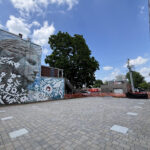
The site of the future federal courthouse in Harrisburg

And some thought this day would never arrive.

The U.S. government plans to break ground next week on the new federal courthouse in Midtown Harrisburg, according to the U.S. General Services Administration (GSA).

The groundbreaking ceremony will take place on Monday at 11 a.m. at the site at N. 6th and Reily streets, according to a GSA press advisory.

This doesn’t mean that residents soon will see the 243,000-square-foot structure begin to rise from the ground. Site preparation and utility work will come first, with actual building construction not slated to start until early next year.

In fact, the federal government still hasn’t assembled all the land it needs for the courthouse, particularly along the fringes of the project. Just last night, Harrisburg City Council learned that the federal government is offering $39,000 for two city-owned parcels, 648 and 650 Boyd St., that will be part of the project.

The city acquired those parcels about a decade ago as part of the 7th Street widening project. A vote on that resolution is expected at next week’s legislative session. In the unlikely event that council refuses to sell the land, the federal government would initiate eminent domain proceedings to acquire it, according to the city administration.

The $194 million courthouse will provide eight courtrooms, 11 judges’ chambers and 79 parking spaces on about four acres. After a long site search, the federal government settled on the site across the street from Bethesda Mission in 2010.

Construction should take about three years, with expected completion in 2022.

Following relocation of workers, the federal government plans to sell the current Ronald Reagan Federal Building at N. 3rd and Walnut streets.

Continue Reading

Weekend Roundup with Sara Bozich

Happy Weekend!

I’m beach-bound! Just warning, we may not have a Weekend Roundup next week. Or we will. I haven’t decided, and I don’t yet know the complications of taking an 8-month old to the beach. I’m excited (and a bit stressed) nonetheless.

I’m bummed to be missing Cider Fest and its kick-off Cider Dinner, but they always seem to coincide with my beach trip. Maybe next year! Meanwhile, look for Jimi’s posts from there.

What are you doing this weekend?

(more…)

Continue Reading

Downtown apartments, affordable housing again top HBG Council meeting

Harrisburg City Council, at Tuesday’s work session

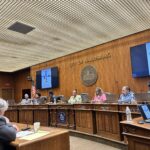
Downtown development and affordable housing dominated another Harrisburg City Council meeting tonight, as members began to chew over the latest apartment proposal from Harristown Development.

As she has at several other meetings this year, council President Wanda Williams pressed Harristown on the relative affordability of its apartment units, this time for a proposal to convert a bank-owned, mostly vacant Pine Street building to 44 one- and two-bedroom units.

“We want you to be successful,” Williams told Harristown CEO Brad Jones, who presented the project to council. “But we want our residents to be able to live in safe housing, in comfortable housing, in affordable housing.”

At the council work session, Williams said that many city residents have told her that they want the chance to be able to live in the fully renovated Harristown units, but that they’re concerned that they can’t afford the rent.

“Our residents are living in slum housing,” Williams said. “I want to give residents a chance to live in those areas.”

Jones responded that many of his company’s apartments are considered affordable under federal housing guidelines. In recent years, Harristown has fully renovated several underused and rundown office buildings downtown, adding about 60 new residential units, which rent from $775 to $1,450 a month, he said.

He added that four of the 12 units in a 2nd Street building the company is now renovating “will be in the affordable category,” so that a tenant with a modest income would have to pay no more than one-third of his or her salary in rent.

“You could make $36,000, and that’s an affordable index, according to HUD,” Jones said, referring to U.S. Department of Housing and Urban Development guidelines.

He said that the rents in the proposed building at 116 Pine St. are projected to be $1,000 a month for one-bedroom unit and $1,400 for two bedrooms.

Jones also said that rents have to be high enough to justify the project financially. Early next year, Harristown plans to begin work on converting both 116 and 124 Pine St. to apartments, spending some $12 million on the renovations.

“These are very risky projects,” he said. “The fact that we’ve been able to convince two other partners to contribute has been a Herculean effort.”

Several other council members said that, while they also support affordable housing, Harristown can’t be held solely responsible for redressing any lack of affordable housing in Harrisburg. The city currently lacks an affordable housing policy for Harristown to follow.

“Affordable housing is a huge problem with our city, but City Council has failed to act on affordable housing,” said Councilwoman Shamaine Daniels.

Likewise, Councilman Cornelius Johnson said that the responsibility rests with council, not Harristown.

“The onus is not on you,” he told Jones. “It’s on us.”

To that end, the city, along with Harristown, the Harrisburg Redevelopment Authority and the Harrisburg Housing Authority, has commissioned a $10,000 housing study. The results of the study, conducted by Columbia, Md.-based Real Property Research Group, should be available later this year.

The city hopes that, through the study, it will learn more about its housing stock, rental rates and resident needs, so it can begin to craft more informed housing policies.

Following the meeting, Mayor Eric Papenfuse said that he supported Harristown’s apartment projects both to encourage investment in the city and to persuade people to choose Harrisburg over the suburbs, putting tax dollars in city coffers and money into city businesses.

“I definitely feel this brings new people into the city and expands the tax base,” he said. “This is exactly what Harrisburg needs.”

In April, City Council approved Harristown’s plan for 124 Pine St., with Williams casting the lone dissenting vote. Council is expected to vote on the land use plan for 116 Pine St. at an upcoming legislative session.

Continue Reading

A Garden Grows: Veggies, learning take root at Camp Curtin Y.

Gardeners in action in the Camp Curtin Y’s new community garden.

What’s growing at the Camp Curtin YMCA’s new Community Garden project?

Sustainability, fresh produce and education.

The program aims to provide S.T.E.M. Summer Camp students with the tools and resources needed to understand and create organic foods. In 2017, Giant Food Stores awarded the YMCA a multi-year, $20,000 grant to help launch the program for its 65 participants.

“The goal for the garden is the have the kids actually be able to plant, grow, understand what they are growing, and for us to take the food back and actually implement it into their meals,” said Jamien Harvey, the YMCA’s executive director.

Only three weeks into the project, and the garden is already sprouting green. Located at the back of the 6th street building, the community garden features peppers, tomatoes, squash, sunflowers, corn, basil and other herbs and produce.

The learning doesn’t stop with growing the food. Rafiyqa Muhammad, the garden manager, is teaching the kids sustainability by incorporating recycled materials into the garden and teaching them how to solarize—use the sun’s rays—to kill harmful plants like poison ivy.

And the students aren’t the only ones learning. Muhammad said this type of gardening was foreign to her. Reading, workshops and practice taught her what she needed to know to relay the information to the kids.

“It’s something that God just put on my heart a couple years ago,” she said. “My husband told me I would figure it out, so I figured it out.”

Harvey said that, besides gardening technique, students also are learning a work ethic.

“I did not know how much went into this until we got knee-deep in truckloads of mulch,” he said. “We’ve been working these last three weeks. Just to get it to the point where it is now, we’ve been working.”

The community garden is only part of the YMCA’s sustainability projects. The organization also has partnered with Capital Region Water to create a water catchment, or collection, system.

With the permission of a neighboring resident, the YMCA will attach an object to the back and front gutters of the home. When it rains, the water will go through the gutters and into a compartment, where the water is stored and used later to water crops.

“It’s part of a neighborhood initiative around sustainability, specifically when the water runs off, where does that water go?” said Rosie Turner YMCA’s director of marketing and communications. “We’re teaching [the students] about their own consumption and how they can impact the planet.”

According to Turner, programs such as the garden help the YMCA connect with its community and the youth within it.

“I think, you walk around and you see the kids and they’re smiling and they’re happy and they’re engaged,” she said. “It’s summertime, and they’re at a place where they feel safe and protected, and that’s really the goal of the Y.”

The Camp Curtin YMCA is located on 2135 N 6th St., Harrisburg. For more information, visit ymcaharrisburg.org.

Continue Reading

Harrisburg sets first public meeting for “Vision Zero”

Traffic is diverted around an accident at N. 3rd and Forster streets, the scene of many crashes in Harrisburg.

Do you feel like you’re in a game of Frogger whenever you try to cross one of Harrisburg’s main roads?

Then you may want to attend a public meeting that the city government is planning for its nascent “Vision Zero” initiative, which aims to improve pedestrian safety and slash, even eradicate, fatalities.

According to the city, the June 27 meeting is designed to give information about the proposed program and, in turn, listen to feedback from residents.

Vehicle-related fatalities have quadrupled in the city in the last four years, according to PennDOT data, rising from two deaths in 2013 to eight deaths in 2017.

Vision Zero aims to eliminate vehicle-related deaths within the next decade, city Engineer Wayne Martin has told TheBurg.

The city also is undertaking a rapid-response study to improve transportation safety on State Street, the site of five pedestrian deaths in the past 19 months.

At next week’s meeting, city officials will focus on the State Street rapid response, which is the program’s first phase, according to the city. Officials will take comments and provide information about State Street traffic accidents.

The meeting will be held on Wednesday, June 27, 5 to 7 p.m., at Fire Station No. 2, located at the corner of State and N. 16th streets, Harrisburg.

Continue Reading

Local stories in focus as African American History Expo returns this weekend to Midtown HBG

Macajah Brown, organizer of the event

Through the decades of constructions and demolitions, new generations and stories, Harrisburg native Macajah Brown said the city’s black history has been lost in the mix.

With the hope of reviving that pulse in the community, Brown created the African American Black History Expo. For the second year in a row, the Expo, which takes place tomorrow, will showcase the history of Harrisburg, Middletown and Steelton through church representatives.

“We wanted the church to come and share their history, come and present their history,” Brown said. “I felt the communication of people behind the booth, sharing their history with someone would be pretty awesome.”

Members from select churches will give a presentation on their history dating back as far as the 1800s.

From his connections in and outside the region, Brown enlisted artists, musicians, dance groups and poets to perform between speakers.

Demonstrations in wrestling, boxing and karate will be available for younger guests, Brown’s target audience.

“The main history goes to our young people,” Brown said. “We need to educate our young people about our history.”

Vendors will set up shop selling jewelry and clothing, as well as others selling dinners and desserts. Brown is also in the works of adding domestic violence and other health services to the expo.

“There are [health services] that I think we should always stay on top of,” he said. “[We need to] educate people about the sources around us so they can know how to get help.”

The event was inspired by the African Festival at Reservoir Park, which ended more than a decade ago. Brown said he saw a different attitude among the black community after the end of the festival.

“[The African Festival] brought a closer relationship among our race. I think everything got lost after they stopped, in the sense of being proud of who you are,” he said. “The biggest thing about doing [the expo] is bring that pride back and understanding and emphasizing the education of history.”

After pulling in people all across Harrisburg, from Hall Manor to Uptown and Allison Hill, Brown estimated the number of guests will reach 3,000. People who bring in an event flyer will be entered in a raffle to win one of the 80 prizes, including restaurant coupons and Susquehanna Art Museum tickets.

“We want everybody to be there to build a better bridge among races,” Brown said. “Understanding each other’s culture and having everyone attend. It’s a learning experience. Learning someone’s culture and understanding them a lot more than we hear and actually get the real facts.”

The African American Black History Expo will take place Saturday, June 16, noon to 6 p.m., in the HACC Midtown parking lot located near the corner of Reily and N. 3rd streets, Harrisburg.

Continue Reading

Screen Shots: World Cup action gets super-sized at Whitaker Center.

At Whitaker Center, Penn FC players Jorge Rivera and Fabio De Sousa flank youth soccer players Maddox, Kaden, Ollie and Callen

For soccer fans, there may be nothing better than watching the first match of the World Cup.

Except this: Watching the first match of the World Cup on a 40-foot screen. In extremely comfortable chairs. With food and drink at the ready. Accompanied by a few professional soccer players.

The quadrennial soccer tournament kicked off in Russia last week, and, outside of the stadium itself, there may have been no better venue to enjoy it than at Harrisburg’s Whitaker Center.

Seated before the towering Select Medical Digital Cinema screen, the crowd could see every pass, every shot, every penalty in the inaugural Russia vs. Saudi Arabia match – very, very up-close.

As fans entered the lobby, players from Harrisburg’s professional soccer team, Penn FC, greeted them. Young fans barely could contain their excitement as they took their seats, anticipating the ups and downs, the blowouts and upsets, during the month-long tournament. Though the United States failed to qualify for the World Cup, attendees still enjoyed the game, screaming with each goal, as Russia defeated Saudi Arabia by a score of 5-0.

Under new CEO Ted Black, Whitaker Center increasingly is positioning itself as a regional center for watching sports. This may be no surprise, as Black has a deep bench of experience in professional sports, serving previously as the president of the Buffalo Sabres, a professional ice hockey team. So, going forward, you may be just as likely to visit the downtown arts and culture center for a major sporting event as for a big concert or movie.

“Soccer is a community sport,” said Bob Ancharski, the director of events and ticketing, commenting on the choice to bring the World Cup to the very big screen.

The World Cup isn’t the first—and certainly won’t be the last—sporting event at the center. Past events have included the Super Bowl, and the future includes showing eSport tournaments.

Last year, Black announced a plan for eSports to be added to the center in collaboration with Harrisburg University. ESports, also known as electronic sports, are competitive video games, which are quickly building a passionate fan base. The sport has been rapidly gaining in popularity globally and is now a $900 million industry just in the United States.

With a theater that seats 200 people, Whitaker Center looks forward to hosting more sports viewing events. In fact, on Sunday, July 15, the venue will show the World Cup final, accompanied by more family-friendly activities. For more details, visit whitakercenter.org.

Continue Reading