Harrisburg school board taps former director Lola Lawson to fill vacant seat.

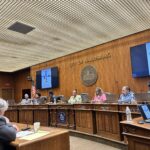
Lola Lawson took the oath of office following her appointment to the Harrisburg school board on Monday.

He had a standing ovation, an endorsement from a union president, and the support of former students – but it wasn’t enough to land Cornelius Chachere a seat on the Harrisburg school board.

Harrisburg’s eight-member board on Monday night passed over Chachere, a nonprofit executive, and two other candidates to appoint Lola Lawson, a former board director, to serve a term through 2019.

Lawson replaced board director Tyrell Spradley, who resigned his seat in July without explanation. Spradley was just appointed to the board in February.

Members of the 70-person audience reacted immediately to the appointment, exasperated by what they perceived as an opaque selection process that favors friends of the district administration.

Lawson was the second board veteran appointed to the body in the past month. Former board director Patricia Whitehead-Myers was appointed to a vacant seat last month.

Lawson has almost a decade of experience as a board director, but Chachere, who has worked as a substitute teacher at Harrisburg High School’s John Harris Campus, was the apparent crowd favorite. He garnered applause during his questioning before the board, and more than half the room gave him a standing ovation when his interview concluded.

But the board still voted 5-3 to appoint Lawson. After votes were tallied, young district alumni led a chant calling for justice, and one resident brandished a poster board sign saying, “We Call BS.”

Even though Chachere had wide public support, many residents said they were not surprised by the vote.

“Clearly this is the outcome of collusion,” said Charla Plaines, co-founder of the citizen-led school reform group C.A.T.C.H. (Concerned About the Children of Harrisburg.) “It does not reflect the will of the public. Once again, this board has proven it has no desire to do the right thing.”

One board member joined the residents voicing frustration over the appointment process. Before the board began interviewing candidates, director Brian Carter accused his colleagues of accepting bribes before filling a vacant seat last month.

“There were several conversations where board members were trying to bribe other board members to vote for certain candidates,” Carter said, without identifying any of his colleagues by name.

Carter declined to comment on his accusation during a recess, but reiterated his claim at the end of the meeting. He said that board members tried to persuade their colleagues to vote for Whitehead-Myers and Lawson.

But board solicitor Samuel Cooper said that political lobbying is not necessarily bribery.

“Unless there’s some transfer of money or promise of future gain, there’s no bribery,” Cooper said.

Along with Whitehead-Myers, Lawson was among the first members of the re-formed school board that wrested the district back from mayoral control in 2010. Former Mayor Stephen Reed had taken direct oversight of the school district in 2000, the first arrangement of its kind in the commonwealth.

Mayor Linda Thompson assumed Reed’s role briefly following her election in 2010 before community members reconstituted the elected board of directors.

Lawson declined to seek re-election for her seat in 2013 but was appointed back to a vacant seat the same year.

In her interview before the board tonight, Lawson touted a long history of public service, which she said started with her first sit-in demonstration at age 14.

“My heart is in the right place,” Lawson said. “I’m a strong, independent thinker. You can’t sway me… but I’m still willing to collaborate with people.”

Lawson was president of the board that terminated superintendent Gerald Kohn in 2010 and replaced him with Knight-Burney. Kohn later filed a wrongful termination suit against the district that ended in a $2.4 million settlement in his favor.

Lawson and Whitehead-Myers also voted with three of her colleagues to strip former school board president Roy Christ of his leadership title in 2011.

A retired broadcast personality and media consultant, Lawson served alongside current board directors Whitehead-Myers, Ellis Roy, Melvin Wilson and vice president Danielle Robinson until 2016, when she declined to seek re-election for her appointed seat. They all voted for their former colleague on Monday, along with director Lionel Gonzalez.

Board president Judd Pittman and directors Carrie Fowler and Brian Carter voted for Chachere.

Claude Phipps, a former business executive, and James Thompson, an architect and former board director, also applied for the vacant seat but did not receive nominations.

Phipps, Thompson and Chachere all applied for the vacant seat that Whitehead-Myers took in July. At the July 28 selection meeting, teacher union president Jody Barksdale urged the board to appoint Chachere.

Community members continued to advocate for Chachere in the public comment period at the end of tonight’s meeting.

“When you look at this man, how could you sensibly make the decision that you did?” said Joelle Ewing. “It looks suspicious, like you don’t want anyone who will go against the grain. I don’t understand it.”

Continue Reading

Raise the Curtain: Gamut cuts ribbon for new education center, second stage

Gamut co-founders Clark and Melissa Nicholson, center, surrounded by students, cheer following today’s ribbon cutting.

After years of campaigning and construction, Gamut Theatre Group held the grand opening and ribbon cutting today for its new Education Center.

Located at the back of the theater in downtown Harrisburg, the center features the new Alexander Grass Second Stage, two renovated classrooms and technical teaching shops for students to learn about costume construction, scenery design, sound, lighting and more.

“What this space does is it provides a way for us to really focus in a geographical way in this building on our children’s theater, which is what we started with,” said Clark Nicholson, Gamut’s co-founder and artistic director. “We wanted it to have a home, and we have it today.”

The 10,000-square-foot center features a wooden stage in the center of the room surrounded by seats and pews, with a balcony one on side. The walls feature a mural by local artist Jacintha Clark, who painted cotton candy-colored clouds merging with a night sky filled with golden stars on the ceiling. Behind the seats on the first floor are two rooms for costumes and props. Upstairs are three rooms: one for teaching, another for lounging and a third full of knick-knacks, books, paintings and more.

Gamut Theatre’s Alexander Grass Second Stage

The new space will house the Popcorn Hat Players Children’s Theatre, as well as the Stage Door Series Ensemble and Gamut Theatre Academy, all year round. Before, students floated among various places in the theater, but this new space will be their permanent home.

“The core of this mission is the classic story, these universal truths and these stories that have been around for hundreds of years. We give kids access to those,” said Jeff Luttermoser, dean of the Gamut Theatre Summer Academy. “They are going to be the keepers of those stories and the following generation. So, it’s so important that we do that work, and we get to do that here.”

The center was created with the help of partners such as Harristown Enterprises, the city of Harrisburg and the Alexander Grass Foundation. Arts patron Lois Grass was the advisor for the Gamut Theatre Capital Campaign, which raised $2.3 million for the project.

This is the second phase of construction for Gamut, which purchased the former First Church of God in 2013 and has been busy at work since raising money and turning the historic building into theater space. The first phase, completed in 2015, focused on the lobby, mainstage and other core components.

“We’re not just going to have a bigger building and touch more kids lives,” said Brad Winnick, Gamut Theatre’s board vice president. “But now we’re going to actually increase the breadth and depth of what we do.”

The first performance on the new stage will be this Thursday, Aug. 9, through Aug. 19, when Gamut will present “Hijacked!” a choose-your-own play performance starting at 7:30 p.m.

“The most exciting thing to me, as a parent, is that every one of these kids is going to grow up and be adults who may be on stage,” said Winnick. “They are going to be the people that keep that arts community that Gamut is a part of in this city–and whatever communities they live in–alive.”

Gamut Theater is located on 15 N 4th St., Harrisburg. For more information visit www.gamuttheatre.org


Continue Reading

Papenfuse eyes three-year commuter tax as Harrisburg prepares for Act 47 exit.

Harrisburg’s mayor is seeking state permission to levy an augmented commuter tax for the next three years, he said on Thursday, as the city enters its final chapter of Act 47 and prepares for a future with smaller revenue streams.

Mayor Eric Papenfuse has vowed that he will not adopt the measures outlined in a July report from the city’s Act 47 coordinator, which recommended doubling property taxes to prepare for Harrisburg’s Act 47 exit in 2021.

He’s now asking the state-appointed coordinator to consider an alternative: a 2 percent non-resident Earned Income Tax (EIT) on everyone who works in the city.

The tax would replace the city’s augmented Local Services Tax (LST), which is $156 per year for all Harrisburg workers. But Papenfuse said it would generate millions of dollars in additional revenue during Harrisburg’s final three years in Act 47, a state oversight program for financially distressed municipalities.

“We know how many commuters work in the city, and while we don’t know exactly where they live, we can get that data,” Papenfuse told TheBurg. “But it would be much more.”

The proposal is bound to inflame Harrisburg’s 30,000 commuters. But Papenfuse hopes that exercising one of the last options available to Harrisburg under the Act 47 law will spur state lawmakers into action.

A bill expected to go before the house in September would allow Harrisburg to keep its current LST rate and exit Act 47 for good. If legislators are faced with a massive tax hike on their own income, through a higher EIT, Papenfuse hopes they’ll be more likely to support the legislation.

“My hope is that the region would see that it’s much more onerous than a local services tax,” he said. “I stand by what I’ve said before: I don’t see viable long-term future for Harrisburg without the legislature assisting us. We need the ability to have our revenues match our expenditures, and we’re not trying to spend on anything other than core government functions.”

Under the mayor’s proposal, the city’s LST would revert to its pre-Act 47 rate of $52 per year. Meanwhile, everyone who works in Harrisburg would start paying a 2 percent tax on their income.

Since Harrisburg residents already pay that rate, their EIT burden would not change. But commuters who work in Harrisburg would pay the difference between their hometown’s EIT rate and the city’s 2 percent rate, with the balance going into Harrisburg’s coffers.

For example, a commuter who lives in Susquehanna Township may earn a $50,000 salary working in Harrisburg. She currently pays the $156 local services tax in Harrisburg, as well as Susquehanna Township’s 1 percent EIT rate—$500 per year based on her income.

Under the new tax, her EIT bill would double to $1,000, with $500 going to the city of Harrisburg. She would pay $52 per year in local service taxes.

Papenfuse knows that the tax hike would sting. His goal isn’t to squeeze commuters, he said, but to spare Harrisburg the massive property tax hikes proposed in last month’s draft Act 47 exit plan.

“Do we really think legislators care that Harrisburg residents would have to pay double property taxes?” Papenfuse said, letting the question go unanswered. “Will they care if they themselves pay an increased EIT? Maybe.”

Harrisburg has one of the highest EIT rates in the region. Only a handful of municipalities—including Camp Hill, Swatara Township, Dauphin Township and Lower Paxton—levy the same 2 percent rate, according to a DCED database.

Excluding those municipalities, EIT rates range from 1.4 to 1.65 percent in Cumberland County and 1 to 1.7 percent in Dauphin.

The tax would expire when Harrisburg exits Act 47 in three years. But, with the revenue it would generate over that time, Harrisburg could pay down general obligation debt and trim its expenditures from 2021 onward, Papenfuse said.

In the meantime, the city would continue to lobby for its enhanced LST privileges. Papenfuse also hopes to initiate the proceedings for a Home Rule charter, which would preserve the city’s resident EIT rate.

If the state-appointed recovery coordinator Marita Kelley complies with his request, the commuter tax will be included in the final exit plan she presents to city council.

A DCED spokesperson declined to comment on the contents of the final exit plan today. She said that DCED was in the process of revising the plan based on the feedback received during the public comment period.

Papenfuse said Kelley’s team was “willing to consider” the proposal. City officials submitted the commuter tax proposal to DCED as part of a formal comment on the exit plan.

Council vice president Ben Allatt said he’d support any exit plan that doesn’t increase the tax burden on Harrisburg residents. But he’s not sure a hefty commuter tax would aid Harrisburg’s long-term lobbying efforts.

“As a negotiating tactic, it could backfire,” Allatt said. “I worry about any move that would alienate us from the legislature.”

DCED’s exit plan could land before city council as early as Wednesday, Aug. 8. If council does not approve it, the state DCED secretary will ask Pennsylvania’s governor to declare a fiscal emergency in Harrisburg, which could put the city back into receivership.

Continue Reading

State archives building advances toward 2019 groundbreaking.

The future site of the State Archives building at N. 6th and Harris streets in Midtown Harrisburg.

Vacant lots on Harrisburg’s 6th Street will soon get a new building filled with some very old décor.

The state Department of General Services got the first stamp of approval for its new State Archives facility, a four-story, state-of-the-art structure that will also create a permanent home for Harrisburg’s record collections.

DGS representatives presented the preliminary land use proposal to the Harrisburg Planning Commission on Wednesday night. They plan to develop 2½ vacant acres on N. 6th Street between Harris and Hamilton streets with a modern, glass-and-brick structure, a public plaza and a below-ground parking area.

Although project leaders shared preliminary renderings at Wednesday’s public meeting, they refused to allow TheBurg to photograph them.

With unanimous approval from the commission, DGS will now seek approval from Harrisburg City Council.

DGS first announced plans to build the archives at 1681 N. 6th Street in 2016. The state hopes to put the project out to bid in spring 2019 and break ground in the summer, according to Daniel Vodzak, an architect at the Lemoyne-based firm Vitetta. He expects construction will last two years.

Much like the federal courthouse that broke ground last month, the long-awaited archives building is expected to spur development on Harrisburg’s struggling 6th Street corridor.

Harrisburg officials and history enthusiasts are also relieved that the city’s archives will have a safe, accessible home after languishing for years in substandard storage.

“This is a great win for the city,” Mayor Eric Papenfuse said. “We have all of these fragile, aging and decaying documents, and we want to put them in a place where they can be preserved.”

Harrisburg’s archives, which include death and tax records, city directories, historical photos and other memorabilia dating back to the early 19th century, are currently stored in a mansion in Reservoir Park. They were housed in a Parking Authority office in Strawberry Square until the city privatized its parking assets in 2014.

When state officials announced their plans to build a new archive facility, Papenfuse lobbied for them to carve out space for Harrisburg’s collection.

He later convinced the Wolf administration to scrap plans to build the archive facility in Susquehanna Township and helped them select a parcel of vacant lots on 6th Street mostly owned by Susquehanna Township-based Vartan Group.

“This idea of putting the archives in a research park where they’re less accessible to the public didn’t sit well with me,” said Papenfuse, whose father served as the Maryland state archivist for 30 years.

Members of the public can’t access Harrisburg’s archives in the current location in Reservoir Park. The aging facility also isn’t climate-controlled, leaving the documents vulnerable to mold, moisture and temperature fluctuation.

“A lot of people don’t know the archives even exist,” said Calobe Jackson, Jr., a historian and lifelong Harrisburg resident.

Jackson hopes the new facility will encourage more residents to explore the city’s history.

“It’s necessary to increase the size, and I think combining the city archive with the state will be great for everyone,” Jackson told the Planning Commission last night.

The proposed archive building will feature a “self-service zone” where visitors can access digitized archives from the state and the city’s collections. Patrons can also view original records and artifacts in a separate, climate-controlled viewing room.

Preliminary renderings call for a modern, glass-box building with a concrete frame and brick siding. A solar shade atop the building will filter out sun, since UV light can degrade paper records.

The temperature and humidity in the facility must be precisely calibrated to preserve the aging paper records. The main storage facility will be windowless, but the reading rooms, processing rooms and staff offices will have natural light thanks to UV-resistant glass windows.

The extensive HVAC apparatus will be housed in an enclosed equipment courtyard outside. The campus will also feature a landscaped public plaza along 6th and Harris streets.

Harrisburg will retain ownership of its records when it transfers them to the new archives facility, but the memorandum of understanding it signed with the state historical office waives storage and management fees.

The city does not currently employ an archivist. Plans to hire one stalled when the city declared a hiring freeze earlier this summer.

But with an expected three years before the project is complete, Harrisburg will have plenty of time to prepare its archives for transfer, Papenfuse said.

The state archives are currently housed in a tower at 3rd and Forster streets on the grounds of the Pennsylvania State Museum. Andrea Lowery, executive director of the Pennsylvania Historic and Museum Commission, said that the state is conducting a feasibility study to decide how to reuse the structure.

Continue Reading

Weekend Roundup with Sara Bozich

Happy Weekend!

I’m coming off a semi-impromptu beach trip to see one of my bestests, and we have a busy weekend ahead of us. Let’s see here: Book club (if I can swing it), the first of three (3!) Fantasy Football drafts at Harrisburg Golf Simulator, trip to Elk County for a family reunion (bunny burgers en route). I’m already tired.

weekend roundup

What are you doing this weekend?

(more…)

Continue Reading

Music, food, hoops, games headline Harrisburg’s inaugural Weekender Fest.

Representatives from the city, the Harrisburg Housing Authority and event organizers announced the Weekender Fest on Tuesday.

Harrisburg revelers won’t have to wait until Labor Day to get their festival fix this year.

Mayor Eric Papenfuse and Councilman Cornelius Johnson on Tuesday announced the city’s first-ever Weekender Festival, which will be held Aug. 17 to 19 in Reservoir Park. The free event is jointly hosted by the Harrisburg Housing Authority, the city, Levels Ready Entertainment and The Singer’s Lounge.

The Weekender will bring together existing community events and organizations to showcase local talent in Harrisburg’s largest historical park, Johnson said.

“This is a prime example of how we can work with partners and use resources together to make something great for residents,” he said.

The festival will begin Friday, Aug. 17 with a community education and health fair at Hall Manor. Harrisburg Housing Authority will also host a barbecue with free food for the first 300 participants. Field games, a live DJ and an open mic will provide entertainment for families and children.

The Harrisburg Music Festival will kick off on Saturday with performances by Sa-Roc, Tobe Nwigwe, Zariya and DJ Diamond Kuts. Now in its seventh year, the festival, hosted by Levels Ready Entertainment, draws close to 1,000 people to Reservoir Park annually with free performances by national performing artists.

The Weekender will conclude on Sunday with an all-day basketball tournament hosted by Unity Hoops and performances by The Singers Lounge, a consortium of local soul singers. TSL hosts monthly showcases in different venues throughout the city, but their event at The Weekender will be free to the public.

Sunday’s performers include Zariya, a 14-year-old, award-winning singer songwriter, as well as a surprise guest.

Harrisburg has waived permitting fees for the event and will provide support staff throughout the weekend, Papenfuse said. Otherwise, all funds and in-kind donations for the festival were raised by the Harrisburg Housing Authority.

Entrance to The Weekender events is free, but attendees can obtain tickets online through Eventbrite. Oche Bridgeford, director of communications and compliance for the Harrisburg Housing Authority, said that electronic ticket-holders will receive last-minute updates about weather delays or lineup changes. Festival organizers have arranged alternative locations in case it rains, Bridgeford said.

Event organizers are preparing for 10,000 attendees over the course of the weekend. Johnson hopes that the festival will become an annual event.

In other local festival news, Dauphin County’s annual Cultural Festival has been moved indoors, due to the threat of rain on Friday. It now will be held at the Zembo Shrine, N. 3rd and Division streets, from 5 p.m. to 10 p.m., featuring a variety of food, music, dance and other entertainment.


The Weekender Festival will be held Aug. 17 to 19 at Reservoir Park, Harrisburg. For more information, visit www.weekenderhbg.eventbrite.com.

The Dauphin County Cultural Festival will be held this Friday, Aug. 3, at the Zembo Shrine Event Complex, 2801 N. 3rd St., Harrisburg. For more information, visit www.dauphincounty.org.

Continue Reading

Tell Me a Story: Community, one tale at a time.

Illustration by Rich Hauck.

Bill Cologie is a print guy.

When you walk into his newsstand, Transit News, all your senses tell you that you’ve just entered a tiny temple to ink on paper.

Magazines line the walls, and paperbacks fill up shelf space. You can almost smell the page pulp and feel the anticipation of what lies ahead as you flip through a new thriller or romance.

Bill resolutely remains in business inside Harrisburg’s train station despite the fact that he depends upon two technologies that seem quaintly of another time—passenger rail and the printed word.

Bill has run his stand for 27 years, but, in recent months, felt his small business threatened by a state Department of Transportation plan to remodel the station, which did not include space for Transit News.

I first heard of Bill’s problem at a meeting of Capitol Area Neighbors, a community group of downtown Harrisburg residents, where I serve on the board. As we sat at a long table at Aleco’s, eating pizza and discussing this or that neighborhood issue, a fellow downtown denizen mentioned Bill’s plight. What could we, as a group, do?

Someone suggested contacting PennDOT. Another person wondered if PennLive would be interested.

“TheBurg will write that story,” I said.

And we did.

Our story led to more media coverage, and, meanwhile, Bill urged his customers to contact PennDOT, which then met with him and pledged to include Transit News as part of its next design draft.

“It has been incredibly gratifying to read the messages sent to PennDOT and to see how much Transit News means to so many,” Cologie said in a letter to his supporters.

Score one for community. In fact, recently, community action has been on something of a roll in Harrisburg.

Just months earlier, a group of students had found out that HACC planned to cut six elective arts courses, including several—ceramics, glassblowing—that are hard to find elsewhere in the area. They mounted a petition drive that garnered some 20,000 signatures, and TheBurg also wrote that story, bringing the issue to greater public notice.

Within a week, HACC administrators had agreed to meet with the students and, in the end, restored five of the six courses.

“We heard you, and we listened,” said HACC President John J. “Ski” Sygielski.

As newspapers fall on hard times, I sometimes wonder what will happen to stories like these in the future. If TheBurg weren’t around, would Bill’s story go untold? Would HACC students have had a tougher time getting their classes restored?

Just last month, we told of a few local men who plan to open Pennsylvania’s first black-owned brewery, and that story became one of the most-read in our 10-year history. I recently ran into them, and they graciously thanked us for telling their story, which, like in Bill’s case, led to a ton more media coverage.

“I didn’t realize you guys had such reach,” said co-founder Shaun Harris. “Someone from Erie contacted us.”

They since have set up a Kickstarter page to raise money for their new brewery. If you’re so inclined, please make a donation.

My favorite recent community story actually has its roots in the rather distant past.

Almost a decade ago, when TheBurg began, one of the first columns that I wrote featured a group that called itself, “Right Site Harrisburg.” These residents had taken on a monumental task, getting the federal government to do something it definitely did not want to do—locate its new courthouse on a forlorn patch of grass and gravel outside of downtown Harrisburg.

And they succeeded. Their effort, I wrote at the time, was a stunning example of how grassroots activism could lead to change. But, honestly, I was surprised then, and remain surprised today, that this group of just regular people could unite all the major players—from neighborhood groups to the Harrisburg Chamber to political representatives—behind their plan, which, together, put pressure on the U.S. Judiciary and General Services Administration.

The groundbreaking just took place in June so that, in about three years, a new courthouse will rise from the rubble (literally), seeding an entire area that is ripe for redevelopment.

But, for the community, that wasn’t the end of the story. When I covered the groundbreaking, I was shocked to find that no one from Right Site Harrisburg had been asked to the invitation-only event. In fact, during the hour-long ceremony, full of VIPs and self-congratulation, their vital contribution was ignored entirely. One now-elderly woman, a key member of the group, was turned away at the entrance by heavily armed guards from the U.S. Department of Homeland Security. Her name was not on the list.

This slight prompted me to write a short piece that, while it could never undo the injustice, perhaps brought a small measure of recognition to these forgotten people—without whom this day never would have arrived.

Journalism, today, finds itself in a world of pain. Reporters face dramatic cutbacks in staff and coverage, destructive mandates from distant corporate parents, relentless abuse from the highest levels of government and, as we saw in Annapolis in June, sometimes literal attack.

Most journalists simply want to tell good stories and make positive contributions to their communities, often working long hours for little pay to do so. Certainly, TheBurg shares this purpose.

I’m delighted that, from time to time, we can step back and see the small ways in which we may have helped make a difference, even if it’s just one guy in one newsstand in one train station in central Pennsylvania.


Lawrance Binda is editor-in-chief of TheBurg.

Continue Reading

Take a Bow: With a new charter, arts-focused CASA continues its run as one of Harrisburg’s premier schools.

Photo by Ben Miller.

Back in 2011, the CASA story did not seem headed for a happy ending.

Enrollment was down 40 percent, school districts were withdrawing funding, and the arts-oriented high school had lost its program director.

But in seven short years, the plot has turned dramatically in favor of the Capital Area School for the Arts. In April, CASA received a five-year charter renewal in a school district that typically does not embrace charter schools.

“This is a huge validation of the past four years—all the kids we’ve reached, all the work we’re doing,” said Tim Wendling, CASA’s principal and CEO.

Wendling arrived at CASA in 2013 after it had just received its first charter, following a dozen years as a struggling magnet school. It’s one of just three brick-and-mortar charter schools in the Harrisburg school district, which must approve charter applications.

Applying for a charter is a painstaking process. The charter renewal for CASA contained 3,500 pages of documents, including information about curriculum, test scores, school design, operations and management and future plans. Visits and questions from district officials were part of the process, as well.

Why was CASA’s charter renewal approved?

“We are meeting and exceeding the goals that were set down in the first charter,” said Wendling. “[We’re] a premier provider of arts education in the city.”

CASA’s performance numbers bear this out. The school’s graduation rate is 94 percent, and student proficiency scores are strong—87 percent in biology, 93 percent in literature and 78 percent in algebra.

Those scores don’t necessarily arrive with the students, who are accepted to CASA based solely on an audition. The school has no information on students’ academics, attendance or behavioral history until after they are accepted to the school.

Once enrolled, CASA students often begin to thrive academically because they like going to school, Wendling said.

“We have 200 very different kids,” he said. “This place is perfect for them. They all fit in.”

The school’s six disciplines include creative writing, dance, film and video, music, theater and visual arts, providing many places for students to excel both in academics and arts.

Lois Lehrman Grass, long a supporter of the arts in Harrisburg, has been a part CASA since its inception in 2001, seeing the school grow from leasing empty rooms to its current state-of-the-art facility in Strawberry Square.

“Everybody who has a wonderful talent should be in a safe environment to be able to do what they do,” Grass said.

She said the creation of the school was not a “one-man band” but involved many people working together. The same could be said of the charter renewal, she said.

“It was more than a little nerve-wracking,” said Grass, a fixture at the school who is greeted affectionately by staff and students as she walks down the bustling hallways.

So, what’s in store for CASA now that it’s met this milestone?

“No big changes,” Wendling said. “We want to take this great thing we started and keep making it better.”

CASA plans to stay in Strawberry Square, in keeping with the school’s mission to use the city as a classroom, Wendling said.

Having the school in the city is mutually beneficial. Students and parents who don’t live in or frequent the city can “come and see Harrisburg’s true self,” he said. And Harrisburg residents get to see high school students in a different, creative light— filming, painting by the river, taking pictures in the downtown, etc.

“[CASA] is an art school that has the city of Harrisburg as our landscape,” said David Skerpon, a board member.

Besides maintaining its arts focus, CASA plans to continue building on its strong academic foundation, focusing on math and science, Wendling said. The school also wants to continue to foster its “fantastic collaboration” with the local arts community.

“We hope to see that we are even more integrated with the art scene than we are today,” Skerpon said.

That integration includes internships with Gamut Theatre Group and Open Stage of Harrisburg, film viewings at Midtown Cinema and art exhibitions at the Art Association of Harrisburg and the Susquehanna Art Museum.

One new thing is the College and Career Readiness Program, designed to connect and direct students to the opportunities available after graduation. Students will select “pathways” of study that take into account their interests and strengths.

Even though CASA has just received a new charter, there’s little time to rest, Wendling said. In about a year, administrators will begin contemplating the next charter renewal process. CASA, after all, can’t afford to take a break, as there’s always another group of talented students waiting in the wings.

“When you look at the 200 kids and try to picture them somewhere else, you can’t,” Wendling said. “This is the perfect school for them.”


Capital Area School for the Arts will hold its CASA Celebration Soiree, celebrating its charter renewal and honoring founders Lois Lehrman Grass and Dr. Glenn Zehner, on Sept. 20 at Whitaker Center, 222 Market St., Harrisburg. For more information about the event and about CASA, visit www.casa-arts.org.

Continue Reading

Beautiful Things: Item by item, Chantel Eloundou shares the splendor of Africa.

As a young nursing student in New York, Chantel Eloundou never imagined she would work in business, let alone run her own shop.

Yet, this past June, she found herself straightening racks of skirts and dusting off the counters of her new store, called Nyianga.

The Midtown shop has unisex clothing, dashikis and headwraps in vibrant patterns and hues. Each piece has a mixture of warm and cool colors, made with Cameroonian cotton, bazin fabric and linen.

Even though “nyianga” translates to “fashion” in Eloundou’s native tongue, the shop has much more. Along with the clothing and wraps, Nyianga features jewelry, masks, raw shea butter, oils, authentic African black soap and even dolls. Most items are designed by Eloundou and handcrafted in her home country of Cameroon by family and friends.

“[Nyianga] gives me the opportunity to present Africa in a different way that is sometimes shown in the media,” she said. “These beautiful things, people make it, and Africa is also [beautiful].”

Eloundou got her first taste at selling at a Christmas flea market in 2015. She had a few pieces of jewelry sent from Cameroon and decided to sell them. She went home with only $37 in her pocket but, still, she knew she was on to something. She felt a calling.

She had more pieces flown in and eventually found a place in the Broad Street Market, where she worked as a pop-up vendor every Friday and Saturday. For two years, she sold in the market, slowly building a customer base and learning the ropes of running a small business. Her jewelry was nearly sold out every week, she said. She knew her customers wanted more, so she added clothes to the mix and, eventually, masks, artwork, shea butter and soaps.

Eventually, a women came up to Eloundou and said she was looking to open a jewelry store and asked if the two could work together.

“I was really afraid to move forward,” Eloundou said. “I thought it wasn’t going to go anywhere, but my fate or the world or whatever—I didn’t know I was going to be in this building, but here I am.”

“Here” is a snug storefront on N. 3rd near Reily Street. Old-time Harrisburg residents may best remember it as a storehouse for amusements, with games piled high inside a shabby exterior, blocking the large picture window.

In early 2013, Mayor Eric Papenfuse and his wife, Catherine Lawrence, bought the building, eventually restoring it to create new retail space. And, right next door, her jewelry-selling friend set up shop. Thus, Nyianga was created.

Everywhere

Eloundou calls herself a student of her own business. Instead of pulling the shop in a certain direction, she lets it lead her, and she learns along the way. She credits her customers for broadening her business to where it is today.

“I’m learning things—I learned so much,” she said. “This business, I discovered, I can talk about it from the morning until the next morning, which I didn’t know I could do.”

Through her journey, Eloundou has connected with customers who have shared their stories with her. Though Nyianga has customers from all walks of life, the store has a large African-American following. Some speak to her of their African roots, while Messiah College students have shared stories of traveling to Africa on mission trips. Some customers have even talked about the recent “Black Panther” movie—which brought in so much business that Eloundou sold out of headwraps.

“The African-American community kind of searches for their roots in Africa,” she said. “Everybody wants to know where they come from. I know where I come from. When the stress stikes me, I can think of my Cameroon roots, and I remember those memories. One phone call home can set my balance, but not everybody has that.”

These are the communities that drew Eloundou to Midtown and eventually kept her there.

“There’s nothing like Midtown Harrisburg,” she said. “There is something that is unique here.”

In the years to come, Eloundou hopes to increase the items in her store, which may necessitate looking for a larger location, but she still hopes to stay in Midtown. She said that, through her journey to the Broad Street Market and then opening her shop, she has learned not to let fear keep her from pushing herself.

“Whatever will come out of [Nyianga], I will embrace it,” Eloundou said. “I cannot set limits to my entrepreneurship. From the fashion to the arts, I am everywhere.”

Nyianga is located at 1432 N. 3rd St., Harrisburg. To view the clothing, accessories and more, visit www.nyianga.com and follow on Facebook and Instagram @NyiangaJewelry.

Continue Reading

Take Note: Once a month, big band sounds return to Harrisburg.

For a brief period in the 1930s, big band jazz was the popular music of America.

Bands led by the likes of Duke Ellington, Count Basie, Tommy Dorsey, Glenn Miller and Benny Goodman toured the nation and generated hit after hit. Audiences flocked to ballrooms to dance and swing to this high form of art.

But those days seem long gone in this modern era of hip-hop, rock and electronica. Today, big bands are confined to the margins, with minimal cultural impact.

As a jazz aficionado, I was elated when my friend Donna Julian informed me that a big band plays every month in Harrisburg. And she assured me that this group is really, really good.

I attended my first River City Big Band show in February, at—where else?—River City Blues Club and Dart Room on Cameron Street. The sheer power of the 16-piece ensemble blew me away. The improvised solos, the intricate blend of harmonies and the joyous energy mesmerized me. I’ve been to every concert since.

The band got its start in 2014 when club manager Jonas Hair invited Harrisburg-based jazz pianist Steve Rudolph to form a band and play regular gigs at the new venue. Rudolph next called his long-time friend Bill Perbetsky, an accomplished trumpet player and recently retired music director at Susquehanna Township High School.

“Steve and I sat down and put together our dream band,” Perbetsky said. “It basically formed in three weeks.”

The band plays every third Monday of the month, with occasional invitations to play at private or special events. It’s a rehearsal band, meaning the musicians never rehearse. They show up and read charts (musical scores) selected by Perbetsky and Rudolph.

“We don’t rehearse because all of the guys are very busy and have their own commitments to work, family and schools,” Rudolph said. “But they’re all incredible sight readers who have a deep knowledge of the history of big band music. When we put a chart in front of them, it will sound professional the first time through.”

The charts are written for four trumpets, four trombones, five saxophones, piano, bass and drums. Cathy Chemi of Lititz sings vocals every other month, when her husband Skip Stine joins the band on trumpet.

The ensemble plays tunes by renowned jazz composers and popular songwriters. But they also perform originals composed specifically for the group. Rudolph estimates they have about 200 charts in their repertoire.

“We try to keep it fresh, and we’re constantly gathering new charts,” said Rudolph. “Usually, there are two or three new charts each month.”

Several core band members play every month. But other musicians rotate in and out. Many of them teach music at the high school or collegiate level and come from as far away as Philadelphia, State College, Lock Haven, Williamsport and Towson, Md. Perbetsky contacts band members before a gig to find out who’s available.

The tunes generally run five to 10 minutes, so, during a two-hour set, the audience hears a wide range of material that includes swing, ballads, Latin and funk. Most band members get a chance to solo at least once or twice a night.

The downstairs room seats about 130 people. Saxophonist Tom Strohman, a music professor at Lebanon Valley College, says the venue reminds him of a New York jazz club.

“There’s a certain intimacy and a certain camaraderie between the audience and the band that happens when everybody’s that close to each other,” he said. “There’s a certain vibe that happens there. That’s one of the selling points of the whole experience.”

The concerts start at 7 p.m. But if you want to hear the band, I recommend arriving early, as shows are usually jam-packed. There’s a $10 cover charge, and the proceeds are split evenly between the band members.

“Nobody gets paid a whole lot on this gig,” Rudolph said.

The band members aren’t there for the money. It’s about the opportunity to work with other great musicians and play great music in front of an enthusiastic audience.

“We just come at you with what we have that night,” Perbetsky said. “We’re raw, we’re honest, and we just love playing.”

And, with consistently high attendance month to month, there’s no end in sight for the River City Big Band.

“We try to honor the traditions of the music and still stay on top of what’s going on in the big band world,” Rudolph said. “We try to pick music that’s fun to play but still make an artistic statement. We want to keep the tradition of big band jazz alive in this area.”


River City Blues Club & Dart Room is located at 819 S. Cameron St., Harrisburg. For more information, visit www.rivercityhbg.com.

Continue Reading