Nonprofit brings 570 free winter coats to Scott Elementary students.

Students from Harrisburg’s Scott Elementary School received new winter coats this morning thanks to a partnership between a nonprofit and an electric supplier.

Christmas came a few weeks early for students at Harrisburg’s Scott Elementary School this morning.

All 570 students at the K-5 school received a new winter coat today from Operation Warm, a Philadelphia-based nonprofit that distributes jackets to children in need.

The giveaway was jointly sponsored by IGS Energy, a natural gas and electricity supplier with offices in Harrisburg.

Starting at 9 a.m., students filed into the Scott gymnasium to claim their new jackets. Local and out-of-town volunteers from IGS and Operation Warm helped them choose among different sizes and colors.

IGS provided funding for the coats, which are manufactured by Operation Warm under their own proprietary clothing line, according to Operation Warm projects manager Gabrielle De Leo.

The coats were provided at no cost to the children or the school. The Harrisburg giveaway was one of five that Operation Warm has hosted throughout the Northeast and Midwest this season, and will also be one of its largest.

Operation Warm fields partnership requests from businesses across the country that want to distribute coats to local children, De Leo said.

They then identify eligible school sites, based on criteria including school size, the diversity of the student population, and the number of students who receive free and reduced lunch.

Like all schools in the Harrisburg City School District, the high rate of low-income students at Scott School mean that every student qualifies for a free or reduced lunch.

Many Scott students also walk to school, according to principal Eugene Spells, making it all the more important that they have warm coats in the coming winter months.

“Knowing they’ll have a coat to put on every morning to get to school, it might not seem like a big deal to all of us but it’s a big deal to them,” Spells said.

(more…)

Continue Reading

Capital Region Water sets 2019 budget, will increase water, sewer rates

Capital Region Water replaces sewer infrastructure in Harrisburg.

Water and sewer rates will rise for many people in the Harrisburg area, as Capital Region Water last night set its rates for next year.

Under the 2019 budget, CRW’s drinking water customers will pay $9.65 for 1,000 gallons, an increase of 19 cents, or 2 percent, over the 2018 rates. These customers also pay a $7.62 “ready to serve” charge.

Sewer, or wastewater, rates will go up more substantially. For 2019, these customers will pay $7.65 for 1,000 gallons, an increase of 66 cents, or 9.4 percent, over the 2018 rates.

An average, full-service residential customer who uses 4,500 gallons of water monthly will pay an extra $3.98 per month, according to CRW.

CRW stated that the rate increases were necessary, in part, to fund ongoing capital improvements in its service area. The company has committed to some $40 million in capital projects to repair and replace its aging infrastructure.

For 2019, CRW’s water projects include lining a major water main on Cameron Street, replacing several aging water mains, and evaluating the DeHart Dam spillway. Wastewater capital improvements include updating treatment systems at the wastewater treatment facility and repairing major interceptor sewers along Paxton Creek and the Susquehanna River, according to the company.

“Capital Region Water has and will continue to make prudent financial decisions to reduce costs and limit the burden placed on our customers while investing in the water and wastewater infrastructure essential for everything we do in life from taking a shower to fighting fires,” said CRW board chair Marc Kurowski, in a statement. “Large, multi-year investments are needed to address aging infrastructure and a partial consent decree for combined sewer overflows requiring gradual rate increases over time.”

CRW has increased its water and sewer rates for several years in a row. For 2018, drinking water rates went up by 7.5 percent and wastewater rates by 7.1 percent.

Continue Reading

A 12-lane highway in Harrisburg? It’s possible in PennDOT plan for I-83.

Aerial view of I-83 in Harrisburg from 19th Street to the Susquehanna River. A PennDOT proposal would double the width of this segment of the highway. Photo courtesy of PennDOT.

A state proposal to widen a segment of I-83 in Harrisburg to 12 lanes is causing concern among some city officials, who say it will increase noise and traffic congestion while costing the city tax revenue.

Concept drawings from the Pennsylvania Department of Transportation (PennDOT) published in October reveal plans to double the width of I-83 between 19th Street and the Susquehanna River in Harrisburg, bringing the six-lane highway to 12 lanes of mainline and local traffic.

PennDOT predicts the new lanes would displace as many as 28 city residences and 20 businesses, mostly in low-income and minority neighborhoods.

The proposal, part of a larger plan to improve traffic flow and repair roads on the I-83 Capital Beltway, is still in the preliminary engineering phase, according to PennDOT community relations manager Greg Penny.

PennDOT developed the current concepts based on 20-year traffic projections and conversations with local stakeholders, including the city of Harrisburg. The project is still in its preliminary engineering phase, and construction may not begin until 2022.

But Harrisburg officials worry that current proposals will generate noise and congestion, eliminate taxable properties, and counteract local efforts to make Harrisburg friendlier to pedestrians and cyclists.

“Harrisburg’s street network can’t support what PennDOT will force into the city,” city Engineer Wayne Martin said. “The vision of Harrisburg as a state capital surrounded by a parking lot is not working. That’s not a sustainable future for us.”

The proposal would increase the number of mainline traffic lanes — those running the length of I-83 — from the current two lanes to three in each direction. It would also add two local “collector distributor” (CD) lanes on both sides for motorists traveling short segments along the highway, as well as exit lanes.

The intent of the CD system is to separate local traffic from mainline motorists, Penny said, and improve safety for local traffic merging on and off the interstate.

The result would be a 12-lane highway running from South Allison Hill to Shipoke. From 19th Street to 29th Street, the road would narrow again to four lanes in both directions.

Image source: PennDOT


PennDOT traffic studies also identified a need for an interchange at Cameron Street, a major north-south route through Harrisburg. Preliminary plans call for eliminating the current interchange at 13th Street and replacing it with a new one on Cameron.

Martin said that he’s not opposed to the Cameron Street interchange, which would take traffic away from Foose Elementary School on 13th Street.

But he and Mayor Eric Papenfuse balked at the proposal to double the width of the highway, especially at a time when the city is trying to reclaim road space from motorists and prioritize multi-modal infrastructure.

“It’s just too wide,” Martin said. “With that many lanes, bridges are twice as costly, roads are twice as costly to maintain. PennDOT is ignoring what the market is saying—that not everyone will be driving cars in 10 to 15 years.”

Martin fears the PennDOT traffic models ignore the phenomenon of induced demand—the idea that increasing road capacity will encourage more people to drive, negating any efforts to improve congestion.

“If you make the road wider, people will fill it with cars,” Martin said. “Instead of driving through New Jersey, they’ll drive through Pennsylvania. If you build it, they will come.”

Martin also said that larger roads would separate communities in Harrisburg and increase traffic and noise. The 1-83 Master Plan study concedes that neighborhoods along the highway may need noise walls after the expansion.

Harrisburg officials were also troubled by the project’s potential to displace dozens of businesses and residences, including the city’s public works facility on Paxton Street.

Harrisburg Finance Director Bruce Weber couldn’t estimate how much taxable property the city would lose to the lane expansion. But any revenue loss is significant to the city, he said.

The expansion could potentially affect historic homes in the area, including those adjacent to the 19th Street ramp and in Shipoke.

Despite the negative externalities, Penny said the current proposals represent the best options PennDOT could find during its preliminary planning effort.

“Right now, this is the best thing we’ve got,” Penny said. “It is subject to revision, but these were the best alternatives after weighing all the input.”

Martin said Harrisburg officials submitted comments to PennDOT, sharing their concerns about the project. Residents can view the entire plan and submit their own comments by visiting I-83beltway.com.


Continue Reading

Mayor proposes 2019 budget with no tax hikes, slight spending decrease from current year.

Harrisburg’s mayor tonight presented a proposed 2019 budget that calls for slightly less spending and no tax increases in the new year.

Mayor Eric Papenfuse appeared before city council tonight to propose a balanced budget with $70.8 million in expenditures and revenues, including $6.8 million in capital improvement projects.

The budget does not radically alter any city programs, but does propose the reorganization of personnel into a new departmental structure.

Capital spending is down by $500,000 from the 2018 budget, and the $64 million operating budget decreased by almost $700,000.

That brings total spending down by a total of $1.2 million from 2018, but it won’t require the city to cut any programs or staff.

The decrease is also a far cry from the $12 million in cuts Papenfuse feared he would have to make back in June, when the state legislature denied Harrisburg a special provision allowing it to keep its current tax rates.

The legislature ultimately passed a similar measure for Harrisburg in October, which will allow the city to exit the Act 47 oversight program for distressed municipalities. Officials expect the exit will be complete this spring.

The legislation will let Harrisburg to retain its current local services tax and earned income tax rates, which both brought in more revenue in 2018 than in the previous year. Indeed, all revenue sources except for property taxes showed marginal year-to-year growth since 2017, Papenfuse said.

Local services tax and earned income tax revenues are projected to increase again in 2019, thanks to a growing workforce and wage gains.

Parking revenues have also been steady, and Papenfuse said he received assurances from parking officials that they will not increase meter rates in 2019.

Capital projects

The mayor’s proposed capital improvement budget calls for $4.8 million in spending from the Neighborhood Services fund, including:

  • $2.5 million for the acquisition of a new public works building
  • $250,000 to outsource the demolition of abandoned buildings
  • $2 million in new equipment for parks maintenance.

Papenfuse said that the city has spent more than $1 million enhancing its parks this year, with hopes for more projects in the future. New equipment will help maintain the park investments for years to come, he said.

An additional $2.5 million in proposed spending will allow the city to finance its share of grant-funded transportation projects. Among them are:

  • $517,000 to construct new sheltered bike lanes and a traffic circle on N. 7th Street
  • $345,000 to repave two miles of Riverfront Park’s lower riverwalk, a segment stretching from Maclay Street to Shipoke.
  • $270,000 for landscaping and construction to complete the MulDer Square revitalization project.
  • $250,000 to complete the 3rd Street repaving project, which was delayed this year by heavy summer rains.

Papenfuse also proposed dipping into Harrisburg’s general fund to cover new equipment in other city departments. Those expenditures include $700,000 for the IT department to replace aging infrastructure and purchase off-site data storage.

The police bureau will also receive $150,000 for the purchase of body cameras, a figure that includes $70,000 in unspent funds for the same purpose in this year’s budget.

Papenfuse said the city can expect to see body cameras in 2019, despite initial promises they would be rolled out this year. Police said this fall that it took longer than expected to identify what kind of equipment they wanted. 

Operating expenditures and reorganization

As always, the city’s largest operating expenditure — $32.7 million — will be on personnel. Debt service and healthcare will eat up $9.8 million and $11 million from the operating budget, respectively.

Even though personnel expenses increased by $500,000 from 2018, Papenfuse said a priority for the 2019 budget is to maintain Harrisburg’s current staff capacity, which his administration has rebuilt after years of austerity.

“We’ve done a lot of growing in the past year, but we’ve gotten to a point where we have a critical mass,” Papenfuse said.

Rather than add new personnel in 2019, the mayor proposes reorganizing the city’s departments to more closely align with the city council committee structure.

A new organizational chart calls for creating seven city departments to correspond with the seven council committees. The chart would dissolve the current Department of Community of Economic Development and replace it with the Department of Engineering and Development.

The reorganization was due in part to the resignation of Community and Economic Development Jackie Parker, who left the city in September for a new job in the private sector.

The reorganization would eliminate Parker’s old position, which has not been filled since she left. Instead, city engineer Wayne Martin would oversee the department of Engineering and Development.

The reorganization would also make the bureau of housing and development its own department, led by the bureau’s current director Franchon Beeks.

The reorganization also calls for the elimination of some obsolete, currently vacant positions and the creation of new ones, mostly at the management level.

Next steps

Council members will discuss the budget at two public hearings on Dec. 11 and 12, slated for 5:30 p.m. in council chambers.

They did not have detailed questions for the mayor tonight, but president Wanda Williams and Public Works chair Westburn Majors expressed concern about the absence of a community and economic development director in the mayor’s proposed reorganization. 

Council is scheduled to vote on the budget at its Dec. 18 legislative session. As in past years, the budget will need final approval from Harrisburg’s state-appointed Act 47 coordinator.

The 2019 budget will also be the first step in a five-year financial plan for the city, which will be adopted by a newly created, five-member intergovernmental cooperation authority (ICA) in the new year.

Members of the state legislature are expected to make their appointments to the ICA by the end of the month.


Continue Reading

Harrisburg to absorb new costs of recycling starting in 2019.

Penn Waste employees sort recycled material at the company’s Materials Recovery Facility in York County. Harrisburg will start paying $40 per ton of recycled goods it sends there in 2019, up from $0 per ton in 2018. (Photo courtesy of Penn Waste.)

Disruptions in the global recycling market mean that Harrisburg will start paying a new fee for single-stream recycling in 2019, but ratepayers won’t see any changes to their municipal waste bills.

Beginning in January, Harrisburg will pay trash collector Penn Waste $40 for each ton of recycled paper and plastic taken to its materials recovery facility (MRF), where refuse is sorted, baled and prepared for export.

City Council will get its first look at the new contract with York County-based Penn Waste at a legislative session tonight.

They’ll also hear Mayor Eric Papenfuse present the first draft of the city’s 2019 budget, which will include a new, $400,000 expenditure item for recycling services, he said.

Harrisburg has used Penn Waste’s recycling facility since 2014 but did not previously pay for recycling.

Due to recent trade disputes with China, however, consumers across the country are now paying for a service that waste management companies traditionally offered for free.

As the world’s largest importer of recycled goods, China took the American waste industry by surprise earlier this year when it announced a temporary ban on all American imports, claiming that they contained too many contaminants — non-recyclable plastics and food waste that made their way into recycling bins.

The country later imposed new contaminant standards that all but disqualified American recyclables from import.

The announcement led to a meltdown in the American recycling industry, as waste companies began hemorrhaging money on a previously profitable service.

Until last year, the revenues from exporting recycled waste always exceeded the cost of transporting, processing and packaging it, Jim Warner, co-CEO of the Lancaster County Solid Waste Management Authority (LCSWMA), told TheBurg in May. This allowed municipalities, including Harrisburg, to haul away residents’ recyclables without charging them.

But the new Chinese contaminant standard closed the United States out of the largest and most profitable market for recycled goods.

Penn Waste recouped some of its loses this spring by imposing a sustainability fee on its commercial accounts. It also announced it would renegotiate municipal contracts as they expired.

Penn Waste spokesperson Amanda Davidson said today that municipal recycling charges are now commonplace throughout the country.

Many cities will likely pass the new costs on to residents, who could see increased waste bills in the new year. Harrisburg is a rare exception.

The city already pays $190 per ton to dispose of waste at the Harrisburg incinerator, which it sold to LSCWMA in 2013.

That fee, which is the highest in the region due to terms of the incinerator’s sale, will increase to $195 in 2019 per Harrisburg’s contract with LCSWMA.

Since Harrisburg’s tipping fees are so high, the city has an incentive to divert as much waste as possible into recycling streams, Papenfuse said.

The $40 tonnage fee that Harrisburg will pay to Penn Waste is still much lower than the cost of dumping waste at the incinerator. As a result, the city will absorb the new recycling costs without passing any fees on to residents.

The city will defray its $400,000 recycling budget with grants from the state Department of Environmental Protection, Papenfuse said. Any remaining expenditures will come from the neighborhood services fund.

City Council will meet in its chambers at the MLK Government Center at 6 p.m. tonight to hear the mayor’s budget full presentation.

Continue Reading

Planning Commission needs $50,000 and a few more months to finish Harrisburg comprehensive plan.

Concept drawings for Harrisburg’s comprehensive plan on display in consultant Bret Peters’ office.

It’s been one year since Harrisburg saw the first draft of the city’s new comprehensive plan, but officials now say they need more time and money to shepherd it to final approval.

The city Planning Commission, a seven-member volunteer body that has spent the last nine months line-editing the preliminary plan, intends to apply for a state grant and hire a new consultant to assemble the final draft.

They will request up to $50,000 from a state Act 47 grant fund, according to planning commissioner and City Council member Ausha Green.

The final document, which must be adopted by council, will guide development in Harrisburg for decades to come. The city’s current plan has not updated since the 1970s.

It’s unclear whether the city’s anticipated exit from the Act 47 financial recovery program will disqualify its grant application. City officials plan to petition the state to leave Act 47 in 2019, thanks to legislation passed this fall that grants Harrisburg special taxing authority.

According to Green, that’s all the more reason to finish a grant application soon.

“We’re trying to move forward as quickly as possible to make sure we can get the best results for the people of Harrisburg,” Green said. “We don’t want the plan to be tied up in limbo for years and years, because the data we currently have will be outdated.”

The commission would use the money to hire a planning consultant, who would provide technical assistance and implement the edits the commission has already made.

The commissioners also want to reformat the draft document in a more user-friendly template.

“In order to take it from where it is now and include all the comments, additions, deletions that we’ve made, we need labor to do that,” Green said.

Green did not know if the project would require the purchase of software. She expects most of the funds to be used for labor and said that the budget was based on the estimated time the commission has already spent editing the draft chapter by chapter.

Green estimated that the commission could submit a final plan to City Council in as many as six months if the commission receives the grant.

As a volunteer board, the commission cannot receive or manage funds. Any grant they obtain must go to the city.

The city’s planning bureau received a $10,000 allocation in Harrisburg’s 2018 budget to hire a new contractor for the comprehensive plan. Mayor Eric Papenfuse said on Wednesday that none of that money had been spent.

The mayor has previously laid blame for the stalled project with the planning commission, and said earlier this year that he intends to replace all seven of its members.

Green could not be reached today for additional comment.

It’s been three years since Harrisburg launched its comprehensive planning process, a $200,000 endeavor that was derailed due to disputes between a planning consultant and the city.

The city awarded the planning contract in 2015 to Bret Peters, owner of the Harrisburg-based Office of Planning and Architecture. He clashed with city officials when he failed to produce a draft plan by deadline; Peters later said the city’s timeline was too aggressive.

Peters asked for an additional $20,000 a month over an unspecified timeframe to complete the project.

Negotiations between Peters and the city devolved in 2016, when the city terminated his contract. Peters insisted that the contract could not be terminated because he had followed its terms.

Peters published a draft comprehensive plan in November 2017. Papenfuse called the document “unsalvageable,” saying its specificity would stifle development in the city.

Papenfuse had the planning bureau prepare a separate draft document for the Planning Commission’s consideration.

This year, the commission decided to use Peters’ draft as the city’s working comprehensive plan.  Commission members must approve the document before sending it to city council, which will vote whether to adopt it.

Continue Reading

Weekend Roundup with Sara Bozich

Happy Weekend!

Every year, we publish the Weekend Roundup a day early so you crazy kids can get out for the Biggest Bar Night of the Year. I don’t remember the last time I went out for it because often I’m traveling the next morning — as I am this year — plus, I’m no JP.

However, it’s popular for a reason, and we have loads of way you can enjoy it with friends — plus ideas to take you through the weekend, whether you’re escaping the fam, doing some Black Friday shopping (or not).

What are you doing this weekend?

(more…)

Continue Reading

AutoZone proposal advances through City Council, despite mayor’s requests.

AutoZone will purchase the vacant lot at 645 Maclay Street from Harrisburg-area developer The Vartan Group, pending approval of its proposals by the city.

Depending on who you ask, the proposal to bring a national auto-parts chain to uptown Harrisburg is either a much-needed economic development boost or the first step in suburbanizing the city.

City Council inched closer to sanctioning the project tonight, when it held a public hearing on a resolution that would vacate unused alleys on the 1-acre lot at 7th and Maclay Streets owned by the Buonarroti Trust, a subsidiary of the Vartan Group.

Council will vote on the measure at a Dec. 18 legislative session. The street vacation would wipe the unused alleys off city planning maps, allowing the Vartan Group to consolidate two tax parcels in preparation to sell the lot to AutoZone, a Memphis-based auto-parts retailer.

The streets in question are narrow, one-way “grocers alleys” on the vacant lot that are not used by motorists, cyclists, or pedestrians, according to city planning director Geoff Knight. The planning bureau does not expect any residents to be inconvenienced once they are nullified.

AutoZone plans to build a full-service retail location on Maclay Street property, which has been vacant since the 1970s. Vartan Group CEO Ralph Vartan said tonight that it would be Harrisburg’s first, market-rate construction project by a national retailer in decades, other than a dollar store in Allison Hill.

Vartan added that there was no other interest in the Maclay Street lot at this time.

“We hope this will be the first spark to change that,” he told council.

The lot is six blocks north of the site of a new federal courthouse and state archives building — two long-awaited projects that are hoped to spur development along the blighted 6th and 7th street corridors.

But Mayor Eric Papenfuse urged council tonight to withhold approval for the street vacation until AutoZone presented final design plans for the lot.

Papenfuse said in September that he opposed the project on the grounds that it was better suited to a suburban strip mall setting. He later said his comments were misconstrued by the media, and that his opposition was based on the project’s proposed design, not the AutoZone franchise itself.

Tonight, he reiterated his claim that the location would be best served by dense, mixed-use development, not a single-story building with surface parking.

“Let’s not confuse business with design,” Papenfuse said. “We welcome AutoZone [but] this is our opportunity to get a design we are happy with as a city. Once you approve vacation, they more or less do what they want.”

Some council members bristled at the mayor’s directive. Council president Wanda Williams said that an auto parts store would be well suited to the industrial 7th street corridor. She also said that Uptown residents have expressed enthusiasm about the project, though none contributed public comments at tonight’s hearing.

Other council members said that the city was in no position to be choosy about proposals for new construction.

“This area is overall in need of economic development,” council vice president Ben Allatt said. “We’re lacking for retail presence in the city, and we have to be open to the development that can occur.”

Council member Shamaine Daniels argued that the city couldn’t make arbitrary planning decisions. Absent a conflict with Harrisburg’s comprehensive plan or zoning ordinance, she said, city council could not legally deny the project application.

Harrisburg’s comprehensive plan has been delayed by more than a year following disputes with a contractor. But Papenfuse said the draft document identified the 7th Street corridor as a site for dense, mixed-use development, and urged council to consider the project in the context of the larger neighborhood.

“This is an area of the city with great potential for redevelopment, but one-off plans like this are not as good as working on an entire neighborhood plan together,” Papenfuse said.

The Harrisburg planning commission has spent the past nine months editing the comprehensive plan to prepare it for final approval.

Council member Ausha Green said that the commission has already approved the application to vacate streets, signifying their implicit approval of the AutoZone project and its compliance with the draft comprehensive plan.

City Council members suggested they would support the street vacation permit pending more information about water management and utilities at the vacant lots.

They also asked a representative from Auto Zone to convene a conference call between AutoZone and city officials to discuss design options. The representative said he would issue the invitation to his client.

A previous version of this article incorrectly identified an Auto Zone representative as a Vartan Group representative.

Continue Reading

Parents raise concerns about security, traffic safety at school intersections.

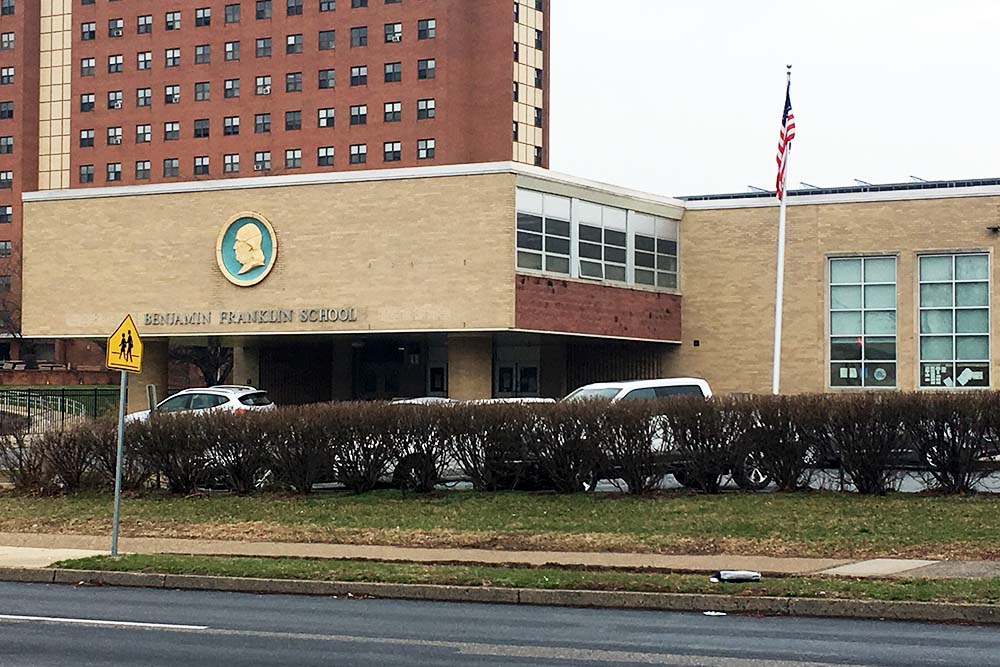
The intersection outside Ben Franklin Elementary school was the site of two vehicle crashes between 2015 and 2017, according to PennDOT data.

How safe are the streets outside of Harrisburg’s schools?

Data from a targeted city traffic study show that intersections outside of school buildings saw multiple car crashes in recent years.

The intersection of 6th and Division streets, near Camp Curtin Middle School, was the site of seven car crashes between 2015 and 2017, according to a city analysis of PennDOT data. The same data recorded two car crashes at 6th and Verbeke streets, just outside Benjamin Franklin Elementary School.

These findings were released as part of the city’s 2nd Street conversion study, which only analyzed the area from Forster to Division streets between the river and 7th Street. Crash data near the city’s other schools were not included.

Nonetheless, district parents are now asking for more crossing guards and bus service in neighborhoods across the city.

Yaqinah Abdurrahman’s 8-year old son is a second grader at Ben Franklin Elementary school. He’s able to ride the bus, but she said his friends who live outside the 1-mile bus radius are afraid to walk to school in the morning, due to busy intersections and the presence of a men’s homeless shelter near their campus.

A group from Benjamin Franklin School recently took matters into its own hands, launching a GoFundMe campaign to raise $40,000 to buy a new bus so they can transport more children.

But Abdurrahman fears problems will only get worse in the winter, when inclement weather and snowy sidewalks could force some walking students to stay home.

“If kids aren’t getting to school, you can’t serve them at all,” Abdurrahman said at a school board meeting tonight. “When it gets colder, you’re losing attendance.”

Abdurrahman suggested that school employees could ride public CAT buses with children who can’t take the school bus. She also asked if the district could grant building security guards greater power to patrol traffic outside the buildings, or to act as crossing guards at nearby intersections.

Board director Brian Carter said that some school security officers already direct traffic at school crosswalks. The district is also hiring more crossing guards.

But some residents want students to have the protection of adults along their entire walk to and from school.

“I have been fighting for crossing guards every year for the last 10 years,” said Sylvia Rigal. “We can’t get them, we can’t keep them. Not every parent can take their child to school.”

Rigal wants to see crossing guards along 6th street, stationed at the intersections of Maclay, Reily and Schuykill streets. School board members and administrators say that they’ll have to work with the city to station crossing guards beyond school property.

“I’ve spoken to City Council many times on this issue. It is the city’s responsibility to provide crossing guards,” board director Carrie Fowler said. “The only place they cannot provide crossing guards is on school property. That’s the district’s responsibility.”

But board vice president Danielle Robinson said the district can’t hire enough crossing guards as it is. She said the human resources department has advertised jobs for crossing guards this fall to monitor intersections near school property, but hasn’t found enough candidates.

“The district is doing everything it can to provide crossing guard protection for our children,” Robinson said. “We put all the advertisements up, but we can’t force people to come in. It’s frustrating because we want to help.”

Abdurrahman worries that people won’t mobilize behind the issue until it’s too late.

“If you can injure a person going 25 miles per hour, an adult, what would happen to a child?” Abdurrahman said. “Once a kid gets hit by a car, we’ll have 1,000 people at the crosswalks.”

Mayor Eric Papenfuse did not immediately respond to a request for comment tonight.

Continue Reading

TheBurg Podcast: “Sweet Gig” Edition

Traffic on Forster Street during the Nov. 15 snow storm.

We cover infrastructure changes, budget previews, and partial building collapses in today’s episode of TheBurg Podcast, here just in time for your weekend listening pleasure.

Lizzy and Larry discuss proposed changes to Harrisburg’s 2nd Street, and recap a recent public meeting on that subject that drew more than 100 city residents. We also make predictions on the 2019 budget presentation and lament the recent partial collapse of a historic city home.

Listen to latest episode here, or subscribe to TheBurg Podcast in the Apple or Android podcast apps.

Read more about the topics discussed in this episode at TheBurgNews.com:

A New North 2nd Street: Residents debate bike lanes, parking and more at public meeting.
Harrisburg eyes Forster Street lane change, sheltered bike routes as infrastructure blitz continues.
Harrisburg lifts hiring freeze, acts to extend lobbying effort as it prepares for Act 47 exit
Codes inspectors rule out demolition as repairs begin at Swallow Mansion.

TheBurg Podcast is released semi-monthly by TheBurg Magazine. It is recorded in the offices of Startup Harrisburg and produced by Lizzy Hardison. Special thanks to Paul Coolley, who wrote our theme music.

Continue Reading