Burg Blog: Go to Market

Four years ago, the Broad Street Market’s board of directors seriously considered padlocking the original, stone market building.

Most vendor slots were empty, and customers were sparse. So, the reasoning went, it would be more economical to just close the building and move the remaining vendors into the brick building, which had plenty of empty space of its own.

But the brick building had issues, too, closed twice over two years to battle vermin infestations.

Today, you would never know that any of this had occurred.

On market days, the crowds inside both buildings can be so thick that it’s often difficult to find a place to sit down and, for the first time in many decades, the market is 100-percent occupied, every vendor space filled.

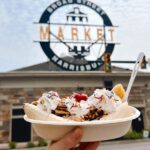
Stroll through the once almost-shuttered stone building, and you have your choice of cuisine from around the world: African, Jamaican, Korean, Polish, Indian, Puerto Rican, Greek. There’s barbecue, pizza, baked goods, ice cream, cheesesteaks, seafood, even craft beer, some of the tastiest things you’ll find in central PA.

Beth Taylor, who’s managed the market for more than three years, has led this transformation. Two days ago, she told her vendors that she would be leaving her post effective Dec. 15. Hers will be tough shoes to fill.

Managing the Broad Street Market may rank among the hardest jobs in Harrisburg. Sure, it sounds like fun—managing a farmers market—but, in reality, it’s often grueling, thankless work, with long hours and no end of problems.

In a given week, thousands of people pass through the market, and they must leave satisfied. The manager also must keep happy dozens of vendors, who are independent business people with their own needs, desires, hopes and dreams. She also must manage the staff, ensure cleanliness, keep order, provide safety and maintain the 150-year-old buildings, no small tasks given the weekly mob scene.

Then there are the bosses.

Ultimately, the manager must answer to a nonprofit board of directors, whose members have their own thoughts and priorities. To add a wrinkle, the market buildings are still owned by the city, and some city officials want their own say in how things are run.

So does the community.

The Broad Street Market may be the one entity that nearly everyone in this diverse, divisive town claims as their own. Therefore, residents all have opinions about the market—the vendors, the parking, the prices, what it should be, what it shouldn’t be.

Think of your own job. Do you need, every day, to balance the wishes, needs and demands of thousands of patrons, dozens of vendors, a staff, a board of directors, city officials and some 50,000 residents? Probably not.

The market manager needs to be tough and smart and diplomatic, with both broad vision and concern for the smallest detail, as well as an ability to inspire and lead others. And sometimes she needs to stand her ground, and sometimes she needs to say “no.”

From what I saw, Taylor had these skills, and she helped make the Broad Street Market the amazing place it has become—a remarkable renaissance in just a few years.

I wish the board all the best in finding a great replacement. May the new manager be able to navigate this minefield of interests and build on what already has been accomplished.

The new manager, though, should harbor no romantic ideas or illusions about running the Broad Street Market. This is a tough job, and it requires a tough person to do it.

As a community, we would do well to welcome and support the new manager. The market may be the best representation of us as a city, the one place in town where everyone comes and sits, eats, laughs and shops, a place where people talk and connect and, upon leaving, seem happier for having been there.

Lawrance Binda is editor-in-chief of TheBurg.

Continue Reading

Let’s Talk: The nation’s “social infrastructure” may be withering, but Harrisburg’s is growing stronger.

Illustration by Rich Hauck.

In late October, a group of Harrisburg residents, officials and canine-lovers gathered on a brisk late afternoon to cut the ribbon on the city’s first public dog park.

To fit the occasion, there were, of course, the requisite speeches, some pooch-related puns and the yip and yap from city dogs off-leash and frolicking in the fresh, damp grass in the newly fenced area at N. 7th and Granite streets.

So, certainly, if you’re a mutt or hound, a pedigree or mix, this ribbon cutting was a landmark event, one you’ll probably relive in your doggie dreams until your next visit. Less emphasized, however, was what the park will mean for us—the humans of Harrisburg.

A few months back, Eric Klinenberg, a sociology professor at New York University, wrote about something he called “social infrastructure” for the Atlantic Monthly. In his piece, he lamented the poor, deteriorating condition of our shared spaces—libraries, parks, markets and the like. These, he said, offered natural opportunities for people to meet, talk, form friendships and otherwise make attachments, all to the benefit of themselves and their communities. Many of these social spaces, however, now are threatened by lack of care and investment, particularly on the part of governments, he wrote.

Naturally, Klinenberg’s article had me thinking about life in this city.

If I had to grade Harrisburg’s social infrastructure, I might give it a “B-minus,” maybe a firm “B” on a good day. So, not bad, but certainly room for improvement. The thing is, it wasn’t long ago when this mark would have been much worse. Harrisburg spent decades fraying and falling, with terrible consequences for the quality of life here. But, now, as the city bounces back, it is bucking the larger, national trend described by Klinenberg. Its social infrastructure is actually getting better.

Anyone who has visited a dog park knows that it’s not just the dogs that get friendly with one another. The owners stand around, watch their pets, and get to know each other. Many friendships, even relationships, have begun at dog parks, especially since even the most small-talk-challenged have a shared interest and natural launching point for conversation.

But I don’t mean to put too much pressure on one little dog park. In the decade I’ve been in Harrisburg, I’ve seen the social infrastructure in this little city improve dramatically.

Certainly, the Broad Street Market sits at the crossroads of the community and, as such, is a reflection of its social health.

After decades of struggle, the market has been on a prolonged upswing, thanks to a combination of strong management, excellent vendors and the general comeback of the Midtown neighborhood. If there is a load-bearing beam holding up Harrisburg’s social infrastructure, the Broad Street Market is it.

Walking through the crowded market buildings, you would never know that, not long ago, vendors, sparse as they were, seemed to outnumber shoppers. But, today, the market is the scene of thousands of interactions and conversations—from the main dining area to the Zeroday Outpost to the ordering counters to the shared tables. The market is prima facie evidence that we are a social species, happier together than when divided or isolated.

Spiraling out from the market, Midtown Scholar Bookstore has become a de facto community center; Strawberry Square has mounted a surprising rebirth as a gathering and meeting place; the Midtown Cinema parking lot has become a free outdoor film venue and flea market space; and profoundly underused Italian Lake Park is finding new life as a place for free outdoor concerts and events.

Some of the examples may not strictly fit Klinenberg’s definition of social infrastructure, since he distinguishes purely “public” spaces from commercial ones. However, both Midtown Scholar and Midtown Cinema basically donate their venues for community use, as, often, does HMAC. And I’m certain far more business gets done at the tables in Little Amps than at the ordering counter.

In fact, what I like so much about Harrisburg’s approach is that, for the most part, private entities—Friends of Midtown, the Harrisburg Parks Foundation, Friends of Italian Lake, Harristown, HYP, the LGBT Center, Bethesda Mission and many companies—have stepped up to build and strengthen the city’s social infrastructure when and where the cash-strapped municipal government could not. I like to think that TheBurg also contributes through our free magazine and community reporting, by donating staff to 3rd in the Burg each month and by sponsoring free events like the Harrisburg Mural Festival.

So, Dr. Klinenberg, take heart. I know you were in Harrisburg a few months back to give a book talk, but you really should return and, this time, stay awhile. Study what we’re doing. Speak to the people building Harrisburg’s social infrastructure from the ground up. Bring your dog. I think you’ll leave with more hope than when you arrived.

Lawrance Binda is editor-in-chief of TheBurg.

Continue Reading

Retail Therapy: More people are choosing to live, work and play in Harrisburg. Could a retail revival be next?

Boutiques and department stores brought shoppers to downtown Harrisburg in droves through the 1960s. This undated photo from the Dauphin County Historical Society shows a bustling scene outside Bowman’s Department Store on Market Street, which is now part of Strawberry Square.

It was close to 3:30 p.m. on a gray Monday afternoon when I found Moe Rammouni ringing up customers at Pal’s Apparel, his high-end streetwear boutique in downtown Harrisburg.

His clientele—two local guys, Rammouni said, who probably found Pal’s on Facebook or Instagram—came in seeking tracksuits and puffy parkas. It was Rammouni’s first sale of the day.

“Business is great now, but there’ve been some growing pains,” Rammouni said. “And there still are. You gotta have a lot of patience to do this.”

Rammouni has been in his storefront at 306 N. 2nd St.for just over a year. But he can already tell you what more seasoned merchants have been saying for decades: retail isa tough business. E-commerce has created a market where prices are low, consumer information abounds, and free, two-day shipping reigns supreme. Those conditions have devastated national chain retailers. In the past year alone, legacy brands like Sears and Bon-Ton have closed stores and liquidated inventory. Suburban malls are going dark as a result.

If not even the biggest brands can compete with online retail giants, where does that leave mom-and-pop shops?

These independent merchants have historically congregated in American cities, where dense populations and compact storefronts offered a symbiotic shopping experience. But the migration of people and businesses to the suburbs have decimated urban retail centers across the country. Harrisburg is no exception. The downtown boutiques, grocers and department stores that once animated the city’s streets are long gone. Their storefronts found second lives as offices and eateries, if they’ve been filled at all.

“To my left and my right, there’s vacant, commercial class-A space that could be turned into something magnificent,” said Rammouni. “I’d love to see more retail on 2nd Street.”

Even as they watch big-name competitors fold, merchants in Harrisburg think it’s a good time to start a small business. They say that the hardships rocking national chains highlight the power of independent retailers, which can offer superior expertise and customer service.

But if current businesses are going to flourish, their owners say, Harrisburg needs to fill its vacant storefronts.

“Don’t get me wrong—I love Harrisburg,” said Anela Bence Selkowitz, one of the city’s newest storefront retailers. “But there’s nowhere to shop.”

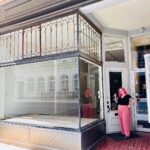
Bence recently opened Stash Vintage, a clothing and accessories store, in a shared storefront at 11 S. 3rd St. She’s near the restaurants El Sol and Bricco in the downtown SoMa neighborhood.

“I’d like to see three or four more boutiques on this block,” she said. “If this neighborhood was a destination where people could spend a whole afternoon, it would be a much better situation for us.”

Landlords agree that independent businesses have the best shot at success when they’re part of a dense network of stores. The good news is that Harrisburg’s commercial corridors are emerging from a long period of stagnation. Strawberry Square, the downtown mall that subsumed some of Harrisburg’s old storefronts in the 1970s, had a 40-percent vacancy rate just five years ago, according to Harristown CEO Brad Jones. It’s now at 5 percent.

“There’s been a lot of momentum, but retail is still a very tough sector for us, as it is for everyone else,” Jones said. “I don’t think we’ll ever get back to the way it was… But we are growing our density, and every year, it’s getting better.”

Rise and Fall

If you set out to do your Christmas shopping in Harrisburg in 1950, you wouldn’t have to travel far from 3rd and Market streets. Like most cities, Harrisburg’s central business district boasted everything from small specialty shops to multi-level department stores. Whether you wanted a custom hat, a tailored suit, a new armoire or the latest records, you could buy it in a downtown storefront.

Ken Frew, a librarian for the Dauphin County Historical Society, grew up on Derry Street, where he could pay 5 cents to take the bus to shop in downtown. “You could find anything you wanted down there, and you didn’t need a car to get it,” he said. “You had big anchor stores, sure, but you also had lots of other shops really keeping the place together.”

As a historian who has lived his whole life in Harrisburg, Frew has watched the city’s downtown evolve for decades. Its first major change came in the 1940s, he said, when customers started to favor their personal vehicles over public transportation. The shift carved the first cavities into Harrisburg’s downtown streetscape, as property owners began razing buildings to pave surface parking lots.

But the rise of the personal automobile dealt an even deadlier blow to cities. It facilitated movement to suburban communities, where residents could retreat after a day’s work in a downtown office. Segregationist housing policies and discriminatory lending practices accelerated the exodus. Urban planners played their part, too. Starting in the 1950s, cities including Harrisburg began to reroute major city streets with one-way traffic patterns. Under the guidance of Mayor Nolan Ziegler, Harrisburg officials reduced parking lanes and converted 2nd and Front streets to one-way, multilane mini- highways in 1956. “We are interested only if proper ingress and egress is assured,” Ziegler said at the time.

Ziegler and his engineering team got what they wanted. Following the 2nd and Front street conversions, it became easier than ever for commuters to zoom through Harrisburg as they came and went from work. The city’s small businesses became an unintended casualty.

“The one-way streets made it difficult to maneuver, and it was the end of downtown,” Frew said. “When people got off work, they went out of the city and stopped shopping. My dad was always grousing that it slowed business.”

Harrisburg’s population was close to 90,000 in 1950; by 1980, it had dipped to 53,000. As white, middle-class customers flocked to the suburbs, retailers followed suit. Harrisburg got its first suburban-style shopping center in 1951, when Kline Plaza opened on S. 25th Street. That, according to Frew, was “the first sign that retail was starting to plummet” downtown. The Harrisburg East Mall followed in in 1969. Some local business owners, like the men’s clothing retailer Allan Stuart, tried their luck opening satellite branches in suburban malls. But most found that their storefront model didn’t translate to the new setting. Others couldn’t match the prices of their chain competitors.

The erosion of the downtown merchant base was gradual, according to Stuart’s son, Jeb Stuart. But by his account, “the bottom fell out of downtown by the 1970s.”

Jeb Stuart recently curated an exhibit for the Historic Harrisburg Association that chronicles downtown retail during the city’s “urban golden age,” from 1918 to 1960. Walking through the exhibit, it becomes clear how much of the city’s retail space has been ceded to other industries. When retailers started to evacuate downtown Harrisburg in the 1950s, developers snatched up vacant storefronts and adapted them to other uses. Today, the Market Street property that once housed S.S. Kresge’s Co, a discount retailer, has become Whitaker Center. SciTech High School now occupies the space once held by G.C Murphy department store.

Many downtown retail spaces were acquired by Harristown Development, which the city created in the 1970s to spearhead urban revitalization projects. Chief among them was the development, in 1978, of Strawberry Square, a downtown mall with 1.4 million square feet of mixed-use office and retail space. Jeb Stuart worked as a leasing agent in Strawberry Square in the 1980s. He and his business partner tried to court national chains to fill first-floor retail spaces. When that didn’t pan out, they focused their efforts on small, mom-and-pop shops that catered to the downtown workforce.

“It was a challenge,” Stuart said. “But there will always be a downtown worker population in Harrisburg, so there will always be a need for some form of retail. But what you need now is retail that’s convenient, that fills a need or that offers a niche—because cool things can become destinations in themselves.”

Support System

The same malls that killed downtown retail in the 1960s and ‘70s are today facing a sea change of their own, thanks to the ascendency of e-commerce.

But does the newest disruption in retail represent a potential resurgence for urban storefronts?

“We all think we’re poised for a comeback,” said Isaac Mishkin, owner of The Plum, a women’s clothing boutique. “I see it inching forward. People are getting smarter and spending more time analyzing what people buy.”

Mishkin, who’s run The Plum from the same brick storefront on Locust Street for 50 years, is one of the lone legacy retailers in Harrisburg. To survive today, he believes that storefront merchants have to offer one thing that e-commerce companies can’t—attentive, experience-driven customer service.

“I learned how to sell the old-fashioned way,” Mishkin said. “We know how to dress customers when they come in. It’s not like department stores today where nobody waits on you.”

As accessories designer Amma Johnson put it, a customer’s most valuable commodity today isn’t money—it’s time. One reason customers have flocked to online retailers is because they can peruse goods and complete a transaction in minutes, eliminating the onerous task of driving to a mall to shop. To compete with that convenience, storefront retailers have to make a customer’s visit worth their while, she said. At her Amma Jo showroom in Strawberry Square, that means offering a pleasant shopping experience that puts the customer first. She’s also branched out into events, hosting networking happy hours and, more recently, a women’s empowerment and entrepreneurship panel. Johnson said that these events do generate sales. But she also sees them as an extension of her brand — the larger, more nebulous “feeling,” Johnson said, that people associate with her name and product. And that feeling can’t be conjured with pixels alone. She pointed out that even online companies are experimenting with brick and mortar retail models.

“A good brand is a good feeling,” Johnson said. “And even as powerful as a brand like Amazon is, they’re doing things like pop-up stores because it’s very hard to build a brand exclusively online.”

Andrew Kintzi, who run the men’s vintage store Midtown Dandy in a storefront he shares with Bence on 3rd Street, echoed what Johnson, Mishkin and other merchants said about running a storefront today.

“In terms of competing with other businesses, it comes down to the customer’s experience,” Kintzi said. “It’s being able to walk in the door, be greeted, trying something on and feeling materials. I want you to come in here, find something you love, and remember buying it here.”

Bence has a different take than her business partner. As she sees it, a good landlord can make or break a

retailer. And she says they’re hard to find in Harrisburg. She and Kintzi tried to set up shop on 3rd Street north of Forster, but were stymied by a paltry inventory of storefronts. Landlords wanted to charge exorbitant rents for sub-par spaces, she said, and wouldn’t accommodate requests to enhance them.

“You need a good deal with a good landlord who will work with you,” Bence said. “Landlords are really awful around here. They want way too much for empty shells.”

She contrasted that with her experience leasing from Harristown, which painted walls and constructed a small build-out in their storefront on S. 3rd Street. They’ll also include Stash and Midtown Dandy in their advertising and promotional materials.

“There’s a support system here, so it doesn’t feel like we’re just being thrown into a space,” Bence said. “It feels more like a partnership with the people who own the building.”

The final thing that retailers say they need is increased density in the downtown retail district. Johnson said that she chose her storefront in Strawberry Square because it offered the best chance to gain organic foot traffic—passersby who might not seek out her store on their own, but encounter her brand while going about their daily business. More than 6,000 people walk through the shopping center each day to shop, eat, work or attend events, according to Jones, making it one of the busiest commercial corridors in the city.

But the workforce population disappears on the weekend, creating wild variations in the pace of customers throughout the week. Retailers say the same is true elsewhere in the city. Chantal Eloundou, who opened Nyianga, a boutique selling African crafts and fabrics on N. 3rd Street, said business is best on days when the Broad Street Market is open, since it draws people down 3rd Street from state office buildings downtown. But the rest of the week can be a challenge.

“More retail would draw in more customers,” she said. “So, I say, the more the better.”

Critical Mass

Building a bigger retail landscape in Harrisburg would do more than just create a shopping destination.

Even though the industry can be precarious, experts say that locally owned businesses remain an essential part of any city’s community and economic development strategy. Besides creating jobs and building wealth for entrepreneurs, a diverse array of shops affords consumers more choice and competitive prices. It also drives tourism. Visitors who have enough reason to shop, eat and pass time in a city just might decide to move in.

“Having businesses, whether it’s retail or restaurants or services, really is a key component in making a thriving city where people want to live and shop and do business,” said Ken Hammaker, vice president at the Community First Fund, which loans to entrepreneurs in low-income communities across the state. “You need that component just as much as you need clean, affordable housing and good quality schools.”

Nobody understands that dynamic better than Harrisburg Mayor Eric Papenfuse, who touted his experience as a storefront business owner in both of his mayoral campaigns. Papenfuse and his wife, Catherine Lawrence, opened the Midtown Scholar Bookstore in 2003. In 2009, they moved the store to its current location at Verbeke and N. 3rd streets, into what used to be a movie theater and then a department store.

According to Lawrence, many of the nearby storefronts were underutilized when they moved in.

She and her husband convinced some recalcitrant property owners to sell them their neighboring buildings. County property records show their acquisitions began in 2008, the same year they purchased the two parcels that house the current Midtown Scholar, and continued through November 2013, the same month that Papenfuse won his first term as mayor.

Since he took office, these property holdings have opened Papenfuse to criticism that he prioritizes projects on 3rd Street to his own benefit. He said that it was always part of a greater strategy to build a community-oriented commercial corridor.

“We came in 15 years ago as young retailers interested in generating more foot traffic on this corridor,” Papenfuse said. “We looked at the market, at Midtown Cinema, and saw the potential for more of a critical mass more than just a single anchor store.”

Lawrence and Papenfuse are sympathetic to the challenges facing local retailers today. They know it takes a long time to build a customer base, develop a marketing strategy, and finance an inventory. Speaking as a city official, Papenfuse said that Harrisburg must provide the public services—smooth roads, inviting streets and a public safety presence—that enhance the city’s built environment and encourage tourism. It can also provide practical resources, such as business development programs, through the office of Community and Economic Development.

But speaking as a business owner, he said much of the responsibility for building a retail corridor lies with landlords and merchants who have a shared, community-oriented vision. Like Bence, he reserved special criticism for local landlords, who he says have been historically disinterested in maintaining their properties and identifying good tenants.

According to leaders in Lancaster, good landlords have made all the difference in their downtown business district, which has added more than 100 shops, restaurants and entertainment venues in the past half-decade.

“Historically, we’ve been fortunate that we’ve had a great number of local investors and property owners that are responsible for the fact that we still have this core area of retail downtown,” said Marshall Snively, president of the Lancaster City Alliance, a nonprofit community and economic development group. “They were patient at a time when other cities were leasing to anyone that would lease and very intentional in making sure it was lively retail that would add to the character of the city.”

It’s no coincidence that the evaporation of retail in Harrisburg coincided with the depths of its financial distress, a condition that began brewing in the 1970s and intensified through the 2000s. Today, local officials say that Harrisburg’s long-term recovery depends on whether or not the city can increase its population. But turning daytime workers into full-time, taxpaying residents will take more than new housing and better roads.

The urban theorist Jane Jacobs famously said that the hallmark of a healthy city is the “sidewalk ballet” of people darting between work, errands, meals and entertainment in a humming urban core. Plenty of people in Harrisburg participate in this “ballet” during the week, when almost 50,000 commuters flood the city. But boutiques, bars and restaurants, cultural and entertainment spaces convince them to stick around after hours. And it’s the coexistence of all these elements— apartments, workplaces, businesses and public spaces— that distinguish an urban ecosystem from a suburban office park or housing development. As Hammaker put it, all of these elements are all connected, and no one sector will flourish as long as the others falter.

And that includes retail. At a macro level, the realities of the industry may seem bleak. Dying malls and empty big-box stores have left unsightly cement husks in America’s suburbs. Amazon is colonizing private spaces with smart speaker robots as its CEO controls an ever-growing share of the world’s wealth. But locally, small retail businesses remain an integral component of vibrant, self-reliant cities. They create jobs, animate streets and offer a shopping experience that’s more than just transactional. One need only visit Stuart’s exhibit at the Historic Harrisburg Association to be reminded that retail is an indelible part of Harrisburg’s past. If the city is going to thrive, the same will have to be true in the future.


Continue Reading

Artist in Focus: Justin and Joelle Arawjo

Collaboration defines the artwork of Joelle and Justin Arawjo, otherwise known as Fennec Design.

Upon entering their studio in the Millworks, you will see many of the pieces that they’ve created together—the housewares and jewelry, the textiles and prints. These artists believe that the whole can be greater than the parts, each contributing their own unique talents to handcrafted, often natured-inspired items available both locally and around the world.

Fennec is our artist-in-focus for December. To see even more of their creations, please visit their Millworks studio in Harrisburg or their website at www.fennecdesign.com.

Photos by With Love and Embers.

Continue Reading

Happiness Is a Warm Bun: Meaty, gooey delights at The Cheesesteak Guy.

Josh Longo’s future was written on a napkin.

One day, he scribbled the word “cheesesteak” on a cocktail napkin, and when he came home from work that night, his fiancée Keri Little saw the note. She grew suspicious.

“What are you up to?” she asked him.

Longo admitted that, indeed, he had an idea. He knew that the owner of The Harrisburger was closing his hamburger stand in the Broad Street Market, and he wanted to do something with the space. Cheesesteaks seemed like a natural choice.

Just a few months later, The Cheesesteak Guy opened in the back of the market’s stone building. Since July, co-owners Longo, a former manager at Zeroday Brewing Co., and Little, a Florida transplant, have been filling a niche by churning out the legendary sandwich to market patrons and passersby alike. They average about 100 cheesesteaks a day on market days.

Perhaps this quick success should come as no surprise, as Pennsylvania is practically synonymous with the word, “cheesesteak.”

According to Philadelphia’s official tourist site, the sandwich was invented in the 1930s by hot dog vendor Pat Olivieri in South Philadelphia. Olivieri was grilling beef from the butcher and placed it on an Italian roll. A passing cab driver caught a whiff and asked for the “steak sandwich.”

The rest, as they say, is history.

Longo’s personal history also indicates that he made the right choice to enter the cheesesteak biz.

His aunt, Stephanie Stence, owns Premier Caterers in Camp Hill. His uncle, Donny Brown, owns Black ‘n Bleu in Mechanicsburg and formerly owned the Firehouse Restaurant in downtown Harrisburg.

Longo and Little took advantage of the family’s institutional knowledge. They went to his aunt for advice before starting the business. They also credit Broad Street Market Manager Beth Taylor for supporting them as they worked through the process of getting up and running.

Since Longo had also worked at Zeroday’s Outpost in the market, just a few feet from the new stand, he was intimately familiar with the location and its potential.

“I was eager to make cheesesteaks that are authentic, without cutting corners,” he said.

The only corners that Longo and Little cut are the ones on the ends of the rolls they use for sandwiches, which makes them the perfect size. The owners tried out quite a few breads and dimensions before settling on Glassboro, N.J.-based Liscio’s Bakery, whose slogan is, fittingly, “It Starts with the Bread.” Liscio’s is a cheesesteak fan favorite. So, Longo and Little have the bread delivered to their house between 4 a.m. and 5 a.m. weekly.

“We had a visitor from south Jersey come to the stand one day, and she gave me her name and number and said, ‘If you ever have rolls left over at the end of the day, can I buy them from you?’” Little said.

But there has been nothing to spare, not even the cut corners. Longo and Little donate those to fellow Broad Street vendors Raising the Bar bakery, which uses them for their bread pudding, and to Hummer’s Meats, which puts them in their meatloaf.

Beyond the bread, Longo and Little emphasize the freshness of all the ingredients they use in their sandwiches.

They get to their stand at 6:45 a.m. every workday to hand-slice all of the ingredients, including mushrooms, onions and peppers. The shaved, choice ribeye is purchased from Warrington Farms in Dillsburg and broken down by hand. Their cheesesteaks also feature the ever-famous Cheez Whiz. But, to give it a creamier consistency, they add some sour cream. If patrons prefer another option, The Cheesesteak Guy also offers provolone, American, cheddar and pepper jack cheeses.

For those craving something other than a cheesesteak, Longo and Little make hamburgers with meat from Hummer’s. It’s another popular choice, as they sell about 25 burgers a day. They also serve breakfast sandwiches, grilled cheeses and BLTs.

“Midtown sucks you in,” said Longo, reflecting on the jump to start and own a business in the popular, historic Harrisburg neighborhood. “You see the same people, and it’s great. It’s the only place we like to hang out.”

Then Little added: “It feels good to be your own boss.”


The Cheesesteak Guy is located in the stone building of the Broad Street Market, Harrisburg. For more information, visit the Facebook page: The Cheesesteak Guy.

Continue Reading

Dreaming of a Green Christmas: Nonprofits depend upon the giving time of year.

For Bethesda Mission, it starts with the Thanksgiving food drive. Mail campaigns and Giving Tuesday follow. The venerable service organization has even added a family Christmas event to its holiday fundraisers.

“It’s crazy,” said Director of Development Cindy Mallow. “We live for these couple of months here.”

What would nonprofits do without the holidays? The answer is—sacrifice a lot of money.

While many are diversifying their revenue streams, nonprofits continue relying on year-end events and appeals for as much as one-fourth of their annual income, for their very own, extended Black Friday.

Historic Harrisburg Association, founded in 1973, dove into holiday events in its first year.

The then-new organization sought to “revitalize the neighborhoods that had been devastated by the flood of 1972 and to awaken the public to the value and the beauty of historic urban neighborhoods,” said HHA Executive Director David Morrison.

Its Candlelight House Tour, still going strong, “was a way to showcase it and for the general public to get involved.”

“Simply seeing these houses was a form of education and advocacy, for people to say, ‘Oh, we had no idea these homes could be so charming,’” Morrison said.

In 2017, Bethesda Mission launched a new event. “A Tremendous Christmas at Italian Lake” brought carriage rides, Santa Claus, carolers, vendors, and a Christmas tree lighting to a park that normally slumbers in winter hibernation.

“Italian Lake has been a hidden gem for years,” said Mallow.

Sponsors for each activity keep the overall event free, with minimal fees for some activities. New this year: a skating rink.

“It’s not real ice,” Mallow admitted. “But it’ll be fun for the kids.”

While the concept was being developed, Mallow envisioned “this New England, small-town Christmas, where the whole town gets together, and they sing Christmas carols and go for carriage rides and light the Christmas tree.”

“Even though Harrisburg is not that small New England town, we felt it was important to make it a family event and bring the community together,” she said.

The holidays also give the arts a time to shine.

Susquehanna Chorale performed its first Christmas concert the year after Linda Tedford founded the ensemble in 1981. She strives to create “a place of peace and beauty” for patrons.

“If choirs are going to perform, financially and repertoire-wise, the holiday season is rich with possibilities,” said Tedford. “It’s such a good time to bring people together, and I think people are hungry for that, especially in these days.”

The transformative magic “happens for the artists, as well,” even though they’ve “done the grunt work” to prepare, said Susquehanna Chorale alto Anne Moul. The singers, all volunteers, commit the time because Christmas music and carols are “part of the fabric of our families and our country.”

“The reward far exceeds the effort,” she said. “The satisfaction of creating an artistic product of high quality and mixing with other people. We all bring our gifts, vocally and artistically, and we’re molded by the master gardener.”


Amazing Thing

Nonprofits also seize the opportunity to “friend-raise” during the holidays, spotlighting their missions, promoting future events and cultivating supporters.

Charitable givers, especially younger people, crave two things in their giving—an experience and the knowledge that their dollars make a difference, said Avrum Lapin of Philadelphia-based consultant The Lapin Group. Events are “a way for people to participate,” even if ticket sales can’t match the income-generating power of galas (“and those are becoming less popular,” she added.)

Holiday events derive their power from being “part of the fabric of the community.”

“They help organizations meet their budgets, and they keep people close,” Lapin said. “It strengthens the sense of engagement and community.”

While Bethesda Mission generates half of its annual income during the year’s last quarter, and one-fourth during December, year-end outreach also raises awareness of the extent of its services—men’s shelter, women’s shelter, community center and medical and dental clinics.

“We accept no government funding, so we rely 100 percent on donations to keep us running,” said Mallow. “We feel we have to be out there spreading the word.”

Holiday events and appeals are opportunities to remind audiences of an organization’s value to the community, and that “we are doing what you would like us to do,” said Tedford. Donors are investing not just in concerts but in the chorale’s educational outreach to young people with futures as “singers, teachers, donors, attendees, board members.”

“We know these people value the arts,” said Tedford. “We are their voice.”

Of course, December weather can upend the best-laid plans. Susquehanna Chorale has only canceled once, but with the prospect of a single ice storm wiping out one quarter of annual revenue, “we pray a lot,” said Tedford.

Morrison recalled the year that a blizzard struck during Elegant Progressions, the black-tie progressive dinner benefitting HHA and the Kidney Foundation of Central Pennsylvania. Patrons were stranded at the hors d’oeuvres house “with a full bar but no food.”

“Here was the amazing thing,” he said. “We offered a refund to anyone who wanted a refund. The vast majority of people said, ‘Keep our donation. We know you had expenses.’ It minimized what would have been a catastrophe. It was more of a catastrophe in experience than a financial catastrophe.”

Like many nonprofits, HHA is diversifying its revenue base to lessen its dependence on holiday events. Monthly financial reports “don’t rise and fall nearly as dramatically as they did in years past,” noted Morrison.


Giving Heart

Lapin counsels nonprofits to stay in touch with donors and friends year-round, but still, “probably about 25 percent to 30 percent of all revenue is earned in the last couple weeks of the year.”

Donors don’t give just for the tax deduction.

“Not giving puts more money in your pocket,” Lapin noted. “[They] want to make an impact, and that’s why these nonprofits exist, with all their wonderful missions.”

“God bless them,” he said. “That’s the American way. Truly. If there’s nothing more that unifies Americans, it’s philanthropy.”

The corporate sponsors so crucial to holiday-event success show the same altruism and interest in community vibrancy, said Morrison. They may benefit from visibility and free tickets, but maybe “simply, there’s just a feeling of satisfaction. Not every sponsor is quantifying what they’re getting.”

Even tax-law changes that doubled the standard deduction, therefore setting a higher bar for charitable donation itemization, won’t disrupt the tradition of giving, said Anne L. Gingerich, executive director of the Pennsylvania Association of Nonprofit Organizations.

“People in the United States are generous anyway,” she said. “People are going to keep giving because we genuinely care about our neighbors.”

Or as Mallow put it, when the holidays come around, “people have a more giving heart.”


The Giving Season

Would you like to attend some of the holiday events mentioned in this story?

Continue Reading

Academic Adjustment: Faced with charter and online competition, local public schools are changing, adapting.

A young girl sits pointing to a school lesson on a computer screen, showing her mother. Both are smiling and engaged.

You may have seen this advertisement, or one like it, many times and thought nothing of it.
However, these ads for Pennsylvania charter schools represent the changing face of our educational landscape, as they look to attract students from area public schools.

Students today can choose to attend their district school or opt for a tuition-free cyber or brick-and-mortar charter school, privately owned and operated but publicly funded. This concept, known as “school choice,” was implemented two decades ago as Pennsylvania began looking to charter schools as a means of education reform.

This reform, however well meaning, led to an unsettling consequence. Children now had a value placed on them, as each student who left the traditional public school meant more public tax money for the charter school and less money for the school district. Some refer to that as “backpack funding.”

“Every child has a certain amount of money attached to them for education,” explained Dr. Sarah Cordes, assistant professor of educational leadership at Temple University. “Think of that money as being placed in a school backpack. Each child takes that backpack to the school of their choice.”

Harrisburg-area public schools have responded by seeking ways to reinvent themselves to meet the changing needs of students. School days are no longer necessarily spent sitting in a classroom eight hours a day, five days a week, from September to June. School choice has led districts to offer more program options and educational pathways.


Not Equal

Dr. Fred Withum, superintendent of the quickly growing, 9,400-student Cumberland Valley School District (CVSD), puts the problem facing many public schools in a nutshell.

“[Education] still reflects much of what we did 50 to 100 years ago and is working on an agrarian calendar, but expecting 21st- and 22nd-century results,” he said.

Withum has been trying to battle this tough problem as part of his district’s innovation strategy.

Three years ago, CVSD started offering a summer class program known as “Term Three,” in which students attend full courses during the summer. Withum said that the program was designed to provide students with the flexibility to alter traditional school year schedules and include college courses, job shadows and even early graduation.

CVSD also partners with Harrisburg University in a program called NuPaths, based on an HU information technology start-up program, as another pioneering workforce development program.

When it comes to competing with charter schools, Withum said that the “playing field” is not equal. He pointed out that charter schools do not have libraries to fund and staff, offer no free breakfast or lunch programs and have little transparency in spending.

In his previous position at another Pennsylvania school district, Rob Schultz, superintendent of the 3,800-student Lower Dauphin School District (LDSD), wrote an article on the topic of spending.

“My concern, based on my research, surrounds how the taxpayer dollars are used by the cyber charter school,” Schultz wrote in an October 2016 issue of the Reading Eagle.

According to Schultz, the months of August and December are often marked with a spike in charter school advertisements. He said that he believes students are heavily marketed to then as an alternative to returning after breaks to any school issues they may be facing.

Regardless of the timing, Schultz believes that more emphasis should be placed on individual assessments to ensure online learning is a good fit for the student.

“It’s the first thing we do at LDSD before one of our students opts for CAOLA (Capital Area Online Learning Association) as a strictly online option,” he said.

He added that some students are better suited to face-to-face learning or a hybrid option. He has seen many charter students returning to public school after a few years, finding online learning not to be a good fit.

Like CVSD, LDSD is partnering with HU, offering 10 college courses this year taught by certified teachers. They have also designed their own STEM program.


Ebb and Flow

The challenges facing public schools aren’t just academic; they’re social and developmental, as well.

“Some people see charter schools as the great hope for education,” said Dr. Carol Johnson, superintendent of Central Dauphin School District, the area’s largest at 13,013 students. “But schools are tasked with more than just education. We offer social services, counseling, and teach kids cooperation and to be good citizens.”

Johnson also pointed out the importance of helping children handle the “daily ebb and flow of emotions.”

According to Johnson, although the changes taking place in public education may have been nudged along with the advent of charter schools, many are occurring “because it’s the right thing to do for our students.”

Johnson said that blended learning options through public school partnerships like CAOLA, a consortium-based approach, provide viable solutions. Through CAOLA programming, students take a schedule of solely online courses, like charter schools offer, or a blend of online and classroom courses, providing scheduling flexibility.

Johnson also pointed to new classroom programs like their drone course, where students learn to build and fly a drone and take a Federal Aviation Administration test, and a first responders course, which is offered in conjunction with the University of Pittsburgh.

Students at smaller districts, like the Camp Hill School District, with 1,337 students, also have several internship, mentorship and work-study opportunities to choose from, with more in the pipeline.

“Programs offered in conjunction with HU and Harrisburg Area Community College provide students with creative, goal-oriented options, especially senior year,” said Superintendent Patricia Craig.

Despite the different challenges each district faces, local superintendents seem to agree on three elements in a public education transformation: a blended learning model of online and classroom courses that meet individual needs; partnerships with higher education and businesses and industry; and scheduling flexibility.

In this way, public school districts are both competing more effectively with charter schools and better preparing their students for 21st-century careers.


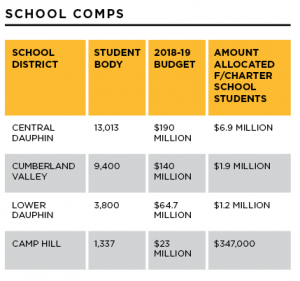
School District         Student Body       2018-19 Budget      Amt f/charter school students

Central Dauphin       13,013                      $190 million                        $6.9 million

Cumberland Valley    9,400                       $140 million                        $1.9 million

Lower Dauphin          3,900                       $64.7 million                       $1.2 million

Camp Hill                  1,337                        $23 million                           $347,000

Continue Reading

Deck the Huge Halls: Put a historic mansion visit on your Christmas list.

Throughout different eras and places in history, Christmastime feels special. Maybe it’s the extra effort from giving gifts, baking and attending special events. It could be the smell of evergreens or twinkling light strands.

Whatever makes you feel festive, visiting an impressive historic mansion just might help the Christmas spirit visit you. Historic houses are especially enticing and meaningful when they incorporate accoutrements from the era when its owners lived there.
Outside of Harrisburg are several historic mansions, all gussied up for the holidays, which may not be on your radar but are definitely worth a visit this month.


Eisenhower Farm Christmas

A farm near Gettysburg served as President Dwight and First Lady Mamie Eisenhower’s weekend retreat and eventual retirement home. Mamie, dubbed “Mrs. Christmas” by Southern Living magazine, made her surroundings come alive at Christmastime.


Curators have taken special care to re-create Mamie’s special farmhouse touches and Christmas style. A life-sized Santa greets visitors on the porch. Traditional mistletoe, wreaths and poinsettias accent the house in green, and the family tree is illuminated and covered with candy canes. In the kitchen are sugar cookies and plum pudding, just like Mamie made for her grandchildren. The dining room table is even set for Christmas dinner. One glance at all the presents under the tree, and you’ll feel like part of the Eisenhower family. Go ahead and hum along to their Christmas records playing in the background.

Visitors can view the Eisenhowers’ custom-made White House Christmas cards, Christmas gift prints of Ike’s paintings and a handmade, 1950s-era Christmas diorama.

If you’re also visiting the battlefield, a tour shuttle bus leaves daily from the Gettysburg National Military Park Museum and Visitor Center.

Eisenhower National Historic Site is located at 243 Eisenhower Farm Rd., Gettysburg. For more information, call 717-334-1124 or visit www.nps.gov/eise/index.htm.


Wheatland

For more presidential history, visit “Yuletide” at President James Buchanan’s grand Wheatland mansion in Lancaster. Yuletide is a holiday-themed, performance-based program that brings to life pre-Civil War American history.

The house features decorations from the Victorian era all the way through the 1920s, when the Wilson family lived there. Visitors don’t just tour Wheatland. They become part of the performance, playing parlor games and caroling. Yuletide performances go on through Dec. 29.

While visiting Wheatland, be sure to visit all the non-Christmas sites, including at neighboring LancasterHistory.org: the gardens, the research library and archives, the exhibition galleries, the arboretum and the museum store.

As a bonus, LancasterHistory.org is planning to hold a special “Tours & Tinsel” program on Dec. 11 and 18 from 6 to 8 p.m., complete with live music and drinks.

Wheatland is located at 1120 Marietta Ave., Lancaster, and neighboring LancasterHistory.org is located at 230 N. President Ave., Lancaster. For more information, call 717-392-4633 or visit www.lancasterhistory.org.


Cameron/Masland Mansion

Although not a presidential home, local politician James McCormick Cameron’s 32-room stone mansion, built circa 1908, served as his summer retreat from his city home in Harrisburg. The Masland family (of carpet fame) purchased the house after Cameron’s death in 1949. The commonwealth acquired the property through the Nature Conservancy in 1973.

On Dec. 2 and Dec. 9, the Cameron-Masland Mansion opens from noon to 4 p.m. for its self-guided holiday open house. Although the first floor of the mansion is open Sunday afternoons Memorial Day through November, it has special hours and events for one week in December.

Enjoy seasonal Celtic harp music on Dec. 2 and cello music on Dec. 9, perfectly bookending the event. Visitors may also sample hot-spiced cider and cranberry orange cookies in the afternoons. A holiday coffee house will keep the mansion open on Dec. 8 starting at 6 p.m. for music and refreshments.

The Italian villa-style house is situated on more than 2,500 acres of forest on South Mountain, with more than 20 miles of hiking trails and an impressive view of the Cumberland Valley.

The Cameron/Masland Mansion is located at Kings Gap State Park, 500 Kings Gap Rd., Carlisle. For more information, call 717-486-5031 or visit www.friendsofkingsgap.org/home/kings_gap_mansion.


Christmas Near You

If you prefer your mansion to be closer to home, Fort Hunter Mansion and the Harris-Cameron Mansion in Harrisburg are always festooned for the holidays, with many activities planned.

Fort Hunter Mansion

  • Christmas at Fort Hunter: Tour the mansion, decorated for the Christmas season.
  • Clear Toy Candy Demonstration: See how barley sugar candy was made as early as the 1850s.
  • Craft Reunion Show and Sale: Boutique-style open house full of traditional holiday and central Pennsylvania crafts.
  • Festival of Trees: Local garden clubs decorate trees, filling the first floor of the mansion.
  • Fort Couture Christmas Tree Dresses: Decorate dress forms to look like trees or watch others create.
  • Greens Sale: Purchase handmade evergreen arrangements such as boxwood trees, topiaries, centerpieces and swags.
  • Kids-Only Shop: All items priced $10 and under, and the Friends of Fort Hunter wrap and label all gifts for the children.
  • Santa’s Reindeer and Mrs. Santa: A photo op with Santa’s wife and staff.
  • Susquehanna Folk Music Jam Session: Bring your own acoustic instrument and snacks to share for a jam session.
  • Toy Train Exhibit: Displayed by the Keystone Model Railroad.
  • Victorian Tea: Old-timey seasonal tea.

Fort Hunter Mansion is located at 5300 N. Front St., Harrisburg. For more information, visit www.forthunter.org.


John Harris-Simon Cameron Mansion

  • Deck the Halls: On Dec. 6, the mansion hosts its annual gala and fundraiser to include live music, food stations, a silent auction and an open beer and wine bar.
  • Christmas at the Mansion: On Dec. 9, 1 to 6 p.m., the mansion will feature natural decorations, a visit from Santa, displays of vintage toys and refreshments. It also will serve as a stop for Historic Harrisburg’s Candlelight House Tour.

The John Harris-Simon Cameron Mansion is located at 219 S. Front St., Harrisburg. For more information, visit www.dauphincountyhistory.org/museum.

Continue Reading

Have Yourself a Monster Little Christmas: Holiday drive aims to change misconceptions about “monster breeds.”

A white dog, dripping blood, came into the Humane Society of the Harrisburg Area as a cruelty case.

Living in a backyard, he got loose just before his scheduled surrender to the society. While on the run, he was shot in the face. Coincidentally, his name was Bullet.

“He came in dripping blood, but wagging his tail a mile a minute,” said Elysa Springer, a shelter volunteer. “He had a great personality.”

That was 2010. During his recovery, including two surgeries, Bullet was fostered then officially adopted by Springer and her husband Patrick Noll, who serves as the Humane Society’s director of programs, as well as humane officer for Dauphin, Cumberland and Perry counties. The Hummelstown couple aptly renamed Bullet, “Bulletproof.”

“A lot of dogs—that would have beat their spirit,” Noll said. “But he was so happy.”

Still friendly and full of personality at age 10, Bulletproof is now a certified therapy dog that often visits patients at the Penn State Hershey Rehabilitation Hospital. He knows about scars as well as second chances; his face still bears the mark of the gunshot.

Today, his distinctive visage is also the face of a local holiday drive collecting donations to benefit area animals during the holiday season—but with a deeper purpose of helping people overcome their fear of pit bulls and pit bull breeds, often called “pitties” by some, but “monster breeds” by others.

That’s right. Bulletproof is a pit bull mix. Does that affect your view of his story? Springer wants to help change that.

This is the fourth year that she has organized the Harrisburg area’s “Monster Holiday Drive” as part of the nationwide “I’m Not a Monster Holiday Drive.” In 2017, Springer’s efforts netted more than $3,300 worth of donated goods, split between two organizations—the Humane Society and Pitties.Love.Peace., a nonprofit rescue dedicated to pit bulls based in Elizabethtown.

Nationwide, the drive collected more than $870,000 worth of supplies and donations benefiting 125 animal shelters and rescues. Each local chapter features an “elf,” or ambassador pit bull, with his or her story featured on the advocacy initiative’s national website.

Springer invites donations of crates, tough toys and chews such as Kongs, gently used blankets, peanut butter, gift cards and many additional items. Items and area businesses with collection bins are listed on the “Bulletproof the Therapy Dog” Facebook page.

Springer, accompanied by Bulletproof, in a holiday costume, traditionally round up all donations and deliver them on New Year’s Day.

“It’s a huge help, and it eases the financial burden on supplies,” said Jessica Blouch, vice president of Pitties.Love.Peace. “Plus, it’s great to give the dogs something of their own.”

The organization, founded in 2011, fosters about 45 pit bulls at any one time through a network of area foster families. Most dogs are rescued from local shelters or surrendered by owners. To date, the organization has placed close to 1,000 pitties in forever homes.

“We’ve rescued dogs that have been attacked by other dogs, animal cruelty cases, dogs covered in burns, with fractures, broken legs, dogs that were abused, dumped or neglected,” Blouch said. “Unfortunately, it’s the dogs that get labeled, not the humans who did the damage.”


Great Pets

The official name of the breed is the American Pit Bull Terrier, but Noll said that many mixed-breed dogs are lumped under the pit bull label based upon appearance and guesswork. He said the breed is high-energy, muscular and characterized by a bulky head. It’s not aggressive like many people believe, yet often stubborn and “almost always friendly.”

“I never feared for my life in a pit bull situation,” Noll said, of his nearly 15 years at the Humane Society. “The only time I was ever bitten by a dog was by a Corgi.”

At any one time, the Humane Society is home to well over 300 animals, about 100 of which are dogs. Noll conservatively estimated the percentage of pit bull mixes at any given time at the shelter at 60 percent.

“The biggest problem [leading to overpopulation], in my opinion, is backyard breeding,” Noll said.

Compounding the problem, the adoption rate is much lower for pitties.

Noll said that many people avoid adopting them, even if they’re aware of the falsehoods, because they don’t want to deal with the hassles associated with the stigmas. For instance, some landlords forbid tenants from owning pit bulls. Springer said that people regularly cross the street when she walks Bulletproof or other pitties, deliberately avoiding them or fearful.

“The biggest misconception is that people think they’re mean,” Springer said. “So, they label them as monsters.”

Bulletproof is one of five dogs in Noll and Springer’s household. All but one are pit bull mixes, and they all hail from dire situations of cruelty or neglect. The couple said that their dogs are proof that animals from bad situations, even pit bulls, can make great pets.

“My whole family came from the shelter,” Springer said. “Seeing all the animals in the shelter at the holidays that don’t have families, that’s rough for me.”

She sees Monster Holiday Drive donations as tangible proof that generous people do indeed care about homeless shelter dogs, even pit bulls.

“Nothing makes me happier,” she said.


For more information, see the Facebook page: Bulletproof the Therapy Dog. Elysa Springer invites people with questions about donations or locations to message her through the Facebook page. Also visit monsterholidaydrive.com, humanesocietyhbg.org and pittieslovepeace.com.

Continue Reading

A Little Bit Him, A Little Bit Her: In downtown Harrisburg, all genders find fashion satisfaction.

“For Men, For Women, For Everyone.”

So says the window of a new shop in downtown Harrisburg. It’s a fitting tagline for a unique retail concept that houses two clothes stores in one—the male-focused Midtown Dandy and the female-centric Stash Vintage.

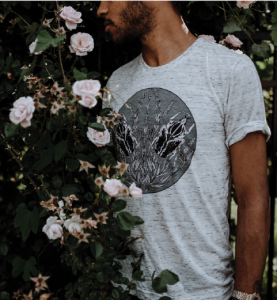
Anela Bence Selkowitz runs Stash, which carries mostly women’s clothing and accessories, while Andrew Kintzi heads up the Midtown Dandy, which features menswear. The two have combined their passions to bring stylish, vintage collections to the city’s burgeoning SoMa neighborhood.

Stash has actually been around since 2013, starting off as a collective of four owners with a shop on North Street and then space on Walnut Street. Over the years, various life changes reduced the group to three then two then one, with Bence eventually moving Stash exclusively online.

“Doing this on my own online has been manageable because I’m a mom and a photographer, and I can kind of work it around my life,” she said. “The store is obviously different.”

However, just when Bence thought she was out, Kintzi drew her back in, asking if she’d like to join him in a brick and mortar.

“I couldn’t really say no when Andy asked,” she said. “I know people have been talking about wanting the store to come back. Having him stock my men’s corner was such a relief.”

On its own, Midtown Dandy has been operating since 2015, starting at the Harrisburg Flea and running an online shop through Etsy.

“Mostly, it was just the pop ups,” Kintzi said. “I just started buying men’s vintage clothing and figured out how to sell it. Then I got more people to know about it, and it spun into this.”

Kintzi had never done retail in a storefront before, so it’s a new experience for him.

“It’s a little on the daunting side, but it’s a good scary,” he said. “The grand opening was very successful for us because we’ve had a lot of support in the city.”

That support extended to friends, family and other business owners, he said.

“It’s nice to know that the support is there and that the small business community is very strong here,” he said.


One of a Kind

Bence has a longtime interest in textiles and fashion. Some of her favorite styles are from the 1920s and the 1970s. On opening day, she was rocking a vintage pair of bell bottoms as a subtle hint towards her interests.

“Nobody would ever know,” she said, laughing. “But in particular, I love the glam part of the ‘70s. That crazy, disco-y black and velvet. I don’t wear a lot of beads or sequins, but I love glammy and gaudy styles. I just think that era was so sexy.”

“I’m a victim of the ‘90s,” Kintzi joked. “I grew up in the ‘90s, so I’m kind of slightly obsessed with old band tees. Like the streetwear stuff that’s all coming back, I have an affinity for.”

Kintzi’s favorite styles are new looks mixed with some of the old. At the opening of the shop, he matched a camo button-up with a navy blue tie and a more formal-looking jacket.

“The style that I’m really into right now is the juxtaposition of streetwear mixed with vintage,” he said. “They just pair really well together. Taking a piece from Supreme or a brand like that and mixing it with a 1960s camouflage military jacket and mixing it with thrashed Levis from the ‘80s. Mixing it all together and figuring out how to make it work is something I’m really into.”

Bence pointed to the quality of the vintage pieces.

“I love the history that’s there,” she said. “The nostalgia and the quality and the attention to detail are all things that I appreciate. It’s all one-of-a-kind and clean, recycled fashion.”


Cool Stuff

Besides bringing cool clothes to Harrisburg, Bence and Kintzi hope to offer guidance to those looking to up their fashion game.

“The biggest thing I’m trying to do is show men how to wear things,” Kintzi said. “Like looking at something on the rack and figuring out what to put with it. That’s the kind of thing that I want to help people with, knowing that they have a resource where they can not only find cool pieces, but that they know what to wear with it.”

With their combined knowledge of women’s and men’s fashion, Bence and Kintzi can provide guidance for everyone and their varying tastes.

“Andy also helps with women like me who also like menswear,” Bence said. “Women who want the flannels, button downs, stuff like that.”

“A large portion of my clientele is women,” Kintzi said. “They buy a lot of the more androgynous clothing like sweaters, camos and jackets. There’s no gender to it. It’s all just cool stuff, regardless of whether it’s a guy’s or a girl’s.”

One thing they both offer is a personal touch from experienced professionals. Bence hopes that they will continue to attract people who have specific needs, who need tips for creating a great outfit.

“It would be a lot of fun to get people in here who were looking for help trying things out and help putting things together for people,” she said. “That’s what I really liked about the old shop. People coming in, for example, looking for clothes for a party, and my telling people what I think they would look good in. Then seeing if anything fits and if they like it.”


The Midtown Dandy and Stash Vintage are located at 11 S. 3rd St., Harrisburg. For more information, visit www.themidtowndandy.com and www.stashhbg.com, as well as their social media and e-commerce sites.

Continue Reading