Weekend Roundup with Sara Bozich

Happy Weekend!

A chiller weekend but not chilled. I could really go for some wings one night, I think.

While Saturday morning is for my usual routine and football is officially closed for the season, we’re excited to hang with friends Saturday night and have zero on the schedule for Sunday.

What are you doing this weekend?

(more…)

Continue Reading

More Murals Please: 2019 HBG Mural Fest planned for late summer.

One of the many murals painted during the first HBG Mural Fest in 2017.

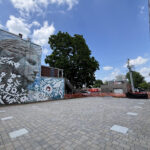
Two summers ago, Harrisburg became a far more colorful city, as 18 murals sprung up in the downtown and Midtown neighborhoods.

Now, the group responsible for this surge of large scale, outdoor art is planning a repeat performance, as Sprocket Mural Works has begun organizing the 2019 HBG Mural Fest.

So, the call is out for sponsors, artists and volunteers, with a goal of mounting another 10 murals over 10 days in the late summer.

“We would like to fill in the gaps of our mural trail,” said co-organizer Megan Caruso. “We want to fill in the gaps so we can have a more mural-dense area.”

The trail, Caruso said, begins near the Harrisburg train station and runs for about two miles roughly up 3rd Street, with some additional stops in Shipoke and along the river walk. She said that, while the first HBG Mural Fest laid a great foundation, more density is needed so that people easily can walk from one mural to another.

A mural takes shape during the first HBG Mural Fest.

Caruso said that she’d like to follow the example of Philadelphia, whose mural trail has become a true tourist attraction.

“In Harrisburg, people could get off the train and start their tour right there,” she said, adding that she’d also like to mount at least one mural on Allison Hill. “We want Harrisburg to be a mural-dense city, so they have to be concentrated.”

Sprocket’s impact on tourism has already been noted, as Visit Hershey & Harrisburg last year honored Sprocket with one of its annual tourism awards, “The Best New Event Award.”

This year, the Mural Fest will begin on Aug. 30 and will culminate with a block party on State Street downtown on Gallery Walk day, Sept. 8. Like in 2017, the 10-day festival will include many accompanying events, such as receptions, a community paint day, a bike tour and educational events.

In 2017, the greatest spectacle may have been watching the world-class artists go about their work, as crowds of people gathered around as the murals took shape. Caruso expects the same this year.

“People love to watch the art come to life,” she said.

According to Caruso, Sprocket is still in the process of signing up sponsors for the murals, so they welcome additional support from the community. So far, sponsors include companies such as LCSWMA and Premier Eye Care Group.

Caruso said that the 2017 event exceeded her expectations. Although 10 murals were planned, the group ended up painting 18.

“Hopefully, we’ll stick to 10 murals this year!” she said.


The 2019 HBG Mural Fest will run Aug. 30 to Sept. 8. For more information, including how to become a sponsor, donate or volunteer, visit www.sprocketmuralworks.com.

Disclosure: Megan Caruso is creative director for TheBurg.

Photos for Dani Fresh.

Continue Reading

Harrisburg police demonstrate new protective gear, following donation from UPMC Pinnacle

Harrisburg Police Commissioner Thomas Carter introduced the bureau’s new protective gear, featured on the table.

Harrisburg police today showed off a pile of new protective gear, equipment it purchased with a grant from UPMC Pinnacle.

At a press conference this morning, the city’s police bureau shared samples of new vests, helmets and steel plates, part of about 120 pieces of protective gear that will help protect officers from lethal, high-caliber weapons, according to police Commissioner Thomas Carter.

In total, UPMC Pinnacle donated more than $40,000 for the equipment purchase. That figure includes about $20,000 raised last June from the “3.2 to Protect the Blue” race, which was organized by UPMC Pinnacle emergency room nurses, with the UPMC Pinnacle Foundation donating much of the remainder.

“I had no idea of the dedication and love that these people showed our officers,” said Carter, flanked by UPMC nurses and Harrisburg police officers.

The new gear includes 60 helmets, 40 “body armor level 3 ballistic” protective vests with steel plates and 20 additional steel plates, which can be inserted into the vests. The purchase was made through Royersford, Pa.-based Body Armor Megastore, which contributed another 10 armor body vest sets.

Carter said that the need for the equipment arose last year following the death of U.S. Deputy Marshal Christopher Hill during a raid on a house in Allison Hill. The bureau realized that its helmets and vests were not adequate to protect against today’s powerful firearms, he said.

“UPMC Pinnacle ED [emergency department] physicians and nurses have a great bond with the Harrisburg Police Department,” said Kathy Hogan-Flinn, nursing director of emergency services at UPMC Pinnacle. “Upon learning that they needed money to purchase protective trauma vests and equipment, our nurses sprang into action, and the ‘3.2 to Protect the Blue’ was born.”

Deputy Police Chief Deric Moody said that his officers will not wear the equipment regularly, but will keep it nearby in case it’s needed.

“The equipment will remain in vehicles most times,” he said. “If an officer is dispatched to a threat, they will have it on really quick.”

After the press conference, Mayor Eric Papenfuse stressed that the equipment was not the full body armor “riot gear” that the bureau requested in 2017, after high-profile clashes throughout the city between “anti-Sharia” protestors and “antifa” counter-protestors. That gear was already purchased following a $68,000 allocation from City Council, he said.

Both Harrisburg and UPMC Pinnacle representatives today said that they hoped the gear would help prevent gun-related injuries and deaths among officers.

“They see the tragic effect of gun violence in our country,” Papenfuse said, of the UPMC Pinnacle emergency room nurses. “So, they banded together.”

Continue Reading

In hearing, Harrisburg school district lays out concerns with charter school application

PA STEAM Academy charter school hopes to open in this building in Midtown Harrisburg.

Harrisburg school district administrators tonight presented their assessments of an application for a proposed charter school, asking the school’s founders about everything from financing to curriculum.

The Pennsylvania STEAM (Science, Technology, Engineering, Arts and Math) Academy submitted the application in November and presented it to the Harrisburg school board at a public hearing in January.

The school hopes to open later this year in the historic Midtown 2 (Evangelical Press) building at N. 3rd and Reily streets, which is currently occupied by HACC.

Tonight, district administrators questioned various aspects of the charter school’s application.

The first presenter, Chief Academic Officer Jaimie Foster, focused her report on curriculum, assessment and school design. She highlighted what she perceived to be the school’s lack of a professional development calendar and written curriculum for science, social studies and Spanish.

Other presenters included Director of Special Education Yolanda Goodwin-Humphrey, Coordinator of Assessment, Data and Child Accounting Mary Lou Sypolt, Federal Programs Administrator Damali Brunson-Murray, Interim Director of Human Resources Barbara Richards and Acting Business Manager Bilal Hasan.

Examining the finances of the charter school, Hasan said that he found that expenses exceeded revenue for multiple school years. For the 2022-23 school year, for example, Hasan said that expenses would exceed revenue by more than $31,000.

At first, charter school representatives refuted Hasan’s findings, but later conceded that there were some miscalculations in their data.

Financing, the most significant issue of the night, also carried into the question-and-answer period. Allison Peterson of the Levin Legal Group, representing the school district, asked about such expenses as $50 laptops, $117,000 budgeted for full-time special education and ESL staff and why there was a promissory note, an issue that was left unclear.

At the end of the two-hour-plus-long hearing, Carolyn Dumaresq, a former Pennsylvania secretary of education who is a founding board member of the PA STEAM Academy, thanked administrators for their review and for pointing out “what they believe were some inconsistencies.”

Later, she said that she understood that some areas needed to be clarified. She added that some of the missing information is in the appendices of the application.

She also said that she believed that some questions were “a little unfair,” such as one about the “Future Ready PA Index,” a newly launched state Department of Education measure of school performance. The index wasn’t included in the application because it didn’t come out until after the application was submitted, she said.

“I think that some of the concerns are all answerable,” Dumaresq said. “So, I’m kind of glad that we have the document now, and we can see that.”

The charter school has seven calendar days to submit a concluding document. The document doesn’t need to follow a set form and can include anything the school wants to say about why they believe they meet the requirements of the charter school law. It can’t include any revised documents or supplemental information, but must be based on what the charter school has already submitted.

Dumaresq said the charter school is planning on addressing some of the concerns brought up tonight so the Harrisburg school board can “feel comfortable” that their concerns were satisfied.

There was only one board member present at tonight’s meeting, President Danielle Robinson. The rest were sick or out-of-town. Robinson said she she’d like to see the concluding document and understand the information from both sides before making a decision.

If the school board grants the five-year charter application, the PA STEAM Academy would open at the HACC Midtown 2 Academic Building, 1500 N. 3rd St., in fall 2019 for grades K-2. The school would add a grade of instruction every year, allowing the incoming cohort of 2nd-graders to progress through 6th grade by the time the charter expires in 2024.

HACC currently occupies Midtown 2, but the 15-year lease on the building expires in June 2022, and HACC announced in March that it would not renew it. The college plans to start moving some programs out of the building as early as next year.

As a public charter school, enrollment at PA STEAM Academy would be free, paid for by students’ school districts. Harrisburg students would have first priority for the 120 enrollment slots. If the school received applications for more students than it could serve, it would select students through a lottery system.

Enrollment would only be open to students from other districts if the school could not fill its seats from within Harrisburg.

Continue Reading

Weekend Roundup with Sara Bozich

Happy Weekend!

OMG how is it still January?? Jimi went me a meme yesterday that was like, “January was a tough year but we made it” but we DIDN’T yet! However, I am celebrating the conclusion — and celebrating making it — of January tonight with a wine dinner at the Hilton with my husband. Literally the last, oh I don’t know 3 times we arranged for a sitter, I’ve either had to cancel or had to come home after an hour, so WE’LL SEE. (I see you, seasoned parents, laughing at me.)

Tomorrow maybe we will maybe we won’t take a field trip to Carlisle. On Saturday, it’s my Broad Street Market and State Museum special, this time with a friend! Later in the afternoon, I’ll be joining Diane McCormick at Midtown Scholar to talk about her new book! Join us!

Sunday is the Super Bowl! Go Rams! Our friends at Big Bottom Brewery have some crazy good specials, especially for dining in and checking out their new brews.

What are you doing this weekend?

(more…)

Continue Reading

Religious Movement: Christians in the Harrisburg area are eschewing old church buildings to meet in bars, homes, and renovated commercial properties. What’s driving the change?

On a still Sunday night in January, the Stage on Herr buzzed with alternative rock as concert lights blared on an empty stage. A handful of 20 and 30-somethings, drinks in hand, made small talk as they waited for the evening’s program to start.

They weren’t there for a concert or dance party, which you can find at the Midtown performance venue almost any night of the week. Instead, they were settling in for church.

The Hummelstown-based church The Bridge has held Sunday evening services at Stage on Herr, one of the performance venues within the House of Music, Arts and Culture (HMAC), for the past year. They know that a bar and rowdy concert venue isn’t a typical place to hold a worship service. But according to its leaders, that’s not a problem.

“There’s no boundary on what a church has to look like in our world,” said Alyson Wert, The Bridge’s midtown campus pastor. “When we were looking for a venue, no space was off limits, and no idea was off the table.”

The Bridge is hardly the first church to plant itself in a quirky venue or swap out organ music for contemporary praise songs. A growing number of congregations have left historic church buildings in favor of non-traditional, mixed-use spaces in recent years, participating in what religious leaders say is a broader re-invention of white, evangelical and mainline churches for an increasingly secular American public.

As a recent announcement by Harrisburg’s United Methodist Conference shows, even long-established churches are starting to look for a change in scenery.

The Susquehanna Conference of the UMC said in December that it would consolidate 10 congregations across Harrisburg as it prepares to sell off their historic church buildings. The congregations will meet in one location starting this spring, and church leaders eventually hope to open five new worship locations around the city.

It’s unlikely that any of the new campuses will have steeples or stained glass. Conference leaders are scouting out community centers, schools and entertainment venues instead.

“Basically, it’s taking church out of the context it’s always been in,” said Shawn Gilgore, communications director for the Susquehanna Conference. “We’re looking for spaces and places that that aren’t intimidating to people who are looking for a spiritual community.”

As other churches in the Harrisburg area have already shown, there’s almost no limit on what space can become a house of worship. Since 2005, Harrisburg’s Brethren in Christ Church has met in a converted car dealership on Derry Street. The rapidly growing, Lancaster-based church LCBC—shorthand for Lives Changed by Christ—recently announced plans to purchase an ice skating rink in Mechanicsburg and convert it into a campus with a 700-seat sanctuary. (Its leaders declined to comment for this story.)

Up on Allison Hill, Wildheart Ministries holds fiery, jam-band style worship in an Instagram-worthy mansion on S. 13th Street. The circa-1900 estate is also command central for Wildheart’s community service projects and houses missionaries working in Allison Hill.

Gilgore estimates that the movement of churches out of traditional church buildings has swelled in the past decade. For many churches, the motivations are just as much spiritual as they are financial.

NEW POSSIBILITIES

Data from the Pew Research Center show that the American public is becoming less religious with each passing year. Devout Baby Boomers and Generation Xers still log regular attendance at Christian worship services, but a growing minority of Americans say they do not identify with any organized faith. As a result, overall church membership—especially in white, evangelical churches—has dwindled over the past two decades.

Coupled with the 2008 financial crisis, stagnant or declining membership numbers have forced many churches to find creative ways to cut costs.

The UMC Conference in Harrisburg, for instance, calculated that it had just 400 members across its 10 church locations before it announced its consolidation plans in 2018. That figure was a far cry from its membership rolls a few decades ago, when a single church would likely count hundreds of parishioners.

With only a small congregation to support its maintenance, a historic church building can siphon precious resources from clergy salaries or outreach programs.

These factors have led the UMC conference to drastically reimagine what a church can look like. Unloading 10 of its church properties and leasing newer, smaller spaces will give the church more flexibility to ramp up ministerial programs across the city, Gilgore said.

That’s what happened for Harrisburg’s Brethren in Christ Church, which in 2005 moved from a church building in Bellevue Park to a converted car dealership on Derry Street. The church’s new facility was four times larger than the previous one, opening up new possibilities for worship and outreach.

“Our ministry just went on steroids,” said senior pastor Hank Johnson. “We were doing a lot at the old church, but our capabilities just shot up—not just because of [space], but because new people came in with new ideas.”

Johnson also said that divorcing a church from its physical home can help a congregation ask tough questions about belief and religious belonging. After all, what makes a church a church when all the physical trappings of its sanctuary are gone?

For BIC members, Johnson said, the answer to that question lay in helping their underserved neighbors. The move to Derry Street helped them interrogate their priorities and led to a new wave of outreach programs.

For instance, BIC had long dreamed of providing free medical care to impoverished Harrisburg residents, according to Lynda Gephart, the church’s pastor of congregational life. That never came to fruition at their old space on Chestnut Street. But the energy that arose from their new location, she said, bred a partnership with a mobile medical clinic. To this day, it visits the church once a month to offer patrons free medical and dental care.

Gephart pointed to another, more mundane factor that drove BIC’s real estate hunt: parking. Many inner-city churches struggle to provide patrons with enough of it, she said, but a commercial property or strip mall storefront often comes with acres of surface lots.

Indeed, it’s hard for a church to grow if its congregants can’t find a convenient way to get there. But other religious leaders say that traditional church buildings also can stifle a congregation by alienating non-believers or skeptics.

When The Bridge first launched its Midtown campus in 2016, it held services in an old church building at Green and Cumberland streets. The space met the congregation’s needs well enough, but leaders said they wanted to be in a multi-purpose space that was trafficked by a larger segment of the community.

They scouted locations in Midtown, including the Broad Street Market, the Midtown Scholar and empty storefronts. In the end, they landed in HMAC, where they can host services either in the Capital Ballroom or the Stage on Herr.

Pastor Justin Douglas said that church leaders didn’t blink at the prospect of worshipping in a bar, which, on any other night of the week, may host a death metal band or drag show.

If anything, Douglas said, the unconventional location is a natural fit for a church that prides itself on questioning many long-held Christian rituals.

The Bridge doesn’t offer communion every week, for example, and its leaders don’t operate in a strong hierarchy. They don’t accept monetary offerings during services, for fear of alienating members who can’t afford to give (those who wish to support the church can give online instead.)

But as Douglas sees it, the reimagining of church spaces is part of a broader reconfiguration of Christianity—one that’s taking place as religious leaders try to attract younger, more socially conscious congregants who, for personal or political reasons, may be skeptical of Christian institutions.

He said that many churches today have alienated younger members by taking hardline stances on issues like LGBT rights or abortion. Removing a church from a physical church building, Douglas said, can signal to current and prospective members that a congregation is ready to meet its members where they are—physically, politically and spiritually.

If that means setting up shop in a neighborhood watering hole, he said, so be it.

“I don’t care if you have an alcoholic beverage in your hand in the Stage on Herr instead of a pew in a church with a stained-glass window,” Douglas said. “The destination for us and other churches is the same. But the vehicle can look very different.”

As the UMC Conference starts to scout new locations this spring, its leadership team will try to follow the same method of meeting people in places that are familiar to them, including ones that are secular.

The goal, according to Gilgore, is to make a day of worship feel like a seamless part of a person’s busy routine — not a disruptive chore on a Sunday morning.

“I think people nowadays are looking for new ways to do things they’ve always done,” Gilgore said. “We’re saying, ‘You can still do church this way, but here’s a way that is less intimidating, more welcoming, more community-driven way that’s more like what you do on the other six days of the week.’ We’re taking the church out to the people, in whatever way that takes place.”


Continue Reading

Healthy Life, Happy Life: CEO Jeannine Peterson has guided Hamilton Health through many moves, tremendous growth.

It’s not easy, asking staff to wait a few days before cashing their paychecks. Jeannine Peterson was working hard to right the financially struggling Hamilton Health Center, collecting old debts and downsizing operations.

The year was 2000, and veteran health care policymaker Peterson had been asked by fellow Hamilton board members to step in temporarily. She was clearing up a $2 million deficit while also trying to convince staff to stay. To which they responded: “Why should we stay if you won’t?”

“I had to do some soul searching, and they were right,” Peterson says now. “How could I sit here and say I was just there on a temporary basis, seeing if I can keep the doors open? If I’m able to or not, I’m still riding off into the sunset.”

Today, Peterson is CEO of an ever-expanding federally qualified health center with a $22 million budget, providing physical, mental, dental and vision health services to 38,500 people through 95,600 visits in 2017. Hamilton Health employs 280 people, recently opened a new satellite clinic in Perry County and, this year, will celebrate its 50th anniversary.

Blank Canvas

A group of Harrisburg-area doctors and dentists founded Hamilton Health in 1969. They saw the need for a medical center serving the underserved, especially those without insurance.

Hamilton Health Center started in a trailer and then developed a habit of moving to larger quarters as it outgrew each space. About five years into her job, Peterson had another idea. She envisioned a large, modern facility that Hamilton could grow into. At the same time, the Community Action Commission identified health care as a primary need in Harrisburg’s Allison Hill. There, a sturdy but rundown former state print shop and warehouse went up for sale—67,000 square feet of blank canvas.

“Everybody thought I lost my mind,” Peterson said.

The community declined to contribute, forcing Peterson to be less ambitious in her goals. So, Hamilton took on the project itself, building out 30,000 square feet in Phase I with $16.5 million in financing cobbled from federal, state and county governments, a Fulton Bank loan and $1 million of its own equity.

Today, visitors to the facility on 17th Street in Harrisburg enter via a bright, soaring lobby. Departments include pediatrics, women’s health, behavioral health, dentistry and the new vision center. The underserved remain Hamilton’s primary demographic. Sixty-five to 70 percent are enrolled in Medical Assistance (Medicaid).

Through longtime partnerships, Hamilton also serves students in the Harrisburg school district, preschoolers in Capital Area Head Start and elderly residents of Harrisburg Housing Authority apartments.

The space that opened in September 2012 was supposed to last 10 years, but “people just kept coming and coming and coming,” Peterson said. For Phase II, which opened in 2015, the community got the picture, donating $8.2 million to a $7 million capital campaign. Pediatrics got its own space, and administration and social services moved in from separate buildings.

“Once people walked in and saw what we had accomplished and that the need still existed, they stepped up,” said Peterson. “This community is a very giving community.”

Hamilton is a “medical mall,” helping patients overcome barriers of language and transportation through bilingual staff and such onsite services as imaging through UPMC Pinnacle and lab work through Quest Diagnostics. Hours range from early morning to evening, plus two Saturdays a month.

“We don’t get it right all the time,” said Peterson. “But we try to think about the needs of the patients who historically have been left out of the mainstream.”

The opioid crisis has sparked the latest round of partnerships and new services.

Peterson launched her career in the substance abuse field in the 1970s, and her 22 years with the state included service as the Department of Health’s deputy secretary for drugs and alcohol. For 17 years, in fact, Hamilton has offered services for pregnant, addicted women.

But the nature of drugs today is “so much more potent, and they’re so much more prevalent in the broader community,” Peterson said. Hamilton is one of the state’s 45 “Centers of Excellence” for treating addiction. Its expanded case management model now covers men, women and families. Medication-assisted therapy is offered inhouse.

“We try to work with members of the community to provide that holistic approach to care,” Peterson said.

Giving Back

Peterson grew up in Pittsburgh, where her father founded a TV repair shop—one of the oldest African-American businesses there, still run by her brother and his son. She is active in the Alpha Kappa Alpha sorority, which performs community services and grants scholarships, and recently was named the chair of the board of directors for the Capital Region Economic Development Corp. (CREDC) for 2019.

She loves to travel, taking road trips with her daughter—a medical informatics professional—and vacations to sunny spots.

“I’ve been very fortunate in my life,” Peterson said. “Everybody doesn’t have two-parent homes and have the ability to go away to college. I say, ‘There but for the grace of God go I.’ God could have had a different path for me. It’s about giving back and always helping people who may not have had those opportunities I did.”

More construction is in Peterson’s future, as Hamilton Health purchased an adjoining lot from the Harrisburg Redevelopment Authority. Exact uses remain to be decided. Training rooms might be built for Hamilton’s many medical students and interns who get their first taste of urban and health-center care there.

Today’s sprawling health systems are invaluable partners to Hamilton, but community-based health care will never go out of style, Peterson said.

“That touch, the feel, the being in the community and understanding the diversity of populations is critical for us being able to improve health outcomes,” she said. “It’s not a cookie-cutter approach.”

Dental Director Dr. Martin Francis left private practice in Atlanta to follow his wife, obstetrician Dr. Potacia Francis, to Hamilton.

“I enjoy the way I can give back to the community, being able to help them doing the quality dentistry I did in private practice, being able to see the smiles on the faces,” he said as he stood amid the bright bays of the dental department.

Hamilton’s excellence comes from recruiting the right providers, “and leadership having discussions about care,” Francis said.

“He wants to expand dentistry,” Peterson interjected.

“We have doctors who are committed to giving the best care in the community,” Francis added, “and Hamilton encourages that.”


Hamilton Health Center is located at 110 S. 17th St., Harrisburg. To mark its 50th anniversary, it will hold a weeklong Hamilton CommYOUnity Festival, Aug. 5-10; golf tournament, Sept. 9 at West Shore Country Club; gala, Oct. 24 at Hershey Lodge and Convention Center. For information about the center and services, visit www.Hamiltonhealthcenter.com.

Continue Reading

Good Point: To reach sustained recovery, Harrisburg may need some outside help.

Illustration by Rich Hauck.

Recently, I ran into an architect friend during my weekly shopping excursion to the Broad Street Market.

Naturally, we got into a conversation about Harrisburg and began to talk about the progress the city has made over the past 10 years—this and that building redeveloped; this and that business opened.

I made the point that, despite this improvement, Harrisburg, in my opinion, hadn’t yet reached a “tipping point.”

“What would constitute a tipping point?” he asked.

A good question for sure, and I later emailed him my response.

A tipping point, I wrote, will be when the city begins to attract outside investment—when responsible, quality developers, investors and business people size up Harrisburg and decide it’s a good place to put their money, a place where they can get a decent return on their investments. Assessing the situation, I didn’t think that had happened here yet.

Coincidentally, a few days later, I learned about a new book by urban planner Alain Bertaud entitled “Order Without Design: How Markets Shape Cities.” In it, Bertaud argues that bottom-up market forces should drive how cities develop more than top-down, central-planning efforts.

Of course, I immediately thought of Harrisburg.

During the Industrial Revolution, Harrisburg grew quickly because it was a center of population, and companies needed to put their operations where the labor and infrastructure were. The city then fell apart with the collapse or relocation of the very industries that caused the boom—steel, railroads and other manufacturers.

Since the 1960s, the city government has tried numerous initiatives to revive Harrisburg. Former Mayor Steve Reed was the ultimate pump-primer, attempting to revitalize the city through public monies, massive amounts of debt and no end of creative accounting.

Bertaud would take issue with Reed’s heavy-handed approach. He believes that it’s best for a city government to set the stage to attract private investment by competently performing core services—trash pickup, road maintenance, etc.—not serving as the principal economic or planning force itself.

“I’m not going to make many friends for saying this, but a mayor is essentially a glorified janitor,” he told the Atlantic’s CityLab website. “His or her first job is to maintain the quality of infrastructure and services as the city organically changes. This focus on ‘a vision’ emphasizes top-down control, when the job of a mayor should really revolve around indicators that emerge from the bottom up.”

In this, I mostly agree. A hundred small businesses mean a hundred small experiments in what people value, what they will buy, what services they’ll consume. The end result should offer a strong indication of what will work and what won’t, what’s sustainable and what isn’t, in a city.

In my view, a municipal government has an important role to play in setting broad parameters to ensure public safety, maintain infrastructure and encourage responsible development, but not to the point of micromanaging the local economy or serving as a prime economic force.

Let’s return to Harrisburg.

About a decade ago, the city government, in financial free fall, was removed as a key economic player. Nonetheless, Harrisburg has enjoyed a steady, substantial revival. What happened?

I believe that several factors have contributed. First, people, in general, have returned to cities for restaurants and nightlife, if not to live. Secondly, the city, under the current administration, has focused, appropriately, on the basic blocking and tackling of municipal governance (though I’m pretty certain Mayor Papenfuse would object to being called a “glorified janitor”).

Even Reed deserves some credit, though I offer it grudgingly. He helped plant seeds for redevelopment, at least downtown, even if his top-down, ends-justify-the-means approach led to vast overspending, mountains of debt and a profound, historic financial crisis.

Most important in this city’s redevelopment, though, is this—the local, private sector stepped up.

Locally based developers, businesspeople, restaurateurs and shopkeepers saw opportunity when outside interests did not. The list is so long that I hesitate to single out any particular project for fear of leaving out others. But the nearly desolate city I encountered 10 years ago has abundant life again, due almost entirely to Harrisburg-area people caring for this city, risking what they had and taking a big chance on it.

Having said that—local people and local capital can’t do it all. A larger, citywide redevelopment is simply too massive of a project. Since the 1950s, Harrisburg has lost nearly half its population, and, while I don’t expect the city to push 100,000 residents again anytime soon, it easily can accommodate another 10,000 or 20,000, given its large swaths of empty land. Doing that, however, will almost certainly require outsiders to come in, kick the tires, and decide that, yes, they can get a decent return by investing in Harrisburg.

More people then would bring in more business, more jobs, more activity and more tax dollars for better services. A more vibrant local economy would offer even greater opportunities for local people to open businesses, find employment and even do their own development projects. This virtuous, self-reinforcing cycle would indicate that Harrisburg, after 60 years of contraction and stagnation, finally has reached a tipping point.

Lawrance Binda is editor-in-chief of TheBurg.

Continue Reading

Safe Travels: For African Americans, the “Green Book” was an essential guide to Harrisburg, nationwide.

In November, a movie called “Green Book” hit theaters, telling the story of a black musician and a white driver traveling through the Deep South in the 1960s.

While the movie is based on a true story of one man’s travels, the real Green Book provided help to thousands.

From 1936-66, Victor Hugo Green published what was officially called, “The Negro Motorist Green Book” for many cities, including for northern cities such as Harrisburg. It served as a guide for traveling African Americans who needed a place to eat, sleep or refuel.

These were hotels, tourist homes, service stations and barbershops that all had one thing in common—they would serve African Americans. Many of these businesses, in fact, were black-owned.

The Harrisburg entry listed about 16 locations over various editions.

“In the ‘40s, ‘50s, ‘60s and before, a black person could enter a white space and a couple things could happen,” said Arion Dominique, a student involved in Messiah College’s Digital Harrisburg project, which explores the history and culture of the Harrisburg area. “Their wellbeing could be in danger, they may not be offered any service, or they may just feel extremely uncomfortable.”

Although the Pennsylvania Equal Rights law was passed in 1935, discrimination was still omnipresent in Harrisburg. On one occasion, a group of six black schoolteachers attending a meeting at the Penn Harris Hotel across from the state Capitol building were refused service, according to a 1937 story in the Philadelphia Inquirer.

Growing up in his father’s barbershop and hotel—two Green Book stops—Calobe Jackson of Harrisburg remembers the help that this guide provided for those visiting the city.

“You definitely felt safer if you were in a place that was listed in the Green Book,” he said. “You didn’t have to worry about total discrimination.”

Jack’s Hotel and the barbershop provided places for African Americans to stay the night or get a fresh cut. Jackson even remembers famous performers coming into town and making a stop at the barbershop. Many lodged at the nearby Jackson Hotel, including singer Nat King Cole, pianist Sugar Chile Robinson and boxer Joe Louis. Some of these celebrities are now featured on a mural that adorns the building’s exterior wall on the 1000-block of N. 6th Street.

Jackson remembers the comfort that the Green Book offered, giving black travelers safe and welcoming places to go. But he also saw it as an aid for African Americans who may not have been protestors, who simply needed to live their lives on a daily basis.

“The Green Book was a tool that was used by the silent generation to venture out of their homes—but avoid confrontation,” he said.

The buildings that once housed Jack’s Barbershop and the neighboring Jackson Hotel are the only survivors of Harrisburg’s 16 Green Book locations. All others have been torn down.

Like those buildings, the Green Book is long gone. After the Civil Rights Act passed in 1964, the “Green Book” finished up its last few editions, migrating from gas station racks to boxes in basements.

But is the Green Book just a historical relic now?

Author and publisher Jan Miles doesn’t think so. In a twist on the original Green Book, she wrote “The Post-Racial Negro Green Book,” published in 2017, cataloguing places in each state where racist events occurred.

“What hasn’t changed is the sentiment from the segregation era to now,” she said. “The sense that this is a post-racial society is laughable to me. That’s why I put it in the title. It’s very tongue-in-cheek.”

Locally, Miles’s book cites an incident from Central Dauphin High School in 2016, where a student posted an image with a racist slur on Instagram.

Rondel Holder, director of marketing at Essence magazine, has also published a fresh take on the Green Book concept. He’s the man behind SoulSociety101, a blog for young, black professionals that suggests hotels, restaurants and travel destinations.

“I was traveling and looking up restaurants, bars and sites, and I just wasn’t getting that perspective of a young black professional or the view of what our experience is,” he said.

He created a blog and podcast so that black travelers, especially millennials, would feel more confident and comfortable while traveling, again, similar to the Green Book.

“The Green Book made it a realistic idea that you can travel,” he said. “Soul Society and the ‘Green Book’ both are guides that helped people navigate and eliminate fear to a certain extent.”

Or, as Green himself said in 1947, “Carry the Green Book with you…you may need it.”

To learn more about Digital Harrisburg, visit www.digitalharrisburg.com.

Continue Reading

Complexity of a Culture: On U.S. tour, a contemporary Israeli art exhibit makes a stop in Harrisburg.

For many, Israel is all about politics and conflict.

An exhibition coming this month to the Susquehanna Art Museum indicates how incomplete that picture is.

“Visions of Place: Complex Geographies in Contemporary Israeli Art” features 49 works by 34 artists, reflecting the diversity of the country’s population and the richness of its cultural life, according to co-curators Martin Rosenberg and J. Susan Isaacs.

“Israel is a modern nation—built on the foundation of the millennia of history—a focal point for three major religions, and a complex mosaic of people,” Isaacs said.

One artist in the exhibit, photographer Natan Dvir, realized he knew little about Arab society in Israel, though Arab citizens make up 24 percent of the population.

“Most people in Israel ignore the minority, or emphasize problems and stereotypes,” Dvir said. “I decided to create a photographic series of profiles of individuals [who are] 18 years old. That’s the age of adulthood, when young people can legally vote and when Israeli Jews enter the military. Most Arab Israelis do not.”

Though he met with some initial suspicion, Dvir was able to photograph and profile 24 women and 40 men from different social and religious backgrounds, exploring their lives, families and plans and hopes for the future.

Isaacs and Rosenberg consulted experts on Israeli art in Israel and visited leading galleries and major museums in search of artists.

“We realized that, outside of a few internationally known Israeli artists who had gallery representation in the United States—primarily in New York—and a series of once-a-decade exhibitions at the Jewish Museum in New York, none of which have traveled, very little contemporary Israeli art comes to the United States,” Rosenberg said. “We planned a national traveling exhibition from the outset.”

The works are truly contemporary, with most from the last decade. All the artists are Israeli citizens, but not all are Jewish. They include Arab Muslims, Arab Christians and Druze, and half of are women.

The exhibit theme is geography, but this term is used in a broader sense—in its physical, personal, religious, intellectual, political, existential, historical and economic manifestations, Isaacs said.

“Geography, conceived in this broad sense, is an inescapable part of Israeli life, psyche and art,” she said.

Although the exhibit focuses on Israel, the co-curators assert that it raises questions with wider applicability—such as competing views of history and conflicts over space and identity, among others.

Naomi Safran-Hon is another artist in the exhibit, represented by a painting made of acrylic, cement and lace on canvas and entitled “What is Left Behind; What is Left to Take: When There is Nowhere to Return—When We Become Ghosts.”

“This piece was inspired by a photograph of a destroyed home in a Jenin refugee camp in the West Bank after the Israeli military operation ‘Defensive Shield’ in 2002,” she said. “In the piece, the traces of domestic space are enhanced by the use of lace and its decorative pattern. Shadows of figures are present in the lower part of the painting, alluding to life that has been shattered.”

In her paintings, Safran-Hon combines cement, fabric, acrylic and photographs.

“As nontraditional painting materials, cement and fabric incorporate multiple layers of meanings, symbolically as well as concretely,” she said. “On the surface, cement alludes to construction but, transformed in my studio, it reflects the ways in which my life has been shaped by political reality.”

Cement, she said, is associated with strength and power. Lace, on the other hand, is delicate and correlates more with domestic space, she said.

Safran-Hon added that the historical narrative—as well as the current political state of affairs in her homeland—is linked to the way cities and landscapes are constructed.

“In a world engulfed in wars and refugees fleeing their homes, my work reflects on the continuation of historical events on our current environment and the search to find our home and place in the world,” she said.


“Visions of Place: Complex Geographies in Contemporary Israeli Art” runs Feb. 10 to May 19 at the Susquehanna Art Museum,
1401 N. 3rd St., Harrisburg. For more information, call 717-233-8668 or visit www.susquehannaartmuseum.org.


The museum will host two artist receptions during the exhibition. Natan Dvir will give an artist talk and gallery tour on Saturday, March 9, with a reception at 5:30 p.m. Naomi Safran-Hon will give an artist talk and gallery tour on Saturday, April 13, with a reception at 5:30 p.m. Contact [email protected] for ticket information.


Other special events include a Members’ Preview Opening on Feb. 9, 5 to 7 p.m., and free admission on 3rd in the Burg nights: Feb. 15, March 15, April 19 and May 17, 5 to 8 p.m.

Continue Reading