New Sprint store to fill out interior retail space in Strawberry Square

A Sprint store will open in this space in Strawberry Square.

Harrisburg cell phone users soon will have a new option to browse and buy, as a Sprint store is coming to Strawberry Square.

Rahim Ali, CEO of Techtel Communications, said that his company will have a soft opening for the store on May 27.

The new store will occupy about 1,300 square feet of first-floor space that formerly housed the supplement and vitamin company, GNC.

“We really liked the location of Strawberry Square, because it’s basically the center of downtown,” Ali said. “We felt that we would get the most exposure there.”

Front Royal-Va.-based Techtel operates a number of Sprint stores in Virginia and West Virginia. The Harrisburg location will be the company’s third retail location in Pennsylvania, Ali said.

Ali said that his company will offer new customers several specials and incentives during its first two weeks in Strawberry Square, including discounts for service and accessories.

Brad Jones, CEO of Harristown Enterprises, which owns Strawberry Square, said that Sprint brings the complex to full capacity for interior retail.

“Harristown is excited to welcome Sprint to Strawberry Square to lease our last indoor retail space available,” Jones said. “Sprint has a strong commitment to customer service, and we look forward to having them join our growing family of retail, office and residential tenants.”

In other Strawberry Square news, Jones said that he expects Curry in a Hurry, a food court outlet for Shipoke’s venerable Passage to India restaurant, to open in early June, a month later than originally planned, as the build-out has been delayed by several weeks.

Continue Reading

The Week That Was: A summary of news and events around Harrisburg

The House of Music, Arts & Culture (HMAC) in Harrisburg

What happened around Harrisburg last week? Here’s a summary of news and events that you may have missed.

Affordable Housing was the topic of the evening at a Harrisburg City Council work session last week. Three area organizations told of their approaches and offerings, as council began to ponder options to offer greater affordable housing in the city. Click here for the full story.

Harrisburg City Council candidates last week held a debate that featured a discussion about everything from city finances to the state of the school district. Four of the six Democratic candidates participated in the event at the House of Music, Arts & Culture (HMAC). Click here for the full story.

Harrisburg School District vowed “full compliance” with a state audit of its finances. The district had balked at providing an outside auditor with access to its financial systems, but, under increased pressure, agreed to allow it. Click here for the full story. 

House of Music, Arts & Culture (HMAC) will be sold for $6 million, allowing it to exit Chapter 11 bankruptcy. A U.S. bankruptcy judge has approved the sale, slated for early June, which may bring big changes to the Harrisburg-based arts, event and restaurant venue. Click here for the full story.

La Cultura will hold its second “Don’t Touch My Hair” event this weekend at its space on Verbeke Street in Midtown. The event, on Sunday, combines beauty, art, culture and business, with numerous local vendors highlighted. Click here for the full story.

Midtown Scholar Bookstore is expanding once again, as the owners have bought a nearby storefront on the 1300-block of N. 3rd Street. The new space will serve as a retail location for Midtown Scholar’s discounted book inventory, freeing up room for more first-run books in the main store. Click here for the full story.

Pride of the Susquehanna held its annual launch into the Susquehanna River last week to begin operations for the season. The colorful riverboat is entering its 31st year, partly due to community supporters who stepped up last year with donations after the boat lost one-third of its sailing dates due to high water. Click here for the full story.

Sara Bozich has some great ideas for things to do this weekend, including the final days of Harrisburg Beer Week. Click here for her complete list of events.

TheBurg distributed our May issue last week, another edition full of community news, features, events and commentary. Pick up a free hard copy at more than 500 locations around central Pennsylvania or read the digital edition online.

Continue Reading

Weekend Roundup with Sara Bozich


Happy Weekend!

4 more days of Harrisburg Beer Week! Have you tried the #717Collab yet? How are you celebrating the last few days?

Happy Birthday to my Mom! I’m joining her at Brewhouse this afternoon, then the remainder of my week is closing out Harrisburg Beer Week. Then, I can start working on all my post-Beer Week plans, which include things like, “see friends again” and “clean my office for real this time.”


What are you doing this weekend?

(more…)

Continue Reading

Harrisburg Today, Tomorrow: Council candidates share ideas, policies, visions

Councilman Dave Madsen speaks as challenger Christina Kostelecky, Councilman Westburn Majors and Councilwoman Danielle Bowers look on during Wednesday night’s candidate debate.

A Harrisburg City Council debate on Wednesday night was short on fireworks, but long on hope for the future, as four candidates shared ideas and policies on a wide range of issues facing the city.

Much discussion centered around the city’s financial future, as well as economic development and the state of the city school system.

“I see improving our schools as the number-one issue in Harrisburg because it has so many implications for the rest of our city,” said challenger Christina Kostelecky, who was joined on stage by incumbents Dave Madsen, Westburn Majors and Danielle Bowers.

Challengers Dionna Reeves and Brianna Smith were not present. The event’s sponsor, the community group Friends of Midtown, said that they were invited.

The six Democratic candidates are vying for three, four-year seats on Harrisburg City Council. No Republicans are running in the May 21 primary election.

About 70 residents attended the two-hour event inside the House of Music, Arts & Culture (HMAC) in the debate moderated by Mark Hall of abc27.

While city government has little control over the struggling city school system, candidates still spent much of the debate weighing in on ways that council could assist students.

“A youth invasion,” said Bowers. “Youth can come in and see how the city operates. They can see how the departments operate and perhaps find some new career opportunities through that.”

Several candidates mentioned safety, both from crime and while crossing city streets, as one way to help public school students. Madsen advocated for greater vocational training, while Majors suggested that successful graduates could act as role models and mentors.

“Kids from Harrisburg can excel in this life and be productive citizens not only in Harrisburg but in the world,” Majors said. “[Students] need to connect with graduates who are doing productive things.”

The candidates were more split on the issue of the district possibly entering state receivership. Bowers and Kostelecky said that receivership may be needed as a last resort, while Majors said he’d prefer to avoid a state takeover of the district.

Madsen said that, before receivership, the state might consider something like the Intergovernmental Cooperation Authority (ICA), a state-appointed board that currently is overseeing the city’s finances and the implementation of a five-year financial plan.

The candidates also addressed the city’s ICA, generally viewing it as a positive step forward. They all hoped that the financial plan implemented under the ICA would restore Harrisburg’s long-term fiscal health. If not, they said, they might consider a Home Rule charter, which would free Harrisburg from the state’s strict 3rd class city code, giving it greater flexibility in taxation policies.

The candidates agreed that the biggest issue with Home Rule is its complexity, which would make a charter difficult for residents to understand, support and, eventually, approve.

“My concern with a Home Rule charter is that it’s fairly complicated,” Madsen said. “I’m always open to the conversation, but . . . a lot of charters are voted down because [residents] don’t understand them.”

The candidates returned several times to two issues that seem to be growing in significance in Harrisburg—community-building and the importance of small businesses.

Several times, candidates touted Harrisburg’s neighborhoods, growing community spirit and walkability. They also seemed to agree on the value of small, homegrown businesses as vital both for growing the economy and fostering sense of community.

“In terms of City Council, we should rework the [business] regulations that already exist,” said Kostelecky, who said she believes that some small businesses are harmed by the complexity and cost of existing city rules. “A lot of regulations have been on the books for a long time.”

Interestingly, two issues that have been hot topics for years were not stressed at the debate. Parking didn’t come up at all, while the issue of crime made only brief appearances, mostly after an audience question about how to get guns off of city streets.

“The biggest thing we can do is get to a full complement in our police force,” Madsen said. “We have to get to a full complement and budget for that. Once we get more police on the street, it will reduce drugs and reduce the flow of guns.”

Hall asked the candidates to dream a little bit in a question about what they’d like the city to be like in 25 years.

“Our school system would be the premier school system in the state, which would encourage people to move here,” said Bowers, who, during the debate, also stressed the importance of an affordable housing policy in Harrisburg. “Our neighborhoods would be healthy, meaning they’re free of blight and litter. Our economy would be thriving.”

Majors said that he would like to see a city that has turned away from automobiles and embraced mass transit.

“I want to see Harrisburg be a more green city,” he said. “I want to see more connections from east to west in the city. . . as well as a top-notch education system.”

Madsen picked up on the themes of transportation and schools.

“I would love to see Harrisburg in 25 years with the best schools in the world,” he said. “Then I would like to see a bullet train that goes from D.C. to New York. That would make Harrisburg almost a suburb. That would be an economic boom that would take off—and a beautiful, green city.”

Kostelecky mentioned a block party she attended last year in her Midtown neighborhood, where neighbors met, shared stories and enjoyed food from city-based craft food producers and vendors.

“This is the Harrisburg that we deserve, a Harrisburg in which we all know our neighbors, we support local businesses,” she said. “We develop these close relationships, with every person incredibly proud to be in Harrisburg.”

Friends of Midtown will hold a debate for candidates for Harrisburg school board on Wednesday, May 8, at HMAC, 1110 N. 3rd St., Harrisburg. Doors open at 5:30, and the debate begins at 6 p.m.

Continue Reading

HMAC Sale Pending: Harrisburg arts venue to change ownership, exit bankruptcy

A new ownership group is acquiring HMAC.

A major arts and entertainment venue in Harrisburg is poised to exit bankruptcy, in a move that promises to bring significant change to the House of Music, Arts & Culture (HMAC).

Judge Henry W. Van Eck, U.S. Bankruptcy Court for the Middle District of Pennsylvania, has approved the sale of the sprawling Midtown venue, its liquor license and other assets for $6 million to a new partnership called HMAC LLC. This will  enable the current controlling entity—Bartlett, Traynor & London—to exit Chapter 11 bankruptcy.

The sale is expected to close in early June.

Chuck London, a founding HMAC partner, is a minority owner in the new entity. His founding co-partners, Gary Bartlett and John Traynor, will have no ownership in the new company.

“I feel we’re at a turning point with the promise of a new beginning,” London said, in a telephone interview. “We need to take all the lessons we’ve learned from the past and make them our future.”

Bartlett, Traynor & London LLC entered Chapter 11 bankruptcy last August following a loss of business that Traynor blamed on a social media firestorm directed at the venue. He also said that the bankruptcy filing would allow the company to reorganize its finances in preparation for a sale.

According to court documents, a sales agreement was reached in January, with the sale order approved in late March. Right now, the sale is scheduled to close on June 6.

Once the transaction is complete, Traynor said that he will step down as the day-to-day manager of HMAC, which, until a rebranding, was known as the Harrisburg Midtown Arts Center. He expects to stay on for about six months to help with the transition and to help supervise a period of construction.

That construction will include the renovation of the basement level into a third music space, a rooftop deck and a “major facelift” to the front of the building, Traynor said. Much of the construction will be funded with a $1 million state Redevelopment Assistance Capital Program (RACP) grant that HMAC received in late 2017, he said.

“Now that we have new ownership, it’s going to be a bright new future for this building and for this community,” Traynor said.

In late 2007, Traynor, Bartlett and London purchased the former Harrisburg Jewish Community Center and Police Athletic Club building from the Harrisburg Redevelopment Authority. At the time, the sprawling, 21,000-square-foot building had been long abandoned and was badly blighted.

A lengthy, costly renovation followed that eventually yielded the Stage on Herr bar and performance space on the lower level, a restaurant and bar on the main level and the spacious Capitol Room upstairs.

“This project was key to the redevelopment and transformation of Midtown,” Traynor said. “Everyone said I was crazy. Everyone said that this project shouldn’t happen.”

London, a long-time executive with NBCUniversal Media who lives in Los Angeles, said that he planned to spend much more time in Harrisburg under the new partnership, which includes Christopher Werner, a Dover, Pa., resident who owns a sports memorabilia company.

“We’ll be able to bring to the community something that we haven’t been able to before,” London said. “We have to make this a smooth and functional and polite and wonderful experience not just for us, but for everyone.”

A new general manager, he said, will be hired who can “make [HMAC] even more of a success than in the past.”

“It’s going to be new ownership, and that means that new thinking will be brought to the process,” London said.

For his part, Traynor said that he and Bartlett will continue to live on their farm in Perry County, but also may live part-time in Italy, where they’re eyeing another rehabilitation project.

“We’re going to take the time and find a new project that we enjoy,” he said.

The House of Music, Arts & Culture (HMAC) is located at 1110 N. 3rd St., Harrisburg. For more information, visit www.harrisburgarts.com.

Continue Reading

New Policies? Revised Zoning? Harrisburg council meets to hear about, discuss affordable housing

Craig Wolf of the York YMCA spoke at Tuesday’s work session.

Should Harrisburg adopt an affordable housing program? If so, what kind?

Those were the topics at hand on Tuesday night, as City Council held a special work session devoted to this issue.

The session was spurred, in part, by last year’s citywide affordable housing study, which stated that, in Harrisburg, 40 percent of renter households are cost-burdened, meaning they spend more than 30 percent of their income on rent.

“During the next five years, there is a significant need for affordable housing in every area of the city,” said Councilwoman Danielle Bowers, the chair of council’s building and housing committee.

The issue, then, is how to address that shortfall.

To that end, council invited three entities to make presentations: a group of Penn State Harrisburg graduate students; representatives of the Lancaster Housing Opportunity Partnership; and the director of community development for the York YMCA.

The Penn State students led the evening, repeating a presentation they made to council two weeks ago that offered results of a study they conducted of two capital cities that, they said, shared similar characteristics to Harrisburg—Albany, N.Y., and Annapolis, Md.

Their study yielded several recommendations, including taking maximum advantage of federal housing programs, improving the construction permitting process, easing professional licensure procedures for residents, and encouraging landlords to lease to Section 8 (subsidized rent) tenants.

Next, COO Shelby Nauman and Director of Lending Miriam Soto spoke of their work at the Lancaster Housing Opportunity Partnership, which offers loans, advocacy and education to create fair and affordable housing.

Their presentation focused on their mission, the services they offer and the projects they’ve undertaken. While Lancaster-based, they provide services in an eight-county region and are currently providing financing for Paxton Place, a 37-unit affordable senior housing project in Harrisburg near the Penbrook border.

“We don’t only want to do projects in Lancaster,” said Soto. “We want to spread the wealth.”

Finally, Craig Wolf spoke of his experience spearheading the revitalization of the area around the York YMCA. He said that, 20 years ago, the Y was surrounded on all sides by blight and crime.

“We didn’t know where to start,” he said. “We didn’t know what to do.”

So, his team began acquiring what he called “the worst properties” through the use of low-income tax credits, in the process driving out drug dealers and nuisance bars. One project led to another, resulting in $30 million in investment since 1998, he said.

“We must create neighborhoods in which families have a sense of belonging,” he said.

Other advice from participants included creating partnerships with similarly aligned groups, offering residents additional community services beyond affordable housing and persevering when challenges are inevitably encountered.

The work session closed with a heated discussion on the subject of inclusionary zoning, which requires or encourages developers to include affordable or low-income housing in their residential projects.

One of the Penn State students, who lives in Allison Hill and owns rental properties there, insisted that such a measure was premature for Harrisburg, where there has been scant interest from outside developers to build market-rate housing.

“Inclusionary zoning is a very good idea to fix a problem that Harrisburg doesn’t have,” he said. “It’s the wrong idea to use for Harrisburg. We’re on the other side of the spectrum from [places like] Seattle and Denver.”

In fact, the Harrisburg housing study stated that the city currently has some 4,000 vacant houses and commercial buildings, which could help alleviate the affordable housing crunch if rehabilitated.

This discussion caused Senghor Manns, the director of the Harrisburg Housing Authority, to approach the microphone from the audience. He insisted that an inclusionary zoning ordinance would have value for Harrisburg.

“You don’t want to fighting this retroactively, like in Seattle, like in Denver,” he said. “As the city grows and becomes more appealing to investors, there will be more pressure.”

Council President Wanda Williams concurred.

“We certainly need a policy of inclusionary housing,” she stated.

Nauman of the Lancaster Housing Opportunity Partnership said she believed that Harrisburg could use more housing “at every price point.”

“We’re hoping, if we get more housing, things will come back into balance,” she said.

For now, Bowers said, every idea is on the table as Harrisburg works to develop an affordable housing policy over the coming years.

“I think this is a great starting base to continue the conversation,” she said.

Continue Reading

By the Barrel: For fans of old-timey taverns, Bube’s Brewery will fill your cup.

First things first.

Bube’s Brewery is pronounced “boo-bees.” Go ahead, make jokes—they do. The landmark stone-and-brick building in Mount Joy, though, is way more than a funny name. It’s a sprawling, Civil War-era brewery, restaurant, hotel, event space, theater and biergarten, all wrapped up in one and duly recorded in “The National Register of Historic Places.”

Bube’s specialty is lager, a traditional German style of beer. Catholic monks learned through experimentation that cold storage slowed fermentation for better tasting beer. And so lager became the beer of Germany in the 1800s.

Enter Alois Bube, a German Catholic and brewing apprentice. He was one of many young Germans who arrived in America in the mid-19th century to work in and open breweries, along with contemporaries like Miller, Busch, Yuengling and Coors.

Walk through the heavy, mustard-yellow wooden doors of Bube’s, and you’ll be transported back to the 1800s—from the furniture to the family portraits to the décor.


Many Levels

Built in 1860, Bube’s remains the only lager-era brewery in its original condition within the United States. The connecting (then six-room) tavern was built in 1879, serving all those farmers and tradesmen hopping off the Mount Joy Railroad.

Alois Bube died in 1908. Shortly after, Prohibition came to town, and the brewery closed. Nonetheless, the family lived in the property until the 1960s and owned it for years after.

It finally landed on the market in 1982. Elizabethtown native Sam Allen, accompanying his father, who was the listing agent for the sale, became fascinated with the 50,000-square-foot property. A Penn State graduate with “2½ degrees,” Allen used the Phyrst and the Rathskeller, both PSU underground bars, as his frames of reference.

“I realized the market was very different [here],” he said. “And so I tapped into my half major, which was theater, and thought, let’s do something different, something theatrical. What really brought me here is how cool this place is on so many levels.”

Bube’s began brewing beer again in 2001. Located within the former icehouse, the microbrewery now keeps six house-brewed beers on tap, which are always rotating. Mitch Romig started as an assistant brewer at Bube’s in May 2017 then took over as the head brewer in October.

“German beers have always been my favorite,” he said. “The original lager beers at Bube’s were based on the German styles but adapted to use the ingredients available in America at the time. I try to always have at least one German or early American style beer on at Bube’s.”

In May, Bube’s will have heller bock on tap, a slightly hoppier version of the traditional German maibock style. Romig also will feature its Market Street pub ale, a traditional English style. Just in time for Cinco de Mayo, he also plans to release Bebo Mexican Lager—a light, crisp lager similar to the ones found in clear bottles.


More Fun

But it’s not only beer at Bube’s.

Recently, Corinna Killian, the former chef at the Belvedere Inn in Lancaster, became executive chef, and she is upgrading the menu, taking it to a whole new culinary level.

The main floor additionally houses the Alois Barroom, the Bottling Works Restaurant for casual dining and a stage. Original wood, brick, stone and cement constructs remain throughout. However, the bar’s spitting trough, which ran the bar-floor, thankfully has been cemented over. A murder mystery dinner theater is presented by in-house actors, and private banquets are held in the bar and restaurant on this main floor.

The basement offers more fun with a Prohibition-era “escape room.” It’s also the gallery hall and where five of the primary 2,000-gallon barrels of beer are still on display—empty, unfortunately.

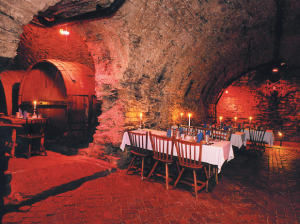
Bube’s Brewery is built on top of a cave, and that’s where you’ll discover the lowest catacomb level—43 feet below ground level. Lager breweries needed a conditioning cellar where the beer could be stored and aged. The stone-lined vaults still hold large barrels. Back in the day, the barrels were hoisted up to the main floor, loaded on to a wagon and delivered by horse. There in the catacombs, you can enjoy a candlelit theatrical dinner feast.

On nice days, the biergarten out back, which once functioned as the livery and pigsty, is a popular place to gather with friends. Today, a fire pit is ready for lighting, an outdoor bar remains stocked, a bamboo area supplies shade, and a covered pool table and life-sized chess set beckon for play. An old steam engine—the boiler and smokestack used to create the steam power necessary to run the brewery—is on display under a ceiling of wisteria.

Bube’s also provides a nine-room hotel on the top floor, all individually themed. You get to choose from New Orleans, Arabian nights, Moroccan desert tent, Asian temple, Southwestern, dark princess, good princess, jungle and the penthouse. Bube’s second floor is home to the banquet hall and ballroom.

And, no surprise, given the building’s age and general creepiness in parts, tales of the paranormal abound. So, there’s the requisite (and popular) ghost tour. Do spirits roam the maze of rooms at Bube’s? After a journey deep into the catacombs, you may be grateful for the light of the barroom again—and a freshly poured lager.

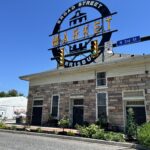
Bube’s Brewery is located at 102 N. Market St., Mount Joy. For more information, call 717-653-2056 or visit www.bubesbrewery.com.

Continue Reading

Cultural, political in spotlight as “Don’t Touch My Hair” returns to La Cultura

“Don’t Touch My Hair” returns this weekend to La Cultura in Harrisburg. Photo by Jelani Splawn.

Take a barbershop and hair store, mix it with an art gallery, then add a pinch of vendors and you have La Cultura and Art Can’s “Don’t Touch My Hair” event.

This Sunday, inside of the Verbeke Street building in Harrisburg, natural hair gurus will present twist out demos, barbers will flex their hair cutting skills and vendors will sell hair care products, art, clothing and more.

This is the group’s second time hosting “Don’t Touch My Hair.” According to Elyse Irvis, founder of La Cultura, aside from a few new vendors, the concept of the event is unchanged.

“Don’t Touch My Hair is a cultural and political discussion,” Irvis said. “This event is a way to have that dialogue through art, live performances and retail shopping, all geared toward people of color and health and wellness.”

This month’s lineup includes The Natural Pick, Melanin Essentials and Iced By Renya for your hair, skin and body care needs. The event will feature goodies from Zwild Vegans and Jersey Sweets and clothing and accessory options from Fit 2 U and Eight6 Boutique.

According to Irvis, the event combines everything La Cultura was made for: pop-up shops, art and community.

Irvis and the creatives behind Art Can, a local art collective, chose the hair-themed event because it is a staple in the black community.

“The salons, the barbershops–so much goes on there, we share a lot of resources there,” Irvis said. “ [Don’t Touch My Hair] is a more modern way of doing that, of being in that kind of space.”

Shane Gallup, founder of Art Can, sees the event as more than just a celebration of hair. According to Gallup, the event promotes creative thinking and serves as a network for local businesses and artists.

“Art can serve as a bridge,” he said. “It brings people together and exposes them to different things.”

An artist himself, Gallup will display some of his paintings in La Cultura, but he says that won’t be the only element of art.

In Gallup’s eyes, every vendor, barber, stylist, cook and so on is an artist.

“[Art Can] doesn’t tend to look at art as two-dimensional. A lot of people are artists,” he said. “Whether they look at themselves as artists or not, the world benefits from them watering the seeds of creativity and creative vibes.”

Gallup and Elyse first came across each other at an art show called “Blackout” hosted by Bryan Hickman. According to Gallup, he and Elyse discussed their business ventures and brainstormed ideas on how they can collaborate.

Their first “Don’t Touch My Hair” event in January had more than 30 attendees and 10 vendors. This year, they expect even more participants. Can’t make it this Sunday? Don’t worry. Irvis promises “Don’t Touch My Hair” will happen again and again and again inside the newly awarded Friends of Midtown “Middie” Business of the Year.

“We need a space to bring money back into the black communities,” she said. “La Cultura is that space.”


“Don’t Touch My Hair Part II” is Sunday, May 5 from 1 to 4 p.m. in La Cultura on 214 Verbeke St., Harrisburg. To purchase your tickets for the event or for more information on La Cultura and Art Can visit their Facebook pages at @LaCultura717 and @hbgartcan.

Continue Reading

Midtown Scholar plans 3rd Street expansion for book annex

The long-time home of Fornwald’s is slated to become an annex for Midtown Scholar Bookstore.

Midtown Scholar Bookstore is expanding once again, as the owners have purchased a nearby building to house a retail annex for discounted books.

Last month, Harrisburg Mayor Eric Papenfuse and his wife, Catherine Lawrence, bought the long-time home of Fornwald’s Window Shades, a 3rd Street window treatment business that recently closed.

The new storefront, which will feature marked-down inventory, will allow Midtown Scholar to free up space in its main building for more new releases and “our favorite backlist titles,” Lawrence said.

“The bookstore is always growing,” she said. “Community-centered, independent bookstores are thriving nationwide these days, and the Midtown Scholar is part of that resurgence of local retailers.”

Recently, Midtown Scholar bought out the contents of the century-old W.H. Allen used bookshop in Philadelphia. About half of the retail space in the new annex will house that inventory, which includes about 40,000 secondhand books, Lawrence said.

The single-story building at 1324 N. 3rd St. was constructed in 1948 to house a dress shop. In 1986, James Fornwald bought the 1,576-square-foot building at tax sale for $1, according to Dauphin County property records.

According to Lawrence, over the years, Midtown Scholar and the Fornwald family had spoken several times about buying the building. A deal was made after the Fornwalds decided to close their shop, and, in March, Papenfuse and Lawrence purchased it for $30,000.

The building requires renovation, but Lawrence said that she expects to open the space in time for the next Harrisburg Book Festival in early October.

“It is a great early 20th-century shop building, and we are looking forward to fitting it out for book browsing,” Lawrence said.

Midtown Scholar has grown considerably since opening its first retail location on the 1500-block of N. 3rd Street. A decade ago, the bookstore moved into much larger space at 1302 N. 3rd St., then expanded into the corner building next door.

Papenfuse and Lawrence also own several other buildings along the 1300- and 1400-blocks of N. 3rd Street.

For more information about Midtown Scholar Bookstore, visit www.midtownscholar.com.

Continue Reading

The Price Is Right: And so is essentially everything else.

Illustration by Rich Hauck.

Recently, the Washington Post ran a story in its weekly real estate section with the following headline:

“Looking to buy a home for $200,000? Here’s what you can expect to find.”

Among the offerings: a 550-square-foot efficiency in Southwest D.C. (with a co-op fee of $819 a month), an 896-square-foot, two-bedroom duplex in drab Landover, Md., and a 451-square-foot studio (with a Murphy bed!) in Alexandria, Va.

Hmm.

So, I scurried over to my Realtor.com app and undertook the same exercise for this area.

Last month, for around $200,000, I could buy a fully renovated three-bedroom, three-bath, 2,100-square foot Victorian-era townhouse with river views in Harrisburg; a four-bedroom stone stunner (another Victorian) a few blocks east of downtown Lancaster; or a gorgeous 2,100-square-foot, three-bedroom Queen Anne near Dickinson College in Carlisle.

Suddenly, I felt like a rich man.

Yes, I love D.C., lived there for many years. But, at this point in my life, I really don’t want to live in a place where, with a little stretch, I can touch my bed, my kitchen table and my bathroom sink all at the same time.

Now, one could argue that, fortunately, I don’t have to. I have a job here. So, I can be all smug in my spacious rowhouse down the street from the state Capitol.

Yeah, but the thing is—so could a lot of people. Plenty of workers in the D.C. area telecommute, and some could swap their government, professional or services jobs for similar ones here. They may earn less on average, but probably not that much less.

Let’s look at some numbers.

According to the U.S. Census Bureau, in 2017, the Harrisburg/York/Lebanon CSA (combined statistical area) had a median housing unit value of $184,100 and median household income of $63,296—a differential of less than 3x.

In contrast, the Washington/Baltimore/Arlington CSA had a median housing value of $363,100 and a median household income of $89,181—a differential of greater than 4x.

But even these numbers understate the difference between the two areas.

The sprawling DC/Baltimore/Arlington CSA reaches far outside the core metro area to include portions of West Virginia, western Maryland and, for some reason, Franklin County, Pa.—much lower-priced areas that drag down the median housing value.

In fact, inclusion in the same CSA may be the only thing that Chambersburg and Chevy Chase have in common.

What I’m saying is this: I see a misalignment of the market—the market for people.

Just down the road from here, there’s the D.C./Baltimore metroplex, which is a fantastic place. But it’s incredibly congested and wildly expensive.

But not far away, on the other side of the Mason-Dixon line, the lower Susquehanna Valley is neither congested nor expensive. It doesn’t have a big city, but it has several charming small cities, lots of countryside, scenic mountains and even some nice suburbs, if that’s your thing.

So, why aren’t more people here?

My inkling is that folks simply don’t know about this area—it’s not on their radar. It sure wasn’t on mine. I lived in the mid-Atlantic my entire life and, before I moved here, I couldn’t have told you the difference between Harrisburg, Harrisonburg and Hattiesburg.

I’m not certain who’s to blame for this information gap, but I’ve often thought that the six or seven counties of the lower Susquehanna should combine forces to brand the area—let the world know that it exists and that it offers a high quality of life.

A friend of mine—a big baseball fan—recently drove up from the D.C. suburbs to take in a game on City Island. While watching the Harrisburg Senators play, he told me that he was making plans to retire from his long-held job with a U.S. government contractor. In retirement, he didn’t want to stay in crowded, sprawl-y northern Virginia.

So, he was looking for a cute, walkable college town, somewhere in the mid-Atlantic, with good craft beer, affordable housing and easy access to the outdoors. He was considering Charlottesville, Va.

“No,” I blurted out. “You want to live in Carlisle.”

“Where’s that?” he asked.

I told him. So, on his way back home, he took a detour off I-81, walked around the historic town and fell in love.

Alternatively, I suppose, he could retire in the gentrifying D.C. neighborhood known as Hill East, which is also a nice place. There, a new, white-walled condo building just went up. Prices start at $679,000 for a one-bedroom unit and go to $2.9 million for two bedrooms (condo fees, $626 to $1,500 monthly).

It’s located right over a busy hardware store.


Lawrance Binda is editor-in-chief of TheBurg.

 

Continue Reading