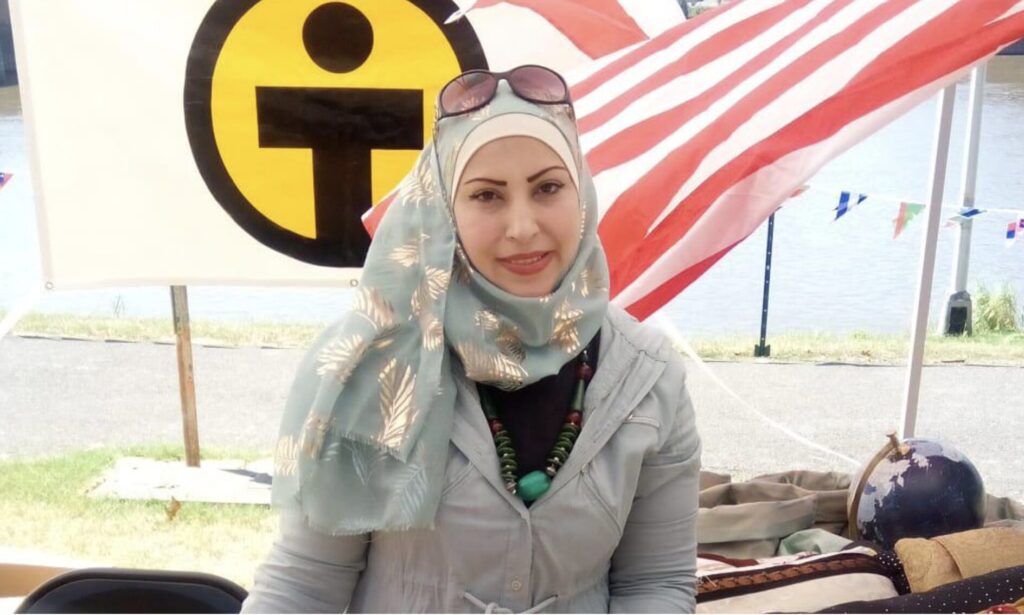
Alaa, a chef, at a CWS Marketplace event. Photo courtesy of CWS.
Church World Service had to scale back its offerings to refugee clients significantly this year, as federal funding cuts hit their bank account.
Yet, CWS’s Harrisburg office has worked to continue serving those most in need, even managing to keep one very special program for local women.
The CWS Marketplace allows refugee women the opportunity to use their skills and talents to build economic independence and a future—a program that staff members view as essential.
“We still care about this program very much because it’s not just a way to support the refugees, but it’s also a way to put the light on the refugee issues right now and what the refugees are going through,” said Sally Taha, CWS community engagement supervisor.
However, even this initiative faces an uncertain future as CWS works to come up with funds to fill its giant budget holes.
The organization’s most significant annual fundraiser will give the community a chance to support CWS’s mission and programs, while letting people experience the fruits of the marketplace program firsthand.
On Nov. 22, CWS will host “International Friendsgiving,” a to-go feast that features cuisine from around the world, made by marketplace program grads.
“International Friendsgiving is the way to have unrestricted funds to be used for the essential programs that we have,” Taha said. “Despite the challenges that our office has been facing, every day we have clients coming to us that have lots of things that they need help with.”
Piece of Home
Participants in the dinner are sure to have full plates, with a smattering of diverse dishes.
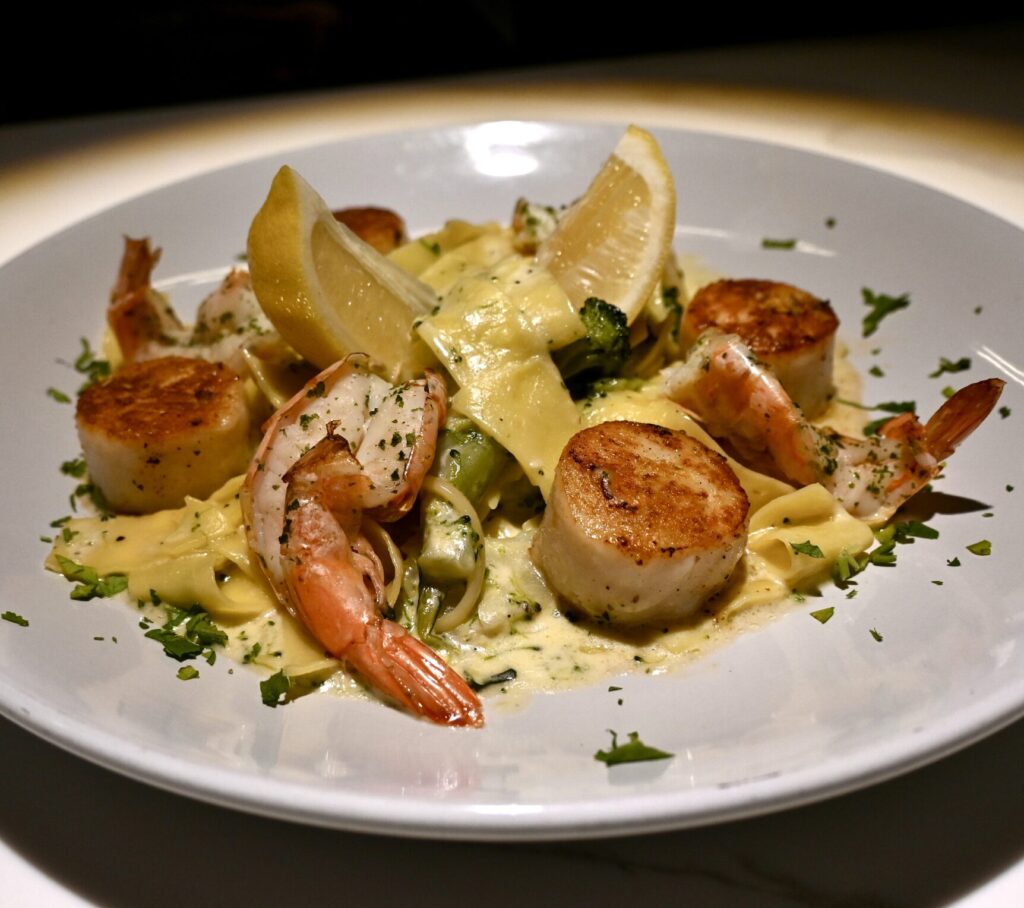
Friendsgiving plates will include “chana pilau,” chickpeas and rice, from Afghanistan; “doolsho,” cardamom sponge cake from Sudan; “ensalada rallada,” coleslaw, from Venezuela; “kibbeh,” a spiced ground meat dish, from Syria; and “zigni,” stew, from Eritrea.
Rukaya Alabbas, from Syria, is one of the chefs, cooking the “kibbeh” for Friendsgiving this year.
“Sharing my food feels like sharing a piece of my home,” she said. “And I love that this event helps raise money so other families can get the same support I once received.”
Alabbas previously participated in the CWS Marketplace, which currently assists about 10 women. Through the program, she was able to start her catering business and learn things like pricing, food safety, presentation and how to sell her dishes at events, she said.
The Marketplace aims to equip women to start their own businesses, which is exactly what Alabbas has accomplished.
“I wanted to start a business so I could support my family and share a part of my culture with my new community,” she said. “It has made me feel independent and proud. My children see me working hard and building something of my own, and that gives them motivation too. The extra income also helps us cover expenses and feel more stable as we are building a life here in the U.S.”
Through the program, CWS leads workshops, teaching women skills like advertising and budgeting and even helping them secure needed supplies such as sewing machines or cooking equipment. Women who graduate from the program have even been hired to return as mentors to new students.
Refugee women from a variety of cultures have made businesses out of creating soap, crafting home items and accessories and cooking, among other talents.
Alabbas learned to cook from her grandmother, something that, in her culture, is used to show love and comfort, she said.
“The Marketplace program taught me how to turn my passion for cooking into a business,” she said. “Starting over in a new country is not easy, but I’m now learning a new language, met many kind people, and built something from nothing. That makes me very happy.”
CWS purchases the women’s products and sells them at festivals, such as Kipona in Harrisburg, and pop-up events, as well as on their website. At events, Taha said that women are able to practice interacting with the public and marketing their products.
But the experiences selling their wares aren’t just impactful to the women themselves. Taha believes the program can have an important effect on the community as well.
“It opens doors for very rich conversations and that is priceless,” Taha said. “We use that program to show the community in Harrisburg how talented the refugee community is and what they bring with them from their home.”
Still Here
The Friendsgiving is just one way that CWS hopes to raise money to keep the Marketplace running, as well as highlighting the challenges of refugees right now.
“It really gives the opportunity to the community to support, and to show the support that they have always showed us,” Taha said. “It gives the opportunity for people to sit together and have a conversation about the refugees, the talent they bring in, the countries they come from, the challenges they’re facing.”
Individuals and groups can place meal orders. Each meal also comes with a brochure with discussion questions related to refugees for families or groups to consider.
Funds raised will not only help keep the Marketplace initiative alive but will aid CWS as a whole and the assistance they provide to recently resettled refugees. This year, that money is especially important, as the organization faced detrimental funding cuts and was forced to lay off a majority of its office staff.
“Yes, we are short staffed, but our role in the community is still there and clients are still there, and we are serving more than 500 people regularly,” Taha said.
CWS’s goal for the international dinner is to serve at least 1,000 meals—a big, but necessary lift for the organization and the chefs.
“We hope this year is going to be the biggest year,” Taha said.
For more information about Church World Service Harrisburg, visit www.cwsharrisburg.org.
If you like what we do, please support our work. Become a Friend of TheBurg!








 For the past six years, Rachel Young* has been a single parent to her 11-year-old daughter Astrid.*