Bob’s Art Blog: Spectacular “Mamacha Carmen” opens at Paper Lion Gallery

The sun rises in Paucartambo.

For art lovers, the destination often provides the thrill—the gallery or museum that is the repository of wondrous works of world-class paintings sculpture, photographs and the gamut of art.

But in those rare instances, the exception to the rule is the journey. When that path is 13 years in the making, it is all the more remarkable.

A new exhibit at Paper Lion Gallery offers the payoff—an extensive collection of photographs by Dilmar Mauricio Gamero Santos entitled, “Mamacha Carmen,” the festival of the Lady of Mount Carmel.

Here, the sun’s spectacular rise out of the night sky foretells the events to unfold over the coming five days in a ritualistic festival that has gone on for over 300 years. Out of the jungle is where the sun rises at 13,000 feet while the townspeople of Paucartambo awaken. Far below, at just 2,000 feet above sea level, the appearance looking up at the sun seems as though it’s “dancing” and thus starts the festivities of Mamacha Carmen.

At this juncture, the townspeople start their pilgrimage through town signifying the start of the tradition that has endured three centuries. This perfect picture of the sun “jumping for joy” is to honor the Blessed Lady of the Virgin Mary. It captures the mood and spirit of the entire procession as it makes its way through the town as night turns into day. The sky at the top of the world is scintillatingly surreal in that majestic moment.

The festival in Paucartambo, Peru, blends tradition, ritual and customs into a morality play of sorts. It pits an entire town of people portraying two different sides, good and evil. “The Ones on High” reside in the highlands and struggle against the low-lying townspeople over the domain for the statue of the Blessed Virgin Lady. They fight for possession of the statue to reside safely in its church sanctuary. The weeklong event unfolds in a highly orchestrated manner, paying strict attention to detail and execution.

The origin of the festival dates to the Incas and mysteries that surround their lost civilization. The Incas were the indigenous people who lived in what today is Cuzco, which is 2½ hours away from Paucartambo. The statue of Our Lady of Mount Carmel is the outward sign of the relationship between the Virgin Mary and her faithful townspeople who pledge to protect her at all costs. What ensues from July 15 through July 19 each year is worthy of a two-hour documentary film at Sundance and if artist, photographer Dilmar Mauricio Gamero Santos, native of Peru, has anything to do with it, that dream someday may come true.

Masked revelers dancing around the fire.

Gallery owner Chuck Schulz had the good fortune of meeting Gamero Santos while he pursued his graduate degree at Temple University in Philadelphia. Fellow gallery owners Bill Grace and Jim Hadfield were equally astounded by the level of ritual and traditions witnessed at the July 2018 festival and equally effusive about the extensive lengths the artist had gone to in capturing the essence of commitment and passion that the entire town brings anew every summer to its reenactment.

From the full participation in creating each elaborate costume to the dance routines, the festival draws its energy from the townspeople’s investment of time and love, which adds up to memories for the participants and viewers alike. They fully commit to historical accuracy in handing down the customs to future generations.

The festival’s customs rely on intricate choreography as 19 groups of costumed dancers representing various professions (bakers, doctors and nurses, etc.) all weave their way to engage with the others dressed as devils and jokers. Even yellow-faced masked dancers represent illness contracted from yellow fever; the power of the nurse is symbolic of the power of the Virgin Mary. The 30 funerary towers that dot the landscape are remarkable structures and provide the portals between the living and the dead. The culmination of the festival takes place with a symbolic killing of a bull. The festival plays out on such a grand scale that the population of the town, which normally boasts just 3,000 residents, swells to over 20,000 for the five-day celebration.

Gamero Santos incorporated all facets of documented materials into a multimedia format. He created a tribute to preserving the secular sense of community to the sacred aspects of identity, which marries Andean ritual to Catholic traditions. The color photograph of the white masked dancers performing Qonoy, dancing around the circle of fire, provide a colorful glimpse of what life down under may entail if the statute is captured by the other side.

Gamero Santos literally wraps up his 13-year journey in a collection of five individual spiritual boxes that are called “demandas,” which contain the sacred figure of the Mamacha Carmen in one box and four groups of her dancers in each of the others. In being true to his vision, Gamero Santos hand-wrought the five boxes as an articulated metaphor for the demandas.

Perhaps the most interesting facet of Gamero Santo’s photographic process is the transfer of the image from black and white to form the frontispiece of the handmade wooden “demandas” boxes. Its appearance is almost like a phantasma, which only adds to the allure of the festival’s charm. His life’s work is a tribute to the Incan people and to Mamacha Carmen, resulting in an unsurpassed collection of curatorial craftsmanship that needs to be seen by all the tribes of the world.

The languages may vary from place to place. The way we present ourselves to the world may be uniquely different. For, in the end, we are all one tribe, universal—the people who inhabit Earth, whether in the jungle, the highlands or down in the valley. We are all works of art, and art makes the world go round no matter what corner of the world we call home.

“Mamacha Carmen: the Festival of the Lady of Mount Carmel” runs through Nov. 2 at the Paper Lion Gallery, 1217 Hummel Ave., Lemoyne. For more information, visit www.harrisburgframers.com or the Facebook page.

Continue Reading

Weekend Roundup with Sara Bozich

Happy Weekend!

What a week. I spent the first half of it tending to sick kiddo. I’ll spend morning weekends helping take care of my dad’s geriatric cat. Andy’s out of town. SAVE ME WITH WINE PLEASE. But first: Beer! I’m honored to moderate a #beerchat with Alison Feeney, author of For the Love of Beer: Pennsylvania’s Breweries, ZerØday’s Hannah Ison, and The Millworks’ Jeff Musselman TONIGHT at Midtown Scholar. We’re kicking off the Harrisburg Book (seriously almost just typed “beer” – whoops) Festival, which is a must-stop for anyone this weekend. On Saturday, I’m thinking of taking Bo over to the Open Farm Day at Arcona Alpacas, OH, AND I HAVE A FRIEND IN TOWN TOO. And on Sunday, we football.

What are you doing this weekend?

(more…)
Continue Reading

Turn On Your Heartshine: Pay-what-you-can restaurant, community space headed for Harrisburg.

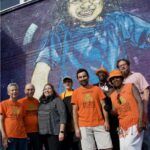
Heartshine founders and volunteers stand in front of their building in Midtown Harrisburg, following a recent organizational meeting.

Kim is concerned about homeless veterans.

Yolimar seeks to empower and support immigrant women.

Veronica wants to make sure that no one goes hungry.

These three people—and about 10 others—gathered on a recent Saturday morning in Midtown Scholar Bookstore to continue a months-long discussion about a new, ambitious project in Harrisburg.

It’s called Heartshine—part community space, part support network, with a pay-what-you-can restaurant at its core.

“There are a lot of people who are just punching the time card of their life,” said Kali Tennis, co-founder and board president of the nonprofit. “They think they’re alone, but they’re not.”

Kali arrived in Harrisburg several years ago when her husband, Gary, took a job with the state government. They came from Philadelphia, thinking they’d return there one day, but quickly fell in love with the quirky capital city.

“Harrisburg just lodged itself in our hearts—how sweet and small it is,” she said. “People notice when you’re gone, and they know your names.”

In her new city, Kali wanted to do something meaningful with her life. She and her husband already were familiar with a donation-based restaurant called EAT Café on the campus of Drexel University. Maybe that could work in Harrisburg, they thought.

“I was finding myself in homogenous spaces,” Kali said. “In Harrisburg, places can be fairly homogenous. I like it more when you bring folks together.”

A rendering of the renovated Heartshine complex, looking from N. 3rd Street.

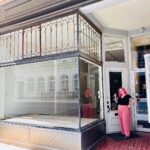
Some Harrisburg residents may already be familiar with the future home of Heartshine, an 8,000-square-foot series of three connected buildings smack-dab in the middle of the 1100-block of N. 3rd Street.

For many years, the building housed Mode magazine and several apartments, and, since February, has sported a brightly painted entryway, with colorful writing on the windows welcoming the community to monthly organizational meetings at Midtown Scholar.

Those meetings have attracted dozens of people, many interested in lending their unique talents to the cause—whether to help out in the kitchen, teach a class or assist in any other way.

Janet and Doug Shenk were Kali and Gary’s first recruits.

Years ago, Janet had heard about pay-what-you-can restaurants, which have opened in many cities, and the concept always intrigued her. So, when Kali proposed the idea, she was “ready to jump off the cliff,” she said.

Actually, husband Doug, the executive chef at the now-closed Camp Hill restaurant Fraiche, was the person in their sights. Janet had been a pastry chef there, as well.

“We thought we were trying to recruit Doug, and we recruited Janet,” Kali said.

They actually recruited them both. Janet is now executive director of Heartshine, and Doug will be the chef in the kitchen. In fact, they are in Fort Worth, Texas, right now embedding with the Taste Project, a successful nonprofit eatery there.

An aerial rendering of the fully renovated Heartshine complex

“It’s going to be ever-changing and interesting food,” said Janet, who stressed that meals will be healthy, with lots of soups, fresh breads and pizza right out of wood-fired oven. “I’m very excited about the menu.”

Kali wanted to make certain that one thing is clear—the food and service will be first-rate.

“Our model is a full-service restaurant—a sit-down meal,” she said. “The experience won’t be any different from a traditional restaurant.”

With one exception, of course—payment will be donation-based.

But, indeed, the entire approach is unique, as the restaurant will serve just one aspect of a greater whole. The first phase of the project includes the restaurant, a large community studio, a courtyard entrance and an office. A second phase will include a cooperative care team room, a community room and two apartments for transitional housing for women.

The first phase is set to open on Feb. 14, a year-to-the-day since the public launch and not coincidentally on Valentine’s Day.

The yearlong planning process not only allowed the core group to organize, prepare and learn, but has permitted them to hold monthly meetings and recruit staff and volunteers.

“In our model, volunteering will be in fair exchange for your meal,” Kali said. “We can make an accommodation for everybody. We can always find something for someone to do.”

Heartshine is slated to open Feb. 14 at 1120 N. 3rd St., Harrisburg. The group will hold a “Friendraiser Cookout” on Oct. 12, 11 a.m. to 2 p.m., in the courtyard of the Broad Street Market in Harrisburg. For more information, to volunteer and to purchase tickets, visit www.heartshine.org.

Continue Reading

Harrisburg Council hears that finances steady; major lead abatement grant received; leaf collection starts

Harrisburg City Council during Tuesday’s work session

The first six months of Harrisburg’s financials are in the books, and what’s the verdict?

Steady as she goes, according to the city’s finance and budget officials, who gave an update on Tuesday night to City Council.

At a council work session, city Budget Manager Erika Regalado said that, for the first two quarters of 2019, revenues came in about on budget. Property tax revenue was flat, but local income taxes came in stronger than expected, indicating a robust local employment picture.

“The economy is steady and it’s growing, and unemployment is low,” she said.

Her presentation echoed the one that Bruce Weber, director of the city’s Bureau of Financial Management, offered last week to the Intergovernmental Cooperation Authority, a state-appointed body tasked with approving a five-year financial plan for the city.

On Tuesday night, Weber said that he expected current trends to continue through the rest of the year.

“There aren’t any surprises, hopefully,” he told council members.

The city’s 2019 budget totals nearly $110 million, which includes a $70.8 million general fund, a $20.6 million neighborhood services fund and a $9.8 million debt service fund.

In other city news, Harrisburg announced late on Tuesday that it received a $5.6 million federal grant to continue the city’s lead abatement program.

“That’s more than we’ve ever received before,” said Mayor Eric Papenfuse. “It’s good news for the city. It means we’ll be able to continue our lead efforts into future years.”

Specifically, Harrisburg will receive $5 million from the federal Department of Housing and Urban Development’s Lead Based Paint Hazard Reduction grant program and $600,000 from its Healthy Homes Supplemental program. The money will allow the city’s Department of Building and Housing Development to provide lead prevention and healthy homes activities on 480 units within Harrisburg’s Opportunity Zones.

Harrisburg also announced that its leaf collection began on Tuesday and will continue through Dec. 1.

To have their leaves collected, residents should put leaves in brown paper bags and leave them curbside the night before street sweeping. Alternatively, residents can pile leaves into streets the night before street sweeping, but should be careful not to block storm drains, the city said.

Continue Reading

HU’s Darr leads list of Catalyst award winners as Harrisburg Chamber announces 2019 selections

Dr. Eric Darr, center, leads the groundbreaking in July for Harrisburg University’s new tower.

Dr. Eric Darr has been named the 2019 Catalyst Award winner, as the Harrisburg Regional Chamber & CREDC today announced its most recent list of people and organizations that serve as positive and influential forces for our area.

Darr, president of Harrisburg University, has spearheaded the rapid growth of the university and accelerated the redevelopment of downtown Harrisburg, according to the chamber.

“President Darr has led the university through an explosive period of growth and prosperity within the last year, helping to build the university into a powerful economic driver for the city of Harrisburg and the region as a whole,” stated the chamber, in a press release.

In its latest growth spurt, HU is currently constructing a 17-story mixed-used building at S. 3rd and Chestnut streets that will house academic space, a hotel and a restaurant.

Last year, TheBurg received the Catalyst Award.

In addition, to the Catalyst Award itself, the chamber and CREDC announced the winners of additional awards under the Catalyst framework, to honor other movers in the Harrisburg area.

  • Athena Award: Claudia Williams of The Human Zone, honoring her “leadership and mentorship” in her business and volunteer activities.
  • Business Diversity Champion Award: Todd Snovel of the PA Commission on LGBTQ+ Affairs for his “commitment to the ideals of diversity and inclusion through his 15-year career.”
  • Corporate Citizen of the Year Award: UGI Utilities for “reliable service” to its customers and “positively impacting the lives of its employees and the communities it serves.”
  • Emerging Business Leader of the Year Award: Blake Lynch, community liaison for the Harrisburg Police Bureau, for helping to “facilitate communication and cooperation between Harrisburg’s police officers, its citizens and community partners.”
  • Government Leader of the Year Award: Rep. Sheryl Delozier for her work as a legislator and volunteer, especially in the realm of criminal justice reform.
  • Small Business of the Year Award: Triscari for its creative services work over 45 years.
  • Volunteer of the Year Award: Sylvia Hepler of Launching Lives for helping to “develop and sustain women’s mentorship programming at the Harrisburg Regional Chamber, such as the Chamber Business Women speaker series and the CBW Lean In Circles.”

“We are incredibly proud to honor this group of businesses and individuals for their dedication to growing our community,” said David Black, president and CEO of the Harrisburg Regional Chamber & CREDC. “We’ve had more nominations this year than our past years, and we credit our Catalyst Awards committee with making difficult decisions on who to honor when we have so many impactful organizations in our region.”

The annual Catalyst Awards ceremony will take place on Dec. 4 at the Hilton Harrisburg, starting at 5:30 p.m. For more information and tickets, visit www.HarrisburgRegionalChamber.org.

Continue Reading

The Painted Word: Fall into a new season of art

“Icons in Transformation” at the Riverfront Gallery of St. Stephen’s Episcopal Cathedral in Harrisburg

Fall officially started a few days ago, and the bittersweet sentiment for the season is shared by many.

Nature’s handiwork in all its glorious array often leaves us breathless with wonder. The season’s glory is over within a mere passage of months, and without fail, the final leaves drop by Thanksgiving. There will be piles of leaves to rake, apple cider to drink and share, football and soccer games to cheer at and the list goes on. The greatest art exhibit of the season can be seen right outside your front door or from your back porch. Autumn art brings a kaleidoscope of color to exhibits near and far.

Here are a few of the highlights from Adams to York Counties and all in between. Mark your calendars and set the dates from the start of October through the end of the year of art you won’t want to miss.

Art Happenings Now: Just mere days left! Catch them before they are gone. Ceramic Works by Carolanne Currier and Jack Troy at the Rose Lehman Art Gallery through Oct. 3 at Harrisburg Area Community College. Be sure to see Evan Summer’s Remnants of the Future through Oct. 5 at the Trout Gallery of Dickinson College in Carlisle.

Mark the Calendar:

Oct. 5 is significant as its date speaks to a number of noteworthy art endeavors. “American Craft Week” kicks off with a celebration at the newly reopened One Good Woman at 1801 Market St., Camp Hill. Shop that Saturday in preparation for artisans’ arrival on Saturday, Oct. 12, crafting and selling their wares from 9 to 4. While over in Carlisle, how do you keep them down on the farm when art hath such charm? Join them together for Carlisle Art Learning Center’s (CALC) fundraiser to help Farmers On The Square at Roots Flower Farm. Locally sourced food and beverages with artists creating saleable art all for a great cause. And don’t forget Lancaster City’s Art Walk Weekend, Oct. 5 and 6.

Lancaster Fall Art Walk
And you thought Lancaster only had shoofly pie…Venture to Lancaster City to catch the Fall Art Walk the weekend of Oct. 4 to 6. First Friday, Oct. 4, provides the initial preview with nearly 40 galleries and museums opening their doors from 10 a.m. to closing time. Start on Gallery Row (Prince Street), host to more than a half-dozen venues in a three-block span. Highlights for the weekend include Saturday hours, 10 to 5, and Sunday, 12 to 4. Be sure to wish a happy 94th birthday to nonagenarian artist, Dr. Robert A. Nelson, who is presenting his famous collage drawings, as well as his customary art, “Release From the Vault” at CityFolk Gallery at 146 North Prince St. “Vault” issues include his works across varied mediums. While on Prince Street, be sure to visit neighbors Christiane David Gallery at 112, Artisans Gallery at 114, Red Raven Art Company at 138, Liz Hess Gallery at 140, Freiman Stolzfus Gallery at 142, and The Pennsylvania College of Art and Design at 204. Two outstanding art museums include Lancaster Museum of Art at 135 N. Lime St. and the Demuth Museum at 120 E. King St., which is located in modernist painter Charles Demuth’s former home and studio. Then venture further to all downtown galleries and artist studios for more excitement.


Museums
The State Museum of Pennsylvania: The “Picturing a More Perfect Union” exhibit opens Nov. 22 through April 26, featuring Violet Oakley’s studies of her work for the

Pennsylvania Senate chamber murals. This exhibit is mounted in commemoration of the centennial for the 19th Amendment, which gave women the right to vote. 

Susquehanna Art Museum (SAM): Catch The Harrisburg Sketchers on location at SAM through Oct. 27 and “Hidden City,” a collection of plein air landscape paintings from artist, Valerie Larko through Nov. 17. A collection of photographs culled from 40 photographers creates “Wars Only Half the Story,” featured in SAM’s Main Gallery Oct. 12 to Jan. 19 from the groundbreaking, “The Aftermath Project.” Also featured in the main gallery, from Oct. 19 through Jan. 19, is artist Inka Essenhigh, whose mythological paintings come to life. In the DeSoto Family Vault, “Dreams” by Peter Ydeen, runs Nov. 1 to Jan. 12. Photosurrealist Ydeen captures the city of Easton in a series of photos that looks for a city gone missing. His series is hauntingly heightened by the cover of night.

The Lancaster Museum of Art: Pennsylvania Watercolor Society’s 40th “International Juried Exhibition” runs through Oct. 26. 

Demuth Museum: Henry Libhart: “Ravishing Realism” runs through Nov 10. This exhibition explores the life and work of Lancaster County artist Henry Libhart. He is known for his trompe l’oeil still life paintings in oil and watercolor.


Art Associations

Adams County Art Council: But first a word from our sponsor. The apple of our eye…bushel baskets of red and gold, pumpkins by the pound and the best apple cider donuts can be found at Hollabaugh’s Farm Market on 545 Carlisle Rd. in Biglerville headed into Gettysburg. Stop on your way to “First Fridays” at the Adams County Art Council located at 125 S. Washington St. Nov. 1 opens the members only show, which runs to the end of November.

The Art Association of Harrisburg: “Hope, Memory and Pride” runs Oct. 18 to Nov. 21. LGBT exhibit, in which artists view equality in conjunction with Dickinson College archives chronicling the 50th Anniversary of Stonewall, a watershed event in the LGBT Movement. In addition, an exhibit highlighting the opium crisis, “Bits & Pieces of the Past,” features the award winning art of Maria Maneos, pioneer of “Brush With the Law.” Also “Psychic Gallery” comes Nov. 9 with advance tickets for sale…but you already knew that.

Carlisle Art Learning Center (CALC): “People and Places” by Kim Stone and Pat Walach Keough features a collection of new works with candid observations of everyday scenes captured in plein air-inspired style. Main gallery Sept. 27 to Nov. 2. In the upper gallery through Oct. 25, “The Balkan Back Story,” photographs by Janet Powers, professor Emerita at Gettysburg College, who researched women’s recovery from the Bosnian War.

The Hershey Area Art Association: Weekend of Oct. 19 to 20 “Annual Members Show” of new art at The Hershey Historical Society Museum. Weekend of Dec. 5 to 8 in the Community Room at Spring Hill Suites on Rt. 39 next to the Antique Automobile Car Association Museum, features winter-themed member art.

Lebanon Valley Council on the Arts: All exhibits open “First Fridays” with musical performances afterwards at 7:30 p.m. The council’s building is located at 770 Cumberland St, Lebanon. On Oct. 4,York-based artist, John Terlazzo, who paints in the style of Fauves using bright colors that visually reference eastern cultures. Nov. 1, Jolene Windmiller of Mt. Gretna paints both real and imagined landscapes in addition to creating stain glass windows. Dec. 6, Elaine Martin, watercolorist, who paints what she views in her eastern county Lebanon neighborhood.

Millersburg Art Association (Gallery on the Square): “Something for Everyone” by artist Carrie Feidt. The show runs through Oct 12. The Art of PA Game News” by artist and Millersburg native, Dana Bellis, who illustrated for the Pennsylvania Game New Magazine from 2011 to 2018. He will be offering hand-signed and numbered giclee prints from his cover art. Show runs Oct 16 to Nov 16.

Perry County Council of the Arts: Oct 18 to Jan 11. Artisan marketplace at the PCCA Gallery, 1 S. Second St, Newport. Special holiday exhibition featuring locally made fine art and handcrafts by emerging and professional artists. Oct. 18 to Nov. 2, “Arts for All” exhibition at Landis House, 67 N. Fourth St. Explore an exhibition of art work created in the Arc of Cumberland and Perry Counties (CPARC) and PCCA six-week inclusive art classes for all ages and abilities led by Tom Oakes. Select pieces will be highlighted in this exhibition opened to the community. Nov. 15 to Jan. 17. Fifth Annual Juried Exhibition at Landis House. Original artwork in a variety of media will be on display during this annual exhibition.

The York County Art Association: Annual Fall Membership Show through Oct. 19. The 49th annual Juried Art Show runs Nov. 3 to Dec. 14 at 220 S. Marshall St.


Colleges and Universities – Go to the head of the class. Art class that is, as these institutions of higher learning are offering stellar shows this fall.

Dickinson College: The Trout Gallery: Through Oct.19, “Water,” artist Edward Burtynsky’s photographic plea to rethink our greatest yet shrinking natural resource before it’s gone. Burtynsky’s “Hope is that his pictures stimulate thinking about what can be done to save planet Earth’s supply before it’s too late.” “Water” is organized by the New Orleans Museum of Art. Beginning Oct. 11 to Feb. 1 is a collection of Buddhist sculpture in the exhibit Manifestation and Adaptation: Variations in Buddhist Sculpture Across Asia. Nov. 1 to Feb. 15 marks the collection of developments in Japanese printmaking in Abstract Traditions: Postwar Japanese Prints from the DePauw University.

Gettysburg College: “Schmucker Art Gallery” through Nov. 12. “Artful Nature and The Legacy of Maria Sibylla Merian,” which features 18th-century prints by German naturalist and artist, Maria Sibylla Merian. “1647-1717” The exhibit is curated by Gettysburg college students. Emily Roush ’21 and Shannon Zeitman ’21 under the direction of professors Felicia Else and Kay Etheridge. Artists Susanne Slovick and Andrew Ellis Johnson’s exhibit running through Dec. 6, “Getting There,” posits the question that migrants and refugees face in the fear of the unknown and the stranger that reveals our own collective conscience.

Harrisburg Area Community College (HACC): Rose Lehrman Art Gallery hosts Brenton Good’s exhibit, “An Edge is First a Cut,” Oct. 14 to Nov. 7. The student honors photography exhibit runs from Nov. 18 to Dec. 5.

Lebanon Valley College: “Suzanne H Arnold Art Gallery” Nov. 1 to Dec. 15. “Insider/Outsider” Exhibit spans the development of social realism starting with the Ashcan School in the early 20th century. A cultural shock to many, social realist art turned it’s back on academic traditions instead, staging subjects from the working class population. Paintings, photographs and prints speak to furthering social activism.

Messiah College: “The Galleries at Messiah College,” Oct. 18 to Nov. 26. Two art exhibitions from the Bowden Collection: “Was God Dead?” Biblical imagination in German expressionist prints. Otto Dix: “Matthaus Evangelium” Oct. 18 to Nov. 26. Nora Sturges: “Postcards from the Unknown” Dec. 6 to Jan. 29. Artist Nora Sturges unearths mystery and more in her paintings at the Messiah College Aughinbaugh Art Gallery.

Millersville University: “Susan C. and Gerald C. Eckert Art Gallery” First Fridays at The Ware Center. “Diasphoric Musing” Oct. 23 to Dec. 6. Featured artists: Sharif Bey, Michael Clemmons, Mary Hakim Martin and Paul Andrew Wandless. Sykes Gallery, “Cowboys and Carpenters” artists Sutton Demlong and Alex Schecter runs Oct. 21 to Jan. 29 at 60 W. College Ave.

Shippensburg University: “Kauffman Gallery” at The Huber Art Center. “Fantastic Function” Sept. 30 to Oct. 23. Art students create unique clothing!


Harrisburg Churches

Riverfront Gallery: St. Stephen’s Episcopal Cathedral and School. 221 N. Front St. The gallery features regional artists that rotates artwork three times a year. Now showing through November 3rd is a touring exhibit of contemporary and traditional iconography entitled “Icons in Transformation” by artist Ludmila Pawlowska.

Zion Lutheran Church: 15 S. 4th St. On view is traditional Chinese painting and calligraphy by Diana Neng; paintings and drawings by Max Tillet; and additional artwork by friends of Zion. An extensive collection of original stencil prints by Japanese artist Sadao Watanabe will also be available thru Oct. 17.

Salem United Church of Christ: 231 Chestnut St. Barbara James features mixed-media works. Larry Lombardo, signature member of both the American and National Watercolor Societies, will be exhibiting watercolors as well as paintings thru Oct. 17.

Pine Street Presbyterian Church: 310 N. 3rd St. “The Finkle Family Fine Art” is featured with mixed-media paintings by Joanne, ink and pencil drawings by M. Lou Girard, wood/stone sculptures by Bob Finkle and John Hertzler, and wooden bowls by Lou Pulvino through Oct. 17.


Schools

Art Center School and Galleries: 18 Artcraft Dr., Mechanicsburg. The Red Barn hosts “The Seven Lively Artists Show” through Oct.18, has grown to 15 and includes William Anderson, Earl Blust, Domnick Brandt, Jim Bricker, Karl Foster, Jonathan Frazier, Paul Gallo, John Hassler, David Henry, Ralph Hocker, W. T. Kerman, Dave Leber, Don Lenker, John McNulty and Steve Wetzel. So get lively and grab your partner and do-si-do. After all, you are in a barn.

Capital Area School for the Arts Charter School (CASA): 150 Strawberry Square, 3rd and Walnut streets, Harrisburg. CASA Visual Art Student Exhibition, through Oct. 17.


Independents

Lebanon Picture Frame and Fine Art Gallery, LLC: 847 Cumberland St, Lebanon. Local collage artist, Tina Valgenti, will be exhibiting pieces of her most recent collage art for the month of October. Tina uses her discriminating eye to accumulate unique assemblages of individual items and forms them into a whole to create wonderful pieces of modern art. Oct. 4 to Oct. 26. Local abstract painter, Dennis Easter, will be exhibiting his most recent abstract paintings for the month of November. The exhibit will open on Friday, November 1st during the First Friday Art Walk thru November 30th. Dennis employs an “add and subtract” technique in which he stacks lays of colors and partially washes away some while building on others with an end goal of creating an atmosphere where the colors and shapes speak to each other. Two of the region’s most accomplished premier oil painters, Robert Heilman and Jean Zaun, will be jointly exhibiting their most recent oil paintings for the months of December and January.

Moss Creek Art: 315 Bridge St, New Cumberland. Guest gallerist from Lancaster, Liz Hess, whose art works will be featured during the holiday season.

Paper Lion Gallery: 1217 Hummel Ave, Lemoyne. “Mamacha Carmen” photographic series by Dilmar Mauricio Gamero Santos, celebrating the Peruvian Festival of the Virgin of Mount Carmel. Sept. 28 to Nov. 2.

HMAC House of Music Arts and Culture: 1110 N 3rd St. Fall 3rd in the BURG schedule. Oct 18, artist/author Bethany Nicolle, Nov. 15 Boxer Charles Feathers featuring bootleg and “R76” and Dec. 20 features pop culture artist/photographer/comic book writer, “Kevyn Knox”

The Millworks: 340 Verbeke St. Oct. 15 to Nov. 10, new works by Elaine Brady Smith, Christine Goldbeck, Andrew Guth, Judy Kelly, Yachiyo Beck and Lori Sweet. Nov. 12 to Jan. 12 is the all-inclusive artists show.  Cash and carry exhibit for the holiday season. Nov. 30 the Odd Ones Holiday Bazaar featuring 37 in house artists plus over 20 outside vendors throughout the building will have for purchase locally sourced, unique hand crafted items for the holiday season. Event runs 11 a.m. to 5 pm.

Vivi on Verbeke: 3rd in the BURG’s place to be. Oct. 18, Nov. 15 and Dec. 20. “Our dedicated effort towards the strengthening and revitalization of a creative and inspiring Midtown Harrisburg” (Vivian Sterste). The gallery is open most Friday and Saturdays. Specializing in pottery with panache; photographs with patina; sculptures that sizzle and heedful herbal and natural crafts created. All to be seen and appreciated up close.

Continue Reading

Conservationists Bloom: Young people take on environmental efforts and pursue change.

Zoe Roane-Hopkins

With rising concerns over climate change, leaders all over the country have begun to speak out about sustainability efforts and the environment.

Not all leaders are politicians or middle-aged folks dressed in suits, though. Several young people from central Pennsylvania area have taken action and shown commitment to environmental protection and advocacy.

We highlight several below, offering a glimpse into the next generation of environmental stewards.


Zoe Roane-Hopkins 

Zoe Roane-Hopkins was just about to do some yardwork in her parents’ front lawn in Camp Hill as I arrived to meet her. She was ready to plant native coreopsis cultivars in the perfect spot she had picked out—just beneath another native species, a white oak tree.

Just graduated from Penn State with a degree in landscape architecture, Roane-Hopkins learned that a lawn is an “ecological desert,” an unnatural, manicured place where native plants and wildlife are not sustained.

She found this alarming as her parents—state Department of Conservation and Natural Resources employees—taught her to value natural ecosystems.

“It became a really important part of how I saw the world, and I want to make sure that doesn’t get taken away from people,” she said.

For her senior thesis project at Schreyer Honors College at Penn State, Roane-Hopkins created an educational guide called “Lawn Gone Native” for yard owners to plant native gardens that encourage ecological restoration, in place of barren lawns.

Though lawns sink some carbon and provide open spaces for gathering, they require much more maintenance than native gardens, consume more resources, and fail to provide habitat for wildlife.

“I learned how vital it is to have these natural areas that keep us alive by filtering air and water, and people just don’t understand how necessary it is,” she said. “The cool thing is, you can get people to change the way they see the lawn and to understand that they don’t have to compromise their lifestyle for ecologically supportive landscapes.”

Besides serving as a home for wildlife, native gardens provide food, support pollinators, filter and clean contaminated water, and maintain deeper root systems that reduce soil erosion and runoff. Roane-Hopkins explained that natural spaces are vital for our survival, and she wants to educate people about how they can help themselves and their environment, just by planting natives.

“People planting native plants in yards isn’t just that action,” she said. “It’s also them thinking about how they are actually able to influence something, and they get a deeper appreciation for their immediate surroundings.” 

Roane-Hopkins attends the Savannah College of Art & Design in Georgia, where she is pursuing a master’s degree in industrial design.


Noah Yeich

Noah Yeich has always had an appreciation for the outdoors, something his mother cultivated in him when he was young. He put this appreciation into action in a recent project at an important bird habitat in Harrisburg.

Yeich was visiting a park near Pittsburgh when he saw a chimney swift tower and was inspired to build one himself. A recent graduate of Middletown Area High School, he thought it would be perfect for his Eagle Scout project.

“It combined my love for the outdoors with my love of carpentry,” he said.

Yeich took three months working every weekend to construct the tower at Wildwood Park near I-81 in Harrisburg. At 16 feet tall, the hollow wooden tower provides a site for chimney swifts to nest during their annual spring migration from South America to eastern North America. The bottom part of the structure is a kiosk hung with educational signs explaining the tower’s function and ecological contributions.

Yeich led friends and family members through the construction process, beginning with the logistical challenge of getting materials to the site and extending to laborious jobs like digging the foundation and mixing concrete. He unveiled the structure in April, accompanied by local licensed bird bander, Sandra Lockerman, who shared how Yeich’s project positively contributed to two decades of ongoing bird research.

Chimney swifts are known for their aerial demonstrations during migration, when enormous clouds of birds gather near a chimney and take off in an orchestrated flurry. These flurries consume millions of insects, which prune populations across their entire range. The bird naturally roosts in caves and hollowed out trees, constructing nests with its gluey saliva. When the human population expanded rapidly during colonization, the bird began to nest in chimneys, which is how it got its name. As chimneys across the continent have fallen into disuse, swift populations have suffered.

Yeich was glad to improve the bird’s habitat and thought the structure was well-placed at the park, adjacent to the Nature Center. He said that many people stopped to ask questions while he was building it, and he hopes the interest continues.

“I hope a pair of chimney swifts find it, and I hope it educates the people who see it when they visit the park.” Yeich said. 

Noah Yeich attends Thaddeus Stevens College in Lancaster, studying cabinet and furniture making.


Nick Silvis

I was lucky to get in touch with Nick Silvis for this story as he spends a lot of time outside, out of cell service area. Though just graduated from Hershey High School, he has been active in conservation for years.

“I’ve always been an outdoorsy kid, and I started learning about the environment when I was little,” he said. “I fell in love with the outdoors, and I never looked back.”

He enjoys hiking and kayaking, but his love for the environment culminates in the work he does to protect it.

Silvis has spent the last few summers in the Wildlife Leadership Academy’s field school, where students focus on a single species to learn about larger issues of the ecosystem and its conservation. As a conservation ambassador, he learned about the biology, ecology and management of the ruffed grouse—the Keystone state bird—and helped evaluate a local habitat for its livability.

He is also a long-time volunteer at Manada Conservancy in Hummelstown “just for fun,” where he helps facilitate their annual native plant sale and assisted in drafting an environmental impact statement for a local property they manage. Silvis was one of three recipients of the conservancy’s 2019 Environmental Achievement Award, which recognizes local high school seniors who have contributed to environmental stewardship and protection.

His passion for the outdoors also brings him out of the field and into government offices. Silvis sees many possibilities for bridging the gap between scientists and conservationists and government and business policy. He explained how this is vitally important if we are going to enact change.

“You can do all the science that you want, but without someone to interpret it or explain it, no change is ever going to occur,” he said.

Silvis has already been working to bridge that gap.

This past year, he was one of 20 student members of the Governor’s Youth Advisory Council for Hunting, Fishing and Conservation. The council met to discuss environmental challenges in Pennsylvania counties. Members then traveled to Washington, D.C., twice to discuss actions to protect the state’s environment and wildlife with congressional representatives.

“I enjoy politics and the inner workings of the government, and I feel that’s where change can occur on a wide scale,” Silvis said. “It’s a cool avenue to explore.”

Nick Silvis is attending Gettysburg College, pursuing a double major in environmental studies and public policy.

Stories on environmental topics are proudly sponsored by LCSWMA.

Continue Reading

The Mane Event: It’s time to saddle up for the annual Pennsylvania National Horse Show.

Photo by Brittany Oliver.

Winston Churchill once said, “No hour of life is wasted that is spent in the saddle.”

Equestrians and horse lovers no doubt agree. Horses are mysterious and grand, yet fragile creatures that have captured hearts and imaginations for centuries. These natural athletes dazzle in the show ring and have a huge following worldwide among competitive circuits.

Among the stopping grounds for such major events is central Pennsylvania, which boasts an enthusiastic equestrian community. The Pennsylvania National Horse Show (PNHS), now in its 74th year, attracts some of the show-jumping world’s premier athletes while giving up-and-coming hunter/jumper riders the opportunity to compete with their peers as they try to rise up through the ranks of the sport.

Held every October at the PA Farm Show Complex in Harrisburg, the show is one of the marquee events for riders and one of the largest indoor shows in the country. Riders come from all corners to compete for top prize money, ribbons and recognition. Attendees are treated to a show that features the best of the best in equestrianism.

Seventeen-year-old Paige Jones of Landenberg in southern Chester County will be among those competitors. She’s competing for the first time at PNHS in the U.S. Equestrian Federation’s Dover Hunt Seat Medal final on her mount, AF Cassini.

“I’ve been competing since I was 5,” she said. “My mom used to train ponies, so that’s how I started riding and showing competitively. The show grounds here are really nice, and it’s fun showing against riders from all over the country.”

Jones wants to start competing with the medium and high amateur owner, or A/O, jumpers this winter and eventually move up to Grand Prix, the cream-of-the-crop class in jumping. And, as in any sport, there are role models to admire. Nayel Nassar is one of Jones’ favorite Grand Prix riders.

“He is very calm, consistent and successful,” she said.

The Pennsylvania National Horse Show is just the latest stop for Jones. She just committed to Oklahoma State University to ride on the Division 1 equestrian team and will be heading there next fall.

Beyond jumping, the show features dozens of events and activities for horsey and non-horsey folks alike, such as Family Fun Day on Oct. 12. Book readings by authors and wagon rides are among the activities. Noodles normally used to keep afloat in the pool will be part of a craft activity. Kids will learn how to form the noodles into—what else?—a pony that they can ride around the concourse.

The now-famous Libre, a Boston terrier who was discovered suffering from neglect and shed light on the plight of dogs in puppy mills, also will make an appearance that day. Hunt Night on Oct. 14 is another big feature at the show, as it is the only indoor hunt night in the country devoted to local clubs.

PNHS Executive Director Susie Webb, who has been with the show for four years, said the competition remains one of the premier national sporting events in the United States by remaining dedicated to horse enthusiasts, while engaging and educating the audience with unique features such as the therapeutic riding championships, which take place on Foundation Friday, Oct. 18.

Initiated in 2016, Foundation Friday is the setting for two riding championships—assisted and unassisted—and the presentation of the foundation’s “Therapy Horse of the Year Award.” Therapeutic riding is an equine-assisted activity that contributes to the cognitive, physical, emotional and social well being of people with special needs.

“Our ‘Therapy Horse of the Year’ two years ago became a Breyer horse,” Webb said, referring to the toy horses made by Breyer Animal Creations. “Zipped Black Magic, a 20-year-old appaloosa, is also special needs, as he is totally blind.”

Anyone who has collected the famous Breyer model horses knows that a horse has to be very special to be chosen for that honor.

Webb also emphasized how special the families of the children participating in the therapeutic riding event are.

“Thanks need to go to the families who participate,” she said. “They are always thanking us, but we thank them for their commitment and time.”

The event’s big night is the Grand Prix, when famed professional riders like McLain Ward, Beezie Madden and the Millar family from Canada come to compete in what look like impossibly insurmountable jumps. The Grand Prix wraps up the 10 days of competition.

“That’s what this sport is—families, young, old, dad, daughter, all competing on the same level.” Webb said. “It’s in another league from most other sports. 

The PA National Horse Show takes place Oct. 10 to 19 at the PA Farm Show Complex in Harrisburg. For more information and a schedule of events, visit www.panational.org.


Continue Reading

What’s Up with That? Piece by piece, a city rebuilds.

When I arrived in Harrisburg some 11 years ago, I had quite a few “what’s up with that?” moments.

For instance, a large, boarded-up stone building at 3rd and Boas streets that clearly had once been a stunner—what’s up with that? Ditto, the tall, majestic building a few blocks away, blighted and deteriorating, and the abandoned brick pile on Verbeke Street that had a few fading Art Deco flourishes.

What was up with all of these—and many others?

As a new resident, I wanted to know how they had reached their lowly states, especially since they all were located so close to the Capitol complex, home to thousands of state workers daily.

Perhaps my greatest “what’s up with that?” came the first time that I saw the 1000-block of N. 6th Street. Here was an entire block of blight, with one major exception, the popular lunchtime spot, the Jackson House.

Every day, hundreds of state employees breezed right by these ruins to grab a legendary Jackson House burger or sub. Logically, you’d think that someone would see a business opportunity to re-develop this area. But no.

So, how did this happen?

It’s actually a complex story and one that, in the ensuing years, TheBurg would return to again and again. I can’t tell it all in this space, but it shares two elements common to most blight stories in Harrisburg—and in other once-thriving industrial cities across the United States.

Element #1: Flight. Starting in the 1950s, industry closed, and people began leaving the city for the suburbs, commuting in for, increasingly, service-sector jobs, which, in Harrisburg’s case, mostly meant state government. The 1972 flood was the nail in the coffin here, as residents took their federal flood money—and the few pennies that opportunistic slumlords gave them for the properties—and fled in a second huge wave.

Element #2: Disinvestment. Property owners stopped maintaining their buildings. Typically, they rented them out, for increasingly less money, until they became utterly uninhabitable. Then, instead of fixing them up, they boarded them up, and the dilapidation continued. Some fell apart slowly, others collapsed suddenly. Some sold for taxes, some landed with the Redevelopment Authority, others were flipped to speculators who let them rot further.

All of this happened to the 1000-block of N. 6th Street.

Of the six properties on the west side of the street, one caught fire, one collapsed in a

storm, one pancaked in, one was boarded up and the other should have been. Only the Jackson House, smack-dab in the middle of the street, remained truly sound.

And that, in a nutshell, was what was up with that.

Also, the blight fed on itself so that, for more than 50 years, few imagined that any of the old commercial streets of Midtown Harrisburg could be any different.

But then they were.

Fortunately, it turned out that the opposite also could happen. Just as blight can spread, so can redevelopment, and that’s where we are now in this story.

Over the past decade, nearly every one of the blighted, boarded-up buildings I saw on my first walk through Midtown has been renovated and redeveloped.

One is now StartUp. One is H*MAC. One is the Millworks, and another is the Coba apartment building. There’s Midtown Scholar and the Susquehanna Art Museum and ModernRugs and Campus Square and numerous smaller shops and restaurants like Yellow Bird Café, Pastorante and Urban Churn. One is even TheBurg.

Redevelopment has become such a powerful force that it’s now rolled over even the most desperate of streets—the 1000-block of N. 6th.

Currently, three of the buildings are being redeveloped as a mix of apartments and retail. Brothers LeSean and LeRon McCoy, Harrisburg natives and professional football players, are investing in the block, undertaking two cellar-to-roof renovations. They also hope to buy and build new on the vacant corner parcel, where the former Bethel AME Church burned down in 1995.

This street has a great deal of meaning to Harrisburg. It is one of notable history, the last remaining block of what was once an extensive African-American commercial enclave—a street of barbers, rooming houses, hotels, groceries and other businesses that catered largely to a black clientele in segregated Harrisburg, and it was almost lost. Well, unfortunately, some of it indeed was lost, but some now will be saved, so that life will return again to the street—that is, for more than a quick bite at lunchtime.

I find that, in Harrisburg (maybe everywhere), there are the glass-half-full and the glass-half-empty people. The latter might say—well, that’s fine for Midtown, but what about the rest of the city?

I try to be an optimist, but understand their point, too. Heck, on my block, two small apartment buildings have been condemned this year alone. There are still far too many old-time property owners who regard Harrisburg as only a place to extract money from, not invest in, seemingly believing that even simple building maintenance is a dollar out of their pocket.

But I’m not going to begrudge redevelopment where it happens. A revived 6th Street is good for the city, especially because it links up with other progress nearby, creating a critical mass to attract people and motivate further investment. It’s gotten to the point that, walking around the city, I still have my “what’s up with that?” moments. However, when I do, it’s because I see the boards coming off and construction signs going up.

Lawrance Binda is editor-in-chief of TheBurg.

Continue Reading

Poured in Perry: “Hop” over to River Bend–the oldest, um, only–brewery in the county.

Just a short spin down a tree-lined lane from Newport, situated along the Juniata River, you will find the oldest brewery in Perry County— River Bend Hop Farm and Brewery.

“Since we own the only brewery in Perry County, we enjoy claiming the title of the oldest brewery in Perry County, even though it only opened two years ago,” quipped co-owner Tom Beers.

River Bend boasts an “ever-changing” beer menu featuring sour, dark, hoppy, sweet and light flavors, including house-made sodas.

“I prefer the dark beer and Denny the IPA,” Beers said. “Our customers have shown a preference for a German wheat beer we call hefeweizen.”

In addition to the 13 beers on tap, River Bend offers food such as burgers and pulled pork sandwiches—popular complements to their beer. With a farm-to-table restaurant, they grow their own vegetables and many fruits such as blueberries and blackberries.


Ground Up 

In 2014, Denny and Wendy Browne bought a 22-acre farm.

Denny had grown up on a farm, so it wasn’t a far stretch from his childhood. While attending an organic farming conference in Pittsburgh, the Brownes sat in on a seminar about growing hops.

Afterwards, they decided they wanted in on this cash crop, considering the rapid growth in craft beer production. While at the conference, they bought the equipment needed to raise hops on their new farm. Three days later, they asked a group of friends if they would be willing to help them plant the hops. Tom and Melissa Beers were on board.

“When we began planting hops, we never really intended to start a brewery,” Beers said. “We just evolved into it.”

In the fall of 2014, Beers and the Brownes erected a trellis system that was needed to support the hops. As winter intervened, their work was postponed.

The next spring, they put up 25,000 feet of cables to support the strings on their 1,000 plants, hand-wrapping each of the 22- to 24-foot plants around the strings. The group finished the planting in early May 2015, soon harvesting a small crop.

The next step was renovating the barn for use as the restaurant.

“We needed to gut it and start from scratch by putting in new floors and closing in one end,” Beers explained.

He added that there were production specifications for firewalls, electricity and plumbing that they needed to follow. Lastly, they had to add a new bathroom for customers, as well as the bars on each of the two floors.


An Evolution

Not being experienced brewers, the group’s initial efforts, by their own admission, did not turn out well. So, they decided it was best to hire a professional brewer. They have now hired a second brewer so that Beers and Browne can focus on marketing and managing a staff of four full-time and 30 part-time employees.

River Bend Hop Farm and Brewery officially opened in September 2017.

“We were all thrilled when we opened,” Beers said. “Initially, we started with six beers. After six months, we graduated to 12 beers, and now we brew a total of 13, one of which is a sour.”

Looking to expand further, the owners pondered the possibility of adding a stand in Cumberland County. However, they faced resistance.

“We were told we would never be able to sell craft beer in the county since the locals are domestic beer drinkers,” Beers said. “Happily, after partnering with a number of nonprofits at festivals, we have discovered that is not the case at all. Our experience has far exceeded our expectations.”

In March 2019, River Bend Hop Farm and Brewery opened a stand at the West Shore Farmers Market with six beers on tap to go.

“Our growth has really been an evolution, one step at a time,” Beers said.


River Bend Hop Farm and Brewery is located at 1800 Lower Bailey Rd., Newport, and also has a stand in the West Shore Farmers Market in Lemoyne. For more information, call 717-315-6764 or visit www.riverbendhopfarmandbrewery.com.

Continue Reading