Burg Blog: What were our most read stories of 2019? We have the top 10 ranked.

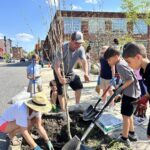
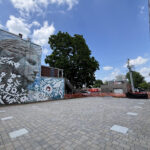
Forster Street in Harrisburg. Our editor’s tale of eating the pavement there was our sixth most-read online story of 2019.

Each December, someone asks me, “So, what were your most popular stories of the year?”

I usually don’t know—not exactly anyway.

But, recently, I looked them up—the most read online stories anyway, since we don’t know which stories gained the most offline interest via our monthly print magazine.

So, without further ado, on this Dec. 31, I give you our top-10 most-read online stories of 2019, as judged by the number of reader page views. Click on the links to read these popular posts, listed in countdown order in the spirit of New Year’s Eve.

10. “Defendant in H*MAC defamation suit arrested in alleged fakes news scheme”

9. “New York realty company buys Kline Plaza, hope to revitalize shopping center”

8. “Religious Movement: Christians in the Harrisburg area are eschewing old church buildings to meet in bars, homes and renovated commercial properties. What’s driving the change?”

7. “Death Cab for Cutie to play in Harrisburg, marking a return of major concerts to the city waterfront”

6. “Burg View: Frogger on Foster”

5. “Surrounded by friends, Elementary Coffee founder announces new location, new home”

4. “H*MAC sale complete: Venue now under new ownership, renovations to begin”

3. “Sustainable, Renewable”: Harrisburg native, football pro Garry Gilliam has big plans for Bishop McDevitt site”

2. “Out by Sunday: With a property sale, a homeless camp disbands and long-time residents wonder where to go next”

1. “Obituary: Naed Smith”

I was surprised by the variety of stories, which included a few business stories, a concert story, an arrest story and an obit. Stories concerning H*MAC took two spots.

All but one were online-only stories, likely because people only had access to those stories via our website, as opposed to also being able to read them in our print magazine. Also, most were breaking news stories. The exceptions were a magazine story about changing worship habits (“Religious Movement”), a blog/editorial (“Frogger on Foster”) and an online feature about a homeless camp (“Out by Sunday”).

We look forward to continuing to serve the greater Harrisburg community with many more features, breaking news stories and opinion pieces in 2020.

Happy New Year, everyone!

Lawrance Binda is co-publisher/editor in chief of TheBurg.

Continue Reading

Bethesda Mission promotes caring, community through #iheartHBG campaign

Starting today, you’ll see these coffee cup sleeves throughout the Harrisburg area.

Is the road to Harrisburg’s heart through its coffee?

For many in central PA, that just might be. So, for a fourth consecutive year, Bethesda Mission is launching its #iheartHBG campaign in coffee shops and cafes throughout the area.

The Harrisburg-based men’s shelter and community center today is distributing thousands of cup sleeves to 19 locations. The sleeves feature a heart and the #iheartHBG slogan with the goals of rallying community spirit during the long winter, raising funds and encouraging people to volunteer at Bethesda Mission.

“During the cold weather months in the ‘Burg,’ many of us seek a warm drink in a cozy setting,” said Scott Dunwoody, executive director of Bethesda Mission. “Local coffee shops offer this ambience, now with an added invitation to support Harrisburg and Bethesda Mission.”

Andrea Grove, owner of Elementary Coffee Co., said that she likes the dual purpose of supporting both the community and a good cause.

“I also like the collaborative aspect,” she said. “Very rarely do coffee shops collaborate in that way. So, it brings us together for this one month.”

Each location will have a designated jar for donations, which will be used to support the Women’s Mission Renewal Project, and for business cards in case patrons are interested in volunteering with Bethesda Mission.

Participating coffee shops include:

    • 3J’s Coffee Shop, 901 E. Main St, Palmyra
    • Brew Crumberland’s Best, 1903 Bridge St., New Cumberland
    • Brew Crumberland’s Best, 4902 Louise Dr., Mechanicsburg
    • Capital Joe, 416 Forster St., Harrisburg
    • Capital Joe, 36 West Main St., Mechanicsburg
    • Cornerstone Coffeehouse, 2133 Market St., Camp Hill
    • Dalicia Bakery & Coffee Shop, 1419 N. 3rd St., Harrisburg
    • Elementary Coffee Co., Broad Street Market, Harrisburg
    • Elementary Coffee Co., 256 North St., Harrisburg
    • Game Table Café, 4900 Carlisle Pike, Mechanicsburg
    • Little Amps, 1836 Green St., Harrisburg
    • Little Amps, 133 State St., Harrisburg
    • Little Amps, Strawberry Square, Harrisburg
    • Mellow Minded Cafe, 5943 Linglestown Rd., Harrisburg
    • The Pennsylvania Bakery, 1713 Market St, Camp Hill
    • St. Thomas Roasters, 5951 Linglestown Rd., Harrisburg
    • Tomato Pie Café, 3950 Tecport Dr., Harrisburg
    • Urban Churn, 1004 N. 3rd St, Harrisburg
    • Yellow Bird Cafe, 1320 N. 3rd St., Harrisburg

Bethesda Mission also encourages coffee shop patrons to post pictures of themselves and their cups, along with supportive words for Harrisburg, on social media sites.

The campaign will continue through January or as long as the cup sleeves last, according to Bethesda Mission.

Bethesda Mission Men’s Shelter is located at 611 Reily St., Harrisburg, and their Community Center is located at 1438 Herr St., Harrisburg. For more information about the program, visit BethesdaMission.org/event/i-heart-hbg.

Continue Reading

New food options, competitions await at 2020 PA Farm Show

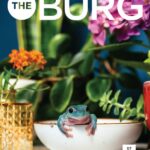
Have you noticed the adorable ducklings on the January issue of TheBurg? That can only mean one thing: Farm Show!

On Saturday, the 104th PA Farm Show kicks off at the Farm Show Complex in Harrisburg, with PennAg’s food court opening a day early.

The theme of the eight-day event is “Imagine the Opportunities,” which, according to the state Department of Agriculture, is meant to “celebrate how Pennsylvania agriculture affects our lives now, and how it will in the future, as well as how you can be a part of agriculture, no matter who you are.”

“Farm Show-goers will have a chance to explore the breadth of Pennsylvania agriculture, our heritage and the innovation driving our future,” said Agriculture Secretary Russell Redding. “Each and every one of more than half-a-million attendees will have the power to imagine how they can support, or be a part of, Pennsylvania agriculture’s bright future.”

The 2020 PA Farm Show will feature nearly 6,000 animals, 10,000 competitive exhibits and 300 commercial exhibits. The event is designed to showcase the quality and breadth of Pennsylvania’s agriculture industry and the people who make it thrive.

As always, the Farm Show has a few new items this year. Among them is Chiques Creek hemp tea, which is made with hemp seed oil, not CBD. And the Mushroom Farmers of PA will serve up a new “Philly Port Sandwich,” made from Portabella mushrooms. On the meaty side, the PA Livestock Association is adding gluten-free meatballs and a new “sausage of the day.” For dessert, fried berry Oreos will be added to the extensive selection of sweets.

The craft beer competition, which debuted last year, returns in 2020, and attendees can sample some of the contest winners.

On the live animal front, the annual rabbit competition will expand to include Siamese Sable Britannia Petites, a very small breed that tips the scales at just 2½ pounds. The youth competition is also multiplying, with new poultry, dairy cattle, breeding sheep, goat and alpaca categories.

The 2020 PA Farm Show takes place at the PA Farm Show Complex, Cameron and Maclay streets, Harrisburg. It runs Jan. 4 to 11 from 8 a.m. to 9 p.m. daily, except Sunday, Jan. 5, when it runs 8 a.m. to 8 p.m., and Saturday, Jan. 11, when it opens at 8 a.m. and closes at 5 p.m. Admission is free. Parking in Farm Show Complex lots is $15. The PA Preferred Food Court in the GIANT Expo Hall opens for a public preview from noon to 9 p.m. on Friday, Jan. 3.

For all the details of the 2020 Farm Show, visit www.farmshow.pa.gov.

Continue Reading

Land of Opportunity? Nearly two years ago, much of Harrisburg was dubbed an “opportunity zone.” Has anything developed?

Market Street

Opportunity Zones. Heralded by some as the “second coming” for economic development. Derided by others as a cozy tax shelter for the uber-wealthy.

In any case, opportunity zones were supposed to drive investment into poorer and underdeveloped areas. So, how is the darling of President Trump’s 2017 tax reform working out locally?

In 2018, six of Harrisburg’s census tracts—about half of the city—were dubbed “qualified opportunity zones.” These zones cover much of downtown and Allison Hill, as well as part of Midtown and Uptown.

Almost two years later, no known projects have surfaced in the city. But, say developers, stay tuned. Something still might be brewing.


Opportunity Zones 101

Opportunity zones start with capital gains, the profits made on the sale of such assets as stock and real estate. Investors who put a portion of those gains into specially created “Qualified Opportunity Funds,” used to invest in economic development projects, can defer taxes until that investment is sold, or until Dec. 31, 2026. Investors who hold that investment beyond 2026 pay no taxes on those gains.

So, just what is an “Opportunity Zone?” Governors designated opportunity zones in their states. In each tract, the poverty rate had to be at least 20 percent, median family income could not exceed 80 percent of the state or metro area median, whichever was higher.

Among Pennsylvania’s 300 Qualified Opportunity Zones approved by the U.S. Treasury Department, six are in Harrisburg, with one creeping into Susquehanna Township. As TheBurg reported in 2018, they encompass downtown south of Forster Street, South Harrisburg, South and Central Allison Hill and neighborhoods along the Cameron Street industrial corridor.

The American public, in a sense paying for QOZs through the lost tax revenue, gets few glimpses into qualifying projects. Recipients of the benefit are not required to register, so the Pennsylvania Department of Community and Economic Development had no information on projects underway.

The Harrisburg Regional Chamber & CREDC doesn’t know if any existing projects in Harrisburg are allied with QOZ funding, said Director of Regional Workforce Partnerships Shaun Donovan, but “we do know people are looking for projects. That’s always a positive.”

Some potential investors with national ties have queried about potential sites for warehouses, which “weren’t fits” for the Harrisburg neighborhoods designated as QOZs, Donovan said.

Opportunity zone criteria land right in the wheelhouse of Harristown, the developer of residential and office projects in downtown Harrisburg. QOZ status could make a project “a slightly more attractive investment for outside investors,” said President and CEO Brad Jones.

“It’s another source, perhaps a catalyst of getting a project started,” said Jones. “It’s also creating a little bit of a sense of urgency.”

Harristown is “in discussions with some folks on one of the projects we’re working on” to fold in QOZ funding, Jones said. But “the details are tricky,” he said, especially because the IRS rolled out its rules slowly, in varied versions. Jones hopes the project can be sealed in the first quarter of 2020.

Smaller markets such as Harrisburg may struggle to make projects “pencil out”—a developer phrase for the math that shows a profitable bottom line. It is, said Jones, “obviously going to be harder to make the numbers work because the values of the real estate aren’t as high here as they would be in a tier-one city.”

“Our projects won’t value out as high, rental won’t be as high, but the cost of construction is still the same,” he said. “It makes the projects more difficult to do, but we sort of specialize in these kinds of difficult projects.”


Extra Layer

Opportunity zone projects are hitting the ground elsewhere in Pennsylvania—in Scranton, Erie, Coatesville.

In York, a planned, $169 million “Innovation District” meant to promote joint tech developments in energy, defense, 5G infrastructure and cyber security, is “like the poster child” for opportunity zones, said developer John McElligott, CEO of York Exponential Development.

The York project, dubbed York Plan 2.0, expands a robotics manufacturing plant across brownfields along Codorus Creek, avoiding gentrification or displacement and creating “good, walkable jobs in the center of the city,” he said.

McElligott called QOZs a “catalyst to masterplan the whole triangle.” A project that started at 240,000 square feet ballooned up to 768,000 square feet because the QOZ “helped accelerate acceptance for the scope.” He has aligned the project with a message of American competitiveness in manufacturing, for “a strong narrative that ties closely to why the (opportunity zone) legislation was passed.”

“There are investors looking at our project now that probably wouldn’t have before,” he said.

York city officials have jealously guarded the site for years, rejecting proposed projects that didn’t maximize its potential, said McElligott.

“The metrics on real estate are not hard to figure out if you don’t really care about what’s going in there,” he said. “If you care about what’s going in there, you need a different level of patience and grit.”

Wormleysburg-based Integrated Development Partners has “looked at a few projects, but they almost have to pencil out without the opportunity zone,” said Managing Partner Jonathan Bowser. “It becomes an extra layer of incentive. The projects we looked at, none of them were enticing enough to launch without the OZ.”

The typical challenges of city development—parking, high costs of services, high tax rates—also present barriers to taking advantage of QOZs, said Bowser. While the QOZ can attract capital, developers “still make our money on the underlying performance.” Even before QOZ funding is added, viable projects must generate greater return than the developer’s investment.

“We typically like to look at the project without the incentive, because you just don’t know,” Bowser said.

In central Pennsylvania, “there are probably more people shopping for projects than there are projects that are close to being shovel-ready,” Jones said. “This sort of matchmaking game has been somewhat slow to create real opportunity zone success stories so far here.”

But the ever-optimistic Jones said that Harristown is among those probing QOZs for their original intent—opportunity.

“I don’t know if we’re going to be able to make it work or not,” he said, “But we’re going to try.”

To learn more about Qualified Opportunity Zones, visit www.dced.pa.gov, www.irs.gov or the many online stories that address them.


Continue Reading

Son Run: Mechanicsburg dad runs 200-plus miles to increase pace of pediatric cancer research.

It’s not every day that your teenager texts you uplifting messages like, “I’m extremely proud of you,” and “You’re a hell of a human,” and “Love you, Dad.”

There was also, “Thanks for letting me use the Jeep—I put $30 [of gas] in it.”

Those texts “were like fuel,” said Mike McCauley, which inspired his run throughout the first weekend of November. And it was the run of a lifetime by the 55-year-old Mechanicsburg dad, a run dedicated to his 17-year-old son Lachlan.


Retraced the Path

“As I evolve in my running, I want my miles to have purpose,” said McCauley, a real estate appraiser and lifelong runner who grew up in Harrisburg. “And I thought, ‘Wouldn’t it be cool to raise awareness, to run through my son’s cancer journey, his full circle of treatment?’”

So, this past fall, McCauley plotted a 210-mile circular course—from the Penn State Health Milton S. Hershey Medical Center to Philadelphia’s Wills Eye Institute, Children’s Hospital of Philadelphia (CHOP) and then back to Hershey.

The plan was a carefully guarded secret until he began running on Oct. 31. Then it went viral in the Facebook group “Endure 4 a Cure,” which tracked McCauley’s progress and grew to nearly 2,500 members. And that’s how he wanted to reach people—personally, one-on-one.

“I wanted to make a big statement, to have this grow organically on social media because raising awareness is about developing compassionate hearts and minds,” he said.

The awareness is the “war” against pediatric cancer, including his family’s personal battle, which started in the fall of 2006. At the dinner table, then 4-year-old Lachlan’s eye looked glassy.

McCauley then recalled the ensuing “slow motion” series of events. A local eye exam led to an MRI in Hershey, appointments and surgery at world-renowned Wills Eye, then treatment at CHOP. The diagnosis? Rhabdomyosarcoma, an aggressive and rare cancer, which caused a tumor in the orbit of Lachlan’s eye.

Thirteen years later, McCauley’s footsteps retraced the same path on the diagnosis dates. Many of his fellow ultra-runners took turns running by his side for the four-day weekend. One of them was Leo Lutz, 49, of Harrisburg. He left work on Friday, hopped on an Amtrak train and headed to Philadelphia to join McCauley for 40 to 50 miles.

“This idea—all of it made complete sense” Lutz said. “You have to understand something about ultra-runners—you don’t say no to challenges.”


Like A Manhunt

Running into Philadelphia on Kelly Drive, Lutz recalls a “crazy, magical” moment that buoyed their spirits.

A running group passed them, going the opposite way. All of a sudden, one of the runners spotted McCauley and called out, “Hey, you’re that guy from Hershey.”

That’s when McCauley knew that his social media was working. Pacers and crewmembers posted, monitored and read, encouraging Facebook messages to McCauley along the way or in between meals and naps in the RV.

Kelly Spreha, Harrisburg Area Road Runners’ vice president, was a critical crewmember—she drove the RV that was never more than 10 miles away from McCauley. It was a tall task since the running route followed busy roadways, plus off-road paths such as the Schuylkill River Trail. Oh, and it was only the second time in her life that she’d driven an RV.

Many “serendipity stars aligned” along the route, said Spreha. For example, when they needed to plug the RV in overnight, they luckily found a restaurant where the manager—also a runner—obliged.

“Trying to navigate through the narrow streets of Conshohocken was the biggest challenge,” she said. “Outside of navigation, the biggest challenge was dropping pins for the pacers to find us—it was like a manhunt.”

Spreha stocked the RV with nutritional supplements—meals such as quesadillas, plenty of coffee and even pickle juice, which relieves muscle cramps.

How did McCauley feel physically?

“You can’t print what I would tell you,” McCauley said. “I’d never had pain that basically permeated through my bones.”

But he knew that Lachlan was awaiting his return to Hershey.

“He hugged me tight,” he said. “He was beside himself. And he said, ‘I knew you were going to do it.’”


Go Together

Today, Lachlan is a 17-year-old senior at Cedar Cliff High School who plays rugby and has perfect vision. McCauley calls him a “gentle giant.” He worries about his son’s future—which might include secondary cancers—and he’s frustrated by the slow pace of cancer research.

“A softer approach isn’t who I am,” McCauley said. “We need to do more cause kids are dying, and I know that’s harsh, but pediatric cancer is the number-one killer of kids under 16. The families are frustrated by the federal government giving less than 4 percent of [NIH] funding to pediatric cancer research.”

McCauley encouraged Endure 4 a Cure fans to support two organizations—Four Diamonds and the Emily Whitehead Foundation—and they responded with nearly $8,000.

“The five-year survival rate for children with cancer has increased to more than 80 percent, but many of those children may have long-term side effects from the toxic effects of what we call three pillars of traditional treatment—surgery, chemotherapy and radiation,” said Autumn Ghigiarelli, executive director of the Emily Whitehead Foundation.

The Philipsburg foundation may hold the key to the future of pediatric cancer treatment. It’s named for a Pennsylvania girl who was the first child in the world to receive innovative CAR T-cell therapy, which activated her immune system to attack and destroy cancer cells. Her leukemia has been in remission since her 2012 treatment at CHOP.

“There’s a saying that, if you want to go fast, go alone, and if you want to go far, go together,” Ghigiarelli said. “Not only does that directly apply to Mike, how far he went, and the people who supported him, but it’s also true for pediatric cancer treatment. If we all work together, we can get there.”


For more information, see fourdiamonds.org and emilywhiteheadfoundation.org. You can find the Endure 4 a Cure Facebook group at facebook.com/groups/endure4acure. Mike McCauley’s next adventures include several upcoming ultra-marathons and the April 20 Boston Marathon.

Continue Reading

Musical Notes: January Jumble

Let’s give ourselves a hand for making changes as we head into the new year.

I’m very into resolutions, at least for this month. While enjoying January, maybe work on that new project, make that wellness commitment to yourself, cultivate your creative side, get into better habits, or spend more time with your family.
It’s my hope that you turn some of that focus and energy toward the amazing music scene here in Harrisburg and continue to support local artists and venues that support our wonderful and inclusive community. Have a great start to your new year, and here are some shows to get it started right.


RICHARD THOMPSON, 1/25, 7:30PM, WHITAKER CENTER, $49.50-69.50
Another Grammy-nominated artist is making his way through Harrisburg, feeling hot after releasing his 19th solo album last year and scoring music for the movie, “The Cold Blue.” If you don’t know already, I’m talking about singer/songwriter Richard Thompson, who will grace the stage with his profound talent at Whitaker Center later this month. Back in 1967, he made his debut on guitar and vocals in the iconic British folk group Fairport Convention. While coming from a folk-heavy background musically, he is known as a gifted, multi-genre guitarist who isn’t afraid to get deep and dark with his lyrics. His remarkable talent earned him an Ivor Novello award for songwriting and composing and a lifetime achievement award from BBC Radio in 2006, and, in 2011, he was appointed an officer of the Order of the British Empire for his services to music. Throughout his career, he has won the hearts of many, but most of all, Britain’s. Maybe he’ll win your heart, too.


CHUCK PROPHET, 1/30, 7PM, NOTE BISTRO, $30
Every once in awhile, the comfy atmosphere of Note Bistro is transformed from restaurant to concert space with an intimate musical evening. This time, the celebrated Chuck Prophet brings his roots rock to 2nd Street. He’s known from his days with psych-rock group Green on Red in the ‘80s and continues a strong solo career today as an alt-country singer/songwriter. Recently, his music has been featured on shows like “True Blood,” “Californication,” “Billions” and “Sons of Anarchy,” and he’s worked with artists such as Warren Zevon, Kelly Willis, Lucinda Williams, Jim Dickinson and Alejandro Escovedo. His roots-rock style challenges genres, and his unique live performances showcase his talent. Check out his album, “No Other Love,” for an appetizer before the show. Then make your way to Midtown for this one and be sure to bring your appetite for some tasty dishes and tunes.


LETTUCE, 1/31, 9PM, XL LIVE, $31
Early last year, Lettuce played their hearts out at Whitaker Center, and, now, they’re back again. This time, they’re at XL Live, bringing their energetic fusion of sound inspired by a more jazzy, psychedelic side. This show is part of a tour for their newest album, “Elevate,” which is definitely worth a listen. Fun story: When they were starting out in the early ‘90s as undergrads at Berklee College in Boston, band members would ask jazz venues if they would “let us play,” which is where their name came from. Apart from Lettuce, current and past members have been involved with or toured with other acts such as Soulive, Rustic Overtones, Britney Spears, Lady Gaga, Robert Randolph & the Family Band, Dave Matthews and the Soul Rebels Brass Band. These genre-bending wonders close out the month and set a great tone for the rest of the year.

Mentionables
The Give Take, Jan. 4, River City Blues Club;
Mountain Road, Jan. 11, River City Blues Club;
Shoot for the Stars, Jan. 11-12, The Forum;
Third Coast Percussion, Jan. 15, Whitaker Center;
Ghost Light, Jan. 17, XL Live;
Winter Slaughterland, Jan. 18, JB Lovedraft’s;
Moon Hooch, Jan. 25, H*MAC Capitol Room;
Shawan and the Wonton, Jan. 30, Boneshire Brew Works

Continue Reading

All Aboard the Red Boat: Harrisburg’s newest restaurant features Asian fusion, family crew.

The roof leaked all the way to the basement when Nam Doan purchased the property on Reily Street in Harrisburg.

“It was a wreck,” Doan, 38, said.

But he knew what he was getting into. He’d been investing in Harrisburg real estate for the past eight years—especially rental properties—and renovating them.

For awhile, he’d been searching for a restaurant location that would showcase his wife’s culinary skills.

“I saw this building as an opportunity within a coming-up neighborhood, near HACC [Midtown], new apartment buildings and the new [federal] courthouse,” he said.

It also felt like perfect timing for his growing family—his 4-year-old daughter soon will start school.

The property housed a soul food restaurant about five years ago, but the kitchen’s range was the only thing that Doan found salvageable. Everything else had to be completely renovated and rebuilt.

After six months of intense work, he transformed the century-old property into Midtown’s newest restaurant, the Red Boat. It’s the seventh restaurant in a Vietnamese/Asian fusion franchise launched by a friend of Doan’s primarily in the Baltimore/D.C. area. Doan himself is Vietnamese—and his real name is actually Nam.

He describes the menu as “fast and casual” with updated Vietnamese classics such as pho and banh mi (traditional Vietnamese soup and sandwich, respectively).

The restaurant’s signature dish, “The Boat,” allows diners to choose a base (rice, salad or noodles), and add a protein (beef, pork, chicken, fried tofu, shrimp or Korean bulgogi beef), topped with a sauce (fish, sesame soy, Teriyaki or house sauce).

“We’re tweaking the main concept of the menu a little bit for Harrisburg, adding a few unique twists like hot dogs with an Asian twist,” Doan said.

The “Saigon Dog,” for example, is a beef frank dressed with pickled daikon and carrot, marinated beef (or another option such as fried egg), cilantro and stir-fried onion. Kimchi and bulgogi beef are added to the “K-Town Dog” and topped with toasted seaweed.

The fusion of the classic all-American hot dog with Asian flavors is symbolic of the restaurant’s name. “The Red Boat” pays homage to the phrase “boat people,” describing the exodus of Vietnamese refugees in the 1970s.

“Next time, I want to try the tacos—I’ve never had that before,” said Jeremie Vu, 39, a Harrisburg resident who lives a few blocks away.

Soft tacos are another unique Asian fusion option.

Vu, who is half-Vietnamese, said that he gravitates towards restaurants that celebrate his culture. He tried the pho and “Café du Monde” (Vietnamese iced coffee). So how does the Red Boat compare to others?

“It’s very good, right up there with all the best,” said Vu. “It has the traditional standbys but with some fun new elements, too.”

The Red Boat sits next door to the longtime Garden Vietnamese Restaurant, but Doan doesn’t see them as “competition,” since their menus approach Vietnamese cuisine differently.

Doan’s wife, Dung Le, was a cook in Vietnam. A trained pastry chef, she previously worked at the Beau Rivage Resort & Casino in Mississippi, where Doan was born and raised.

It was a job with Direct TV that brought Doan to the Harrisburg area eight years ago, and he decided it was a good place to put down roots.

“I love Harrisburg,” he said. “It’s beautiful with the river, and it feels like a big small city.”


Nice and Light
Now, it’s all hands on deck—Doan’s restaurant is bringing additional family members to the area.

“We’re very close,” said cousin Khoa Nguyen.

He greeted diners and took their orders behind the counter. The 27-year-old moved here from Mississippi in November to work at the restaurant.

During opening weekend, he said the three most popular dishes were pho, “The Boat” (“because it’s a healthy bowl”) and “the dogs.”

“Harrisburg feels like a small town where everybody knows each other,” Nguyen said. “Word is getting around fast [about the Red Boat],” said Nguyen.

The seasonings were just right to Dan Furci of Hummelstown. He enjoyed an opening weekend meal with his wife and found his “boat” with lemongrass chicken “perfectly seasoned.” He sampled his wife’s chicken pho as well.

“It was nice and light, with more of a Thai basil flavor,” he said.

The couple said they’d be back—they already have their next dishes picked out.

Seasonings and flavor are extremely important to Doan.

“I want people to know we don’t use MSG,” he said. “Some restaurants use it. It’s a cheaper way to add flavor without having to use more ingredients to make food flavorful.”

Capitol neighborhood resident Rick May stopped in during opening weekend, as well.

“The bubble tea was a unique experience—delicious,” he said.

As for his chicken pho, May declared it “the best pho in town.”

He and his wife have lived in Harrisburg for more than a dozen years.

“We like to support local businesses, and we’ve seen a lot of positive changes during the time we’ve lived here,” May said.

A rising tide does indeed lift all boats.

“I’m very excited about becoming a small business owner,” Doan said. “It’s very exciting. It’s lots of work, but we are getting lots of great feedback. So, we’re very happy with the outcome.”

The Red Boat is located at 306 Reily St., Harrisburg. For more information, visit their Facebook page or www.theredboatfusion.com.

Continue Reading

Happy Newsy Year: Join me in the time machine way back to–2019.

With the flip of the calendar, most people turn their focus to the year ahead, making resolutions and plans for the next 12 months.

Not this guy.

Each January, I use this space to review what made headlines in the year just ended. So, without further delay, here’s my look into the rearview mirror, a wildly subjective ranking of the top 10 local news stories of 2019.


10. So Many Murals
Historically, I’ve kicked off my annual top-10 list with a good news story—so why stop now? Last year, Sprocket Mural Works mounted its second Harrisburg Mural Festival, bringing world-class muralists into Harrisburg during the first 10 days of September. The result: big art, beautiful art, permanent art. Not long ago, a stroll up 3rd Street was a dull trek indeed, but now there’s so much to see, admire and Instagram. Who’s up for a selfie?

9. Going Up
Harrisburg has seen precious little new construction in many years, ever since the Reed administration’s creatively financed downtown projects. That’s now changing as a new federal courthouse rises on Reily and N. 6th and, a mile or so down the road, the 17-story Harrisburg University tower gets going. Last year, Harristown announced that it would like to join the party with a new office building on Market Street. However, it appears that this addition to the city skyline remains on the drawing board as the company awaits an anchor tenant.


8. Closing Time
In 2018, the Susquehanna United Methodist Conference announced it would close most of its churches in the Harrisburg area and consolidate congregations. Then, last year, it actually happened, with six churches hitting the market at the same time. You can add that inventory to several other churches, a couple of firehouses and a few school buildings, creating a mass of institutional properties for sale all at once. Brewery? Art space? Community center? What says you, Harrisburg?


7. In the Zone
Here’s how much of a city nerd I am—I love me some zoning (and some planning!). Variances, special exceptions, I can’t get enough. Seriously, land use interests me greatly, sometimes because there’s a fascinating underlying issue, but mostly because it typically means building, renovation and development. Planning and zoning issues really hit the news late in the year after a company called Seven Bridges Development asked the city to rezone a prime swath of Midtown Harrisburg, with an eye towards constructing mixed-used buildings. Soon after, the city itself introduced an ordinance to allow greater density in most residential zones. Both ordinances were later withdrawn, but they’re not dead yet. Watch for these planning and zoning issues to hit the burner again in 2020.

6. Off-Off Year
The 2019 primary election came in hot, with interest way up for the usually sleepy off-off-year contest. The campaign was marked by numerous debates with sizeable crowds, especially for the five contested school board seats. Residents responded, voting for accountability by tossing out all the school board incumbents. However, by the time November’s general election rolled around, the cause had lost its mojo, as, in the interim, state receivership had stripped the board of most of its power. It now will be interesting to see, for 2020, if Receiver Janet Samuels involves the new, reform-minded board members or continues to rule by decree.

5. 3rd and Done
What’s up with 3rd Street? Over the last few years, residents and readers have asked me that question again and again. Their concern is understandable, as the 3rd Street corridor project has taken much longer than expected. But, finally, it’s finished—milled, paved and striped. Some of you may have even grown to like the bump-outs (or maybe not). In any case, I consider 3rd Street just a warm-up for a question I expect to be asked during 2020 (and 2021 and maybe 2022): what’s up with 2nd Street?

4. Road Gluttony
In editorials, I’ve often criticized PennDOT for sitting on its collective hands while cars crash and pedestrians get picked off on its roads in Harrisburg. But, this year, the state transportation agency showed that it can be equally obtuse when it decides to take action. In a scheme that only Robert Moses could love, PennDOT proposed doubling the footprint of I-83, which would further devastate south Harrisburg, already cut to ribbons by roads and ramps. The city fought back with a consultant’s report that recommended modifying the plan to ease the negative impact. Some Harrisburg officials claimed that PennDOT was listening, but, as past is often prologue, I remain skeptical until shown otherwise.

3. Fiscal Fortune
Over the years, Harrisburg finances have been the most consistent topic on this annual list. I believe it’s made my top-10 each year since 2011, when I started the ritual. However, whereas the city’s fiscal situation was once a bad (OK, horrible) news story, it’s now verifiably good news. In 2019, the city again ran a substantial budget surplus and, in June, finalized a five-year financial plan with the state-appointed Intergovernmental Cooperation Authority. Looking ahead to 2020, Harrisburg plans to use its surplus to boost pay for police officers and to pay down debt. It also expects to exit Act 47 this year, finally shedding the moniker of “distressed city.”

2. Water Everywhere
News-wise, I once regarded Capital Region Water as something of a backwater (pun intended)—until, suddenly, it wasn’t. In the spring, I heard rumors that the water/sewer authority planned to implement a new stormwater fee to help fund its 20-year plan to drastically reduce pollutants into area waterways. Then CRW briefed me on the proposal. Then the mayor, in response, told me he might sell the whole darn water system. Then all hell broke loose. For the next two months, upset residents urged the city not to privatize the water system. In a surprise ending, the parties suddenly de-escalated and agreed that a stormwater fee would be imposed but not until July—and that privatization was off the table. So, heading into 2020, there seems to be peace in the (Susquehanna) valley.

1. School Daze
In recent years, I’ve struggled with what subject should rank as my No. 1 news story of the year. Not this time. Without question, the biggest local story of 2019 was the unceasing tumult in the Harrisburg school district. The year began with the appointment of a controversial district solicitor, proceeded with city voters giving the sitting school board the heave-ho and culminated with the June takeover of the district by the state. Since then, the news tempo has moderated, as the state-appointed receiver has ruled essentially by decree. However, a November financial update, which revealed a substantial budget deficit, again underscored the prior administration’s profound dysfunction.

As I said above, this list is my own subjective ranking of the local news for 2019. How subjective? Apparently, very much so, as none of these stories were among our most read online, as judged by readers voting with their clicks.

What were the most popular? Here are TheBurg’s top-five, most-read online (not necessarily magazine) stories of 2019:

5. A January online feature that Elementary Coffee would build out a new, brick-and-mortar location on North Street.
4. A May story on the sale of H*MAC.
3. A November story about major redevelopment plans for the old Bishop McDevitt building.
2. A September feature about the closing of a homeless camp on Cameron Street.
1. A May story on the sudden death of Naed Smith, the long-time manager of the Catholic Worker House on Allison Hill.

So, here we have a business story, a couple of development articles, a community feature and, basically, an obit—not a single wonky city government story among them. Oh, heck, what does your editor know anyway?

Lawrance Binda is co-publisher/editor-in-chief of TheBurg.

Continue Reading

On the March: With a new facility, the Salvation Army expands in size and services.

This past Thanksgiving, the Salvation Army had 60 turkeys delivered, adding to their already large collection of birds to be distributed for the holidays.
Around 600 boxes were packed with the November feast’s staple items—stuffing, corn and mashed potatoes—enough for 300 local families in need.

Their spacious warehouse area and large gym made filling boxes and storing supplies easy. However, the prior year, they wouldn’t have been able to accept those extra 60 turkeys.

“This is a place you’re not going to find anywhere else in Pennsylvania,” said Kathy Anderson-Martin, director of resource development, showing a visitor around the new home of the Salvation Army Harrisburg Capital City Region.

Their old facility in Midtown was just that—old—or, for a better choice of words, well loved. For more than 60 years, the Green Street building was known in the community as the place to go for a hot meal, grocery shopping or job assistance, but the organization was outgrowing it. It was time to move on.

In September, the Salvation Army moved to its newly built center on the 500-block of S. 29th Street—a building that could’ve swallowed up the last one. From the closing of the first space to the opening of the second, there was only a weeklong gap.

“They really haven’t skipped a beat in services,” added Anne Deeter Gallaher, advisory board vice-chair.

The Salvation Army Capital City Region serves more than 25,000 breakfasts each year, assists with over 115,000 food pantry meals and, through its self-sufficiency program, helps around 1,000 households.

The new building houses an updated kitchen for the breakfast program, a food pantry, a family services wing with private offices for case management, a chapel and classrooms for youth programs.

The food pantry is one of the most exciting features for Anderson-Martin, who sees it as a more dignifying experience than it previously was for shoppers.

“People can shop for what they can use and need,” she said. “We want them to have better food. We don’t give out anything we wouldn’t eat ourselves.”

Most of the food comes from the Central Pennsylvania Food Bank or is rescued from stores like Costco. Anderson-Martin explained the Salvation Army’s commitment to having 75 percent of their food be fresh.

With their large, glass-door refrigerators and rows of shelves, shoppers can peruse the aisles for items that fit their needs and their tastes. Occasionally, the organization holds cooking demonstrations, as well.

“People are empowered to come in and choose,” Deeter Gallaher said.

Besides regular services, they’ve added an arts and science classroom for STEM activities and a nutrition education kitchen with eight teaching stations. In the kitchen, families, as well as children and adult groups, can learn how to cook healthy meals by a registered dietician.

Jenny Gallagher Blom, director of programs and operations, remembers the first few days of the new programs opening.

“There was this buzz in the air,” she said. “It was so nice to finally see all of this happening here. This is all worth it.”

Salvation Army now has the capacity to host youth programs in its own building, which includes a playground, instead of alternative places such as schools. There are music, performing arts, church programs and Thrive 506, an after-school program for kindergarten through sixth-grade students. They’ve also partnered with 3 Star, a basketball mentorship program, to host practices and games in their new gym.

Capital Area Head Start also has classrooms for their students there.

The project totaled $12 million, funded through many local donors, corporations and foundations, as well as public grants through Community First Fund, Impact Harrisburg, Dauphin County and the PA Redevelopment Assistance Capital Program (RACP).

With a space this big, numerous staff and volunteers are required to keep it running smoothly. Denise Shade is one volunteer who has been involved for four years.

The huge building, she admitted, took some getting used to, but she’s in awe of how much nicer it is. For her, the Salvation Army has always felt like home.

“I was always very fortunate growing up,” she said. “I come here and see people who are totally different than me, and I see how the Army helps them.”

That’s exactly why Anderson-Martin worked so hard on the building project for a decade—because the Salvation Army impacts so many people.

She pointed to a small mound of change on her desk and recalled the story of a man who came in to receive help around the holidays. He was stopping by on his way to the bank. After the Salvation Army provided him services, he dropped a pile of change on the desk in front of him. He said this was the money he was going to deposit, but he wanted to donate it instead.

Anderson-Martin keeps those coins on her desk to remember that story and why her work matters.

The Salvation Army Harrisburg Capital City Region is located at 506 S. 29th St., Harrisburg. For more information, visit www.pa.salvationarmy.org/harrisburg-pa/

Continue Reading

A Study in Brilliance: Exhibit offers context, understanding to Violet Oakley’s stunning Capitol murals.

“The Constitutional Convention 1787”

If you’ve ever toured the PA Capitol, you probably agree that Violet Oakley’s spectacular murals are a highlight.

You now can learn even more about the painter and her famous works with a new exhibit at the State Museum of Pennsylvania, one that places her murals into personal and historical context.

“One of the most fascinating things about the studies is watching her think through the narrative of these murals and seeing how she changes her mind along the way,” said Fine Arts Curator Amy Hammond.

As the first American woman to receive a government mural commission, Oakley spent much of the early 20th century painting 43 murals throughout the Capitol. The new exhibit focuses on the nine murals in the Capitol’s Senate Chambers, blending in Oakley’s significant historical legacy and profound artistic ability.

Dr. Curtis Miner, exhibit co-curator, said that Oakley embodied the “New Woman” ideal of the early 20th century, in that she was skillfully entering professional spaces that had historically been reserved for men.

“When she was asked to take on the project after the former artist had passed, she said, ‘Yes, but I will be getting the same pay, correct?’” said Miner. “She did not see gender as a barrier and asserted her opinions freely.”

In 1982, the museum acquired 400 pieces when the Violet Oakley Memorial Foundation dissolved. The Senate Chamber mural studies were chosen not only for their scope and scale, but for their timing. Oakley created these murals during both World War I and the apex of the women’s suffrage movement.

In general, civic murals tend to represent milestones and broad themes, such as battles won and the forward march of progress, Miner said.

“She followed this well-established tradition but with her own twist,” he said. “She used these murals to tell her version of Pennsylvania and U.S. history.”

Miner and Hammond pointed out many examples of this throughout the exhibit. Oakley, for instance, began her murals with Quaker ideals of tolerance in panels depicting the freeing of slaves and the early interactions with Native Americans. She also made women and African Americans visual focal points in scenes such as the Constitutional Convention and the Gettysburg Address.

“With these studies, we have been able to bring fragments of her work together in a meaningful way,” Miner said.

The exhibit’s title, “Picturing a More Perfect Union,” comes together in the final portion, which focuses on the largest of these murals, “Unity.”

In this mural, the armies of the earth, depicted in modern, World War I attire, and the people of the earth lead up to the figure of Unity, whose outstretched arms seek to bring them all together. This portion of the exhibit is accompanied by a video with recordings of Oakley’s own voice and drawings of the Unity figure in various positions.

Both Hammond and Miner said this was Oakley’s radical message from Pennsylvania to the world—a kind of Utopian vision of peace and international human dignity.

Hammond compared the wide platform that Oakley had at such a young age to modern social media influencers, in that she used this platform to share her ideals of peace and tolerance, which still can be applied to current events today.

“She wanted her work to stand the test of time,” Miner said. “And it does.”

“Picturing a More Perfect Union: Violet Oakley’s Mural Studies for the Pennsylvania Senate Chamber, 1911–1919” runs through April 26 at the State Museum of Pennsylvania, 300 North St., Harrisburg. For more information about the exhibit, visit www.statemuseumpa.org.

 In conjunction with the exhibit, Jason Wilson, historian for the Pennsylvania Capitol Preservation Committee, will conduct tours on the history and preservation of Violet Oakley’s Senate Chamber murals. These tours will take place in the state Capitol on Sunday, Feb. 16, 2 to 3 p.m., and Friday, Feb. 21, 12:15 to 12:45 p.m.

Continue Reading