Weekend Roundup with Sara Bozich

Happy Weekend!

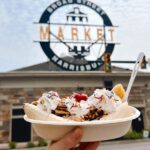
Coming off of last week’s Launch Party, I have zero plans for my weekend. There are some cool things going on, however, including Hibrewnation in York and A Red Carpet Evening at Midtown Cinema for the Oscars. I’ll prob just hang home, hit the market, cook some food, and make some popcorn. We have a bunch of events starting next week, so I’ll take my rest where I can get it!

What are you doing this weekend?

(more…)
Continue Reading

Film screening, discussion to address subject of housing inequality

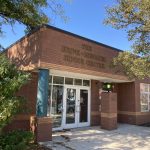
“Segregated by Design” will be screened next week at the Historic Harrisburg Association Resource Center.

Next Tuesday, it’ll be movie night at the Historic Harrisburg Association, though one with a serious issue at its core.

The Pennsylvania Downtown Center, in collaboration with HHA, is hosting a screening of “Segregated by Design,” a documentary about the historic housing inequalities that African Americans have faced.

“We are trying to be more aware of diversity, equality and inclusion,” said PA Downtown Center Executive Director Julie Fitzpatrick. “This is an issue we are all dealing with.”

The film comes from award-winning director Mark Lopez and draws inspiration from author Richard Rothstein’s book “The Color of Law.” Rothstein made an appearance at Midtown Scholar Bookstore for a reading last March.

Although only a short, 30-minute film, “Segregated by Design” tackles many big topics. It brings up issues from the past, such as redlining and blockbusting, methods used to segregate communities, and shows how they still affect neighborhoods today.

Following the screening will be refreshments and a facilitated discussion amongst attendees, including local realtor Beck Joyner, who is heading up the East Uptown Front Porch Project, and Elm Street project manager Samantha Pearson. Both women are active in community revitalization in the Harrisburg area and statewide.

According to Fitzpatrick, the Downtown Center plans to do more events like this.

“It’s always a great thing when you can bring people together in conversation around a common goal,” she said.

The event is free and open to the public, though registration is encouraged.

Historic Harrisburg Association is located at 1230 N. 3rd St., Harrisburg. For more information on the Pennsylvania Downtown Center or to register for the screening, visit their website.

Continue Reading

Honoring Hari: Inaugural Hari Jones Hidden Histories Program to address, “Who caused the Civil War?”

It’s a lingering question, more than 150 years old: Who caused the American Civil War?

The topic will be discussed during two programs offered by the Dauphin County Library System this month.

“It’s no longer a debate—the facts and evidence show the answer is slavery,” said Scott Hancock, associate professor of history and Africana studies at Gettysburg College (pictured).

Hancock will be speaking at Harrisburg’s East Shore Area Library the evening of Feb. 11 and, a week later, at the city’s Madeline L. Olewine Memorial Library the evening of Feb. 18.

“Black men, women and children—the most powerless people at the time—making the decision to escape to the north causes the Civil War,” Hancock said. “How and why people at the bottom of society can cause a war is the focus of the talk.”

Titled “The American Civil War: A War for Freedom,” the event is the first in what the library is calling the “Hari Jones Hidden Histories Program.” In honor of Black History Month, the program pays homage to noted historian Hari Jones, who impacted the lives of many in Harrisburg and passed away in 2018.

“Hari was a guy with a salt-and-pepper beard and dreadlocks from Oklahoma—a Marine who was conservative and Constitutional,” said Dauphin County Commission Chairman Jeff Haste. “And Hari came to love Harrisburg because of the history that was here.”

It was Haste who approached the library with the idea to honor Jones’ legacy. Jones served as assistant director and curator at the African American Civil War Freedom Foundation and Museum in Washington, D.C., and as a board member for Harrisburg’s National Civil War Museum. He was also instrumental in guiding the county’s Civil War Sesquicentennial Celebration in 2013 and MLK 50 Commemoration in 2018.

When it came to history, Hari Jones was especially known for one catch phrase: “Go to the original sources.” “I heard that a hundred times from him,” Haste said.

That encouragement, to dig into history and locate original historical accounts and documents, describes Hancock’s methodology as well.

“Hari Jones focused on primary sources and using those to bring out the stories of the marginalized, those we don’t usually think of having important roles in society,” Hancock said. “Most of what I do is like that.”

In addition to the program series, the library has established the Hari Jones Hidden Histories Collection, a curated companion collection of books and materials.

“We didn’t want to put up a plaque—we wanted to do something that was a living honor to him,” said Karen Cullings, the library system’s executive director.

Public programs where people can explore new ideas—such as the Hari Jones Hidden Histories Program—are, in fact, an essential component of the library system’s strategic plan, about to be released.

“We’ve been going out, talking to community groups and individuals about what kind of community they want to live in,” Cullings said. “One of the most common themes to come out is that people feel disconnected and isolated. So, we want to give people the opportunity to reconnect and the ability to talk about different topics…with the library serving as a community catalyst for positive change.”

And learning about history, Hancock said, helps people better understand the present.

“People who often say history is all in the past…often have a selective desire to ignore certain parts of history,” Hancock said. “If you don’t understand why we still have residential segregation or schools, or how those things developed, any answers you have for meeting those problems will be oversimplified and won’t work.”

Additionally, “hidden histories” are still being discovered, revealing new insights and casting history in a new light.

“Related to my own personal identity and belief system, I would argue that we’re all made in the image of God, so all stories matter,” Hancock said. “Black women and men in the poor bottom of society are important…giving voice to those stories matters because that’s how we would all feel.”

“The American Civil War: A War for Freedom,” the inaugural Hari Jones Hidden Histories Program, will be held at the East Shore Area Library on Feb. 11 from 6:30 to 7:30 p.m. and at the Madeline L. Olewine Memorial Library on Feb. 18 from 6 to 7 p.m. Registration is available at dcls.org/harijones.

Continue Reading

Rockers Cage the Elephant booked to play in Riverfront Park

Harrisburg University is quickly filling up the summer outdoor concert calendar, announcing a third Riverfront Park show for June.

Cage the Elephant, a two-time Grammy Award-winning band, is slated to play on June 18, sliding into the calendar between two other recently announced shows—Of Monsters and Men and Steve Aoki/Deorro.

Formed in 2006, Cage the Elephant currently consists of lead vocalist Matt Shultz, rhythm guitarist Brad Shultz, lead guitarist Nick Bockrath, guitarist and keyboardist Matthan Minster, bassist Daniel Tichenor and drummer Jared Champion.

The band has five studio albums under their belt, most recently, “Social Cues,” which was released last year. That album recently earned the band the Grammy Award for best rock album, the second time they’ve received the prestigious award.

The HU concert series has brought large-scale concerts back to Riverfront Park since last June, when Death Cab for Cutie played. HU has now announced its third show in the park over just the past three weeks.

Tickets for Cage the Elephant go on sale at 10 a.m. on Friday. For more information or to buy tickets for HU Concert Series shows, visit the concert series website.


Continue Reading

Open Stage’s “Amelie” offers delightful night of “welcome whimsy.”

Gabriella DeCarli stars in Open Stage’s “Amelie.”

If you were lucky enough to see Amélie during its short run on Broadway, “you would have seen the main character introduced to thunderous applause,” said Director Stuart Landon.

In the spirit of Open Stage’s intimate setting, its 7-year-old star draws on the floor with a green crayon while the audience files past her.

The poignant intimacy and vulnerability of young Amélie’s character draws the audience in to her lonely childhood, sheltered into a home-school setting in 1980s Paris with only a goldfish named Fluffy for a friend. Amélie‘s mother, whom Fluffy calls “crazy” in song, teaches Amélie “Zeno’s Paradox”: once you get to the halfway point between two places, there becomes a new halfway point. The point is always shifting, and you never quite get there. This paradox haunts Amélie as she grows, becoming an allegory for holding herself back.

With a distant father and a mother who openly wishes for a boy, Amélie feels like she never measures up. Though Amélie’s coming-of-age feels awkward and melancholy to step through with her, it is spread thickly with mood-lightening farcical humor—offbeat with touches of heartbeat. Many jokes are the satisfyingly inappropriate kind you feel ashamed to publicly belly laugh at, and equally glad your kids didn’t catch you.

After Amélie’s mother dies and she still can’t connect with her father, Amélie meets her older self and moves to Paris. It’s common for 7-year-old Amélie to appear in the same scene with her adult self.

“This memory play, this powerful connection – Amélie is the kid inside all of us,” Landon said. “She’s that inner child we all check in with.”

Amélie’s inner child follows her to Paris, where she lands a job waitressing in a cafe. Her coworkers are as colorful and salty as the cast of regular customers who pass their time together. Their collective hero is Lady Diana, whose death in 1997 proves to be Amélie’s next turning point. She shares that feeling of worthlessness and search for belonging with Diana, driving Amélie toward an altruistic need to perform random acts of kindness for the people in her life. She helps reunite them with lost items, lost loves and even helps her father find new love.

One of the people Amélie tries to help is her crush, Nino. Instead of outright returning his missing photo album full of photo booth strip photos, she sets up an elaborate scavenger hunt in which she snatches the book back repeatedly in much the same way Lucy yanks the football away from Charlie Brown. While she searches for the confidence to admit her own feelings for Nino, she struggles to get over her fear of getting closer to him more than half-way.

The bittersweet stops along her journey take her all over the city, complete with props from a local sex shop, a cameo from Elton John, and dancing doo-wop nuns. You really have to see the play to appreciate how all these capricious elements weave together.

Most of the musical’s actors are seasoned, familiar faces around Harrisburg’s acting troupes. They each play their roles professionally and hilariously – gliding in and out of multiple costume changes, supplying snappy humor that you don’t see coming.

Gabriella DeCarli, the adult actress who plays Amélie, brings the audience a touching performance, with a voice simultaneously adorable and tinged with sadness. The younger co-star who played 7-year-old Amélie, Rosemary Campbell, is perhaps less recognized due to her age, but still has credits in her bio.

“She is a pro. She’s magic,” Landon said. “It’s awesome working with her.”

Marketing Manager Rachel Landon said, “Amélie is much lighter than the plays we normally produce at Open Stage.”

Indeed, Amélie is an uplifting bit of welcome whimsy.

Amélie runs through March 8 at Open Stage, 25 N. Court St., Harrisburg. For more information and tickets, call the box office at 717-232-6736 or visit www.openstagehbg.com.

Continue Reading

The Week that Was: News and features around Harrisburg

Some weeks are more news-heavy than others. Case in point: this past week, which saw several important local news stories, including the death of former Mayor Steve Reed. As we do each Friday, we’ve summarized and linked to our coverage so you can catch up on any stories you may have missed.

Frederick Douglass biographer David Blight is set to appear this weekend at Midtown Scholar Bookstore to kick off Black History Month in Harrisburg. The book earned Blight the 2019 Pulitzer Prize in history. Read our February magazine story to find out what to expect.

Harrisburg police are appealing for community help after several homicides over the past week. Police held a press conference to offer some details of the crimes and encourage tips, which we report in our online story.

Harrisburg University concert series announced its second outdoor show in two weeks. In late June, DJ Steve Aoki will grace the stage in Riverfront Park, joined by Deorro, an LA-based DJ. Get all the dancing details from our online story.

Harristown received final approval this past week for its newest residential project, the conversion of an old office building to apartments on Market Square. Read our news story to find out the details and how close the City Council vote was.

KOTA The Friend is headed to Harrisburg—or at least his new store is. The hip-hop artist has purchased a Midtown building and expects to open a shop and recording studio there. Get all the info from our online story.

Michael Parr is a tailor with an eye for fashion. He’ll chat with you about your style and preferences before creating a new piece or a new wardrobe. Check out our feature story from the January magazine.

Mike McCauley recently had the run of his life, logging a circular, 210-mile course in honor of his teenaged son and to raise awareness of pediatric cancer. Our January feature story tells of his journey to Philadelphia and back.

Sara Bozich has more than 100 ideas for things to do as we flip the calendar this weekend into February. Check out her list, then head on out.

Sculpt Pilates opened last year in a newly renovated studio on Harrisburg’s Front Street. In a magazine feature story, our writer caught up with the owner to find out her approach to fitness and what clients can expect.

Stephen Reed, Harrisburg’s seven-term mayor, died last weekend, prompting tributes from across the city. Reed helped transform downtown Harrisburg, but stirred up plenty of controversy in the process. Read what some had to say.

Susquehanna Art Museum held an anniversary bash and revealed some positive financial news. Our arts blogger let us know what happened, with a nod to the Millworks, as well.

TheBurg dropped our latest issue on Friday. The February edition focuses on African American history, culture and business, along with our usual mix of community news, features and events. Pick it up throughout central PA or click here to read it right now.

Do you subscribe to TheBurg Daily, our daily digest of news and events delivered right to your email inbox? If not, subscribe here!

Continue Reading

Harrisburg police appeal for community help as bureau works to solve homicides, shootings

Harrisburg police Sgt. Kyle Gautsch spoke to the press this morning, as Commissioner Thomas Carter looked on.

Harrisburg police are asking for the community’s help as detectives try to solve several homicides over the past few days.

In a press conference this morning, Sgt. Kyle Gautsch, the bureau’s public information officer, urged city residents to offer information on three seemingly unrelated homicides and several other shootings.

“If you see something or know something, please call us and let us know,” he said. “We need the community’s involvement. The community is a crucial part of these investigations.”

The homicide victims over the past week are:

  • Alrahman Williams, 34, of York, who was shot on the 600-block of Benton Street on Jan. 25.
  • Tonya Dorsey, 28, of Harrisburg, who was found dead from blunt-force trauma following a fire call at Hoverter Homes on the 1200-block of Oyler Street on Jan. 25.
  • Jason Hill Jr., 22, of Harrisburg, who was shot on the 500-block of Curtin Street on Jan. 28.

No arrests have been made in these homicides, and all remain under investigation, Gautsch said.

“We do have details on all of these, but I’m not going to pronounce what we have,” he said. “I can’t go into the details of the investigations.”

In addition, there were three shootings yesterday:

  • a 21-year-old man on the 400-block of S. 14th Street
  • a 17-year-old man at 13th and Shrub streets
  • a 38-year-old man on the 2000-block of Penn Street, shot during the “sale or transaction of some merchandise”

Gautsch said all three shooting victims are expected to survive.

“As you can tell, it’s been a busy week here in the city, an unfortunate week in the city,” he said. “We do believe that these incidents, with the exception of [two of] the potential incidents yesterday, that they’re all isolated. We don’t have reason to believe they’re connected.”

Gautsch said that it’s unusual to have several homicides in such a short time period, but that crime clusters do occur. He declined to speculate on a motive for any of the shootings, including the one on Penn Street, though several sources have told TheBurg that some appear to be drug-related.

In response, Gautsch said that the police plan to undertake “saturation patrols” in select areas and do whatever they can to solve these crimes.

“The Harrisburg police are not going to stop,” he said. “The detectives will continue these investigations, and the patrol officers, the officers patrolling the streets, are not going to stop.”

To report an anonymous tip, call the bureau at 717-558-6900 or the Dauphin County dispatch or visit the Crimewatch website.

Continue Reading

Building The Bridge: Four friends have big plans to transform the old Bishop McDevitt building into an “eco-village.” How did this all get started?

Former Bishop McDevitt High School.

Right now, if you walked into the old Bishop McDevitt building, you might feel like you were stepping into a set piece from a Stephen King novel—cracked walls, boarded-up windows, peeling paint and numerous messages stating that so-and-so was here or “RIP.”

But, starting this year, the almost 100-year-old building will begin to transform into an eco-friendly, multi-use property—that is, according to four old friends who collectively call themselves “The Bridge.”

This development company is headed by four guys who have known each other for many years, most since childhood: former NFL player Garry Gilliam Jr., Corey Dupree, DeZwaan “Dez” Dubois and Jordan Hill, another former pro football player.

The goal of the team is to create a complex where community members can eat, work and play, and what better place to start than in their hometown of Harrisburg?

“In a broad sense, we’re trying to create an environment of systematic empowerment, if you will,” said Gilliam. “It’s an environment of learning, fresh food. You can live here, work here, play here. Everything is here in one place.”

The first phase of the proposed “eco-village” is comprised of co-working spaces, which will be on the main floor of the building. According to Dupree, these spaces will keep the classroom-like feel that already exists, including things like chalkboards and whiteboards. The vision is eventually to include sustainable housing, indoor agriculture, an auditorium, a food court and more.

In a sense, the eco-village is almost like an adult version of Milton Hershey School, where Dupree, Gilliam and Dubois all attended. The school had such a tremendous impact on them that they wanted to recreate it and help their hometown community in the process.


Us Together

Gilliam was only 7 years old when his mother drove him up to Milton Hershey School. They had been living below the poverty line, and he spent his childhood skipping between his mother’s house in Edison Villiage and his grandmother’s house on Susquehanna Street in Harrisburg. He and his mother knew about the school because his cousin went there.

When they arrived, his mother sent Gilliam off to the playground while she signed paperwork. He didn’t know that, soon, Milton Hershey would become his home.

The first few months, he cried every night because he missed his family. Fortunately, Milton Hershey was filled with activities to help distract and support him. Over time, Gilliam got involved in arts, academics and, of course, sports. Eventually, when his mother was more financially stable and ready for him to come home, he didn’t want to leave.

“I didn’t want to leave not just because I had friends, but I knew this was what was best for the family,” he said. “I was a growing boy. I needed a lot of food and an environment that is conducive to success.”

Dupree joined Milton Hershey School around the 9th grade. Though born in Boston, he attended the school thanks to his big brother from the Big Brothers, Big Sisters program. Quickly, central Pennsylvania became his home, too.

It took a while for the two to become friends (Dupree swears Gilliam was after his girlfriend), but they started to click and even became roommates during their last year at the school.

Dubois came to Milton Hershey in the fourth grade and joined the football team years later, where he met Gilliam.

Hill grew up seeing Gilliam, Dupree, Dubois and everyone on the Milton Hershey football team as rivals. Unlike the other three, Hill attended Steelton High School, which had an intense rivalry with Milton Hershey.

In fact, the only time Hill said anything positive to Gilliam was during their senior year, after he found out Gilliam was going to Penn State.

“I remember that,” Gilliam said with a smile. “I think he was committed to Rutgers, and he came up to me and said ‘You going to Penn State, huh?’ I was like ‘Yeah,’ and he goes ‘All right.’”

Fast forward a couple of months, and Hill also received an offer to Penn State. He committed and ended up in the same recruitment class as Gilliam. Fast forward a few more years, and they were both on the same NFL team, the Seattle Seahawks.

“Life has kind of brought us together,” Hill said. “We grew up within a five- to 10-mile radius, went to college together and ended up playing professional football on the same team. It’s very rare.”


Bridge We Need

According to Hill, he and Gilliam had a similar mindset. They knew they needed to prepare for life after relatively brief football careers and, concurrently, they wanted to use their fame and money from football to help give back to their community. For them, the eco-village was the perfect starting point.

It didn’t take much for the friends to all agree on creating The Bridge. Dupree, a self-proclaimed comic book nerd, calls his team the Avengers and says each person brings a different specialty to the table. But they also understand that they have one common goal—to help the community.

Instead of deciding what was best to put in the eco-village, they used the hashtag #TheBridgeWeNeed to see what people wanted in their community. Some of the responses were things like community gardens, grocery stores, mental health spaces and even a room for therapy dogs.

The team took in the responses and, around April of last year, began to nail down their plans for the eco-village. Originally, they had their sights set on the old William Penn High School, but the owner, the Harrisburg school district, has not yet responded to their offer. They still hope to secure that building.

The Bridge plans to start renovation of the Bishop McDevitt building this summer. According to Gilliam, Harrisburg is only the pilot model. They plan to expand and create more eco-villages in Philadelphia, Atlanta, Detroit and elsewhere. They already caught the attention of Philadelphia-born rapper Meek Mills via Twitter.

“We’re from here, so I said we have to do it in Harrisburg first,” Gilliam said. “We have to take care of our hometown before we go anywhere else.”

For more information on The Bridge, visit www.thebridgeecovillage.com.

Continue Reading

Give It a Tri: Tri Asian Taste focuses on three Asian cuisines, all under one roof.

For decades, a standalone Asian restaurant anchored a busy corner in Hampden Township, feeding a couple of generations with familiar Chinese staples.

Last year, Chef Wong hung up his apron, but, recently, a worthy successor has reopened the doors to the Trindle Road eatery. In October, Nyunt and Than Win debuted Tri Asian Taste, hoping for their own long run with a unique repertoire of authentic Burmese, Thai and Japanese cuisine.

Nyunt hails from Burma, leaving in 1995 due to political unrest, joined in the United States seven years later by his wife, Than. They owned and operated a grocery in New York before moving to this area with their two children five years ago. The couple used their sushi-making talents for local Giant Food stores before opening Tri Asian Taste.

“I wanted to be my own boss, and this is close to my home, so I liked the location,” said Nyunt about the decision to choose the old Chef Wong’s building.

Before opening, they spruced up the interior with new flooring, sunny yellow paint and dozens of brightly colored umbrellas that hang upside down from the ceiling. A scene, which spans the back wall, depicts the annual Burmese Water Festival.

“That’s a celebration of our New Year,” said Nyunt, remarking that he wanted his 70-seat eatery to reflect his native country.

A long-time Chef Wong’s patron, Eric Cohen of Mechanicsburg, said that he liked the new, updated look.

“They modernized it, making it brighter and more open,” he said. “It’s colorful, warm and inviting.”

Than does most of the cooking, attributing her skills in the kitchen to the tutelage of a friend.

“She owned a restaurant in upstate New York and taught me how to cook,” she said.

The education, though, never stops, as she continues to learn from a chef in Thailand.

“He teaches us, and, this way, the food is more authentic,” she said. “Sometimes, we use our creativity to create a fusion.”

The extensive menu features the cuisine of several different Asian cultures, spanning the gamut from sushi to curry dishes to soups, salads and desserts.

In comparing Thai, Burmese and Japanese cuisines, Than finds Thai food to be the easiest to cook, as well as the most popular.

“Thai food uses ingredients like coconut milk and is sweet, sour and spicy,” she said. “We sell a lot of it.”

While the Japanese creations like sushi, nigiri and sashimi are quick to make and rather straightforward, Burmese dishes are a little more labor intensive, Than said.

“Burmese food is very close to Indian food and is a little more difficult to make compared to the others,” she said. “The dishes have to simmer longer, and they take more time.”

One dish reminds the couple of Burma every time they serve it. Called the “T.A.T. (Tri Asian Taste) Morning,” the creation is comprised of fried paratha, cooked white vatana peas, fried onion and peanut oil.

“The Burmese eat this for breakfast,” Nyunt said.

Cohen attested to the authenticity of the dishes, having worked around the world. He remarked on a recent visit when he, his son and daughter-in-law ordered a range of dishes from the menu.

“We thought the rolls were good, the beef dish was amazing and the soup, at $5, was huge.” he said, adding that he’ll return for the authenticity, the fair prices, the pleasant service and the welcoming atmosphere.

Nyunt, who works the front of the house, said what he likes most about the experience is meeting new people. Than agreed that she, too, enjoys meeting her customers, especially when their eyes light up as they bite into one of her creations.

“That makes me very happy,’ she said, breaking out into a wide smile.

 Tri Asian Taste is located at 5001 E. Trindle Rd., Mechanicsburg. For more information, call 717-972-1247 or visit www.triasiantaste.com.

Continue Reading

The Big Crunch: Can anything be done about the stuck trucks of Front Street?

Webb Bunch, an owner of Integrity Truck Co., has never seen Harrisburg’s notorious “low bridge” on Front Street. He wasn’t there when one of his drivers got stuck in December. But he knows he acquired an expensive problem.

“The driver said he was going down the street,” Bunch said. “Under the bridge was fine, but there’s a little dip in the road, and it kinda popped the trailer up, and the trailer hit the bridge, and it lodged him in.”

Harrisburg’s bridges. Picturesque and vital to commerce and everyday life. That is, except one that has caused headaches for years.

You know who you are, Amtrak overpass in Shipoke. The age of GPS has not solved a stuck-truck problem there that spans decades and, in fact, may now be perpetuating it.


That Bridge

“12FT 6IN,” the signs say. “500 feet,” the signs say.

Most tractor-trailers stand around 13½ feet. And yet, truckers persist in pressing their luck, often to the bad luck of motorists stuck in traffic when those trucks get jammed. Some drivers, it’s said, might be using Front Street as a shortcut to avoid the Harrisburg beltway on their way from Interstate 81 to 83.

The most recent incident occurred on Dec. 11. This was the tractor-trailer that Bunch vowed made the clearance but was foiled by that dip, which really does take vehicles nose-down even as the road veers left. Most stuck trucks extricate themselves by deflating their tires and backing up while police direct traffic, causing short-ish delays.

The December case, though, was “a rarity—thank goodness,” said Harrisburg police Sgt. Kyle Gautsch. For five hours, Front Street’s rush-hour, West Shore-bound traffic was squeezed to one lane.

The driver, knowing that his truck was already stuck, had tried to pull it through, Gautsch said. That caused the trailer to collapse, V’ing at the center. All 35,000 pounds of cargo had to be unloaded. The damaged trailer was removed from under the bridge, reinforced and pulled from the road by towers experienced in working with big rigs and trailers.

Charges, added Gautsch, “are still pending.” Truckers can be cited for disobeying traffic control signals, for a maximum fine of $25 and costs. Harrisburg posts warning signs on Front Street up the block, before the Market Street Bridge and on the Market Street Bridge itself.

A $500 fine can be imposed for restricting use of the road. The city is unlikely to be reimbursed for police services, because it’s all in a day’s work.

“We can’t bill them because they’re an inconvenience,” said Gautsch.


Culprit GPS

Stuck trucks rarely damage roads, said PennDOT spokesperson Fritzi Schreffler. It’s the bridges that can take damage, but the Front Street bridge appears to be standing the test of time.

“That has got to be one of the strongest bridges ever built,” she said.

Police officials remain confident about bridge integrity, agreed Gautsch. If the bridge ever appears significantly damaged, the responding officer would call Amtrak to inspect the site. (Amtrak did not make anyone available for an interview or respond to TheBurg’s written questions about the bridge.)

The problem occurs statewide, including at a similar spot in Carlisle where PennDOT has “signed the heck out of it,” said Schreffler. How does this pervasive problem happen? It may simply be a cyber-age twist on an old-fashioned case of drivers ignoring or missing the warning signs.

“The way we feel it’s going is that they’re blindly following GPS and not reading the signs,” Schreffler said.

Yes, bridge strikes are a statewide problem, and yes, GPS is a culprit, said Kevin Stewart, president and CEO of the Pennsylvania Motor Truck Association.

GPS systems are available for commercial trucks, but they can be pricey. U.S. and state trucking associations often remind drivers not to rely solely on GPS, or at least, use only those meant for commercial vehicles that track bridge clearances.

“Part of it is complacency,” Stewart told TheBurg. “Drivers have come to rely on electronics. They forget about the very simple things, like reading road signs.”

When bridge strikes cause damage to property or cargo, insurance premiums rise. Consumers can also feel the pinch in costs incurred when the intended recipient rejects the cargo, and of course, in lost time caused by traffic tie-ups.

Stuck trucks and other accidents at the two low bridges flanking UPMC Pinnacle Harrisburg Hospital, including the Front Street span, “can affect visitor and employee access,” said spokesperson Kelly McCall. Hospital personnel and EMS providers know how to reach the facility through its multiple access points.

Most damage to trucks and bridges is minor, she added, but UPMC Pinnacle’s emergency operations plan includes provisions to mitigate severe structural damage or any release of hazardous materials.

Stewart didn’t have data on Pennsylvania’s bridge-strike ranking among states, but he said the problem seems prevalent in the Northeast, where low and aging infrastructure meets today’s higher, muscular trucks.


Last Out

Are more signs an answer?

“How many signs do you put up when people don’t read signs?” Schreffler responded.

How about raising the bridge?

“Can you imagine what the cost would be? They live in the same kind of world we do—data-driven.”

A funky-looking warning system erected by PennDOT at a Schuylkill County bridge has stopped bridge strikes through hanging pylons that brush excess-height roofs while there’s still time to turn off the road. However, the pylons are filled with concrete, and PennDOT’s Harrisburg-area safety engineer concluded that hanging any near this region’s trouble spots would create liability issues (“like whacking through a windshield,” the engineer told Schreffler).

After the December incident, PennDOT reviewed signage at the Front Street bridge and concluded that “it is properly signed at 12 feet, 6 inches,” said Schreffler. PennDOT is contacting the city to discuss “last out” issues—those turnoffs that over-height drivers can take to avoid the big crunch.

The problem there? Maneuvering vehicular behemoths through narrow city streets, making left turns that lead back to—you guessed it—the Front Street Amtrak bridge.

Continue Reading