Harrisburg mayor, police commissioner blame “agitators” from outside city for protest violence

After marching through downtown Harrisburg, a second wave of protestors pushed police to the top of the PA Capitol steps late Saturday afternoon. Police in riot gear are at the top of the steps, preventing access to the building.

Harrisburg Mayor Eric Papenfuse today painted a picture of two protests—one organized and peaceful and a second chaotic and violent.

During a virtual press conference, Papenfuse, joined by police Commissioner Thomas Carter, said the planned rally on Saturday at the PA Capitol steps was a positive event with hundreds of people advocating for civil rights and protesting the death of George Floyd at the hands of Minneapolis police.

Many of those people were local, he said, and they largely dispersed following the main rally.

However, Papenfuse and Carter both said that, later in the afternoon, a second wave of protesters, described as “agitators,” took to the streets of Harrisburg, intent on making trouble.

“You saw a change in the rally itself,” Papenfuse said. “The police were there to assist, and it would have gone smoothly except for those who were there to agitate.”

According to Papenfuse and Carter, in mid-afternoon, the second group of protesters began marching through downtown, and police set up near Front and North streets to direct traffic around the protesters, who were marching up Front Street.

At that point, an unidentified woman struck a Harrisburg police cruiser with a pole, smashing the windshield, Papenfuse said. This incited other marchers who surrounded several cars with officers inside, with a total of three vehicles damaged with bricks and other objects, he said.

Papenfuse estimated the cost of damage to the vehicles to be “tens of thousands of dollars.”

Feeling under threat, the six Harrisburg officers, who were not dressed in protective, or riot, gear, called for backup. State and Capitol police, in full protective gear, quickly responded and then used pepper spray to “extricate the Harrisburg police officers,” Papenfuse said.

He said that tear gas was not used, contradicting some previous accounts.

“Forces were brought in to control the crowd,” Carter said.

Two Capitol officers were taken to the hospital, one suffering a head injury from a brick and one who injured his hand. Both were later released from the hospital, Papenfuse said.

The crowd of about 100 people then walked up Forster Street and made it back around to the Capitol, where they pushed police up the front steps, with Harrisburg, Capitol and state officers conducting “an orderly retreat” to avoid a direct confrontation, he said. The standoff at the top of the steps lasted about an hour before the protesters suddenly left and headed back downtown.

At about 8 p.m., mounted state officers arrived and helped divide up the remaining protestors into smaller groups around N. 2nd and Walnut streets. Carter then spoke directly with some of the protestors, who finally agreed to disperse.

“We didn’t want nightfall to occur,” he said. “That’s when bad things start to happen.”

According to Carter, this group of people was not from Harrisburg. He said he knew this because he didn’t recognize any of the second wave of protestors, whom he interacted with for hours, and some told him that they were not from the area.

“Most of the things that happened in the demonstration yesterday, happened from outside people,” Carter said, adding that he wanted “to congratulate the Harrisburg people” for conducting a peaceful protest.

Carter and Papenfuse said that they did not know the identity of the woman who they said initiated the violence against the Harrisburg police, but will be reviewing police body cam video to try to determine who she is.

“Regrettably, it turned from a peaceful protest into something quite different,” Papenfuse said.

Continue Reading

New COVID-19 cases continue to moderate in Pennsylvania

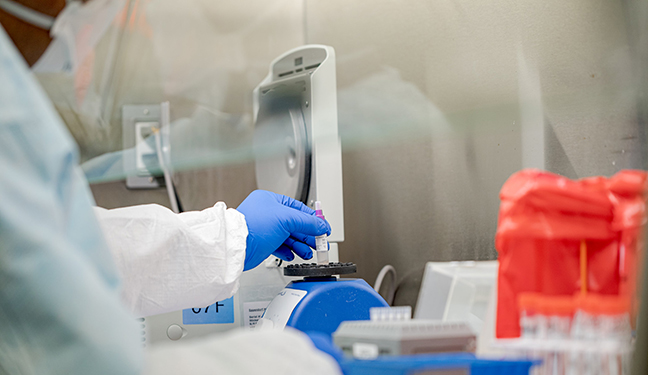
An image from the PA Department of Health lab in Exton

New COVID-19 diagnoses dipped again in the commonwealth, as the PA Department of Health today reported 511 newly positive cases.

This marks 21 days straight with new case numbers below 1,000 in Pennsylvania. With the additional cases, 71,926 Pennsylvanians have now been diagnosed with the coronavirus.

Cases peaked in early April at nearly 2,000 daily new cases. Since then, cases have shown a gradual, relatively steady decline, despite increasingly greater testing levels for the virus.

New case and fatality data have tended to be lower on weekends due to less reporting to the state health department.

Source: PA Department of Health

Of the new cases reported today, 110 are in residents of nursing and personal care homes.

Locally, total diagnosed cases are as follows:

  • Adams County: 251 cases (yesterday, 245)
  • Cumberland County: 629 cases (yesterday, 626)
  • Dauphin County: 1,277 cases (yesterday, 1,258)
  • Franklin County: 774 cases (yesterday, 767)
  • Lancaster County: 3,161 cases (yesterday, 3,131)
  • Lebanon County: 969 cases (yesterday, 958)
  • Perry County: 59 cases (yesterday, 57)
  • York County: 1,007 cases (yesterday, 1,000)

Overall, 15.8 percent of PA residents tested have shown to be positive for the virus.

The health department also reported another 18 fatalities, meaning that 5,555 Pennsylvanians have died from the disease since March. Not all of these deaths necessarily occurred in the past 24 hours, as the health department constantly updates its data.

Of the newly reported fatalities, five were residents of nursing or personal care homes.

Around central PA, the COVID-19 fatality data now stands as follows:

  • Adams County: 8 deaths (yesterday, 8)
  • Cumberland County: 50 deaths (yesterday, 50)
  • Dauphin County: 73 deaths (yesterday, 73)
  • Franklin County: 35 deaths (yesterday, 35)
  • Lancaster County: 297 deaths (yesterday, 295)
  • Lebanon County: 33 deaths (yesterday, 33)
  • Perry County: 3 deaths (yesterday, 3)
  • York County: 26 deaths (yesterday, 26)

Statewide, Philadelphia County continues to have the most confirmed cases with 18,426 cases, followed by Montgomery County with 7,061 cases. The two counties also have reported the most deaths statewide from the disease: 1,316 and 684, respectively.

“As Pennsylvania continues to move forward in the process to reopen, we need to remember that the threat from COVID-19 has not gone away,” health Secretary Rachel Levine said.

So far, the state has moved 57 of Pennsylvania’s 67 counties into the less restrictive yellow phase, including all of the Harrisburg area except Lancaster County. By June 5, the remainder of the state will exit from the red phase.

Nursing homes and personal care facilities have been particularly hard hit by the virus. Of total deaths, 3,540, or 63.7 percent, have occurred in residents from nursing or personal care facilities, according to the health department.

In nursing and personal care homes, there are 15,486 resident cases of COVID-19, and 2,659 cases among employees, for a total of 18,145 at 609 distinct facilities in 44 counties, according to the health department.

In addition, about 5,280 of total cases in PA are in health care workers.

Statewide, 455,037 coronavirus tests have been performed, with 383,111 people testing negative, according to the state health department. Yesterday, the state reported that 447,146 people had been tested for the virus.

Of the patients who have tested positive to date, the age breakdown is as follows, according to the health department:

  • Nearly 1 percent are aged 0-4
  • Nearly 1 percent are aged 5-12
  • Nearly 2 percent are aged 13-18
  • 6 percent are aged 19-24
  • Nearly 37 percent are aged 25-49
  • 25 percent are aged 50-64
  • 28 percent are aged 65 or older.

Most of the patients hospitalized are 65 or older, as are most of the reported deaths, according to the state.

Levine continued to emphasize that Pennsylvanians should do the following:

  • Wash your hands with soap and water for at least 20 seconds or use hand sanitizer if soap and water are not available.
  • Cover any coughs or sneezes with your elbow, not your hands.
  • Clean surfaces frequently.
  • Stay home to avoid spreading COVID-19, especially if you are unwell.

 “As counties move into the yellow and green phases, we must take personal responsibility to protect others,” Levine said. “Wearing a mask, continuing to maintain social distancing, and washing your hands frequently are all steps we can take to help protect others, including our most vulnerable Pennsylvanians, our essential workers and our healthcare system.”

For more information, visit the PA Department of Health’s COVID-19 website.

Continue Reading

Burg Review: Open Stage brings “masterful” “Iliad” to modern times, to your living room

My only brush with Homer’s epic poem “An Iliad” was 10th grade English.

I remember muttering a few stanzas out loud in class, then the classmate behind me fumbled through reading the next few lines. If Thomas Weaver [The Poet] (pictured) and Joseph Osborne [The Muse] could have brought a modernized re-telling of the Trojan War alive for me as a sophomore, I wouldn’t have fallen asleep facedown in my “Cliff’s Notes.”

For those of us currently longing for story slams, low-lit coffeehouses or basement nightclubs, Weaver evokes a similar smoky mood when entering an empty theater to perform his monologue. Multiple cameras capture his wild gesticulations as he gets close enough to the camera lens to fog it lightly, bringing intense eye contact and intimacy to each audience member, courtesy of Zoom.

Every element of the play’s trappings is simple: the setting of a chair, the prop of a bottle, the costume of Everyman. Yet the story and its theme feel layered and complex.

The Poet could be the regular at a corner pub telling war stories play-by-play, clicking dog tags together. He could be your co-worker whose mind never left Kosovo. Then as soon as The Muse pipes in his rhythmic, mystical guitar to accompany the re-telling, the mood feels as transcendent as a Doors album, The Poet chanting and dancing like a shaman, taking us on an ancient spiritual journey as if he’s come straight from Troy to urgently tell us his account.

We don’t know who The Poet is or from where he hails. He probably isn’t Greek at all. In fact, he uses distinctive American southern and West Coast accents and talks about American places when referencing soldiers’ hometowns.

The tale and the telling are raw and guttural, scraping the bottom of humanity, connecting the primeval past and present through unforgettable images. I didn’t view anything through the camera except The Poet and the Muse, but I left the play imagining penetrating images of a son’s body being handed to his father, and a baby’s head splitting when dropping to the pavement. Where was that level of detail in “Cliff’s Notes?”

I can’t say I absorbed the entire two-hour battle plan for the Trojan War. Even with a laser pointer on one of those cork boards with strings, I probably would have lost the thread somewhere. Yet more props surely would have shifted the atmosphere into seminar mode, upending the mood Weaver and Osborne masterfully wove together.

For Weaver, it felt weird to perform to an empty audience, although it changed his storytelling in a physical way.

“The poem is such a theatrical story to tell,” he said. “It was never meant to be performed, and it wasn’t meant for one person to tell.”

In the background, Osborne played the music to “get to the emotion of what’s happening at any given time. If people are getting hurt [in the poem], then the music sounds like people are getting hurt.”

With oral tradition and storytelling, Producer Stuart Landon puts forth the notion that Homer is more than one author, more like a collective idea.

“With the unfortunately enduring theme of war, we are all some version of Homer, and we are all involved in telling and re-telling the continuing war story, passing it down like an oral tradition,” he said.

The interactive talk-back afterwards offers further dissection of the play, with discourse more insightful than the throwback questions I remember from my English class about theme, mood, voice and the dreaded question, “What did the author intend?” You’ll even have the chance to ask your own questions via Zoom’s Q&A features.

Landon revealed that one of the play’s adapters was anti-war, and one was not, yielding a push-pull struggle within the adaptation. This makes for fascinating speculation for the argument of Homer being pro-war or anti-war. Either way, this gripping legend will pull you in from beginning to end, laying the best and worst of humanity in the midst of desperate times in front of you to decide.

“An Iliad” runs twice more live through the Zoom app on June 5 and June 13, with a 48-hour viewing window. Tickets and all access information are available through Open Stage’s website https://www.openstagehbg.com/.

Continue Reading

Mayor issues 9 p.m. curfew in Harrisburg, urges people to stay home

Protesters mounted the stairs to the PA Capitol during today’s second protest there, stopped at the entrance by police in riot gear.

Harrisburg has issued a 9 p.m. curfew for tonight following a day of rallies and marches to protest the death of George Floyd.

Mayor Eric Papenfuse issued the curfew order and urged people to stay home tonight after protests earlier today that sometimes led to conflicts with police.

The rally began at around noon at the Capitol, where upwards of 1,000 people gathered to protest Floyd’s death at the hands of police in Minneapolis, Minn., and to call for racial justice. Similar rallies were held in cities throughout the country.

In Harrisburg, many protesters departed following the passionate, yet peaceful, rally. However, others began to march throughout downtown. At Front and Forster streets, several protesters clashed with police, who had set up a blockade at the intersection.

Water bottles, rocks and other projectiles were thrown at state and Capitol police dressed in riot gear, and some police responded with pepper spray and rubber bullets. Two injured Capitol police were taken to the hospital with unspecified injuries.

After this incident, police blocked access into Harrisburg from the Harvey Taylor and Market Street bridges.

About 100 remaining marchers then continued up Forster Street before rallying again at the Capitol in late afternoon. They then pushed their way up the steps of the Capitol, which was blocked by city and state police.

At about 5:30 p.m., the remaining protesters suddenly left the Capitol and resumed marching in the downtown area. The remnants of that group were met with increasing numbers of state police, who blocked off several downtown streets.

Continue Reading

New COVID-19 diagnoses continue to decline slowly in PA

Daily new positive COVID-19 cases and tests. Source: PA Department of Health

The PA Department of Health reported just under 700 new COVID-19 cases today, in line with case numbers over the past week.

The department said that there were 680 new positive cases for the period ending at midnight, a daily rate nearly unchanged over the past several days.

This marks 20 days straight with new case numbers below 1,000 in Pennsylvania. With the additional cases, 71,415 Pennsylvanians have now been diagnosed with the coronavirus.

Cases peaked in early April at nearly 2,000 daily new cases. Since then, cases have shown a gradual, relatively steady decline, despite increasingly greater testing levels for the virus (see chart).

Of the new cases reported today, 41 are in residents of nursing and personal care homes.

Locally, total diagnosed cases are as follows:

  • Adams County: 245 cases (yesterday, 241)
  • Cumberland County: 626 cases (yesterday, 621)
  • Dauphin County: 1,258 cases (yesterday, 1,231)
  • Franklin County: 767 cases (yesterday, 762)
  • Lancaster County: 3,131 cases (yesterday, 3,105)
  • Lebanon County: 958 cases (yesterday, 950)
  • Perry County: 57 cases (yesterday, 56)
  • York County: 1,000 cases (yesterday, 991)

Overall, 15.9 percent of PA residents tested have shown to be positive for the virus.


The health department also reported another 164 fatalities, meaning that 5,537 Pennsylvanians have died from the disease since March. Not all of these deaths necessarily occurred in the past 24 hours, as the health department constantly updates its data.

Of the newly reported fatalities, 18 were residents of nursing or personal care homes.

Around central PA, the COVID-19 fatality data now stands as follows:

  • Adams County: 8 deaths (yesterday, 7)
  • Cumberland County: 50 deaths (yesterday, 48)
  • Dauphin County: 73 deaths (yesterday, 72)
  • Franklin County: 35 deaths (yesterday, 34)
  • Lancaster County: 295 deaths (yesterday, 292)
  • Lebanon County: 33 deaths (yesterday, 33)
  • Perry County: 3 deaths (yesterday, 2)
  • York County: 26 deaths (yesterday, 26)

Statewide, Philadelphia County continues to have the most confirmed cases with 18,347 cases, followed by Montgomery County with 7,006 cases. The two counties also have reported the most deaths statewide from the disease: 1,308 and 682, respectively.

“As Pennsylvania continues to move forward in the process to reopen, we need to remember that the threat from COVID-19 has not gone away,” health Secretary Rachel Levine said.

So far, the state has moved 57 of Pennsylvania’s 67 counties into the less restrictive yellow phase, including all of the Harrisburg area except Lancaster County. By June 5, the remainder of the state will exit from the red phase.

Nursing homes and personal care facilities have been particularly hard hit by the virus. Of total deaths, 3,535, or 63.8 percent, have occurred in residents from nursing or personal care facilities, according to the health department.

In nursing and personal care homes, there are 15,376 resident cases of COVID-19, and 2,650 cases among employees, for a total of 18,026 at 607 distinct facilities in 44 counties, according to the health department.

In addition, about 5,280 of total cases in PA are in health care workers.

Statewide, 447,146 coronavirus tests have been performed, with 375,731 people testing negative, according to the state health department. Yesterday, the state reported that 437,705 people had been tested for the virus.

Of the patients who have tested positive to date, the age breakdown is as follows, according to the health department:

  • Nearly 1 percent are aged 0-4
  • Nearly 1 percent are aged 5-12
  • Nearly 2 percent are aged 13-18
  • 6 percent are aged 19-24
  • Nearly 37 percent are aged 25-49
  • 25 percent are aged 50-64
  • 28 percent are aged 65 or older.

Most of the patients hospitalized are 65 or older, as are most of the reported deaths, according to the state.

Levine continued to emphasize that Pennsylvanians should do the following:

  • Wash your hands with soap and water for at least 20 seconds or use hand sanitizer if soap and water are not available.
  • Cover any coughs or sneezes with your elbow, not your hands.
  • Clean surfaces frequently.
  • Stay home to avoid spreading COVID-19, especially if you are unwell.

“As counties move into the yellow and green phases, we must take personal responsibility to protect others,” Levine said. “Wearing a mask, continuing to maintain social distancing, and washing your hands frequently are all steps we can take to help protect others, including our most vulnerable Pennsylvanians, our essential workers and our healthcare system.” 

For more information, visit the PA Department of Health’s COVID-19 website.

Continue Reading

The Week that Was: News and features around Harrisburg

I wish I could say that a new topic dominated our local news coverage this past week, but, nope, it was the coronavirus again. If you missed any of our stories over the past week, we have them all listed and linked below.

COVID-19 pandemic continued to grind on, though at a slowly decreasing case level in PA. Each day, we had a recap of the commonwealth’s daily update, including the latest one here.

Great Depression seemed like forever ago—until it wasn’t. Our May magazine feature captured what that time was like as we now peer into our own profound economic crisis.

Harrisburg City Council dedicated another $500,000 towards small business relief, this time through federal CARES Act funding. Our online story had details of the latest effort to help the city’s struggling small businesses.

Harrisburg’s Restaurant Row has been all but empty since the COVID-19 pandemic hit. Now, the city and the Harrisburg Downtown Improvement District plan to close down 2nd Street to allow for outdoor dining on Saturday nights. We have the first details in our online story.

Parking enforcement and street sweeping will resume in mid-June in Harrisburg, the city announced. Our online story offers details for what may be the clearest indication yet of life slowly returning to normal.

Pets, like people, may be suffering due to the COVID-19 pandemic. Our recent magazine feature explains the unique problems of pets and what we humans can do to help out.

“Poured in PA” is now a multi-part series, as the documentary film has morphed into an episodic program focused on the people and personalities that make up the commonwealth’s craft beer scene. Read our online feature to find out what film and video producer GK Visual has in its glass this time.

Sara Bozich is spending another weekend at home, but she’s making the best of it with virtual entertainment and takeout. In her weekly list of things to do, she has recommendations for our pandemic times.

Southwestern PA is slated to enter the “green” phase of reopening next week, Gov. Wolf announced. Our online news story offers details on which counties are going green and why.

TheBurg released our June issue into the wilds of the Harrisburg area on Friday, with a cover featuring local sensation Sharkman. As more locations reopen, we hope to get back to regular distribution soon. But, if a hard copy isn’t readily accessible, you can always read the issue online in our digital format.

TheBurg’s editor welcomes readers each month through his “Editor’s Note.” This month, he asks readers to share his fantasy of life returning to normal post-pandemic.

Virtual worship may never replace the live experience, but many believers have embraced it after large gatherings were banned. Our graphical guide offers a starting point for many churches, synagogues, mosques and temples in the Harrisburg area.

Do you receive TheBurg Daily, our daily digest of news and events delivered right to your email inbox? If not, subscribe here!

Please consider joining Friends of TheBurg, our new membership program, to support great local journalism. Click here to get all the details, including some great benefits.

Continue Reading

Harrisburg, HDID to close down heart of 2nd Street for outdoor, Saturday night dining

Table for two? Soon, Harrisburg plans to give new, literal meaning to “dining on 2nd Street.”

Hey, Harrisburg–who’s up for some al fresco dining?

In June, the city and the Downtown Improvement District plan to launch “Saturday Night in the City,” which will close down a portion of N. 2nd Street to allow for outdoor restaurant seating.

The announcement came during Mayor Eric Papenfuse’s weekly “Community Conversations” on Facebook Live.

Each Saturday, from 6 to 10 p.m. in June, the city will shut down 2nd Street from Market to Pine streets to allow restaurants to open for outdoor dining along the street.

“It’s an attempt to allow people to come back and support some of their favorite restaurants and businesses that have really been hit hard by this crisis,” Papenfuse said.

Harrisburg now is under the “yellow” phase in the state’s phased reopening plan. Under that phase, state regulations do not allow restaurants to serve inside their establishments, However, they can serve outdoors under certain rules, including distancing requirements.

In addition to restaurants opening, there will be live music and other festivities, free to the public, Papenfuse said.

“It’s an exciting partnership and program,” he said.

The city and HDID plan to offer additional detail soon, Papenfuse said.

During the Facebook Live event, Papenfuse also hosted Gerald Feaser, director of the Dauphin County Bureau of Elections and Voter Registration.

The primary election is Tuesday, having been moved up from April 28. They discussed new ways of voting and precautions being taken.

“The new voting system is paper-based,” Feaser said. “It’s the one we chose because of the longevity of this new format. It has the least hurdles.”

Voters can expect to fill out their ballot in a privacy booth before depositing it in a scanner. Feaser encouraged people to bring their own pens, black or blue, for sanitary purposes.

All polling locations will be equipped to maintain cleanliness and will have hand sanitizer available, he said. Wearing masks is strongly encouraged, though not mandatory to vote.

“Even more new is the whole mail-in ballot proposition,” Feaser said.

According to Feaser, over 40,000 Dauphin County residents have asked for mail-in ballots, and about 25,500 people have sent theirs in so far.

In addition to sending ballots through traditional mail, voters can drop them in a box outside the county Administration Building at S. 2nd and Market streets in Harrisburg.

Lastly, Papenfuse announced parking enforcement in the city will return June 15 as Dauphin County moves into the “yellow phase.” This includes meters, residential zones and street sweeping zones, he added. Street sweeping will resume on the same day.

Harrisburg’s Community Conversations are each Friday at noon on Facebook Live. To watch past conversations, visit their YouTube channel. For a list of Dauphin County polling locations, visit their website.

Continue Reading

Street sweeping, parking enforcement to resume soon in Harrisburg

Soon, you’ll have to start feeding this machine again.

Street sweeping and parking enforcement will resume in Harrisburg in mid-June, the city announced today.

On Monday, June 15, Capital Region Water will restart its regular street-sweeping schedule, and the city and parking operator SP+ will resume ticketing and enforcement of parking regulations.

This includes parking enforcement for street sweeping, metered parking and residential permits.

In March, the city, CRW and SP+ suspended these operations after the COVID-19 pandemic took hold and Harrisburg Mayor Eric Papenfuse issued a disaster declaration. At about the same time, Gov. Tom Wolf issued a stay-at-home order and mandated the closure of all “non life-sustaining” businesses.

Positive coronavirus cases have been slowly falling in the commonwealth for nearly two months, even as testing as expanded significantly.

Today, Dauphin County, including Harrisburg, moved from the “red” to the less-restrictive “yellow” phase of reopening. Wolf also announced today that much of southwestern PA would move to the least-restrictive “green” phase next Friday.

“As we enter the yellow phase in accordance with Gov. Wolf’s announcement, we look forward to increased activity in our great city,” Papenfuse said. “I appreciate everyone’s patience as we transition back into a more vibrant Harrisburg. It is important to continue to use safety precautions.”

Continue Reading

Southwest PA to move into least-restrictive “green” phase next Friday

PA Gov. Tom Wolf (right) during today’s press conference

Sixteen more counties will move to the least-restrictive green phase next Friday, mostly in the western and southwestern parts of the commonwealth.

Gov. Tom Wolf made the announcement today during his first live, non-virtual press conference since the pandemic began in March.

These counties are Allegheny, Armstrong, Bedford, Blair, Butler, Cambria, Clinton, Fayette, Fulton, Greene, Indiana, Lycoming, Mercer, Somerset, Washington and Westmoreland counties.

In addition, all remaining red counties, including Lancaster County and the Philadelphia metropolitan area, will move into the yellow phase on Friday.

Today, Dauphin and Lebanon counties, along with several counties in the northeast part of the state, moved into the yellow phase, while most counties in the northwest and north-central parts moved into the green phase.

Pennsylvania uses a three-color system–red, yellow and green–to guide re-openings following the virtual shutdown of the state earlier in the COVID-19 pandemic. Each phase further peels back Wolf’s stay-at-home order and business closures and restrictions, which were imposed in March.

Wolf said that his administration made these loosening decisions based upon recommendations of “medical epidemiological experts.”

“The goal here is to make that every Pennsylvanian is confident that they’re going to be safe moving from one of these phases into the next,” he said.

Wolf also cited “progress” fighting the COVID-19 pandemic. New case numbers have been on a constant, if slow, decline for nearly two months, while testing has increased substantially.

As many as 13,000 new tests have been conducted daily recently, Wolf said, and new positive cases are now subject to contact tracing.

“Because of this, we’re able to take important steps to return to a sense of normalcy, again, as we remain careful and vigilant,” he said.

Moreover, he said that, while he believes that his stay-at-home order and business restrictions have worked to fight spread of the virus, “we can’t isolate ourselves forever.”

“It is important that we continue to act with caution especially as we reopen,” he said.

Continue Reading

New COVID-19 cases just below 700 in PA, continuing long-term trend

An image from the PA Department of Health lab in Exton

New COVID-19 cases in PA came in just below 700 today, as the commonwealth reported a continuing long-term trend of slowly falling new infections.

The state Department of Health today reported 693 new positive cases for the period ending at midnight.

This marks 19 days straight with new case numbers below 1,000 in Pennsylvania. With the additional cases, 70,735 Pennsylvanians have now been diagnosed with the coronavirus.

Cases peaked in early April at nearly 2,000 daily new cases. Since then, cases have shown a gradual, relatively steady decline, despite increasingly greater testing levels for the virus.

Of the new cases today, 177 are in residents of nursing and personal care homes.

Locally, total diagnosed cases are as follows:

  • Adams County: 241 cases (yesterday, 240)
  • Cumberland County: 621 cases (yesterday, 618)
  • Dauphin County: 1,231 cases (yesterday, 1,212)
  • Franklin County: 762 cases (yesterday, 759)
  • Lancaster County: 3,105 cases (yesterday, 3,056)
  • Lebanon County: 950 cases (yesterday, 944)
  • Perry County: 56 cases (yesterday, 54)
  • York County: 991 cases (yesterday, 970)

Overall, 16.1 percent of PA residents tested have shown to be positive for the virus.


The health department also reported another 108 fatalities, meaning that 5,373 Pennsylvanians have died from the disease since March.

Of the newly reported fatalities, 16 were residents of nursing or personal care homes.

Around central PA, the COVID-19 fatality data now stands as follows:

  • Adams County: 7 deaths (yesterday, 7)
  • Cumberland County: 48 deaths (yesterday, 47)
  • Dauphin County: 72 deaths (yesterday, 71)
  • Franklin County: 34 deaths (yesterday, 31)
  • Lancaster County: 292 deaths (yesterday, 286)
  • Lebanon County: 33 deaths (yesterday, 33)
  • Perry County: 2 death (yesterday, 2)
  • York County: 26 deaths (yesterday, 25)

Statewide, Philadelphia County continues to have the most confirmed cases with 18,156 cases, followed by Montgomery County with 6,906 cases. The two counties also have reported the most deaths statewide from the disease: 1,300 and 674, respectively.

“As Pennsylvania continues to move forward in the process to reopen, we need to remember that the threat from COVID-19 has not gone away,” health Secretary Rachel Levine said.

So far, the state has moved 57 of Pennsylvania’s 67 counties into the less restrictive yellow phase, including Dauphin and Lebanon counties today. By June 5, the remainder of the state will exit from the red phase.

Nursing homes and personal care facilities have been particularly hard hit by the virus. Of total deaths, 3,517, or 65.4 percent, have occurred in residents from nursing or personal care facilities, according to the health department.

In nursing and personal care homes, there are 15,335 resident cases of COVID-19, and 2,565 cases among employees, for a total of 17,900 at 603 distinct facilities in 44 counties, according to the health department.

In addition, 5,280 of total cases in PA are in health care workers.

Statewide, 437,705 coronavirus tests have been performed, with 366,970 people testing negative, according to the state health department. Yesterday, the state reported that 427,846 people had been tested for the virus.

Of the patients who have tested positive to date, the age breakdown is as follows, according to the health department:

  • Nearly 1 percent are aged 0-4
  • Nearly 1 percent are aged 5-12
  • Nearly 2 percent are aged 13-18
  • 6 percent are aged 19-24
  • Nearly 37 percent are aged 25-49
  • 25 percent are aged 50-64
  • 28 percent are aged 65 or older.

Most of the patients hospitalized are 65 or older, as are most of the reported deaths, according to the state.

Levine continued to emphasize that Pennsylvanians should do the following:

  • Wash your hands with soap and water for at least 20 seconds or use hand sanitizer if soap and water are not available.
  • Cover any coughs or sneezes with your elbow, not your hands.
  • Clean surfaces frequently.
  • Stay home to avoid spreading COVID-19, especially if you are unwell.

“As counties move into the yellow and green phases, we must take personal responsibility to protect others,” Levine said. “Wearing a mask, continuing to maintain social distancing, and washing your hands frequently are all steps we can take to help protect others, including our most vulnerable Pennsylvanians, our essential workers and our healthcare system.”

 For more information, visit the PA Department of Health’s COVID-19 website.

Continue Reading