Harrisburg Mile gets the green light, with change of date, location

Runners take off from the starting gate during last year’s Harrisburg Mile.

One of Harrisburg’s longest-running summertime traditions, the Harrisburg Mile, will go on in 2020 despite the pandemic.

The 39th Annual Harrisburg Mile will take place on Wednesday, Aug. 19, about a month later than originally planned, the Harrisburg Area YMCA confirmed today.

Besides the new date, the other big change is the venue. Instead of running a mile course down Front Street, runners will compete on a mile-long loop around City Island.

“We’re trying to provide a summertime event that feels like the joy that the Harrisburg Mile usually brings to the city,” said Rosie Turner, the YMCA’s director of marketing and communications.

As of now, the Harrisburg Half Marathon and Marathon are also a go, slated for Sept. 13 and Nov. 8, respectively.

The new Harrisburg Mile course offers synergy with the race’s top sponsor, Turner said.

“First National Bank has been an incredible partner, so to have people run past the ballpark and see their branding at FNB Field—we saw that as a nice tie-in,” she said.

Moving the event to City Island increases the amount of square footage on either side of the race course, Turner said, which allows race officials to put safety and health guidelines first, for all involved—runners, volunteers and staff, as well as spectators.

Given the pandemic’s guidelines for social distancing, runners have the option of lining up on the start line during what are called “rolling start times,” within windows of time, for each age group. For example, runners in the 20-to-29 age bracket can start any time from 6 to 6:15 p.m., while runners between the ages of 30 to 39 may start during the 6:55 to 7:15 p.m. timeframe.

Additionally, there will be an “open time” between 2 to 5:45 p.m. when anyone can run the course and register their mile time, especially if they want to avoid larger groups of competitors.

Every heat will be limited to 150 participants, except for the elite mile heat, which will be run in true competitive spirit with a set start time for a field limited to 30 of the area’s top runners.

Another modification, given the pandemic’s guidelines—all runners must wear masks until they start running. The masks also must be pulled back in place once runners complete their mile, before they leave the finish chute.

All in all, during a time when most running events are being canceled or going virtual, today’s news is welcome news to area runners.

“We’ve seen a lot of races we love canceled,” said Jeff Paladina, 48, of New Cumberland. “I’m disappointed we can’t be on Front Street… but I’m appreciative of the city seeing value in these races so that can all continue in the sport we love.”

Paladina is registered to compete in the Harrisburg Mile, just like last year.

“Even last year, we hadn’t heard of the term ‘social distance,’ and I wasn’t within 6 feet of anyone, so I have no hesitation saying I’ll be safe racing,” Paladina said. “The best place to be during this pandemic is outside.”

In 2019, the Harrisburg Mile attracted 1,638 runners, about 250 volunteers and an estimated 3,200 spectators.

“The event requires an incredible amount of volunteers, and we are trying to assess their comfort level. Many are excited and on board,” Turner said.

This year, registration for the mile was frozen amid the pandemic, but it reopened today.

Registration for the Harrisburg Half Marathon and Harrisburg Marathon continues to be open, with several hundred runners already registered for each race. Turner said she is “hopeful” that plans and registration will soon be announced for the Oct. 3 HopDash 5K at Tröegs Brewery, Hershey, also part of the Harrisburg YMCA’s Race Series.

Between the mile, half marathon and full marathon, net proceeds benefitting the nonprofit YMCA total about $40,000 annually.

“Our races connect people to the Y, to a place of wellness that supports the community and themselves,” Turner said. “This is a way for people to connect outside the building in a way that impacts what goes on inside the building.”

Turner said that the half and full marathons will feature staggered start times to spread runners out along the 13.1 and 26.2 mile courses. She said the events would only be canceled as a “last resort” if health guidelines mandate it—in which case runners would have the option of running virtually or deferring to next year.

Hap Miller of Carlisle has been on the Harrisburg Marathon’s start line every year for 45 years—2020’s event would be his 46th. The 77-year-old Carlisle resident even wrote a book about the Harrisburg Marathon, one of the oldest marathons in the country. The first race was held in 1973. Miller began running in 1975.

“I’m signed up for this year’s race, but I’m not sure if I’ll finish,” Miller said. “I plan on running about a third of it—as I did last year—which ended my streak [of 44 finishes].”

Miller said he’s glad to hear that Harrisburg’s marathon tradition will continue in 2020.

“It’s a small, friendly marathon because of the people along the course and in the race, the camaraderie… you don’t get lost in the big crowds like Boston, Chicago or New York,” said Miller.

Turner realizes the significance of providing race experiences for area runners during a time when so many other plans have fallen by the wayside.

“People use these events to benchmark their lives—there are so many goals around them, and already this year with the pandemic we’ve had so many lost milestones,” Turner said. “To give people back a goal, to finish out 2020 with something that feels like a stamp—what a wonderful gift to be able to give to the community.”

For more information, including registration for the Harrisburg Mile, see ymcarun.com/info-mile2020. For information for the Sept. 13 Harrisburg Half Marathon, see ymcarun.com/info-half. Details for the Nov. 8 Harrisburg Marathon can be found here: ymcarun.com/info-marathon. Hap Miller’s book about the Harrisburg Marathon is available on Amazon.
Continue Reading

Bob’s Art Blog: Methods & Meanings

Artist Kelly McGee in her Millworks studio

I first became aware of Kelly McGee’s art on “the Gram,” the only social media we use. Her art intrigued me from the first…and the stories behind the paintings, even more.

Her website said to call to schedule an appointment to meet and see her work up close at the Millworks. Studio #216 houses the one and only Kelly McGee (Curran), chronologically 33 years of age but an “old soul” at heart in the best way. Within her, she holds generations of tradition and customs shared through her “dream state” paintings. For more, read “The Methods and Meaning of McGee” that follows. Part 2 is titled “Art for a Worthy Cause,” showing that small but mighty makes a difference to Gail Walden Coleman.


Part I The Methods and Meaning of McGee

The card reads, “Kelly McGee Curran, Expressionist Painter,” but that merely scratches the surface. Truth be told, Kelly McGee is an interpretive painter of her own dreams and visions. Proudly claiming Native heritage, something we share, she is able to walk between worlds, the temporal one we live in and the transitory state we dream in. In doing so, she interprets those “remembrances” from past generations and portrays them in her paintings, vivid and with profound meaning. Everything connected to indigenous culture incorporates wisdom, warmth and a vitality that transcends all else.

Her dreams part the veil as she enters a portal between two worlds. Her visitations come in the form of elders inhabiting her subconscious state, leading her to the path that follows nature. It often reveals ritual and customs from the past. In her painting, “I Learned to Listen to the Stars,” the guide is her father portrayed as a medicine man of eternity showing her the way. He takes her out to convene with the night sky, the stars and the moon. Even a beloved donkey exists in the dream and is present. She executes the painting as if she is there on the hill marveling at the wonders of the universe—in rapt attention to her father’s words of wisdom. The colors capture the elements of the nocturnal narration in their simplicity. The stars reveal the underlying nature of the canvas as they are the natural knots found in the pinewood that McGee uses to illustrate many of her paintings. Those knots, portals with smoke emanating from them, represent ancestral spirits. The dualistic nature of her divinations comes full cycle as she is both the seer of dreams and the conduit to the canvas. Another work depicts a scene of trees, which is also 2 feet-by-2 feet of an oil on wood and highlights “Trees in a Storm,” which she was inspired to create by an abrupt summer storm, reflected in the swaying trees natural beauty.

As a child, McGee fell in love with painting as her means of self-expression. Early on and out of necessity, she happened upon pine board to paint when serendipitously she ran out of canvas. Today, her works, more often than not, can be found incorporating those knots of imperfection as an integral element of the paintings. They become crucial to the tale the paintings reveal. The knots enhance and inform the narrative nature of the story or dream. When all those elements come together as one, it is kismet—destiny divined in the stars and heavens. And yet Kelly McGee is as down to earth as any artist or person can get. Genuinely generous, she is able to impart her worlds, the here and now, as well as the shadow sanctuaries, to all people who express interest and are looking to learn the story behind the paintings. Kelly weaves all the elements in her unique take on painting with richly textured oils on wood or on traditional canvas. The worlds she inhabits embrace the elements of earth, wind and fire. Her wisdom is of the ages and for the ages. And the knots that swirl throughout the pine boards serve as a visual guide. In the end, Kelly McGee’s art helps to make the “whorl” go round.


Part II Art for a Worthy Cause

The paintings measure just 2.5 inches-by-6.5 inches, but what an impact and difference they have made. Taking the current state of affairs to heart, Artist Gail Walden Coleman felt compelled to create art that would raise funds to help feed those in need. She has taken a “page,” marking it with her own personal stamp of painting from the timeless motto—charity begins at home.

Coleman has spent a great deal of time over the past three months painting artful works on paper that she then cuts and laminates to become exceptionally beautiful bookmarks all in an effort to raise money for the Central Pennsylvania Food Bank. To date she has enabled the organization to purchase and provide 6,200 meals, with no end in sight. She is now starting phase two of this project and has been aided by a local art gallery and frame shop in nearby Arcona, the Pure Gallery. Owner Rose Anderson sells Coleman’s labor-of-love bookmarks in her shop for the asking “donation fee” of $15, with all proceeds going to the food bank. Coleman’s intuitive paintings have been featured at Pure Gallery as well as the Art Association of Harrisburg, Carlisle Arts Learning Center and various local businesses. For more information, please contact [email protected].

Continue Reading

The Week that Was: News and features around Harrisburg

Boneshire Brew Works in opening a tasting room in a downtown Harrisburg storefront that formerly housed Sip@SoMa.


The dog days are here, with people slowing down in the midsummer heat. The news, though, never takes a break, especially in our pandemic times. If you missed any of our coverage this past week, we have our stories listed and linked below.

Boneshire Brew Works is opening a tasting room in the SoMa neighborhood in the location that had housed Sip@SoMa. Our online story details Boneshire’s plan for the space.

Brew Barons Beer Trail was launched by Visit Hershey & Harrisburg last week. Read our exclusive online story to find out more about the mobile app that allows trail-hoppers to check-in to some 20 craft breweries.

COVID-19 diagnoses in PA are up again, totaling about 800 new cases per day this past week. Our weekly reporting offers data on how the pandemic is affecting the state and midstate counties.

Danielle Bowers, city councilwoman, shares her suggestions for how to make immediate strides toward racial justice in Harrisburg. Her story is one of five community voices featured in our July issue of the magazine.

Gov. Wolf cracked down on bars and restaurants, imposing new restrictions last week. Our story explains his rationale for why the modifications were made and what the order entails.

Housing sales in the Harrisburg area fell last month, but prices rose. Our reporting includes details on the area’s real estate market trends in June.

Libraries in Dauphin County are almost all open, as two Harrisburg facilities are set to open next week. Kline and McCormick Riverfront libraries will reopen on Tuesday, joining five other open libraries in the system. Read our online story for more information.

Maternal health is the focus of a new report from the Blue Cross Blue Shield Association. Our magazine story tells how the pregnancy rate is down, but the rate of pregnancy and childbirth complications is on the rise.

Reservoir Park greenhouse received a $25,000 grant from the Central Pennsylvania Food Bank. Read our online story about how a team is working to restore the greenhouse for community education and collaboration.

Road changes to a portion of N. 6th Street prompted the city to plan a public meeting for Saturday. Read more about the decision to reduce car lanes and add bicycle lanes and parking spaces to the road.

Sara Bozich has plenty for you to do this weekend. Despite the new restrictions from Gov. Wolf on bars and restaurants, plenty of places are open for food, shopping and fun. Check it out!

Summertime activities in Harrisburg look different this year. Some old favorites remain open, but others have adjusted or closed in the midst of the COVID-19 pandemic. Read more about what to do this season in the city in our magazine story.

Tristan Bond is our July “Artist of the Month.” Our magazine feature offers some background on this fascinating artist, as well as examples of his work.

Do you receive TheBurg Daily, our daily digest of news and events delivered right to your email inbox? If not, subscribe here!

Would you like to support our journalism and get some great benefits to boot? If so, become a Friend of TheBurg!

Continue Reading

Two more Harrisburg libraries will reopen next week, DCLS says

The McCormick Riverfront Library in Harrisburg

Nearly all Dauphin County libraries soon will be open, with the reopening of two Harrisburg facilities next week.

The Dauphin County Library System (DCLS) today announced that the Kline and McCormick Riverfront libraries will reopen at 10 a.m. on Tuesday. They join the five other libraries in the system that previously reopened.

“We realize the important role the library plays in the life of our community, and we are moving to open our facilities as quickly as possible while ensuring we keep our staff and the public safe,” said Executive Director Karen Cullings, in a statement. “With these latest openings, we are happy to welcome members to all our Harrisburg locations.”

With these re-openings, the Johnson Memorial Library in Millersburg will remain the only library in the system still closed. That opening depends upon the pandemic status and staff availability, Cullings said.

DCLS has implemented health precautions along with its openings, including quarantining returned items for three days before returning them to circulation and having staff clean all publicly accessible areas every two hours. It asks all visitors to wear masks, which are available for those who need them.

For more information, visit the DCLS website.

Continue Reading

New COVID-19 diagnoses up again in PA; midstate shows more modest rise

COVID-19 cases and tests over time. Source: PA Department of Health

New COVID-19 cases in PA were up again this past week, with the state reporting an average of 800 new daily diagnoses over the last seven days.

With today’s update, 99,478 Pennsylvanians have now been diagnosed with the coronavirus, an increase of 5,602 over the past week, according to the state Department of Health.

The average of 800 new cases over the past week is up from an average of 733 new cases per day last week and 624 the week before. The department reports that testing also has increased.

Locally, diagnosed cases have generally risen more modestly than in the eastern and western parts of the state over the past week.

  • Adams County: 410 cases (prior Friday, 377)
  • Cumberland County: 995 cases (prior Friday, 930)
  • Dauphin County: 2,366 cases (prior Friday, 2,268)
  • Franklin County: 1,043 cases (prior Friday, 993)
  • Lancaster County: 4,988 cases (prior Friday, 4,783)
  • Lebanon County: 1,484 cases (prior Friday, 1,419)
  • Perry County: 96 cases (prior Friday, 88)
  • York County: 1,963 cases (prior Friday, 1,791)

Overall, 9.9 percent of PA residents tested have shown to be positive for the virus.

Much of the recent increase has originated from Allegheny and Philadelphia counties. For instance, over just the past 24 hours, Allegheny reported 240 new cases, while Philadelphia County reported 163.

For the past 24 hours, the department confirmed 1,032 new positive cases throughout Pennsylvania.

The department also reported an additional 112 deaths since last Friday, meaning that 6,992 Pennsylvanians have died from the disease since March.

Around central PA, the COVID-19 fatality data now stands as follows:

  • Adams County: 15 deaths (prior Friday, 14)
  • Cumberland County: 68 deaths (prior Friday, 66)
  • Dauphin County: 150 deaths (prior Friday, 149)
  • Franklin County: 46 deaths (prior Friday, 46)
  • Lancaster County: 390 deaths (prior Friday, 382)
  • Lebanon County: 51 deaths (prior Friday, 48)
  • Perry County: 5 deaths (prior Friday, 5)
  • York County: 70 deaths (prior Friday, 61)

Statewide, Philadelphia County continues to have the most confirmed cases with 23,558 cases, followed by Montgomery County with 9,060 cases. The two counties also have reported the most deaths statewide from the disease: 1,653 and 836, respectively.

“As the state has put in place new mitigation efforts to offset recent case increases, we must renew our commitment to protecting against COVID-19 by wearing a mask, practicing social distancing and following the requirements set forth in the orders for bars and restaurants, gatherings and telework,” health Secretary Rachel Levine said.

Nursing homes and personal care facilities have been particularly hard hit by the virus. Of total deaths, 4,784, or 68.4 percent, have occurred in residents from nursing or personal care facilities, according to the health department.

In nursing and personal care homes, there are 18,520 resident cases of COVID-19, and 3,562 cases among employees, for a total of 22,082 at 777 distinct facilities in 58 counties, according to the health department.

In addition, about 7,398 of total cases in PA are in health care workers.

Statewide, 999,390 coronavirus tests have been performed, with 899,912 people testing negative, according to the state health department. Last Friday, the state reported that 898,640 people had been tested for the virus.

Of the patients who have tested positive to date, the age breakdown is as follows, according to the health department:

  • Nearly 1 percent are aged 0-4
  • 1 percent are aged 5-12
  • Nearly 3 percent are aged 13-18
  • 8 percent are aged 19-24
  • 37 percent are aged 25-49
  • 23 percent are aged 50-64
  • Nearly 26 percent are aged 65 or older.

Most of the patients hospitalized are 65 or older, as are most of the reported deaths, according to the state.

Levine continued to emphasize that Pennsylvanians should do the following:

  • Wash your hands with soap and water for at least 20 seconds or use hand sanitizer if soap and water are not available.
  • Cover any coughs or sneezes with your elbow, not your hands.
  • Clean surfaces frequently.
  • Stay home to avoid spreading COVID-19, especially if you are unwell.
  • Wear a mask whenever out of your house.

“Pennsylvania has been a model for the country on how to reopen effectively using a careful, measured approach,” Levine said. “However, we know the virus has not gone away as we see cases rise, so we must work together to stop another surge.”

For more information, visit the PA Department of Health’s COVID-19 website.

Currently, we are providing a COVID-19 update weekly, each Friday, or as breaking news warrants.

Continue Reading

Weekend Roundup with Sara Bozich

Happy Weekend!

Or not, I guess, for those of you who had been going out to bars and restaurants (and of course those hard-working hospitality employees and owners).

Be sure to scroll down for our lists on where to get all the goods you need to go — and for pete’s sake, put on your darned mask (over the nose, too).

We’re beach-bound (safely – private beach, private house, cooking or takeout every night).

Housekeeping note: There will not be a Weekend Roundup next Thursday. I’m going to actually take “off.” This rarely happens (I don’t even think I missed during “maternity leave”), so apologies but sayonara. We will be sharing events on the Facebook page, so be sure to give that a follow!


Hiya, Are you on the email list? In addition to getting this weekly update directly in your inbox, I load it with a bunch of other fresh, original content. Sign-up here. I also recommend following me on IG.

Processed with VSCO with kp3 preset


Weekend Recs

  1. Build your own cheese board by visiting R.G. Hummer’s in the Broad Street Market (maybe grab some burgers or dogs for Sunday, too)
  2. Grab some craft beer — we recommend new releases from Appalachian Brewing Co. or Tattered Flag, or finding your favorites at Boneshire Brew Works. Bonus tip: Hemauer Brewing is delivering again!
  3. Order some great takeout, maybe a BBQ feast for the backyard from MoMo’s
  4. Binge-watch the first seven episodes of Poured in PA: The Series free on YouTube!
  5. Or, Check out Midtown Cinema’s full list of on-demand films!
  6. Browse some new gems at Meeka Fine Jewelry.
  7. Shop Little Black Dress’s summer sale – online.
  8. Maybe it’s time for a contactless debit card?

This list was compiled ahead of Gov. Wolf’s most recent mandates. As always, please click through the links or call ahead to get the most up-to-date information about the venue and/or event below.

Thursday

Friday

Saturday

Sunday


Resources for to-go/delivery


Continue Reading

Gov. Wolf cracks down on bars, reduces restaurant capacity as he reimposes pandemic restrictions

PA Gov. Tom Wolf during today’s press conference

Gov. Tom Wolf today announced significant new restrictions to the commonwealth’s re-opening plan for businesses, rules that primarily affect bars and restaurants.

In a press conference, Wolf said that, under the new restrictions, all bars that do not offer sit-down dining would have to close until further notice, effective Thursday.

In addition, restaurants would be reduced from 50% to 25% of capacity for indoor, sit-down dining.

Wolf said that these modifications were necessary because COVID-19 cases, which had been declining, were on the rise again.

“In the last two weeks, we have seen an unsettling climb in new COVID-19 cases throughout Pennsylvania,” Wolf said. “During the past week has been especially bad.”

Wolf said that Pennsylvania had successfully “flattened the curve” of new cases, getting down to 300 to 400 new daily diagnoses in June. However, the curve has resumed an upward trajectory over the past two weeks, he said.

Today, the state Department of Health reported 994 newly diagnosed positives, the greatest number of new cases in well over a month. Much of the increase has occurred from additional cases in Allegheny County, which has seen its cases surge.

Wolf identified three catalysts for the case increase:

  • Some Pennsylvanians have ignored mask-wearing and social distancing in bars and restaurants
  • Out-of-state travel
  • A lack of national coordination

“Together, these three catalysts have turned our downward trend into an alarming escalation, and we’re already at a tipping point where we have to act,” said. “We don’t want to become Florida. We don’t want to become Texas. We don’t want to become Arizona. We have to act now.”

Wolf emphasized that it’s difficult to restrain cases in Pennsylvania when case numbers are escalating dramatically in other states, especially in the southeast and southwest United States.

“Other states have become petri dishes for COVID-19 during the same time when we were working hard here in Pennsylvania to suppress the spread,” he said. “This virus knows no boundaries, no borders, so it’s been spreading northward and eastward across the country.”

Wolf said that health specialists have learned a lot about the coronavirus since it first appeared in Pennsylvania in March, including that it spreads most effectively in crowded, indoor environments.

Therefore, his executive directive is aimed specifically at places where people gather indoors, he said.

Bars are most affected by the order. Under the new rules:

  • All bars are prohibited from conducting operations unless they offer sit-down, dine-in meals.
  • Alcohol only can be served for on-premises consumption when in the same transaction as a meal.
  • All service must be at a table or booth; bar service is prohibited.

In addition, restaurants are limited to 25% of maximum occupancy for indoor dining, as are special events. Takeout sales of alcohol are permitted.

Wolf said that gyms, salons and other businesses can remain open following current rules that limit capacity and require masks. Also, he encouraged outdoor events, including outdoor dining.

“I want people to spend time together, but I want them to do so while they’re practicing social distancing, while they’re wearing masks where required, “ he said. “Every minute that passes is one minute closer to the end of this pandemic. That’s what we’re trying to achieve.”


Continue Reading

Harrisburg plans public meeting following road changes to 6th Street

A part of N. 6th Street in Midtown Harrisburg has a new look, including bus/bike lanes and parking spaces.

Harrisburg recently made significant changes to a portion of the 6th Street corridor, road modifications that the city plans to address during a community meeting on Saturday.

City representatives will be on hand at the Broad Street Market courtyard to discuss the changes and why they were made.

“Basically, we want to improve the safety along that corridor,” said city Engineer Wayne Martin, adding that the changes align with the city’s Vision Zero plan, which aims to eliminate pedestrian fatalities within the city.

Recently, the city eliminated two car travel lanes on N. 6th Street between Boas and Reily streets, turning the longstanding four-lane road into a two-lane road. It then added bicycle/bus lanes on both sides of the street, as well as new parking spaces.

Martin said the changes were primarily meant to improve safety for students and parents at Benjamin Franklin School at the corner of N. 6th and Verbeke streets. The changes, he said, will make it safer to cross the street and for parents to drop off children for school.

“It’s mostly for traffic-calming,” he said. “It’s meant for speed reduction in front of the school.”

In addition, the new bicycle lanes align with the city’s effort to create a network of interconnecting bike lanes, he said.

The city also had to add the parking spaces because it will lose metered spaces along with planned improvements to N. 7th Street, Martin said. The city must maintain a certain number of revenue-generating, metered spaces under its agreement with parking system operator, Trimont, and manager, SP+/Park Harrisburg.

He said that he expected the meters to be installed within the next month along the corridor.

In another city road update, Martin said that he expected some limited work to begin on N. 2nd Street in the fall.

The city plans to redesign N. 2nd Street between Forster and Division streets, converting it back to two-way traffic, among other changes. Some intersection improvements are slated to begin before year-end, though the major work will start in early 2021, he said.

Harrisburg will hold its public meeting to discuss the “Vision Zero” changes to the N. 6th Street corridor on Saturday, 3 to 5 p.m., in the courtyard of the Broad Street Market.

Continue Reading

Reservoir Park greenhouse receives grant, revitalization project continues

The Reservoir Park greenhouse, located off Whitehall Street in Harrisburg.

Momentum for a sustainability project is growing in the city—literally growing.

Harrisburg’s Reservoir Park greenhouse is on its way to restoration having received a $25,000 “Better Food, Better Access, Better Together” grant from the Central Pennsylvania Food Bank.

“We have been working with a large coalition to restore the Reservoir Park greenhouse for several years now and are encouraged by the Central Pennsylvania Food Bank’s gift,” said Harrisburg Parks Foundation Secretary Zac Monnier.

The 1,500-square-foot greenhouse was built in 1929 and is part of a garden located off of Whitehall Street on the southwest side of Reservoir Park. Unused for 20 years, the greenhouse has been experiencing revitalization from the Parks Foundation and the Foundation for Enhancing Communities.

“Many of us have been working for years to bring the greenhouse and garden back to life, with the city’s and the community’s support,” said Rafiyqa Muhammad, a member of the City’s Environmental Advisory Council and the owner of Sustainable Human Environment, who has been a member of the greenhouse renovation working group since its inception. “With this grant, and the others we hope will follow, we will be able to create a space for everyone, one that is handicap accessible and designed to reconnect our children with one of the most fundamental and empowering things of all–our ability to grow healthy food and nurture healthy bodies and minds.”

According to the city’s Sustainability Manager Christopher Nafe, the goal of the greenhouse is to provide an educational experience for visitors to learn about urban farming, gardening at home and healthy and affordable cooking and eating.

Nafe also recognizes that parts of Harrisburg are classified as food deserts and believes that the greenhouse can help provide options for residents, especially in Allison Hill.

“We are hoping to try to fill that void and act as a community resource,” he said.

The food bank hopes, with the help of this grant, that the greenhouse will inspire youth to grow their own healthy food and even encourage them to consider agricultural careers.

“This is us working with our community to end hunger in Harrisburg,” Executive Director Joe Arthur said.

This isn’t the first time funds have been donated to the greenhouse. The Whitt Family Foundation awarded the greenhouse a $25,000 grant and the Rotary Club of Harrisburg has donated $5,000.

The group working to restore the greenhouse includes the Homegrown Harrisburg Community Gardens Network, Tri-County Community Action, Messiah University Center for Sustainability, Harrisburg Young Professionals of Color, Sustainable Human Environment, LLC, and Harrisburg Urban Growers.

“We are hoping to have the greenhouse operate as a hub connecting all of these organizations,” Nafe said.

The team also hopes to restore the grounds surrounding the greenhouse and possibly renovate the Brownstone Building, which the greenhouse sits behind, for use as a food demonstration kitchen, according to Nafe. The total project is projected to cost around $245,000.

The working group was formed in 2018 and hopes to have the greenhouse functioning by next spring or summer. They are currently in the planning phase.

For more information on the Reservoir Park greenhouse, visit https://harrisburgpa.gov/reservoir-park-greenhouse-receives-25000-grant-from-central-pa-food-bank/.


Continue Reading

Harrisburg area home sales down, prices up, for second month in a row

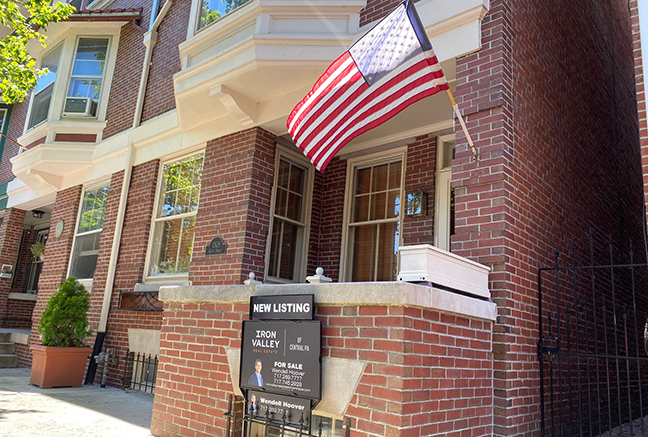
A house for sale in Midtown Harrisburg

For a second straight month, residential housing sales fell but prices increased in the greater Harrisburg area.

In June, 505 homes changed hands compared to 849 in the year-ago period, though the median price rose to $199,900 from $190,075, according to the Greater Harrisburg Association of Realtors (GHAR).

In Dauphin County, 244 residential units sold versus 423 in June 2019, while the median price increased by $5,000 to $181,000, GHAR said, in its latest housing report.

Cumberland County had 236 home sales in June, a decrease from 384 in the year-ago period as the median price rose to $225,600 from $212,900, GHAR said. In Perry County, 25 houses sold, 17 fewer than in June 2019, but the median price increased to $174,900 from $169,500.

The average “days on market” for June rose slightly to 46 from 41 a year ago, GHAR said.

June’s housing data is similar to the data from May, when residential sales also fell but prices increased.

Continue Reading