Passion & Punctuation: Unravel the mystery of the quotation marks with the newest adaptation of the classic, “Wuthering Heights”

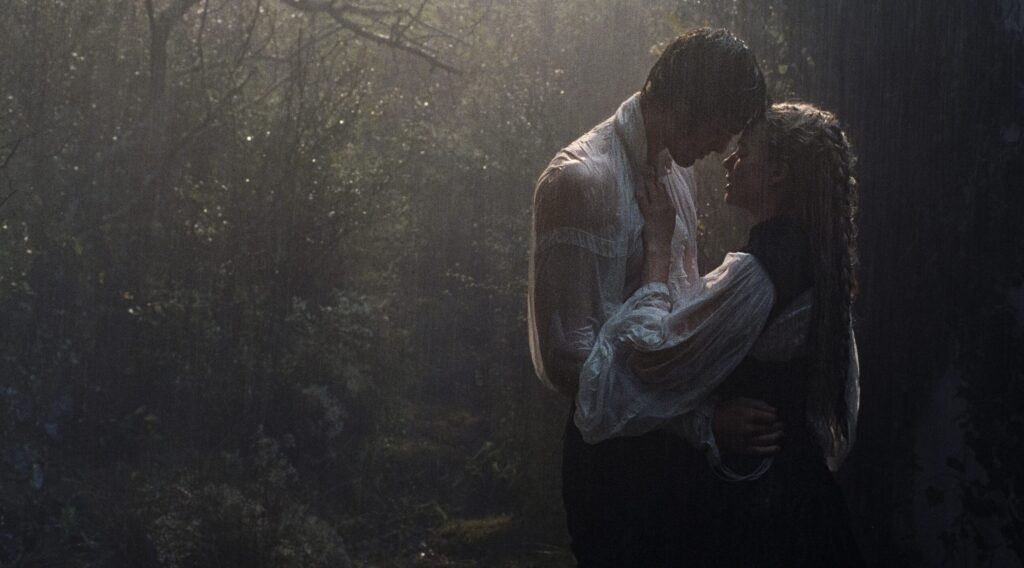
Image by Warner Bros. Pictures.

Much has been made (in my circles, at least) about the stylized quotation marks in the title of Emerald Fennell’s “Wuthering Heights.” Does the punctuation belie a plot twist along the lines of Don’t Worry Darling, where a projected storybook fantasy belies the sordid basement of reality?

It seemed likely, knowing Fennell’s history of using a “sexually violent turn” as a third-act narrative device in both of her previous films, Saltburn and Promising Young Woman. If not, what do the quotation marks mean? I won’t spoil the third act of the film for you (come see it!) but walking away from this film, I think the quotation marks make a lot of sense.

“Wuthering Heights” breaks the mold of Fennell’s previous films as an adaptation instead of an original story, but that doesn’t mean her voice as a filmmaker takes a backseat at any point. Fennell is on record as having cast Jacob Elordi because he looked like Heathcliff on the cover of the copy of Emily Brontë’s “Wuthering Heights” she read as a teenager. This is clearly a formative text to Fennell, and just as personal to her (if not more) than her original scripts.

Don’t expect a faithful tribute to the sprawling, detailed family trees and generational themes of Brontë’s novel, but Fennell’s film distills the core characters and their transgressive interpersonal dynamics into an abridged case study of fierce desire for someone you can’t be with. What results is a very subjective take on a culturally ubiquitous text—a messier, hornier and sweatier version anchored around Elordi’s phenomenal turn as Heathcliff, the love (and lust) interest of Margot Robbie’s less-realized Catherine Earnshaw. 

Sumptuous photography by Linus Sandgren, dramatic lighting by David Sinfield and immaculate costuming by Jacqueline Durran anchor the film in sensual tones and colorful textures. Charli xcx’s contributions to the soundtrack from her new tie-in album, also called “Wuthering Heights,” are dazzling and gorgeously produced, complementing the film perfectly, like a 2020s counterpart to Sofia Coppola’s post-punk soundtrack to Marie Antoinette.

Leaving the theater with final thoughts, “Wuthering Heights” brought to mind most immediately another recent big-screen literary adaptation: Guillermo del Toro’s Frankenstein. The weakest part of each film is probably its script, but I very much enjoyed the mood, the technique at hand, the sets and costumes, and the performances on display. (That being said, I don’t envy any scene partner of Elordi’s, since, by my measure, his work blew Oscar Isaac’s out of the water in that film and Margot Robbie’s in this one.)

I wouldn’t quite say it earns a spot as a definitive visual take on a classic novel, but “Wuthering Heights” on the big screen is still a real good time at the movies, and chock-full of Fennell’s trademark sensuous and bodily direction. This Jacob Elordi kid is going places.

“Wuthering Heights” opens at Midtown Cinema on Feb. 13.

Midtown Cinema is located at 250 Reily St., Harrisburg. For more information, visit www.midtowncinema.com. Gabriel Brown serves as assistant manager at Midtown Cinema. 


February Events
at Midtown Cinema

National Theatre Live 
“The Fifth Step”
Sunday, Feb. 8, 5 p.m.

“The Importance of Being Earnest”

Sunday, Feb. 15, 5 p.m.

Late Night Frights Series 

“House” (1977)

Friday, Feb. 13, 9:30 p.m.


“Roman Holiday” (1953)

Saturday, Feb. 14, noon

Sunday, Feb. 15, 6:30 p.m.


3rd in the Burg Movie Night 

“Across the Universe” (2007)

Friday, Feb. 20, 9:30 p.m.


Down in Front! Comedy Riffing

“Hobgoblins” (1988)

Friday, Feb. 27, 9:30 p.m.

If you like what we do, please support our work. Become a Friend of TheBurg!

Continue Reading

All Grown Up: So, what happens when “The Baby-Sitters Club” reaches middle age?

The cast of “Stoney Brook.” Image courtesy of Open Stage.

Childhood friendships are rekindled and redefined in “Stoney Brook,” an all-new, original parody play lovingly sending up “The Baby-Sitters Club,” opening this month at Open Stage.

At the intersection of nostalgia and adulthood, this production brings together six women, who were all friends in their youth, for one riotous, hilarious and emotional evening. This play will have you both laughing and crying (maybe at the same time) and serves as the perfect excuse for a girl’s night out. 

Written by Rachel Landon, “Stoney Brook” tells the story of a group of friends who are no longer preteens taking part in their shared babysitting business but adult women in their forties who have since grown apart and experienced all of life’s ups and downs. When a tragic death brings them back together in their hometown of Stoney Brook, the women reconnect, reminisce, joke, weep and maybe drop a few “f-bombs.”

“In this play, there are a lot of women speaking frankly,” said Karen Ruch, its director. “Menopause, periods, sex—when women are alone, they speak very differently about those things. There’s a level of safety and comfort and some shared experience.”

The new play explores themes of friendship, grief, privilege, motherhood, identity and all the complexities of being a woman.

The new comedic play is a parody of “The Baby-Sitters Club,” the famous book series by Ann M. Martin, published by Scholastic from 1986 to 2000. The story of these girls became a source of inspiration for several spin-offs and adaptations, including a 1990 TV series, a 1995 film, a 2020 TV series and an ongoing graphic novel series since 2006.

“This was a series that was very close to me, and to get to think about these women as adults fascinated me,” Landon said. “This is pure parody, but it’s written with a lot of love.”

Those who have read the books may catch some Easter eggs, but if you haven’t, no problem. You will get to know these women very quickly, and everyone will find someone on stage they relate to.

“Stoney Brook” proudly features an all-female cast and creative team, including Alexis Campbell as Mary, Stacy Erdman as Stace, Tara Herweg as Kris, Kelsey Markey as Shae, Danielle Woods as Jess, J’aime Elizabeth as Mall and Nikki Heckermann as Freya. Jasmine Graham, Rachel Landon and Adrienne Thoman serve as swing understudies. The play is stage-managed by Brianna Dow, who also serves as sound designer. Lighting design is by Karen Gasser, set design by technical director Kalina Barrett, and costume design by Carol Manzer.

“Stoney Brook” will leave you remembering the times in your life when you danced around your room pretending your hairbrush was a microphone, and if you’ve been thinking of an old friend or two, it may just urge you to finally make the call. 

“Stoney Brook” runs Feb. 7 to March 7 at Open Stage, 25 N. Court St., Harrisburg. For tickets and more information, visit www.openstagehbg.com.


UPCOMING EVENTS

At Open Stage
www.openstagehbg.com
717-232-6736

“Stoney Brook”

The babysitters are back—and chaotic
Feb. 7 to March 7

Black NewsBeat
“Rhythm, Rest & Regulators”

An evening of resistance and radical joy
Friday, Feb. 6 at 7 p.m.

EFF Live!

Outrageous, raunchy, and hilarious
Thursday, Feb. 12 at 7:30 p.m.

BaRPG

Live-action RPG meets comedy
Wednesday, Feb. 18 at 7:30 p.m. 

Court Street Cabaret

Broadway favorites, shared live
Sunday, Feb. 22 at 6 p.m.

If you like what we do, please support our work. Become a Friend of TheBurg!

Continue Reading

Fired Up: In retirement, Stephanie Wallendjack unleashed an artistic talent

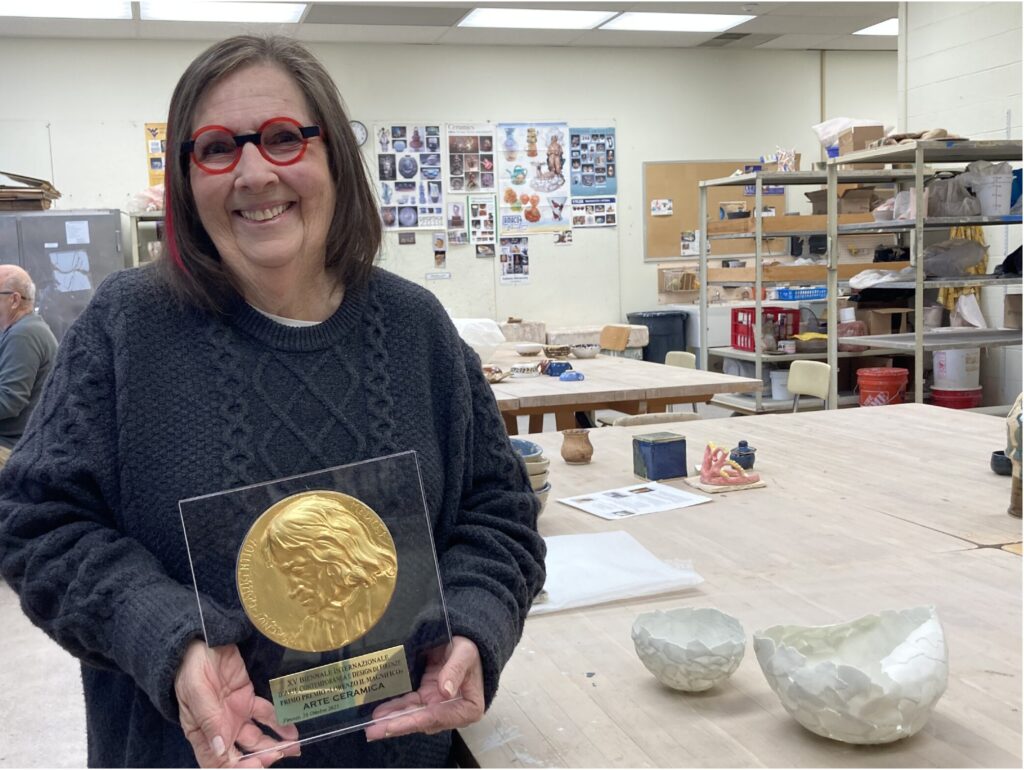
Stephanie Wallendjack holds her first-place award in “Ceramic Art” from the 2025 Florence Biennale in Italy.

Stephanie Wallendjack’s ceramic art is not meant to be perfect.

It is not what she’s going for.

“I kind of like the failures—I embrace them,” the 75-year-old said from a clay-stained table in Room 126A at HACC’s Rose Lehrman Arts Center.

In 2017, the South Hanover Township resident found herself at a ceramics class at HACC post-retirement. After a lifetime working in science, she began exploring art through the community college’s 65+ program, which allows seniors to take most credit courses for free.

She took art history, metalsmithing, glassblowing—but with pottery, she found herself hooked. She is now one of 12 participants in a workforce development program that allows seniors to use studio space at the college. 

“I found a really good incubator for this creative voice I didn’t know I had,” she said.

Eight years later, she was in Italy winning first place in “Ceramic Art” at one of the world’s most prestigious art exhibitions, the 2025 Florence Biennale in Italy.

“Totally unexpected, but also very validating,” Wallendjack said of the experience. “It’s amazing that you can still open new doors and have new discoveries at any stage in your life.”

The discoveries are what she enjoys about pottery. 

Once a nurse in a cardiology unit and later a researcher who reviewed clinical drug trials, Wallendjack is a self-professed “science geek,” who loves intellectual puzzles and details. 

She seems more interested in the process of creation than her works’ ultimate forms. 

If her pottery sculptures crack or flake, it does not rattle her. She thinks of it all as part of the journey.

“Like this piece,” she said, gesturing to one of her works. “You can tell this collapsed, but I love that.”

She then pointed to a big plaster mold on her desk, where one of her newest clay creations laid drying. Her medium of choice, a mix of paper clay and porcelain, draped over a large balloon that she poked a hole in and drained slowly of air.

“When I started playing with clay, I promised myself to not construct anything functional,” she said.

She pulled the balloon away, leaving a shell-shaped fixture behind. Scaly, small pieces of layered clay that, when dry, would allow varying levels of light to pass through.

Wallendjack takes inspiration from repetitive, chaotic patterns found in nature. An entomology lover, she pointed out its resemblance to a mud wasp nest—although, she said, it isn’t meant to look like anything.

“I just want to do a dance with the clay,” Wallendjack said.

She determined it wasn’t dry enough to remove from its mold.

“The clay is pretty wet,” she said, looking a few tables over to studio neighbor and fellow pottery artist John Guarnera for advice. Guarnera has been working with ceramics since he was in high school.

Together, they stuffed crumbled newspaper into the vessel and moved it to a high shelf where it could continue drying. Guarnera added a “Do Not Touch” sign to be safe. 

He spoke highly of Wallendjack’s work, impressed by her new accolade.

“Here’s someone who has come in with no clay experience, who goes down a rabbit hole with fiber clay, a unique area in which some others dabble, but she is fully invested in,” Guarnera said.

Assistant professor of art Kourtney Stone, who teaches ceramics, explained what makes the material special: it is porcelain clay mixed with paper fibers.

“The paper fibers help make the porcelain behave in very specific ways,” Stone said.

Among these—it can be rolled out thinly, which fits with Wallendjack’s artistic style, and it can be reattached easily, using a little water, if a piece breaks off. The clay also lends itself to fast work, as it dries quickly and resists cracking.

“It meshes with the way her brain works,” Stone said.

The former scientist in Wallendjack can be seen in her approach to art—especially since the process is not always smooth sailing. 

“I approach things and they go awry because I didn’t know the rules and I learn from that,” she explained.

She told of one failed experiment: a ball made of “very delicate ribbons of orange, brown and yellow.”

“The whole thing collapsed in on itself,” Wallendjack said. 

But she liked the way the mess looked.

“We fired it. It’s one of my favorite forms,” she mused. “I’ve been trying to create ‘controlled collapse’ based on that failure.”

She said that she also learned through trial and error that she hated working with color. The artist now works exclusively in black and white, with an occasional splash of cobalt. 

Following her blue ribbon in Italy, she said she is looking for galleries to display her work and wants to start working on an even larger scale. 

“It was very humbling being around so many people, most of whom have spent their lives perfecting their craft and finding their voice,” she said. “It gave me confidence to continue to explore these forms and push them even further.”

For more information on Stephanie Wallendjack, visit www.stephaniewallendjack.com

If you like what we do, please support our work. Become a Friend of TheBurg!

Continue Reading

Adventure Together: Fungi are all the rage with our writer and her family this February

We don’t often think of mushrooms as a symbol of winter, but I recently learned that fungi have a strong underground system that produces its own antifreeze to keep the organism alive in the cold. 

In other words, even though the fruiting bodies, or what we tend to think of as mushrooms, die off, the fungi are still alive and flourishing underground. To honor their resilience and let the mushrooms know that we haven’t forgotten about them, even while they’re hiding, we decided to celebrate “Fungi February.”


Funky Fun

To start, my kiddo and I made an upcycled mushroom garland. To make the mushrooms, get a cardboard egg carton then cut out the individual egg holders along with the taller, triangle-shaped dividers. Trim the edges to make everything look a bit more cohesive in shape. There will be some funkiness and inconsistencies, but character is one of the glories of upcycling.

Next step: paint your mushrooms! I went for a classic toadstool vibe, and my kiddo chose the themes of rainbow, rasta and chaos. While your mushrooms dry, head outside to find some sticks to use as the stipes or stems. Break the sticks into 3-to-4-inch sections and hot glue them into the cup of your mushroom. Finally, poke holes in either side of your mushrooms, run a string through, and, viola, your beautiful hanging art piece is ready for display. We put ours in the window as a signal to the mushrooms that we’re thinking of them. Pro tip: These garlands look magical intertwined with faerie lights, twinkling in the nighttime. 


Fit & Fire

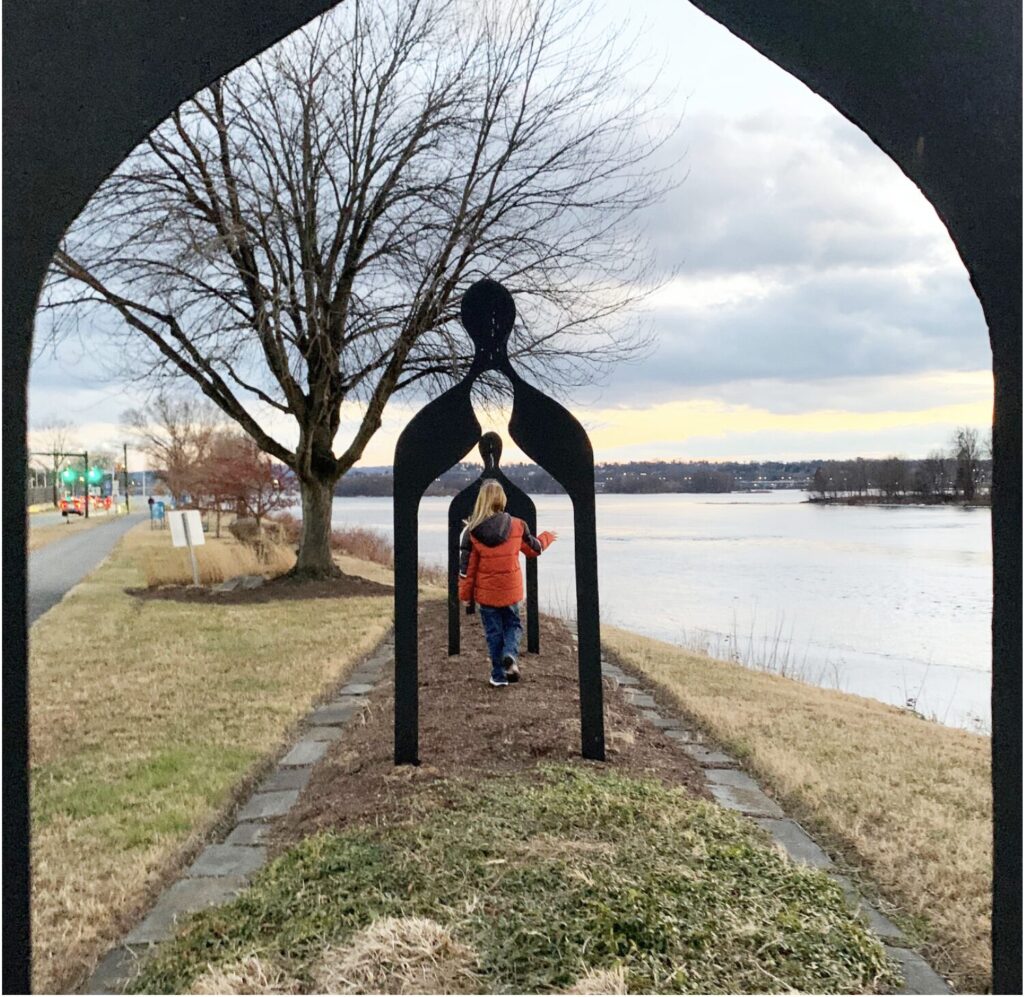
On a not-so-cloudy nor cold day, we visited Riverfront Park, starting at the intersection of Maclay Street then heading north. This section of trail hosts both the Peace Garden, a series of outdoor art installations, and the BlueZone Fit Circuit, a series of public exercise equipment. Never once have we used the fitness equipment properly, but we make up our own games. Sticking with our “February Fungi” theme, we started with the “Log Hop” and pretended the logs were Super Mario mushrooms and that we were Mario and Luigi jumping to earn points. The pull-up station is fun because parents can get a workout by lifting their kids up over the bar 1,000 times. The body curl station can be used as a dramatic backdrop for a child pretending to fall into hot lava, off a cliff, into the ocean, anywhere that poses imminent doom. Parents, work it out again by pulling your kids up and playing the hero over and over again. 

On the topic of drama, the highlight of a central Pa. winter, Harrisburg’s Ice & Fire Festival, is hosting real live fire dancers on March 7. Bringing the heat on a usually frigid night, the fire dancers captivate audiences with their blazing props. For those who’d rather embrace the natural February temperature, the ice sculptures are cool and there’s usually an ice throne to chill in. There’s a scavenger hunt for all ages—be sure to check out TheBurg’s sculpture in front of our office. Local vendors sell their wares, with Deep Creek Glassworx being a favorite, selling many trinkets, including tiny glass mushrooms. 


Stage Center

If you’re still craving more performance in your life, check out “The Little Mermaid” at Harrisburg Christian Performing Arts Center in Middletown. Performances are happening Feb. 6 to 8. We saw “The Lion King Jr.” performed at HCPAC recently, and it was incredible. Just like on Broadway, the young actors brought their story into the audience, dancing and singing in the aisles. Their costumes were epic, and they boldly belted out the beloved songs from the show. Tickets are fairly affordable, so a show at HCPAC can be an accessible introduction to live theatre for a family. 

You can help make these musical productions possible by volunteering with HCPAC. Volunteer opportunities include positions as directors, producers, musical directors, choreographers and stage managers. Anyone who has an interest and skills in theatre or production is encouraged to get involved. The performances these kids put on are impressive, and it would be a wholesome and impactful experience to join the team that helps make these shows happen. Spread the word, see a show, invite your family, and make a cozy winter night of it. 

During “Fungi February,” we explore our many similarities to mushrooms. When it’s too chilly to be outside, we nourish ourselves in other ways, digging deep and forming new pathways. Now is when we notice the parts of ourselves and our communities that may have taken root between the cracks, overlooked. Though the parks and riverfronts may seem empty, there’s culture, events and creativity teeming beneath the surface.

To learn more about the Ice & Fire Festival, visit www.harrisburgpa.gov/events/ice_and_fire_festival.php. 

To learn more about HCPAC, visit www.thehcpac.org.

If you like what we do, please support our work. Become a Friend of TheBurg!

Continue Reading

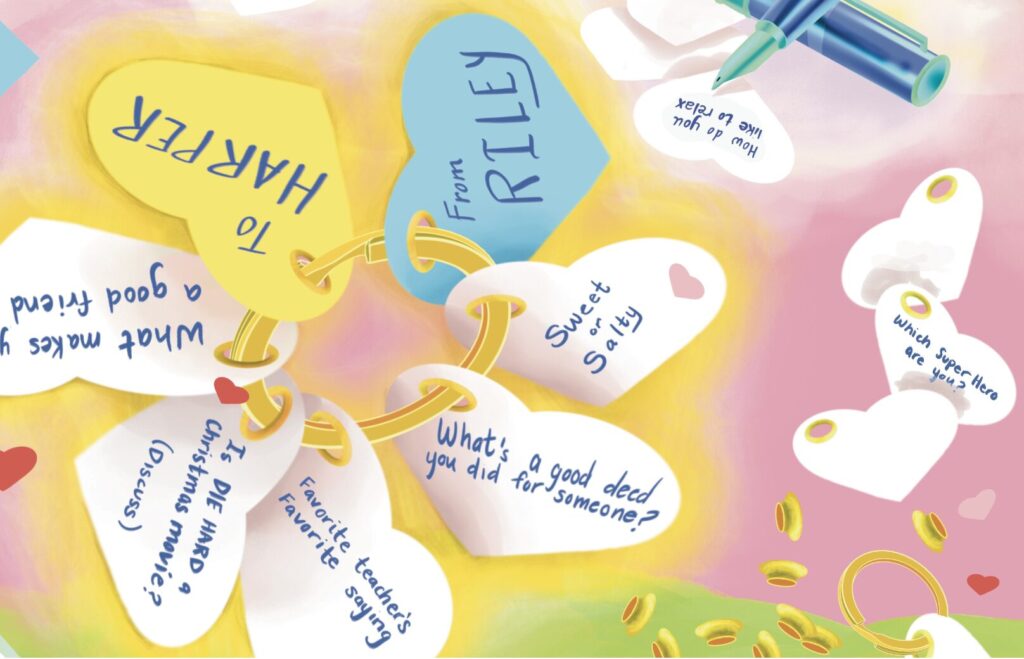
Chatty Crafty: DIY a Valentine’s conversation starter keychain to get the ball rolling for quiet kids

Illustration by Aron Rook

Back in 1980-something, during my elementary school years, most teachers devoted a few art classes to creating Valentine’s Day cards and other crafts every February. Then when the day finally arrived, we slotted heart-shaped candies and trinkets fastened to pink and red cards full of puns and wordplay into construction paper-covered shoeboxes. 

Then there was the anticipation of opening cards from friends, and maybe even your crush. Social awkwardness oozed everywhere like chocolate melted to a candy wrapper. 

In my shoebox, I remember noticing which items were “keepers.” Bonus points went to the moms who DIYed their kids’ valentines, making more of an effort than my own stay-at-home mom who went to K-Mart the night before to purchase the last plastic packet of Super Friends valentines with Batman quipping things like, “You drive me batty” and Aquaman feeling bubbly.

When I asked my daughter about her favorite valentines, I showed her the conversation starter keychain I kept from her childhood. “I was looking for that,” she said, grabbing it from my gripped fist. She now keeps it at her college dorm, spawning late-night chats well into the wee hours. That makes this craft a keeper AND a grabber.

Even back before kids’ faces were glued to iThis and iThat, talking to peers wasn’t natural for some of us. It can be hard to start a conversation. Even when you navigate through your icebreaker topic, keeping a conversation going is a learned skill. This handy prop will encourage your kids to be interpersonally interactive.

Everything you need to DIY your own conversation starter keychain is at the craft store or from online retailers:

  • 2-inch heart-shaped paper punch 
  • Pinking shears
  • Grommet eyelet pliers kit, with metal hole reinforcements
  • Laminator
  • Card stock, 2-4 mm, white and colored
  • Fine marker
  • Keychain rings


Directions:

  1. Punch two hearts out of the colored cardstock using the heart-shaped paper punch. This will be the bread for your keychain sandwich.
  2.  Write something clever on the front and back, like, “Let’s Chat” or “Sweet Talk” or “Happy Valentine’s Day from [Your Child].”
  3. Laminate each heart. 
  4. Cut a border using pinking shears. 
  5. Use grommet eyelet pliers to punch one small hole in the top left side of each heart in the same spot, simultaneously punching a metal reinforcement into place. 
  6. Punch lots of hearts from the white card stock. 
  7. Punch metal reinforcements in the same spot of each white heart. 
  8. Write a question or conversation topic onto each white heart. (See below for sample conversation starters.) Including a second question on the back is optional. So is laminating the middles of the keychain sandwich.
  9. Stack the hearts into your desired order.
  10. String all the hearts onto a keychain ring.

The fun part about DIY valentines is that you can personalize the conversation prompts with inside jokes from your class, references to specific teachers, or even send a message to a crush. You can make them silly, serious or anywhere in between. 

Here are a few suggestions to get you started:

  • What is your favorite…? (song, holiday memory, school lunch, game, hobby, etc.)
  • What is the nicest compliment you ever received?
  • If you could give your parent/teacher/sibling one piece of advice, what would it be?
  • What was a recent act of kindness you noticed?
  • In writing your life story, what would the title be?
  • How would you make the world a better place?
  • Tell me about something that made you laugh so hard that your face hurt.
  • What’s the most courageous thing you ever did?
  • It’s Freaky Friday. Who are you trading places with?
  • Talk about your special talent.
  • You’re in a time machine. What year are you traveling to?
  • We’re going on a picnic. What’s in the basket?
  • What makes you a good friend? 
  • What’s your favorite teacher’s favorite saying?

Happy Valentine’s Day, dear readers. If I were to send a valentine to you, it would read: “You’re the heartbeat of TheBurg!”

If you like what we do, please support our work. Become a Friend of TheBurg!

Continue Reading

Love Birds: Cornish game hens might be right for Valentine’s Day

In 1974 (certainly aging myself here), my husband and parents took a weekend trip to Williamsburg, Va. The weather was glorious: blue skies and warm November sun.

Being a bit farther south from Harrisburg, the butter-yellow Norway maple leaves were still blazing. My father, a painter and photographer, came home from that trip with countless ideas for sketches and paintings. His beautiful Williamsburg watercolors still hang in my home today and warm my heart with happy memories.

But the food inspired us too. We ate in all the historic taverns, including the first night when the Raleigh Tavern served us peanut soup and rock Cornish game hens—a dinner I have always remembered. I was enchanted.

I bought “The Williamsburg Cookbook,” which I still read and use today. Food “fixings” splatter almost every page. I haven’t cooked every recipe but have come pretty close: oyster stew, butter-laden pound cake and eggnog that has to be eaten with a spoon.

I decided to share a recipe, based on that first delightful Williamsburg meal, in my column this month:  Cornish hens with fruit stuffing.

Cornish hens, so named because the breed originated in Cornwall, England, are immature chickens that weigh about 1½ to 2 pounds. I found them at the West Shore Farmers Market, but you can find them at places like Costco and Wegmans as well. They are very easy to cook and provide both white and dark meat just like a larger chicken. They make for a beautiful presentation on a platter garnished with small fruits and leaves. Maybe a thought for Valentine’s Day?


Cornish Hens with Fruit Stuffing

Ingredients for Fruit Stuffing

  • ¼ cup butter
  • 1 cup water
  • 1 package (8 ounces) herb-seasoned stuffing/dressing (like Pepperidge Farm or Arnold)
  • 1 tablespoon grated orange rind
  • ¼ cup seedless raisins or currants
  • 1 large apple, grated with skin on


Ingredients for Hens

  • 4 Cornish game hens (about 1½ to 2 pounds)
  • About ½ cup butter for basting, melted
  • Salt and pepper to taste
  • Fruit such as Mandarin oranges and green and red grapes (optional for garnish)

Directions

The Stuffing

  • Heat the butter and a cup of water in a skillet.
  • Stir in the stuffing ingredients, toss lightly and remove from heat.


Preparing the Hens

  • Remove the hens from their protective coverings and pat dry (inside and out) with paper towels.
  • Place hens on a rack in a heavy roasting pan large enough to hold them fairly close together. You can tie the little legs together with kitchen twine if you wish.
  • Place enough of the fruit stuffing into each breast cavity. Do not over-stuff. If any stuffing remains, place it in a separate baking dish and bake alongside the hens.
  • Brush the melted butter over the hens and place them into a pre-heated 350-degree oven.
  • Roast for about 1 hour to 1½ hours or until a meat thermometer reaches 165 degrees. The hens should be golden brown.


Arrange the hens on an oval platter and garnish as you wish. If the hens are small, a whole one can be a serving. Or you can halve each one with kitchen shears cutting down the backbone. Cranberry sauce and wild rice are wonderful partners to this dish.

I will always remember that sun splashed weekend in Williamsburg and still treasure the recipes I brought home. My husband is fond of saying, “You can’t re-capture rapture.” But, with food and cooking, there are times you really can.

If you like what we do, please support our work. Become a Friend of TheBurg!

Continue Reading

Tastes of Home: Two brothers bring Nepali fusion flavors to Camp Hill

For some, food is simply a mundane necessity.

But for brothers Suman Shrestha and Prakash Kandel, it defines their best childhood memories and still roots them in the culture that shaped them.

“Growing up in Nepal, we were attached to food from the very beginning,” Kandel said. “Whenever we went to festivals to celebrate anything, first came food.”

He and his brother fondly recalled the many Nepalese festivals that they looked forward to every year. And these festivals would revolve around food, they explained. At every celebration, people would contribute their best dishes. 

“We are used to hospitality where we grew up,” Shrestha said. 

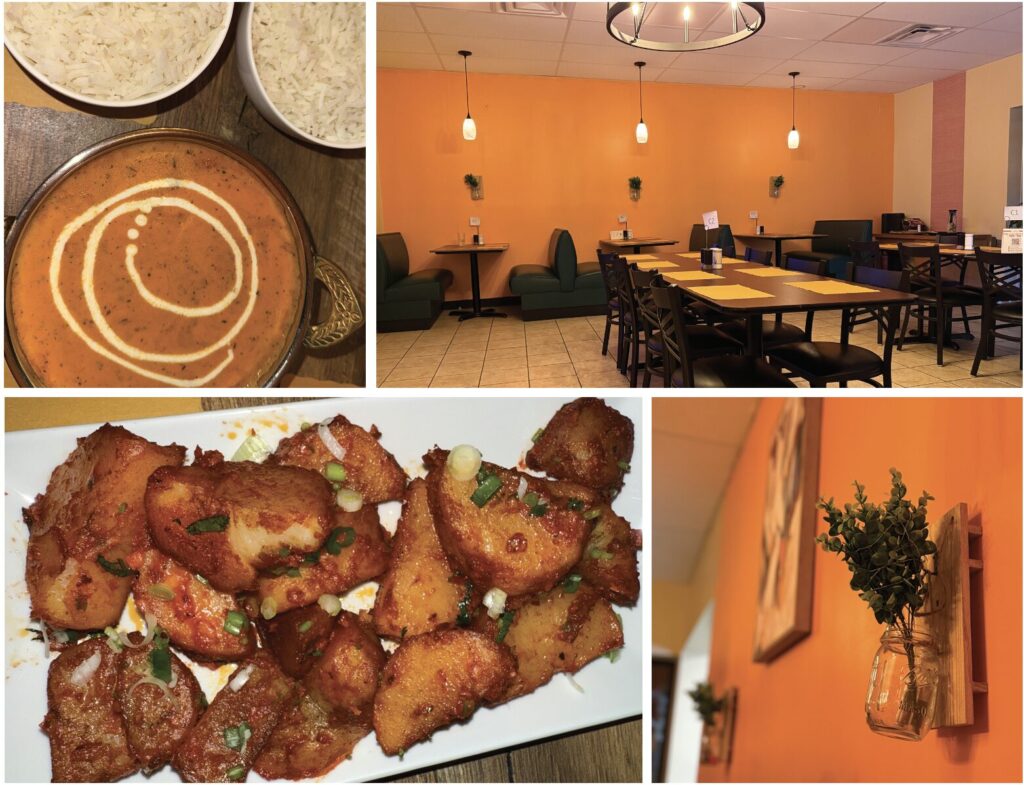
This culture of savoring both rich meals and intentional company inspired the brothers to bring a touch of their heritage to central Pennsylvania at their new Nepalese, Indian and Indo-Chinese fusion restaurant, Curryzone, in Camp Hill.

Shrestha moved to the United States in 2005 and Kandel in 2009, each spending several years in New York before eventually settling in Hershey. When they arrived in this area, they noticed something was missing. While the region boasted several Indian restaurants, there were almost no restaurants offering the dishes they held dearest.

Because of Nepal’s geography and diverse influences, the brothers grew up on recipes that blended traditional Nepalese, Chinese and Indian cooking. 

“Nepalese culture is very rich,” Kandel said. “There are lots of ethnicities; there are 104 languages. So, in Nepal, you are exposed to a lot of food. The northern side is China, and the southern side is India.”

Curryzone came out of their desire to share these unique flavors with their new community. 

“It’s been a dream of mine,” Kandel said. “I’ve always, in the back of my mind, asked how I can serve my community, how I can introduce my food to this community. And I was waiting for a good partner.”

That partner ended up being closer than he expected. The brothers realized their skills complemented one another perfectly. While Kandel runs operations, Shrestha contributes in the kitchen. 


The Fusion

While many in central Pennsylvania are familiar with Indian cuisine, the brothers explained that their style of cooking has its own distinct identifiers, marked by lighter oil, softer spices and more creative blends of flavors.

“We mix the different sauces, like Chinese and Indian sauces, together,” Shrestha said. “That’s the fusion.”

Momos are among the brothers’ most meaningful menu items, tied to countless childhood festival memories. These tender dumplings, filled with seasoned chicken or vegetables, come in several traditional preparations at Curryzone, each paired with house-made Nepali sauces. 

“Momos are Nepalese,” Kandel said. “So, you won’t find them at Indian restaurants.”

Another defining dish is thukpa, a noodle soup with Tibetan origins that has become a favorite across Nepal. Curryzone offers both chicken and vegetable versions, each one served steaming hot in a hearty, spicy broth. Their menu also includes hakka noodles, a popular Indo-Chinese staple made by tossing stir-fried vegetables and noodles with a blend of Chinese and Indian sauces. 

While specializing in traditional Nepali fusion recipes, Curryzone’s most popular dish is its Indian classic—butter chicken. 

“It is definitely our most-selling dish,” Kandel said. 

And it wouldn’t be Curryzone without its namesake dishes—the curries, of course.

“In Nepali culture, goat curry and lamb curry are very famous,” Kandel said. 

In addition, Curryzone offers chicken, shrimp, fish and vegetable curries, as well as a range of vegetarian selections, including palak paneer, matar paneer, chana masala, malai kofta and butter soya.


An Invitation

Beyond the food, the brothers hope Curryzone feels like an invitation into their culture. When guests walk in, they’re greeted by a bright, yet warm space. A calming video of Nepalese scenery plays on a screen, soft music adding to the relaxed atmosphere.

“We have a plan to add more decorations of the theme of Nepal, some ancient Nepalese art,” Kandel said. “It’s very important the restaurant is clean and welcoming.”

While the physical space is still taking shape, the vision is clear. The brothers explained that Nepali hospitality is centered around making guests feel comfortable, cared for and welcomed like family. Creating that warmth is just as important to them as perfecting the menu.

The community has responded. In its first hundred days, Curryzone has been met with an overwhelmingly warm reception from the local crowd.

“So many people say they used to go to Harrisburg or Hershey for food like this,” Shrestha said. “And now they have it right here.”

The restaurant’s reach even stretches beyond the immediate area, attracting customers from as far as Gettysburg and Sinking Spring, from a variety of cultures. 

“All sorts of people are coming in,” Kandel said. “It brings a lot of very different people all together.”

Teri Hagen, a local from New Cumberland, has quickly become one of the restaurant’s most dedicated customers. She first noticed Curryzone as she was driving by on Trindle Road and decided to give it a try. Now, she frequents it on a weekly basis.

“The spices and seasonings challenge me,” Hagen said. “It’s a whole new flavor palette that is delightful. It’s very flavorful. The whole culture—it’s a rich history—and I just want to know the whole thing.”

Curryzone is located at 3800 Trindle Rd., Unit A-B, Camp Hill. For more information, visit www.curryzonerestaurant.com. 

If you like what we do, please support our work. Become a Friend of TheBurg!

Continue Reading

Listening for the Invisible: Director describes the foundation, essence of “Ephraim Slaughter: Freedom’s Witness”

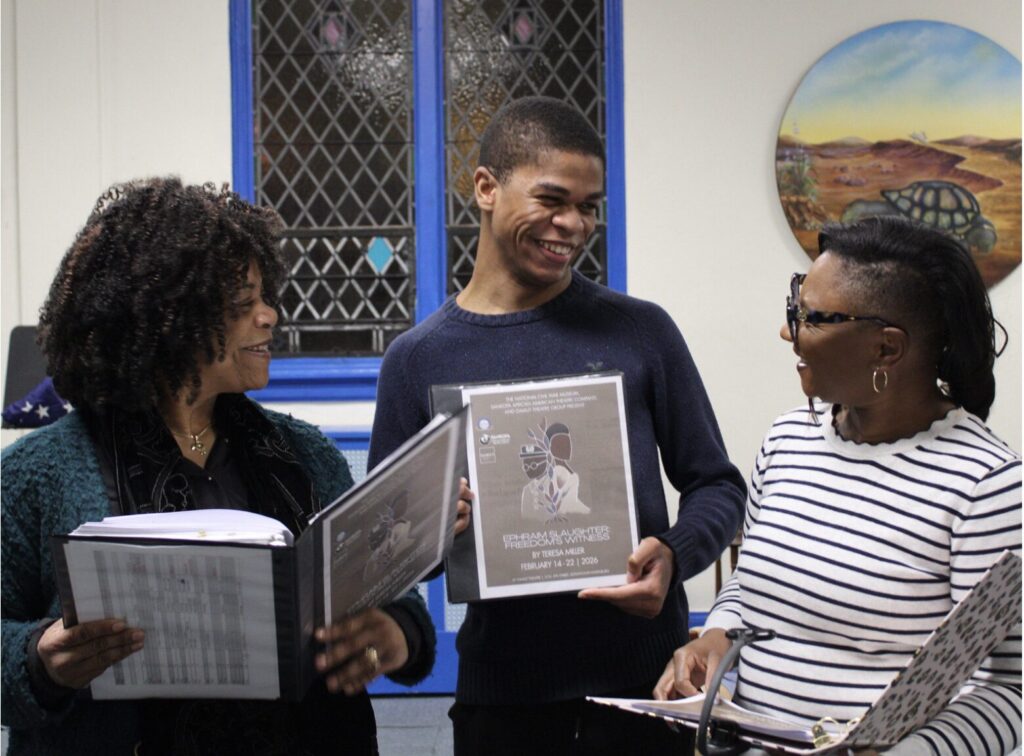
Sharia Benn, Marcus McGhee, Melinda Anderson

The first thing Director Sharia Benn noticed when she encountered “Ephraim Slaughter: Freedom’s Witness” was not spectacle, but restraint.

The play opens without fanfare, with warmth, whispers and a man who watches before he speaks. For Benn, Ephraim’s deliberate quietness was not a stylistic choice but a philosophical one. A man who survived enslavement, war and a system built for erasure does not announce himself loudly. He inventories. He hums. He exists in the spaces history never bothered to record.

That attention to what is felt rather than seen became the foundation of Benn’s directorial approach. “Ephraim Slaughter” is a play populated by voices and presences that do not physically appear—overseers, generals, wives, descendants, futures.

Rather than compensating for absence with theatrical excess, Benn leaned into listening as a discipline. Rehearsal became an exercise in observation of set, costume, sound and breath. The actors were asked to generate interior life so dense that absence itself gained weight.

“Typically, we stage what can be seen,” Benn explained. “This play is an architecture of absence.”

That absence carries historical meaning. The enslaved, the foot soldiers, the women in kitchens, these lives were systematically excluded from documentation. The production honors that reality not by making absence spectacular, but by allowing the audience to feel its pressure.

Time also operates differently in this work. Ephraim does not exit the stage as decades pass; instead, time accumulates in his body. Benn directed the play not as chronology but as layering. Each scene deposits memory into Ephraim’s posture, breath and hands. The same chest that once stood tall enough to contradict a general now carries 97 years of remembering. Hands that once loaded rifles now fold napkins with reverence.

Actor Marcus McGhee, who embodies Ephraim, was asked to carry each moment forward rather than reset between scenes. Violence and tenderness coexist in the same body. When Ephraim speaks of love, the memory of mud and marching boots has not vanished—it lives alongside it. Melinda Anderson as Yvonne Pittman/Narrator serves as a living witness, grounding the story in inherited memory while Afrofuturistic Voices arrive from a future already shaped by Ephraim’s resistance. Past, present and future speak together, refusing linear containment.

This approach reframes Ephraim not as a heroic survivor but as a witness. Benn resisted the impulse to mythologize suffering, choosing instead what she calls “radical ordinariness.” Folding a napkin is not elevated into metaphor. It is an act of care, precise and unadorned. Love is conveyed through facts, laughter, flour-dusted hands, a hum. The audience is trusted to recognize beauty without being instructed where to find it.

Silence plays an equally vital role. When Ephraim refuses to name an overseer, the pause is not defiance but mercy. Naming would give oxygen to someone who does not deserve it. Silence becomes an act of protection, a refusal to feed the past its hunger for attention.

The play’s final question is not comforting. Benn hopes audiences leave unsettled, implicated and listening differently. “Who am I invisible to?” “Who am I refusing to see?” Ephraim’s testimony does not offer closure. It interrupts erasure, if only temporarily, and demands that attention continue beyond the theater.

Making the invisible visible, Benn insists, is not about revelation or spectacle. It is about a shift in how and whom we choose to see.

“Ephraim Slaughter: Freedom’s Witness” runs Feb. 14 to 22 at Gamut Theatre, 15 N. 4th St., Harrisburg, presented by Sankofa African American Theatre Company and Gamut Theatre Group, in partnership with the National Civil War Museum. For more information and to purchase tickets, visit www.gamuttheatre.org/sankofa


UPCOMING EVENTS

At Gamut Theatre
www.gamuttheatre.org
717-238-4111

“Ephraim Slaughter: Freedom’s Witness”
In partnership with Sankofa African American Theatre Company and the National Civil War Museum
Feb. 14 to 22

TMI Improv Comedy Show
Feb. 27 at 7:30 p.m.

If you like what we do, please support our work. Become a Friend of TheBurg!

Continue Reading

Creative Connections: Harrisburg’s leaders of color create community through art, culture

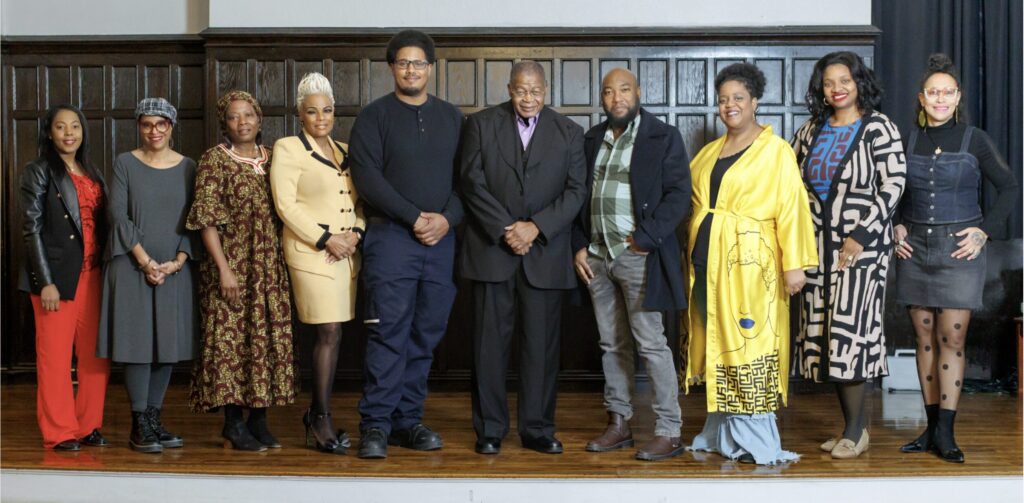
Pictured, from left: Claire Berlus, Roe Braddy, Chantal Nga Eloundou, Contrena Baltimore, Donovan Bailey, Reverend Nathaniel Gadsden, James Berlus, Maria James-Thiaw, Dr. Kimeka Campbell, Reina 76. Photo by John Bivins

I am privileged to write about a special group—leaders of color, all at the top of their chosen fields. From business professionals to poets to community builders and artists, all are working independently and together for positive change in Harrisburg. 

The Communicators

Dr. Kimeka Campbell’s name is synonymous with positive change in Harrisburg. 

Drawing on her vast background as a political adviser, healthcare strategist, nonprofit leader and cultural storyteller, Campbell uses her voice to create a better life for her community. At the Harrisburg Regional Chamber & CREDC’s 2024 Catalyst Awards, she won “Diversity Influencer of the Year” for her role as host of Black NewsBeat and cofounder of Young Professionals of Color-Greater Harrisburg.

“My future is focused on building communities where belonging is the starting point,” Campbell shared. “Not the reward.”

This focus was born in her college days at Penn State University, where she remembers watching Black and Brown students “link arms and create change wherever they stood.”

“I wanted to be part of that kind of power,” she said.

Campbell, who earned a Ph.D. in adult and comparative international education at PSU, said she leaned into this in graduate school. 

“I started studying how people build community out of whatever they have and wherever they are,” she said. 

She learned that, sometimes, tensions and contradictions work against creating connection. 

“That is when I understood my calling,” she said. “My work is to create belonging and connectedness that helps people bond and move the entire community forward.”

Rovenia “Roe” Braddy is at the top of her game as an author, a playwright, a director and the editor-in-chief of Black Wall Street PA. 

Braddy oversees the news publication, which is designed for people of color, yet appreciated by all. As a retired educator, she espouses a voice of clarity and conviction.

“We can’t do this alone. We need each other,” she said. “No man, woman or child is an island.”

She is also a social justice poet and a theatrical producer, director and playwright, as well as an award-winning romance novel author.

As a community board member for Sankofa African American Theatre Company and Nathaniel Gadsden’s Writers Wordshop, her impact on our region is felt across the disciplines of art. 

“Community has always been my thing. I like being around people,” she said. “I am someone who thrives off the energy of my surroundings.”

As the place where she’s discovered her calling, built a home and a family, and found her tribe, she considers Harrisburg a great surrounding.

“Harrisburg is my community,” she said. “Let’s get together, stay strong, and help our city to thrive.”

A transplant from Seattle, Wash., celebrated poet, author and playwright, Maria James-Thiaw is a treasured gift to Harrisburg.

James-Thiaw fell in love with poetry as a child. Her late father, Richard James, was a published poet, so it was natural for her to pay tribute to him through verse. Awards followed as early as the age of six. 

“Poetry can teach us to understand and use language in a more precise and visual way,” James-Thiaw said. “It can teach us about the history and culture of a people. It can teach us to listen and to have empathy for one another. Poetry is as old as humanity and as new as tomorrow’s news.”

James-Thiaw was mentored by Harrisburg poetry pioneers Rev. Nathaniel Gadsden and Marty Esworthy. She received a Legacy Award from The National Black Writers Tour and in 2014 won a Catalyst Award for “Business Diversity” from the Harrisburg Regional Chamber & CREDC. 

The Civic Club of Harrisburg’s president Contrena Baltimore has been a valued part of the community since 1991.

She has implemented programs at the club to embody unity, empowerment and cultural pride.

“My focus continues to center on service, education and collaboration—values that reflect my lifelong belief: ‘It’s bigger than us,’” she said. “I’m grateful for the opportunity to contribute to the Civic Club’s enduring legacy and to help build bridges that strengthen our community for generations to come.”

Contrena made history as the Civic Club’s first Black president. Among her inaugural initiatives were the installation of the Women’s History Garden, a tribute to the club’s legacy of women leaders. Prior, she founded the Keystone Math and Science Academy and served as its director for over a decade.

Creators, Artisans and a Bridge

When it comes to branding a business, it is hard to keep up with the Joneses. If you have a brilliant idea but need help reaching a client base, look no further than Collab Create HBG, owned by Ivan and Paige Jones. The space offers studios for photography and videography, audio booths, co-working space and office rentals.

“We’re building a collaborative home where creators connect, businesses flourish and innovative ideas come to life,” said the couple. “We love being a part of people’s journeys and supporting their ideas as they turn them into reality.”

Another artistic Harrisburg couple are Haitian-born James and Claire Berlus. 

“As a couple, we share a special bond of creation. It transcends love and speaks to a feeling that you can’t put into words,” James said.

James is among a stellar group of artists that comprise the Civic Club’s United Artists Advisory Council. James draws on his experience as a video and graphic designer, web producer and photographer to bring technical mastery and historical awareness to the art he creates of his home country.

Claire also creates ethereal paintings. Their work encapsulates Haiti’s struggle, resilience and will to thrive.

Artist Donovan Bailey is a photographer, typographer and graphic designer.

“My aim is to create work that feels authentic, energized by the worlds that inspire me,” he said, noting that beauty is often found in unexpected places.

He is also a ceramist who creates Raku and Kintsugi-inspired pottery. Both Japanese pottery techniques involve unique, cracked finishes.

“True beauty lies in its imperfections,” he said.

Located on N. 3rd Street, Nyianga Store has roots thousands of miles away in Africa. 

“The store that I call home extends the whole way to Cameroon,” said its owner, Chantal Nga Eloundou.

Eloundou brings her culture to Harrisburg, selling African goods. She established the store in 2018, selling clothing, jewelry, ornamental masks, beauty products and art. 

All merchandise is made by hand. 

“My mission is to be the bridge between African and American,” she said. 

Hall of Fame

Rev. Nathaniel Gadsden is a former poet laureate of Harrisburg, who has carved a path for countless writers, poets and playwrights in the area as a community leader.

He founded an eponymous Writer’s Wordshop in 1977, which he refers to as his “gift from God for the past 48 years.”

“Through it, I found my voice, established a platform for poets and writers of all genres, and made friends with talented, creative, servant leaders who want to change the world with words and storytelling,” Gadsden said.

He attributes forward progress in his life to many of its members.

“Their vision, perspective and cultural lens, which is reflected in their poetic voice and storytelling, has helped me to grow spiritually,” he said. “I can truly say I have developed a better sense of cultural humility, and tolerance of ‘the other’ because of its participants.”


Epilogue

It helps to have a game changer in your life; we could all benefit from one.

My art world catalyst is someone I regard as a friend, Reina R76. In last February’s issue, I wrote that she coordinated the artists profiled, and, this year, she masterminded the effort too. She sincerely wants her entire community to be successful and does all in her power to make that happen.

A kinetic force at studio #104 at Millworks, Reina is truly an original one-of-a-kind. Her goal is that all people of color get their opportunity to shine on the stage of our city of Harrisburg.

If you like what we do, please support our work. Become a Friend of TheBurg!

Continue Reading

History, Restored: Gettysburg’s first Black history museum will highlight the area’s vibrant community

Jack Hopkins

Gettysburg and American history go hand in hand, but one group of people often has been left out of the story.

Soon, that will change, as the Hopkins House Museum is set to become the town’s first museum devoted entirely to Black history.

Once home to Jack and Julia Hopkins, the 1840s log cabin is the last surviving Civil War-era house in Gettysburg historically owned by Black residents. The cabin, which was dilapidated and condemned just a few years ago, is in the process of being restored and expanded with a state-of-the-art museum addition, which will tell the story of Gettysburg’s Black community from slavery to the present day.


Celebrating Community

Jack Hopkins, a well-known figure in the Gettysburg community, worked for more than two decades as a janitor at what is now Gettysburg College.

“He was very much loved by the students and the faculty,” said Jean Howard-Green, president of the Lincoln Cemetery Project Association and a trustee of the local history nonprofit, Gettysburg History. “It was called the PA College at that time. When you read his obituary, you can see that they gave him an honorary VP title.”

Hopkins’ son, Edward, fought with the U.S. Colored Troops during the Civil War. 

“The fact that they fought for their country, despite not being fully recognized as citizens themselves, speaks to their caliber,” Howard-Green said.

Edward later went on to become Gettysburg’s first Black elected official. 

As a Gettysburg native, Howard-Green is well-versed in the aspects of the area’s history that have been overlooked and believes the museum will fill in those gaps.

“We want people to know what our little community was all about—from slavery to the Civil Rights Movement and beyond,” she said. “At one time, we were relegated to three streets—but they were three incredible streets.”

Those streets boasted everything the community needed: barbershops, restaurants, pool halls and other amenities.

“That’s what made living in this area great—we had things to do and places to go,” she said.

Howard-Green added that, although those streets were predominantly Black, they did live alongside white neighbors.

“We lived peaceably with each other,” she said.

Andrew Dalton, CEO and president of Gettysburg History, said that the museum will highlight lesser-known figures like Mag Palm, a local washerwoman and Underground Railroad figure who fought off kidnappers, even biting off one attacker’s thumb. Another is Basil Biggs, a tenant farmer and self-taught veterinarian, whose grim job during the Civil War was to disinter and re-bury about 3,000 Union soldiers after the Battle of Gettysburg. 

Dalton said that Black families were largely confined to the Third Ward for decades.

“Realtors wouldn’t show them properties,” he said. “That went on from the beginning of the town’s history and, incredibly, until the 1960s.”

The Hopkins House is partnering with the Lincoln Cemetery Project Association to connect the stories of everyday life with the stories of those buried in the region’s historic Black cemetery, ensuring that Black legacies are honored holistically, both in life and in death.


Collections & Exhibits

During the restoration, crews discovered more than 100 artifacts within the walls of the home.

“We also have artifacts that were donated to the Historical Society over the years,” Dalton said.

Howard-Green added that community contributions continue to play a role.

“We’ve been reaching out to the community for additional artifacts and are gladly in the process of accepting more,” she said.

If anyone has artifacts to share, contact [email protected], she added. 

Howard-Green mentioned a recent acquisition—an oral history of an older Black woman, now deceased, who was active in St. Paul AME Zion Church.  

The goal of Gettysburg History is to raise $2 million for the museum project. They are currently halfway there thanks to grants and private donations.

Howard-Green said that the project is deeply meaningful to her.

“When you are a person of color and you know your history hasn’t been fully told, to be part of bringing the full story to fruition is something that makes me very happy,” she said.

The Hopkins House Museum is located at 219 S. Washington St., Gettysburg. For more information, including how to donate, visit www.gettysburghistory.org/hopkins-house

If you like what we do, please support our work. Become a Friend of TheBurg!

Continue Reading