From Renovation Inspiration to Celebrity Appearances: The 2026 Home + Garden Show Arrives in Harrisburg

Meet celebrity guests Richard Karn and Virginia Chamlee at central PA’s largest home show.

With more than 200 of the area’s top home and garden professionals showcasing the latest products and trends, the 2026 Pennsylvania Home + Garden Show will provide homeowners and consumers with an abundance of inspiration and solutions from Thursday, March 5 through Sunday, March 8 at the PA Farm Show Complex & Expo Center in Harrisburg.

The region’s largest home show is the most comprehensive and convenient resource for fresh ideas, practical advice, innovative products and fantastic deals in remodeling, home improvement, interior design and outdoor spaces.

As Show Manager Jenna Naffin said, “There’s no need to spend hours searching on the internet when you can make one visit to the Pennsylvania Home + Garden Show to talk to trusted home and garden professionals and find everything you need for your home projects.”

Show visitors will experience a welcome burst of Spring in the show’s expansive gardens and impressive outdoor living displays created by the region’s top landscapers, contractors and nurseries. They can also acquire pro tips from local and national designers and experts, explore small-space living solutions, and shop for fresh Spring flowers, plants, and exquisite, locally-made artisanal items.

But that’s just a start – Pennsylvania Home + Garden Show’s many special features and events include:

Celebrity Guest Appearances

  • Richard Karn is known to millions of TV viewers from his role as Al Borland in the hit show Home Improvement and as a former host of Family Feud. He’ll talk about Home Improvement, his own carpentry experience, and more, as well as answer audience questions and meet with attendees following his Main Stage appearances on Friday, March 6 at 6 p.m. and Saturday, March 7 at 11 a.m.
  • Virginia Chamlee is the artist, writer, author and thrift shopping expert whose book Big Thrift Energy is the comprehensive guide to finding secondhand treasures. She’ll share her experiences and valuable advice on the Main Stage before meeting with show attendees on Thursday, March 5 at 5 p.m. and Friday, March 6 at 1 p.m.

Exclusive Features

  • Expansive garden displays and outdoor living exhibits showcasing the latest trends and offering endless inspiration, created by A.H. Reiff Landscape Supply, Burdges Water Gardens, Jesse James Hardscaping, DJR Landscaping, , and QnC Construction
  • A plethora of fresh, colorful blooms and spring plants from local greenhouses and purveyors, including Ashcombe Farm and Greenhouses’ mobile plant shop, Fern, and Palmyra Greenhouse’s vintage flower-filled truck, Rosie
  • Plant Bar where visitors can design and make their own custom potted houseplants to bring home, and a fully-stocked Garden Market loaded with plants, gifts and decor, both from Plantscapes By Design
  • Street of Small Space Living featuring TSI Sheds and Lancaster Log Cabins that demonstrate how compact living solutions – a high-end park model, a stylish cabin, and a cozy A-frame cabin – can enhance your lifestyle, add value to your property, and bring simplicity and sustainability to your life
  • Immerse Yourself In Color with David’s Interiors’ fully-decorated rooms that celebrate rich, saturated hues and layered tones, showing how to embrace color as a statement and turn your home into a masterpiece of bold elegance
  • Spring Luxury Picnic & Tablescape by Backyard Bliss is an enchanting, Spring-inspired display that blends luxury picnics, elegant event décor, and artfully designed tablescapes to inspire stylish seasonal gatherings of all sizes
  • Local libations and more: Sample and bring home wines from Juniata Valley Winery’s relaxing Wine Garden, and play family-friendly backyard games while sampling and purchasing spirits from Hazard’s Distillery’s Whiskey Backyard
  • Potting Shed Perfection – Built by Dauphin County Technical School students, this attractive and practical structure helps with garden planning, storage and cultivation, and will be auctioned during the show
  • Tiny Home – Students from Dauphin County Technical School have built an 8′ × 22′ tiny home complete with fully functioning electrical and water systems. Perfectly suited as a hunting cabin or simple in-law quarters, this tiny home is a practical and affordable option.
  • Ask A Designer! Attendees with questions about home design can consult (for free) with Abby Fitzgerald, interior designer and owner of Fitz Haus Interior Design
  • Grow + Gather + Create by Stoltzfus Storage Sheds showcases three trending outdoor spaces—a cozy she shed for relaxation, a lush greenhouse for cultivating plants, and a versatile studio shed for unleashing creativity
  • Specialty markets: Harrisburg’s Homegrown Market offers unique items from local artisans and retailers, and The Barking Lot pet market is filled with treats, toys and accessories for four-legged family members, from which a portion of sales will help support Canine Rescue of Central PA
  • Doggy Fashion Show on March 7 at 12 p.m. will feature a family-friendly, crowd-pleasing parade of adorable, adoptable dogs from Canine Rescue of Central PA, all dressed in their Spring finery

Tickets & Discounts

  • $11 each for adults at the box office, and free for children ages 12 and under
  • $2 discount on adult tickets when purchasing tickets online (through March 4)
  • $4 adult admission after 4 p.m. (at box office)
  • Senior Day – Thursday, March 5: All show visitors ages 60 and over receive a 50% discount on admission at the box office (with valid ID)
  • Hero Day – Friday, March 6 All active military personnel, veterans, firefighters, police, first responders, nurses, doctors and teachers get one free admission at the box office (with valid ID)
  • Friends & Family Day – Sunday, March 8 Visitors will enjoy 2-for-1 priced tickets after 1 p.m., and fun family activities including free face painting for kids
  • The Book Bank benefitting The Four Diamonds Fund & Children’s Miracle Network Show visitors who bring a new book to donate to the Book Bank at Hershey Medical Center in Hershey, PA to help to build a “library of love,” will receive $2 off tickets at the box office. The children undergoing treatments at the center will be able to enjoy the books together with their families during a difficult time for them.

Location: PA Farm Show Complex & Expo Center (Main Hall), 2300 N. Cameron Street, Harrisburg, PA 17110. Enter the parking lot as directed and enter using the Maclay Street entrance.

Show hours
Thursday, March 5: 12 p.m. – 8 p.m.
Friday, March 6: 10 a.m. – 8 p.m.
Saturday, March 7: 10 a.m. – 8 p.m.
Sunday, March 8: 10 a.m. – 6 p.m.

Parking info, list of exhibitors, and all other show info is at www.pahomeshow.com

Follow the PA Home + Garden Show on Facebook and Instagram

Sponsored Content

 

Continue Reading

With sloths and other slow movers, live animal exhibit opens at Whitaker Center this week

A chameleon

A new exhibit featuring live animals opens at Whitaker Center on Friday.

“Survival of the Slowest: Counterintuitive Adaptations” will teach visitors how some of the world’s slowest-moving species have adapted to survive using defenses that make speed irrelevant.

Like how rattlesnakes use venom to kill prey so they can eat at their leisure. Or how sloths’ slowness and nocturnal nature sets them up to avoid their main daytime-hunting predator, harpy eagles.

The exhibit boasts 19 habitats containing live animals and plants—this includes the two-toed sloth, green iguana and chameleon alongside dozens of other slow species.

“We know our community is hungry for programming that challenges and inspires,” Mary Oliveira, president & CEO of the center, said. “This exhibition delivers that, and we’re proud to bring it to Harrisburg.”

Oliveira added that the program is sure to spark curiosity and deepen visitors’ connections to the natural world. 

Hands-on encounters and live educator-led presentations will run in line with the exhibit to show visitors how slowness, camouflage, venom, energy conservation and other traits enable entire species to survive.

Produced by Canada’s largest exotic animal rescue organization, Little Ray’s Nature Centres, the exhibit runs Feb. 27 to May 24. The Whitaker Center is open Friday to Monday from 10 a.m. to 5 p.m.

For more information on the exhibit, visit the Whitaker Center’s website.

If you like what we do, please support our work. Become a Friend of TheBurg!

Continue Reading

Harrisburg officials explore overlap between challenges facing the city, the schools


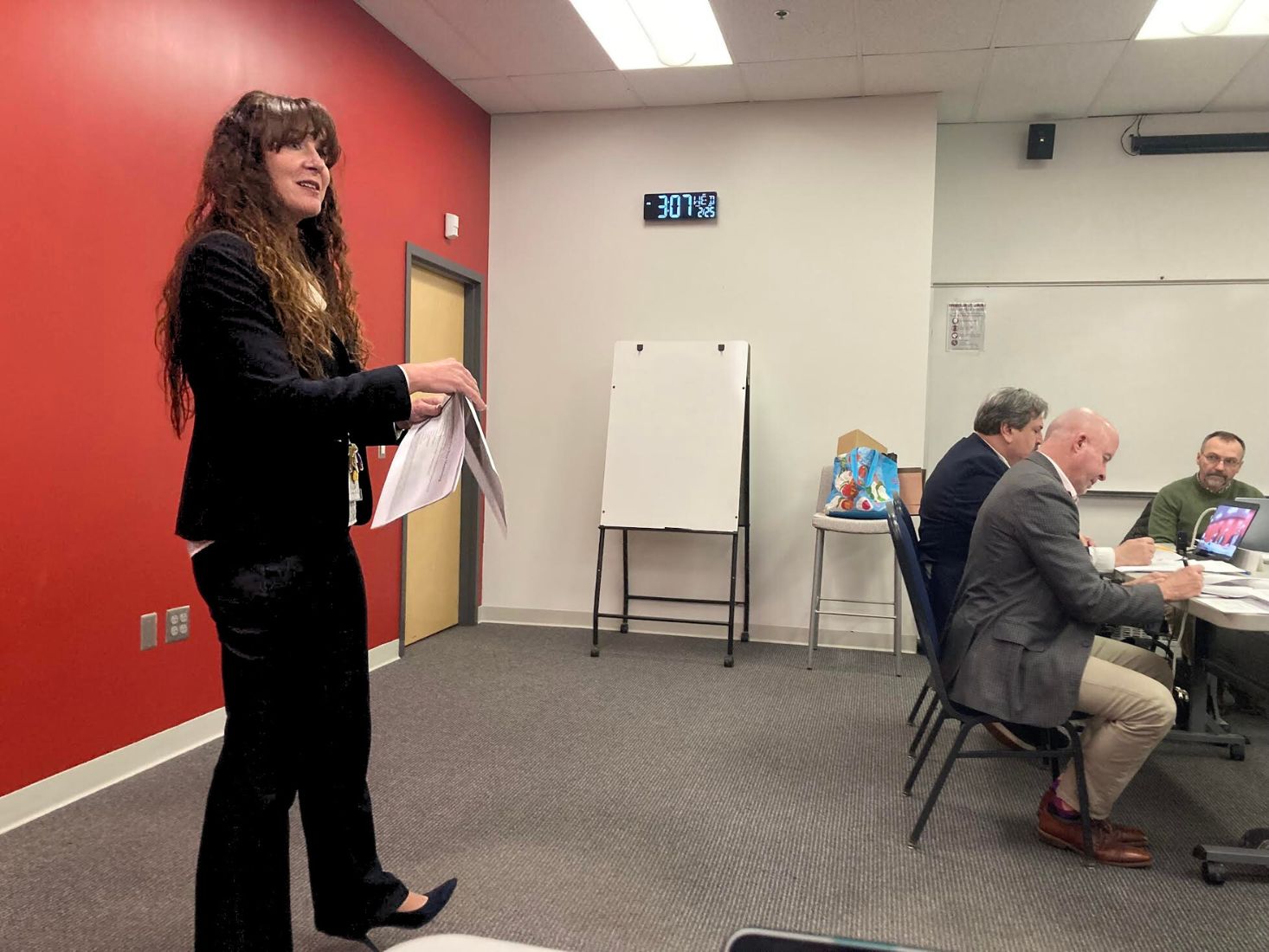
Harrisburg School District officials speak with the Intergovernmental Cooperation Authority.

Harrisburg city and the school district share a unique set of challenges, including financial issues arising from past overspending and a declining tax base, which both were discussed by city officials at a Wednesday meeting.

At the Intergovernmental Cooperation Authority’s (ICA) monthly meeting, board chair Doug Hill welcomed top officials from the Harrisburg school district to present an overview of the district’s finances.

“You have a comparable history to ours,” Hill told district Superintendent Benjamin Henry and Chief Financial Officer Marcia Stokes. “Not identical, but have had some financial issues that you’ve wrestled with, with some success, as has the city.”

While the entities operate separately, both entered into various forms of state oversight around 15 years ago due to unlinked financial management issues. 

As the city was plagued by mounting debt from a failed waste-to-energy incinerator project, the school was almost simultaneously struggling with debt caused by hundreds of millions in school renovations. The state placed the city under Act 47, a program for financially distressed municipalities, in 2010. Two years later, in 2012, the state appointed a chief recovery officer for the school district. Still struggling in 2019, the state appointed the district a receiver.

While the district exited state receivership last year, Stokes emphasized the city and schools’ situations are to some extent linked as the district can not exit financial monitoring until the city itself exits its own recovery status under Act 47.

Hill noted another overlap between the two.

“We are all reliant on some of the same tax bases,” he said.

It’s a tax base that often proves challenging for two entities already struggling financially. Stokes noted during her presentation that in 2011, the district had just under $1.6 billion worth of taxable assessed value. Last year, it dropped to under $1.5 billion.

“Over nearly a 15 year history, where most municipalities are increasing in assessed value, we have continued to decline,” Stokes said.

She added that properties in Harrisburg have a greater percentage of untaxable assessed value than those that are taxable. This is largely due to the sprawling state footprint, an entity that does not pay property taxes. As a high-poverty, underfunded district, Harrisburg schools also rely heavily on state aid. Stokes said 60% of district revenue comes from the state.

“If we made a perfect world and all of our properties in our municipality were taxable, that would be another $49 million per year that the district would be able to generate in tax revenue,” Stokes said. “$49 million every year we never can tap into for a source for supporting education.”

ICA board member Kathy Speaker MacNett said that a big obstacle—in the way of both the city and the district’s retention of a more taxable population—was the reputation of Harrisburg schools.

“Young couples move here, establish home bases, and when kids come into the picture—they go elsewhere,” MacNett said.

Henry said the district was looking to address this problem by sharing more of its success stories.

“We have great schools. We have kids that get scholarships to go off to college. We have some great opportunities for our kids in the community, but we have to get out there and tell the story,” he said.

Marcia Stokes presents to the Intergovernmental Cooperation Authority.

He and Stokes listed a few: the district brought back its musical theater program last year (after roughly two decades without one), started an eSports league, and has secured a fleet of 13 crossing guards to help elementary school students walk to school.

Stokes said in the future the district would be interested in collaborating more closely with the city to go after grants that would be beneficial to both parties and to increase the availability of out-of-school activities for students.

“We need to focus on becoming a suitable choice for the residents within the community and that means improving both our image and our product that we’re putting out there,” Stokes said. “And if we can do that, then I think that’s a contribution we can make into the revitalization of the city itself.”

Henry said that the district works hard every day to make change happen.

“We have to turn the corner on what we’re producing and we are doing this every day. But again, it takes all of us,” he said. “It can’t take the school district in isolation. It takes the whole community to come together in order to move the needle on academics and get people to understand that we have a great city.”

To learn more about the ICA, visit its website.

If you like what we do, please support our work. Become a Friend of TheBurg! 

Continue Reading

Weekend Roundup with Sara Bozich

Plan your weekend with my weekly list of things to do around Harrisburg and central PA!

What you’ll find below:

For something new: Survival of the Slowest opens Friday at Whitaker Center

Worth noting: Harrisburg Symphony Orchestra Capital Blue Cross POPS 4: Golden Age of the Silver Screen this weekend; Maple Sugar Festival is Sunday at Fort Hunter Park

Things on my agenda this weekend: professional dev, yoga, youth baseball, dog-sitting, ??

Thursday

Friday

Saturday

Sunday


If you like what we do, please support our work. Become a Friend of TheBurg!

Continue Reading

Staying on Beat: New foundation honors friend while helping children explore music

Illustration by Aron Rook

All drummers have a shorthand. Time signatures. Tempos. Attack. Groove. “On the one.”

Walk into a room filled with anyone who can carry a beat, and you’ll hear those words float through the air with ease. It’s a fraternity that substitutes the chaos of “Rush Week” with the prowess of a paradiddle.

That’s why, when losing one of its own, the drumming community is affected in ways that expand beyond a set of sticks.

Enter Ben Smith, a local drummer who suddenly passed away in March 2025 at the young age of 39. His passing sent shockwaves through the local drumming community—not only was he a revered drummer by his peers, but he was also an inspiring human being.

“After he passed away, we all got together and decided we wanted to do something for him,” his friend and fellow drummer, Steve Kurtz, said. “And we decided, ‘What better way to honor him than to encourage people to drum and share a love of music?’”

Almost instantly, the Downbeat Foundation was born. To honor Smith, Kurtz led the charge to create a nonprofit that provides drum lessons and instruments to children who couldn’t otherwise afford them throughout the Harrisburg area. Students in grades four through 12 are eligible for the program, and those interested can apply on the foundation’s website.

Partnering with Kurtz, who serves as the chair of the board of directors, and his crew is Dale’s Drum Shop, which provides the lessons for the children enrolled in the program. Downbeat funds drum lessons, drum kits for those who need one to practice at home, and transportation to and from the lessons, should transportation be needed.

“All we want to do is reduce the monetary burden on families for kids who want to play drums,” Kurtz noted. “If there’s a barrier for students, we want to take care of it. We feel we are in a ripe area for students who are underserved, but music can be such a great creative outlet. We’re glad to have a substantial impact on families in such a short amount of time.”

The goal for the first year of the foundation is to raise $100,000. So far, after only four months in existence, the nonprofit has raised about $50,000 for its cause. Five students are currently enrolled in the program, which speaks to the greatest unforeseen hurdle that Kurtz has encountered thus far: exposure.

 “When we said, ‘OK, let’s do this,’ I thought one of the biggest issues would be raising funds,” Kurtz explained. “But the thing I underestimated the most is outreach. Spreading awareness has been more of a challenge than any of us thought it would be. I thought it’d be easy from a student standpoint and hard when it came to business infrastructure, but it’s been the opposite.”

Downbeat’s financial security can be thanked, in part, by its most famous fundraiser, May Jam. Set for May 16 at Royal Winery outside of Harrisburg, the music festival will be headlined by Emily’s Toybox and also will feature the Syn D’Cats, which includes Ben’s uncle, Matt, who is a former member of Poison, on guitar.

The festival dates back decades to when, in the early 2000s, Ben was part of a group that organized the original incarnation of the event. It only felt proper to bring it back in Ben’s name, Kurtz said, while also using it as a vehicle to spread the word about the foundation.

Still, even as the nonprofit continues to grow, its success has been somewhat bittersweet, considering how losing Ben was at the center of its formation. Even so, Kurtz was quick to point out that he can’t help but think of how thrilled Ben would be to know how the legacy of his life continues to help bring more music into people’s lives.

“Ben was one of the most humble people you can meet,” Kurtz reflected. “He’d give anybody the shirt off his back, and I think he’d just be overwhelmed at the fact that we’re even doing this. He was always incredibly happy, giving back to others.”

“I can see him smiling,” Kurtz added, without missing a beat. “Everything about this just screams, ‘Ben.’”

For more information on the Downbeat Foundation, visit www.thedownbeatfoundation.org.

If you like what we do, please support our work. Become a Friend of TheBurg!          

Continue Reading

Safe Spaces, Familiar Faces: For queer and trans people of color, this LGBT Center program fosters social engagement and community

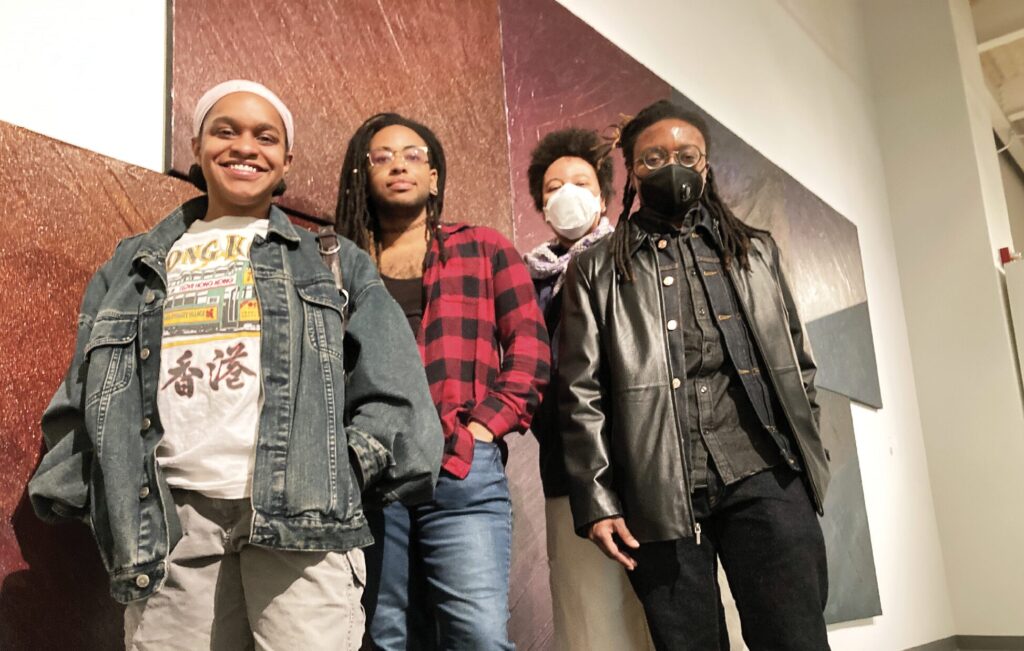
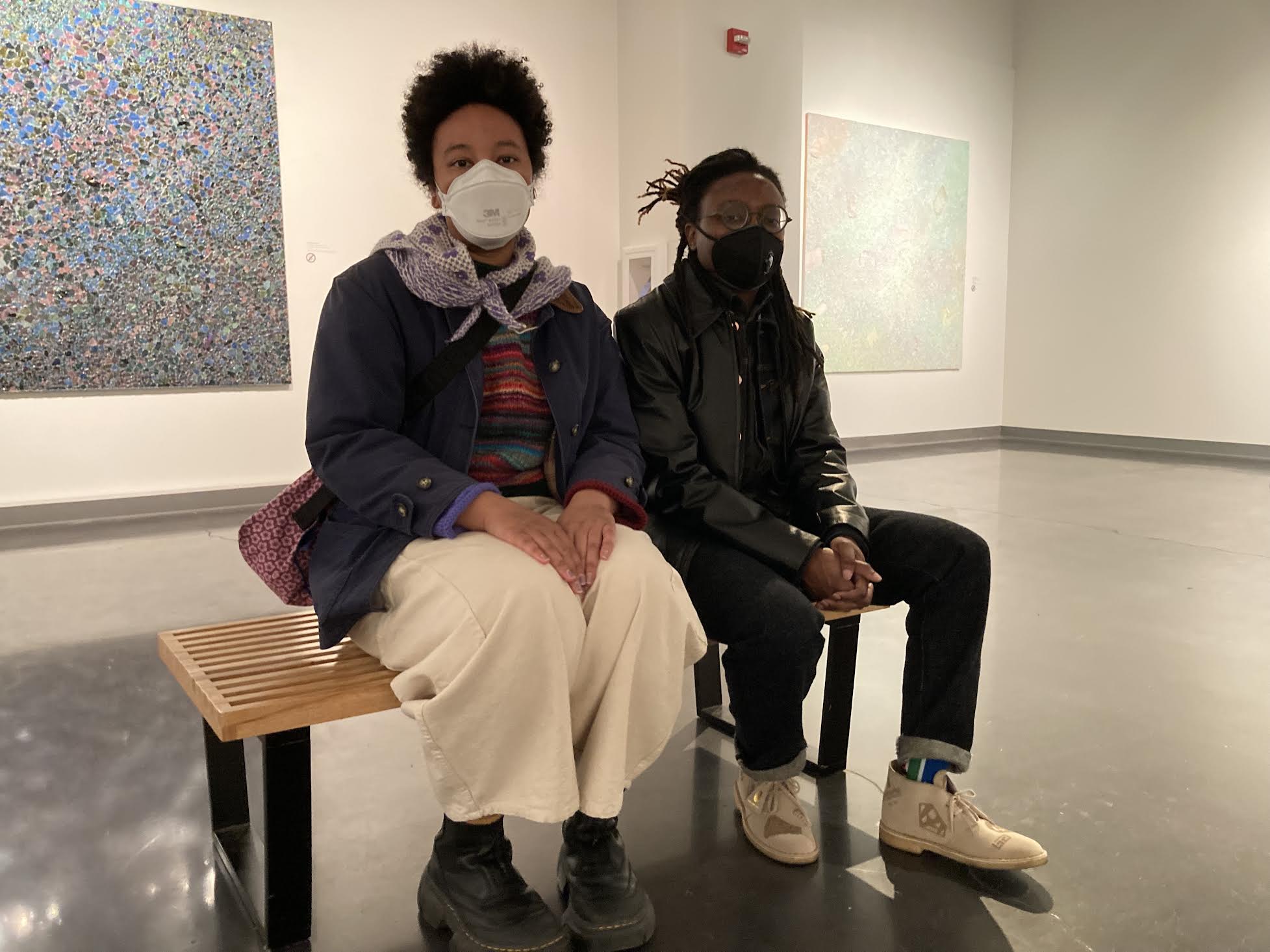
From left: Cyè Jacobs, Mav Atis-Valentine, Meridian and Zaire

When Mav Atis-Valentine showed up for their first QTPOC Collective meetup, they weren’t sure what to expect—they didn’t know anyone there.

But after moving to Harrisburg a few years ago from Bellefonte, they decided to start “getting out there” and finding community with other queer people of color in the area.

“It was scary,” they said. “But that was the first step in creating some connection in my life.”

“One thing about community that’s important is showing up,” they added.

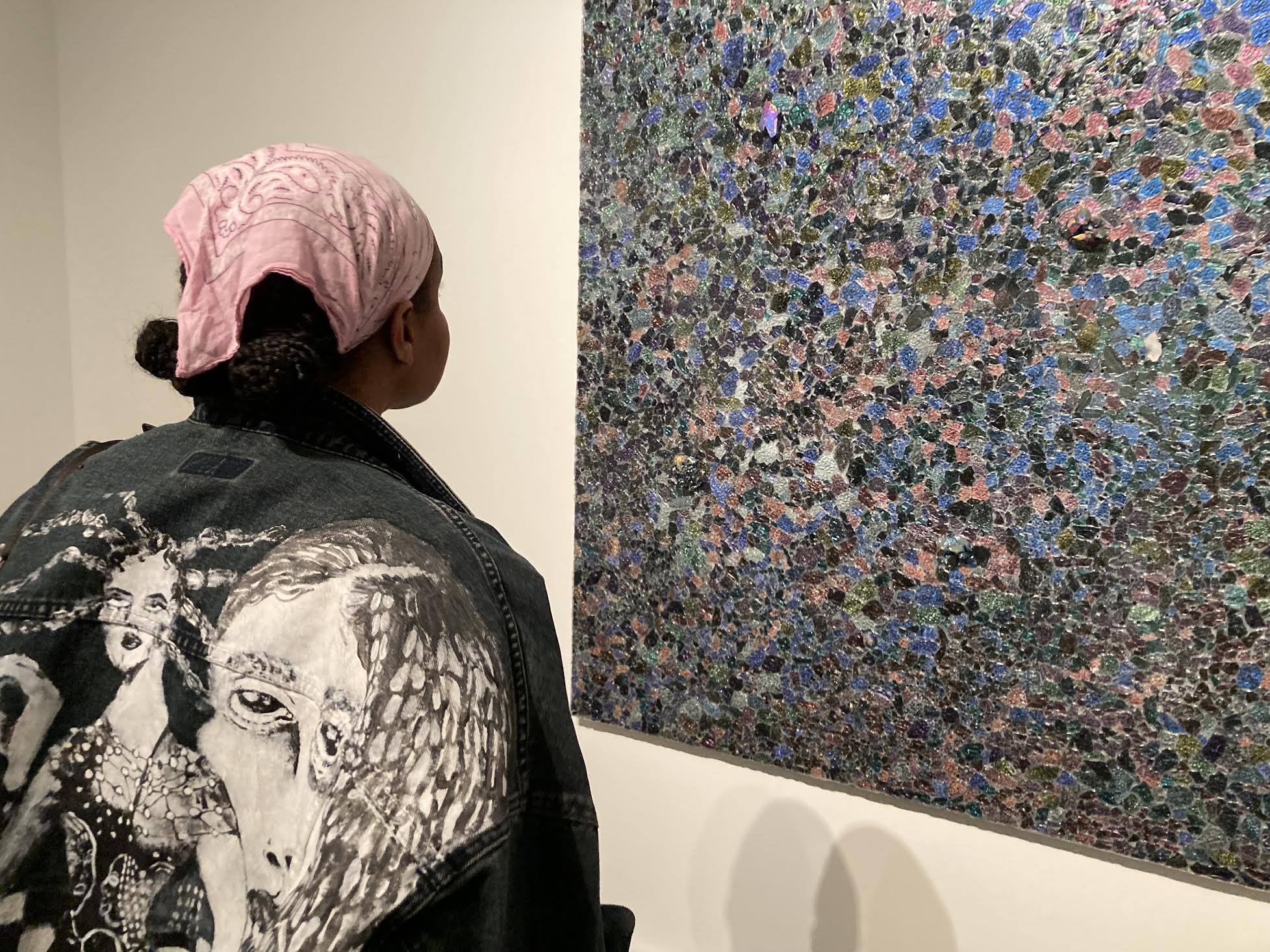
A few months later, at another collective meetup, they stood beside fellow members at the Susquehanna Art Museum, admiring the bright, bold hues on display at an exhibition by Alteronce Gumby.

“It’s definitely giving me an opportunity to do more things in Harrisburg. Make more connections,” Atis-Valentine said.

“Stuff like this,” they added, gesturing to the museum, “getting me out of the house in the middle of a random day? Easy. I’ve never been here before. It’s nice, right?”


Community Connection

The organizer behind the QTPOC’s museum meetup is Cyè Jacobs, QTPOC coordinator at the LGBT Center.

“I have a huge passion for inclusive spaces and providing that essential environment for safety, belonging, healing and empowerment for folks—for the most marginalized people in the LGBT community,” Jacobs explained. “When I’m able to socialize with people, especially with people who are in my age range, I’ve noticed that some people are just looking to be seen and embraced.”

Jacobs said the Black, Harrisburg-born-and-raised artist’s exhibit was a perfect field trip for the group—whose other bi-weekly meetups have taken the form of writing workshops, game nights, movie nights (centering Black, queer films), holiday dinners and clothing swaps. About 10 to 12 people regularly attend.

When she began her role at the center in April 2025, she revived its QTPOC program from pandemic-era dormancy.

With a twist.

While the 2018-founded program originally served as an advisory and resource program for queer and trans people of color aged 25 to 45, Jacobs felt it was important to focus more on providing a space for its community members to connect.

“Sometimes, being a queer and a trans person can be a very lonely and an isolating experience,” explained Jacobs. “That’s why I have taken the more social route.”

When people feel more at home socially, Jacobs said, she and her coworkers noticed they feel more comfortable exploring the center’s resources and advisory offerings. According to Jacobs, some people come into the center who are homeless, lacking immediate family in the area or rebuilding their lives.

As a result of creating a social focus for the collective, she’s observed “a really striking change” on the work that the center is able to do on the advisory and resource side as well.

In addition to running QTPOC Collective meetups, another part of Jacobs’ job involves listening to community members and helping them find needed resources—anything from work, to housing, to HIV testing, to therapy.

“They feel more comfortable asking for help. They feel more comfortable even looking at ways where they can volunteer with the center,” she said.

A Black lesbian who was born and raised in Harrisburg, Jacobs has had firsthand experience with wanting to connect with other queer people of color in her area.

“I learned a lot about my identity at a very young age, but I was met with some barriers and a lot of complicated feelings and relationships about religion,” Jacobs said.

Still, she said, “My mom really encouraged me to not only live a good life but live an honest life. Truth was a huge thing in my house.”

Cyè Jacobs

Bringing Talent Home

Many of Jacobs’ progressive ideas about designing meetups for the collective come from her time studying at Temple University in Philadelphia.

While in the city, she helped found a progressive, creative collective. Called “Bad Apple Commune,” the group provided support and resources and fostered safe artistic spaces for BIPOC (Black, Indigenous and People of Color) individuals.

Working with creatives of color, many of them musicians and artists, taught her the importance of community, chosen family and working with others. But her time in Philadelphia was interrupted. She moved home abruptly to care for her sick grandmother.

“I knew that I was uprooting my life, and I was desperate to still have a connection to queer community,” she said. “Because it was a lot different when I was in Philly. I had built a solid community there with other queer and trans people of color.”

Then, she thought: Just because I’m moving back home doesn’t mean that has to stop.

She started to imagine how she could create similar experiences in her hometown and realized bringing such work here could give her a chance to make an impact.

“I thought that it would be very special to do that where I’m from,” she noted.

“I do want to make a difference, even if it’s incredibly small, because I think that Harrisburg has always had so much potential, and it’s such a culturally rich city and it’s a very Black city,” she added.

As a result, she was very grateful to be connected with the LGBT Center and brought on as a contracted QTPOC coordinator part-time, as she works to finish her college degree.

While Jacobs has done community organizing and mutual-aid work since she was 18—connecting people to housing, groceries and clothing—this marks her first time working for a nonprofit.

“All the work that I did in the past was grassroots,” she said.

Meridian and Zaire

Small City, Big Impact

Overall, Jacobs views her job as a chance to show up for herself and queer and trans people in Harrisburg.

With her title, she said, she’s been able to learn more about “her people”—and notes that another huge benefit of offering social spaces through collective meetups is that they provide a “sober” meeting space, which can be hard to find in the LGBTQ community.

“Sober spaces are very important,” Jacobs noted, emphasizing that gay bars and clubs have their place, too.

QTPOC members Zaire and Meridian, who asked to be identified only by first names, agreed.

“When you don’t want to go to those places, having a third space like this is very important,” Zaire said.

They both appreciate the group as a social environment outside of home and work for queer and trans people of color in Harrisburg to connect.

“Connecting with people that are actually near to you definitely builds that connection that ‘we exist’ and ‘we’re here,’” Zaire said. “It kind of eliminates the idea of isolation, especially in a smaller city.”

Meridian nodded. “In small cities,” they added, “these spaces are important.”

The LGBT Center of Central PA is located at 1323 N. Front St., Harrisburg. For more information, or to support or donate visit www.centralpalgbtcenter.org.

If you like what we do, please support our work. Become a Friend of TheBurg!          

Continue Reading

Scouting Outing: Whitaker Center offers one-stop workshops for Girl Scouts, Boy Scouts

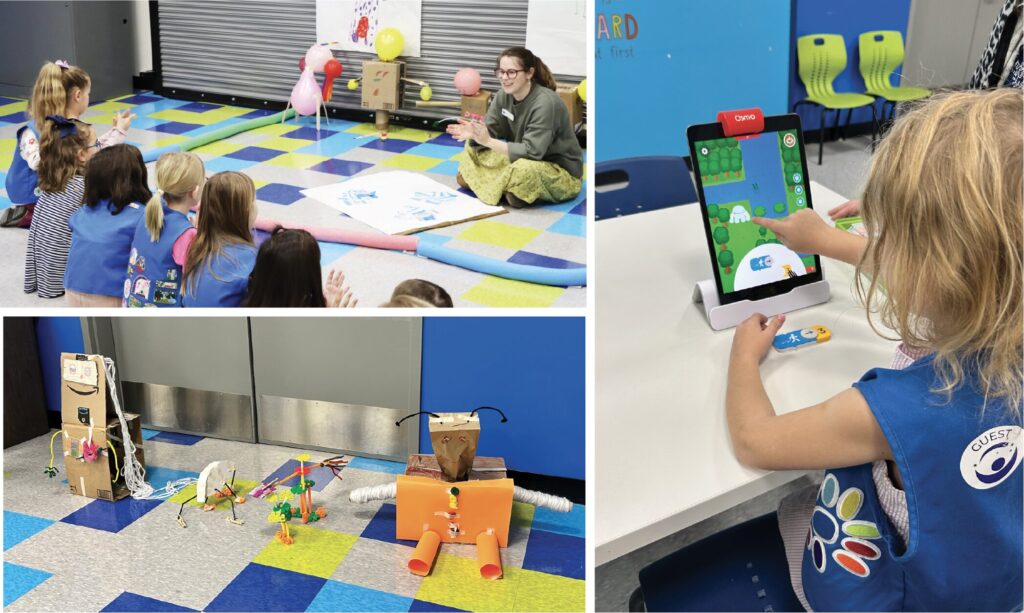
Scenes from Scout Sundays

On select Sundays, Meghan Weible often brings her Girl Scouts to Whitaker Center in downtown Harrisburg.

Weible, of Biglerville, is a troop leader, and she takes the girls, including her own three daughters, to Scout Sundays, which, she said, is a vital resource for local troops.

Scout Sundays are designed for different ages and skill levels, with well-designed programs offered at a reasonable price. Young people enrolled in a Girl Scout or Cub Scout troop can earn badges in a variety of skills and experiences, from art to outdoors to leadership.

“Some of the STEM badges are really in-depth, and it’s really difficult to hit all of the requirements that are necessary,” Weible said. “It’s not a specialty that we have at a troop level. So, it’s really nice to go to Whitaker Center, where they have all of the resources there.”

Science, technology, engineering and math (STEM) fields are emphasized in the scouting curriculum, and local Girl Scout and Cub Scout troops can explore and earn a variety of badges in STEM fields through Scout Sundays.

This specialized series of hands-on workshops is offered from October through May, developed using guiding principles and badge requirements from the national scouting organizations.

Scout Sundays has been a part of Whitaker Centers offerings for years, but the current leaders are “breathing new life” into the program post-pandemic, said Aris Hudson, director of marketing and communications for the center.

“Our mission is to create spaces in our communities by offering educational, creative and cultural experiences that turn moments into memories—and that’s exactly what happens during these programs,” she said.

The hands-on workshops cover a wide variety of STEM fields, including robotics, forensics, coding, engineering and scientific principles and experiments. Educator Katie Brittingham leads the Scout Sundays workshops, along with occasional guest speakers and presenters.

Participants can attend individually or as a full troop and can take advantage of discounted admission to Whitaker Center’s other exhibits before or after the workshops.

“Our team of educators are brilliant. They have their own specialties and their own lanes, and the scout leaders are also so engaged,” Hudson said. “This program has outlasted many others here, even through organizational changes and instructors, and it is still popular. I think it will be here for a long time, and I think it is at the very heart of what we do.”

Whitaker Center’s programs are unique in central Pennsylvania, Weible said. The closest location offering similar programs for scouts is in Baltimore, and those offerings are more expensive and do not include the physical badges, she said.

“The kids absolutely love the hands-on part of it,” she said. “As a parent and as a scout leader, there are a lot of win-wins. The staff is amazing, absolutely amazing. It’s not just the resources, not just the cost, it’s the staff.”

To Weible, Whitaker Center is “a hidden gem.”

“We like to say that Whitaker Center is where discovery happens, and with Scout Sundays, we’re proving that discovery doesn’t require traveling to a distant science museum or waiting for a special field trip,” Hudson said. “It’s happening right here, every month, in the heart of downtown Harrisburg, open to every scout who’s ready to explore, create and grow.”

Scout Sundays workshops are offered on Sunday afternoons from October through May at Whitaker Center in Harrisburg. For a full schedule or to register, visit whitakercenter.org/learn-with-us/scouts or email [email protected].

If you like what we do, please support our work. Become a Friend of TheBurg!          

Continue Reading

Poetry Buzz: A Columbia couple builds art, community through the power of verse

Poetry reading event

For Glinda Johnson-Medland, poetry is more than just words.

For her, it’s a chance for everyone to “breathe” in today’s harried world.

“Any art is healing,” said Johnson-Medland, executive director of word hive: a space for poets.

Johnson-Medland, of Columbia, founded word hive five years ago with a noted mission that includes “increasing the use of poetry for self expression.” Her husband Tom serves as chairman of the nonprofit organization’s board.

Word hive’s listed values include “innovation, creativity, advocacy, access for all, respect, artistic excellence, ongoing education, collaborative presence, social awareness and deep social listening,” according to its website.

The group’s activities include monthly virtual poetry sessions during which participants conduct readings and discussions. In January, the program initiated a three-part series featuring “Keystone Poets” now on tour with readings from their current anthology, “Keystone Poetry: Contemporary Poets on Pennsylvania.”

“We love what we do,” said Johnson-Medland, who added that 27 people attended the January event. “It’s a very positive session.”

The series’ final session, featuring poets Marjorie Maddox, Allison Adair, Valerie Fox and Judith Sornberger, takes place online on March 21. Following that, a virtual presentation by poet Meg Eden Kuyatt is scheduled for April 18.

Word hive also conducts an in-person summer series each year at the Clock and Watch Museum in Columbia.

“Our goal is to get it out there,” Johnson-Medland said. “Some of our people have never read their poetry out loud. I just love it when I see people’s light bulbs go off.”

Janine Dubik, of Wyoming County, said that she’s been attending word hive’s monthly poetry readings and poetry workshops for four years. Now retired from a writing and editing career, Dubik said that she started writing poetry about 10 years ago and has been published in various journals and literary magazines.

“I first met Tom and Glinda at poetry retreats,” Dubik said. “They are amazing poets and amazing people.”

Tom and Glinda Johnson-Medland are both published poets and writers, with Glinda nominated for the prestigious Pushcart Prize honoring excellence in poetry, short fiction and essays published in small presses. Tom Johnson-Medland also creates visual art for sale on his website.

By day, Tom works as a hospice marketing coordinator, while Glinda is an independent “mostly retired” social worker.

The couple also creates art collages and conducts poetry workshops in Perry County. Then there’s the poetry posted each year on Red Rose Transit Authority buses.

In 2024, the Johnson-Medlands launched “Poetry in Transit” in partnership with the Philadelphia Alumni Writers House at Franklin & Marshall College and Vector Media. The program posts about 20 short poems, submitted to word hive, on RRTA buses for the duration of each year. This year’s poetry theme is Lancaster County.

Glinda Johnson-Medland said that the biggest challenge in running word hive’s outreach is “awakening poetry to people as an art form.”

“A lot of people look only at the visual as an art form,” she said. “Tom and I both really love poetry and wordsmithing.”


For more information on word hive: a space for poets, visit
www.wordhive.org. You can view Tom Johnson-Medland’s artwork on his website, www.tomjohnsonmedland.org.  

If you like what we do, please support our work. Become a Friend of TheBurg!          

Continue Reading

Die Laughing: “Andre Is an Idiot” is dark and funny—and true

Image courtesy of Joint Venture

André Ricciardi is a dying ad exec with a killer sense of humor.

If that doesn’t make you want to spend 90 minutes with him in a dark room in Harrisburg with a big screen, let me pitch him like this. André Ricciardi is like if there was a character on “Mad Men” with a temperament somewhere between Steve-O and Carell. He’s also got stage 4 terminal rectal cancer, because he didn’t feel like getting his standard recommended colonoscopy.

Tony Benna’s new documentary, “André Is an Idiot,” follows its titular subject over the course of the last few years of his life, showcasing André’s irreverent, infectious and, above all, stubborn sense of humor as he refuses to take life seriously just because he has cancer. (And the doc resonates—it took home the Audience Award at Sundance Film Festival, previous winners of which include “Whiplash,” “Minari” and “CODA”).

That being said—my favorite moments come when André sets his comedic avoidance to the side for a couple of minutes to stare death in the face and see how he reacts. One such moment highlights a meeting between André and his old agency, as they collaborate on an ad campaign showcasing close-up images of everyday objects that evoke the rear end, each one labeled simply “COLONOSCOPY REMINDER.”

Another such moment is perhaps my favorite sequence in the whole film. He and his best friend—with whom André has a pact never to be treated tactfully, cancer or otherwise—meet with a guru to contemplate and practice “death yells” at the lip of a canyon. The three of them stand side by side on the cliff, casting variations of their last words into the wilderness to see which echoing words resonate with each of them.

How do I want to be remembered? Will I go into the unknown with a whimper, a battle cry, or a proverb, like a character in one of Aesop’s fables? A Porky Pig “That’s All Folks!” or a John McClane yippee-ki-yay?

You’re not reading a movie review in TheBurg for my thoughts on death—and, that being said, that’s not really what the film’s about. It’s about assured self-love in the form of pure comedy in the darkest of situations.

As I began to watch the film, I was dreading the sobering path I was going to take, watching a terminal cancer patient ultimately waste away and die, which is, reductively, what does happen in the film, and I think a trigger warning for that is in order. But it’s a testament to the film that I really can’t say I left the film on a downtrodden note. André Ricciardi and the filmmakers bring true joy to the process of death, and I think that is worth celebrating at a truly fundamental human level. Also, get your colonoscopy.

“André Is an Idiot” opens in March at Midtown Cinema.

Midtown Cinema is located at 250 Reily St., Harrisburg. For more information, visit www.midtowncinema.com. Gabriel Brown serves as assistant manager at Midtown Cinema. 


March Events
at Midtown Cinema

A Red Carpet Evening
Celebrate Hollywood’s biggest night!
Tickets on sale now.
Sunday, March 15 at 6 p.m.

“The Librarians” (2025)
With post screening panel discussion
March 8, April 12, 12 p.m.

3rd in the Burg Movie Night
“National Treasure” (2004)
Friday, March 20, 9:30 p.m.

Late Night Frights
“Jacob’s Ladder” (1990)
Friday, March 27, 9:30 p.m.

National Theatre Live
“Hamlet”
Sunday, March 1 at 5 p.m.

“The Fifth Step”
Sunday, March 22 at 5 p.m.

If you like what we do, please support our work. Become a Friend of TheBurg!          

Continue Reading

French Lesson: Rosemary shifts cuisines for a month

Long-time readers know of my love and preference for Italian food. As a first-generation Italian, it is the heart and soul of my culinary endeavors.

But I had a moment. In the early 1970s, my husband and I spent quite a bit of time with friends who adored the whole French thing—food and wine in particular. And, well, they spent time there too.

We used to trade weekend visits with them. They’d come to Harrisburg. We’d go to and Washington, D.C. And we always looked forward to the Saturday night dinners that we cooked in our apartments.

I was introduced to French onion soup, coq au van, beef Bourguignon, crepes, cassoulets and, at breakfast, croissants. I was enchanted.

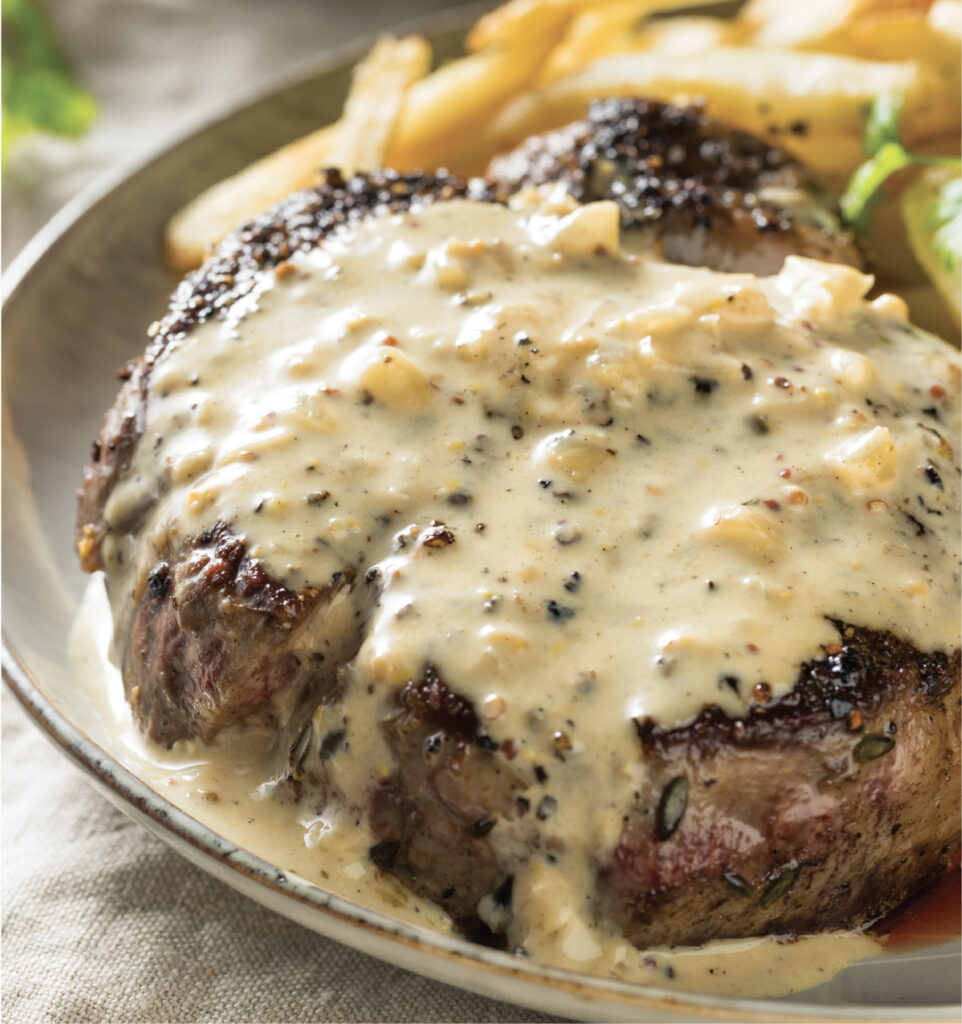
One of my favorite French classics, and my older son’s too, is Steak au Poivre, an easy-to-prepare dish that stars a rather large dose of black peppercorns. Now, you must like black pepper and food that is somewhat spicy, but this is a spectacular entrée. You might want to save it for a special occasion, but it is not difficult for a weeknight either.

My recipe is from a very old (1985) New York Times cookbook that features many classic recipes. I pulled it out recently, and many memories flooded back. There were so many things I hadn’t made for a long time, like Steak au Poivre.

Pair this dish it with a smooth red wine. My favorite is Beaujolais, a perfect accompaniment for a beautiful steak.

Steak au Poivre

Ingredients

  • 4 New York strip steaks (or filets)
  • 2 tablespoons whole black peppercorns
  • 4 tablespoons butter
  • 3 tablespoons warm cognac or brandy
  • 2 shallots, finely chopped
  • ¾ cup beef broth
  • 1 cup brown sauce or canned beef gravy (it’s OK, just look for a good brand)

Directions

  • Dry steaks with paper towels. Crush peppercorns with a mortar and pestle or a kitchen mallet (between 2 layers of waxed paper or in a plastic zip lock bag).
  • Rub crushed pepper onto both sides of the steaks and set them aside for about an hour.
  • Heat 3 tablespoons of the butter in a large heavy skillet (cast iron works so well here).
  • Sauté the steaks quickly—about 3 minutes on each side for medium rare and slightly longer, lowering the heat, for more well done.
  • When done, carefully pour the warmed cognac or brandy and ignite with a long match. Stand back!
  • When the flames subside, place the steaks on a warm platter, and season with salt and pepper.

The Sauce

  • Sauté the shallots in the remaining fat in the skillet until softened.
  • Add the broth and cook it down until the skillet is almost dry.
  • Add the brown sauce, bring it to a gentle boil, cook for 1 or 2 minutes and swirl in the remaining butter.
  • Pour the sauce over the steaks or serve it separately.

I enjoyed the time I spent in the “land of French cooking”—and we always enjoyed the times we had with our Washington, D.C., friends. But the food memory we cherish most is the night we dined at a little French restaurant across from the White House. It was called Chez Francois. It is gone from there now but is still thriving out in the Virginia suburbs.

At the time, the menus were written in French, and our friend helped us navigate them to order. When the food came, we noticed that our friend had a strange look on her face and was pushing her food around on her plate. She had ordered “braised veal,” or so she thought. The waiter very politely informed her that what she had in fact ordered was brains of veal. More French lessons needed!

If you like what we do, please support our work. Become a Friend of TheBurg!          

Continue Reading