Burg Review: Raise a glass to the gloomy, thoughtful “Thistle & Salt”

J. Clark Nicholson, Michael Bush & Ryan Hicks. Photo by John Bivins Photography.

In stark contrast to the rollicking, Kelly green, American version of Ireland that comes alive this time of year for St. Patrick’s Day, Gamut Theatre and Narҫisse Theatre partner to present a grimmer slice of Ireland from the turn of the 20th century.

“Thistle & Salt: The Ireland of J.M. Synge,” is formatted as two one-act plays: “Riders to the Sea” and “In the Shadow of the Glen.”

While the Gaelic language is itself lyrical and lovely to the ears, and Synge carefully composes his characters’ dialogue like a song, the themes and plots of his stories were surely written with ink distilled from the muck at the bottom of Galway Bay. The drips and drabs of humor that peek out from the covers is so dark, it’s dank.

We don’t meet the Irish literary renaissance poet John Millington Synge, but his contemporary, William Butler Yeats (Clark Nicholson), narrates Synge’s 37 short years. Yeats relays the story that executors found Synge’s papers. Of great concern to Synge himself: He did not want “good things destroyed or bad things published in haste.”

Both plays move slightly slowly, but you’ll need that built-in lag time for your brain to process the dialogue, which is thick at times. For being of a gentler pace, Synge’s works are not cozy. His sets his glum characters in circumstances both morose and sparsely mundane.

“In the Shadow of the Glen” is a tale of physical survival amidst mental anguish. Nora Burke (Erika Eberly) is stuck in a loveless marriage to a cantankerous old man. She is equal parts “afeared,” lonely for affection, and entrenched in resentment while doing all the chores. When it appears as if the husband is freshly dead and laid out in the parlor, Nora has a suitor already lined up. Then A Tramp (Ryan Hicks) knocks on her door one stormy evening.

Eberly and Hicks display a perfect amount of foreshadowing, subtle chemistry and trust between strangers. And Daniel Burke (Michael J. Bush) is darkly funny as the maniacal husband who is so bored that he cruelly pretends to be dead just to amuse himself.

“Riders to the Sea” is a dramatic, suspenseful story about succumbing to nature. Grieving mother Maurya (Susan Banks) is riddled with fear about losing more sons to an ocean that has already claimed four of them, her husband, and her father-in-law. Banks, along with daughters Cathleen (Madison Eppley) and Nora (Abby Carroll) reach deep into their innards to portray the torment of fresh grief that simultaneously rips scabs off old wounds of loss.

The gutting action in this play spares no feelings, showing the raw materials for a coffin propped against the chimney, as well as fresh contents for that coffin. Bravo to Bartley (Matthew Hogan) for lying absolutely still, and brava to Kim Greenawalt and Eberly for their keening (mournful wailing) skills.

Sláinte to all the actors for preserving the intent of the Gaelic language while still modernizing it to help the audience follow along. The Gaelic brogue is inherently a bit mumbled and slurred no matter the amount of alcohol the characters consume, so check your program’s glossary when you need subtitles. The language is poetry, but it demands your attention to fully absorb it.

The plays double down on the depression all the way through to their gloomy endings. Because these plays do not end happily, and they further leave the audience wondering how the characters’ lives unfold after the proverbial curtain falls, these one-acts were natural choices for Director FL Henley and his penchant for presenting plays with “no happy endings, and sometimes no endings.”

Both Gamut Theatre and Narҫisse Theatre take risks in the assortment of theater they produce, diving into obscure and/or difficult material, as well as thoughtful experimentation. In this partnership, both companies push the boundaries to deliver us something authentic – an un-sanitized, un-romanticized Ireland, un-celebrated with a parade or green beer.

“Thistle & Salt: The Ireland of J.M. Synge” runs until March 19 at Gamut Theatre. Find more information at www.gamuttheatre.org/ and on Facebook.

If you like what we do, please support our work. Become a Friend of TheBurg!


Continue Reading

The Week that Was: News and features around Harrisburg

East Shore YMCA

There’s a lot going on in Harrisburg this weekend! The city will host its annual Ice & Fire Festival, HU Presents has live music and several local theaters are taking to the stage. While you’re out and about, grab a copy of our March magazine, which came out this week!

Community Corner is where you can find a list of special events happening around the Harrisburg area this month. Also, visit our happenings section for even more live music, museum, theater and family events.

Concerts are in full swing this month in Harrisburg, with the band Certainly So taking the stage on Friday night at XL Live. Find our live music recommendations for the month, here.

The East Shore YMCA in downtown Harrisburg is considering a significant expansion project, our online story reported. According to Y officials, the project would modernize the facility and create office space for other community businesses and organizations.

Flooding is a huge concern for Pennsylvania’s emergency management and environmental experts. In our magazine story, read about how experts are trying to find solutions to climate change and weather events that could cause flooding.

Gamut Theatre has the perfect show to get you into the St. Patrick’s Day spirit, our magazine story reported. “Thistle and Salt,” a tale from Old Ireland, premieres this weekend in partnership with Narcisse Theatre Company.

Harrisburg area legislators Dave Madsen and Justin Fleming may be new to the state House of Representatives, but they have years of experience in public service in our area, our magazine story reported. The two new representatives are part of what has been called PA’s most diverse Assembly.

Historic Harrisburg Association is celebrating its 50th anniversary this year. In our magazine story, read about the preservation and revitalization advocacy work that HHA has done over the years.

March is a noteworthy month in Harrisburg as it includes two big events—Ice & Fire Festival and the St. Patrick’s Day Parade. It also brings us closer to spring and summer, and because of that, our publisher is a fan.

The Roots and The Struts are headed to Harrisburg this summer to perform, our online story reported. Harrisburg University Presents announced the iconic hip hop and rock bands as part of its 2023 Summer Concert Series, which will take place in Riverfront Park.

Sara Bozich has your weekend plans covered. Click here to find out what’s happening in Harrisburg.

The Savoy, a 48-unit apartment building proposed for the 1500-block of N. 6th Street, got the final green light from the city to move forward with development, our reporting found. Harrisburg City Council approved the plan by local developer Vice Capital.

Thyroid conditions affect around 20 million Americans, but over half of them don’t even know they have an issue. In our magazine story, find out what thyroid problems can arise and how to treat them.


Do you receive TheBurg Daily, our daily digest of news and events delivered right to your email inbox? If not, sign up here! 

Support quality local journalism. Join Friends of TheBurg today!

Continue Reading

Nonprofit Focus: GK Visual & Wishes for Drew

The Gunther family


GK VISUAL
933 Rose St., Harrisburg
Gkvisual.com

Why do you feel it’s important for your business to support our area’s nonprofits?

GK Visual was founded in 2005 and, from the start, we have made it a priority to give back to our community. We don’t always have the funds to support every cause, but we do have a talented team that has a heart for helping others. We’ve grown both personally and as a company by championing the work of these nonprofits and charities. Telling these incredible stories through video, interviews, photography and images is what we love to do.


Why do you support this particular nonprofit and what does your business do to benefit the organization?

We came to know Wishes for Drew and the Gunther family through our mutual love for craft beer. Steve Gunther reached out to us after seeing our work with our video series, “Poured in PA,” and asked if we would be able to help his family tell the story of their courageous son, Drew. We’ve been very fortunate to work with the Gunthers and learn about Duchenne Muscular Dystrophy. This fatal, genetic muscle-wasting condition has no known cure, and treatments are incredibly expensive. We admire this family’s determination and love for Drew and other children impacted by DMD. We wish we could do more, but what we have been able to do is tell their story through videos, including “Poured in PA,” and connect them with other friends in the community. We consider it such an honor to know them and call them friends.


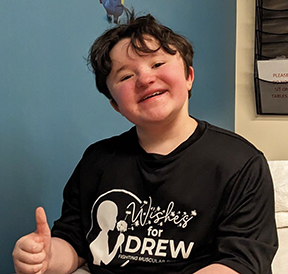
Drew Gunther

Wishes for Drew
wishesfordrew.org

Describe your organization and the importance of corporate or foundation support to further your mission.

The importance of corporate or foundational support cannot be overstated. Many of our events to raise awareness and support depend heavily on businesses and corporations willing to get behind us as sponsors, just to ensure an event can even be held in the first place. We have been blessed with support from many local companies and businesses, and they are truly the foundation upon which most nonprofits and charities are built and enable us to benefit others.

GK Visual has been such a critically important sponsor and supporter of Wishes for Drew. From the first time I emailed them with a request for a project we needed done, they have been integral to what we do. From producing video for us, showing up at our events, giving advice on media needs, GK team members taking part in events, and through the constant follow-up and sponsorship support over the last couple of years, GK truly shows what a company giving back looks like.


For 2023, what is your greatest need for corporate or foundation support?

2023 is going to be absolutely vital to us as a nonprofit. We are finally starting to get momentum behind us, and our feet under us, as we started at the beginning of COVID and are not experts in how to run a nonprofit. We’re just concerned parents doing our best. In 2023, we hope to expand enough to allow us to benefit and offer assistance to many additional families and charities battling the disease, Duchenne Muscular Dystrophy. To date, we have successfully implemented a treatment regimen/proof of concept treatment program that benefitted Drew and 20 other children from around the globe. This disease has no cure and is rare, yet so many children are impacted. About one out of every 3,500 males born will have this fatal, genetic muscle-wasting condition. Without the ability to spread awareness of this disease, people won’t know that there is a need, and without supporting families and other nonprofits in this sector, many families will go without necessary support, resources and mobility devices. Without our corporate or foundational support, we can’t provide such needed assistance to the community.

Other info: Duchenne Muscular Dystrophy typically affects 1 out of every 3,500 boys born around the world, regardless of national origin or race. It makes the body unable to create new muscle, and the muscle breaks down as a result. A child goes from slowly acquiring abilities to slowly or rapidly losing them. It’s basically the “Benjamin Button” disease without the outward aging. Most children with DMD pass away in their late teenage years or as very young adults. Wishes for Drew was established after our 7-year-old son was diagnosed with DMD on Valentine’s Day of 2019, completely unexpectedly. He has already lost the ability to walk or support himself standing at all and is rapidly losing upper body strength. Most boys pass away from cardiac or breathing issues.

Proudly Sponsored By


Continue Reading

Harrisburg’s East Shore YMCA begins planning for renovation, service expansion

East Shore YMCA

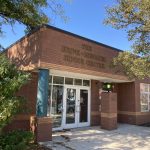
You can exercise, swim and take your kids to the East Shore YMCA, but in the coming years, you might be able to do a lot more there.

Local Y officials announced recently that the organization is considering significant renovations and changes to its historic facility, which would increase its role as a community hub.

“We hope to end up with a modern YMCA with services Harrisburg can enjoy,” said Harrisburg Area YMCA President and CEO David Ozmore.

Ozmore, who began in his position in June 2022, painted a picture of an aging East Shore Y that also faces significant financial challenges due to the pandemic. The remodel would aim to boost its economic situation and bring the building up to date.

The Y, located along N. Front Street downtown, dates back to 1930s when it was built and opened to the public. More recently, the wellness center was added onto the building in 2003. In total, the Y owns 2.3 acres of land, making up almost an entire city block.

Possible renovations may include changes to the current wellness center, which is elevated over the parking lot, and the Y’s administration building adjacent to the main recreational center.

The main building is considered historical and therefore will not undergo significant changes, Ozmore explained.

The Y is working with national firm Gro Development, which provides services to nonprofits, especially YMCA’s around the country.

While Ozmore explained that the Y is still in the brainstorming stage of the process, he shared that they are interested in building out space for local businesses and organizations to lease. They have proposed bringing in medical providers and banks and offering housing to seniors or low-income tenants. The Y would also seek to renovate existing gyms and create additional multipurpose rooms and spaces for group fitness classes.

The Y has put together a task force of around 20 community members to help advise the organization on development.

“At the end of the day, it’s not about what the Y wants, but what the residents need,” Ozmore said.

However, a motivating factor in the decision to renovate comes out of the facility’s unfavorable economic situation, Ozmore said.

According to Ozmore, between February 2020 and the summer of 2021, the East Shore Y lost 56% of its members. While it has since recovered some of that loss, membership is still only at about 85% of what it was pre-COVID.

A proposed model of making space for tenants in the building would allow them to share costs, as well as hopefully bring in more traffic to the facility, Ozmore said.

The next step for the Y will be to issue a request for proposals from developers. However, it may be over a year before the project begins. In total, Ozmore estimates it will be a three- to-four-year-long project.

Ozmore said that the goal is to keep the facility open throughout the majority of the construction process, although parking may be limited at times.

At the project’s completion, he said that there will likely be more parking included.

Overall, Ozmore’s goal is to make sure the East Shore Y better serves Harrisburg residents.

“It’s for the common good—to make our community stronger,” he said.

For more information about the East Shore YMCA, visit their website.


If you like what we do, please support our work. Become a Friend of TheBurg! 

Continue Reading

Weekend Roundup with Sara Bozich


Plan your weekend with my weekly list of things to do around Harrisburg and central PA!


What you’ll find:

For something new: Catch an upcoming band before they make it big: HU Presents Certainly So at XL Live on Friday Worth noting: The City’s Ice & Fire Festival is Saturday (plus Chili Cookoff Friday at Broad Street Market) and loaded with activities Things on my agenda this weekend: HU Presents Certainly So at XL on Friday; Ice & Fire Festival Saturday (come see me at sip @ soma!)

For your weekend planning

Below are options for your weekend.

A Look Ahead

  1. An interview with Dawes’ frontman Taylor Goldsmith
  2. HU Presents announces spring 2023 lineup
  3. The Best Farmers Markets around Harrisburg
  4. Submit your events for the Weekend Roundup

Thursday

Friday

Saturday

Sunday

If you like what we do, please support our work. Become a Friend of TheBurg!

Continue Reading

Proposed apartment project in Harrisburg receives final city approval

Architectural rendering of the Savoy, a proposed apartment building in Harrisburg (credit: Warehaus)

An apartment project near the new federal building in Harrisburg will move forward as it received the final green light from the city.

Harrisburg City Council on Tuesday approved a land development plan for the Savoy, 48-unit apartment building proposed for the 1500-block of N. 6th Street.

Harrisburg-based Vice Capital, a firm headed by retired NFL running back LeSean McCoy, plans to demolish three existing buildings at 1522, 1524 and 1526 N. 6th St. in late March.

On the property, which includes several adjoining grassy lots, developers plan to construct a four-story, 62,370-square-foot building that will include a mix of studio, one-bedroom and two-bedroom units. Ten of the units will be designated as affordable. It will also include first-floor commercial space.

Construction for the $8 million project is expected to begin in mid-to-late summer and will likely take a year to complete, according to Jonathan Bowser, managing partner of Wormleysburg-based Integrated Development Partners, the project’s general contractor.

In other news, council voted to appoint Dr. Kent Hurst to serve on the city’s Historical Architectural Review Board. He will serve a three-year term beginning this month.


If you like what we do, please support our work. Become a Friend of TheBurg! 


Continue Reading

HPV Vaccines are Vital for Adolescents and Young Teens

Five friends enjoying a hike in a forest, California, USA

Genital human papillomavirus (HPV) will afflict about 8 in 10 people during their lifetime and will cause more than 35,000 new mostly genital and throat cancers this year, according to the Centers for Disease Control and Prevention.

It is the most common sexually transmitted infection in the world, and while there is no treatment for HPV, there is a vaccine that can prevent 90% of HPV-related cancers if given at the right age, according to the American Cancer Society (ACS).

“Getting your 9-to-12-year-old son or daughter vaccinated now is the best way to prevent HPV cancers and can help keep them healthy well into adulthood,” said Kristy Houston, an educational consultant in Capital Blue Cross’ Health Promotion and Wellness department, and Capital’s representative in the cancer society’s HPV Learning Collaborative.

Though an effective HPV vaccine has been available since 2006, vaccine awareness has declined in the past several years, especially among minorities, rural populations, males, the poor, and those over 65, the CDC says.

While vaccinations have led to a decline in cervical cancer, especially in younger women, the Journal of the American Medical Association reports the rate of oral and anal/rectal cancer has increased among men.

Researchers at Johns Hopkins Medicine say flagging HPV vaccine awareness is due partly to concerns about vaccine safety and, to a much smaller degree, fears that vaccine protection could encourage sexual promiscuity.


Vaccine Facts

With more than 270 million doses distributed worldwide since 2006, including 135 million doses in the U.S., the HPV vaccine has a long and reliable safety record, and is proven to be highly effective, according to data from the CDC, ACS, and World Health Organization.

That vaccine led to an 88% decrease in infections of HPV types that cause most HPV cancers and genital warts among teen girls, and an 81% drop among young, adult women. The percentage of cervical precancers caused by HPV dropped by 40% in vaccinated women.

Ideally, the HPV vaccine should be given before potential exposure to sexual contact, according to the CDC:

  • Two doses for all children 9-12, with at least five months between the first and second shot.
  • Three doses for 15 to 26-year-olds with at least four weeks between the first and second shot, and five months between the first and third shot.
  • Unvaccinated adults aged 27 to 45 should speak to their doctor about the risk of new HPV infections and the benefits of vaccination.


THINK (Trusted Health Information, News, and Knowledge) is a community publication of Capital Blue Cross. Our mission is to provide education, resources, and news on the latest health and insurance issues.

Continue Reading

The Roots, The Struts added to summer concert lineup in Harrisburg

It’s time to add some more Harrisburg summer concerts to your calendar.

Harrisburg University Presents announced on Tuesday that it would bring two iconic bands, hip hop group The Roots and British rockers The Struts, to the city.

The Roots, set to perform on July 29, went platinum and gold with successive studio releases and have won several Grammy Awards. The band is also known for its role as the house band on “The Tonight Show Starring Jimmy Fallon.”

The band will perform as part of the concert organizer’s 2023 Summer Concert Series. Just last week, HU Presents announced that Jason Isbell and the 400 Unit and The Head and The Heart will also hit the riverfront stage this summer.

The Roots return to the riverfront after their concert last summer.

Rock-and-rollers The Struts, will return to the city for the third time on July 14 at XL Live. They will be joined by a special guest, rock band Mac Saturn.

Formed in 2012, The Struts have opened for rock legends The Rolling Stones, The Who and Guns N’ Roses, among others. They released their most recent album, “Strange Days,” in 2020.

Tickets for both shows will go on sale to the public on March 3.

HU Presents has also recently announced a long lineup of concerts headed to Harrisburg in the coming months, including Rick Ross, Dawes, Joywave and alt-J, among others.

To purchase tickets or for more information on Harrisburg University Presents, visit their website.


If you like what we do, please support our work. Become a Friend of TheBurg! 

Continue Reading

A Change in the Weather: Pennsylvania’s emergency management and environmental experts explain climate change: Why flooding is our top risk—and it’s not the Susquehanna they’re most worried about. But they are floating a number of solutions.

Flood risks are among the top three hazards in nearly every Pennsylvania county, in this map recently released by the Pennsylvania Emergency Management Agency (PEMA).

It’s one of Harrisburg’s most treasured, beloved landmarks.

The Susquehanna River is the longest river east of the Mississippi. Its basin—an immense 27,510 square miles—encompasses half of Pennsylvania, along with portions of New York and Maryland. It’s an area that 4 million people call home, including those who live along its picturesque shores from Cooperstown, N.Y., to Havre de Grace, Md.—including Harrisburg’s rocky riverbed stretching nearly a mile wide.

“We are unique, in that we’re a river city—and that has inherent issues,” said Brian Enterline, Harrisburg Fire Bureau chief and head of emergency management.

That’s because the Susquehanna is considered one of the most flood-prone watersheds in the nation, averaging $150 million in flood damage annually—a fact that Ben Pratt thinks about daily.

“I’m the point person here at the commission for all things related to flooding,” said Pratt, a water resources engineer of 17 years with the Susquehanna River Basin Commission (SRBC). “So my day job is flooding. I get up every day concerned about flooding, and then climate change adds another level to it.”

As iconic as the Susquehanna is, what are the risks swirling within its basin amid climate change? What changes are we experiencing in Pennsylvania’s weather and climate? And how are those changes connected to flooding? We set out to answer those questions from local, state and regional experts at top emergency management and environmental roles.


A Perfect Storm

Geography and weather patterns provide the perfect storm of ingredients for the basin’s flood-prone tendency, even before climate change enters into the mix.

“We’re always at risk for tropical storms and hurricanes in the summer seasons,” Pratt said. “And with west-to-east weather patterns, we pick up moisture from the Great Lakes, which produces summer thunderstorms with heavy rain.”

Perhaps no one understands flood risks better than residents and businesses located in floodplains—areas designated to be most at-risk for flooding by the Federal Emergency Management Agency (FEMA). But weather events and climate change don’t adhere to boundary lines drawn on maps.

“The biggest concern with climate change is the heavy, extreme events, even to those who aren’t in a floodplain,” Pratt said. “You have to expand the area of concern, and frankly it’s everyone now that has a flood risk of some sort. And that’s a real challenge … it’s an expansion of what we’ve known historically as the 100-year floodplain. It’s pretty much everywhere now—not just along the rivers.”

Before we go further, let’s explore flooding’s connection to climate change.


Warming Up

You’ve likely noticed changes—some of them extreme—in our weather. For example, Harrisburg has experienced little snowfall—even some 50-degree days—this winter.

“It’ll probably go down as one of the warmer winters we’ve had,” said Jeff Jumper, Pennsylvania’s state meteorologist working under the umbrella of the Pennsylvania Emergency Management Agency (PEMA).

But changes in the weather don’t exactly equal climate change. Weather is what happens on a daily basis. Climate is the big picture—a long-term average of weather over decades and centuries.

Worldwide, the average global temperature—after being historically stable over the course of modern human civilization—began warming during the 1880s amid the Industrial Revolution, when the burning of fossil fuels accelerated. The earth has warmed 1.8 degrees Fahrenheit since 1900.

“Harrisburg’s annual average temperature went up .3 degrees per decade,” said Jumper. “We’re in the category of [temperatures] climbing at a rate we’ve never seen before.”

If we continue on this trajectory, the Department of Environmental Protection (DEP) estimates that Pennsylvania’s temperatures will warm another 5.9 degrees by 2050.

“The idea is the rate at which we’re seeing those temperatures rise. How quickly are we going to lose winter? How quickly are we going to be more like Richmond?” Jumper said.


In the Atmosphere

Changes in climate are being driven by the atmosphere.

Scientists first noticed the greenhouse effect in the 1820s, and, today, more than 99.9% of all scientists who have published in the field agree that climate change is real, and human activity—primarily emissions from the burning of fossil fuels—is the cause. Carbon dioxide (CO2) is one of those greenhouse gases, so when experts talk about “de-carbonization,” it refers to lowering CO2 emissions.

And Pennsylvania is one of the leading emitters of CO2 in the nation. As one of the top three energy-producing states, the Keystone State is also the top electricity-exporting state, sharing 30% of its energy with neighboring states, according to DEP data. Pennsylvania is actually responsible for nearly 1% of total global emissions.

Additionally, the state’s industrial sector contributes about one-third of its greenhouse gas emissions, primarily due to processes used in manufacturing concrete and chemicals, along with mineral extraction.

As greenhouse gases propel climate change and warmer temperatures, how does this tie into increased precipitation? Warmer air holds more water vapor, so when storms form, there’s more water vapor available, compared to 50 or 100 years ago.

“Our 2021 Climate Impacts Assessment found that currently our [Pennsylvania’s] biggest hazard is flooding. Across the state, we have the second-most miles of streams in the U.S.,” said Lindsay Byron, DEP environmental group manager. “And we can expect an 8% increase in precipitation by 2050.”

That’s on top of an already-observed 10% to 20% increase in Pennsylvania’s precipitation. The sum result? Pennsylvania’s heightened risk of flooding. PEMA recently worked with each county’s emergency management agency to identify their top three hazards—and the resulting map displays flood risks throughout the state.


In a Flash

“The other challenge is predicting flash flooding, and that can happen anywhere in the state,” said Jumper, who points to 2018—Pennsylvania’s wettest year on record. “We had no major snowstorm, no major tropical system. We just had a pattern that supported tropical moisture coming out of the Gulf and Atlantic, a setup that dumped a season’s worth (three months’ worth) of precipitation over days.”

The power behind flash flooding brings additional concerns.

“Our tributaries and watersheds have become more volatile—think of Ellicott City, Md.,” Jumper said. “They had a heavy rain event, a lot of development [meaning less green and more gray, impervious surfaces] further up the watershed, and a heavy rain event came down and washed out the town.”

More examples hit closer to home.

“With Hurricane Ida, we saw Philadelphia’s Vine Street Expressway filling up with water, and we saw Route 283 under water near Mount Joy in 2018,” said Pratt, at the SRBC. “These extreme events are going to overwhelm our existing infrastructure.”

Between 1978 and 2020, Susquehanna River basin municipalities received $832 million in FEMA flood insurance payments—“which actually makes it more interesting to think Hurricane Agnes isn’t included in those totals,” said Pratt.

Within the Lower Susquehanna River Subbasin, four of the top five payments went to Dauphin County municipalities, including Harrisburg.

In the capital city, flooding is typically triggered by three sources, according to Chief Enterline: the Susquehanna River, generally affecting Shipoke; Paxton Creek, which floods Cameron Street; and localized flooding primarily due to the city’s “built environment,” focused on Allison Hill, Market and Derry streets.

“Just a localized thunderstorm can put the city upside-down,” Enterline said. “Cars driving into standing water account for our highest volume of water rescue events every year—not water rescues in the river.”

Water woes are currently dominating western U.S. headlines, as climate change brings drought conditions to that region. Here in Pennsylvania, it might be easy to dismiss these things as NIMBY events—those “not in my backyard.” But climate change adjustments across the nation and world are interconnected.

“There are concerns about the capacity of the Colorado River as a source, and that’s concerning because, ultimately, that could impact things within the Susquehanna River basin,” Pratt said. “It’s hard to think about, but— recognizing the agricultural production that comes out of California—if that would go away, where does that go, and [if production relocates here] does that become a stress on our water resources?”


Solutions

Not all climate change news is gloom and doom. Every one of our experts cited hopeful solutions being studied and implemented to mitigate or adapt to climate change.

Many are cited within the state’s 2021 Pennsylvania Climate Action Plan, a DEP roadmap for reducing greenhouse gas emissions by hitting benchmarks in 2025 and 2050. The plan calls for a 26% reduction in Pennsylvania’s greenhouse gases by 2025, over 2005 emissions. That would, in essence, take some of the wind out of climate change’s sails.

“We will meet that 2025 goal,” said Byron, who led the plan’s development and is currently launching work on the next iteration. “We publish a state inventory of greenhouse gases annually, and looking at that data—there’s a little bit of a data lag—as of 2019, we had reduced greenhouse gases by 18%. The vast majority of the reduction in greenhouse gases has been in our electricity sector—we’ve reduced emissions about 40%—and that’s largely due to switching from burning coal to burning natural gas in our power plants.”

On the emergency management side, Jumper, after serving as the first state meteorologist under PEMA, is moving to another newly created role as emergency management program manager for resiliency.

“I’ll be creating a playbook that helps us provide assistance to individuals, communities, counties and state agencies recovering from disasters,” Jumper said. “Basically, how do we prevent, and then how do we get back on our feet after disasters such as flooding?”

At the SRBC, Pratt is focused on improved and innovative forecasting and warning capabilities, including the debut of the 100-mile-long Susquehanna Floodwater Response System near Wilkes-Barre. He’s also looking forward to the rollout of powerful new forecasting tools to better detect potential flash flooding, such as the National Weather Service’s upcoming National Water Model.

In Harrisburg, water rescue units are at the ready.

“Over the past 10 years, we have invested tens of thousands of dollars into water rescue response boats and training equipment,” Enterline said.

In the meantime, a comprehensive project involving state, county and city officials has produced the Paxton Creek Master Plan, calling for the creek’s de-channelization to decrease flooding and increase ecological benefits. The city is also writing grants to replace manual water gauges with city weather stations.

What about the power of one—decisions within our own grasp?

Jumper recommends all home or business owners consider flood insurance, even those not located in floodplains. Pratt encourages people to pay more attention to forecasts, recognizing there’s uncertainty and danger in flash flood warnings, in particular. And then there’s education.

“What I do now is all about education and outreach,” said Stacey Hanrahan, SRBC spokesperson. “Half of my meetings are about, ‘How do we tell the public the facts about climate change in a way that makes them care?’ And at the end of the day, sometimes that comes down to your wallet, through higher energy bills, farmers’ growing degree days, environmental justice issues and how poorer communities are affected. And there’s hope with the kids—they have more of an immediate concern, which is promising. At the end of the day, it all comes down to education.”


To hear more from Jeff Jumper about how PEMA is responding to climate change, tune into TheBurg Podcast’s March episode, available March 10.

This is TheBurg’s second in a six-part, Pennsylvania-focused, climate change series by freelance writer Karen Hendricks, publishing through 2023.


If you like what we do, please support our work. Become a Friend of TheBurg! 

Continue Reading

Downtown Funk: Harrisburg’s center city needs two things most—people and a plan

Illustration by Rich Hauck

In the early days of TheBurg, I helped out with our monthly distribution, delivering copies to hundreds of locations throughout central PA.

Not that we founders wanted to do this dirty, tiring work ourselves, but we really had no choice, given the tight finances of our start-up newspaper.

But this exhausting, tedious task had an upside. Relatively new to Harrisburg, I met many interesting and hard-working people, mostly small business owners who agreed to carry our new publication.

I tell this story now because one of those people was Bill Cologie, the long-time owner of Transit News, a newsstand/convenience store tucked inside of Harrisburg’s historic train station. Right from the start, TheBurg went like hotcakes from his stand, offering me some hope that we could make this Burg thing work, if only we could stick it out.

Once, I joked with Bill that we were in this terrible news business together. It’s just that I published it and he sold it.

Nearly 15 years later, Bill believes that he’s reached the end of his news-selling line. In January, he said that he was looking for a buyer and, if he didn’t find one, would shut down his stand.

His business, he said, never recovered from the pandemic, as commuter traffic coming through the station has not fully bounced back.

“Our customer count is only two-thirds of what it was before the pandemic, and we’re only seeing a small fraction of the state employees, most working from home, who used to commute to work daily by bus or train,” he said.

At one time, you couldn’t walk half-a-block in downtown Harrisburg without running into someplace selling a newspaper. Today, the city’s last remaining newsstand soon may shut down for good.

My general opinion is that cities always are changing. It’s one of their defining traits. People move in, people move out. Businesses open and close. A neighborhood may change so much to be almost unrecognizable from one generation to the next.

Sure, we old-timers may be nostalgic for the days when we could stroll down the street, plunk down some spare change and walk away with a paper thick with articles, features and ads. But is the potential loss of Harrisburg’s last newsstand really a tragedy?

Maybe not, but Bill’s situation is indicative of something much larger—the crisis facing urban cores, emphatically including Harrisburg’s, from the continuing fallout of COVID-19.

“I confess I am still surprised that they aren’t treating the remote work revolution like the five-alarm fire it is,” wrote Washington Post columnist Megan McArdle in a recent piece urging the country’s mayors to take seriously the threat to their cities from workers no longer commuting to their jobs.

So, what’s to be done? How can downtowns, particularly Harrisburg’s, adjust to this new reality? Regular readers of this column may not be surprised that I have a few thoughts on the matter.

First, I would like to see Harrisburg publicly commit to increasing the population of the center city, as downtown’s future is almost certainly more residential than office. Moreover, I think that setting a definite number, however speculative, would help keep eyes fixed on that goal.

Recently, Washington, D.C. Mayor Muriel Bowser, faced with a similar challenge, asserted that she wanted 15,000 more residents in her downtown. I’ve often called Harrisburg a micro-version of D.C., so I would suggest a goal of 1,000 residents here, an ambitious, yet achievable goal over the next decade.

Secondly, Harrisburg should do what it takes to make downtown development, especially residential development, more attractive. This could mean loosening density restrictions, making office-to-residential conversions less cumbersome and revisiting other aspects of the zoning code that dampen development.

Harrisburg also should consider adjusting its tax abatement rules. The program, in place since 2016, has worked fairly well for rehabbing existing structures, but less so for new development. Developers have complained that the program contains mandates that significantly increase their building costs, nullifying any potential benefit. And what’s the point of a program if it’s not being used?

Thirdly, I suggest making downtown a more attractive place to live by paving alleys, fixing sidewalks, putting in bike lanes and slowing down traffic on 2nd Street, perhaps even eliminating a through-lane. A small road or alley could be closed to traffic and turned into an attractive, pedestrian-only restaurant/shopping street. A few pocket parks and more public art also would soften up the landscape and contribute immensely to downtown’s look and livability.

Lastly, Harrisburg, while boosting population, should not forget about downtown’s appeal as a tourist and nightlife destination. People still want to visit urban centers, even if they don’t especially want to work there anymore.

In fact, the city, along with the Downtown Improvement District, has been adding events to draw people in. Now that the pandemic has abated, there may be opportunities to add to this calendar. Harrisburg should also focus like a laser on recruiting businesses related to entertainment, dining, culture and the arts.

Recently, Harrisburg City Council held interviews to select a new council member to fill an open seat. During this process, one council member, Jocelyn Rawls, asked all the candidates to share their “vision” for Harrisburg.

I thought this was an excellent question, one that all of our elected officials should ponder and articulate. If I were to answer that question, I would certainly have a lot to say about housing, streets and economic development, but, right at the top, would be this—what comes next for downtown Harrisburg?

Lawrance Binda is publisher/editor of TheBurg.


If you like what we do, please support our work. Become a Friend of TheBurg! 

Continue Reading