Poetry Buzz: A Columbia couple builds art, community through the power of verse

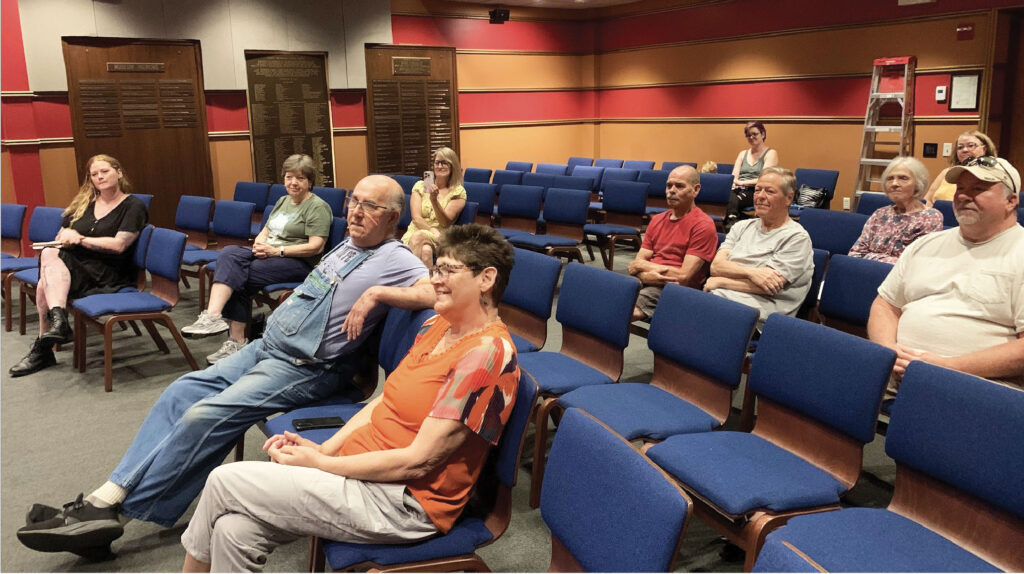
Poetry reading event

For Glinda Johnson-Medland, poetry is more than just words.

For her, it’s a chance for everyone to “breathe” in today’s harried world.

“Any art is healing,” said Johnson-Medland, executive director of word hive: a space for poets.

Johnson-Medland, of Columbia, founded word hive five years ago with a noted mission that includes “increasing the use of poetry for self expression.” Her husband Tom serves as chairman of the nonprofit organization’s board.

Word hive’s listed values include “innovation, creativity, advocacy, access for all, respect, artistic excellence, ongoing education, collaborative presence, social awareness and deep social listening,” according to its website.

The group’s activities include monthly virtual poetry sessions during which participants conduct readings and discussions. In January, the program initiated a three-part series featuring “Keystone Poets” now on tour with readings from their current anthology, “Keystone Poetry: Contemporary Poets on Pennsylvania.”

“We love what we do,” said Johnson-Medland, who added that 27 people attended the January event. “It’s a very positive session.”

The series’ final session, featuring poets Marjorie Maddox, Allison Adair, Valerie Fox and Judith Sornberger, takes place online on March 21. Following that, a virtual presentation by poet Meg Eden Kuyatt is scheduled for April 18.

Word hive also conducts an in-person summer series each year at the Clock and Watch Museum in Columbia.

“Our goal is to get it out there,” Johnson-Medland said. “Some of our people have never read their poetry out loud. I just love it when I see people’s light bulbs go off.”

Janine Dubik, of Wyoming County, said that she’s been attending word hive’s monthly poetry readings and poetry workshops for four years. Now retired from a writing and editing career, Dubik said that she started writing poetry about 10 years ago and has been published in various journals and literary magazines.

“I first met Tom and Glinda at poetry retreats,” Dubik said. “They are amazing poets and amazing people.”

Tom and Glinda Johnson-Medland are both published poets and writers, with Glinda nominated for the prestigious Pushcart Prize honoring excellence in poetry, short fiction and essays published in small presses. Tom Johnson-Medland also creates visual art for sale on his website.

By day, Tom works as a hospice marketing coordinator, while Glinda is an independent “mostly retired” social worker.

The couple also creates art collages and conducts poetry workshops in Perry County. Then there’s the poetry posted each year on Red Rose Transit Authority buses.

In 2024, the Johnson-Medlands launched “Poetry in Transit” in partnership with the Philadelphia Alumni Writers House at Franklin & Marshall College and Vector Media. The program posts about 20 short poems, submitted to word hive, on RRTA buses for the duration of each year. This year’s poetry theme is Lancaster County.

Glinda Johnson-Medland said that the biggest challenge in running word hive’s outreach is “awakening poetry to people as an art form.”

“A lot of people look only at the visual as an art form,” she said. “Tom and I both really love poetry and wordsmithing.”


For more information on word hive: a space for poets, visit
www.wordhive.org. You can view Tom Johnson-Medland’s artwork on his website, www.tomjohnsonmedland.org.  

If you like what we do, please support our work. Become a Friend of TheBurg!          

Continue Reading

Die Laughing: “Andre Is an Idiot” is dark and funny—and true

Image courtesy of Joint Venture

André Ricciardi is a dying ad exec with a killer sense of humor.

If that doesn’t make you want to spend 90 minutes with him in a dark room in Harrisburg with a big screen, let me pitch him like this. André Ricciardi is like if there was a character on “Mad Men” with a temperament somewhere between Steve-O and Carell. He’s also got stage 4 terminal rectal cancer, because he didn’t feel like getting his standard recommended colonoscopy.

Tony Benna’s new documentary, “André Is an Idiot,” follows its titular subject over the course of the last few years of his life, showcasing André’s irreverent, infectious and, above all, stubborn sense of humor as he refuses to take life seriously just because he has cancer. (And the doc resonates—it took home the Audience Award at Sundance Film Festival, previous winners of which include “Whiplash,” “Minari” and “CODA”).

That being said—my favorite moments come when André sets his comedic avoidance to the side for a couple of minutes to stare death in the face and see how he reacts. One such moment highlights a meeting between André and his old agency, as they collaborate on an ad campaign showcasing close-up images of everyday objects that evoke the rear end, each one labeled simply “COLONOSCOPY REMINDER.”

Another such moment is perhaps my favorite sequence in the whole film. He and his best friend—with whom André has a pact never to be treated tactfully, cancer or otherwise—meet with a guru to contemplate and practice “death yells” at the lip of a canyon. The three of them stand side by side on the cliff, casting variations of their last words into the wilderness to see which echoing words resonate with each of them.

How do I want to be remembered? Will I go into the unknown with a whimper, a battle cry, or a proverb, like a character in one of Aesop’s fables? A Porky Pig “That’s All Folks!” or a John McClane yippee-ki-yay?

You’re not reading a movie review in TheBurg for my thoughts on death—and, that being said, that’s not really what the film’s about. It’s about assured self-love in the form of pure comedy in the darkest of situations.

As I began to watch the film, I was dreading the sobering path I was going to take, watching a terminal cancer patient ultimately waste away and die, which is, reductively, what does happen in the film, and I think a trigger warning for that is in order. But it’s a testament to the film that I really can’t say I left the film on a downtrodden note. André Ricciardi and the filmmakers bring true joy to the process of death, and I think that is worth celebrating at a truly fundamental human level. Also, get your colonoscopy.

“André Is an Idiot” opens in March at Midtown Cinema.

Midtown Cinema is located at 250 Reily St., Harrisburg. For more information, visit www.midtowncinema.com. Gabriel Brown serves as assistant manager at Midtown Cinema. 


March Events
at Midtown Cinema

A Red Carpet Evening
Celebrate Hollywood’s biggest night!
Tickets on sale now.
Sunday, March 15 at 6 p.m.

“The Librarians” (2025)
With post screening panel discussion
March 8, April 12, 12 p.m.

3rd in the Burg Movie Night
“National Treasure” (2004)
Friday, March 20, 9:30 p.m.

Late Night Frights
“Jacob’s Ladder” (1990)
Friday, March 27, 9:30 p.m.

National Theatre Live
“Hamlet”
Sunday, March 1 at 5 p.m.

“The Fifth Step”
Sunday, March 22 at 5 p.m.

If you like what we do, please support our work. Become a Friend of TheBurg!          

Continue Reading

French Lesson: Rosemary shifts cuisines for a month

Long-time readers know of my love and preference for Italian food. As a first-generation Italian, it is the heart and soul of my culinary endeavors.

But I had a moment. In the early 1970s, my husband and I spent quite a bit of time with friends who adored the whole French thing—food and wine in particular. And, well, they spent time there too.

We used to trade weekend visits with them. They’d come to Harrisburg. We’d go to and Washington, D.C. And we always looked forward to the Saturday night dinners that we cooked in our apartments.

I was introduced to French onion soup, coq au van, beef Bourguignon, crepes, cassoulets and, at breakfast, croissants. I was enchanted.

One of my favorite French classics, and my older son’s too, is Steak au Poivre, an easy-to-prepare dish that stars a rather large dose of black peppercorns. Now, you must like black pepper and food that is somewhat spicy, but this is a spectacular entrée. You might want to save it for a special occasion, but it is not difficult for a weeknight either.

My recipe is from a very old (1985) New York Times cookbook that features many classic recipes. I pulled it out recently, and many memories flooded back. There were so many things I hadn’t made for a long time, like Steak au Poivre.

Pair this dish it with a smooth red wine. My favorite is Beaujolais, a perfect accompaniment for a beautiful steak.

Steak au Poivre

Ingredients

  • 4 New York strip steaks (or filets)
  • 2 tablespoons whole black peppercorns
  • 4 tablespoons butter
  • 3 tablespoons warm cognac or brandy
  • 2 shallots, finely chopped
  • ¾ cup beef broth
  • 1 cup brown sauce or canned beef gravy (it’s OK, just look for a good brand)

Directions

  • Dry steaks with paper towels. Crush peppercorns with a mortar and pestle or a kitchen mallet (between 2 layers of waxed paper or in a plastic zip lock bag).
  • Rub crushed pepper onto both sides of the steaks and set them aside for about an hour.
  • Heat 3 tablespoons of the butter in a large heavy skillet (cast iron works so well here).
  • Sauté the steaks quickly—about 3 minutes on each side for medium rare and slightly longer, lowering the heat, for more well done.
  • When done, carefully pour the warmed cognac or brandy and ignite with a long match. Stand back!
  • When the flames subside, place the steaks on a warm platter, and season with salt and pepper.

The Sauce

  • Sauté the shallots in the remaining fat in the skillet until softened.
  • Add the broth and cook it down until the skillet is almost dry.
  • Add the brown sauce, bring it to a gentle boil, cook for 1 or 2 minutes and swirl in the remaining butter.
  • Pour the sauce over the steaks or serve it separately.

I enjoyed the time I spent in the “land of French cooking”—and we always enjoyed the times we had with our Washington, D.C., friends. But the food memory we cherish most is the night we dined at a little French restaurant across from the White House. It was called Chez Francois. It is gone from there now but is still thriving out in the Virginia suburbs.

At the time, the menus were written in French, and our friend helped us navigate them to order. When the food came, we noticed that our friend had a strange look on her face and was pushing her food around on her plate. She had ordered “braised veal,” or so she thought. The waiter very politely informed her that what she had in fact ordered was brains of veal. More French lessons needed!

If you like what we do, please support our work. Become a Friend of TheBurg!          

Continue Reading

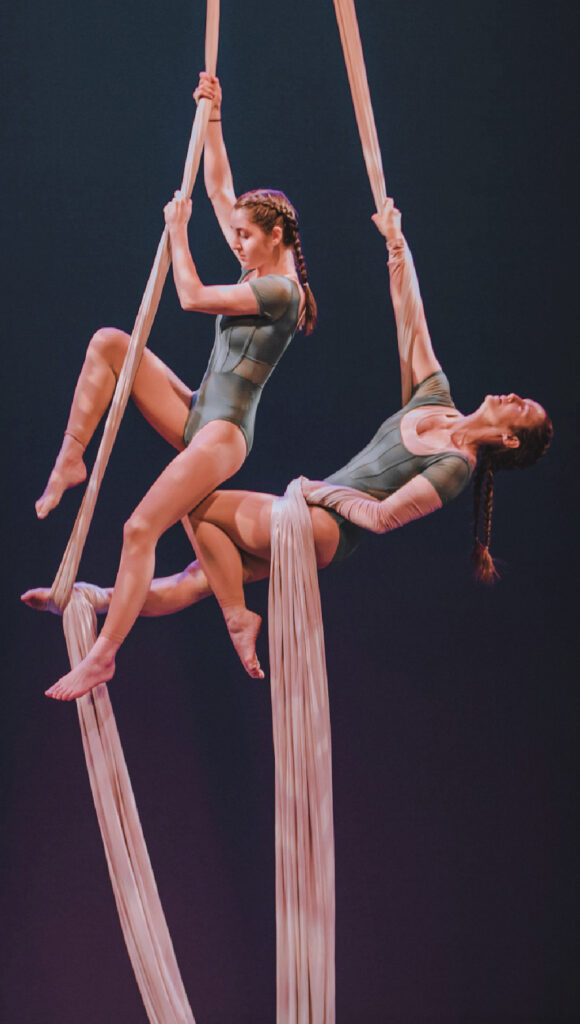
Two of a Kind: Mother, daughter witness each other’s aerialist journeys

Itaya and Jane Bryan on the silks

It’s safe to say that Jane and Itaya Bryan spend their time together differently than most mothers and daughters. For them, “hanging out” often involves hanging high up in the air.

“We like to do adventures together,” said Jane, the owner of the Harrisburg aerials studio Artz N’ Motion. She describes aerial arts as an adventure itself.

With good reason—the artistic sport combines strength, flexibility and acrobatics. Along with climbing up apparatuses (often, a feat of upper-body strength), it also involves flipping upside down, and sometimes, doing animated drops from as high up as the ceiling rafters.

“Aerials is not easy,” said Itaya. “It is not something that everyone can just pick up in five minutes.”

Although for the daughter of the studio owner, the sport comes easier than most.

The 24-year-old has been flipping upside down since she was in elementary school, starting on apparatuses hung in their family’s professionally rigged garage.

“Ever since I was little, I was always hanging off of something, always climbing,” she said. “I learned the basics so early.”

Her aptitude for dynamic movements is helped along by the more than a decade she spent during her childhood doing competitive cheerleading. Of course, it also helped that she grew up watching her mother, her first teacher, fall in love with the sport.

It all started when a 36-year-old Jane, who had an athletic background in gymnastics and tumbling, saw a flyer for a Cirque Du Soleil show in 2006. After a little research on the internet, “which was still fairly new,” Jane said, she tried an aerials class just two hours away at the Philadelphia Circus School.

“I humbled myself greatly because I couldn’t do one climb,” Jane remembered with a laugh.

All the same, she was hooked.

She spent the next several years driving back and forth to the school to train several times a week, sometimes with Itaya, who was just 5 years old at the start of the journey, in tow.

Itaya remembers watching from the seating area of the school as she did her homework.

By 2009, Jane, who had by this point trained on trapeze, the silks, the hammock, and rope, opened her own cirque business, Artz N’ Motion.

She began teaching students to use apparatuses herself—first through classes at the Harrisburg Christian Performing Arts Center and then in her own physical location. Teaching gave her a new purpose.

“I love making an impact in people’s lives,” Jane explained.

Jane and Itaya Bryan

You Got This

Jane starts each class with a stretching circle, so that class members can talk and get to know each other as they answer a weekly ice breaker question.

“I pull teeth to get people to talk to me and ask all those deep questions that people don’t want to answer to make them feel comfortable—to make them feel like they belong in a space and create community,” she said.

Another perk of coaching aerials, she said, is showing people they’re more capable than they know when it comes to doing certain moves.

“Yesterday, I had a kid, and she was terrified, even though she’s so strong she could probably hang for five minutes,” she said.

But with a little support—“You got this. You can do this.”—she accomplished the move, Jane said, and wasn’t afraid of it anymore.

For Jane, the studio entered an exciting new phase last year when Itaya began working as one of her aerial instructors. She described the development as a “pinch me” moment, and said she loves being able to share something with her daughter so close to her own heart.

Like her mother, Itaya finds aerials to be an organic extension of herself and enjoys teaching people to do things they never thought they could do.

“One of my favorite things to do is to help someone out or encourage people,” Itaya shared. “I feel like this is one of the biggest and easiest ways that I can make an impact on someone’s life.”

A young Itaya on the silks

Born to Move

The studio, now on its second physical location, operates out of a warehouse in Swatara Township, a venue chosen for its high, structurally sound ceilings. Its unique cirque-style fitness offerings—silks, trapeze, lyra, and hammock training for both children and adults—draw students not just from Harrisburg, but York, Reading, Hanover, Carlisle and State College.

More than just training, the studio also gives students the opportunity to perform once a year at an annual spring showcase at HACC. In the show, Jane and Itaya often perform together on the silks—which has become something of an annual tradition for them.

“It’s a different way to be deep with someone, a different way to connect,” Itaya explained. “When you’re putting something together, you’re creating a story.”

“I like the connection,” added Jane. “I might come up with some ideas, you come up with ideas, and then we bring it together, and it makes the whole piece.”

She added that she and Itaya have also inspired two other mother-daughter aerialist performances at the studio and that, in Artz N’ Motion’s showcase this year, a brother and sister will also be performing a duo routine.

Jane’s favorite part of working with Itaya, though, is when she isn’t working at all— it’s when she has an hour break during her daughter’s class.

“I’m in the office, and I get to hear her laugh,” she said.

While Jane said she would never want to force Itaya to live out her own dreams, she added it isn’t “out of the realm of possibility” that her daughter could take over the studio one day.

“I feel like I was born to move. Some people are like, born to be doctors, I was born to move,” Jane said, nudging her daughter. “And I feel like you have that as well. You were just born to move.”


Artz N’ Motion is located at 1235 S. Harrisburg St., Suite E, Harrisburg (Swatara Township). To learn more about the studio, visit
www.artznmotion.com.

If you like what we do, please support our work. Become a Friend of TheBurg!          

Continue Reading

Musical Notes: March Mingle

I don’t know about you, but I’m ready to dance this spring. I’m usually a fan of winter, but this year, it’s truly been too cold to go anywhere, cabin fever be damned! I’m hoping March changes that. Below is the rundown on some shows tempting me to forgo my electric blanket for the sake of live music, community and maybe even a little dancing.

SPREAD THAT JAM

3/6, Flux Capacitor, The Abbey Bar

Flux Capacitor puts on a heck of a show. I’ve seen them quite a few times around central and eastern Pennsylvania. The spacey electronic/jam fusion outfit, comprised of the brothers Specht (Peter, Michael and Jason), delivers a fresh and energetic take on jam festival music with the right touch of reverb and trance elements. Last fall, the band released its “Live Spirals Vol. 4,” offering fans a snapshot of their live shows to relive the magic. Catch ‘em when they hit the stage at the Abbey Bar this month.

PUNK IT UP

3/14, Kilmaine Saints w/The Super High-Tech Jet Fighters, XL Live

I think the annual St. Paddy’s Day shows with Kilmaine Saints are so much fun, and anyone who’s been reading this column the last few years will not find their inclusion on this list surprising. However, last spring, I got to watch The Super Hi-Tech Jet Fighters at the Strawberry Square Music Series and was absolutely charmed by the punk/power pop group, which appears to be the opener for this show. I absolutely recommend getting to XL Live before showtime and grabbing your bev before The Super High-Tech Jet Fighters take the stage. If you check them out ahead of time, listen to “Bat Eyes,” “Ruby” or “Know-It-All” for a fun smattering of their sound.

ROCK ON

3/27, Noun, Capital City Music Hall

If you’re looking for an indie musician with range, this is the show for you. Marissa Paternoster, former frontperson of the incredible New Jersey punk/DIY band, Screaming Females, has been sharing her haunting vocals and experimental rock via Noun for about 20 years, and I’m stoked she’s coming to Harrisburg later this month. While the most recent album from Noun was 2021’s “Peace Meter,” Paternoster’s been releasing singles and EPs the past few years, and I have a feeling we’ll hear a few of those newer tracks alongside old favorites like “Holy Hell,” “Loveblood” and more.

If you’re a musician and/or promoter, or a fan of a local artist, and you’d like to share some upcoming shows with TheBurg, drop me a line at [email protected]. 


HONORABLE MENTIONS

3/11, Sunsquabi and Manic Focus, The Abbey Bar

3/13, Seasons, West Shore Theatre

3/13, Brit Floyd, GIANT Center

3/14, Steve Martin & Martin Short, Hershey Theatre

3/21, Hellbender Hootenanny featuring Public Disco Porch, Jay Veil and Actual Wizards, The Abbey Bar

3/25, Sebastian Bach, Capital City Music Hall

3/27, Duunes, The Abbey Bar

3/28, Nirvani, XL Live

If you like what we do, please support our work. Become a Friend of TheBurg!          

Continue Reading

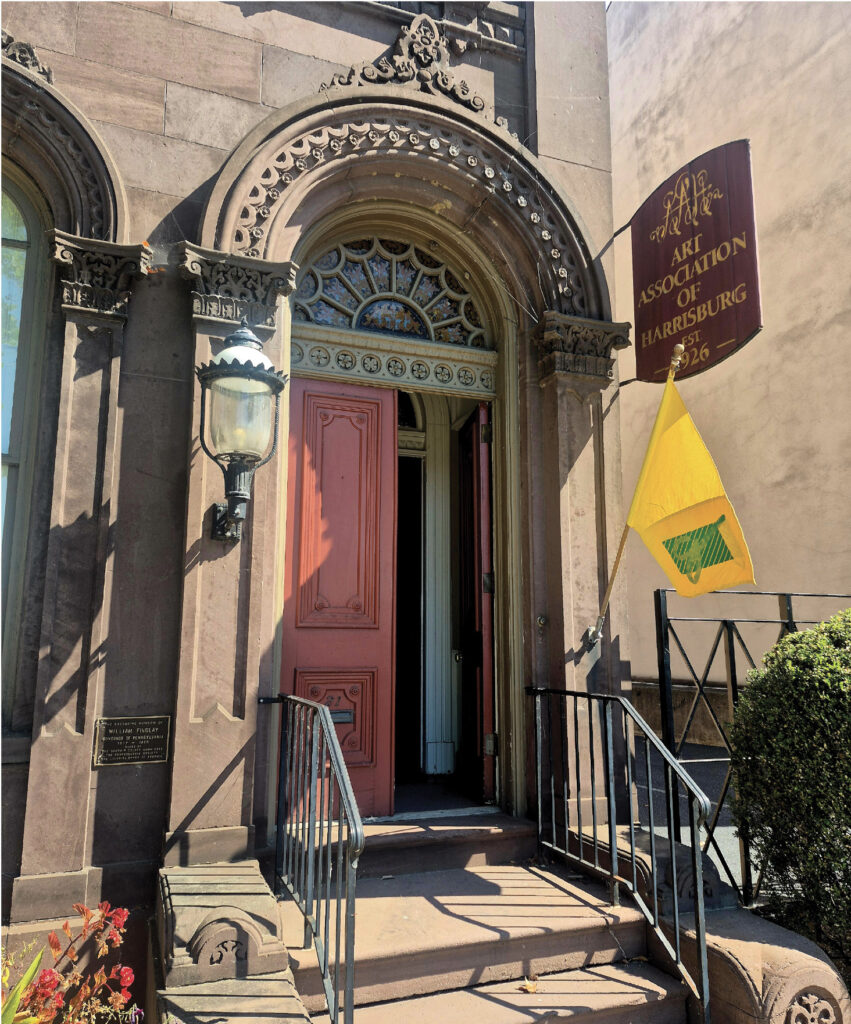
Creative Century: Art Association of Harrisburg shares its flair as it turns 100.

Art Association of Harrisburg

When novice artists hit their stride, “you start looking at the world differently.”

“To an artist, there’s no such thing as white snow,” said Art Association of Harrisburg teacher Richard Michaelian. “Snow always has some kind of a hue to it. You look at the snow as dusk is approaching, and it’ll look blue or purple.”

For 100 years, artists have been boosted along their art journeys by the Art Association of Harrisburg.

“It starts with taking lessons, then creating your own painting, then from there, getting your painting into a frame,” Michaelian said. “That can take a little while for people to want to do that, and then exhibiting and getting it hanging on a wall.”

Founded in 1926, the Art Association of Harrisburg celebrates this centennial with its usual flair. Founded from an art-patron mindset, AAH has blossomed into a cauldron of learning, where people hungry for art find their voices amid a nurturing community of creatives.

“Art is the most important thing in the world,” said long-time Executive Director Carrie Wissler-Thomas. “Art is what makes life beautiful. With all the turmoil everywhere, people need art in order to find beauty in their lives. It’s a way to express oneself. Art nurtures the soul.”


 Finer Things

The “stars in the firmament of 1926 Harrisburg society” applied for the charter creating the Art Association of Harrisburg, wrote Wissler-Thomas in her AAH history, “As the Paint Dries.” Like Theatre Harrisburg, it sprang from the women of the Harrisburg Civic Club as the turn-of-the-20th-century City Beautiful Movement reached its peak.

With a goal of civic uplift, the new association focused on attracting top-tier exhibits to Harrisburg. Through early patron Homer Saint-Gaudens, son of renowned sculptor Augustus Saint-Gaudens, the fledgling organization scored a coup by attracting a major show of interiors, landscapes and portraits by Sir John Lavery.

The prominent British painter, just as enamored with this upstart group as Saint-Gaudens, startled the city by gifting two of his paintings to the association—the genesis of a permanent collection that, recently, got its own Art Association gallery.

Local artists entered the picture in 1927 with an exhibit in the Harrisburg Public Library, and, by the 1930s, artists themselves were operating a separate but tandem group, called the Studio. In the ‘40s, as money for traveling museum shows dwindled and AAH’s founders were passing on, exhibitions by local artists became the norm. In 1953, AAH reorganized, absorbing the Studio and launching a new era of encouraging the creation and display of art.

Not all of it was progressive or groundbreaking. An Evening News writer celebrated a 1963 show’s lack of works from “the automobile parts school of sculptor and ‘pop art.’”

“Neither is missed,” he sniffed.

Still, an art scene was growing up around the association, as members founded their own galleries and taught college-level art. To the possible horror of the Evening News scoffer, AAH stalwart Wanda Macomber became a well-known abstract precisionist painter.

AAH’s rejection of a nude self-portrait by Gene Suchma for a 1974 exhibit shattered relations with some members of the art community.

“This was not the Art Association’s finest hour,” wrote Wissler-Thomas, adding that, since 1980, AAH “stands tall against censorship in all its ugly forms.”

AAH found its dream home, the historic riverfront Governor Findlay mansion, in 1964. Surviving threatened demolition in the 1970s, a 2014 mini-tornado, and, of course, the joys of water leaks, the building today hosts exhibits, a sales gallery and classes, all on four levels of parquet-floored, fireplaced, carved-molding style.

There were eras of debtors and three-figure checking accounts. Active board members, nimble executive directors, and supporters kept the doors open through donations, art sales, capital campaigns and events.

Today, Summer Soirees extend members’ artwork into the elegant backyards of AAH patrons, while Community Exhibitions hang curated works in the galleries of participating businesses and institutions, bringing the serenity of art to workaday settings.

“It’s a chance to get artists’ work out in the community,” said Wissler-Thomas. “Artists will join the Art Association just because they can show their work.”


Heart for Learning

After thriving in the watercolor classes he requested for Father’s Day, Michaelian transitioned from student to teacher. As he watched artists mature to the point where they were teaching the teacher, he hatched the idea for Open Painting Studio, where burgeoning and experienced artists can find space to hone their techniques without formal instruction.

Held in Giant Food Stores’ Camp Hill community room, sessions host 40 to 50 artists weekly.

“The beginning artists seem to enjoy it because they get to see what others are creating, and the other artists get to enjoy walking around and helping the beginners,” he said.

And, he added, “A lot of my students will do their grocery shopping afterwards.”

Past AAH President David Morrison, now executive director of Historic Harrisburg Association, guided AAH through some lean financial years. He remembers the 2002 and 2003 exhibits of live tattoo recipients, displaying the works inked on their skins.

“It was really, really cool and attracted an entirely different clientele from normal art exhibits,” he said. “So, that was really a clever outreach, getting new audiences and showing that art isn’t stuffy.”

A local art association inspires artists to capture the region’s architectural and natural beauty, Morrison noted. AAH once held classes in the Historic Harrisburg Resource Center, helping to cement ties between two of the city’s anchor cultural organizations.

“The fact that we had it right here under our roof really broadened our horizons,” he said. “It brought art to Midtown long before there was the Millworks or Susquehanna Art Museum or Midtown Scholar Bookstore. So, it was kind of the beginning of expanding culture into Midtown.”


Show & Share

To Michaelian, showing at an Art Association exhibit is the North Star for budding artists. When his students exhibit for the first time, “their family wants to take their picture standing next to it, even if they don’t win a prize or it doesn’t sell,” he said. “Carrie and the association bring that to life.”

Susan Fortini and her partner, Raymond Kasper, of Lower Paxton Township, are longtime AAH donors. Artists need outlets for learning, showing and support because “it’s a little hard to do it on your own, and if there’s an organization you could participate in, it helps you to share,” she said. “I believe, if you have a talent, it’s your responsibility to share it. With organizations like the Art Association, you can get involved and have an opportunity to share your talent, your gift.”

Erie native M. Travis DiNicola was working in arts leadership and communications in Indiana. He and his wife, Michelle, had already decided to relocate to Pennsylvania when they attended an AAH show featuring her mother’s work in 2016.

There, Wissler-Thomas convinced them to make Harrisburg their home. DiNicola would serve on the AAH board when he arrived, she pronounced.

True to her word, he is the current president. Since his arrival, DiNicola has seen a diverse, professional board support the staff.

“There’s a lot of respect from local and regional artists for the work the Art Association does and tries to do and can do, and they’ve really pushed the staff and the board, as well, to be innovative and to grow,” he said.

The post-COVID need for socialization and expression propelled enrollment in the AAH school to record-breaking, “crazy high” levels of around 650, DiNicola added. AAH artists are always “pushing each other to be better,” and the organization has the potential to attract tourism and capitalize on “this amazing river” flowing on the other side of Front Street.

In a world where museums, galleries and art groups all have roles in promoting the arts, the Art Association is unique because “the artists are of and from the community and develop in the community for the community,” DiNicola said.

In its first century, the Art Association’s impact has been “huge,” said Wissler-Thomas. Students in the association’s classes—drawing, painting, mixed media, pottery, children’s classes—are constantly sharing the joy the courses have brought them and their loved ones.

To anyone who says computers have made art obsolete, Wissler-Thomas says, “That’s balderdash.” Art created by human hands has soul.

“Over 100 years, we have touched so many lives,” she said. “We’re open seven days a week, so people can come in and enjoy the art whenever they feel the urge. Art is in everything that we look at.”

The Art Association of Harrisburg is located at 21 N. Front St., Harrisburg. For more information, visit www.artassocofhbg.com.

Centennial year exhibits include “Women of the Permanent Collection,” through Nov. 27, and a Carrie Wissler-Thomas retrospective, July 3 to Aug. 30. The Centennial Gala will be held at the King Mansion on April 26.

If you like what we do, please support our work.

Continue Reading

TheBurg Nonprofit Focus: Greenlee Partners & The MLK Leadership Development Institute

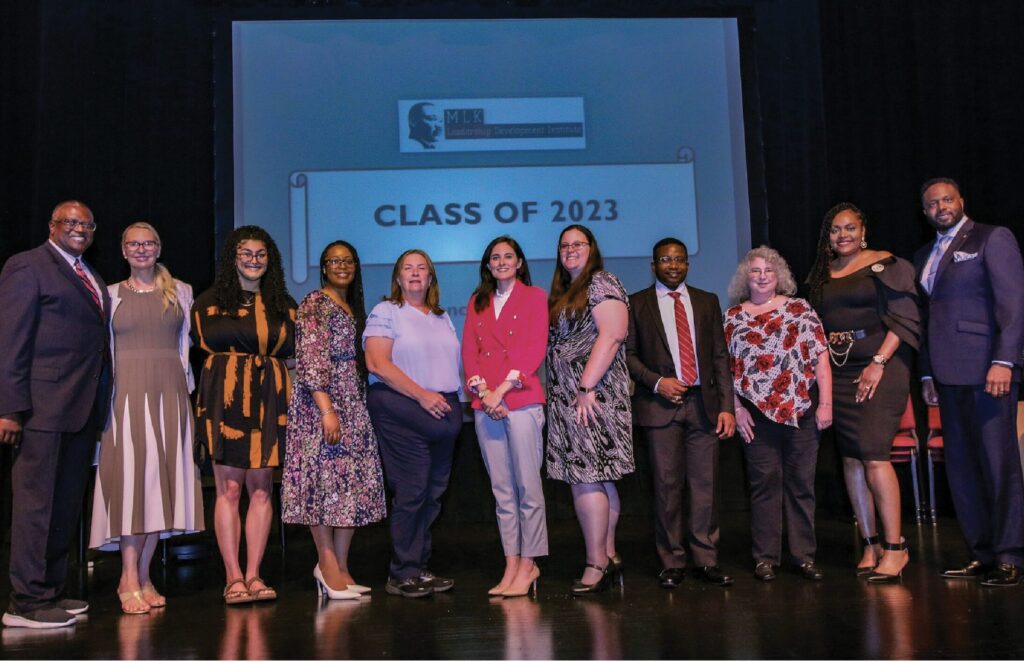
2023 MLK LDI graduates at HACC

Greenlee Partners
230 State St., #1, Harrisburg, PA 17101

Why does giving back matter to your business — and how does supporting local nonprofits shape your company culture or values?

The Greenlee Partners team consists of accomplished professionals with a single-minded focus on delivering superior client service. Moreover, they are skilled and passionate individuals who are personally invested in strengthening the communities where they live and work. Strengthening the communities we live and work in has been a focal point of the firm for over 40 years.

Our team takes volunteering seriously. Many of our team members devote time away from the office to champion the causes they care about. We believe that touching the lives of others has a positive impact on the entire community. Giving time, talent and treasure to community groups that are important to our associates helps further the legacy of Greenlee’s philanthropic efforts.

Additionally, we support the Harrisburg community on a company-wide level. Over the years, we have engaged in numerous charitable efforts, allocating substantial time and resources to worthwhile endeavors throughout the area. We’re thrilled to be recognized as much for our community involvement as our lobbying efforts.


What drew you to this nonprofit, and what does your support look like in action (time, leadership, funding, advocacy, etc.)?

The Martin Luther King Leadership Development Institute (MLK LDI) seeks to strengthen personal and professional leadership skills for individuals serving their community. The community mobilization panel, in particular, seeks to provide leaders and aspiring leaders with the tools they need to impact public policy in an effective way. The scholars come from all walks of life, seeking ways to make their communities a better place.

Today, perhaps more than ever in recent history, understanding how to engage with our political leaders in civil discourse and advocate issues effectively to others is a necessary skill to possess. Without the ability to do so, changing public policy or even feeling heard in the community becomes difficult or impossible.

By volunteering time to work with the scholars at the MLK LDI, the scholars hopefully leave the program with an understanding of how they can make an impact regardless of their post in life. To quote Dr. Martin Luther King, Jr., “Everybody can be great because anybody can serve.”


The MLK Leadership Development Institute

What problem is your organization working to solve, and how does partnership with local businesses help you create measurable impact?

The MLK Leadership Development Institute is working to address the persistent gap in access to leadership development, economic opportunity and civic empowerment for historically marginalized communities. Too often, talented individuals lack the social capital, professional exposure and practical leadership training needed to translate potential into sustained impact. Our Institute equips emerging leaders with skills in ethical leadership, workforce readiness, entrepreneurship and community advocacy—grounded in Dr. King’s principles of service, equity and collective responsibility.

Partnerships with local businesses are essential to creating measurable impact because they connect leadership development to real-world outcomes. Through these partnerships, participants gain mentorship, internships, job placement opportunities and hands-on experience solving actual business and community challenges. Local businesses benefit from a diverse, prepared talent pipeline, while we track outcomes such as employment rates, career advancement, business creation and community engagement. This ecosystem approach ensures our work moves beyond theory, producing tangible economic mobility for participants and measurable returns for the broader community.


As you look ahead to 2026, what type of corporate or foundation support would most help you grow or deepen your mission?

As we look ahead to 2026, the corporate and foundation support that would most help us grow and deepen our mission comes from organizations that are intentionally investing in their communities through both human and social capital. Financial contributions remain important, but the most transformative partnerships are those that engage people, expertise, and long-term commitment alongside funding.

We are seeking local business partners that are willing to invest their employees as mentors, instructors and social justice partners—sharing industry knowledge, leadership experience and professional networks with our participants. This type of human capital support accelerates leadership development, strengthens workforce readiness and creates authentic pathways to career advancement and entrepreneurship.

Equally important is social capital: access to networks, relationships and opportunities that are often out of reach for emerging leaders. Corporate and foundation partners can open doors by connecting participants to internships, apprenticeships, project-based learning, board service and community-based initiatives. When organizations leverage their influence and relationships, they help our participants move from preparation to placement and from leadership training to real civic and economic impact.

By investing in both human and social capital, corporate and foundation partners become co-creators of community change rather than just funders. These partnerships allow us to deepen our programming, scale our impact, and build sustainable pipelines of leaders who are equipped, connected and empowered to strengthen the communities we all share.

Continue Reading

TheBurg Nonprofit Focus: Enders & The Downbeat Foundation

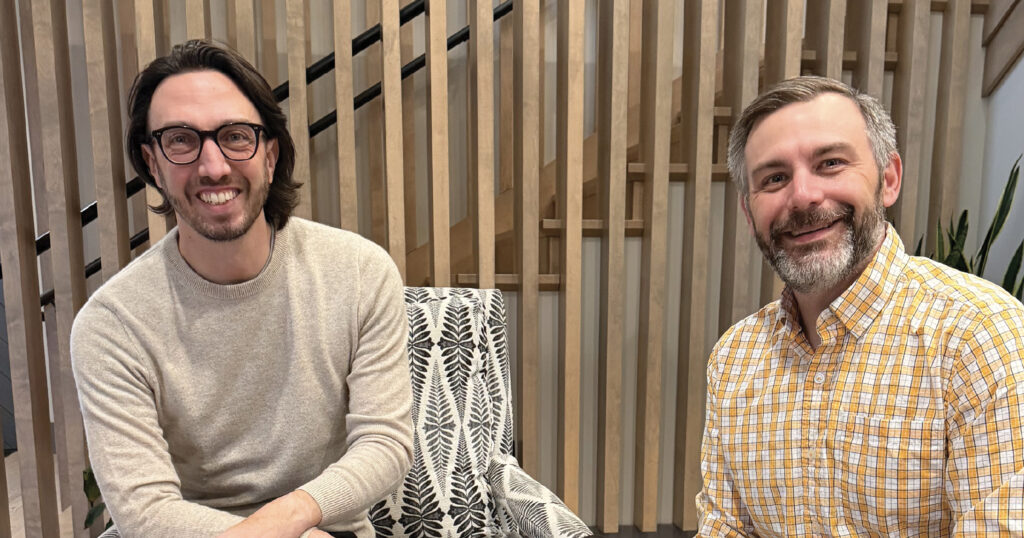
Andy Enders & Steven Kurtz

ENDERS
5912 Linglestown Rd., Harrisburg, PA 17112

Why does giving back matter to your business — and how does supporting local nonprofits shape your company culture or values?  

Enders is nothing without our clients and the communities in which they exist. Many of those clients are nonprofits, and working alongside them has given us an intimate view of both their remarkable work, coupled with all-too-common impediments to success. Existing alongside our clients builds vibrant insight that allows us to better serve our clients.

Community engagement shapes our culture and demonstrates Enders’ 75 years of intentional acts. We don’t support the community because it’s a nice idea. The team members at Enders do it because they care about the people and causes that seek to solve problems and celebrate ideas. When your neighbors are also your clients, the distinction between business responsibility and personal obligation gets blurred in the best possible way.

We believe in the power of new ideas and continue to seek chances to build new partnerships, like the recently established Downbeat Foundation. Growing the breadth of our connections strengthens the impact of our support—through time, talent and financial commitments. The people who choose to join our team at Enders tend to be the same people who show up when their community needs them. Our support of local organizations is an outcome of a company culture that is firmly rooted in charitable acts.


What drew you to this nonprofit, and what does your support look like in action (time, leadership, funding, advocacy, etc.)?  

In an era of shrinking opportunities to celebrate the arts, the Downbeat Foundation stands to be an antidote to students never knowing the power of playing an instrument.

Our connection to the Downbeat Foundation is personal before it’s professional. Andy Enders was a classmate of Ben Smith, the inspiration for the Downbeat Foundation, along with Steve Kurtz, its founding catalyst. Beyond the time shared at Central Dauphin, Ben, Steve and Andy shared the bond of a being in a high school garage band together. The loss of Ben was particularly poignant, but the development of the foundation provided the avenue to celebrate a life through meaningful action.

Through those long relationships, it was an easy “yes” when Steve Kurtz asked Enders to provide support to the nascent organization. Andy Enders quickly identified a colleague that loved music and was seeking an opportunity to deepen community involvement: Nelson Butz. Nelson quickly accepted the call to action, aligned with Enders’ common value of giving back. Upon joining the board, Nelson was immediately able to contribute to the planning of the foundation’s signature event this spring, May Jam.

What’s most compelling about this organization is the speed and intentionality with which it came together. A few months after Ben’s death, the foundation was formed. A few months after that, it’s already funded and is supporting multiple students. The people closest to this tragedy found a way to transform it into tangible opportunity for young people who might not otherwise have access to music education.


The Downbeat Foundation

What problem is your organization working to solve, and how does partnership with local businesses help you create measurable impact?

The Downbeat Foundation works to remove the barriers that keep young people from accessing percussion education. We meet students who want to play drums but lack access to drum lessons, a drum set to practice on, or the resources needed to keep learning consistently. Without those basics, even motivated kids can lose momentum before they ever find their rhythm.

Our work is intentionally focused on percussion. We provide need-based access to drum lessons, drum sets and related support so students can learn properly and keep progressing. That means hands-on instruction, quality equipment and the ability to practice at home, not just during lessons. For us, impact is measurable and practical—students showing up consistently to lessons, continuing instruction over time, and developing confidence, discipline and self-expression through drumming.

This work is inspired by our friend, Ben, a lifelong drummer who believed deeply in the power of rhythm to connect people and build confidence. His passion for percussion continues to shape how we think about access, mentorship and keeping music fun and meaningful.

Partnerships with local businesses make this possible. Support from companies like Enders Insurance allows us to put drum kits in students’ homes and keep lessons going month after month. Local partners understand the community and help us build something sustainable. Enders has been a true partner, supporting our mission financially while also showing up and helping amplify our work locally.

When local businesses invest in music education, the results are immediate and lasting.


As you look ahead to 2026, what type of corporate or foundation support would most help you grow or deepen your mission?

As we look ahead to 2026, the support that would most help us grow is partnership that directly strengthens our percussion programs. Financial support remains essential, especially to expand access to drum lessons and drum sets, but consistency and shared values matter just as much.

Predictable funding allows us to plan ahead, accept new students confidently, and ensure lessons continue without interruption. Support designated for drum instruction, equipment purchases, and transportation helps us deepen our impact while maintaining quality. It allows us to stay focused on teaching, mentoring and student progress.

We are also excited about partners that want to engage beyond funding. Sponsoring students, supporting our annual May Jam event, or helping us share the importance of percussion education all contribute to long-term success. These partnerships help reinforce the idea that rhythm, discipline and creativity are skills worth investing in.

Inspired by Ben’s love for drumming and community, our goal is thoughtful growth. We want every student we support to have access to drum lessons, a drum set to practice on, and a positive experience that builds confidence and a lifelong connection to music. Partners that share that focus help us make that possible.

Continue Reading

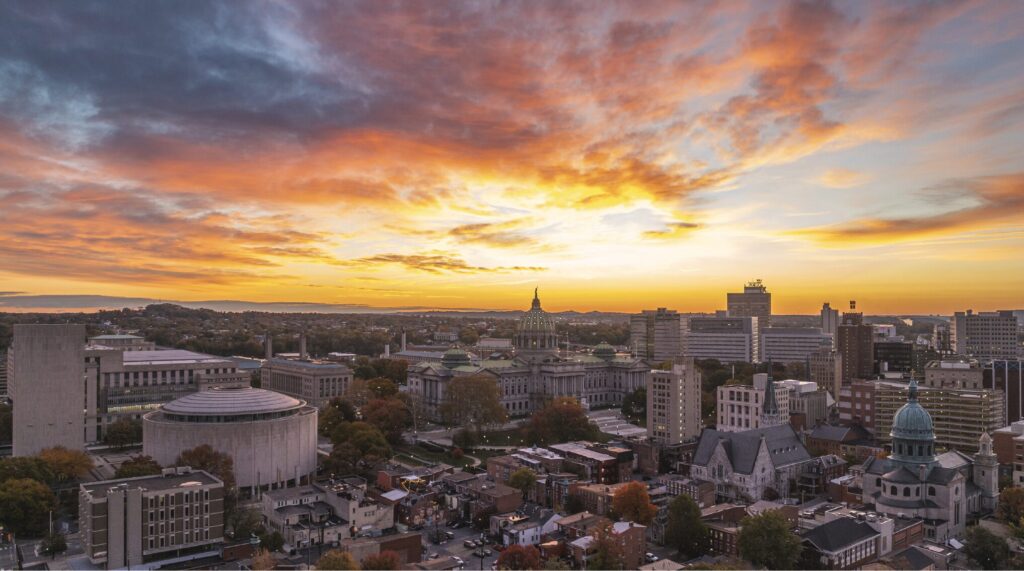
Change Starts Now: A long-term plan for downtown Harrisburg begins with early wins

Photo by Michael Yatsko

No one expects downtown Harrisburg to transform overnight. I understand the skepticism when you hear about “another plan” to help our capital city. There are reasons for that skepticism, and it can be difficult to believe this time is different. But communities don’t lose belief because progress is slow; they lose belief when progress is not evident.

Belief is also shaped by how we talk about downtown—and how we consume the stories around it. When the loudest narratives focus only on what’s wrong, it becomes harder for residents, businesses and investors to see what’s possible. Revitalization requires a shared willingness to recognize progress and participate in it.

That’s why, even as the Harrisburg Regional Chamber & CREDC welcomed a statewide grant to begin coordinated engagement and early action with partners like the Pennsylvania Downtown Center and city, county and state stakeholders, our focus isn’t on producing a lengthy plan that sits on a shelf. It is creating visible momentum and early wins that show revitalization has already begun.

Long-term revitalization takes time. We didn’t turn a bustling downtown of stores, stories and character into an office- and concrete-centered district overnight. The density of downtown workers fueled past growth and renaissance of restaurants and activity. With a global shift to remote and hybrid work, and a broader decline in dining and drinking out, we must think differently and plan for a different future.

That requires a thoughtful, deliberate and inclusive process. We need to listen to the business owners, residents and visitors who will write the next chapter of downtown Harrisburg. Even as that work continues, real change needs to start now.

There is momentum in downtown Harrisburg today, and that momentum must build confidence. We are seeing engagement from high-level leadership, from our governor to the mayor to our county commissioners and legislative delegation. We have brought together the businesses and stakeholders who have invested in and believe in Harrisburg. As this work begins, we must quickly identify projects and actions that can change the downtown experience now—not six months or a year from now.

Downtown’s future won’t be decided by a single plan; it will be shaped by the daily choices of the people who believe in it.  Everyone has a role to play. Choose downtown Harrisburg. Have a coffee, grab lunch, or connect over a cocktail. Visit Whitaker Center for a show or exhibit. Experience the Harrisburg Symphony in the Forum. Catch live music along the riverfront or at Capital City Music Hall. Help restore the foot traffic that brings energy to our city and region.

At the same time, efforts are underway with downtown organizations and businesses to fill the calendar with events, collaborations and pop-up experiences. Beyond traditions like the St. Patrick’s Day Parade, Artsfest and Kipona, Harristown Development is activating new energy—from SoMa block parties to the Tiny Park Concert Series launching this summer at Coronet Park.

Working with local leaders and supported by the commonwealth, we will also begin addressing the fundamentals of a thriving downtown—clean and safe streets—with an additional focus and commitment to these areas right now.

Downtown Harrisburg’s revitalization will not happen all at once. It will take time, partnership and steady progress. Above all, it will also take a region that believes in our capital city and isn’t afraid to say so. In the end, this work won’t be decided by a single plan; it will be shaped by what all of us are willing to do, and willing to believe, starting now.

Ryan Unger is president and CEO of the Harrisburg Regional Chamber & CREDC. For more information, visit www.harrisburgregionalchamber.org. If you’d like to assist in the downtown Harrisburg revitalization effort, contact [email protected].  

If you like what we do, please support our work. Become a Friend of TheBurg!          
 

Continue Reading