Rail Fail Ready: After Ohio disaster, area first responders stress derailment preparedness

In the United States, train derailments are fairly common, including this December derailment in Harrisburg. Within a few hours, this train was
placed back on its track, and there were no injuries. Photo by George Drees.

Harrisburg is a railroad town. Railroad towns have wrecks.

Railcars have tumbled from the Rockville Bridge into the Susquehanna River. A double-stacked car jumped off the track last December. Horrific passenger train wrecks in 1962 and 1905 left dozens dead. In that infamous 1905 collision, windows shattered a mile away from the explosion of a boxcar full of dynamite—the kind of explosives that shippers used to hide behind innocuous labels.

In a region honeycombed with rail lines, today’s emergency responders don’t plan for “if” derailments happen. They plan for “when,” including the very real possibility of an East Palestine, Ohio-style hazmat incident.

“We are prepared but never prepared enough,” said Susquehanna Township Fire Marshal George Drees. “We have history here in central PA.”

Local fire companies are the first line of defense.

“Everything starts and ends at the local level,” said Chris Fisher, manager of Dauphin County’s emergency management office.

As an incident escalates, the Dauphin County Emergency Operations Center calls in and coordinates more and more stakeholders to manage the situation.

But who’s in charge? At that local level, there is the “incident commander”—likely a local fire chief—who makes the decisions. If the incident commander doesn’t have the expertise to address a particular situation, county resources can fill in the gaps and offer solutions.

“Ultimately, the incident commander signs off on it,” Fisher said.

Many decisions are best made at the local level, with support from higher-level agencies on such factors as population density and weather models, said David “Randy” Padfield, director of the Pennsylvania Emergency Management Agency. The greater the risk, the likelier that the model flips, as locals provide input, but higher-level agencies call the shots.

In East Palestine and similar disasters, the issue of unified command comes into play. According to the National Incident Management System, unified command is triggered when no single agency can manage an incident on its own. Without an individual commander, joint decision-making sets aside overlapping and competing jurisdictions.

Unified command minimizes miscommunications when multiple agencies and jurisdictions descend on a scene, Padfield said.

“Everyone has awareness of everyone’s tactics and plans, and you have a consistent planning process that involves everyone,” he said. “No one is caught off guard, and everybody has a common understanding of the situation and what the tactics are going to be.”


Courses of Action

In the case of an incident, rail companies have “pretty broad authority to operate legally within the right of the rail,” but the dialog and information sharing of unified command are meant, in part, to balance business concerns with public safety, Padfield said.

Advance discussion raises awareness and allows agencies on the scene to prepare for responding to tactical decisions—perhaps picking the moment when atmospheric conditions are right for an evacuation.

In East Palestine, a decision to vent and burn one unstable railcar morphed within 12 hours into the vent-and-burn of five cars, Padfield said. That left other agencies in a “compressed time environment” for planning, he said. At a state Senate Veterans Affairs and Emergency Preparedness Committee hearing, Norfolk Southern CEO Alan Shaw repeatedly said that unified command made the decision.

“Trying to understand what changed—that’s information we didn’t have,” Padfield told TheBurg. “What other courses of action did you investigate, and why did you choose this course of action versus the other ones? There was no dialog associated with any of that to try to figure out what other courses were actually explored to be able to mitigate that situation.”

Days after the East Palestine incident, Pennsylvania Gov. Josh Shapiro asked the same questions in a letter accusing Norfolk Southern of failing to implement unified command, acting unilaterally, giving inaccurate information and conflicting modeling about the impact of a controlled release, and limiting state and local response by failing to “explore or articulate courses of action.”

Norfolk Southern did not answer TheBurg’s request for a response to those particular charges. Through an email, spokesperson Connor Spielmaker said the rail company was on the Ohio scene immediately “and began working directly with local, state and federal officials as they arrived at the unified command established in East Palestine by local officials, including those from Pennsylvania.”

As for what’s in the railcars rumbling through town, rail lines must provide counties with the information needed for a “commodity flow” study showing materials that have been carried through a county. The study equips county emergency managers to prepare according to the laws of probability, but it doesn’t show what’s coming through on a given day. When an incident occurs, responders cross-check railcar identification numbers with an app called AskRail, which details what the car is carrying.

“It’s no secret to us that the largest quantity of hazardous materials that comes through our area by train is propane,” Fisher said. “From a planning perspective, let’s concentrate on those things that statistically have a higher chance of happening in our area and base our training exercises off that.”

And while federal law allows you, member of the public, to read county reports on the hazardous chemicals that businesses use and store, you can’t read the commodity flow study. That’s protected by nondisclosure agreements the county signs with Norfolk Southern.


Worst Case

Coincidentally, long before East Palestine, planning was underway for a coordination exercise testing county and municipal response capabilities to a fictional train derailment and propane release. The exercise explored the human impact across various settings—city center, a hospital and nursing home, a one-road rural town where the only evacuation route is by river.

“What is the worst case?” Fisher said. “If we can come up with ideas to manage the worst-case scenario, then the rest of the stuff falls into place.”

PEMA develops standards and certifies the hazmat response teams mandated for every Pennsylvania county. PEMA also distributes grants, funded by fees paid by businesses that store certain chemicals, for training and equipment, determined by local emergency planning committees based on community needs and threats.

In general, fire company first responders are trained and equipped for hazmat defense—monitoring air quality in the immediate area, keeping contamination from spreading, avoiding environmental damage, rescuing or evacuating affected residents.

The people in the hazmat suits are trained in offense—going in to stop leaks, close valves and make repairs. Those hazmat team members can also be trained as tank car specialists, building expertise on assessing damage and dealing with specific railcar types.

Norfolk Southern has announced creation of a new, dedicated training facility for first responders to be sited near East Palestine, but has no details yet about how trainees will be selected and whether the free training will include reimbursement for travel expenses and lost wages.

The company continues its Operation Awareness and Response program, staffed by hazardous materials experts for free first-responder training and education in Norfolk Southern communities, Spielmaker said. The program’s “safety train,” including specially equipped boxcars and tank cars for hands-on training, travels the Norfolk Southern lines. Norfolk Southern also participates in the multilateral TRANSCAER program that trains first responders and supports community planning nationwide.

“Our experts can travel to local fire houses to perform a variety of classroom, technical and tabletop trainings,” he said. “Our safety train also travels our network annually to a number of stops, this year including Harrisburg.”

As Drees said, planning is always underway, but there’s no such thing as full preparedness. If you live in the 21st century, a disaster is on its way, whether by rail or from the clouds, so visit www.ready.pa.gov to learn how to make an evacuation plan and pack up your emergency supplies.

If you like what we do, please support our work. Become a Friend of TheBurg!  

Continue Reading

May Publisher’s Note

I have a brother-in-law who considers himself something of a foodie.

Steve lives in Florida, but his job frequently takes him to this area. He jokes that he likes visiting Harrisburg not so much for my company but because he’s guaranteed a great meal.

At least, I think he’s joking.

Anyway, in his years visiting, I’ve taken him to Suba, Mangia Qui, the Millworks, Note, Pastorante, El Sol, Café Fresco, Zeroday, Home 231 and Cork & Fork, to name a few. Several years ago, he ordered the “Cast Iron Chocolate Chunk Cookie” dessert at Ad Lib and hasn’t shut up about it since.

He can hardly believe that this culinary bounty is all within a 10-minute walk of my house. A 10-minute walk from his house gets him, as he says, 10 minutes away from his house. But there are palm trees.

Indeed, we are very fortunate to have such great places to dine in Harrisburg. In my years here, I’ve found that the suburbs also have stepped up their game, and farther afield, Lancaster and York boast more fabulous restaurants all the time.

I bring this up here, in my monthly introduction, because our May issue is focused on restaurants, cooking and the folks who feed us. In these pages, you’ll also find our annual, special dining section, which we call “Midstate Table.”

Each May, ever since the pandemic hit, I’ve urged our readers to support our local restaurants robustly. This still applies, even as COVID recedes from our every-waking thought. Many restaurants are still suffering, especially those that once relied on office workers for a huge chunk of their business. So, please, pay them a special visit, be extra kind, tip generously—make sure that they stay open for us.

Well, my brother-in-law is due for another visit soon. So, if you happen to be in the Hilton Harrisburg and see a very happy middle-aged guy who vaguely resembles Groucho Marx, his face covered in chocolate, don’t worry. It’s only Steve.

Lawrance Binda
Publisher/Editor

Click here to read the digital version of our May issue.

If you like what we do, please support our work. Become a Friend of TheBurg! 
Continue Reading

One Soul at a Time: For Midland Cemetery, National Register designation marks another milestone in long preservation effort

Elizabeth Jefferies & Barbara Barksdale

Barbara Barksdale recounted the time that she reassured a volunteer that they would find graves in the tangled vines, brush and tight trees of the hillside at Midland Cemetery.

“We know they’re down there, and we’ll pull them out one soul at a time,” she recalled saying to a member of Team Rubicon, a military veteran volunteer organization that was helping at the cemetery.

The graves of this historic Black cemetery are in the trees because of decades of neglect and forgotten history. But after 32 years of recovering this hallowed place, protection is available in the form of the National Register of Historic Places to keep it from being lost to the generations again.

“When I first started this project, I had no clue what the State Historic Preservation program or National Register was,” Barksdale said. “I started because of my grandfather. I started because I wanted to do something for him.”

Now, Midland Cemetery, founded in 1795, has been nominated to the National Register of Historic Places, much to the relief and elation of Barksdale.

“To me, it meant nobody could destroy it anymore,” she said.

While a listing in the register doesn’t guarantee the cemetery’s existence in perpetuity, it does offer some security.

“It validates that it’s not just special to us or to the community, but something of national significance,” said historian Steven Burg, a professor at Shippensburg University.

Burg serves on the board of the Pennsylvania Hallowed Grounds project (PAHG), which aims to preserve African American burial sites across Pennsylvania, of which 150 have been found.

Burg said that a National Register listing protects the cemetery against any kind of project funded with state or federal money and that any development would include more review.

“It forces builders to stop and consider what they are doing before moving forward,” Burg said.

Barksdale pointed out why this is important. Down the hill from the cemetery runs Kelker Street. Across Kelker is a cemetery sign and Steelton-Highspire High School.

“You see that billboard over there? That’s the beginning of the cemetery,” Barksdale said. “Most people have no idea and even that man just drove over it. They didn’t realize they drove over the bodies, because the bodies are under the street.”

The bodies in the cemetery are friends and family of the community who served as Buffalo Soldiers, U.S. Colored Troops, Montford Point Marines and World War I and World War II veterans. These bodies were people who formed churches, like the Monumental AME Church in Steelton, and served as civic leaders and steel workers, foundational to the community.

Barksdale said that, when she first began cleaning up the cemetery, she used these souls as reasons why local officials should allow her to do her work. She was told that she was trespassing and would be jailed if she continued. Continue she did, but that history exemplifies why it’s important to look to future preservation.

“We’re not going to be here forever, and we want to preserve what we’ve gone through to get here,” said Elizabeth Jefferies, Friends of Midland Cemetery board member.


The Long View

Allowing cemeteries into the National Register of Historic Places is a new phenomenon.

Burg explained that the National Preservation Act of 1966 did not include cemeteries because there were just so many. But, in 2020, the State Historic Preservation Office in collaboration with PAHG, created a process to allow their inclusion, which the National Park Service approved in 2021. Now, the goal is to increase the number of African American cemeteries on the list.

“We’re taking the long view,” Burg said.

For Barksdale, the long view includes educating students about the cemetery. She works with teachers at the high school to provide a holistic learning experience via the cemetery.

She explained that they begin with Civil War history. The lessons also include science (examining the ground), art (tombstone designs), math (the numbers included on the grave markers), and, finally, English.

“We want you to write a little thing about what you discovered, what you found, who did you bring to mind here,” Barksdale said.

Barksdale, a local historian herself, talks about the people in the cemetery and recounts the local and national history of the time for context. As she speaks, she pulls listeners into the people’s lives with great enthusiasm, so that a person is enraptured by the story.

“This woman has so much knowledge,” Jefferies said. “She speaks from her spirit.”

Barksdale’s spirit and tenacity show as she continues her work at Midland. In April, a group of archeologists visited the cemetery with ground-penetrating radar to find additional gravesites, as headstones often descend straight down into the earth.

Barksdale discovered one of these graves accidentally when she tried to remove a stone from the ground for safer mowing. It was a headstone of an infant boy, whom she realized, after some research, was born on that very day, 100 years prior.

“[He] just wanted to be known,” Barksdale said.

Team Rubicon volunteers discovered the long-forgotten grave of Bert H. Rouzee, a World War I veteran who served as a medic. This full-circle moment was not lost on Barksdale. These modern soldiers resurrected the grave of a brother-in-arms whom history had forgotten.

Barksdale’s preservation work has included collaborations with many different individuals and groups—board members, scout troops, incarcerated people, volunteers, college students and historians like Burg.

“Barb and a lot of people around the country do their incredible work,” Burg said. “For me to support that and help with long term preservation, I couldn’t think of a better thing to do with my skills as a historian.”

Midland Cemetery is located at Kelker and Cole streets, Steelton (Swatara Township). For more information, visit www.midlandcemetery.com.


If you like what we do, please support our work. Become a Friend of TheBurg! 

 

Continue Reading

May News Digest

Harrisburg Registers Fewer “Stuck Trucks”

Harrisburg may have found a way to curb its stuck truck problem.

Last month, city officials explained that, since they installed new signage along N. Front Street last summer, the number of trucks ending up wedged under the railroad bridge has significantly decreased.

In August 2022, city Communications Director Matt Maisel reported that trucks getting stuck under the bridge had become a near daily occurrence. To address the issue, the city and PennDOT hung two new signs at N. Front and Chestnut streets warning vehicles over 12-feet, 6-inches tall that traveling any further is prohibited.

According to Harrisburg Project Manager Percy Bullock, the signs seem to have succeeded in reducing the problem.

“I’ve gotten a whole lot less calls,” he said.

Over the fall and winter, calls to the police about stuck trucks decreased. For the month after the signs were posted, from the end of July 26 to Aug. 25, 23 calls about trucks were received. The following month, that number dropped to 19, and the next month it dropped to 10. The next two months, the number would rise slightly, jumping to 17 in December. But January only counted six and both February and March, only five each.

The signs themselves may have contributed to that decline, but the added ability to fine drivers who ignore them may have played a role as well, explained Chris Flad, PennDOT District 8 traffic engineer.

In the transportation world, different signs mean different things, and, according to Flad, the new signs give the city greater legal standing to fine drivers. And for the past several months, Harrisburg police have regularly handed out those fines to drivers who decide to take their chances with the bridge. Under state law, drivers can be fined up to $500.

Ultimately, it’s going to take time to see if the signs have made a lasting difference or if the dip in sticky situations is just an anomaly, Flad said.

“You’ve got to give it time to see if it’s truly working or not,” he said.

Both Bullock and Flad agreed that the issue has created a huge headache for the city and drivers over the years. Each call can require a handful of police officers, along with traffic personnel, to respond, Bullock said. The situations also often force the city to shut down at least two lanes of traffic.

If the signs don’t do enough to decrease the issue long term, PennDOT has “a couple of other tricks up our sleeves,” Flad said.

PennDOT is currently considering placing a sign at the end of the Market Street Bridge, warning drivers not to turn right, towards the railroad bridge, Flad said. That sign would be installed in the coming months.


School District Outlines Budget Plan

The Harrisburg School District has started crafting its spending plan for the upcoming year.

At a school board meeting last month, district officials presented a preliminary 2023-24 balanced budget of $216.5 million.

The proposal does not include a property tax increase.

The proposed spending plan would be a decrease from the current year’s budget of $227.4 million, as federal Elementary and Secondary School Emergency Relief (ESSER) funding used in last year’s budget comes to an end, according to Dr. Marcia Stokes, chief financial officer for the district.

The budget would include funding for new pre-K classrooms, which the district plans to start, dependent on receiving Pennsylvania Department of Education Pre-K Counts grant funding.

Stokes also noted the potential elimination of certain vacant job positions within the budget and the addition of positions, such as increasing the number of ESL teachers, school psychologists, special education staff and career counselors.

In total, the budget proposes spending $58 million, the largest allocation, on salaries, and another $41 million on staff benefits. About $29 million would fund purchased property services, which includes money for the renovation project at Steele Elementary School, which is slated to reopen in August 2024. Another $38.6 million would support other purchased services, which includes funds the district pays to area charter schools.

Stokes explained that the budget is still in its early stages and may change, as collective bargaining agreements with unions are finalized and state funding is announced.

District Receiver Dr. Lori Suski is expected to act on the proposed budget on May 23 and on the final budget on June 27.


Harrisburg Ponders Short-Term Rentals

It’s been over six years since Airbnb rentals started popping up in Harrisburg, but city officials are still pondering what to do about them.

At a recent special session, City Council weighed possible options for regulating, registering and taxing short-term rentals, such as Airbnb.

According to Michael Hughes, Harrisburg’s tax and enforcement administrator, this type of rental currently falls in a “gray, unregulated area” within city code. Because of that, not all rentals pay hotel taxes, sales and mercantile taxes or are officially registered within the city, all standard practices for traditional B&Bs.

The city also hopes to address concerns from residents about certain short-term rentals causing noise, parking and traffic issues, as well as building code violations.

In 2017, Harrisburg held its first meeting on the topic, attracting a full house of local residents who voiced support for and against Airbnbs. However, no new legislation came forth. Now, officials are again considering how to move forward.

“The most important thing to start with is for the council and the mayor to have a clear objective of what they’re trying to accomplish,” said Neil Grover, city solicitor. “Because there are lots of ways to do this.”

As the city weighs a decision, short-term rentals in Harrisburg have only continued to increase.

Currently, there are about 256 short-term rental units operating in the city. That number grew by 33% from last year’s number and is expected to continue to tick up at the same rate, according to research done by Granicus, a software company serving as a consultant to the city.

During the meeting, officials brainstormed options like limiting Airbnbs to certain city zones or geographic locations or requiring that they be owner-occupied. Other options, such as requiring registration with the city, charging permitting fees or mandating yearly inspections, also were discussed.

Council President Danielle Bowers said that the next step will be to establish a task force to develop a plan moving forward.


HACC Approves Budget, Tuition Hike

HACC officials last month approved a spending plan for the coming academic year.

The college adopted a $116 million budget for the 2023-24 school year, which includes a tuition increase, but no layoffs or furloughs.

“This budget reflects careful consideration of a projected decline of 8% in HACC’s enrollment, the growing national dialogue questioning the value of a college education, and the impact inflation will have on college operations,” said HACC President and CEO John Sygielski, in a statement.

For the next academic year, HACC will hike tuition by 5% for non-sponsored, sponsored and “College in the High School” students. Out-of-state tuition will increase to $325 per student per credit and dual enrollment tuition will increase to $175 per credit. There will be no increase in other college fees.

As a majority of HACC students are non-sponsored, part-time students, tuition will increase by about $11.75 per credit for the average student, according to HACC.

Also as part of the budget, the college will employ several cost-saving measures to offset a projected $400,000 deficit. For instance, HACC will offer retirement incentives to full-time employees who meet the requirements. Currently, over 200 staff members would be eligible, which could possibly save the college up to $5 million.

HACC also plans to freeze or eliminate 23 open positions, reduce overtime and consolidate courses with low enrollment, according to the college.


Homes Sales Down, Prices Up

Home sales fell but prices inched higher in the latest report on previously owned houses in the Harrisburg area.

For the three-county region, March sales totaled 454 houses compared to 576 in March 2022, while the median sales price rose to $246,500 from 238,900, according to the Greater Harrisburg Association of Realtors (GHAR).

In Dauphin County, 227 homes sold, a decline from 309 in the year-ago period, as the median price increased to $222,500 from $205,750, GHAR said.

Cumberland County had 192 home sales versus 245 the prior March, and the median sales price rose slightly to $287,450 from $280,000 last year, according to GHAR.

In Perry County, 35 homes sold, an increase of 12 compared to last year, as the median price increased to $230,000 versus $216,000 in March 2022, stated GHAR.

The pace of sales slowed, as GHAR reported that “average days on market” totaled 33 days, compared to 23 days in the year-ago period.


So Noted

Dr. Bennett Chotiner has been awarded Harrisburg University’s 2023 Impact Award, which was presented last month at HU’s annual gala. The Impact Award honors people who have made invaluable contributions to the building and establishment of the university.

Hamilton Health Center has broken ground on a planned facility in Steelton, its fourth satellite location in the area. The 20,000-square-foot healthcare facility is part of a 102,000-square-foot, mixed-use development called The Steel Works Revitalization, developed by Wormleysburg-based Integrated Development Partners.

Harrisburg University and UPMC last month announced a 10-year partnership that includes naming HU’s new academic building, the “UPMC Health Sciences Tower at Harrisburg University.” The 12-story building, slated to open this fall at S. 3rd and Chestnut streets, will house the UPMC Shadyside School of Nursing, in addition to several HU programs and services.

Jessica Knapp will assume the role of state president and CEO of Communities in Schools of Pennsylvania on July 1, succeeding Jenna Lewis, who served the organization for six years. CISPA serves 24 schools across 11 school districts, supporting students and empowering them to stay in school.

Susquecycle has returned for the season, offering rental bikes at six locations in downtown, Midtown and City Island in Harrisburg. The organizer, Tri-County Regional Planning Commission, hopes to expand the program, now in its second year, to more locations in Harrisburg and into the suburbs.

Sylvia H. Rambo U.S. Courthouse officially opened last month, capping a decades-long effort to relocate the courthouse from downtown Harrisburg’s federal building. The 243,000-square-foot building serves as the new location of the U.S. District Court for the Middle District of Pennsylvania, the Pennsylvania 3rd Circuit Court, U.S. Courts, U.S. Marshal Service, U.S. Attorneys, U.S. Trustees, Homeland Security and Federal Public Defender.

The LAN Center opened last month in downtown Harrisburg, offering a place for state-of-the-art e-sports gaming. The 2,000-square-foot space, located at 19 S. 3rd St., is home to the Soniqs, a professional e-sports team, and is also available for clubs and groups.

Zeroday Brewing Co. last month debuted its new restaurant at its flagship taproom at 925 N. 3rd St., Harrisburg. It took over from La Catrina, which had operated the food portion of the house since the space opened two years ago. Zeroday also changed the cuisine from a Mexican-themed menu to one focused on American fare, such as salads, sandwiches and “mac & cheese options.”

Changing Hands

Bailey St., 1216: D. Boyle to D. Peroza, $40,000

Bailey St., 1220: C. Johnson to Builders Property Management & Marketing Group LLC, $60,000

Balm St., 23: Northeast Investors Alliance LLC to D. Fernandez & H. Valverde, $68,000

Bartine St., 1323: J. Herr to R. Harris, $114,900

Berryhill St., 1307: Anpat LLC to TKO Rental LLC, $63,000

Berryhill St., 1507: Top Shelf Solutions LLC to M. Vazquez, $59,900

Camp St., 533: Integrity First Home Buyers LLC to MHG PA1 LLC, $159,995

Derry St., 1216: S. Ledgister to J. & B. Ortiz, $125,000

Derry St., 1927 & 1929: S. Fang to T. Webb, $174,000

Derry St., 2341: M&D Express LLC to S. Johnson, $159,000

Emerald St., 313: M&T Bank to G&W Rentals LLC, $64,900

Forster St., 1835: C. Woods to C. Banks & E. Ingrassia, $106,000

Girard St., 740: O. Caban to M. Woodard, $160,000

Green St., 1619: G. Hoffner to Saint Adam Property Management LLC, $235,000

Green St., 1710: B. & B. Hinnenkamp to P. & S. Wright, $255,000

Green St., 1836: WCI Partners LP to Little Amps Coffee LLC, $275,000

Green St., 2017, 2019; 2001, 2003, 2005, 2007, 2009 Penn St.; 1922, 1924, 1926 N. 3rd St.; 1923 Susquehanna St.: WCI Partners LP to Harrisburg Redevelopment Group LLC, $777,000

Green St., 2122: KMM Development LLC to S. Laroc, $130,000

Green St., 2136: Great Row LLC to J. Yingling, $77,500

Green St., 2810: Christian Insight Ministry to T. & Alvise Banks, $110,000

Green St., 3101: T. & L. Reese to M. Biboso, $272,100

Hamilton St., 428: M. & S. Imler to M. Dagan, $73,500

Harris St., 202: L. Craig to I. Sloan, $178,000

Herr St., 1849: Ultra Renovations & Investments Inc. to F. Payano & F. Almonte, $55,000

Jefferson St., 2261: A. Williams to SNB Real Estate Solutions LLC, $59,995

Lexington St., 2625: Bridger Investments LLC to E. Rivera, $133,000

Logan St., 2242: RRMMM Real Estate LLC to D. Boyle, $52,000

Muench St., 412: Integrity First Home Buyers LLC to R. Cange, $145,000

Naudain St., 1604: Paxton Properties LLC to C. Perez, $55,000

N. 2nd St., 928: D. Galluci to R. & S. Katsifis, $60,000

N. 2nd St., 2007: P. & L. Klemunes to A&W Homes LLC, $150,000

N. 2nd St., 3012: J. McLaughlin to D. Yount & N. Holt, $215,000

N. 3rd St., 1606: J. Merrill & D. Wilburne to A. Matarazzi & C. McClelland, $282,500

N. 3rd St., 1912: N. Peterson to E. Monteros & T. Peszynski, $93,000

N. 3rd St., 2028: Youth Advocate Program Inc. to SJL Rentals LLC, $175,000

N. 3rd St., 2451: F. Clark to Safe Hands Real Estate Ltd., $205,000

N. 4th St., 2609: D. Markel to S. Rector, $120,000

N. 4th St., 3010: Eruv Development 1 LLC to J. Jah, $200,000

N. 4th St., 3013: D&A Homes LLC to J. Filpo & Y. Bartolo, $140,000

N. 5th St., 1618: J. Blackburn to A&W Homes LLC, $125,000

N. 5th St., 2411: Stoute Housing Inc. to J. Cabrera, $150,000

N. 6th St., 2231: Elevation Properties LLC to TKO Property Holdings LLC, $91,000

N. 6th St., 3103: J. & S. Santana to K. Malinoski, $152,000

N. 15th St., 1435: S. Sary to N. Gutkovskaya, $116,000

N. 15th St., 1607: N. Lewis & I. Davenport to E. Davenport, $50,000

N. 18th St., 33: D. Boyle to M. Paulino, $45,000

N. 18th St., 67: Eden Bridge Foundation Inc. to D. Boyle, $62,500

N. 18th St., 806: J. Johnson to E. & E. Ramirez, $65,000

Paxton St., 1717: B. Do to B. & V. Doan, $80,000

Penn St., 1606: J. Simpson to D. Hoffman, $110,000

Penn St., 1615: B. Waltz to L. & M. Collett, $197,000

Penn St., 2151: R. Estrella to Equitable Rentals LLC, $67,000

Penn St., 2153: R. Rammouni to Equitable Rentals LLC, $66,000

Radnor St., 102: DelGiorno Investments LLC to Angdupe2011 LLC, $155,000

Reel St., 2746: R. & L. Goldberg to EJB Rentals LLC, $47,500

Regina St., 1414: JP Investment Holding LLC to 717 Apartments LLC, $302,000

Regina St., 1827: D. Boyle to M. Perez, $55,000

Reservoir St., 72: Gilligan Realty LLC to Horizon Trust FBO Kathy L. Watson 401K, $63,000

Rolleston St., 1249: Paul Winka Trust to F. Ashennafi $105,000

Rudy Rd., 2454: J. Howard to L. & K. Grant, $100,000

Rumson Dr., 330: G. Di Bosco to K. Weldeghebrial, $127,500

Showers St., 622: M. Garland to J. Ellis & Waterstone Mortgage Corp., $133,900

S. 12th St., 1443: L. & A. Prather to F. Hills & S. Colon, $110,000

S. 17th St., 37, 39 & 41: R2 Property Group LLC to T. Howard, $88,000

S. 20th St., 624: M. Ortiz to S. Gardner, $111,500

S. 25th St., 707: R. Richardson to L. & J. Soto, $142,000

S. 26th St., 708: P. Negron to T. Mercedes, $145,000

S. Front t., 625: J. Chumley to K. Romero, $170,000

State St., 200: 200 State Street LLC to Capitol View LLC, $300,000

State St., 227: Vinculum Inc. to Sierra Real Estate LLC, $330,000

State St., 231, Unit 301: D. Scott to J. Fernandez, $203,000

State St., 231, Unit 603: Kreit Group LLC to Lefkas Odyssey Corp., $175,000

State St., 1520: G. Zehr to A. Antonio, $80,000

Vernon St., 1348: G. Vargas to D. Boyle, $55,000

Vernon St., 1354: SU Hogar LLC to Urban Lighthouse Ministries, $95,000

Waldo St., 2610: D. Boyle to L. Bonilla, $58,000

Zarker St., 1833: M. Galvez to M. Pabana, $53,000

Zarker St., 1949: M. & D. Goldberg to B. Oliver, $69,500

Harrisburg property sales, March 2023, greater than $40,000. Source: Dauphin County. Data is assumed to be accurate.

If you like what we do, please support our work. Become a Friend of TheBurg! 

Continue Reading

Speaking My Language: Melissa Mesones-Ortiz helps Harrisburg connect with Spanish-speaking residents, supports Latino community

Melissa Mesones-Ortiz

For one of her first work assignments, Melissa Mesones-Ortiz was asked to interpret a Harrisburg city meeting from English to Spanish.

Interpretation takes mental focus and sharp, quick thinking, but she had done it many times before. However, she wasn’t expecting how long the meeting would take—over three hours.

“Interpretation is live, so you cannot make a mistake,” she said. “They were talking so fast, but I was trying to process and take my time. Some people don’t understand—it’s a very difficult world, translation and interpretation.”

But that was just the beginning of the countless hours that Mesones-Ortiz would dedicate to making the city more accessible to Spanish-speaking residents. As Harrisburg’s deputy director of communications, she almost single-handedly oversees communications with Latino residents who often face language and cultural barriers in engaging with and accessing local government.

Mesones-Ortiz admits that she’s a perfectionist, especially when it comes to grammar and spelling. Her family has joked about it too—her intense attention to detail. But in her line of work, one mistake could mean anything from getting measurements wrong in a zoning document to confusing the sport pickleball with a ball that doubles as a savory snack.

Her services are vital to the 20.5% of Harrisburg residents who speak a language other than English at home, according to the most recent U.S. Census data.

However, her work goes beyond just helping Spanish-speaking residents understand what they’re reading or hearing; she’s building relationships. Her efforts ultimately show them that local government is there to serve them too—that they’re not outsiders, but valuable community members.

“Little by little, every time I help them with services, they get more involved with issues in the city that they know are important,” she said.


Miss Understanding

Mesones-Ortiz can relate to many of the residents she helps because she knows what it’s like to be in a new country without English as your first language.

She first came to Harrisburg from her native country, Peru, as a study abroad student, staying at the International House, a former student exchange program downtown. She remembers some of her first weeks in the city, getting lost in the train station and being amazed by Strawberry Square. She loved that there was a “mall” within walking distance.

But it also was a difficult adjustment.

“It was my first introduction to American life,” she said. “I was in shock. I was really afraid to speak English. It was difficult at the beginning because people were not familiar with my accent, so I had to repeat things multiple times.”

After college, Mesones-Ortiz decided to live in Harrisburg, working at Penn State as a research supervisor and at the Latino Hispanic American Community Center in Allison Hill. She started her position with the city in 2021 with a goal of community service and a specific passion for helping Harrisburg’s Latino senior citizens.

“I really wanted to provide information to them,” she said. “It’s a community that sometimes they are forgotten.”

When Mesones-Ortiz started, the city was lacking in formal translation and interpretation services, which is crucial for non-English speakers, she said. Processes like getting a building permit, paying a parking ticket, or even just calling into the city with a question can be challenging for someone with language or cultural barriers.

These barriers can cause misunderstandings and fear and can even get residents into trouble if they unknowingly violate a city code or statute.

“I was one of them when I was learning English, so I know the difficulty that is not knowing a language,” Mesones-Ortiz said.


Opportunity for Community

Mesones-Ortiz’s fourth-floor office is decorated with artwork, mostly crayon drawings by her 9-year-old daughter. It’s small, but has become a welcoming place for the many Harrisburg residents she’s built relationships with over the past two years.

She believes that, if she can be an understanding, friendly face to one Spanish-speaking resident, that person will pass on word to a neighbor, and the community’s view of the city will slowly change for the better. City officials aren’t out to stick you with fines, but are trying to assist and keep you safe, she explains.

She also spends a lot of time informing residents about which services the city does and doesn’t provide, as their cultural background may be different. Outside of translating documents, she has put together informational resources for Spanish-speaking residents and hopes to eventually host topical workshops.

Mesones-Ortiz sees her work paying off as residents are more confident in engaging with the city and understanding its role better.

“They really believe that they can trust in the municipality and the city and that they’re going to find help,” she said. “It’s no more that, ‘I got a ticket, I’m in trouble.’ It’s more like, ‘they’re going to help me out.’ I don’t see any more of that fear.”

The inclusivity isn’t just beneficial for non-English speakers, Mesones-Ortiz explained, but for the entire Harrisburg community. When Latinos receive assistance tailored to their needs, they’ll be more engaged in city happenings. And isn’t a more diverse, vibrant, united city better for everyone?

“We just want opportunities to show what we can bring to the country,” Mesones-Ortiz said. “If people can get more opportunities, we can be a more connected community.” 

Harrisburg’s MLK City Government Center is located at 10 N. 2nd St., Harrisburg. To contact Melissa Mesones-Ortiz, email her at [email protected].


This article is available in Spanish on our website. Certified translation by Latino Connection.


If you like what we do, please support our work. Become a Friend of TheBurg! 



Continue Reading

Comfort Clothes: Playgowns help children in the hospital focus on being a kid

Devin in a Harrisburg Senators Playgown

Sometimes, inspiration arises from life’s toughest experiences.

For instance, Harrisburg native Pete Hayden founded Playgowns to help a boy he knew who was battling Louis-Bar Syndrome, a rare childhood neurological disorder.

“I would spend time with Josh while he was in the hospital with his progressive disease,” Hayden said. “During his final days, his mother wished to see her son wearing something other than a hospital gown.”

Hayden was determined to make her wish come true and put a smile on Josh’s face one last time. He immediately left the hospital, purchased materials and began sewing his first Playgown to resemble a Philadelphia Eagles football jersey.

Since then, Hayden has designed more than 500 custom gowns in a variety of styles, including princesses, superheroes, firefighters and more. On each sleeve, a patch is added in honor of Josh and his story.

Hayden uses his art background to hand-draw each design. Then, he sends the sketch to get sized to fit on a gown. Playgowns come in two sizes and are locally made with dyes-sublimation printing, a special printing process that allows gowns to be washed multiple times in a hospital setting without cracking.

Donations of 50 gowns or more can be specially packaged with a local business’ name or logo on them. Hayden has partnered with the Hershey Bears ice hockey team and the Harrisburg Senators baseball team to donate franchise-logoed gowns to two local children’s hospitals, UPMC and Penn State Children’s Hospital.

Matt Connors, UPMC major gifts officer, and Sandra Schreffler, UPMC child life specialist, are thankful for the relationship that their hospital system has developed with Playgowns.

“Playgowns is committed to finding a way for children to wear something more comfortable and age-appropriate while inside the walls of a hospital,” Connors said.

Schreffler agreed.

“These gowns add a sense of normalcy to the high-stress environment of a hospital,” she said. “They also remind our staff that pediatric patients are just kids who enjoy fun things, even the simplest of things like a soft hospital gown.”

Costume gowns can be purchased as gifts from loved ones and delivered right to the hospital where a child is receiving treatment. A donation of $59.99 pays for a full gown or small donations can add up to a gown being given away to a children’s hospital.

Nikosha Norton is thankful for her daughter’s Playgown, which helped her overcome her fear of hospitals. Norton’s daughter has a sensory disorder, making certain fabrics such as a normal hospital gown bothersome.

“When Lay tried on her princess Playgown, she immediately fell in love and couldn’t stop talking about how soft it was,” Norton said. “The gown has snaps on it, making it easy for nurses to access ports, while also keeping each child comfortable.”

Pete Hayden

Hayden hopes that his Playgowns are able to give children strength on their road to recovery. He wants to bring the same kind of joy he brought to Josh and his family to millions of children who have to spend time in the hospital.

“These kids are my heroes, so they deserve to feel like one when they are battling every day,” Hayden said. “Bringing a smile to a child’s face is the reason this whole thing started.”

For more information on Playgowns or to make a donation, visit www.playgowns.com or follow @Playgowns on Facebook.


If you like what we do, please support our work. Become a Friend of TheBurg!  

 

Continue Reading

I’ll Drink to That: Harrisburg restaurateur Adam Sturges masters the art of the neighborhood bar

Adam Sturges

The family farming business might not have been the right career fit for Adam Sturges, but the qualities he saw in farmers growing up, like dedication, would stick with him.

He remembers watching farmers working late into life, and today, as he reflects on the restaurant business he has built, he imagines working for as long as he can, too.

“I love this industry,” he said. “So, I’m going to stay in it as long as I can.”

Sturges has worked in the field in some form since high school, when he held a part-time job as a short order cook, and would later work jobs as a bartender.

These days, he owns three Harrisburg restaurants of his own, McGrath’s Irish Pub, The Sturges Speakeasy and Mad Moose Tavern, managing a large staff and feeding loyal customers.

Growing up, Sturges loved watching the sitcom, “Cheers,” and fantasized about someday owning a bar like the one on the show, but he never believed it was actually achievable. He never attended business school and didn’t have lots of extra cash to throw around, but he made it happen. Even now, as he takes inventory of his business success, the relationships he’s built and recent expansions, he can hardly believe it.

“It’s funny, for you to say you want to do a story about me, that blows my mind,” he said. “I’m just a bartender, that’s how I still think about myself.”


Setting the Table

After years of cooking and bartending, Sturges’ first big step in the industry came when he took on the role of general manager at McGrath’s Pub in downtown Harrisburg when it first opened in 2002. Under then-owner, Tom Scott, Sturges learned the ins and outs of operating a restaurant.

“He really taught me a lot of things about the business that really set me up to be successful,” Sturges said.

After 10 years of working at McGrath’s, Sturges opened his own place in 2012—The Sturges Speakeasy. It wasn’t hard for him to come up with the idea or theme for his restaurant. He simply looked at the building to determine what would fit best in the space and the neighborhood. Veering from the Irish pub he had spent so many years in, he decided on an American theme and, he thought, what’s more American than a speakeasy?

“I wanted to make this a good neighborhood bar that had better-than-average food, that people felt comfortable in,” he said.

In 2017, Sturges purchased a second restaurant, this time one he was very familiar with. Scott sold McGrath’s, leaving his business in the hands of his trusted former employee.

Sturges’ day-to-day work changed with the expansion, forcing him to bounce back and forth between locations and spend more time running behind-the-scenes operations. It was an adjustment, he explained.

But the changes would only continue as he opened his third business in late 2022. Sturges purchased the former Midtown Tavern in Harrisburg, reopening shortly after under the name the Mad Moose Tavern. The restaurant fits well with his others, as it offers the same neighborhood bar feel, where friends can catch up over a drink and a burger or pizza.

“So far, the response to the food, to the atmosphere, has been fantastic,” he said. “Everybody’s been so supportive.”


Cheers & a Smile

While Sturges has continued to expand his restaurant portfolio, he hopes that the growth provides more opportunities for his staff members.

Chris French has worked alongside Sturges since 2002, bartending at McGrath’s and later working for him as a manager. Velva Hockley is another staff member who has worked with Sturges since he opened the Speakeasy in 2012.

Both described a positive work environment where staff felt cared for, even noting times when Sturges financially helped employees who were going through a rough time. Staff feels more like family than co-workers, they explained.

Expanding to the Mad Moose was all part of Sturges’ plan to give some of his longest, most loyal employees, who have worked years behind the bars, taking orders and organizing shift schedules, the chance to advance into operational management positions.

Both French and Hockley are now part of that management team.

“Adam is very good to his employees; he cares about them a lot,” Hockley said. “I’ve never considered leaving, even on the hardest days because I knew we’d get through it.”

Customer loyalty at Sturges’ restaurants runs deep, as well. Jacki Hagmayer has been dining at McGrath’s for over 20 years, as well as the Speakeasy and Mad Moose. She’s known Sturges since his bartending days at McGrath’s.

“He always served beer with a ‘cheers’ and a smile,” she said. “He knew our names, there’s something to be said about that.”

Over the years, she hasn’t shied away from giving Sturges a little constructive criticism here and there, but only because of the relationship he’s built with her.

“I’ve always liked Adam,” she said. “He a good guy.”


Friends & Family

That’s what Sturges loves about what he does—the longtime staff members who have become family and the customers who have become friends.

“When you can walk in and walk around the bar and talk to 20 people—it’s that communication with the customers that I really enjoy,” he said.

Although his time is now spread between three restaurants, Sturges still makes sure he’s easy to reach. Customers can always dial extension four after the business’ phone number to talk to him.

“I want people to know I’m as invested as they are,” he said.

Sometimes, Sturges will sneak into one of the restaurants, sit at a table, and look around at the room full of people, many of whom he’s built relationships with over the years. He admits that his busy schedule doesn’t allow him to do it too often, but when he does, it’s rewarding.

“I can sit back and think, wow, I can’t believe that I was able to build this,” he said. “When everybody’s having a blast at a place that I took the risk and went for, it feels great.”

McGrath’s Irish Pub is located at 202 Locust St., Harrisburg. For more information, visit www.mcgrathspub.net.

 The Sturges Speakeasy is located at 400 Forster St., Harrisburg. For more information, visit www.sturgesspeakeasy.com.

 The Mad Moose Tavern is located at 1101 N. 2nd St., Harrisburg. For more information, visit www.madmoosetavern.com.


If you like what we do, please support our work. Become a Friend of TheBurg! 

 

Continue Reading

Subs, Salads, Skills: Patience, caring are the extra ingredients at Sassy Gourmet

Kameron Stambaugh

“We don’t look at someone and look at what they can’t do. We look at what they can do,”

So says Shannon Grippin, the director at the S. Wilson Pollock Center for Industrial Training (CIT) in Mechanicsburg, a program of The Arc of Cumberland & Perry Counties.

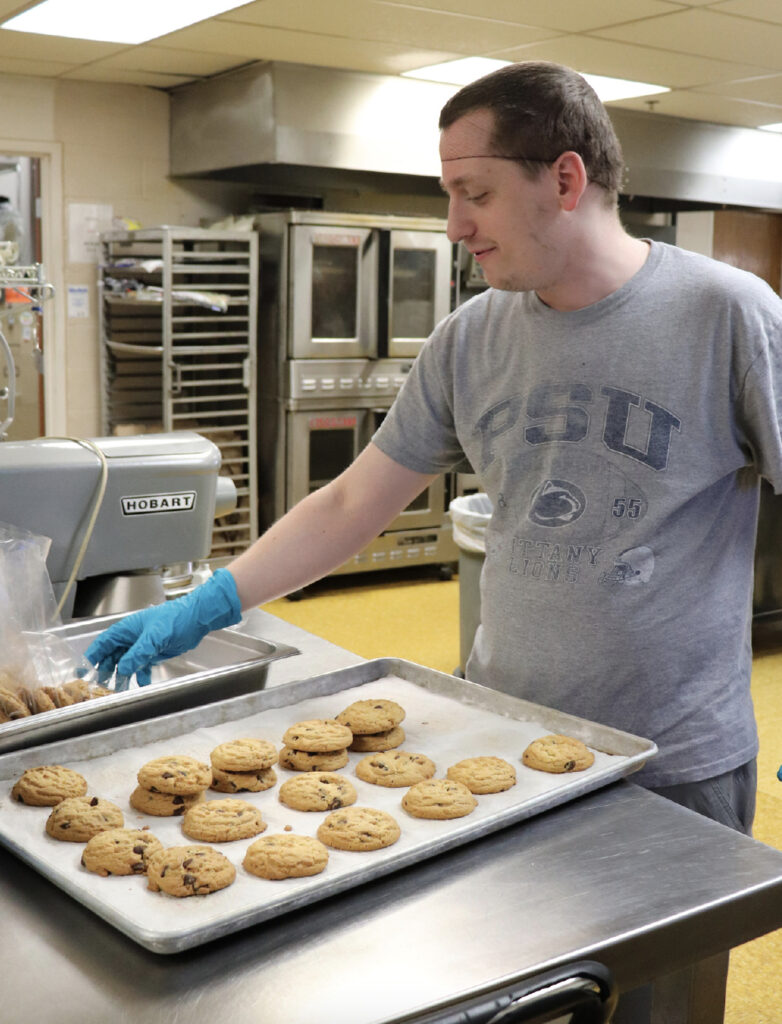
CIT works with people with disabilities, employing and training them for competitive work. For instance, trainees make boxes for Apple computer returns, connect bolt kits for industry, and prepare products for shipping.

Without question, the tastiest job at CIT is in the Sassy Gourmet kitchen.

“For the individuals, the goal is to learn skills and move on to competitive employment,” Grippin said. “For CIT and Sassy, the goal is to provide a good service to the community, while teaching individuals skills to become independent in the community.”

Sassy provides lunch for CIT employees. Roast beef, mashed potatoes and stuffing were on the menu this day. It also offers catering of sandwiches, subs, salads and nearly famous scratch-made cookies, especially the chewy oatmeal raisin.

“I put something, a little extra ingredient, into that,” said Tracy Chicoine, food service coordinator, without divulging the secret.

Trainees work in all aspects of the kitchen—prepping, hot line, cold line, grill, stocking and cleaning up. They enter the kitchen with varying degrees of skills.

“We work at their pace and try and get them up to where we need them to be, but we start with where they are and have patience with them,” Grippin said.

Chicoine described one trainee who had difficulty with fine motor skills. She said she just wasn’t sure he would be able to advance in the kitchen. In the end, though, he thrived, just needing patience beyond what a traditional kitchen setting would provide.

“He’s a really good worker, and if he’s done with something, he’ll come here and ask, ‘What else can I do?’” Chicoine said.

Sassy Gourmet not only provides lunch for its workers, but also caters parties, events and daily contracts.  I like “making subs for the military,” said Jody Chestnut, a Sassy Gourmet trainee. She’s referring to the 40 or so subs the kitchen provides for the Military Entrance Processing Station in Mechanicsburg each day. Chestnut runs the slicer to prepare meats for the wraps, sandwiches and subs.

“I love it. I do,” said trainee Kameron Stambaugh. He’s often responsible for the fryer and the crispy chicken strips for Sassy’s crispy chicken salad.

The catering is one stop. Everything is provided: napkins, tablecloth, plates, plastic ware, condiments and dressings. And the food coming from Sassy’s kitchen is beautiful, delicious and plentiful.

“They [customers] don’t expect that much food,” Chicoine said.

Chadwick Dewey

Hardworking

Matt Wagner, the executive director of Family Promise of Harrisburg Capital Region, heard about Sassy through the grapevine and decided to use it for a fundraising event.

“As a nonprofit, your cost is always a driving force,” Wagner said. “I knew it was cost-effective. It was also good to know that we would help a community-based organization.”

He was surprised by the quantity of the trays of sandwiches and salads.

“The amount of food for what we paid was amazing,” he said.

Trainees take pride in what they create, especially when they can participate in the serving and receive immediate feedback.

“We had a special event two weeks ago, and they are still talking about how they liked doing it,” Grippin said.

Trainees at Sassy Gourmet are also employees, receiving payment for their time. Some go on to competitive employment in places like Weis Markets, Giant Food Stores and Cracker Barrel, while some stay on at Sassy. Stambaugh has been there for seven years.

“They’re very hardworking,” Chicoine said. “They enjoy coming to work, and they like to see people and to know that they are making money.”

A misperception exists that it may be a challenge to work with trainees because of their different abilities, but Grippin disagrees.

“It’s challenging because of transportation,” she said.

Right now, no trainees drive, so they rely on public transportation or others to get them to work. Some employees would prefer to stay for a longer day but are limited by the transportation options.

Chicoine resists any praise sent her way for working with differently abled folks.

“People say you have to be a really good person to work with someone that has a different ability,” she said. “I think that everybody can do that. I mean, it’s like working with anybody else right? We all have something.”

The “something” Sassy Gourmet trainees have is a talent and desire to create food for all to enjoy.

To order from Sassy Gourmet, visit www.cparc.org/order-sassy-gourmet.


If you like what we do, please support our work. Become a Friend of TheBurg! 


Continue Reading

Sweet Stuff: Honey Bee’s Café and Bake Shoppe opens in Harrisburg, creating breakfast and lunch buzz

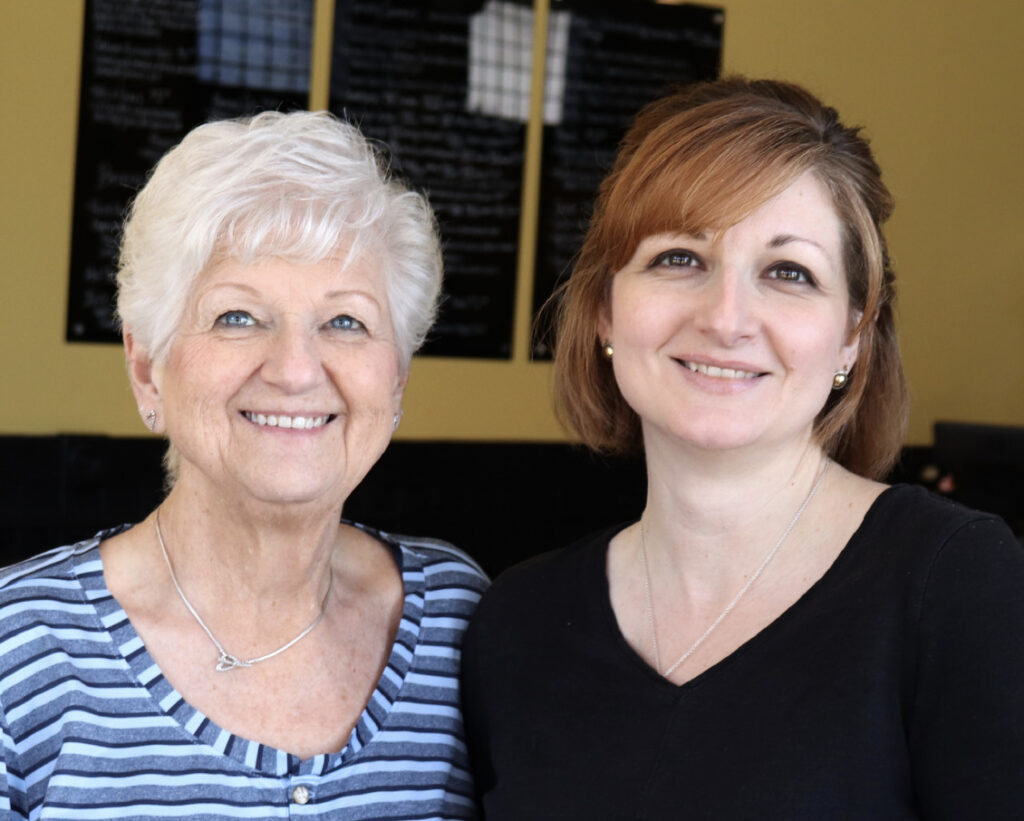
Linda Smeltz & Melissa Laughlin

You might think that, if you’re used to cooking for venues full of hundreds of people, you’d have no issue cooking for a few café customers at a time.

But according to chef Melissa Laughlin, it’s quite an adjustment.

For years, Laughlin worked for her mother Linda Smeltz’s successful catering business. But when her mother decided it was time to retire and close the business, Laughlin was left wondering what was next for her career.

However, she knew her passion was to cook.

At the end of February, Laughlin opened Honey Bee’s Café and Bake Shoppe in downtown Harrisburg. Here, Laughlin isn’t serving banquet halls full of wedding guests or large gatherings of corporate professionals, but hungry Harrisburg professionals and residents. The scale is a change she’s still adjusting to. But one thing has remained the same—she’s still working alongside her mom.

“It’s been an adventure,” she said. “We are taking it one day at a time.”

The café, at the corner of N. 2nd and North streets, offers breakfast and lunch in a cheery, welcoming environment. Laughlin described the menu as “eclectic,” familiar café items, but with a twist. For example, a grilled cheese sandwich has artichoke spinach dip inside, a Reuben is made with Kielbasa sausage, and a burger is topped with blueberry barbecue sauce and brie. To top it off, most everything at Honey Bee’s is made from scratch.

Most of the staff assists with cooking meals, but Laughlin doesn’t share the baking with anyone—that’s her specialty. A glass case displays daily treats like cookies, cupcakes, Danish and scones. Keeping the café’s namesake in mind, there are usually a few sweets featuring honey.

As they find their footing, Laughlin said they plan to keep testing new menu items and taking customer suggestions, as well.

While the roles may technically be reversed now for Laughlin and Smeltz, as the daughter takes the lead in business where her mother once did, the duo still considers themselves partners. And they love working together. They’re more than partners, more than mother and daughter, but best friends, Laughlin explained.

“I can always count on her to be my cheerleader,” she said. “I’m grateful for that.”

Smeltz is also often the friendly face that greets you at the register, and when her daughter describes her as a “ray of sunshine,” it’s true. Her cheery personality matches the yellow-painted walls.

Smeltz has been in the food business for years and estimates that she has probably catered around 700 weddings, but she still can’t get enough of it.

“I just love to cook,” she said. “It’s what I love to do.”

Laughlin and Smeltz are hopeful about the possibility of getting involved in the community, something they can do in a brick-and-mortar shop that wasn’t as easy in catering. They’ve already had return customers and have become friendly with neighboring businesses.

Most of all, Laughlin wants people to feel welcomed, enjoy good food, and walk away a little happier.

“I’d like it to be a comfortable place for people to come and hang out,” she said. “We are hoping we can add a little sweetness to everybody’s lives.”

Honey Bee’s Café and Bake Shoppe is located at 620 N. 2nd St., Harrisburg. For more information, visit their Facebook page.


If you like what we do, please support our work. Become a Friend of TheBurg! 

Continue Reading

The Write Ingredients: Restaurateur Sophia Nelms shares her secrets, her stories through a pair of cookbooks

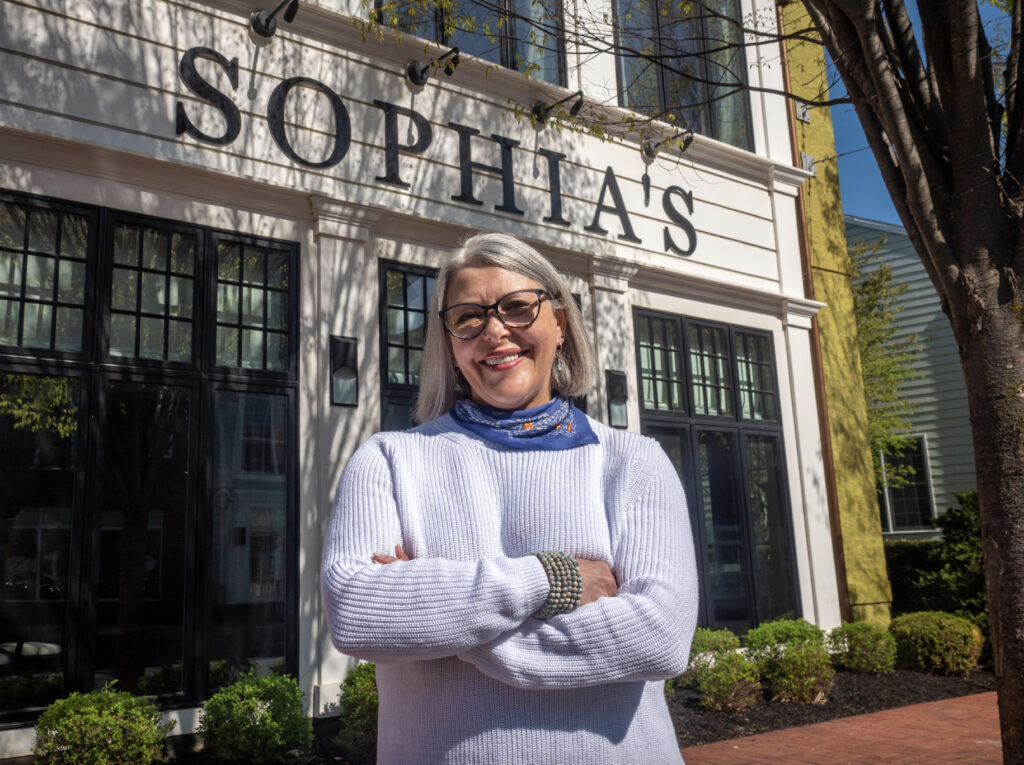
Sophia Nelms

Freshly baked bread is a nostalgic aroma for Sophia Nelms, owner of Sophia’s at Walden.

It transports her back to childhood—her mother’s modest kitchen in their Harrisburg house—where she learned that water, yeast, sugar, oil, flour and salt, when combined and baked with love, become a loaf of bread with taste and meaning so pure that it can’t be found prepackaged on a grocery store shelf.

“We never had store-bought bread because my mom made everything from scratch,” Nelms said. “Growing up in a fairly large Greek family who loved to bake and cook, I have so many beautiful memories in the kitchen and breaking bread around the table. That’s where my love for homemade food came about.”

When Nelms’ parents passed away a year apart in 2020 and 2021, she realized that her mom didn’t have many of her recipes written down, because she always made them from memory.

So, in the summer of 2021, Nelms, with the editorial assistance of Stacie Shenenberger—the sister of her life partner, Trevor—locally released the first of her two cookbooks, “From the Kitchen at Sophia’s,” in honor of her mom.

To their humble surprise, the 500 cookbooks they independently printed sold like hotcakes.

Responding to its popular demand, the duo released a second edition of “From the Kitchen at Sophia’s,” followed by Nelms’ second and final cookbook, “Cooking with Love,” in December 2022—dedicated to her customers, whom Nelms fondly refers to as her “guests.”

“We went into it with the mindset that, if we sell a couple of books, we’d be happy,” Shenenberger said. “When we had a launch party last July and nearly 200 people showed up, and then we sold more than half the books in a week, we were at a loss for words. It was such a validating moment for us, knowing that we created something special with this cookbook. We captured the heart of Sophia’s and preserved the recipes that make it so special.”

The cookbooks not only include guest favorites from the restaurant, such as chicken pastina soup, cinnamon roll pancakes and coconut-crusted shrimp, but also how to make her mom’s bread, other beloved family recipes passed down through generations, and the stories that connect them all.

“People have asked me why I’m ‘giving up my recipes,’ but I tell them that I simply thought it was the right thing to do at the right time,” Nelms said. “I may not have all of my mother’s recipes, but at least my guests have these recipes that they can try to make at home and see which ones they really love—keeping the tradition of home-cooked meals alive.”

In February, Sophia’s at Walden turned 10 years old—a milestone anniversary that Nelms plans to celebrate with the community on May 20, in the way that she knows best—with good food and good company. Her second cookbook, which is currently on sale for $35 at the restaurant, will also be available for purchase and signing during this upcoming anniversary event.

Reflecting on the last 10 years, and looking onward at what the next 10 might hold, Nelms wonders if, one day, someone as passionate about family and food as she is will come forward and say, “I learned how to make all of the recipes from your cookbooks, and I’d like to buy Sophia’s.”

If the person and the timing felt right, Nelms said she might not decline.

“Creating these cookbooks made me fully realize just how much heart and how many people—family and those who feel like family—have gone into making Sophia’s a cherished place in the community for all these years,” she said. “If and when someone decides they want the place, I hope that they see it as I do—a place reminiscent of home, where families can gather and continue creating memories around the table for generations to come.”

Sophia’s at Walden is located at 129 Walden Way, Mechanicsburg. For more information, visit www.sophiasatwalden.com or follow them on Facebook.


If you like what we do, please support our work. Become a Friend of TheBurg! 

Continue Reading