Furplus Inventory: Shelters, rescues struggle in a post-pandemic world

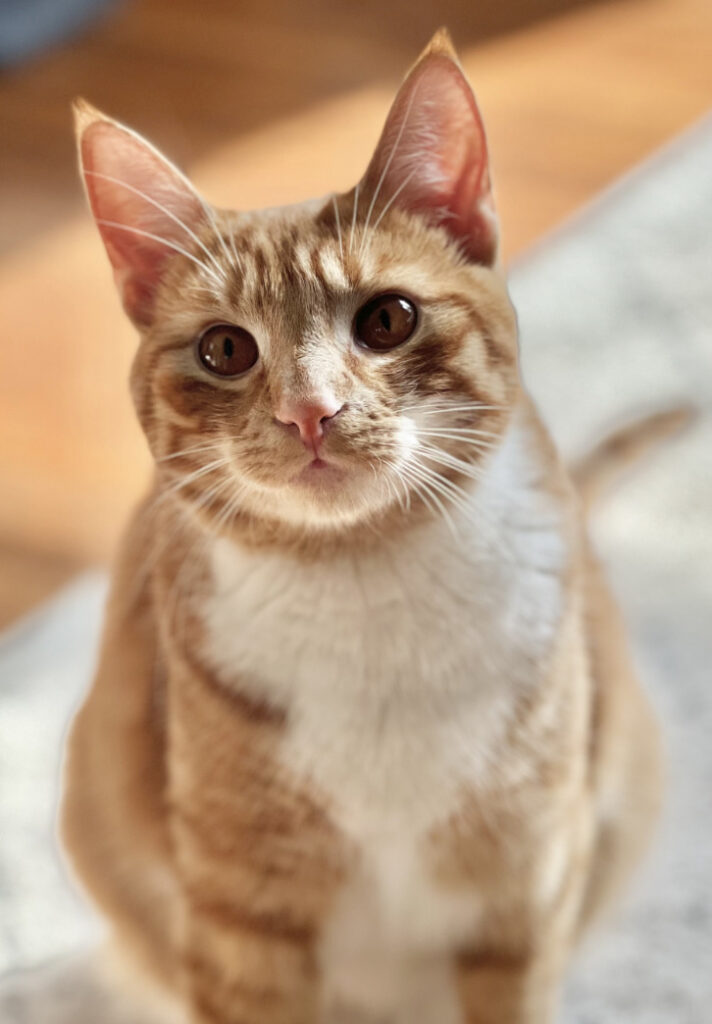
Cheddar. Image courtesy of Jennifer Grove

Jennifer Grove insisted that her new cat wouldn’t be kitten-age, but an animal rescuer talked her into meeting 6-month-old Cheddar at Abrams & Weakley, the Susquehanna Township pet store.

She loved the energetic, creamsicle-hued kitten but decided to think about it. As she closed the store door behind her, Cheddar ran up and put his little paw on the glass.

“Well, that’s it,” she thought. “I’m done.”

Now a year old, Cheddar is no longer climbing the bookcases of Grove’s Harrisburg home. He is content to venture into the backyard wearing a harness, sleep on a window ledge, and accept scritches from visitors.

A happy story, matching a willing human with a beautiful tabby that had been lingering among Harrisburg Area Rescue Team’s adoptables. And while fairy-tale endings remain on track in animal-adoption land, some stories are ending in sad surrender, while post-pandemic Harrisburg-area shelters and rescues, stretched to their limits, struggle for volunteers and resources.

“The national trend has been, since COVID, that intakes are outpacing outtakes,” said Amy Kaunas, executive director, Humane Society of Harrisburg Area.

While HSHA’s cats have been relatively consistent, in contrast to a tidal wave of felines washing over foster-based rescues, the volume of stray dogs “is definitely outside the norm.”

Plus, as other rescues agree, the peaks and valleys of past years have flattened to a constant stream that strains volunteer capabilities and expenses.

Why? It’s too early for data. Speculation points to the pandemic, when spay/neuter was deemed nonessential and halted. Perhaps it’s inflationary pressures on pet owners, or a rise in backyard breeders looking for quick money.

As the dog population suddenly swells, HSHA is putting a sit-stay on existing plans to redesign its dog kennels in response to a decades-long decline. In the meantime, HSHA is trying to ease the pressure on its shelter by participating in the Home to Home network, an online pet placement that facilitates owner-to-owner surrender, foster in or foster out, or adoption of a local pet.

The foster-based, all-feline Harrisburg Animal Rescue Team is feeling the post-pandemic effect, said founder Bill Forgey.

“I thought 2021 was bad, but 2022 was worse,” he said. “We’re expecting it to be bad again this year.”

Forgey is fostering 17 kittens in his Susquehanna Township home, plus—he counted in his head—“one, two, three, four mother cats.” With 10 to 12 foster humans who can only be asked to do so much, HART has been known to reach its limit.

“We do very good at keeping sustainable, but we got so swamped last year that we had to put a halt to the intake in September,” Forgey said.

It could happen again this year, he added.

At foster-based Castaway Critters, the dog program, which primarily took in dogs from southern shelters, is on hold. They hope to resume soon, but it’s a tough ask of volunteers as they retire, age or move.

“You have to be kind of on call all the time,” said office manager Jamie Balla of West Hanover Township. “Because we don’t have a brick-and-mortar shelter, it’s very difficult if there is an emergency. Are you willing to be that person? It’s hard to find a kennel, especially in the middle of the night.”


Never Ending

At Helen O. Krause Animal Foundation, Inc., in Dillsburg, manager Janet Cremo is fielding the saddest calls possible.

In one morning, she took three relinquishment requests, one for a dog and two for cats. The calls are often tearful, forced by homelessness or eviction or the choice between feeding families or feeding pets.

“They want their animals to be in a safe place,” Cremo said. “They’re reaching out to get help, instead of just dumping them.”

Space restrictions limit HOKAFI’s intake capabilities, but Cremo will “try to lead them in the right direction” by suggesting resources, such as Facebook rehoming sites, foster-based rescues or low-cost clinics.

In the meantime, HOKAFI adoptions are dwindling so much that some adoption days—Saturdays from noon to 3 p.m.—see no one walk through the door.

HSHA also pointed financially strapped pet owners toward resources—pet food banks, low-cost spay/neuter and veterinary services, behavioral resources.

“Call your local shelter and see what they can do to help,” said Amanda Brunish, HSHA director of marketing and outreach. “Anything to keep you from deciding to give up your dog.”

Many rescues struggle to find volunteers. Castaway Critters’ foster corps is shrinking, possibly because homelife is returning to the pre-pandemic normals of going out and traveling.

“Most of the fosters we have now are ones that were with us pre-pandemic,” Balla said. “They stuck through it.”

It’s a hard road for TNR (trap-neuter-release) and spay/neuter programs. From an old bank, Steelton Community Cats spays and neuters feral, colony and dumped kitties brought in through municipal contracts and a network of volunteers and rescues with cat traps.

“We filled the building for our May trapping,” said volunteer Rosemary Loncar. “It’s going to be like this the rest of the year, I’m sure. It’s just never ending. Never ending.”

In today’s inflationary spiral, rescues and shelters feel lucky that donors continue to open their wallets.

“If I put a request out for food and litter, people respond,” said Forgey. “They’re all animal lovers, and I think that’s why they donate.”


Now What?

Steelton Community Cats cherishes the volunteer services of Dr. Diane Ford, of Vetting Zoo, Palmyra, but must contend with rising costs of medical supplies for monthly surgery clinics: oxygen, anesthesia, vaccines and syringes, sterilization packs. Cat food has risen from 25 cents a can to 80 cents.

“All these animals cannot go into a shelter,” Loncar said. “If people don’t jump on the TNR wagon, what do you do? Here’s what happens. The cat that’s pregnant—you’re not dealing with just one cat. If she has five kittens, you’re now dealing with six cats that need to get done. And within five or six months, those six cats can become 20 cats, and the numbers keep going up and up and up.”

At HSHA, “obviously, we don’t have a lot of things we can sell” to raise funds, said Kaunas. The organization decided to raise adoption rates, which have not increased in nearly a decade, to bring them in line with fees at other shelters in the region. They also bumped up prices for their veterinary services, a fundraiser for the nonprofit.

“Some of the drug prices have gone up so high that we weren’t even charging what we were paying,” Kaunas said. “We want to keep it low cost, but we can’t lose money on it.”

The question lingers: How are rescues and shelters addressing the root problem of too many animals? They say they are doing everything possible.

“If you have numbers creeping back to before and you have the prevention programs in place, now what?” said HSHA’s Brunish. “Do you just do more?”

HSHA continues its mission of “getting out and educating people on the services we have and how people can take care of their animals,” she added. “We want people to keep their animals in their homes.”

The world needs more donors and more foster programs to place pets in homelike settings, where their personalities can shine for potential adopters to see, said Balla.

“We can save more if we have more fosters,” she said.

Jennifer Grove, cat mom to Cheddar, is doing her part for TNR. Her block’s self-sufficient stray, fondly named Tom by the neighborhood, would go to no one but her. She trapped him and got him spayed. Now, she provides food and water and allows him inside when he’s inclined.

Grove’s adopted fur baby Cheddar is her morning cuddle companion, gently purring beside her in bed until he signals that it’s time to eat. Grove adopted Cheddar through HART and is now “so glad to be able to finally bring in one of their kittens and give it a good home.”

“I know they do such good work, and they’ve been inundated with so many kittens and cats,” she said. “They’re so easy to work with. If they can help in any way to rescue a cat, they’re there, and I feel really fortunate to be able to continue supporting them.”


A Pet Fur You

For adoption information or to make a donation, visit the websites of organizations mentioned in this story:

Castaway Critters, www.castawaycritters.org

Harrisburg Animal Rescue Team, www.hart-harrisburganimalrescueteam.org

Helen O. Krause Animal Foundation Inc., www.helenkrause.org

Humane Society of Harrisburg Area, www.humanesocietyhbg.org

Steelton Community Cats, www.steeltoncats.org


If you like what we do, please support our work. Become a Friend of TheBurg!  

 

Continue Reading

Positive Aura: New west shore restaurant takes your taste buds to the sunny Mediterranean

Chef John Walsh with several of this Mediterranean-inspired dishes.

A healthy aura is said to signify a sound body, mind and spirit.

That’s what Brian Fertenbaugh and his wife Jennifer had in mind when they recently opened Aura Modern Mediterranean, their new restaurant at the former Cork & Fork location on the Carlisle Pike.

“It means good, or positive energy, which is what we are attempting to achieve here,” Fertenbaugh said.

When guests walk through the doors, they immediately understand what that means, from the bubble lighting to the Mediterranean-style tile, palm trees, blue-hued booths and walls and tapestries, which are evocative of ocean waves. The mood is definitively peaceful.

“We took soundproofing measures to cut down on the noise factor as well,” said Fertenbaugh, crediting his friend, interior designer Kim Holl, for helping bring his concept to life. “We work really well together, and she has great ideas that helped take my vision and make it into reality.”

Fertenbaugh, who owns Café Fresco Center City and Level 2 in Harrisburg, said that he was casually looking to open a restaurant on the west shore, initially choosing the former VRAI location in Lemoyne before the deal fell through. He then was approached by the investors at Cork & Fork, who offered a larger space, accommodating 100 diners inside, 44 outside and 15 at the bar.

“I ended up loving the space, and it played into the vision I had of dining on the Mediterranean coast,” he said.

Fertenbaugh entered the restaurant business at age 18, working at Pizza Hut. He moved on to Gullifty’s, starting as a busboy and eventually working every position in the restaurant, he said.

When he left Gullifty’s, he bartended for 15 years before going into management at Level 2 for legendary local restaurateur, Nick Laus.

“When Nick approached me with an offer to buy, I couldn’t pass it up,” he said.

Fertenbaugh said that he’s attracted to what the faint of heart steer clear of—a fast-paced, chaotic environment.

“Sure, it can be challenging at times, but I find this intriguing, and that’s what drives me,” he said.


Stellar

For Aura, Fertenbaugh said that it was important to choose a cuisine that would fill a niche in the area.

“We have plenty of Mexican restaurants and pizza places around here, but Mediterranean cuisine is lacking in this area,” he said.

Executive Chef John Walsh gains inspiration from the Iberian peninsula, France, Greece and northern Africa in order to create the Mediterranean vibe, with an emphasis on fresh vegetables, seafood and meats from the regions.

Tapas include dishes like baba ghanoush served on toasted ciabatta, red beet and goat cheese hummus on flatbread and white bean bruschetta. Small plates, plucked from the sea and perfect for sharing, include baby octopus, calamari and tuna tartare. Mains feature dishes like stuffed branzino, seared monkfish, oven-roasted chicken and dry-aged New York strip.

For those interested in more casual fare, Chef Walsh makes full use of the Earthstone oven to create pizzas topped with ingredients like Iberico pork, pepperoni, sausage and aged provolone, all of which are lightly charred and full of flavor.

Ronda Lawrence lives nearby in Mechanicsburg and said that her favorites are the beef carpaccio and the tuna tartare.

“All of the menu items I’ve tasted so far have been stellar, and my husband loves the pizzas,” she said, adding that she enjoys the outdoors seating now that the weather is nice. “It’s my new favorite restaurant.”

Michael Glaser, of Camp Hill, added that he is impressed with the service.

“The inside is beautiful, and I was astounded as to how well prepared they were on opening day, from the kitchen staff, to the servers, everyone has been on point from day one,” he said.

Some of Glaser’s favorites include the lamb kebabs, the charcuterie board and the Spanish-rubbed shrimp served atop homemade pasta.

“It’s a great date place,” he said.

Fertenbaugh said that he’s delighted to be located along the extremely busy Carlisle Pike and is looking forward to what the future holds.

“We’re in a great location, especially considering that luxury apartments behind us will be soon finished,” he said. “I think this is just what the west shore needed.”


Aura Modern Mediterranean is located at 4434 Carlisle Pike, Camp Hill (Hampden Township). For more information, visit
www.auramodernmed.com.


If you like what we do, please support our work. Become a Friend of TheBurg!  

 

Continue Reading

Cat’s in the Bag: Kitty Town Coffee is all about a good roast—and a good cause

Photo courtesy of Kitty Town Coffee.

At first glance, coffee and cats may not seem to have a lot in common.

But Zanetta Kok has identified enough similarities not only to fill a business model, but to funnel the profits towards a good cause.

She founded Kitty Town Coffee five years ago as part marketing strategy, part charity fundraiser and part to scratch an entrepreneurial itch. It’s also a way for Kok and her husband Ken to make a living while making a difference in the world.

“There is this mental correlation between cats and coffee,” said Kok, a 29-year-old resident of Lebanon. “Their warmth. Kind of like, ‘I want to sit down and cuddle with my cup of coffee and my cat.’ It just so happens that some coffee lovers are also cat lovers.”

The Koks have inserted feline into every part of their business—from their branding to their packaging to their coffee names.

The profits from every bag of coffee sold can feed a cat for a week, and the animal-related charity that Kitty Town Coffee helps to fund changes every month, including Loving Care Cat Rescue, The Nobody’s Cats Foundation and other societies and animal shelters.

“Doing good things makes the world a better place,” Kok said. “We feel like we’re doing our part by creating funds for these organizations.”

The Koks own three cats themselves, and each has a blend of coffee named after them. The Mr. Albert roast is “a little sweet, a little nutty and you’d swear we added cream,” Kok said. Isabelle is a cold brew that’s very unique, and then there’s Nadia, Jamaica Me Crazy.

Sydney, the original Kitty Town Coffee cat, who has since passed, has an entire company dedicated to her honor. In all, the business features 21 brands bearing the names of cats owned by friends and supporters.

“It’s been a crazy ride, running a business during COVID,” Kok said. “People didn’t understand at first. We’d get people asking, ‘Is this coffee for cats? Is there kitty litter in this coffee?’ People get it now. But I think the pandemic actually helped us, because people purchased more pets.”


A Great Need

The Koks founded Kitty Town Coffee in 2017 as a side hustle. Zanetta was working a job she enjoyed, “but I couldn’t picture myself doing it forever,” she said.

In 2018, she quit her job and made Kitty Town Coffee a full-time pursuit. Ken followed suit a year later, right before the outbreak of the pandemic.

Today, the Koks employ some 20 people, and Kitty Town Coffee has 24,000 followers on Instagram.

“It was either going to grow or it was going to totally fizzle out and die,” Kok said. “I think one of the biggest factors is that the world has changed and people are interested again. Through Kitty Town, we want to make people smile in the morning when they’re drinking their coffee.”

Becoming an entrepreneur isn’t for everyone. But neither are cats. Both require a specific fabric, a certain temperament.

“I want to be supporting people doing good in the world, instead of starting my own animal shelter,” Kok said. “There definitely is a great need.”

There are certainly a lot of great causes out there. What makes those associated with animals so worthy is the fact that pets enhance the human condition so much.

“Humans and cats have been fine together for thousands of years,” Kok said. “It’s a symbiotic relationship.”

It would seem that the same could be said about the relationship that exists between karma and a business plan.

“We’ve seen most of our growth over the last six months,” Kok said. “I would love for it to become a national brand. I’d like to see the Kitty Town Coffee brand be in local grocery stores. It’s definitely what we’re working towards.”

Kitty Town Coffee sells its products online and at numerous area shops. For more information, visit www.kittytowncoffee.com or their Facebook or Instagram pages.


If you like what we do, please support our work. Become a Friend of TheBurg!   

 

Continue Reading

Closing Gaps: Addressing health equity benefits all of us

“Health equity” is a term you are likely to hear often in discussions around fostering healthier communities.

But what does health equity mean? And why does it matter?

In the simplest terms, health equity means ensuring everyone can attain his or her fullest health potential regardless of factors such as income, race, gender, where they live or other social determinants. According to the Centers for Disease Control and Prevention (CDC), existing health inequities can lead to differences in:

  • Quality and length of life. For example, Americans age 65 and older and members of minority racial and ethnic groups have been disproportionately represented among COVID-19-associated deaths, according to a CDC study.
  • Rates of disease, disability and death. African American adults are 50% more likely to have a stroke compared to their white counterparts, according to data from the U.S. Department of Health and Human Services.
  • Severity of disease. Black and Hispanic children are hospitalized with complications of asthma much more often than are white children, according to the HHS.
  • Access to treatment. In 2017, African American mothers were 2.3 times more likely than white mothers to receive late prenatal care or no prenatal care at all, the HHS found.

Disparities such as these can impact all segments of our society.

Inequities in the availability and quality of healthcare not only negatively affect individuals, but they can take a toll on our workforces and our communities as well, creating social and economic costs that we all bear. When we work to address these inequities by ensuring that all members of our community have access to high-quality healthcare, the entire community benefits with better quality of life.

Addressing inequities in healthcare is becoming more important than ever as the country’s population grows more diverse.

To address disparities in care, insurers like Capital Blue Cross often turn to data to find out where gaps exist so they can act. For instance, when public health data showed minorities were lagging in receiving the COVID-19 vaccine, Capital Blue Cross worked to establish pop-up clinics in minority and underserved neighborhoods to increase access to the vaccine. Those clinics—including ones hosted at the Hamilton Health Center and Heinz-Menaker Senior Center in Harrisburg and the Spanish American Civic Association in Lancaster—provided vaccines to thousands across central Pennsylvania.

In the long-term, addressing health equity will take changes in public policy and shifts in healthcare resources. But as those changes take place, the result will be improved healthcare access for all segments of our population.

For more health and wellness news and information, visit thinkcapitalbluecross.com.


If you like what we do, please support our work. Become a Friend of TheBurg!  

 

Continue Reading

The Pet Pamperer: New shop brings grooming services to downtown Harrisburg

Alexandra Lauch grooms Ivy.

Harrisburg pet owners shouldn’t be afraid of the “ruff” summer heat this year.

A fresh haircut is just a walk away, as Unleashed Grooming Company recently opened in Strawberry Square.

Veteran Alexandra Lauch discovered her pet care career while deployed in Afghanistan with the National Guard, continuing her education when she returned home in 2011. Now, with more than 12 years of experience at five different salons, Lauch took the next step and opened her own business last February.

“Before we opened, there was not a pet grooming service within walking distance of Harrisburg city,” she said. “Once we found this location in the Shops at Strawberry Square, everything started to fall into place.”

Lauch and her fellow groomer, Amanda Mumford, pride themselves on making their salon a healthy, safe environment for pets to enjoy pampering and be unleashed, literally. While other groomers use crates to contain clients before and after appointments, Lauch has an open-floor policy that alleviates the normal stresses of grooming services.

Gray Harvey and his two golden doodles, Fletcher and Rideau, live in Midtown and love that Unleashed Grooming is a quick walk from his house. Rideau was previously afraid of the hair dryer and did not enjoy going to the groomers.

“Lexi took the time, over several visits, to help acclimate him to the sounds and equipment, and now he doesn’t mind it at all,” Harvey said.

Lauch said that she appreciates that some pets have a hard time with the tools of the trade, like nail trimmers, bathing and blow drying.

“These sounds can be alarming, especially for rescue animals who may have had a difficult past,” she said. “That’s why we make our clients feel as comfortable as possible before, during and after their appointments by allowing them to roam around the salon and get to know one another.”

Since opening day, Unleashed Grooming Company has served more than 100 clients from small to large dogs, cats and more. Grooming packages vary from basic to premium products, ranging from $40 to $120 based on the breed and size.

“All of our haircare products are hypoallergenic and range from affordable to premium options with varying scents such as our signature rose,” Lauch said. “We also have medicated and scent-free options for pets with sensitive skin types.”

Services include baths, blow drying, haircut, nail trimming and ear cleaning. Additional services such as de-shedding, flea and tick treatment, teeth cleaning and more are available.

Don’t have time to wait around for your furry friend? Unleashed Grooming Company offers express service where they block time to solely focus on your canine, so they are ready when you are. Lauch and Mumford also keep owners informed and updated throughout the day by sending before and after photos.

Harrisburg resident Mary Balchunis is thankful that Unleashed Grooming Company opened near her house. Balchunis rescued a mini poodle, who was previously nervous to go to the groomer.

“Lex and Amanda do such an amazing job making Ellie feel comfortable and taken care of,” Balchunis said. “They created a dog-friendly environment that keeps us coming back. Ellie always looks beautiful with her haircut, bow and collar.”


Unleashed Grooming Company is located at 3 N. 3rd St., Harrisburg, in the Shops on 3rd, part of Strawberry Square. For more information, visit their Facebook and Instagram sites. To book an appointment, call or text 717-440-8597.


If you like what we do, please support our work. Become a Friend of TheBurg!  

Continue Reading

Kitty Fix: Trap Neuter Release programs depend on dedicated volunteers—and funders

Photos of feral cats cared for by The Nobody’s Cats Foundation

Nearly every day for the last nine years, Christine Arnold, the founder and managing director of The Nobody’s Cats Foundation, visits a cat colony that lives in a local wooded area.

She fills their feeder with a large bag of kibble, plates a few cans of wet food, and rinses and refills drinking bins with six gallons of water.

Often, a few furry and familiar faces make an appearance, glancing at Arnold from a distance before satisfying their empty stomachs. The oldest of the bunch is nearing 9 years old—from the colony’s original litter—while the youngest, now 4 years old, was the last kitten born into the colony.

“This particular area was a horrible dumping ground for as long as I can remember,” Arnold said. “But thankfully, we’ve had far fewer abandoned animals in recent years, and through our commitment to spaying and neutering the population, we’ve successfully decreased the number of cats from more than 50 to around 20. And we’ll keep working our way down to, hopefully, zero one day.”

The Nobody’s Cats Foundation, located in Camp Hill, helps prevent the suffering of free-roaming domestic feline populations in south-central PA through its high-volume “Trap Neuter Release” (TNR) strategy.

“By spaying just one female cat, you’re potentially preventing 12 to 18 kittens from being unnecessarily born in a year,” Arnold said. “Of the 45,000 or so cats we’ve spayed or neutered since opening the clinic 10 years ago, around 25,000 of those are female, and that totals thousands and thousands of kittens who would otherwise be born into a difficult free-roaming life if it weren’t for TNR.”

Their goal for 2023 is to perform 6,000 spay and neuter surgeries on feral and stray cats. As one might imagine, the costs to cover this wide-reaching impact add up, and it’s the dedicated hands and hearts of volunteers behind the scenes and community partners like the Spay Neuter Assistance Program (SNAP) that are the funding forces.

“SNAP partners with other providers, including The Nobody’s Cats Foundation, to subsidize the cost of spays and neuters for both cats and dogs, to ensure the cause has continued funding,” said SNAP’s President Essie Petrovich. “We also offer significantly reduced spay and neuter surgery prices to pet owners, thanks to the generosity of several local veterinary clinics.”

Through the TNR process, cats get a second chance—living healthier and oftentimes longer lives than they otherwise would have. And as docile cats that were once someone’s house pet and newborn kittens are found roaming busy streets or seeking shelter in neighborhood yards, they’re not only neutered and spayed but they’re connected with rescues like Lemoyne-based Loving Care Cat Rescue that help them find homes.

“If we don’t take those kittens, in five weeks we have a much less chance of socializing them, and they are essentially committed to being outside for the rest of their lives,” said Lisa Snyder, who founded Loving Care Cat Rescue in 2013. “But if we take them in and spend eight to 10 weeks with them, their lives could be entirely different. What are eight weeks compared to possibly 18 years of life?”

Currently fostering 19 cats, 15 of which are kittens, Snyder chooses the latter as frequently as she can. While she understands that fostering this many animals is not something everyone is capable of, she believes everyone can do something—whether it be fostering one, spaying or neutering your pets, donating time or funds to a local rescue, or learning how to TNR.

“I believe that it’s our job as humans to help take care of these animals who can’t take care of themselves—to show compassion to all living things,” Snyder added. “Together, we are all a part of the solution.”


To learn more about The Nobody’s Cats Foundation, Spay Neuter Assistance Program or Loving Care Cat Rescue, visit their websites or find them on Facebook.


If you like what we do, please support our work. Become a Friend of TheBurg!  

Continue Reading

Take Down, Build Up: For Julia Parkins, jiu-jitsu has a far deeper meaning than just sport

Photos courtesy of Giselle Villasenor Photography.

Julia Parkins didn’t intentionally set out to become a jiu-jitsu champion.

Her initial interest in the martial art centered on fulfillment.

But in March in Kissimmee, Fla., at the International Brazilian Jiu Jitsu Federation’s Pan American Championship, Parkins accomplished the rare feat of capturing two gold medals in her age, weight and class category. Since taking up jiu-jitsu nearly four years ago, the Harrisburg-area resident has competed in about seven similar tournaments.

“Competition has always been a part of my life, but it’s more about me putting my skills to the test,” she said. “If I’m going to put my heart and soul into something, I want to see how it holds up. I always want to improve and learn. I have the most fun when I’m learning from different people.”

A 41-year-old married mother of three boys, Parkins suffers from type-one diabetes. The challenges associated with balancing the extensive training required for jiu-jitsu competition and her home life are no less intense than the ones she faces on the mat against skilled opponents.

“At first it was like, ‘Let’s try it—why not?’” Parkins said. “I remember the adrenaline dump and sort of blacking out and coming to during the match. The adrenaline dumps affected my blood sugar. I just remember the feeling after the match.”

Jiu-jitsu can serve as both a means of exercise and an outlet for competition. Parkins’ training regimen leading up to a competition can include weightlifting, sparring, hiking, running, dieting and resting. She often trains at Deepwater Brazilian Jiu Jitsu in Colonial Park, usually around five times a week.

“When you say ‘jiu-jitsu’ to most people, they think of karate,” she said. “What I do with it, jiu-jitsu is a sport. You start standing, and you try to get the other person on the ground, and you fight on the ground. It’s making good use of your skills and using the other person’s body weight against them. But there is no kicking or punching.”


Something Clicked

In 2019, in her late 30s, Parkins sought out jiu-jitsu as a way to lose weight, stay healthy and learn self-defense. It didn’t take long for her competitive nature to kick in.

“Jiu-jitsu changed my life,” she said. “The initial change was I lost 70 pounds. I became super aware of my health and my body. With the confidence it gives you, you essentially learn how your body moves in space. It kind of opened a door for me.”

Or re-opened one.

Growing up, Parkins was an accomplished, three-sport scholastic athlete in basketball, softball and field hockey. After graduation, she matriculated to St. Joseph’s University in Philadelphia, where she became a member of the Hawks’ Division One rowing team.

That may have been the first time in her life that she stepped out of her comfort zone to stoke her competitive fire.

“When I first signed up for jiu-jitsu, I asked very specifically, ‘Do I have to compete to move up the belt rank?’” Parkins said. “That’s how it was until they offered this really fun in-house tournament. Then I was hooked. Something clicked. Something happened. I’m just highly serious about things.”

It’s a seriousness that can be molded and channeled into positive energy. That’s a skill that Parkins has learned as she has evolved as a jiu-jitsu competitor.

“When I’m ‘in the bullpen’ 20 minutes before fights, I’m usually doing my breathing or listening to music that makes me happy,” she said. “What makes or breaks these fights is your mental state. My fight face is much different than my everyday face. Some people say it’s mean, but it’s not. To me, it’s super focused.”

An ancient martial art, jiu-jitsu dates back to 16th-century Japan. But more recently, interest has spiked, in part, through the increased popularity of mixed martial arts and ultimate cage fighting.

“I think it used to be obscure,” Parkins said. “But jiu-jitsu is growing, and more people know about it. I’d like to think jiu-jitsu can be done at any age, and there are people starting in their 50s, 60s and 70s. But it’s hard on your body when you’re rolling around on a mat. It’s not for everybody.”

For Parkins, the novelty has yet to wane. But how much longer she can continue to pursue it may depend on her training, the recuperative powers of her body, and her ability to balance her life.

“My life very much revolves around my children, but, for me to be healthy, I had to carve out something for myself,” Parkins said. “The short-term goal is to continue to compete. I know I’ll always do jiu-jitsu, but I don’t know if I’ll always compete.”


If you like what we do, please support our work. Become a Friend of TheBurg!  

 

Continue Reading

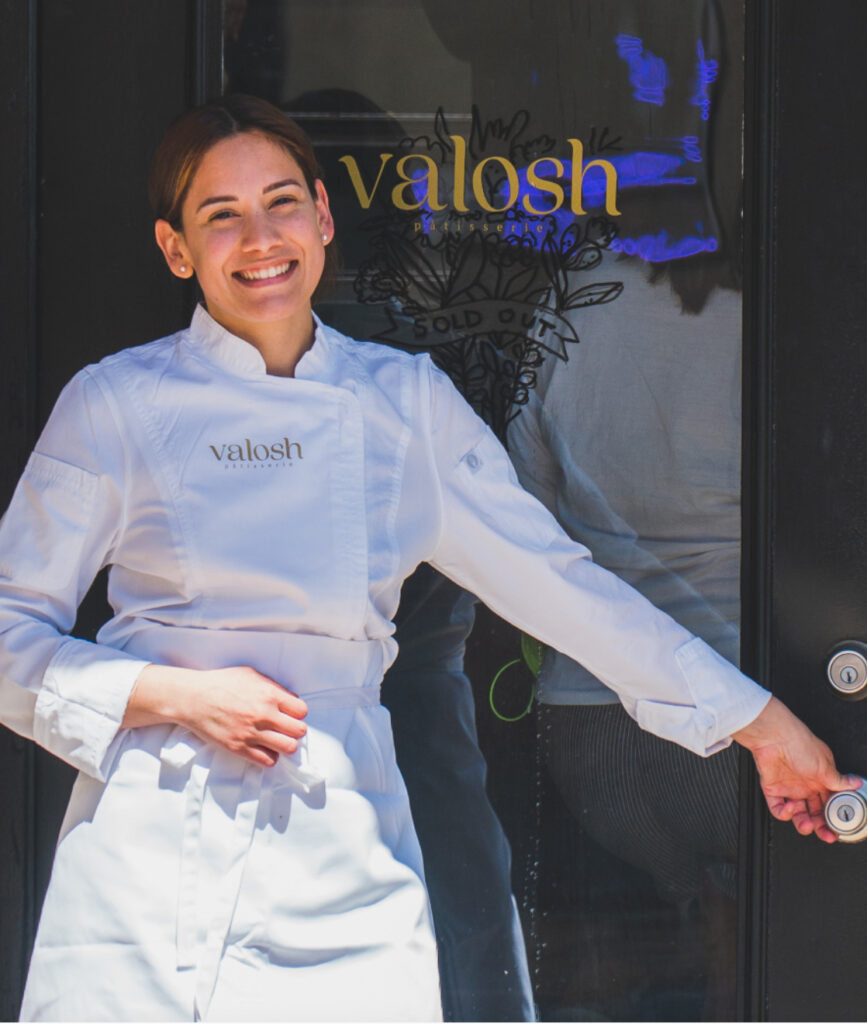
Sweet Dream: Valeria Garcia has overcome numerous challenges in her quest to open a French-style bakery

Valeria Garcia. Photos courtesy of Valosh.

It hasn’t been easy, but Valeria Garcia is finally on the way to attaining her dream.

Valosh Pâtisserie opened in early May in downtown Elizabethtown, offering beyond-the-ordinary baked delights, such as rhubarb and strawberry millefeuille, lemon and lavender cake and peanut brioche.

At Valosh, Garcia, 27, creates fine French pastries flavored with a kick of her native Puerto Rico. For now, she employs no other workers but aspires to hire some staff by the end of the year.

“(My) pastries are made in low sugar,” she said. “The Puerto Rican part is using certain spices and such fruits like mango, passion fruit and figs in some recipes. The custards are technically French.”

Garcia studied her craft at École Nationale Supérieure de Pâtisserie in France, enrolling in a pastry arts program “that my mom and dad helped me pay, with much sacrifice,” she said. During her studies, French classmates translated Garcia’s first name as “Valosh,” today the source of her bakery’s moniker.

Unfortunately, soon after starting the program, things took a turn for the worse. That same month, in September 2017, Hurricane Maria slammed into Puerto Rico, an event that “changed my family’s finances,” she said.  As a result, she could only complete one year of the school’s three-year pastry program.

“I tried to search for loans, grants, scholarships and millions of other ways to fund my last two years, but I didn’t have any luck,” Garcia recalled. “After that, I had a hard time accepting it, and I felt like a failure for one or two years.”

Despite not finishing the school’s full course, Garcia had learned enough to acquire some serious baking chops.

“I still had the hope that my pastry shop would come one day,” she said.

She soon moved to Maryland with a friend, but, after awhile, surmised there was “nothing there” for her and relocated to Harrisburg with her boyfriend, Luis Melendez.

In Harrisburg, Garcia, who had studied accounting in Puerto Rico, got a job working in banking. She already knew English well after attending bilingual school in Puerto Rico, so language wasn’t a barrier.

In the meantime, she never let go of her dream. In 2021, she began selling her pastries online from her home in Harrisburg, which proved to be a success.

“Valeria is the kind of person who keeps on doing stuff until she gets what she wants,” said her older sister, Gabriela Garcia. “She’s very creative. Since she was a little girl, she’s always wanted to bake.”

After a year in Harrisburg, Garcia decided that she “wanted to get out of the city and live in the country.” So, she relocated to Elizabethtown, where she was able to secure financing to establish her dream brick-and-mortar bakery in the quaint borough.

“Elizabethtown has a certain vibe like my hometown in Puerto Rico,” Garcia said. “It has a downtown where you can walk around. It has hospitality.”

As much as she loves her craft, Garcia readily admits that, sometimes, it’s not easy to run a bakery all by herself. So far, her biggest business challenge has been “getting used to the amount that I have to bake.”

“Yesterday, I made three different desserts, and it took me 12 hours to get it all done,” she said.

At that point, she still was in the process of mixing all of her recipes by hand and using a single-capacity oven, limiting her yield. However, she was in the process of purchasing a mixer and a double oven for her business.

For the time being, Garcia’s only help at the bakery is Melendez, who runs the cash register until staff is hired, hopefully later this year.

Despite her many challenges past and present, Garcia maintains an unwavering love for creating fine pastries.

“With baking, I can disconnect from everything,” she said. “It’s a form of therapy that allows me to be in the moment. Then when you serve it to people, seeing the expressions on their faces is just amazing.”


Valosh Pâtisserie is located at 23 E. High St., Elizabethtown. For more information, visit www.tastevalosh.com.


If you like what we do, please support our work. Become a Friend of TheBurg!  

Continue Reading

Italian-Style Summer: Try a light fish dish for a perfect July meal

One of my fondest memories of our 2012 trip to Italy was the day we visited Positano.

Positano is a cliff-side village on the Amalfi Coast in southern Italy. With its narrow cobblestone streets and pastel-colored buildings, it is a place that you might picture in your mind’s eye when you think of a holiday along the Mediterranean.

It was a perfect, sunny afternoon in May when we found an open-air restaurant practically on the pebbled beach lined with boats and sun-lovers. I have never really gotten used to eating in the middle of the afternoon. But friends we traveled with had lived in Italy for some time, so that was their custom.

So, there we were overlooking the sparking water, and I decided that all I wanted to eat was fish. Without looking at the menu, I asked the waiter if the kitchen could prepare a simple mild fish roasted with potatoes and fresh rosemary. They did, and I remember it as one of the best meals I ever had.

Seafood is popular and abundant along all the coastlines of Italy and the islands of Sicily and Sardinia, as well. My father, born in the little town of Vieste on the Adriatic Sea, lived to eat the shellfish he remembered as a child, mussels and clams especially. (To my mother’s dismay, he also loved eel, octopus and smelts!)

Liguria is a province of northwestern Italy. Sitting on the Ligurian Sea and crossed by the Alps, it is part of what is known as the “Italian Riviera.” Although far from the sunny waters of the south, Liguria has a long coastline and is home to wonderful fish, too, including sea bass, cod and tuna. The recipe below is a classic one from Liguria: sea bass with potatoes and olives, or “Sprigola al Forno.” It reminds me of the lovely dish I had sitting by the sea in Positano.


SEA BASS WITH POTATOES AND OLIVES

 Ingredients

  • 4 portions of mild white fish like cod, sea bass or halibut (6 to 8 ounces each)
  • 2 tablespoons chopped fresh Italian parsley (flat leaf)
  • 1 tablespoon chopped fresh marjoram or oregano
  • 6 tablespoons olive oil
  • 2 tablespoons fresh lemon juice
  • Salt and freshly ground pepper to taste
  • 4 lemon slices
  • 2 pounds “waxy” potatoes, peeled and sliced (I like yellow golds)
  • ½ cup Mediterranean-style black olives


Directions

  • Preheat the oven to 450 degrees.
  • Dry the fish well with paper towels and, using a sharp, heavy knife, make a few shallow slashes on top of each piece.
  • In a small bowl, stir together the parsley, marjoram or oregano, 4 tablespoons of the olive oil, the lemon juice, and salt and pepper. Rub the mixture over all sides of the fish and place a lemon slice on top of each piece. Cover and let stand while you prepare the potatoes.
  • Place the sliced potatoes in a large bowl and toss with the remaining 2 tablespoons of olive oil and salt and pepper to taste.
  • Place the potato slices in a heavy roasting pan large enough to hold them in a fairly shallow layer.
  • Roast the potatoes until they begin to brown, about 20 to 30 minutes. Then turn them, stir in the olives, and place the fish pieces on top.
  • Continue to roast the fish and potatoes until the flesh is opaque and the potatoes are tender.
  • Place the fish pieces on a platter and surround them with the potatoes and olives. Garnish with sprigs of any fresh herbs and serve. Roasted asparagus goes very nicely with the fish and maybe lemon sorbetto for dessert.

If you are adventurous, you might try making this recipe with whole, heads-on fish, such as branzino or red snapper, which have been cleaned by your fish vendor. You can add a few garlic cloves or sliced sweet onions to the potatoes to ramp up the flavor. And, if you are into sheet-pan cooking, you could give that a try.

All you need now is some chilled white wine, an outside table, a few lit candles, and a soft summer breeze. Enjoy these fleeting summer months.


If you like what we do, please support our work. Become a Friend of TheBurg!   

Continue Reading

Sounds on the Water: Riverfront Park rocks again as HU Presents Summer Series returns

Past concerts at Riverfront Park. Photos courtesy of HU Presents.

Few sensations pair better than a gentle summer breeze from the Susquehanna River and hearing the opening chords of a live song from one of your favorite bands.

Starting this month, live music fans again will get to have this experience as the Harrisburg University (HU) Presents Summer Series brings an eclectic mix of prominent musicians to the area.

The series will feature at least five concerts, including R&B legends The Roots, indie rock band Mt. Joy, Phish legend Trey Anastasio and indie folk band The Head and the Heart.

Singer-songwriter Jason Isbell and the 400 Unit return to the stage at Riverfront Park on July 26, opening the series. The band, currently on tour supporting the June release of the outfit’s sixth LP, “Weathervanes,” last performed in the capital region in August 2021.

Frontman Isbell, formerly part of the rock band Drive-By Truckers, has carved out a unique place for himself as one of the most celebrated talents in the singer-songwriter community, bringing a handcrafted touch to mesmerizing melodies and lyrics that may linger with you long after you’ve hit “repeat” on your playlists a few dozen times.

“Jason Isbell—I think he’s iconic,” said Frank Schofield, HU’s director of live entertainment and media services. He really speaks to the integrity and fabric and the cloth that we try to drive for at Harrisburg University.”

The Summer Series at Riverfront Park, now in its fifth year, has drawn audiences of 4,000 to 5,000 music lovers to the waterfront for shows that have featured bands like Lord Huron, Cage the Elephant and The National, among others.

“We’re very confident of the capacity that we’ve set forth to have fun shows in a safe environment,” Schofield said, before adding jokingly, “We don’t charge the pontoon boats. They come in kayaks, too.”

John Harris, the talent buyer for XL Live and head of production management for the HU Presents concert series, echoed the excitement of bringing acts to the riverfront that generally play to much larger crowds.

“There’s this thing in the music industry we refer to as an ‘underplay,’” Harris said. “The band is big, and they shouldn’t be playing our small venue. So, when we get an underplay, it’s very exciting. We’re starting to attract that type of thing, and we’re building a reputation in this market.”

Harris added that HU has an advantage with having both the indoor XL Live and the outdoor Riverfront Park venues.

“Once an artist plays the venue, they might be inclined to come back,” Harris said. “Look at Jason Isbell and The Roots — they had a good experience, and so did we.”


Comes Together

The benefits of the concert series stretch far beyond the enthusiastic crowd, too.

The six shows together have an economic impact on the region of some $3.75 million, according to the Visit Hershey Harrisburg Economic Impact Calculator.

Partnerships with governmental entities, with artist agencies and with area companies and organizations are something else that the HU team is proud of, Schofield said.

“We’re very proud of the different teams that are organized underneath the Riverfront series, because there’s a backstage team, a front of house team… food trucks, sponsors,” he said, counting PSECU and Tröegs among the new partners. “We’re deeply indebted to Dauphin County and the others that continue to believe in our safe and reliable shows for a great night of fun in the city.”

Harris provided a greater level of detail about what goes into making each show come together.

“For every person on stage, there’s 15 to 20 people involved,” he said.

On the production side, he’s more focused on what’s happening on the sidelines, comparing the process to being a little like “Groundhog Day” for crews managing the stage, the sound, the catering, and the power, for what can sometimes amount to an 18-hour day.

“I look forward to the challenges of the bigger shows,” Harris said. “It’s beautiful when it all comes together.”


For more information and tickets for the HU Presents Summer Series, visit HUPresents.live.


Listen Up

The HU Summer Series features at least five concerts this year:

  • Jason Isbell and The 400 Unit, Wednesday, July 26
  • The Roots, Saturday, July 29
  • The Head And The Heart, Saturday, Aug. 26
  • Mt. Joy, Saturday, Sept. 16
  • Trey Anastasio and Classic TAB, Sunday, Sept. 17

All shows to be held in Riverfront Park.


If you like what we do, please support our work. Become a Friend of TheBurg!  

Continue Reading