Weekend Roundup with Sara Bozich


Plan your weekend with my weekly list of things to do around Harrisburg and central PA!

What you’ll find:

For something new: Open Stage’s THE EXORCIST | live on stage Worth noting: HU Presents JAWNY at XL Live; Pilates Yoga Fusion at Zeroday; Cocoa Creek Chocolates will be one of many vendors at this month’s HBG Flea! Things on my agenda this weekend: youth baseball, Jawny, football — probably eke in some fall fun!

For your weekend(ish) planning

Below are options for your weekend.

A Look Ahead

  1. Win tickets to see Gus Dapperton on Oct. 19
  2. Harrisburg Book Festival is this month!
  3. Fall Music Syllabus – Harrisburg University Presents September Lineup
  4. Submit your events for the Weekend Roundup

Thursday

Friday

Saturday

Sunday

If you like what we do, please support our work. Become a Friend of TheBurg!
Continue Reading

Local artists highlight farmland preservation in exhibit featured in state Capitol

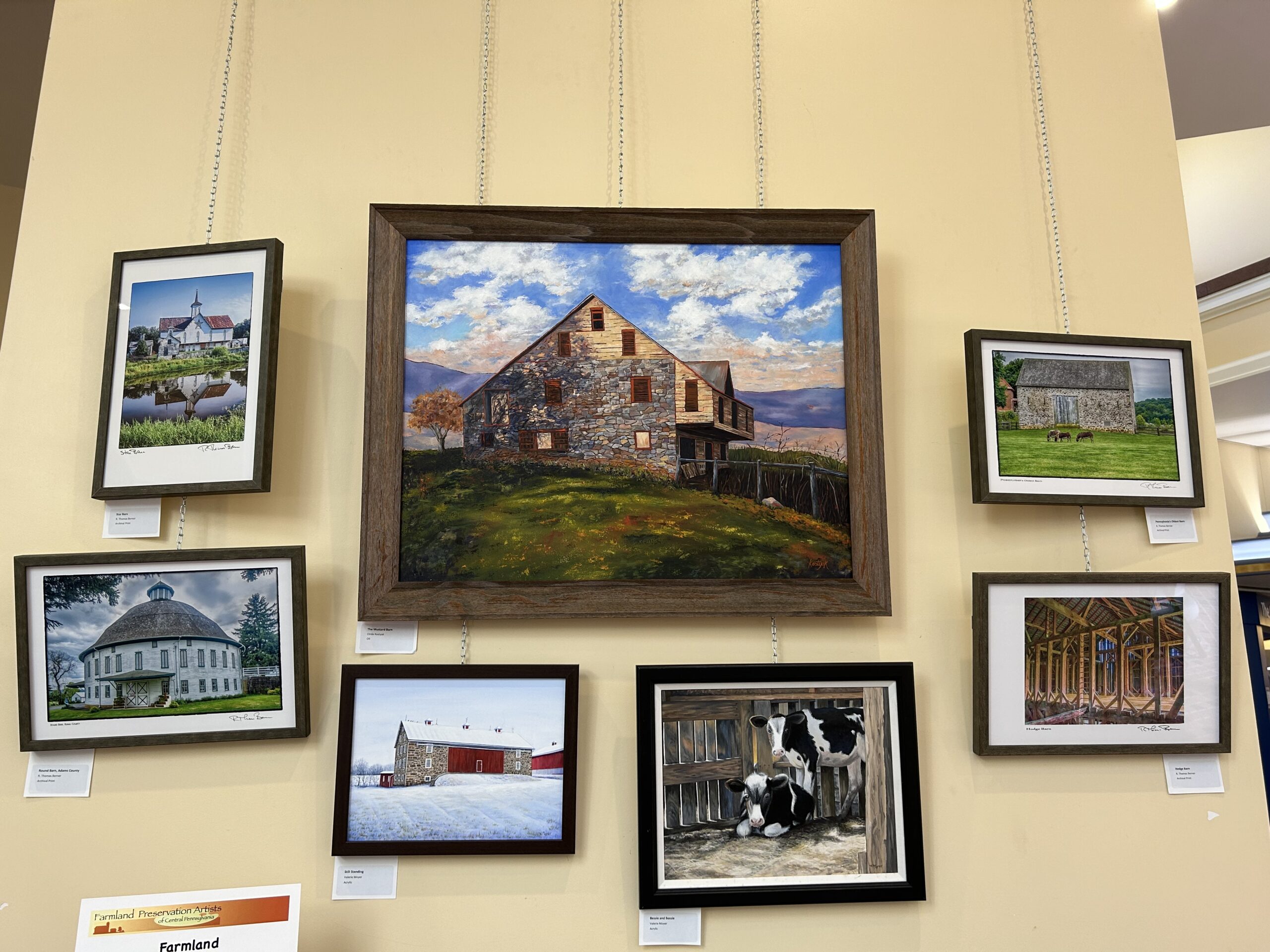
Farmland Preservation Artists of Central PA members in the state Capitol building

This fall, visitors to the state Capitol building can get a glimpse into the region’s natural beauty, as seen through the eyes of local artists.

Artwork by the Farmland Preservation Artists of Central Pennsylvania is on display in the Capitol in October, to raise awareness of the importance of protecting the state’s farmland.

“To have our artwork here is such an honor,” Martha Grout Taylor, president of the arts organization, told TheBurg, following a press conference. “What we are hoping is that our elected officials will see the art and say, this is important to Pennsylvania, and that it will raise awareness of farmland preservation.”

Art featured in the Capitol

The exhibit, on display in the Capitol’s East Wing Rotunda, features 51 works of art by 14 Pennsylvania artists. Each piece depicts a scene from central Pa. farmland.

The arts organization was formed in 2005 as a joint effort by the Art Alliance of Central Pennsylvania and the Centre County Farmland Trust. The group works to promote the preservation of the land through their art, as well as raise money for the two organizations. According to Taylor, the farmland preservation artists group holds around three exhibits each year.

Art included in the October exhibit at the Capitol is for sale and a portion of the proceeds will support the art alliance and farmland trust.

“These artists inspire us to work toward their vision to help the central Pennsylvania region and all of Pennsylvania preserve farmland,” said Dan Guss, president of the Centre County Farmland Trust. “Together, with preservationists and legislators, we will collaborate to make their vision a reality.”

For more information about the Farmland Preservation Artists of Central Pennsylvania, visit their website.


If you like what we do, please support our work. Become a Friend of TheBurg!   


Continue Reading

Harrisburg Chamber names 2023 Catalyst Award winners, honored for promoting positive change

Corrie Lingenfelter

Seven people and organizations will receive one of the Harrisburg area’s most prestigious annual awards, as the Harrisburg Regional Chamber & CREDC announced its 2023 Catalyst Award winners.

Corrie Lingenfelter, executive director of Downtown Daily Bread, will receive the Catalyst Award itself, for her contributions to the community. Harrisburg-based Downtown Daily Bread serves as a shelter and kitchen for the homeless and food insecure.

The other award recipients are:

  • Athena Award: Virginia Roth, Color & Culture
  • Diversity Influencer of the Year: TE Connectivity’s African Heritage ERG-PA Chapter
  • Entrepreneur of the Year: Jonathan Bowser, Steel Works Construction
  • Government Leader of the Year: state Sen. Greg Rothman
  • Small Business of The Year: Burn 30
  • Volunteer of The Year: Michael Burke, PNC Bank

Each year, the Catalyst Awards recognize recipients for their commitment to leading positive change in the region, creating more opportunities for business and building a brighter future in the region.

TheBurg received the Catalyst Award in 2018.

“We are incredibly proud to honor this dynamic and diverse group of visionary individuals and businesses for their dedication and commitment to improving our region,” said Ryan Unger, president & CEO of the Harrisburg Regional Chamber & CREDC. “The Harrisburg Regional Chamber & CREDC’s core values include being inclusive, collaborative and positive. This year’s winners strongly demonstrate these values in their work, and we are proud to honor them this year for that work.”

The Harrisburg Regional Chamber & CREDC will host the Catalyst Awards ceremony on Wednesday, Dec. 6 at the Hilton Harrisburg. For more information and to register, click here.

Continue Reading

Commonwealth cuts the ribbon on Civil War Battle Flag Education Center in Harrisburg

Rep. Patty Kim (D-103), former state senator John Gordner and others affiliated with the project cut the ribbon on the Pennsylvania Civil War Battle Flag Education Center.

For the first time, the community can learn about the Commonwealth’s historic flags in an interactive exhibit.

On Wednesday, officials cut the ribbon on the Pennsylvania Civil War Battle Flag Education Center in Harrisburg.

“This education center provides an immersive experience to our guests,” said Rep. Patty Kim (D-103), chair of the Pennsylvania Capitol Preservation Committee. “We are very excited for you to see this.”

The preservation committee, formed in 1981, has worked to preserve about 403 Civil War and Spanish-American War flags that are in the state’s possession and spearheaded the project to create the education center.

The new center, located in a Department of General Services Building at 2221 Forster St., now not only houses the flags, but allows visitors to view them and learn about their history through an exhibit.

Inside the education center

Formerly, the flag collection was stored at a location on Market and N. 10th streets, from 1985 to 2020, when the flags were relocated. Since then, the committee has worked to create the exhibit, which includes interactive touch screens with flag information, as well as additional artifacts like war equipment, uniforms and soldiers’ personal items.

According to Kim, the collection is one of the largest state-issued collections of flags in the nation.

“These flags were incredibly important tools of war. Amidst the confusion of battle, they provided direction and inspiration for soldiers,” said Andrea Lowery, executive director of the Pennsylvania Historic and Museum Commission. “And these flags here illustrate the immeasurable sacrifices made by hundreds of thousands of Pennsylvanians.”

A flag on display in the education center

The education center will hold an open house for the public from Oct. 4-6, from 9 a.m. to 4 p.m., each day. The center will resume normal tours on Oct. 10, by appointment only.

For more information on the Pennsylvania Civil War Battle Flag Education Center, visit the Pennsylvania Capitol Preservation Committee’s website.


If you like what we do, please support our work. Become a Friend of TheBurg!   

Continue Reading

Harrisburg City Council weighs apartment project for former federal building

Harrisburg City Council work session on Tuesday

On Tuesday, Harrisburg City Council heard a proposal for a major downtown apartment project.

Council weighed a land development plan for the adaptive reuse of the former Federal Building, to turn the 11-story office structure into a 162-unit apartment building.

New Jersey-based developer, Yasser Hellel, has proposed constructing 146 one-bedroom units, 14 two-bedroom units and two studio units in the 196,000-square-foot building.

Additionally, Hellel has proposed first-floor commercial space and amenities such as a fitness center, penthouse lounge, shared office space, a rooftop deck and shared lobby. About 30 parking spaces would be included in an underground level of the building.

“I think it’s going to be an exciting project,” Hellel said. “The demand is documented nationally for these units.”

Council members asked questions about affordability and contracting opportunities for local companies.

Hellel responded, stating that the units would likely rent at market rate, with the exception of 10, which would be affordable by the Department of Housing and Urban Development (HUD) guidelines.

Additionally, he shared that he would plan to work with local contractors on the project.

“I’m happy to hear that at least 10 units will be affordable for our residents,” council President Danielle Bowers told TheBurg. “Some affordability is better than none. I wish them well in their process.”

Hellel purchased the building in February for $13.3 million. He estimates that the total project, including acquisition costs, will cost about $35 million.

According to Hellel, the building became vacant near the end of September. Previously, the building housed the U.S. District Court for the Middle District of Pennsylvania and other federal offices. Most court personnel moved to the new federal courthouse on N. 6th Street in April.

While the interior of the building would change with construction, according to Hellel, the majority of the exterior of the building would remain the same.

If the project is approved, developers expect to begin construction early in the summer of 2024 and continue for 18 months.

The proposed land development plan was approved by the Harrisburg Planning Commission in early August.

Council is slated to vote on the proposal at their Oct. 10 legislative session. An affirmative vote would allow the developer to proceed with the project.


If you like what we do, please support our work. Become a Friend of TheBurg!   

Continue Reading

Reel Fun: Harrisburg to host annual Family Fishing Day at Italian Lake

Participants at a past Family Fishing Day event

Harrisburg is hoping to hook residents with an upcoming event.

The city is hosting its annual Family Fishing Day at Italian Lake on Saturday, Oct. 7 to bring the community out for a day of fun and education.

The event will welcome both experienced and beginner anglers, with opportunities for those who are new to the sport to learn the basics of fishing.

No fishing license is required, but attendees must attend a presentation by the Pennsylvania Fish & Boat Commission at 10 a.m.

Registration is required for the event and check-in begins at 9:30 a.m. The event takes place until 12 p.m.

Bait and poles will be provided, while supplies last, but officials encourage people to bring their own supplies if they have them.

The lake will be stocked with fish for the day, according to the city. Additionally, there will be a fish fry station to demonstrate how to clean and cook fish.

The event is sponsored in partnership with the PA Fish & Boat Commission and the Civic Club of Harrisburg.

Water and hot chocolate will be available on-site, as well.

Italian Lake is located at N. 3rd and Division streets. To register for the Family Fishing Day, click here. For more information, visit the city’s website.


If you like what we do, please support our work. Become a Friend of TheBurg!   


Continue Reading

Community Comment: It’s time to make State Street better, safer

In 2018, State Street was the most dangerous street in the nation. That’s not an exaggeration – that’s statistics. That’s a death rate of 88.64 deaths per 100 million vehicle miles traveled, nearly four times as many as New York City’s infamous “Boulevard of Death” in the 1990s.


State Street: as it is

The reasons for State Street’s dangerous nature are no mystery to those familiar with road safety. In fact, for those familiar with Strong Towns’ philosophy, State Street is a classic example of a “stroad” – a hybridization of a street and a road which fails to accomplish the primary purpose of either, resulting in an inefficient, expensive and incredibly dangerous thoroughfare.

For those unfamiliar with Strong Towns’ body of work, the term “stroad” may be confusing, as well as what we mean by distinguishing “street” and “road” as separate terms. In a nutshell: a road is a connection between destinations, something a step down from a highway. It has wide lanes, high speeds, and, most importantly, few “points of conflict” where a driver may have to stop unexpectedly. It does not have businesses alongside it, or housing, or parallel parking spaces where cars may pull in and out constantly, or foot traffic where pedestrians will routinely cross. It certainly does not have school zones.

These points of interest are the provinces of streets, which are low-speed places with narrow lanes, narrow streets, and destinations on either side. Streets are places where people are meant to live, work and play. They are lined with on-street parking, residences, businesses, shops, libraries, parks, and other attractions. Pedestrians cross regularly, cyclists intermix with the traffic, and children go to schools and playgrounds without fear of cars.

Stroads combine the worst of these attributes. They have wide, highway-style lanes which encourage highway-style speeds. They have a large number of lanes, frequently without so much as a pedestrian median, forcing pedestrians to walk – or often sprint – long distances in order to cross from one side or another. (This is, incidentally, particularly difficult for people with limited mobility, such as elderly individuals, wheelchair and cane users, and so on.) But they also have a number of reasons for pedestrians to cross, because they are lined with parking spaces, parking lots and destinations.

In addition to issues for those outside a car, stroads involve a lot of conflict between vehicles, with frequent intersections, parking spaces and lots (again), and so on. All of this causes vehicles to potentially stop frequently. This results in a nightmare scenario where drivers, driving the speed for the road that ‘feels safe’ without checking their speedometer, reach high speeds due to the wide lanes, only to have to come to a screeching halt because a child ran out into the street. For cars, this is dangerous. For vulnerable road users like pedestrians and cyclists, this is deadly.

State Street is a very clear example of a stroad in action. As you can see above, it has four 12-foot travel lanes, a 12-foot center turn lane, and two 8-foot parking lanes. There is no pedestrian median. There are few pedestrian lights. There are homes, businesses and two school zones on either side. And as a result, there are far too many deaths on State Street each year. And it’s time to do something. It’s time to make State Street a real street. And that means making some changes.

State Street: our proposed redesign.


The first and most crucial change necessary to make State Street truly safe is to narrow the lanes. There is an old school of thought amongst road designers which says that wider lanes are safer. It seems intuitive. Wider lanes keep cars further apart, making collisions less likely and allowing more room for error. And when driving along roads, it certainly feels intuitive, doesn’t it? You feel safer driving in wider lanes than narrower lanes. It’s less stressful. You don’t have to pay as much attention. You can speed up.

Of course, inattentiveness and speed are not combinations that tend to increase road safety. Which is the factor that the “bigger is better” line of thinking tends to forget — that highway-sized lanes result in highway-sized speeds. On a highway, that’s well and good. On a seven-lane residential road running through two school zones, it’s not. The evidence supports this — as per the WRI Ross Center for Sustainable Cities Health and Road Safety, city roads with lanes wider than 11.8 feet result in much higher fatalities than narrower ones. No number of speed limit signs can fix this. People will drive the speed that the road allows, and no signs or paint will compete with simple physics.

How can we do better? Well, if lanes wider than 11.8 feet are dangerous, what about narrower ones? Our friends at the WRI have data on this, too — specifically, they show that city streets with lanes between 10 and 10.5 feet have the lowest fatality rates. Your widest SUVs in the US tend towards around 7 feet wide. A fire truck is around 8 feet wide. Ten-foot lanes leave plenty of room for even wide vehicles to travel at safe distances, but little room to reach unsafe speeds. This is exactly what State Street needs.

Narrowing State Street’s lanes alone would do a lot to help make it safer. And the extra 10 feet made available by narrowing State Street’s travel and turn lane could easily be used for other improvements, such as a bike lane, a bus lane, or wider sidewalks, all things we’d love to see. But does State Street actually even need to have five (non-parking) lanes in the first place? The analysis of renowned city planner Jeff Speck would conclude that it doesn’t. Granting State Street a generous figure of 12,000 cars per day, more than PennDOT’s estimates for actual traffic volume on State Street, there is no need for more than three travel lanes to handle the volume of traffic: one lane each way and a turn lane. Other cities with comparable roads have done it, with no significant change in commute times. And by removing these two lanes, we dramatically reduce the distance pedestrians have to cross in order to cross State Street – making it substantially safer.

And combining both of these improvements would result in no less than 30 feet of now free space on State Street to do, well, anything else. This is a tremendous amount of room. This is enough room to put a parking-protected two-way bike lane on each side of State Street, with a three-foot curb between the bike lane and parking, an additional three-foot door buffer for parked cars, and still have a full two feet left over to widen the gutter or sidewalk, or to make each parking lane 9 feet instead of 8 (as pictured). That’s enough room to have a one-way parking-protected bike lane on each side with the same other amenities and widen the sidewalks by two feet. That’s enough room to keep the parking the same (plus a three-foot door buffer), add a two-way bike lane on each side, and widen the sidewalk by one foot on each side. That’s enough room to… well, you get the idea. There’s a lot which could be done with the space these changes would free up, and we’d probably support most of them, because as long as State Street is made narrower, it will be made safer.

But we are big fans of bike lanes around here, so we’ll take a moment here to argue for their inclusion in at least some form. At the core of our reasoning is that we like bikes because they’re accessible to a lot of people who cars don’t work for. They’re cheaper to buy and maintain (in fact, local charity Recycle Bicycle, for which several of our members volunteer, helps provide Harrisburg residents with bicycles and bicycle maintenance free of charge.) Even the most luxurious of high-end e-bikes usually cost less than the cheapest of cars.

Bike lanes also benefit many people with disabilities as well, despite the common misconception to the contrary. While some disabilities are best accommodated by car usage, there are a number of disabilities which interfere with driving but permit cycling, including partial vision impairments, epilepsy, sensory processing issues, and so on. Meanwhile, many mobility issues still permit cycling; for example, a Transport for London survey found in 2019 that 70% of disabled individuals living in London were able to cycle. Furthermore, as people age, cycling often remains an option long past the point where reflexes and vision have deteriorated sufficiently to make driving a car, at best, a truly terrible idea; indeed, robust cycling infrastructure often permits people to remain active later in life and to age in place with more independence. (Wheelchairs and mobility scooters, incidentally, can also use bike lanes freely, something which is often sadly needed where sidewalk maintenance is lacking.)

Age can also be a limiting factor in driving in other ways, too; namely, for those under the age of 16. Kids in car-dependent areas often rely on their parents to get them to and from places, something which can stifle the social lives of children whose parents aren’t available to do so and eat into the busy schedules of working parents who can. But even more than that, it’s worth remembering that State Street is the location of two schools, including Cougar Academy, and that Harrisburg School District is unfortunately known to have attendance issues. And one of the main causes of those issues? Unreliable transportation. The ability for a student to cycle themself to school can make a real difference.

All of this is without even getting into the environmental and health benefits of cycling, which are well known enough we hardly need to get into them here. And all of this makes bikes an excellent transportation option for anyone who lives within cycling range of most of their destination, a radius of 10 to 15 miles. (At its widest, Harrisburg is about 6 miles in diameter.) 

Due to its location, State Street is a prime location for bicycle commuters, but its dangerous nature keeps many of those who have alternate options from cycling along it. Those who choose to cycle along State Street anyway – or who don’t have the luxury not to – are at a very real risk of becoming another State Street statistic. We know these people exist. We’ve met them. Some of our members are them. It’s simply not true that no one cycles along State Street, though it is true that far fewer people cycle along State Street now than likely would if a bike lane were added, just as more people tend to cross a river when there is a bridge than when they have to swim across it.

All of which is to say: a bike lane is not strictly necessary to make State Street safe. But the essential safety improvements to State Street will make room for one anyway, so we think it would be a very good idea.

Ultimately, we will support any changes which make State Street into a true street, one which truly prioritizes the safety of its residents and vulnerable road users. And now that Harrisburg finally has a City Engineer again, we strongly believe it’s time to act. Time is wasting, and lives are at stake.

Strong HBG is a chapter of Strong Towns, strongtowns.org.

 

Continue Reading

The Week that Was: News and features around Harrisburg

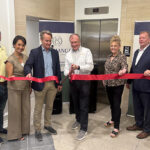
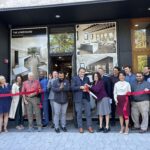
Sprocket Mural Works and Harrisburg Young Professionals officials, among others, cut the ribbon on the newest city mural.

It’s been a dreary, rainy week here in Harrisburg, but a bright spot came yesterday as the October issue of the magazine hit the stands! Make sure you grab a copy this weekend and check out all the fun fall stories we have featured for the month. First, catch up on this week’s news, below.

Dauphin County released a survey about substance use, in hopes of better understanding the issue locally, our online story reported. Officials said that the results will help drive their prevention and educational efforts.

General election mail-in and absentee ballots have been sent out to 15,775 Dauphin County residents. In our story, find more voting information and updates from the county.

Harrisburg presented a mid-year financial report to City Council, in which they stated that Harrisburg is in solid fiscal shape, our reporting found.

The Harrisburg School District appointed a task force to help decide the future of the district’s long-vacant and blighted William Penn building, our online story reported. The group consists of residents, local officials and community members, who will meet for the next three months.

Karen Cullings is retiring as executive director of the Dauphin County Library System after over 30 years with the organization, our online story reported. Under her leadership, the library worked to eliminate barriers to reading, renovate its riverfront location and navigate the pandemic.

Latino Connection announced this year’s winners for its annual Lo Mejor de lo Mejor (“Best of the Best”) awards, our online story reported. Click here, to find out which recipients will be honored at the 10th annual Latino Ball.

Mayor Wanda Williams shared a positive outlook for Harrisburg at the Harrisburg Regional Chamber & CREDC’s annual “State of the City” address this week, our reporting found. Williams shared recent financial, infrastructure and safety improvements, among other city accomplishments.

The Pennsylvania Gourd Society uses a variety of gourds to make different types of art, including pyrography, painting, carving, jewelry making and more, our magazine story reported. Every year, about 1,940 members come together at the PA Gourd Fest in June.

Our publisher thanks readers for loyally picking up TheBurg and reading online, but encourages them to stay away from accessing news through social media. Lately, he said in his publisher’s note, using social media as a news source has become increasingly unpredictable.

Sara Bozich’s Weekend Roundup includes live music, theater, fall festivals and food. Find all of this weekend’s events, here.

Sprocket Mural Works cut the ribbon on its newest mural, in Midtown Harrisburg, our online story reported. The mural is inspired by artist Suzanne Rende’s own garden and depicts flowers, butterflies and bees.

“The State of Downtown Harrisburg: 2023/2024” was just released and highlights the many businesses, projects and activities in and around the downtown, our online story reported. Within the publication, readers can see all the shops, restaurants and venues that the city has to offer.

Whitaker Center announced that Mary Oliveira will become the new president and CEO on Nov. 6, our online story reported. Oliveira will oversee strategic planning, financial stewardship and community engagement.


Do you receive TheBurg Daily, our daily digest of news and events delivered right to your email inbox? If not, sign up here! 

Support quality local journalism. Join Friends of TheBurg today!


Continue Reading

Harrisburg School District appoints task force to help plan future of William Penn

William Penn

The Harrisburg School District is employing the help of the community to come up with a plan for its historic William Penn School building.

At a school board meeting on Tuesday, Receiver Dr. Lori Suski appointed a task force of residents and city and county officials to discuss what to do with the long-vacant and blighted school building at risk of demolition.

In June, Suski approved the demolition of William Penn, citing the financial burden it has become. However, in late August, Suski announced that she would halt demo plans, give the community another chance to share input on the future of the building and consider alternative proposals.

“We clearly heard that there is a sentiment out there that before we move to demolish a building, that we look at other options. This is our due diligence, good-faith effort,” she said on Tuesday.

The newly appointed task force includes two paid facilitators, Sheila Dow Ford, executive director of nonprofit Impact Harrisburg, and Elan Drennon, an attorney based near Philadelphia, Suski explained.

There will be 27 members of the task force including Danielle Bowers, City Council president, Gloria Merrick, director of Harrisburg’s Latino Hispanic American Community Center (LHACC), David Morrison, director of the Historic Harrisburg Association and Dauphin County Commissioner Mike Pries, among many other officials and residents. Two Harrisburg High School students, one from the John Harris campus and one from the SciTech campus, will be included, as well as two school board members.

Additionally, five district officials, including Suski, will serve as ex officio members.

According to Suski, the group will discuss various options for the future of William Penn. At a previous press conference, she said that plans could possibly include only preserving the façade of the building, keeping the building and eventually using it for a vo-tech school or job training facility or proceeding with a full demo, among other options.

The task force will meet on Thursday nights from 6 to 8 p.m., twice in October, November and December. Dates have yet to be announced. Meetings will be open to the public, but will not include a public comment period.

Suski expects that the task force will have a final recommendation to present to the district at their first board meeting in January.

For more information, visit the Harrisburg School District’s website.


If you like what we do, please support our work. Become a Friend of TheBurg!   

Continue Reading

Dauphin County releases survey on substance use, with goal to improve prevention, resources

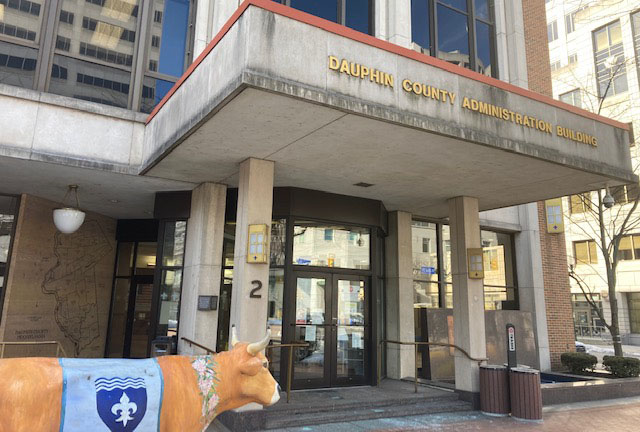
Dauphin County Administration Building

Following a recent spike in overdoses locally, Dauphin County is hoping to gain better insight into the issue of substance use.

On Thursday, the county released a survey that asks residents about their views on drug and alcohol use, as well as prevention tools and local resources.

Earlier this month, within the span of a few days, nine county residents died of drug overdoses believed to be due to a batch of crack cocaine and synthetic drugs that tested positive for fentanyl. The Dauphin County 911 Center received a total of 29 overdose calls that week.

Shortly after, Harrisburg, Dauphin County and other local officials came together for a discussion on prevention efforts.

According to the county, substance use disorder affects an estimated 36.4% of Pennsylvania’s residents. County officials hope to use the results of the survey to better address the issue locally.

“It is important we have robust participation in this survey through the end of the year, as it will drive our policies toward services going forward,” said county Commissioner George Hartwick, in a statement.

The county will use the information gathered to guide prevention education, treatment opportunities and outreach initiatives.

Fliers advertising the survey will be distributed at local healthcare, wellness and community centers.

“Dauphin County has been devastated with a rash of overdoses and overdose deaths in recent weeks. It is important we connect people to the services they need,” said Commissioner Chad Saylor.

To complete the survey, click here. For more information, visit the county’s website or call 717-635-2254.


If you like what we do, please support our work. Become a Friend of TheBurg!  

Continue Reading