Binding Community: Local educator will host gala to support mission of providing diverse books to area students

Corey Dupree and a young reader at the Harrisburg Book Festival

Growing up, Corey Dupree loved reading book series like Harry Potter, Goosebumps and The Chronicles of Narnia.

But for as much as he loved the stories and the action, the characters were never described with features that looked like his.

“They could describe Ron Weasley with his red curly hair and Slappy, the doll from Goosebumps, but not once was there someone who looked like me,” he said. “The first time I can remember reading a book that had a Black protagonist was in sixth grade.”

Representation in literature is something that Dupree is passionate about now, as an adult with kids of his own. Not only is it important that Black and brown children see themselves reflected in what they read, but it’s crucial that all kids are exposed to diversity, he believes.

As a teacher and community member, he’s seen the effects of a child lacking that exposure.

Dupree, of Palmyra, remembers a day at the playground with his children, when several white middle-schoolers yelled a racial slur at his family. Dupree spoke with the neighborhood kids, sharing why the word was hurtful and explaining the meanings of words like “racism” and “diversity.”

“It led me to think about how I can impact my community,” he said.

In 2021, Dupree started Layers of Black History, an organization dedicated to promoting literacy and hosting educational events for adults and youth. Dupree’s main focus—collecting and distributing diverse books.

The initiative started with Dupree collecting books to donate to his local school district in Palmyra, but has since grown to support several other area districts, such as Harrisburg, Steelton-Highspire and Milton Hershey School, which he attended. Books also go to community organizations and businesses.

To raise funding to purchase books and for other events, Dupree hosts two annual events, The Layers of Black History Gala and The Little Layers of Black History Gala—one catering to adults and the other to youth.

In March, Dupree, along with his daughter Mariah, 12, will host the second annual Little Layers gala at the Keystone Building in the state Capitol complex.

And while Dupree has been known to throw a good party, his daughter may have the best intel on the target audience.

“I get to help him plan it all out because I know what kids like,” Mariah said.

Just in November and December, Layers of Black History donated 3,200 books. Those included books like “Hey You!: An Empowering Celebration of Growing Up Black,” “Stamped: Racism, Antiracism and You,” “Hair Love” and “The Swag Is in the Socks.”

With help from the upcoming gala, they hope to acquire over 6,400 books in the coming year. Money raised will also support the organization’s scholarship fund, as well as events like haircare workshops and an upcoming conference series aimed at educating and supporting men who are raising Black boys.

The gala will include author book readings, craft stations, STEAM activities, food and about a dozen vendor tables, among other activities. Dupree expects around 200 people to attend.

Ultimately, with each book purchased and donated, he hopes to inspire youth and adults to enjoy reading. Additionally, he hopes that students of color get to see themselves reflected in the books they read and that white students get to learn from new perspectives.

With encouragement from her dad, Mariah has followed in Dupree’s footsteps.

“I’ve been reading for a long time now,” she said. “It makes me proud when I see more Black people in books.”

When children can relate to the books they read, they become more engaged, which can ultimately increase reading scores, Dupree said, and just maybe, kids will be inspired to become writers and illustrators themselves.

“Libraries were my safe space,” he said. “When a student shares that they don’t like reading or they haven’t found the right book, that’s a personal challenge for me now to get them to engage in reading.”

The Little Layers of Black History Gala will take place on March 16. For more information or to purchase tickets (ticket sales close on Feb. 20), visit www.layersofblackhistory.com.

If you like what we do, please support our work. Become a Friend of TheBurg!

Continue Reading

Musical Notes: Leap into Live Music

This month, there’s a whole extra day to appreciate music. While there aren’t any shows on my radar for Feb. 29, hit me up if you’ve got a solid Leap Day/bonus tracks playlist. Happy listening!

SO METAL
2/10, Veil Of Maya, H*MAC
The Chicago metalcore/djent outfit, Veil Of Maya, now in their 20th(!) year as a band, is supporting the release of their 2023 album “[m]other.” The band’s sound has evolved a lot over the last decade, notably incorporating Lukas Magyar’s signature cleaner vocal sound after he officially joined the band in 2015. While attendees are sure to hear songs from “[m]other,” I’d recommend also checking out “Overthrow” or “Outrun” for a sampling of the band’s other works to get a taste of what you’re going to experience at the show.

MORTALITY IN ALL ITS GLORY
2/21, Harrisburg University Presents Indigo De Souza, XL LIVE
Arguably coming off a breakout year with the release of her third LP, “All of This Will End,” Asheville singer-songwriter Indigo De Souza hits the stage at XL Live this month. Her song, “You Can Be Mean,” was one of my favorite 2023 releases (and is stuck in my head quite often), and the album as a whole is a beautiful compilation of songs that really feel like De Souza is coming into her own and choosing joy despite the pain and odds stacked against her, which listeners might hear on her other releases. This’ll be a good one to catch.

CALLING ALL DEADHEADS
2/24, Splintered Sunlight, XL Live
I grew up in a house filled with music, and one of the bands usually gracing our speakers was the Grateful Dead. It’s safe to say that I have been to my fair share of Dead & Co. and tribute band shows. Splintered Sunlight is among the best bringing something unique to the live experience of appreciating the Dead’s music. So, if you or a loved one have an appreciation for this legendary band, or just love to jam out, this is for you!

Honorable Mentions
2/3 — KC & The Sunshine Band, Hershey Theatre
2/10 — Go Up Records Baddies Bash, XL Live
2/15 — Alash Ensemble, H*MAC
2/16 — Papadosio & Tauk, XL Live
2/16 — The Maxwell Project, West Shore Theatre
2/22 — Blake Shelton & Dustin Lynch, Giant Center
2/23 — Almost Honest Album Release Show, West Shore Theatre
2/24 — Harrisburg University Presents “Our American Songbook” featuring Bria Skonberg & Benny Benack III, The Forum

If you like what we do, please support our work. Become a Friend of TheBurg!

Continue Reading

The Road Back: Treatment and recovery programs bring hope to those suffering addictions

Samantha Osterlof & family

It took four years of addiction to opioid painkillers and heroin to transform Samantha Bixler from a wholesome, high school honors student and athlete with a bright future into a drug-addicted, 22-year-old hospital ventilator patient with a 10% chance of survival.

Thankfully, the 2005 Palmyra High School graduate’s story did not end in an intensive care unit.

Today, Samantha Osterlof—her married name—is a wife, working mother of three and a passionate advocate for treatment and recovery programs like the one that she said saved her life.

In 2021, more than 46 million Americans had at least one substance use disorder, while just more than 6% had treatment, according to the National Institutes of Health.

About 107,000 people died. The economic burden of drug-related productivity losses, medical costs, crime and more is close to $530 billion, according to Georgetown University’s Health Policy Institute.

“No matter how you calculate it, substance abuse disorder is an enormous disruption to the lives of the employees and others,” said Karie Batzler, Capital Blue Cross’ director of behavioral health. “Anytime is the right time for companies to open up a clear dialogue with employees about the issue. Put it out there. Let it become a topic of discussion. The more we talk about it, the more we work to reduce the stigma and support treatment and recovery.”

Capital Blue Cross’ Health Promotion and Wellness team works with employer groups on ways to create awareness of substance use disorders.

Some companies, including Capital, offer an employee assistance program (EAP) that makes it easy for employees to access mental health professionals for any issue.

The Substance Abuse and Mental Health Disorders Services Administration (SAMSHA) publishes an evidence-based resource guide that educates employers on the merits of creating recovery-friendly employment policies.

The Biden administration’s American Rescue Plan created, among other things, a Recovery-Ready Workplace Resource hub through the Department of Labor.

“Just letting the employee know that their recovery comes first is important,” Batzler said.

Osterlof’s 10-year addiction took her right to the cliff’s edge.

A 37-day stay at an addiction treatment center, seven months of outpatient therapy and group meetings pulled her back from that edge, and a lifetime of being in recovery will keep her from falling down again.

Clean and with a new chance at life, Osterlof set out to redefine herself.

She earned a bachelor’s degree in criminal justice from Elizabethtown College in 2016, and a master’s degree in criminal justice and behavior management from Saint Joseph’s University in 2017, all while working as an outreach specialist and therapist at the same recovery facility that helped save her life.

In March, took a position as a marketing director with a company that specializes in outpatient treatment and recovery at several locations in southeast Pennsylvania.

She is certified as both a recovery specialist and a family recovery specialist and is an approved trainer who works with the Pennsylvania State Police and other organizations.

The tragedy of substance use disorder is well documented. By eagerly sharing her story of addiction and recovery, Osterlof hopes to let the world hear another message.

“Everything good in my life today, I have as a result of my recovery,” said Osterlof, who hasn’t taken a mood or mind-altering substance since Dec. 21, 2011. “The message is hope. The promise is freedom. Treatment works, and recovery is possible.”

For more information, visit www.capitalbluecross.com.  


If you like what we do, please support our work. Become a Friend of TheBurg!

Continue Reading

A Doctor’s Life: Dr. Charles Crampton was one of Harrisburg’s most prominent Black citizens, until the system turned against him

Illustration by Ryan Spahr.

“He enters the Esquire Bar. All the big muck-a-muck politicians go there. It surprises me that they let a colored man enter. He’s certainly the only one.”
– “The Blue Orchard,” Jackson Taylor

In early 20th century Harrisburg, then called “a Northern city that still practices Southern ways,” Dr. Charles Crampton broke racial barriers.

He was vice chairman of the Dauphin County Republican Committee. State deputy secretary of health. Vote-getter for power-broker M. Harvey Taylor. Popular emcee for the era’s countless testimonial dinners and confabs. Wartime patriot and tireless civic fundraiser. Beloved high school athletic trainer. Physician whose wealth purportedly derived, at least in part, from providing the “illegal operation” sought by women of all classes and races.

And a man whose reach and influence didn’t protect him, in the end, from arrest for allegedly providing the very abortion procedures that likely had been an open secret for decades. To this day, his legacy lingers in the youth he inspired to pursue their dreams—and in the tale that his story tells of racism’s power to hem in Black Americans of accomplishment.


Inspiration to Youth

“Have you thought about college?” One question from Charles Crampton changed the trajectory of Calobe Jackson Jr.’s life. Like many other young people, he was inspired to reach higher by Crampton’s example and guidance.

As a child, Jackson, now 93 years old, lived around the corner from Crampton. Jackson’s father, whose barbershop still stands at 6th and Boas streets, would go to Crampton’s home every day to give the doctor a shave and weekly haircut.

Young Calobe sometimes stepped in for Crampton’s chauffeur—Crampton was known for his grand autos driven by white chauffeurs—to perform the daily task of hosing down the sidewalk and polishing the brass doorknobs. Crampton would give Jackon $5 or $10 for the job, “which was a lot of money then,” recalled Jackson, now a leading historian of Harrisburg history.

In August 1948, Jackson graduated from William Penn High School. Though he enjoyed academics, he figured he would follow in his father’s footsteps until Crampton offered the prospect of a senatorial scholarship to Lincoln University. Harvey Taylor, then a state senator representing the city and Dauphin County, had already awarded his allotment.

“But don’t worry,” Crampton told Jackson. “I’ll get you one from Cumberland County.” Which he did, through state Sen. George Wade.


Road to Leadership

Charles Hoyt Crampton was born in Harrisburg in 1879, probably to Benjamin and Susan Crampton. “Probably,” because he was adopted at age 7 or 8 by Col. L.F. Copeland.

A white progressive, Copeland, a lawyer and Chautauqua-circuit lecturer, “maybe did this as an experiment, to adopt a Black child and see what would happen,” Jackson said. “He gave him a chance at all possible education.”

Elected class orator for the Harrisburg High School class of 1899, Crampton was the first Black student to give an address at graduation ceremonies. Skipping undergraduate studies, he went directly to Howard University Medical School.

Returning to practice medicine in Harrisburg, Crampton “immediately leaped into popularity,” reported the Pennsylvania Negro Business Directory–1910.

He led or joined everything. Masons. Elks. Harrisburg Kappa Omega. He chaired wartime Red Cross drives. He helped desegregate city movie theaters, according to Jackson. He brought renowned Black personalities to speak in Harrisburg: contralto Marian Anderson, boxer Joe Louis, track star Jesse Owens.

“He seemed to know everybody,” Jackson said. “I understand Booker T. Washington came here at his request at one time.”


Sports Icon

Crampton’s unflagging devotion to building the Forster Street YMCA was driven by a passion for giving the city’s Black youth, barred from the all-white YMCA, an outlet for sports and team play. For 40 years, he served as athletic trainer for Harrisburg Technical High School and one of its successors, William Penn High School.

Every Thanksgiving, Crampton wound up the crowd at pre-game rallies for the annual William Penn-John Harris high school football matchup. He kept William Penn players “in tip top shape,” reported the Harrisburg Telegraph. Injured students never got a greenlight to play, no matter their star power.

When students visited his office, they might leave with a bit of life advice and maybe “treats, money to buy this and that.”

“The Blacks (working) in the schools were probably janitors, and here we had Dr. Crampton, who was this outstanding man who came out and made speeches before football games,” Jackson said. “He was a great person to be around.”

His work with youth exemplified “staunch adherence to the philosophy of true sportsmanship in play as a character building essential,” said a 1947 news report of a tribute dinner attended by Pennsylvania Gov. James H. Duff and other luminaries. “‘Dr. Charley,’ as he is known to his countless friends, is a living example of leadership in the Colored Race,” stated the Harrisburg Telegraph.


Unraveling

From the early 1930s to late ‘60s, state Sen. M. Harvey Taylor ran the city and, as Senate President pro tem, much of Pennsylvania.

Crampton hitched his star to Taylor’s political wagon, earning appointment as Pennsylvania deputy secretary of health. As county Republican Committee vice chair, he represented the Black vote. Leading the “Colored Voters for Shannon League of Pennsylvania,” he endorsed Edward Shannon’s 1934 gubernatorial campaign with, “The response among members of my race has been whole-heartedly for General Shannon. We are for him 100 per cent.”

But even as early as 1928, columnist George S. Schuyler berated what he saw as well-heeled Black leaders in Harrisburg loathe to jeopardize their lucrative political connections by fighting to desegregate the city’s Jim Crow elementary schools or open doors to better jobs for Black citizens. Crampton was one of them, Schuyler wrote in the Pittsburgh Courier, a Black newspaper. They were “sheep in the Republican fold.”

After World War II, Crampton’s fate spiraled downward. Reformers sounded the “dirge against Taylorism” in their “fight against local bossism,” in the words of the Harrisburg Evening News. Joseph A. Randall, a physician and boxing manager, rallied the Black Democratic vote. He charged that Taylor’s machine siphoned money from scholarship funds meant for the city’s Black students.

In those post-war years, Taylor was pushing a breathtakingly audacious plan to expand the Capitol grounds by razing swaths of the city’s largely African American 7th Ward, repeating history from the 8th Ward’s fall in the 1920s. Properties in the way included Crampton’s own fine home and his beloved YMCA on Forster Street.

Crampton’s attempt to straddle the gap by offering $5,000 toward public housing for the displaced embarrassed and angered Taylor, as described in “The Blue Orchard,” Jackson Taylor’s meticulously researched novelization of the story of his grandmother, Crampton’s white nurse. The rift would not heal.

In May 1953, Crampton received notice from the IRS demanding $95,791 in back taxes. That November, he was demoted from his Health Department post. Three weeks later, he suffered a heart attack.

In the days before Roe v. Wade, women in every family and every beauty parlor knew where to find abortion procedures. Those with means chose physicians for an assurance of safety and hygiene.

Was Crampton one of those physicians?

“I suspect that he was, but they couldn’t really prove it,” Calobe Jackson said.

In 1951, a new Dauphin County district attorney succeeded a friend of Crampton’s. This DA did not turn a blind eye when a Hazleton woman, in a tiff with her boyfriend, told police they had gone to Harrisburg for an abortion performed by Dr. Charles Crampton.

In November 1954, police arrived to arrest Crampton and his nurse. “That’s what you get for doing favors for people,” Crampton told them.

At trial, he would explain. “I was vice chairman of the Dauphin County Republican Committee, and I should have been treated more justly.”

Crampton denied the charge. The first jury he faced couldn’t reach a verdict. In a second trial, 42 character witnesses included his student athletes, now grown into solid citizens. The judge asked the jury whether such a respected man “could have done the things of which he is accused.”

That jury also deadlocked, and the judge ordered acquittal.

“Charles H. Crampton is a free man today!” cheered the Pittsburgh Courier.

In March 1955, 400 friends gathered at First Baptist Church in Steelton to celebrate Crampton’s 76th birthday. On Nov. 16, 1955, Crampton died at Harrisburg Hospital. He was buried not in the city he devoted his life to, but in Tyrone, Pa., home of his parents.

In April 1956, his belongings were auctioned to pay the back taxes. His home was then razed to make way for the Pennsylvania Department of Labor and Industry building.

Crampton once welcomed the 22nd meeting of the District Grand Lodge Number One, Grand United Order of Odd Fellows, a Black division, to Harrisburg.

“Honor men as you expect to be honored, be good and law-abiding citizens and treat your fellow men as you expect to be treated,” he told them, “and there will be no dividing line between the white and colored races.”

If you like what we do, please support our work. Become a Friend of TheBurg!

Continue Reading

February News Digest

Harrisburg Passes 2024 Budget

Harrisburg has solidified a spending plan for 2024, one that anticipates impacts from inflation and the lingering effects of the pandemic.

In late December, City Council approved a $109.4 million general fund budget, which includes investments in infrastructure and public safety. The budget does not include a property tax increase.

In total, the balanced budget equals $150.7 million, including the general fund and the $21.1 million neighborhood services fund budget, among others.

The budget specifically prioritizes projects such as street paving, upgrades to city parks and the hiring of several new police officers. The plan also factors in the spending of federal American Rescue Plan Act (ARPA) money on projects like renovating the Hall Manor pool and funding affordable housing development, one-time funds that boosted this year’s budget number.

Council passed the budget after making a few minor amendments to the original proposal, mostly reducing raises for city employees that they felt were not deserved or adequately explained by the administration. Council voted 5-1 to approve the budget, with council member Shamaine Daniels voting against it.

Additionally, in 2024, the city has raised residents’ monthly trash bills by $3.23, making the cost $35.57 per month. According to city Business Administrator Dan Hartman, the fee hike is needed to offset inflation and continuously increasing expenses such as tipping fees, wage increases, vehicle costs and fuel prices.


Area Officials Sworn In

Kicking off the new year, many recently elected officials took office in January.

Harrisburg City Council and Dauphin County officials were sworn in at separate ceremonies, including newcomers to council and to the county’s board of commissioners.

During a ceremony at city hall, Dauphin County Magisterial District Judge Hanif Johnson swore in council president Danielle Bowers for a second term, alongside Crystal Davis, a new council member. The third member, Lamont Jones, also a newcomer, attended the ceremony, but was officially sworn into office at the county courthouse earlier.

Soon after the ceremony, council held its reorganizational meeting, unanimously electing Bowers to serve as council president for another term. In a vote of 4-3, council chose Ausha Green to serve as vice president for a second term, as well.

On the same day, Dauphin County swore in several public officials.

Incumbent county commissioners George Hartwick, a Democrat who has served for 20 years, and Mike Pries, a Republican who took office in 2010, again took the oath of office.

In November, Democratic challenger Justin Douglas was elected as the third commissioner, replacing Chad Saylor, and flipping the board to Democratic control for the first time in over a century.

Douglas attended the county’s ceremony but was sworn in at a separate ceremony earlier that morning in Conewago Township, where he lives.


Catherine Hershey Schools Taking Applications

A major, cost-free childcare and early education center in Harrisburg is now accepting applications for enrollment.

Last month, the Catherine Hershey Schools for Early Learning opened the application process for its Harrisburg location, which is being developed at N. 6th and Muench streets.

The center is an arm of the Milton Hershey School and will offer free care and education to 150 low-income and at-risk children, from 6 weeks to 5 years old. It will focus on providing kindergarten readiness programming and family support.

The 45,000-square-foot complex has been under construction for over a year and is expected to be completed later in 2024, at which time it will open to students.

It will be open weekdays, from 7 a.m. to 6 p.m., employing a play-based curriculum to enhance a child’s overall development and early education.

The Harrisburg location will be the second Catherine Hershey Schools for Early Learning in central PA. The first opened in Hershey last year, and another in Middletown is slated for 2025. Three additional schools—in Lancaster, New Danville and Elizabethtown—are expected to open in 2026.


Harrisburg Police Mark New Hires, Promotions 

Five Harrisburg police officers were promoted and two others were brought on board during a ceremony last month at Whitaker Center.

During the hour-long event, Mayor Wanda Williams administered the oath of office to the new officers, Zachary Donmoyer and Solomon Myers.

“One of my great honors, as mayor, is that twice a year I get to stand in front of all of you and give this solemn oath to our new officers,” Williams said. “I know that, with each young man or woman who raises their hand to protect the city of Harrisburg, our city is just a little bit safer.”

Donmoyer and Myers will now enter HACC Municipal Police Academy to begin their training.

Deputy Chief Dennis Sorensen, who retired from the bureau last month after a lengthy career, announced the officer promotions. They are:

  • Sgt. Antwyn Chatman
  • Cpl. Andrew Cortelazzi
  • Cpl. Anthony Cummings
  • Cpl. Farida Kingsboro
  • Cpl. Chad McGowan

During his remarks, police Commissioner Thomas Carter also noted the recent decline in homicides in Harrisburg. In 2023, the city had 13 homicides, the lowest number in a dozen years and 10 fewer than in 2022.

The ceremony also took note of several long-tenured officers who recently retired. They are:

  • Deputy Chief Sorensen, serving 32 years
  • Capt. Milo Hooper, serving 27 years
  • Lt. James Galkowski, serving 27 years
  • Sgt. Robert Minnier, serving 23 years
  • Sgt. Teresa Covey, serving 23 years


William Penn Demolition Canceled

Harrisburg’s William Penn building is no longer slated for demolition.

At a January Harrisburg School Board meeting, Receiver Dr. Lori Suski officially reversed her previous decision to raze the vacant, blighted school building.

In June, she approved a contract with the Gordian Group to tear down the building, at a cost of $6.8 million. However, since then, community members voiced opposition to the decision, causing Suski to halt the demo and form a task force to discuss alternative options.

At a previous meeting, task force members voted on a motion to recommend to Suski that the building be saved.

Last month’s board meeting solidified that plan, with Suski instead approving the Gordian Group to clean out debris and remove asbestos from the building. The agreement also includes constructing a fence along the front façade to protect the public from falling debris.

A fire, determined by the city’s fire bureau to be caused by arson, damaged William Penn in December. As part of the proposal, the Gordian Group will also clean out and secure the fire-damaged area.

With Suski saving the building from demolition, the district will continue to weigh options for future use of the property.


Area Homes Sales Slip, Prices Steady

Harrisburg-area home sales slipped while the median sales price inched higher in December, according to the latest monthly report on previously owned houses.

For the three-county region, 492 homes sold in December compared to 528 in the year-ago period, as the median sales price rose to $259,275 from $250,000, according to the Greater Harrisburg Association of Realtors (GHAR).

In Dauphin County, 245 houses sold, a decrease from 274, as the median sales price climbed to $243,500 from $225,000 the prior December, GHAR said.

Cumberland County had 210 home sales, a drop from 229, as the median price decreased to $284,950 versus $288,900 in December 2022, according to GHAR.

In Perry County, sales totaled 30 homes, an increase from 21 compared to the prior December, as the median sales price rose to $220,000 from $206,500, GHAR said.

The pace of sales was steady, as “average days on market” rose in December to 23 days versus 22 days a year ago, according to GHAR.


So Noted 

Amanda Carter last month was appointed the interim executive director of the LGBT Center of Central PA, replacing long-time director Amanda Arbour. The center also announced the appointments of Michael Tschop as the center’s new director of finance and grants and TL Waid as the new GLO site director, replacing Carter in that post.

Don McKenna last month was named the president of Milton S. Hershey Medical Center. Since last July, he has served in the role on an interim basis and, before that, as president of Hampden and Holy Spirit medical centers.

Got Jerk Island Grill and Juice Bar has opened at 1313 N. 2nd St. in Harrisburg, the former location of Ted’s Bar and Grill. From the restaurant, chef Kenny Henny serves authentic Jamaican cuisine while colleague Jomo Bunsie concocts a variety of creative, fresh-made juice drinks.

Justin T. Webb was appointed last month as the new chief financial officer for Mid Penn Bancorp. Webb has been with the bank since 2012, previously serving as executive vice president and chief operating officer.

Nesta Hemp Shop debuted last month at 9 N. 3rd St., Harrisburg, in the retail strip known as the “Shops at 3rd,” adjacent to Strawberry Square. Owner Carmelia Rameau offers a large selection of CBD products, supplements and body care items, as well as dispensary-grade THC products that do not require a medical card.

The Pennsylvania Association for the Education of Young Children, a membership-based advocacy organization of early care and education professionals, has relocated their Pennsylvania headquarters to a 2,800-square-foot, fourth-floor office in the Lerner Tower in Strawberry Square in downtown Harrisburg. They previously were located in the Harrisburg Transportation Center.


Changing Hands

Benton St., 542: K. Moore to J. Garcia & D. Rodriguez, $183,000

Benton St., 704: J. Marrero to First Choice Home Buyers LLC, $75,000

Boas St., 420: K. & D. Borelli to S. Rubenstein & H. Choi, $139,000

Briggs St., 1500: G. Stevenson to Kemetic State LLC, $581,000

Camp St., 651: J. Medina to Bencosme Realty LLC, $80,000

Chestnut St., 1605: P. & G. Devita to V. Ledesma, $82,000

Derry St., 1323: Best By LLC to Vernon St Apartments LLC, $175,000

Derry St., 1628: Rivas Property Investments LLC to A. Moscoso, $142,000

Derry St., 2008: BCR-2 Properties LLC to K. & J. Simonetti, $145,000

Derry St., 2431: A. Williamson to G. Singh, $95,000

Division St., 423: D&F Realty Holdings LP to Archie Group LLC, $88,000

Ellerslie St., 2332: J. & M. Weaver to Builders Property Management & Marketing Group LLC, $55,000

Emerald St., 248: M. Nolan to M. Luciano, $146,000

Forster St., 1839: Tender Loving Care Healthcare Services to GZL Corp., $56,000

Fulton St., 1419: A. Skerpon to D. Brown, $182,500

Fulton St., 1719: M. Biscoe to R. Hall, $199,900

Grand St., 915: A. & A. Zlogar to T. Wadlinger, $134,000

Green St., 1218, 1222: J. & S. Bircher to Harrisburg Dream Homes LLC, $215,000

Green St., 1325: S. & E. Rairigh to R. Wesch, $177,900

Green St., 2023: Z. & S. Smith to S. Latanishen & N. Krak, $259,000

Hale Ave., 400: H. Vo & H. Ngo to V. Miller, $139,900

Herr St., 1712: E. Arriola to Y. Monegro & R. Sanchez, $140,000

Hummel St., 236: D. Boyle to Atabalero Investment LLC, $60,000

Hunter St., 1715: A. Donaldson to Side by Side 365 LLC, $50,000

Jefferson St., 2243: Krista Moulds Trust to K. Harris & D. Haskins, $125,000

Kensington St., 2015: Gary Neff Inc. & City Limits Realty to A. Rahman, $66,000

Kensington St., 2316: B. Kelley to T. Dieu, $95,000

Kittatinny St., 1249: J. Ebersole to 1249 Kittatinny LLC, $69,000

Market St., 1226: Upscale Properties LLC to O. & S. Williams, $245,000

Market St., 1837: M. & S. Richards to D. Dumelice, $136,500

Market St., 1901: G. & C. Lutz to N. & T. Celestin, $210,000

Melrose St., 732: A. Eckert to P. & A. Sjardijn, $245,000

Mercer St., 2455: N. Dung to K. Weldeghebrial, $122,500

N. 2nd St., 1112: Fancy Homes Harrisburg LLC to D. Miller & R. Finley, $172,000

N. 2nd St., 2539: E. & A. Stockstill to K. On, $265,000

N. 2nd St., 2701: K. Sheets & K. Hancock to Z. & S. Smith, $525,000

N. 4th St., 3231: J. Grant to Family Tree Holding LLC, $127,100

N. 5th St., 3017: C. Skotedis to T. Fisher, $269,500

N. 6th St., 1410: S. Finkenbender to Chaitradhi Group LLC, $183,000

N. 6th St., 2211: 608 N Third LLC to Ministry Int IPDA Inc., $204,500

N. 6th St., 2240, 2284, 2290, 2292, 2301, 2302, 2303, 2304, 2305, 2306, 2307, 2309, 2311, 2313, 2315, 2317, 2319, 2321, 2323, 2325, 2327, 2329 & 595, 597, 599 Emerald St.: Redevelopment Authority of Harrisburg to JMB Gardens LLC, $55,000

N. 6th St., 3153: Normans Realty Service Inc. to S. Rosas, $132,000

N. 12th St., 29: Soloman Investment LLC to ILL Holdings LLC, $53,000

N. 12th St., 53: N. Padilla to Dreams2Reality Services LLC, $69,000

N. 13th St., 506: Blue Lion Real Estate LLC to E. Baret, $160,000

N. 15th St., 236: D. Boyle to P. Nunez, $55,000

N. 15th St., 1623: M. & B. Jackson and D. Smith to R. & A. Smith, $215,000

N. 17th St., 120: First Choice Home Buyers LLC to F. Rodriguez, $75,000

N. 17th St., 803: Sky Resort Rentals LLC to Rosaruth Properties LLC, $67,500

N. 19th St., 27: A. Paredes to N. Diaz, $135,000

N. 19th St., 29: A. Paredes to A. Leon, $85,000

N. Cameron St., 101 Rear: R. & S. Otto to R&J Cameron LLC, $400,000

Park St., 1912: Lancaster Real Estate Fund LLC to Balaci Properties LLC, $84,900

Penn St., 1103: Equitable Builds LLC to A. Kittel & S. Lamaster, $225,000

Penn St., 2212: A. & T. Bobb to HBG Apts LLC, $91,000

Reel St., 2725: C. & D. Huffer to C. & E. Clemons, $125,000

Reily St., 333: ADS Investments LLC to P. Haile, $121,500

Royal Terr., 129 & 131: D&F Realty Holdings LP to R. Gertz, $129,500

S. 15th St., 220: J. Doller & H. Ford to First Choice Home Buters LLC, $52,000

S. 16th St., 30: D. & R. Wieand to T. Kea, $105,000

S. 16th St., 545: PBBO Real Estate LLC to Awesome Tenants LLC, $50,000

S. 17th St., 540: M. & G. Garcia to D. Montes, $71,400

S. 25th St., 729: Y. Suero & T. Nikuary to Waters Properties LLC, $320,000

S. 28th St., 728: M. Marcus to C. & D. Aversa, $147,000

S. Front St., 589: 30X30 Investments LLC to E. & P. Pettis, $250,000

Pine St., 215: Musalair Trust to 215 Pine St LLC & Pine St Properties LLC, $375,000

State St., 1514: Inder Group Estate LLC to M. Singh, $115,000

State St., 1626: Best By LLC to Vernon St Apartments LLC, $195,000

Walnut St., 104: N&R Properties LLC to Charming on Walnut LLC, $102,600

Walnut St., 106: N&R Group LLC to Charming on Walnut LLC, $167,400

Walnut St., 1212: T. Roberts to Wright Restoration Properties LLC, $100,000

Wiconisco St., 631: M. Ayyad to C. Smith, $82,500

Wiconisco St., 632: R. Perdomo to W. Scales, $128,500

Zarker St., 1932 & 2021 Holly St.: D. & R. Requa to Z&E Holdings LLC, $139,000

Zarker St., 2035: V. Dickey to J. Tippitt, $115,000

Harrisburg property sales, December 2023, greater than $50,000. Source: Dauphin County. Data is assumed to be accurate.

If you like what we do, please support our work. Become a Friend of TheBurg!

Continue Reading

A Founder’s Collection: SAM exhibit threads the relationship between artist, patron, community

Art by Joan Danziger. Image courtesy of Susquehanna Art Museum.

By design, the Susquehanna Art Museum is a non-collecting institution, meaning that its galleries feature rotating exhibitions throughout the year.

Yet one of the current exhibits, “From Mantel to Museum: The Eclectic Legacy of Patricia L. Murray,” is an exception to that rule. It features the rare collection of art that is actually held by SAM.

Importantly, the exhibit also emphasizes the connection between art collectors, the museums they donate to and the communities they serve.

During her lifetime, Murray was one of the founders of SAM, a donor to the institution, an educator and a private art collector. In 2023, parts of her collection were donated to the museum posthumously, highlighting her dedication to the museum before, during and after its creation.

Those works are now on display through early April.

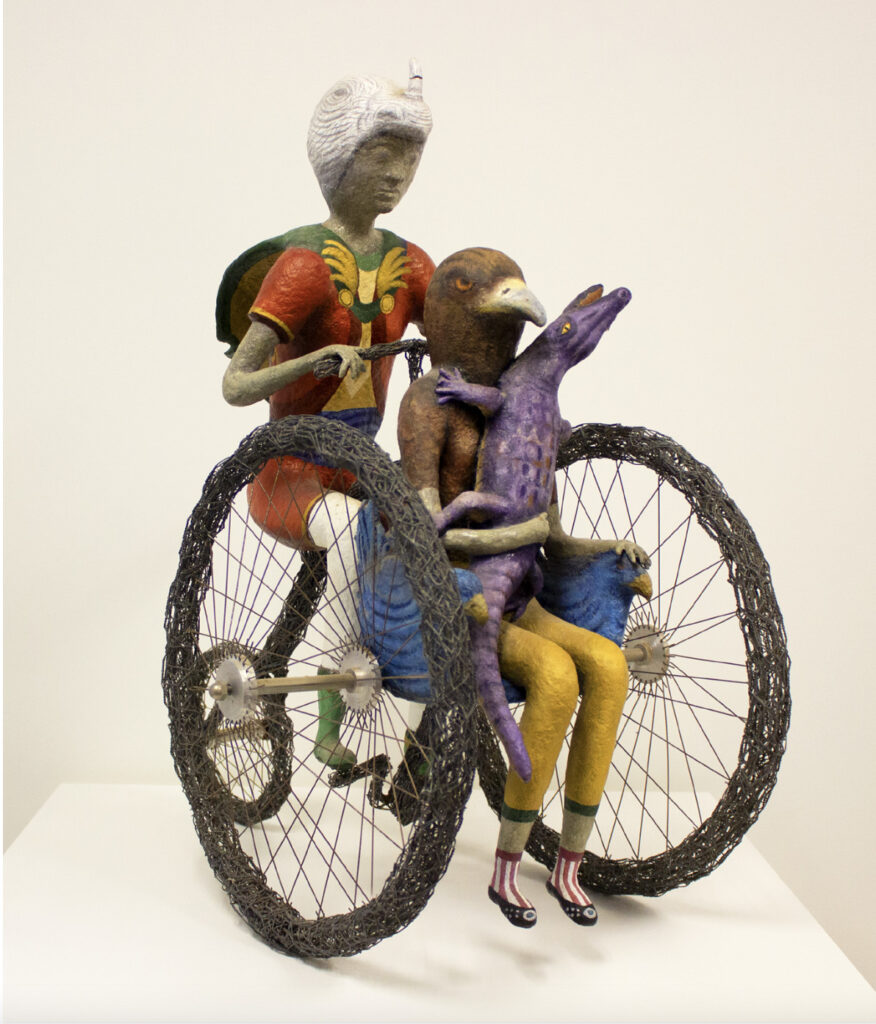
As the exhibit title indicates, Murray was an “eclectic” collector, said Alice Anne Schwab, SAM’s executive director. Her collection represents a varied mix of artistic styles, forms and thematic content among numerous local and regional artists, including F. L. Wall, Joan Danziger, Leon Berkowitz, Douglas Zucco, Theo Tobiasse and Ellen Siddons.

Prior to her involvement with the museum, Murray was a gallery owner in Wellsville, Pa. Under the tutelage of art expert Clyde McGeary, she began making trips to Philadelphia and New York City, where she visited various galleries. Through these encounters, Murray not only formed a bond with the owners but learned how the galleries operated.

Importantly, Schwab emphasized that the exhibit demonstrates the cross-beneficial relationship between collectors, museums, artists and the communities they serve.

In addition to helping found SAM, Murray made considerable financial contributions to the museum from 1988 to her death in 2005. When a lack of steady funds hampered SAM’s growth, Murray was one of the museum’s most consistent and generous donors, according to exhibit curator Alex Gabriel. And, in keeping with her family’s wishes, a Patricia L. Murray gallery has been added to the museum.

Murray also helped launch the VanGo! Museum on Wheels, a renovated RV that, to this day, brings the museum experience to students and other community members, especially in rural areas. Over the years, it has reached thousands of people with its onboard museum gallery, hands-on activities and other educational pursuits.

“The exhibit invites viewers to recognize Murray as an overtly positive force in the history of SAM and the greater Harrisburg art world,” Gabriel said.

“From Mantel to Museum: The Eclectic Legacy of Patricia L. Murray” runs through April 7 at the Susquehanna Art Museum, 1401 N. 3rd Street, Harrisburg. For more information, visit www.susquehannaartmusum.org.

If you like what we do, please support our work. Become a Friend of TheBurg!

Continue Reading

A Century of Connections: This year, Schaedler Yesco turns 100, but it’s still on a growth path

Show room, circa 1924.

Greg Schaedler has been part of his family’s electric supply business for as long as he can remember.

“I started working full-time for the business 25 years ago, but really, I’ve been here since birth,” he noted with a laugh.

CEO Schaedler is the fourth generation of his family to run Schaedler Yesco Distribution, a Harrisburg-based provider of “complete connected solutions for the electrical industry” now in its 100th year of continuous operation.

Central distribution Center, 1970s.

Officially, the business was founded in Steelton in 1924 by the Schaedler Brothers, but the family is said to have been rooted in the electrical business since the late 1800s. In fact, brothers Andrew and William served as electrical contractors for construction of the state Capitol building, completed in 1906.

Today, the company boasts 29 locations throughout Pennsylvania, Ohio and New York, offering services and solutions for lighting, datacomm, automation and industrial needs. The company has seen its greatest growth since merging with Yesco—York Electrical Supply Company—in 1999, but the expansion isn’t over yet.

Last year, Schaedler Yesco acquired five new locations, including those of Clarion Electric Supply, a 53-year-old business based in northwest Pennsylvania, and it opened a new regional distribution center in Pittsburgh. As a result, it ranked 22nd of the “Top Growing Companies in PA” for 2023, according to Kim Downs, the company’s director of marketing.

Likewise, the company’s products and services have expanded with each new acquisition, according to Schaedler Yesco President Farrah Mittel.

“We’re looking at geographical expansion, new markets and new verticals all the time,” she said.

Schaedler added that the company is “always looking for expansion through acquisition and (our) existing territory,” but the firm has “no set goal” for the number of locations.

“We’re just looking for a healthy, big growth,” he said.

So, what has allowed Schaedler Yesco to operate so successfully for a century?

“Our culture is what makes us different,” Downs said. “We think of our company as a part of the community. We only succeed when our customers succeed, and we take employee satisfaction as seriously as we take our customer satisfaction.”

As a result, Schaedler Yesco, for 16 years, has been named one of the “Best Places to Work in PA.” The annual award program, run by the Best Companies Group, identifies, recognizes and honors the state’s best places of employment benefitting Pennsylvania’s workforce and businesses.

Schaedler Yesco is also active in the local community, supporting a variety of organizations ranging from local theater and cultural programs to health-based groups, scouts, sports, outreach programs, first responders and others.

In addition, it supports diversity as a member of iBelongHere, an organization providing diversity and inclusion resources for the electrical industry.

During its 100 years of operation, Schaedler Yesco has seen many changes, with technology serving as the greatest catalyst, Schaedler said.

“When we first started, we were using paper for everything,” he said.

Mittel cited the most significant change as “automation of our practices, advances in our products and services, such as going from incandescent lighting to LED, and in our processes.”

As a matter of course, Schaedler Yesco has faced its share of challenges over the years, including, most recently, the COVID-19 pandemic and “the aftermath of supply chain issues,” Mittel pointed out.

“We’re still dealing with labor challenges and finding people,” Schaedler said.

Nonetheless, Schaedler stated that he and the business that his family founded have stood resolute in the face of a century of trials and plan to continue with the firm’s long-time growth strategy.

“I like that every day here is unique and presents a new challenge,” he said.

For more information about Schaedler Yesco Distribution, visit www.sydist.com or call 1-800-998-1621.

If you like what we do, please support our work. Become a Friend of TheBurg!

Continue Reading

Resting Easier: Pennsylvania Furniture Mission offers critical help for people transitioning to permanent housing

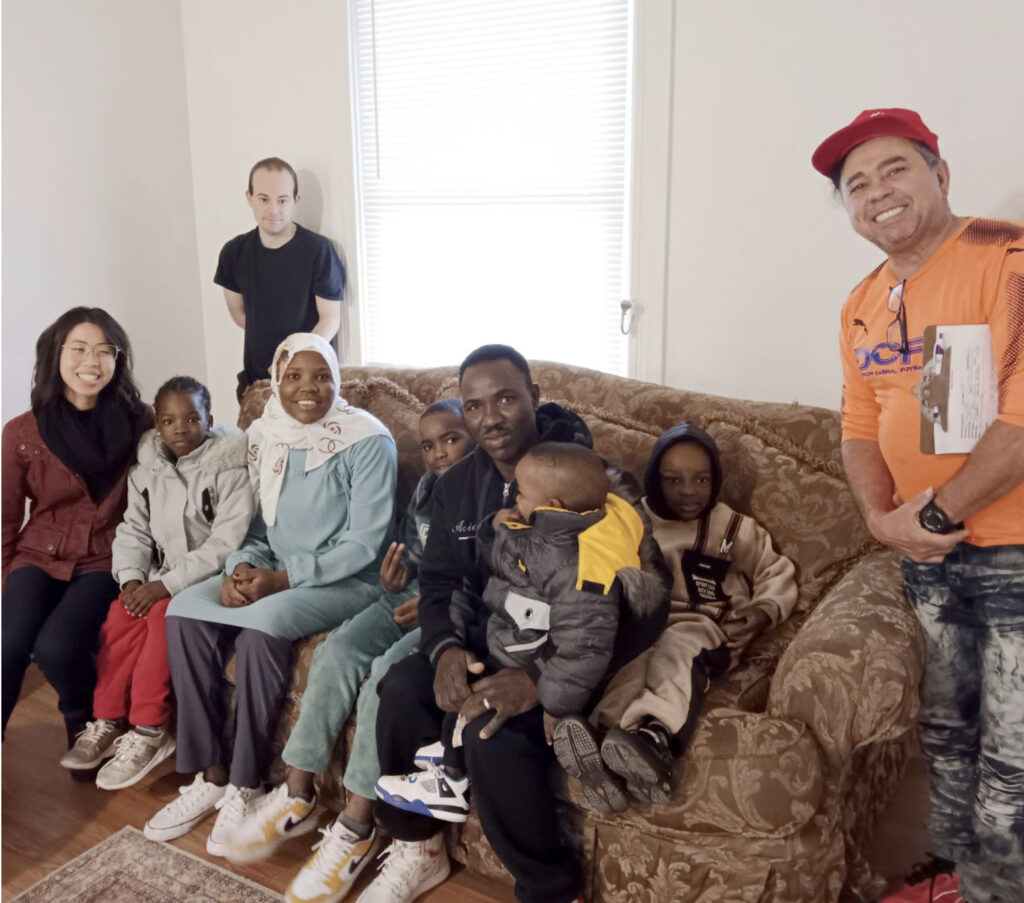
A furnished home for a Harrisburg family through Church World Services

Furniture helps make a house a home—and providing furniture to those without is the goal of Pennsylvania Furniture Mission.

Based in Columbia, the organization was founded just last year.

“We create warm and welcoming homes for residents of south-central Pennsylvania who are experiencing economic hardship or transitioning out of homelessness or poverty, by providing them with an entire household worth of furniture,” explained the executive director, Amanda Reilly-Sokoli.

Recently, Reilly-Sokoli and her Albanian-born husband Pashk Sokoli, co-founder and director of operations, made a decision to move back to this area. They brought with them Reilly-Sokoli’s experience as the director of operations of the Chicago Furniture Bank, the largest in the country.

“If we were going to return to Pennsylvania, to be close to family, which was important to us, it has to be for a reason,” Reilly-Sokoli said. “If we have this passion and we have this experience, we have to do something more. I kind of live by the idea that to whom much has been given, much is expected.”

The furniture bank serves six counties, the widest area of any furniture bank in the country, according to Reilly-Sokoli. The couple chose this area because of the need, but also because of the local populace.

“There are a lot of people that want to support this kind of mission and have the ability to donate time, talent and treasure,” Reilly-Sokoli said. “And that really enables the furniture bank to succeed.”

They accomplish their mission through over 45 local partner agencies. One of these is CWS Harrisburg, a refugee resettlement organization. Last year, the agency resettled over 125 families, all of them needing furniture.

Kim Hiles and Tara Lucido worked as housing specialists, responsible for finding housing for all of these families before moving into their current positions as employment specialists. They described Pennsylvania Furniture Mission as a game changer.

“I will sing their praises from the rooftops,” Lucido said.

Before Pennsylvania Furniture Mission, CWS Harrisburg received their furniture from a generous furniture bank in New Cumberland. But there was a big problem, namely, “having enough bodies to help carry,” Hiles said.

Thankfully, Pennsylvania Furniture Mission has pickup and delivery options. For a fee, they will deliver the furniture to the home. Without trucks, and with volunteer help, delivering furniture was a huge challenge.

“We had volunteers renting U-Hauls on their own,” Lucido said.


Need Everything

New Hope Ministries recently partnered with Pennsylvania Furniture Mission, and they have eight households ready to receive furniture.

With two new hires focused solely on getting folks into permanent housing, New Hope finds the furniture mission a welcome and needed addition to the community.

“When you’re putting a homeless family into permanent housing, they, whether they were living in their car, or living in a hotel, living with others, need everything—everything from a shower curtain to pots and pans,” said Sue Fornicola, program director at New Hope Ministries. “Furniture is one of the most expensive items that we need to help them with and being able to do this, [get furniture from the mission] will be a blessing to our guests.”

Families who receive furniture get to choose, which can be a very important step.

“When a lot of people are going through a hardship, a lot of that decision-making power is taken away in their lives,” Reilly-Sokoli said. “A lot of time, you have to go with whatever you can get, whatever job you can find, whatever apartment you can get.”

That community support comes in the form of furniture and financial donations. The mission will pick up furniture that folks want to donate, for a suggested donation fee. Why donate to have furniture picked up, when a person is already donating the furniture?

Storing furniture takes a ton of space, and that space must be lit, heated and maintained. Also, the mission employs three people. Providing jobs is another goal of the mission.

“To create jobs and job training opportunities for people with barriers to employment,” Reilly-Sokoli said.

People don’t have to opt for the pickup. They can drop off items directly to the mission, which will happily receive it.

They also receive furniture donations from businesses. The mission has a huge donation arriving from a hotel this month and, as a result, is looking for additional warehouse space.

As a fledgling operation, financial donations are crucial, as well. Reilly-Sokoli explained that grant options for new nonprofits are small until they can prove their viability. Grantors want to see “at least a year’s worth of bookkeeping,” she said.

Service organizations are pleased to have Pennsylvania Furniture Mission working with them to better the lives of those living here.

“I just feel that it’s an honor to have them here in Pennsylvania and that they are so willing to go above and beyond the needs of our guests,” Fornicola said. “Their heart, you can tell that their heart is for serving others.”

Pennsylvania Furniture Mission is located at 341 Chestnut St., Columbia. For more information and to donate, visit www.pennsylvaniafurnituremission.org.

If you like what we do, please support our work. Become a Friend of TheBurg!

Continue Reading

February Publisher’s Note

Save the Broad Street Market.

I never thought I’d have to write those words.

After the July fire, I was cautiously optimistic that the market, the community, the city would rebound quickly from the devastation, maybe even come back stronger than before. How wrong I was.

Since then, the news has gone from bad to worse: project delays, contractor problems, vendor departures and, now, financial woes.

In this column, I typically introduce the month’s issue, maybe share some observations, some highlights. But, this month, I want to use this space to make a plea to the community to support the vendors in the Broad Street Market’s stone building, which was untouched by the fire.

These vendors face a double whammy. Since the fire, business is way down, and now, to add insult to injury, the market’s future is uncertain.

How can you help? It’s simple—eat!

Several vendors have told me that they blame business loss, at least in part, on a misperception that the entire market is shut down. But that’s certainly not the case. The stone building, home mostly to prepared food vendors, is as open and great as ever.

Cheesesteaks? They got ‘em. Asian cuisine? Yep, several kinds. Pizza, tacos, seafood, burgers, Caribbean fare. It’s all there, some of the best food this side of the Susquehanna. And you can wash it all down with a locally brewed craft beer.

I don’t know what the future holds for the market. I hope that, at some point in the not-too-distant future, we can report an upswing, that things have taken a big turn for the better.

But don’t wait on that—you can do your part today. Yes, you can be part of saving the Broad Street Market.

Just go over to the stone building, assess your delicious options and chow down. After all, this is central PA—home of scrapple, whoopie pies and chubby, corn-fed children. I know you got this!

Lawrance Binda
Publisher/Editor

Click here to read the digital version of the February issue.

If you like what we do, please support our work. Become a Friend of TheBurg!

Continue Reading

Not Just Surviving, but Thriving: A community approach to supporting families

A rendering of the future Catherine Hershey Schools for Early Learning in Harrisburg

Those of us who are privileged to have spent our careers working with children and families or toward enhancing communities know that it can be a beguiling idea that somewhere, there is one solution that will enable everyone to thrive.

Later this year, Catherine Hershey Schools for Early Learning, a subsidiary of Milton Hershey School, will be opening an Early Childhood Education Center in Harrisburg, serving children from six weeks to age 5. With a high-quality early learning program and a family success approach (or two-generational approach), CHS will partner with families to support the growth of both children and their families, with all costs covered for those who qualify.

As the Family Partnership Manager at CHS, and with almost 20 years in the social work field, I am passionate about coming alongside families to identify long-term goals for both the family and child and partnering together to work toward them, connecting families to resources and programs that promote overall family health and enable long-term success.

It is clear that when you are serving children and families, having the right structures in place can support families in gaining the confidence and skills to support their child, and, ultimately, the entire family can thrive. Child development and learning occur in multiple contexts, including family, culture, language, community and the early learning setting — and early learning environments are just one part of that complex puzzle.

Children are more likely to flourish in a welcoming, safe and enriching environment at school and home. This often includes taking an approach that recognizes the need to support the whole child. But what does that look like? It comes down, simply, to identifying needs and determining a plan of action.


Identifying Barriers

Of course, the complex web of barriers families face is anything but simple. However, identifying them is the first step to building a plan.

Lack of family resources can encompass a range of factors, from financial constraints to limited access to transportation, childcare, or social support.

Personal development also plays a role: families may need support in planning, organization, and time management skills. This could involve offering workshops, mentoring or guidance to help them effectively translate their goals into actionable steps.

And let’s not forget emotional support. Living in crisis or chronic stress prevents the family from building the resilience needed to thrive in challenging situations. Interventions that address immediate needs and provide strategies for coping with stress can lay the groundwork for a brighter future.

We want to balance that with helping families build a stable foundation of basic needs (Maslow’s hierarchy), which acknowledges that these are prerequisites for effective learning and growth. It can be easy to judge families from the outside and be critical that they are not focusing on cognitive skills and educational achievement (what we call the Bloom model.)


Building Structures

Ultimately, understanding and responding to the diverse challenges families may face enable us to connect families to the people or services they need.

Empowering families, whether through mentoring or coaching, will enable families to support their children and advocate for them throughout their educational journey and beyond.

One way we can understand our families is through conducting home visits. This approach recognizes the importance of the home environment and allows for more personalized guidance tailored to the family’s specific needs.

Consistency is an essential element for child learning and behavior. Building skills both in the classroom and at home is an effective way to help families cope better with stress.

Some families face additional challenges: single fathers, teen parents and those with English as a second language need specific support that recognizes diverse family structures and backgrounds.

But one thing remains the same. Developing a warm and welcoming approach to families in early childhood programs or other family-serving programs is foundational to relationship building. This approach sets the stage for children’s growth and the establishment of community connections and collaboration.

Yes, there are many barriers, but if there is one solution, it lies in community partnerships. Community partnerships mean that together, we can help build the scaffolds to support healthy families and healthy families grow, learn and change trajectories for everyone.

Lindsay Knepp is the Family Partnership Manager at Catherine Hershey Schools for Early Learning, President of the Pennsylvania School Social Work Personnel (PASSWP) Board, and the 2019 PASSWP School Social Worker/Home School Visitor of the Year.


If you like what we do, please support our work. Become a Friend of TheBurg!

Continue Reading