Federal agency objects to proposed sale of Harrisburg’s Governor’s Square, hearing postponed

Photo by Dani Fresh

The sale of a blighted, bankrupt affordable housing development in Harrisburg has been postponed and is facing significant resistance.

On Tuesday, this week’s scheduled bankruptcy court hearing to finalize the sale of the Residences at Governor’s Square was continued until April. Additionally, the U.S. Department of Housing and Urban Development (HUD) recently joined Harrisburg and several Governor’s Square tenants in objecting to the proposed sale.

Uptown Partners, the owners of Governor’s Square, filed for bankruptcy in May. For years, tenants dealt with quality-of-life issues in the units, and the property has received hundreds of city code citations and condemnations.

The final hearing to determine a buyer has been continued from Feb. 29 to April 2 at 10:30 a.m. in the U.S. Bankruptcy Court for the Middle District of Pennsylvania.

In January, the owner identified a potential buyer for the development, New Jersey-based real estate company ANCDI, according to court documents. The company made an offer of $9.6 million at a Jan. 10 auction.

Last week, HUD filed an objection to the sale, stating that the proposed buyer has failed to agree to HUD’s conditions for their approval. According to HUD, it has a right to approve the sale of Governor’s Square because of its ties to the development. Years ago, HUD sold the property to Uptown Partners in exchange for deed restrictions and covenants to keep the housing affordable, in addition to providing the owner with multi-million-dollar loans to aid in redevelopment.

In the court documents, HUD also states that it has a right to receive a portion of the proceeds from the sale of Governor’s Square, but that the proposed owner has not made it clear whether they would honor that.

Additionally, HUD objected to the uncertainty of the language in the proposed sale order, which says that Governor’s Square must be sold “free and clear of any liens, claims, interest and encumbrances of every kind or nature whatsoever.” HUD’s objection said that the buyer must make it clear that they intend to maintain the property as affordable housing in keeping with the restrictive covenants.

Last month, Harrisburg also objected to the sale, in addition to three people, two of whom hold tenant leases at Governor’s Square.

Both objectors also expressed concern about keeping Governor’s Square affordable and stated, in court documents, that they didn’t believe ANCDI had adequate experience with low-income housing development.


If you like what we do, please support our work. Become a Friend of TheBurg!     


Continue Reading

Harrisburg School District to reconfigure several buildings, grades

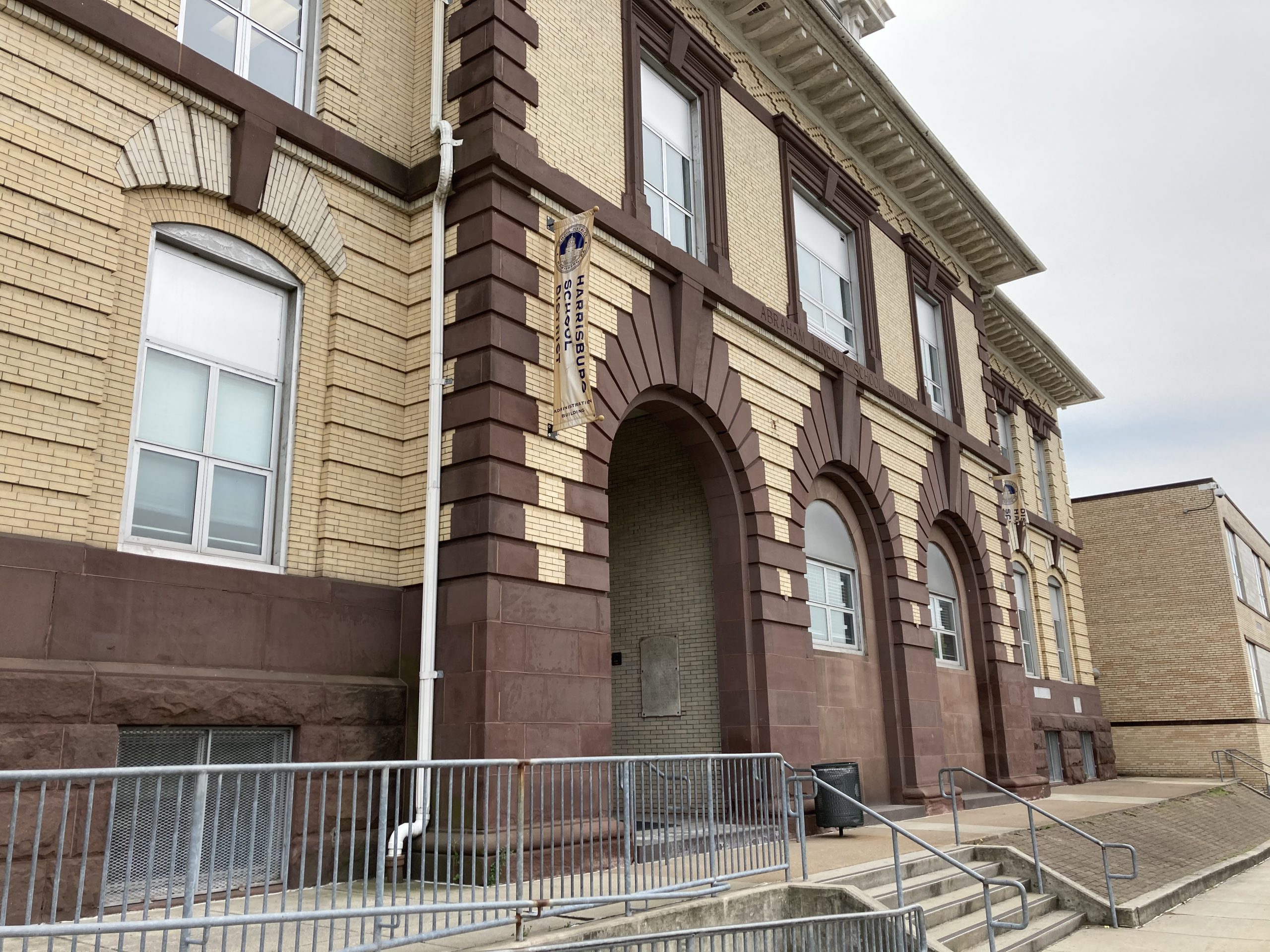
Harrisburg School District’s Lincoln Administration Building (file photo)

The Harrisburg School District’s building configuration will look different in the coming year.

At a board meeting on Tuesday, Receiver Dr. Lori Suski approved the opening of some school buildings, the closing of others and the moving of several grades to different buildings for the 2024-25 academic year.

At a meeting in November 2023, Superintendent Eric Turman presented several options for reconfiguration, which he said would help balance student populations at each building, create neighborhood schools on the elementary level, and allow the district to prioritize facility improvements at certain buildings.

Suski approved the plan, which includes removing students from Scott Elementary School and repurposing the building. Additionally, the Lincoln Administration Building will be used as an elementary school. The plan also includes phasing out Rowland Intermediate School over three years and moving those students to Camp Curtin Middle School.

In addition, the plan includes enrolling only 6th through 8th grade students at Marshall Math Science Academy, which currently includes 5th grade. Cougar Academy, which is currently housed in the Lincoln building, will move to the Hamilton building on N. 6th Street, replacing the Specialized Services Education, Inc. program, which will move to Scott temporarily.

At the meeting, several board members and a few community members raised concerns around the reconfiguration, specifically combining both middle schools in one building.

“The rationale is to move all the students from the two schools with the most behavioral issues into one school and then say that the teachers have told you they don’t have any concerns about it; that doesn’t make any sense to me,” said board member Danielle Robinson.

Several other board members made comments about the increased number of students, an estimated 900, who would be attending the school and about the lack of community feedback on the plan.

According to John Reedy, chief of operations for the district, Camp Curtin would not reach capacity, but would be at about 79% of building capacity.

Suski also stated that she believed that there was sufficient room for students in the building and that several other local middle schools have comparable numbers of students.

Turman also justified the decision by sharing that the district wants to move students out of Scott and Rowland, two schools that were originally designed as office buildings, not constructed to house students.

“We are going to work as hard as possible to make sure there are no issues at Camp Curtin,” Turman said. “It’s very important to all of us to make sure we make this work because we know at the end of the day is what’s best for the students of Harrisburg.”

According to Turman, the Harrisburg Education Association, the teachers’ union, expressed support for the plan.

The alternative to the middle school reconfiguration would be to renovate Rowland, district officials explained. However, Reedy said that it would likely cost over $15 million to renovate Rowland, according to a recent feasibility study by the district that outlined upgrades needed to buildings to keep them operational.

In the end, Suski approved the reconfiguration. Next, she said, the plan must be submitted to the state Department of Education for approval.

Also wrapped up in the reconfiguration is the re-opening of Steele Elementary School, a long-vacant building that the district has been renovating. Steele will contribute to creating more neighborhood-based schools on the elementary level, Turman explained.

Also on Tuesday, Suski approved the sale of 42 acres of the district’s land at 1901 Wayne Ave. in Susquehanna Township to the Susquehanna Township School District, which plans to construct a middle school on the property, according to district officials. The Dauphin County Court of Common Pleas ultimately will need to approve the sale.


If you like what we do, please support our work. Become a Friend of TheBurg!     

Continue Reading

Struggle for Survival: Resistance against Nazis highlights festival film

A scene from ‘Four Winters’

One of the burning questions people ask about the Holocaust is why more Jews didn’t resist Nazi persecution and mass murder.

Nobel Prize laureate and Holocaust survivor Elie Wiesel suggested a reframing.

“The question is not why all the Jews did not fight, but how so many of them did,” he said “Tormented, beaten, starved, where did they find the strength—spiritual and physical—to resist?”

Yet, many did. There were ghetto uprisings—the Warsaw ghetto was the most famous but not alone—and uprisings in three death camps. There were Jews who refused to hand over other Jews for deportation. Some fought in national resistance movements, while others resisted spiritually by creating Jewish cultural institutions and continuing to observe holidays and rituals. And Jews helped each other survive.

There were also Jews, many still in their teens, who escaped from the ghettos into the forests, where they joined other partisan groups or formed units of their own.

Julia Mintz’s documentary, “Four Winters: A Story of Jewish Partisan Resistance and Bravery in WWII,” gives voice to the latter. It is also the March offering—on the ninth and 10th of the month—of the Edward S. Finkelstein Harrisburg Jewish Film Festival.

The partisans, probably numbering 25,000 to 30,000, consisted mostly of very young men and women who fought deep in the forests of Eastern Europe, Ukraine and Belarus. Sometimes, their groups were small. Others, like the Bielskis, drew hundreds of members.

Mintz interviewed eight former partisans—now elderly—who appear on camera. Others contributed offscreen. And a “lot of research bolstered the interviews,” she said.

The “four winters” in the film title refer to the frigid conditions these young people braved, year in and year out, until the end of the war, and their commitment to that end.

A scene from ‘Four Winters’

There were forays into neighboring villages from the forest seeking weapons or something to eat, not knowing whether the people they’d encounter would be sympathetic or Nazi collaborators. And when they did get food, it didn’t necessarily meet Jewish dietary standards. Laughing, one of the former partisans said, “I keep kosher now.”

Added Mintz, being a partisan meant “breaking the 10 Commandments.”

Above all, there was the challenge of undergoing a transformation from young innocents to brave resistance fighters. But they felt they had no choice.

“We were high on survival,” said one of the former partisans.

Mintz, whose work focuses on narratives of bravery and resistance against unimaginable odds, has been on the producing teams for films shortlisted for the Academy Awards. She will be in Harrisburg to speak, live, at the screenings of “Four Winters.”


Shared Experience

This year, the Harrisburg Jewish Film Festival is, for the first time, offered as a film series, one weekend a month through June, rather than as an eight-day festival. The festival began in October, said chair Julie Sherman.

“We’re four very memorable films down, six more to go,” she said.

The films are presented live on Saturday nights at the Alexander Grass Campus for Jewish Life and Sunday afternoons at Midtown Cinema, both in Harrisburg.

Remaining festival offerings include “Remembering Gene Wilder,” a tribute to the beloved comic actor (April 6 to 7); “Perfect Strangers along with Madame Rosa,” the book club feature (May 4 to 5); and “Less Than Kosher” (June 1 to 2).

The first film directed by Israeli movie star Lior Ashkenazi, “Perfect Strangers” is the story of a group of friends who play a risky game—they toss their cell phones into the center of the table, and every message or call received is revealed for all to see. The Israeli version of “Perfect Strangers” is part of a greater phenomenon. It began as a 2016 Italian film that struck a universal chord, adapted more than a dozen times in diverse cultures.

“Madame Rosa,” released originally in 1977 and based on the book, “The Life Before Us” by Romain Gary, stars Simone Signoret as an elderly Holocaust survivor and former prostitute who cares for the children of other prostitutes.

“Less Than Kosher” is a Canadian movie about a failed singer whose life changes radically when she assumes the role of cantor at her family’s synagogue. The creator and star of the piece, Shaina Silver-Baird, will appear, live, with the film.

“Finally, people are coming back to the movies,” Sherman said. “We’re really pleased with our film selection this season, but really, the most exciting aspect of the festival is having our audience together in one room, sharing the experience.”

The Alexander Grass Campus for Jewish Life is located at 2986 N. 2nd St., Harrisburg. Midtown Cinema is located at 250 Reily St., Harrisburg.

Tickets for all 2023-24 screenings at the Grass Campus are available now. Midtown Cinema tickets will be available online two weeks before each screening. For more information, visit www.hbgjff.com.

If you like what we do, please support our work. Become a Friend of TheBurg!


Continue Reading

Paint by Nature: Local creators, groups use art to advocate for, promote environmentalism

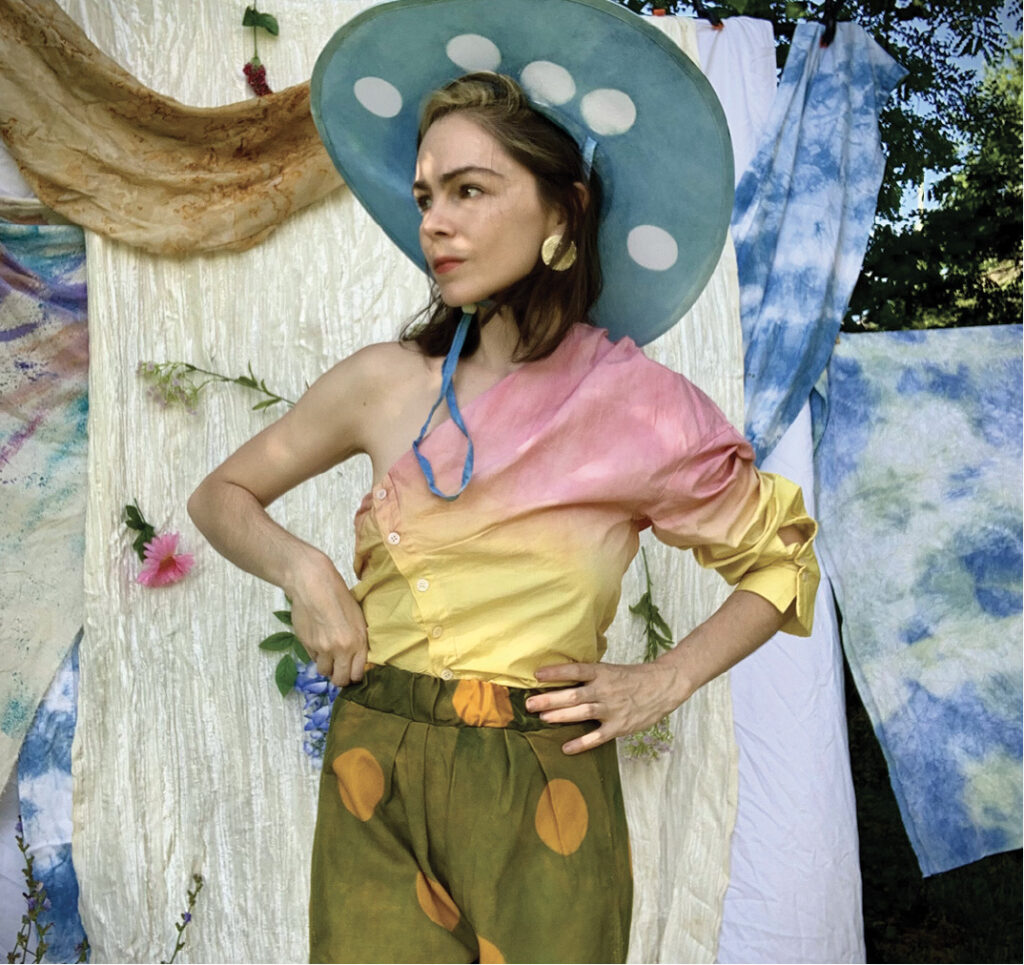
Naturally dyed fabric by Jovana Sarver

Harrisburg-based artist Jovana Sarver doesn’t let an onionskin, avocado pit or rose petal go to waste.

While most people are quick to toss them into the trash once peeled, plucked or withered, Sarver sees their potential. She takes cast-aside items and makes them her medium.

Sarver take pride in her natural fabric dying technique—as opposed to synthetic—that she uses to create one-of-a-kind pieces of clothing under the name Dirt Petal. Over time, she’s found that red onionskin, interestingly, can create a vibrant green dye, avocado skins and pits elicit a dusty pink, and florals make a rainbow assortment.

Jovana Sarver

As much as Sarver loves the “magic” of experimentation and crafting dye recipes out of nature, her art has a larger purpose—promoting re-use over destruction.

“It’s a way of working with abundance and natural resources,” she said. “You’re using something that already exists. There’s a greater positive impact.”

Sarver isn’t the only artist interested in making an environmental impact through her work. Art groups, organizations and creators in central Pa. are using their talents to get people to think deeper about nature—its beauty, but also the threats to its harmony.

For Sarver, that means avoiding synthetic dyes, which, she said, are artificially made using fossil fuels, and, instead, using natural dyes and fabrics, many of which are upcycled and vintage. Her choice of materials also won’t harm the land when they’re eventually returned to it, she noted.

Wearable art is unique in that it’s a “living gallery,” Sarver said, and that’s what she loves about it. Her canvases range from graphic T-shirts to slip dresses, ankle socks, blouses and matching sweat sets. Each piece is different, and she utilizes a variety of dying techniques. Some clothing items are hand-painted with color blocking, some are eco-printed with plant patterns and others are tie-dyed.

“When people see my work and know that it’s made with natural dyes, it blows their minds,” Sarver said. “It creates a lot of curiosity and deepens people’s attention to their environment.”

Pen-and-ink drawing by Ned Smith

Best of Both Worlds

Over Peter’s Mountain and tucked away in Millersburg is the Ned Smith Center for Nature and Art.

If the name didn’t immediately give it away, the center brings together brush and bark for art and environmental education. Specifically, the facility serves as a memorial to the late Ned Smith, a local artist and naturalist.

“He drew inspiration from what he saw and photographed,” said the center’s archivist, Alexis Rich. “Protecting wildlife was important to him.”

Smith’s paintings, which are permanently on display in the center’s gallery, depict moose in a forest, bluebirds feeding their babies, a pair of foxes on a snowy bluff, and many other nature scenes.

Emily Rosmus, director of educational programming at the center, was always interested in art and nature, but didn’t realize she could combine both of those passions in a career. Having previously worked at nature centers, she came to the Ned Smith Center interested in the way it incorporated art education.

“I can’t say I’ve been to a place like this,” Rosmus said. “We focus on those two aspects so distinctly.”

Rosmus uses Smith’s art to teach students, who come to the center for summer camps and field trips, about wildlife, introducing them to creatures and plants. The staff will then take them for nature walks, pointing out animal tracks, mushrooms, snakes and birds.

When a student is more interested in nature, the more they will care about its wellbeing, she explained.

“It gives them more appreciation for when we take them into the woods,” she said. “We are guests there, it’s not our territory. We try to do our best by leading by example.”

While Smith died in 1985, Rosmus believes that, had he still been alive today, Smith would be concerned about threats to the environment, specifically, climate change.

“Based on what we know about Ned, I think he would be very alarmed,” she said.


Impact Change

When Martha Taylor retired, she finally had the time to pursue a long-time interest of hers—painting.

Then she heard about the Farmland Preservation Artists of Central Pennsylvania, a group that works to promote the preservation of the land through their art. Taylor grew up going to her grandparents’ dairy farm, so the thought of combining her two interests made getting involved in the art group an easy decision.

The group, which formed in 2005 as a joint effort between the Art Alliance of Central Pennsylvania and the Centre County Farmland Trust, is made up of about 18 artists. They travel around the region painting farm scenery, produce and animals, and they host a few exhibits each year.

Taylor and her fellow artists also sell their paintings to raise money for the art alliance and farmland trust, although the education and advocacy work is even more important to them.

“I really started to see a lot of development at places I remember as rural farmland,” Taylor said. “I think it’s important to maintain farmland, not just for food security, but for the sense of place.”

A selection of the group’s work, 51 pieces, was showcased in the state Capitol building this past October. That exhibit was especially meaningful to Taylor as they were able to get their art in front of lawmakers.

“That was a big step forward in our efforts,” she said. “I feel like we were being seen by the people that make the decisions.”

Ultimately, being seen is what all of the artists and organizations advocating for the environment want. To them, getting eyes on their art is deeper than receiving personal recognition, as viewers ponder their message.

Sarver, for one, is excited about her recent collaboration with a large company to develop natural dye recipes for their use. Designers from clothing brand Alexander McQueen commissioned also a piece from her.

“I’m seeing the bigger industries try to adapt,” she said. “That gives me hope that companies want to change.”

Whether it’s through opportunities like this, or through smaller instances, like staff at the Ned Smith Center seeing a child’s wonder and curiosity of nature sparked, art has a chance to make a difference.

“It gives me a great sense of responsibility and pride that I can use art to impact change,” Sarver said.

For more information about Jovana Sarver and Dirt Petal, visit www.dirtpetal.com or find her work for sale at Found Collab, 25 S. 3rd St., Harrisburg.

The Ned Smith Center is located at 176 Water Company Rd., Millersburg. For more information, visit www.nedsmithcenter.org.

To learn more about the Farmland Preservation Artists of Central Pennsylvania and upcoming exhibits, visit www.artallianceofcentralpa.org/farmland-preservation-artists-central-pa.

Stories on environmental subjects are proudly sponsored by LCSMWA. 

If you like what we do, please support our work. Become a Friend of TheBurg!

Continue Reading

Solace & Solidarity: Part of this month’s Good at Heart Festival, “Mary Speaks” offers a “classic story of a mother’s love”

Angela Polite. Photo courtesy of Angela Polite.

In tumultuous times, Angela Polite’s one-woman show, “Mary Speaks,” is a powerful testament to the enduring strength of Black mothers and their sons.

The New York actor is bringing her play to Open Stage this month for seven performances.

“I began to write ‘Mary Speaks’ in August 2015,” Polite said. “The rash of shootings of unarmed Black men over three years came to a tipping point with the death of Mike Brown in Ferguson, Mo. That one incident pushed pen to paper.”

That scorching, violent summer, Polite found solace in the timeless tale of Mary, the mother of Jesus, as a poignant parallel to the anguish of Black mothers throughout history.

“I had read reports that Brown’s mother tried desperately to get through the crowd to see if the body was indeed her son. Something in the story felt familiar,” Polite recalled. “In that moment, I saw Mary at the foot of the cross, and it hit me—all of these Black mothers were Mary.”

While grounded in biblical allegory, “Mary Speaks” transcends religious boundaries, offering a narrative that speaks to the universal experience of motherly love.

“It’s not a religious play,” Polite said. “It is the classic story of a mother’s love. Everyone can relate to that.”

With a career spanning 15 years, Polite’s passion for performance runs deep, rooted in her upbringing in Charleston, S.C. Yet, it is her unwavering commitment to telling stories that resonate with audiences on a profound level that sets “Mary Speaks” apart.

“Black mothers have always been in mourning for their sons,” she said. “The killing of unarmed Black men is nothing new. I hope there comes a time when this play is no longer relevant.”

Drawing inspiration from the Black Lives Matter movement, “Mary Speaks” stands as a beacon of resilience and empowerment, inviting audiences to bear witness to the untold stories of marginalized communities.

“The message of BLM is simply ‘we matter,’” Polite said. “And if we matter, then our stories matter. Art remains the powerful tool through which we can do that.”

As patrons prepare to embark on this transformative journey, Polite offers a glimpse into what they can expect.

“People can expect to be invited in,” she said. “This journey is just as much about the character as it is about the audience. There are highs and lows. Buckle up!”

In a world fraught with uncertainty, “Mary Speaks” offers solace and solidarity, reminding us of the enduring power of love, resilience and the human spirit. The production is part of Open Stage’s second annual “Good at Heart Festival.”

Centered around the theatre company’s 24th annual production of “The Diary of Anne Frank,” the festival focuses on social and racial justice conversations and art, inspired by Anne Frank’s quote, “In spite of everything I still believe that people are really good at heart.”

Experience the transcendent stories of the Good at Heart Festival firsthand with a series of performances and discussions this March.

“Mary Speaks” runs March 23 to 30 at Open Stage, 25 N. Court St., Harrisburg. “The Good at Heart Festival” runs March 19 to 23. For more information, visit www.openstagehbg.com.

Stuart Landon is Open Stage’s artistic director.


UPCOMING EVENTS 

At Open Stage
www.openstagehbg.com
717-232-6736

The 2nd Annual Good at Heart Festival
A week of art and conversation celebrating the spirit of Anne Frank
March 19 to 24

“The Diary of Anne Frank”
Open Stage brings this important play back for its 24th season
March 19 to 22
ASL interpreted performance Thursday, March 21 at 7:30 p.m.

Black NewsBeat with Dr Kimeka Campbell
Join the live studio audience.
Wednesday, March 6 at 7 p.m.
Tuesday, March 19 at 7 p.m.

EFF Live!
A night of naughty fanfic readings
Sunday, March 17 at 7:30 p.m.

“Mary Speaks”
A bold new take on the timeless story of Mother Mary and her son
March 23 to 30
ASL interpreted performance Sunday, March 24 at 2 p.m.


If you like what we do, please support our work. Become a Friend of TheBurg!

Continue Reading

Historically Speaking: In Harrisburg, much has been lost–but much has been saved, too

Illustration by Rich Hauck.

Each winter, I get to cover one of my favorite annual news stories.

As an old building buff, I look forward to Historic Harrisburg Association’s “Preservation Priorities,” a list of endangered historic properties that the organization updates every year.

First, I watch the presentation then I write a story detailing what’s in, what’s out, what’s old, what’s new for the year.

For 2024, the William Penn building topped the list (natch!), followed by the former Harrisburg State Hospital grounds and then our beloved, if beaten down, Broad Street Market.

The rest of the list reads like a who’s who of our area’s blighted, beleaguered and broken. The 30 or so properties on the “priority” and “watch” lists include everything from 19th-century mansions to historic bridges to old churches, schools and fire houses.

The common thread: all need new love, new life and, often, a new owner—as well as tons of money and vision to go from forlorn to fixed.

As much as I enjoy the presentation, I’m often left feeling empty afterwards, given the tragedy inherent in broken-down buildings and in how many linger on the list from year to year.

Last year, in this space, I expressed some of that frustration by emphasizing the negative—the loss of so many of downtown Harrisburg’s once-beautiful buildings, which has left, in its wake, an abstract jumble of structures, parking garages and empty lots. I did that to contrast our situation with that of Lancaster, a thriving small city whose historic core remains largely intact.

I stand by my opinion that Lancaster’s success can be credited, at least in part, to the retention and restoration of its federal and Victorian-era built environment.

However, this year, in this column, I want to flip that script.

When I arrived in Harrisburg in 2009, I remember my first walk through Midtown.

On a bitter, mid-winter day, I took a stroll up 3rd Street, starting at Forster and ending at Reily, before winding back, mostly to check out this new city I had landed in.

On that walk, I felt a bit like Gary Cooper in “High Noon.” In the climax to that 1952 film, Cooper’s character, Marshall Will Kane, walks down the main street alone, the dusty road deserted of townspeople, who have sealed themselves up inside their homes and businesses.

My walk felt just as forlorn. I wandered the street without encountering a soul, passing one boarded-up building after another. I wouldn’t have been surprised if a tumbleweed or two had come bouncing by.

Had I just waited 15 years, until 2024, I would have had an entirely different experience. Since that first walk, the boards have been ripped off and the buildings brought back, including for all of the landmark structures along that half-mile stretch.

Some of these restorations and adaptive reuses are truly remarkable.

Arguably, the new era dawned when GreenWorks Development turned the enormous Evangelical Press Building into beautiful classroom space. Down the street, Midtown Scholar then remade a forlorn retail strip into one of the best independent bookstores in the country. Two blocks away, H*MAC took on the daunting challenge of reviving the shuttered, sprawling PAL building, resulting in an extraordinary transformation into a live music venue, restaurant and bar.

The list continues: ModernRugs, Susquehanna Art Museum, Pursuit/Union Lofts, Carpets & Draperies, COBA, Millworks. On that day 15 years ago, I walked past all of these buildings, which, at the time, were unused, unloved and falling apart.

Even better—these have all been discrete projects, not done by some mega-developer or large corporation, but, one by one, by local people who have poured their time, dollars and souls into them.

So, yeah, sometimes I need to slap myself out of my funk. Am I upset that, for the nth straight year, the 200-year-old Balsley House downtown continues to deteriorate? I sure am. But we need to celebrate our wins, too—and those wins have been real and substantial.

As he introduced the 2024 version of “Preservation Priorities,” Historic Harrisburg Executive Director David Morrison explained why his organization undertakes this exercise each year.

“By compiling this list and publicizing it, it has played a very significant role in encouraging these important properties to be preserved,” he said. “When we publicize them, sometimes it spurs the owner into doing something about it. Sometimes, it spurs somebody to look into purchasing the property. So, it’s a very effective tool for promoting historic preservation.”
Agreed. Now, let’s take it from here, Harrisburg.

Lawrance Binda is publisher and editor of TheBurg.

If you like what we do, please support our work. Become a Friend of TheBurg!

Continue Reading

March Publisher’s Note

Last month, in this space, I did something a bit different.

Typically, I use my introductory column to say a few things about the new issue of TheBurg or maybe throw in a seasonal reference—for instance, mentioning for the umpteenth time how much I look forward to spring, to warmer weather and to longer days (still true).

But last month, I issued a call to action. I asked the fine people of central Pa. to do something specific—to eat—and to do that eating at Harrisburg’s Broad Street Market. So, in this column, I would like to thank everyone who heeded this call.

I was pleased that my prior column was widely shared on social media and, if nothing else, reminded people that the market’s stone building, which mostly houses prepared food vendors, is very much open, despite last summer’s fire.

Over the past month, I’ve heard some positive feedback from several vendors, who reported that business has ticked up.

Now, I don’t have evidence that I’m even partly responsible for this. The Broad Street Market has been in the news a lot recently, and it’s possible that all this press (even the negative kind) made people realize that half of the market remains open and that these determined, struggling vendors should be supported.

As I mentioned last month, you’ll never find an easier, tastier way to back a worthy cause, as the food is, almost without exception, delicious. I like it so much when everyone wins.

So, now, I will return to form and wish everyone a joyous start to spring. This month, there’s plenty to do in Harrisburg, from the Ice & Fire Festival to the St. Patrick’s Day parade to a walk along the riverfront on a mild afternoon. Just make sure to loop in a market call as you make your way around the city. Your taste buds will thank you.

Lawrance Binda
Publisher/Editor

Click here to read the digital version of our March issue.

If you like what we do, please support our work. Become a Friend of TheBurg!

Continue Reading

Fast, Funny, Sexy: “Pride and Prejudice” offers a perfect match at Gamut Theatre

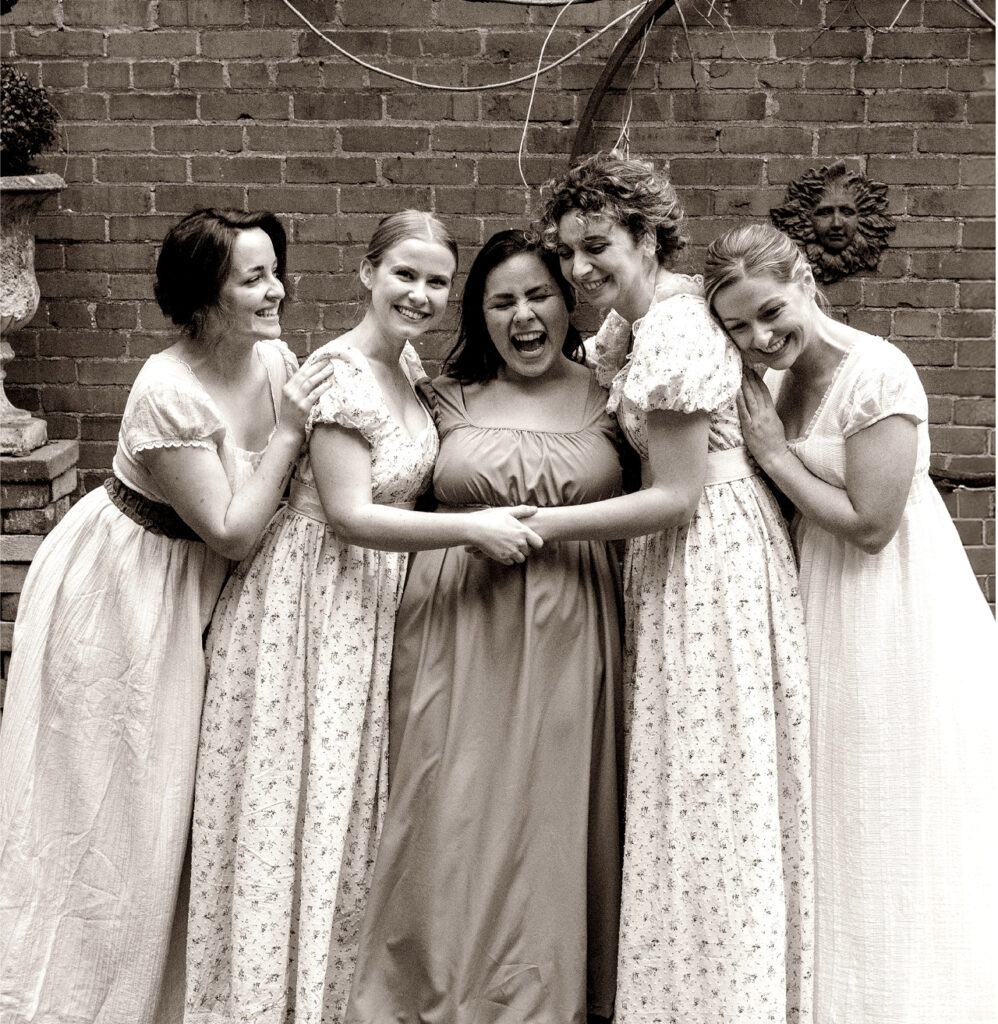
Maggie Haynes, Allie Willhouse, Grace Hoover, Lexi Fazzolari & Erin Shellenberger. Photo by John Bivins Photography.

Can you imagine if Elizabeth Bennet and Mr. Darcy were on the dating apps?

Darcy’s profile: “Rich, single, shy guy, hates to dance, not looking for romance, be perfect or else.”

And Elizabeth? “Second-best Bennet sister, literally no intention of getting into a serious relationship, will make fun of you to your face, deeply flawed and won’t apologize for it.”

Not exactly a match made in heaven, and yet (as we all know) Darcy and Elizabeth will end up together. In fact, they are among the most famous romantic pairings in literature—despite (or maybe because of) how agonizingly long it takes them to push past their prejudices and admit how much they admire and love one another.

For Francesca Amendolia, director of Gamut Theatre’s upcoming production of “Pride and Prejudice,” that makes this a love story worth telling.

“Darcy and Elizabeth seem like a couple who might actually make it—unlike Romeo and Juliet, unlike Catherine and Heathcliff, unlike so many other ‘romantic’ happy-ever-afters that don’t seem predicated on growth or mutual respect or real love,” Amendolia said.

Of course, in Kate Hamill’s play, as in Jane Austen’s novel, love takes a back seat to marriage. Love is nice, but it’s marriage that will keep women safe, fed and housed. So, going to balls, flirting with soldiers, meeting rich gentlemen—enticing and captivating and capturing and securing—this is a young woman’s purpose, her job. Hamill’s take on Austen’s most famous story makes it very clear both how much this is a game and how deadly serious it is.

“I don’t love this expression, but it is true that this is not your granny’s ‘Pride and Prejudice.’ It’s fast, funny, lively, sexy even,” Amendolia said. “Telling classic stories in new and interesting ways is Gamut’s whole mission, and that’s what Kate Hamill does, too.”

In this case, “new and interesting” means mounting a production of a beloved Regency romance without using English accents or asking actors to cover their tattoos. Amendolia gets that this choice is not likely to be everyone’s cup of Earl Grey, but hopes audiences will find themselves more drawn in, more invested.

“Yes, Americans love British stories and accents, but that doesn’t mean we here in central Pa. are obliged to alter our vowel sounds to truthfully tell a story about five sisters, their determined mother, a handful of eligible bachelors, and a judgmental relative or two—or three,” Amendolia said. “That’s a story a lot of us live some version of.”

“Pride and Prejudice” is a story that matters here and now as much as it did there and then.

“Marriage is still a financial contract as well as a romantic ideal,” Amendolia pointed out. “We’re still selling young people a bill of goods—the idea that marriage is their ultimate social and emotional goal—when there are so many other ways to live full, rich and fulfilling lives.”

Don’t think, however, that any of this means Gamut’s “Pride and Prejudice” won’t be serving full-on “Bridgerton” with oodles of lovely dresses, well-fitted brocade vests, lace handkerchiefs and maybe even a couple of top hats.

“Truthfully, ‘Bridgerton’ has been an inspiration in more ways than one,” Amendolia said. “Costume dramas don’t need to perfectly replicate the past and are often more interesting when they don’t.”

That’s another thing Hamill’s adaptation invites audiences to think about—the pointlessness of perfection. Elizabeth’s sister, Jane, dreamily defines love as a “perfect understanding between souls—wordless and faultless.” Darcy says that he has never found fault with too much perfection, and Lizzy laughs at the whole notion: “Pictures of perfection,” she says, “make me sick and wicked.”

Austen and Hamill both want us to know that there is no such thing as a “perfect” match. Great relationships are created through love and labor, patience and persistence—much like great novels. Or great plays.

“Pride and Prejudice” runs March 9 to March 24 at Gamut Theatre, 15 N. 4th St., Harrisburg. For more information and tickets, visit www.gamuttheatre.org/pride-and-prejudice.


UPCOMING EVENTS

At Gamut Theatre
www.gamuttheatre.org
717-238-4111

TMI Improv
March 1 at 7:30 p.m.

“Pride and Prejudice”
March 9 to 24
Fridays and Saturdays at 7:30 p.m.
Sundays at 2:30 p.m.

If you like what we do, please support our work. Become a Friend of TheBurg!

Continue Reading

No Signs of Thinning: 30 years of music, friendship and hijinks with The Bad Toupees

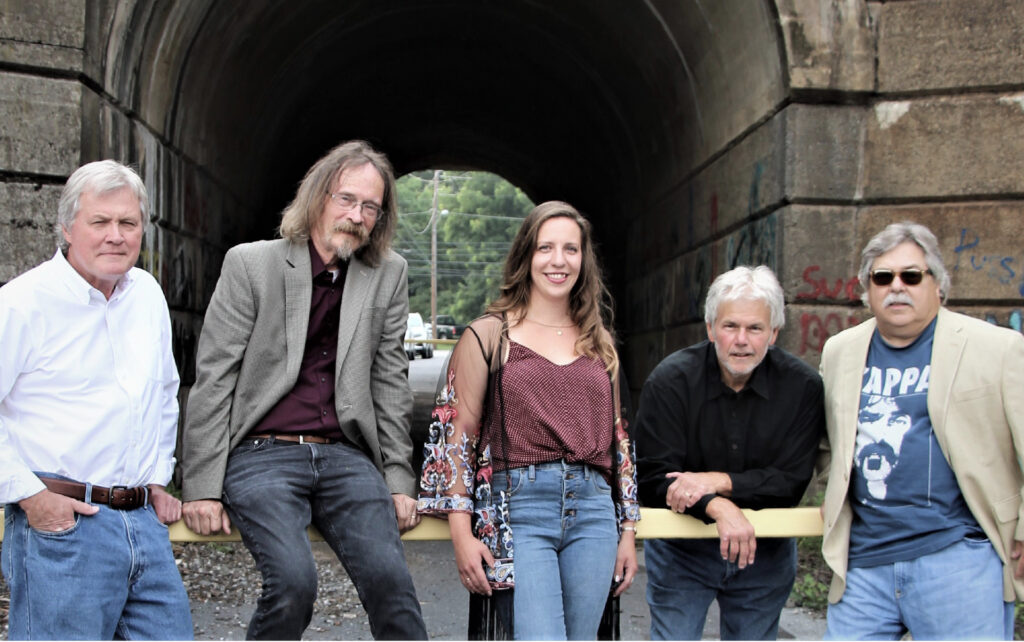
The Bad Toupees. Photo courtesy of The Bad Toupees.

On a brisk Friday afternoon, I found myself doubled over with laughter in Ashley Smith’s dining room in Hummelstown.

There, I sat with eight musicians as they reflected on over 30 years as the popular area dance band, The Bad Toupees. Current and founding band members drove and flew to the region for the weekend to celebrate their longevity with an anniversary reunion show at The Englewood.

During the interview, they missed no opportunities to razz and rib each other—the kind of friendship that can only come from knowing someone through years of highs, lows and the closeness unlocked through creativity and collaboration.

The band’s founding members became friends when working together at The Hershey Company in the early 1990s. In 1993, the group of pals decided to start playing music together during monthly practice sessions.

That all changed when they decided to book a Halloween party at the Hershey VFW.

“We were getting together once a month to jam and thought, ‘Hey, let’s have a party and we’ll laugh and giggle with our friends, and then that’s it,’” said former drummer and vocalist Ralph “Toad” Carfagno. “And then we got booked!”

The name of the outfit came from another former member, Bo Smith, who hadn’t planned to join the band, but, “they were hurting for a keyboard player,” he said.

“We were all having dinner at Toad’s one night, and they all had freakishly thick hair, so I said, ‘The Bad Toupees would be great for you guys,’” he laughed. “It actually went over very poorly, but, for lack of an alternative, it stuck.”

This moniker inspired many puns and creatively themed performances, particularly those falling around Halloween—Night of the Living Toupees, Toup Mile Island, YToupee, etc. Many of these events were enhanced by elaborate sets that were built by guitarist and vocalist Paul Schroeder.

“For an Area 51 theme that we had, he made a flying saucer as big as this room,” Carfagno said.

The band was popular among regulars at the Cocoa Court Club, Shakey’s and other watering holes around the Hershey area, amassing a following they lovingly call the Toupheads.

“At one time, we were bringing in 500 to 600 people a night,” Schroeder said. “But this was all about fun—that’s what it was for us.”

Some years, he said, they played Shakey’s every three months, with a local radio station even doing a live broadcast from the bar when they performed.


Best Thing Ever

The original ensemble played together for about a decade, at which point some members began relocating.

With people leaving, the band added a few other members to its ranks, and so came the eventual additions of Bill Wasch, the current guitarist and vocalist; Ashley Smith, saxophone, keys, vocals and tambourine; Sam Bolinger, who performs on drums and vocals; and Craig “Tito” Wrights, who occasionally joins the band on percussion.

Carfagno and Smith worked together. She happened to mention that she plays saxophone, prompting Carfagno to recruit her.

“We’d been wanting to play some Chicago and needed horns, so [we] hired out horns for the night,” Carfagno said, gesturing to Smith. “Ashley wasn’t too much of a pain, and we asked if she wanted to stay and, for reasons we don’t know, she stayed.”

“It’s been the best thing ever,” Smith said.

For years, the band instituted what they referred to as the “suck-o-meter.”

“Whoever sucks the least must sing the song in public,” Carfagno said.

The practice isn’t as prevalent now, since “Ashley and Bill do great stuff,” said Doug Searle, bass player and vocalist.

In fact, before Wasch officially joined the band, he would come out and sing with them, Carfagno said.

“Bill said to us, ‘Have you ever looked around your venues? It’s packed with people, and no one ever leaves and says, ‘You’re the best singers.’ They come to dance!’”

While the band’s set list is generally a mix of 1960s through ‘90s hits, they slip in popular recent releases once in a while, or they’ll make decisions about songs to retire from the set list.

At one point, the band performed two original songs, one of which, “Nice Watch,” was inspired by a trip Carfagno and Smith took to St. Maarten, written during an afternoon of day drinking.

“Think we wrote it on a shopping bag,” Carfagno said, laughing.

The humor, love and respect in the room was palpable, but even the strongest families experience tense periods.

“Every band is like this to some degree,” Wasch said. “It’s like being married to six other people for 30 years, which is like being married to one person for 180 years.”

The original five shared an experience they had one night where, “There was a song we didn’t get right,” and the band members closed their cases and went home.

Carfagno organized a lunch at Shakey’s the next day.

“We’re sitting there, and I asked if we’re going to talk about it,” he said.

That prompted former lead guitarist Kirk Ward to pipe in.

“I said, ‘Who’s mad at who?’” he said. “I had no clue there was even a riff.”

That intense camaraderie persists to this day. They still consult with each other for major decisions, such as adding new members.

“They’ve established a band-ship that’s so strong, something they weren’t ready to give up anytime someone moved away,” Smith said. “They still ask each other, ‘Are you OK with this move,’ for the alumni members. So, even when they’ve left, we can keep making music together.”

For more information on The Bad Toupees, visit www.thebadtoupees.com.


Cut a Rug
This month, The Bad Toupees have two shows scheduled.

The Hershey Italian Lodge
128 Hillcrest Rd., Hershey
Saturday, March 16, 7 to 10 p.m.

The Vineyard at Hershey
598 Schoolhouse Rd., Middletown
Friday, March 29, 6 to 9 p.m.

If you like what we do, please support our work. Become a Friend of TheBurg!

Continue Reading

Classical Era: The Wednesday Club is one of the oldest musical organizations in the country

It may be 142 years old, but the Wednesday Club for the Performing Arts is as energetic as ever.

Just ask Norma Swain, the nonprofit musical performance organization’s executive director.

“We present concerts by classical musicians, but since all are so talented and multifaceted musicians, we almost always have another genre of music in our concerts,” said Swain of Camp Hill. “Show tunes, ragtime, folk, etc. We’ve even presented Irish step dancers on one of our concerts and have had jazz bands from area high schools participate.”

The group is scheduled to continue its 2023-24 concert series this month with a performance at the Art Association of Harrisburg on March 10.

“This provides the community a chance to see some wonderful performers,” said Frank Rapisarda, the club’s new president. “I enjoy getting together with other people who enjoy classical music. I’m also totally impressed when I see young people perform in the art.”

David Morrison, Historic Harrisburg Association’s executive director, has been involved with the Wednesday Club for about 40 years, once serving on its board of directors. His involvement with the club came about in a roundabout way through a job assignment at the Forum while employed by the state Department of General Services.

“Next thing I knew, I was on the Wednesday Club’s board of directors and doing fundraising,” he recounted with a laugh.

Morrison’s interest in the Wednesday Club is fueled not only by a love of music but by the group’s “tie into history,” he noted.

“The Wednesday Club goes back to the 1800s,” he said. “It was founded by a lot of our community’s leaders of that century and has lots of rich history. That was as much of an interest to me as the music.”


Growing Club

The Wednesday Club actually didn’t originate from music. It began as a 19th-century ladies’ group sharing the fruits of their kitchen skills, according to the club’s printed history, “Wednesday Club Hi-Notes.”

The history states that around 15 “prominent young women of the Harrisburg area” pooled their talents into forming a cooking club, the Hungry Lunch Belles. The group soon tired of cooking, however, and began to perform music together.

The music club’s first regular performance took place on May 17, 1882, at a member’s Front Street home. Performances that day kicked off with a piano recital of Franz Liszt’s “Hungarian Rhapsody.” Following that, the initial 25-member club met every other Wednesday.

In 1915, the growing club was incorporated exclusively for “charitable and educational purposes” and expanded to include men. In 1931, the club held the Forum’s first-ever public event, the Don Cossacks Russian Orchestra. In 1939, the organization presented groundbreaking Black contralto Marian Anderson at the Forum immediately prior to her historic performance for 75,000 in Washington, D.C.

“Marian Anderson was treated to a tea at the (Harrisburg) Civic Club before her concert at the Forum,” Swain said. “We have always been about music and promoting classical music without discrimination.”

The Wednesday Club was also “instrumental in the vision of a performing arts center in Harrisburg,” according to Swain, which eventually led to the opening of Whitaker Center for Science and the Arts in 1999. The club remained a resident company there for 13 years.

Today, the nonprofit organization stands as one of the world’s oldest continuously operating music clubs and still abides by its original mission, “to stimulate interest in classical music and to develop and promote the musical talents of its performing members through concerts and educational activities.”

“We no longer present concerts on Wednesdays,” Swain said. “Since I’ve been involved these many years, we moved from Tuesday evenings to weekends. We now only present concerts on Saturdays, or mostly on Sunday afternoons, avoiding all the other presenters in the region.”

The club is supported through grants, member dues, community donations, program ads and various foundations.

The organization currently offers around 10 concerts per season, featuring performances by members and guest musicians from throughout the region. Auditioned performance categories include Resident Professional Concert Artist, Collegiate Concert Artist, Young Concert Artist and Ensemble Concert Artist. Performers range from elementary-level students to adult professionals.

“I love classical music,” Rapisarda said. “My mission as board president is to get the word out about our organization to (performing) students and professionals.”

For more information on the Wednesday Club for the Performing Arts, visit www.wednesdayclub.org, or their Facebook page or call 717-571-5189.

Catch a Show
The Wednesday Club has numerous performances in the coming months. These include:

  • March 10, 3 p.m., Art Association of Harrisburg, 21 N. Front St., Harrisburg. Young Pianists in Concert
  • April 14, 4 p.m., Trinity Evangelical Lutheran Church, 509 Hummel Ave., Lemoyne. Dr. Elizabeth Etnoyer, pianist, and other featured artists
  • May 5, 4 p.m., Zion Lutheran Church, 15 S. 4th St., Harrisburg. Daniel Stokes, organist, and instrumental and vocal ensembles
  • May 25 to 27, Artsfest Five-concert series at Art Association of Harrisburg, 21 N. Front St., Harrisburg
  • June to August. Three-concert summer series, to be announced.

If you like what we do, please support our work. Become a Friend of TheBurg!

Continue Reading