Grape Expectations: A trip to Lake Erie resulted in deeper appreciation for PA wines

Image courtesy of Mazza Vineyards

“Let’s go taste the regent, and then we’ll go back and taste some wine.”

Lovely words, heard in the very vineyard that birthed those wines. The regent grapes we tasted right from the vine were almost ready for this year’s vintage. The wines waiting for us came from past harvests.

This was a tour of Erie wine country. Hosted by Mazza Vineyards, the venerable Pennsylvania winemaker, I sipped Mazza’s portfolio of wines crafted in close partnership with local grape growers.


In the Beginning

Come to Erie, where grape-friendly conditions are infused into soil formed by glaciers and into air moderated, temperature-wise, by the 9,900-square-mile Lake Erie.

Everywhere you go, there are grapevines, in sprawling expanses or tucked between homes. The industry jumpstarted with Welch’s and its circa-1897 juice plant built in Westfield, N.Y., just over the Pennsylvania line.

But grape growers can sell only so much juice, and, in the 1960s, Doug Moorhead led a successful campaign allowing wineries to sell directly to the public. In the wake of the Pennsylvania Limited Winery Act of 1969, Robert Mazza founded his family winery in 1972.

In this region, every bottle sings with history. The setting helps. I took my first sips of Mazza’s The Perfect Rosé while standing on a ridge overlooking the vastness of Lake Erie. Just beyond the cliff, a young bald eagle swooped past.

Our cliffside lodgings were at Lakeview on the Lake, a charmingly retro, family-owned lodge with motel rooms and cottages spread around a grassy quad. I stayed in an auto court cottage straight out of the classic movie, “It Happened One Night”—not the donut-dunking one, but the knotty pine-walled, “Take me with you” one. I was tempted to hang a “Walls of Jericho” blanket.


Grape to Glass

Lake Erie’s cooler climate and breezy days compare to wine regions in Germany, nurturing the whites Chardonnay, Riesling, Gewurztraminer and Pinot Gris, plus red Cabernet Franc and Pinot Noir.

It all starts with the growers, close collaborators with Mazza in planning each year’s harvest and vintages.

Bill Semelka, whose father originally grew juice grapes, now grows regent, Riesling, Cabernet Franc and Itasca, a new cool-climate variety from Minnesota for a fruity, dry white. There on a bluff, air movement keeps the vines dry, for grapes that ripen earliest.

Standing in the vineyard, we sipped wines made with “right-here grapes,” in the words of Mazza Brand Ambassador Blaine Ballard. The regent plays well as a blend, I learned, giving a lift to Cab Franc or Merlot. The regent-chambourcin was rich and lively, closing with a hint of apple.

At Szklenski Farms, in Harborcreek Township, Blaine again set up a tasting table from the back of his truck. This time, he lined up dozens of glasses in rows of four.

This was a “vertical tasting,” comparing one wine across vintages. We sipped the Cab Franc made from Szklenski grapes in 2016, ’17, ’19 and ’20. The two elders were the clear winners, left to age gracefully and reach their full mellow.

The ’19 and ’20 were no slouches, though. As explained by Mario Mazza, second-generation general manager and vice president, the tasting proved that the Szklenski Cab Franc is no fluke. In agriculture, there will always be crop failures, like the season at Semelka’s farm when the regent grapes, “you just looked at them funny, and they’d fall off.” But a good wine from year to year demonstrates the consistency in farming practices needed to create “a commonality of structure and architecture,” Mario said.

As a later tour guide, Director of Distilling & Brewing Joe Nelson, would say, every glass brims with the symbiosis of grower and maker.

“We do what we’re good at,” he said. “We hire people who are good at what they do.”


A Travel Guide

A vineyard is a unique place to taste wine, but a cavern? Now we’re talking character and mystery.

Mazza operates three Lake Erie wine country sites, each a unique destination. Let’s start with the cavern.

In 1864, the owners of Erie’s first commercial winery built a stone cave where horse-drawn carts brought grapes for storage. Fast forward to 2006, when Robert Mazza bought the decrepit property in North East and restored it as South Shore Wine Company.

Descend into the cavern for a taste of Mazza’s Coupe Collection of sparkling wines. Our breakfast mimosas paired beautifully with bacon, egg and cheese sandwiches from an Erie eatery, and that was fine with Mario. You don’t need a special occasion to enjoy sparkling wine, he said. Open a bottle and take the tedium out of Tuesday.

Mazza’s logo features grapes, grain and hops. Why? Because Mazza established New York State’s first combination winery, distillery and brewery. Just over the Pennsylvania-New York line, in picturesque Chautauqua County, you can while away the evening on the patio or in the tasting room at Mazza Chautauqua Cellars/Five & 20 Spirits and Brewing, a.k.a. The Westfield Wonder.

Sip on rye whiskeys and bourbons in straight traditional or finished in different barrels for added levels of complexity, all made with local grains. On the brewing side, choose from pale ales, stouts, seasonals, a cream ale that hearkened back to my college days and the uniquely Erie-ish Grape Lakes American Wheat, flavored with a hint of concord grape.

Finally, explore Mazza’s origins by visiting where it all started—Mazza Vineyards in North East, the company’s first winery and tasting room. Here, we saw clusters from that morning’s harvest hand-loaded into a presser separating grapes from stems. I reached into the bin to feel and taste the sweet mash, grapes picked at just the right ratio of sugar and acid on their way to fermentation.

The tasting room exudes Old World charm, with red tile floors, stucco walls and bottles on a mantel decked out in mantles of wine-competition medals.

This room celebrates tradition, including Mazza’s La Famiglia line honoring winemakers who have come, over the years, from five continents. The collection is “technique-focused,” said Mario, such as the dry Appassionato made by drying the grapes on a rack.

“We are always building on their legacies,” Mario said. “You have to work as a team. I continue to learn from them all the time.”


Guide for Giving

A bit of knowledge helps when pairing the right wine or spirit with the right loved one.

  • The Perfect Rosé: For the perky friend who always cheers you up. Nice and bright. Pairs nicely with spicy.
  • Mazza Chautauqua Cellars Riesling (Nutt Rd. Vineyard): For the wisecracker in your life. Semi-dry, made from grapes all grown on the same block. This was where I learned that a distinct whiff of turpentine is desirable. I’m still trying to process that.
  • South Shore Wine Company Lemberger: For the friend who’s ahead of the curve. Lemberger, a wonderful discovery for me, produces a peppery, dry red.
  • Five & 20 Spirits and Brewery Déjà Vu Bourbon: For the whiskey aficionado who’s equal parts sweet and roasty. Begins life in new, charred American oak barrels. Then, it’s transferred for a 24-month stay to casks that recently held Five & 20’s Commiseration Imperial Stout.
  • Mazza Vineyards Ice Wine of Vidal Blanc: Surprise the friend who swears on dry wines only. Harvesting day is all-hands-on-deck, when—and if—the temperature plummets to 17 degrees. Even community volunteers bundle up and pitch in. The tradition behind it gave me a new appreciation of ice wine. It was fruity and dense, with some acidity blunting the sweetness.
  • South Shore Wine Company Pét Nat Riesling: For the hazy IPA lover who’s wine-curious. The ancestral Pétillant Naturel method creates fizz by bottling juice while it’s still fermenting. Increasingly popular for its lack of additives.
  • South Shore Wine Company Sparkling Pinot Noir: Perfect for a certain writer for TheBurg. A cheery, dry sparkler with notes of black cherry and ripe plum.

For more information on Mazza Vineyards, visit www.enjoymazza.com. For more information on Five & 20 Spirits and Brewing, visit www.fiveand20.com.


If you like what we do, please support our work. Become a Friend of TheBurg!

 

Continue Reading

Local company donates upgraded lighting to Broad Street Market’s stone building, helping to cut costs

Broad Street Market’s stone building

This week brought some bright news for the Broad Street Market. 

Hornung’s LED Lighting donated and installed new lighting fixtures in the market’s stone building at no cost to the market, the market’s board of directors shared in a press release on Monday.  

The new high-efficiency LED lighting replaces outdated fixtures in the building, cutting down on electric costs, market officials stated.  

The Dauphin-based company’s donation had a value of over $15,000.  

“We could not be more grateful to Hornung’s LED Lighting for their generous donation of materials, labor and expertise,” said Eric Hagarty, chair of the Broad Street Market Alliance Board. “Time and time again, when the market has asked for help, the community has stepped up, and Hornung’s LED Lighting is yet another great example of how we continue to recover from the fire together. Because of Hornung’s LED Lighting, the market is brighter than ever, and we will be able to more effectively control costs–and, most importantly, keep rents as low as possible for the market’s vendors.” 

In the past several months, the market’s board has sought ways to cut down on costs, as officials stated in January that revenue was down by 70% since a July fire in the brick building. At first, the board decided to almost double vendors’ rents to make up for the loss, but lowered the increase to 25% after facing pushback from vendors and the community.

In addition to the lighting upgrade, the market has lessened expenses by working with utility companies and the city to defer bills, cutting marketing costs and using volunteer board members to fill in for the market director role and other vacant positions, among other initiatives, Hagarty said.

“I think the worst is over, and we’ve turned the corner, but with that said, things are still tight,” he said on Monday, when reached by phone. “But we are in a much better spot.”

While the market’s brick building suffered significant damage from the fire and is currently closed, the stone building is open for business.  

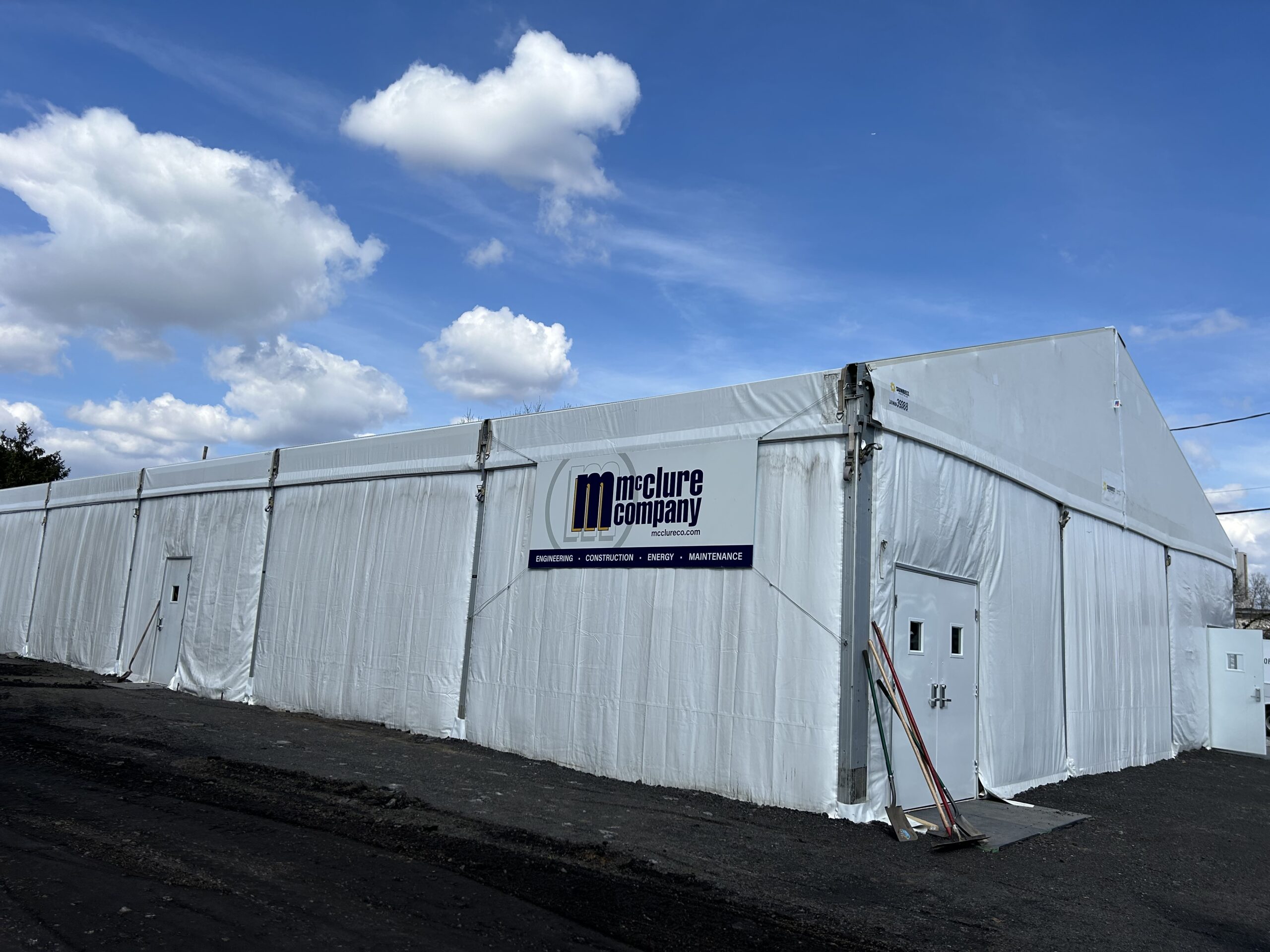
The market is also getting closer to finishing the construction of a temporary tent-like structure to house displaced brick-building vendors while the building is rebuilt. Seven vendors are slated to move in. The city said that the tent will likely open to the public by the end of April or early May.  

Hagarty expects that the market’s revenue will increase once the structure is open.

“We take pride in extending a helping hand to reestablish the market as it plays a crucial role in the vibrant community of downtown Harrisburg. Our donation isn’t just about lighting up a market; it’s a symbol of our shared resilience and dedication to community,” said Mike Hornung, owner of Hornung’s LED Lighting. 

For more information and updates about the Broad Street Market, visit the city’s website or the market’s site. 

If you like what we do, please support our work. Become a Friend of TheBurg! 

Continue Reading

The Week that Was: News and features around Harrisburg

Harrisburg Mayor Wanda Williams, along with city and county officials, at a press conference about illegal dumping.

Our April issue of the magazine came out this week, just in time to stuff into Easter baskets or gift to a loved one along with a bouquet. Our cover art, featuring a bunny, fits perfectly with the holiday. So hop to the nearest distribution location! 

Affordable housing may be coming to a vacant lot in the Summit Terrace neighborhood in Harrisburg, our online story reported. Harrisburg-based RB Development has proposed building 24 townhome-style units on the 1100-block of Bailey Street.

“American Roulette,” a recently released book, features eight local authors who came together to write about the crisis of mass shootings in America. In our magazine story, read about how they wrote the book and what they hope people will get out of it.  

Bob’s Art Blog focuses on three upcoming events, all of which are perfect for the spring season, he says. He highlights “Art in the Wild” from Dauphin County Parks & Recreation, “Plants + Pints” at Strawberry Square and the “Earth and Arts Festival” from the New Cumberland Collective.  

Broad Street Market officials shared the list of eight former brick building vendors that will move into the market’s temporary tent. Read our online story to find out which vendors will open.  

Broad Street Market vendors began moving equipment into the market’s temporary tent structure this week, our online story reported. City officials have said that the tent is slated to open by the end of April or early May. 

Carlos Lozada and ThoMas Mari, owners of the recently opened On The Go Services auto repair shop in Harrisburg, strive to offer fair and affordable services, our magazine story reported. With experience in the auto industry, the pair wanted to run their business with more integrity than they’d seen in the field.  

City engineer for Harrisburg, Dan Snow, announced that he would resign this week, our online story reported. The city is currently searching for someone to fill the position.  

Community Corner has this month’s special events, including gardening, galas and book sales. For even more April gatherings, check out our happenings section. 

Harrisburg City Council voted in favor of moving federal American Rescue Plan Act (ARPA) money into this year’s budget to begin spending, our online story reported. Funding will go towards affordable housing, blight demolition and other projects.  

Illegal dumping has increasingly become an issue in Harrisburg, local officials explained at a press conference this week. The city and Dauphin County are teaming up to introduce new initiatives to address the problem. 

“Mary Speaks” is a one-woman show that highlights Black history, culture and the mother/son relationship. According to our reviewer, the playwright, Angela Polite, “masterfully weaves story over story,” incorporating significant historical moments. 

Penn State Health Medical Outreach Clinic in Harrisburg offers free-of-charge medical care to the Allison Hill community, our magazine story reported. The clinic touches the lives of more than 10,000 people a year. 

Premier Arts and Science Charter School’s future may be at risk, as the Harrisburg School District will commence non-renewal proceedings against the school, our online story reported. A study by the district found many issues with academics and operations at the charter school. 

Sara Bozich has the perfect spring events lineup for your weekend. See her list, here. 

Do you receive TheBurg Daily, our daily digest of news and events delivered right to your email inbox? If not, sign up here!  

Support quality local journalism. Join Friends of TheBurg today! 

Continue Reading

Seven vendors make plans to open in the Broad Street Market tent. Here’s the list.

Broad Street Market temporary tent structure

Shoppers soon will be able to get some barbecue, dog treats and plenty of produce again at the Broad Street Market. 

On Friday, market officials shared that seven former brick building vendors, who were displaced by last July’s fire, will open in the market’s temporary tent structure.  

The following vendors are slated to open in the tent: 

  • Doggie Delights 
  • Fisher’s Deli and Bakery 
  • Lil’s Pretzels 
  • Peach Ridge Produce 
  • Rijuice 
  • Shawarma and Falafel 
  • Two Brothers BBQ 

The brick building, which has been shuttered since the devastating fire, held about two-dozen vendors, which means that most do not plan to open in the temporary structure. A few brick building vendors have since opened in the stone building and will remain there, according to market officials.

Three vendor spots in the tent remain unclaimed, and market officials hope to fill those soon.

On Monday, some of the returning vendors began moving sinks and other equipment into the tent, which was constructed just across the street from the market.   

“I’m super excited,” said Broad Street Market Alliance Board Chair Eric Hagarty. “It was great to see folks last week start to move in some equipment. I think we finally see the light at the end of the tunnel.” 

According to Hagarty, there will also be a few vacant stands in the tent, which may eventually house new vendors.

City officials have shared that the temporary structure likely will open by the end of April or early May. 

The city has delayed the opening of the location for several months, due to challenges securing contractors.  

Doggie Delights owner Donnie Farner said that, while the opening delays haven’t been ideal, he’s hopeful about where things are headed now.

“We get phone calls from customers asking when it’s going to open,” Farner said. “We are very excited to be back serving Midtown. It will be a good mix of vendors.” 

Hagarty said that the board is still finalizing a job description for the director of the market, a position that has been vacant since Tanis Monroy stepped down in February.  

In the meantime, Hagarty and other board members have stepped up to oversee day-to-day operations, along with Midtown Property Management, which is providing services to the market, free of charge.  

Farner said that board members and vendors have started holding weekly meetings, as well. 

When the temporary tent does finally open, Farner hopes to see the community come out and support the businesses.  

“I hope we get publicity and can get a buzz happening,” he said.  

For more information and updates about the Broad Street Market, visit the city’s website or the market’s site.

This story has been updated to remove Honeybush Raw Smoothie Bar from the vendor list. According to market chair Eric Hagarty, Honeybush owners just informed the market they will not be re-opening their market stand.

If you like what we do, please support our work. Become a Friend of TheBurg! 

Continue Reading

Weekend Roundup with Sara Bozich

Plan your weekend with my weekly list of things to do around Harrisburg and central PA!


What you’ll find ⤵️

For something new: A few Easter brunch options to keep you out of the kitchen Worth noting: Central PA Music Hall of Fame awards tonight. It’s Easter weekend. Things on my agenda this weekend: lots of family – catch ya next week

For your weekend planning

Below are more options for your weekend.

A Look Ahead

  1. Our return to Strawberry Square was a success! Catch us in April for a Clock Box Happy Hour!
  2. Plants + Pints tickets are now on sale! Just $20 benefiting Downtown Daily Bread!
  3. Downtown Camp Hill Association’s Spring Fling is April 6!
  4. You can now sponsor the Weekend Roundup! Ask me how! 
  5. Submit your events for the Weekend Roundup

Thursday

Friday

Saturday

Sunday

If you like what we do, please support our work. Become a Friend of TheBurg!

Continue Reading

Downtown Turnaround: Marking its golden anniversary, Harristown reflects on where it’s been, where it’s going

Construction of Strawberry Square, 1977

In mid-2022, Ashley Crist got a sneak preview of the Menaker Apartments while Harristown Development Corp. was renovating them. When she saw the top-floor unit with the 180-degree views of Market Square, she immediately claimed it as her own. 

“Oh my gosh, it’s beautiful,” Crist said. “Now, I host New Year’s Eve every year because we’re right there by the strawberry drop. I entertain all the time. I’m on the Candlelight House Tour with Historic Harrisburg and let people walk through and get the views. It’s fantastic.” 

In 1974, Harristown was created to help restore a city gutted and unrecognizable from its Bedford Falls heyday. This year, it celebrates 50 years of evolving with the times and, once again, helping lead Harrisburg’s recovery from the upheaval of the global pandemic. 

“Together, we’re making this an interesting downtown that’s a place people can access and enjoy for work, recreation, leisure and residential,” said Brad Jones, Harristown’s president and CEO. “Harristown has brought half-a-billion dollars’ worth of assets to this downtown in the last 50 years, and each project continues to help that get a little bit better.” 


Founded in Crisis 

Carol Cocheres came to Harrisburg in 1975, a young lawyer working for the then-Department of Community Affairs.   

There was nothing going on in Harrisburg in 1975,” said Cocheres, a bond attorney and Harristown board member. “The stores were closing. There was no hotel. It was sort of a dump at that point.” 

Downtown Harrisburg of the 1950s and ‘60s buzzed with activity. Department stores. Boutiques. Movies. But by the late ‘60s, racial protests fueled white flight. The steelmaking and railroads that powered the economy were faltering. In 1972, the floodwaters of Hurricane Agnes made buildings uninhabitable. 

In 1974, civic leaders created an independent, nonprofit organization to renew roughly 50 acres from Chestnut Street to Locust Street. Inspired by the New Town Movement of the era, they named it Harristown Development Corp. 

“The first thing I saw in improvements was Strawberry Square,” said Cocheres. “It was full of shops and the food court. There was even a night club.” 

After building and buying parking garages, Harristown built Strawberry Square in 1980. First-floor retail was designed to lure customers away from suburban shopping malls. Forty-year leases with the Shapp administration to house state workers generated cash flow.  

As Cocheres notes, the lease agreement helped the state compensate Harrisburg for the tax-exempt properties that deprived the struggling city of much-needed revenue. The creation of Harristown “was essential to the commonwealth helping Harrisburg after the difficult times the city was having in the late ‘60s and ‘70s,” she said. 

Projects that followed included:  

  • City Island cleanup. The rundown ballpark where legends Babe Ruth and Josh Gibson once played became the home of the Harrisburg Senators. 
  • Strawberry Square Phase II, a complex puzzle that enclosed alleys and restored streetside retail. “That was a very cutting-edge project,” said Historic Harrisburg Association Executive Director David Morrison. “That was part of the saving of Strawberry Square, giving it a historic feature.” 
  • Facilitating construction projects that changed the face of downtown Harrisburg, including Penn National Insurance, Whitaker Center, Harrisburg University and the UPMC Health Sciences Tower at HU.
  • Construction of a long-envisioned grand hotel in Market Square—the Hilton Harrisburg, completed in 1990. By forging a financing deal with the city and stepping in to manage, Harristown kept the hotel from succumbing to early struggles.  

Of course, there were controversies and lawsuits, as well. State lawmakers and officials questioned the 40-year lease. Competing developers claimed Harristown monopolized downtown redevelopment. The Patriot-News forced compliance with state right-to-know and public meeting laws. Harrisburg City Council members balked at handing over control and bond issues to an entity outside their oversight. 

“The city should have been the dog and Harristown the tail,” said early opponent and City Council member Herbert C. Goldstein.

But Harristown was learning. Frosty relations with city officials thawed and, Jones said, remain positive. Partnerships—a key to initial success—gained importance. In the last decade, private sector investors have seen steady returns on their money and “have a sincere interest in helping the city,” said Harristown board Chair David Black. The thoughtful leadership from 1999 to 2014 of President Russell Ford, a professionally trained planner, laid the groundwork for the visionary style of Jones and prepared Harristown for the COVID pandemic that cratered American downtowns, he said.  

“Office occupancy still isn’t back to where it was, but without the residential downtown, it would be a much different place today post-pandemic than it is,” Black said. 


Here Comes Housing 

“Eds, meds and beds.” That’s the focus of today’s Harristown, said Jones, meaning education, health care and residential. In contrast, retail, once a mainstay of Strawberry Square, has ebbed, a trend that started over a decade ago and accelerated following the pandemic. 

“Nobody’s building new card stores, right?” Jones said.  

Now, anchors include Harrisburg University’s Center for Innovation & Entrepreneurship, the Capital Area School for the Arts, Best Friends Day Care, and one of downtown Harrisburg’s only doctor’s offices.  

And on the floors above, those former state offices now house 22 units of The Flats at Strawberry Square. Today, Harristown has developed, owns and manages about 250 apartments carved out of former office, restaurant and retail spaces.  

In hindsight, early Harristown can’t be faulted for the “somewhat regrettable” demolition of historic buildings in the name of urban renewal, said Historic Harrisburg’s Morrison.  

“They evolved rather promptly in the direction of revitalizing and repurposing historic buildings and taking advantage of the existing building stock that surrounds Strawberry Square,” he said. “They began to see it as an asset rather than a liability in center city.” 

Facing dire need, Harristown was meant to “rebuild faith in the private sector in doing business in downtown Harrisburg,” said Black.

He was on the board for the “monumental moment” when the Hilton flipped to private ownership in 2012. Harristown’s “what next?” conversations led to apartments opening six years before the pandemic made work-from-home a truth universally acknowledged. 

“People from all walks of life are living downtown,” Black said.  

Here in 2024, office tenants are downsizing as employees “are waking up and staying in their pajamas and working on their laptops from home,” Jones said. Harristown can’t convert every vacant office to residences, but “our city, like so many cities, is going to need a reimagining of the use of buildings,” he said.

“That will take a lot of capital. It will take partners. It’ll take creativity. In the end, I think it’ll be good for the downtown,” he said. 

Adding residential units spreads a ripple effect of growth and development throughout the city, including affordable housing and tax-credit projects, said Crystal Brown, board member since 2018 and former director of Brethren Housing Association.  

“While its footprint is restricted, its impact isn’t,” she said. “If there are more businesses and people moving into the city, that helps increase the tax base that allows the city to do more things. It absolutely is a win-win, and Harristown serves a great role and a great purpose in helping others do more of what they do.” 


Future Focused 

Jones has been in the top post at Harristown for nearly a decade now. He’s nearing retirement age, but has no immediate plans to do so. Why? There’s too much “unfinished business.” 

“There are a lot of big projects in pre-development that I would like to help move this company to achieve,” he said. 

The SoMa project revitalizing the blocks of 3rd Street south of Market Street is nearly complete. On Market Street, watch for new uses of the former CVS and Rite Aid stores. “And, hopefully, we’ll be announcing another big new project that will have everyone on the edge of their seats,” he said. 

Harristown plans a 50th anniversary celebration on May 16—in Strawberry Square, of course. Other anniversary events include SoMa block parties from May through October.  

Through awareness of opportunities, Harristown will evolve as the city’s needs evolve, said Black. 

“You don’t always know what’s ahead, but it’s good to keep your eyes forward, and that’s what Brad and the team do,” he said.  

Ashley Crist counts her Menaker Building apartment, the one she rented on the spot, as “by far my favorite” of her city apartments. She crosses the river to walk the City Island loop. She enjoys 3rd in the Burg craft beer tastings in SoMa.  

“Harristown has done so much,” she said. “I feel like every time I turn around and I’m at a cool new spot or something new to check out in Harrisburg, it’s Harristown that’s doing it. They have their hands in a lot of really great things with the city.”

For more information on Harristown Development Corp., visit www.harristown.net.

On April 13, starting at 10 a.m., Historic Harrisburg Association will hold a walking tour of Center City Harrisburg, including a look at Harristown’s 50 years of impact. For more information, visit www.historicharrisburg.org 


Plants + Pints

In the 1970s, many cities built enclosed malls to try to compete with suburban shopping centers, most long gone.

In downtown Harrisburg, Strawberry Square has survived through constant adaptation and renewal, including as an events space. In fact, Harristown Enterprises recently completed the “Clock Box,” a colorful, modern-style meeting and lounge space that juts over the atrium.

This month, Strawberry Square will host one of its largest annual events, Plants + Pints Harrisburg, a family-friendly event highlighting local vegetarian and vegan vendors, craft beverages, wellness and other plant-based products in the community.

Proceeds benefit Downtown Daily Bread, which helps to feed Harrisburg’s unhoused population. The event is presented by Members 1st Credit Union and produced in partnership with Harristown and Sara Bozich Events.

“We so appreciate the Plants + Pints event,” said Corrie Lingenfelter, executive director at Downtown Daily Bread. “With Sara’s efforts, this fun event will bring much needed funds and support to our hungry and homeless populations through Downtown Daily Bread.”

Guests will be able to sample and purchase food and drink from local restaurants, food purveyors and breweries, and shop from vendors who promote locally made and plant-based products.

“We’re excited to return Plants + Pints to Strawberry Square,” said Brad Jones, president and CEO of Harristown. “We’ve seen how interest in a healthy or plant-based lifestyle has grown, and the Harrisburg area has so much to offer.” 


Plants + Pints Harrisburg will take place on April 14, 1 to 5 p.m., at Strawberry Square in downtown Harrisburg. Tickets are $20 (adults) and $10 (under 21; kids under 12 are free) at www.sarabozich.ticketleap.com/plants–pints-2024. A full list of vendors can be found at www.sarabozich.com/event/plants-pints-2024.  

If you like what we do, please support our work. Become a Friend of TheBurg!  


Continue Reading

Roses & Resilience: Palmyra Greenhouse owner launches children’s book, grows floral and flower truck business

Jessica Maloy. Photo courtesy of Michael Choate Photography.

If you’ve ever passed a red 1953 Ford F-100 oozing florals out of the truck bed in or around Palmyra, you likely know the feeling of joy that Rosie the Flower Truck brings to passersby. 

Rosie may be more than 70 years old, but she’s undeniably making the most of her third act as a product of Palmyra Greenhouse. She’s even the face of a recently published children’s book, “Rosie & Friends,” by Jessica Maloy. 

Owned and operated by Maloy with help from her husband Patrick, Palmyra Greenhouse may seem like a quintessential pandemic-hobby-turned-career on the surface, but it goes much deeper. 

Maloy began her journey by building a greenhouse to protect her plants from critters. Its aesthetically pleasing look and holiday decorations quickly drew crowds, and Maloy began charging people to use the spot as a professional family photo location in 2020.

“We ended up raising over $2,000 and bought Weis gift cards for local families in need of a holiday meal,” Maloy said. 

While she did her best to go through the bureaucratic hoops to make it all a legitimate business, the borough eventually shut the photoshoot operation down. Instead of appealing to the zoning board, Maloy used her precious energy to transform Palmyra Greenhouse into something even more impressive—a fully operational floral service offering various types of arrangements, bouquets and even wearable flowers. 

Stronger Than 

The iconic flower truck is a distinguishing addition to the business.

Maloy’s husband Patrick is wildly handy. He built the greenhouse and selected the vehicle that would become Rosie. By day, he works in logistics for The Hershey Company, but he grew up in a family of antique car hobbyists and general tinkerers. When his wife needs him, he’s right there with his toolkit. 

“What’s going to be the next thing she wants to do is always on my mind,” he said. 

“I think I have him scared,” Jessica Maloy responded in jest. 

The reality is that Maloy has become a go-getter in life, perhaps stemming from her confidence-building experience as a competitive powerlifter.

“I didn’t realize that I was strong until I was in my late 30s,” she said.

Maloy often heard phrases like, “you’re strong for a girl,” but found that to be minimizing.

“Actually, I’m stronger than a lot of the guys,” she said. “So, it’s not just ‘strong for a girl.’” 

Maloy’s children’s book, “Rosie & Friends,” centers around Rosie the Flower Truck but also features family members (pets included). 

The book, ideal for ages 4 to 7, holds a motif that marries the notion of floral-loving femininity and independent strength.

“I wanted to put that in there, for boys and girls who would read the book to know that girls can be strong,” Maloy said. 

In her powerlifting, Maloy can back squat 350 pounds, a feat that helped her gain confidence in other aspects of life. Last October, she quit her job and went full time with the greenhouse operation. This year, she’ll be on the road with Rosie, which has a supply of tools underneath the driver’s seat in case of a breakdown (which has happened, an unsurprising fact for a vehicle of Rosie’s age).  

Maloy and Rosie launched the season with an Easter event at The Star Barn in Elizabethtown. They’ll be at Hershey-based café and bakeshop, Desserts Etc., the second Sunday of each month during the warmer months, giving people the opportunity to treat themselves in more ways than one. In April, the truck will be at a brunch-themed happy hour at the SoMa Pop-Up bar for a Gals That Brunch event. Clearly, Maloy and her family—Rosie included—will be busy this season. 


Bringing Joy

A continuous theme of strength has permeated Maloy’s life, one that will continue to transform her business ventures in unexpected ways. After all, she never anticipated becoming a business owner, let alone a children’s book author.

“I have to be on my toes,” Patrick Maloy said about his wife’s grand adventures.

But he knows it’s for a good reason. 

“What I love about my job is bringing joy to others,” Jessica Maloy said.

Rosie, too, brings joy simply by driving past people. She gets honks, thumbs up and smiles. “Rosie & Friends” also touches on the theme that it’s important to bring joy to others in any way you can. 

Whatever Maloy cooks up next, her tribe will be right beside her, ready to make it happen. In the meantime, the “Rosie & Friends” children’s book, Rosie the Flower Truck events and floral orders from the Palmyra Greenhouse website are plenty to keep smiles on more faces than one.

“When I make flowers and deliver them to somebody, the look on their face is just awesome,” Maloy said. 

For more information on the Palmyra Greenhouse, visit www.palmyra-greenhouse.com or their Facebook or Instagram pages. 


If you like what we do, please support our work. Become a Friend of TheBurg! 

 

Continue Reading

Seeds of Change: Recently, the commonwealth entered a warmer growing zone, some citing climate change. What does that mean for local gardeners?

Photo courtesy of Angela den Hoed

For years, Harrisburg-area resident Cynthia Hogeman has led a group in a monthly bike ride on the Capital Area Greenbelt. In the spring, that has often included spotting the newly bloomed daffodils, hundreds of which she planted herself, in Harrisburg.  

Hogeman has gardened since she was young and, once she retired, studied to become a master gardener through Penn State Extension’s program. Naturally, she loves plants.  

But she started to notice, during the group’s bike rides, that the flowers were blooming earlier and earlier each year. She had once considered hosting a special spring ride just to see the daffodils, but realized their arrival had become too inconsistent for scheduling.  

“I remember when we would do the ride right around tax day and see them,” she said. “But it gradually got earlier and earlier.” 

It wasn’t just the daffodils that she took notice of, but the many plants that were budding out and blooming earlier as the warmer spring weather seemed to arrive sooner each season. 

“If you’ve been a gardener for the long haul, you’ve seen the changes,” she said. In November 2023, new information released by the U.S. Department of Agriculture (USDA) appeared to confirm what Hogeman and many other gardeners were already seeing. In central Pa.—like in much of the nation—temperatures were warming.

Eleven years after its previous edition, the agency updated its Plant Hardiness Zone Map, a tool that gardeners use to determine which plants will thrive in their region, based on the average annual lowest temperatures.  

That update showed that about half of the country shifted up to the next-warmer half zone. Much of central Pa. moved from zone 6b to 7a, meaning that the average annual extreme minimum temperature moved from a range of -5 to 0 degrees to 0 to 5 degrees. 

When the new map was released, the USDA specifically cautioned the public from attributing the warming to global climate change. They cited the highly unpredictable nature of annual extreme minimum temperatures and the use of increasingly detailed and specific mapping methods as possible reasons for the zone changes. The map, which relies on 30-year averages, pulled from data recorded at 13,412 weather stations. The 2012 map only used information from 7,983 stations. 

However, PennFuture, a Harrisburg-based nonprofit environmental advocacy group, linked the changes directly to global warming. In a December editorial response to the map update, they stated that it was “a stark, full-color depiction of the progress of climate change.” 

While many local gardeners and growers aren’t necessarily expecting to see big immediate changes in terms of which plants will or will not thrive in central Pa. with the zone shift, most have their concerns about the long-term effects of warming temperatures.  

Angela den Hoed, owner of Carlisle-based landscape design company Soil + Ink, said that her clients are starting to notice small, incremental changes in the weather too and are wondering what it means for their home gardens. 

“My clients ask me all the time what to expect,” she said. “I say, expect it to be unpredictable.” 


Adaptability Possibility 

Ember Jandebeur, of Susquehanna Township, is a self-proclaimed “plant nut.”  The Dauphin County master gardener and former environmental lawyer, maintains a garden at her own home, while also volunteering at Wildwood Park, the state Capitol’s Hunger Garden and the Harrisburg Cemetery, among other places.  

She has used the zone map to determine which plants would work best for her region and expects that, with the map update, there may be some that previously didn’t grow well that will do better and others that thrived that will begin to struggle. 

The spider lily is one type of flower that Jandebeur said she may “take a chance” on now. The flower typically does best in zones 6 to 10, previously a stretch for growing in Harrisburg, according to the 2012 map, but now may be more reasonable based on the 2023 update. 

For the most part, Jandebeur sticks to native plants, which she believes will generally fare well even with the changing weather. While the definition of “natives” can be different to different gardeners, depending on how broad or specific of a location they look at, Jandebeur plants anything native to North America. Because many natives are already accustomed to the local temperatures, a few degrees difference likely won’t make a significant impact on the plant, she said. 

However, she predicts that the warmer temperatures will fuel the spread of invasive species, those that are not native to this climate.  

According to the North American Invasive Species Management Association, invasive plants are shifting north and taking advantage of the earlier spring warmth by sprouting before the natives do, monopolizing soil space and sunlight.  

Invasive insects are also becoming an increasing threat as the warmer weather allows them to live longer, Jandebeur said. 

For as much as she loves plants, Jandebeur loves birds just as much, especially hummingbirds, or “hummers” as she lovingly calls them. A lot of what she plants, such as salvia flowers, is catered towards attracting pollinators—birds and insects. 

“I’m trying to make a bird way station in the middle of Harrisburg,” she said.  

However, she’s worried that the hummingbirds will not adjust to the unusual blooming times and therefore not get the nutrients they need. According to Jandebeur, only a very small percentage of hummingbirds and songbirds survive to their second year, and without adequate nectar, that could lower their chances of survival even more.  

“They may get caught up without blooms to feed up on before migration,” she said. “Climate change will play havoc, and we don’t know if they will be able to adapt or not.” 


So Unpredictable 

Ultimately, it seems that the new plant hardiness zone map won’t have a huge immediate impact on plant supply, although growers and landscapers are seeing incremental changes, too. 

Local growers and plant centers likely won’t be quick to add or remove plants from their greenhouses. Bryan Benner, the head perennial grower at Quality Greenhouses, a wholesale grower in Dillsburg, said that, because of the highly variable nature of the weather, his work won’t change much due to the new zone map. 

“You can still have some nights that are colder than what the zone says,” Benner said. 

He also said that the company already grows some plants that are in zone 7, as the greenhouse distributes outside of the state, as far as southern Virginia.  

However, if it keeps getting warmer, he does foresee certain cold weather plants dying off. That has already started to happen with plants like the sugar maple tree, he said. But those shifts “don’t happen fast,” he added.  

If the map changes anything for Quality Greenhouses, it may be that an earlier spring brings customers to the greenhouse sooner, which would be good for business, he said. But, that doesn’t negate his concern about climate change, he stated. 

Business will likely remain strong for Harrisburg-area native plant landscaping company, Green Gardner, as well. Owners Jes and Ian Gardner work with residential and commercial clients to plant species that are beneficial to the local ecosystems. As a result of milder winters, last year, they were able to work with clients almost year round, they explained.  

Intentionally utilizing native plants—the Gardners use ones specific to the U.S., often native to the county or region—can actually help ecosystems navigate climate change. Like Jandebeur said, the Gardners explained that the updated zone map doesn’t really affect natives, since they are already well adapted to the local environment. Natives also help make the air and water cleaner, they said. 

“The fact that we need hardiness zones is because we are planting non-natives that are killing our environment,” Ian said. “If we are able to support nature, we can limit the impacts of climate change.” 

Ian did, however, say that he’s concerned about the weather becoming too warm for certain types of native birch trees. 

But maybe even more harmful than the slightly warmer temperatures is the inconsistent and extreme weather—for example, going from a period of drought to heavy rain and flooding, the Gardners said.  

Like den Hoed of Soil + Ink said, expect the unexpected. 

When helping clients with landscape design, den Hoed said that she works to build in resilience. She recommends some plants that will survive drought better and some that can withstand flooding, among others. That diversity can help a garden survive. 

She’s also making sure that, when clients choose plants with long lifespans, like trees, they select species that can weather the warmer temperatures in the coming years.  

“It’s just so unpredictable,” she said. 


To learn more about Soil + Ink, visit www.soilandink.co. 

For more information on Green Gardners, visit www.greengardnerdesigns.com 

Quality Greenhouses is located at 250 Union Church Rd., Dillsburg. For more information, visit www.qualitygreenhouses.net. 

To learn more about the Penn State Extension’s Master Gardeners of Dauphin County, visit www.extension.psu.edu/programs/master-gardener/counties/dauphin or call their hotline at 717-921-8803 to speak with a master gardener.  

Stories on environmental subjects are proudly sponsored by LCSMWA. 

 If you like what we do, please support our work. Become a Friend of TheBurg! 

 

Continue Reading

Special Bond: Mike Strohl and Laura Woltz were neighbors and colleagues—then came a life-saving connection

Laura Woltz & Mike Strohl

There are good neighbors—and then there’s Laura Woltz. 

Woltz, of Silver Spring Township, is an exceptionally good neighbor.  

In September 2023, she donated one of her healthy, functional kidneys to her down-the-street neighbor, Mike Strohl. This, in turn, gave Strohl a new lease on life. 

“My quality of life has greatly improved since the transplant,” Strohl said. “I know it’s a hard decision for someone to make to become a living donor like Laura did. I’m in awe that some people even want to do this.” 

Strohl, 58, was born with only one kidney that, before the transplant, was quickly deteriorating and close to requiring dialysis. He actually didn’t learn that he lacked a second kidney until age 31, after his doctor examined “odd test results,” he said. However, he didn’t notice any related health problems until his mid-40s, when his lone kidney “began to wear out.” 

By early 2023, he realized that he and his kidney were running out of time.   

“The decline was so slow, so it really didn’t affect my life for a while. Until last year, I played ice hockey, I golfed, I fished,” he said. “When it’s close to the end, though, it goes down rapidly. I felt like I needed a nap all the time and just didn’t have any energy.” 

In March 2023, after a series of further tests, Strohl was listed on the National Kidney Foundation’s waitlist, seeking a donor within a 200-mile radius. 

Strohl and Woltz first met in June 2021 through their jobs at UPMC Carlisle. Woltz works at the Carlisle campus’ Hillman Cancer Center where Strohl, who works at the Carlisle location’s blood lab, often delivered blood for patient transfusions. Soon, they became friends, realizing that they lived just nine houses away on the same street. 

Woltz learned about her new friend’s health condition while leisurely scrolling through Facebook one day. She then stumbled upon a post by Strohl’s wife, Melissa, seeking a kidney donor for her husband. Not long before, Strohl had revealed to Woltz that he was living with only one kidney. 

As it turned out, Strohl’s brother, sister-in-law, niece and “two or three other people” also tested as potential kidney donors, but only Woltz was determined to be compatible.  

“I always thought about being an organ donor, but I had never thought about being a living donor until then,” Woltz said. “I was thankful to find out that I was a match for Mike.” 


Saved His Life 

According to the National Kidney Foundation, about 100,000 people currently are waiting for kidney transplants, while a total of 660,000 people live with kidney failure. Besides transplants, treatment options include palliative care or dialysis, a time-consuming process that removes wastes and extra fluid from the blood when one’s kidneys are no longer able to do so. 

In central Pennsylvania, around 103,000 people are on the area’s waiting list for kidney transplants, according to UPMC Dr. Danielle Ladie, who served on Strohl’s transplant team. Of available options, receiving a kidney from a living donor like Woltz is preferable than from a deceased donor. 

“Many people have always thought that you have to be related to donate, but that’s not always the case,” Ladie said. “(Strohl’s) case was really nice. He was very, very close to needing dialysis before the surgery. (Woltz) did an amazing thing. She saved his life.” 

Ladie said that Strohl’s case was unusual because only one in a thousand people are born with only one kidney. In total, 61 kidney transplants took place in 2023 at UPMC Harrisburg Hospital, where Strohl’s surgery was performed. UPMC also performs heart, lung, pancreas, liver and other multi-organ transplants at its Pittsburgh facility. 

“We had six transplants (in Harrisburg) during one week just before Christmas,” said Malini Mattler, media relations manager for UPMC Central Pa. Region. “It was like giving the recipients the best gift they ever had.” 

Strohl’s transplant procedure began on Sept. 8. Woltz was first in the operating room for removal of her donated kidney. Next, it was Strohl’s turn on the table, to remove his deficient kidney and receive Woltz’s gift. 

“It went pretty quick,” Woltz recalled. “I had very minimal pain afterwards. I just couldn’t drive for four weeks after that and had lifting restrictions.” 

Woltz stayed in the hospital just overnight following the procedure, but Strohl remained there for four days. Although his full recovery took a month or so, Strohl said that he “felt like myself by the following weekend.” 

For now, Strohl must continue taking immune suppressant medication for the remainder of his life or the new kidney’s life.  

“I take 20 pills in the morning and another 18 pills at night for now, but I will get to quit the antibiotics in March,” Strohl said. 

While there’s always a chance of rejection, some transplanted kidneys can last for up to 40 years, Ladie said. 

Since the transplant, Woltz said that she feels “an emotional connection” with Strohl. They now “spend a lot of time together” with their families. 

“I’m thankful for how well Mike is doing now,” Woltz said. “I think that I was most worried about how he would do and whether his body would accept the kidney.”

For more information on UPMC in Central Pa., visit www.upmc.com/campaigns/southcentral-pa.   

If you like what we do, please support our work. Become a Friend of TheBurg! 
 

Continue Reading

Different Flavors: Dauphin County tailors its libraries to neighborhood character, needs

Dwana Pinchock

There is so much to unpack at the library. As a little girl learning to read, I would hold my mother’s hand and talk about what we would look for once we arrived.

For me back then, it was always a new book or two to read, in awe of the shelves filled with possibilities. She taught me at a young age that, if I could read, I would be able to go anywhere and do anything I wanted to. It’s something I still often think about because it’s true.  

Today’s library offers these same book resources—but so much more. I recently met Dwana Pinchock, the marketing and public relations manager for the Dauphin County Library System (DCLS), and my eyes were opened to a whole new world.

The system has eight branches, Pinchock explained, and each branch features “a different flavor to meet the community needs.”

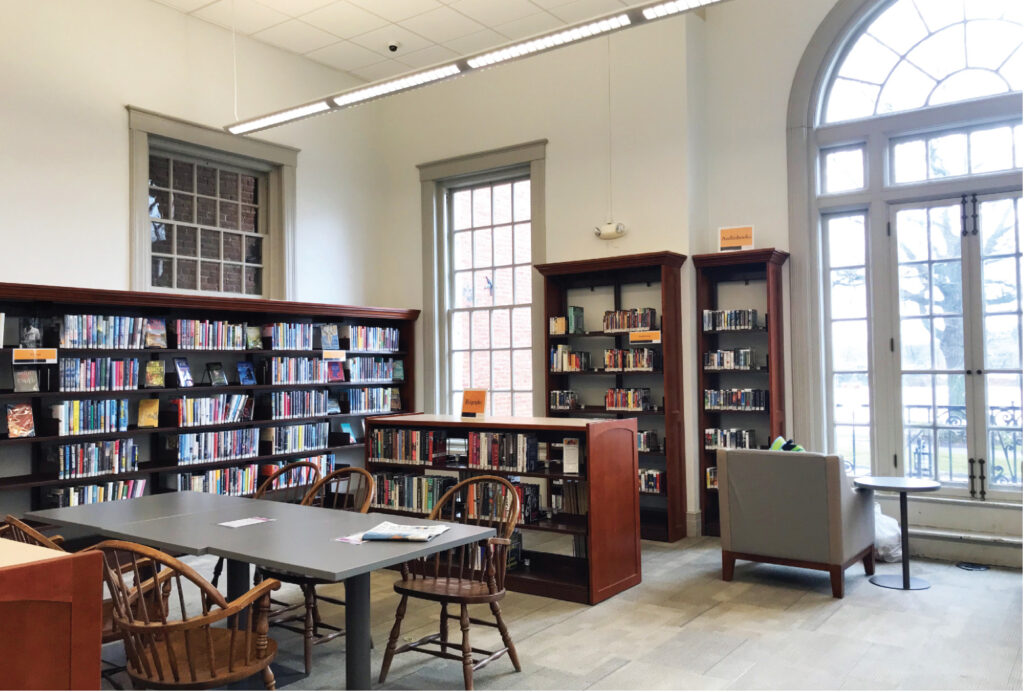
Located downtown, the McCormick Riverfront Library appeals to those exploring the history of Harrisburg, among other interests. The East Shore branch, in Colonial Park, contains an art gallery and offers a safe and comfortable space for teens to hang out. That area will be completely revamped with newly installed gaming consoles sometime this month. In addition, those teens “screen a film monthly” by the famous Japanese production company, Studio Ghibli. Taking that one step further, they get to learn the ins and outs of podcasting.

The Northern Dauphin Library, located in Lykens, is home to a community of quilters and gardeners who love the library’s community garden, complete with a seed bank. It also incorporates children’s programs into the mix.

This spring, the Kline and Madeline Olewine Memorial libraries, both in Harrisburg, will offer crafting and coloring programs for adults, with writing groups in place at the East Shore Library and Alexander Family Library, located in Hummelstown. In addition, there is an ongoing Spanish language conversation group available through Zoom, Pinchock said.  

Soon, the library system will offer more resources to help people help those they love. It’s not easy when those we hold close begin to age and need care. It can be daunting to find information on what steps to take to keep them safe, often with a desire to keep them home, in familiar surroundings. So, DCLS is working to implement “Family Caregiver Resources.”

“We can all agree that our loved ones deserve quality care,” Pinchock said.

Pinchock also spoke of partnerships regarding the “digital equity plan,” intended to make the library’s website accessible to all, including those with vision impairment. She and her team are also advocating for “transcribers” for the hearing impaired. “I am so proud to work with this team at Community Relations for DCLS,” she said.

Pinchock spoke of the library’s emphasis on “diversity, equity and inclusion for all, no matter your background or color.”

“And the outreach extends to all areas, be it rural, urban or suburban,” she stated. 

Among the other “good things” happening at the library: education, workshops, meetings and literacy initiatives, in addition to offering resources to help homeless individuals. 

McCormick Riverfront Library

Personally, Pinchock had a rich upbringing with strong women who mentored and showed her, by example, how to be resourceful, determined and brave, advocating for what is right. So, perhaps her greatest strength is being a compassionate person with a heart to help others. She shared a quote from her grandmother: “A closed mouth doesn’t get fed.” Therefore, she doesn’t shy away from asking for what she needs.

A dear friend once told her she had the gift of language and to fight for those who don’t, saying, “Give people a voice.” In her public relations role, she makes it her mission to advocate for those who are voiceless.  

“Words are so powerful, and the library is a cathedral of words where you can find anything you need from people who will help you find anything you need,” Pinchock said.

For more information on the Dauphin County Library System, visit www.dcls.org.  


If you like what we do, please support our work. Become a Friend of TheBurg! 


Continue Reading