The Week that Was: News and features around Harrisburg

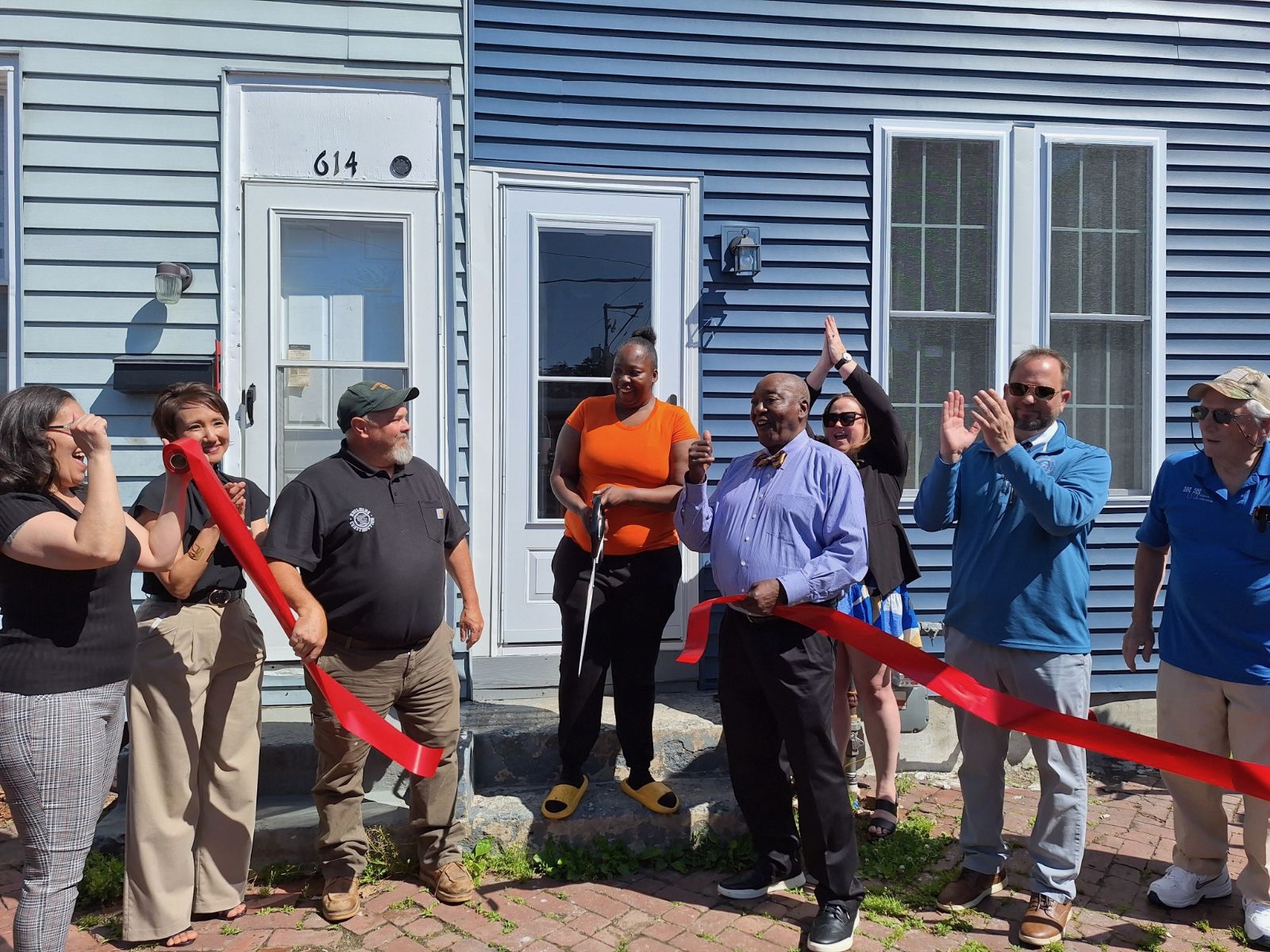
Veterans Outreach of Central Pennsylvania and local officials cut the ribbon on Veteran’s Grove.

This week may have been shorter due to the holiday, but there was still plenty of news in Harrisburg. Find all of our local coverage, below, and make sure you snag a copy of our June issue of the magazine, which dropped this week. 

Artist Julia Mallory cut the ribbon on her new studio and community gathering space, Ten Oh! Six, our online story reported. She plans to host creative workshops and classes, as well as featuring local artist’s work. 

Broad Street Market board members and vendors are asking the community to help name the new temporary structure, our online story reported. Community members are invited to reflect on what the market means to them and submit a creative name for the tent, through June 22. 

City Council member Crystal Davis announced that she would reconsider her previous vote rejecting the city’s selected construction manager for the Broad Street Market, our online story reported. Later, another member of council, Ralph Rodriguez shared the same sentiments in a press release.  

Harrisburg City Council re-voted on its decision to reject the city’s chosen construction manager for the Broad Street Market and approved the contract, our online story reported. Many community members spoke publicly during the meeting, as well as several council members who still opposed the resolution, saying the selection process was unfair. 

The Harrisburg School District proposed its 2024-25 budget of $211.7 million, our online story reported. The budget did not include a property tax increase. 

High school students from Dauphin County Technical School, along with Brethren Housing Association, built a house for a family transitioning out of homelessness, our online story reported. The project not only helped students gain hands-on experience, but helped provide affordable housing in Uptown Harrisburg. 

June events will be kicking off soon in the Harrisburg area. Find all of this month’s happenings, here. 

Our publisher introduces the June issue of the magazine, highlighting the Juneteenth-focused cover image, the new Family Time section and the many summer fun stories, in his Publisher’s Note. 

A puppet show theater, Imaginary Friends, opened in Strawberry Square in Harrisburg this week, our online story reported. The theater will host shows during the summer months. 

Sara Bozich’s Weekend Roundup includes the best music, arts and food events happening in the Harrisburg area.  

SusqueCycle, Harrisburg’s bike share program, replaced many of its bikes with new ones, our online story reported. The organization will donate its old bikes to local nonprofit Recycle Bicycle.  

Veterans Outreach of Central Pennsylvania cut the ribbon on its tiny home village, Veteran’s Grove, for homeless veterans, our online story reported. The project, which has been years in the making, features 15 tiny homes and a community center in south Harrisburg. 

White House official, Tom Perez, director of intergovernmental affairs for President Joe Biden, visited Harrisburg this week to tour recently built affordable housing developments, our online story reported. While visiting, with Mayor Wanda Williams, he touted the federal government’s efforts to increase housing opportunities across the country. 

Do you receive TheBurg Daily, our daily digest of news and events delivered right to your email inbox? If not, sign up here!   

Support quality local journalism. Join Friends of TheBurg today! 


Continue Reading

Harrisburg bike share program upgrades bicycles, donates old ones

New SusqueCycle bikes at the Market Square Transfer Center.

Harrisburg now has some shiny new bikes, providing an inexpensive, accessible and healthy way to get around the city. 

SusqueCycle, Harrisburg’s bike share program, announced that it has upgraded its bike selection, replacing 60 bicycles with brand new ones and donating its old bikes to local nonprofit, Recycle Bicycle. 

SusqueCycle, which is operated by Tandem Mobility and administered by Tri-County Regional Planning Commission, is in its second season, with ten stations in Harrisburg and one in Hummelstown.

“The idea is to give people in and around Harrisburg an inexpensive and healthy way to get around,” said Steve Deck, executive director of the commission, while unveiling the new bikes to the local media on Thursday. 

The organization recently upgraded bicycles to newer models with more comfortable seating and sleeker designs for a better, easier ride, Deck said.  

SusqueCycle is also adding new stations, including one at the TransitPark lot at 10th and Market streets, with another one set to be installed near the state Capitol at Commonwealth and North streets.  

Additionally, the new bikes include a GPS system that tracks riders’ routes in order to gain data for future planning and to see where bike lanes and bike facilities are most needed. 

Recycle Bicycle will donate the old bikes that are in good condition to residents in need and use parts of the more worn bikes to build new ones.  

“Harrisburg is a great biking city,” Recycle Bicycle Founder Ross Willard said. “And a lot of people can’t afford a car, so we help them get an affordable, sustainable basic transportation method.” 

UPMC has worked alongside SusqueCycle as its primary sponsor since its founding and has aided financially in the process of upgrading the bicycles.  

“It’s promoting a healthier community,” said Matt Connors, development officer at UPMC. “Whatever we can do to support a healthier community and keep folks out of our hospitals, that’s why it means so much to us at UMPC.” 

An annual SusqueCycle membership costs $25, which includes unlimited one-hour rides. SusqueCycle also offers an à la carte option, charging $1.50 for a half-hour ride. 

Bikers can purchase memberships or rides and unlock and relock bikes at SusqueCycle stations by using the Movatic app. 

For more information about SusqueCycle, visit their website. 

If you like what we do, please support our work. Become a Friend of TheBurg! 

Continue Reading

Harrisburg artist opens studio, community creative space

Julia Mallory (middle), along with her family and Jason Graves (middle), Harrisburg director of economic development, cut the ribbon on Ten Oh! Six.

Julia Mallory has always been a creative person, but, until now, has never had a place of her own to bring her love of poetry, art and education together.  

Recently, that changed when she cut the ribbon on Ten Oh! Six, her new studio and community gathering space on N. 3rd Street in Harrisburg. 

“I move in a lot of different creative lanes and Ten Oh! Six is where I’m parking the car,” she said. “This was an opportunity for me to bring all of my loves and passion under one roof, while also welcoming the community in to provide a venue and space for folks to tap into their own transformation under the umbrella of creativity.” 

Mallory, a Harrisburg resident, has been a poet for over 20 years and, recently, has ventured into visual art, creating collages and short films. She has also authored a poetry collection called “Black Mermaids” and several children’s books. 

Her new studio will showcase some of her art as well as the apparel and paper goods that she creates and sells.  

Ten Oh! Six will also serve as a creative meeting place for the community, Mallory explained. She has already begun hosting creative workshops, including one where she taught the art of collage-making. Next month, she will host a special Juneteenth-themed workshop, as well as others.  

She also plans to collaborate with other local artists to display their work and utilize their talents to host workshops. 

Ten Oh! Six is open for special events and by appointment. 

Mallory noted that her events are family-friendly, as she hopes to foster a multigenerational atmosphere where younger and older participants can interact and learn from each other.  

“I’m hoping that, when people walk in here, they feel a sense of curiosity,” she said. “The art world can be very elitist and so I’m hoping that Ten Oh! Six makes it accessible to regular folks.” 

Ten Oh! Six is located at 1006 N. 3rd St., Harrisburg. For more information, visit their Facebook or Instagram pages. 


If you like what we do, please support our work. Become a Friend of TheBurg!   

Continue Reading

High school students, nonprofit joined forces to build affordable home in Uptown Harrisburg

Dauphin County Technical School, Brethren Housing Association, local officials and the new resident cut the ribbon on a newly-built home on Wiconisco Street.

A unique local project took hands-on learning to the next level, while helping the community. 

After three years of construction work, Dauphin County Technical School (DCTS) and Harrisburg-based Brethren Housing Association (BHA) cut the ribbon on a new affordable home on Thursday. 

The house, on the 600-block of Wiconisco Street, was condemned after being destroyed by a fire in 2020, until it was purchased for the project for only $500. Then, 140 students from DCTS, studying everything from construction technology to landscaping, got to work. 

“The electrical work, the drywall work, the plumbing work was all completed by students. So, the students did 95% of the work,” DCTS instructor and project director Robert Brightbill said. 

The completed project will provide affordable housing, as defined by the U.S. Department of Housing and Urban Development (HUD), for a family transitioning out of homelessness. 

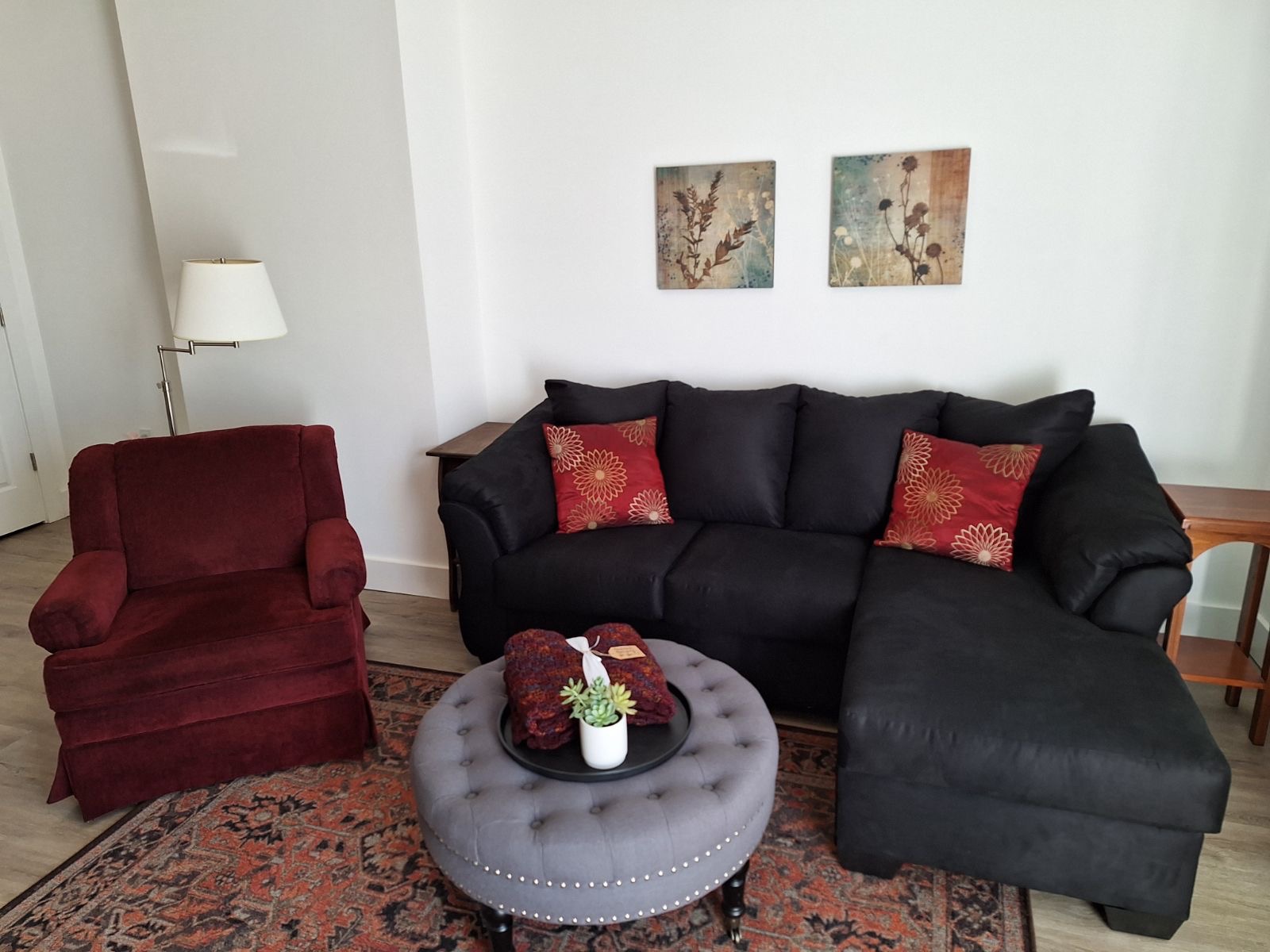
Inside the newly-built home.

One student, 18-year-old Tony Maxwell, who was in ninth grade at the start of the project, said the process could be daunting, especially considering the state of the house when the project began. 

“Each step was honestly really difficult at first, but working with Brightbill, he showed us techniques and ways to come around to everything. Nothing really became too challenging, because he was always there,” Maxwell said. 

Brightbill said the project provided both real-world experience and a sense of community for the students. 

“Whether it would be with some of the vendors and the contractors that we worked with that are now friends and partners of our program, or even working with themselves—learning to work amongst themselves for the greater good, that’s what I think the biggest takeaway for the students is,” Brightbill said. 

BHA executive director Kait Gillis-Hanna considered the project to be the “perfect collaboration” between all groups involved.  

“It’s a beautiful story of kids at our technical school building a home, local vendors all donating time and money, the government providing a grant for us to acquire the property, and then a homelessness organization moving a family from homelessness into having permanent housing,” Gillis-Hanna said. 

The family planned to move into the home after the ribbon-cutting ceremony, the same day.  

“I spoke to the students on Tuesday, [I said] ‘you don’t even know the effects of the work you just did on what’s going to happen in their lives.’ [A home] changes so much for people, especially going from being housing insecure to having that stability. You can think about other things,” Gillis-Hanna said. 

 To learn more about Dauphin County Technical School, visit their website. To find out more about Brethren Housing Association, visit their website.

If you like what we do, please support our work. Become a Friend of TheBurg!


Continue Reading

Harrisburg School District proposes 2024-25 budget, contains no tax increase

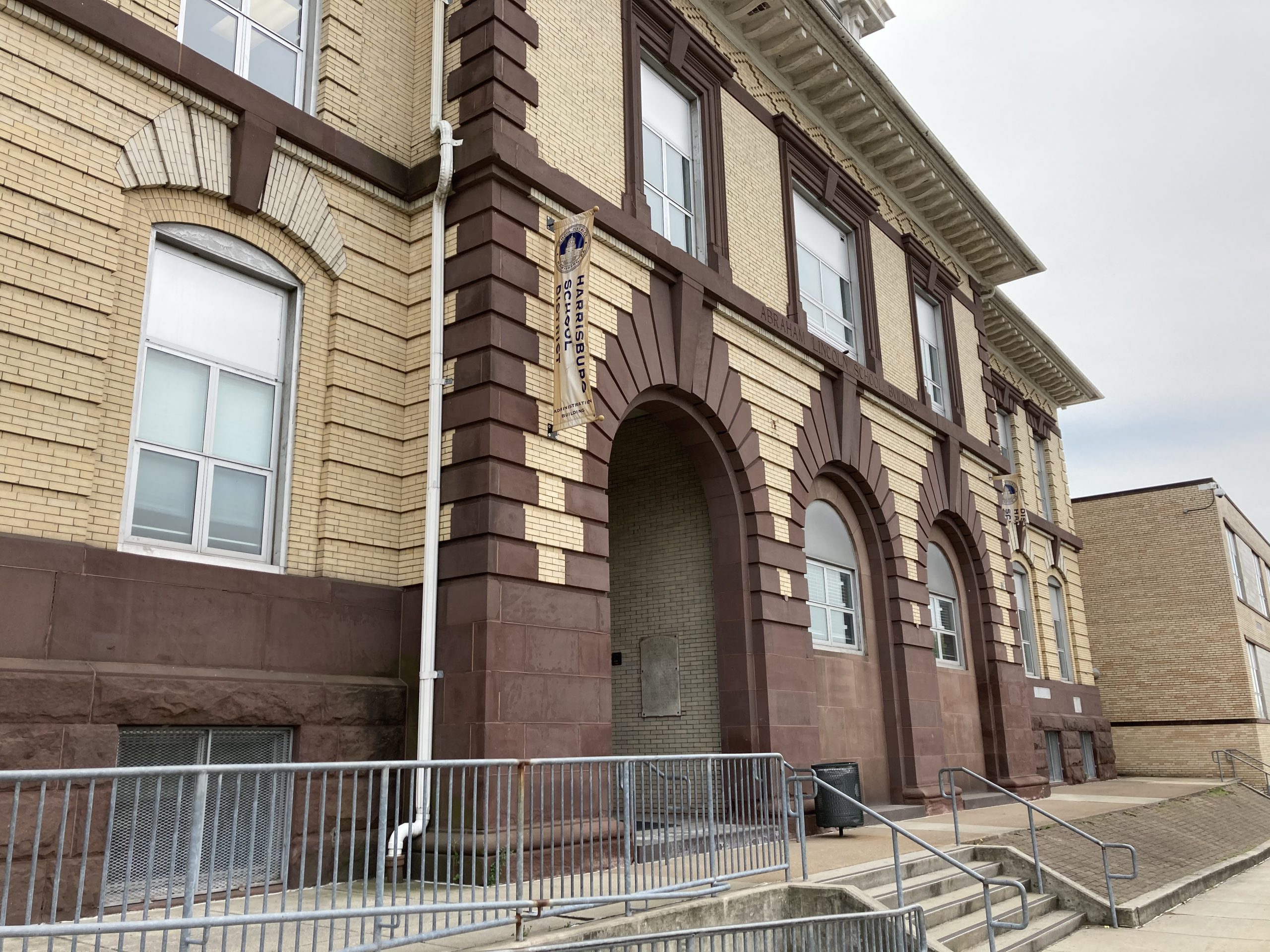
Harrisburg School District Lincoln Administration Building

School property taxes will likely remain the same for Harrisburg residents in the coming year. 

The Harrisburg School District proposed its $211.7 million 2024-25 budget this week, a spending plan that does not include a tax increase. 

Since taxes would not rise, they would remain at 30.78 mills. The last time the district hiked taxes was in the 2022-23 year, bumping them up by one mill. 

Stokes noted that Harrisburg taxpayers who qualify for the Homestead Exemption may actually see a decrease on their tax bill in the coming year, as the district expects to receive increased state tax relief funds.  

This year’s budget is projected to see a decrease from the 2023-24 actual budget of $222.8 million, mostly due to the district having fewer federal COVID-relief funds to spend this year, said Dr. Marcia Stokes, the district’s chief financial officer. 

Within the district’s budget, the largest expenditures would be spent on salaries and benefits for employees, debt payments, charter school tuition costs and renovations and HVAC replacements, the last of which are largely funded through the federal Elementary and Secondary School Emergency Relief (ESSER) funds. 

The district has estimated that it would pay $29.1 million to charter schools this year. 

Stokes highlighted the fact that Gov. Josh Shapiro has proposed legislation that would put a cap on the price that districts pay to charter schools. While Stokes said that the district didn’t factor that into the budget because of the very low likelihood of passage, if approved, it would mean a $7 million savings for the district. 

The proposed budget would use $8.5 million total in ESSER funds. This would likely be the last year that those funds are available to use in the budget, Stokes said.  

The district is slated to vote on the final budget at a meeting on Thursday, June 27. 

For more information, visit the Harrisburg School District’s website. 

If you like what we do, please support our work. Become a Friend of TheBurg!     


Continue Reading

Weekend Roundup with Sara Bozich


Plan your weekend with my weekly list of things to do around Harrisburg and central PA!


What you’ll find ⤵️

For something new: SoMa Fest!! Join us on Saturday – FREE! Worth noting: Also FREE – 31st Annual Shakespeare in the Park returns this weekend! Things on my agenda this weekend: I am returning from Pittsburgh (Noah Kahan), and SoMa Fest Saturday. Maybe St. Nicholas Picnic Sunday?

For your weekend planning

  • SoMa Fest is Saturday! See you there!
  • See what else you missed on the blog

Below are more options for your weekend.

A Look Ahead

  1. Proudly PA! festival returns on June 8 to Fort Hunter Park (tap for promo code!)
  2. June 21 | Juneteenth SoMa Block Party with YPOC and HYP | 3rd in the Burg
  3. You can now sponsor the Weekend Roundup! Ask me how! 
  4. Submit your events for the Weekend Roundup

Thursday

Friday

Saturday

Sunday

If you like what we do, please support our work. Become a Friend of TheBurg!

Continue Reading

Park Plan: A proposed Allison Hill park is generating neighborhood enthusiasm—along with some concern

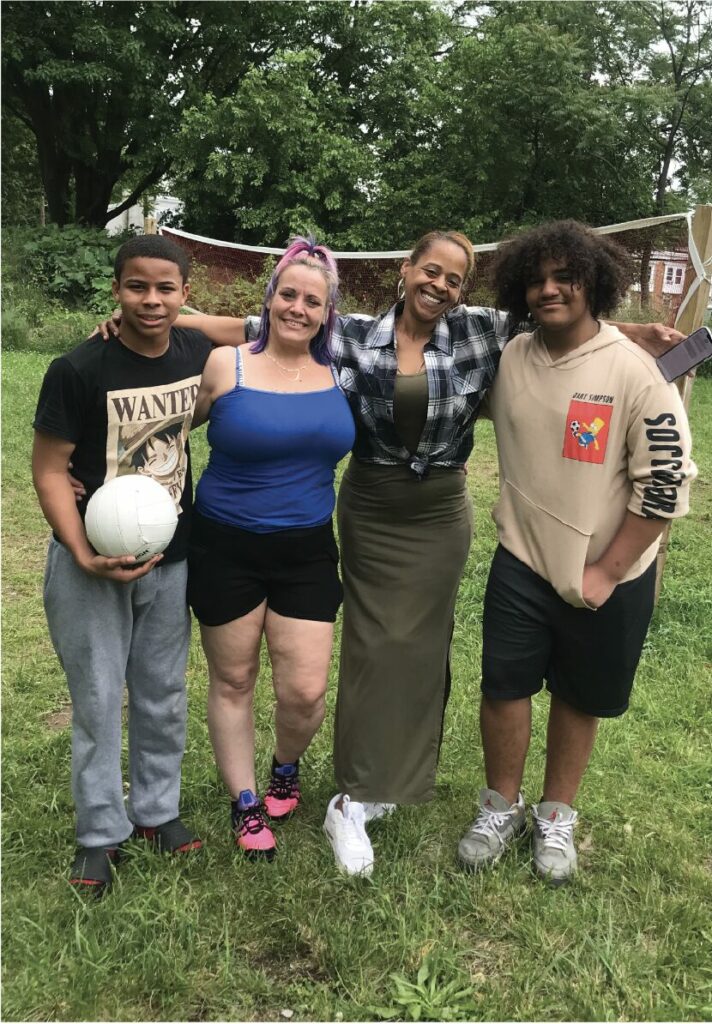
Friends and neighbors Ty’rez Johnson, Malissa Gaddy, Tracy Daouda and Elijah Whitcomb pose in front of the volleyball net built by Malissa Gaddy.

Malissa Gaddy longs for a better view from her home in Harrisburg’s Allison Hill. At the moment, she sees a vacant block and occasional dumping ground.  

“If they don’t put something here, it’s going to continue to be a dumpster,” she said. “I don’t like looking out my back door, and I think it’s time for the Hill to actually have some greenery. If we don’t have educational things for these children to learn from, as in what plants actually do, they’re going to continue to walk by a flower and stomp on it.” 

If all goes as planned, Gaddy’s wish will come true. Private citizens, nonprofits and the city government are collaborating to transform a scrubby, vacant plot at 15th and Swatara streets into a public park. The proposal met some resistance from housing advocates, but neighbors are excited. Tucked into Allison Hill’s sloping back streets, Swatara Street Park could bring a green oasis to a tight-knit, under-resourced community. 


Park Dreams 

The park project began around 2021, when Char Magaro, restaurateur and environmental activist since 1988, retired and sold Tracy Mansion, home of her last restaurant. She crossed the street and sat on a Riverfront Park bench dedicated to her climate-change fight. 

“I’m sitting there thinking, ‘I’m 73 years old, and I want a win,’” she told TheBurg on a tour of the proposed park. 

Magaro found the site through Tri County Community Action’s resident-driven action plan, “Heart of the Hill.” There at 15th and Swatara, blighted homes had been demolished, and new homes built on the next block were generating momentum. The 700 residents surveyed said they wanted a park there, with a playground and flexible green space.  

The Swatara Street Park plan aligns with the residents’ core values of housing and public space, sense of community, safety and engaging youth, said Tri County Community Action CEO Jen Wintermyer.  

And when those values collide, such as housing vs. public space, it’s a matter of managing “a delicate balance,” she said. Existing homes tucked throughout Allison Hill can be rehabbed or demolished for new-builds, while an empty block creates an “opportunity zone.” Magaro’s approach—bringing in dollars from private donors and grants while respecting the community’s wishes—presents “a win across every level.”  

“Every community needs green space,” Wintermyer said. “It raises property values. It gives people a reason to want to move into a community. It makes it more family-centric and family-friendly, versus an urban house after house after house.” 

Phase one will bring passive recreation to eight of the housing lots in the plot—seven donated by the Harrisburg Redevelopment Authority, and one bought from Tri County Community Action.  

Two remaining lots, when purchased from their private owners, are earmarked for phase two, with active recreation for children developed with residential input, Magaro said.  

In plans drawn by Debra A. Kirkpatrick of Dauphin County-based Landscape Architectural Design, native pollinator perennials line a handicapped-accessible pathway. A rain garden absorbs stormwater. Kids hop across stepping stones.  
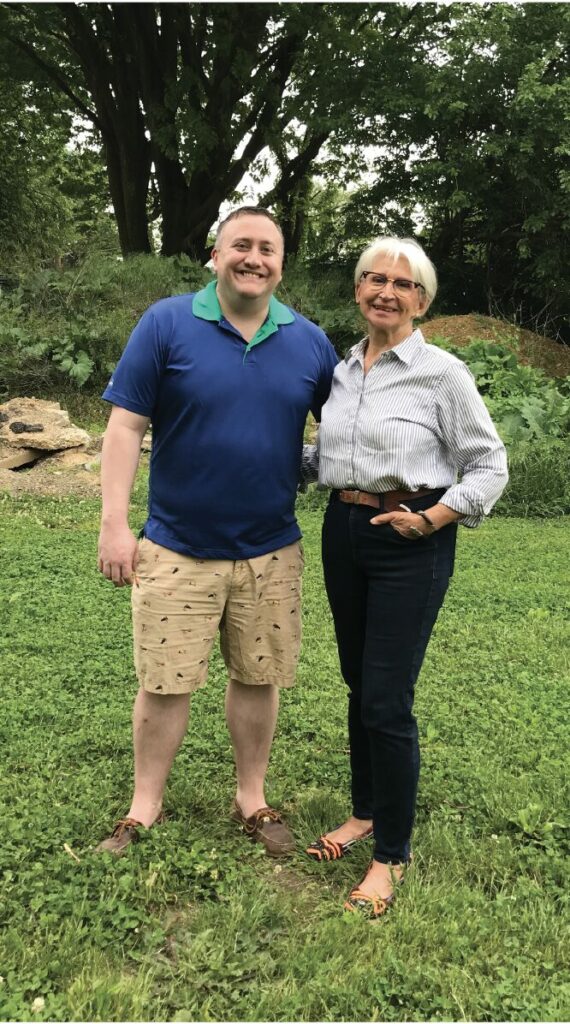
Alex Reber & Char Magaro

The red dawn cedar tree at the center is non-native, Magaro admits, but “it’s durable.”

“The trunk looks like something out of a fairy tale,” she said. “I can see the kids getting that connection with nature.” 

When Alex Reber, secretary-treasurer of the Harrisburg Redevelopment Authority and owner of a Harrisburg-based accounting firm, joined the effort, he helped the park win a $72,000 Dauphin County gaming grant. Funds raised from private contributions, grants and donated land currently total about $218,000, and organizers are seeking a matching grant from the Pennsylvania Department of Conservation and Natural Resources. 

The project aligns with city and county comprehensive plans, and “Heart of the Hill” shows public support, said Reber, who lives in Millersburg.  

“The really exciting thing about this is I think it could become a model of a public-private partnership,” he said.  

Especially in a city that can’t afford to take on another park, the collaboration of private citizens, nonprofits and government is “the perfect way” to develop and maintain neighborhood assets, said Wintermyer. Each brings pieces that complete the puzzle. 

“The government can’t do it by itself,” she said. “There’s not enough dollars, and there’s too much need.” 


Uplift Not Displacement 

With two members absent, Harrisburg City Council unanimously ratified the park’s DCNR grant application, but the plan initially encountered some skepticism. Council member Lamont Jones told TheBurg that he would have preferred dividing the lot between a park and badly needed housing.  

Parks can become gentrifying when they raise property values and entice landlords to sell their rental homes—and push out residents, Jones said. From New York City’s Central Park to Harrisburg’s Capitol Park, history shows marginalized communities displaced in the name of beautification, he said.  

“One thing we do know, it will beautify the community, but I’m just hoping the people there will be able to continue to live there and grow as that community grows,” Jones said. 

Beautification “absolutely can” gentrify when improvements price out residents from their homes, said Wintermyer. That’s why Tri County Community Action performs dual duty in community development and social services. 

“While the physical and built-in environment is being improved, we’re also making those investments into the families, to strengthen them and grow their economic prosperity,” she said. 

With funding in place, work is slated to begin in spring 2025. On an adjoining lot, Capital Region Water is building a community garden, part of its City Beautiful H2O initiative to reduce Harrisburg’s runoff water pollution. 
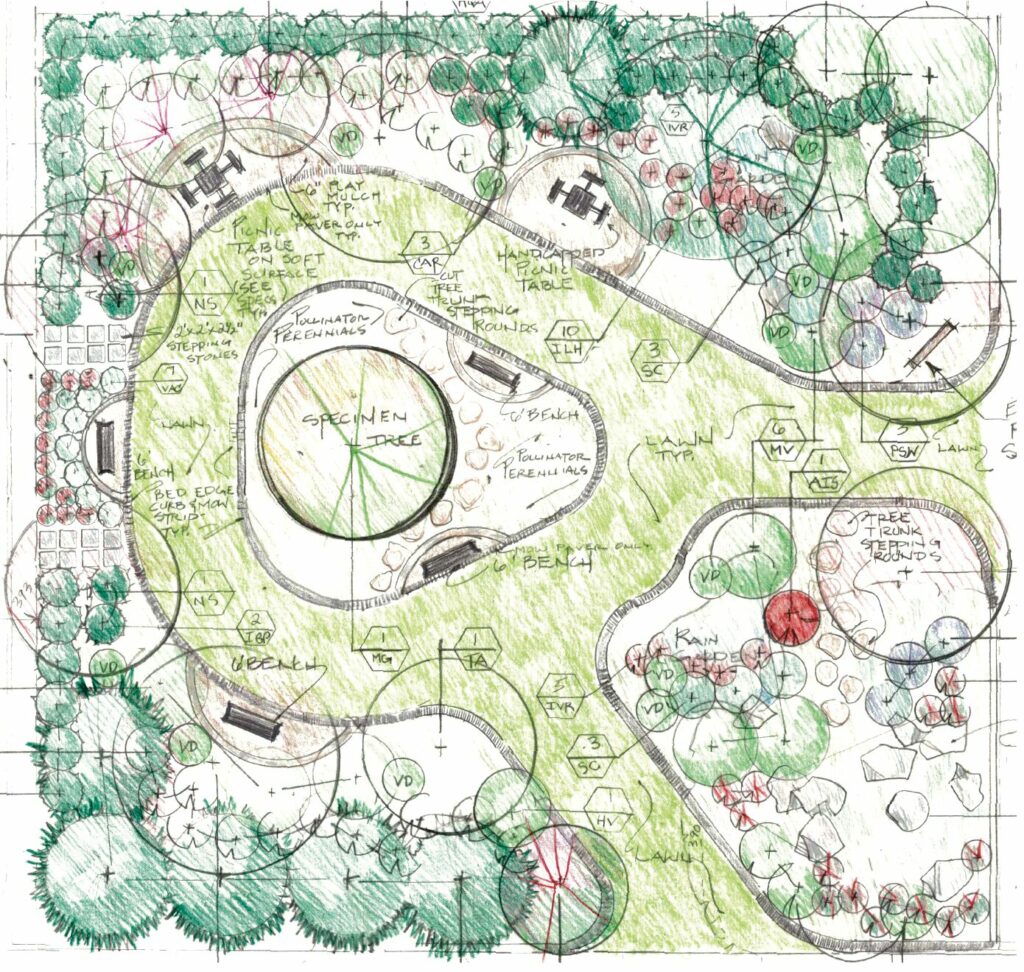
Park rendering by Debra A. Kirkpatrick

A park complements Capital Region Water’s green infrastructure and plans for controlling combined sewer overflow, reducing backups into streets and basements and complying with the Clean Water Act, said External Affairs Manager Rebecca Laufer. 

“Green spaces help to reduce stormwater runoff and mitigate the risk of flooding by absorbing and filtering rainwater,” she said, in a statement. 

Eventually, the city of Harrisburg is expected to take over the park. The administration of Mayor Wanda Williams has been “100% supportive” while protecting the city’s interests, said Reber. A five-year maintenance plan—a condition for moving forward—shows ongoing fundraising to generate the $10,000 needed annually for seasonal landscaping. The rest of the year, volunteers from South Allison Hill Homeowners & Residents Association, Tri County Community Action, Wildheart Ministries and the Rotary Club Environmental Committee, co-chaired by Magaro and Reber, will conduct regular cleanups.  

Wintermyer views Tri County’s cleanup responsibilities through a community-building, shared-ownership lens. 

“Part of our role is, yes, to make sure maintenance is done, but let’s get the neighbors who are using the park engaged in the process, as well,” she said.  

Asked how the park dovetails with Wildheart Ministries’ revitalization efforts in Allison Hill, Director Tannon Herman called the project’s momentum “bittersweet”—bitter for its lack of housing, sweet for its “promises fulfilled.” It is a place for adults to rest and for kids to “just run around and be kids,” he said.  

“When Char said, ‘This is what I’m going to do,’ and it happened, it may not be what everybody wanted, but she at least followed through,” Herman said. “I have a lot of respect for anybody who’s going to do work in the community who’s actually going to do what they say. Having a space that has a vision to not just become beautiful but also to stay beautiful is something to celebrate.” 


Green Vision 

From the future park site, Magaro can see the spot where she started her first catering business. Today, she lives in East Pennsboro Township, across the river from Harrisburg. She tells potential backers from outside the city, “This is our community.” 

“It’s easier to get things done on a community level,” she said. 

As the project moves forward, next-door neighbor Gaddy believes in her village of Harrisburg. She plans to help the park with whatever is needed, “as long as it’s not growing anything. I’m not a grower.” On Saturdays, she plays volleyball with kids on a net she erected there.  

The park is for children, she said, because “kids are our future.” 

“The main thing is to give the kids not just another playground, not just another basketball court, not just another something that’s going to go to waste or the kids are going to misuse, but something they can educate themselves on as well as be a part of the community, something they might see as beautiful,” Gaddy said.  


If you like what we do, please support our work. Become a Friend of TheBurg!    

Continue Reading

Multicultural Mission: Market Square Presbyterian Church celebrates 50 years of its Korean Ministry, which has bonded members across cultures

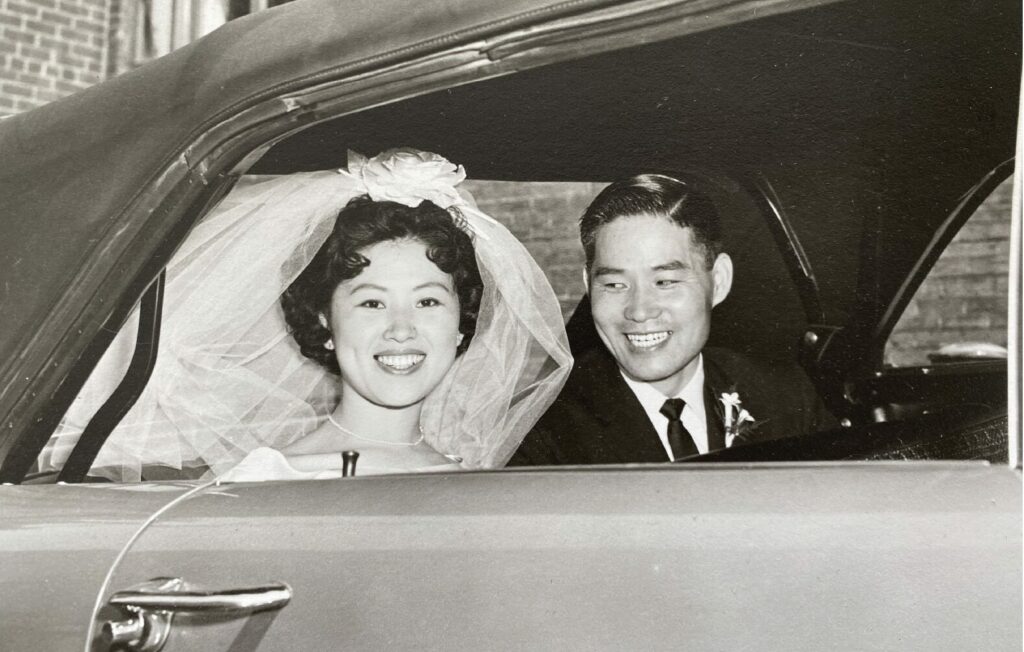
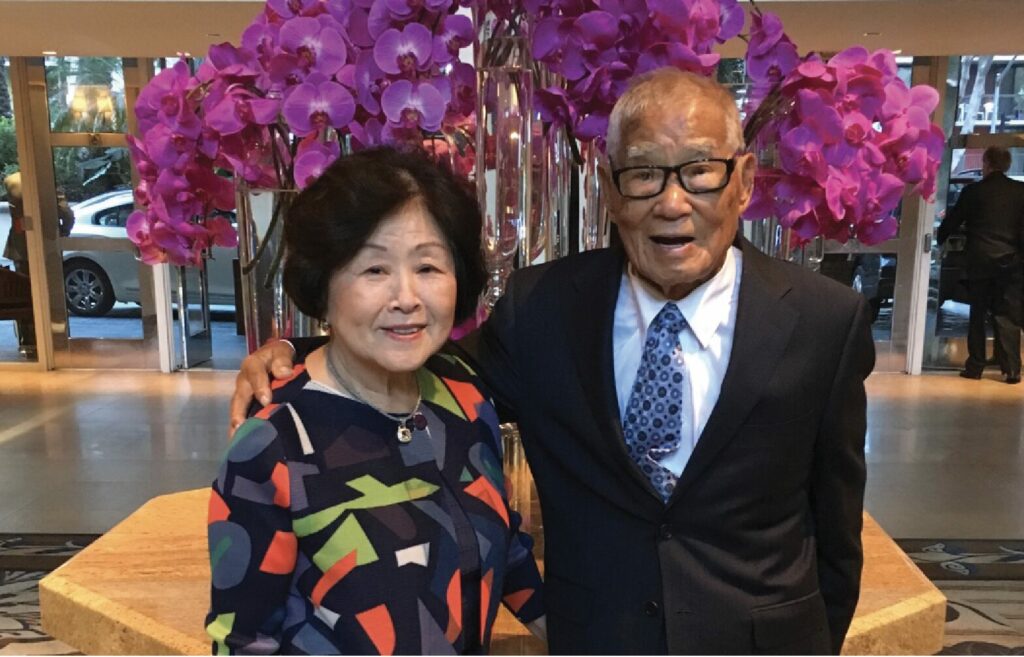
Min Ja Kim Davis and Bok Nam Jin Davis on their wedding day at Market Square

The Davises

It has been 30 years since Susan Jin Davis regularly attended services at Market Square Presbyterian Church in Harrisburg, and yet, she’s still an official member of the church. 

Since moving out of the area, she’s never been able to find anywhere quite like Market Square. 

“There’s something about that membership that I cannot let go,” she said. “It has an emotional hold on me.” 

So much of Jin Davis’ past, and who she is today, is tied into her years at Market Square. 

Diversity, equity and inclusion education and advocacy have been a large part of her professional work, and she traces a lot of that passion back to the church. 

“All of this came from that experience at Market Square,” she said. “It’s had a huge impact on me.” 

In April, Jin Davis returned to the downtown church to celebrate the 50th anniversary of its Korean Ministry—the program that her parents started and that helped shape her. It felt so good to be back that she wondered if she should make the two-hour trek from her home in Kennett Square back to Harrisburg, maybe just once a month. 

The beauty of Market Square’s Korean Ministry, to Jin Davis, wasn’t just that it offered a community for those from her culture to connect and fellowship, but that it was part of a larger, multicultural congregation that, through differences, stuck together. 

“The legacy of my parents to create a multicultural ministry—that was their dream,” she said. “I think what Market Square did was create that possibility that we can do this in the larger world.” 

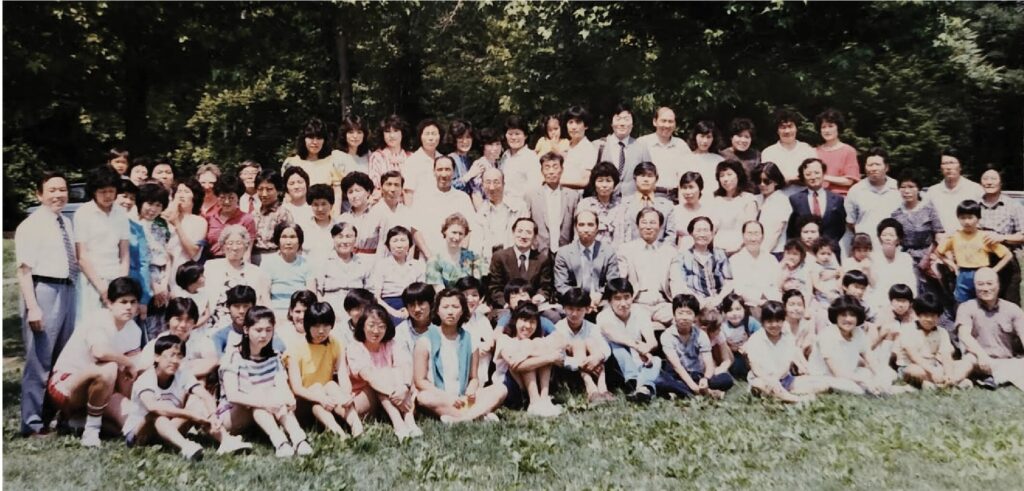
Korean congregation, 1980s


Something to Behold 

Jin Davis described Market Square’s S. 2nd Street building, which dates back to 1860, as a hub for Korean immigrants from the 1960s through the ‘80s. 

“It was literally the starting point for life in America,” she said.  

However, before it became the starting point for dozens of Korean families, it became home to Korean immigrant Bok Nam Jin Davis, Jin Davis’ late father. 

Bok Nam immigrated to the United States in 1962 and connected with congregants of Market Square shortly after. Although he was in his 20s when he came to the Harrisburg area, Bok Nam had been orphaned by war since childhood and the Davises, an American couple with connections to Market Square, adopted him into their family as an adult.  

Just a year later, Min Ja Kim came to the states to marry Bok Nam, the pair having only spoken on the phone before her arrival. Both had endured great trauma in life, Jin Davis explained, and had to quickly learn how to navigate life on a new continent.  

“They were some of the only people of color in Market Square at the time,” Jin Davis said. “It must have been very lonely and isolating.” 

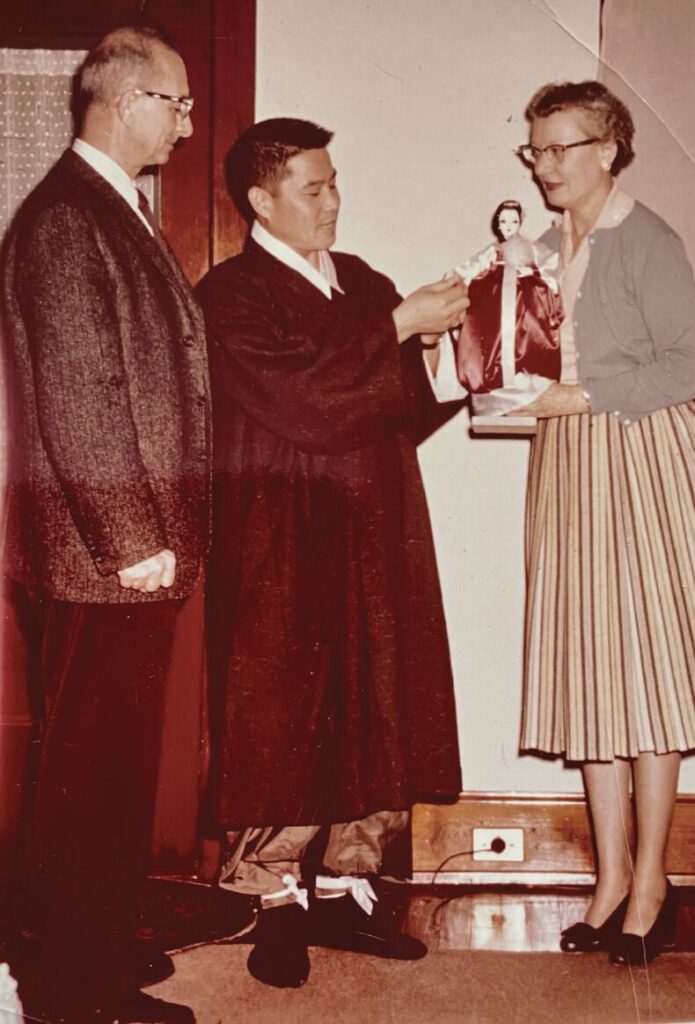
Bok Nam Jin Davis with adoptive parents Horace and Elizabeth Davis

As the new couple made their life in the United States and regularly attended the church, many of their family members and friends began to immigrate. Word spread about Bok Nam’s connection to Market Square, and it only made sense for him to set up a program to serve the church’s many new members. 

“Market Square turned out to be an immigration spot in Harrisburg,” Jin Davis said.  

In 1974, the Korean Ministry was born and the church held its first Korean language service.  

Longtime Market Square member and historian John Taylor remembers the early days of the ministry as a time when the white members and Korean members fellowshipped together, despite cultural and language differences. 

While there were separate English and Korean language services and Bible studies for the adults, they were one congregation, which had regular socials, picnics and gatherings, he said. The children’s classes combined both cultures, and the kids were friends and peers. Taylor taught the children’s classes for a time and recalled what he saw as a picture of diversity and unity.  

“It was something to behold,” he said. “I think it helped them as they grew into adulthood to be accepting of people from different cultures.” 

Gwen Lehman saw the impact the experience had on her children and their acceptance of those from different cultures, but also recognizes how the experience has shaped her. 

“It’s very impactful when you hear their stories,” she said. “It’s given me a real appreciation for the courage and determination that immigrants possess.” 


Unique Model 

The Korean Ministry had several pastors over the years, but Jin Davis specifically remembers when Rev. Chul Soon Lee, affectionately known as Andy Lee, took the role of full-time associate pastor of both the Korean- and English-speaking congregations. Market Square members remember him as a bridge builder between the groups. The Korean members got to see someone in the church’s leadership who reflected them, and the white members got to see someone who was different. 

“He looked like us. He could speak Korean for our first-generation immigrants, and he was able to be a pastor to everyone,” Jin Davis said. “On both sides, you got a stereotype-busting scenario. It was very profound in its effect.” 

As she grew up in the church, Jin Davis found a place where she felt comfortable to be herself in a region where she didn’t always feel that way.  

“It was really hard to be different in central PA,” she said. “We found Market Square as a place of belonging.”  

Obviously, blending cultures wasn’t always easy, as there were challenges and communication barriers, members shared. In the mid-1980s, many members began breaking off from Market Square in favor of starting or joining independent Korean churches.  

Following the departure of some Korean members, the ministry downsized, but many stayed, and the program remains vibrant today, Lehman said.  

Rev. Ki Nam Lee, who currently serves as the pastor of the ministry, said that, while the program is smaller these days, the need is still great amongst Korean Americans looking for a service in their primary language.  

The Korean members attend services together, go out for weekly lunches and visit those who are sick. But, they’re as involved with the rest of the church as ever, the two cultures serving together and participating in joint monthly services. 

“We’ve always been multicultural. That’s what we value and cherish, that’s what we believe is our mission,” he said. “Of course, there have been challenges, but we have overcome those and celebrated our 50-year anniversary together, and we are proud of that.” 

Jin Davis reflects on her years in Harrisburg with gratitude and pride for what her parents were able to create and the impact that the Market Square community had on her. Fifty years after the Korean Ministry’s inception, Jin Davis thinks what the church has been able to accomplish, fostering a multicultural environment, is still distinctive. 

“Market Square is really a unique model for other churches,” she said. “I haven’t been able to find anything like it.” 


Market Square Presbyterian Church is located at 20 S. 2nd St., Harrisburg. For more information, visit www.marketsquarechurch.org 

If you like what we do, please support our work. Become a Friend of TheBurg!    
Continue Reading

Rebuilding Lives: Church World Service helps refugees make a new start in the Harrisburg area

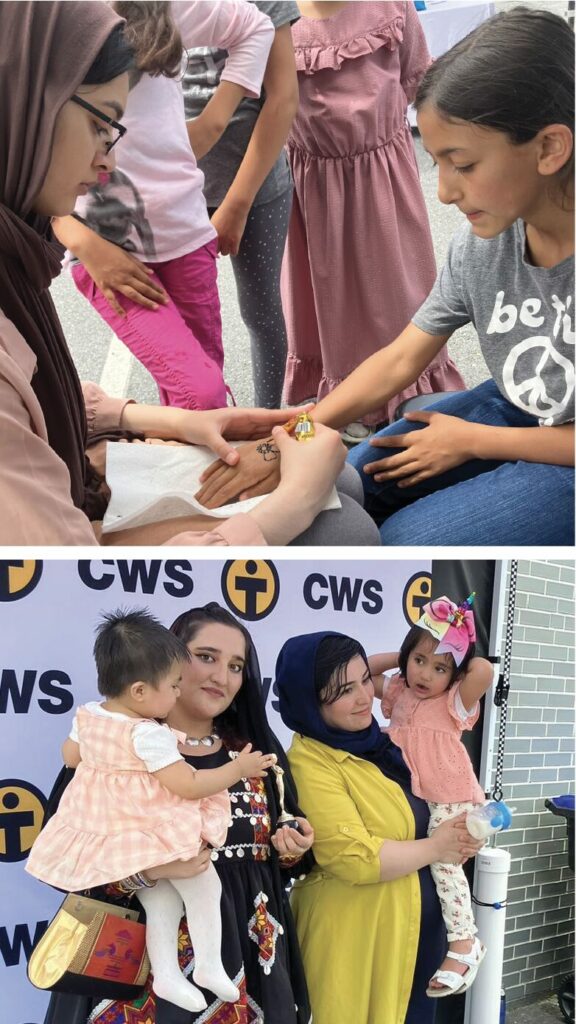
Scenes from World Refugee Day 2023

Church World Service Harrisburg’s mission matches the famous words by Emma Lazarus inscribed on the Statue of Liberty, the classic verse that welcomes weary immigrants to America. 

In effect, Church World Service Harrisburg, or CWS, is Lady Liberty’s golden lamp leading to the safety of America’s open door for refugees here in central Pennsylvania. 

“Our arriving refugee clients are not walk-ins or undocumented individuals,” said Erika Juran, CWS Harrisburg’s development and communications officer. “They are individuals and families who have been carefully vetted and have an urgent need to arrive to safety in Harrisburg.”

Many people assigned to CWS Harrisburg have spent years waiting in refugee camps for the chance of resettlement, Juran explained.

“They are survivors of war, terroristic threats, torture, human trafficking, rape and persecution,” she said. 

Just midway through its current fiscal year, the Harrisburg office has already welcomed around 300 clients, according to Alex Swan, CWS Harrisburg’s site director.

The center anticipates welcoming refugees this year from Afghanistan, Syria, Pakistan, Sudan, Somalia, Ivory Coast, Burma, Venezuela, Belarus and Nicaragua, among other countries. Family sizes average seven people, with an average of four children per family. 

“Everyone has experienced trauma,” said Durre Sharif, CWS Harrisburg’s associate director of resettlement and engagement. “They all have surmounted the insurmountable.”  

In recognition of June as Immigrant Heritage Month and World Refugee Day, CWS Harrisburg invites the public to its second annual World Refugee Day Block Party on June 22 in Harrisburg (details below). The free event will feature cultural dance and music presentations, a DJ, food trucks and family-friendly activities.  

“All (of our clients) have lived experiences that have made them very resilient,” Swan said. “They all want to work hard and make a better life for their families.” 

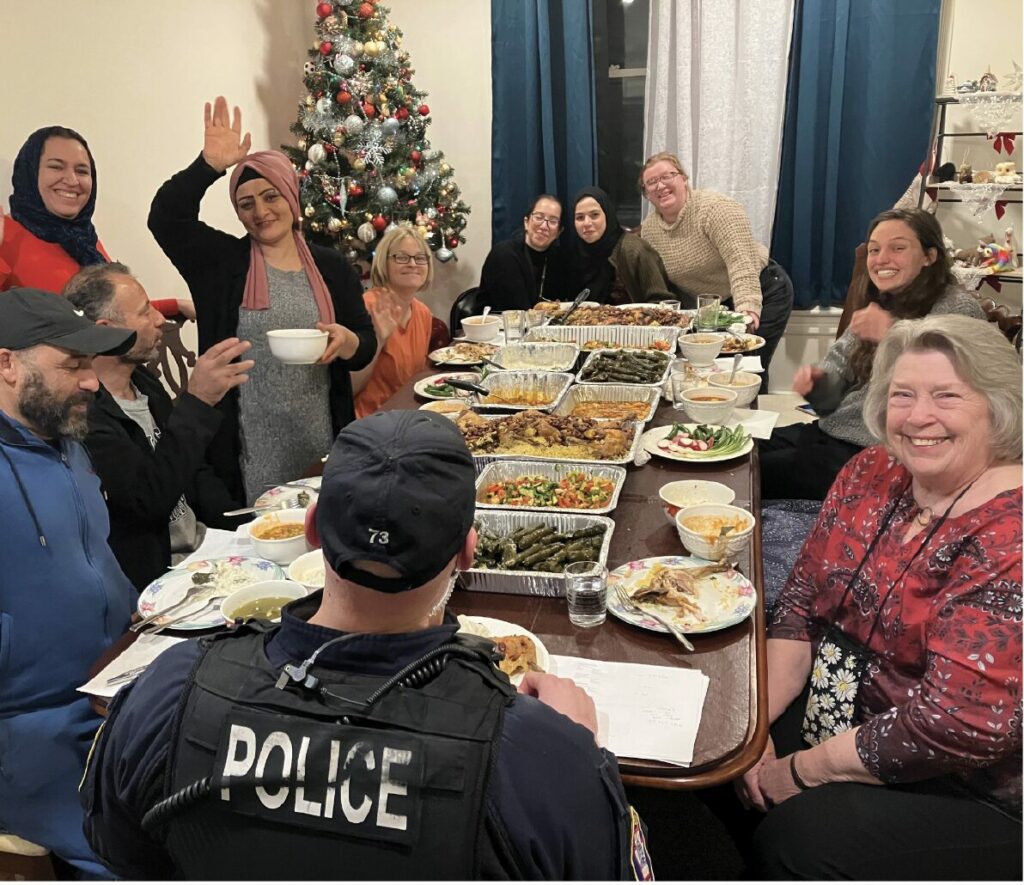
An appreciation dinner for CWS staff and volunteers hosted by clients from Syria.

Skills & Means 

CWS is a global nonprofit organization founded in 1946 immediately after World War II to provide humanitarian relief and protection worldwide. Today, CWS operates in 30 countries.

The Harrisburg office began in March 2022, one of 25 Church World Service locations in the United States.

Since opening, the facility has seen its client list grow steadily. In its first year, the Harrisburg operation welcomed 90 clients. By September 2023, the annual tally grew to 110. This year, 440 clients are projected to arrive by Sept. 30. 

Before they arrive, refugees are screened by the Office of Refugee Resettlement, a program of the Administration for Children and Families through the U.S. Department of Health and Human Services. 

The ultimate goal of CWS is to give clients the skills and means to attain self-sufficiency and become established in their new community. 

“These incredible, special people we meet work so very hard,” Juran said. “I’ve worked for many places before this, and the vision of this place is so amazing.”

CWS Harrisburg works to support refugee clients as they settle through five programs, according to Juran. 

The reception and placement program provides refugees initial welcome support and administers 23 federally required core services immediately upon an individual’s or family’s arrival and within their first 90 days here. 

The community engagement program creates and administers plans addressing social health determinants. CWS’s community engagement team hosts events, supports advocacy, and equips and guides volunteer groups to partner with the Harrisburg office. Together, all parties work to administer core services, providing friendship as clients navigate through their new life in the community. 

A matching grant program provides extended case management and employment assistance after a client’s initial 90-day resettlement period has ended. Support includes employment skills training, job referrals and family budget planning. Paired with community connections and volunteer support, this program helps ensure that clients attain needed skills for financial independence. 

“Sometimes, we’ll run into former clients and see them hit milestones,” Swan noted. 

The preferred communities program provides regular and intensive case management to clients determined as “especially vulnerable” for attaining self-sufficiency. 

Finally, the refugee social service program provides short-term care continuum through “culturally and linguistically appropriate referrals and case management services” for eligible individuals living within a 100-mile radius of the Harrisburg office.

Meaning & Purpose 

Despite its many successes, CWS Harrisburg faces challenges. The nonprofit is funded through federal and state grants, local foundations and private donations, but more is always needed, according to staff. 

“Basically, the field of refugee placement is underfunded,” Swan noted. 

Because of this—and because of a global humanitarian crisis—CWS Harrisburg has mounted an emergency appeal for donations.

“These donations will be put to work immediately to provide support of our clients’ housing and utility expenses, especially those with more vulnerabilities like single mothers and those with severe medical issues,” Juran said. 

Likewise, the facility always seeks volunteers from the community to drive clients to doctor appointments and other tasks. Despite challenges, Sharif said that she is gratified helping CWS clients “rebuild their lives.” 

“Happiness comes from meaning and purpose,” Sharif said. “We all feel so privileged to be here in this space and do what we do to help these people.” 


CWS Harrisburg will hold its second annual World Refugee Day Block Party on June 22, noon to 3 p.m., at Maclay and N. 2nd streets, Harrisburg. To learn more about CWS Harrisburg and to donate, visit www.cwsharrisburg.org or call 717-358-9351. 

If you like what we do, please support our work. Become a Friend of TheBurg!      

Continue Reading

Rite Choice: Great Celebrations designs custom ceremonies for weddings, rituals 

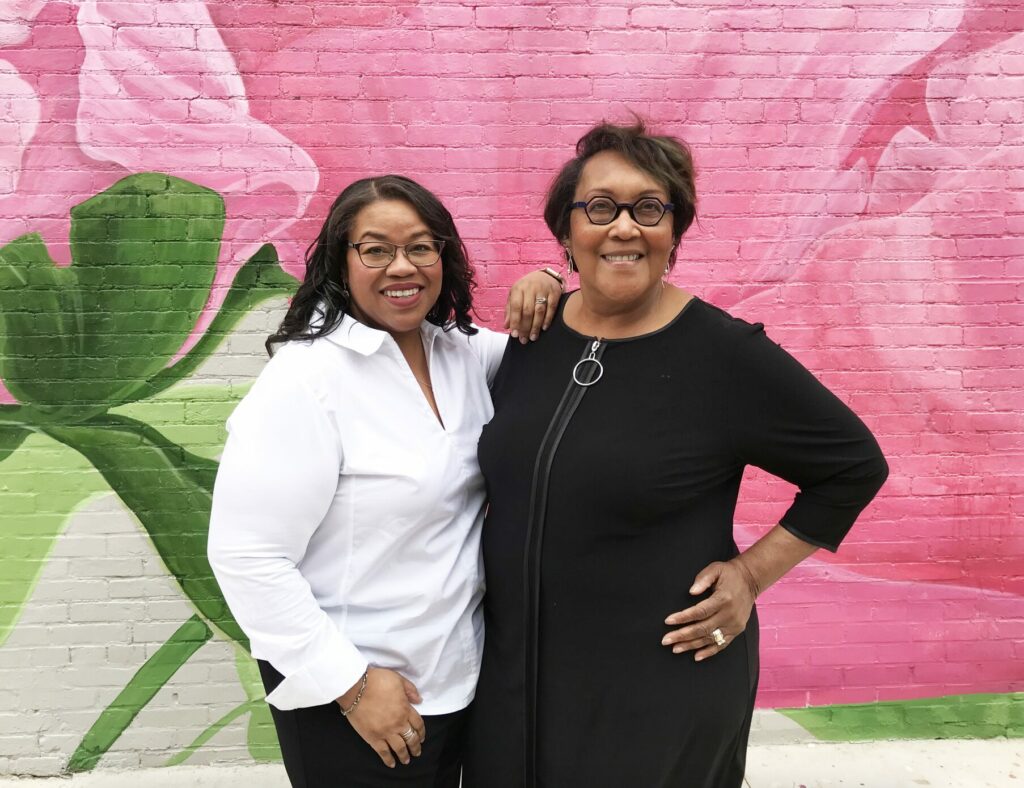
Jacqueline Smith-Bennett & Mylah Martin-Davis

The mother-daughter pair of Jacqueline Smith-Bennett and Mylah Martin-Davis found themselves in the wedding planning business nearly 25 years ago after a less-than-stellar experience leading up to Smith-Bennett’s own wedding.  

The wedding planner they hired wasn’t living up to expectations, and the two “ended up planning her entire wedding on very short notice, and we got very positive feedback,” Martin-Davis said. 

At the time, both women were working in other fields and were able to leverage their skills in management and planning, as well as their business contacts, to take the leap into working for themselves. 

Through Great Celebrations, the pair takes a holistic approach to celebrating life’s milestones, including weddings, baby-namings, new home blessings and memorials. They focus on the ceremonial aspects that some people may gloss over, especially when it comes to weddings.  

“People tend to focus on the party aspects of a wedding,” Martin-Davis said. “But people are missing out on the ceremony aspects, the more meaningful parts.” 

A new client relationship typically begins with an interview to learn about their wants and needs and to determine how Great Celebrations can develop a meaningful ceremony.  

“We share what we can do for them, and they share what they are looking for,” Smith-Bennett said. “(We ask) ‘is this someone who can appreciate what we have to offer?’”  

When planning a wedding ceremony, for example, the focus is on the couple, their values and their history together.  

We’re interested in getting at the truth of who the couple is and where their story has begun and how they got to where they are now,” Smith-Bennett said. “We’re drawing out a story.” 

Incorporating a couple’s unique love story into their wedding ceremony can take many forms. 

For one couple, it involved taking clippings from a plant that had special meaning to them and creating a vine, which was used as a garland during their ceremony. At the end of the ceremony, the couple’s mothers placed the garland in front of the newlyweds, and then they stepped over it, symbolizing their entry into a new life together.  

Another couple wanted to incorporate their love of fitness into their vow renewal. So, the ceremony included weights, flexibility bands and water to symbolize qualities of a successful marriage. 

“We look for things that are very meaningful to the couple,” Smith-Bennett said. “That’s the entire goal.” 

The most fulfilling feedback they receive is when guests, especially people who don’t know the couple very well, say they know them better after the ceremony, Martin-Davis said. 

“Especially people like ‘plus-ones’ or distant relatives, people feel like they know the couple better afterward,” she said. “They know their background and love story.” 

Great Celebrations designs both religious and non-religious ceremonies. Smith-Bennett holds several officiating credentials, including Certified Life-Cycle and Wedding Celebrant from the Celebrant Foundation & Institute and Ordained Modern Minister from the Universal Brotherhood Movement. For couples that choose someone else to officiate their wedding, Great Celebrations can provide support by writing a script or vows to incorporate the couple’s vision into the ceremony.  

In addition to the ceremonial aspects of a celebration, the pair sometimes uses their background in dance to help bring events to life. Martin-Davis danced from childhood through her college years and later taught dance at a local studio. She uses that experience to choreograph first dances for couples and to discuss the unique attributes that each person contributes to the relationship.  

“It’s something more memorable than just swaying on the floor,” she said. “We talk a lot about what each individual is bringing to that union.” 

Their special mother-daughter relationship helps them bring an extra level of service to their clients, they say.  

“We share a lot in common that helps us serve others at a higher level,” Smith-Bennett said. “As a family business, you want to see your family succeed. We bring that family feel to our interaction with other people.” 

For more information about Great Celebrations, visit www.greatcelebrations.net 

If you like what we do, please support our work. Become a Friend of TheBurg!      

 

Continue Reading