Harrisburg to begin construction on Forster Street to make safety improvements

Forster Street, between N. 2nd and N. Front streets. Photo courtesy of the City of Harrisburg.

Construction to calm traffic along a major Harrisburg roadway is set to begin next week.

The city will begin its Capitol Gateway construction project along Forster Street on Sept. 5, a Friday press release stated.

Construction is planned for Forster Street intersections at N. Front and N 2nd streets and includes installing traffic calming features and signal updates.

The city shared the proposal for the project in 2020, when city council approved the submission of a grant application for federal transportation funds. The city received the grant later that year, through the Harrisburg Area Transportation Study (HATS), officials stating at the time that construction would be completed in 2021.

The total cost of the project is $1.7 million.

According to officials, around the time when the project first came into discussion, the area was the most crash-prone in the city. The project is part of Harrisburg’s Vision Zero initiative to eliminate pedestrian fatalities.

Plans for the Capitol Gateway project. Photo provided by the City of Harrisburg.

Traffic calming features will include adding curb bump-outs and enlarging the median to give pedestrians space to stand if they are unable to cross the street in time. There will also be traffic signal updates at Forster and N. 2nd streets.

The right turning, or “slip lane,” from Forster to N. Front Street will be eliminated.

JVI Group, the contractor on the project, will work through the end of October to make sidewalk and curb improvements then break for the winter. They will return in the spring to finish work, including street milling and paving.

“We are excited to finally begin work on the Capitol Gateway project,” said city Engineer Joel Seiders. “Between traffic coming into the city from the West Shore, leaving the city from the Capitol Complex, or using beautiful Riverfront Park, this section of Harrisburg is one of the most heavily traveled every day. Once this project is complete, it will be safer than ever before to walk, bike, and drive in this area.”

Forster Street will remain open to through traffic during construction and will be reduced down a lane in each direction. Pedestrian traffic will be detoured.

For more information, visit Harrisburg’s website.


If you like what we do, please support our work. Become a Friend of TheBurg! 

Continue Reading

Jazzy’s Good Eats reopens at new Midtown location, serving classic soul food

Jasmine White

At Jazzy’s Good Eats, the food is hot and the recipes are old.

The soul food restaurant opened on Wednesday, with owner Jasmine “Jazzy” White relocating to Midtown from her former Kline Village location.

The smells of homecooked cuisine hit you as soon as you enter the snug takeout shop at 912 N. 3rd St. White grinned ear to ear as she talked about reopening and being back in the kitchen after closing her former location in February, which originally opened in 2022.

“It’s a whole new world over here,” White said of moving to Midtown. “I love it.”

According to White, her previous, larger restaurant space became burdensome as she lacked the staff to help operate it.

When she closed, her loyal customer base would regularly reach out, asking where she’d gone. As she prepared to open her new shop, she called her old customers one by one to let them know she would again serve up her soul food.

“It’s exciting to know people were looking for me,” she said. “It’s really a good feeling to be back up and running.”

Jazzy’s menu includes fried fish, fried chicken, turkey wings, mac and cheese and greens, among other southern-style staples. The restaurant is takeout only.

White shared that her recipes were passed down from her grandmother and mother, who taught her how to cook and instilled in her a love for food at a young age.

“I’ve been in the kitchen all my life,” she said. “It’s rooted in me.”

The people are just as important to her as the food is, as she loves meeting new customers and serving longtime patrons. She recalled a time when she noticed a regular customer hadn’t been in the shop that week, so she called and found out he was in the hospital.

“I prayed for him, and he did get out of the hospital,” she said. “It’s really familial. I really have a connection with my customers.”

Some of her previous customers have already come for a visit at the new spot, she said.

While Jazzy’s “soft launched” this week, giving her a chance to work out the kinks, she plans to hold a grand opening celebration in September.

“I can’t wait to feed the people and meet the people,” she said.

Jazzy’s Good Eats is open on Tuesday to Friday, from 9 a.m. to 6 p.m., Saturday, from 8 p.m. to 2 a.m., and Sunday, from 9 a.m. to 4 p.m. For more information, visit their Facebook page.


If you like what we do, please support our work. Become a Friend of TheBurg! 

Continue Reading

Kipona Festival to return to Harrisburg with new events for Labor Day weekend

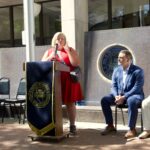
Harrisburg Mayor Wanda Williams announced the annual Kipona Festival at a press conference near the Walnut Street Bridge.

Harrisburg’s annual end of summer event is back this weekend with several new happenings in store.

Kipona Festival will return to Riverfront Park, from Aug. 31 to Sept. 2, featuring food, entertainment and a new giant puppet parade.

“We are so excited to welcome you all to the 108th edition of the Kipona Festival,” said Mayor Wanda Williams, at a Thursday press conference. “108 years of Kipona, one of the crown jewels of special events that we have every year in our city.”

The city’s Giant Puppet Parade will be new this year, happening on Sunday at 2:30 p.m. A 15-ft long Harrisburg River Monster, created by artist Jeff Semmerling and a 15-ft tall shark, created by the Imaginary Friends Puppet Theater, will join the parade. Community members can create their own water-themed costumes, giant puppets, decorated wagons and more to join in. Winners of the best youth, adult and group costumes will earn $100, courtesy of Coexist Gallery in Steelton.

Festival attendees can win free food at the festival by scanning the QR code on this man’s hat. He will be running around at the festival all weekend.

Additionally, all of the traditional Kipona events will return, including food trucks, a beer and wine garden and a Native American Pow Wow on City Island. A family fun zone will feature a giant fun slide, carnival games, face painting, balloon animals, a free rock wall and eurobungy on Sunday and a bubble fest on Monday.

Art in the Park will showcase over 70 artisans selling handcrafted wares. In addition, a Multicultural Celebration will include bands, dance groups and free activities, such as calligraphy lessons, Pakistani henna, Congolese hair braiding and a passport game.

Another new feature will be the Keystone Dock Dogs event on City Island where dogs can compete in the long jump, vertical jump and speed retrieve competitions, all weekend. No experience is needed to participate.

Street parking in Harrisburg is free on Sunday, Sept.1 and Monday, Sept. 2 and is free downtown after 5 p.m. on Saturday. Before 5 p.m, use the code “LUVHBG” in the ParkMobile app for four free hours of parking. Parking on City Island will be $5. Park Harrisburg will offer $10 special event parking in the Market Square Garage.

Starting at 9 a.m. on Friday, N. Front Street will be closed between Forster and Walnut streets, until 11:59 p.m. on Monday, Sept. 2.

For more information, including the event schedule, an event map and foodie guide, visit the city’s website.

If you like what we do, please support our work. Become a Friend of TheBurg! 

Continue Reading

September News Digest

Work Begins on Broad Street Market

Interior demolition began last month on the Broad Street Market.

Harrisburg started demolition inside the market’s fire-damaged brick building after the city declared the market situation an official emergency, according to Matt Maisel, communications director.

Maisel said that the city decided to declare an emergency in late July, over a year after the initial market fire, having been alerted by a community member that rats were in the building and determining the situation was a health and safety risk.

Harrisburg-based TLC Construction and Renovations will complete the demolition work at a cost of $136,460 to the city.

The demo began on the half of the brick building nearest the courtyard, which was significantly less damaged by the fire. The work includes essentially gutting the building. All shelving, counters and stands will be removed, wall coverings will be stripped to expose the brick. Carpet, flooring and insulation will be removed, as well as light fixtures, bathrooms, signs and all debris.

Most of the debris and interior structures and items will be trashed. Vendors have been allowed to mark anything they have in the building that is worth saving, Maisel said. TLC Construction will salvage all items marked for saving.

The emergency declaration, Maisel said, allows the city to bypass “red tape.” Originally, City Council would have been required to vote on the contractor, but the declaration gets around that.

“The good thing was that the mayor was able to put out an emergency declaration, which was able to bypass a lot of the red tape that usually takes place in this, for some of these smaller inside jobs,” Maisel said.

Maisel said that work is just now beginning on the market due to limited city resources and staff. The opening of the temporary tent was the first priority, he said.

“We are doing the best that we can, as fast as we can, with the limited resources that we have,” he said. “Our facilities team is not large. We can really only handle one job at a time.”

The declaration also covers demo work on the opposite side of the brick building, which suffered significant fire damage. That work will be completed by Lancaster County-based VERSAPRO at a cost of $91,200.

Additionally, the city has selected York County-based CB Construction Services to do framing and carpentry on the courtyard-facing side of the building at a cost of $55,856. The same company will do plumbing work to take out pipes and cap lines in the same side of the building at a cost of $19,895. CB also will perform shoring work, such as covering holes and preventing structure collapse in the more damaged portion of the building for $52,407. Lead window abatement will be handled by Camp Hill-based PCS, at a cost of $35,345.

According to Maisel, the city interviewed interested companies for each job. The city reached out to some, while others contacted the city, submitting a letter of interest.

Harrisburg’s request for proposals for an architect was issued prior to the emergency declaration. Maisel said that the city hopes to hire an architect by mid-fall and have a building design prepared by spring 2025. Reconstruction of the brick building is expected to be complete by winter 2026 or spring 2027, Maisel said.


Harrisburg to Seek Storm Reimbursement

Harrisburg will seek state funding to help cover costs incurred from the cleanup of damage from last month’s severe storm.

According to the city, a tornado caused by remnants of Hurricane Debby touched down in Harrisburg on Aug. 9, damaging 111 properties. The storm wreaked havoc on businesses and residences, with the Bellevue Park neighborhood sustaining the most significant damage.

The National Weather Service later confirmed that an EF-1 tornado, with wind speeds up to 105 mph, tore a 3.5-mile path of destruction from Swatara Township through Harrisburg to Susquehanna Township.

City Communications Director Matt Maisel said that Harrisburg is submitting estimates of the total cost to the city of labor and resources used for the cleanup, in hopes of getting the PA Emergency Management Agency (PEMA) to issue a disaster declaration. The city then will be eligible for state financial assistance.

Harrisburg Fire Bureau Chief Brian Enterline estimated the cost of storm cleanup at about $417,000 total, with debris removal at about $150,000, road repairs at $100,000 and utility repairs, including 34 damaged street lights, at $167,000.

These are costs solely incurred by the city, not costs of damage to property owners, city officials explained.

The city will submit its estimates to Dauphin County, which will then go to the governor’s office and to PEMA to make a decision. Enterline said that PEMA typically covers about 75% of the total cost of the city’s expenses in these cases.


Food Pantry Opens Downtown

A Harrisburg organization hopes that its new service will make a difference when it comes to food insecurity.

Recently, Downtown Daily Bread cut the ribbon on its Renewed Hope Food Pantry, with officials sharing that the service will fill an important need for local families.

“We were getting so many calls from families who just couldn’t make ends meet,” DDB Executive Director Corrie Lingenfelter said. “They [said], ‘What should we pay; should we pay the light bill or get groceries?’ That’s why we’re here because we want you to be able to do both.”

The Harrisburg nonprofit, located on the 200-block of South Street, already provided breakfast, lunch, year-round day shelter, winter overnight shelter, showers, mailboxes and other assistance to those in need. However, Mieshia Jackson, head chef at DDB, said that she came up with the idea to add a pantry to serve clients who may not feel comfortable coming in for hot meals, but need grocery assistance.

“I want everyone to feel that there are services here for everyone,” Jackson said. “They’re able to pick what their family wants. I wanted to make sure there’s food that everyone likes. There are brand names. There’s nutritious things and produce—things that everyone needs for a good, balanced meal.”

The Central Pennsylvania Food Bank will help stock the pantry, which is open Monday through Friday, from 11 a.m. to 2 p.m. DDB is accepting walk-ins for now, but hopes to have an online registration system in the future. Visitors will be able to choose from a selection of food items, with staff assistance.

“I guess it’s not enough that you’re serving over 160 unique people each day meals […] but now, finding a way to serve additional neighbors that are struggling to feed themselves and their family, who maybe aren’t the typical clients you think of who come to Downtown Daily Bread—I’m just in awe,” said Joe Arthur, executive director of the Central PA Food Bank.

Additionally, DDB officials have said that they may be soon expanding to offer year-round overnight shelter, as Harrisburg may provide funding. City officials shared that they plan to give $1 million of the city’s federal American Rescue Plan Act funds to DDB and Christian Churches United of the Tri County Area to support a year-round shelter.

DDB is still in the planning phase for the possible expansion, but hopes to open an overnight shelter this fall, Lingenfelter said.


“Health to Go” Machine Debuts

 A new device at UPMC Harrisburg brings healthcare to the community in a unique grab-and-go format.

UPMC and Penn State College of Medicine officially launched a “Health to Go” vending machine, one of the first of its kind in the state, outside its emergency department.

The vending machine, an interactive, touch-screen device, allows 24/7 access to free health items such as naloxone, fentanyl test strips, wound care kits, personal care items and pregnancy tests, among other items.

The machine is one of two smart devices of its kind in the commonwealth that Penn State has deployed, according to officials. Another is located in Reading, and one will soon be stationed in Millersburg.

Penn State officials shared that the project has been in the works for years, but the need for the vending machine became even greater during COVID and as overdose deaths increased.

Products in the vending machine are free and can be accessed by anyone, anonymously. All that is required is to create a username, using a birth year, a color and an animal.

Penn State and UPMC deployed the machine outside its emergency department in June. In the first month, over 100 people accessed more than 500 items, including about 200 hygiene kits, 150 safer sex kits, 75 wound care kits and 60 naloxone kits.

Additionally, the vending machine includes a list of local service providers that offer food, housing and social services, with information on how to contact them.

UPMC and Penn State will also track information about which items are being taken and at what time of day, and when items need to be restocked.


Home Sales, Prices Rise

Home sales and prices both jumped in the Harrisburg area in July, according to the latest report on previously owned houses.

For the three-county region, 608 homes sold versus 517 in July 2023, as the median sales price rose to $286,000 from $264,900, stated the Greater Harrisburg Association of Realtors (GHAR).

In Dauphin County, sales rose to 293 homes from 245 in the year-ago period, as the median price grew to $280,000 from $235,000, GHAR said.

Cumberland County tallied 281 home sales, an increase from 236 in July 2023, as the median sales price rose to $295,000 from $292,000, according to GHAR.

In Perry County, 32 homes sold, an increase of two, as the median sales price rose to $275,000 from $267,500 last year, GHAR said.

The pace of sales slowed a bit, as “average days on market” increased to 22 days compared to 19 days in July 2023, GHAR stated.


So Noted

 Harrisburg City Council has ceremonially renamed Reservoir Drive in Reservoir Park as Destry E. Mangus Way in tribute to a local coach and volunteer who has worked with many Harrisburg youth. The new name will serve as a secondary street name.

Harrisburg University last month announced an agreement with the commonwealth to offer significant tuition discounts for state employees and their dependents, including a 25% discount off the full tuition rate for on-campus graduate programs for employees. For more information, contact the university and visit www.harrisburgu.edu.

John J. “Ski” Sygielski, HACC’s president and CEO, will retire effective July 18, 2025, the college announced last month.  Sygielski, who joined HACC in July 2011, is the longest-serving president in the college’s history, according to HACC. 

Whitaker Center’s “Girls in STEAM” program was awarded a $35,000 grant from Comcast to help the program continue its career exploration opportunities for youth. The grant from Comcast is part of the company’s Project Up, which has allotted $1 billion toward digital equity in communities across the country.


Changing Hands

Adrian St., 2424: C., E. & G. Meredith to Dowling Management Co. LLC, $128,000

Balm St., 116: C. Powell & Habitat for Humanity of Greater HBG Area to 2020 Real Estate Ventures LLC, $50,000

Balm St., 124: D&L Development Group to D. Okuneye, $84,000

Bellevue Rd., 1960: Easy Exit Home Solutions LLC to Narrow Gate Investments LLC, & ABB Investments LLC, $140,000

Bellevue Rd., 2024: SPG Capital LLC to K. Wartluft, $175,000

Berryhill St., 1633: L. Cruz to Mau Properties LLC, $90,000

Berryhill St., 1941: G. Guzman & A. Aquino to N. Tabbasum, $120,000

Berryhill St., 2262: Ink Properties LLC to T. Dieu, $90,000

Boas St., 1815: Normans Realty Service Inc. to C. Dorilas, $138,000

Boas St., 1826: Normans Realty Service Inc. to C. Jones, $100,000

Boas St., 1827: BCR 2 Properties LLC to C. de Jesus, $159,500

Boas St., 1937: EB & ZEE LLC to O. Sayed, $62,500

Capital St., 1208: M. Caylor & A. Shafer to D. & C. Munchel, $200,000

Chestnut St., 1927: A. Garcia to A. Montero, $50,000

Chestnut St., 2208: D. Wolfe to J. & C. Johns, $365,900

Derry St., 1535 & 320 S. 16th St.: D&L Development Group Inc. to 1420 Walnut LLC, $210,000

Derry St., 2423: S. Bello to A. Trigueros, $115,000

Derry St., 2620: E. Fry to E. Ayala & N. Vogt, $95,400

Edgewood Rd., 2307: M. Bailor & S. Yann to A. Ferritto, $265,000

Ellersie St., 2352: Wengs Labor Services LLC to J. Paulino, $168,500

Elm St., 1714: SRC Capital LLC to JKD Real Estate LLC, $65,000

Emerald St., 636: PI Capitol LLC to D. Jones, $144,999

Forster St., 1832: M. Munoz to Nehema LLC, $89,900

Forster St., 1903: Maco Properties LLC to Men of Morals LLC, $105,000

Fulton St., 1421: C. Geary to T. Chazova, $183,000

Graham St., 300: T. Kruger to A. Kruger, $175,000

Graham St., 310: V. Arrington to D. Lucas & J. Feaster, $217,000

Green St., 1322: W. & M. Hammerstein to A. Newman, $215,000

Green St., 1432: J. Vargo to C. Adams, $217,000

Green St., 1947: J. Howett to P. Shaughnessy, $280,000

Green St., 2038: Goldstein Couriers LLC to D. Urrutia, $168,700

Green St., 2432: Stoute Housing LLC to L. Rodriguez & A. Martinez, $250,000

Hale Ave., 300: Hemlock Girl Scout Council to From the Heart Church Ministries of Harrisburg Inc., $750,000

Harris Terr., 2455: T. Dieu & P. Bank to Biyaki Enterprises LLC, $110,000

Harris Terr., 2461: M. Collins to F. Zeray, $120,000

Hoffman St., 3214: Honest Home Solutions LLC to M. Hogancamp, $219,995

Hummel St., 246: Tri County HDC Ltd. to A. Damulak, $128,500

Kensington St., 2266: G. Aponte to P. Thien, $138,000

Lewis St., 319: Feudale Investments LLC to A. Mercedes, $115,000

Logan St., 2233: SR Homes LLC to JKD Real Estate LLC, $89,000

Luce St., 2311: Paramount Sol LLC to S. Merino, $120,000

Maclay St., 241: E. & C. Onyewu to 3Star Home Care Services LLC, $160,000

Maclay St., 252: KDR Investments LLP to A. Velez, $145,000

Maclay St., 415: V. Shree to R. Bapari, $182,000

Muench St., 278: C. Foley to J. Wadley, $230,000

North St., 1941: D. Eberly to P. Almodovar, $135,000

N. 2nd St., 1617: A. & S. Perry to A. Bartlett, $260,813

N. 2nd St., 2131: C. & K. Potter to J. Anderson, $195,000

N. 2nd St., 2243: R. Chang & A. Eng to Culcay Remodeling Guagua LLC, $290,000

N. 2nd St., 2711: A. & B. Marino to M. & V. Trejo, $347,000

N. 3rd St., 1914: J. Vega to S. & J. Caruso, $150,000

N. 3rd St., 2214A: PD Estate Properties LLC to M. & A. Leiva, $165,000

N. 4th St., 2217: BCR1 LLC to H. Davis, $123,000

N. 4th St., 2451: J. Crossett & M. Hochstetler to J. Holtzman & R. Davis, $120,000

N. 7th St., 2154: A. Bouhach to M. Smith, $135,500

N. 13th St., 100 and 109, 111, 113, 115, 117, 117½ 119 & 119½ Linden St.: G. Radon to Val de Vie Estate Investment LLC, $83,334

N. 15th St., 227: G. Grier to First Choice Home Buyers LLC, $65,000

N. 17th St., 719: E. Jones to P. Jimenez, $103,500

N. 18th St., 50; 1837, 1845 Zarker St.; 528 Emerald St.; 2211 & 2318A N. 4th St.; 2234 Logan St.: Dakar Realty Inc. to Leesuer Estates LLC, $1,130,000

N. 18th St., 720: TPH Asset Management LLC c/o American Heritage Property Management to Jhonleo Home Renovations LLC, $85,000

Orange St., 2304: Sunny Day Real Estate Solutions LLC to D. Dacheux, $114,000

Peffer St., 220 & 222: T. Jones to N. Pandey, $325,000

Penn St., 1608: W. Gelgot & E. Schuchardt to G. Dunigan, $240,000

Penn St., 2144: Oasis Property Investments LLC to E. Jameson, $200,000

Penn St., 2214: M. & C. Maxwell to J. Bellamy, $95,000

Penn St., 2313: SPG Capital LLC to T. Kea, $141,000

Race St., 566: JR Phoenix Investing LLC to Allmond Properties LLC, $292,390

Reel St., 2427: Dee’s Properties LLC to Mau Properties, $65,000

Reel St., 2429: Orellanas Properties to Mau Properties LLC, $55,000

Regina St., 1855: London Management LLC to Mau Properties LLC, $163,000

Revere St., 1715: PA Deals LLC to Renovestate LLC, $100,000

Rudy Rd., 2480: Bank of New York Mellon Trust to 248 S. Quince Street LLC, $88,725

S. 16th St., 11: Httrinh LLC to 3DST LLC, $107,500

S. 17th St., 425: B. Debeljak to Villalona Barbershop LLC, $125,000

S. 18th St., 1208: B. & J. Fazzolari to C. Filcidor, $147,500

S. 25th St., 732: P. Bullock to P. Sawadogo, $157,600

Spencer St., 1843: B. Debeljak to C. White, $135,000

State St., 1723: S. Goodling to K. Higdon, $85,000

State St., 1920: First Choice Home Buyers LLC to Williams & Williams Properties LLC, $82,500

State St., 1922: First Choice Home Buyers LLC to Williams & Williams Properties LLC, $82,500

Susquehanna St., 1833: C. Straub to K. Ryan, $180,000

Swatara St., 2046: T. & A. Wyre to E. & F. Augustin, $141,900

Swatara St., 2140: J. Zabala to V. Saldana, $120,000

Valley Rd., 2301: K. Bard to L. & R. Philbin, $259,000

Verbeke St., 1613: C. Bowman to A. Powell, $55,000

Woodbine St., 340: MJE Properties to Normans Realty Services Inc., $50,000

Harrisburg property sales, July 2024, greater than $50,000. Source: Dauphin County. Data is assumed to be accurate.

If you like what we do, please support our work. Become a Friend of TheBurg! 

Continue Reading

Here to There: In Harrisburg, the times are a-changin’

Illustration by Rich Hauck

Harrisburg is at an inflection point.

For the past six or so decades, Harrisburg has been primarily a government town, its economy driven by the commonwealth’s ever-growing workforce.

Those days are over.

For a few years, we could fool ourselves into thinking that the daily fire hose of state workers, sprayed up Forster and down State Street, headed for the Capitol Complex, would resume someday.

It was just a matter of time, we thought, before our region’s huge white-color workforce would see the value of trading in their pajamas for khakis and return to the office—or be forced to.

Once again, they’d be walking our streets, eating at our restaurants, drinking at our bars, browsing our shops.

It’s time to give up such thinking. Four-plus years after the pandemic hit, upending our lives, we’ve reached the maximum level of “return.”

My back-of-the-envelope estimate puts the number of commuters into Harrisburg—both government and other office workers—somewhere between one-third and one-half of pre-pandemic levels.

Therefore, it’s time to begin thinking about what comes now. What’s next for Harrisburg after “government town?”

Now, this isn’t the first time that Harrisburg has had to remake itself.

Following the Civil War, the city grew rapidly from small market town to dense urban center. Then, after World War II and the collapse of the steel industry and railroads, its economy—its very identity—became inseparable from the only major thing left, the state government.

Not that everything was great—far from it.

The city had developed around heavy industry and the blue-collar workforce that needed to live within walking distance of its factories, rail yards, bars and stores. The new labor force didn’t, commuting in vehicles on freshly paved highways from spanking new houses in the suburbs, driving its population, disposable income and tax base out of the city every day.

Still, as some people have said to me over the years, what would Harrisburg be without all the state workers here?

Well, now we get the chance to find out, as Harrisburg enters a new phase in its 300-year-old history.

This phase won’t be about industry and, increasingly, won’t be about state bureaucrats either. So, then, what will it be?

My best guess is that, given enough time, we’ll see a more mixed economy, less dependent on a single employer or industry and more heterogeneous, based upon a growing residential population, small businesses and visitors.

I once wrote that Harrisburg’s fate lies in its core strength as a small, walkable, densely built city located along a magnificent river, close to larger metros. I said that, to exploit these advantages, it must “learn to do small city well.” I continue to believe that.

Perhaps, over time, Harrisburg will head in this direction by default, as other options (e.g. attracting industry or major employers) seem unlikely. However, city stakeholders can take steps to inspire and advance this future.

First of all, Harrisburg needs to right-size its major roads, which are too big, fast, ugly, noisy and dangerous. The city’s tight street grid was destroyed in the 1950s to accommodate the daily inflow and outflow of state workers. Those days are over. So, Harrisburg and PennDOT need to slim down streets, eliminate lanes and reduce speeds. The two-way 2nd Street project should serve as an excellent example of how urban life can be greatly improved through road reform. Let’s extend that approach throughout the city.

Secondly, Harrisburg needs to encourage housing construction and renovation, offering incentives and knocking down barriers. I like city officials’ emphasis on affordable housing, but it shouldn’t stop there. Harrisburg has thousands of vacant lots and empty buildings, offering vast opportunities for housing of all types. The city can accommodate many more people, as it remains about 40% below its peak, 1950s-era population. A thriving city is a vibrant one.

Thirdly, small business and arts and culture should be prioritized as engines of the local economy. Sure, it would be great if a Chick-fil-A, Costco or Trader Joe’s would settle within our borders, and props to anyone who can make that happen. However, I consider this unlikely, given the unyielding requirements of these national companies. So, I think that the city should spend its scarce economic development resources focused on rebuilding street-level retail and other small-scale enterprise. I also believe the city would be better served with 50 solid, independently owned shops, art spaces and eateries than with a corporate behemoth or two.

Transitions are typically hard—and painful—and, certainly, this one will be too. Moving ahead will take planning, money and hard work. For some 60 years, Harrisburg, for better or worse, has been “government town.” It’s now moving on to something else, a new phase in its long history. That future can be random, unplanned and uncharted. Or we can grab the wheel and steer it ourselves.

Lawrance Binda is publisher and editor of TheBurg.

If you like what we do, please support our work. Become a Friend of TheBurg! 
Continue Reading

Dreaming Bigger: The Latino Hispanic American Community Center sets sights on future with new building

Adriana Rios

Adriana Rios came from Venezuela to the United States in 2015, on a mission to get her sick 1-year-old son medicine that wasn’t accessible back home.

Rios didn’t speak English and quickly realized how challenging it would be to find a job—even with her master’s degree in finance and degree in economics. Early on, she drove a bus for work, and she cried when she started that job. She couldn’t believe that, after all her years of collegiate education, she was a driver.

“When you are a mom, you’ll leave everything and start again,” she said. “I had my car in Venezuela, I had my profession. I had a good life at that time, but, when the economy problem started, my focus was my kids.”

When Rios found the Latino Hispanic American Community Center (LHACC) in Allison Hill, Executive Director Gloria Vázquez Merrick saw the knowledge she could offer the center and brought her on to volunteer and then work on staff.

The center also helped supply Rios with basic needs, such as clothes and furniture, and connected her to HACC classes to learn English and take business classes to help acquaint her with all the financial terms she already knew, just in a new language.

Rios is one of many community members who has walked into the center for help over the organization’s more-than-a-decade of service to the Latino population.

LHACC’s mission has remained steady, even as it expanded to help clients throughout the region coming for assistance, especially during and since the pandemic. All the while, the center has done so with a small staff, limited budget and small office and programming space.

However, one of those limitations dissolved in recent months, as LHACC cut the ribbon on a new, much-larger office space at 1301 Derry St., purchased through a donation from Peggy Grove, a Harrisburg resident who has long served the community through charity and volunteerism. With the now-ample room for programs and administrative work, Vázquez Merrick has room to dream about the future of the organization and how it should continue to evolve as the demand for its services and the Latino community in the city keep growing.

“We wanted to stay in close proximity to the heart of our community,” she said. “I never dreamed that we could purchase this. I feel like I have all this space now. It is a really good feeling—just being able to have a space where we can breathe and expand. We are very happy that we can now spread our wings and begin to do more things for the community.”

Gloria Vázquez Merrick

Planting Seeds

Vázquez Merrick described the center’s move to the new building like extracting a root-bound plant from a snug pot. The organization had stuffed its former space to the brim, which included small units next door to its new building and tiny first floor space in the current Derry Street building.

The roots of the center can be traced back to 1973, when Vázquez Merrick’s father, Luis Vázquez, founded the Mount Pleasant Hispanic Community Center, which helped thousands of people. The building, secured by Luis with help from the late Fannie Krevsky, was located just down the street from where LHACC stands now.

After its closing in 2006, a local study found that there was now a significant gap in services in the community, leading to LHACC’s founding in 2010, with financial help from United Way. The seed that her father planted, Vázquez Merrick nurtured as she became a founding board member of LHACC and then the director in 2011.

Since then, the center has built up years of programs, clients and services

Just as the plant may be stressed when suddenly placed in a much larger pot, LHACC’s move to its new home is taking time as the roots stretch out and get their bearings, Vázquez Merrick described.

But she’s already seeing the benefits.

LHACC now has its own dedicated computer lab to help people with job training and searching. The center has also started a new entrepreneurship class for Latina women interested in starting a business. Additionally, Vázquez Merrick is expanding the center’s mainstay ESL courses and hopes to partner with local colleges and other entities to offer programming to the community. The center is also responding to a need Vázquez Merrick sees among the youth—mental health education and assistance.

Grove is also working with LHACC to help them find much-needed additional parking for the building, in order to support their expanded services.

Whereas LHACC’s primary focus used to be meeting immediate needs for food, clothing, translation, etc., they now have the capacity to include more education. A lot of LHACC’s time in recent years has been dedicated to emergency situations—including when hundreds of Puerto Rican families fleeing Hurricane Maria came to Harrisburg in 2017, and when the pandemic hit—but now they have time to expand.

“As we are providing people their basic needs, when you’re doing that for people, they’re able to focus more on other things,” she said. “But now, we are able to also look at our services from an educational perspective in terms of teaching people and giving them some skills to improve their quality of life.”


Community Heart

Rios has seen the difference that the Latino Center has made in her own life.

After learning English, she was able to get a job as a banker at PNC Bank, which occupies space in the same building as LHACC. She helps people from her community with financial services, but also often refers them to the Latino Center.  Rios is also in the process of starting her own Venezuelan food truck business, a longtime dream.

“I never lost the connection [to the center],” Rios said. “She [Vázquez Merrick] put in effort to help me. She’s always proud of me.”

Grove, who gave LHACC the money for its building and has long supported the center through clothing, food and other donations, said that she plans to honor Vázquez Merrick and her father’s commitment to the community by dedicating the building to them. A bronze plaque in their honor will be placed on the building.

“She is just magnificent,” Grove said of Vázquez Merrick. “She just makes it happen. She doesn’t turn anyone away. It’s the heart of the community.”

The Latino Hispanic American Community Center is located at 1301 Derry St., Harrisburg. For more information, visit www.lhacc.org.

To celebrate National Hispanic Heritage Month, the center will host its annual festival on Saturday, Sept. 14, from 10 a.m. to 3 p.m., on Derry Street, between 13th and 15th streets. The event’s signature sponsor is Capital Blue Cross. The festival will include live music, food, entertainment, kids’ activities, vendors and more. The event serves as a fundraiser for LHACC.


If you like what we do, please support our work. Become a Friend of TheBurg! 

Continue Reading

September Publisher’s Note

At TheBurg, we love getting face time with our readers.

That’s why we like September so much, because it gives us multiple opportunities to meet you and greet you.

For the past few years, we’ve held an annual blowout that we call “TheBurg Bash.” We started this event to honor our Friends of TheBurg members, to show them how much we appreciate their support, and to provide a communal gathering for some of our biggest fans.

It’s such a wonderful, positive event, as folks pack into the stately King Mansion to chat about TheBurg, Harrisburg and anything else on their minds. By the time this issue hits the streets, tickets may be gone for this year’s bash on Sept. 5. But, if you became a Friend, you’re guaranteed to get an invite to our next event.

The very next day, we get another chance to meet up—in our own space. On Sept. 6, our office will be open (very) late, with great sounds filtering out onto the street. For the fourth straight year, we’re hosting a band for Jazz Walk, the annual tour de music organized by the Central Pa. Friends of Jazz. So, stop by, say “hi” and enjoy some tunes as you make your way around Midtown venues.

Lastly, we’re usually out and about for 3rd in the Burg, Harrisburg’s monthly art/nightlife happening, which we organize and promote. This month, it falls on Sept. 20, with another terrific lineup of events planned. See you there!

So, there you have it—three opportunities to see us in person this month. Of course, there are many more things to do in our area. For instance, in our arts-themed September issue, we have stories on the annual Gallery Walk, on the New Cumberland Music + Film Fest and on the start of new music seasons, among others.

If you want even more ideas, just flip to the back of this issue for the most comprehensive calendar of events in the Harrisburg region. It’s all here, and it’s all free, within the pages of TheBurg.

Lawrance Binda
Publisher/Editor

If you like what we do, please support our work. Become a Friend of TheBurg! 

Continue Reading

Whitaker at 25: Challenges, opportunities lie ahead for Harrisburg’s premier center for science and the arts

Mary Oliveira

Could it really be 25 years already?

Back in September 1999, Whitaker Center for Science and the Arts opened to great fanfare, heralding the dawn of a new institution and attraction in downtown Harrisburg.

A lot has changed since then for both the center and the city. To get a feel for where Whitaker is today—and where it’s going—we sat down with Mary Oliveira, who took the helm as president and CEO last November.

The following is our Q&A with her, edited for length and clarity. You can learn much more this month, as Whitaker plans an entire week of celebratory events, including a birthday bash and a block party, culminating with a 25th Anniversary Celebration on Sept. 14. Check out www.whitakercenter.org for more information.


TheBurg: What interested you in heading up Whitaker Center?

Mary:
Whitaker Center is just this amazing anchor of our region. The pandemic and being a shuttered venue really caused it a lot of challenges. The opportunity to help work through some of those challenges and see how we can revitalize it and re-introduce it to the community seemed like a very exciting thing to want to be a part of.


TheBurg: What are some of the specific challenges you’re facing?

Mary: Whitaker Center is a big place and a nonprofit business entity. So, it faces the challenges that many nonprofits do when it comes to funding streams, revenue, balancing an operating budget, etc. And the physical maintenance of a 130,000-square-foot building presents us with some unique things to have to figure out answers to. So, we need to make sure that we become again a destination of choice with great performances in our theater, a lot of exciting exhibits happening in our science center, and the coding, gaming programs and workshops that we offer. There has to be a good balance with the fundraising, the donors, the grants, the foundation support, and all of that blended together.


TheBurg: What has impressed you about Whitaker Center?

Mary: The brand reputation is still so positive. So, one of the things I committed to early on was an intentional listening tour. It started with the staff members: “What’s your Whitaker why?” That’s an essential question I’ve asked everybody, and that’s really what we’re trying to amass information on so that it can help us strategically plan. This is Whitaker’s 25th anniversary year. So, what do the next 25 years look like? So, we’re using the mantra, “Whitaker Next,” to build that platform of stability.

We then followed with a board survey, taking it to the next level of those community leaders and business leaders who are connected to us by their service. Then we took it even further and went out to the community this spring, and we did a community survey of over 35,000 that are in our email database: “What is your Whitaker why?” It was overwhelming to hear the feedback that this is still considered a place of wonder and curiosity and learning and delight and experiences that multi-generational families are excited to share with one another.


TheBurg: Where do you see Whitaker headed?

Mary: In 1999, no one predicted the digital era that we’re in. So, they built this grandiose brick-and-mortar venue with the anticipation of enticing plenty of foot traffic to make it this cultural enrichment center that included both science and arts. We’ve now adapted. We have a first-of-its-kind coding and gaming den, where kids can come in and really get an opportunity to experience things that maybe they don’t have at home, especially with a focus on lower- and middle-income students.

I think there’s so much transformation that still needs to happen—kind of shifting from information age to innovation age. We’re looking at ways to update and enhance our science center. Some of the exhibits we have are the original ones from 1999. So, it’s a great opportunity to make sure we remain relevant to the students of today. So, I see Whitaker becoming a strong workforce development partner to the business community. We start with programs for children as young as 3 years old here. We have a weekly program called Little Learners, where we’re introducing STEAM and STEM concepts to them at an age-appropriate curriculum level of playing. It goes all the way up through high school.


TheBurg: What are you hearing from the community regarding your future?

Mary: I think the community is still very excited about Whitaker. I also think there’s an opportunity to introduce us to this newer generation that is growing up in a world where they can sit and watch a movie on their phone on their sofa.

I was asked in an early interview, “What do you want your legacy to be?” Without hesitating, I said, I want the conversation to include the question: “What do you mean you haven’t been to Whitaker lately?” So, that phrase, “creating Whitaker” or reinventing or revitalizing Whitaker Center as a destination of choice. Young adults, young professionals, young families are moving into this area, and we have to give them reasons to be excited and reasons to want to stay here.


TheBurg: Is there something about Whitaker you’d like our readers to know that they may not?

Mary: We want to build or rebuild our brand equity in the marketplace. We’re trying to figure out how we just get out there and get our voice heard. We want to invite people in the door. To explore us is to love us, so just come explore us.

The Animation Academy is an incredibly interactive exhibit [runs through Jan. 10]. It’s all about how science and art come together in an animator’s world. Some of the students’ favorite cartoon characters will be here. We’ll have artists come in and host workshops on animation skills. We’re told that this is one of those repeat exhibits that families will want to come back to time and time again, because there are so many components to it. All ages, from 8 to 88, hopefully, will find something that they enjoy about it.

We have our Celebration Week coming up, Sept. 9 to 14. Whitaker Center opened its doors on 9/9/99. We thought, “Let’s do five events in the span of six days.” So, we have a robust calendar of exciting events, all meant to encourage so many populations to engage with us.

Whitaker Center is located at 222 Market St., Harrisburg. For more information, visit www.whitakercenter.org.

If you like what we do, please support our work. Become a Friend of TheBurg! 

Continue Reading

Bloom to Loom: Natural color blossoms at Berry Mountain Color Farm

Wesson Radomsky drying indigo

Wesson Radomsky’s earliest memories were shaped by two things: farming and fiber arts.

Growing up on a farm in Elizabethville, Radomsky tended to the animals living on the property and spent time helping on neighboring dairy farms.

“There are plenty of things you can do to help out around a farm, and I was doing them,” they recalled.

When not farming, Radomsky experimented with fiber arts, inspired by grandmothers who were devoted artists themselves. Later, Radomsky attended HACC and then Georgetown University, staying in Washington, D.C., to work in higher education for 12 years.

“It was a fascinating job, but I burned out pretty hard during the pandemic,” they shared. “I left in 2021 and did a big reset in my life.”

Radomsky returned to the farm and began planting Berry Mountain Color Farm’s first crop of dye plants. Through self-education and trial and error, Radomsky broke through, establishing practices and routines that resulted in vibrant fibers to share with the local artist community.

“It was just so incredible,” they said. “I loved it so much that I had to do it all the time and share it with people.”

Community Share

From July to September, the annual and perennial dye plants at Berry Mountain Color Farm are at peak bloom, packed with their most vibrant pigmentations. These months are the most intense for Radomsky, harvesting and processing plants like Japanese indigo, goldenrod, marigolds, sunflowers and many others.

“I am harvesting every day and doing as much as I can with every bit of daylight available to me to not let anything go to waste,” they said. “Then I am doing the dying with the fresh dye stuffs that I just harvested from the fields, and then I’m also drying the extra flowers or leaves.”

For a small farm like Berry Mountain Color Farm, securing funding at the start of the season is critical to support the labor needed to plant, harvest and produce fibers. So, Radomsky established Berry Mountain Color Farm as a Community Supported Agriculture (CSA), a model that allows customers to purchase products from farmers before a crop is harvested, animals are butchered, or, in the case of Berry Mountain Color Farm, fibers are dyed.

Once a year, Berry Mountain holds a pickup day to distribute fibers to members. Operating on a CSA model, Radomsky aims to budget their resources and ensure they have committed customers prior to production so the plants, dye and fibers don’t go to waste.

“I want there to be a sense that there is a community affiliated with and attached to this farm,” Radomsky said. “This is not something I want to do in a vacuum. It’s something I want to invite folks into and share with people.”

Despite the challenges of running a small farm—securing funding, intense labor and making ends meet—Radomsky has found joy in the change of pace, as well as the rich community built around local fiber arts. In particular, Radomsky praised the support of Andrea Grove, founder of Elementary Coffee Co. in Harrisburg.

“Andrea’s early and enthusiastic support has been key,” Radomsky said. “Elementary Coffee Co. has given Berry Mountain Color Farm a home in Harrisburg, helped me connect with a wider audience, and provided me with a sense of community and support that has been critical to sustaining this work.”

After connecting with Radomsky at the café, Grove wanted to help amplify Berry Mountain Color Farm by becoming a pickup location for CSA distributions.

“The more that as humans we can encourage other humans doing rad things, the better everybody is and, I think, the more growth we get to see in a society, hopefully for the better,” Grove said. “It is really hard for micro-businesses to really get the exposure they need and deserve for what they’re doing.”

Such a Gift

Frankie Laird saw a flyer for Berry Mountain while working as a barista at Elementary. A fiber artist since high school, Laird was interested in finding locally dyed fiber for knitting projects.

“I signed up through a mailing list that was on a flyer and got to pick from two different kinds of yarn,” Laird said. “I got this lovely bag of all these beautiful oranges and color variations…It has really helped me feel a bit more connected as I’m working with the yarn that came from someone’s garden.”

In addition to Elementary Coffee, CSA members can pick up their annual share from Radomsky’s home yarn store, Humble Stitch, in Newport and the Dickinson College Farm in Boiling Springs.

As Berry Mountain Color Farm develops, Radomsky hopes to offer educational opportunities for people, teaching dye workshops and providing numerous entry points where people can interact with natural color.

“There is so much that explorations of natural color can bring into folks’ creative lives and so making a space where people could come to the farm, get their hands on the dye plants, really immerse themselves in it, feels like it would be really impactful and satisfying,” Radomsky said.

Recently, Berry Mountain Color Farm was selected to participate in Pasa Sustainable Agriculture’s Climate-Smart Farming & Marketing program, a pilot program through the U.S. Department of Agriculture. The program provides funding and assistance to farmers implementing regenerative practices and supporting programs deemed climate-smart.

“It’s been a really creative process getting to work with Wesson,” said Delaney McKinney, technical assistance provider for the Pasa program. “They have a really big vision that feels more and more tangible the more we plug in these practices to different areas of their farm.”

From workshops and new products to selling at markets and stores, Radomsky has a big vision for what Berry Mountain Color Farm could become. Regardless, they are choosing to prioritize sustainable growth at a pace that supports their wellbeing, amidst the intensity of a farming career.

“The most fulfilling part is the way that slowing down and paying attention has grounded me and opened my eyes to such beauty and joy [and] to things that I would not have paid attention to before,” Radomsky said. “Slowing down has made room to really center wonder and beauty and joy in my life—that is such a gift.”

For more information on Berry Mountain Color Farm, visit www.berrymountaincolorfarm.com or follow at @berrymountaincolorfarm.

If you like what we do, please support our work. Become a Friend of TheBurg! 

Continue Reading

Weekend Roundup with Sara Bozich


Plan your weekend with my weekly list of things to do around Harrisburg and central PA!


What you’ll find ⤵️

For something new:  Puppet Parade (part of Kipona) Worth noting: Labor Day Weekend, baby, plus SoMa Block Party tonight! Things on my agenda this weekend: A quick trip for a 100th bday party

For your weekend planning

Below are more options for your weekend. Dauphin County Jazz & Wine Festival

A Look Ahead

  1. Exclusive promo code for the Dauphin County Jazz & Wine Festival, which is next weekend
  2. Celebrate 25 years of Whitaker Center!
  3. You can now sponsor the Weekend Roundup! Ask me how! 
  4. Are you on my email list?
  5. Submit your events for the Weekend Roundup

Thursday

Friday

Saturday

Sunday

Labor Day | Monday

 If you like what we do, please support our work. Become a Friend of TheBurg!

Continue Reading