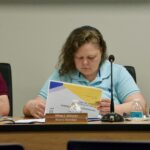
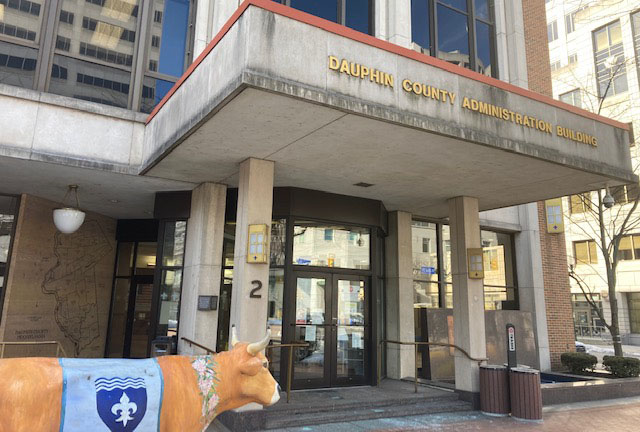
 On Wednesday, Dauphin County residents were stunned to learn that a massive property tax hike was headed their way, as the commissioners approved a 21.8% increase for 2025.
Indeed, the headline number is shocking—a one-fifth-plus hike in a single year.
Behind that number, though, is a very relevant fact. The county has not raised its property tax rate in 20 years, despite two decades of inflation.
Therefore, every $1 in tax levied in January 2005 is now worth about 62 cents.
Meanwhile, everything has gone up in price—from salaries to benefits to supplies to transportation. Over that time, the county’s purchasing power has fallen by one-third, which is not a sustainable way to finance anything, whether that’s a household, a business or a government.
In response, I’d like to put forth a modest proposal.
Governmental bodies, including Dauphin County, should aim to raise taxes in accordance with the annual inflation rate, which would help prevent the kind of sticker shock that residents are now experiencing. Governments may not be able to index directly, but the inflation rate could serve as a guide to the tax rate.
On one level, it’s surprising that this isn’t a common practice. It’s a simple, sensible solution that offers both officials and taxpayers long-term predictability, while helping to ensure that the government remains adequately funded. It also reduces the temptation for financial gimmickry as elected officials face growing budget holes over time.
On another level, it’s not surprising at all. Politicians hate raising taxes almost as much as their constituents hate paying them. It’s far easier to run for re-election saying, “I didn’t raise your taxes,” than by saying, “I raised your taxes” by 2 or 10 or 21%.
Dauphin County serves as a case in point. I’ve lived here since 2009 and, each year, I’ve received a press release saying that for the nth straight year (15, 16, 17, etc.), there will be no tax increase. Clearly, the commissioners wanted voters to know that their taxes weren’t going up.
Every year, I’ve thought to myself, “How long can this go on?” And now I have my answer.
Small, predictable tax increases are far more palatable than a total shock every couple of decades. It won’t solve all budget problems, as unforeseen expenses may crop up. However, it would serve as a baseline as both governments and taxpayers make their financial plans for the coming year.
I realize that this might not make for good short-term politics, but it would make for better long-term governance.
Lawrance Binda is publisher and editor of TheBurg.
If you like what we do, please support our work. Become a Friend of TheBurg!