The Week that Was: News and features around Harrisburg

(From left) Mayor Wanda Williams, Interim Director of Building and Housing Development Gloria Martin-Roberts, Communications Director Mischelle Moyer and Director of Facilities and Special Projects Dave Baker at a press conference on Thursday.

Happy New Year! As we head into 2025, we are continuing to cover Harrisburg area news. To stay informed, make sure you subscribe to our daily and weekly newsletters, delivered right to your inbox. While you’re here, catch up on this week’s reporting, below.

Community Corner brings you this month’s special events happening in and around the Harrisburg area. And for an even more expansive list of January goings-on, check out our Happenings column.

Harrisburg shared on Thursday its proposal to build a connector building between the Broad Street Market’s two existing buildings, our online story reported. Mayor Wanda Williams said that she believed the new building, which would be built after the fire-damaged brick building is restored, would financially help the market by housing additional vendors.

Our January issue of the magazine kicks off with a note from our publisher on another year ahead at TheBurg.

January is when our publisher takes time to reflect on the biggest news stories of the past year. Find out what made his list for 2024, here.

Mayor Wanda Williams announced that she had vetoed many of City Council’s 2025 budget amendments, our online story reported. Williams said that council’s changes, many of which eliminated or reduced staff raises, were “targeting the administration” and reversed them.

Musical Notes highlights our music reviewer’s top concert picks for January so you can start the new year off with live music in Harrisburg.

The Olewine Nature Center in Wildwood Park celebrated its 25th anniversary this past year, our magazine story reported. The center has welcomed visitors since 1999 with educational exhibits and programs.

Penn State Harrisburg School of the Humanities and Harrisburg-based Sankofa African American Theatre Company will present an original play on Jan. 25, in celebration of MLK Day, our online story reported. The play, “Call of the Crusades,” features many of MLK’s lesser-known works, as well as modern-day stories from student actors.

Do you receive TheBurg Daily, our daily digest of news and events delivered right to your email inbox? If not, sign up here!

Support quality local journalism. Join Friends of TheBurg today!

Continue Reading

Harrisburg proposes new connector building in Broad Street Market courtyard

Rendering of the proposed Broad Street Market connector building.

The Broad Street Market may be expanding.

Harrisburg Mayor Wanda Williams shared with local media on Thursday a proposal to build a new structure in between the market’s stone and brick buildings to house vendors.

Currently, the city is in the early stages of restoring the market’s brick building, which suffered significant damage during a fire in July 2023. However, city officials are now saying that, in addition to rehabbing that building, they are considering constructing a new building where the current market courtyard is located that would connect the two historic buildings.

“The city was trying to optimize the square footage that we have for the market and give the Broad Street Market the best chance, as far as moving forward, for growth,” said Dave Baker, the city’s director of facilities and special projects. “We would like to serve as much of the public as possible, and we are hoping that this middle connector building is something that will allow us to do both of those things.”

According to the city, the plan is still in the infancy stage as they have just recently received renderings from Murphy & Dittenhafer Architects. However, Williams said that she “definitely” wants to go in this direction, believing that it would help the market financially, as it would have more space for vendors.

The proposed 8,000-square-foot structure would have two floors with space for pop-up vendors and community meeting space. The building would provide a covered walkway between the two existing market buildings and would feature garage-door-type windows on the sides to roll up or down depending on the weather.

(From left) Mayor Wanda Williams, Interim Director of Building and Housing Development Gloria Martin-Roberts, Communications Director Mischelle Moyer and Director of Facilities and Special Projects Dave Baker at a press conference on Thursday.

To complete the proposal, the city would need to raise significant grant funding since the addition would not be covered by insurance money, as much of the brick building reconstruction will be.

Baker said that the cost of the new structure would likely be around $2.7 million. That construction, combined with the brick building rebuild and upgrades in the stone building, would total somewhere around $20 million, Baker estimated.

Although the city is considering the new structure, Baker stated that the brick building is still the city’s top priority and noted that they currently have enough money to cover its rebuild.

“We won’t let one project slow down another project,” Baker said. “Our full focus right now is on the brick building renovation and getting it back in business.”

Baker emphasized that the construction of the middle building is dependent on securing funding. The city will complete the brick building in a first phase of work then make upgrades to modernize the stone building and possibly build the additional building in subsequent phases. Baker estimated that the brick building would be complete in May 2026.

Baker said that the city would work with the Harrisburg Architectural Review Board (HARB) on the project.

Williams also said that the city would, at some point, have public meetings on the proposal.

According to Williams, the city has not yet talked to the Broad Street Market Alliance board about the proposal.

When reached by phone on Thursday, market board Chair Eric Hagarty said that he had not received any formal notice or communication from the city on this proposal.

And while Williams claims that the new construction would help the market financially, Hagarty said that it was “hard to say” whether that would be true or not, not knowing the specifics of the plan. He said that he would have concerns about the maintenance and utility costs that the market would incur.

Hagarty said that he has asked the city several times to meet with market representatives and vendors to discuss the plan, but has not received a response. He also noted that he hopes the city allows community members and vendors to weigh in on the initiative.

“I’m interested in learning more,” he said. “We are hopeful that the city remains focused on the brick building before anything else.”

If you like what we do, please support our work. Become a Friend of TheBurg!     

Continue Reading

Harrisburg mayor vetoes council’s budget changes, reversing changes to salaries, raises

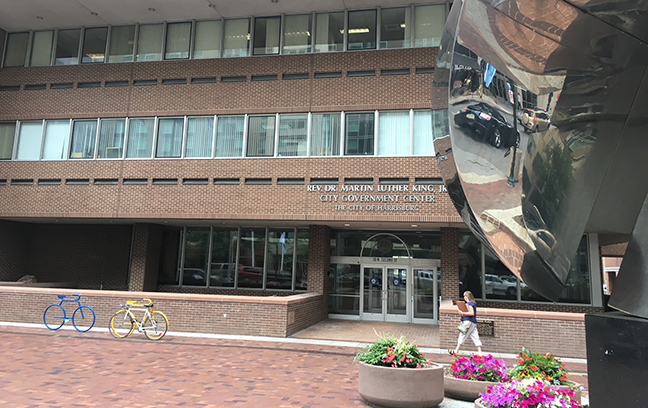
Harrisburg’s MLK City Government Center

Harrisburg Mayor Wanda Williams has reversed many of City Council’s changes to the city’s 2025 budget, amendments that she says were “targeting the administration.”

At a press conference on Monday, Williams announced that she had vetoed most of council’s budget amendments, most of which would have eliminated or lowered raises for employees.

“These vetoes are not decisions I made lightly,” Williams said. “They are rooted in the principles of operational efficiency, sound policy and fairness to the hardworking individuals who serve our city every day. Unfortunately, the amendments made by City Council fail to uphold these principles and I cannot in good judgment allow them to stand that way.”

According to city Communications Director Mischelle Moyer, Williams signed off on the majority of the about $142 million budget, but line-item vetoed most of the amendments council had approved on Dec. 17, following extensive budget hearings.

Williams said that the amendments council made “undermine the values and the functionality of our city government.”

The amendments council had made included denying raises to several positions in the office of the mayor, saying that role responsibilities didn’t justify raises. They also eliminated a raise for the deputy director of treasury, expressing frustration that the office hours were limited.

Williams vetoed both of those changes, restoring previously proposed raises.

Additionally, council had made changes that lowered numerous other proposed raises for city employees. They also eliminated about 10% of the salary for the interim director of building and housing development, the portion that is funded by the city, the rest of which is funded by the U.S. Department of Housing and Urban Development. Council also cut all funding for the director of community relations and engagement position in the police bureau, saying the position had been vacant and was not needed.

Williams also vetoed those changes.

“Denying them fair and measured raises, especially during a time of inflation, sends a demoralizing message to the public servants who dedicate their careers to this city,” Williams said.

Lastly, Williams vetoed a budget amendment made by council to allocate $10,000 to fund the hiring of two part-time advisors for council’s youth commission. Williams said that she believed that was a misallocation of city funds that could be used elsewhere.

“Instead of targeting the administration that keeps our city running, I charge City Council with exercising the fiduciary management that they promised the people of Harrisburg that they would execute when they took office,” Williams said.

Council President Danielle Bowers issued a statement shortly after that opposed Williams’ vetoes and re-enforced council rationale for amendments.

“You have no interest in working together with Harrisburg City Council,” Bowers said in the statement, addressing Williams. “If you were interested, you would understand our rationale behind the thoughtful amendments that were voted on to amend Bill 7-2024, the ‘2025 Annual Budget for the City of Harrisburg.’”

When reached by phone, Bowers told TheBurg that while council does have the power to override a mayoral veto, that would need to take place before the end of the year. Because council doesn’t have time to advertise an emergency meeting, which is required by law, they could not hold an emergency meeting, she said.

Bowers also said that the budget could be reopened in January, but that would have to be done by the mayor.

If you like what we do, please support our work. Become a Friend of TheBurg!     

Continue Reading

Penn State, Harrisburg theatre company feature students’ stories in play honoring MLK Day

Penn State Harrisburg students rehearse for “Call of the Crusades.”

An upcoming play weaves history with the present while exploring the impact of Dr. Martin Luther King Jr.’s legacy.

Penn State Harrisburg School of the Humanities and Harrisburg-based Sankofa African American Theatre Company are teaming up to present an original play on Jan. 25, in celebration of MLK Day earlier that week.

“Call of the Crusades,” written by Sankofa co-founder and president Sharia Benn, tells the story of nine Penn State students who discover the MLK memorial on the Capital Area Greenbelt trail in Harrisburg. There, they learn about King’s crusades and the civil rights movement, while discussing their own diverse stories.

According to Benn, the play introduced to the students and will share with the audience King’s less recognized speeches and writings.

“I wanted to highlight some of the works of Dr. King that were lesser known,” Benn said. “It was a good exploration for everybody involved.”

Penn State Harrisburg has presented an MLK Day play for the past 35 years, but was in search of a new community partner this year and looked to Sankofa.

Dr. Maria Enriquez, associate teaching professor of theatre at Penn State and the play’s co-director, said that this is the first year that the entire cast is made up of students. What makes it even more unique is that the students are from a range of majors and cultural backgrounds, with some being international students. According to the directors, students got to see the widespread and international impact of King’s work.

Each student incorporated some of their own reflections and writings into the play, as well.

“We really wanted it to be explored that the words that MLK was speaking, they resonate today,” Enriquez said.

The play will take place at the Mukund S. Kulkarni Theatre at Penn State Harrisburg and is free to the public, but tickets must be reserved.

“I’m excited that the audience will get to hear how these young people feel and what they think,” Benn said.

For more information about the play and to reserve tickets, click here.

If you like what we do, please support our work. Become a Friend of TheBurg!    

Continue Reading

The Journey North: An asylum-seeker’s harrowing story of migrating to Harrisburg

Captivity, cruelty and uncertainty describe the journey from Ecuador to Harrisburg for Maria Lopez, her husband Joseph and their 13-year-old, disabled daughter Cathy*.

Sitting at her dining room table, in a sparsely furnished Harrisburg apartment, Lopez shared, through an interpreter, the story of their trek.

“The trip was unplanned,” she said. “We never thought we were going to come to the United States. We thought of going to Spain, and we wanted to go to a country close by to get some sort of permission to go to Spain.”

Plans changed, though, when a relative encouraged them to go to the United States instead, saying there was a chance of assistance here. They took the U.S. option, unaware of the perils ahead.

“Traveling through El Salvador was really rough,” Lopez said, recounting the most dangerous part of the trip.

In two different cars, their group of eight was under constant threat of kidnapping and rape both by human traffickers and by strangers they encountered along the way.

One of their group, a young woman in the second car, was kidnapped. Her friends back home managed to gather 2,000 pesos, about $100 U.S. dollars, for her release.

“We were going to be next if we didn’t get more money,” Lopez said.

At one point, cartel members, who smuggle and exploit migrants, became distracted when a large group of Cubans arrived on the road, and Lopez’s car, with its human cargo, made its getaway. This was but one of many harrowing experiences and quick escapes along the journey north.

In her Harrisburg home, Lopez remained composed as she spoke. Her calm demeanor, youthful appearance, and the dish filled with strawberry candies in front of her were the antithesis of the horrible, month-long experience.

Each leg of the journey required additional money, and they were held at that temporary location until it was paid.

“We were told we needed to pay $1,000 per person so that we can go to the next city,” she said. “We told them we didn’t have the money, and they asked about our daughter. They said, ‘You pay even if you have a baby in your stomach.’”

Each coyote, the people who smuggle immigrants across the border, work with specific cartels. So, as they paid up, they were safe from kidnapping for a while. Nonetheless, the family never felt far from danger.

Lopez described a situation when one man, high on drugs, began bargaining with another person for the women in the group.

“We didn’t sleep,” Lopez said. “There were eight of us protecting us from this.”

She added that, along the way, she had met girls who had been raped and had seen people who had been kidnapped, beaten, then photographed. The photos were used to extract ransom from their families.

At one point, they stayed at a large country house before beginning to travel on foot. Many coyotes dropped off their groups there.

“I thought they were going to ask for more money,” Lopez said. “I had applied for loans. My family had used everything. I had nothing, I had nothing. No money. I was the most desperate in this house.”

Caring for their daughter, born with “brain paralysis,” made the trip even more physically and emotionally exhausting. They traveled with a walker, which broke, so they purchased a wheelchair in Mexico. They carried Cathy when the terrain proved unmanageable for the wheelchair. Her father transported her across the Rio Grande.

“We were lucky it was low,” said Lopez, motioning to her waist as she described the river at the U.S.-Mexico border. Finally, the family had reached their destination: the United States.


State of Uncertainty

Coming to the United States illegally is not cheap, and it’s not safe, said John Leedock, executive director of Compass Immigration Legal Services in Harrisburg.

“There’s a whole industry based on smuggling,” he said. “These cartels, particularly in the U.S.-Mexican border, are making hundreds of thousands of dollars a week smuggling people.”

Compass assists migrants through the complicated process of sorting out their immigration status.  Many, like Lopez, have a year after they enter the country to apply for asylum. Lopez owned a business in Ecuador and was under constant pressure from cartels extorting money from her.

In the United States, Lopez’s family filed the asylum application with the help of a bilingual friend. According to Leedock, while Lopez waits, she’s ineligible to work legally until she receives a work permit, which can take three to five months.

“Once you get that work permit…you can get any job you are qualified for,” he said. “It allows you to apply for a Social Security number, which is only good to pay federal tax. It doesn’t convey any other benefits.”

Unless they work illegally, asylum-seekers must depend upon the local community to assist them as they wait for their permit. The permit and application allow people to remain here legally and work, but nothing more.

“They’re not eligible for any state or federal benefits until they have their asylum application adjudicated and are approved,” Leedock said.

The exceptions are elementary through high school education and emergency medical treatment.

It takes three to five years for an asylum application to reach a judge, sometimes longer.

“I know people here in our community that have been waiting better than 10 years,” Leedock said. “These folks aren’t poor. They own their own business and restaurants. They are contributing hundreds of thousands of dollars to our communities.”

They also live in a constant state of uncertainty because they could lose their case and be forced to leave the country.

Those who don’t meet asylum requirements remain in the U.S. with no hope of working legally, driving legally (undocumented people in Pennsylvania are not permitted to drive) or receiving government assistance. Without proper identification, they’re also disqualified from some assistance from nonprofit organizations that work with migrants.

The Lopez family’s life in Harrisburg is just beginning. After spending $7,500 to get here, she is grateful, especially “for getting to know nice people that were able to help.”

However, she also has worries.

“I fear not to be able to find a job or work and be able to pay my bills,” she said.

Lopez considers herself lucky that her family arrived physically safe. Asked if she would make the trip again, knowing what she knows now, she shook her head resolutely.

“No,” she said.

Despite the outcome, despite reaching the Harrisburg area safely, the journey north was too harrowing to endure again.

*Names were changed to protect interviewees’ identities.


For more information on Compass Immigration Legal Services, visit
www.compassimmigrationlegal.org.

If you like what we do, please support our work. Become a Friend of TheBurg!

Continue Reading

January Publisher’s Note

I always breathe a sigh of relief once we’re past the holidays.

Call me a Scrooge, but I think that December can be just a bit too hectic, with all the decorating and parties and events.

At TheBurg, we also have early deadlines to meet, which ratchets up the demands on our small, dedicated staff. Like everyone else, we’re completing holiday shopping and finalizing travel plans, but also have to rush to complete, print and distribute our January magazine before the new year hits.

I hope that you’ll judge our effort a success.

As we do each January, we’ve packed the issue with a variety of stories focused on health and wellness, offering ideas on how to start 2025 in a positive way. Our stories cover a lot of ground—from outdoor pursuits to indoor activities, from food to exercise.

As always, we offer many other types of stories in the issue: news, community features, events, etc. I believe this distinguishes TheBurg from other publications in the area. Our “focus” on health or food or the arts—or whatever—is just a small part of our total monthly content.

In this issue, we also delightfully welcome back Rosemary Baer, our long-time food writer, to these pages. After writing a column for us every month for over 15 years, Rosemary took a break during the last half of 2024. But now she’s back, planning new meals and recipes, ready to share new stories, and we couldn’t be happier.

Speaking of longevity, this issue marks the 16th anniversary of our print magazine, as our first issue dropped in January 2009. A lot has changed since then, so our current magazine bears little resemblance to that original product.

One thing, however, hasn’t changed. When we started TheBurg, we sought to offer a high-quality community news service that would reflect life in the greater Harrisburg area, in all its richness, variety and complexity. Sixteen years later, that is still our goal and mission—and I hope, in your view, we’ve been true to it.

Happy New Year, everyone!

Lawrance Binda
Publisher/Editor

If you like what we do, please support our work. Become a Friend of TheBurg!

Continue Reading

News Reviews: So, what happened in Harrisburg in 2024?

The herons flew in and out, riverfront festivals came and went, and another year passed by in Harrisburg, Pa.

Per tradition, January is the month for me to reflect on the biggest news stories in our fair city over the past calendar year. At first blush, 2024 seems like a quieter news year than most since I started this column, but let’s see what I can come up with.

10. Great Start
As in prior years, I like to begin this annual column with some good news before lowering the boom on readers. The debut of the Catherine Hershey School for Early Learning qualifies as very good news indeed. In September, the 47,000-square-foot school on N. 6th Street officially opened, providing city families with free childcare and instruction for preschoolers. The impressive facility also stands out among several new buildings helping to revitalize the long-empty N. 6th Street corridor into the city.

9. District Deals
In 2024, the Harrisburg School District made as much real estate as education news. Early in the year, the district’s receiver made a final decision to retain the shuttered, beloved William Penn High School, ending, at least for now, that dispute. A few months later, the district bought the former Eastgate Center for its new admin building. It also reconfigured several school buildings, sold land that once held the Woodward School, and restored and reopened Steele Elementary, capping a busy year for school properties.

8. Out the In Door
For over two years, the city’s top staff seemed pretty stable—until it wasn’t. In 2024, the city’s business administrator, finance director, engineer, communications director and building and housing director all left, most within a matter of weeks. Maybe this was a big deal, maybe it wasn’t, but it did leave residents scratching their heads. In October, the city announced it had hired a new business admin, ending a four-month vacancy for that critical post. However, as of early December, some of the other departments remained without permanent leadership.

7. Out with a Bang
Seemingly forever, fireworks have been a highlight of Harrisburg’s summertime riverfront festivals. Most passed peaceably, until recently. In July, for the second time in three years, word quickly spread of guns and gunshots amid the rockets’ boom and glare, leading people to flee mid-show. In both cases, police reported no actual shootings, but the public panic was quite real. In response, the mayor canceled the fireworks display planned for the Kipona festival, and, now, we’ll have to wait and see if the tradition revives for 2025.

6. Home Front
Harrisburg’s new housing is a tale of two markets. In recent years, many market-rate projects have been proposed, but little has been built, largely due to rising costs. In contrast, in 2024, numerous affordable housing projects, often aided by subsidies, credits and favorable terms, broke ground or cut ribbons. In my view, Harrisburg needs both quality market-rate and affordable housing—and lots of it. To serve everyone, the city should make new housing of all types a priority, helping to repeople a place that lost nearly half its population since the 1950s.

5. Help for Unhoused
Harrisburg’s years-long homelessness crisis continued to make headlines in 2024, as the city cracked down on camping in public parks and then used federal funds to help expand capacity and services at two shelters. Meanwhile, in south Harrisburg, the long-anticipated Veterans Outreach of Pa.’s “tiny house” project opened its doors to homeless vets in the spring. Two other proposals, one for homeless veterans and the other for the general population, are planned for adjacent lots.

4. Governor’s Slog
Speaking of housing, Governor’s Square slogged through another year with only scant signs of progress. The beleaguered, 200-unit affordable housing project continued to fall apart and empty out as lawyers butted heads in bankruptcy court. I won’t detail all the excruciating, frustrating legalities of the past year except to say that, as of this writing, the sprawling complex seems headed for receivership. A court-appointed receiver then would try to do what the parties have failed to do: oversee what’s left of Governor’s Square and ultimately find a buyer.

3. Trail Nix
In recent years, three different nonprofits have proposed housing projects for homeless individuals, especially veterans, in south Harrisburg. That land, though, long has had another use, accommodating a portion of the Capital Area Greenbelt, Harrisburg’s popular biking/hiking/running trail. Following a prolonged dispute among the city, developers and the landowner, the Greenbelt Association agreed to try to reroute the trail, estimating the effort could take three years and cost $3 million. In the meantime, the trail segment has been diverted onto busy city streets.

2. State Fate
Some news stories break suddenly, others creep up on you. The fate of Harrisburg, post-pandemic, falls into the latter category. In 2024, folks finally seemed willing to admit the painfully obvious—that the vast state workforce would never return to pre-COVID levels, with predictably harsh impacts on downtown businesses, commercial real estate and the city budget. Downtown, especially, needs to begin moving onto whatever comes next, helped, I hope, by some bold leadership and a plan from city hall.

1. Market Matters
In 2023, the Broad Street Market fire was, without question, the No. 1 news story on my annual list. For 2024, the market again notches the top spot. This time, it wasn’t the fire itself, but the continuing fallout—from the painfully slow tent opening to the painfully slow market restoration. Along the way, we were subjected to a political fight over the construction manager, a political fight over the emergency declaration, and the arrest of the market’s former director. Good times. Like last year, I give the most credit to the Harrisburg community for its support, advocacy and unity in saving our beloved, historic market.

So, there you have it—my top 10 city news stories of 2024. Here, I’ll insert my usual disclaimer that this is just one man’s view, along with my usual lament that another year has passed with little sign of our elusive Harrisburg beaver. Sigh.

Looking ahead, what might be in store for 2025? Well, we have a new, unpredictable administration in D.C., mayor/council elections in Harrisburg and likely more fallout from the commonwealth’s pullback from its capital city.

As they say, buckle up—it’s going to be a bumpy ride.

Lawrance Binda is publisher/editor of TheBurg.
Illustrations by Rich Hauck. 

If you like what we do, please support our work. Become a Friend of TheBurg!

Continue Reading

January News Digest


Harrisburg’s 2025 Budget Maintains Tax Rate

 Harrisburg has adopted a 2025 budget that keeps municipal property taxes unchanged for the coming year.

The $86.9 million general fund budget includes funding infrastructure projects, the Broad Street Market rebuild and regular operational costs.

“As in previous years, this budget is fiscally sound and responsible,” said Mayor Wanda Williams, at the budget presentation. “This administration continues to invest in the residents of Harrisburg.”

In total, the 2025 budget equals $142 million, including a $21.7 million neighborhood services fund budget, among other budget categories.

Last year’s 2024 adopted general fund budget was $109.4 million, and the overall budget totaled $141 million. While the proposed general fund budget is lower this year, other fund areas are higher, bringing the total budget close to last year’s.

According to Budget Manager Timothy Brooks, personnel costs and capital expenditures make up some of the largest budget expenses. For the former, the city must accommodate contract-obligated raises for staff, as well as salary increases to account for inflation, Brooks said. Capital expenditures, such as roadwork and construction, are other significant budget items, though the city has taken some of that work in-house, which saves some money, he said.

In the 2025 budget, items like reduced debt service payments, due to the city paying off significant debt in 2023, freed up funds to make up for revenue losses, said Business Administrator Samuel Sulkosky. Other sources like federal COVID funds and grants filled in gaps, as well, as did about $3.5 million in interest accrued from the city’s share of federal American Rescue Plan Act money, which sits in the general fund, he said.

These monies helped offset the city’s ongoing post-pandemic challenges, which includes a loss in parking revenue, business privilege taxes and property taxes. The lingering remote work culture detrimentally affects those revenue sources, as fewer people come into the city to park, work, shop and dine regularly, and as owners of largely empty office buildings seek property tax reassessments.

Other “big ticket” items on the proposed budget include costs associated with the Broad Street Market rebuild and the FNB Field stadium upgrades for the Harrisburg Senators, explained Bryan McCutcheon, accounting manager. Both of those expenditures, however, are supported by outside funding.

Broad Street Market spending is estimated to be about $6 million this year, with about $4.5 million in insurance money to help cover it. For the Senators’ project, the city received a $6 million Redevelopment Assistance Capital Program (RACP) grant from the commonwealth, which covers about half of the total project cost.

Improved Finances for Broad Street Market

About a year after the Broad Street Market nearly faced closure, it has a healthy financial projection for the new year.

Last month, the market’s board approved a $513,524 budget for 2025 that includes funds for infrastructure improvements, a new manager position and marketing.

“It’s obviously been a very hard year,” said board chair Eric Hagarty. “A whole bunch of things helped us get to this point, but first obviously is the outpouring of community support.”

According to Hagarty, the market began 2024 with only about $14,000 in its operating account and owed thousands of dollars in delinquent and unpaid bills. The previous July, the market’s brick building caught fire, closing the building and significantly decreasing revenue. In August 2024, the former executive director of the market, who resigned in February, was charged with stealing money from the market.

Since then, Hagarty said that the market cut down expenses and saved money by having volunteers take on responsibilities in place of a market director. Donations and the temporary tent opening helped as well. Additionally, market vendors agreed to a 25% rent raise in January, which helped bring in funds. The 2025 budget does not include a vendor rent increase.

In the 2025 budget, the market will begin using some of its $350,000 grant from the state Department of Community and Economic Development, which was awarded in August. That money will go towards renovations and improvements in the stone building.

The budget also accounts for the hiring of a new market manager, a position that Hagarty said will be posted online soon. The role will look a little different moving forward, as well, Hagarty said. The manager will focus more on day-to-day operations, and responsibilities such as grant writing will move to the board.

The market has also allocated funds for resuming preventative maintenance and paid advertising, as Hagarty said that he believes many people still don’t realize that the market is open post-fire.

As the market leverages its state grant and raises revenue over the year, Hagarty believes that the market will be able to build up a cash reserve of around $100,000 to carry into 2026.

“I’m just so appreciative for everybody that has helped make this possible,” he said.

In other recent market news, Honeybush Raw Smoothie Bar, a former brick building vendor, will return to the market, as the board approved its vendor application.


2025 Utility Costs to Rise

The average Harrisburg utility customer will pay about 3.7% more for water and sewer service under a new rate schedule for 2025.

Recently, the board of Capital Region Water (CRW) approved new budgets and rates, which will increase the average customer bill by about $3.45 per month, from $92.31 to $95.76.

“While it’s difficult to raise rates, we are only talking about a $3.45 increase per month or roughly $40 (per year) to the average rate payer,” said board chair Marc Kurowski. “We don’t portray that as less, but we are getting a lot done for very nominal rate increases.”

Last year, CRW raised rates by an average of 5.2% per month.

Effective Jan. 1, CRW’s charge for drinking water will increase from $10.65 to $10.97 per 1,000 gallons consumed, or about $1.20 per month for the average customer, according to the new rate schedule.

The wastewater charge will increase from $9.98 to $10.58 per 1,000 gallons consumed, or about $2.25 monthly for the average customer. The stormwater fee will remain unchanged at $6.77 per month for the average residential customer.

The rate schedules all passed by a 3-1 vote, with board member Nate Davidson voting no.

During a budget presentation, Douglas Keith, CRW’s chief financial officer, said that the utility had to raise rates due to its own increasing costs. Health insurance, pensions and union-mandated salary increases all will raise expenses by over $1 million next year, he said.

Keith also stated that CRW plans to spend about $192 million over the next three years on infrastructure projects. CRW is currently under a consent decree to vastly reduce the flow of wastewater into area waterways and expects to spend some $327 million over the next decade improving its system.

It plans to pay for these capital improvements through a variety of possible funding sources, including grants, low-interest loans, bonds and customer fees.

“While an increase to the rates is not something that is particularly fun to have to talk about and engage with, it is necessary and it’s very proper based upon the situation we find ourselves in, with an opportunity to improve our system dramatically,” said board member Andrew Enders.

Tax Abatement Extended

Harrisburg City Council has extended the city’s tax abatement program for another year.

Last month, City Council approved the extension of the Local Economic Revitalization Tax Abatement (LERTA) program, which gives tax break incentives to developers, as members also questioned its success.

“We want time to be able to convene a committee that will involve council as well, to talk about the LERTA, whether the LERTA has been as successful as we want it to be over the last 10 years,” said Gloria Martin-Roberts, interim director of building and housing development. “We need a year to just have that meeting to give us some time to be able to come up with a better LERTA.”

The city’s program was first approved by council in 2015, giving developers 100% tax abatement for 10 years for residential renovations and construction. Commercial and mixed-use projects were eligible for 50% to 100% abatement. However, to qualify, the city imposed certain requirements on new construction and commercial buildings, such as employing 15% minority businesses and 15% city-resident workers, and paying prevailing wage.

Over the years, the effectiveness of LERTA has been questioned by developers, some who say the requirements significantly raise the project cost, and city officials who see low numbers of developers erecting new buildings opting in.

At the meeting, Jason Graves, director of economic development for the city, shared that, in the past three years, only 43 out of 426 eligible projects applied for LERTA.

By extending the program, which was set to expire Dec. 31, officials said the city will have more time to move current applicants through the process, while brainstorming ways to improve LERTA.

Council voted 6-1 for the extension, with council member Shamaine Daniels voting against it.

Housing Project for Veterans Approved

A project to construct affordable housing for veterans in south Harrisburg can move forward to a groundbreaking.

In late November, City Council approved the land development plan for New York-based Tunnel to Towers’ 64-unit apartment building and 20 small “comfort homes” for veterans along the Susquehanna River, near the PennDOT building.

Originally, the proposal generated some controversy, as the project will take land long used by the Capital Area Greenbelt Association (CAGA) to connect its trail segment in south Harrisburg.

The Harrisburg Planning Commission approved the project on the condition that the developer allow the Greenbelt to remain along the southern border of the property. However, council removed that condition, after CAGA, at a prior work session, said it planned to pursue an alternative route around the Tunnel to Towers site.

“I really look forward to this project because I feel like it is something that is very much needed,” said council member Ausha Green.

Tunnel to Towers is the second housing project for veterans in the South Harrisburg area. In May, Veteran’s Outreach of Central Pennsylvania cut the ribbon on its tiny houses for veterans nearby.

In addition, another group of local residents has teamed up with Missouri-based nonprofit Eden Village to propose constructing tiny houses for unhoused people in the same area. That project still must go through the city’s land development process.

Police for School District

The Harrisburg School District will move forward with plans to hire police officers for its schools.

In late November, receiver Dr. Lori Suski approved a new safety plan that will bring four police officers and a police station into the district, due to a recent increase in violent incidents.

“Looking at some of the positive factors of having police presence in the schools is the extra layer of security and protection for the students and the staff,” Suski said.

At a previous board meeting, the district presented the plan, citing a significant issue with violence in the schools, expulsions and often slow city police response times.

Under the plan, the district plans to hire four officers of its own to help with high-level incidents such as drug use, weapons and physical violence. They will also help implement educational programming and patrol buildings.

Two officers are slated to be stationed at Harrisburg High School-John Harris Campus, one at Camp Curtin Middle School and one will float between the elementary buildings.

Current safety monitors and coordinators will still be employed and present at each school. However, district officials explained that officers are needed to handle violent incidents, such as those including weapons, that safety monitors are not equipped or trained for.

Also under the plan, the district will spend $441,507 to convert empty classroom space in John Harris into a police headquarters.

Officials said the plan will be phased in beginning during the 2025-26 school year. In the meantime, they will begin looking for candidates.

Home Sales Dip, Prices Rise

Harrisburg-area home sales ticked down, but prices crept higher in November, according to the latest report on previously owned houses.

For the three-county region, 474 homes sold compared to 492 in November 2023, as the median sales price rose to $275,000 from $259,500, said the Greater Harrisburg Association of Realtors (GHAR).

In Dauphin County, 214 houses sold, a drop from 250 a year ago, while the median sales price grew to $250,000 from $235,000, GHAR said.

Cumberland County had 240 home sales, up from 214 in the year-ago period, as the median price increased to $314,297 from $302,000 in November 2023, according to GHAR.

In Perry County, 18 houses sold compared to 32 sales the prior November, and the median price rose to $237,500 from $205,000, GHAR stated.

In November, the pace of sales slowed, as the “average days on market” increased to 28 days versus 22 days in the year-ago period, GHAR said.


So Noted

Annie Hughes last month was appointed to the Harrisburg School Board, filling an open seat following the death of long-time board Director James Thompson. The board voted 5-2, with one abstention, for Hughes, who will serve the remainder of Thompson’s term.

Finanta is the new name of Community First Fund, a Lancaster-based community development financial institution. Finanta serves immigrants, people of color, women and those living in low-income communities in the greater Philadelphia area, eastern and southern Pennsylvania, New Jersey and Delaware.

Messiah Mickens, a Harrisburg High School junior, last month was named the 2024-25 Gatorade Football Player of the Year for Pennsylvania. This award celebrates high school athletes for their success on the field, in the classroom and in the community, honoring one winner in each state across 12 high school sports.

Michael McCarthy last month was named the new executive director of the Susquehanna Chorale, leading all non-artistic aspects of the 43-year-old organization. McCarthy is the former director of music at the Washington National Cathedral in Washington, D.C., where he led their choirs for 21 years. The move was made in anticipation of the future retirement of founder Linda Tedford, according to the chorale.

Michelle Gonzalez Maldonado, Ph.D., last month was named provost of Lebanon Valley College. She previously served as professor of theology and religious studies at the University of Scranton, as well as provost and senior vice president of academic affairs. She is slated to assume the position at LVC on July 1.

Mint will be the special milkshake flavor at the PA Farm Show this month, said the PA Dairymen’s Association. The association also will offer its standard chocolate and vanilla flavors at the show, which runs Jan. 4 to 11.

Mischelle Y. Moyer last month was named Harrisburg’s new communications director. She has served for over two decades in various strategic communications, community engagement and nonprofit positions, according to the city. Moyer replaces Matt Maisel, who left the post in September to join Penn State Health’s communications team.

Open Stage and Dr. David Bronstein have been named the recipients of the 2025 Awards for Distinguished Service to the Arts in the Capital Region, an annual honor bestowed by Theatre Harrisburg. Open Stage will receive the award for an “organization, company or group,” while Bronstein will receive the award for an individual for their contributions to the advancement of the arts in the Harrisburg area.

Pennsylvania College of Art & Design has selected Andrew W. Barnes, Ph.D., as its next president, replacing interim President Audry Carter. Barnes currently serves as dean of the School of the Arts, Humanities, Education and Social Science at York College of Pennsylvania, and will assume his new position at the Lancaster-based arts-focused college on Jan. 13.

Changing Hands

Bailey St., 1227: D. & R. Wieand to P. Novas, $62,599

Balm St., 116: 2020 Real Estate Ventures LLC to S. Olson, $130,000

Bellevue Rd., 1833: First Choice Home Buyers LLC to Mau Properties LLC, $85,000

Berryhill St., 1306: H. Le to E. Cortes, $78,000

Berryhill St., 2241: D. Listan & S. Liu to I. Lim & M. Wijaya, $75,000

Boas St., 1842: Penn Properties Associates LLC to A. McCandless, $205,000

Chestnut St., 2024: W. White to A. Nimala, $161,000

Curtin St., 613: F. Ruiz & C. Zapata to Turner Associates Inc., $120,000

Dauphin St., 630: Otter Creek Associates LP to G. Alemnji, $85,000

Emerald St., 333: G. Neff to M. Castillo, $134,000

Forster St., 1821: C. Casby to T. Scott, $92,500

Green St., 1413: Aljo Properties LLC to Cummings Real Estate LP, $260,000

Green St., 1900: A. & S. Lowry to S. Hicks, $274,900

Herr St., 1619: R. Hatcher to V. Martinez, $138,000

Holly St., 2019: M. Eshenauer to B. Caraballo, $145,000

Hunter St., 1717: R. & L. Stile to Bloom Investment LLC, $65,000

Kensington St., 2137: R. Neidlinger to R. Guallasaca, $96,000

Market St., 1152, 1152½  & 1154: 1152 1154 Market St LLC to First Choice Home Buyers LLC, $230,000

North St., 1836: J. Paulino to J. Gundermann, $152,000

N. 3rd St., 2103: SVN Real Estate LLC to PAN Holdings Inc., $900,000

N. 3rd St., 3115: Equitable Rentals LLC to J. Foster, $318,000

N. 4th St., 2203: Bill Culwell Enterprises to C. Payne, $139,900

N. 4th St., 2434: H. Qiu to C. Laird & A. Ceja, $140,000

N. 4th St., 2603: Equity Trust Co. Custodian Seth Pomeroy Ira to Top Cash Paid LLC, $77,000

N. 4th St., 3229: 3229 N 4th St LLC to B. Nassirou & S. Balla, $150,000

N. 5th St., 2515: Capital Realty Guild LLC to CVL PA Investments LLC, $205,000

N. 6th St., 2229: M. Gonzalez to Sky Resort Rentals LLC, $160,000

N. 6th St., 2426: R. Daniels to BAH Equities LLC, $130,000

N. 15th St., 1301: Capital Realty Guild LLC to BYD Properties LLC, $725,000

N. 16th St., 47: M3 6 Realty LLC to RNP Property Holdings LLC, $99,000

N. 16th St., 917: J. Waters & L. Polite to J. Waters, $75,000

N. 18th St., 74A: Angdupe2011 LLC to Hillside Financial LLC, $145,000

N. 18th St., 88: Bridger Investments LLC to Mau Properties LLC, $55,000

N. 18th St., 710: I. Rhodes to M. Gaeta, $137,000

N. 18th St., 902: D. Ward & R. Shokes to S. Marshall & J. Colbertson, $179,900

N. 19th St., 31: Community Investment & Development LLC to HBG Rental Group LLC, $125,100

N. 20th St., 34: J. & M. Thompson to F. Back, $115,000

Oxford St., 627: HD Financial Services LLC to M. Perez & V. Serrano, $129,900

Parkside Lane, 2902: D. & C. Casner to M. & S. Manley, $425,000

Penn St., 2151: Equitable Rentals LLC to D Villa LLC, $169,900

Radnor St., 611: M. Garcia to J. Bergey, $110,000

Reel St., 2422: Akadi Trucking LLC to D. Cosme & F. Rentas, $147,340

Regina St., 1612: R. Garcia to Mau Properties LLC, $75,000

Rolleston St., 1225: A. Perez to A. Moscoso, $150,000

Rudy Rd., 2409: R. Roccato & G. Schwab to S. Knoble, $289,000

S. 13th St., 30: DAG EKG Properties LLC & Heavy Lifting Properties to 30 South 13th LLC, $275,000

S. 13th St., 1463: D. Adams, B. Groft, E. Roy & A. Sullivan to Rimax Investment Properties LLC, $140,000

S. 17th St., 200: Harrisburg Masjid Company to Hamilton Health Center Community Services Inc., $242,500

S. 19th St., 227: Penn Properties Associates LLC to C. Lozado, $167,000

S. 21st St., 962: H. Thai & M. Lan to Z. Ali & F. Zaib, $90,000

S. 25th St., 638: MidAtlantic IRA & Eshelman James IRA to D. Williams, $128,000

S. Front St., 545: G. Stansfield to S. Raudabaugh, $195,000

State St., 1910: C. Easter to X. Archer, $215,000

Susquehanna St., 2134: D. Wise to M. Jones, $124,000

Swatara St., 1911: G. Amador to R. Castro, $140,000

Swatara St., 2017A: G. Mora to Mau Properties LLC, $50,000

Sycamore St., 1701: D. Duong & T. Nguyen to J. Restituyo & P. Lopez, $200,000

Whitehall St., 1923: Y. Verde to J. Nunez, $200,000

William St., 1425: J. Scott to Capital Revamp LLC, $125,000

Wilson Parkway, 2751A: A., H., J. & T. Logan to Taylor Park Holdings LLC, $21,500,000

Harrisburg property sales, November 2024, greater than $50,000. Source: Dauphin County. Data is assumed to be accurate.

If you like what we do, please support our work. Become a Friend of TheBurg!

Continue Reading

Harrisburg, He Is Here: 200 years ago, the Marquis de Lafayette thrilled the capital city, which will now commemorate his landmark visit

Marquis de Lafayette

Bitterness from a factionalized election was threatening to spoil the nation’s milestone birthday, just two years away. To remind Americans of the ideals behind the founding of their republic, the U.S. president invited a friend from France for a visit.

Cue the Lafayette mania. You know Gilbert du Motier, Marquis de Lafayette. Wealthy French nobleman recast as a hero of the American Revolution. Outspoken advocate for abolition, feminism and the rights of all.

In 1824 and 1825, Americans went so bonkers over the Marquis de Lafayette’s return that a planned three-month tour of the original 13 colonies ballooned into a grueling, 13-month trek crisscrossing America’s 24 states.

“He gave up so much to be part of the revolution in this country that I think he reminded everybody who saw him and met him of the noble causes that this country was founded on,” said Elizabeth Zucker, a Texas resident and midstate native who has researched Lafayette for the Harrisburg chapter of the Daughters of the American Revolution. “He gave us all a common hero, a common architect explaining why we created a country and why we stayed a country. Those values resonated 50 years later.”

From Jan. 30 to Feb. 2, 1825, Lafayette’s tour brought him to Harrisburg. From Jan. 30 to Feb. 3, 2025, the spirit of Lafayette returns, with an interpreter and events commemorating his Harrisburg visit as part of Lafayette 200, the nationwide recreation of the 1824-25 tour.

It’s a reminder that the lessons of history can help heal present wounds, organizers say. The real Lafayette would even recognize one of his reenactor’s possible Harrisburg stops, in Dauphin County Library System’s historic, little-changed Haldeman Haly House.


The Man, the Legend

After 200-plus years, Lafayette’s story continues to enthrall. Nineteen-year-old French aristocrat and wildly wealthy heir of his parents’ estate. Denied permission to exit French army service to join the American fight, but so enamored with liberty and the “Rights of Man” that he bought his own ship and sailed off to the Americas. Wounded hero of the revolution who helped trap redcoat Cornwallis into surrendering to the Colonial bluecoats, thus giving America its independence from the crown.

Americans of 1824-25 cherished Lafayette, his ties to France, and his contributions to liberty.

“He could have lived a life of luxury,” said Zucker, who will give a presentation to the Harrisburg DAR on Lafayette’s visit. “He didn’t have to leave France. He could have had everything he wanted, but instead, he pursued something more meaningful.”


Never Gets Old

Lafayette’s 1824 arrival in New York attracted 90,000 people for a glimpse of their hero. From one stop to the next, he just couldn’t turn down an invitation, which explains the extended tour. In Philadelphia, Pennsylvania Gov. John Andrew Schulze invited him for a stay in Harrisburg at the governor’s mansion on Front Street.

Which brings us to 2025. In a stroke of serendipity, Schulze’s mansion still stands, largely untouched. The library’s 2022 restoration retained the marble fireplace, built-in bookshelves and arched windows in the community room where, doubtless, Lafayette set foot.

Interpreting historic characters in preserved settings is “a rare treat” for reenactors, said Michael Halbert, the Lafayette interpreter, who might, if plans align, appear in the Haldeman Haly House community room. He was assigned to Harrisburg by the American Friends of Lafayette, organizer of the bicentennial events.

“That’s been one of the highlights of this trip, to go to the very places where he was, to speak at the places he spoke, to speak the words that he spoke or words very much like them,” Halbert said. “This entire project is a very rare and one-time event. It never gets old.”

Dauphin County Library System Executive Director Ryan McCrory, a historian by training, said the space is “pretty much” what it was 200 years ago. The local partnerships making Lafayette’s visit possible represent a “small example” of how community organizations can leverage their resources to generate change, he said.

“I tell people all the time that, given the way the world is going, none of us is going to solve the problems on our own,” he said. “We have to partner.”

Lafayette’s 1824-25 visit became a stemwinder for the nation’s 1826 semicentennial. Now, in the lead-up to America 250 in 2026, the reenactment reminds Americans about Franco-American amity and that Americans loved Lafayette’s dedication to revolutionary ideals as much as his battlefield heroics, said Sam Sweet, executive director of the Pennsylvania Heritage Foundation and a member of the local planning committee.

“Somebody from another country was actually perceived as a hero in our own land because of his contributions to making America and the revolution something that was successful,” Sweet said. “The great success that America has become is because of how many people have become part of the American culture and helped create a stronger American culture.”


Repeating the Past

Lafayette’s 1825 Harrisburg visit featured all the pomp of the era, with receptions, dizzying rounds of toasts, military escorts, and a 13-gun salute. For an elaborate procession from Schulze’s mansion to the then-new (now gone) Capitol, Lafayette rode in a carriage borrowed from a local farmer and, according to Zucker, pulled by two horses who had a total of one non-blind eye.

“He seems like the kind of guy who was very much at home in many types of atmospheres,” Zucker said. “He didn’t need to be feted or treated like royalty. I guess he cut quite a figure.”

Historic Harrisburg Association Executive Director David Morrison convened state and local historical and arts organizations to coordinate Lafayette’s Harrisburg stop. Knowing that Gov. Schulze’s home is the only still-standing Harrisburg building visited by Lafayette, the committee knew they needed to “recreate that episode of history,” Morrison said.

But the question remains: Why Lafayette? Why rehash a visit from 200 years ago? Don’t look for the answer in his Revolutionary heroics. You’ll find it in his core beliefs and post-Revolution story.

After returning to France, Lafayette remained outspoken for liberty, against slavery, for women’s rights, against religious persecution. He escaped the guillotine, suffered imprisonment in Prussia and Austria, and defied Napoleon’s imperialist regime.

“If we’re not talking about him as an abolitionist, we’re talking about him as a feminist, because he had very strong feelings about the fact that women were every bit as smart or as capable as men,” said Chuck Schwam, bicentennial committee chair, American Friends of Lafayette.

While the equal rights Lafayette envisioned have since been enshrined—in law, at least—the reenactment reminds Americans that political wounds, whether from the 19th or 21st century, can be healed, Schwam said.

“Most of the questions about our future can be answered simply by looking in the past,” he said. “This is a legacy project, making sure that people understand what we’re going through as a country now isn’t certainly in any way, shape or form foreign from what we’ve done in the past.”

Lafayette may have been disappointed that his ideals weren’t fully realized in France or the U.S., but “once he developed these ideas, he remained steadfast,” Halbert said. “He didn’t falter. He didn’t change.”

And, Halbert added, “he was never one to shy away from any pulpit to talk about liberty and justice, freedom and equality.”

The Lafayette 200 tour spotlights a newfound appreciation for someone whose contributions “got lost a little bit in history,” said Zucker.

“I just admire that he was not willing to sit back and live with the status quo,” she said. “Because he had strong convictions and was action oriented, he knew he had to do something about it.”


Details of Harrisburg’s Lafayette commemoration were pending at press time. Tentative plans include a free talk by author Elizabeth Reese at Historical Society of Dauphin County, Feb. 2 (
www.dauphincountyhistory.org); exhibits on Lafayette’s life; and a ticketed reception at Haldeman Haly House featuring Michael Halbert, Feb. 1. Additional information might be found at Historic Harrisburg Association, www.historicharrisburg.org, Dauphin County Library System, www.dcls.org, and Lafayette 200, www.lafayette200.org.

If you like what we do, please support our work. Become a Friend of TheBurg!  

Continue Reading

No Family Is Homeless: Bridge of Hope offers vital connections, services for unhoused mothers

Faith and her daughter

Brenda Strawbridge understands homelessness in a very personal way.

She’s director of development for Bridge of Hope Harrisburg Area, a program for single mothers facing homelessness.

“I have been in the shoes of a lot of these moms,” said the Harrisburg resident. “I truly want to see these moms do better. This program truly is transformative. We’re changing people’s lives.”

The Harrisburg-area affiliate was founded in 2007 by a group of local women in response to the growing need for services for single women and children. They are a “faith-based organization dedicated to ending homelessness, one family at a time,” Strawbridge said.

The local affiliate is part of a national network established in 13 U.S. states using a three-way partnership of single mothers and their children who face homelessness, church-based volunteers who offer practical support and encouragement, and professional staff.

“We don’t bring in any moms unless they have neighborhood volunteers,” Strawbridge stated.

Locally, the “Neighborhood” program utilizes eight or 10 neighbor volunteers from 25 participating “Christian faith communities” in Dauphin, Cumberland and York counties, plus a neighborhood resource specialist. The organization’s stated vision is: “No family is homeless.”

Dianna Thomas, of Lancaster, is the organization’s director of administrative services after joining the Harrisburg-area team in 2022 as a program support specialist. Thomas’ greatest challenge, she said, is finding housing for the program’s participants.

“The market and affordability for housing is horrible,” she said. “We try to focus on making relationships with landlords because some moms have bad credit, so it’s very difficult for them to find housing on their own.”

In addition to Thomas, the affiliate includes Executive Director Kevin Lutz, who leads the team, and lead case Manager Heidi Cardenas-Weaver, who works on the front lines with mothers and children.

Since the Harrisburg Area affiliate has no central location, it can’t offer onsite housing to its clients. Instead, it seeks landlords willing to negotiate with staff on behalf of families. In exchange, landlords can count on “the stability of timely rental payments on behalf of our families,” according to the organization’s website.

Another challenge for the organization, not surprisingly, is funding.

“Since we’re fully donor-funded, we need to bring in more money for more moms,” Strawbridge said. “In 2024, we’ve helped 15 families. For 2025, we hope to have 18. Our biggest challenge is getting the word out there about us to as many people as possible.”

Bridge of Hope participants are covered for basic needs, financial support, neighboring, service opportunities, and financial support/education. Rather than focusing on the short-term, the program lasts a full 18 to 24 months, enough time and opportunity for initiating long-term change.

Basic needs include diapers, gift cards for gasoline, children’s pajamas, transportation, housing and much more. “Neighboring” involves 10 or so volunteers from participating churches who host monthly gatherings with program families.

Service opportunities cover childcare, prepared meals, rides, gathering sites and more, all provided by volunteers. Financial support includes family sponsorship opportunities for area businesses and individuals.

Faith, a Harrisburg Area graduate, said that it was a “major pick-me-up” when she came to the program with her two young children.

“I think it was mostly spiritually for me because I couldn’t believe that there would be people who would be there to support me and to help me, down to the neighborhood volunteers and things like that,” Faith shared in a YouTube video. “It was like coming from not having a whole lot of people in your corner to a whole gang of folks.”

Faith said that she learned the most about budgeting and “again, the spirituality thing” from the program.

“They helped me in every way,” she said. “They helped me with my kids, giving them some discipline and structure, and they hooked me up with a life coach and a therapist. I feel just grateful.”

Another client, Carla, called Bridge of Hope “one of the best things that ever happened to me and (daughter) Olivia” after escaping an abusive situation at home. Nearing the end of her program, Carla said she’d learned “so many things,” such as budgeting, going to work daily, parenting and self-care.

“I am a little bit sad that I will be leaving the program because it was an overall amazing experience,” she said. “I never thought I would be able to work a fulltime job, pay all my bills, and take care of my kid.”

For more information or to donate to Bridge of Hope Harrisburg Area, visit www.harrisburg.bridgeofhopeinc.org or call 717-635-5957.

Sponsorship opportunities are available at the organization’s next “House A Family Gala,” scheduled for March 22 at West Shore Country Club, 100 Brentwater Rd., Camp Hill.

If you like what we do, please support our work. Become a Friend of TheBurg!  

Continue Reading