 Every two weeks or so, Ariana, an 11-year-old from Mechanicsburg, eagerly awaits a fun-filled visit with Jamie, her Big Sister mentor.
“I get out the house, and Jamie’s so sweet and nice,” Ariana said. “I spend time with her and Amelia (Jamie’s niece) and go eat or do something fun together.”
Ariana and Jamie were matched nearly five years ago by Big Brothers Big Sisters of South-Central PA, which serves more than 1,300 young people throughout Adams, Cumberland, Dauphin, Lancaster, Lebanon, Perry and York counties.
“I’ll never forget when I got the call from BBBS, and they said, ‘We’ve found the perfect little sister for you. She is energetic, loves crafts, and is full of personality,’ Jamie said. “We know you guys will be great together—and boy, were they right.”
Big Brothers Big Sisters is a nationwide federation comprising 230 affiliates throughout the United States, including Big Brothers Big Sisters of South-Central PA. Each affiliate has its own budget, board of directors and set of operational procedures.
“We have our own fundraising, grants, donations, corporate partners, events and separate event sponsors,” said Krystina Shultz, BBBS of South-Central PA’s marketing and communications manager.
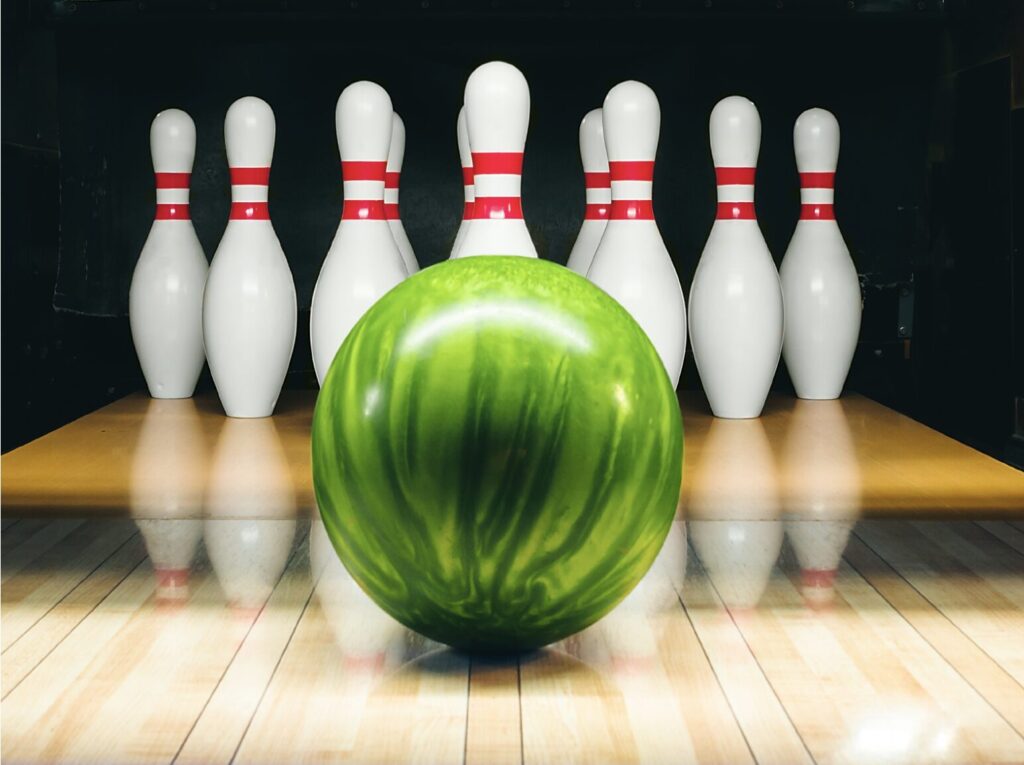
One of the South-Central PA agency’s biggest fundraisers is “Bowl for Kids’ Sake.”
This year’s event takes place throughout March and April, with each participating team asked to raise a minimum of $500 to support the agency’s many youth mentoring programs. Teams comprising five bowlers each may raise the requested total as a group, or individuals may participate for a minimum goal of $100.
Fundraiser success is vital because the need in our area is growing. Last year comprised “our greatest number of youth served in a single year over the last 20 years,” Shultz said.
Extending Reach
Big Brothers Big Sisters’ national origins trace back to 1904 when New York City Court Clerk Ernest Coulter noticed an increasing number of young boys coming through his courtroom. Through observation, Coulter decided that caring adults could help many of the youngsters stay out of trouble. He then took action with the beginning of the Big Brother movement.
Concurrently, a Ladies of Charity group, later to become known as Catholic Big Sisters, was befriending girls coming through New York Children’s Court. The boys’ and girls’ groups continued to work independently until joining forces to become Big Brothers Big Sisters of America in 1977.
Today, Big Brothers Big Sisters operates in all 50 U.S. states and 12 countries worldwide, continuing its mission to “create and support one-to-one mentoring relationships that ignite the power and promise of youth.”
The local organization was first established as Big Brothers Big Sisters of the Capital Region in 1981, activating the belief that “every child possesses the potential to succeed and thrive in life.” At that time, the affiliate serviced Cumberland, Dauphin, Lebanon and Perry counties.
In October 2024, the Capital Region affiliate officially changed its name to Big Brothers Big Sisters of South-Central PA upon expanding its service area to include York and Adams counties.
“We extended our reach into York and Adams counties because it was the right thing to do,” said Mary Murphy, the affiliate’s vice president of development. “We changed our name to better reflect our coverage and are now BBBS of South-Central PA.”
Positive Change
Program services provided by Big Brothers Big Sisters of South-Central PA include:
- Community-Based Program. Bigs and Littles meet two to four times monthly, with both deciding activities and times and places to meet. The Bigs’ goal is to “expand their Littles’ world view and introduce them to new experiences through community activities and everyday conversation,” according to the organization.
- Site-Based Program. Bigs and Littles meet at a designated location, with several sub-programs falling under this category. Subprograms include Bigs in School, which involves meeting at a Little’s school before, during or after school hours.
- High School Bigs & College Bigs programs, where high school and college students “learn leadership skills while volunteering as mentors at nearby elementary and middle schools.”
- Bigs in Blue program, which introduces youth to active-duty law enforcement officers who serve as mentors. Officers meet with Littles each month at the child’s school.
- Beyond School Walls, a workforce development program introducing high school students to professionals from area businesses, trades and higher education. Students and adult mentors meet bi-monthly at a corporate, educational or community location “to inspire and prepare students for their future.”
- Sports Buddies, where Bigs and Littles meet at a local YMCA to swim, work out and participate in YMCA-hosted activities.
Big Brothers Big Sisters also offers field trips, career exploration opportunities and educational opportunities year-round, including a Historically Black Colleges & Universities Fair, Graduation Recognition & Scholarship Presentation, Back-to-School Block Party, Youth Leadership Summit, Bigs in Blue field trip, and other customized activities.
As for Little Sister Ariana, her mother Mary said that she’s noticed positive changes in her daughter since Ariana and Jamie started spending time together.
“Ariana’s always been an outgoing person. I mean, she’s not a shy person,” Mary said. “I think Big Brothers Big Sisters is a good program. I think it’s helped Ariana’s self-esteem. I think there’s change for the better.”
For information on Big Brothers Big Sisters of South-Central PA, or to register or donate to Bowl for Kids’ Sake, visit www.capbigs.org.
If you like what we do, please support our work. Become a Friend of TheBurg!



 Jennifer Kokoski did not grow up dancing, but the creative outlet was often on her mind.
 Shree Paija and Sarita Lama wanted to fill what they saw as a big gap in the local dining scene.



 As winter melts into spring each year and Easter approaches, I am usually thinking about what meatless meals I can prepare in observance of Lenten custom.
 On March 12, 2015, a long line of people stood outside of a long-shuttered Harrisburg landmark, ready to snip the ribbon on one of the city’s most ambitious adaptive reuse projects.
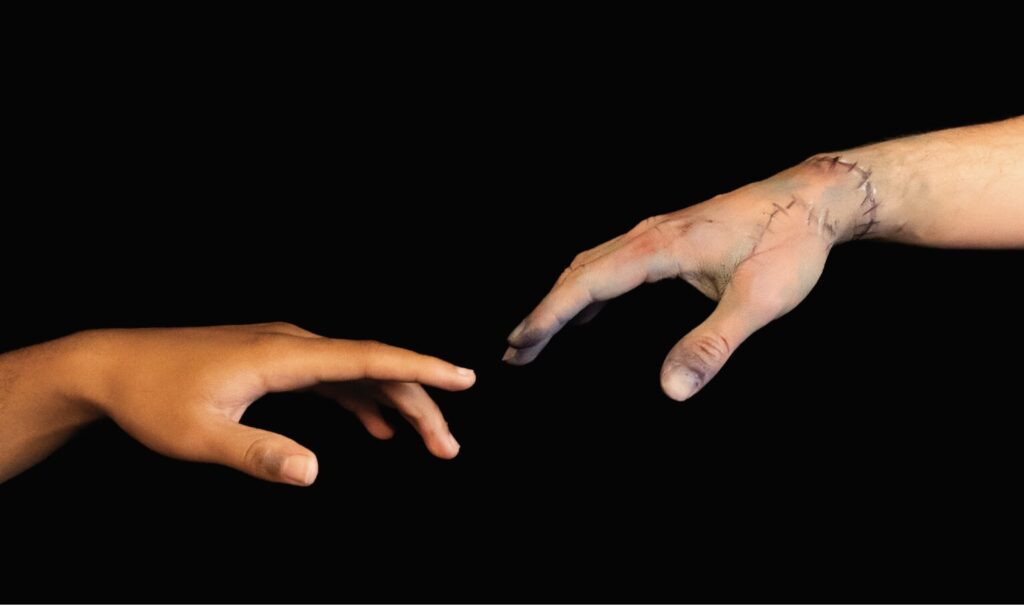 “Can a man be a god?” asks Victor Frankenstein.