






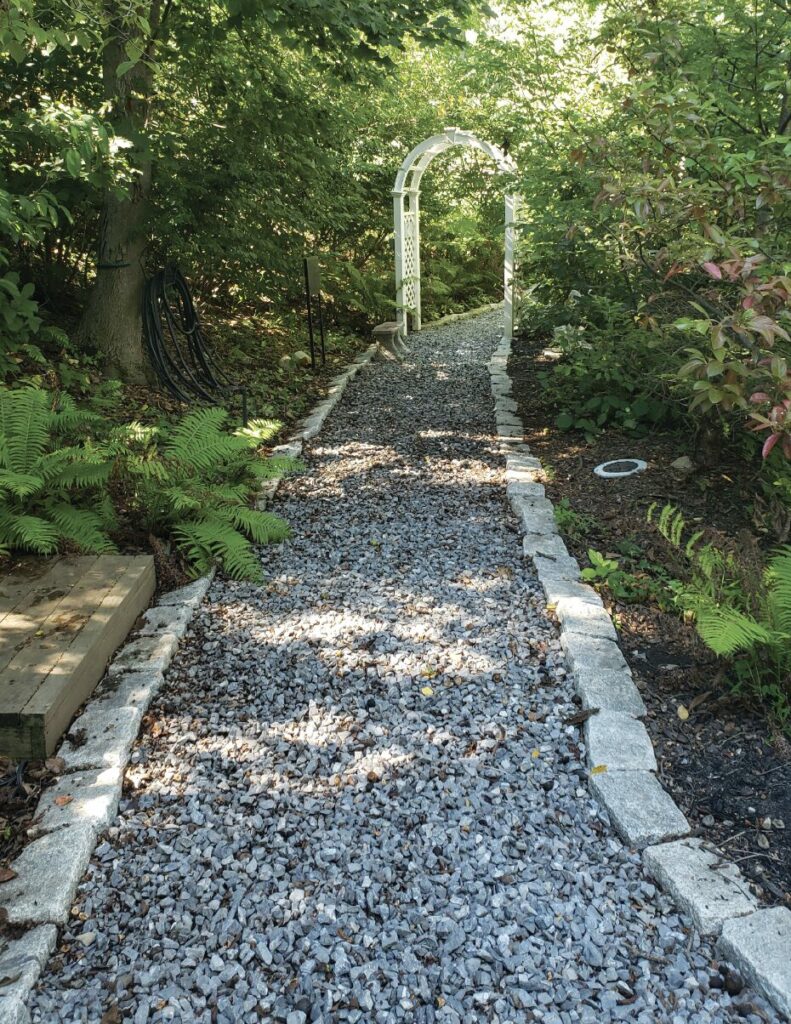
 Step into Steve Tambolas’ backyard to see his “labor of love.”
“Here’s my little bit of paradise,” he said. “When we moved here, it was all grass.”
Now, the Susquehanna Township yard is a green haven. Tiered gardens bordered by stone walls hug the slope. Look more closely, and those beds of flowers and shrubs are actually rain gardens, designed to prevent stormwater runoff from cascading into the headwaters of the Paxton Creek below.
In homes and communities, area residents and groups are installing rain gardens or water-loving plants to help ease pressure on the region’s aging stormwater systems. In the process, they are greening their surroundings and, they say, playing their part in battling climate change.
“When rain falls, it’s always best if you can mimic its natural pathway and have it infiltrate as close as where it hits the ground,” said Susquehanna River Basin Commission (SRBC) Deputy Executive Director Andrew Gavin. “That really points to individual property owners as a first line of defense in preventing stormwater problems.”
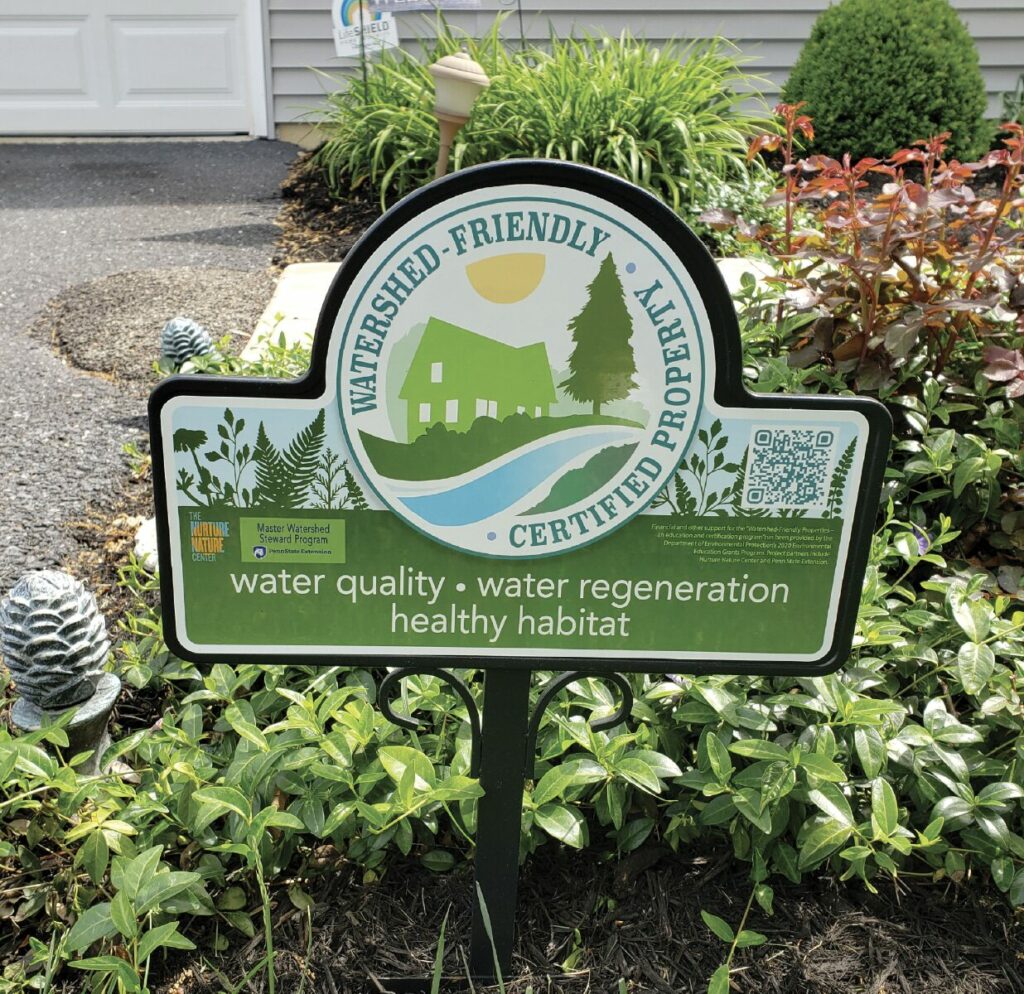
Why Rain Gardens
First, know the “why” of rain gardens, said Tambolas. Cities grew up along rivers. With skyrocketing populations come pavement and roofs, which send polluted rainwater runoff into overburdened water systems and prevent it from reaching rivers and streams.
“It’s all about runoff. Period,” Tambolas said. “I no longer see rain gardens as something nice to have, but rather, I believe it’s become almost a necessary strategy for the way we design our yards and around our homes.”
Many people view rain gardens through the lens of curb bump outs that scrape their cars, but they should know that stormwater problems affect everyone, said Harrisburg community activist Rafiyqa Muhammad.
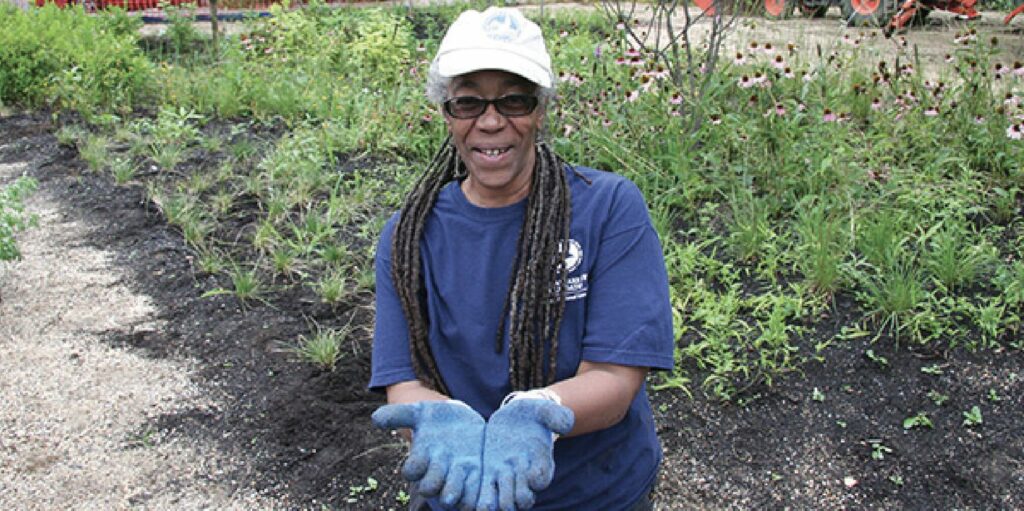
Rafiyqa Muhammad. Photo courtesy of the Chesapeake Bay Foundation.
In 2018, Muhammad worked with the Chesapeake Bay Foundation to install community rain gardens in the city’s economically challenged Allison Hill neighborhood.
“There’s a lot of stuff we still need to update our community about when it comes to rain gardens and to remind people that we are a flood city,” she said. “Harrisburg was built on the river. I’ve been through a couple floods where I lost everything. That right there is enough. Water rises. Where are you gonna go?”
Even Allison Hill regularly floods from now-commonplace gullywashers.
“When did we have floods on top of a hill?” Muhammad said. “But we have old infrastructure.”
Citywide, Capital Region Water works with community groups to install neighborhood rain gardens. Strategically placed and designed, many target high-risk areas, such as blocks where greenery is scarce, concrete is abundant, and roads create salty, oily runoff.
These are not your father’s rain gardens, if your dad happened to have one. Below the surface, networks of pipes, tanks and stone formations, depending on the site, trap and hold excess rainwater to be released into the ground or eased out to prevent it from overwhelming Harrisburg’s obsolete combined sewer-stormwater system.
At the city’s 4th & Dauphin Park, the basketball courts are porous, and gaps between stone pavers let water pass through. A pair of rain gardens facing the sidewalk are specially drained to slow the intake of downbursts. A young tree that tapped into the underground water source is thriving, in contrast to scraggly trees struggling up from the sidewalk across the street.
“It’s wild how well plants and trees do when they’re given the right conditions, even in an urban environment,” said Capital Region Water City Beautiful H20 Manager Claire Maulhardt.
Grass Power
CRW leans into community support for neighborhood projects, but Maulhardt sees individuals contributing by “doing the best they can on their own properties. That’s going to make them more resilient to weather conditions as well as other conditions of climate change, like heat islands, heat-related illnesses and air quality.”
To get started, rethink grass, suggests Maulhardt. Lawns are great for recreational activities, she said, but with their shallow roots, rain sheets off during heavy storms.
As an alternative, she pointed to the tough, deep-rooting sedges and rushes planted at 4th & Dauphin. Giving a hardy bunch of rushes a tug, she noted that “the force of water coming in here can be intense sometimes, and this really holds up.”
Maulhardt encourages residents to plant “meadow instead of lawn. Once you establish it, a meadow can be easier to maintain.”
For rain garden initiates, Capital Region Water offers Adopt-A-Rain Garden, which invites community groups to volunteer for basic site support while also receiving free resources and education. Individual property owners can even get a credit toward stormwater fees in exchange for installing stormwater controls, “because you’ve actually implemented something that helps our system and minimizes your impact,” said Maulhardt.
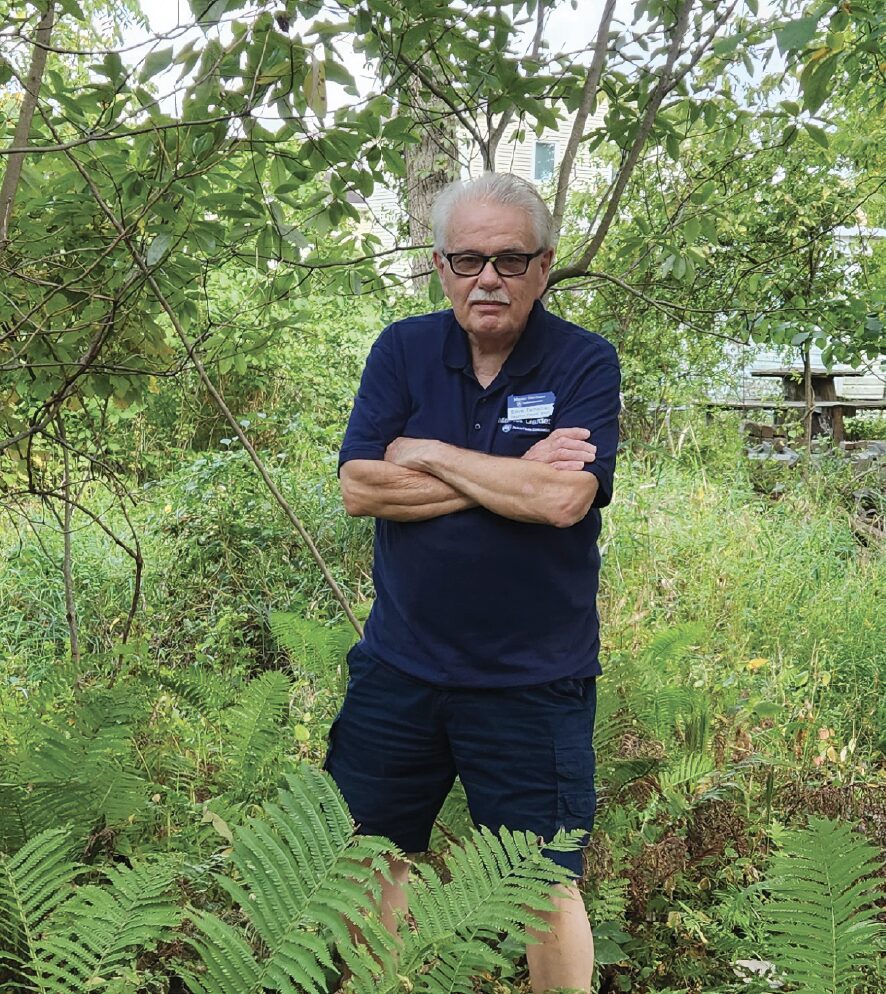
Steve Tambolas and his gardens.
Getting Started
Algebra. Sorry, but that’s where sizing an effective home rain garden starts, said Tambolas, the Susquehanna Township homeowner and Penn State Extension master gardener. The calculation accounts for average annual rainfall, size of the roof, and digging depth as determined by a DIY percolation (perc) test that reveals the ground’s absorption rate.
Tambolas relies on detailed instructions from thisoldhouse.com: “How to build a rain garden to filter runoff.” It’s worth checking out just for the idyllic picture of an oval rain garden bursting with black-eyed Susans and coneflowers (native plants, people).
The SRBC designed Tambolas’ high-capacity rain garden in the early 2000s as it educated homeowners about the growing problem of runoff. Native plants, including hydrangea and blue mist flowers, connect to a drip irrigation system, which is available online and easy to install, he said. His system runs on a timer, but that’s not a necessity. Anyone can turn on the faucet and turn it off 20 minutes later.
“You just watered your garden,” he said.
Rain barrels are “an absolute must” in Tambolas’ system. Even people who don’t have space for a rain garden can install rain barrels to collect and control roof runoff, he said.
Tambolas caught the eye of SRBC for a demonstration site because the headwaters of famously flood-prone Paxton Creek border the base of his yard. Headwaters are “where stormwater starts to gain the momentum to cause problems,” Gavin said. There along the stream, Tambolas has created a meditation spot abundant with statuary, trees, a riparian buffer and deep-rooted plants.
“I kinda went overboard on the ferns, but they spread very quickly,” he said.
With its eco-friendly landscaping, Tambolas’ yard is not just a rain garden. It’s also a certified wildlife and pollinator habitat. An oak tree hosts 400 species of “beneficial insects” that feed birds. The native smooth hydrangea is “nothing spectacular, but you should see the pollinators that go all over this thing.” Milkweed sustains butterflies by providing a place to plant their young.
“A lot of native insects are totally dependent on one or two plants,” he said.
A Changing Outlook
Homeowners wondering how they can contribute to stormwater management can start by cleaning the litter that clutters the stormwater system, said Muhammad. From there, she suggests choosing flowers and plants with “wet feet”—the ones that thrive in wet soil while they hold and filter water, such as daylily, bleeding heart and blue phlox.
“There is a lot of education to do, but it’s going to take a minute,” she said.
Rain garden proponents agree: As the look of yards changes, mindsets must also change. A rain garden or corner meadow isn’t an overgrown patch but an instrumental factor in managing water resources. Minds will change as people see greening neighborhoods become more active and livable, said Capital Region Water Community Outreach Manager CJ McDougald.
Added Maulhardt, “The world around us is a living system, and it requires maintenance and care. It’s a necessity and something we should be doing globally as well as locally. It starts here.”
Get to Know Rain Gardens
For more information on the organizations mentioned in this story, visit:
- Penn State Extension, extension.psu.edu
- Capital Region Water, capitalregionwater.com
- Susquehanna River Basin Commission, srbc.gov
- Paxton Creek Watershed & Education Association, paxtoncreek.org (Tambolas presents a rain garden seminar on Oct. 7.)
Stories on environmental topics are proudly sponsored by LCSWMA.
If you like what we do, please support our work. Become a Friend of TheBurg!