Harrisburg’s MLK Jr. Government Center
A state-appointed financial authority has approved Harrisburg’s five-year financial plan but also outlined a variety of challenges facing the city over the next several years.
On Wednesday, the Intergovernmental Cooperation Authority (ICA) accepted the city’s five-year plan, which anticipates a series of balanced budgets “based on reasonable and appropriate assumptions,” according to the ICA.
The state legislature created the ICA in 2019 to help oversee and guide Harrisburg’s finances. As part of the legislation, the city had to submit an updated five-year financial plan to the ICA.







In accepting the plan, ICA Chair Doug Hill also communicated several areas of concern with the city, including:
* Revenues/cash balance. The ICA is concerned about falling values and assessments of Harrisburg property, especially downtown, due to remote work policies by the state and other office workers, which could result in reduced property tax revenue for the city. “As [Harrisburg is] Pennsylvania’s capital city, the commonwealth has some hard decisions to make about what kind of metropolis it wants to have as its seat of governance. Any reimagining of Harrisburg and its finances must include a full commitment to the city by state leaders, including diversified revenue sources and an economic development partnership.”
* Neighborhood Services Fund. The ICA would like receivables for the city’s sanitation services to be above 95%, a level it has consistently failed to achieve. In the recent past, the city has boosted collections by using American Rescue Plan Act funds to support unpaid sanitation bills for economically disadvantaged households, but relying on this “found money” isn’t sustainable long-term, according to the ICA.
* Economic Development Plan. The ICA welcomes the city partnering with CREDC and other city stakeholders to form a comprehensive economic development plan, an effort currently in the planning and fundraising stages. “Apart from its importance for the vitality and opportunity it affords the downtown and our neighborhoods, it is an integral tool for the city to build long-term economic growth in the face of future trends in city revenue,” the ICA stated.


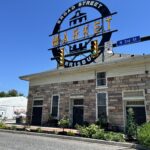
* The Broad Street Market. The ICA stated that is concerned about “the slow progress and rising costs associated with the city’s efforts to rebuild the Broad Street Market.” The market’s brick building burned in July 2023, and reconstruction is finally slated to begin next week. In addition, the administration’s estimated cost for the work has consistently risen over time, now estimated at $23 million, leaving the city with a funding gap of about $14.4 million for the project.
Several of these concerns have been mentioned by the ICA in previous financial reports, including the need to boost trash collection rates and to formulate a comprehensive economic development plan for the city.
To read the full report, visit www.hbgica.org.