Tag Archives: WCI Partners

An Optimist Strikes Back: Good things are happening right before our eyes. So, what’s with all the cynicism?

I meet people every day who love living and working in Harrisburg.

Often, just having a coffee at Little Amps or grabbing lunch at Café Fresco, I enjoy the fun and excitement of urban spontaneity. One meeting leads to two or three other conversations as people have unplanned interactions throughout the course of the day.

The essence of urban living and working is being out and about, walking around, meeting new people and reconnecting with friends and colleagues. Some of the best ideas spring from these chance encounters and enriching conversations, occasionally leading to actions and projects, both large and small.

This past month, a major new business joined Harrisburg when the Philadelphia Macaroni Co. took over operations at the former Unilever plant on S. 17th Street. This is but one of numerous new businesses and residents in Harrisburg recently. While this news was surprising to some (who generally have a cynical outlook of the city), it should not be a surprise to anyone who has been following all of the positive activity going on over the last year. Here is a list of just some other projects (and folks to talk to) if you want to hear the story of what is really happening this summer in Harrisburg.

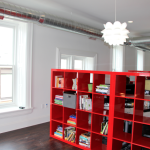
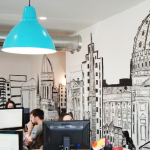
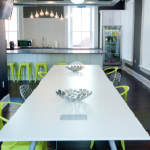
WebpageFX recently moved 65 employees into a renovated, 9,000-square-foot building at 1705 N. Front St. Bill Craig and Karie Shearer have led the company since its inception. They said that moving to Harrisburg from a business incubator in Carlisle was a natural next step in the growth of their company and was essential for their recruitment efforts. WebpageFX has generally young and tech-savvy employees who prefer city amenities—like the beautiful view of the Susquehanna River right out their front window. (My company, WCI Partners is the developer and landlord of WebpageFX’s building.)

Speaking of views, Char’s Tracy Mansion, just up Front Street from WebpageFX, is having a record-breaking year. I spoke to Char Magaro this week, and her business is outperforming all the expectations that she had when she expanded from her prior location in Shipoke. At the time, many were skeptical that any restaurant on Front Street would be successful. However, her food and setting are as good as any in the region and state.

While I’m talking about restaurants, Harrisburg boasts not one but several national-class dining experiences. Qui Qui and her partner Staci, the long-time owners of Mangia Qui and Suba, are set to more than double their restaurant space when they open Rubicon this summer. Sitting in the shadow of the Capitol dome at N. 3rd and North streets, Qui and Staci have re-invested substantial new capital into their business and are excited to expand their offerings in the city.

Derek Dilks recently gave me a tour of the LUX condominium building that he and Dan Deitchman redeveloped at N. 3rd and State streets in Harrisburg. Consisting of 44 units, about half of which are already reserved prior to their opening, the building is a terrific redesign and conversion of vacant, rundown office space. Formerly a non-profit association headquarters, the building sat empty for years. Dan and Derek are working on a restaurant for the first floor and offer amazing views of the Capitol building and downtown for their residents from the building’s rooftop. When fully occupied, the building will add vibrancy and foot traffic in the downtown.

Josh Kesler recently gave me a tour of his ambitious new project across from the Broad Street Market. Over the winter, Josh and his team sandblasted and refinished the old wood timber in the historic Millworks building, which had sat empty for years. Now, they are putting finishing touches on 23 workspaces that have been 100-percent pre-leased to artists who will both make and market their wares in the new space. Josh and his wife are also adding a farm-to-table restaurant and beer garden inside the space. By removing part of the roof, they have created a very unique indoor/outdoor space unlike any other in the region. It is sure to be a new hot spot when it opens this fall.

Nick Laus is opening a new wine bar and upscale brick-oven pizzeria called Cork & Fork at the corner of N. 2nd and State streets this fall. Expanding on his already very successful city businesses at Café Fresco and Home 231, Nick’s additional investment shows his continued faith in Harrisburg. (WCI will be the landlord for Cork & Fork.)

And the reasons for optimism keep on coming:

  • Emma’s on Third recently opened an organic spa and yoga studio on 3rd Street in Midtown near the new Susquehanna Art Museum.
  • Yellowbird Café was packed this weekend when I swung by for take-out for some friends visiting from out of town.
  • Aaron Carlson at Little Amps tells me that his business has had its best three months running since it opened.
  • The team at The MakeSpace continues to impress with all their artistic and community endeavors.
  • Dan Webster (with an assist from Liz and Dani Fresh) recently produced a Harrisburg version of their magazine, Local. If you haven’t picked up a copy, please do—it is worth the read.
  • Out-of-town investors recently purchased the long-vacant properties previously owned by Mary Knackstedt and have started work, vowing to be the latest residents to make their home on N. Front Street.

I could go on and on, but you get the picture. This is truly an exciting time for Harrisburg. There is much more to be done, but our worst days are behind us and many terrific things are happening, if you just look and walk around.

Unlike the cynics, don’t be surprised. Just read TheBurg every month (and daily on the Web) to hear about the stories you won’t find elsewhere.

J. Alex Hartzler is publisher of TheBurg.

Continue Reading

Restoration on the River: Life returns to the Moffitt Mansion.

Last month, the employees of WebpageFX moved into the fully renovated Moffitt Mansion at 1703-05 N. Front Street in Harrisburg.

The re-location of the company from Carlisle marked not only a significant development for the city, but a major milestone in the history of the dressed blue limestone mansion, which long ago was divided into a warren of small offices, then fell into disrepair. For many years, it even served as the home of the former Midtown magisterial justice’s office.

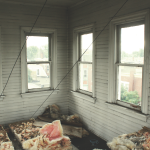
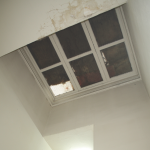
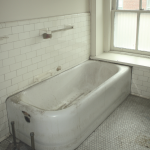
WCI Partners, Urban Interiors and Trinity Construction now have brought the mansion back to life, restoring and opening it up to serve the needs of WebpageFX, an Internet/Web design firm. Last July, we featured a series of photos showing the mansion before the renovation. We now present the “after” photos, so readers can see the potential for Harrisburg’s historic buildings, increasingly restructured for modern use and given new purpose and new life.

In addition to these images of the completed renovation, please check out the “before” shots of the mansion and additional history on the building from our July issue.

Continue Reading

Context is King: News has the most value when history, perspective are kept in mind.

“It’s not the words, it’s the context of the words.” – Chris Rock

Context. Responsible reporting and analysis provide the reader with the overall circumstances that form the setting for an event or situation, or, in other words, the “context” of the topic at hand. Without context, individual facts are rendered meaningless at best, misleading or deceptive at worst—making true understanding difficult. 

The timeframe one uses for analysis is critical to context. Several years ago, I had the honor of attending a luncheon with the Dalai Lama. What I remember most from the Dalai Lama’s engaging lecture was his humility and surprising sense of humor.  Throughout his remarks, he emphasized the context of his work in terms of centuries, even millennia. He challenged the audience to think not in terms of days, weeks or even years, but in terms of what our actions mean for the next 100 or even 500 years.

For a humbling mind experiment, take 10 minutes to think about your life in the context of 100 or 500 years, looking back on history and into the future. It is not quite “Cosmos” time, but it is enough to have fun and to contemplate the point.

The Dalai Lama’s comments came to mind again this past month with two news items in the local media. In Harrisburg, increased parking rates have led to vigorous discussion, while the debate about whether or not Harrisburg is “gentrifying” received additional attention. Both discussions, however, suffered from a lack of context.

On the parking front, various news outlets and commentators decried the increased parking rates currently taking effect in downtown Harrisburg. These changes will raise rates for street parking to as high as $3 per hour on certain streets from the current $1.50 and were widely panned. 

However, as Paul Barker astutely pointed out in his Burg blog, “The High Cost of (Cheaper) Parking,” higher parking rates can have significant beneficial effects on the overall community. Far from being a detriment to business, higher parking rates can help ensure the availability of short-term street/surface parking for business patrons while encouraging longer term commuters to use lower rates in underused garages. If commuters choose either to carpool or use alternatives, such as public transportation, biking or even old-fashioned walking to get to their destination, numerous potential societal benefits may stem from decreased car traffic. If we want a livable, vibrant city in future decades, paying a bit more to park now might be a good idea after all.

The local gentrification debate suffered from an even greater lack of context.  A recent article wondered if Harrisburg is “gentrifying” and asked people their opinion. As a long-term resident (since 1995) and real estate developer (since about 1998), I have a vested interest in this debate. Whatever one thinks of gentrification on a national level, the local debate requires context in order to be understood.

The first and most important missing contextual point is population. In the 1950s, Harrisburg’s population peaked at around 100,000 residents and fell to a low of slightly less than 50,000 at the turn of the century, while the surrounding suburban community grew its population and economy. Since 2000, Harrisburg has had a net increase of about 700 people, the first increase in half a century.

Now, let’s generously assume that the current trend continues, and Harrisburg is able to add 100 new residents a year indefinitely into the future. At that rate, it would take about 500 years just to bring the population back to where it was 50 years ago. At least in this century, it is clear that there is plenty of room for everyone who wants to call Harrisburg home, regardless of your personal situation.

Our company, WCI Partners, has renovated about 100 homes in Olde Uptown Harrisburg since 2005, including 18 new homes that were built on vacant city lots (two of the lots required demolition of an existing structure). Most renovated homes were purchased from out-of-town owners. Other leading companies, such as Brickbox, GreenWorks and Vartan, have converted old offices buildings to residential living, restored long-vacant buildings or, in rare instances, built new on vacant land. No one was displaced or forced to leave.

As a result of these activities, there are increased city revenues, new businesses and jobs, decreased crime, improved streetlights and sidewalks and a host of other benefits to new and prior residents in the city. That said: the area where WCI works only occupies about nine square blocks. Out of about 12 square miles of land in the city (even assuming one-half is not residential use), this means that we have impacted less than one-tenth of 1 percent of the land area and less than one-half of 1 percent of all residential dwellings. In other words, the recent debate often missed the point of context and scale.

Even when added with that of other developers and individual homeowners, it is simply not at the scale required to dramatically impact the city population as a whole or, conversely, deprive anyone of a place to live. Thus any argument—ironically often from nonresident, elitist/privileged voices—about a “dark side” to development or “invasion” of the neighborhood is mere silliness, outdone only by its meaninglessness to any rational debate.

Harrisburg continues to make small, but positive strides toward returning to its past vibrancy, and we can look forward to one day again being a leading capital city.  Increased parking rates and small sprouts of development are but two of the many signs of good things to come for all residents and would-be residents. With any luck, Harrisburg’s resurgence will come well within the Dalai Lama’s time horizon and be embraced with contextual understanding.

J. Alex Hartzler is publisher of TheBurg.

Continue Reading

March News Digest


New Parking Rates Go into Effect

The first of Harrisburg’s new parking meters went live last month, doubling street parking rates through much of downtown.

Street parking in the heart of downtown Harrisburg now costs $3 an hour, or 75 cents for every 15 minutes. In addition, enforcement hours have been extended to Monday through Saturday, 8 a.m. to 7 p.m.

The 40 new meters accept credit cards, meaning parkers, for the first time, do not have to manually feed the meters with change.

The new parking rates were agreed to as part of the long-term lease of the city’s parking system to Standard Parking. Outsourcing the parking system was a key part of the city’s financial recovery plan, which helped rid Harrisburg of its overwhelming debt load and, if revenue projections are met, should provide additional annual funds to the city.

Standard Parking still must install new meters in several locations, including in Midtown Harrisburg, where metered parking also will be extended up N. 3rd Street to around Reily Street.


Water Rate Hike Effective

The Harrisburg Authority last month began implementing its new rate structure that includes a 27 percent hike in combined water and sewer rates.

As a result, authority customers experienced an increase in their utility bills last month. Most customers saw their bills go up by under $15 per month, said the authority.

The rate hike will help ensure the long-term health of Harrisburg’s drinking water, wastewater and storm water systems, said Executive Director Shannon Williams, who added that, even with the increase, water rates are among the lowest in the region.


Brewery Headed to Midtown

A brewery is headed to the heart of Midtown Harrisburg, as Alter Ego Brewing Co. last month received the OK to open a brewhouse at the rear of Midtown Cinema.

The city’s Zoning Hearing Board unanimously approved a special exception to permit the brewery and brew pub to operate in a residential zone.

Several dozen supporters—and some opponents—gathered in City Council chambers to voice their opinions. Supporters testified that the brewhouse would play an important role in continuing the revitalization of the area, while opponents cited possible traffic, noise, odor and parking issues.

Owners Theo and Brandalynn Armstrong expect to begin to build out the space at 250 Reily St. in May. If the renovation goes as planned—and assuming Alter Ego is granted its liquor license—the brewery should begin to serve customers around October.

When completed, the beer-making operation will take up about half of the 3,500-square-foot space, which is owned by Lift Development LLC. The other half will include a bar, tables and a small stage, which will be confined to acoustic acts and small bands.

In addition to serving their own beer in mugs and growlers (no bottles), Alter Ego will offer local Pennsylvania wines and a limited menu focused on small plates and finger foods. No spirits will be served.

Hours are expected to be Wednesday to Friday, 4 p.m. to 11 p.m. and Saturday and Sunday, 11 a.m. to 11 p.m.


Stadium to Undergo Upgrade

Harrisburg plans to undertake a major upgrade to the Skyline Sports Complex to significantly improve the soccer facility used by the Harrisburg City Islanders and youth soccer groups.

Mayor Eric Papenfuse last month said the project will double the seating capacity at the city-owned facility to 4,500. It also will create a new entrance plaza, install a new scoreboard and build new restrooms, locker rooms and a concession area.

No city funds will be used for the $14 million project on City Island, said Papenfuse. Instead, private funds will be pursued, in addition to a possible state matching grant, said Islanders President Eric Pettis, who expects work to be finished in 2016.

The upgrades will allow greater use of the venue, including for concerts, youth sports and other events, said Papenfuse.


More Downtown Housing Planned

Another downtown office building is going residential, as the 19-century Walnut Court building is slated to become a 21-unit apartment building.

The Harrisburg Zoning Hearing Board last month agreed to waive the parking requirements for the conversion by 210 Walnut LLC, which is made up of the partners of WCI Partners LP. City Council still must OK the land use plan for the project.

The developers plan to convert the four-story, 21,600-square-foot building into 15 one-bedroom units, three two-bedroom units and three lofts. Rents will range from $900 to $1,350 per month.

The building has housed many businesses throughout the years, including, most recently, the law firm of Keefer, Wood, Allen & Rahal, which relocated up the block. The women’s clothing store, The Plum, also long-occupied the large retail space at Walnut and N. Court streets. It has moved next door to Locust and N. Court streets.

The building will retain two commercial spaces. The first is the snug storefront at 206 Walnut St. that long has housed Alden, a men’s haberdashery. The second, at the corner, will probably house a restaurant, said Butcher.


Flood Insurance Hikes Rolled Back

Congress last month passed legislation watering down key elements of the Biggert-Waters Act, which had threatened to dramatically raise the cost of flood insurance.

The U.S. Senate and House both passed bills that will roll back hikes that, in many cases, would have increased federal flood insurance premiums by more than three-fold. In addition, many property owners now will be allowed to pass on below-market rates to people who buy their homes.

As of press time, the legislation was waiting action by President Barack Obama. The White House has indicated he will sign it.


Warfel Snags National Award

Warfel Construction last month received national recognition with a first-place award for its work on the new office building at N. 2nd and State streets in Harrisburg.

Associated Builders and Contractors (ABC), a leading construction trades organization, honored East Petersburg, Pa.-based Warfel with the first place Eagle Award in the category of commercial property, $5 to $10 million.

“The Excellence in Construction awards program is the industry’s leading competition, developed to honor innovative, high-quality merit shop construction projects,” according to ABC.

The project was selected from entries submitted from across the nation and judged first in terms of complexity, attractiveness, workmanship, innovation, safety, cost and completion time.

WCI Partners developed and owns the building. Major tenants include the Buchanan Ingersoll & Rooney law firm and First National Bank of Pennsylvania.


New Bishop Installed

Most Rev. Ronald W. Gainer was installed last month as the 11th Catholic bishop of Harrisburg at a Mass at St. Patrick Cathedral.

A native of Pottsville, Pa., Gainer was ordained in 1973 and previously served as bishop of Lexington, Ky.

He succeeds Bishop Joseph P. McFadden, who died last May.


Changing Hands: February Property Sales

Brookwood St., 2451: Fannie Mae to C. Wise & L. Stone, $41,000
Chestnut St., 2044: W. Bohn Jr. to M. Catania, $81,900
Chestnut St., 2304: M. & T. Bosak to M. & K. Johnson, $189,500
Duke St., 2622: J. Pierce to PI Capitol LLC, $51,031
Hale Ave., 377: H. & K. Le to I. Yolov, $49,000
Hale Ave., 412: Fannie Mae to T. Tran, $36,000
Herr St., 226: M. Kurowski to V. Wills & R. Moore, $160,000
Meadowlark Pl., 3028: C. Capitani to K. Clark, $73,000
North St., 244: S. Touloumes & J. Nye to E&S Properties LLC, $37,000
N. 2nd St., 511: C. Longyear to L. Eyler, $240,000
N. 2nd St., 1605: Freddie Mac to NR Group LLC, $42,000
N. 3rd St., 906 & 912: 3rd Street LLC to Nish Properties LLC, $285,000
N. 3rd St., 925: AIM Holdings LLC, CL Holdings LLC & Lam & Cheng Properties to 921 Home LLC, $715,000
N. 3rd St., 1724: G. DiCioccio to Y. Farzana, $91,500
N. 3rd St., 2103: WEC 97A 11 Investment Trust to Rite Partners LLC, $985,366
N. 3rd St., 3017: Deutsche Bank National Trust Co. Trustee to J. Crossett & M. Hochstetler, $80,000
N. 3rd St., 3221: Freddie Mac to PA Deals LLC, $39,250
N. 4th St., 1723: P. Laudermilch to R. Brock, $130,000
N. 14th St., 210: R. Rammouni & W. Othman to FBTB Group LLC, $48,900
N. 15th St., 1340: PA Deals LLC to MidAtlantic IRA LLC & James Yeager IRA, $56,500
N. Front St., 1525, Unit 409: P. Krantz to M. Anderson, $189,150
Penn St., 1338, 1340 & 1342: P. Sowers-Alton to T. Hanley & J. O’Neill, $36,000
Pennwood Rd., 3141: J. & P. Sandrock to C. Giba, $75,000
Rose St., 933: Rose Street Associates to F.A. Clark, $150,000
Rudy Rd., 2323: Fannie Mae to O. Saleh, $61,000
Rudy Rd., 2400: A. & J. Erby to Secretary of Housing & Urban Development, $156,008
Seneca St., 540: K. McCauley to E. Jefferies, $59,000
S. 13th St., 127 & 1304 Derry St.: S. Pak to Mount Pleasant Laundromat LLC, $1.2 million
S. 13th St., 301: 301 South 13th Street LLC to Skynet 301 LP, $360,000
State St., 1522: E. Stoute to C. Evans, $75,000
Susquehanna St., 1909: WCI Partners LP to L. Marven III, $149,900
Sycamore St., 1525: J. Moyer to P. Pham & T. Nguyen, $63,000
Valley Rd., 2300: E. & J. Schweikert to M. & R. Lewis, $208,000
Woodbine St., 245: J. & J. Nagy to J. & M. Harris, $52,800

Harrisburg property sales for February 2014, greater than $30,000. Source: Dauphin County. Data is assumed to be accurate.

Continue Reading

Cause for Optimism: In addition to resolving its financial crisis, Harrisburg may benefit from a growing preference for urban life.

Screenshot 2013-12-29 19.52.48

We are at a promising time in our city’s history.

This is due, in no small part, to the obvious and recently well-publicized reasons: the election of a new mayor; the imminent resolution to a debt crisis caused by the city’s incinerator; and the outline, at least, of a comprehensive foundation laid out by the receiver’s team to address a decades-long structural deficit. Optimism, after several difficult and uncertain years, is finally, welcomingly warranted.

There is, however, an additional and more fundamental reason to be optimistic about our city. For the first time in more than 60 years, certain trends in residential preferences and business location decisions—or economic geography, as it is sometimes called—favor urban centers like Harrisburg.

These trends have been well-documented and analyzed, most notably by the urban economist Richard Florida in his book “The Rise of the Creative Class” and, more recently, by journalist Leigh Gallagher in her book “The End of the Suburbs.” As Florida, Gallagher and many other observers have pointed out, these trends are animated by a few key, interconnecting factors:

1)     The shift in the economy to increasingly creative, knowledge-based industries.

2)     The emergence of a generation—born between 1979 and 1996, known as Millennials—whose living and work preferences favor walkability, access to mass transit, unique architecture and design, close proximity to restaurants and shops and a diversity, authenticity and overall “coolness factor” generally not found in the suburbs.

3)     The labor market alignment of Millennials with the knowledge, technology and innovation industries, which together fashion a new “creative-class” economy and metropolitan geography.  

Anyone who has visited New York, San Francisco, Philadelphia, Boston or Washington, D.C., lately will have seen the impact these trends are having on their downtowns and surrounding neighborhoods. After six decades of decline, each of these cities has registered significant gains in new residents in the 2010 census. In fact, according to the Pew Research Center, the 30 largest U.S. cities (not metropolitan areas, which are sometimes conflated with the word city, but actual center cities) have gained population by a median of 5.5 percent from 2000 to 2010. And the Brookings Institution recently released a report showing that, between 2011 and 2012, center cities within the 51 largest U.S. metropolitan regions (averaged together) grew more than their surrounding suburbs for the first time since 1920.

Talk of a national urban revival is no longer just wishful thinking by city boosters. The trends and supporting data are real. We are at an inflection point in metropolitan migration patterns throughout the country, driven in large part by the living and work preferences of young adults ages 20 to 34. Charles Lesser & Co., a real estate consulting firm, recently surveyed the preferences of this age group and found that:

  • 31 percent prefer to live in a center city (twice that of previous generations of the same age cohort).
  • Two-thirds seek walkable places or town centers.One-third are willing to pay a premium to be within walking distance to shops, restaurants, bars and other amenities.
  • Half are willing to give up living space in order to live in a walkable neighborhood.
  • Diverse neighborhoods, close proximity to jobs, “authenticity” and places that foster social connectedness are highly valued.

In other words, the places with attributes that Millennials prefer (walkability, social amenities and “cool factor”—i.e. cities) have an inherent competitive advantage to their surrounding region in growing their economy and population. Furthermore, unlike the “old economy” model of labor-market geography, where workers tended to follow the jobs, now the jobs, at least in the creative, knowledge-based industries, are increasingly following the workers. A recent article in the Wall Street Journal entitled “Companies Say Goodbye to the ‘Burbs,” stated that, “…U.S. firms have begun a new era of corporate urbanism… The bottom line: companies are under pressure to establish an urban presence that projects an image of dynamism and innovation [to attract younger workers].”

Despite being a smaller, “third-class” city, Harrisburg is not immune to these trends. In fact, for the first time since 1950, Harrisburg registered a modest, but still meaningful, population gain in the 2010 census. Not surprisingly, the gain was driven by young adults. The 2010 census reveals that Harrisburg increased its share of 20- to 34-year-olds by 8.7 percent, or 979 residents. In fact, this increase in young adults is actually larger than the total population gain of 578 residents, underscoring the trend’s strength in offsetting losses in other age groups. As this census data indicates, Harrisburg, despite popular negative perceptions, actually offers many of the positive qualities that young adults now prefer.

Our real estate development company, WCI Partners, has witnessed this trend firsthand with our Olde Uptown neighborhood redevelopment project. In 2007, we began renovating vacant, historic row homes in a blighted part of Midtown that had suffered from four decades of disinvestment, decline and concentrated poverty due to the aftermath of the Agnes flood. Since that time, we have renovated more than 100 properties and built 16 new ones within a four-block area, in addition to completing numerous neighborhood improvements like new sidewalks, streetlights, street trees and banners.

As a result, we have seen an influx of about 250 new residents to the area over the last six years (which, in turn, has created a vibrant community with a 90 percent drop in crime). The majority of these new residents (but certainly not all) fit the Millennial profile of professionals and creative types ages 24 to 34, who prefer the walkability, diversity, interesting design and architecture and proximity to bars, restaurants, coffee shops and downtown jobs that the neighborhood affords. The trend (if not quite the magnitude) is as real in Harrisburg as it is in Philadelphia or Washington D.C. As we say in the real estate business, there is demand for city living, at least from a certain (not so insignificant) segment of the market.

Consistent with the “creative-class economy” model of geographic preferences described above, there is also demand from knowledge and technology-based businesses to locate in the city. We have seen this trend at WCI Partners, as well. In fact, over the last half-year, we have been renovating an historic Front Street mansion in Midtown for WebpageFX, an Internet marketing company currently located in Carlisle that will be moving about 50 college-educated employees (almost all of them in their mid-20s) to the city this spring.

WebpageFX began its search almost three years ago, considering locations around the central Pennsylvania region. The company ultimately decided to locate in Harrisburg due to one overriding factor: the city—and its attributes that Millennials prefer—provided the strongest competitive advantage in attracting and retaining young, place-conscious talent. As WebpageFX’s owner Bill Craig told me, “The city is where our employees want to be. They want the proximity to restaurants, bars, coffee shops, the riverfront and other amenities that it offers. Everyone is really excited for the move.”

This and broader examples (andCulture, Red Privet, Pavone, WebClients and others) demonstrate the virtuous cycle that these “new economy” trends generate. Vibrant cities attract creative, young people who, in turn, attract creative businesses that together create more vibrant cities.

This virtuous cycle can be seen more widely in recent development projects and the emergence of “creative-class” services and amenities in the city. Projects like COBA and LUX by Brickbox serve to confirm the demand created by the trend in urban living preferences. New student housing projects, like International House, in concert with the emergence of the HACC Midtown Campus and Harrisburg University as educational anchors, reinforce the city as a “new economy” location. Millennial preferences for urban amenities have driven the development of 2nd Street in downtown, as well as the emergence of neighborhood businesses like Little Amps, Midtown Scholar, Midtown Cinema, Stash, TheMakeSpace, St@rtup and others. And continually growing organizations like Harrisburg Young Professionals help to provide the scaffolding of social activity, civic engagement and consumer spending necessary to sustain and bolster this positive cycle of urban growth.

To be sure, most cities, like Harrisburg, still have a variety of serious challenges to overcome, many of which cannot be easily solved and some of which serve as obstacles to the very trends that would alleviate them. And it often seems that the smaller the city, the bigger the challenges, due to less critical mass and a smaller pool of resources to marshal. Nonetheless, it remains encouraging that the prospects of meaningful growth for cities (including Harrisburg) are real and even seem to be strengthening. For so long, cities have struggled, with frequently frustrating results, against the predominant trends of suburbanization. Now that some of these trends are reversing, it will be the job of public officials, business leaders and various other stakeholders to implement the policies, initiatives and strategic partnerships that will effectively harness them.

David Butcher is president of WCI Partners LP. 

Continue Reading

We All Profit: Our new Community Publishers are ensuring the future of the social good we call TheBurg.

The New Year brings a sense of re-birth, excitement and hope to Harrisburg and our region.

With a new mayor and a “Strong” plan for a new fiscal reality, there is a palpable sense of optimism in the air around town. As Dave Butcher points out in his excellent article in this issue, national demographic trends that favor the re-birth and renaissance of cities nationwide are also beginning to have a small, but perceptible, impact here at home. These trends, coupled with focused, effective leadership, a re-invigorated citizenry and a business community that believes in the promise of better days ahead, bode well for 2014.

This month, TheBurg turns 5, and we have much to celebrate. Larry Binda has led a transformation of our publication over the past year. Together with our lead writer Paul Barker, our designer Megan Davis, our sales manager Lauren Mills, our web designers and managers at WebpageFX (who will move their company and their 50-plus employees into the city in early 2104) and all of our many contributors, TheBurg has gone from good to great in under a year.

Equally important, leading individuals and businesses in the region have noticed our work. These community-minded leaders appreciate the importance of the public service TheBurg provides through engaged reporting.  More than noticing, they have agreed to join with me as “Community Publishers.” Their names include: Select Capital Commercial Properties, Integrity Bank, Greenlee Partners, Capital Blue Cross, Sutliff Chevrolet (who also continues to support 3rd in TheBurg), WCI Partners (where I am also a partner), Consolidated Scrap Resources, Buchanan Ingersoll & Rooney and RE/MAX Realty Associates Ray Davis and Wendell Hoover.

Inside this month’s front cover and inside the cover of every month and on our website, you will find these leading brands and individuals. Each month, they— along with our advertisers—will bring TheBurg to you, free of charge. Through their annual commitment to TheBurg, they will allow us to write the stories, publish the pictures and distribute the paper you have come to know and expect. 

In effect, these Community Publishers are joining with me to create an entirely new business model for a local monthly print publication. Implicit in their support is the realization that advertising alone is not enough to sustain a publication. At the same time, they understand that the entire community benefits from engaged news reporting—and that someone has to pay for it. The problem, in the age of the Internet, is that other media and venues are taking advertising dollars once directed to print. It is equally hard to efficiently mail or distribute paid subscriptions. The “free-rider” problem is endemic. Many, if not all, would like to see a quality product— particularly one that mentions their name and good work from time to time—but many more would prefer if someone else pays for it. Fortunately, these leaders have the vision to see and support this reality.

I call this new model the “all-profit” model, as in “we all profit” from having TheBurg around. Even though I have pledged to my fellow publishers to take zero profits (as in “none”) out of TheBurg personally, I know that I profit along with the community. Even though no one makes monetary profits, our lives are greatly enriched as we open and read the stories of our neighbors each month and follow along on the web and through blogs and social media.

In the end, our community life—and quite a bit of our personal lifestyle and standard of living—is greatly influenced by the stories we tell ourselves, about ourselves, in the public sphere. If those stories are undeservedly negative, as they have been in Harrisburg for some time, the community suffers. If we tell the real story—about the 95 percent that goes right every day instead of the 5 percent that goes wrong—we all benefit.

Let’s be perfectly clear: this is not about charity. This is enlightened self-interest that recognizes that doing well and living well are not measured by bottom-line profits alone. Conversely, it is the recognition that, while there are other measures of success, conducting a business that can pay all its bills is a necessary condition to ensure long-term sustainability.

Our community publishers “get it.” And, since they do, you too will continue to “get” TheBurg. We have room and, in fact, a need for more of them. You will know that we have reached our goal of financial sustainability only when each logo box is occupied by an actual logo. If you know anyone who shares our vision and loves TheBurg, please tell them about us and encourage them to join us. Most importantly, please join with me, as we say “thank you” to all of our community publishers for their wonderful support.

J. Alex Hartzler is publisher of TheBurg.

Continue Reading

A Time for Thanks: Our publisher finds plenty to be grateful for this past year.

Thanksgiving, just past, is perhaps my favorite holiday.

It is a time for being thankful “just because.” Coming every year on a Thursday, it guarantees a short week of work and a long weekend with family and friends. My mom, like her mother before her, makes an amazing turkey with all the many accompanying dishes. I can usually count on leftovers lasting all weekend long. I’ve always loved leftover turkey to go along with two days of college football. All in all, it is a wonderful time of the year.

Thanksgiving also reminds all of us that giving thanks is universal. While not everyone can give or receive the gifts they may want during the coming holiday season, all can have a thankful heart. And a thankful heart is a happy heart for blessings small and large. 

With that in mind, here is my list of “things I am thankful for” in Harrisburg:

  • A terrific year of growth and development at TheBurg
  • Paul’s writing, Megan’s design, Lauren’s sales, Andrea’s support and Larry’s leadership in pulling it all together
  • Our Burg freelancers and photographers who contribute competently and faithfully
  • All of TheBurg’s wonderful advertisers
  • Select Capital Realty Group and John Ortenzio for being the first column sponsor of TheBurg
  • Sutliff Chevrolet for supporting 3rd in The Burg and all its artists
  • The receiver, the mayor, the governor, City Council and Judge Leadbetter for their diligent efforts with the financial recovery plan
  • State Sen. Rob Teplitz and Rep. Patty Kim for the great leadership on behalf of our city and region
  • Mayor-elect Eric Papenfuse and his family for their sacrifice to move Harrisburg forward
  • WCI Partners’ president and operations manager for developing Harrisburg and making it a better place—and for being two of the finest people I know
  • The fabulous designer at Urban Interiors and Smoke, her cat
  • All the many residents of Olde Uptown who believe in OU and Harrisburg
  • Buchanan Ingersoll & Rooney and First National Bank for staying in and moving into the city
  • WebpageFx for believing in Harrisburg and moving 50 employees here next year
  • The Harrisburg Chamber and CREDC for their support of our city and its many projects
  • Harristown Development Corp. and their great leadership team
  • GreenWorks for helping to develop and grow Midtown
  • JEM Group, Trinity Construction and Renovations Co., for helping build our city
  • Brickbox for converting outdated office space to residential living
  • Harrisburg University for their continued commitment to our city
  • HYP for continuing to make Harrisburg a great place to “live, work and play”
  • Creative start-ups, like Stash, The MakeSpace, Yellow Bird Café and St@rtup
  • Community Networking Resources for community development
  • LaTorre Communications for helping Penn State communicate
  • State Street Strategies for—well—great strategy and advice
  • Greenlee Partners for great work for the city
  • Triad Strategies for their consulting and advice
  • City House B&B and their wonderful owners and great friends
  • Michael Hanes’ leadership of Whitaker Center and its excellent programming
  • Messiah College for sending Harrisburg many wonderful graduates
  • The members of the Harrisburg Capital PAC
  • John Norton and Brian Ostella, just for being on Twitter
  • Penn State Harrisburg and their development staff
  • My former partners at Webclients, who helped me get here
  • Bill O’Brien, for leading “our” football team (don’t argue, PSU counts here too)
  • “The Tuscan” at Mangia Qui
  • The fine bartenders, food and ambiance at Café Fresco
  • Fine dining at Char’s along the Susquehanna River
  • The “best latte in the nation” at Little Amps
  • Running in fall on the river or through the tree canopy on Green Street
  • Cheese pizza at Ciervo’s
  • Anyone who takes time to call or email me and say “you left me off your list” (at least you read this far!)
  • And all the other many folks who believe in our city in its time of need. Your faith will be rewarded in the coming years.

Happy Holidays!

J. Alex Hartzler is publisher of TheBurg.
Continue Reading

New Owner, New Look: Rehab starts at Cumberland Court.

Construction began last month on a large-scale rehabilitation of Cumberland Court, the sprawling apartment complex next to the Broad Street Market in Harrisburg.

Nick Bouquet, development associate for Maine-based Evergreen Housing Partners, said the company is investing an average of $40,000 in each of the complex’s 108 units.

Interior improvements will include new kitchens, bathrooms, flooring, heating/cooling systems, windows and lighting in each unit. The complex’s exterior will receive new outside lighting and improved security system and a new roof.

Bouquet said the company also plans to build a community center, which will include community space, a policing center, a computer center and new management offices.

“We are undertaking a substantial interior and exterior renovation that will modernize the units so that everything the tenants see and touch will be new to the unit,” said Bouquet, who added that privately held Evergreen will be long-term holder of the property, which will continue to serve lower-income residents.

Renovations on the complex, built in 1975, should be complete by year-end, he said.

Evergreen brought the brick, garden-style complex in December for $3 million from long-time owner Cumberland Court Associates.

The company specializes in acquiring, improving and managing properties for low- and moderate-income residents. Locally, it owns the Rutherford Park Townhouses in Hummelstown and the Garden Court Apartments in Lancaster.

Cumberland Court is bordered by Capital, Verbeke, Herr and N. 6th streets.

N. 7th Street Project Begins with Detours

The long-promised upgrade of N. 7th Street in Harrisburg has begun, according to the city.

On Feb. 28, crews closed the southbound lane of N. 7th Street between Reily and Maclay streets for a major project that includes widening the street from two to four lanes.

The project also will add sidewalks, upgrade sewer and water lines and install antique-style lighting and benches. The intersection at N. 7th and Maclay streets also will be upgraded.

Construction is expected to take about a year. Until then, N. 7th Street traffic will be detoured onto N. 6th Street.

The $5.5 million road project is funded mostly with state and federal funds, allowing easier access to the Capitol complex and the proposed federal courthouse at N. 6th and Reily streets.

First National Takes Space on State & 2nd

The regional headquarters of a major bank will occupy most of the remaining available space in the prominent new office building under construction at N. 2nd and State streets in Harrisburg.

First National Bank of Pennsylvania, the largest affiliate of F.N.B. Corp., will take up the entire first floor of the building, as well as much of the second floor, said project developer WCI Partners. The first floor will be a full-service bank branch, while the second floor will become the bank’s regional headquarters, which is re-locating from Susquehanna Township. About 40 employees will work in the bank’s new Harrisburg location.

“We are excited to establish our regional headquarters in what we consider to be the number one new location in downtown Harrisburg,” said Lloyd Lamm, regional banking executive for the bank’s 15-county Capital Region.

WCI has already signed up the law firm of Buchanan Ingersoll & Rooney as anchor tenant for the building. The firm will occupy the upper three floors of the five-story building upon its completion, expected in July.

Including the law firm and the bank, about 110 employees are expected to work in the building.

“Anytime we can bring companies into downtown, it’s good for our business and good for the city because it generates revenue as well as solid employment opportunities,” said J. Alex Hartzler, WCI managing partner.

Continue Reading