Tag Archives: S&T Bank

S&T Bank & American Heart Association

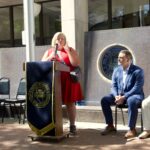
Devon Sprenkle, AHA Executive Director (Left), Andrea Splain, S&T Bank Senior Business Banker, and Kahley Stewart, AHA Development Director (right)

S&T Bank & American Heart Association
Business Supporting Community Nonprofits


S&T Bank
Stbank.com

Why do you feel it’s important for your business to support our area’s nonprofits?
At S&T Bank, we support a people-forward banking purpose that serves to uplift the communities where we live and work. We are a community-minded bank that believes we all thrive when we collaborate and work together for the betterment of our neighborhoods. We recognize the vast number of different needs in each individual community and work to help these local nonprofits problem-solve and provide long-term solutions for issues and insecurities. I realize that none of us can do it alone and we are always better together. We must continually support each other to achieve progress and improve lives. To this end, S&T encourages all employees to get involved in community giveback by providing 16 paid hours of volunteer time each year and allowing team members to choose what organizations they’d like to work with according to which causes they are truly passionate about. We truly make people our purpose every day.

Why do you support this particular nonprofit and what does your business do to benefit the organization?
When I was approached to be the chairwoman for Go Red for Women, I felt like it was divine intervention at its best. I had been struggling with quitting smoking at that time and I really wanted to take on this role and I refused to do it unless I could live out their mission. I have continued to become more involved with the American Heart Association (AHA) over the past year. Now serving as a board member, I am constantly learning more about the importance of supporting heart health, and I realize the impact of the vital awareness this organization provides to the public. In return, being involved continues to keep me accountable and encourages me to remain committed to my journey toward a healthier life. S&T Bank also promotes a healthy lifestyle for all employees, so this partnership is a perfect fit. We partnered with the AHA to host a Hands Only CPR training event in February, and we had the opportunity to teach 50 people CPR and create more awareness around the signs of a heart attack and how to help. These types of community commitments help us continue living out our people-forward purpose and help us improve the lives of everyone we encounter.

American Heart Association
Heart.org
4250 Crums Mill Rd, Harrisburg

What is your organization’s mission, and how does corporate or foundation support contribute to your goals?
For 100 years, the American Heart Association has been saving and improving lives. Since its founding in 1924, deaths from cardiovascular diseases have been cut in half. This success is rooted in the roughly $5.9 billion we’ve invested in cardiovascular and cerebrovascular research, the most by any not-for-profit source outside the federal government.

While we celebrate our success, we recognize that there are still lives to be saved and solutions are not always getting to the people who need them the most. Now, as we begin our second century, we must look to our millions of volunteers and supporters to help us shape our future and offer health and hope for everyone, everywhere.

The support of local volunteer leaders and corporate sponsors drives our mission forward by ensuring we can meet the unique needs of our community and put our resources to work where they will have the greatest impact. Whether it’s making blood pressure monitors accessible at public libraries, offering nutrition classes at local food banks, putting CPR training resources into the hands of more schools and community organizations or helping schools combat youth vaping and tobacco use, our local sponsors walk alongside of us and, together, we are a relentless force for a world of longer, healthier lives.

What is your greatest need for corporate or foundation support in 2025?
After more than a century of driving life-saving innovations, the American Heart Association is ready to tackle the next big health challenges by fueling science and innovation, funding lifesaving research, removing barriers to health care access and quality, and boldly standing for the rights of patients and caregivers. We offer a variety of ways for company and corporate leaders to join our efforts that align with and elevate their community impact goals.

Every year, events like the Heart Walk, Go Red for Women and the Heart Ball bring hundreds of people together who are passionate about helping the American Heart Association achieve its mission of creating a world free of cardiovascular disease and stroke. Our region’s most ambitious leaders are also making a commitment to be changemakers for healthier communities by joining our Leaders of Impact and Woman of Impact campaigns. These initiatives offer opportunities for corporate sponsorship, employee engagement and volunteer leadership, all of which are essential to fund our mission and have a lasting, positive influence on the health of our communities and those we love.

We invite companies and individuals with an interest in becoming a part the American Heart Association’s legacy of saving and improving lives to speak with a member of our team who will guide you to the opportunities that best align with your corporate impact goals.

Sponsored

Continue Reading

Nonprofit Focus: S&T Bank & United Cerebral Palsy of Central Pennsylvania (UCP Central PA)

S&T BANK
S&TBANK.COM

Why do you feel it’s important for your business to support our area’s nonprofits?

Making people our purpose is what we’ve done at S&T Bank for over 120 years. S&T has always been driven to support the nonprofits within our operating footprint. Giving back to the communities we serve is central to who we are and is fundamental to our philosophy of putting people first and working together to better the lives of our employees, customers and communities. Nonprofit organizations in any given area have a direct pulse on the needs around them. They work tirelessly to meet those needs, sometimes with limited volunteers and resources. Much more can be accomplished when we work together toward a shared goal. This common desire to improve lives and circumstances is why we operate as a neighborhood-minded bank guided by empathy, humility and compassion with a sincere desire to uplift each other and work towards a brighter future. We are proud of the dedicated work of our employees who continuously volunteer their time, treasure and talents to serve others. People-forward banking at S&T is a multi-faced endeavor in which we assist with a variety of needs across all of our markets through the donation of time and resources. We’re committed to making a difference in the lives of others by providing hope, encouragement and care. We believe that we have a responsibility to assist these nonprofits, and we are confident that when we work together, we will see tangible results, and make a true impact on the world around us.

Why do you support this particular nonprofit and what does your business do to benefit the organization?

UCP Central PA provides life changing, vital support for people with a variety of diverse abilities. At S&T, we have the utmost respect for all individuals and recognize that all people have their own individual story and background. We join UCP in embracing all differences that make each person unique, and we support equality and inclusion to empower everyone to live their lives to the fullest. UCP promotes life with no limits and offers a wide range of services to those with disabilities. Like other nonprofits, they must also rely on the assistance from partners to fund and physically and intellectually support those efforts and programs. S&T Bank Commercial and Industrial Regional Manager, Market Executive, Joseph Entenman, continues to be highly involved in supporting UCP’s mission, stating, “I have been a supporter of UCP for over 16 years. I have served at the committee level, as Committee Chair, Agency Board of Directors, Foundation Board of Directors and as a two-time Board President. I support UCP of Central PA because I believe in their mission, guiding principles, dedicated employees and the exceptional service they provide their clients. S&T graciously allows me to donate my time and expertise to UCP and also supports them financially through various sponsorship opportunities.”


UCP Central PA
ucpcentralpa.org
55 Utley Drive, Camp Hill

Describe your organization and the importance of corporate or foundation support to further your mission.

United Cerebral Palsy of Central Pennsylvania (UCP Central PA) has been creating opportunities for people of all ages with all types of disabilities for 70 years. Today our 1,600 employees deliver on our mission as we empower 2,500 people with diverse abilities each year to live a meaningful life through innovative support and services. We plant seeds daily until we achieve our vision of a community that embraces every individual’s ability. We encourage a life without limits for people who are born with a disability, acquire a disability through illness, accident, or injury, or are aging into a disability through our comprehensive service offerings.

We rely on our corporate partners to help us meet unfunded needs related to the implementation of our mission. This includes funding assistance for things like start-up costs for a new home, replacement of furnishings and fixtures for existing homes or program facilities, upgraded technology, testing new ideas (innovation), and supplies to facilitate a person-centered approach to programming. Additionally, UCP is governed by a 20-member Board of Directors and four Board Committees. Our corporate partners lend us their team members who are looking for a measurable way to give of their time and talents to an organization committed to positive outcomes for people with disabilities in Central Pennsylvania.

For 2024, what is your greatest need for corporate or foundation support?

In 2024, our greatest need for corporate or foundation support is to help us empower people to have a meaningful life in a constantly evolving service system. Pressures in the direct support professional (DSP) workforce have led to the encouragement of providers to explore alternative ways to support people in a person-centered way that ensures health and safety. As such, we are building our plan for remote support, and will need to invest in technology.

Remote support offers innovative, technology-based solutions to people who are looking for something other than traditional 24/7 in-person staff support. Remote support for people with intellectual disabilities and autism provides a more customizable menu of services while offering greater independence due to less reliance on staff. As with traditional supports, remote supports are individualized. This includes technology that will be used to address the following areas: physical health, seizure management, fall risk mitigation, elopement mitigation, medication management, kitchen safety, overnight support and independent living.

At a very basic level, remote support is a tool for communication. This includes communicating when someone is in danger, needs support, or has veered from a typical routine. Sensors and communication devices produce an alert that can be responded to by a natural support such as a neighbor, or a staff member who is either nearby or in a remote call center. Remote health monitoring will allow us to monitor, report, and analyze an individual’s acute or chronic conditions from outside a clinical setting.

This is sponsored content.

Continue Reading

Women in Business: Jane McMinn

Jane McMinn, Senior Vice President, Regional Credit Officer
S&T Bank
STBank.com
800.325.2265


Why did you decide to go into your profession?

When I graduated from a liberal arts college with dual majors in mathematics and business administration, it was more about what I didn’t want to do. I knew that I didn’t want to be a math teacher or an actuary, but I wanted to use my math aptitude in my career. As a newly graduated student, like many young and eager college grads, I wanted to move out of the area. Fortunately, the job market in Florida was soft, and I received two offers from banks in PA. Rather than go the retail path, I chose to join a commercial credit training program, which led to becoming a commercial middle market lender, manager of a lending team and now a Regional Credit Officer at S&T Bank. And looking back, I now know that I made the right decision to stay in PA.


What makes your approach to your job different or unique?

I try to put myself in the “other person’s shoes.” As a regional credit officer, my job is to protect the assets of the bank, mitigating risk, but recognizing that loans need to be made, to grow the bank. I’m new to the position, having been on the sales and management side of commercial lending for most of my career. This is a benefit—remembering how competitive the marketplace is—so my approach is to try to reach a compromise. While not every opportunity can or should be approved, throughout the course of my career, I have seen many missed opportunities by the credit officer not listening and keeping an open mind to different approaches.


What’s the most fun or gratifying part of what you do?

Helping companies grow and be successful, which trickles down to their employees and families. Many years ago, I questioned whether I was making an impact and helping society. I’ll never forget when a fellow graduate student and I were having a conversation, in the parking lot at Penn State Harrisburg following class, about the direction of our lives. He was the one who opened my eyes and helped me understand the significance and importance of my career to the local economy and its citizens. This came home during the recession, when I structured loans to help companies survive and keep people employed in their local communities.

Continue Reading

January News Digest

AutoZone Veto Overturned

Harrisburg City Council last month rejected the wishes of the city’s mayor, unanimously overturning a veto that will allow an auto parts store to proceed with plans to locate in Harrisburg.

By a vote of 7-0, council affirmed its December vote to let AutoZone, a Memphis-based car parts store, advance in the city planning process as it seeks to build a store at N. 7th and Maclay streets.

Their vote vacated several unused “paper streets” on the lot owned by Susquehanna Township-based Vartan Group, which wants to sell the property to AutoZone.

Mayor Eric Papenfuse vetoed the measure, arguing that the city could use its discretion in approving street vacations to ask developers to abide by community standards, including the creation of affordable housing and job opportunities for minority and women laborers.

For example, council could withhold approval for a street vacation until a developer agrees to set aside affordable units in a housing project or employ local laborers—particularly minorities—on job sites.

“I think there is an opportunity for City Council to establish a review criteria for street vacations linked to the land development process that will help the city achieve some of its goals with regard to contracting and affordable housing,” Papenfuse said.

Council members, though, bristled at what they said was a new rationale for controlling a development project.

“The mayor has not sent down any legislation to address affordable housing or [minority business] participation,” Councilwoman Shamaine Daniels said. “So, I really I find this administration’s position just to be really artifice and not anything of much substance.”


Budget Dispute Resolved

Harrisburg City Council and the administration agreed to resolve a 2019 budget dispute without changing the original spending plan.

The approved, $70.8 million municipal budget contained flat spending compared to the prior year and no tax increases.

After a one-week delay, council members did not amend the mayor’s proposed budget, but they did attach two conditions to their approval. First, the mayor must provide written justification for awarding salary increases greater than 5 percent, and, secondly, must provide council with quarterly reports of unused salary funds.

Council also amended the 2019 budget to re-institute the director of community and economic development position, a role that was omitted from the city’s organizational chart as part of Mayor Eric Papenfuse’s proposed reorganization of city departments.

The amendment does not carry any new funding, so the city’s 2019 spending plan is unchanged. Councilman Ben Allatt said that the council will seek grants in the new year to pay the salary for a new director.

As always, the city’s largest operating expenditure in 2019 — $32.7 million — will be for personnel. Debt service and healthcare will eat up $9.8 million and $11 million from the operating budget, respectively. The budget also allocates $6.8 million in capital improvement spending.

Even though personnel expenses increased by $500,000 from 2018, Papenfuse said a priority for the 2019 budget is to maintain Harrisburg’s current staff capacity, which his administration has rebuilt after years of austerity.

Rather than add new personnel in 2019, the mayor proposed reorganizing the city’s departments to more closely align with the city council committee structure.

The city’s new organizational chart creates seven city departments to correspond with the seven council committees. The chart dissolves the Department of Community of Economic Development and replaces it with the Department of Engineering and Development.


Body Camera RFP Issued

The Harrisburg Police Bureau is eyeing a late spring launch for its department-wide body camera program, according to city hall documents.

The police bureau last month issued a request for proposals (RFP) to potential vendors, inviting them to submit cost estimates and specifications for 100 body-worn police cameras and a video storage system.

Bidders must provide detailed descriptions of their camera equipment and IT services, as well as a budget narrative that includes a unit price for cameras and accessories, a price for cloud-based video storage, and a fixed yearly rate for maintenance and support.

The RFP does not state a budget for the new program. The bureau was given $150,000 in Harrisburg’s 2019 budget to purchase body camera equipment, a figure that included $80,000 in unspent funds from 2018.

City officials announced in September 2017 that they would equip the city’s uniformed patrol officers with body cameras the following year.

The program was delayed, however, as police officials tried to determine which specifications they needed in recording and video storage equipment.


Kline Plaza Sells

Harrisburg’s Kline Plaza has sold to a New York-based realty company, which hopes to bring new life to the aging shopping center.

Nassimi Realty LLC, based in Manhattan, bought the mid-20th century, low-slung retail and office complex for $8.7 million on Dec. 24, according to Dauphin County property records.

Kevin Nassimi, vice president of leasing, said that the family-run company was interested in the property because “this is what we do.”

“The agent for the seller brought us the opportunity, and it made sense for us,” he said.

The company specializes in multi-unit retail and currently owns 25 million square feet of shopping center space in the eastern United States, including four other properties in Pennsylvania, Nassimi said.

Kline Village, located near the city line with Penbrook, is anchored by Giant Food, which recently signed a 10-year lease extension, and includes a Fine Wine and Good Spirits store, a Rent-a-Center and a Family Dollar, in addition to several other stores, a gas station and a state Department of Health walk-in location.

Nassimi purchased the property for about half the price of the last sale. According to Dauphin County, KOP Kline Plaza LLC, another New York-based realty investment group, bought the complex for $17.3 million in 2004.

Kevin Nassimi attributed the much lower sales price to 10 current vacancies in the 240,000-square-foot complex, including two office tenants that recently left.

“That’s a big hit financially,” he said. “That’s a tall task.”


Commissioners Seek Re-Election

Long-time incumbents Jeff Haste, Mike Pries and George Hartwick last month announced their intention to run for re-election for four-year terms as Dauphin County commissioners.

Republicans Haste and Pries have served on the three-member board since 2002 and 2010, respectively. Hartwick, a Democrat, was first elected in 2003.

In their re-election announcements, all three incumbents cited 14 years without a county property tax increase as a significant accomplishment.

Diane Bowman, a former Susquehanna Township commissioner, will join Hartwick as his running mate on the Democratic side.

This year, the primary election is slated for May 21, with the general election on Nov. 5.

So Noted

Barley Snyder last month announced that attorney Sarah C. Yerger had joined its Harrisburg office as part of the law firm’s employment practice group. Yerger worked for more than 13 years in the Pennsylvania attorney general’s office, moving to the private sector in 2013.

Elementary Coffee Co. announced last month plans to open a new roastery and coffee shop at 256 North St., Harrisburg. Owner Andrea Grove said that she expects to open this spring inside the newly renovated building, but will retain her stand in the Broad Street Market.

Harrisburg Regional Chamber and CREDC boards of directors last month named Barb Bowker of PSECU as chair of the chamber and Jeannine Peterson of Hamilton Health Center as chair of CREDC for 2019. Other Chamber officers for 2019 include Tom Sposito of S&T Bank, Merone Yemane of Morgan Stanley Wealth Management, Greg Gunn of Gunn-Mowery, Karen Gunnison of Capital Blue Cross and Zachary Khuri of First National Bank. Other CREDC officers for 2019 include Ben Dunlap of Nauman Smith, Mayur Patel of Laughner Patel Developers, Mike Funck of Wohlsen Construction, Casey Khuri of NAI CIR and Wade Becker of RKL.

PSECU last month named George Rudolph as its new president. Rudolph will join PSECU in April to succeed the retiring Greg Smith, who has served as PSECU’s president for the past 28 years.

S&T Bank last month promoted Jordan Space to executive vice president, market president for the central Pennsylvania region. Space, who joined S&T in 2015, also was recently appointed to the Penn Medicine Lancaster General Health’s board of trustees. In addition, he is a member of the Lancaster City Alliance executive leadership team.

UPMC Pinnacle plans to add several floors to its West Shore Hospital in Hampden Township to accommodate the growing needs of area residents. Plans call for adding floors above the emergency department to provide 58 more beds. The Ortenzio Cancer Center at UPMC Pinnacle is also expanding its cancer programs to include infusion treatment for thoracic, gastrointestinal, genitourinary, head and neck and other cancers.

Urban Churn announced last month that it would open an ice cream production and retail space at 1004 N. 3rd St. in Harrisburg. Owner Adam Brackbill expects the craft creamery and scoop shop to open in early spring. Urban Churn also has a stand inside the Broad Street Market, which Brackbill plans to retain.

Changing Hands

Adrian St., 2245: S. Nolan to A. Kusery, $69,000

Adrian St., 2253: D. Rivera to E. Rivera Jr., $70,000

Antoine St., 500: L. Benzie to R. & P. Kotz, $165,000

Benton St., 620: PA Deals LLC to E. Shenk, $65,900

Benton St., 632: LMK Properties LLC to R. & B. Lomax, $30,000

Berryhill St., 2419: D. Seng to PT Capital Properties LLC, $55,000

Boas St., 414: A. Antoun to Berlin Group LLC, $75,000

Boas St., 420: M. Cohen to PA Deals LLC, $55,000

Calder St., 209: D. Weaver to M. Packard & C. DeAngelis, $143,500

Cumberland St., 121: J. & K. Bowser to J. Gurreri, $124,900

Delaware St., 263: Secretary of Veterans Affairs to R. & C. Steele, $67,000

Delaware St., 267: J. Renue to H. St. Phard, $127,500

Duke St., 2441: T. Nguyen & D. Thu to A. & R. Clark, $60,000

Fillmore St., 622: KAB Rental Properties LLC to S. Pierce, $68,500

Forster St., 2007: J. Claiborn to S. & M. Simpson, $55,000

Green St., 1319: K. Umbenhauer to V. Bajpai & J. Pierce, $109,900

Green St., 1712: S. Heredia to S. Jusufovic, $35,000

Green St., 1904: S. Watkins to R. & A. Gonsar, $195,000

Greenwood St., 2031: M. & M. Kochenour to S. Thomas, $82,000

Hillside Rd., 210: P. & M. Walsh to C. Rockwell, $107,000

Hoffman St., 3102: J. & A. Edwards to E. Mishler, $129,900

Holly St., 2002: Skye Holdings LLC to J. Elias Holdings LLC, $32,000

Hunter St., 1535: S. Costa to Delmax Properties LLC, $35,000

Kensington St., 1918 & 1920: Rohrer Rentals and B., C. & K. Rohrer to J. Willingham, $45,500

Lewis St., 320: B. Williams to Wyco Investments LLC, $53,500

Magnolia Dr., 2402: J. Hamburg to R. Gatling, $170,900

Manada St., 1918: 2013 Central PA Real Estate LLC to 1918 Manada Street LLC, $64,900

Market St., 1152, 1152½ & 1154: S. Peart to 1152 1154 Market St. LLC, $135,000

Market St., 1842: Adonis Real Estate LLC to A. & R. Clark, $92,000

Market St., 1916: C. Centeno to J. Alvarado, $41,500

Muench St., 607: N. Clouser to Buonarroti Trust, $35,000

North St., 1842: SRJ Realty to Sunshine ABQ Real Estate Investment LLC, $34,250

N. 2nd St., 110, 112 & 115; 211 Locust St.; 206 Walnut St.: Sandton Fund II Holdings LLC & NAI CIR to Second & Locust Investors LLC, $1,850,000

N. 2nd St., 515: Candlelight Properties Inc. to E. & H. Harbilas, $525,000

N. 2nd St., 1001: Tang & Perkins LLC to AON LLC, $212,000

N. 2nd St., 1319: A. Pruett to A. Black, $95,000

N. 2nd St., 1909: S. Jusufovic to S. Catanese, $167,000

N. 2nd St., 2432: M. & R. England to B. Eisner, $60,501

N. 2nd St., 2443: M. Myers to M. & R. Row, $112,500

N. 2nd St., 2735: K. & H. Thornton to B. Eisner, $123,201

N. 2nd St., 2841: W. & W. Miller to Michael Barrett Market Street LLC, $200,000

N. 2nd St., 2846: G. Harke & B. Voss to C. Souchek, $126,500

N. 3rd St., 1211: T. & E. Chance to C. & L. Eby, $145,000

N. 3rd St., 2211: D. Chen to J. & A. Sanderson & B. Sheaffer, $92,500

N. 3rd St., 3020: PA Deals LLC to D. & K. Borelli, $99,900

N. 4th St., 1630: Leahy Family Trust to J. Parfitt, $91,500

N. 5th St., 1619: RMAC Trust & Rushmore Loan Management Services LLC to R. Par, $67,500

N. 5th St., 3009: N. Acharya to T. Fenderson, $119,900

N. 5th St., 3108: J. Charlton to P. Stawski, $74,000

N. 6th St., 2526: G. Neff to L. & N. Perry, $34,000

N. 10th St., 23 & 27: Equity Trust Co. FBO Robert Clay IRA to 812 Market Inc. & Property Management Inc., $100,000

N. 10th St., 31: R. & B. Clay to 812 Market Inc. Property Management, $250,000

N. 19th St., 26: A. & S. Ali to D. Paulino, $70,000

N. Front St., 1525, Unit 307: PA Housing Finance Agency & U.S. Bank National Association Trustee to K. Russell, $85,900

N. Front St., 1605: M. Sibrava to AON LLC, $595,000

Paxton St., 1638: CNC Realty Group LLC & C. Brown Sr. to AUM Investments LP, $36,000

Paxton St., 1726: Kirsch & Burns LLC to L. Dinh & T. Truong, $48,000

Peffer St., 232: E. Horn to S. Leister, $119,900

Regina St., 1813: Atlantic North Star Properties LLC to Sunshine ABQ Real Estate Investment LLC, $30,000

Reily St., 309: L. Fickes & J. Heath to M. & A. Manning, $95,275

Rumson Dr., 2639: J. & C. Renninger to R. Asplen, $87,500

Rumson Dr., 2856: Zelda Marilyn Rosenbaum Trust to S. Aiken, $76,000

Sassafras St., 203: R. Sohmer to W. & E. Branter, $85,000

Seneca St., 217: D. & V. Fry to M. Hoffman, $140,000

Seneca St., 239: A. Manderino to J. Payne, $72,000

Seneca St., 323: A. Otwell to M. & R. Khan, $35,000

Showers St., 577: C. Mulkey to M. Koerner & A. Koch, $104,900

Showers St., 607: C. & R. Haigh to E. Moffet, $143,000

Showers St., 716: N. & R. Godfrey to L. Kraynak, $134,000

S. 13th St., 1531: J. Beebe to Fruition Holdings LLC, $61,500

S. 15th St., 351: M. Gray to R. Levasseur & R. Similien, $30,000

S. 18th St., 916: Crist Holdings LLC to 916 S. 18th LLC, $325,000

S. 19th St., 232: S. & K. Sanderson to B. Dessalegn, $30,000

S. 25th St., 101 & 101 Rear S. 25th St.: KOP Kline Plaza LLC & Ryan LLC Tax Compliance to Kline Plaza LLC & Nassimi Realty LLC, $8,700,000

S. Front St., 315: S. Eicher to K. Campbell, $144,000

State St., 231, Unit 101: LUX 1 LP to Commonwealth Entrepreneurs LLC, $362,500

State St.,. 1720: Vista Properties LLC to J. Virbitsky, $82,300

State St., 1812: R. Burnett to R. Burnett Sr., $55,000

State St., 1934: D. Schneider to Wilton Hampshire LLC, $85,000

Swatara St., 1914: P. Miller Sr. to A. Padua, $31,000

Swatara St., 2144: D. Selvey to K. & F. Pichardo, $94,000

Woodbine St., 420: T. Griese to J. Cheatham, $51,500
Harrisburg property sales for December 2018, greater than $30,000. Source: Dauphin County. Data is assumed to be accurate.

Continue Reading

May News Digest

Sanitation Changes Weighed

Harrisburg’s existing rules governing trash collection may soon get canned.

City Council is considering a new, more comprehensive sanitation ordinance that would usher in stronger enforcement tools and more efficient billing for its trash collection services and lay out clearer rules for city recycling programs, Mayor Eric Papenfuse announced last month.

It would also waive annual trash fees for the owners of vacant lots and properties, eliminating an unpopular provision of the current ordinance, Papenfuse said.

The revised sanitation code aims to curb the city’s perennial problems of illegal dumping and excessive trash accumulation. It would grant the city stronger enforcement powers by creating two categories of offenses and a new fine structure.

Under the proposed ordinance, serious offenses—including illegal dumping, accumulation of trash exceeding 1,000 pounds, improper waste disposal and failure to register as a private trash hauler—would be considered category 1 violations punishable by a $1,000 fine or up to 90 days in jail.

Category 2 violations are more minor acts that are likely to recur without deterrence, Papenfuse said. These violations, which include failure to bag waste, obstruction of streets and sidewalks or interference with enforcement, would be met with fines starting at $100. Fines would increase up to $500 for each subsequent offense.

The ordinance would also permit the Public Works Department to designate enforcement officers to patrol public streets for violations. It also would authorize police officers to issue citations and enforce the ordinance.

Papenfuse said that the new legislation also would codify the city’s free and mandatory recycling services, including its new glass recycling program.

“This will bring us into the new century in regard to recycling,” Papenfuse said. “We’ve more than tripled recycling in the last few years but very little is laid out in existing code.”

One of the most significant changes would be an annual billing structure designed to save money for the city and its residents.

Harrisburg residents currently make monthly payments for trash services. Under the new ordinance, the city treasurer’s office would include trash fees in property tax bills. The separate charges would appear on the same invoice and would be subject to the same due date and discount period.

Residents may opt out of yearly billing in favor of monthly direct deposit payments. However, those who pay their trash fees within 60 days of billing would receive a 2-percent discount.

City Treasurer Dan Miller said that streamlined bills would save the city $100,000 in mailing and labor costs each year. He also hopes it will increase the city’s collection rate and improve early-year cash flow.

Miller said that the city has a 98-percent collection rate for its real estate tax, with 70 percent of that revenue coming in during the 60-day discount period.

“We assume trash will be the same, which would increase cash flow and generate more interest for us throughout the year,” he said.


Staff Cuts, Tax Hikes in School Budget

Kindergarten cuts might not be coming to Harrisburg after all.

Members of the Harrisburg School District administration unveiled a new budget proposal last month that would preserve the full-day kindergarten program in favor of cutting 31 district employees. The proposal calls for eliminating nine administrators, 11 teachers, and 11 AFSCME union members for a total of $2.132 million in savings, which would narrow the district’s deficit to $4 million.

The budget still calls for maximum tax hikes for the next three years.

District Business Manager Bilal Hasan said that over-hiring has contributed to the district’s annual deficits, which are projected to deplete the district’s fund balance by 2020. Thirty-seven teachers who have been hired since 2016 took positions that were not in the district budget, Hasan said.

Interim CFO Jim Snell explained that salaries alone don’t account for the district’s high expenses. Costs like healthcare benefits and pension payments only emerged in long-term budgeting projections, he said.

“When you start to look at the reality of recurring costs over multiple years, that’s when you appreciate the true consequence of those decisions,” Snell said. “Some of those consequences are starting to get in the way and cause financial challenges for us.”

Budget and finance chair Ellis Roy was incredulous when Hasan confirmed the extent of the over-hiring.

“You’re telling me we hired 37 people we had no money to pay for?” Roy said. “We’re self-destructing here.”

Hasan said that the district has not had a position control mechanism in place to monitor its total number of staff positions and vacancies. The administration has implemented a new policy so that no position can be added to the payroll unless it is approved and included in the budget, he said.

Hasan and Snell said that developing a position control program is a lengthy and tedious process that requires collaboration between the district’s human resources, IT and business departments. Employees must code each permanent position with a unique identification number, which can be difficult in a large organization with high turnover, Snell said.

“At any point in time, there are staff coming and going, so there was a never a snapshot that said ‘at this moment in time, these are all our positions,’” he said.

The district’s mistake, Snell explained, was anticipating expenditures in line with previous years without accounting for vacant positions that the district wanted to fill. When the administration ramped up its recruiting efforts and hired dozens of new teachers at the beginning of this school year, it unwittingly took on employees that were not included in the budget.

The implementation of a position control system was one of the initiatives outlined in the district’s state-mandated recovery plan, which it adopted in 2013. The task ultimately fell to Hasan, who began developing the program in August 2017 and oversaw its implementation earlier this year.

“This will provide structure and order, and that was not always the case when we were hiring,” Snell said.

School Board Votes to Retain Knight-Burney

Sybil Knight-Burney will remain the superintendent of the Harrisburg school district for at least three more years, the city’s school board decided last month.

After almost an hour of public comment during which district residents overwhelmingly called for Knight-Burney to be replaced, the board rejected a motion that would have hired a search firm to find a new superintendent and passed another measure to retain her for a term of three to five years.

Frustrated residents began jeering the board before its members could vote on the second motion.

“You don’t care!” one resident yelled. “This is insanity, clear as day. You don’t care.”

“This is ridiculous!” Gerald Welch yelled, before chanting “Shame!” as he and two-dozen other exasperated residents left the gymnasium.

Yanna Kent, a Harrisburg High School alumnae, said she did not want to see the district put in state receivership, which is one possibility facing it when its five-year recovery plan expires in June.

“We need to do a better job,” Kent said, addressing the board and the administration. “We put you here to work for us and, if you don’t want your job, leave.”

Other residents pointed to the fact that state test score and graduation rates have remained stagnant or declined under Knight-Burney’s leadership. Some called out the administration for not yet completing the initiatives outlined in the district’s five-year recovery plan.

Almost 70 percent of the initiatives have been fully completed as of February 2018, according to the most recent report available from the state’s chief recovery officer.

“If I only complete at 70 percent of what my job had asked me to do, would I be able to continue, especially when other people are willing to go 100 percent?” said Carmen Dones. “It’s time to say thank you, but I think it’s time that we say goodbye.”

Board President Judd Pittman, who voted against retaining Knight-Burney, pointed to other sobering facts from the past two years: $180,000 in district funds were embezzled by an employee, 70 teachers were hired at the wrong pay step, and the district revealed two years of over-hiring by its business office.

Those factors have contributed to an $8 million budget deficit this year, as well as a structural deficit that threatens to eat up the district’s general fund by 2021.

Pittman cited these incidents as evidence that the district has not implemented strong accountability systems during Knight-Burney’s tenure.

“In 11 years, if you have not had time to put systems in place it’s time to come to the table with [solutions], or it’s time for us to look at other opportunities to put systems in place,” Pittman said before the board voted on the superintendent’s contract.

Pittman has been advocating since December for the board to launch a superintendent search. The board passed a motion to do that in March and then tried to rescind that action in April.

Board director Tyrell Spradley raised the motion to rescind in April, after voting in March to consider new candidates for Knight-Burney’s post. Spradley voted to retain the superintendent, along with board directors Ellis Roy, Lionel Gonzalez, Melvin Wilson and vice president Danielle Robinson.

Board directors Brian Carter, Carrie Fowler and Percel Eiland joined Pittman in the minority.


Substation Cost Rises

The Harrisburg Police Bureau last month made a plea for an additional $165,000 to construct a substation on S. 15th Street.

That sum represents a 13-percent increase over the project’s $817,000 budget.

City engineer Wayne Martin said that bids for the project came in above early estimates and insisted that the added cost was “not an unusual” margin for error in publicly bid projects.

Several council members lamented the fact that the project’s timeline has lagged as its costs increased.

“Three years ago, we planned a $300,000 precinct with a turnaround of three to six months,” Councilman Cornelius Johnson said. “Now, it’s more expensive, and it’s only a substation.”

Public Safety Commissioner Thomas Carter said that early plans to retrofit a facility at S. 15th Street became impossible once it was found to be structurally unsound. That structure was razed in December to make way for a new modular building.

Police officials say they don’t have enough manpower to staff a full-time precinct, but they still think a substation would benefit officers and residents. Carter reported that increased police presence in South Allison Hill has helped drive down homicides there this year.

“The cost is what it is, but I know that, since we’ve been concentrating on that area, we have not had homicides,” Carter said.

Tough Road for CAT

Harrisburg’s public transit network has a bleak road ahead of it.

Capital Area Transit (CAT) will end the year with a $700,000 deficit, but new Executive Director Richard Farr can’t explain why.

“It’s like an archeological dig trying to figure out how we got this far in the red with no foreseeable way out,” Farr told Harrisburg City Council last month.

Farr said that CAT’s “worst case scenario” would be to reduce service to narrow the deficit. Administrator salaries have been cut to the furthest possible extent, he said, which leaves the company eyeing its other major expenditures—insurance and maintenance—as possible areas to shave costs.

CAT has the highest maintenance costs in the state, Farr said, outpacing major public transit authorities like Philadelphia’s SEPTA system. It also has the third-highest labor costs.

And yet, CAT buses leave customers stranded every day due to driver shortages, Farr said.

CAT executives hope to join an insurance network to help mitigate some of its maintenance costs. But the source of the high labor expenditures remains hazy, especially since the agency has slashed administrator salaries in recent years by leaving high-level positions vacant.

Like most public transit authorities, CAT derives little revenue from fares and other consumer sources. State and federal dollars constitute the bulk of its funding, which make its annual revenues relatively stable and predictable.

“This isn’t a revenue problem, it’s an expenditure problem,” Farr said. “Some of these costs are legacy… but we have a big hurdle we need to work through.”

Farr hopes to avoid service reductions and said he has already averted driver layoffs once since taking the helm of CAT earlier this year.

Even if service reductions are avoided this year, they may be inevitable, said Harrisburg Mayor Eric Papenfuse.

“Eventually, they’ll have to cut service because they’ll have to use next year’s funding to pay this year’s line of credit,” Papenfuse explained.


HACC to Vacate Midtown Building

HACC plans to vacate one of its Midtown Harrisburg buildings after its lease expires in four years, the college said last month.

HACC, a community college with campuses in Harrisburg, Gettysburg, Lancaster, York and Lebanon, announced plans to leave Midtown 2, the former Evangelical Press Building, moving its trade and technology programs out of the building between mid-2019 and June 2022, with the expiration of its 15-year lease.

“No programs are being cut, and the transition will occur at times that have the least impact on classes,” said college President John J. “Ski” Sygielski. “Requirements to complete these programs will remain unchanged.”

HACC leases the building from GreenWorks Development, which fully renovated the landmark, century-old building at N. 3rd and Reily streets starting in 2006. HACC moved into the 80,000-square-foot building a year later, signing a long-term lease.

Soon after, HACC also moved much of its administrative staff across the street to GreenWorks’ newly built Campus Square Building, but returned these employees to the main campus at Wildwood several years ago. It plans to continue to occupy a third building, called Midtown 1 at N. 4th and Reily streets, which houses its workforce development, continuing education and welding programs, according to the college.

The move from Midtown 2 will save the college about $1.9 million in annual rent, maintenance and expenses, according to HACC. A portion of the savings initially will be used to renovate spaces for the relocated programs, HACC said.

So Noted

Capital Region Water has received the Award in Excellence for Sustainability from the American Planning Association, Sustainable Communities Division. CRW received the award in the Sustainable Green Infrastructure Project category for its “Community Greening Plan: A Green Stormwater Infrastructure Plan for Harrisburg.”

Chad Dion Lassiter was named the new executive director of the Pennsylvania Human Rights Commission last month. Lassiter has more than 20 years of experience in the fields of race relations, conflict resolution, mediation, teaching, counseling, policy and prison reform.

George Scott captured the Democratic nomination last month for U.S. Congress, besting a field of four candidates. He will face Republican incumbent Scott Perry in the November general election.

Harry Young has been named the new executive director of the Central Pennsylvania Gay and Lesbian Chamber of Commerce. In this role, Young will serve as the organization’s voice to build business, promote economic development and fulfill its mission to foster LGBT business equality and inclusion in central Pennsylvania.

Kathryn Aumiller announced her retirement last month as executive director of the Pennsylvania Regional Ballet. This summer, Aumiller will retire after 25 years leading the organization, which is searching for a new director.

S&T Bank has announced Shannon Golden as vice president, business banker, serving the Harrisburg market. In this role, she is responsible for fostering and strengthening business relationships in the region.

Stosh Snyder last month was named the new executive director for Theatre Harrisburg, responsible for the organization’s overall operations. A Harrisburg area native and actor, Snyder replaced Allison Hays, who served in the post about one year.

William B. Hawk, Lower Paxton Township supervisor, has been elected to a one-year term as president of the Pennsylvania State Association of Township Supervisors. The association represents the commonwealth’s 1,454 townships of the second class.

Zembo Shrine is back on the market after its proposed sale fell through. Arkansas-based Beaty Capital Group had the iconic, Moorish-style Shriners building in Uptown Harrisburg under contract, but backed out of the purchase after further examination of the mid-Atlantic area’s entertainment market, according to the company.

In Memoriam

Samuel Sloan Auchincloss died on April 27 after a brief illness. Born in New York, he was the long-time co-owner with his wife Susan of Auchincloss & Auchincloss, a Harrisburg-based marketing communications firm. Over the years, Sloan was active in many organizations, including Historic Harrisburg Association, Harrisburg Rotary, Harrisburg Lions Club, St. Stephen’s Episcopal School, Susquehanna Art Museum, the Rockhill Trolley Museum and the Harrisburg Chapter National Railway Historical Society, among others. Sloan also was a great friend, mentor and supporter of TheBurg. He is survived by his wife Susan, son Lloyd Brian Auchincloss, daughter Elizabeth Auchincloss Strickler, stepdaughter Leah Peak, their spouses and three grandchildren.

Changing Hands

Adrian St., 2436: S. Stroyan to PA Deals LLC, $30,000

Allison St., 1502: SWM Properties LLC to T. Mullally, $53,400

Barkley Lane, 2502: S. Vetock to J. Guerrero, $68,000

Berryhill St., 1101: Biks Auto Collision LLC to J. Garcia, $185,000

Bigelow Dr., 39: R. Johnson to J. Mayweather, $52,900

Briggs St., 211 & 213: Rockville Enterprises LLC to Grey Rex LLC, $230,000

Calder St., 105: A. Brett & K. Magagna to K. & G. Tennis, $150,000

Cameron St., 620: L. Aronson Family Trust & R. Aronson to Gini LLC & J. Pal, $225,000

Chestnut St., 2035: T. Coley to W. Seago, $62,500

Conoy St., 104: E. & K. Eckman to D. Wolf, $142,500

Croyden Rd., 2832: D. & B. Ratcliffe to J. Core, $51,000

Green St., 810: M. Hillman to S. & J. McGrath, $145,000

Green St., 1318: R. Bullock to G. & E. Gibeau, $93,500

Green St., 1802: BM Investment Group LLC to Asprodites Simpson Trust, $183,500

Green St., 2428: S. Tagle to T. & N. Blank, $137,500

Kensington St., 2223: PA Deals LLC to A. Womer, $64,900

Kensington St., 2326: E. McCloskey to I. Chatman, $69,900

Kensington St., 2431: Wells Fargo Bank to T. Dieu, $31,500

Lexington St., 2632: D. Grossman to A. Memic, $63,500

Luce St., 2306: T. & T. Parson to P. Almodovar, $69,900

Market St., 1025A: J. Lamb Sr. to J. Colron, $45,000

Market St., 2468: C. Jackson to S. Green & J. Burnett, $122,600

Mulberry St., 1845: V. Rivas to F. & R. Garcia, $70,000

North St., 1616: B. Davenport to C. Brooks, $39,000

N. 2nd St., 1937: US Bank National Association to M. Horgan, $92,000

N. 2nd St., 2053: 7 Eleven Inc. & Sunoco Retail LLC to Realty Income Trust 6, $3,221,477

N. 2nd St., 2538: T. & L. Magaro to M. Parsley, $110,000

N. 2nd St., 3033: A. Myers to D. Madsen, $100,000

N. 3rd St., 1014: 1014 N. 3rd St. LLC to O’Sullivan Realty, $660,000

N. 3rd St., 1231: E. Gabler to N. Wahby, $107,450

N. 3rd St., 1824: B. Strike to T. Miller & L. Wood, $79,900

N. 3rd St., 2329: CPenn Properties Old Uptown LLC to M. Mtere & F. Laoukili, $50,000

N. 6th St., 2407: Hobbeze Inc. to Elliots Enterprises LLC, $34,000

N. 6th St., 2528: Premier Property Solutions LLC to H. Foka, $31,000

N. 6th St., 2933: P. & E. Devenshire to C. Wise, $62,000

Paxton St., 1619: JC Hunt Management LLC to NAR Investments LLC, $110,000

Peffer St., 269: G. Neff & M. Baltozer to Heinly Homes LLC, $101,000

Penn St., 1925: WCI Partners LP to G. & K. Capoferri, $135,000

Race St., 566: I. & S. Milnes to B. Shisler, $119,000

Rudy Rd., 1919: M. O’Neill to A. Ross, $74,900

Rumson Dr., 298: Secretary of Housing & Urban Development to J. & J. Avila, $41,000

S. 17th St., 1040: Wells Fargo Bank NA to B. Nguyen, $40,000

S. 20th St., 12: Secretary of Housing & Urban Development and Information Systems & Networks Corp. to D. & L. Romero, $30,010

S. 25th St., 701: O. Huynh to G. Coppersmith, $69,900

State St., 1323: J. Ward to A. & S. Shelly, $71,000

State St., 1325: J. Ward to A. & S. Shelly, $71,000

Susquehanna St., 2112: E. Reichert to T. Hage, $45,000

Swatara St., 2158: Reverse Mortgage Solutions Inc. to D&F Realty Holdings LP, $30,500

Valley Rd., 2407: D. Loughery & J. Levine to E. Mena, $249,900

Verbeke St., 124: R. and M. Gordon to Kyzer Rentals LLC, $105,000

Continue Reading

April News Digest

Superintendent Decision Reversed

The Harrisburg School District may not be getting a new superintendent after all, thanks to an unexpected vote last month.

In March, the board voted 5-4 to approve a resolution opening the position of superintendent to new applicants. The move signaled to current superintendent Sybil Knight-Burney that her contract would not be automatically renewed when it ends on June 30.

But last month, Tyrell Spradley, the board member who cast the deciding vote on that contentious resolution, motioned to rescind it. His motion passed 5-4 with board members Carrie Fowler, Percel Eiland, Brian Carter and board President Judd Pittman in the minority.

Asked what the vote meant for Knight-Burney’s contract, district Solicitor Samuel Cooper pointed to the Pennsylvania school charter. That law states that the board must give the acting superintendent 90-days notice if it doesn’t intend to automatically renew her contract.

But if the board fails to take action, the terms of Knight-Burney’s contract extend for one year, Cooper said.

By nullifying the vote from the prior month, the board has essentially chosen to forego any action on the superintendent’s contract. It will automatically renew for a one-year provisional period, but Cooper said the board could act before then to renew it for up to five years.

After the meeting, Spradley said that he changed his mind about the search because the board received new information about personnel and budget matters.

Allowing Knight-Burney’s contract to renew for one additional year will preserve consistency in the district and lead to better decision-making by the board, he said.

“I don’t have an issue looking for candidates, but we need time to find the correct ones,” Spradley said. “The board may feel rushed.”

Pittman was disappointed, but not surprised, by the board’s action. He said his position on Knight-Burney’s tenure has not changed in the three years he’s served on the board.

“When you look at our academic data and the evidence we put forth for our success, it just isn’t there,” Pittman said. “If we’d done a search and Knight-Burney came out as the best candidate, I would have supported her… but our responsibility as a board is to hold everyone as accountable as possible.”


School Finances “Bleak”

The Harrisburg School District’s finances are “more bleak” than anticipated, said the president of the Harrisburg school board.

Board President Judd Pittman offered that assessment last month following a presentation by Chief Financial Officer James Snell, who told the board that the district is facing serious financial challenges.

Budget projections prepared by consultants at Philadelphia-based Public Financial Management (PFM) anticipate that rising expenditures and flat revenues will generate years of consecutive deficits and ultimately draw down the district’s $21.6 million fund balance.

PFM consultant Marissa Litman told the board that the fund balance could be depleted in as few as three years, even if the board levies the highest allowable tax hikes.

Expenditure projections anticipate no salary increase for HEA-represented employees, but they do expect that bargaining will move some teachers up a salary step based on a grievance settlement. Social security and pension payments will increase along with those salary expenditures, and the projections also call for $3 million for facility enhancements. The expenditure projections assume that the district will continue its debt service payments and will not borrow any more money.

Litman reminded the board that projections are based on assumptions that are subject to change. Nonetheless, she advised the board to correct its spending to avoid drawing down its fund balance.

“This has been projected for a number of years, and now we have to deal with it,” Litman said.

The district was able to add to its fund balance as recently as the 2014-15 fiscal year. But the district ran a $3.7 million deficit in 2015-16, followed by a deficit of roughly half a million in 2016-17. The current 2017-18 budget anticipates another $6 million deficit.

DBEs Debated

For months, Harrisburg City Council members have raised seemingly the same question to members of the city’s administration.

How many women and minorities are being hired for public works contracts?

Last month, they got their first firm answer from Harrisburg Business Director Marc Woolley, who appeared at a legislative session to review the city’s success in hiring disadvantaged business enterprises, or DBEs, for its public contracts.

DBE is a recognized business category that includes minority business enterprises (MBEs) and women business enterprises (WBEs). A business can seek MBE or WBE certification if 51 percent of its ownership is controlled by minorities or women, respectively.

Most large cities across the country have policies aimed at drawing DBEs into public projects. TheBurg reported in March that Harrisburg’s own policies became the subject of scrutiny late last year, when council members grilled city officials on the rate of DBE participation in a major repaving project.

Last month, Woolley confirmed that DBE contracts for the 3rd Street Multimodal project, which will enhance two miles road and sidewalks from Uptown to downtown Harrisburg, amounted for just 3.8 percent of the project’s $3.1 million construction budget.

“There’s a lot of room for improvement if we want to increase our participation percentages,” Woolley said.

Working with colleagues from the Department of Community and Economic Development and the city’s Affirmative Action Office, Woolley set out to determine how many DBEs have participated in city contracts in the past three years and how city departments can reach more through bidding and solicitation.

According to Woolley, the program currently under development will have three objectives: removing impediments to business certification, participating in business development, and elevating small businesses and suppliers by moving them up the supplier chain.

Woolley said that Harrisburg’s current process for certifying DBEs is cumbersome, which could discourage businesses to seek DBE certification and, in turn, skew the city’s participation rate.

Woolley and his team plan to simplify the certification standards and are in the process of verifying the DBE status of every vendor that the city has hired in the past three years. The verification process has already revealed some vendors who were not listed as DBEs and who have since been added to the city’s Certified Minority Business Directory, Woolley said.

While some cities try to enforce minimum participation levels for DBEs, Harrisburg’s own DBE program will focus on education and business development, Woolley said.

City officials also plan to bolster outreach efforts by advertising public bidding opportunities on social media and in public service announcements.

More Apartments Downtown

Another downtown apartment project received the official go-ahead last month, as Harrisburg City Council agreed to a residential conversion on Pine Street.

Council voted 5-1 to allow Harristown Enterprises to proceed with converting the circa-1952 office building at 124 Pine St. to a 25-unit apartment building with commercial space on the first floor.

The lone no vote came from council President Wanda Williams, who stated that she would refuse to vote affirmatively on future Harristown projects until she was satisfied that they contained what she considers to be affordable units.

With the affirmative vote, Harristown can move forward with purchasing the six-story, 30,000-square-foot building from current owner Keystone Human Services, which has it on the market for $1.5 million.

Once the sale is complete, Keystone is expected to lease the building until it can find a new home, meaning that the office-to-residential conversion probably won’t begin until early 2019, according to Harristown CEO Brad Jones.

The Pine Street project, Jones said, will consist of 18 one-bedroom and seven two-bedroom units that will range from about 700 to 850 square feet in size. He expects rents to be about $1,095 to $1,395 a month. The project includes 19 off-street parking spaces, which would be rented separately.

Over the past few years, Harristown has converted several other downtown office buildings to residential use, adding about 60 apartment units in all.

At last month’s meeting, City Council also approved a resolution that will allow broadcaster ABC27 to construct a 3,500-square-foot addition to its Uptown Harrisburg building. The project entails consolidating three parcels at 3235 Hoffman St. and at 560 and 600 Alricks St., demolishing several existing structures on the Alricks Street parcels and adding to the main building on Hoffman Street.

In other action, council passed an “aerial easement agreement” with Harristown, allowing the company to continue to string about 580 lights over S. 3rd Street between Market and Chestnut streets. Harristown hung the lights last year after receiving temporary authorization from the city. Since then, several evening block parties have been hosted on the street.

Council also approved a $2 million, 10-year loan from the state Department of Transportation Infrastructure Bank to fund the repair and improvement of streets, including accessibility upgrades, in south Harrisburg.

Lastly, council passed a resolution allowing New York-based Smart City Media to install about 25 digital kiosks in downtown and Midtown Harrisburg. The kiosks will display city-based information such as events, businesses, dining options, schedules and history, with Smart City footing the $100,000 cost per kiosk, said Councilman Cornelius Johnson. The displays will contain advertising, with the revenue split between the company and the city, he said.

Glass Recycling Re-Starts

Glass is trash no more.

That was the message of Mayor Eric Papenfuse last month, as he announced the return of glass recycling to Harrisburg.

“We are pleased to be able to provide a way for our residents to recycle glass jars and bottles,” Papenfuse said. “This is just another way we’re trying to implement environmentally friendly programs that will make us a green and progressive city.”

Three years ago, Harrisburg suspended glass recycling, citing its high cost and difficulty. At the same time, it began to accept paper products for recycling, which previously had not been allowed.

While glass recycling will re-start, it will not be picked up with other recyclables during weekly curbside collection. Instead, the city has identified areas in the following places where glass can be dropped off:

  • Shipoke
  • Hall Manor
  • Kline Plaza
  • Fire Station Two
  • Fire Station One
  • Fire Station Eight
  • Broad Street Market
  • Uptown Shopping Plaza
  • Harrisburg Department of Public Works
  • William Howard Day Homes

Each location will provide a clearly marked dumpster or bin for recycled glass products, Papenfuse said.

Specific glass products, including jars and bottles without lids or tops, will be accepted. Other glass products such a mirrors, windows and drinking glasses, will not be accepted.

Papenfuse said that glass recycling has re-started because the new program will keep glass out of the waste stream of other recycled products. A major challenge for glass recycling has been that broken glass is difficult and expensive to separate and handle when intermingled with other recycled waste.

The city has contracted with Mount Pleasant, Pa.-based CAP Glass, a glass recycler, to collect and recycle the glass.

Papenfuse said that, since he’s been mayor, recycling in the city has increased three-fold, and he stressed the importance of glass recycling to keep down the city’s cost of burning solid waste at the incinerator.

“Not only are we concerned about the environment,” he said. “We’re also concerned about taxpayer dollars.”

River Walk Repaving Funded

Harrisburg will soon start repairing its pockmarked riverfront walkway, working with a budget that’s 50 percent larger than initially anticipated.

Harrisburg Mayor Eric Papenfuse announced last month that the city has received an additional $500,000 in grant funding from the U.S. Department of Transportation to repair concrete on the entire length of the city’s historic river walk—11,000 linear feet stretching from the Shipoke neighborhood to Maclay Street in Uptown.

The city learned a year ago that it had received $1 million from the federal Transportation Alternative Program (TAP) grant, which is designed to assist and promote non-motorized transportation.

City officials knew then that $1 million would not cover the whole project, Papenfuse said. They successfully lobbied PennDOT, which administers the federal TAP grant, for more money.

“It’s a massive project,” Papenfuse said. “With the price of concrete and total scope of the project, we needed more.”

Papenfuse said that work could begin as early as this year. He declined to say how long it would take to complete the repairs, but did say that the city might have to work quickly to comply with terms of the grant. Harrisburg expects to receive its funds almost immediately after City Council grants approval for the grant agreement.

“I think PennDOT is ready to go,” Papenfuse said. “This isn’t that complicated and won’t require a separate design phase. So, we’ll move into the contract and bidding phase next.”

The 100-year old river walk is pummeled by floods, snow and ice every year, which leads to erosion and cracks in the concrete. The walkway is currently marred by potholes and uneven surfaces, making it difficult to navigate for anyone riding bikes, pushing strollers, or travelling in wheelchairs.

The funds from this grant will not permit the city to repair the stairs leading from Riverfront Park to the riverside promenade, nor the steps that descend from the lower walkway into the river. Papenfuse said that those fixes, as well as other enhancements like landscaping, could be made by the city with in-house labor after the walkway repairs are complete.

“This is a major investment, and it will be up to the city to maintain it,” Papenfuse said.

HACC Tuition Rises

HACC students will have to pay a bit more for the next academic year, as the college plans to raise tuition and fees to close a budget gap.

The Harrisburg-based regional community college announced last month that its board of trustees passed a $142 million budget with an average 2.9-percent tuition hike.

“HACC faces enrollment challenges similar to other colleges and universities across the commonwealth and throughout the country,” HACC President John J. “Ski” Sygielski said.

Sygielski said that HACC faced a $1.7 million shortfall for the 2018-19 academic year. The higher tuition and fees will yield an extra $2.4 million, he said. HACC’s tuition will increase by $6 per credit hour for sponsoring, non-sponsoring and out-of-state tuition rates.

For an in-state resident who lives in one of the 22 sponsoring school districts, tuition will increase from $174.25 to $180.25 per credit hour (3.4 percent increase). For non-sponsored, in-state residents, tuition will go from $211 to $217 per credit hour (2.8 percent increase). Out-of-state residents will pay $262 per credit hour, up from $256 (2.3 percent increase).

There also will be a $25-per-credit-hour increase in tuition rates for “College in the High School” and dual enrollment programs, and a $1-per-credit-hour increase in technology fees for students.

So Noted

Barley Snyder last month announced that it has formed a “Senior Living Industry Group” to address legal issues facing the growing senior living industry. The law firm has offices throughout central PA, including in Harrisburg.

Devan Drabik began last month as the new director of marketing and communications for ExploreHBG, Visit Hershey & Harrisburg’s tourism branding program for Harrisburg. Drabik last served as director of business development for the city of Harrisburg

Gary Lenker was named last month to the Pennsylvania Housing Finance Agency. Appointed by Gov. Tom Wolf, Lenker is executive director of Tri-County Housing Development Corp.

S&T Bank last month announced two personnel moves. Melissa Doss was named mortgage banker to serve the Harrisburg and East Shore markets. In her new role, she will originate mortgage loans and foster relationships with new borrowers in that region. Katie Rittel was promoted to mortgage banker, responsible for originating mortgage loans and growing the bank’s existing loan portfolio in the Camp Hill and West Shore markets.

Shores Veterinary Emergency Care Center cut the ribbon last month on its facility at 835 Sir Thomas Court, Harrisburg. The 9,600-square-foot hospital features two surgical suites, eight treatment rooms and a dedicated trauma entrance, in addition to a 40-seat conference room.

TheBurg last month announced that it received 16 2018 Keystone Professional Awards from the Pennsylvania NewsMedia Association. TheBurg received peer-judged press awards in a wide range of categories, including for reporting, writing, headlines, graphics, photography and design. For the third straight year, TheBurg also won the prestigious “Sweepstakes” award for best performance statewide in its category.

Traditions Mortgage last month held a grand opening for its new location at 3421 Market St., Camp Hill. A division of York Traditions Bank, the mortgage company lends in York, Dauphin and Cumberland counties.

Changing Hands

Boas St., 405: V. Zahorian to J. Varner & C. Fowler, $119,900

Briggs St., 223: P. & J. Moran to D. & L. Butcher, $175,000

Brookwood St., 1915: R. Carter & S. Hill to Edwin L. Heim Co., $50,000

Chestnut St., 2043: V. Oster to P. Geltmacher, $128,500

Cumberland St., 211: Summerhill Partners LP to B. Sholtis, $118,000

Derry St., 1333: Leonard Dobson Family Limited Partnership to S. Costa. $50,000

Emerald St., 247: US Bank National Assocation to M. Bekelja, $31,000

Green St., 1611: L. McLeaish to M. & S. Topping, $177,500

Green St., 1918: J. Leahan to D. Haubert, $145,000

Green St., 2009: J. Croft & M. Kmiecinski to L. Crandall & C. Wagner, $206,000

Green St., 2220: M. & L. Craig to Harrisburg Properties LLC, $34,000

Harris St., 216: D. & R. McLean to D. Zimmerman, $161,500

Harris St., 220: D. Grossman to D. Merkt, $184,000

Harris St., 234: D. Barclift to Big Leaf Properties LLC, $40,000

Hillside Rd., 105: W. & L. McBride to J. Runyan, $149,900

Kelker St., 204: W. Manley to A. Nebbou, $125,000

Kensington St., 2223: Deutsche Bank National Trust Co. to PA Deals LLC, $31,000

Logan St., 1730: E. Tisdell to B. & W. Bechtel, $145,000

Manada St., 1914: T. & R. Black to W. Fischer, $30,500

North St., 254 & 256: Harrisburg Redevelopment Authority to Alli Lin LLC, $34,300

N. 2nd St., 1200, 1202, 1204 & 1206, Harrisburg Second Street Apartments LLC & Nish Realty Inc., to WCI Partners LP, $235,000

N. 2nd St., 2053: Sunoco Retail LLC to 7 Eleven Inc., $1,248,000

N. 3rd St., 2600: D. & V. Alvear to L. Freed, $160,000

N. 4th St., 1422: Leonard J. Dobson Family Limited Partnership to B. Esworthy, $80,000

N. 4th St., 2747: A. Sieger to S. Gamble & C. Kilb, $135,000

N. 4th St., 3212: L. Bowers to C. Gibson & R. Landon, $100,000

N. 5th St., 2606: M. Pitts to M. Napper, $67,900

Parkside Lane, 2906: R. & K. Riley to S. Webb, $350,000

Peffer St., 216: SL Realty to S. Gallagher & C. Prestia, $60,750

Penn St., 917: B. Fritz to B. Golper & J. Wu, $96,000

Penn St., 1908: WCI Partners LP to K. & D. Smyth, $165,000

Putnam St., 1625: S. & M. Mavric to J. Avila, $36,000

Radnor St., 618: Dziko Properties to D. Nelson, $45,000

Rudy Rd., 2311: N. Ishman to V. McCallum, $151,000

S. 14th St., 1408: M. & B. Graybill to City of Harrisburg, $42,000

S. 14th St., 1445: G. Neff to City of Harrisburg, $43,000

S. 14th St., 1446: D. & T. Patterson to City of Harrisburg, $52,000

S. 14th St., 1448: G. Neff to City of Harrisburg, $50,000

S. 14th St., 1450: G. Neff to City of Harrisburg, $49,000

S. 14th St., 1452: G. Neff & City Limits Realty to City of Harrisburg, $51,000

S 17th St., 1034: NationStar HECM Acquisitions Trust 2017 to D&F Realty Holdings LP, $45,000

S. 19th St., 533: PMSC Investments LLC to V. & D. Morales, $58,500

S. River St., 321: S. Cammack to J&S Home Solutions, $60,000

Susquehanna St., 1739: A. Otterson to A. Nebbou, $85,500

Susquehanna St., 1833: J. Secrest to C. Straub, $110,000

Susquehanna St., 2018: Unite LLC to P. Truong, $30,000

Verbeke St., 1723: J. & C. Weathers to Harrisburg Properties LLC, $49,900

Woodbine St., 214: Monte Design Studio LLC to E. Whittaker, $105,900

Woodlawn St., 2710 & 2712: Deutsche Bank National Trust Co. to Fruition Holdings LLC, $80,299

Continue Reading

February News Digest

CRW Releases Infrastructure, Rate Plan

Capital Region Water last month announced plans to spend more than $315 million over the next 20 years upgrading the city’s antiquated sewer system, which will bring Harrisburg into compliance with federal guidelines and carry a cumulative 150 percent increase to water and sewer rates.

Known collectively as the City Beautiful H2O plan, the improvements come following years of deferred maintenance to Harrisburg’s centuries-old combined sewer system. CRW says the updates will reduce sewer discharge into natural waterways, enhance sewer efficiency, and improve neighborhoods through the implementation of green storm water management systems.

The improvements also will significantly raise the rate burden for city households. The draft plan includes an extensive affordability assessment that helped CRW set rate projections for the duration of the project. The analysis concluded that many CRW ratepayers have significant financial limitations that preclude aggressive rate hikes.

As a result, CRW decided to seek the lengthiest improvement schedule permitted by federal environmental agencies, giving the authority 20 years to complete the projects. Water and sewage rates are set to increase by a cumulative 150 percent over that time period.

The rate increases will be most dramatic in the next decade, with annual 10 percent hikes projected from 2019 to 2022. After reaching a 106-percent cumulative increase in 2027, rate hikes will level off to just 2 percent a year from 2027 to 2038.

CRW set rates so that an average household will not spend more than 2 percent of its annual income on water, but households earning less than the median income could face significant burdens

“It is anticipated that there will still be affordability issues for some customers within the City, with some customers experiencing wastewater and storm water costs as a percentage of income exceeding 3.0 percent,” the report says.

The draft plan is part of CRW’s response to a partial consent decree it negotiated with the U.S. Department of Environmental Protection in late 2014. Earlier that year, the EPA alleged that sewage runoff in Harrisburg violated the federal Clean Water Act and PA Clean Streams Law.

Like many old cities, Harrisburg has a combined sewer system, in which storm drains connect to the same sewer system as toilets and showers.

When it’s not raining, all the contents of the sewer system flow to a treatment plant on Cameron Street, where they are cleaned and then discharged into the Susquehanna River. But heavy rain can cause the system to overflow, sending untreated water into the river and Paxton Creek.

Under state and federal environmental laws, Harrisburg would have faced financial penalties for those runoff incidents. After a year of negotiations, the EPA agreed to spare the city financial penalties as long as CRW agreed to update its long-term plan for the city’s sewer system.

A public meeting on the proposal is slated for March 1, 6 to 8 p.m., at the Camp Curtin YMCA.


Fight Against Dogfighting

Citing concerns over animal welfare and illegal gambling, Harrisburg is asking its residents to help stop a scourge of illegal dogfighting.

City communications Director Joyce Davis announced last month that Harrisburg obtained a $20,000 grant from the Pennsylvania Gaming Control Board to launch a public information campaign about dogfighting. So far, city officials have purchased ads on Facebook that explain the warning signs of dogfighting and ways to report it to law enforcement.

Davis said that the campaign did not arise as a response to a single incident or spate of reports. Rather, it seeks to curb an on-going animal abuse problem that also enables illegal gambling.

“We want to stamp this out,” she said.

The issue of dogfighting came to the fore locally in June 2017, when Harrisburg police officers staged a raid on a dogfighting ring on S. 14th Street. Since then, the bureau has issued charges on three counts of illegal dogfighting in the past year, as well as one count of possession of dogfighting paraphernalia, according to animal control officer William Sandstrom.

If city residents suspect dogfighting, they can call 311 from within city limits to report it. Reports that result in charges are eligible for a $5,000 reward from the Humane Society of the United States.


Zembo Shrine to Sell

The historic Zembo Mosque and Shrine is set to sell after almost one year on the market.

The 65,000-square-foot property at Division and N. 3rd streets will be sold to Arkansas-based TempleLive LLC, which plans to operate the building as a meeting, gathering and performing arts venue, said city communications Director Joyce Davis.

“The goal is to make it a more culturally active space,” Davis said

TempleLive currently owns two Masonic temples similar to Zembo, one in Cleveland and one in Fort Smith, Ark. The company runs both properties as multi-purpose event spaces, according to the venues’ websites.

Mike Brown, vice president of acquisitions for Beaty Capital Group, TempleLive’s parent company, expects the sale to close at the end of March or beginning of April. He hopes the site will be operational by the fall.

Zembo went on the market in February 2017 with a $950,000 asking price. Davis could not confirm the property’s final sale price, which was reportedly reached at a special meeting on Jan. 11.

The deal includes 396 parking spaces adjacent to the building.

Since its opening, Zembo has been home to the Shriners, a fraternal organization affiliated with the Freemasons. The Shriners continue to meet there, but the group’s declining membership, coupled with the building’s high operating costs, forced them to sell the historic property.

Zembo was constructed in 1930 in a Moorish Revival architectural style. The building features interior arches, hand-painted motifs and ornate stone detailing. It houses large meeting rooms and a theater with a 2,500-seat capacity.

Youth Center Approved

The Harrisburg City Council last month approved the expansion of a teen center in North Allison Hill, which will double the facility in size.

Bethesda Mission plans to renovate an old printing plant on Herr Street adjacent to its current Youth Center, adding a full-size gymnasium, classrooms, office space and an event hall with a full-service kitchen.

The result will be a full-service community center with classes and amenities for all age groups, said Cindy Mallow, director of development at Bethesda Mission. The current youth center only serves children and teens.

“We’re hoping to involve families and expand out into the community even more,” Mallow said.

Bethesda Mission hopes to break ground on the $2.8 million project this summer and finish it by the end of 2018, Mallow said.

Bethesda Mission has operated its teen center from a former fire station at 1428 Herr St. since 1990. It purchased the former Kurzenkabe Press facility at 1424 Herr for $275,000 in 2015, according to Dauphin County property records.

The 10,000-square-foot space needs extensive renovations, Mallow said, including an overhaul of its HVAC, plumbing and electrical systems. Contractors will also raise the ceilings to accommodate the gymnasium and construct a connection between the print facility and the youth center.

Since Bethesda Mission announced its plan to renovate the printing facility back in 2015, it has raised more than $1.5 million from the community and private foundations, including $600,000 from the York-based Stabler Foundation.

The expansion will also allow the mission to double or triple the enrollment in its after-school program and summer programs for youth, Mallow said.

“There’s just a need for a place for the kids to go,” she said. “Our center gives them the opportunity to be with other kids and have a mentor.”


Grant Input Sought

Is there a nonprofit that’s doing good in your neighborhood?

That’s one of the questions that city administrators will pose at a public meeting this month, as Harrisburg begins to chart its priorities for Community Development Block Grant (CDBG) money over the next five years.

CDBG funds are allocated annually to organizations that help build community and stabilize neighborhoods in low- and moderate-income areas. The city received $1.9 million last year and expects the same this year, according to city communications Director Joyce Davis.

The federal Department of Housing and Urban Development (HUD), which disburses CDBG money, requires each municipality receiving grants to have a “consolidated plan” describing its development priorities and goals.

Harrisburg’s current three-year plan is set to expire in September. Roy Christ, Harrisburg’s director of Building and Housing, said that development projects started during Mayor Eric Papenfuse’s first term require a new plan with a longer duration.

In past years, CDBG funds have supported organizations such as the Heinz-Menaker Senior Center, Habitat for Humanity of Greater Harrisburg, the Latino Hispanic American Community Center and MidPenn Legal Services.

City departments can also apply for grants. Last year, the Harrisburg Police Bureau received $90,000, which paid for a community policing van and helped launch the police cadet program.

For this planning cycle, Christ said Harrisburg hopes to target projects in “tipping point” neighborhoods.

“These are neighborhoods that need a bit of help to bounce back and become self-sustaining,” he said.

City residents can contribute input at the public meeting or through an online survey. The meeting will be held on March 5 at Jackson-Lick Tower at 5:30 p.m.

Strawberry Square Apartments

Harrisburg City Council last month gave the green light to another set of apartments inside Strawberry Square.

Council unanimously approved a land development plan submitted by Brad Jones, CEO of Harristown Enterprises, which will convert vacant office space in Strawberry Square into 13 apartment units. The project will add to the 24 apartments already inside Strawberry Square, the result of a 2016 office-to-residential conversion by Harristown.

It’s also the third project that Jones has put before council just this year, as, in January, council approved two other downtown projects proposed by Harristown: a new office building on S. 2nd Street just off Market Square and a small office-to-residential conversion at 221 N. 2nd St.

Approval came despite recent statements from some council members that they are concerned about affordable housing in the downtown district.

Earlier in the month, Jones defended his pricing structure, telling council that 15 percent of Harristown’s apartment units could be rented by someone with an annual income of just $25,000 to $40,000 a year, while another 40 percent could be afforded by someone with an average income of $60,000 a year.

Council has not proposed any plans to regulate rents in Harrisburg. In January, however, council President Wanda Williams said that she would continue to monitor housing development and advocate for affordable options.

Comp Plan Chugs Forward

The Harrisburg Planning Commission last month made plans to advance the city’s comprehensive plan towards completion, a process that could last into the summer.

City officials and business developers excoriated the plan at a meeting in January, saying it limited the discretion of private property owners. Mayor Eric Papenfuse called the document “unsalvageable” and urged the commission to reject it in favor of a plan proposed by the city.

Last month, though, commissioners hardly mentioned the planning document submitted by the city, except to ask if and when it had been published online.

“We’re moving ahead with our product,” said commissioner Vern McKissick, referring to the document that the commission developed with local architect Bret Peters and his assistants at the Harrisburg-based Office for Planning and Architecture.

The commission will host monthly workshop meetings for the next three months to incorporate public feedback and professional advice into the draft document, which is published online at BeHBG.org. They hope to reengage some of the consultants that Peters hired while drafting the plan in 2015 and 2016.

To do that, however, they’ll need to secure additional funding. They already have $10,000 allotted by City Council in the 2018 city budget, but McKissick said they will likely need more to consult with subcontractors and see the plan to completion. Commissioners will evaluate grants and other funding opportunities at a workshop later this month.

Spradley Chosen for School Board

The Harrisburg school board last month selected Tyrell Spradley, a tax consultant and former city treasurer, to serve an appointed term until 2019.

Spradley replaced Matt Krupp, a board director who resigned in January to serve as Dauphin County prothonotary.

After two rounds of voting, the board picked Spradley over three other candidates: newcomer Mariah Rodriguez and board veterans James Thompson and Kia Hansard.

In his interview before the board, Spradley touted his financial background and his two years of experience working in the district’s accounting department. He said he thinks many of the issues facing the district can be resolved, given the improved fiscal health he has seen since he worked as a district accountant.

“A lot of the issues I see are administrative issues, communication,” Spradley said. “Money isn’t a problem like it was before. We’re stronger now and have a stronger administration.”

Spradley joins the board as it braces for a number of contentious discussions, including the annual budget process and the expiration of Superintendent Sybil Knight-Burney’s contract this June. The board must decide soon whether it will renew Knight-Burney’s contract or open an application process in which she may participate.

So Noted

AAA Central Penn
last month named Jodie Daubert as its new president and CEO. In this position, Daubert will lead the nine-county club composed of 290 employees serving 11 offices. She succeeds David Meckley, who served as interim CEO. 

Brandalynn Armstrong, co-owner of Harrisburg-based Zeroday Brewing Co., has been elected to the Brewers of Pennsylvania board of directors. The trade association works to protect and promote the brewing industry in the state.

Excel Interior Concepts & Construction last month announced two new hires. Thomas Fogie joined the Lemoyne-based company as project coordinator, and Alicia Mirando came on as designer.

The Harrisburg Senators last month signed a two-year extension with the Washington Nationals, their player development agreement now extending through 2020. The Senators are the Nationals’ AA-affiliate Minor League baseball team. Separately, the Senators announced that Dan and Michael Schwab, co-presidents of Harrisburg-based D&H Distributing, along with their sister, Amy Silfen, have joined the team’s ownership group as minority owners.

S&T Bank has named Jeffrey Scoutelas as vice president, private banker for central Pennsylvania region. Scoutelas, a graduate of Lynchburg College, has 12 years of private banking and management experience in the area, said the company.

Changing Hands

Berryhill St., 2155: L. & D. Sandoe to M. Macas & C. Pulla, $55,500

Boas St., 1826: Z. Weist to S. Henry, $59,900

Brookwood St., 2448: Wilmington Savings Fund Society to HT Properties LLC, $35,500

Capital St., 907: A. Sheaf to E. Ashenfelder, $148,000

Capital St., 1200: 8219 Ventures to R. & C. Steele, $76,000

Croyden Rd., 2951: K. & M. Zinn to A. Smith, $70,000

Derry St., 1433: A. Vaughn to Aum Investments LP, $32,000

Derry St., 1901: L. Nguyen to T. Nguyen, $150,000

Derry St., 2022: M. Khatoon to A. Saeed, $30,000

Emerald St., 226: C. Shokes to HBG Rents LLC, $210,000

Forster St., 1815: Blackscotch LLC to C. Burke, $50,000

Green St., 914: P. Vanitem to C. Williams, $138,900

Green St., 1401½: C. & C. Kellar to R. & F. Armetta, $80,000

Green St., 1623: S. Vemula & M. Chada to B. Golper & J. Wu, $132,000

Green St., 3118: US Bank NA Trustee & PA Housing Finance Agency to Hawk Vesta LLC, $65,750

Hale Ave., 436: M. Davis to J. Sayed & S. Sherin, $40,000

Hanna St., 103: S. Brown to DLK Properties LLC, $63,500

Harris St., 434: Alta Reo LLC to B. Parfitt, $83,000

Herr St., 1001: Harsco Corp. to Capital Region Economic Development Corp., $505,000

Hanover St., 1312 and 1283 & 1285 S. 13th St.: Y. & C. Lee to D&F Realty Holdings LP, $50,000

Hoffman St., 3131: G. Hanslovan to O. Perry, $63,000

James St., 1315: J. Brinks & C. Wise to S., J. & N. Kindler, $95,000

Kensington St., 2101: Nationstar Mortgage LLC to HT Properties LLC, $48,500

Kensington St., 2103: PA Deals LLC to L. Myers, $65,900

Lawton St., 1416: M. Maloney to J. Foote & R. Tompkins, $429,500

Luce St., 2365: T. Nguyen & H. Truong to M. Phan, $30,000

Maclay St., 332: S. Hite & L. Ware Jr. to JTA Consulting Group LLC, $51,000

North St., 1836 & 1838: Reyart Properties to B. & R. Lomax, $72,000

N. 2nd St., 1404: Tang Liu Realty LLC to C. Albers, $121,000

N. 2nd St., 2323: M. Horgan & CR Services Inc. to A. & A. Mathew, $147,500

N. 2nd St., 3118: P. & M. Rowan to D. Inghilterra, $203,000

N. 2nd St., 3303: C. Myers to J. Myers, $90,000

N. 4th St., 2735: S. Patrick to T. & L. Lydell, $107,900

N. 6th St., 3111: R. & S. Hopkins to C. Morel, $62,000

N. 13th St., 142: J. Forsyth LLC to 37 Estate LLC, $41,000

N. Front St., 1125: D. & J. McEnany to RMK Management Group LLC, $233,000

N. Front St., 1525, Unit 301: W. Cohen to W. Krenz & P. Meehan, $135,000

N. Front St., 3029: Pumphouse Partners LP to BXF Real Estate LLC, $450,000

Penn St., 1324: D. Stridacchio to S. Olsen, $117,000

Penn St., 1715: BencMarq Holdings LLC to Fratelli Property Investments LLC, $116,000

Race St., 568: R. Hunter to E. Fultz, $157,968

Rolleston St., 1239: G. Neff to J. McCloud, $45,000

Seneca St., 330: J. Runion to M. Saldana & R. Zavala, $87,500

S. 14th St., 1418: R. Scott to City of Harrisburg, $52,000

S. 14th St., 1422: G. Neff to City of Harrisburg, $48,500

S. 14th St., 1424: C. Gamble to City of Harrisburg, $45,000

S. 14th St., 1433: Z. Owens to City of Harrisburg, $51,000

S. 14th St., 1440: G. Neff to City of Harrisburg, $51,000

S. 19th St., 850: S. & N. Fulginiti to City of Harrisburg, $60,000

S. 23rd St., 616: R. Bowers to D. & N. Gonzalez, $89,900

S. Front St., 601: A. Poindexter to R. & L. Firestone, $174,900

State St., 1504: A. Sandoval to 77 Estate LLC, $37,000

Susquehanna St., 1612: K. O’Neill & PA Housing Finance Agency to T. Weaver, $146,500

Susquehanna St., 1723: G. Neff to J. Hirt, $104,000

Valley Rd., 2308: L. & N. Eikenberry to Bean GST Trust II, $218,000

Washington St., 103: R. Bray to Q. Tran, $32,000

Continue Reading

September News Digest

Madsen Named to Council

Dave Madsen is Harrisburg’s newest council member, as City Council last month appointed the Midtown resident to a four-month term.

Madsen takes the seat vacated by former Councilman Jeffrey Baltimore, who resigned in August.

Six city residents applied for the position, and City Council named four finalists: Madsen, Brian Ostella, Jennie Jenkins and Joshua Burkholder. In the end, Madsen, Ostella and Jenkins received nominations from council, which selected Madsen, a technician with the state Department of Revenue, by a 4-2 vote.

Also last month, the Democratic Committee of Dauphin County selected Madsen to appear on the November ballot as its nominee for a two-year council seat to fill the remainder of Baltimore’s term.

In that committee contest, Madsen narrowly bested city official Devan Drabik after Jenkins withdrew her name from contention and threw her support behind Madsen.


Civil War Museum Accord Reached

Harrisburg’s mayor and a city museum have put aside their contentious past in a deal that would give the museum ownership of its permanent collection.

Mayor Eric Papenfuse and board members of the National Civil War Museum last month outlined an agreement in which the city would sell the collection to the museum for $5.25 million and begin to charge the museum rent.

“My goal has always been to reach an agreement in the city’s best interest, and I believe this is in everyone’s best interest,” Papenfuse said.

After becoming mayor in 2014, Papenfuse strongly objected to deals reached under former Mayor Steve Reed that allowed the museum to display the city-owned artifacts at no cost and that charged the museum just $1 a year in rent for the city-owned building. The new agreement, which must be approved by City Council, addresses both those issues.

First, the city would sell the artifacts to the museum for $5.25 million. In turn, the city would put $1 million into a reserve fund to pay for capital improvements to the building, which the city would continue to own. The other $4 million would pay for improvements to Reservoir Park, where the museum is located.

Under the deal, the museum has five years to raise the $5.25 million to purchase about 25,000 artifacts. If it fails to raise the money within that time, the city would be allowed to sell 20 percent of the museum’s collection.

The agreement also outlines a graduated schedule for the payment of rent.

For the first five years, the museum would pay the city $45,000 per year in rent. However, no money would change hands, as the cumulative amount over that period almost equals the amount of money that the museum is owed by the city for unreimbursed building repair costs dating back to 2009.

“It took us a long time to be here, but I think we realize that this made a heck of a lot of sense for both (parties),” said Gene Barr, a museum board member.”


Harrisburg Finances Praised

State officials last month offered an optimistic forecast for Harrisburg’s 2017 finances, but the city’s ability to maintain a balanced budget through the end of the year remains uncertain.

Members of the city’s Act 47 team appeared before City Council to give a mid-year assessment of the current budget.

Praising the “exemplary” leadership of Mayor Eric Papenfuse and City Council, the team summarized the city’s 2017 finances through June and offered recommendations for the second half of the year.

While the team commended the city’s financial vigilance, Harrisburg will see some challenges looking into the second half of the year.

For example, the city doesn’t yet know if it can count on its annual payment from the state. In past years, the state has made a single, lump-sum payment to Harrisburg to cover the costs of supporting the state Capitol complex.

“Not getting $5 million from the state is a little concerning,” said Bruce Weber, city finance director. “Even though we may be in good financial position now, it’s tenuous.


Term Limits Proposed

Former Harrisburg Mayor Steve Reed served seven full terms, leaving financial devastation in his wake when he left office after 28 years.

City Council President Wanda Williams says she now wants to prevent a future mayor from staying in office too long, thus endangering the welfare of the city. So, she has introduced an ordinance that would limit future Harrisburg mayors to two terms.

“I don’t want that to happen again,” she said.

Mayor Eric Papenfuse said that, in general, he supports term limits for officeholders and might even consider them as part of a new Home Rule charter. However, he does not support this proposal because, he said, one branch of government cannot use term limits “to control” another.

In contrast, he said he might support a proposal that subjects all municipally elected officials to term limits. Williams said that she might go for that.

“If he wants to consider council members, that’s fine with me, too,” said Williams, who, with 12 years on council, is the longest-serving elected official in the city government.


Hamilton Health to Expand

A planned expansion at Hamilton Health Center in Allison Hill will increase pre-K access for children in that neighborhood, while also providing additional parking for the facility’s patients and employees.

Last month, Harrisburg City Council approved Hamilton Health’s application to add a new parking lot and a 25,000-squre-foot building to its facility on S. 17th Street. The building will house classrooms for Capital Area Head Start and another childcare facility.

Jo Pepper, executive director of Capital Area Head Start, said that the Hamilton Health expansion will allow her organization to direct more resources to its highest-need area, adding 80 slots starting next year.

“Every year, one of our biggest problems is finding safe, age-appropriate facility space in our areas of need,” Pepper said. “We’ve been looking for additional space in Allison Hill for five years now.”

Capital Area Head Start will occupy five classrooms in the new Hamilton Health building.

“We are a one-stop shop for families to access what they need,” said Jeanine Peterson, CEO of Hamilton Health. “Co-locating with Head Start eliminates a lot of the barriers that a lot of families have in ensuring that their kids get quality health care.”

New Office Building Planned

Downtown Harrisburg may soon get its first new office building in several years, as Harristown plans to clear and develop a narrow space off of Market Square.

Asbestos remediation work began last month on 21 S. 2nd Street, a small, three-story, dilapidated brick building that once housed the Coronet restaurant on the ground floor. Demolition will follow, said Brad Jones, president and CEO of Harristown Enterprises.

“This building was beyond repair,” Jones said. “Rehabilitation is always our preference when working on an old building, but, unfortunately, this former restaurant had severe water damage and asbestos and couldn’t be saved.”

Harristown hopes to construct a new, six-story office building next year, with retail or restaurant space on the first floor, once demolition is completed in February 2018. It expects to combine the space with a renovation of the historic SkarlotosZonarich building next door.

Home Sales Continue Rise

Area home sales resumed their upward trend in August, rising 4.4 percent year over year.

Sales totaled 989 units versus 947 in August 2016, while the median price rose to $184,900 against 169,900 the year earlier, according to the Greater Harrisburg Association of Realtors.

In Dauphin County, 325 homes sold compared to 311 homes in the year-ago period, and the median price was $169,900 versus $157,500, GHAR said. In Cumberland County, sales increased by 10 to 346 units, and the median price rose to $204,950 compared to $178,450 in August 2016.

Perry County had sales of 36 homes, down by two units, while the median price decreased to $159,450 versus $162,250 a year ago.

GHAR covers all of Dauphin, Cumberland and Perry counties and parts of York, Lebanon and Juniata counties.


So Noted


Amanda Arbour
last month was named the new executive director of the LGBT Center of Central PA. Arbour replaces Louie Marven, who served for more than five years in the post.

Beau MacGinnes, gallery curator for Zeroday Brewing Co., captured the first-place prize for “Windows of Perception,” his entry into Wildwood Park’s annual “Art in the Wild” competition. Eve Gurbacki and Adrianne Zimmerman took second place with “When Trees Dream,” and Sean Rafferty and Katlyn Goodyear won third for “Equus Cabullus.”

Boo-Boo’s Barbecue held its grand opening last month at 912 N. 3rd St., Harrisburg. The new eatery, which features barbecued meats and homestyle sides, is owned by Litho “Boo Boo” Ware, a former city police officer.

Harrisburg Bike Share plans to launch this month with 10 city locations downtown, Midtown and on City Island. For a $25 annual fee, users will be able to use the bike-sharing service. For details, visit www.bike.zagster.com.

Meeka Fine Jewelry last month held a ribbon cutting at its location at 2135 Market St., Camp Hill. Owner Monika Kroll co-locates her studio in the renovated space, which features products from eight independent artisans.

Rep. Lou Barletta (R-11) last month announced that he would run for the U.S. Senate in 2018. Barletta, who is in his fourth term in the U.S. House of Representatives, would vie for the seat currently held by Sen. Robert Casey Jr.

Sam Jordan has been promoted to vice president, commercial banking, for S&T Bank. He previously served as assistant vice president, commercial banking.

Timothy Reardon last month announced his retirement as executive director of Tri-County Regional Planning Commission following a seven-year tenure in the position. The commission provides planning services and expertise for the greater Harrisburg area.

Zeroday Brewing Co. last month celebrated the grand opening of the Zeroday Outpost inside the stone building of the Broad Street Market in Harrisburg. To mark the occasion, a “community ribbon cutting” was held, with patrons cutting small pieces of ribbon.


Changing Hands

Adrian St., 2249: N. Townsend to T. Bui, $48,000

Berryhill St., 2338: M. Ortiz to PA Deals LLC, $30,000

Berryhill St., 2432: PA Deals LLC to E. Shelly, $63,500

Boas St., 421: B. Andreozzi to M. Berlin, $115,000

Boas St., 433: D. & D. Dreher to S. Rives, $120,000

Brookwood St., 2619: B. Sweger to J. Torres, $65,200

Buckthorn St., 223 & 225; 1208 Walnut St.; 1468 Zarker St.; 2144 N. 4th St.; 1835 North St.: LMK Properties LLC to RT Propertiez LLC, $86,867

Calder St., 102: K. Goodling & K. Shepherd to C. Hommel, $164,900

Derry St., 2435: PA Deals LLC to J. Tucker, $64,000

Fulton St., 1408: J. Bancroft to K. Black, $109,900

Fulton St., 1413: A. Beasy to C. Wilson, $118,000

Herr St., 214: Leonard J. Dobson Family Limited Partnership to P. Dee, $58,000

Green St., 800: J. & S. Wesley to D. & C. Seltzer, $219,900

Green St., 922: M. Roan to S. Winkeljohn & D. Black, $184,900

Green St., 1201: Equity Trust Co. Gordon Trump IRA to D. & L. Butcher, $189,900

Green St., 1417: B. Williams to L. Santos & O. Labinjo, $173,000

Green St., 1926: W. O’Brien to M. Stier & D. Gottlieb, $210,000

Green St., 2014: H. & S. Johnson to R. & J. Tilley, $135,000

Green St., 2137: N. Morrison to T. Sangrey, $51,000

Green St., 2138: C. Ly to Round Rock Investments LLC, $87,000

Green St., 2340: E. & K. Woolever to J. Clmens, $184,000

Green St., 3240: J. Mueller to M. Sangrey, $115,000

Hamilton St., 232: T. Gagnolet & M. Barth to A. & M. Fretz, $165,000

Harris St., 238: D. Leaman to W. Davis & T. Helwig, $194,824

Harris Terr., 2483: H. Nguyen to HT Properties LLC, $35,000

Lenox St., 1910: M. & J. Bryant to RTD Properties and Management, $40,000

Lexington St., 2600: M. Sink to Harrisburg Properties LLC, $38,500

Logan St., 2000 & 2001 N. 3rd St.: Otterbein Evangelical & Z. Haverstock to New Day Way of the Cross Church in Christ, $85,000

Logan St., 2246: Dobson Family Partnership to S. Powell, $42,294

Maclay St., 219: Kusic Capital Group LLC to Good Management LLC, $105,000

Mercer St., 2424: L. Barber to R. Murphy III, $50,000

Mercer St., 2455: MidFirst Bank to D. Pham, $32,500

Moore St., 2122 & 2122A: 3 Anvi LLC to Harrisburg Homes Investment LLC, $50,000

Nagle St., 120: J. Piglacampo to J. & D. Griffin, $168,500

Naudain St., 1522 & 1524: H. & C. Myers to ERD Small Property LLC, $40,000

N. 2nd St., 1105: K. Brett to Hamr Second Street LLC, $112,000

N. 2nd St., 1331: E. Benion to S. Mimm, $70,120

N. 2nd St., 1714: R. & N. Walborn to Harrisburg Redevelopment Group LLC, $325,000

N. 2nd St., 1909: PA Deals LLC to S. Jusufovic, $35,000

N. 2nd St., 2527: S. & A. Andrus to GRSW Stewart Real Estate Trust, $193,500

N. 2nd St., 3031: J. Ritchie to D. & M. Main, $96,000

N. 3rd St., 1620: K. Reimer to J. Reimer, $90,000

N. 3rd St., 2010: R. Blumenstein to N&R Group LLC, $31,000

N. 3rd St., 2204: R. & M. Zeigler to P. Ford, $146,000

N. 4th St., 1701: R. Steinmetz to S. Biray, $129,000

N. 4th St., 1703: D. Hopkins to S. Bradley & R. Daman, $123,900

N. 5th St., C. & M. Enoch and S. Pollard to S. Jawhar, $35,000

N. 6th St., 1316: A. Kraft & B. Kephart to T. Jones, $92,000

N. 7th St., 2612: Great Foods Inc. to V. Galasso, $50,000

N. 18th St., 112: Bigfoot Properties to Amiracle4sure Inc., $52,500

N. Front St., 1525, Unit 208: I. Valeo to S. & L. Weitzman, $115,000

N. Front St., 1525, Unit 511: A. & C. Yastishock to S. Sulecki, $200,000

N. Front St., 1525, Unit 601: A. Prashar to J. Devine, $174,900

Penn St., 1706: W. & M. Fontana to C. Harris, $132,000

Race St., 612: C. Pinto to D. Amaguayo, $180,000

Rudy Rd., 2492: My Neighbor LLC to HT Properties LLC, $33,600

S. 2nd St., 21: D. Bratic to South Second Associates LLC, $150,000

S. 17th St., 209: K. Lawson to M. Khan, $60,000

S. 17th St., 447: O. & Y. Han to C&P Property Management, Inc., $60,000

S. 28th St., 726: R. McClure to P. & L. Brown, $35,000

S. 29th St., 712: C. Kiscadden to M. Gill, $92,900

State St., 234: G. & L. Martin to Harrisburg Buildings & Grounds Co., $163,000

State St., 1508: 1508 State Street LLC to Harrisburg Homes Investment LLC, $40,000

Woodlawn St., 2511: T. Hoa to PA Double Deals LLC, $130,000

Harrisburg property sales for August 2017, greater than $30,000. Source: Dauphin County. Data is assumed to be accurate.

Continue Reading

August News Digest

Councilman Baltimore Resigns

Harrisburg City Councilman Jeffrey Baltimore resigned last month from Harrisburg’s seven-member City Council.

In his resignation letter, Baltimore said he made a “difficult” decision after “person reflection” and “deliberation with his family,” according to Joyce Davis, the city’s communications director. He further said that he was “proud” to have served with “a creative, talented, caring and enthusiastic team” on council, Davis stated.

Baltimore was appointed to his council seat in 2014 following the death of Councilwoman Eugenia Smith. The next year, he was elected to a four-year term.

Baltimore has chaired both the Public Safety Committee and the Community & Economic Development Committee.

“Councilman Baltimore was a great asset to Harrisburg City Council,” said Council President Wanda Williams. “He is very passionate about public service, community development and an outstanding role model to the youth of our city. On behalf of City Council, we wish him the best in his future endeavors.”

Council now must pick a replacement for Baltimore. Council members have begun accepting applications to fill the vacant seat. The person selected will serve until January, and an election for a two-year council term will take place in November.


Security Camera for Midtown

A wireless security camera will be coming soon to Harrisburg’s Midtown neighborhood, as a community group last month received a grant to extend the city’s video surveillance system.

Midtown Action Council (MAC) announced it received a $15,000 grant from the Pennsylvania Commission on Crime and Delinquency to help fund the extension of Harrisburg’s wireless security infrastructure to N. 2nd and Forster streets. Currently, the system’s downtown component ends at 2nd and Pine streets.

“Safety is our No. 1 priority as a community group, and it’s on the mind of every resident in Harrisburg,” said MAC President Jonathan Hendrickson. “This grant will help us access the infrastructure we need to eventually place wireless security cameras in the neighborhood.”

Before the system can be installed, MAC must raise $4,120 in matching funds. However, the organization is confident it can secure the funding for deployment this fall, said Dan Fulton, MAC’s secretary/treasurer.

In 2013, Harrisburg began deployment of a wireless security infrastructure, including 10 cameras downtown, Uptown and on Allison Hill, which allow city police and Dauphin County to conduct real-time surveillance. The $425,000 system was funded by Dauphin County’s Crime Task Force.

In Midtown, the first wireless camera will be installed facing north on 2nd Street, from the intersection with Forster Street.

Fulton said this project “sets the stage” for future wireless cameras to be installed strategically through Midtown.

“This is just a first step, but it’s arguably the most important step because it gives us a foundation to build on,” Fulton said.


Airbnb Confab

Proponents and opponents gathered last month in Harrisburg’s Government Center at a city-sponsored meeting on all things Airbnb.

Harrisburg officials hosted the gathering to hear from a select group of business owners, as to how—or if—the city should regulate the run-your-own hospitality service.

“We’re here tonight to take information from you, the current operators,” said Michael Hughes, Harrisburg’s tax and enforcement administrator.

Over 90 minutes, Hughes and other officials, including Fire Chief Brian Enterline, Planner Geoffrey Knight and Solicitor Neil Grover, heard arguments for and against so-called short-term rentals, which include Airbnb and other Internet-based room reservation services. The wide-ranging discussion included such issues as zoning, taxation and safety.

Dee Fegan, chair of the board of the PA Association of Bed & Breakfast Inns, was the first to speak up, objecting that Airbnb hosts do not currently pay the Dauphin County hotel tax or, in many cases, other taxes, such as sales and mercantile taxes, which apply to traditional B&Bs.

“I just want to point out that rules are already in place,” she said. “It’s just up to people to follow them.”

Ted Hanson, who owns a short-term rental on Boas Street, said that he long has leased out his two-bedroom Airbnb house, which is next door to his own home, on an annual basis, but now is just renting it in a different way. Besides, he said, he’s helping to stimulate the local economy.

“I feel like I’m doing a service for the city,” he said. “I send people to businesses all over Midtown.”

Following the meeting, Hughes said the city now needs to ponder what changes, if any, to make to laws and regulations to accommodate short-term rentals. He’d like any changes to take effect on Jan. 1.

“Airbnbs were never contemplated when the rules were passed,” Grover said. “Now, we have to answer the question—do those rules apply or not?”


Home Sales Flat

The region’s hot real estate market took a breather in July, with sales nearly flat compared to last year.

Residential sales totaled 936 units, two fewer than in July 2016, according to the Greater Harrisburg Association of Realtors. The median price rose to $180,000 from $175,500, GHAR said.

In Dauphin County, sales actually increased to 317 units in July versus 308 the year earlier, with the median price jumping to $164,900 compared to $155,900 in July 2016. Notably, average days on the market fell markedly to 44 days from 72.

Cumberland County sales decreased to 323 units versus 374, though the median price rose to $199,900 compared to $190,000 in the year-ago period. In Perry County, sales totaled 52 units, a rise from 34 units, with the median price falling to $164,000 versus $187,400 in July 2016.

GHAR covers all of Dauphin, Cumberland and Perry counties and parts of York, Lebanon and Juniata counties.
 

So Noted

BI Solutions has received the 2016 Admiral Stanley R. Arthur Award for Logistics Excellence for its work on behalf of the U.S. Navy. The Harrisburg-based company is the prime contractor of the LOGCELL project, which supports the P08A Poseidon, the Navy’s maritime, patrol and reconnaissance aircraft.

Harrisburg International Airport announced last month that it will receive a $10.9 million grant from the Federal Aviation Administration. HIA said it will use the funds to rehabilitate the airport’s primary runway, prolonging the life of the pavement, replacing centerline lights, upgrading lead-on lights, reconfiguring the Surface Movement Guidance and Control System and upgrading runway surface monitoring equipment.

Mecum Auctions reported $20 million in sales last month from its fourth trip to the PA Farm Show Complex. The company said the highest bid came in at $415,000 for a 1970 Plymouth Hemi Superbird. More than 20,000 people, including spectators, bidders and consignors, attended the show.

Penwell Bowman + Curran LLC, a newly formed law firm, opened last month at 215 Pine St. in Harrisburg. Scott Penwell, Brandt Bowman and Matthew Curran are the founding partners of the firm, which specializes in business law.

PinnacleHealth plans to open a primary care doctor’s office inside Strawberry Square in downtown Harrisburg, according to the company. The 3,000-square-foot office, located next to Rite Aid, will have six exam rooms, a community/conference room, a patient check-in and waiting area, a laboratory area and several offices. It is expected to open in mid-November.

S&T Bancorp this month will complete the final stage of its acquisition of Integrity Bank. As of Sept. 5, all Integrity Bank branches will make the name change to S&T Bank.

Sara K. Weiser, PSECU financial education manager, was recently honored by Junior Achievement USA with a 2016-17 Bronze Leadership Award. This award recognizes people in the community who have demonstrated a sincere commitment to JA’s mission of inspiring and preparing young people to succeed in a global economy.

Visit Hershey & Harrisburg is the new name of the Hershey Harrisburg Regional Visitor’s Bureau. The organization changed its name to offer better and more consistent brand identity, said President Mary Smith.

Wildwood Park is seeking applications for its 2018 “Art In The Wild” environmental art exhibit, with the theme of “Natural Abstraction.” Most of the materials used for the installation should be natural. Exhibit applications and information can be found at wildwoodlake.org.


Changing Hands

Barkley Lane, 2505: E. & I. Gonzales to Y. White, $71,000

Berryhill St., 1944: G. Domon to E. Cruz, $72,900

Berryhill St., 2334: S. Kemble to W., J. & J. Morrow, $35,000

Caledonia St., 1921: M. Schreck to Cardinal Investments LLC, $32,000

Conoy St., 108: P. Marks to D. Noll, $114,000

Cumberland St., 272: M. Walsh to B. Hall & K. Humen, $128,000

Derry St., 2426: S. Rimal to P. & C. Ambrose, $38,000

Edgewood Rd., 2301: D. Butler to New Holland Enterprise Management LP, $144,000

Ellersie St., 2350: B. Fuhrman to PA Double Deals LLC, $44,000

Elm St., 1707, 1709 & 1711; and 1706 & 1708 Walnut St.: I. Cox to Q. Webster & N. Brunner, $45,000

Emerald St., 248: M. Chapman to C., A. K. & K. Thompson, $80,000

Forster St., 216: Thomas Mark Mustio Trust to F. Farry & K. Erway, $115,900

Green St., 1730: A.J. Fedore and Co. Inc. to T. Zingman, $199,000

Green St., 1816: G. Brown to D. Leaman, $92,500

Green St., 1938 & 1940: I. Brea & O. Sanchez to D. & C. Varno, $212,000

Green St., 2011: M. & E. Hunter to E. & S. Orndorff, $225,000

Green St., 2022: Cartus Financial Corp. to M. Crider, $224,000

Green St., 2152: Kusic Financial Services LLC to J. Barker, $54,308

Green St., 2438: Federal National Mortgage Assoc. to R. Diggs Jr., $60,500

Harris St., 240 & 242: David Kaminski IRA to Heinly Homes LLC, $215,000

James St., 1315: W. Cropper to J. Brinks & C. Wise, $40,000

Kelker St., 425: Wells Fargo Bank NA to D. & K. Steiner, $95,000

Maclay St., 330: A. Clay to Keystone Properties Group LLC, $35,000

Mercer St., 2430: M. Janos to PA Deals LLC, $40,000

Midland Rd., 2316: J. & S. Kalnasy to S. Agyeman, $280,000

Muench St., 276: K. Lannon to S. Garraty, $122,000

N. 2nd St., 607: Bricker Boys Partnership to DelPenn Partners LLC, $335,000

N. 2nd St., 2241: D. Kray to K. Shubert & L. Christopher, $165,000

N. 2nd St., 2345: L. Whitcomb & M. Quinn to L. Vaughan & M. Henry, $193,000

N. 2nd St., 2410: C. Bennet to M. Sheaffer, $167,000

N. 2nd St., 2534: J. Erb to M. Tuck, $149,900

N. 3rd St., 1308 & 1310; 1313 & 1315 Green St.; and 1318 Susquehanna St.: P. & M. Navarro to James Family Holdings, $415,000

N. 3rd St., 1615: Joshua Group to Heinly Homes LLC, $75,000

N. 3rd St., 1623½: G. Neff & J. Shopf to Heinly Homes LLC, $75,000

N. 3rd St., 1625: Gary Neff Inc. to Heinly Homes LLC, $75,000

N. 3rd St., 2116: Katamin Properties LP to N&R Group LLC, $47,500

N. 4th St., 1644: 1515 Associates to Z. & L. Engle, $57,500

N. 4th St., 2452: V. Burkholtz & D. Cooper to Lifeline 1 LLC, $47,000

N. 5th St., 1702A: V. Dincher to S. Kent, $82,000

N. 6th St., 3001: R. Vogel to B. Yanez, $75,000

N. 7th St., 2632: P. Chacon to T. Krone, $62,000

N. 18th St., 714: C. Frey to E. Sanchez & R. Hidalgo, $36,900

N. Cameron St., 1914: J. Pagliaro to E. Maher, $98,500

N. Front St., 1525, Unit 212: T. Grumbine to D. Taylor, $142,000

N. Front St., 1525, Unit 213: L. Mundy to B. Esworthy, $85,000

Penn St., 1928: LSF9 Master Participation Trust to S. Burgin, $125,000

Race St., 554: N. Batholomaei to T. Corl, $125,000

Reily St., 210: P. & H. Jackson to J. Manzella, $103,000

Rudy Rd., 2017: A. Meppurathu to A. Saldana, $177,900

Rudy Rd., 2307: C. & E. Kerns to J. & K. Klein, $162,000

South St., 110: E. Comp to M. O’Neill, $110,000

S. 13th St., 445: RWM Properties LLC to H. Yap, $59,900

S. 13th St., 30; and 401 & 403 S. 14th St.: San Pef Inc. to Round Rock Investments LLC, $226,000

S. 18th St., 1304: S. Lee to H. Noh, $120,000

S. 19th St., 1215: F. & B. Matjasic to C. Turner, $102,300

S. Front St., 573: T. & C. Hinkson to B. & K. Crews, $144,900

S. Front St., 577: E. Taylor to M. Kuhns, $139,900

S. Front St., 633: T. Imswiler & H. Jones to S. & P. Benjestorf, $90,000

S. Front St., 635: T. Imswiler & H. Jones to S. & P. Benjestorf, $90,000

S. Front St., 705½: J. Foreman to J. & A. Juratovic, $125,000

Susquehanna St., 1610: S. Uhrinek to D. Lawyer & S. Flagle, $156,000

Susquehanna St., 1839: J. Cremo to S. Conover, $104,000

Tuscarora St., 104: J. Jones to S. Muniz, $189,900


Author: Lawrance Binda

Continue Reading