Tag Archives: Patriot-News

From the Wreckage: Nonprofit news tries to build back what has been lost.

Illustration by Rich Hauck.

If you drove down Market Street in Harrisburg in recent months, you may have noticed something unfolding—the slow-motion demolition of the old Patriot-News building.

In itself, this may be no great loss.

The building has been empty and deteriorating since 2011, when the 160-year-old news organization, now recast as PennLive, downsized and decamped for suburban Hampden Township. And the sprawling building itself, while rich in memories for staffers and citizens, was never anything special to look at.

The destruction, though, could be considered symbolic. Where hundreds of reporters, editors, designers, salespeople and pressmen once worked around the clock to put out a formidable daily newspaper, a pillar of the Harrisburg community, there is now, well, nothing—an empty lot.

I feel a similar sense of loss when I venture up to the second floor of the state Capitol building. Walk to the top of the grand marble staircase, and you’ll see a cool old glass sign that says, “Newspaper Correspondents.”

But go through the doors, and you know what you won’t find much of anymore? Newspaper correspondents.

The warren of rooms, once manned by scores of statehouse reporters employed by newspapers from the Delaware River to the Ohio River, from the Mason-Dixon Line to the New York state line, is often eerily quiet. Newspapers across the commonwealth have slashed staff, and Capitol reporters were among the first to go, leaving so much state news uncovered and so many legislators unaccountable.

But I’m not here to pick over the bones of the newspaper industry, which is a story you may already know. I’m here to talk about what comes next.

In recent months, no fewer than three well-funded, nonprofit news organizations have taken root locally. Some analysts have said that nonprofit news is the future of the industry and, at least in Harrisburg, they may be on to something.

First out of the gate, launching last September, was PA Post, a project led by WITF, our area’s venerable public broadcaster. PA Post has assembled an impressive team of journalists and digital news specialists focused on state-centric topics, accountability journalism and multimedia storytelling.

Last month, a second nonprofit launched, the Pennsylvania Capital-Star, a four-person newsroom covering state government and led by John Micek, PennLive’s former opinion editor. Micek promptly hired away TheBurg’s city reporter, Lizzy Hardison, for his new venture, but I can’t really blame the guy for wanting a talented young journalist on his team.

Finally, there’s Spotlight PA, which envisions a substantial, dozen-person newsroom. This nonprofit is a partnership between two of the state’s largest newspapers, the Philadelphia Inquirer and the Pittsburgh Post-Gazette, as well as the Caucus, a state government watchdog outfit owned by LNP Media Group of Lancaster. Spotlight PA also plans to partner with PA Post.

As nonprofits, these new ventures will depend upon fundraising and grants—not advertising—to back their newsgathering operations. Major donors include the Lenfest Institute for Journalism (Spotlight PA and PA Post) and the Hopewell Fund (Capital-Star), among other foundations and wealthy individuals who have opted to fund public interest journalism.

So, if you wondered who the heck was going to keep your state legislators accountable as the newspaper industry crumbles, here, at least in part, is your answer.

But why was this necessary?

In recent years, digital advertising has boomed, but not to the benefit of journalism. Three non-news companies dominate the space: Facebook, Google and, increasingly, Amazon. So, ad dollars that used to stay local, employing reporters, editors, designers, etc., now go to make Mark Zuckerberg and Jeff Bezos even richer.

The result for journalism has been devastating, with major, cascading layoffs and depleted newsrooms throughout the country. Even digital-only, “new media” outlets, places like Buzzfeed and HuffPost, which have tried to step into the reporting void, are cutting jobs, as they also can’t compete with the likes of Facebook and Google.

But, thankfully, a new way to fund journalism is emerging, one that raises money from donors who believe that aggressive reporting is critical for ensuring the public good. Sometime in 2019, you might just see these reporters walking briskly up State Street, interviewing lawmakers inside the Capitol or having a meeting in Little Amps. I’m happy to have them here.

The new nonprofits may never replace the ad-based, for-profit model, which, at its peak, employed hundreds of journalists just in Harrisburg. But it’s far better than a dystopian future void of accountability, with little more than waste-strewn lots, aging memories and ghosts of what was.

Lawrance Binda is editor-in-chief of TheBurg.

Continue Reading

No Money, Big Problems: Newspapers don’t need more readers. They need cold, hard cash.

Illustration by Rich Hauck.

“What are you doing about readership?”

Recently, I spoke at the annual meeting of the Harrisburg chapter of the League of Women Voters, a great group of people who asked me to share my thoughts on the future of our fair city.

During a Q&A afterwards, one gentleman asked me that question, one I’ve heard countless times before. It comes in various forms, but can be summarized thusly: “How are you managing to survive the collapse of the newspaper industry?”

People have read the stories. They know that journalism is in a world of hurt. However, I find that they often don’t quite understand the problem.

It’s not readership.

TheBurg’s print run has doubled over the past five years, and we probably could double it again and still find a reader for every copy in our six-county distribution area. There are a few locations I refer to as “black holes”—places where I could throw Burgs in all day long, and they’d disappear just as fast.

People love our print edition—yes, even phone-distracted youth. But our digital readership is also way up, doubling in just the past year.

So readers? TheBurg has no problem finding readers. In fact, I’d venture to say that most local newspapers, when you combine print and digital formats, have more readers than ever before.

So then what’s the problem?

The problem, in a word, is this: money.

The newspaper industry has become impoverished. The ad-based revenue model has broken down, which I’ll now attempt to explain as simply as I can. But please bear with me. There’s a lot to unpack here.

First, when you talk about newspapers, you have to make distinctions. You can’t compare TheBurg to, say, the Wall Street Journal.

Each “property” has its own story, but I would say that there are three big buckets: a few national newspapers (New York Times, Washington Post, the Journal), a ton of chain-owned legacy papers (locally, the Patriot-News/PennLive, York Daily Record, Lebanon Daily News) and a smattering of independently owned papers (locally, LNP, the Sun, the Press and Journal).

In general, the middle category—the old, chain-owned papers—is in the worst shape, and, when we discuss the failing newspaper industry, that’s often what we’re talking about.

Historically, nearly all newspapers shared one main business model: advertising. Sure, a newspaper company might make some money elsewhere (subscriptions, outside printing, events), but the bulk came from classified and display print ads. By the 1970s, most U.S. cities were one-newspaper towns, and the lucky survivor often was wildly profitable. Newsrooms were stacked with reporters, editors and designers; papers were thick with ads, stories, columns, puzzles and comics.

Then came the internet.

Beginning in the late 1990s, print newspapers faced a new technology—the digital distribution and consumption of news—and they didn’t know what to do.

Now, no one can predict the future, so I don’t want to seem too harsh on these chain-owned legacy papers. I realize that they’ve been trying to survive in a time when Google and Facebook vacuum up the ad dollars that used to be spent with the local paper.

However, 20 years of hindsight shows that, as they responded, they made a cascading series of blunders—killing their own highly profitable newspapers by posting the same content online for free; swapping high-margin print advertising for (very) low-margin online advertising; angering long-loyal print subscribers; degrading their own product; embracing the worst practices and gimmicks of online news.

On top of this, many newspapers lost local control. The distantly located corporate parent, which long had allowed their properties to operate mostly independently, began to impose top-down solutions, limiting the papers’ ability to respond tactically to the local market.

Now, contrast this situation with the other two “buckets.” The few national newspapers are doing pretty well. They stumbled around awhile before finding their footing again, experimenting with new products and instituting online subscription models (aka paywalls).

Locally owned newspapers—the third bucket—fall somewhere in the middle. Some are doing reasonably well, others less so. The most successful ones have stayed close to their communities and didn’t lose their heads, doing their best to integrate the new digital format into their existing print model.

I’m happy to report that TheBurg is faring well—and not just in terms of readership. I would credit that to maintaining focus, retaining quality and remaining deeply embedded within our community. I think we share these traits with most hyper-local papers that have shown growth during these profoundly difficult times. In addition, we control our own fate, which means that we’re able to make the best decisions for ourselves in our local market.

Having said that—we’re not immune from the existential crisis facing the industry. So, if you like TheBurg, I hope you’ll encourage a company or organization you’re affiliated with to support us as a community partner. There’s nothing I’d like more than to add a few reporters, so that we could give this community the depth and quality of coverage that it needs and deserves.

As an individual, you also might think twice before sending your money to Silicon Valley and Seattle (i.e. Google, Facebook and Amazon). Advertise locally. Shop locally.

Lastly, you can support us by visiting our website (www.theburgnews.com) and signing up for TheBurg Daily. That way, we’ll continue to grow our online numbers. Meanwhile, you’ll benefit by receiving direct links to our original reporting, the news we break nearly every day, apart from the monthly magazine.

Despite what I said above, TheBurg truly can never have enough readers.

Lawrance Binda is editor-in-chief of TheBurg.

Continue Reading

UnCivil Words: Fake news and the partisan press–then, today.

Fake news, hyper-partisan media and the desire of some government officials to curb freedom of the press all seem to be hallmarks of our modern, fractured society. To many people, these problems are the worst they have seen in their lifetimes and have reached a low in our nation’s history.

But historians know better. All they have to do is harken back to the Civil War era. This was not just a matter of North vs. South. The partisan divide between Democrats and Republicans in the North was bitter and deep, even as the nation was struggling for its very existence. Harrisburg was not immune. Debates surrounding slavery and the role of blacks in society drove controversies that make today’s political divide pale in comparison.

A prime example is the Harrisburg Patriot & Union, the forerunner of today’s Patriot-News. The Patriot & Union was a rabidly pro-Democratic newspaper that was read across Pennsylvania, but which was particularly popular in Dauphin, Cumberland and Perry counties. As the unabashed mouthpiece of Pennsylvania conservatives, it was the Fox News of its day.

During the Civil War, the Patriot & Union was published once a week, but it came out three times a week when the General Assembly was in session. According to an article by the late local historian Richard L. Dahlen, the newsstand price was 2 cents and an annual subscription was $5. A typical issue ran four pages.

Its two publishers, Oramel Barrett and Thomas C. MacDowell, were implacably hostile to President Abraham Lincoln, the Republican Party and abolitionists. Their editorials urged a conciliatory attitude toward the Confederacy that would preserve the Union by leaving slavery intact.

In August 1862, the paper even went so far as to undermine the Union war effort. Barrett and MacDowell published and distributed a flyer for a fictitious rally to recruit black soldiers. They were presumably trying to discourage white enlistment by disseminating the false belief that whites would be forced to serve alongside African Americans.

This flyer came out at a critical juncture in the war, when Union casualties were mounting and the Lincoln administration was calling for hundreds of thousands of additional troops. For Secretary of War Edwin Stanton, this blatant threat to the war effort trumped freedom of the press, so he ordered arrests. Barrett, MacDowell and two of their writers were taken into custody.

Before a military commission could be arranged to try the case, the four prisoners agreed not to discourage future enlistments and were released after being held for 16 days. Upon their return to Harrisburg, the four men were greeted by hundreds of cheering supporters.

Unfazed by their imprisonment, Barrett and McDowell took a harsh line toward Lincoln’s Emancipation Proclamation. Their paper called it “an outrage upon the humanity and good sense of the country, to say nothing of its gross unconstitutionality.” Barrett and MacDowell predicted it would lead blacks to “massacre white men, women and children till their hands are smeared and their appetites gutted with blood.”

Like many Democratic newspapers of the era, the Patriot & Union also issued a scathing condemnation of Lincoln’s Gettysburg Address. On Nov. 24, 1863, five days after Lincoln gave his now-legendary speech, the paper wrote, “We pass over the silly remarks of the President; for the credit of the nation we are willing that the veil of oblivion shall be dropped over them and that they shall no more be repeated or thought of.”

The same editorial also blasted Secretary of State William Seward.

“He did not hesitate to re-open the bleeding wound, and proclaim anew the fearful doctrine that we are fighting all these bloody battles, which have drenched our land in gore, to upset the Constitution, emancipate the Negro and bind the white man in the chains of despotism,” it stated.

In a spirit of “better late than never,” the Patriot-News’ editorial board published an official retraction on Nov. 14, 2013, almost 150 years after Lincoln’s speech. The editors began their retraction with echoes of Lincoln.

“Seven score and 10 years ago, the forefathers of this media institution brought forth to its audience a judgment so flawed, so tainted by hubris, so lacking in the perspective history would bring, that it cannot remain unaddressed in our archives,” it said.

Walter Stahr, author of a recent biography of Edwin Stanton, and who spoke at the Midtown Scholar Bookstore in November, said that many newspapers of the Civil War era copied other papers, which tended to “blend” the coverage. By reading the Patriot & Union, Harrisburg-area residents could view material from Democratic newspapers around the country, particularly the influential New York World.

“One could compare it to the practice of re-tweeting today,” Stahr said. “And just as today, that which is re-tweeted is the most extreme.”

Barrett and MacDowell both departed before the war ended. But as Dahlen’s article explained, their successors exaggerated Union military failures and ignored successes, giving the paper’s readers a grossly inaccurate portrayal of the war’s progression. By late 1864, with Union victory almost assured, it had lost credibility with many diehard Democratic readers.

It remains to be seen whether such will be the fate of today’s version of the hyper-partisan press.


Richard L. Dahlen’s article on the
Patriot & Union can be found by searching at https://gardnerlibrary.org.

Continue Reading

Gone to Seed: Blighted Schell building set for demolition.

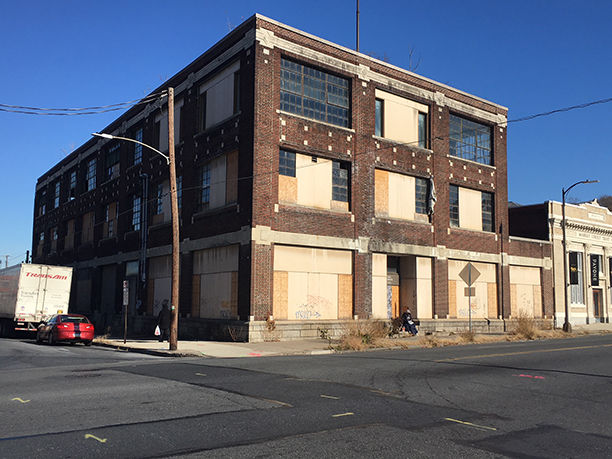
The 101-year-old Schell Seed building in Harrisburg is about to be razed.

Another piece of Harrisburg’s industrial past is set to disappear, as the century-old building at 10th and Market streets will meet the wrecking ball next week.

On Monday, the Pennsylvania Housing Finance Agency (PHFA) plans to begin demolition of the so-called Schell building at 1000 Market St., a long-blighted, vacant industrial structure.

“The building has been deteriorating,” said Brian Hudson, PHFA’s CEO and executive director. “The brick started to deteriorate, and there were health and safety concerns.”

The three-story, 28,000-square-foot building was originally constructed in 1916 as the Standard Baking Co., founded by the Graupner family, whose flagship brewery was located directly across the street. In 1920, it became the Schell Quality Seed Store after Walter S. Schell moved his quickly growing seed distribution and retailing business to that location from farther up Market Street.

The store, which also sold gardening supplies, lasted until 1972, when rains from Tropical Storm Agnes swelled nearby Paxton Creek, flooding the building and destroying the business.

The building later became home to Geiger & Loria court reporting service. After passing through several other owners, Susquehanna Township-based developer Moyer and Williams bought the building in 2007, planning to redevelop it as loft apartments with first-floor retail. PHFA financially backed the project, which never got off the ground, and then bought it out of foreclosure in 2016.

Hudson said that PHFA originally hoped to preserve the building, but that it had deteriorated too much, with trees even sprouting up from the roof. The condition is so bad that it threatens the building next door, an old bank branch now the headquarters of Pavone, an advertising and marketing agency, he said.

Hudson said there is some interest in new construction at the site.

“There are a number of partners interested in developing something on it,” he said.

Hudson declined to name any specific developers or projects but said that it could work as either a residential or office project.

David Morrison, executive director of Historic Harrisburg Association, said several members of the city’s preservationist community had contacted him over the last few days after learning that the building was about to be destroyed.

“It’s always a shame when a building can’t be rescued,” he said. “I wouldn’t say it would be impossible (to save it), but maybe it’s impractical from PHFA’s standpoint.”

The two-block stretch of Market Street between the railroad underpass and Cameron Street was once a thriving industrial and retail corridor. In addition to the brewery and the seed company, it was home to such diverse businesses as the Patriot-News, the city’s central post office, the state’s printing operation and A. Lane used furniture. Today, none survive, and empty buildings and surface parking lots line the corridor.

In 2011, Philadelphia-area developer Adam Meinstein bought the post office site, but that building remains underused. This past June, New York-based Twenty Lake Holdings, a commercial real estate company, purchased the sprawling former Patriot-News site for $644, 286—a fraction its original, 2010 list price of nearly $4 million—but has yet to state its intentions.

About a year ago, PennDOT unveiled concepts for a revitalized Market Street corridor, including the relocation of the city’s main bus depot from Market Square to either the site of the old post office or the Patriot-News building.

Hudson said he hopes that PHFA can assist in that revitalization. To guard against future floods, he envisions a building with parking on the first floor and apartments or offices above.

“We’re going to take a look at what makes the most sense there,” he said. “Our whole issue is to revitalize that area.”

He also said that his agency has the ability to take on projects that other financial institutions avoid.

“We don’t mind being the first ones in,” he said. “We do that all the time.”

Continue Reading

Going, Gone: The last day for a furniture store, another day on Market Street.

Illustration by Rich Hauck.

Illustration by Rich Hauck.

We got registers.

Anybody want these old registers? We got $10. $10 on these old registers. Sold. We got these walking sticks. $5. We got a buyer. Hey, nice old magazine racks here. $10. $5. $2. Anybody? No? Put it on the pile. Nice little vintage diner stool there. Sold. $7 is the buyer. Now, some nice pool cues. Buyer number is 177. One-seven-seven. Now, a nice crane scale. Anyone out there want a nice crane scale?

And so went the Kerry Pae Auctions auctioneer. By the end of the day, several thousand items had sold (and a bunch hadn’t), clearing out two sprawling warehouses and marking the final day of business for A. Lane Used Furniture.

Should one feel badly about a business closing after nine decades? After all, 90 is old in human years; it’s downright Jurassic in store years. And, as we all learned from the Bible or The Byrds, to everything there is a season, right? So, then what can be gleaned from the final gasp of the city’s ancient man of retail?

First, for all you bored office drones with a dream, the lesson may be this—operating a successful business takes scary commitment. Gene Fievish had it. When Fievish took command of the store from his aunt in the mid-1960s, A. Lane was already middle aged. The third-generation owner soon became synonymous with the store, where he could found inside—or, often, sitting outside with a buddy, watching the world drive by—until his death last year. By his own admission, Eric Epstein, Fievish’s nephew, didn’t have that kind of commitment, though he earns praise for attempting to extend the lifespan of a store that, but for his uncle’s sheer force of will, may have perished ages ago.

Which brings me to my second point.

The A. Lane inventory auction meant much more than the closing of a single musty, cluttered old store. It also emphasized, at least to me, the critical condition of a small, yet important, commercial stretch of Harrisburg, one that once provided urban connective tissue between the industrial corridor along Cameron Street and the smaller retail shops of downtown.

Today, these two blocks of Market Street constitute a graveyard of the pre-information age. There’s the mostly empty former post office, the very empty old Patriot-News headquarters, the shuttered Geiger & Loria Reporting Service building. Yes, Pavone has done its share, converting an old bank branch into beautiful office space. However, it’s the only bright spot in an otherwise dismal stretch of vacant, near-vacant and rundown buildings.

Indeed, the area is a tough sell. It’s cut off from downtown, sits directly atop flood-prone Paxton Creek, is victim to creeping blight and is now zoned in such a way that prohibits most industrial uses—even though it long has been an industrial area (for decades, the towering Graupner Brewery and the boxy Standard Baking Co. dominated these blocks).

However, you know something—I’m cautiously optimistic. For all its negatives, the area has some compelling strengths. It may be disconnected from the downtown core, but it’s still very close in, which could suit rapidly growing companies from the other side of the underpass (hello, Harrisburg University). There is also a lot of developable land, several cool, if decrepit, historic buildings, easy access to the highway and acres of cheap parking thanks to TransitPark.

Perhaps most significantly, the area is a stone’s throw from the Harrisburg Transportation Center (aka the train station). So, it stands to benefit from increased train travel, greater bus service (there is a movement to make the station more multimodal) and a growing aversion to car ownership. If redeveloped, this neighborhood would be one of the most walkable in the city.

To that end, PennDOT, along with the city and the Harrisburg Redevelopment Authority, recently launched an initiative to plan transit-oriented development right in this area. In September, they asked for public input and expect to release their plan this month for the Harrisburg station neighborhood. I tend to be skeptical of these types of top-down efforts, if just because there’s usually no direct path from government-led plan to private-industry reality, no matter how worthwhile. That said—I’m eager to see what they come up with.

Chances are we’ve reached the low point along the 800- to 1000-blocks of Market Street. Redevelopment likely will come, though slowly, perhaps framed by government but ultimately driven by market forces and greater trends in society. The area reminds me of long-blighted sections of other cities, which developers eventually “discovered” after demand spilled over from more desirable areas nearby. When change comes, though, this patch of Market Street probably will retain little of its past, as the few remaining historic buildings, by then, may be too far gone to save, and new construction will probably have to be built above the flood line.

At the A. Lane auction, I bid on a single item—an old gumball machine, which I got for $15. After paying for it, I made my way through the crowd, exited the building one final time and placed my new toy gingerly into the trunk of my car. I looked up the block and immediately saw a huge, wooden “For Sale” sign, which stood outside the building next door. All around me were the relics of another time, when brewers and bakers and postal workers and journalists filled these streets, packing into nearby restaurants and bars, as well. Those days are long gone. But, someday, something else will be built here, and the area will finally shake off its decades-long, post-industrial decline. It’s up to us to figure out what—and when—that will be.

For more information about transit-oriented development and the Harrisburg initiative, visit www.planthekeystone.com/tod.html. 

Lawrance Binda is editor-in-chief of TheBurg.

Continue Reading

Access Denied

PapenfuseWeb

Harrisburg Mayor Eric Papenfuse

Harrisburg can be a contrary place and, during my years here, I’ve seen little agreement on anything.

Until now.

Mayor Eric Papenfuse’s decision to blackball PennLive/The Patriot-News has not been received well by the public, at least not among the people I know and have spoken with, many of whom have generally supported his policies.

In my conversations with him, Papenfuse has cited several reasons for his antipathy to Harrisburg’s “newspaper of record.” He believes that PennLive engages in sensationalism, that its editors unfairly target him and that the comment section of the website is rife with daily debasements such as childish name-calling, rumormongering and outright lies.

Basically, he believes that PennLive will do almost anything to generate page views, which, with its “digital first” approach to journalism, is how it tries to make money. In an interview yesterday with Dave Marcheskie of abc27 News, Papenfuse said that PennLive was no longer a legitimate news outlet and compared it to the website Gawker, whose tagline is “today’s gossip is tomorrow’s news.”

Many people in the Harrisburg area would agree with at least some of these criticisms. Years ago, when I arrived here, three negatives really struck me: the racial divide, the division between city and suburb and a shared dislike of the Patriot-News, a feeling that seems to have only grown with its transition from a traditional daily newspaper to a digital news outlet.

However, like it or not, PennLive remains this area’s predominant source of news. Despite multiple rounds of layoffs in recent years, PennLive is still unmatched in terms of editorial budget and staff resources. No other media can compete. Not the TV news, not volunteer watchdogs and not TheBurg, which, for all of our progress, has a microscopic budget and staff compared to PennLive. You can argue with how PennLive deploys its substantial resources, but it does dedicate a reporter to Harrisburg, where news is never lacking.

Since Papenfuse decided to ban PennLive, people have speculated what this says about his temperament or means for his re-election prospects. Frankly, those issues concern me less than what it means for an informed citizenry. Yes, a lot of content on PennLive is contrived fluff, engineered to lure people into clicking on this or that. Most Harrisburg stories, though, contain useful and important information as reported by Christine Vendel, who is thorough, fair-minded and exceedingly professional. Her quality of information suffers without input from the mayor, who, in our form of local government, is the single most important source for facts, details, priorities and commentary.

Papenfuse has told me that he believes he’s gone out of his way to accommodate reporters and, in fact, I’ve found him to be quite accessible. I ask him to continue this commitment to openness and availability. In this city, the mayor has an extremely important public role to play, and I don’t believe he can fulfill it without engaging with PennLive’s city reporter. Yes, he may feel slighted, insulted and mistreated; he may believe that PennLive has debased itself with tabloid-style journalism. However, he is the mayor of Harrisburg, and, as such, has a responsibility to keep the people informed, even if he doesn’t like where their news is coming from.


Note: After this blog was posted, Mayor Eric Papenfuse responded as follows:

“An informed citizenry is not well served by the gossip-mongering hate speech that PennLive traffics in with its promotion of anonymous commentary. This is the antithesis of what is good for democracy, as it drives people further apart. I am committed to communicating with the public and believe I can do so effectively without engaging a clicks-for-cash business model that has little interest in the truth or the betterment of our civic culture in Harrisburg.”

Continue Reading

A Well-Spun Lie

West1West2West3West4Agents spent much of Tuesday hauling Western-style artifacts from the home of former Harrisburg Mayor Steve Reed.

In early 2014, TheBurg’s former managing editor, Dan Webster, conducted an interview with a man who had virtually disappeared from the public eye: the long-serving mayor of Harrisburg, Stephen Reed.

The interview was the result of months of hard work and persistence by Webster, who, after letters, phone calls and visits to Reed’s house, finally cornered him in one of his usual haunts–a barstool of Der Harrisburg Maennerchor on North Street at about 2 a.m., the seven-term mayor sipping his usual drink of a light beer over ice.

Reed didn’t know Webster and, at first, was put off by the young man’s tenacity. According to Webster, Reed said to him something like, “Oh, so you’re the guy who’s been stalking me?”

But, after some conversation, Webster persuaded Reed to sit for a lengthy, wide-ranging interview that covered everything from his biography (though no questions about his personal life were allowed) to the city incinerator debacle to the Old West museum that Reed had proposed. Webster later published portions of the interview in his magazine, “Local,” a Harrisburg-focused issue released about a year ago. The cover featured a portrait of Reed, grinning slyly, a caption overlaying the picture and asking the question, “Sinner or Saint?”

On Tuesday, I thought about Webster’s story as I stood across the street from Reed’s Cumberland Street home (along with the rest of the media scrum), watching agents haul away items such as saddles, a statue of an Indian, a totem pole and a stuffed coyote. The bounty would have fit perfectly into the “Old West” museum that Reed had wanted to build, for which he had spent millions in public funds to acquire thousands of artifacts.

In particular, I kept remembering when Webster asked Reed why he wanted to build a Western-themed museum in the unlikely location of Harrisburg, Pa. His response:

“Everybody assumes that I must be a collector of those items. I never was. I never was. I do collect stuff, WWII-related stuff, some Vietnam and old books. Just people assume, ‘Oh, he’s building museums related to his hobbies.’ No, actually, I wasn’t. But, in this town, a well-spun lie will trump truth or fact any day of the week.”

In his story, Webster cast doubt on Reed’s veracity by mentioning that his old city hall office was filled with Western-themed artifacts, including his “two prized possessions”: Wyatt Earp’s card table and Doc Holliday’s revolver.

And now we know that his personal home also was loaded with objects from the American West. After the faded, chipped green door opened, the Cumberland Street house spit out three truckloads of artifacts, including a spinning wheel, a whiskey barrel, statues, antique-looking furniture, Western-style clothing, horse-riding gear, Indian ceremonial items and box after sealed box of other things.

The house’s contents didn’t surprise a few of the veteran reporters. Rumors had circulated for years that Reed’s house was jam-packed with artifacts, though, until Tuesday, no reporter I knew had ever seen them. In a 2009 interview, Patriot-News reporter John Luciew asked Reed directly if any city-owned artifacts were inside his house.

“Never have I kept city- or authority-owned anything at my house, other than my pager,” Reed replied.

Luciew also asked about the reimbursement that Reed had requested from the Harrisburg Authority for artifacts he said he had purchased with his own money years earlier.

“These weren’t personal items,” he said. “There were items I had purchased for the archives and museum projects. These were delivered here (to the city) from the beginning. They were never anywhere else but delivered here.”

Emerging from his house yesterday, Reed–the non-collector–told the media gathered outside that the artifacts seized by agents the day before were, indeed, his personal property. He then went on, as he did with Webster, to offer reporters a lesson in lying.

“A well-spun lie repeated often enough becomes almost gospel truth,” he said before the cameras when asked about reports of corruption during his lengthy tenure in office.

After speaking for a few more minutes, Reed got into his car and drove off, saying that he was under a court-imposed order not to talk to the press and, in any case, was on his way to meet his lawyer.


Continue Reading

Treasured Island: Many people have high hopes for the future of Harrisburg’s City Island. But can its players paddle in the same direction?

Screenshot 2015-06-01 08.41.10One evening in March 1986, Mike Trephan was at the reception for his own wedding, at Catalano’s bar and lounge in Wormleysburg, when he got a call from then-Mayor Steve Reed.

“He says, ‘Michael, the river’s coming up,’” Trephan recalled. “‘You’ve got to move—’” Trephan knew what Reed was talking about: the hull of what was to become the Pride of the Susquehanna riverboat, a hulking metal frame that was perched on a City Island beach, unmoored. For the past year, Trephan and a group of local businessmen had been working to build an old-fashioned passenger boat to augment the city’s riverfront attractions. Trephan, who had recollections of taking a ferry to City Island as a child, called it “an old memory becoming a new dream.” He got off the phone and, along with his wife, headed for the island.

Rising waters had imperiled the project once already. Months before the wedding, the river had torn the boat from where it was docked on the west shore, wedging it against a pier of the Market Street Bridge. The disaster prompted a Patriot-News reporter to liken the riverboat to the Titanic—a display of hubris that was doomed to failure. But the hull was rescued and relocated to the island, and Trephan, after coaxing more positive coverage from the paper, kept the project and its capital campaign alive. On his wedding night, he got to the boat before the swelling river did. “And who shows up and helped us? Mayor Reed,” Trephan said. “We were all dressed up, but we got the boat tied up. I think he’s the one that brought ropes over, if I’m not mistaken.” The boat stayed anchored to the island.

The riverboat was just one piece of City Island’s transformation under Reed. For nearly a century, the island had been a recreational site for city dwellers, following the 1890 construction of the Walnut Street Bridge. According to Eric V. Fasick’s “Harrisburg and the Susquehanna River,” a collection of images of the river published earlier this year, the newly granted access led the city to develop bathing beaches, playgrounds and baseball diamonds there. By the time Reed took office, however, in 1981, the island had fallen out of use and acquired a reputation for prostitution and cruising. Trephan called it “disheveled,” though, he hastened to add, it “wasn’t as bad as people say it was. It just wasn’t developed.”

All that changed under Reed. In 2010, giving an interview for a local history project, Reed recounted his search for an enterprise that would have a “catalytic effect on changing the image and perception of the city.” “You needed something that had universal appeal,” he said. Waterfront investments, he went on, were “almost no-brainer types of developments. Once you do them, people will come. You build it, they will come.”

Trephan got involved after talking to the mayor during Kipona, the city’s riverfront festival over Labor Day weekend. Trephan had charted helicopters for the festival, and, as he and the mayor observed the long line of people waiting for a ride, Reed asked about other ways to improve the riverfront. Trephan ventured a suggestion for a ferry. That idea blossomed into the campaign for the riverboat, which Trephan spearheaded, along with other acquisitions—a railroad circuit and steam train, purchased from a bankrupt Vermont millionaire; an antique carousel. The crowning achievement was the construction of a new ballpark and the acquisition of a minor-league franchise.

Trephan, now in his seventies, looks back on the redevelopment of City Island as an emblem of Reed’s vision and follow-through. “He was a doer,” he said. “People knew that if he said he’d get something done, he would.” More than that, though, he recalls it as a story of political and geographical unity. The mayor “didn’t give a shit what your political party was,” he said. In the case of the Pride of the Susquehanna, he “probably got that done with 80 percent Republican help.” Trephan wanted the boat to be a project of both shores, and, when it came time to incorporate a nonprofit to manage it, he lobbied for the name to include “Harrisburg Area,” as opposed to just “Harrisburg.” (In a history of the riverboat, which Trephan put together in 2007, he wrote that it “might have been the first time that the east and west shores ever came together on a community project.”)

The renaissance on the island has largely endured. The Senators still play ball in the stadium, now dubbed Metro Bank Park. The Pride of the Susquehanna is paddling into its 27th year. But in recent months, both the private sector and local officials have begun looking to improve its offerings. Much as it did in 1986, when its mayor showed up to save a stranded boat, the city is considering what sort of businesses can flourish there, and how the government should help.


Last November, a group of land-use experts met over two days in downtown Harrisburg to contemplate City Island’s future. The Urban Land Institute, a global nonprofit, had convened them to tackle a question: was the island was being used to its full potential?

Urban Land Institute panels are meant to provide planning advice, as the institute puts it, “in an atmosphere free of politics or preconceptions.” Susan Baltake, the executive director of its Philadelphia council, which oversaw the City Island panel, told me the institute “gives cover to elected officials, who don’t want to be the ones telling constituents what to do.” The panel, which included lawyers, engineers, designers and real estate and construction professionals, among others, toured the island and interviewed 51 “stakeholders” representing the various constituencies with interests there. The result was a report that George Asimos, a local real estate attorney for the law firm Saul Ewing, and the panel’s co-chair, said he hoped would be “an informed, open-minded, no-agenda catalyst for action.”

The report affirmed the island’s present recreational use, while highlighting its immense potential. It called for a form of centralized management and urged the city to develop a long-term master plan. Among other ideas, it recommended pursuing additional programming at the island’s sports facilities and exploring winter activities and a year-round restaurant. It strongly urged the city to work with the City Islanders, a professional soccer team, to improve their stadium, which is underwhelming, despite the view of the Harrisburg skyline from its bleachers. The report also included a few of what Asimos called “blue-sky ideas,” including a “Museum of the Susquehanna” to celebrate the river’s ecology.

“City Island is a well-loved place,” Asimos told me. “It is unique and tremendous in its location, and in the fact that you can walk and drive to it.” But, he noted, the island’s amenities are “not planned in a uniform way.” The island didn’t have a consistent signage system, and the natural resources were integrated haphazardly. “It’s crying out for a unified master plan,” he said. Brad Jones, the president of the downtown development nonprofit Harristown, which led the request for the Urban Land Institute study, said the panel learned that vendors shared more or less the same wish list. They wanted the island to be “clean, safe and beautiful,” and they would like “maybe a little more marketing.”

Where does city government fit into these objectives? In 1984, before the rapid development of the island under Reed, the city petitioned the Urban Land Institute for a similar report. This time, the request came not from the city but from Harristown, with the backing of the Dauphin County commissioners and the regional tourism bureau. The difference is small, but it may say something about a divergence in priorities. Since Mayor Eric Papenfuse took office, he has clashed with these entities over spending on development and tourism. Though he was interviewed for the report, he took little interest in it. “I don’t think it told us anything we didn’t already know,” he told me, describing it as “one of those things the county likes to spend money on.” (Dauphin County paid $15,000 for the study.)

More to the point, Papenfuse has begun his own examination of the island, focusing less on potential for future development and more on the status quo. The city recently engaged a contract lawyer to go through the city’s permits with island vendors. The Urban Land Institute report recommended giving vendors longer permits, to encourage investment—yet the city recently notified vendors that their permits would be extended provisionally, for one year only. Jackie Parker, director of the city’s Department of Community and Economic Development, which encompasses the parks division, said she expected ultimately to renew them. But, she added, “We’re taking a look, because they’ve been on the books for a very long time, so we felt, and so did the vendors, that there were some things in there that they’d like to discuss and, you know, make some changes.”

Opening the permits may simply be about ironing out wrinkles; most of them date back a decade or more. But it may also reflect a deeper reconsideration of the vendor-city relationship. Under some permits, the city pays the vendor’s electric bill. Many contain a profit-sharing provision—if the vendor earns above a certain figure in a given year, a percentage of those profits goes to the city. But the city has rarely, and perhaps never, collected money under the provision. (One city official suggested such profit-sharing was never meant to be enforced, but rather was a way of making permits for private use of city-owned land more politically palatable.) Vendors, meanwhile, have found the one-year term puzzling. “As a business owner, how do you take a one-year permit to the bank to get a loan?” one vendor asked me.

These concerns are especially prevalent in the case of the asset that dominates the island—the minor-league baseball stadium. The city renovated the ballpark in 2007, matching an $18 million state grant with $18 million in borrowed money. (Around the same time, Reed sold the Senators to a private investor for $13 million, representing quite a coup, as the city had paid less than $7 million for the team a decade before.) Reed claimed that, under the deal, the city should expect ongoing revenues from the ballpark of $500,000 per year. In fact, the city now loses money on the stadium, largely because annual debt payments on it exceed the year’s rent and tax revenues by around $200,000. One city official described the arrangement as a “naked put—the city has all the downside.”

More worrying to Papenfuse, the stadium permit requires the city to pay for facility upgrades, potentially at very high cost to taxpayers. “You have a major scoreboard outage, you have an elevator go down, and you could suddenly have a million dollars in a year that the city’s on the hook for,” he told me. The Senators are supposed to pay the city a portion of parking revenues and stadium naming rights, but the city hasn’t received the money for about a year now, because it’s been siphoned off to pay for repairs. Papenfuse has been meeting with Mark Butler, a local businessman who bought the team earlier this year, and said he feels optimistic about the negotiations. He called the team “good partners” and pointed to its nearly $400,000 annual lease payment, which he acknowledged was costly. “From their perspective, they have the highest lease payments of any team in the league,” he said. “But from our perspective it doesn’t work, and the city can’t fill the gap.” (Butler did not respond to requests for an interview.)

The Urban Land Institute aspires to apolitical advice, but it is difficult to sever political considerations from the use of public land. Asimos, though he said the mayor’s task force didn’t come up during the panel, said the “fact that City Island is still costly to the city” did. In the fall, absent a renegotiated ballpark permit, Papenfuse will go before City Council and ask members to budget for the stadium’s capital repairs—and thus balance the city’s island subsidy against other spending priorities. I asked him what his long-term goal was for the island. “I’m not sure we can achieve it, but the goal is to get it to be—it doesn’t need to make any money for the city, but it shouldn’t be a financial liability to the city,” he said. “And right now, it’s a huge financial liability, with a sort of question mark for how high it can go.”


On a Thursday in early May, around noon, three men in red T-shirts and matching pants left a small, gray shed on the island, near the Walnut Street Bridge, and climbed into a Department of Corrections van. An escort drove them past the stadium towards the beach at the northern end. There, behind the putting greens of a miniature golf course, they spread out at a picnic table for lunch.

Jeff Palkovic opened Water Golf in 1990, making him one of the island’s longest-running attractions. A few years ago, when the city was nearly bankrupt, Mike Trephan organized Palkovic and several other businessmen into a loose committee to help take care of the city’s parks, including the island. A fellow board member of Trephan’s worked in corrections, and she connected the group with a community work program at the Camp Hill prison. Since then, Palkovic said, he has spent hundreds of hours working with the prisoners to maintain the island—cutting back overgrowth, painting facilities, even clearing a walking trail on the west shore.

These efforts raise the question of what the proper relationship is between city government and private businesses, particularly private businesses that rely for their livelihood on public land. The island is a city park, and it falls to the city to maintain the public areas. When the city can’t afford the maintenance, how far should businesses go to keep up appearances on their own? Trephan, who approached former Mayor Linda Thompson with the offer to help early in her term, said she initially seemed suspicious of his motives. Trephan told her he wanted to help because the parks were “what our forefathers left us, and it’s up to us to keep them going.” “All of a sudden, she completely changed her demeanor,” he recalled. “I only had 10 minutes with her—we sat there for an hour, hour-and-a-half talking.” After their meeting, he said, Thompson “helped me anywhere she could.”

Vendors have more recently taken the initiative in marketing and promoting the island. For the past year, they have held monthly meetings to discuss issues ranging from the island’s appearance to branding, signage and security. They meet either on the riverboat or at a ballpark conference room and are typically joined by the city’s parks and recreation director, at least for part of the time. Jackie Parker compared it to a downtown merchant’s association—“they really are starting to work together as a group, which is cool,” she told me. But the businesses also seem to want to ensure their insights and experience are respected. “I want to work as partners with the city,” Steve Oliphant, who owns Susquehanna Outfitters, which rents watercraft and offers river tours, told me. At the same time, he added, the parks administrators were newcomers, while most of the vendors had been on the island for 10 years or more. “They should be coming to the businesses that exist and working as partners. We want to help, too. Have input. Not feel like decisions are made in our absence, and they’ll tell us how that works out.”

“I think the city and the mayor are so overwhelmed with trying to fix things,” Palkovic told me. “There’s a hundred things to do and they can do 10 things.” Still, he reminisced about an earlier era of cohesion, when the island, under aggressive city management, seemed to pick up momentum. Each new vendor drew visitors to the island, and, as a result, everyone’s business improved. Tina Manoogian-King, the longstanding parks and recreation director under Reed, “ran it with an ironclad fist,” he said. “But you know what? You knew what to expect and you knew it was gonna be really, really good.” She was especially ardent about vendors cleaning up trash. To this day, after fireworks displays on the island, Palkovic goes around with a blower to clean up fallen debris. “And I have no problem with that,” he said. “Because I want the island looking good, so when you come, you’re impressed.”

Speaking to vendors and city officials, I wondered how much Papenfuse’s approach to the island was informed by his views on Reed’s legacy. His approach to the National Civil War Museum set one kind of precedent. When he asked the county to cut its funding, he described the museum as a financial waste that should never have been constructed. What Reed saw as a worthy investment, Papenfuse now saw as a crippling obligation. I asked him—did he feel the same way about the stadium and the Senators? “I think it’s distinct,” he told me. “Because there’s no question the Senators bring a benefit, and that perhaps at one time you could make an argument that a city or municipality could subsidize a sports team.” When it came to City Island, it wasn’t that he didn’t see the value of the investment. It was that he believed he had a more pressing obligation to the bottom line. “When we have debt that we absolutely have to pay, and we’re hundreds of thousands of dollars short on a yearly basis,” he said, “we don’t have the luxury of looking at the soft economic impact of that. We have to come up with real numbers.”

Last month, on a nearly perfect spring night, I went to a Senators game. I was early, and while I waited for my wife and our friends, I stood near the gates and watched a crowd stream in from the parking lots and over the bridge. The first time I’d seen the Senators play, before I moved here, I found the experience charming—the kids’ contests between innings, the ads for local businesses on the Jumbotron, the lights strung up on the Walnut Street Bridge. Now, though, it struck me as an emblem of a much more complex legacy.

I thought of something Mike Trephan told me. We’d been talking about the uniqueness of Harrisburg’s riverfront, and the beauty of the island, but had gotten sidetracked on his estimation of the Reed years. He was aware of the incinerator and related borrowings that, late in Reed’s tenure, wrecked the city’s finances. He would entertain the suggestion of bad governance, but he didn’t doubt for a second the mayor’s motives. “Everything he did, he did for the city,” Trephan said. He paused a moment, then set these thoughts aside. “Ah, it’s a great place, City Island,” he said, as if it was all that mattered.


 

Continue Reading

An Imitation of Life: There’s real Harrisburg; then there’s media Harrisburg.

Screenshot 2014-11-25 17.14.20Lately, I’ve been pondering the nature of reality.

No, I’m not taking a post-graduate philosophy course nor am I suffering through some type of midlife crisis (I did that about 10 years ago).

Rather, I’ve been wondering how people arrive at their conception of reality and how my business (the media) influences it. As usual in my columns, I’m talking mostly about Harrisburg here, though I suppose this theme could apply to many other communities and things.

When I moved here, I found Harrisburg to be a genial, if somewhat neglected, place. It was generally attractive to walk around, had some nice architecture, decent enough places to eat, a pretty Capitol building. It reminded me of some other urban neighborhoods I had lived in: great bones, nascent redevelopment, a smattering of typical inner-city woes.

Other than the city’s burgeoning financial crisis—which really was a unique problem—I didn’t see Harrisburg much differently than other East Coast cities, though it was a good deal smaller.

So, I was pretty shocked to learn that not everyone agreed with my assessment of this mostly pleasant place. In fact, many people disagreed—emphatically. They disagreed often and passionately and without hesitation.

I remember vividly a couple years back, when, in response to a rather innocuous post on TheBurg’s Facebook page about a downtown restaurant, someone wrote that he was surprised I didn’t fear for my safety.

How did this happen? I wondered. How was it that this quaint, if flawed, little city could stir such negative emotions among so many, particularly those who lived in the suburbs?

Now, I understand that Harrisburg isn’t for everyone. It can be a challenging place to live, especially with the sometimes-spotty (though sometimes-good) service delivery and subpar infrastructure. But the level of contempt and fear that I found on message boards or just in casual conversation surprised me.

I suppose there are several reasons for this. First of all, Harrisburg, as I understand it, was once in pretty desperate shape. The 1960s and ‘70s hit all cities hard, and Harrisburg suffered more than most, with severe flooding adding to the usual list of deindustrialization, white flight, rising crime, racism and blight. A couple generations later, this legacy lingers.

Secondly, the city’s government has been badly mismanaged, and that’s had an impact. The worst abuses, though, have only come to light in recent years. It wasn’t too long ago that Steve Reed was touted as one of the best mayors in the country.

And, thirdly, let’s face it: the Harrisburg area can be pretty provincial and racially divided. There are people who seem to relish bashing the city for their own personal reasons, even if they have little firsthand experience of life here.

Mostly, though, I blame my industry, the media. The media didn’t cause this misperception of Harrisburg, but it certainly has fed and done little to correct it.

Sure, the media has to report bad news; that’s part of its job. But another vital part of its job is this: it should reflect reality.

Too often, media presents a fictional version of life in Harrisburg, and perpetuating a fiction is one of the worst things a news organization can do.

You want to know what life is like in Harrisburg? For the most part, it’s pretty dull. Speaking personally, I walk to work, get lunch, walk home, repeat. On weekends, I do some yard work, try to eat at a good restaurant or two, and venture over to Broad Street Market, City Island and a few other places I like.

My life isn’t a lot different from that of your average suburbanite, with a few exceptions. I certainly walk a lot more and have quick, easy access to some of the area’s best cafés, bars, restaurants and entertainment. I also like to run along the river and at Italian Lake. To me, these are the things that make city life special, and they’re why I choose to live here.

Believe it or not, I spend almost no time worrying about crime, thinking about parking meters or dodging bullets from gun-toting state legislators.

But you wouldn’t know that from reading the front page of the Patriot-News or watching the evening news broadcast. Sure, I understand—how do you make a newscast out of a guy strolling over to Yellow Bird Café for a breakfast sandwich?

The constant drumbeat of bad news, though, has consequences, a terrible effect on the well-being of Harrisburg and its people. Taken in total, this coverage creates a fiction—a fanciful representation of life in this city. People who don’t live here then believe that falsehood, accept it as reality, and act on it as if it were true.

Recently, one downtown restaurateur told me that parking rate hikes haven’t much affected his business, but that he gets calls often from customers who worry for their safety. They want an assurance they won’t get mugged walking the 10 feet from their parking spot on the street into his restaurant. Where do you think that irrational fear comes from?

TheBurg tries to be a counterpoint, a magazine more interested in representing life than in sensationalizing it. We think it’s a more responsible approach, but we also believe that should be the mission of any news organization. Don’t lie to your readers—not just in the facts of an individual story, but in the bigger picture that your reporting, editing and design, taken together, create.

Most newsrooms operate on a daily timeframe, pumping out an article or news segment on a tight deadline. Their focus is on a few stories that single day, and they try to make sure that that they’re reasonably accurate. But there’s little recognition of the cumulative effect of so many stories, spanning a long period of time.

Unrelenting bad news, especially when it’s routinely reported breathlessly, can be destructive to a community and, worse yet, present an untrue picture of what life is like. It’s a fiction, and, in the case of Harrisburg, one that is widely believed and has proven to be profoundly harmful.

Lawrance Binda is editor-in-chief of TheBurg.

Continue Reading

Danger Zones

danger

Nothing quite lures the shark in a reporter like a crime story, and one this week, though it lacked the scent of blood, offered plenty to feast on.

On Tuesday night, a few minutes before 11 p.m., a 15-year-old boy and a Democratic state lawmaker exchanged gunfire on a residential block in Midtown Harrisburg. According to a statement by the lawmaker, Rep. Marty Flynn of Scranton, he was walking with another representative to an apartment they rent on 2nd Street when the boy approached, pointing a gun at them and asking for their wallets.

Flynn drew a handgun of his own and fired two shots; the juvenile fired one. Then, the statement says, they “ran in different directions.” No one was injured.

Aside from the usual intrigue accompanying a crime, what made the incident so appetizing to the press? First, there was the fact that six people were involved in the incident, four of them minors. Along with the second lawmaker, Rep. Ryan Bizzarro, D-Erie, there were allegedly three additional perpetrators, one of them 15 years old like the shooter, the others 17.

Then there was the interest in the lawmakers themselves—first-termers whose names sound like a Marvel superhero and his alter-ego. Flynn, a former Lackawanna County prison guard, also has a past that includes training in mixed martial arts and boxing.

Capitolwire.com, a subscription news service covering the statehouse, broke the story in the middle of the night, after a reporter picked up a tip while monitoring a late-running Senate session at the statehouse. By Wednesday morning, every newspaper in the Commonwealth was interested, and even some of the seasoned reporters couldn’t help but get caught up in the sensationalism.

“Two lawmakers involved in shoot-out with robbers near Capitol,” ran the headline on Philly.com, suggesting that whatever went down was a good deal heavier than three misfires and a mutual decision to flee the scene.

But the truly sensational headline came in the local paper of record, the Patriot-News, whose front page in the Thursday morning print-edition proclaimed Harrisburg “Dangerous for anybody.” Below the fold—lest the absence of subject and verb confuse readers—a second headline clarifies exactly what is dangerous, and for whom: “Capitol staffers are urged to avoid city streets.”

The lower headline was derived from a quote by Tony Aliano, chief of staff to the Republican Speaker of the House, who, we are told, counseled “representatives seeking advice” in the wake of Tuesday’s incident to “avoid the streets of Harrisburg until they get the situation under control.” What “situation” is being referred to here, I’m not sure; given the lawmakers involved in the shooting were Democrats, I think the “situation” might be the Republicans’ horror that the latest poster-child for the right to carry is a straight-laced former boxer of the opposing party.

But the Aliano quote didn’t come from Aliano. It entered the pages of the Patriot secondhand, by way of the spokesman for the House Republicans, Steve Miskin. Which leads to a question: Did anyone at the Patriot pause to consider whether a secondhand quote from someone barely connected to the incident deserved to dictate the tone of an entire article?

Moreover, on what authority are Miskin and Aliano—not to mention Flynn, whose own quote, “I don’t feel safe walking the streets in Harrisburg,” also graces the story—making pronouncements about crime in the city? To put this another way, would a quote from the city’s police chief belong in a story on the prospects of a Senate bill?

I was at the press conference Wednesday afternoon in city hall at which the mayor and Chief Thomas Carter discussed Tuesday’s shooting. Because I was there, I heard other quotes and facts about the incident which might have earned a more prominent place in the next day’s reporting. For starters, there were the comments from Mayor Papenfuse, who kicked things off by praising what he saw as a case of “excellent police work.” As it turned out, the police department had placed extra officers in the area after a similar incident Monday night, and they apprehended three of the four alleged criminals within five minutes of receiving the 911 call.

Twice in the day after Tuesday’s exchange of fire, I passed by the block where the shooting occurred. The first time was after Wednesday’s conference, when my editor and I took a detour up the street by car. There we encountered a middle-aged couple who live in one of the many well-kept buildings on the block. They had heard the shots, they said, and like many of their neighbors had immediately called the police. They told us one of the shell casings had been recovered from the sidewalk in front of their home. They said they were always impressed by the Harrisburg police, whom they thought deserved more credit. They did not seem the least bit rattled.

The second time was later that night, around 11 p.m., the same time as the shooting the night before. This time, I was in the neighborhood because I live there, a few doors down from the apartment rented by Bizzarro and Flynn. At the end of the block where the shooting occurred is the Midtown Tavern, my neighborhood bar. A small crowd was there, most of them for the Giants-Cardinals game. The shooting, if it troubled them at all, seemed to be outweighed by the $2 drafts on special and the 40-cent wings.

It bears mentioning that the Patriot’s coverage was not totally one-sided. On Thursday afternoon, the online paper ran several follow-up stories, including one with the headline “Crimes targeting random victims still relatively rare in Harrisburg.” Reading between the lines, however, you see it’s a story in part created by the earlier coverage; it includes a comment from the mayor’s spokeswoman, who is quoted as being unhappy with “sensational and misleading” headlines.

In any case, the calculus that led the paper to step out first with headlines like the one in print is all-too-evident on the Web page: the “relatively rare” hook, as of this writing, had drawn six comments and two shares on Twitter, up against the 210 comments and 309 Facebook shares drawn by its “I don’t feel safe” counterpart.

Even the follow-ups, though, point back to the original problem. That the paper should spend further energy on the story just to balance out prior coverage shows what’s really at issue. It’s not simply the harm that front pages like this morning’s do by distorting what it’s really like to live in the city. It’s the good they fail to do, by diverting resources—and good reporters—towards sensation and drama and away from what matters.

Along this line, let me suggest an area of inquiry, inspired by this week’s events, that could use a few more notebooks and pairs of eyes: three of the four juveniles charged in the attempted robbery were students in the Harrisburg school district, where, over the past two years, 247 teachers and 28 administrators have either resigned, retired or been furloughed.

Might this exodus of experience, and its effect on school and student morale, have something to do with the recent state intervention in the district, under which a Republican-appointed official cut benefits and salaries? It almost sounds like a question for a spokesman at the Capitol.

An earlier version of this article referred speculatively to a “news peg” on which a Patriot-News article, “Crimes targeting random victims still relatively rare in Harrisburg,” was based. The phrase “a story the earlier coverage created” has been changed to “a story in part created by the earlier coverage”; the reference to the story’s news peg has been removed.

Continue Reading