Tag Archives: Mayor Eric Papenfuse

Final Mayoral Debate: Candidates throw last punches, address campaign issues

Harrisburg’s five mayoral candidates made a final push for votes last night in a concluding mayoral debate that turned heated at times.

Moderators Blake Lynch and Mark Hall, an ABC27 reporter, kept the debate civil, though the town hall-style event at Harrisburg Midtown Arts Center kicked off to a feisty start.

Moderators Blake Lynch, left, and ABC27 Reporter Mark Hall, right, stand in front of mayoral candidates, from left to right, Lewis Butts, Gloria Martin-Roberts, Mayor Eric Papenfuse, Anthony Harrell and Jennie Jenkins.

Challenger Gloria Martin-Roberts started her opening remarks by separating herself from two former mayors, who both have indicated support for her, as well as her campaign treasurer, James Ellison.

“My name is not Linda Thompson, it’s not James Ellison and it’s not Stephen Reed,” Martin-Roberts said. “Some of you may be confused by the negative mailers that you have received over the past couple of weeks…They’ve had their time.”

She then criticized a PennLive article about a letter that Reed sent to encourage a friend to donate to the Martin-Roberts campaign. She said she did not ask Reed to write the letter to request the donation.

Likewise, incumbent Mayor Eric Papenfuse responded to campaign rhetoric from the Martin-Roberts camp. He referenced a Facebook post from Ellison that claimed Papenfuse purchased properties while mayor.

“I have not purchased any investment properties since taking office,” he said, adding that his wife also has not purchased any properties since he was elected mayor in 2013. “This is a ridiculous falsehood of my character.”

He asked Martin-Roberts to admit to the falsehood and have Ellison take down his Facebook post.

Martin-Roberts said she would not have Ellison take down the post. She pulled out several mailers sent by Papenfuse’s campaign that link her to Harrisburg’s old guard, while saying, “This is lack of character.”

Later in the debate, Martin-Roberts did say sorry.

“I apologize for losing my temper,” she said.

Challengers Jennie Jenkins, Anthony Harrell and Lewis Butts also addressed issues that have arisen over the course of their campaigns, as moderators fired questions from the community during the second half of the 90-minute event.

Jenkins addressed her termination from her position as police officer with the city. Last year, Jenkins entered a county program meant for first-time offenders charged with nonviolent crimes. This came after the city suspended her in 2013 after accusing her of taking $7,000 from the Police Athletic League.

Moderators asked why she entered this program if she maintained her innocence in the theft case.

“It was a way I could move on with my life,” she said, adding that she spent two-and-a-half years without income while tied up in the lawsuit.

Moderators bluntly asked Harrell, “Who are you, and where have you been?” They followed up and asked specifically about his community or church involvement aside from his two well-known biographical details: that he served in the armed forces and now studies full-time at Central Penn College.

“I lived in the community, purchased from stores, and I send my children to schools,” he said.

Butts touted his Harrisburg First plan, which includes a citywide Wi-Fi network, a shopping mall at PennDOT and, most notably, a hydroelectric dam in the Susquehanna River.

He called himself the “revenue candidate.”

“The hydro-power dam [would bring in] a lot of extra money for roads, scholarships and anything that we need,” he said.

With the final mayoral debate complete, voters get the last word on Tuesday, May 16, with the primary election.

Author: Danielle Roth
Continue Reading

Race for Mayor: Candidates lean into platforms at last night’s debate.

Older white man (Dennis Owens) addresses five candidates dressed in professional attire. Harrisburg Young Professional sign is in front of their panel.

ABC27 anchor Dennis Owens addresses mayoral candidates, pictured left to right, incumbent Eric Papenfuse, Anthony Harrell, Lewis Butts, Gloria Martin-Roberts and Jennie Jenkins.

With less than a week until Harrisburg’s Democratic primary, Harrisburg’s five mayoral candidates leaned into the big ideas of their platforms at last night’s live-broadcast debate.

Mayor Eric Papenfuse and challengers Anthony Harrell, Lewis Butts, Gloria Martin-Roberts and Jennie Jenkins responded to questions fired from a panel of four local journalists, including TheBurg’s Editor-in-Chief Lawrance Binda.

The night started with Binda asking the candidates where they stand on the issue of a home rule charter, which potentially could change the governing structure and taxing abilities of the city.

Martin-Roberts said she would work with City Council, saying that it would not be a decision she would make alone.

In her opening statement, she emphasized her vision to be a collaborative leader, which played out in many of her answers including her position on establishing a home rule charter for the city.

“I’m indecisive,” she said. “The home rule process is something the community will decide by vote…Before we go that far, we need to educate the community about home rule.”

Papenfuse criticized Martin-Roberts’ mention of being indecisive.

“We cannot afford to have a mayor who is indecisive,” he said. “Yes, we need home rule. We need to have a serious conversation about it.”

Jenkins said that a home rule charter would “tax and fee the residents out of existence.”

Papenfuse responded that Jenkins “doesn’t understand home rule,” adding that the city must come up with an exit strategy to leave Act 47. A home rule charter would allow the city to keep taxing powers granted by Act 47.

For 90 minutes, the panel, which also included Christine Vendel of PennLive, Emily Previti of WITF and Jason Scott of the Central Penn Business Journal, fired targeted questions aimed to illuminate candidates’ understanding of some of the complexities of the mayor’s position. ABC27 anchor Dennis Owens moderated the debate with more than 130 attendees seated in the ballroom of the Hilton Harrisburg.

When responding to a question about how two potential state laws would affect the city’s gun ordinances, Harrell established himself as a “2nd Amendment” candidate.

“I do carry and obey all laws this country puts down,” he said. “All of us should carry our own weapons.”

While questions didn’t explicitly touch on crime and safety in the city, Harrell brought many questions back the issue of “securing the city.”

“We must make this city safe and secure, then we can work on these great ideas,” he said.

Jenkins, who said she would aggressively lobby to change the city’s parking situation, said she would not lobby state lawmakers deciding on gun policies that could put the city in costly legal situations.

“I’d abide by all the laws that’d be enacted,” she said.

Some creative questions pointed to warmer topics, such as how often each candidate visits the Broad Street Market.

Martin-Roberts, who moved to Harrisburg as a child, called the market her nursery.

“I start on Thursday and eat my way through to Saturday,” she said. “I eat anywhere in the Broad Street Market except the floor.”

Papenfuse said he goes at least one a week and eats pierogi, pizza and Greek cuisine. He transitioned into how his administration worked to turn the market into an independent nonprofit last December.

“It’s an example of everything going right in Harrisburg,” he said. “Its success mirrors Harrisburg’s success.”

Butts said he’s a fan of the “hard-fried oysters,” adding that each neighborhood should have a market.

Harrell and Jenkins also said they visit the market at least once a week.

Voters can learn more about the candidates at the final debate, which is 7 p.m. tomorrow at Harrisburg Midtown Arts Center and is sponsored by ABC27. Or voters can hope to run into them at the market.

Author: Danielle Roth

Continue Reading

TheBurg Podcast, May 5, 2017

Welcome to TheBurg Podcast, a weekly roundup of news in and around Harrisburg.


May 5, 2017: This week, editor-in-chief Lawrance Binda and city reporter Danielle Roth pick apart Tuesday’s mayoral debate and discuss each candidate’s performance. Binda catches listeners up to speed with Friends of Midtown’s City Council forum, which he moderated, and the State’s corruption probe into the Harrisburg Incinerator. Binda and Roth discuss President Donald Trump’s weekend visit to Harrisburg.

Subscribe to TheBurg Podcast on iTunes and Google Play.

Special thanks to Paul Cooley, who wrote our theme music. Check out his podcast, the PRC Show on iTunes.

Find the stories referenced in this week’s podcast, plus candidate Q&As and a list of upcoming debates:

Continue Reading

City Council Update: Reservoir Park Bandshell to receive fresh paint, general repairs

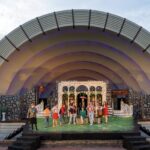
yellow-ish bandshell image. Ampetheater with a covered stage

Reservoir Park’s bandshell will receive a fresh coat of paint and general maintenance repairs.

Reservoir Park’s bandshell is slated to receive a fresh coat of paint and general repairs by early May. This comes after City Council tonight unanimously approved a resolution allowing the city to move forward with the $50,000 project.

Right now, the wood in the bandshell’s dressing rooms rots while the stage’s paint chips away, said Hillary Greene, city purchasing manager. The contractor, Steelton-based Kemar, Inc., will address these problems in addition to fixing the flooring and other general maintenance and repairs.

These updates will make the bandshell more appealing to performance groups looking to rent the space, Greene said.

“[After these updates], we feel better about renting it out,” she said.

Kevin Sanders, parks and recreation director, said a basic rental for residents costs $150 without using electricity. The fee increases depending on how a group plans to use the facility.

Gamut Theatre’s annual June Shakespeare in the Park is slated to be the first to use the refurbished venue. The contractor aims to finish repairs before the performance, Sanders said.

The bandshell also needs updates to light and sound systems, which may be in the cards for this year, Sanders said.

His department plans to install a video security system at the bandshell in hopes of protecting the area from vandalism.

During a pre-meeting discussion, Councilmen Cornelius Johnson and Ben Allatt requested that the purchase of the surveillance system be sped up.

The city park at 4th and Emerald streets is also slated to receive video surveillance.

“A lot of these facilities, it takes the community to maintain,” Johnson said during the legislative meeting tonight.

The security system would “identify who vandalized property and deter those actions from happening,” he said.

Also at tonight’s meeting, council approved three members to the LERTA appeals board. This marks a final step in implementing the tax incentive program, which is intended to foster development in the city. Developers can go to the LERTA appeals board if they disagree with the city LERTA administrator’s decisions.

Members of the administration, including Mayor Eric Papenfuse and city Solicitor Neil Grover, were absent tonight as they attended a mandatory Three Mile Island readiness drill.

This story was updated on April 18 to include the cost to rent the bandshell. 

Author: Danielle Roth

Continue Reading

Fool for the City: Common wisdom usually isn’t.

Illustration by Rich Hauck.

For the past few years, TheBurg has done an annual “April Fools” parody, poking fun at some of the more ridiculous aspects of life here in central PA.

We’ve taken shots at the mayor (repeatedly), the county commissioners, City Council and, just a few times, at our area’s website of record over there on the West Shore, among many other targets.

My apologies to fans of the “Fake News Digest,” but we’re taking a break this year from the mockery. Maybe it’s because “fake news” has jumped the shark (we were fake news before fake news was real). Or maybe it’s the toxic political climate. But I just don’t feel funny and refuse to put slices of bologna into my shoes (any old Steve Martin fans out there?).

The spirit of April Fools, however, isn’t completely lost. I thought this would be a good month to revisit some of the things that, in hindsight, seem a little foolish to me. Not that they weren’t serious concerns at one point. They were. However, I believe that time has shown them to be more “truthy” than true.

The Harrisburg Strong Plan is doomed to failure.

Yes, you can argue that the jury is still out on of the city’s financial recovery plan. However, Harrisburg hasn’t collapsed over the past four years. In fact, the budget is balanced, services are coming back and the city continues to redevelop. That said—the plan’s benefits were certainly oversold by its creators, requiring the city to make numerous adjustments along the way. And Mayor Eric Papenfuse has warned repeatedly that the rescue could still go south if the city isn’t allowed to retain its extra taxing authority. But, for all its faults, Harrisburg Strong has delivered on, maybe, 75 percent of its promise, which has turned out to be good enough to allow the city to get back on its feet after being essentially bankrupt.

Parking rates will kill downtown.

Is $3 for an hour of street parking ridiculous? Yes, it is. However, it has not led to the exodus of customers and businesses that many insisted was coming. Much of the credit goes to the excellent restaurants in downtown Harrisburg, which attract customers despite the cost of parking and the resulting press pile-on. And some credit goes to the administration, which, though powerless to mandate change, has worked around its weak position to find creative solutions to reduce the burden of high rates. In fact, my biggest parking bugaboo isn’t even the cost of street parking but of garage parking. High street rates were supposed to push motorists into cheaper, half-empty garages, but garage rates have increased so much that they’re now higher than street rates. This makes no sense. And that brings me to my greatest continuing concern—that operator SP+ seems out of touch with the reality on the ground in Harrisburg. Someone needs to tell those guys in Chicago to turn off the sum function on their spreadsheet app and try to understand that higher rates don’t automatically add up to more revenue.

Front Street redesign will lead to chaos.

Traffic backed up to Division Street. Gridlock on the side streets. Bicyclists getting tossed about like toothpicks. These were some of the common predictions after PennDOT reduced much of Front Street to two lanes and added a bike lane. None of that has come to pass. Except for a few minutes around the morning and evening rush, traffic usually flows freely and, with the addition of a shoulder, more safely. Traffic, in fact, flows so well that the greatest concern continues to be speeding drivers and their refusal to brake for pedestrians at crosswalks. But, all in all, the redesign of Front Street has been a huge step forward, making for a road that is far more attractive and better integrated with the city and its beautiful surroundings on the river.

The state is itching to take over the Harrisburg School District.

The Harrisburg School District continues to face considerable financial and academic challenges, as outlined recently in the district’s “Recovery Plan Update.” In fact, the district seems likely to miss its recovery goals again, especially on the flagging academic side. Back in 2013, the initial recovery plan carried the explicit threat of a state takeover of the district by the 2016-17 school year if goals weren’t met. Goals have not been met, yet no one seems concerned anymore that the state’s real goal was to turn Harrisburg into some kind of right-wing educational diorama.

Mayor Eric Papenfuse will be a stooge to his rich backers

Now that we’re back in campaign season, this talk has started again. Don’t believe it. Like him or not, Papenfuse has profound confidence in his own abilities, doesn’t suffer fools gladly, and, in my opinion, would sometimes be better off accepting outside counsel. Do you think that any donor thought it was a good idea for him to rumble with the Dauphin County Commissioners, the Regional Chamber or the Visitor’s Bureau? Of course not. Now that he’s been mayor for a term, Papenfuse is even less likely to be swayed by his contributors. So, if Papenfuse is re-elected, we should expect a mayor in all his positivity and pugnaciousness, his sureness and sourness—but maybe even more so.

Years ago, someone said to me, “The biggest problem I have with the press is that you guys write a story but then never follow up later.” I had to agree with him. News isn’t relevant only when there’s a problem or outrage. It’s also news, perhaps more important news, when a problem is solved or an issue clarified, even if that involves years of small, unsexy steps that don’t make for clickable headlines. But I guess that’s just the fool in me talking.
Lawrance Binda is editor-in-chief of TheBurg.

Continue Reading

Green Day: What to know about the city’s St. Patrick’s Day parade and 5K/10K race.

Amanda Spangenberg Baughman plays the bagpipes with the Lochiel Emerald Society Pipes and Drums.

Bagpiper Amanda Spangenberg Baughman has “lost count” in the number of parades she’s participated in. But Harrisburg’s St. Patrick’s Day parade is her favorite.

“It’s in our hometown, and we are the only Harrisburg bagpipe band,” she said, referencing the group she plays with, the Lochiel Emerald Society Pipes and Drums.

On March 18, she will be joined by more than 1,000 participants, including dancers, local celebrities and the Harrisburg High School band, for this year’s St. Patrick’s Day parade. The parade starts at 1 p.m., immediately after the Lucky Charm 5K/10K race, said Todd Vander Woude, executive director of the Harrisburg Downtown Improvement District (HDID).

The parade steps off at Walnut and 4th streets to follow a new route down Market, 2nd and North streets. This year is the first year with HDID organizing the event.

“This new route gives us the opportunity to highlight our downtown business community,” Vander Woude said.

The 5K and 10K race, sponsored by Fleet Feet Sports in Mechanicsburg, will also “be a host in showcasing the city,” said owner Fred Josyln.

“Runners will get to see some of the beautiful things in the city,” he said, while wearing lime green running sneakers to match his Lucky Charms race T-shirt.

The race begins at 10 a.m. and will end in time for the parade, he said.

Officials from SP Plus and Parkmobile, a mobile parking application, will be educating residents and visitors about discounts and the new parking app, which launched March 1 in Harrisburg, Mayor Eric Papenfuse said.

Parkers can receive four hours of free parking using the code “LUVHBG” every Saturday, including March 18. Remembering the code is not necessary. The discount code appears when a user selects to enter a promotional code, Papenfuse said.

Papenfuse also encouraged those celebrating St. Patrick’s Day on Saturday to enjoy downtown Harrisburg on Friday for 3rd in the Burg.

“The whole weekend is going to be celebrated,” he said. “Come down Friday and come back Saturday.”

For more information about the parade and the Lucky Charms 5K/10K race, including route information, visit www.harrisburgstpatricksdayparade.com and www.luckycharmrace.com, respectively.  

Author: Danielle Roth

Continue Reading

Happy Hour, Anyone? New Parking Phone App Goes Live with Discounts Today

Good news drivers: There’s no reason anymore to be wet or cold as you input all your information into Harrisburg’s parking meters.

This morning, the new Parkmobile parking app went live, offering convenience, discounts and a simple user interface.

To see how (and if) if the app worked, I tried it out myself downtown. I logged into the app, selected the zone closest to the blue dot indicating my location, and entered my car and payment information.

I saved this information in the app (nicknaming my Honda Civic) to make future payments easier and went about my business. The app notified me when I had 15 minutes left, as well as when my time expired. And you know what? It worked. There was no little slip of paper from Park Harrisburg (aka a ticket) when I returned.

The easy-to-use interface gets an “A+” in my book. 

After I selected my zone, the app also gave me a chance to enter a promotion code. Drivers can take advantage of a downtown happy-hour discount ($1 an hour between 5 and 7 p.m.) and four hours of free parking on Saturdays. When promotions run, drivers will be able to select one to use from a list of discounts. So, unlike the previous Pango parking app, parkers won’t have to memorize any codes.

“It will be very easy and very possible for business to promote their discounts,” Mayor Eric Papenfuse said recently when announcing the switch to Parkmobile.

At least on this first day, he was spot on about that.

Other benefits of the new app include the ability of business owners to receive a 10-percent discount when offering bulk discounts to users. They also can validate parking in real time, Papenfuse has said.

“I think this empowers businesses in a way that will allow businesses to grow, and it empowers the city by bringing more people downtown,” he said recently, adding that the app also promises better communication with users about discounts and parking regulations.

The city also can use the app to communicate updates for festivals and events such as the upcoming St. Patrick’s Day parade, giving residents information about the parking situation.

In addition, the app addresses a constant complaint from people who use the physical meters—that they’re sometimes charged for time that is supposed to be free. The app does not allow that, so that free parking hours—Sundays, holidays and evenings after 7 p.m.—are actually free.

All in all, I found the new Parkmobile app to be a significant improvement over the old Pango app, as well as a better than paying the meter in person. However, improved experience did come at a cost. The app charges 35 cents per transaction, which is a 20-cent increase from Pango’s fee.

Author: Danielle Roth


Continue Reading

Sinkhole Solution: City to receive more than $3 million in state funds

Sinkhole-damaged houses on the 1400 block of S. 14th Street will be sold to the city to demolish.

Harrisburg’s sinkhole saga is finally close to being over.

Soon, a little more than $3 million in state funding will flow to 53 residents whose S. 14th St. homes were damaged by sinkholes, after more than four years of the city trying to cobble together enough funding.

“It’s been a long time coming for the homeowners, but we are almost there,” Mayor Eric Papenfuse said.

Both renters and homeowners will receive funds to relocate after the city purchases and demolishes the sinkhole-afflicted homes. The city expects to close on the houses in the spring, which is all per their timeline, Papenfuse said.

“The money will go toward the purchase [of the homes], relocating residents and demolishing the homes,” Papenfuse said.

Earlier this week, the state announced a $3,179,099 award part of a larger $92 million state-wide project to relocate residents and avoid future losses from flooding and sinkholes.

This grant may not cover “all eventual costs,” Papenfuse said, adding that, after demolition, the city would like to turn the area into a green space.

The state’s announcement on Tuesday, confirming award amounts, comes after a more than four-year journey for the city trying to secure funds.

The city first requested disaster relief funding from the Federal Emergency Management Agency (FEMA) and was denied on a technicality: FEMA did not address sinkhole damage. In 2014, city officials pressed FEMA to address sinkhole damage with disaster relief funding, only to be denied funding in the next season for grant-giving.

In the next grant-giving season, the state selected Harrisburg as a priority to receive the sinkhole funds. That funding then was earmarked for Palmyra, and the state asked FEMA to reconsider. FEMA reversed the decision, and the city received $1.65 million last year for the sinkhole project.

“The most significant thing the city did was FEMA reversing the decision,” Papenfuse said.

Author: Danielle Roth

Continue Reading

“Not Good Enough”: School Board Denies Application for Arts-based Charter School

The board voted to deny the Arts to the Core Charter School Tuesday night.

The Harrisburg School Board tonight rejected the application of an arts-based charter school, with school board members citing an incomplete application and thin grassroots support.

The 7-3 vote denied the Arts to the Core School a five-year charter to begin a kindergarten through 8th grade program in the former Bishop McDevitt High School. Board members raised concerns over curriculum and community involvement of the Lancaster-based school.

School Board President Danielle Robinson said the curriculum was “not good enough,” adding that the school did not incorporate recommendations made after a York school district rejected the charter.

“The adjudication outlined what needed to be fixed, and the issues weren’t resolved,” she said.

School Board Vice President Ellis Roy called the concept “terrific,” but still voted against the charter.

“You have got to do the legwork and present a complete document, then I’d vote in favor,” he said.

School board members Jim Thompson, Judd Pittman and Matthew Krupp voted in support of the school, which had hoped to enroll 300 students this September.

Richard Caplan, Arts to the Core’s CEO, said these are not “valid criticisms.” He said it’s difficult to create curriculum for an arts-centered approach because it requires teachers to incorporate the arts “on the fly,” he said.

“The A+ Schools,” a North Carolina charter system that would have served as the basis for this school, “succeed because they incorporate arts dynamically,” he said. “In truth, arts in the school works because it challenges the teacher.”

Caplan said he is prepared to continue trying to bring the school to Harrisburg. He said he and his legal counsel will either submit an amended application to address the board’s concerns or appeal to the state’s Charter Appeal Board.

More than 40 people attended tonight’s meeting, including Mayor Eric Papenfuse and councilmembers Westburn Majors and Jeffery Baltimore. The entire Arts to the Core board, many from Lancaster, also attended the meeting, said Caplan.

Before the vote, Papenfuse spoke in support of the charter school, saying that it would give young families an incentive to stay in the city and expand the tax base.

“This would be a means of attracting new people to the district,” he told the board. “We need options to attract young parents into the city. I’ve spoken to many of them.”

The board considered offering a three-year charter if the Arts to the Core school met 13 criteria by February 2018. These stipulations included measures for curriculum development and securing the building.

Bishop McDevitt High School. Large, long, brick building

The former building of Bishop McDevitt High School has sat vacant since 2012. The Arts to the Core Charter School proposed to renovate and use this building.

In this case, the school would use the 2017-18 school year to plan curriculum, which Superintendent Dr. Sybil Knight-Burney would have to approve. The school also would need to secure a lease agreement or sale of the Market Street building and complete all necessary renovations.

“The conditions, they were impossible,” Caplan said, adding that he could not secure the building without a charter.

These stipulations, including a requirement for fewer than 20 students per class, gave Pittman confidence in the charter school, though he called the application “ill-prepared” and questioned the Lancaster-based group’s commitment to Harrisburg.

“Our superintendent has the power to control the curriculum,” he said to the board. “All of that is in our control.”

Pittman said he would like to see the same tenacity and scrutiny applied to the district’s own curriculum, which offended Robinson, who has served on the board for five years.

“I’m proud of our teachers, our community and what we have accomplished in the past five years,” she said. “We have ways to go, but we are nowhere close to where we were before.”

For Robinson and Ausha Green, the additional conditions needed to implement the school led them to vote against the charter.

“We had other charters that did not make it through [the board’s vote]. Why do we have to walk them through?” Robinson said.

Green put it this way: “Come here correct or don’t come at all.”

The school’s community involvement also raised concerns for Robinson.

“[Caplan] has pandered to the Latino community without [English-language learners] curriculum,” she said.

Caplan said his school donated to two organizations, one including LOOP, in return for help petitioning. He denied pandering to Hispanic organizations.

“We have more than 500 kids signed up, and most of them were not Hispanic,” he said.

Board members also questioned the group’s commitment to Harrisburg.

“If this is so good, why not bring it home [to Lancaster]?” Robinson said.

Caplan said the school has the support of six or seven community groups including the Susquehanna Art Museum and the Harrisburg Opera.

For more information about the Arts to the Core Charter School, visit the Facebook page.

Author: Danielle Roth

Continue Reading

Safety Update: For the third year in a row, Harrisburg crime dropped in major categories.

Harrisburg isn’t commonly known as a low-crime city, but it may be trending that way as overall crime has dropped for a third straight year.

In a press conference today, Mayor Eric Papenfuse stated that total crime dropped 17.7 percent last year compared to 2015. Violent crime fell 3.9 percent while nonviolent crime decreased 31.4 percent versus 2015.

Papenfuse attributed these statistics to Chief Thomas Carter’s leadership, the implementation of a community policing strategy and recruiting talented new hires.

“I think he has set the tone for our Police Department and, as a result, his strategies are effectively trickling down to everyone and the department is working more effectively than ever before,” Papenfuse said.

In 2016, an 18.47 percent drop in robbery led the decrease in crime compared to 2015. The city’s murder rate also fell. In 2016, Harrisburg recorded 16 murders, compared to 19 in 2015.

For 2016, auto theft was one of the few types of crime to experience an increase. Olivera said the 27.43 percent increase in auto theft reflected the past year’s cold winter when thieves take advantage of motorists warming up cars unsupervised.

Over the past three years, violent crime has dropped 27.5 percent, while nonviolent crime has fallen 29.6 percent.

Leading the violent crime category’s three-year drop is a 50.82 percent decrease in robberies and a 36.59 percent decline in burglaries.

All categories of violent crime except for rape saw a double-digit decrease when looking at the past three years. Capt. Gabriel Olivera credited a change in state law that affected how the city reported rapes to jump in reported rapes last year. When combined with the sexual offenses category, as was the method before the law change, the numbers show a modest increase.

“The 2016 numbers [on rape] will provide a good baseline when moving forward,” Papenfuse said.

Papenfuse credits the community policing model with proactively affecting crime rates.

“Community policing means developing relationships with the community in such a way that proactively prevents crime from happening,” Papenfuse said.

Nonviolent crimes, also termed “quality of life” crimes, decreased 31 percent, showing double-digit drops in every category except arson compared to last year. Theft-related charges, criminal mischief and drug-related charges decreased each by at least 20 percent.

“We see more businesses come into the community because they feel comfortable and safe,” Capt. Olivera said. “That benefits all of us.”

Arson increased 29 percent from 21 arsons in 2015 to 29 arsons last year. Papenfuse linked this with the “raging opioid epidemic” in the region. Those addicted to drugs will squat in abandoned properties and start fires.

The child abuse category has seen a 23 percent increase since 2013 and a 17 percent decrease since last year. Officials credit mandatory reporting laws created in reaction to Jerry Sandusky’s child abuse scandal as the reason for the three-year increase.

Papenfuse called these numbers “impressive,” while adding that “no one is satisfied with the current crime rate.”

This summer, the Bureau of Police is expected to add at least eight new police officers in addition to 10 officers added in January, Papenfuse said. The department is actively looking for two information-support officers to assist communication and data analysis.

Papenfuse noted that the city is funneling more resources into the Allison Hill and Uptown neighborhoods. Construction on an Allison Hill safety sub-station will begin this year. After the that sub-station is functional, the city will install one in the Uptown neighborhood.

Chart of Harrisburg crime data

Data from the City of Harrisburg shows an overall decrease in crimes from the past year and the past three years.

Find the City of Harrisburg’s crime data, including the above chart, here. 

Author: Danielle Roth

Continue Reading