Tag Archives: harrisburg

Editorial Judgment

Screenshot 2015-04-29 00.39.37Screenshot 2015-04-29 00.38.51

Cornelius Johnson and Westburn Majors, two of the victors in the recent Democratic primary for Harrisburg City Council.

In the Burg Blog, I’ve written previously about my distaste for editorial boards and professional editorial writers.

My dislike has nothing to do with certain individual columnists or newspapers. I just find it confounding and presumptuous that people, sitting in an office building somewhere, can cast judgment on issues that they’ve never covered and really know little about.

They’re not at the meetings; they don’t witness the often-subtle dynamics between the players; they don’t interview anyone; chances are, they rarely even step foot in the places (like Harrisburg city hall) they’re writing about.

How can you have an informed opinion about something in which you have such limited knowledge? Yet, there they are—people whose main job is to have opinions about stuff. How strange.

That thought occurred to me again the other day when PennLive’s editorial board weighed in on Harrisburg’s recently concluded primary election. The rather sloppy editorial seemed to suggest that Harrisburg Mayor Eric Papenfuse, in alliance with businessman Alex Hartzler, unduly influenced the election.

I’m not writing this blog post to defend Papenfuse or Hartzler, who, no wallflowers, are perfectly capable of defending themselves (Hartzler also is publisher of TheBurg). My issue is that the editorial demonstrates scant knowledge of what actually happened in that election and, just as much, with the election process itself.

A mayor, any mayor, has an interest in seeing that his agenda is passed. Mayors do this in numerous ways, including compromise, cajoling, begging, alliance-building, promising, cutting deals, even intimidation. They also often try to get their supporters elected to the legislative body, in this case, City Council.

Over the past year or so, Papenfuse has employed various tactics to pass legislation that he deems important to the future of Harrisburg. At some point, he concluded that several council members, including Wanda Williams and Brad Koplinski, were obstacles to this agenda. Therefore, he went on the offensive, seeking to unseat Koplinski and neutralize the power of Williams, the council president.

When Papenfuse vocally urged Harrisburg residents to reject Koplinski and vote for his preferred candidates (Cornelius Johnson, Jeffrey Baltimore and Westburn Majors), I thought his stance might be too aggressive, that it might turn off voters or even mobilize supporters of the other candidates. But he gambled that, in the end, more residents would be motivated to vote for his slate than vote against it, that he could have out-sized influence in what would be a very low-turnout election. To his credit, he was right.

Papenfuse’s bold support of and campaigning for Johnson and Majors, two men with little name recognition a few months back, almost certainly helped their election. Likewise, his condemnation of the incumbent Koplinski, the candidate with perhaps the greatest name recognition (and recently a candidate for lieutenant governor), almost certainly led to his loss.

As for Hartlzer—I don’t understand why the PennLive editorial mentioned him three times. Yes, he is a member of Harrisburg Capital PAC, but the PAC’s donations were hardly excessive ($5,000 to Johnson and $1,500 to Majors, according to Dauphin County Elections Bureau). The PAC also paid for a poll early in the election cycle (the negative mailings that Koplinski repeatedly warned would result from the poll never materialized).

The sad truth is that, in the United States, elections are financed privately. Any serious Harrisburg council candidate should expect to spend at least $5,000 for campaign signs, literature and mailings. I don’t like it—PennLive evidently doesn’t—but that’s the way it is.

That said: money guarantees nothing. Koplinski received $500 from Vision for PA PAC, $1,000 from IBEW 98 out of Philadelphia and $2,000 from a guy named Alex Shchegol of Staten Island, N.Y., among other contributors. And he still lost, as did other candidates who raised money.

And that brings me to the most important point.

The PennLive editorial, while crediting (or blaming) Papenfuse and Hartzler for the primary results, ignores one of the most important and obvious factors in the election: the candidates themselves. The editorial reads as if a Big Brother-like force selected these candidates to run and then people hypnotically marched to the polls to nominate them.

In fact, Johnson was a superb candidate who ran an energetic, well-organized campaign. He was everywhere: at neighborhood events, at doorsteps, at debates, where he presented himself as caring, hardworking and knowledgeable. He also raised a significant sum of money from sources other than Harrisburg Capital PAC. Voters—particularly “super voters” who vote in every election and were rightly targeted by Johnson—responded to that effort. Did the mayor’s endorsement help? Yes, but Johnson deserves much credit for his own victory.

Destini Hodges, who was not endorsed by Papenfuse, also ran an energetic campaign. Voters similarly responded to her effort, and she won the two-year council seat by a surprisingly large margin.

I was not impressed with the campaigns of the other candidates, even the winners. Incumbent Baltimore, who placed second for three, four-year council seats, did not run a particularly vigorous campaign, but he is well liked and well regarded, and his election was never seriously in doubt. Majors may have benefited most from Papenfuse’s nod, eking out a 19-vote win for the final four-year seat.

As per Koplinski—he depended too much on the perceived power of incumbency and not enough on selling himself again to the voters of Harrisburg. If he had, he might have been able to overcome Papenfuse’s anti-endorsement—or even used it to his advantage. If anyone could fend off, or even turn the tables on Papenfuse, it should have been Koplinski, a two-term councilman whose day job is professional political consultant.

In the end, PennLive seems baffled by Papenfuse, whom the editorial condescendingly describes as a “two-time failed candidate for elected office with no political experience” until two years ago. How could he now have so much power and influence?

I can tell you how: Papenfuse has learned. Over the years, he’s learned how to be successful in politics, how to go from sideline firebrand to skilled tactician who got himself elected and now is helping to elect others. He has a clear idea of what he wants to do and plots a path to achieve it. He also is focused and works harder than other politicians in the city.

You may disagree with Papenfuse’s agenda; I don’t agree with all of it. However, even in disagreement, I can see that he has grown immeasurably as a political practitioner. In that sense, he deserves respect—enthusiastic or grudging, depending on your viewpoint—not sour grapes or condescension.

Harrisburg deserves a fuller accounting and more sophisticated analysis of an important election from its “paper of record.” The vote totals resulted from some combination of the candidates themselves, their campaign strategies, the voters, the low turnout and, yes, the influence of Papenfuse (both pro- and anti-). The backers of the candidates, whether Hartzler, Shchegol, Jimmy Pianka or Dan Miller, also played small roles.

The election, like most elections, was a complex beast, dependent upon many factors that mixed, mingled and overlapped. The superficial, rather lazy, analysis by PennLive shows little understanding of that complexity.
 

Continue Reading

Turned Out

Sign2

Turnout was sparse yesterday at polling stations throughout Harrisburg, including at the Neighborhood Center in Midtown.

As you may know, there’s an old adage in real estate about what’s most important: location, location, location.

In politics, the corollary might be: turnout, turnout, turnout.

Ideally, elections are supposed to measure the mood of the electorate, but most don’t. In off-year elections, particularly off-year, primary elections, only a small slice of the body politic is measured–the people who bother showing up to vote. As a candidate or a candidate-backer, you need to get your people to the polls. Otherwise, believe me, you will lose.

That point was proven yesterday in the Democratic primary for Harrisburg City Council. Hours before the polls closed, I told my wife that I believed the three council candidates endorsed by Mayor Eric Papenfuse (Cornelius Johnson, Jeffrey Baltimore and Westburn Majors) were likely to win and that incumbent Councilman Brad Koplinski–vocally denounced by Papenfuse–would probably lose his seat.

I’m no political genius, but I saw two trends emerge in the final week or so that convinced me that the mayor would have his way.

First, I assessed which candidates were running the best campaigns. In low-turnout elections, campaigns matter a lot, and no one ran a more organized, professional and energetic campaign than Johnson. For the past two months, Johnson systematically knocked on doors throughout the city, met with residents, and asked for their votes. At debates, he was personable, thoughtful and respectful. He raised money and smartly deployed it building up his name recognition through direct mail. As a result, the 26-year-old Johnson, virtually unknown to swaths of the city before the campaign, was the top vote-getter in the election.

Majors also ran a good campaign, though perhaps without the youthful vigor of Johnson, as did Destini Hodges, the winner of the two-year seat. The rest of the field ran campaigns that ranged from mediocre to practically invisible. Koplinski seemed to make a classic politician’s mistake, depending too much on the power of incumbency. As a result, he placed fourth in a field of eight (nine if you count Koscina Lowe), which is pretty awful for a sitting office-holder, especially one as widely known as Koplinski.

Secondly, I believed that a low turnout election would benefit Papenfuse’s slate. People need a reason to vote for a candidate–and some need a reason to show up to vote at all, particularly in a mid-May primary. Papenfuse provided that motivation and guidance for voters who like him or agree with his pro-business/balanced budget/Reed rollback approach to the office. Meanwhile, anti-Papenfuse sentiment in the city, while it exists, seems rather feeble and unorganized.

I’ll be honest–when Papenfuse announced on TheBurg Podcast a few weeks back that he was publicly supporting Johnson, Baltimore and Majors, I thought that a mayoral endorsement was a risky (if bold) move. I thought the same when he vocally urged residents to vote against Koplinski and when he became ever-more critical of council President Wanda Williams.

Papenfuse, though, has proven himself a savvy tactician. He gambled that, in a low turnout election, he could have outsized influence, perhaps even enough to sway the election–and that the louder and clearer he announced his choices, the better.

He was right, which I realized in something of an epiphany when I sauntered to the polls at around 2 p.m. yesterday and was just the 72nd person in my ward to vote. The turnout was so sparse that the punchy poll-workers actually applauded my arrival.

Assuming the election’s unofficial results hold (Koplinski is down just 18 votes from the final four-year slot), Papenfuse now must ensure that he retains the allegiance of his slate. Former Mayor Steve Reed was famous (perhaps infamous) for running a “Reed team,” only to lose their support as his erstwhile allies, once in office, increasingly recoiled at his dismissive, bullying attitude towards council.

Papenfuse is an ambitious man with a broad agenda. When the new council takes office next year, he will have an opportunity to push through a number of items that, so far, he’s been denied (sustainability officer, anyone?). However, to do so, he needs to keep his support on council in tact.

Johnson and Majors owe Papenfuse some measure of thanks for their wins. However, after an initial period of adjustment, nearly all new council members find their voices, priorities and preferred constituencies. Expect the same here. Come January, the mayor may have more allies on City Council, but he still will have to work hard–and wisely–to retain their support, to line up the votes he needs to pass his legislative agenda.

In the meantime, Papenfuse can take pleasure in knowing that he, again, has out-maneuvered his political foes. Perhaps he and his team understand something that oddly seems to be lost on other local politicians and their backers. Half-measures and wishful thinking don’t win elections. Effort does. Strategy does. Organization does. To win, you must do what needs to be done to turn out your voters.


Continue Reading

Water Company Flushing City Fire Hydrants

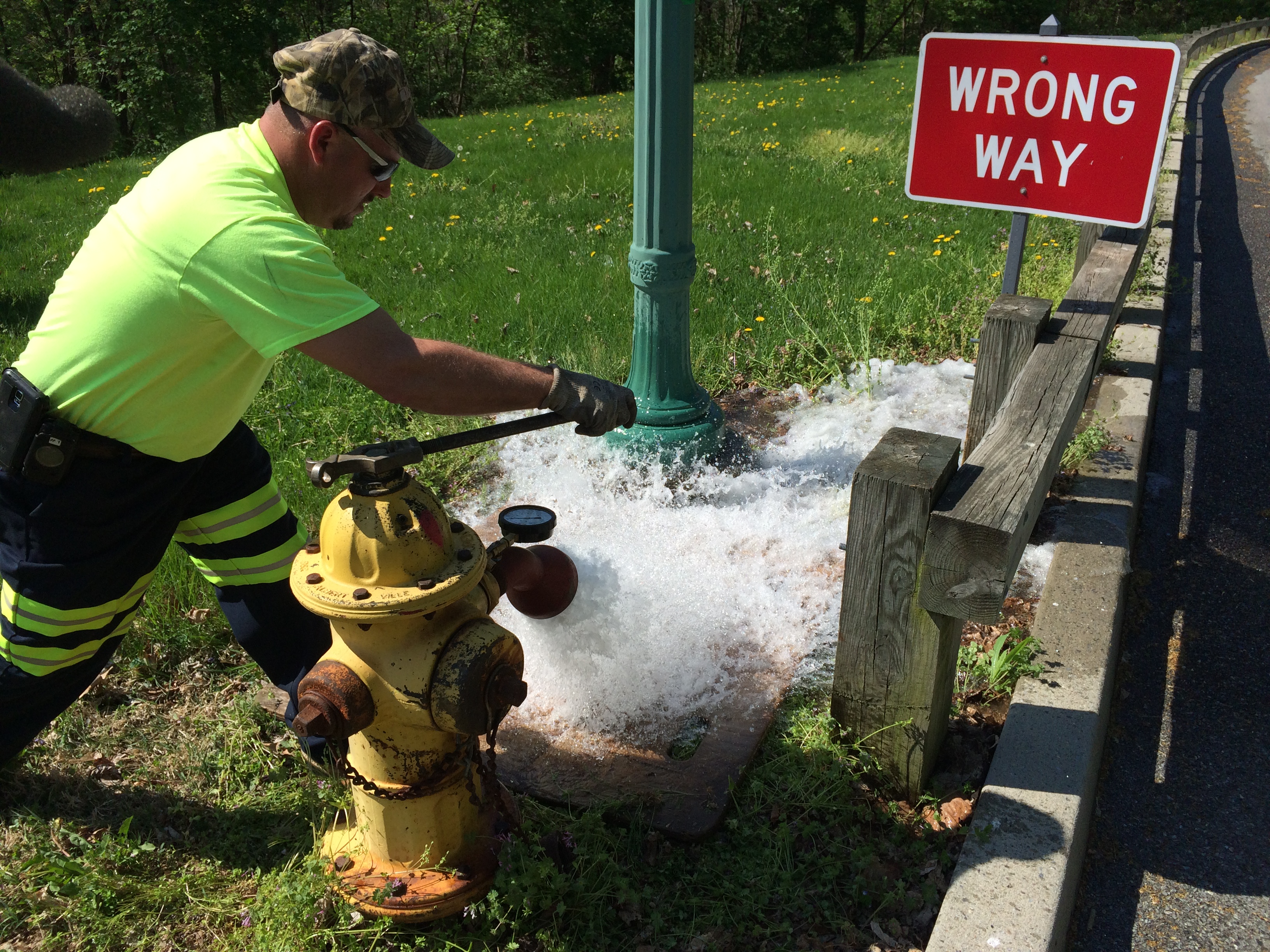
Maynard Gardner, a Capitol Region Water employee, flushes a fire hydrant Monday morning in Reservoir Park.

Maynard Gardner, a Capital Region Water employee, flushes a fire hydrant Monday morning in Reservoir Park.

Harrisburg’s water and sewer authority has begun flushing fire hydrants in the city and in other townships in the authority’s service area, as part of an annual procedure to check water pressure, look for leaks and clear dormant lines of mineral buildup.

Workers will flush all of Capital Region Water’s 1,600 hydrants over a six- to eight-week period, beginning with those closest to the city’s reservoirs and proceeding outward through the system.

The procedure can stir up debris in the pipes, meaning customers may see discolored, brownish-orange water coming from their faucets while the authority flushes hydrants near them.

The discoloration is not harmful and should clear up after affected customers run their faucets for a couple of minutes, an authority spokesman said.

The city flushes the hydrants every year, although it skipped the procedure last year because workers were overextended addressing a billing problem caused by failing batteries in water meters, the spokesman said.

Maynard Gardner, a Capital Region Water employee, demonstrated the flushing procedure Monday morning at a hydrant in Reservoir Park, checking the pressure and taking a sample of the gushing water with a small glass jar.

The water came out clear, but hydrants in areas further from the reservoirs, like Kline Village, tend to be noticeably discolored and can take up to 45 minutes to flush, Gardner said.

The procedure, which improves drinking water quality by clearing lines of stagnant water, also allows the authority to alert firefighters of hydrants that aren’t working properly. The authority covers failing hydrants with orange bags, schedules them for repairs and reports them to emergency dispatchers at Dauphin County.

Continue Reading

River Beds: Historic riverfront mansions brought back to life at The Manor on Front Bed and Breakfast.

Screenshot 2015-04-29 00.42.18Michael and Sally Jo Wilson believe the “Mary K” Mansions, along the river in Uptown Harrisburg, were treasures just waiting to be appreciated.

When they decided to attend the auction of the two properties a year ago, they went “just to check it out,” Mike Wilson said. They came home with the keys to their kingdom.

“Most people would advise against making such an impromptu decision,” he said, standing in what is now a newly renovated piece of Harrisburg history.

The couple has spent the past year making the Ledgestone property at 2909 N. Front St., which they have dubbed the Ledgestone building, into a seven-room bed and breakfast as part of their master plan for The Manor on Front Bed and Breakfast. The second building, at 2917, is where the couple lives and where they plan to add more rooms for guests.

As the owner of Integral Construction, Mike had done some work on the century-old mansions in the 1980s, and he admired their historic charm and river views. But, when the couple stepped into their new project a year ago, the road ahead seemed rocky, he said.

The indoor pool in the back of the Ledgestone, protected by glass walls and ceilings, had vines growing from trees through the skylights, stretching towards the dirty water that lingered in the bottom of the pool.

The plaster throughout the entire structure had to be redone because of years of exposure to the elements as rain poured in through the roof and down the staircase, Mike said.

But thanks to good bones, the majority of the structure was safe. Mostly cosmetic work was done to bring the building back to its original glory.

Approaching the front of the bed and breakfast, guests are greeted by a bright red door. Inside, the entryway opens up to a wide staircase. To the right is a living room, where sunlight streams in through original windows and reflects off of the bright white walls. In the back of the room is a raised platform that will be used for music. The Wilsons plan to have a piano added and will host different musicians and artists for each 3rd in The Burg.

“We wanted this place to be something that the entire community can enjoy,” said Sally Jo. “It’s one thing if we had just planned to live here and keep this place to ourselves, but it’s too beautiful for that. It’s something that everyone should see.”

Across the hall from the living room is the dining room, which is attached to a kitchen that features dark stained cabinets and speckled counter tops.

On the first floor is the entryway to the pool, which will be open year-round, as well as a handicap-accessible room. Also on the first floor is a library, where the walls are covered in a rich, dark-colored wood.

“We wanted to showcase the historical significance of this building,” Mike said. “We didn’t change anything we didn’t have to.”

Up the chestnut stairs to the second floor, guests can stay in one of six rooms. Originally all attached, the rooms have been divided to provide privacy, Mike said. Two sets of rooms each share one bathroom, which is ideal for families, Sally Jo added. Throughout the home, there are five full baths and three half baths.

Two of the upstairs bathrooms feature original Pennsylvania tile, which Mike estimates would cost $80,000 to install today. From the front rooms, deep windowsills overlook the Susquehanna River below, and intricate, detailed designs are featured in the plaster, the paneling and the border of some rooms.

A large honeymoon suite in the back of the house has its own bathroom and is set apart from the rest of the rooms, allowing for more privacy.

Even the outside of the structure features unique architecture. The ledgestone walls look like stacked slate, while the sun creates beautiful shadows off of the roof. They couldn’t afford to replicate it if they tried, Mike said.

With an open house planned for May 15 during 3rd in The Burg, the couple plans to start booking rooms now for July. While other details are still being worked out, such as what will be featured on the breakfast menu, the two confess they “love food” and guests can look forward to “more than cereal.”

As the Ledgestone building progresses, the Wilsons plan to start tackling the 2917 property, which will feature four rooms and a check-in office.

“Things are coming along pretty well,” Mike said. “We didn’t have any major snags. Things went pretty well to plan. It’s just a matter of patience.”

The couple’s greatest goal is that the mansions become part of the community again. Until recently, the only life on the property was from the overgrown shrubs and trees that crowded the outside. With all of that gone, Mike said, the buildings are free to boldly greet the community, both those who pass by and those who stop to rest inside.

“It’s important to us that people can enjoy the glory of what these buildings can be,” Mike said. “They won’t be in hiding any longer.”

The Ledgestone building at The Manor on Front Bed and Breakfast, 2909 N. Front St., will be open to the public on May 15 for 3rd in The Burg. As of May 1, guests can book rooms for July. For updates and more information, visit Facebook and search for “The Manor on Front” or call 717-226-2234.

Continue Reading

Love Is the Key: Harrisburg troubadour Josh Krevsky pursues his musical journey.

Screenshot 2015-04-29 00.53.00Josh Krevsky has been singing for as long as he can remember. In fact, some of his earliest memories are singing along with his parents’ records.

“Props to my parents for having an incredible record collection,” the Harrisburg-based singer-songwriter said. “Very eclectic.”

He credits them for laying the foundation for a solid appreciation of music: The Beatles, Fleetwood Mac, Sinatra, Eric Clapton, Bruce Springsteen.

“Then I heard Green Day and R.E.M. and No Doubt,” Krevsky recalled. “And then Nirvana and The Counting Crows, these last two were game changers.”

When he was 15, Krevsky got his first guitar and almost immediately began writing his own music. He didn’t add lyrics at that point, just worked through melodies and chords. He still writes songs in that same order: melody, then lyrics.

“As I played more guitar and put together more melodies, I began to experiment with adding some verses and chorus,” he explained. “Slowly but surely, I started to find a structure from which decent songs were emerging…at least I thought so.”

Krevsky began playing those songs for his friends and family, then at open mic nights, then started booking solo shows.

“The more I wrote, the more I played, and a repertoire soon developed,” he said.

But, like most musicians starting out, Krevsky played a lot of covers in addition to his original tunes, an experience that he retrospectively values.

“When you’re getting started playing live shows, cover songs are part of the deal,” he explained. “When I was learning how to play guitar and sing, covers were the vehicle in helping me eventually find my own style and sound.”

He’s been honing those songwriting skills over the past several years and now is putting the finishing touches on his first solo EP.

“This collection of songs has great meaning to me and chronicles some of the greatest and worst experiences in life thus far,” Krevsky said. “The therapeutic power of that has been profound. Plus, no one else can ever say they wrote those exact same melodies with those exact same lyrics.”

In recent months, he’s shared the results of some of his musical journey at local venues like HMAC Stage on Herr, Midtown Scholar Bookstore and Little Amps, all in Harrisburg, and Battlefield Brew Works in Gettysburg.

“Even if no one else in the world liked a single song I wrote, there’s still something amazing about that accomplishment,” he continued. “The joy and fulfillment that brings me is more than any cover song performance can ever deliver. And it just makes me hungry to write more and more and more.”

When I asked Krevsky what sorts of things inspire his music, he gave me a one-word answer: “Love.”

Then he elaborated.

“I could give you some long, drawn-out answer, but all other answers eventually lead there anyway,” he said. “Whether it’s family, friends, women, work, God…anything. Love is the key to it all.”

You can hear samples of Josh Krevsky’s music on his ReverbNation page, www.reverbnation.com/joshkrevsky. Keep an eye his Facebook page, Josh Krevsky Music, for information on his EP release.


Continue Reading

Peace, Through Dance: State grant will bring a classic Indian tradition to Harrisburg.

Screenshot 2015-04-29 00.52.38Young dancers in colorful costume tap their bare feet across the ground along with the deep boom of the drums in celebration of Bharatanatyam, a south Indian classical dance that is bringing history into the spotlight.

Since 2007, Rachita Nambiar has been running Rasika School of Dance, where she brings to life the rich culture in which she was raised. Thanks to a grant from the Pennsylvania Council on the Arts, Nambiar and her students soon will bring a unique production to the region to help share a form of dance that is gaining popularity.

“I never thought when I started teaching that it would turn into what it is today,” Nambiar said. “I’m very proud of what it’s become.”

“Chakram, the Wheel of Emotions” will feature some of the 70 children and adult students who attend the dance school. The production is set for Aug. 22 at a venue yet to be determined.

The show follows the classic dance tradition found in Nambiar’s native home in south India. It follows the 10 emotions found in the human race, including pride, happiness, fear, anger and wonder. For those who grew up in India or with a family heritage rooted in India, the tale of Chakram is one passed down through the generations.

It follows a king from his birth, touching on the many gods and goddesses of Indian culture and showing that, despite the range of emotions that humans possess, we can all find peace, Nambiar said.

As the first Asian dance school in the Harrisburg area to receive the Project Stream grant, Nambiar is excited to see something so dear to her gain such recognition, she said. Even with a master’s degree in biochemistry, she has chosen the instruction of Bharatanatyam as her profession.

“It’s really my passion,” she said. “I started with two students when I first opened the school.”

While it’s been nearly 15 years since Nambiar was in south India, where she grew up until she married and moved to the United States, she’s looking forward to the chance to revisit in December, where she’ll learn more about the dance and bring it back to her students.

“The unique thing about this form of dance is that it uses so much expression to tell the stories of the gods and goddesses of India,” Nambiar said. “So much of it is tied into the prayers and scriptures that are important in our culture.”

Anoushka Nambiar, the 12-year-old daughter of the seasoned teacher, has been following her mother in the traditional dances since she was about 4. Today, with a year left before she’ll graduate from the program, she’s helping teach younger students.

“I love how it’s been around for thousands of years, and I get to learn it now,” Anoushka said. “A lot of my American friends love watching it, so I feel like I can share something special with them.”

Nambiar has been teaching her students how to incorporate Bharatanatyam by taking American folk tales, such as “Little Red Riding Hood,” and telling the story through the dance.

Because students already know the characters and understand the story, they find it very easy to express different emotions, Nambiar said.

Anoushka said she used to get nervous performing in front of other people, but she has gained a new confidence in practicing the dance. She considers herself pretty athletic and said the dances taught her stamina.

“A lot of it comes with practice,” she said. “With the expressions, I had to learn to practice in front of the mirror to know I was getting it right. It’s tough for me to do simple emotions, like anger. Some are more natural than others.”

Ratna Ramaraju, 14, has been taking lessons for about seven years. As a young child, she discovered an interest in it and begged her mom to enroll her in a class.

“It’s so much more than dance,” she said. “Growing up here, I didn’t have the chance to learn about the gods and goddesses represented in Indian culture. It’s nice because it takes that and mixes it with American culture to create beautiful dances.”

While the lessons can be difficult at first, Ratna said, students who learn to enjoy themselves will find it’s a fun experience.

For Nambiar, spreading the joy of dance is one of her greatest missions. She often goes to Hershey Medical Center to participate in a program called “Center Stage,” where dances are performed as part of therapy for patients.

“I love being in the children’s ward because you see them come out of their rooms when nothing else seemed to make them feel better,” Nambiar said. “I think I have the best profession because my passion is my profession. It’s not just a dance form. It’s a way to improve life.”

Rasika School of Dance holds classes in several locations in the Harrisburg area. For more information, visit www.rasikadance.com, call 717-418-5212 or visit their Facebook page: Rasika School of Dance.

Continue Reading

Musical Notes: May Montage–Something for everyone this month.

Whether you’re in the mood for literary songwriting, ethereal pop or genre-defying frenetic rock, May has a live show perfectly suited for your tastes. And, as spring nears its finish line, there is no better time for live music. Days are longer, and the evenings are warm. So either relax or move to the beat, just make sure to order a beverage and take in May’s musical offerings.

FREEDY JOHNSTON, 5/7, HMAC, TIME AND ADMISSION TBD
One of the ‘90s most acclaimed singer-songwriters, Freedy Johnston has continued to build upon his extensive repertoire. He will by stopping by the capital of the Commonwealth in support of his forthcoming LP, “Neon Repairman.” Like many of his contemporaries, Johnston has used a faltering record industry to his advantage, taking creative direction into his own hands and producing his most recent work through private fundraising. This is fitting considering he is often referred to as “a songwriter’s songwriter.” This is a perfect show for fans of Neil Young, Tom Petty or Elvis Costello.

ERIC + ERICA w/SHAWAN & THE WONTON, 5/8, 6:30PM, LITTLE AMPS DOWNTOWN
Dreampop seems to make a lot more sense come the warmer months. It’s hazy yet inviting, never in too much of a hurry, but not morose. Durham, N.C.’s Eric + Erica perfectly exemplify these particular characteristics. Their live performances feature such exotic instrumentation as autoharp and foot pedal bass synth. Yet their music is also somehow familiar and reassuring. Since the release of their first album “This is Where”in 2013, they have been constantly touring. They are wrapping up their second full-length album, due to be released later this year. They will be joined by local artist Shawan & the Wonton.

JON SPENCER BLUES EXPLOSION, 5/27, 8PM, ABBEY BAR, $15
Formed more than 20 years ago, Jon Spencer Blues Explosion has earned a reputation for musical iconoclasm and limitless experimentation. Drawing influences from such divergent styles as R&B, noise rock and rockabilly, they have worked with equally diverse artists such as Ad Rock, Elliott Smith and Steve Albini. Their live shows are high energy and electric, disorienting yet still somehow indisputably rock n’ roll. Either way, this is a show that will surely make you move.

Mentionables: Vacationer, 5/1, The Millworks; Cruisr, 5/8, FedLive; the Baseball Project, 5/15, HMAC; Steven Wilson, 5/23, Whitaker Center; Kelly Zullo, 5/30, Midtown Scholar


Continue Reading

Peace in the City: In Riverfront Park, a tranquil, inspirational respite.

Screenshot 2015-04-29 00.34.22Walking or jogging through Riverfront Park, you may get a serene feeling as you enter the Peace Garden.

You might see garden coordinator Gwen Lehman in the dirt, volunteering her time to give some love to the various flowers planted throughout the natural, tranquil space. Or maybe you have only seen the garden as a blur through the car window while traveling down N. Front Street.

As May brings its sun and warmth, Peace Garden will begin to show its true magnificence, offering an oasis of calm and beauty amidst the busy city.

Up for the Challenge

Peace Garden traces its roots to 1990, when Harrisburg pediatrician James Jones returned from a gathering of the International Physicians for the Prevention of Nuclear War in Hiroshima, Japan.

“The co-founder of [IPPNW], Dr. Bernard Lown, challenged us to create parks to affirm life’s fragility and the human spirit’s resilience,” recalled Jones, who at the time was president of the Harrisburg-Hershey chapter of U.S. affiliate Physicians for Social Responsibility (PSR). “There are many parks and statues dedicated to wars, battles and soldiers, but few to the protection of the environment and the pursuit of peace.”

He came home inspired and ready to act and was met with a positive response from members of PSR and city officials in Harrisburg.

The physicians envisioned an artistically designed, natural public space with annual and perennial plants, striking sculptures and a coming together as a community.

“The Peace Garden planted flowers and trees for beauty and ideas promoting peace, justice and the environment, in plaques and sculptures overlooking the beautiful Susquehanna River,” explained James.

Local organizations, churches, rotary foundations and social clubs donated the plaques.

“[The donors] really represent a broad spectrum of Harrisburg,” said Lehman. “As stated on the dedication plaques at each of the designated, three-block areas along the beautiful Susquehanna River, the Peace Garden is dedicated to the pursuit of peace and the preservation of our earth.”

The overall message, she said, is that the natural world, nations and the welfare of individuals are inextricably linked.

“We hope that people take the time to stop and read the messages on plaques,” she said. “They are some of the most thoughtful ideas from people all over the world.”

A Major Joy

Writer, artist and oral surgeon Frederick Frank—who worked alongside Dr. Albert Schweitzer in Africa—created life-size sculptures depicting the infamous destruction in Hiroshima, while allowing viewers to reflect on the power of new life and hope that is born after horror.

Long-time coordinator Michael Lehman designed the main garden beds when PSR first created the Peace Garden. Five years ago, Gwen Lehman took over as coordinator, and, each year, along with PSR volunteers, leads the task of planting all of the flowers and beautifying the garden.

Physicians for Social Responsibility is primarily in charge of the design, maintenance and upkeep, but the Peace Garden has been a true partnership with the city of Harrisburg,” said Lehman, explaining that the city provides the land, water and some mowing. “They have been great to work with during these 20 years. This is a really positive public/private partnership that I’d really love to see more of.”

This cooperation has allowed Harrisburg-area residents to take time away from their busy lives and to be inspired and to enjoy the peace that only nature can offer.

“I feel good when I’m there, partly because of its beauty and partly because of the inspiration of the things I read when I’m there,” said Lehman. “It is a major joy for me.”

Planting and pruning, she experiences first-hand how much the garden has touched people.

“Almost always, someone stops with appreciation or they call things out as they are running by,” she said. “I think people really do appreciate the fact that there is a place like this in the city. Sometimes, people will hand me $20 while I’m working.”

Lehman also believes that the Peace Garden brings people together in a community who otherwise can be alienated from one another.

“There are typically deep divisions in greater Harrisburg, between people who are financially challenged and who are not,” she said. “Peace Garden is really a space where all aspects of our community come together. We all need to be reminded of the power of ideas for good, and I think natural beauty is the most effective way of taking us outside of ourselves.”

Keep Peace Alive

Maintaining the Peace Garden takes a large commitment of resources.

PSR has a core group of volunteers dedicated to ensuring that the garden continues to thrive, but, as with any volunteer effort, donations of time are much needed, especially around the middle of May.

“In one day, we’ll put in about 1,000 individual plants,” Lehman said. “That’s the time of greatest need in terms of physical labor.”

PSR also needs volunteers who can help with routine weeding in the summer, she added.

And, of course, donations are always welcomed.

“This is an expensive endeavor, to put in the number of flowers we plant every year,” said Lehman. “We put in the irrigation system, which was expensive. We hire a landscaping company to do heavy lifting for us, and they edge all of the beds.”

Each October, PSR holds an annual banquet, which is a major fundraiser for the garden. Also, it has established an endowment fund through The Foundation for Enhancing Communities to help support the work.

“All the funds to carry out the mission are privately provided by Physicians for Social Responsibility, other individuals and organizations,” said Jones.

Those wishing to donate funds to the Peace Garden can do so by contacting The Foundation for Enhancing Communities at 717-236-5040 or by visiting www.tfec.org.

For more information about the Harrisburg-Hershey chapter of the Physicians for Social Responsibility and the Peace Garden, visit www.psr.org/chapters/harrisburg.

Continue Reading

Eat With Purpose: Good food, a good cause at the monthly Harrisburg Food Truck Feast.

Olivia and Rodrigo Madrigal

Olivia and Rodrigo Madrigal

Olivia Madrigal wants to give something back to the city that has supported her through the years.

As the co-owner of MAD Sandwiches and the organizer of 3rd in The Burg’s Harrisburg Food Truck Feast, Madrigal looked on the masses that flood Midtown Harrisburg those Friday nights and wondered if they could all work together to do something great.

“Any time I’ve ever had the opportunity to give back, I’m overwhelmed by how great it feels,” Madrigal said. “I wanted to magnify that.”

Madrigal came up with the idea to benefit a different Harrisburg-based charity each month during the feast, which takes place at N. 3rd and Harris streets every third Friday of the month through October.

A different organization has been selected for each month, and donation boxes and cash jars will be set out so visitors can make contributions, Madrigal said. While she hasn’t set any goals for how much she wants to collect each month, she knows every little bit helps feed someone who is hungry or clothe someone who has nothing.

“We wish we had enough resources to reach out beyond Harrisburg, but we don’t want to stretch ourselves too thin,” Madrigal said. “Instead, I think we can make a greater impact on the organizations that are doing good work right here.”

She also hopes to give incentives to encourage people to donate, such as coupons to use at the food trucks or random drawings for event tickets. Whatever helps people give, she said, is worth it.

Food trucks that participate in the monthly event also are doing their part to give back. Part of the $60 fee for each participating truck covers advertising, a special events license from the city and the rental of portable toilets. Any money left over after those initial fees will be donated to charity, Madrigal said.

The first charity to benefit during the April feast was the Central Pennsylvania Food Bank. Brad Peterson, director of communications for the organization, said they usually ask for non-perishable items, such as peanut butter, canned tuna and canned fruits and vegetables. Cereal, pasta, rice and soups also tend to be in high demand, he said.

The impact the food bank has on Dauphin County alone is substantial, Peterson said.

In 2014, Dauphin County residents received 7.4 million pounds of food, or the equivalent of 6.1 million meals, he said. The food bank served about 22,500 households in Dauphin County that same year, he said.

Dauphin County is one of 27 counties the food bank serves and has just a fraction of the 55,000 people who use its services each week.

“The food bank relies on donations to fulfill our mission,” he said. “More than 80 percent of the food we distribute comes from donations, so public support and donations are vital to our work and the people we serve.”

The YWCA of Greater Harrisburg is the charity selected for May, Madrigal said.

The organization provides care to single women and children through its emergency shelter, and it empowers those women through its housing program, clothing and food bank, life skills education and drug and alcohol recovery support groups.

Tina Nixon, chief executive officer of the YWCA of Greater Harrisburg, said she thought adding a charity element to the feast was a great way to make the event about everyone in the community.

“It’s good that the community is engaged in what we do,” Nixon said. “We see a lot of women come here who want to give back later. There seems to be this constant circle of support in Harrisburg, and I’m so grateful for it.”

The YWCA is often in need of new bath towels, hand towels, pillows and twin sheet sets, Nixon said. They also need umbrellas, underwear and socks. Gift cards for groceries, clothing stores and other items also are accepted.

Many of the women who seek refuge in the emergency shelter arrive with just the clothes on their backs, Nixon said. Anything the shelter can give them—from a toothbrush to a new sweater—is a great comfort, she said.

Madrigal hopes to spread the word about each month’s charity through announcements on NASH FM 106.7, as well as on the event’s Facebook page.

Some people didn’t come to the feast last year, she said, because they felt they didn’t have anywhere to park. She hopes people keep in mind that they can park directly in the lot where the trucks are set up at no additional cost.

For Madrigal, the opportunity to give back is a call she has to answer. She still has a few charities to add to the calendar for the rest of the year, but she knows that any organization they choose will benefit.

“There’s a lot of need in our community,” she said. “We want to give back without seeking anything in return. This city means that much to us.”

Harrisburg Food Truck Feast takes places every third Friday of the month during 3rd in The Burg. The trucks gather in the parking lot at N. 3rd and Harris streets starting at 5 p.m. For more information on the featured food trucks and charities, visit their Facebook page: HBG Food Truck Feast. This month, 3rd in The Burg takes place May 15.

Continue Reading

Student Scribes: Tricky Transport, Tackling Troubles with Trolleys

Screenshot 2015-04-29 00.55.27Walking towards the stop, the man sees a bus pull up and drive away within secondsof hisreaching the sign. A 15-minute walk later, he finds himself at the next stop along the way; after waiting 20 minutes, he is left disappointed again. Even after waving and locking eyes with the driver, he is ignored, stranded once again. “I wasn’t worth the stop,” he sarcastically thinks to himself. He decides to take a taxi home.

This story was told to me by a friend who has lived in Harrisburg for most of his life. Though public transportation should be the heart of any city hoping to avoid being cut off from itself, many find personal vehicles necessary to get around the Harrisburg area. Transportation does not need to be that way. Harrisburg used to have trolleys—the proof, their tracks, is buried by asphalt. Though companies who own and operate the bus system might say otherwise, trolleys are the most efficient way to move people.

Not only would a trolley system be more fuel efficient than both buses and privately owned vehicles, it would also cut back on many traffic problems. According to a study implemented by the Central European Programme, trolleys, running on electricity, would demand fewer variable costs than buses running on petroleum, which varies greatly in price. Citizens would enjoy less noise and fewer emissions. Because they cannot move from their tracks, these streetcars would need to run on a very regular schedule; buses remain subverted by traffic and the whims of their drivers. A trolley can’t cut anyone off, nor would it take up two lanes of traffic making awkward turns. They would cut down on the need for privately owned cars, which take up highly prized parking spaces and cause damage to frequently traveled roads. Commuters often drive through the city to their place of work then promptly leave at five. Many don’t live within the city limits, so the community is not compensated by their earnings.

A trolley system could improve both the traffic and carbon footprint of the city, as well as interpersonal relationships in the community. Rather than driving from destination to destination, isolated from the other drivers and pedestrians, trolley riders would be forced to travel with each other through the city. It would reinforce the notion that Harrisburg is the center of commerce and recreation and make travelers interact with each other.

Many cities such as Portland, Cincinnati and Charlotte have brought public transportation and environmental issues into the spotlight by investing in an ultimately successful streetcar system. I stayed in Toronto for a week and a half with a class, and, while I was there, I was shocked by how easy it was to navigate the city, how safe I felt doing so when using the user-friendly streetcar system. Toronto still had buses, bike lanes and even some personal cars, but the trolleys were what we used most frequently. I never once felt crowded, stressed or worn out by my travels there. The abundance of public transportation made me feel immediately connected to the city because my desire for exploration was not only easily satiated, but encouraged.

A streetcar system would simplify some of the complications of city life: being on tracks makes trolley travel more dependable than buses, and, as such, trolley-riding would become more appealing than driving. Fewer cars on the road mean fewer repairs, more community spirit andsmaller environmental impact. Shouldn’t Harrisburg, as the capital city, set the example for the rest of the state?

Mary Imgrund is a senior English major at Penn State Harrisburg.

Continue Reading